Why Flexible Payment Systems Are Now a Business Essential
Opinions expressed by Entrepreneur contributors are their own.

The right payment solution can accelerate growth, while the wrong one can stunt it. For small businesses, nonprofits and even large enterprises, how quickly and reliably money moves through the organization shapes everything from day-to-day operations to long-term strategy.

Business leaders must regularly evaluate whether their payment solutions can keep pace with evolving demands or risk falling behind.

Cash flow is the lifeblood of any organization. Whether it’s a small business handling seasonal fluctuations, a nonprofit managing through a grant cycle or a large corporation coordinating purchases across multiple departments, the ability to effectively manage incoming and outgoing funds is fundamental.

Payment delays, mismatched billing cycles and inflexible payment terms can all create unnecessary strain, limiting a business’s ability to invest in new opportunities or respond to unexpected challenges.

Related: Slow Payment Options Are Costing Your Business — Here’s the Alternatives of the Future

Breaking free from operational bottlenecks

Research reveals the operational realities business decision-makers face. According to a Morning Consult survey commissioned by Walmart Business, nearly 500 small business leaders reported spending approximately 40% of their workweek on administrative tasks.

A significant portion of this time is devoted to managing spending, cash flow and reconciliation—activities that, while essential, can detract from core business functions such as serving customers, innovating and pursuing growth opportunities.

For resource-strapped organizations, every minute spent on manual bookkeeping or chasing receipts is time lost driving the business forward. Yet many still rely on traditional payment processes that are rigid, slow and misaligned with their workflows, adding to the administrative burden. Today’s payment solutions must go beyond processing transactions to actively reduce operational friction.

Related: Struggling with Finances? These Payment Solutions Will Save You

Seamless systems, stronger performance

Beyond cash flow, integrating payment solutions into everyday business operations can have a significant impact on efficiency. Traditional payment methods such as checks or manual invoices often require multiple steps for approval, reconciliation and record-keeping. Each additional step introduces the potential for errors, delays and increased administrative overhead.

Organizations must consider how payment solutions fit into their unique workflows. No two organizations are alike; purchasing needs, approval hierarchies and accounting practices can vary widely depending on the industry, size and structure of the business. Solutions that are too rigid or too generic will fail to meet the specific requirements of a given organization, leading to workarounds that undermine efficiency and accuracy.

Modern payment solutions are built for integration. When payment options are embedded into the purchasing experience — whether that’s through an online portal, a mobile app or in-store systems — organizations benefit from a seamless workflow that minimizes manual intervention.

Features such as automated invoicing, real-time reporting and centralized record-keeping simplify the reconciliation process and make it easier for business leaders to monitor spending, comply with internal controls and generate accurate financial reports.

Putting integration into action: Pay by invoice

Flexible payment solutions, particularly those that offer extended terms or credit lines, can provide organizations with vital breathing room. By allowing businesses to defer payment on purchases — sometimes for 30 days or more — these solutions support better cash flow management and allow leaders to allocate their time and resources strategically. This flexibility can be especially impactful during uncertain economic times or periods of growth, when upfront investments may be required before additional revenue is realized.

At Walmart Business, we recognized this need and recently introduced Pay by Invoice, powered by TreviPay. This offer enables eligible customers to access a business line of credit from TreviPay with 30-day net terms, allowing them to make critical purchases when needed and defer payment to better align with their revenue cycles.

Such flexibility is no longer a luxury; it’s an expectation among business customers who must navigate complex, multi-location operations and fluctuating cash flows.

The demand for Pay by Invoice is rooted in the desire for streamlined financial operations. By offering consolidated, detailed invoices, the solution simplifies expense tracking and reporting, making it easier for organizations to maintain oversight and accountability.

The decision to fully integrate the use of Pay by Invoice into the Walmart Business experience across online, app and in-store channels was intentional, so customers benefit from a seamless, frictionless purchasing and payment process wherever they choose to shop.

Related: What Sparked the Push for Flexible Pay?

Looking ahead at the future of business payments

As organizations continue to seek ways to operate more efficiently and adapt to changing economic conditions, the significance of flexible payment solutions will only grow. The broader trend toward digitization, automation and integration is transforming not only how businesses purchase goods and services, but how they manage finances, assess performance and make strategic decisions.

For business leaders, understanding the available payment options and evaluating them through the lens of their organization’s unique needs is critical. Solutions that provide flexibility, transparency and integration can help remove operational barriers, improve cash flow and set the stage for sustained growth. Payment processes are no longer a back-office concern; they are a strategic lever for business success and future growth.

The right payment solution can accelerate growth, while the wrong one can stunt it. For small businesses, nonprofits and even large enterprises, how quickly and reliably money moves through the organization shapes everything from day-to-day operations to long-term strategy.

Business leaders must regularly evaluate whether their payment solutions can keep pace with evolving demands or risk falling behind.

Cash flow is the lifeblood of any organization. Whether it’s a small business handling seasonal fluctuations, a nonprofit managing through a grant cycle or a large corporation coordinating purchases across multiple departments, the ability to effectively manage incoming and outgoing funds is fundamental.

The rest of this article is locked.

Join Entrepreneur+ today for access.

https://www.entrepreneur.com/growing-a-business/why-flexible-payment-systems-are-now-a-business-essential/496743




Who’s Buying TikTok? Here’s What We Know About Who Gets the Algorithm.

After almost a year of deadline extensions preventing a TikTok ban from taking effect, a deal for new owners to take over the app in the U.S. is imminent. Reports suggest the announcement could come as soon as this week.

Last week, Treasury Secretary Scott Bessent announced that the “framework” for a TikTok deal had been reached, and President Donald Trump extended the deadline for a deal to be completed to December 16. It was the fourth extension issued since Congress passed a law last year requiring TikTok’s parent company, Beijing-based ByteDance, to sell the popular app or face a ban in the U.S.

Related: Here’s How a New Employee’s Major TikTok Mistake Led a Cookie Company to Viral Fame — and a 46% Increase in Sales

Trump announced on Truth Social on Friday that he had a “very productive” call with China’s leader, Xi Jinping, and that “progress” has been made “on the approval of the TikTok Deal.”

Now, details are emerging. Here’s what we know.

Who Is Buying TikTok?

The Wall Street Journal is reporting that Oracle and the private-equity firm Silver Lake would lead a group of U.S. backers in owning about 80% of the company. (Oracle and Silverlake’s shares would be about 50% and previous investors would hold about 30%.) ByteDance’s stake would be just below 20%.

Trump told Fox News this past weekend that other investors “involved” in the deal “probably” included Michael Dell and Lachlan and Rupert Murdoch.

“I think they’re going to be in the group. A couple of others. Really great people, very prominent people,” Trump said. “And they’re also American patriots, you know, they love this country. I think they’re going to do a really good job.”

Related: President Donald Trump Suggests Canceling Quarterly Reporting: ‘This Will Save Money’

The potential to buy TikTok attracted a lot of suitors, and bids were submitted by a slew of notable business leaders, including the team of Kevin O’Leary, billionaire former Dodgers owner Frank McCourt, and Reddit co-founder Alexis Ohanian in “The People’s Bid.” AI startup Perplexity, Amazon, and Applovin all submitted separate proposals as well.

Who Will Control TikTok’s Algorithm and Data?

According to a new report by Bloomberg, data would be stored by Oracle, and the tech giant would also “retrain” the algorithm. ByteDance, meanwhile, would not be able to access U.S. user data, and the China-based company would not have any control over the algorithm stateside.

Oracle has been TikTok’s U.S. cloud provider since 2022.

“Oracle, the U.S. security partner, will operate, retrain, and continuously monitor the U.S. algorithm to ensure content is free from improper manipulation or surveillance,” a White House official told Bloomberg.

A senior White House official told CNBC on Monday that the deal will not involve the U.S. government taking a “golden share” or any equity stake.

Related: Billionaire Investor Frank McCourt Jr. Wants to Do More Than Buy TikTok — He Wants to Transform the Entire Internet. Here’s How.

https://www.entrepreneur.com/business-news/who-gets-tiktoks-algorithm-here-are-the-new-owners/497422


Strengthen Your Memory for a Business Edge

Disclosure: Our goal is to feature products and services that we think you’ll find interesting and useful. If you purchase them, Entrepreneur may get a small share of the revenue from the sale from our commerce partners.

Running a business is already a mental marathon—juggling meetings, client names, deadlines, and numbers that matter. And when your brain doesn’t keep up, it’s a problem.

According to the National Institute on Aging, our memory changes as we get older, and “some people notice that they don’t remember information as well as they once did and aren’t able to recall it as quickly.” Needless to say, this natural process is not great for those trying to run a business.

Think of memoryOS as a gym membership for your mind, offering you a pathway to the recall strength you need to stay sharp. And right now, you can grab a one-year subscription for just $74.99 (MSRP $149.99).

Unlike generic “brain games,” memoryOS is built on scientifically proven methods, such as mnemonics and spaced repetition, the company says. It introduces a modern twist: the Virtual Mind Palace. This centuries-old technique (used by memory champions and scholars) has been digitized and gamified, making it fun and engaging to practice.

The result? Users report an average 70% boost in memory recall, the company says.

Imagine walking into a client meeting and remembering every name. Or recalling key figures from last quarter’s reports without flipping through notes. That’s the kind of advantage memoryOS brings to professionals—whether you’re pitching, leading a team, or negotiating at the table.

With guidance from World Memory Champions, bite-size microlessons fit into even the busiest schedules. In just a few minutes a day, you’ll start noticing improvements in how quickly and confidently you can store and retrieve important information.

And it’s not limited to work. From remembering speeches to never forgetting a password again, memoryOS helps cut down on those frustrating “what was that again?” moments in everyday life.

For entrepreneurs and executives, the ability to remember more means making faster decisions, stronger connections, and ultimately, running your business with greater confidence.

Get a 1-year subscription to the memoryOS Expert Plan while it’s on sale for just $74.99 (MSRP $149.99).

memoryOS Expert Plan: 1-Year Subscription

See Deal

StackSocial prices subject to change.

Running a business is already a mental marathon—juggling meetings, client names, deadlines, and numbers that matter. And when your brain doesn’t keep up, it’s a problem.

According to the National Institute on Aging, our memory changes as we get older, and “some people notice that they don’t remember information as well as they once did and aren’t able to recall it as quickly.” Needless to say, this natural process is not great for those trying to run a business.

Think of memoryOS as a gym membership for your mind, offering you a pathway to the recall strength you need to stay sharp. And right now, you can grab a one-year subscription for just $74.99 (MSRP $149.99).

The rest of this article is locked.

Join Entrepreneur+ today for access.

https://www.entrepreneur.com/living/strengthen-your-memory-for-a-business-edge/497339


Grab This $190 MacBook Air for Travel, Meetings, and Working on the Go

Disclosure: Our goal is to feature products and services that we think you’ll find interesting and useful. If you purchase them, Entrepreneur may get a small share of the revenue from the sale from our commerce partners.

In today’s game, our laptops are mission-critical. But here’s the thing: hauling your main device everywhere—flights, coffee shops, meetings—is risky. One drop, one spill, and you’re scrambling.

That’s why a lot of professionals invest in a backup laptop—and right now you can grab a refurbished 13.3″ Apple MacBook Air for just $189.97 (MSRP $999) with free shipping.

The MacBook Air is light, reliable, and built for the everyday tasks that keep business moving: taking notes at a client meeting, checking email between flights, or streaming presentations without dragging your primary machine into harm’s way.

Here’s why this offer makes sense for entrepreneurs and professionals:

  • 13.3″ display: Crisp, clear resolution for work and streaming.
  • Intel Core i5 (1.8GHz): Smooth performance for documents, email, and multitasking.
  • Intel HD Graphics 6000: Great for presentations and casual creative work.
  • 128GB SSD: Store your most important files for easy travel access.
  • Wi-Fi and bluetooth: Stay connected and transfer files seamlessly.
  • 12-hour battery life: Power through meetings, flights, or workdays without plugging in.
  • Grade A/B refurbished: Fully functional, with only light cosmetic wear.

This MacBook Air is an affordable “second-in-command” that ensures you’re never without the tools you need. It’s slim enough to toss into a bag, dependable enough to handle daily business demands, and affordable enough that you won’t stress about wear and tear.

Get this quality refurbished MacBook Air for $189.97 (MSRP $999) plus free shipping while stock lasts.

Apple MacBook Air 13.3″ (2017) 1.8GHz i5 8GB RAM 128GB SSD Silver (Refurbished)

See Deal

StackSocial prices subject to change.

In today’s game, our laptops are mission-critical. But here’s the thing: hauling your main device everywhere—flights, coffee shops, meetings—is risky. One drop, one spill, and you’re scrambling.

That’s why a lot of professionals invest in a backup laptop—and right now you can grab a refurbished 13.3″ Apple MacBook Air for just $189.97 (MSRP $999) with free shipping.

The MacBook Air is light, reliable, and built for the everyday tasks that keep business moving: taking notes at a client meeting, checking email between flights, or streaming presentations without dragging your primary machine into harm’s way.

The rest of this article is locked.

Join Entrepreneur+ today for access.

https://www.entrepreneur.com/science-technology/grab-this-190-macbook-air-for-travel-meetings-and/497336


Handle Reports, Presentations, and Email with One Lifetime Microsoft Office License

Disclosure: Our goal is to feature products and services that we think you’ll find interesting and useful. If you purchase them, Entrepreneur may get a small share of the revenue from the sale from our commerce partners.

For professionals and entrepreneurs, productivity is non-negotiable. This one-time deal delivers every essential Microsoft Office tool you need to run a business or manage your work, without locking you into another subscription.

  • Lifetime license — one payment of $49.97, no renewals or subscriptions
  • Includes Word, Excel, PowerPoint, Outlook, Teams (basic), OneNote, Publisher, Access
  • Optimized for Windows 10 and 11 with support for all major languages
  • Full desktop versions with all the tools for business reporting and design
  • Perfect for entrepreneurs managing clients, data, and communications
  • Instant digital delivery with license key and download link provided
  • Works for both professional and personal use on one Windows PC
  • Updates included, plus free customer support

Stop renting the tools you use every day. With Microsoft Office Professional 2021 lifetime license for Windows, you’ll have the full suite of apps your work depends on — all for just $49.97.

StackSocial prices subject to change.

For professionals and entrepreneurs, productivity is non-negotiable. This one-time deal delivers every essential Microsoft Office tool you need to run a business or manage your work, without locking you into another subscription.

  • Lifetime license — one payment of $49.97, no renewals or subscriptions
  • Includes Word, Excel, PowerPoint, Outlook, Teams (basic), OneNote, Publisher, Access
  • Optimized for Windows 10 and 11 with support for all major languages
  • Full desktop versions with all the tools for business reporting and design
  • Perfect for entrepreneurs managing clients, data, and communications
  • Instant digital delivery with license key and download link provided
  • Works for both professional and personal use on one Windows PC
  • Updates included, plus free customer support

Stop renting the tools you use every day. With Microsoft Office Professional 2021 lifetime license for Windows, you’ll have the full suite of apps your work depends on — all for just $49.97.

The rest of this article is locked.

Join Entrepreneur+ today for access.

https://www.entrepreneur.com/science-technology/handle-reports-presentations-and-email-with-one-lifetime/497312


This Is a Rare Chance to Save More Than 70% on QuickBooks Desktop Pro Plus 2024

Disclosure: Our goal is to feature products and services that we think you’ll find interesting and useful. If you purchase them, Entrepreneur may get a small share of the revenue from the sale from our commerce partners.

Wearing about a dozen hats at once is part of the job for business owners. From sales to payroll to paying vendors, there’s always another number that needs crunching. That’s why many small businesses, freelancers, and accountants swear by QuickBooks® Desktop Pro Plus—and now you can get the 2024 edition with a lifetime license for just $199.97 (MSRP $699), through October 5.

This isn’t just bookkeeping software. QuickBooks Pro Plus 2024 is an all-in-one financial management hub designed to keep your business organized and efficient. You can handle invoices, expenses, sales orders, purchase orders, and payroll tracking from one dashboard. Need deeper insights? Generate professional reports, analyze job costing, or manage inventory without juggling spreadsheets.

Business leaders know that every saved dollar counts. With this lifetime deal, you’re not stuck with subscription fees eating into your bottom line. Pay once, own it forever, and focus on growth instead of recurring costs.

Some standout features include:

  • Enhanced reporting tools to make smarter decisions.
  • Bank feed imports for easier reconciliations.
  • Fixed asset management to track value and depreciation.
  • Time tracking for accurate payroll and project costing.
  • Customer and vendor management to keep relationships running smoothly.

Setup is simple, updates are included, and it integrates seamlessly with Excel or older QuickBooks versions, making migration a painless process. And because it’s officially downloaded from Intuit, you get the latest build with multilingual support and long-term reliability.

For business owners, freelancers, and finance teams, this is more than a discount—it’s peace of mind. Lifetime QuickBooks means you can focus on scaling your company, not renewing software.

Pick up a lifetime QuickBooks Pro Plus 2024 license for one user for just $199.97 through October 5.

Intuit® QuickBooks® Desktop Pro Plus 2024 (1 User) for Windows: Lifetime License

See Deal

StackSocial prices subject to change.

Wearing about a dozen hats at once is part of the job for business owners. From sales to payroll to paying vendors, there’s always another number that needs crunching. That’s why many small businesses, freelancers, and accountants swear by QuickBooks® Desktop Pro Plus—and now you can get the 2024 edition with a lifetime license for just $199.97 (MSRP $699), through October 5.

This isn’t just bookkeeping software. QuickBooks Pro Plus 2024 is an all-in-one financial management hub designed to keep your business organized and efficient. You can handle invoices, expenses, sales orders, purchase orders, and payroll tracking from one dashboard. Need deeper insights? Generate professional reports, analyze job costing, or manage inventory without juggling spreadsheets.

Business leaders know that every saved dollar counts. With this lifetime deal, you’re not stuck with subscription fees eating into your bottom line. Pay once, own it forever, and focus on growth instead of recurring costs.

The rest of this article is locked.

Join Entrepreneur+ today for access.

https://www.entrepreneur.com/money-finance/this-is-a-rare-chance-to-save-more-than-70-on-quickbooks/497260


Even Time-Strapped Business Owners Can Share an Engaging Reading Experience with Their Kids

Disclosure: Our goal is to feature products and services that we think you’ll find interesting and useful. If you purchase them, Entrepreneur may get a small share of the revenue from the sale from our commerce partners.

As a business owner, balancing a 60-hour work week with family time is already hard enough without screens getting in the way. If you’re looking for a meaningful way to connect with your kids, Readmio makes story time feel like something special again.

Readmio is a mobile reading app that turns your voice into the centerpiece of the story. As you read aloud, the app adds sound effects and music that respond in real time. When the story says the wolf growled or the wind blew, you’ll actually hear it. The result is an experience that feels more immersive than a regular book, without relying on screens or flashy visuals to keep your child engaged. It’s also on sale right now.

Add some magic to story time

The Readmio Premium Plan gives you lifetime access to more than 800 interactive stories, with new ones added every week. There are fairy tales, folk stories, science adventures, bedtime favorites, and even empathy-themed stories. Stories are sorted by age group and topic, so it’s easy to find something your child will enjoy. You can also download stories to read offline, which is great for travel or evening routines.

The app includes more than just stories. It also offers printable worksheets, coloring pages, and comprehension quizzes to reinforce learning. If your child prefers hands-on activities or needs help staying focused, these extras can make story time even more rewarding.

For parents who want to stay connected to their kids without defaulting to screen time, Readmio is a simple and creative way to build that habit. All it takes is your voice, a phone, and a few minutes together.

Right now, you can get a Readmio Premium Lifetime Plan for only $39.99 (reg. $159).

Readmio Premium Plan: Lifetime Subscription

See Deal

StackSocial prices subject to change.

As a business owner, balancing a 60-hour work week with family time is already hard enough without screens getting in the way. If you’re looking for a meaningful way to connect with your kids, Readmio makes story time feel like something special again.

Readmio is a mobile reading app that turns your voice into the centerpiece of the story. As you read aloud, the app adds sound effects and music that respond in real time. When the story says the wolf growled or the wind blew, you’ll actually hear it. The result is an experience that feels more immersive than a regular book, without relying on screens or flashy visuals to keep your child engaged. It’s also on sale right now.

Add some magic to story time

The rest of this article is locked.

Join Entrepreneur+ today for access.

https://www.entrepreneur.com/living/even-time-strapped-business-owners-can-share-a-engaging/497259


The CEO of a $183 Billion AI Startup Says There’s a ‘Need to Warn the World’ About AI Taking Jobs

The leadership at Anthropic, a leading AI startup that raised billions of dollars earlier this month, is cautioning the world that AI is “likely” to take over jobs.

At the Axios AI + DC Summit on Wednesday, Anthropic Cofounders Dario Amodei and Jack Clark, who also serve as CEO and Head of Policy, respectively, said that AI’s potential to cause work displacement is picking up rapidly — and the situation is dire enough to warrant a warning.

“As with most things, when an exponential is moving very quickly, you can’t be sure,” Amodei said at the event. “I think it is likely enough to happen that we felt there was a need to warn the world about it and to speak honestly.”

Related: An AI Company With a Popular Writing Tool Tells Candidates They Can’t Use It on the Job Application

Amodei said that government intervention may be necessary to support individuals whose occupations are displaced by AI, and Clark emphasized that Anthropic predicts a substantial “scale of disruption” in society due to AI within the next five years.

“You need some kind of policy response,” Clark said.

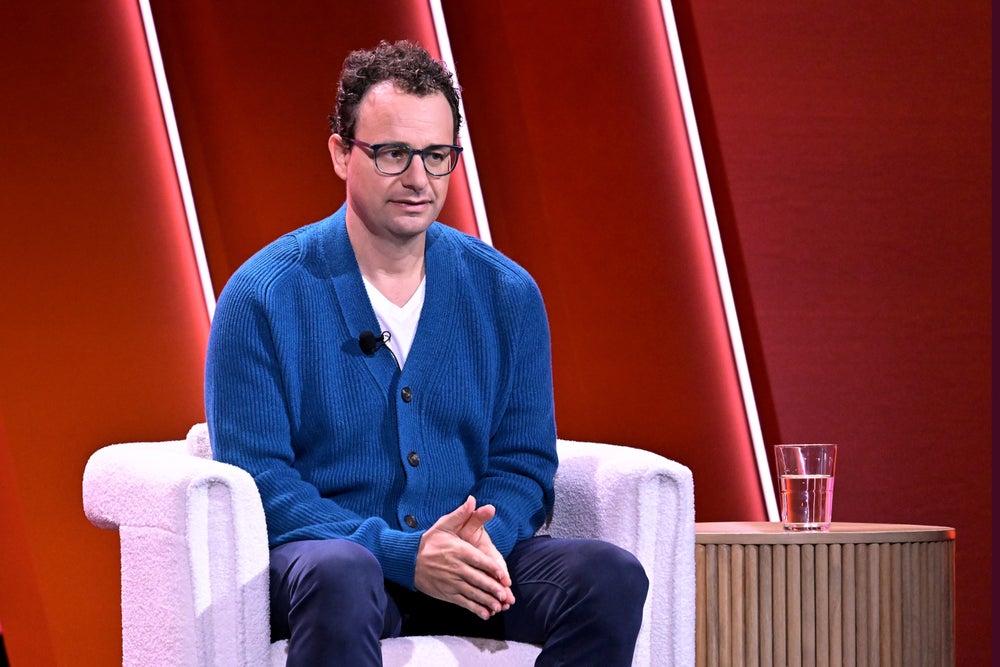
Anthropic co-founder and CEO Dario Amodei. Photo by Chance Yeh/Getty Images for HubSpot

Anthropic raised $13 billion earlier this month at a $183 billion valuation. The AI startup released a report earlier this week that suggested that AI has the “potential” to displace workers. The majority of businesses using its chatbot, Claude, were automating tasks instead of helping people accomplish them. Claude had 30 million monthly active users globally as of the second quarter of this year.

“Given clear automation patterns in business deployment, this may also bring disruption in labor markets,” the report stated.

Related: The ‘Godfather of AI’ Says Artificial Intelligence Needs Programming With ‘Maternal Instincts’ or Humans Could End Up Being ‘Controlled’

Amodei, meanwhile, has spoken about AI’s potential to replace human work before. In March, he stated that AI would take over writing code for companies within the next year. In May, he predicted that AI would wipe out half of all entry-level, white-collar jobs within the next five years, causing unemployment to rise to 20%.

And he’s not alone in issuing warnings. Geoffrey Hinton, known as the Godfather of AI due to his pioneering work in creating the technology, said in June that AI is going to “replace everybody” in white-collar jobs. A person and an AI assistant will take over the work of ten people, he predicted.

Hinton suggested paralegals and call center representatives will be some of the first roles replaced. He added that it would take AI some time to become skilled at physical labor, so “a good bet would be to be a plumber.”

The leadership at Anthropic, a leading AI startup that raised billions of dollars earlier this month, is cautioning the world that AI is “likely” to take over jobs.

At the Axios AI + DC Summit on Wednesday, Anthropic Cofounders Dario Amodei and Jack Clark, who also serve as CEO and Head of Policy, respectively, said that AI’s potential to cause work displacement is picking up rapidly — and the situation is dire enough to warrant a warning.

“As with most things, when an exponential is moving very quickly, you can’t be sure,” Amodei said at the event. “I think it is likely enough to happen that we felt there was a need to warn the world about it and to speak honestly.”

The rest of this article is locked.

Join Entrepreneur+ today for access.

https://www.entrepreneur.com/business-news/anthropic-ceo-warns-that-ai-will-likely-replace-jobs/497357


The Overlooked Investment That Can Make Your Business More Profitable

Opinions expressed by Entrepreneur contributors are their own.

When you ask founders where the vast majority of their money goes, what are they going to say? Typically, they will cite some mix of customer acquisition, product development and office upgrades. One area that often goes unmentioned (and is frequently overlooked during lean times) is how businesses treat and invest in their people.

Benefits, employee development and culture initiatives are often viewed as “nice-to-have” budget add-ons. Still, in reality, they’re some of the most innovative ways a company can optimize its productivity and performance. When strategically applied, perks like peer mentorship, half-day Fridays, and paid conference access can directly boost engagement and retention — not just morale.

Related: I Transformed My Company With Employee Ownership — Here’s Why You Should Too

For example, Adobe’s ‘Kickbox’ program, which provides employees with time and resources to test creative ideas, has led to measurable increases in innovation pipeline contributions. This program essentially provides employees with an entrepreneur’s mindset and resources, allowing them to uniquely transform a company from the inside out.

This isn’t just about perks, it’s about systems. While programs like Adobe’s Kickbox exemplify the power of culture-driven innovation, the real competitive edge comes when culture is treated not as a collection of feel-good initiatives, but as a measurable, strategic system. Culture isn’t effective when it’s aspirational; it’s effective when it’s operational. That’s where many founders miss the mark; they underestimate how much poor culture costs and how much great culture can yield.

Related: Why Smart Entrepreneurs Are Betting Big on Biohacking

How a systematic approach to culture boosts profitability

Before diving into tactics, it’s essential to understand the cost of neglecting culture and how a systematic approach can flip it into a profit center. Labor costs extend far beyond salaries; they are deeply influenced by infrastructure, including benefits, training, leadership development and retention strategies. These components aren’t merely perks mentioned briefly during onboarding; they have a direct impact on your bottom line. In fact, according to SHRM survey data, replacing a single employee can cost anywhere from 50% to 60% of their annual salary.

Related: How Cultural Understanding and Adaptation Drive Business Success

For example, if an employee earns $60,000 a year, it might cost the company $30,000–$36,000 just to replace them. This makes high turnover incredibly expensive for the business in the long run, making it one of the strongest financial arguments for investing in culture, retention and internal development. In short, turnover isn’t just an inconvenience; it poses a significant threat to the company’s bottom line.

Let’s use a concrete example. Chick-fil-A has higher revenues per store than McDonald’s, Starbucks or Subway while maintaining the lowest marketing budget among the three franchises. Business insiders want to know: what is their secret sauce? In all seriousness, Chick-fil-A has shown how a single company can start from the top and systematically redefine its internal culture. This culture consistently demonstrated a high standard of excellence in every step of the process, whether it was training, expectations or leadership development. Culture is not a hidden business trick; it’s a strict, staff-wide policy.

In essence, culture has to be operational to scale. Values that do not materialize into systems (KPIs, performance feedback, advancement process) become noise and nothing else, as their existence is of no benefit to both present and potential employees. In fact, studies show that organizations with strong employee engagement are 21% more profitable.

Relying solely on star leaders is risky; a culture that leans heavily into its internal systems, including and supporting its employees in a way that is clearly intentional, achieves a type of success that is easily repeatable. Research from major companies worldwide indicates that organizations tightly aligned in terms of strategy and culture are 2.2 times more likely to outperform their peers in EBITDA (earnings before interest, taxes, depreciation, and amortization) growth.

When companies operationalize culture into measurable, repeatable systems rather than relying solely on charismatic leaders, they create a scalable framework for sustained performance, profitability and growth.

Implementing a sustainable culture

Most founders assess profitability primarily through customer acquisition costs, margins or product-market fit. Yet, intentionally developing a systematic organizational culture can significantly strengthen financial performance by directly reducing employee turnover, improving productivity and ensuring operational consistency. Investing in culture undoubtedly gives businesses a measurable advantage: lower replacement and training expenses, increased productivity from each employee, and predictable processes that enhance long-term scalability and profitability.

David Royce, founder of Aptive Environmental, offers a compelling example of how cultural infrastructure can drive profitability. Before Aptive scaled to become one of the fastest-growing pest control companies in the U.S., Royce bootstrapped his first business with $300,000 earned between college semesters. That early discipline shaped a founder’s playbook he has followed ever since: start lean, prove the model, reinvest profits and stay independent — avoiding outside capital to maintain long-term control.

Related: 7 Easy Habits That Will Make Your Business More Sustainable (And Save You Money)

At Aptive, that playbook included building a culture that could scale. Rather than treating culture as an abstract ideal or motivational add-on, Royce approached it like any other operational system. He invested heavily in elite sales training, gamified performance tracking, and merit-based advancement initiatives that measurably increased productivity and retention. The result: a culture that doesn’t just inspire, it self-replicates. Royce’s insight is clear: like logistics or CRM software, culture must be built, budgeted and operationalized if it’s going to support real growth.

The bottom line

A well-integrated company culture reduces churn, boosts productivity, and safeguards your profitability. Building a clearly defined, marketable workplace culture can significantly impact your long-term success. Here’s how you can start immediately:

1. Quantify your churn costs

Identify exactly how much turnover is costing your business. Once you have a clear number, directly reinvest a percentage of these savings into structured onboarding, continuous training, and robust retention programs explicitly designed to reduce turnover.

2. Develop a culture blueprint

Don’t leave culture to chance or individual management styles. Document your core values, and develop standardized, repeatable processes — including KPIs, recognition frameworks and clear career advancement paths—to ensure your culture is consistently reinforced throughout your organization.

3. Integrate culture into financial planning

Treat leadership development, internal communications, and performance measurement as essential, fixed investments — not optional expenditures. By budgeting consistently for these initiatives, you pave the way for streamlined operations, improved scalability, and sustainable growth.

Remember: Culture compounds when intentionally cultivated. Founders who prioritize culture early set themselves up for sustainable profitability and scalable success.

https://www.entrepreneur.com/leadership/turnover-is-costing-you-more-than-you-think-heres-the/497198


Costco’s Early Extended Hours Have Made It Easier to Shop at Peak Times, According to a New Report

In June, Costco extended its hours at some stores for Executive members, adding an hour in the morning from 9 a.m. to 10 a.m. on weekdays and Sundays and a half hour from 9 a.m. to 9:30 a.m. on Saturdays. By September, the perk applied to Executive members at all Costco stores.

Now, according to a new report released on Thursday from analytics company Placer.ai, the move has resulted in measurable effects in foot traffic for the wholesale giant, “likely improving the shopping experience for members overall” by creating “a more balanced flow of visitors.”

Costco’s earlier hours have shifted visits to earlier in the day while decreasing foot traffic during peak hours (which are typically weekday evenings from 4 p.m. to 7 p.m., according to House Beautiful).

Related: These Luxury Items Are Flying Off the Shelves at Costco, According to the Company’s Longtime Chairman

“By extending special hours to Executive members, Costco not only rewards high-value customers, but also reduces congestion during traditional peaks,” the report reads.

Costco’s latest quarterly report, released in late May for the third quarter ending May 11, showed that sales momentum was strong for the company. Net sales increased 8% to $61.96 billion, up from $57.39 billion the previous year. The warehouse chain reports its fourth quarter earnings on Sept. 25.

An Executive membership at Costco costs $130 per year. The Business and Gold Star memberships are each priced at $65 annually.

Memberships are a prime revenue source for Costco, allowing the company to keep prices low by offsetting operating costs. Costco made about $4.8 billion in membership sales during the 2024 fiscal year ending September 1, 2024, up from $4.6 billion in 2023. In 2024, membership fees comprised close to 65% of Costco’s overall $7.4 billion net income for the year.

Related: Costco’s CEO Says This Product Is the ‘Most Important Item We Sell’

The company had nearly 137 million cardholders in 2024, with a 90% renewal rate, per the company’s 2024 annual report. Close to half of that count (47%) were Executive members.

Costco has 905 warehouses globally, including 624 in the U.S. and Puerto Rico, according to the quarterly report.

Related: Here’s How Much a Costco Gold Bar Purchased in 2024 Is Worth Today

In June, Costco extended its hours at some stores for Executive members, adding an hour in the morning from 9 a.m. to 10 a.m. on weekdays and Sundays and a half hour from 9 a.m. to 9:30 a.m. on Saturdays. By September, the perk applied to Executive members at all Costco stores.

Now, according to a new report released on Thursday from analytics company Placer.ai, the move has resulted in measurable effects in foot traffic for the wholesale giant, “likely improving the shopping experience for members overall” by creating “a more balanced flow of visitors.”

Costco’s earlier hours have shifted visits to earlier in the day while decreasing foot traffic during peak hours (which are typically weekday evenings from 4 p.m. to 7 p.m., according to House Beautiful).

The rest of this article is locked.

Join Entrepreneur+ today for access.

https://www.entrepreneur.com/business-news/how-costcos-extended-hours-impact-warehouse-foot-traffic/497354