Passwords Won’t Secure Your Identity. Here’s the Solution That Will Actually Keep It Safe.

Opinions expressed by Entrepreneur contributors are their own.

Our lives have migrated to a virtual world to the point where our emails have become an entry point to our identity. Medical records, employment history, education, world views and all that comes to mind, which pertains to who we are as people, likely have some form of digital footprint that can be traced back to us. While this can translate to seamless convenience, whether personalized recommendations or quick product deliveries, there remains a risk of exposure that threat actors constantly exploit.

The tech titans who handle our data and boast a robust security infrastructure are the same ones who lost control of our data. With 16 billion Apple, Facebook, Google and other passwords leaked, a large question mark looms over the reliability of traditional security systems. The centralized databases and login processes of yesteryear are simply unable to keep up with today’s increasingly sophisticated cyber threats. Our passwords and two-factor authentication fall short in securing our digital identities.

Related: Why Businesses Should Implement Passwordless Authentication Right Now

Digitization outpacing security

Digitization has become deeply entrenched in the fabric of how we operate as a society on a global scale, with 5.56 billion people online today and 402.74 million terabytes of data generated on a daily basis. The dizzying numbers demonstrate the breakneck speed with which every aspect of our lives has taken a virtual shape, and with it, the proliferation of the conversation about how we secure the digital world we have created.

With the current security measures in use, cybercrime is expected to cost over $639 billion in the United States this year, with the costs expected to balloon as far as $1.82 trillion by 2028. In light of such projected costs, the development of a secure infrastructure is a priority that requires immediate attention, one that could compromise digital identity if disregarded.

Decentralize to prevent compromise

The centralized databases of tech titans mean that there is one location, one source of truth, that if compromised, all that it contains is leaked, as was the case with the passwords that were leaked. If not a leak, then a ransomware attack that disrupts the systems on which our digital lives operate. This kind of disruption can cascade to fundamental services such as healthcare, as a recent ransomware attack caused a system-wide tech outage at a large network of medical centers in Ohio, cancelling inpatient and outpatient procedures.

Centralization’s single point of failure calls for a shift in how to operate tech infrastructures — a shift to decentralized data storage. Unlike centralized systems, blockchain networks distribute data across a large multitude of nodes that are in constant verification of one another through cryptographic consensus. To verify the data, the majority of nodes must be in agreement, a majority that rejects tampered “blocks” or compromised nodes. This means that there is no single repository that can be compromised, as attackers would need to compromise the majority of the nodes, a task immensely more challenging than the common compromise of a centralized server.

Related: Passwords Are Scarily Insecure. Here Are a Few Safer Alternatives.

Use the physical to verify the virtual

The beauty of blockchain technology is its ownership element. As everything is secured by cryptography, the only way to “decrypt” the data and access it is through your own private keys. However, if a threat actor is to gain access to your private keys, they also gain access to your data and funds, posing a threat that puts in question how secure the shift from centralized to decentralized storage really is.

If a private key is proof of one’s identity, then its loss equates to the loss of one’s digital identity, a compromise that can only be secured by undeniable proof that the owner of the keys is indeed who they claim to be. This is where biometric authentication becomes the final piece in the puzzle of securing one’s digital identity in a decentralized infrastructure.

Using one’s fingerprint in an offline environment for identity verification not only ensures ownership of data and its security but also prevents the exposure of biometric data to a server where it could be breached. This creates a new paradigm that deems passwords and two-factor authentication obsolete. Building on such a methodology opens pathways for a secure digital identity and KYC verification on a decentralized infrastructure, leaving no room for threat actors to compromise digital identities.

The conversation on digital security is the result of an absolute necessity in the face of increasingly sophisticated cyber attacks. However, adding uppercase letters, symbols and numbers to your password will not be enough. The added layer of two-factor authentication will not be enough either. More steps do not equate to more security. The future of security lies in an infrastructure shift from the centralized to the decentralized, protected by a layer of biometric authentication that ensures that one’s digital identity is secured.

Our lives have migrated to a virtual world to the point where our emails have become an entry point to our identity. Medical records, employment history, education, world views and all that comes to mind, which pertains to who we are as people, likely have some form of digital footprint that can be traced back to us. While this can translate to seamless convenience, whether personalized recommendations or quick product deliveries, there remains a risk of exposure that threat actors constantly exploit.

The tech titans who handle our data and boast a robust security infrastructure are the same ones who lost control of our data. With 16 billion Apple, Facebook, Google and other passwords leaked, a large question mark looms over the reliability of traditional security systems. The centralized databases and login processes of yesteryear are simply unable to keep up with today’s increasingly sophisticated cyber threats. Our passwords and two-factor authentication fall short in securing our digital identities.

Related: Why Businesses Should Implement Passwordless Authentication Right Now

The rest of this article is locked.

Join Entrepreneur+ today for access.

https://www.entrepreneur.com/science-technology/passwords-wont-secure-your-identity-heres-what-will/496457



Taylor Swift and Amazon Share This ‘Destructive’ Superpower That Drives Serious Success, Says Former Harvard Business School Strategist

If you’ve had internet access since 2005, you’re familiar with Taylor Swift.

Image Credit: Gilbert Flores | Getty Images

The superstar musician is the most-streamed artist in the world. She is the first to win album of the year at the Grammy Awards four times. Her Eras Tour generated more than $2 billion in ticket sales. And she has a net worth of $1.6 billion.

She also has something valuable in common with Amazon, the Jeff Bezos-founded ecommerce giant that boasts a $2.5 trillion market capitalization.

Related: Don’t ‘Shake Off’ These 5 Business, Brand and Legal Lessons From Taylor Swift

Aside from Swift and Amazon’s status as two of the most successful brands in the world, the pair shares a rare trait that’s helped them get there, according to former strategist at Harvard Business School Sinéad O’Sullivan.

In her new book, Good Ideas and Power Moves: Ten Lessons for Success From Taylor Swift, O’Sullivan claims that Taylor Swift and Amazon have both reached the pinnacles of their respective industries by being “antifragile.”

“In an increasingly complex and seemingly random world, some systems perform better in chaos than others.”

The concept of “antifragility” relates to a field of physics called chaos theory. Lebanese American scholar of math and financial markets Nassim Taleb coined the term after noticing a peculiar event unfolding in systems and organizations across a wide range of fields, from biology to urban development, healthcare and more.

“What he saw was that in an increasingly complex and seemingly random world, some systems perform better in chaos than others,” O’Sullivan writes.

Essentially, antifragility flouts the human desire for stability and instinct to fear what’s different or unstable.

“The idea of antifragility goes far beyond saying that uncertainty doesn’t have to be bad,” O’Sullivan explains. “It actually says that uncertainty is good. Antifragility isn’t just about surviving chaos; it’s about flourishing in it. It’s about flipping the script and turning adversity into opportunity, uncertainty into innovation and chaos into creativity.”

Related: Embracing Antifragility — How to Leverage Uncertainty, Volatility and Stress for Unprecedented Growth and Innovation

The immune system and winemaking serve as real-life examples of antifragility at work, O’Sullivan notes. A strong immune system has been exposed to pathogens and can better ward off future threats. Great wine often comes from vines under stress because they grow smaller grapes with more concentrated flavor.

“Amazon’s business actually gets stronger because the volatility wipes out its competitors.”

The pandemic helped reveal which companies were antifragile, too — those that didn’t have to wait for share prices to recover because they’d never really fallen in the first place, according to O’Sullivan. As many major retailers struggled to stock their shelves, Amazon maintained total control over its supply chain and saw its online business soar.

“At Amazon, there is no single point of failure that would prevent toilet paper from being passed from millions of available sellers to millions of eagerly awaiting buyers,” O’Sullivan says. “Amazon’s business actually gets stronger because the volatility wipes out its competitors.”

Likewise, Swift has demonstrated remarkable antifragility while building her business over the years. O’Sullivan cites four career moments when Swift took a “destructive” path that weakened the competition and strengthened her brand:

1. In 2014, Swift withdrew her music from Spotify, the fastest-growing music streaming platform at that time, because she believed its compensation model for artists devalued their work.

Why wasn’t the move “fatal,” as many industry experts assumed it would be? The “friendship first” and “music later” relationship she has with her fans plays an important role, according to O’Sullivan.

“Taylor Swift can be compared to a Rolex watch, not a Swatch,” O’Sullivan writes. “The harder it is for people to access her music, the more they crave her and are willing to follow her. By withdrawing her music, Taylor Swift became what is known as a ‘Veblen’ or a ‘luxury’ good.”

When Swift left Spotify, her music was in the playlists of more than 19 million users; the week she returned in 2017, she hit nearly 48 million streams.

Related: 3 Lessons for Entrepreneurs From Spotify, Which Won Over Taylor Swift and Just Made its Billion-Dollar IPO

2. Swift isn’t afraid to “beef” with other musicians and celebrities — like Kanye West after he told her on stage at the 2009 MTV Music Video Awards that “Beyonce had the best video of all time.”

“The more Kanye West beat down Taylor Swift, the stronger her fan base rallied around her, leading to extravagantly higher levels of emotional connection between Taylor and her fans within the Swiftverse,” O’Sullivan says.

O’Sullivan adds that “at least from the outside, Taylor never starts the fights,” which also tends to fit within three main growth-fueling “vibes”: “powerful men taking advantage of less powerful women,” “women who are bitchy and unkind” and “being on the right side of history.”

Related: 7 Business Feuds With More Beef Than Kanye vs. Taylor

3. During the pandemic, Swift released not one but two surprise albums despite marketing limitations amid lockdowns and industry precedents.

“When everybody else was fumbling to get a handle on their life, how was Taylor Swift able to Amazon herself?” O’Sullivan writes. “Well, most of it comes down to the fact that, like Amazon, she has spent her entire career creating, buying and owning her own ‘value chain,’ or the different parts of the music industry that she needs to engage with to release music.”

The Swiftverse is “one hell of a strategic asset,” O’Sullivan notes — and kept her able to deliver core products into the market.

Related: ‘Historically Unprecedented Demand’: Taylor Swift Fans Caused Ticketmaster’s Site To Crash Over 5000 Times

4. Finally, Swift rerecorded her albums after Big Machine Label Group was sold to Scooter Braun‘s Ithaca Holdings.

Some industry leaders considered the lengthy and expensive move one that “would suck the oxygen out of her career” — but because Swift is antifragile, the opposite proved true, O’Sullivan says.

“As Taylor and Amazon both show us, [during a crisis] is exactly when their stock is going to rise,” O’Sullivan writes. “Investors who pay hundreds of millions of dollars to try to own what they think is Taylor Swift’s ‘core product’ (music) simply don’t understand her empire as well as she understands it.”

Related: Taylor Swift Just Made a Surprise Announcement, Revealing the Marketing Genius Behind Her $1.5 Billion Fortune

Going forward, business and strategy leaders who successfully lead through chaos will all be building antifragile organizations — Swift just happens to be ahead of the game, O’Sullivan says.

What’s more, as beneficial as antifragility is, O’Sullivan acknowledges that adopting it isn’t easy. It requires embracing uncertainty and volatility, building resilience and accepting “weird and bad things.”

O’Sullivan’s Good Ideas and Power Moves offers other takeaways from Swift’s career that entrepreneurs and business leaders might find applicable to their own, including how to be a unicorn, have a strategy and stick to it, build a world instead of products, negotiate with authenticity and more.

https://www.entrepreneur.com/growing-a-business/taylor-swift-and-amazons-antifragile-secret-to-business/496851


Here’s What to Expect at Apple’s ‘Awe Dropping’ Event: iPhone 17, AirPods Pro 3, Apple Watch 11

Apple is hosting its biggest launch event of the year on Tuesday in preparation for the release of the next generation of iPhones, Apple Watches, and AirPods.

The tech giant gave the launch event the tagline “Awe Dropping” when announcing it last month.

Here’s more about the Apple event, including how to watch and what new products and releases are expected.

When Is the Apple Event?

The Apple event is Tuesday, Sept. 9, at 10 a.m. PT or 1 p.m. ET.

How Can I Watch Apple’s “Awe Dropping” Event?

The event will be livestreamed online at apple.com and on the Apple TV app. You can also watch on YouTube, here:

[embedded content]

Related: How Much Does Apple Pay Its Employees? Here Are the Exact Salaries of Staff Jobs, Including Developers, Engineers, and Consultants.

Is Apple Announcing the iPhone 17?

Apple is set to introduce four new iPhone 17 models: the iPhone 17, iPhone 17 Pro, iPhone 17 Air, and iPhone 17 Pro Max.

The iPhone 17 Air will replace the Plus, according to Bloomberg’s Mark Gurman. The ultra-thin phone will be Apple’s first new smartphone model in years and will be noticeably thinner—about one-third—than previous models. According to MacRumors, screen sizes will be 6.3 inches for the iPhone 17 and 17 Pro, 6.6 inches for the 17 Air, and 6.9 inches for the 17 Pro Max.

The iPhone 17 Pro and Pro Max are expected to have improved cameras and enhanced battery life, according to Gurman. MacRumors suggests that the standard iPhone 17 will look similar to last year’s iPhone 16.

How Much Will the New iPhones Cost?

The price of the new iPhone 17 is unclear, but for comparison, Apple released the iPhone 16 last year at a price point of $799 for its base model, and charged $1,199 for the higher-tier iPhone 16 Pro Max.

It’s uncertain if specific iPhone 17 models will get a price hike due to tariffs, which were 30% against Chinese imports as of Monday. Last month, Apple shifted some of its U.S. iPhone production to India as it strove to lessen its dependence on China.

Related: Here’s What Was Discussed at President Donald Trump’s ‘High IQ’ Dinner With Tech CEOs, Including Apple’s Tim Cook and Microsoft’s Satya Nadella

Is Apple Releasing a Foldable iPhone?

According to a July JPMorgan investor letter, Apple is working on its first foldable phone to compete with Samsung and Google, but the iPhone maker will not introduce the foldable phone this year.

Apple will instead debut the foldable devices in the fall of 2026, per the letter.

What Is Apple’s New Liquid Glass?

Liquid Glass is the name of a new translucent design element that Apple announced in June at its Worldwide Developers Conference. The element looks like glass on the screen and takes on the color of its environment.

Apple is bringing Liquid Glass to the iPhone via translucent menus and a new lock screen with Liquid Glass time. Liquid Glass will roll out this fall, along with Apple’s new iOS 26 operating system.

Related: Apple Is Reportedly Developing AI Smart Glasses to Compete with Meta and Google

Is the Apple Watch Getting an Update?

Apple is expected to refresh its Apple Watch line, adding new models like the Apple Watch Series 11 and Ultra 3, per Bloomberg. The Series 11 will feature a brighter screen, while the Ultra 3 will boast satellite connectivity, so users can remain connected, even when they’re off the grid without their phones.

Are AirPods Changing?

Apple will likely add a heart rate monitor to its AirPods Pro earbuds, allowing users to track calories burned without a smartwatch, per Bloomberg. The tech giant is leaning more into fitness with its earbuds this year.

Apple is hosting its biggest launch event of the year on Tuesday in preparation for the release of the next generation of iPhones, Apple Watches, and AirPods.

The tech giant gave the launch event the tagline “Awe Dropping” when announcing it last month.

Here’s more about the Apple event, including how to watch and what new products and releases are expected.

The rest of this article is locked.

Join Entrepreneur+ today for access.

https://www.entrepreneur.com/business-news/when-is-apple-releasing-the-iphone-17-awe-dropping-event/496902


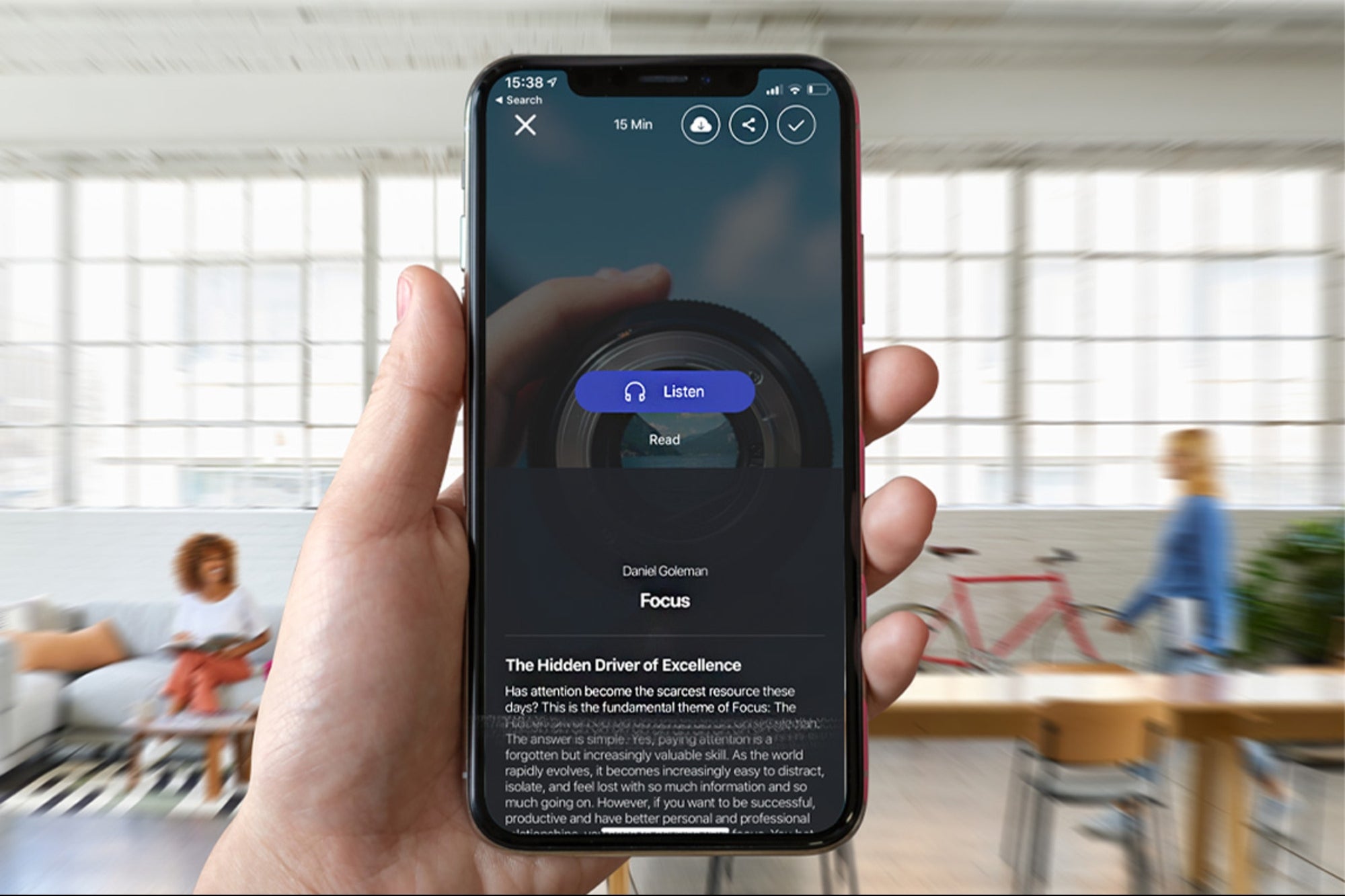
Get 1,800+ Titles Condensed into 12-Minute Micro-Books for Just $40 with Lifetime Access

Disclosure: Our goal is to feature products and services that we think you’ll find interesting and useful. If you purchase them, Entrepreneur may get a small share of the revenue from the sale from our commerce partners.

For entrepreneurs and business leaders, the challenge isn’t finding valuable books—it’s finding time to read them. Between back-to-back meetings, managing a team, and keeping an eye on the market, even carving out an hour a day can feel like a luxury. But knowledge doesn’t have to wait for the rare moments when you have a free weekend.

The 12min Micro Book Library trims bestselling titles down to concise, actionable insights that can be read or listened to in about 12 minutes. With lifetime access, you’ll tap into 1,800+ titles across 24 categories and get 30 new additions every month, all designed to keep you learning without slowing down your schedule.

Imagine digesting the core ideas of The 7 Habits of Highly Effective People before your morning coffee or listening to The Subtle Art of Not Giving a F*ck on your commute. Instead of skimming or abandoning books halfway through, you’ll walk away with the key lessons—ready to apply them to your business, career, or personal goals.

The library supports English, Spanish, and Portuguese, works offline, and even syncs with your Kindle. That means whether you’re flying to meet investors, taking a break between calls, or catching up on strategy while commuting, your personal book vault travels with you.

For leaders who believe continuous learning is part of staying competitive, this is one of the most efficient ways to keep your edge sharp—without adding another subscription or calendar block to your day.

Get lifetime access to the 12min Micro Book Library for just $39.99 (MSRP: $399.90) while it’s still on sale.

12min Micro Book Library: Lifetime Premium Subscription

See Deal

StackSocial prices subject to change.

For entrepreneurs and business leaders, the challenge isn’t finding valuable books—it’s finding time to read them. Between back-to-back meetings, managing a team, and keeping an eye on the market, even carving out an hour a day can feel like a luxury. But knowledge doesn’t have to wait for the rare moments when you have a free weekend.

The 12min Micro Book Library trims bestselling titles down to concise, actionable insights that can be read or listened to in about 12 minutes. With lifetime access, you’ll tap into 1,800+ titles across 24 categories and get 30 new additions every month, all designed to keep you learning without slowing down your schedule.

Imagine digesting the core ideas of The 7 Habits of Highly Effective People before your morning coffee or listening to The Subtle Art of Not Giving a F*ck on your commute. Instead of skimming or abandoning books halfway through, you’ll walk away with the key lessons—ready to apply them to your business, career, or personal goals.

The rest of this article is locked.

Join Entrepreneur+ today for access.

https://www.entrepreneur.com/living/get-1800-titles-condensed-into-12-minute-micro-books-for/496681


Save $80 on Lifetime Access to the Latest MS Office Apps

Disclosure: Our goal is to feature products and services that we think you’ll find interesting and useful. If you purchase them, Entrepreneur may get a small share of the revenue from the sale from our commerce partners.

Running a business today means efficiency matters more than ever. Between client emails, financial spreadsheets, and polished presentations, having the right tools on your desktop can make or break productivity. That’s why having the most modern software to support you is key.

Microsoft Office 2024 Home & Business is the latest, tech-forward iteration of the widely used Office suite. It’s also currently on sale for just $169.97 (MSRP: $249.99) for either Mac or PC.

Unlike subscription-based alternatives, this one-time purchase gives you permanent access to Word, Excel, PowerPoint, Outlook, and OneNote—the backbone apps businesses rely on daily. The 2024 release is more than just familiar icons: it introduces AI-powered suggestions, improved Excel data insights, enhanced PowerPoint storytelling tools, and a modernized Fluent Design interface that looks and feels streamlined across every device.

For business leaders, the collaboration features stand out. Co-authoring lets teams edit in real time, Outlook has improved accessibility checks to ensure communications remain professional, and PowerPoint now supports full voice and video recording — ideal for remote pitches or client updates. Excel’s AI-driven analysis also helps entrepreneurs spot trends and make faster, more informed decisions.

Another key advantage is security. Office 2024 strengthens protection against malicious add-ins, while Outlook makes email safety and organization easier to manage at scale. And because this is a lifetime license tied to your Microsoft account, there’s no recurring cost, no surprise renewals—just dependable productivity software for the long haul.

For business owners looking to upgrade their workflow without adding another monthly subscription to the books, this Office 2024 lifetime deal is a straightforward win.

Pick up a lifetime Office 2024 Home & Business license while it’s just $169.97 (MSRP: $249.99) for a limited time.

Microsoft Office 2024 Home & Business for Mac or PC Lifetime License

See Deal

StackSocial prices subject to change.

Running a business today means efficiency matters more than ever. Between client emails, financial spreadsheets, and polished presentations, having the right tools on your desktop can make or break productivity. That’s why having the most modern software to support you is key.

Microsoft Office 2024 Home & Business is the latest, tech-forward iteration of the widely used Office suite. It’s also currently on sale for just $169.97 (MSRP: $249.99) for either Mac or PC.

Unlike subscription-based alternatives, this one-time purchase gives you permanent access to Word, Excel, PowerPoint, Outlook, and OneNote—the backbone apps businesses rely on daily. The 2024 release is more than just familiar icons: it introduces AI-powered suggestions, improved Excel data insights, enhanced PowerPoint storytelling tools, and a modernized Fluent Design interface that looks and feels streamlined across every device.

The rest of this article is locked.

Join Entrepreneur+ today for access.

https://www.entrepreneur.com/science-technology/save-90-on-lifetime-access-to-the-latest-microsoft-office/496680


Optimize Your Budget With a $50 Sam’s Club Membership and $35 in Rewards

Disclosure: Our goal is to feature products and services that we think you’ll find interesting and useful. If you purchase them, Entrepreneur may get a small share of the revenue from the sale from our commerce partners.

Running a business or side hustle comes with enough costs. Your supplies, snacks, tools, and tech shouldn’t be one of them. With a Sam’s Club Membership, you get direct access to bulk pricing and high-quality inventory across nearly every category, from office breakroom staples to laptops, smart appliances, and furniture. And right now, new members pay just $50 and get $35 in Sam’s Cash to spend on whatever your business needs for the year.

This offer is designed specifically for new U.S. members and gives you a full year of membership benefits, including a complimentary household card for additional team savings. It’s perfect for small business owners, solo operators, freelancers, and teams looking to stretch their spend across food, operations, and client perks.

You’ll also unlock exclusive discounts on travel, car rentals, entertainment, and more — so the value doesn’t stop at your shopping cart. With the Sam’s Club mobile app and Scan & Go checkout, you can streamline the in-store experience and stay focused on what matters most: running your business efficiently.

Unlike other retailers, Sam’s Club operates on a curated, limited-item model, meaning each product is selected for quality, reliability, and value. And with nearly 600 U.S. locations, plus a robust online shopping experience, your next restock is never far away.

To get started, redeem your code within 30 days of purchase. Your membership is valid for one year from activation and auto-renews unless canceled.

For a limited time, join Sam’s Club for $50 for a one-year membership to get $35 in Sam’s Cash, and start turning everyday purchases into big-time business wins.

StackSocial prices subject to change.

Running a business or side hustle comes with enough costs. Your supplies, snacks, tools, and tech shouldn’t be one of them. With a Sam’s Club Membership, you get direct access to bulk pricing and high-quality inventory across nearly every category, from office breakroom staples to laptops, smart appliances, and furniture. And right now, new members pay just $50 and get $35 in Sam’s Cash to spend on whatever your business needs for the year.

This offer is designed specifically for new U.S. members and gives you a full year of membership benefits, including a complimentary household card for additional team savings. It’s perfect for small business owners, solo operators, freelancers, and teams looking to stretch their spend across food, operations, and client perks.

You’ll also unlock exclusive discounts on travel, car rentals, entertainment, and more — so the value doesn’t stop at your shopping cart. With the Sam’s Club mobile app and Scan & Go checkout, you can streamline the in-store experience and stay focused on what matters most: running your business efficiently.

The rest of this article is locked.

Join Entrepreneur+ today for access.

https://www.entrepreneur.com/living/optimize-your-budget-with-a-50-sams-club-membership-and/496692


Is This Where Future Business Owners Will Start Their Education?

Disclosure: Our goal is to feature products and services that we think you’ll find interesting and useful. If you purchase them, Entrepreneur may get a small share of the revenue from the sale from our commerce partners.

In the early stages of running a business, your venture lives or dies based on your expertise. Before you have your own skilled team, everything is on you: management, marketing, data analysis, everything. It sounds intimidating, but there are actually ways to get a broad education in the skills you’re looking for.

EDU Unlimited is a learning platform with more than 1,000 courses across subjects, so you can refine all your essential skills in one place. Right now, lifetime access is also on sale for only $19.97.

What can EDU Unlimited teach you?

This platform gives you unlimited access to beginner and advanced courses in business, IT, graphic design, coding, finance, digital marketing, and more. Whether you’re building a website, developing a product, or managing your own bookkeeping, you’ll find courses designed to help you grow your skill set. New content is added regularly, so you can stay current with the tools and trends that matter most.

You also get course certifications, access to quarterly instructor webinars, and simple progress tracking to keep you on task. Lessons are self-paced and easy to follow, whether you’re squeezing in a few hours after work or dedicating full days to leveling up.

EDU Unlimited works on desktop and mobile, with no limit to how many devices you can use. After redeeming your code, you have lifetime access with no subscription fees or added charges. That makes this a one-time investment in a long-term learning resource.

If you’re building something from the ground up, having the right knowledge makes a difference. EDU Unlimited gives you the flexibility to learn what you need, when you need it.

Right now, it’s only $19.97 to get lifetime access to EDU Unlimited, but it won’t stay that way.

EDU Unlimited by StackSkills: Lifetime Access

See Deal

StackSocial prices subject to change.

In the early stages of running a business, your venture lives or dies based on your expertise. Before you have your own skilled team, everything is on you: management, marketing, data analysis, everything. It sounds intimidating, but there are actually ways to get a broad education in the skills you’re looking for.

EDU Unlimited is a learning platform with more than 1,000 courses across subjects, so you can refine all your essential skills in one place. Right now, lifetime access is also on sale for only $19.97.

What can EDU Unlimited teach you?

The rest of this article is locked.

Join Entrepreneur+ today for access.

https://www.entrepreneur.com/starting-a-business/is-this-where-future-business-owners-will-start-their/496632


This ChatGPT Agent Predicted a Viral Trend in 15 Minutes — Then My Content Took Off

Opinions expressed by Entrepreneur contributors are their own.

Most solopreneurs are still throwing content at the wall — hoping something sticks.

But ChatGPT’s new Agent doesn’t guess. It predicts what’s about to go viral — and helps you post it before anyone else does.

This isn’t another AI writing tool. It’s a fully autonomous strategist that scans Reddit, Substack and YouTube in real time to find breakout trends, reverse-engineer what’s working and map out a full content plan that actually ranks.

In this video, I’ll show you how I used it to spot a viral trend in under 15 minutes — and how it ranked my content top two on major media sites within 48 hours.

Here’s what you’ll discover:

  • Viral trend prediction: How the Agent identifies breakout ideas before they hit the news — so you publish first, not last.
  • Content that ranks: Why this Agent outperforms keyword tools — and builds you a smarter strategy in minutes.
  • Competitor breakdowns: How it dissects emotional hooks, pacing, and title formulas from the top-performing videos in your niche.
  • Weekly content calendars: The exact prompt I use to build a full week of content ideas in under 10 minutes.

Because the truth is, in 2025, you’re either guessing — or predicting. Let this be your edge before everyone else catches up.

The AI Success Kit is available to download for free, along with a chapter from my new book, The Wolf is at The Door.

Most solopreneurs are still throwing content at the wall — hoping something sticks.

But ChatGPT’s new Agent doesn’t guess. It predicts what’s about to go viral — and helps you post it before anyone else does.

This isn’t another AI writing tool. It’s a fully autonomous strategist that scans Reddit, Substack and YouTube in real time to find breakout trends, reverse-engineer what’s working and map out a full content plan that actually ranks.

The rest of this article is locked.

Join Entrepreneur+ today for access.

https://www.entrepreneur.com/business-news/this-chatgpt-agent-predicted-a-viral-trend-in-15-minutes/496738


This Is How Senior Leaders Are Using AI at Work, According to a Google Survey

AI is making a mark in marketing, security, and customer experience, according to a new Google Cloud report, which surveyed 3,500 senior leaders at global companies to find a clear use case for AI — and figure out if leaders had seen a return on their AI investments.

Each leader surveyed works for a business that earns at least $10 million in annual revenue, has at least 100 employees, and leverages generative AI. The majority of respondents (55%) indicated that AI was a useful marketing tool, helping them with tasks like data analysis, content generation, and editing. Nearly 60% of executives at media and entertainment firms indicated that AI had a positive impact on their marketing efforts.

Related: 37% of Employers Would Rather Hire a Robot or AI Than a Recent Grad: ‘Theory Alone Is No Longer Enough’

Security was also an area where AI was useful to executives, according to the report. AI security tools combat cyberthreats by automatically detecting intruders and analyzing incidents. Almost half of executives (49%) said in the survey that AI helped with cybersecurity. Of that group, 53% stated that AI had diminished the number of security incidents reported in their organizations.

Executives also found that AI improved customer experience. Close to 62% of leaders said that AI had enabled them to deliver better customer service, an increase from 59% of respondents who answered the same survey in 2024. Three in four leaders said customer satisfaction improved as a result of AI this year.

The survey also sought to uncover whether AI had delivered a strong return on investment for organizations. Only 40% of respondents stated that AI had directly caused revenue growth for their companies, but 70% said that AI had made employees more productive.

Related: AI Agents Can Help Businesses Be ’10 Times More Productive,’ According to a Nvidia VP. Here’s What They Are and How Much They Cost.

Google Cloud’s VP of Global Generative AI, Oliver Parker, wrote that the report indicated that AI hype in organizations is calming down.

“The conversation has shifted to value,” he wrote.

The report’s findings contrast with research published last month by MIT, which found that though U.S. businesses have invested up to $40 billion in AI altogether, the overwhelming majority (95%) have yet to see a return on their investments or an impact on profits.

AI is making a mark in marketing, security, and customer experience, according to a new Google Cloud report, which surveyed 3,500 senior leaders at global companies to find a clear use case for AI — and figure out if leaders had seen a return on their AI investments.

Each leader surveyed works for a business that earns at least $10 million in annual revenue, has at least 100 employees, and leverages generative AI. The majority of respondents (55%) indicated that AI was a useful marketing tool, helping them with tasks like data analysis, content generation, and editing. Nearly 60% of executives at media and entertainment firms indicated that AI had a positive impact on their marketing efforts.

Related: 37% of Employers Would Rather Hire a Robot or AI Than a Recent Grad: ‘Theory Alone Is No Longer Enough’

The rest of this article is locked.

Join Entrepreneur+ today for access.

https://www.entrepreneur.com/business-news/google-report-this-is-how-leaders-are-using-ai-at-work/496792


Smart Tax Moves If You Have Multiple Income Streams in 2025

Opinions expressed by Entrepreneur contributors are their own.

There’s a common debate about whether to diversify your income or stay specialized, although the statistics are factual. Nearly half of Americans have at least two revenue streams, and multimillionaires have at least seven. The reason is simple. Having multiple income streams equips you with options and provides you with financial stability.

Once you decide to have multiple revenue streams or you already have them, the most critical thing to keep in mind is taxes and remaining compliant. However, more crucial is to plan so you have plenty of time to define a strategy and save for tax payments. Never wait until the last moment.

Step 1: Treat each income stream like a business

Whether you earn a W-2 salary, work as a freelancer or contractor, consult, rent properties, or trade stocks and other assets, each activity follows its own set of tax rules.

You wouldn’t declare Airbnb earnings under your payroll, for example. First, you must set up the correct legal entity, such as a single-member LLC, S-Corp or C-Corp. Ticking the right boxes can significantly reduce your liability. A building contractor with multiple earning streams might benefit from switching from an LLC to an S-Corp, which could potentially save you up to $20,000 in taxes.

Related: What Is an LLC? Here’s How It Works.

If you own properties and rent them out, you will want to separate your expenses. It can boost deductions significantly. It is also a way to accelerate depreciation write-offs, allowing you to retain more cash now instead of waiting 20 years.

If you are selling one or several properties, you need to check out a 1031 to defer capital gains taxes by rolling your profits into a different investment.

Step 2: Pay taxes as if your life depended on it

This year, you cashed in on consulting, bonuses, stock options or a side gig. Think ahead, because you don’t want April to bring an unexpected tax bill that devastates your cash flow. That’s the reality for many who ignore quarterly taxes.

So, set aside 25 to 30% of every non-W-2 dollar. Track earnings, make quarterly payments and avoid penalties or fines or both. Vendors accept payments quarterly. You should treat IRS installments the same way.

Related: How Smart Entrepreneurs Turn Mid-Year Tax Reviews Into Long-Term Financial Wins

Step 3: Track your deductions all year round

Most people wait until March, then frantically search through their emails for receipts and invoices. Not a good idea. Start thinking about taxes in July, when you can make smart, sensible and timely moves. If you are a freelancer or contractor, you may deduct expenses such as your home office, internet bill and travel to meetings with clients, including business lunches.

Please don’t become the entrepreneur who misses a $3,000 gasoline deduction because they didn’t track their mileage to all those meetings and lunches. There’s no need to go to extremes, either, so don’t try to claim dog grooming or any other suspicious “business expense,” as it will raise red flags.

“The optimal tax strategy isn’t always about pushing every possible benefit to its limit — it’s often about creating a framework that allows for consistent, long-term, justifiable tax efficiency,” said George Dimov, CPA, who helps professionals navigate the complex tax and planning system.

It’s a good idea to maintain all your records in a spreadsheet or app to log expenses as they happen, and you’ll thank yourself when tax season arrives.

Related: Why Mid-Year Tax Reviews Are a Must for First-Time Entrepreneurs

Step 4: Expats, don’t miss these tax breaks

If you are a US citizen earning abroad, operating a business from Thailand, or consulting for clients in Europe, taxes can become overwhelming. Tax law has a provision that allows approximately $120,000 of foreign-earned income to be excluded from US taxes. Be sure to check this number annually, as the exact amount changes frequently.

The foreign tax credit can also save you from paying taxes twice if you are taxed overseas. However, you must report all relevant information, including foreign businesses, bank accounts and even small investments. There are fines of about $10,000 for failing to report a foreign bank account.

Research as much as you can about international taxes or consult an expert who knows the subject and can save you time, trouble, and money.

Related: 5 Tips for Finding the Tax Advisor Who Will Save You Millions

Bottom line: multiple streams call for multiple planning layers

More income streams mean more options, but also more tax complexity. Success lies in structure, timing, and ongoing management. Structure your entity to match your objectives. Pay quarterly. Plan mid-year. Track everything. However, taxes don’t have to be a nightmare.

There’s a common debate about whether to diversify your income or stay specialized, although the statistics are factual. Nearly half of Americans have at least two revenue streams, and multimillionaires have at least seven. The reason is simple. Having multiple income streams equips you with options and provides you with financial stability.

Once you decide to have multiple revenue streams or you already have them, the most critical thing to keep in mind is taxes and remaining compliant. However, more crucial is to plan so you have plenty of time to define a strategy and save for tax payments. Never wait until the last moment.

Step 1: Treat each income stream like a business

The rest of this article is locked.

Join Entrepreneur+ today for access.

https://www.entrepreneur.com/money-finance/smart-tax-moves-if-you-have-multiple-income-streams/496375