AI Could Cause 99% of All Workers to Be Unemployed in the Next Five Years, Says Computer Science Professor

A computer science professor is warning that advanced AI could be developed within the next couple of years, leading to mass unemployment by 2030.

On a recent episode of “The Diary of a CEO” podcast, University of Louisville Computer Science Professor Roman Yampolskiy warned that AI could cause “99%” of all workers to be unemployed by 2030. Yampolskiy said that artificial general intelligence systems (AGI) that are as capable as humans would likely be developed by 2027, leading to a labor market collapse three years later. He predicted that AI would provide “trillions of dollars” of “free labor,” giving employers a better option for their employment needs.

“You have free labor, physical and cognitive, trillions of dollars of it,” Yampolskiy said. “It makes no sense to hire humans for most jobs if I can just get a $20 subscription or a free model to do what an employee does.”

Related: Microsoft AI CEO Warns That ‘Dangerous’ and ‘Seemingly Conscious’ AI Models Could Arrive in the Next 2 Years: ‘Deserves Our Immediate Attention’

Yampolskiy predicted that any job on a computer would immediately be automated once AGI arrives and that humanoid robots would take over physical labor jobs within the next five years, leading to unprecedented levels of unemployment.

“So we’re looking at a world where we have levels of unemployment we’ve never seen before,” Yampolskiy said on the podcast. “Not talking about 10% unemployment, which is scary, but 99%.”

The only jobs left will be those that humans prefer another human to do for them, Yampolskiy said. AI will “very quickly” gain the capacity to take over other human occupations, including teachers, analysts, and accountants, he predicted.

Yampolskiy claims to have coined the term “AI safety” in a 2011 article and has since published more than 100 papers on AI’s dangers. He has written multiple books, including his 2025 book “Considerations on the AI Endgame: Ethics, Risks and Computational Frameworks.”

Related: The ‘Godfather of AI’ Says Artificial Intelligence Needs Programming With ‘Maternal Instincts’ or Humans Could End Up Being ‘Controlled’

In the podcast interview, Yampolskiy said that even coding and prompt engineering weren’t safe from automation. AI can design prompts for AI “way better” than any human, he stated.

Retraining is also impossible in this new reality because AI will automate all jobs and “there is no plan B,” Yampolskiy said.

Yampolskiy’s predictions match the forecasts made by other AI experts. Geoffrey Hinton, known as the “Godfather of AI” due to his pioneering work in the subject, stated in June that AI is going to “replace everybody” in white collar jobs. He challenged the idea that AI would create new jobs, pointing out that if AI automates tasks, there would be no jobs for people to do.

Meanwhile, in May, Anthropic CEO Dario Amodei stated that AI would eliminate half of all entry-level, white-collar jobs within the next one to five years, causing unemployment to reach a high of 20%.

Related: ‘When I Get Paid, You Get Paid’: Software Engineers Looking for Work Are Promising $10,000 or More to Anyone Who Can Help Them Land a Job

A computer science professor is warning that advanced AI could be developed within the next couple of years, leading to mass unemployment by 2030.

On a recent episode of “The Diary of a CEO” podcast, University of Louisville Computer Science Professor Roman Yampolskiy warned that AI could cause “99%” of all workers to be unemployed by 2030. Yampolskiy said that artificial general intelligence systems (AGI) that are as capable as humans would likely be developed by 2027, leading to a labor market collapse three years later. He predicted that AI would provide “trillions of dollars” of “free labor,” giving employers a better option for their employment needs.

“You have free labor, physical and cognitive, trillions of dollars of it,” Yampolskiy said. “It makes no sense to hire humans for most jobs if I can just get a $20 subscription or a free model to do what an employee does.”

The rest of this article is locked.

Join Entrepreneur+ today for access.

https://www.entrepreneur.com/business-news/ai-could-lead-to-mass-joblessness-within-the-next-5-years/496742
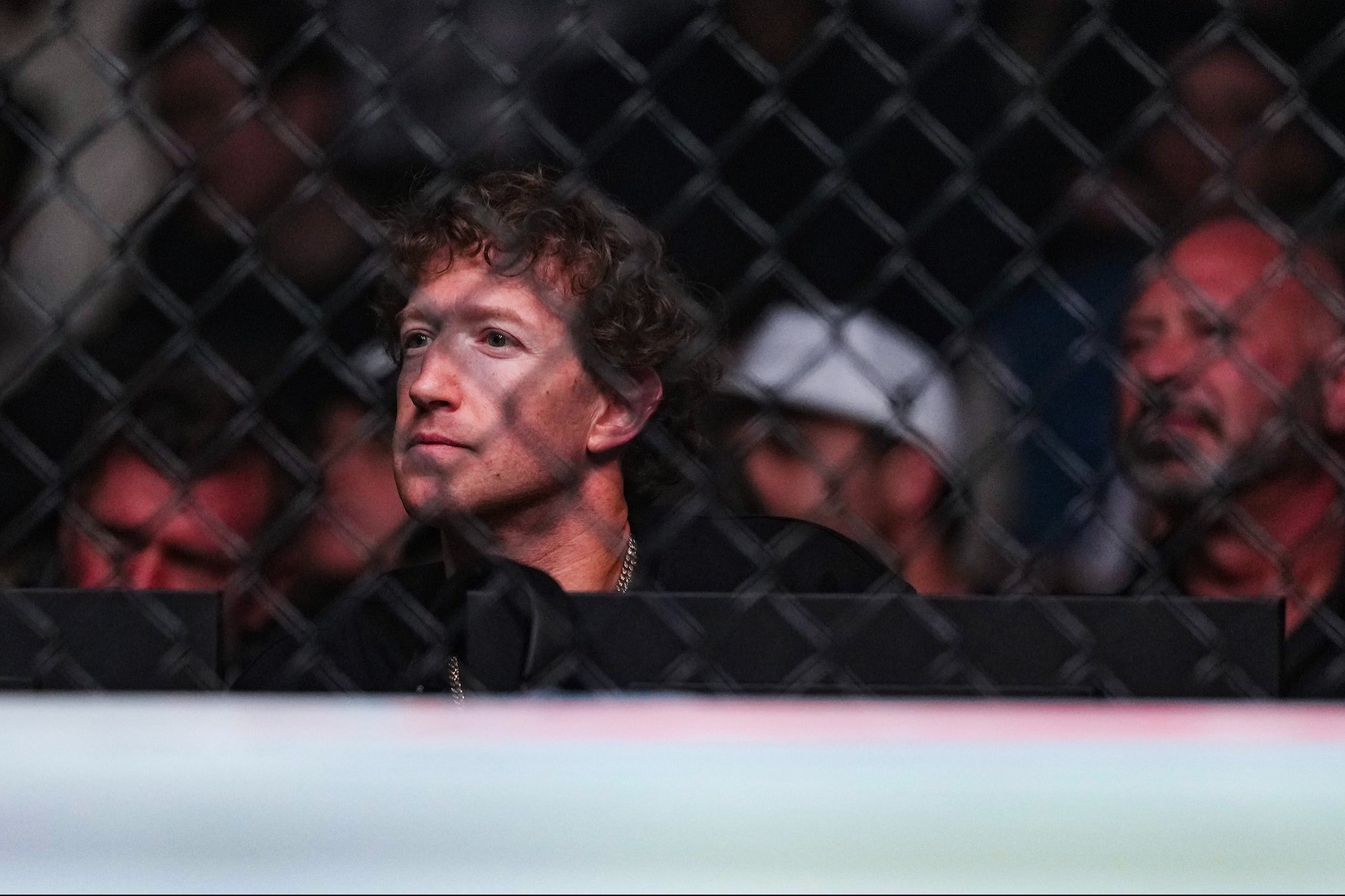


Mark Zuckerberg ‘Insisted’ Executives Join Him For a MMA Training Session, According to Meta’s Ex-President of Global Affairs

Mark Zuckerberg loves MMA so much that he’s rented out entire arenas, sparred on a barge, had major surgery to fix a fighting injury, won medals, and built a “backyard” octagon at his Ko’olau Ranch compound in Hawaii. And according to a new book by the former president of global affairs at Meta, Zuckerberg even asked some company leaders to get on the mat.

“Mark’s commitment to MMA is so strong that he insisted one morning, during a management offsite, that some of his most senior executives join him for a training session,” wrote Nick Clegg in his soon-to-be-released book, How to Save the Internet (Penguin; November 11, 2025).

Related: Mark Zuckerberg’s Daily Routine: The Schedule of the Meta CEO Who Wears the Same Thing Every Day and Trains with MMA Fighters

Fast Company reports that, in the book, Clegg details one particularly uncomfortable-sounding scene, when he is being straddled on the mat by a colleague in a “Domination Mount” maneuver.

Clegg wrote it was “too close for comfort,” the outlet notes.

Meta investors have been warned in official filings that Zuckerberg and other members of management participate “in various high-risk activities, such as combat sports, extreme sports, and recreational aviation, which carry the risk of serious injury and death.”

The book also looks at the future of AI and how social media has changed the world, but as Semafor reports, if you’re looking for a tell-all about the inner workings of Meta, this is not it.

Related: ‘I Love This Sport’: Mark Zuckerberg’s Meta Enters Into ‘Massive Partnership’ With UFC

Mark Zuckerberg loves MMA so much that he’s rented out entire arenas, sparred on a barge, had major surgery to fix a fighting injury, won medals, and built a “backyard” octagon at his Ko’olau Ranch compound in Hawaii. And according to a new book by the former president of global affairs at Meta, Zuckerberg even asked some company leaders to get on the mat.

“Mark’s commitment to MMA is so strong that he insisted one morning, during a management offsite, that some of his most senior executives join him for a training session,” wrote Nick Clegg in his soon-to-be-released book, How to Save the Internet (Penguin; November 11, 2025).

Related: Mark Zuckerberg’s Daily Routine: The Schedule of the Meta CEO Who Wears the Same Thing Every Day and Trains with MMA Fighters

The rest of this article is locked.

Join Entrepreneur+ today for access.

https://www.entrepreneur.com/business-news/mark-zuckerberg-insisted-i-attend-mma-training-ex-meta-exec/496737


You Can Get Paid $18,000 More a Year By Adding AI Skills to Your Resume, According to a New Study

It pays to have AI skills — nearly $20,000 more per year on average.

A recent study conducted by the job insight website LightCast analyzed over a billion job postings and found that employers are not only looking for workers with AI skills — they are also paying them more.

“Job postings are increasingly emphasizing AI skills, and there are signals that employers are willing to pay premium salaries for them,” LightCast’s Head of Global Research Elena Magrini told CNBC.

Related: Google Reportedly Told Its Staff to Use AI More or Risk Falling Behind: ‘It Seems Like a No-Brainer’

The study found that job postings that asked for AI skills paid 28% more, or around $18,000, than jobs that didn’t require AI. Jobs requiring two or more AI skills paid 43% more.

The roles with the highest differences in pay between workers with AI skills and those without were in the fields of customer support, sales, and manufacturing.

There are now over 300 possible AI skills, according to LightCast, from generative AI to AI ethics to autonomous driving and robotics. But the most common AI skills employers requested were two of the most mainstream — ChatGPT or Microsoft Copilot.

In a surprising twist, non-technical sectors demanded AI skills more than technical ones, according to LightCast’s report. Since November 2022, when ChatGPT launched, demand for generative AI skills shot up by 800% for non-technical roles.

Related: These 3 Professions Are Most Likely to Vanish in the Next 20 Years Due to AI, According to a New Report

A recent report from The Wall Street Journal found that entry-level college graduates are getting six- or seven-figure salaries right out of school because of their proficiency with AI. Databricks, a data analytics firm, is planning to hire triple the number of recent graduates this year compared to last year because of these young workers’ ability to use AI, the company told The Journal.

While learning AI may give workers a boost in salary negotiations, the technology also has the potential to replace entry-level employees. A Stanford University study released last week found that AI-impacted jobs, like software developers, customer service representatives, and accountants, saw employment for workers ages 22 to 25 decline by 13% over the past three years.

“There’s definitely evidence that AI is beginning to have a big effect,” the study’s first author and Stanford Professor Erik Brynjolfsson told Axios about the report.

It pays to have AI skills — nearly $20,000 more per year on average.

A recent study conducted by the job insight website LightCast analyzed over a billion job postings and found that employers are not only looking for workers with AI skills — they are also paying them more.

“Job postings are increasingly emphasizing AI skills, and there are signals that employers are willing to pay premium salaries for them,” LightCast’s Head of Global Research Elena Magrini told CNBC.

The rest of this article is locked.

Join Entrepreneur+ today for access.

https://www.entrepreneur.com/business-news/adding-ai-skills-to-your-resume-can-boost-your-salary-study/496735


United Airlines Says It Is Adding Extra Flights in Case Spirit ‘Suddenly Goes Out of Business’

Spirit Airlines filed for Chapter 11 bankruptcy protection for the second time in less than a year last week and announced that it’s ending service to a dozen cities in October. Now, rival airlines are swooping in.

On the heels of the bankruptcy news last week, Frontier Airlines, which has a 35% overlap with Spirit on routes, per CNBC, announced it is adding 20 new routes this winter. And on Thursday, United Airlines launched ticket sales for 15 new flights beginning January 6 for Spirit-heavy hubs, such as Chicago, Houston, Las Vegas, Fort Lauderdale, and Orlando.

Related: Spirit Airlines Issues New Dress Code After Last Year’s Viral Crop Top Incident

“If Spirit suddenly goes out of business, it will be incredibly disruptive, so we’re adding these flights to give their customers other options if they want or need them,” said Patrick Quayle, United’s senior vice president of global network planning and alliances, in a press release.

In response to United and Quayle’s quip, Spirit’s Senior Vice President of Corporate Communications, Duncan Dee, told Entrepreneur in a statement that it is “wishful thinking on the part of a high-cost airline looking to eliminate a low-cost competitor” and the company is “focused on competing and running a great operation,” though it appreciates “the obsession certain airline executives have with us.”

“Spirit is responsible for making low fares available to consumers for more than 30 years, whether they fly with us or not,” the statement says. “We have every expectation to continue doing so for many years to come.”

The cities Spirit is exiting in October include: Albuquerque, New Mexico; Birmingham, Alabama; Boise, Idaho; Chattanooga, Tennessee; Columbia, South Carolina; Macon, Georgia; Portland, Oregon; Salt Lake City, Utah; and four California cities (Oakland, San Diego, Sacramento, and San Jose).

“We apologize to our Guests for any inconvenience this may cause and will reach out to those with affected reservations to notify them of their options, including a refund,” Spirit said in a statement about the cancellations.

Related: These Are the Busiest Airports in the World, According to a New Ranking

Spirit Airlines filed for Chapter 11 bankruptcy protection for the second time in less than a year last week and announced that it’s ending service to a dozen cities in October. Now, rival airlines are swooping in.

On the heels of the bankruptcy news last week, Frontier Airlines, which has a 35% overlap with Spirit on routes, per CNBC, announced it is adding 20 new routes this winter. And on Thursday, United Airlines launched ticket sales for 15 new flights beginning January 6 for Spirit-heavy hubs, such as Chicago, Houston, Las Vegas, Fort Lauderdale, and Orlando.

Related: Spirit Airlines Issues New Dress Code After Last Year’s Viral Crop Top Incident

The rest of this article is locked.

Join Entrepreneur+ today for access.

https://www.entrepreneur.com/business-news/spirit-airlines-cuts-12-cities-from-schedule-amid-bankruptcy/496732


Here’s the Real Reason Your Employees Are Checked Out — And the Missing Link That Could Fix It

Opinions expressed by Entrepreneur contributors are their own.

Only 21% of employees are engaged at work, according to a global Gallup study. That means most people are physically present but emotionally checked out, simply going through the motions.

It’s easy to blame burnout or post-pandemic fatigue. But a big part of the problem lies in how organizations communicate — how they welcome new hires, train employees, run meetings and celebrate success (or fail to).

Think about it:

  • We create lengthy culture decks without explaining why those values matter.
  • We overwhelm new hires with info dumps labeled as “training.”
  • We run meetings on autopilot.
  • We throw around buzzwords like “empowerment” and “alignment” without making people feel truly seen or connected.

And then we wonder why engagement is so low.

The truth? Engagement starts with connection — and connection starts with better communication.

That’s where storytelling comes in.

Storytelling isn’t just for marketing or TED Talks. It’s one of the most powerful ways to build trust, share values and spark genuine human connection. If you’re not weaving a story throughout the employee journey, you’re missing one of your strongest levers for engagement.

Related: Quiet Quitting Is Dividing the Workforce. Here’s How to Bring Everyone Back Together.

Where storytelling makes a difference

1. Recruiting: Share the story, not just the specs
Recruiting shouldn’t feel like filling out a resume checklist. Instead of leading with pay and perks, lead with why your company exists. What problem are you solving? What inspired you to start? When candidates hear authentic stories — especially from founders or early team members — they don’t just see a job. They see a mission they want to join.

2. Onboarding: Make it stick through a story
Most onboarding feels like drinking from a firehose — policies, procedures, manuals — that quickly get forgotten. But stories are up to 22 times more memorable than facts alone, according to research. Wrap your onboarding content in stories: how your product changed a customer’s life, challenges that shaped your culture, lessons learned along the way. Think of onboarding as the opening chapter in an employee’s personal work story — make it compelling so they want to keep reading.

3. Engagement: Keep the story going
New hires start excited, but that enthusiasm often fades when storytelling stops after onboarding. Engagement isn’t a one-time event; it’s a rhythm. Make storytelling part of your team culture. In meetings, invite people to share wins, challenges, or moments they felt connected to their work. Sharing stories builds empathy, energy, and belonging — even over Zoom.

4. Recognition: Celebrate with heart
“Great job” is nice, but “Great job, and here’s why it mattered” is powerful. Recognition tied to stories shows the whole team what behaviors and values are truly important to the company. It shows what “great” looks like, making appreciation tangible and meaningful. For example: “James stayed late to fix a customer issue, followed up the next day and turned frustration into loyalty. That’s living our value of going the extra mile.”

Related: Are You Recognizing Your Employees? If Not, They’re Twice as Likely to Quit

Engagement is built one story at a time

Humans are wired for story. It’s how we understand the world, remember lessons and connect with each other.

If only 21% of employees are engaged, maybe it’s time to stop relying solely on policies, programs and PowerPoints — and start speaking to the human side of people.

Storytelling isn’t fluff or extra. It’s a strategic communication tool that transforms how employees relate to their work, their teammates and your mission.

So whether you’re hiring, training, managing or recognizing — start with a story.

Your people will thank you for it.

Only 21% of employees are engaged at work, according to a global Gallup study. That means most people are physically present but emotionally checked out, simply going through the motions.

It’s easy to blame burnout or post-pandemic fatigue. But a big part of the problem lies in how organizations communicate — how they welcome new hires, train employees, run meetings and celebrate success (or fail to).

Think about it:

The rest of this article is locked.

Join Entrepreneur+ today for access.

https://www.entrepreneur.com/growing-a-business/heres-the-real-reason-your-employees-are-checked-out/495440


The Difference Between Entrepreneurs Who Survive Crises and Those Who Don’t

Opinions expressed by Entrepreneur contributors are their own.

When we imagine power, we often think of prestigious titles, millions of followers or frequent media appearances. But in entrepreneurial practice, these are fragile assets: A single crisis can erase them in hours. The difference between those who survive and those who vanish? Reputation — an invisible form of capital that decides whether people will still follow you when the lights go out.

Today, in the age of artificial intelligence and instant communication, reputation functions as a credibility algorithm. It’s not measured in views or likes, but in consistency, perceived authority and the ability to inspire trust, even in uncertainty.

Research by Willis and Todorov at Princeton University demonstrates that people form judgments about trustworthiness, competence and other characteristics after just 100 milliseconds of exposure to unfamiliar faces. Additional studies from the University of Glasgow show that humans form trustworthiness judgments within the first 500 milliseconds of hearing someone’s voice.

As Todorov, Baron and Oosterhof found, threat and trustworthiness perceptions are processed particularly rapidly, determining basic approach/avoidance responses. These evolutionary mechanisms, designed for survival in complex social contexts, today determine the success or failure of leaders and entrepreneurs in a hyperconnected world.

Related: How to Build a Reputation That Will Become a Real Asset for You

The invisible power of strategic silence

Among the most underrated strategies for protecting reputation, silence holds a special place. It is not passivity; it’s an intentional, active choice. Deciding not to react immediately to a provocation buys time to think, assess and respond surgically.

Silence has a precise psychological effect: It frustrates your attacker, often pushing them to overplay their hand and make mistakes. This dynamic is well known in negotiation — those who can tolerate pauses and gaps often control the rhythm and content of the exchange. Research in cognitive psychology shows that during moments of silence, people tend to fill conversational voids with their own thoughts and anxieties, often revealing more than they initially intended.

I witnessed this principle firsthand during a pre-Christmas Saturday in a crowded supermarket when half the cashiers suddenly went on strike. Instead of issuing press releases or excuses, management chose silence. Within 20 minutes, operations were reorganized, and five volunteers began handing out panettone to customers. No words — just tangible actions. The result? A stronger corporate reputation.

This example illustrates how direct action, unmediated by explanations, can transform a potential reputational crisis into an opportunity for brand strengthening. Customers remembered not the initial inconvenience, but the speed and humanity of the response.

Anticipating crises with the “minefield map”

Reputation management cannot be improvised. One effective method is to create a “minefield map” — a plan that identifies vulnerabilities and potential crisis points in advance. This tool, kept confidential until the right moment, guides decisions during chaos, when clarity risks giving way to emotion.

The map should include specific scenarios: social media attacks, criticism from competitors, unexpected operational problems and ethical or legal controversies. For each scenario, three things must be predefined: who speaks (and who stays silent), what is said (or not said) and when action is taken. This preparation is not strategic paranoia, but operational intelligence.

Anticipating negative scenarios is not pessimism — it’s preparation. It means knowing ahead of time which actions to avoid and which to take to safeguard credibility. As Eccles, Newquist, and Schatz note in Harvard Business Review, a strong, positive reputation doesn’t just attract top talent and foster customer loyalty — it directly drives higher pricing power, market valuation and investor confidence, making it one of the most valuable yet vulnerable assets in a company’s portfolio.

Related: 9 Steps for Building a Reputation Management Plan That Wins Customers and Gives You an Edge

Acceptance and consistency: The foundations of credibility

Being an ethical or generous person is not enough to build a strong reputation. Credibility comes from self-acceptance — flaws and failures included — and from consistency between what you communicate and what you do.

In business, this means that degrees and certifications may prove competence but do not guarantee trust. Trust is built when every interaction, both internal and external, aligns with the image you aim to project. Timing is just as crucial: A correct message sent at the wrong moment can be perceived as inappropriate — or worse, damaging.

Authenticity, however, doesn’t mean sharing every thought or doubt. It means being faithful to your core values even when this involves short-term sacrifices. Stakeholders (employees, customers, investors) develop trust when they can predict your reactions based on stable, declared principles.

Visibility vs. reputation: Two different roles

Visibility is like a spotlight: It shines indiscriminately on whoever steps into its beam. Reputation is the puppeteer: invisible, but in control of every movement.

Too much exposure without a solid reputation makes an entrepreneur vulnerable and easily manipulated. Conversely, those with strong credibility maintain control even when media attention fades. In the natural cycle of public careers, popularity always diminishes over time. What remains — and continues to generate opportunities — is reputation.

The difference is subtle but decisive: Visibility makes you recognizable, reputation makes you chosen. In a market saturated with content and personalities, being noticed is relatively easy; being chosen repeatedly requires something deeper and more enduring.

How to strengthen reputation in the AI era

For entrepreneurs and leaders, AI has accelerated the speed at which both information — and misinformation — spread. Protecting reputation now requires proactive actions and active management of your narrative. Here are three concrete practices:

1. Continuous monitoring: Use social listening and media analysis tools to detect early signs of crisis. Monitoring is not just about “putting out fires,” but about understanding which messages build trust and which create friction.

2. Cross-channel consistency: Ensure that your message and values are consistent across every platform — social media, press, official statements, interviews. Even small inconsistencies can undermine trust.

3. Train strategic silence: Incorporate provocation-response drills into leadership training. Simulate scenarios where the best answer is no immediate answer, to strengthen emotional control and prevent reputational damage.

Related: It’s Time to Clean Up Your Act — How to Manage Your Reputation in the Era of AI

The final question

In a market where AI and instant communication amplify every action, reputation is the ultimate currency. Visibility makes people notice you. Reputation makes them choose you.

As an entrepreneur, ask yourself: “If I could no longer speak for myself, what would my reputation say?” The answer will guide your decisions more than any visibility metric ever could.

When we imagine power, we often think of prestigious titles, millions of followers or frequent media appearances. But in entrepreneurial practice, these are fragile assets: A single crisis can erase them in hours. The difference between those who survive and those who vanish? Reputation — an invisible form of capital that decides whether people will still follow you when the lights go out.

Today, in the age of artificial intelligence and instant communication, reputation functions as a credibility algorithm. It’s not measured in views or likes, but in consistency, perceived authority and the ability to inspire trust, even in uncertainty.

Research by Willis and Todorov at Princeton University demonstrates that people form judgments about trustworthiness, competence and other characteristics after just 100 milliseconds of exposure to unfamiliar faces. Additional studies from the University of Glasgow show that humans form trustworthiness judgments within the first 500 milliseconds of hearing someone’s voice.

The rest of this article is locked.

Join Entrepreneur+ today for access.

https://www.entrepreneur.com/leadership/how-to-build-a-reputation-that-survives-any-crisis/495923


7 Steps to De-Risking Big Business Decisions Before They Backfire

Opinions expressed by Entrepreneur contributors are their own.

When the pressure is on — a new market, product launch or high-stakes pivot — it’s easy to rush past the steps that could have saved you from failure. Despite the volumes of books and case studies on how to make better decisions, many leaders still repeat the same mistakes. These seven steps are designed to cut through the noise and help you de-risk big decisions, no matter your industry.

1. Remove bias before it wrecks your strategy

Even the most innovative companies make irrational calls because they skip the hard part: eliminating bias. Groupthink, overconfidence and confirmation bias quietly sabotage good ideas — and major decisions get made based on ego instead of insight.

The only real antidote? Data. And lots of it. Whether you’re restructuring your team or launching a new product, let data challenge your assumptions. Use tools like the AEM-Cube for internal shifts and lean on Design Thinking for customer-facing initiatives. Bias isn’t always obvious — but its costs always are.

Related: The 5 Step Process To Identify Risk and Improve Decision-Making

2. Get closer to the right customer with the right research

Too many decisions are made in boardrooms, far removed from the people they affect. Metrics and dashboards are useful, but they don’t replace real customer insight.

Most companies think they know their customers. Few actually do. Build detailed personas, map the full customer journey, and invest in ethnographic research. For internal decisions, your “customer” might be your team. If your employees don’t feel heard, seen or aligned with your mission, even the best strategies will collapse under cultural resistance.

3. Test fast before you go big

Once you have a strategy, pilot it quickly and learn faster. Build small experiments, run A/B tests, define your offering clearly, and measure everything — from product fit to pricing, UX to delivery.

Let real customer behavior — not internal assumptions — guide your next steps. Pilots aren’t about proving you’re right. They’re about learning what works.

4. Tie decisions to real incentives

Too many change initiatives fail because they ignore human motivation. If you’re not aligning incentives with your new direction, don’t expect people to get on board.

Start with clear internal communication. Then build in feedback loops, transparent compensation structures and tie your mission to purpose-driven rewards. Change without buy-in creates friction. Buy-in without incentives creates apathy.

5. Make sure your capacity can keep up

The right idea in the wrong structure is a guaranteed failure. If your systems, people, or tech can’t handle the growth or change you’re aiming for, capacity will break before the strategy does.

Run stress tests. Evaluate your infrastructure, team readiness and internal workflows. Ask: Can we execute this at scale, or are we just excited by the concept?

6. Stick to a customer-centric strategy

Even great decisions go off the rails without early warning signs and course-correction plans. Identify the signals that indicate a pivot is needed — and stay close to your customers post-launch.

UX research doesn’t end once the product ships. Keep mapping how real users engage with your offering, and adjust accordingly. Consistency with your core personas is your best safeguard against drift.

Related: 7 Tips for Making Quality Business Decisions

7. Disrupt yourself before someone else does

If your strategy works, expect competitors to follow. They’ll try to copy your product — or poach your people.

Stay ahead by regularly asking:

  • How would someone disrupt us?
  • What would it take to replicate our edge?
  • Where are we most vulnerable?

Then take small steps to disrupt yourself before anyone else does. Build a culture of reinvention, not complacency.

Final thought

Smart leaders don’t wait for a crisis to think clearly. They build decision-making processes that are bias-proof, customer-led, and test-driven. Whether you’re launching a product or reshaping your org, these seven steps help ensure your bold moves aren’t blind ones.

When the pressure is on — a new market, product launch or high-stakes pivot — it’s easy to rush past the steps that could have saved you from failure. Despite the volumes of books and case studies on how to make better decisions, many leaders still repeat the same mistakes. These seven steps are designed to cut through the noise and help you de-risk big decisions, no matter your industry.

1. Remove bias before it wrecks your strategy

Even the most innovative companies make irrational calls because they skip the hard part: eliminating bias. Groupthink, overconfidence and confirmation bias quietly sabotage good ideas — and major decisions get made based on ego instead of insight.

The rest of this article is locked.

Join Entrepreneur+ today for access.

https://www.entrepreneur.com/leadership/7-steps-to-de-risking-big-business-decisions-before-they/495087


Can Startup Founders Become Great CEOs? Here’s What It Takes.

Opinions expressed by Entrepreneur contributors are their own.

As your business evolves from startup to growth stage, so must your role. You may decide to stay small, especially if you like to do everything yourself, and that’s okay. But if you dream of scaling up, you will need an effective CEO. Until you have enough money to bring in someone who can step into that role, that someone needs to be you.

I learned this the hard way. I once recruited a buttoned-up senior executive from an advisory services firm to help us scale. In the first month, this soon-to-be former employee repeatedly told my team that “everyone knows founders are terrible CEOs” — especially when a decision was made they didn’t agree with. They cited research that said mid-to-large-sized companies led by the people who founded them were less productive.

Even if that may be true for some corporations, founders CAN evolve into outstanding CEOs — rather than being replaced by them. It’s not easy, but it’s achievable.

What I’ve learned through my pursuit to become a better CEO is that personal change does not happen overnight. It’s not linear. And it usually does not happen alone. Don’t expect perfection at first; treat it as a growth process. Just be better today than you were yesterday.

If you want (or need) to make the transition from acting like a founder to being seen as a CEO, here are just a few of the things you need to do.

Related: I Shifted From Founder to CEO 20 Years Ago and Never Looked Back — Here’s How to Successfully Make the Leap

Keep being visionary

For most entrepreneurs, your business starts with a strong sense of purpose. Maybe you left the corporate world to be your own boss, or maybe you’re a creative thinker who never fit the traditional mold.

Regardless of your personal reasons, start thinking about your company in terms of what you want it to accomplish and why. Define how you plan to improve people’s lives or make a difference without sacrificing your values. Whether you’re the founder, the CEO or both, being able to articulate your vision again and again is critical and something you’re probably already good at.

Keep being the best salesperson in the company

As the founder, no one can sell your passion, purpose or product like you.

Interacting with customers will teach you what the buyers in the market need, and more importantly, what they want to buy. Making those first few sales will help you crystallize your vision and give you confidence that you’re on the right track.

The more your company grows, however, the more you’ll need to sell your vision to inspire your team and attract new investors. You’ll have to tell your story to recruit key employees and generate favorable coverage in the media. Leave much of the customer-facing work to qualified salespeople.

Focus on process

Business works best when the focus is on people > product > process. As a founder, you focus more on the product and the people you need to get your startup off the ground. As a CEO, you must pay even more attention to the people part.

But you also have to become more serious about process — formal, documented and repeatable processes. The documentation part of this is very important. Should something happen to you and all the knowledge to run the company is in your head — inaccessible to the people who need to take over your work — you’ll have a big problem.

Related: What Does It Mean to Be a Successful CEO Today? Here’s 5 Traits To Look Out For

Be more strategic

Founders create solutions to today’s problems. CEOs anticipate tomorrow’s obstacles. My friend, Jeffrey Hayzlett, likes to say CEOs “don’t need to be the smartest person in the room, they need to be the most strategic.”

You can’t focus enough on strategy if you’re spending all your time putting out the fires that erupt in day-to-day operations. You must allow yourself time to think about where your company needs to go, how it will get there and how you’ll thwart the people trying to stop you.

Start by asking the right questions instead of worrying about having the right answers.

Be more willing to delegate

Often, visionaries don’t want to compromise, and they won’t delegate. The temperamental Steve Jobs served as evidence of this type of visionary.

When I was in Dallas recently for the launch of a book I co-authored, “The Leader’s Playbook: CEOs Transforming Vision into Action,” I met the founder of a successful startup. He was frustrated that his company had “plateaued.” After a few questions, I learned his problem was attributable to one of the biggest factors that stunts the growth of small businesses. It’s the founder’s inability (or unwillingness) to delegate everyday tasks so they can focus on more important things.

This requires having a high level of trust in his employees and contractors, which he didn’t have.

Hire people better than you

Early in my career, I was inspired by advertising agency icon David Ogilvy, who believed, “Always hire someone who is better than you” at something you’ve always done yourself. This principle not only makes your company stronger; it makes delegation much easier.

Your first few hires need to be good ones, so your recruiting process (there’s that word again) needs to be rigorous. If you hire friends and family members, cutting your losses from a bad hire becomes substantially trickier to navigate.

Mind the metrics

If you’re like most founders, you’re a visionary — acting more like a building developer than a building manager. Accounting is not nearly as much fun. But a CEO also needs to focus on numerical details, demanding accountability at scale, growing efficiencies and using reliable business metrics as the scorecard for generating profit.

Be more introspective

Being a CEO not only requires a different skill set than a founder; it also demands a different mindset. Start with an honest look in the mirror.

The difference between being a catalyst for positive change and being the choke point starts with how you think about things. What are the thoughts keeping you from being the CEO that “your baby” needs to leave the nest and grow its own wings?

Taking the first step

As an entrepreneur, deciding how to balance the roles of visionary and CEO can be overwhelming. I was fortunate to find an executive coach who helped me become the CEO my company needed.

Whether you tap into coaches, mentors or peer advisory groups, build a circle of trusted and successful people to advise you. My personal journey resonated so strongly with me that I now offer leadership coaching to turn founders into high-impact CEOs.

Related: 5 Things I Wish Someone Had Told Me Before I Became a CEO

Trust your instincts

Any professional growth path will have its share of setbacks. Not every plan will be perfectly executed. You won’t always do or say the right thing “in the moment.” And you may slip back into your old thinking from time to time.

But with enough commitment and discipline, you CAN grow into a CEO who will transform your company into what you’ve always dreamed it could be.

As your business evolves from startup to growth stage, so must your role. You may decide to stay small, especially if you like to do everything yourself, and that’s okay. But if you dream of scaling up, you will need an effective CEO. Until you have enough money to bring in someone who can step into that role, that someone needs to be you.

I learned this the hard way. I once recruited a buttoned-up senior executive from an advisory services firm to help us scale. In the first month, this soon-to-be former employee repeatedly told my team that “everyone knows founders are terrible CEOs” — especially when a decision was made they didn’t agree with. They cited research that said mid-to-large-sized companies led by the people who founded them were less productive.

Even if that may be true for some corporations, founders CAN evolve into outstanding CEOs — rather than being replaced by them. It’s not easy, but it’s achievable.

The rest of this article is locked.

Join Entrepreneur+ today for access.

https://www.entrepreneur.com/leadership/can-startup-founders-become-great-ceos/495868


Why Top Leaders Are Turning to Energy Medicine for an Edge

Opinions expressed by Entrepreneur contributors are their own.

Every day, I shift between strategy and execution, guiding a team that depends on me to make clear decisions. The constant pressure takes its toll. Stress lingers, energy dips at the wrong moment, and brain fog has a way of showing up when clarity is most needed.

I feel this even more with the added demands of being a working mom and hosting a podcast, where I have to be sharp, present and on my toes no matter what else is happening in my day.

That reality led me to explore an area once dismissed as fringe: frequency-based wellness technologies. For years, energy medicine was viewed as experimental. But as I began to research, I discovered more entrepreneurs and leaders turning to these tools to support resilience and cognitive performance.

Frequency is not about replacing the basics. It complements them. Just as meditation, breathwork and nutrition support clarity and balance, frequency can serve as another layer in the performance toolkit, helping leaders manage stress, maintain patience and stay sharp under pressure.

Categories of frequency in executive life

As I reviewed solutions on the Biohacking Index, three clear categories emerged, each reflecting a different way leaders can incorporate recovery and resilience into their daily routines.

1. Every day frequency support. Wearable and desktop devices are designed to provide subtle energetic fields throughout the day. Some companies in this space, such as Leela Quantum and their Quantum Upgrade, market their solutions as a way to reduce the impact of environmental stressors like EMFs from Wi-Fi and cellular signals.

What makes this category compelling for executives is its accessibility. Wearables and desktop blocks are simple to integrate, running passively in the background without requiring extra time or effort.

2. Immersive recovery systems. The second category encourages deliberate pauses. Full-body and portable mats like the KLOUD from Centropix use Tesla-coil-based PEMF (Pulsed Electromagnetic Field) elements to deliver a spectrum of frequencies intended to support grounding, circulation and balance.

These mats are designed to be used at a desk, at home or while traveling, and they invite professionals to step back from constant task-switching for 15 to 20 minutes. For leaders accustomed to running nonstop, this category represents a structured way to create space for recovery.

Related: I Work Nearly 50+ Hours a Week and Rarely Feel Tired

3. Blended modalities. The third category merges frequency with other healing approaches. Cosmo Health’s NOVACUP and LUNASTONE combine red light, cupping, thermal heat and vibration into a handheld device. It is designed for short bursts of recovery that can be slotted between meetings, easing tension and promoting circulation while layering in energetic support.

Tools that aim to support balance and assist with recovery are being explored as part of strategies to minimize downtime and keep leaders consistently available when it matters most.

Taken together, these blended approaches illustrate how frequency is being woven into everyday routines in ways that address both the physical and cognitive demands of leadership. This is not about chasing gadgets.

It reflects a shift in mindset: high-performing professionals are moving beyond sales training and productivity hacks and beginning to recognize that clarity, patience and resilience depend on how well they manage their own biology.

Related: I Found a Simple Way to De-stress During the Busiest Workdays

Backing it with evidence

While frequency tools vary, the science supporting recovery and energetic balance is beginning to catch up. A number of companies in this space, including Leela Quantum and Centropix, reference double-blind, placebo-controlled studies designed to demonstrate measurable effects of frequency fields on stress, vitality and cognitive markers. While more large-scale research is needed, peer-reviewed studies provide context for why leaders are paying attention.

EMF protection and cognition. Studies have shown that exposure to electromagnetic fields can disrupt brainwave activity during sleep and reduce sleep quality. For example, research published in PLoS One linked EMF exposure in occupational settings to significantly poorer sleep outcomes. Other work suggests that shielding or reducing EMF exposure may help preserve mental sharpness and support restorative rest. For executives, that connection is critical because sleep quality is directly tied to decision-making and cognitive clarity.

PEMF for recovery and resilience. PEMF therapy has been studied for its ability to reduce delayed-onset muscle soreness and support cellular repair. A study published in ScienceDirect found improvements in recovery among athletes using PEMF, suggesting potential benefits for energy and resilience.

While the research originates in athletic contexts, the principle of faster recovery translates well for executives under sustained cognitive load.

Rest as a leadership tool. Beyond frequency, there is strong evidence that intentional rest improves executive performance. Research highlighted in Harvard Business Review shows how frequent short breaks, including wellness resets and naps, significantly improve productivity, stress tolerance and overall cognitive capacity. Devices that encourage structured pauses (such as frequency mats) help leaders implement this evidence in practice.

Leadership shifting inward. Reports from the Financial Times highlight how CEOs are beginning to treat recovery and resilience as competitive advantages. Leaders describe pacing themselves, building margin into their schedules and adopting practices once associated with athletes. This reflects a redefinition of leadership success, from hours logged to sustained clarity and adaptability under pressure.

What this means for executive performance

For entrepreneurs and CEOs, the lesson is not to chase every new device. The real takeaway is that recovery and resilience are now recognized as core components of leadership strategy.

Practical strategies include:

  • Start with subtleties. Wearables and desktop devices provide passive support without requiring time away from work.
  • Make recovery deliberate. Immersive mats or guided resets encourage leaders to pause and recharge, turning downtime into a performance enhancer.
  • Layer your habits. Frequency sessions can be combined with meditation, journaling or breathwork for added impact.
  • Vet before you invest. Look for independent validation, peer-reviewed studies or third-party ratings on platforms like the Biohacking Index, which aggregates reviews from practitioners and users.

The future of leadership will not be defined by how many hours we work. It will be defined by how well we recover, adapt and sustain clarity under pressure. Frequency-based wellness tools, EMF awareness and recovery strategies are gaining legitimacy as part of the modern executive toolkit.

Every day, I shift between strategy and execution, guiding a team that depends on me to make clear decisions. The constant pressure takes its toll. Stress lingers, energy dips at the wrong moment, and brain fog has a way of showing up when clarity is most needed.

I feel this even more with the added demands of being a working mom and hosting a podcast, where I have to be sharp, present and on my toes no matter what else is happening in my day.

That reality led me to explore an area once dismissed as fringe: frequency-based wellness technologies. For years, energy medicine was viewed as experimental. But as I began to research, I discovered more entrepreneurs and leaders turning to these tools to support resilience and cognitive performance.

The rest of this article is locked.

Join Entrepreneur+ today for access.

https://www.entrepreneur.com/living/why-energy-medicine-is-shaping-the-next-wave-of-leadership/496156


American Eagle Stock Sees a 25% Surge Following Sydney Sweeney’s Controversial ‘Great Jeans’ Ad Campaign

While many people were wringing their hands over the controversial ad in which Sydney Sweeney is said to have “great jeans,” American Eagle Outfitters CEO Jay Schottenstein is applauding.

“The fall season is off to a positive start,” he wrote in an earnings release statement. “Fueled by stronger product offerings and the success of recent marketing campaigns with Sydney Sweeney and Travis Kelce, we have seen an uptick in customer awareness, engagement and comparable sales.”

Related: Taylor Swift-Travis Kelce Engagement Sends H&R Block Employees Home Early

Detractors of Sweeney’s ad accuse it of promoting eugenics (the idea of breeding a “superior” human race) by playing on the word “genes,” equating blonde hair and blue eyes with superiority.

[embedded content]

The Travis Kelce ad, on the other hand, was a fairly straightforward introduction to a collection you can see here.

While the company’s total net revenue $1.28 billion was down 1% from last year, Sweeney’s jean collaborations “sold out within a week,” CNN reports.

During the earnings call, Chief Marketing Officer Craig Brommers declared that the Sweeney campaign “is a winner, and in just six weeks, the campaign has generated unprecedented new customer acquisition.”

American Eagle’s Executive Creative Director, Jennifer Foyle, added that combined, the Sweeney and Kelce campaigns have “generated a staggering 40 billion impressions.”

The retailer’s stock spiked 25% in after-hours trading after the call.

In less rah-rah news, CNN reports that American Eagle expects tariff impacts to be $20 million in the third quarter and $40 million to $50 million in Q4. They said they utilize price increases to mitigate the impact on their bottom line.

Related: ‘A Necessary Decision’: Nestlé CEO Ousted After Revelation of Romantic Relationship With Subordinate

While many people were wringing their hands over the controversial ad in which Sydney Sweeney is said to have “great jeans,” American Eagle Outfitters CEO Jay Schottenstein is applauding.

“The fall season is off to a positive start,” he wrote in an earnings release statement. “Fueled by stronger product offerings and the success of recent marketing campaigns with Sydney Sweeney and Travis Kelce, we have seen an uptick in customer awareness, engagement and comparable sales.”

Related: Taylor Swift-Travis Kelce Engagement Sends H&R Block Employees Home Early

The rest of this article is locked.

Join Entrepreneur+ today for access.

https://www.entrepreneur.com/business-news/american-eagle-sales-up-after-sydney-sweeney-great-jeans-ad/496731