The Top 5 Mistakes Smart Entrepreneurs Keep Making
Opinions expressed by Entrepreneur contributors are their own.

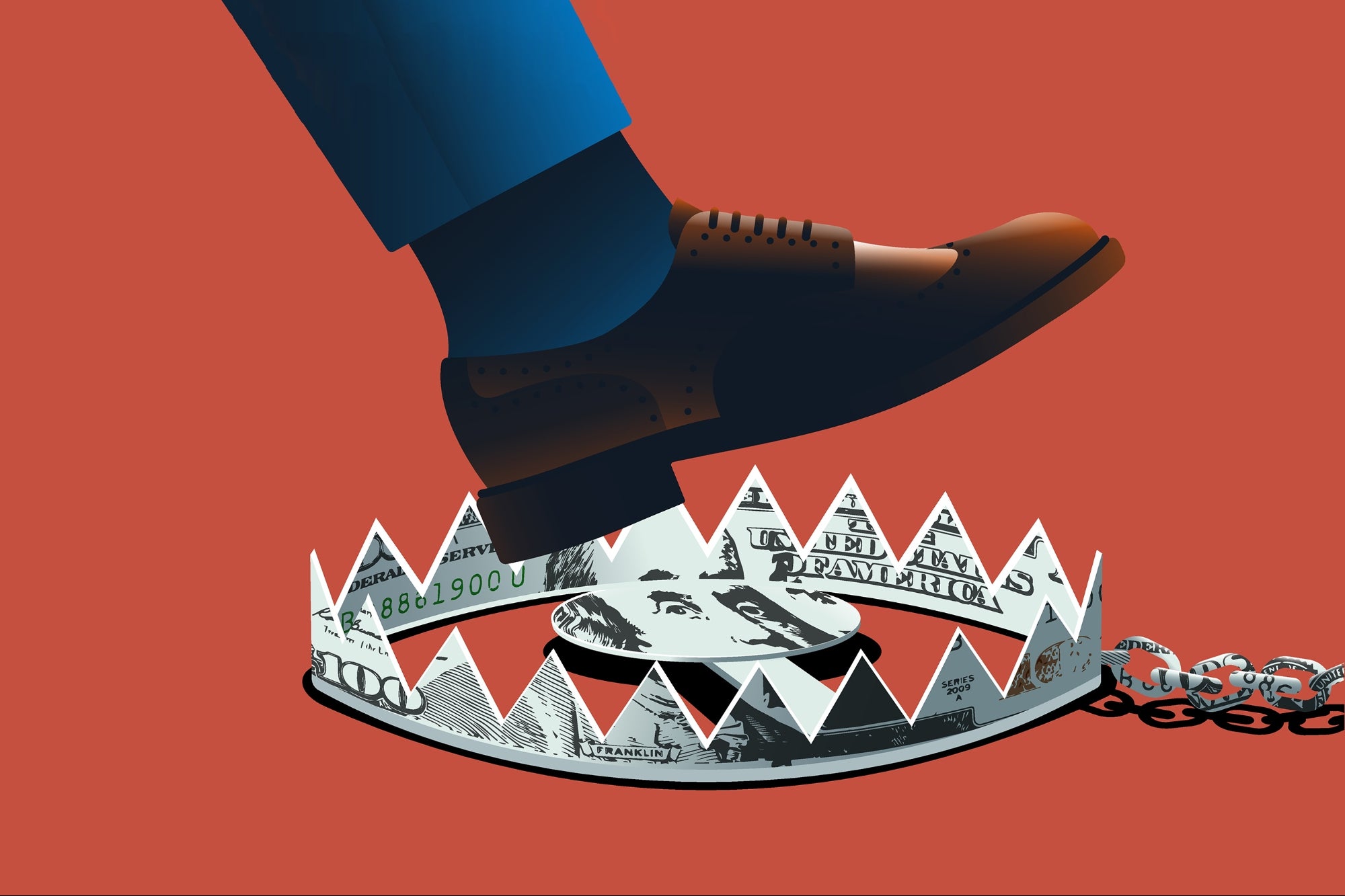
There’s a funny thing about experience: It doesn’t always make you immune to failure. In fact, some of the most seasoned, intelligent founders I’ve met — including myself — have walked straight into the same fire multiple times, thinking this time would be different.

After buying, building, burning and selling businesses ranging from $1 million to over $20 million in annual recurring revenue, with teams as small as five and as large as 500, I’ve seen these mistakes up close. Not once. Not twice. But over and over. I’ve made them myself. I’ve watched peers make them. And most frustratingly, I’ve watched incredibly smart entrepreneurs make them while fully aware of the warning signs.

Why does it keep happening?

Because we convince ourselves that this time is different. We raised more capital. We’re in a new vertical. The economy has shifted. We’ve got better advisors. But these so-called differences rarely change the fundamentals. These mistakes don’t care about your funding round, your pitch deck or the decade you’re building in. They always find a way to show up … unless you deliberately learn to recognize and avoid them.

Here are the top five mistakes smart entrepreneurs keep making — because intelligence alone isn’t protection.

Related: 5 Common Entrepreneurial Mistakes There Is No Excuse for Repeating

1. Outsmarting simplicity

Smart founders love strategy. We love architecture, systems and layered thinking. But too often, that intelligence leads us to outsmart ourselves by overcomplicating something that should’ve stayed simple.

In one of my earlier ventures, we created an onboarding system so “intelligent” that it required a five-step identity verification, AI scoring and three user roles. It was technically perfect — and completely unusable. Not a single customer made it through the first interaction without needing help. We had engineered a fortress when all the customer needed was a front door.

Simple is not a synonym for lazy. Simple is scalable. Simple gets used. If your product, process or pitch can’t be explained in one sentence, you’re not impressing people — you’re confusing them. Don’t make the mistake of confusing complexity with value. Often, it’s the opposite.

2. Overbuilding before testing

It feels so good to build. It feels like progress. It’s measurable. It’s exciting. But building without real customer validation is like sailing without checking the tide: You might be moving fast, but you’re heading toward a sandbar.

I once spent months and hundreds of thousands of dollars building a tool we were sure the market wanted. We built features on top of features, tied in AI recommendations, created dashboards, reports, you name it. But we hadn’t tested the core value with real users. When we finally launched, the silence was deafening.

We didn’t fail because we couldn’t build. We failed because we didn’t listen.

Your MVP should hurt a little. It should feel unfinished. Because the moment you build past the point of user feedback, you’re building for yourself — not your customer. Build to learn. Then build to scale.

3. Ignoring customer feedback that hurts

Let’s be honest: Some feedback cuts deep. Especially when you’re passionate. When you’ve poured years into a business or a product, hearing that it’s confusing, clunky or not worth the money feels personal.

At one point, while scaling one of my companies, we were receiving consistent complaints about our service response time. We brushed it off. “Growing pains,” we said. “We’re expanding.” But the complaints kept coming, and we kept rationalizing — until the damage was no longer subtle. Clients started leaving. Our reputation took a hit. And fixing the problem cost ten times what it would’ve if we’d acted earlier.

Feedback, especially the kind that makes you wince, is gold. Don’t dodge it. Don’t argue with it. Use it. Because every complaint you ignore becomes someone else’s competitive advantage.

Related: 5 Common Mistakes Leaders Make and How to Fix Them

4. Misjudging your own burn rate

This is one of the deadliest mistakes. And ironically, it’s more common among founders who’ve raised capital or had prior exits. You think you’ve got room. You think you’re being strategic by “investing in growth.” And suddenly, your company’s financial discipline goes out the window.

I’ve run tight operations. I’ve also run operations with fat budgets and too much confidence. The tight ones were stressful, but lean and sharp. The overfunded ones got bloated fast — extra hires, experimental campaigns, unnecessary vendors. All in the name of growth. But here’s the thing: Growth doesn’t matter if you don’t survive long enough to reach it.

Every dollar should work. If you can’t justify it with near-term utility or long-term leverage, you’re probably burning money you’ll wish you had six months from now.

Being a smart entrepreneur doesn’t mean ignoring your burn rate; it means obsessing over it. Because financial waste isn’t just inefficient — it’s existential.

5. Hiring more people to solve the problem

This one is almost a rite of passage. Things start breaking — operations, marketing, delivery — and the instinct is: “We need more people.”

Founders tell themselves that scaling the team will fix it. VCs sometimes push for headcount growth as a signal of momentum. But nine times out of ten, it’s the wrong move.

I’ve scaled teams from five to 200+. I’ve watched entrepreneurs stack up departments like LEGO blocks, trying to fix broken pipelines, unclear roles or systems that never worked in the first place. The result? More meetings, more chaos, more burn. Not more progress.

Throwing people into a broken system just gives you more breakage.

What I’ve learned is that most problems can be solved by a few qualified individuals with clarity and autonomy, not by hiring a battalion. Talent density beats volume every time. If your house is on fire, you don’t fix it by moving in more tenants. You put out the fire.

Related: 10 Stupid Mistakes Smart People Make

Intelligence isn’t insurance

It’s easy to assume that once you’ve built or sold a company, you’ve “earned” your wisdom badge. But the real test isn’t whether you’ve experienced these mistakes before — it’s whether you keep making them.

Experience without reflection is just repetition.

I’ve built companies with world-class teams. I’ve also watched great ideas burn out because I refused to listen to the basics. These five mistakes show up over and over, usually wrapped in new branding, new market conditions or new funding. But they’re the same patterns, and they still kill momentum.

So here’s your call to action: Audit yourself.

Where are you overcomplicating? Where are you building without feedback? Where are you hiring instead of solving? Where are you ignoring warning signs because they’re inconvenient?

The smartest move you can make isn’t being clever — it’s being clear. Because clarity builds endurance. And endurance is what separates the companies that survive from the ones that almost did.

There’s a funny thing about experience: It doesn’t always make you immune to failure. In fact, some of the most seasoned, intelligent founders I’ve met — including myself — have walked straight into the same fire multiple times, thinking this time would be different.

After buying, building, burning and selling businesses ranging from $1 million to over $20 million in annual recurring revenue, with teams as small as five and as large as 500, I’ve seen these mistakes up close. Not once. Not twice. But over and over. I’ve made them myself. I’ve watched peers make them. And most frustratingly, I’ve watched incredibly smart entrepreneurs make them while fully aware of the warning signs.

Why does it keep happening?

The rest of this article is locked.

Join Entrepreneur+ today for access.

https://www.entrepreneur.com/growing-a-business/the-top-5-mistakes-smart-entrepreneurs-keep-making/495613



The Labor Market Has Changed From the ‘Great Resignation’ to the ‘Great Stay’ Because ‘Workers Aren’t Going Anywhere’

Almost 100 million workers left their jobs from 2021 to 2022. Now, no one dares.

The “Great Resignation” of the Covid-19 pandemic saw 47.8 million Americans leave their roles in 2021, while an additional 50 million people quit in 2022. However, just a few years later, the “Great Resignation” is no more — employees want to keep their jobs and employers are taking a “no-hire, no-fire” approach to talent.

ADP Chief Economist Nela Richardson told CNBC on Monday that she calls the current labor market the “Great Stay” to reflect how people are “staying put” and “not leaving” their jobs, even in fields like IT and software development, which traditionally have high turnover rates.

Related: Barbara Corcoran Did ‘Crazy Things’ to Retain Employees, From Hot Air Balloon Rides to a Free Bentley: ‘We Had No Turnover’

“Workers aren’t going anywhere,” Richardson told the outlet. “They’ve got their dream job, which is probably partly at home, maybe with a big salary pickup… And what we actually see in the data is very low turnover, which is unusual in the U.S.”

The latest jobs data released earlier this month shows early signs that the U.S. job market is slowing down. The U.S. recorded job growth of 73,000 new roles in July, below the 100,000 expected by the Dow Jones. The unemployment rate ticked up to 4.2%, higher than the June rate of 4.1%, but still within its usual range. According to the U.S. Bureau of Labor Statistics, the unemployment rate has hovered between 4% and 4.2% since May 2024.

On the company side, firms are contributing to the “Great Stay” with a “no-hire, no-fire market,” Richardson said. Companies are hesitant to make new hires because they are grappling with economic uncertainty, not because they want to reduce their workforces, she suggests. At the same time, they do not want to let existing talent go.

Frank Fiorille, vice president of risk and compliance at payroll processing company Paychex, called the labor market “frozen.”

“There’s not a lot of hiring, but there’s not a lot of firing either,” Fiorille told Marketplace.

Other workplace trends focus on the pressure felt by workers as they hold onto their jobs.

“Quiet cracking,” for example, is a consistent feeling of unhappiness that causes reduced performance and an increased desire to quit a job. Economic uncertainty and a tight job market have led some employees to remain in workplace situations that make them unhappy, causing this phenomenon.

Related: ‘It’s Not About You’: How to Fire Someone Effectively, According to Kevin O’Leary

“Quiet cracking” can lead to “quiet quitting,” where employees mentally disengage from their job and only perform the bare minimum required of them.

Meanwhile, more than half of U.S. managers admitted to “quietly firing” employees in a 2025 HRTech survey.

The practice involves managers pushing an employee out by making working conditions so unpleasant that they leave on their own. It allows companies to avoid paying severance to a departing employee.

Almost 100 million workers left their jobs from 2021 to 2022. Now, no one dares.

The “Great Resignation” of the Covid-19 pandemic saw 47.8 million Americans leave their roles in 2021, while an additional 50 million people quit in 2022. However, just a few years later, the “Great Resignation” is no more — employees want to keep their jobs and employers are taking a “no-hire, no-fire” approach to talent.

ADP Chief Economist Nela Richardson told CNBC on Monday that she calls the current labor market the “Great Stay” to reflect how people are “staying put” and “not leaving” their jobs, even in fields like IT and software development, which traditionally have high turnover rates.

The rest of this article is locked.

Join Entrepreneur+ today for access.

https://www.entrepreneur.com/business-news/employees-are-staying-put-in-jobs-causing-the-great-stay/496362


Forget Selling. Here’s How to Spark Relationships Your Customers Won’t Walk Away From

Opinions expressed by Entrepreneur contributors are their own.

Today’s market is crowded, and brands are finding it harder than ever to hold on to their audience. Around 70% of online shoppers don’t finish checking out, with research pointing to content overload and too much choice as the main reasons.

After comparing more than seven to nine options, customer satisfaction drops and so does the likelihood of a purchase. At the same time, 91% of users say they see too many ads on social media, 37% block specific adverts, 35% unfollow brands, and nearly one-third of global internet users downloaded ad-blockers.

So, simply “selling” is no longer enough — it’s time to spark emotions and build lasting relationships. This is when brandship comes in. In this article, I share six tips for creating an emotional connection between a brand and its customers.

1. Feel your audience

To beat the marketing fatigue that affects 67% of consumers, brands should go deeper than demographic segmentation. By understanding what truly motivates and triggers your audience, you can create communications and offers that resonate on a much deeper level.

Alo Yoga is an activewear brand, but they’ve chosen to sell a lifestyle rooted in wellness, self-expression and mindfulness. The brand chose health-conscious women aged 25-40, who value sustainability and quality, as its main target audience, and aligned its strategy in accordance with their aspirations.

It collaborates with yoga instructors, uses empowering taglines, prioritises user-generated content and positions its products as part of a confident, healthy lifestyle. This emotional strategy makes the brand feel relatable and trustworthy, not just aspirational.

2. Tell stories

According to Nielsen, 92% of consumers trust recommendations and feedback from real people more than advertising. Meanwhile, exactly that kind of content that sparks emotions increases the likelihood of purchase by 23%.

Better talk about your customers’ challenges and how your brand helps overcome them. Show a transformation by creating a dialogue from pain to solution, from doubt to confidence. Thus, your audience feels seen and understood.

Glossier taps into the Millennial and Gen Z rejection of overly idealised beauty standards. By mixing UGC with long-form personal stories, the brand emphasises “beauty in imperfection”, turning customers into both the face and the voice of the brand.

Related: How User-Generated Content Helps You Build Trust and Credibility

3. Bet on community

Sprout Social reports that brands with active communities have a 53% higher retention rate. Instead of a one-way street of “brand to customer”, create an ecosystem where clients become active participants, sharing their experiences and results, inspiring each other and co-creating content.

Whoop, the biometric health trackers brand, built its community around elite athletes and serious fitness enthusiasts rather than targeting a wide audience. The device itself is positioned as more than just a tracker; it’s a status symbol within a dedicated community where members compete, connect and inspire one another. Moreover, the brand collaborates with sports icons like Michael Phelps and Cristiano Ronaldo to celebrate the power of self-improvement.

Related: Forget Follower Counts — Influence Is Now About Engagement and Community

4. Become part of daily routines

People love personal rituals, and that’s their response to stress and the fast pace of everyday duties. And for 72% of consumers, these daily routines are associated with specific brands. Think morning workout with a favorite app, Friday beer and crisps, a game or a book before bed. For brands, it’s a great chance to foster positive emotional associations and a sense of stability.

Duolingo is a master of this. They turned language learning into a daily habit through streak rewards, short lessons, playful mascots and quite a pushy tone of voice. By making learning feel light and part of a personal ritual, Duolingo transforms user interaction into an emotional commitment.

5. Create together

McKinsey found that products developed with direct customer involvement are 20% more likely to succeed. When customers co-create products, designs or campaigns, they glue to the brand emotionally. Turn real customer feedback into an active approach: this might be UGC or customised offers.

UNIQLO’s UTme service lets customers design their own T-shirts, hoodies and bags — from adding personal photos to licensed character art and printing them in-store in minutes. This whole idea transforms a simple purchase into a personal and creative experience.

Related: 4 Ways To Come Up With Creative Campaigns

6. Be honest

Consumers always seek authenticity, with 81% of them seeing trust in a brand before making a purchase as a key factor, and 87% willing to pay more for brands they believe in. Mistakes and crises are inevitable, and honesty and vulnerability stand out as strategic tools for building long-term connections.

When KFC in the UK faced a supply crisis that closed over 750 restaurants, it issued a humorous public apology with the headline “A chicken restaurant without chicken. Not ideal”. The light-hearted, transparent tone softened backlash and rebuilt trust quickly.

We are moving from an attention economy to a connection economy. The winners will be brands that build relationships rather than chase impressions. Brandship is not a short-term tactic but a long-term strategy, and the sooner you adopt it, the stronger your position in the years ahead.

Today’s market is crowded, and brands are finding it harder than ever to hold on to their audience. Around 70% of online shoppers don’t finish checking out, with research pointing to content overload and too much choice as the main reasons.

After comparing more than seven to nine options, customer satisfaction drops and so does the likelihood of a purchase. At the same time, 91% of users say they see too many ads on social media, 37% block specific adverts, 35% unfollow brands, and nearly one-third of global internet users downloaded ad-blockers.

So, simply “selling” is no longer enough — it’s time to spark emotions and build lasting relationships. This is when brandship comes in. In this article, I share six tips for creating an emotional connection between a brand and its customers.

The rest of this article is locked.

Join Entrepreneur+ today for access.

https://www.entrepreneur.com/starting-a-business/why-your-customers-dont-buy-and-the-new-strategy-that/495969


Turn Your Voice Into Text Instantly with VoiceType AI

Disclosure: Our goal is to feature products and services that we think you’ll find interesting and useful. If you purchase them, Entrepreneur may get a small share of the revenue from the sale from our commerce partners.

Running a business often means ideas come faster than your keyboard can keep up. From mapping out project requirements to firing off client emails, leaders spend an overwhelming amount of time typing instead of executing. That’s exactly what VoiceType AI does.

It’s an AI-powered dictation tool that transcribes at up to 360 words per minute with 99.7% accuracy, making it 9x faster than the average typing speed.

With lifetime access now available for just $39 (MSRP: $154), VoiceType helps business leaders capture thoughts, notes, and strategies instantly—no matter which app you’re in. It works across the platforms you already use, including Slack, Google Docs, Notion, Outlook, Microsoft Teams, Trello, and more, so you don’t need to change your workflow.

This isn’t just dictation—it’s a writing assistant. VoiceType automatically formats your text with punctuation, grammar corrections, and even tone adjustments depending on the app. Need to draft a professional email? Done. Want a clean project doc in Notion? Easy. Even in noisy offices or while whispering on the go, VoiceType adapts to your environment for reliable results.

For entrepreneurs, consultants, and executives alike, it’s like hiring a personal scribe who never misses a beat. Whether you’re documenting meeting takeaways, planning your day, or drafting proposals, VoiceType ensures you get your thoughts into action at the speed of speech.

Because in business, speed and clarity aren’t just nice to have, they’re the edge.

Get a lifetime of VoiceType AI for just $39 (MSRP: $154) and save yourself time forever.

VoiceType AI Voice-to-Text: Lifetime Subscription

See Deal

StackSocial prices subject to change.

Running a business often means ideas come faster than your keyboard can keep up. From mapping out project requirements to firing off client emails, leaders spend an overwhelming amount of time typing instead of executing. That’s exactly what VoiceType AI does.

It’s an AI-powered dictation tool that transcribes at up to 360 words per minute with 99.7% accuracy, making it 9x faster than the average typing speed.

With lifetime access now available for just $39 (MSRP: $154), VoiceType helps business leaders capture thoughts, notes, and strategies instantly—no matter which app you’re in. It works across the platforms you already use, including Slack, Google Docs, Notion, Outlook, Microsoft Teams, Trello, and more, so you don’t need to change your workflow.

The rest of this article is locked.

Join Entrepreneur+ today for access.

https://www.entrepreneur.com/science-technology/turn-your-voice-into-text-instantly-with-voicetype-ai/496204


He Grew His Small Business to a $25 Million Operation By Following These 5 Principles

Opinions expressed by Entrepreneur contributors are their own.

It’s hard to imagine modern life without air conditioning, heating and plumbing. For Josh Campbell, founder of Rescue Air and Plumbing, these necessities have been the foundation of his success as an entrepreneur.

“We may as well be doctors,” Campbell says. “Doesn’t matter what’s happening in this world — we can’t have our quality of life without [these services].”

Rescue Air and Plumbing doesn’t just rely on necessity for growth, however. The $25 million business has achieved success due to the ingrained, small-town values Campbell grew up with.

“We treat people like we did when we grew up in the country, and we do what we say we’re gonna do,” he says. “Because if you burned a bridge where I’m from, that burnt bridge is gonna follow you forever.”

Related: These Brothers Turned a 2-Man Operation Into One of the Most Trusted Companies in Their Area. Here’s How.

This service mindset gives Rescue Air and Plumbing an edge in an industry where customers often feel like just another transaction.

“[Businesses in Dallas] tend to move through people a little more. You burn a bridge here, you just move on to a new person,” Campbell says. “So I think having a country upbringing gives us a big competitive advantage in the city.”

Campbell built his business around the idea that when people feel seen and cared for, not just sold to, they’ll keep coming back. “We do a killer job, and it’s just included in the service,” he says. “Once somebody uses us and they experience how well we do it and how differently we do it, they keep using us.”

From the start, Campbell had a clear vision for growth. One of his most significant milestones came when he acquired a local plumbing business in 2022, expanding the company to more than 100 employees. “It’s very, very healthy in your company to demonstrate that you’re growing in interesting ways that people want to be a part of,” he says. “If you’re not growing, look for turnover in your company.”

Related: Two Industry Leaders Share Their Best Advice for Restaurant Owners – And Reveal the Exact Amount You Can Raise Prices Without Losing Customers

The decision to expand beyond HVAC services wasn’t just about increasing revenue. Campbell sought opportunities that aligned with Rescue Air’s existing customer base, team culture and operational strengths.

“If you buy a company, you’ve bought an entire system,” he says. “Don’t change anything. Don’t break the machine. It’s already enough discomfort and change [for the employees].”

The acquisition taught him that timing, resources and a clear purpose are essential when planning an expansion. You must be ready for new responsibilities and understand the workings of the business you’re plugging into your own.

Campbell’s advice is to take things slow. Acquired businesses come with their own set of procedures and people. He recommends waiting two to three months to make changes, so new employees feel valued instead of confronted by changes to their daily work life.

“If you’re gonna change the pay plan, it better improve their quality of life,” he says. “Give them wins before you start doing any procedural stuff they might not see any gains out of.”

That same philosophy shapes his leadership style. Campbell focuses on creating an environment where his team can succeed, because when they win, the company wins.

Related: This Is What the CEO of Kickstarter Wishes Aspiring Entrepreneurs Knew

Campbell also stresses the importance of structure, time management and personal discipline. “I think it really is important as entrepreneurs to be mindful about your time,” he said. “So often you’re pulled in a million directions, so having those habits or things you do that are for yourself and for your business on a recurring basis are really important.”

This discipline extends to finances as well. Although financial oversight might not be every business owner’s favorite task, Campbell views it as essential to informed decision-making.

“If you don’t know your P&L, there is a ceiling for how far you’re gonna be able to grow your business,” he says. “Truly, if you wanna operate your business successfully and even think about growing, you have to know your numbers.”

Whether it’s integrating a new acquisition or serving a long-term client, Campbell’s approach centers on transparency and accountability. “Don’t leave anybody in the unknown,” he says. “Over-communicate, as uncomfortable as it might be.”

It’s this commitment that drives Rescue Air and Plumbing’s reputation and growth and sets it apart in a competitive industry. For Campbell, the equation is simple: Treat people right, follow through, and build customer trust that lasts.

Related: She Created the Dance Studio She Was Looking For. Now, It’s a Nationwide Brand.

After growing Rescue Air and Plumbing into a trusted name in the Dallas area, Campbell shares the guiding principles of the company’s success that can help other service businesses thrive:

  • Invest in people first. Whether it’s a customer or a team member, relationships matter. Be honest, keep your word and show people you value them beyond the transaction.
  • Lead with integrity. Always keep your promises to customers. Reliability and consistency are the foundation for long-term customer relationships.
  • Build a team you trust. Surround yourself with people who care about doing the job right. Set employees up for success by outlining clear expectations and processes.
  • Stay resilient through challenges. While navigating the ups and downs of running a business, staying true to your values can help you persevere.
  • Focus on lasting trust. Success in the service industry isn’t just about solving problems. It’s about earning a place in the customer’s life as a trusted partner.

Watch the episode above to hear directly from Josh Campbell, and subscribe to Behind the Review for more from new business owners and reviewers every Wednesday.

Editorial contributions by Jiah Choe and Kristi Lindahl

This article is part of our ongoing America’s Favorite Mom & Pop Shops™ series highlighting family-owned and operated businesses.

https://www.entrepreneur.com/growing-a-business/how-this-entrepreneur-went-from-small-business-to-25/496151


How I Built a Business That Helps People Feel Good About Doing the Right Thing — and Why You Should, Too

Opinions expressed by Entrepreneur contributors are their own.

You need focus to build a business, but my experience has taught me that there’s also such a thing as being too single-minded.

Financial, environmental and community goals aren’t competing objectives; they’re interconnected. This is why founders who chase revenue at the expense of value for their customers or broader social impact often experience limited growth.

This is a bit like buying a gym membership and then letting your diet go because you’re working out. Just like healthy eating habits are part of an effective fitness plan, your mission and values are essential parts of creating a business plan that works.

So when my brother Todd and I founded Roof Maxx as a cost-effective alternative to roof replacement, it was about more than filling a gap we saw in the market. It was about solving a problem we saw people struggling with and doing it in a way that also helped those people feel like they were changing the world for the better.

Here’s what we learned.

Related: 4 Ways to Engage Your Customers in Social Good — And Why It Matters

Consumers already want to do the right thing; you just have to help them

Call me naive, but I take a view of the world that most people are basically good — or at least, they want to be.

They might not always put the right items in the recycling bin, but that’s not because they hate the planet. They’re usually just confused or short on time, because modern life can be hectic and overwhelming.

That means appealing to guilt is rarely the most effective way to sell someone on a socially responsible product or service. Guilt can be a powerful emotional trigger, but it only works when someone doesn’t want to do something.

Todd and I saw this a lot in the early days of Roof Maxx. We knew many homeowners already had some idea of how much waste roof replacement produces, so we didn’t harp on it. No one was throwing away their shingles every few years because they genuinely believed it was good for the planet. They were doing it because the rest of the industry had convinced them there was no viable alternative.

When people already want to make a change but don’t feel like they have the option, guilt just makes them feel worse. In these cases, you need to show them the option exists, then use other strategies to win their business.

Related: How to Market to the Increasingly Socially Conscious Customer

Learn to position “doing good” as “getting more”

Since most people already want to be better citizens, you don’t need to waste time trying to convince them it’s a good idea. Instead, you should spend most of your pitch showing how easy you can make it for them and how they can benefit from taking action.

The first few times we pitched Roof Maxx to homeowners, I saw how true this was. They listened when we talked about how they could save 3.8 tons of landfill waste on average by rejuvenating their roofs with our treatment instead of replacing them, but that wasn’t really where we won them over. The vast majority came on board when we showed them our solution cost up to 80% less than a full replacement, and that it could be done in a few hours instead of taking days or weeks.

Those experiences showed me that we didn’t have to make our customers more willing to do good in the world, because most of them already had that motivation. All we had to do was take away the obstacles they felt were standing in their way.

Social proof is never about you; it’s about your customers

One of the things that struck me most about the first homeowners to work with us was how proud they were. That pride didn’t just stem from the time and money they had saved. For a lot of them, it also came from feeling like they had made a difference by reducing their carbon footprint. They felt like they had joined a community that was working to improve the world around them.

It would have been easy to edit the many testimonials we received and trim them down into concise endorsements of our company. Many brands do. But we didn’t, because we knew those testimonials weren’t just about us. They were about the kinds of people who chose us and the values that those people upheld.

A customer who touts the quality of your product is a good advocate. But a customer who sees your product as a way to help them live a better life is a great one. The more you showcase those people, the better you look by association.

Related: Here’s Why Values Matter So Much in Business

People are more loyal to values than they are to brands

One last piece of advice: Brand loyalty is a fickle thing, but values tend to exist on a deeper level. People change their cell phone plans far more often than they change their core convictions.

That means a strong mission helps you build long-term loyalty. If you’re really committed to saving money for people, protecting the environment or community building, then you’ll always be appealing to people who value those goals. And if you can somehow find a way to do all three at once, that loyalty becomes much more difficult to lose to a competitor.

So while it might be tempting to focus on raw profit when you’re starting out, don’t be fooled. Your mission isn’t there to distract from your margins; it’s there to set your brand apart and attract customers who already want to be on board. From there, it’s just a matter of showing them how easy it is to get involved.

You need focus to build a business, but my experience has taught me that there’s also such a thing as being too single-minded.

Financial, environmental and community goals aren’t competing objectives; they’re interconnected. This is why founders who chase revenue at the expense of value for their customers or broader social impact often experience limited growth.

This is a bit like buying a gym membership and then letting your diet go because you’re working out. Just like healthy eating habits are part of an effective fitness plan, your mission and values are essential parts of creating a business plan that works.

The rest of this article is locked.

Join Entrepreneur+ today for access.

https://www.entrepreneur.com/growing-a-business/why-focusing-only-on-profit-is-holding-your-business-back/495597


Elon Musk’s Companies, X and xAI, Sue Apple and OpenAI for ‘Anticompetitive Scheme’

Earlier this month, Elon Musk, the owner of the AI startup xAI, posted on X that he’d be taking “legal action” against Apple for “playing politics” by not putting Grok, his company’s chatbot, in its “Must Have” section in the Apple Store.

“Apple is behaving in a manner that makes it impossible for any AI company besides OpenAI to reach #1 in the App Store, which is an unequivocal antitrust violation,” Musk wrote at the time. “xAI will take immediate legal action.”

On Monday, Musk’s companies sued both Apple and OpenAI in a U.S District Court in Texas, claiming the two tech giants engaged in an “anticompetitive scheme,” per CNBC.

Related: Elon Musk Warns Microsoft That Its Partner, OpenAI, Is About to Eat It Alive

“Working in tandem, Defendants Apple and OpenAI have locked up markets to maintain their monopolies and prevent innovators like X and xAI from competing,” the lawsuit says.

“In a desperate bid to protect its smartphone monopoly, Apple has joined forces with the company that most benefits from inhibiting competition and innovation in AI: OpenAI, a monopolist in the market for generative AI chatbots,” the complaint continues.

Related: Elon Musk Says X Found the Vine Archive, Restoring Access

OpenAI CEO Sam Altman and Musk have been fighting on X over the issue (and others) this month.

In response to Musk’s claims earlier this month, Apple told Bloomberg that the store is “designed to be fair and free of bias.”

In a statement to Business Insider, an OpenAI spokesperson said: “This latest filing is consistent with Mr Musk’s ongoing pattern of harassment.”

Earlier this month, Elon Musk, the owner of the AI startup xAI, posted on X that he’d be taking “legal action” against Apple for “playing politics” by not putting Grok, his company’s chatbot, in its “Must Have” section in the Apple Store.

“Apple is behaving in a manner that makes it impossible for any AI company besides OpenAI to reach #1 in the App Store, which is an unequivocal antitrust violation,” Musk wrote at the time. “xAI will take immediate legal action.”

On Monday, Musk’s companies sued both Apple and OpenAI in a U.S District Court in Texas, claiming the two tech giants engaged in an “anticompetitive scheme,” per CNBC.

The rest of this article is locked.

Join Entrepreneur+ today for access.

https://www.entrepreneur.com/business-news/elon-musks-xai-sues-apple-openai-claims-monopolist-scheme/496315


Airbnb’s CEO Says He Personally Manages 40 to 50 Employees as Direct Reports: ‘A Lot of Work’

Airbnb CEO Brian Chesky, 43, oversees the hiring, firing, management, and promotion of 40 to 50 employees at the travel startup, taking a hands-on approach to personnel decisions.

On a Saturday episode of the “Social Radars” podcast, Chesky said he stays “as close” as possible to the “people doing the work” at Airbnb and manages staffers who report to the C-Suite executives who also report to the CEO.

“I treat them all as my directs,” Chesky said on the podcast. “I skip level, I co-hire them, and I make decisions on whether or not they’re working out and leave the company.”

Related: Airbnb CEO Brian Chesky Says Customer Service Is the Company’s ‘Hardest Problem.’ Here’s How They’re Using AI to Fix It.

Chesky called the process of managing up to 50 people “a lot of work,” but “necessary.” The core of his management approach is to forge relationships with many individuals within Airbnb.

“What you need to do is you need to have relationships with as many people as possible in the company,” Chesky said on the podcast.

Airbnb had a market value of $79.8 billion at the time of writing.

Brian Chesky, co-founder and CEO of Airbnb, on May 25, 2025. Photo by Gerald Matzka/Getty Images for Airbnb


What Is “Founder Mode?”

Chesky’s management style is part of a hands-on approach called “founder mode,” which arose from a talk he gave last year at a Y Combinator event.

Founder mode emphasizes direct relationships with employees instead of a hierarchy, highlighting “skip-level” meetings and more active involvement in the company’s daily operations. It contrasts with manager mode, which involves more delegation and fewer direct reports.

In an essay describing founder mode, published in September 2024, Y Combinator founder Paul Graham wrote that conventional wisdom had failed founders. For example, the saying “hire good people and give them room to do their jobs” could actually result in “professional fakers” driving a startup into the ground, per the essay. Founder mode means that CEOs interact with their employees beyond just direct reports and are heavily involved in the company, Graham wrote.

Related: ‘I Can’t Get Everyone to Move Here’: Why Airbnb’s CEO Is Sticking With a Once-a-Month Hybrid Schedule

Chesky isn’t the only founder to take a hands-on approach to managing employees. Jensen Huang, CEO of AI chipmaker Nvidia, still reviews payroll for all 42,000 Nvidia employees “at the end of every cycle,” he disclosed on a July episode of “The All-In Podcast.“

Huang said that he has his “methods” for going through the data, and taps into machine learning to make it go faster.

“I review everybody’s compensation up to this day,” Huang said on the podcast. “I go through the whole company.”

Airbnb CEO Brian Chesky, 43, oversees the hiring, firing, management, and promotion of 40 to 50 employees at the travel startup, taking a hands-on approach to personnel decisions.

On a Saturday episode of the “Social Radars” podcast, Chesky said he stays “as close” as possible to the “people doing the work” at Airbnb and manages staffers who report to the C-Suite executives who also report to the CEO.

“I treat them all as my directs,” Chesky said on the podcast. “I skip level, I co-hire them, and I make decisions on whether or not they’re working out and leave the company.”

The rest of this article is locked.

Join Entrepreneur+ today for access.

https://www.entrepreneur.com/business-news/airbnb-ceo-chesky-is-a-hands-on-manager-with-50-employees/496317


5 Benefits of Scaling Your Startup With Offshore Employees

Opinions expressed by Entrepreneur contributors are their own.

I’ve built companies like SetSchedule and Rentastic across proptech, fintech, AI and insurance. I’ve sold businesses that generated billions in financial products and tens of millions in recurring revenue. I’ve hired wrong, I’ve hired right. I’ve scaled too fast, and I’ve scaled smart. And I’ll tell you this from firsthand experience: Hiring offshore isn’t controversial — it’s intelligent. It’s practical. It’s how real businesses scale in the real world.

It’s not wrong to have your customer service rep in the Philippines. It’s not unethical to have your dev team in Poland or your marketing analyst in Bogotá. In fact, if you care about sustainability, profitability and actually building something that lasts, offshore hiring isn’t just the right move — it might be the only move.

And yet, people still hesitate. They still whisper like it’s a dirty secret. They still think “outsourcing” is a code word for corner-cutting. But if you’re serious about building a company that competes and wins — globally — you need to reframe the entire conversation.

So let’s talk about the reality. Here are five brutal truths — and serious advantages — you need to accept if you want to stop playing business and start building it:

Related: Your Most Pressing Offshoring Questions, Answered

1. You gain 24-hour productivity without burning out your team

Your California team clocks out. Your team in Manila clocks in. That’s not outsourcing. That’s continuous operation. It’s a machine that runs while you sleep. Offshore teams allow you to build seamless, round-the-clock workflows that don’t rely on heroics or 14-hour workdays. Your customers don’t care what time zone your team is in; they care that they’re getting what they need, when they need it.

This isn’t about wringing more hours from fewer people. It’s about creating balance and momentum. Offshore hiring means your U.S. team doesn’t have to burn out trying to do everything. That’s how you scale with sanity.

2. You slash burn rate — without slashing talent

Let’s get real: Payroll will eat you alive if you let it. At SetSchedule, I watched our domestic payroll balloon inside one zip code. At our insurance brokerage, we rewired the model and went global, and guess what? We didn’t sacrifice quality. We found more of it.

A strong U.S.-based engineer might cost $180K per year. That same level of capability and output in Eastern Europe or South Asia? Closer to $40K. That’s not a knock on American talent. That’s just math. If you’re a startup or growth-stage company and you’re spending like a public one, good luck making it past Series A.

By going offshore, you’re not choosing lesser talent — you’re just choosing smarter economics.

Related: This Strategy is the Key to Scaling Your Business — and Reducing Costs Along the Way

3. You access a global talent pool hungry for opportunity

Here’s something few founders will say out loud: Some of the best talent in the world doesn’t live anywhere near Palo Alto or SoHo. It lives in Lagos. In Cebu. In Kraków. In Medellín.

I’ve worked with marketers in Colombia who bring more hustle and creativity than their LA peers. I’ve hired devs in India who write cleaner code, ship faster and solve problems with more urgency than Bay Area engineers making triple their salary. And no, that’s not a fluke. It’s a wake-up call.

Talent isn’t defined by proximity. It’s defined by grit, hunger and execution. And if you’re only hiring within a 20-mile radius, you’re not just limiting your headcount — you’re capping your potential.

4. You build cultural resilience into your DNA

Want to get better at leading? Try managing a team across five time zones. Try aligning deliverables across three languages and cultural expectations. Offshore hiring forces you to get tight with communication. It demands documentation. It levels up your leadership skills — fast.

And if your long game involves selling your product or service internationally, then you need that cultural fluency now, not later. Building globally from day one hardens your operations and future-proofs your company.

It’s not just a hiring strategy. It’s an organizational workout. And if you do it right, you’ll come out stronger.

5. You de-risk scaling

Let’s be honest: Not every hire works out. But when your entire team is local and expensive, every bad hire hits harder. Offshore teams give you flexibility. You can test a new role, explore a new market or pilot a new initiative without betting the house.

You don’t need a bloated org chart. You need agility. Offshore hiring gives you the ability to pivot fast, adjust cost structure on demand and keep experimenting until you find what works. And in today’s climate, agility is survival.

Related: 7 Ways to Make Outsourcing a Success Time After Time

If you’re still romanticizing the all-in-house, all-local, in-office team model — wake up. That version of company-building is outdated. It’s inefficient. It’s blind to reality.

Offshoring isn’t betrayal. It’s evolution.

I’ve done this across industries. I’ve won big. I’ve failed loudly. And I’ve learned this: Smart founders don’t build local companies in a global world. They go where the talent is. They go where the economics work. And most importantly, they go now.

So if you’re still debating whether to hire offshore, let me save you the time:

Don’t debate. Deploy.

I’ve built companies like SetSchedule and Rentastic across proptech, fintech, AI and insurance. I’ve sold businesses that generated billions in financial products and tens of millions in recurring revenue. I’ve hired wrong, I’ve hired right. I’ve scaled too fast, and I’ve scaled smart. And I’ll tell you this from firsthand experience: Hiring offshore isn’t controversial — it’s intelligent. It’s practical. It’s how real businesses scale in the real world.

It’s not wrong to have your customer service rep in the Philippines. It’s not unethical to have your dev team in Poland or your marketing analyst in Bogotá. In fact, if you care about sustainability, profitability and actually building something that lasts, offshore hiring isn’t just the right move — it might be the only move.

And yet, people still hesitate. They still whisper like it’s a dirty secret. They still think “outsourcing” is a code word for corner-cutting. But if you’re serious about building a company that competes and wins — globally — you need to reframe the entire conversation.

The rest of this article is locked.

Join Entrepreneur+ today for access.

https://www.entrepreneur.com/growing-a-business/5-benefits-of-scaling-your-startup-with-offshore-employees/495564


Is There a Hidden Agenda Behind All These New Crypto Laws?

Opinions expressed by Entrepreneur contributors are their own.

Recent crypto laws have sparked debate about their true political motivations. The GENIUS Act, signed on July 18, 2025, represents the cornerstone of the administration’s cryptocurrency strategy.

Officially, the initiative aims to remove excessive administrative barriers and legalize stablecoins – crypto assets backed by real American assets: dollars, treasury bonds or gold.

According to legislators, these coins should simplify transactions and position the United States as a global leader in digital finance. The administration has framed this legislation as part of a comprehensive strategy to enhance financial innovation while maintaining America’s economic leadership.

Understanding cryptocurrency laws in the U.S. requires looking beyond official narratives. The stablecoin market, currently valued at over $260 billion, is projected to reach $2 trillion by 2028 under this new regulatory framework. This explosive growth will fundamentally alter the financial landscape in ways that may not align with stated objectives.

Related: The Hidden Problems That Could Threaten Crypto’s Future

Who regulates crypto in the U.S.?

The question of who regulates cryptocurrency in the U.S. is becoming complex under the new legislation. The hidden agenda behind these laws appears to be weakening the Federal Reserve System’s control. As a reminder, the Fed, established in 1913, consists of twelve regional reserve banks and is considered a private structure independent of executive power.

The prerogative of issuing “national money” is firmly secured by the Fed, and attempts to interfere with its powers have invariably met with strong opposition. Understanding who regulates cryptocurrency in the U.S. reveals the political power struggle behind recent laws.

The new stablecoin law represents a half-measure, as it cannot solve the task of creating an alternative digital central bank. Instead, it allows private players to issue their own “money” backed by government securities, effectively fragmenting the Fed’s monopoly on emission.

Read More: People Really Only Care About These 3 Things at Work — Do You Offer Them?

Stablecoin influence as a tool for political influence

New stablecoin regulation allows private entities to issue currency-like assets backed by government securities. This represents a significant departure from traditional monetary policy, where currency issuance is tightly controlled by central banking authorities.

The approach to stablecoin regulation may fragment the Federal Reserve’s monopoly on currency issuance. By allowing private entities to create dollar-backed digital assets, the legislation effectively creates a parallel monetary system that operates under different rules and oversight.

Critics argue that current stablecoin regulation could create a shadow emission system outside traditional controls. This system could potentially undermine the Fed’s ability to implement monetary policy effectively and respond to economic crises.

Related: Why Institutional Investors Are Embracing Crypto–TradFi Partnerships

The political agenda driving recent legislation

The cryptocurrency political agenda behind recent legislation extends beyond promoting innovation. As a result, the U.S. economic system risks losing part of its budget revenues and deviating from its usual course. Businesses, having received the right to issue and use stablecoins, may begin to evade tax control and the stablecoins themselves, under unfavorable regulation, will depreciate and lose trust.

To understand the politics around crypto, you have to look at the power struggles between government institutions. Hidden money printing creates slower growth and shaky forecasts, which is risky in an election year when political pressure is already high.

Some in the crypto space even push for reducing the Federal Reserve’s control over monetary policy — a major change to the financial system that has shaped the U.S. for more than 100 years.

The potential consequences of these hidden agenda crypto laws include:

  • Budget Revenue Loss: Reduced tax collection from cryptocurrency transactions compared to traditional financial operations.
  • Monetary Policy Fragmentation: Multiple entities issuing dollar-backed assets could complicate coordinated monetary policy.
  • Financial Stability Risks: A parallel financial system with different rules could introduce new systemic risks.
  • Political Power Shifts: Reduction in Federal Reserve independence and increased executive branch influence over monetary policy.
  • Economic Uncertainty: Potential for market volatility and reduced predictability during political transitions.

Analysts are questioning whether Trump’s crypto ventures are designed to weaken Federal Reserve control. The legislation creates a framework where private entities can issue dollar-backed assets with potentially less oversight than traditional banking institutions.

The Trump administration has framed its cryptocurrency laws as forward-looking reforms designed to position the U.S. as a leader in digital finance. But beneath that narrative lies a more complex political agenda. The legislation could reduce the Federal Reserve’s influence over monetary policy, introduce alternative currency-like instruments with favorable tax treatment and shift power among key financial institutions.

Related: This Trillion-Dollar Industry Is Where You Need to Look For Your Next Investment — Here’s Why

The full impact will only become clear over time. What is certain is that the effects will extend well beyond cryptocurrency markets, with the potential to reshape core elements of America’s financial and political order. The central question is whether these changes will bolster or weaken U.S. economic stability and global leadership. Understanding the implications requires looking past official narratives to the shifting power dynamics they conceal — only then can we judge whether the reforms serve the public good or narrower political aims.

Recent crypto laws have sparked debate about their true political motivations. The GENIUS Act, signed on July 18, 2025, represents the cornerstone of the administration’s cryptocurrency strategy.

Officially, the initiative aims to remove excessive administrative barriers and legalize stablecoins – crypto assets backed by real American assets: dollars, treasury bonds or gold.

According to legislators, these coins should simplify transactions and position the United States as a global leader in digital finance. The administration has framed this legislation as part of a comprehensive strategy to enhance financial innovation while maintaining America’s economic leadership.

The rest of this article is locked.

Join Entrepreneur+ today for access.

https://www.entrepreneur.com/science-technology/is-there-a-hidden-agenda-behind-these-new-crypto-laws/495722