You Don’t Need Better AI—You Need Better Prompts

Disclosure: Our goal is to feature products and services that we think you’ll find interesting and useful. If you purchase them, Entrepreneur may get a small share of the revenue from the sale from our commerce partners.

If AI tools still feel inconsistent, slow, or hit-or-miss, the problem usually isn’t the technology—it’s how you’re using it. trAInedup.ai focuses on the skill that actually determines results: prompt engineering. Instead of chasing new platforms, it teaches you how to get reliable, high-quality output from the AI tools you already rely on.

Right now, the trAInedup.ai Basic Plan is available for a one-time payment of $79.99 (reg. $459), giving entrepreneurs lifetime access to practical, structured AI training.

Turn AI into a dependable work tool

Rather than offering generic prompt templates, trAInedup.ai teaches reusable frameworks. You learn how to structure requests, set constraints, guide tone, and define outcomes—so AI responses are clearer, more actionable, and easier to trust in a business setting.

The training is intentionally model-agnostic. Lessons show how the same prompt logic applies to conversational systems, long-context reasoning tools, and multimodal AI. That means your skills stay useful even as tools change, helping protect your time investment.

Use cases focus on everyday workflows: drafting client emails, summarizing reports, analyzing information, generating outlines, creating first-pass content, or brainstorming solutions faster. The emphasis is on reducing manual effort and decision fatigue—not experimenting for experimentation’s sake.

Accessible for non-technical teams

You don’t need a technical background to apply what’s taught here. trAInedup.ai is designed for founders, managers, freelancers, and operators who want AI to support their work without adding complexity. The lessons prioritize clarity, consistency, and repeatable outcomes.

At just $79.99 for lifetime access, trAInedup.ai offers a practical alternative to recurring AI subscriptions and scattered tutorials. For entrepreneurs who want AI to quietly improve productivity—without constant relearning—this plan delivers long-term value at a predictable cost.

Get the trAInedup.ai Basic Plan for $79.99 and save 82% on the MSRP (reg. $459).

StackSocial prices subject to change.

If AI tools still feel inconsistent, slow, or hit-or-miss, the problem usually isn’t the technology—it’s how you’re using it. trAInedup.ai focuses on the skill that actually determines results: prompt engineering. Instead of chasing new platforms, it teaches you how to get reliable, high-quality output from the AI tools you already rely on.

Right now, the trAInedup.ai Basic Plan is available for a one-time payment of $79.99 (reg. $459), giving entrepreneurs lifetime access to practical, structured AI training.

Turn AI into a dependable work tool

Rather than offering generic prompt templates, trAInedup.ai teaches reusable frameworks. You learn how to structure requests, set constraints, guide tone, and define outcomes—so AI responses are clearer, more actionable, and easier to trust in a business setting.

https://www.entrepreneur.com/science-technology/you-dont-need-better-ai-you-need-better-prompts/502189



Why Entrepreneurs Are Choosing StackSkills Unlimited at $19.97

Disclosure: Our goal is to feature products and services that we think you’ll find interesting and useful. If you purchase them, Entrepreneur may get a small share of the revenue from the sale from our commerce partners.

Upskilling is no longer optional for entrepreneurs—but paying monthly just to stay current adds up fast. StackSkills Unlimited offers a simpler alternative. For $19.97 (regularly $600), you get lifetime access to a broad library of more than 1,000 practical, business-ready courses. It’s a one-time purchase designed for people who want flexibility, control, and long-term value. The deal ends Feb. 15 at 11:59 p.m. PT.

Learn when your schedule allows—not when a class dictates

Entrepreneurs, freelancers, parents returning to the workforce, and students supplementing formal education all face the same constraint: time. StackSkills Unlimited is fully on-demand, making it easy to learn in short, focused sessions instead of committing to fixed schedules. You can start a course during a quiet hour, pause when priorities shift, and resume without losing momentum.

Rather than locking you into a single learning path, StackSkills gives you access to courses across coding, data analysis, IT, business, design, productivity, and more. That breadth matters as needs evolve. One month might call for sharpening spreadsheet skills or learning basic automation; the next might demand web fundamentals or data visualization. With beginner through advanced options, the platform adapts to where you are now—and where you’re heading.

Get real educational value without recurring costs

At $19.97, StackSkills Unlimited costs less than a single online course and far less than traditional education options. Lifetime access means you’re not paying again every time your priorities change. For budget-conscious learners, it’s a practical way to keep skills current without committing to subscriptions that quietly drain operating costs over time.

The platform’s straightforward interface and progress-tracking tools help keep learning intentional. You can move quickly through relevant lessons, revisit material as needed, and avoid filler content that doesn’t apply to real work. The emphasis stays on usable skills—not academic busywork.

For entrepreneurs who prefer owning their education instead of renting it, get StackSkills Unlimited for $19.97 (reg. $600). Deal ends Feb. 15 at 11:59 p.m. PT.

StackSocial prices subject to change.

Upskilling is no longer optional for entrepreneurs—but paying monthly just to stay current adds up fast. StackSkills Unlimited offers a simpler alternative. For $19.97 (regularly $600), you get lifetime access to a broad library of more than 1,000 practical, business-ready courses. It’s a one-time purchase designed for people who want flexibility, control, and long-term value. The deal ends Feb. 15 at 11:59 p.m. PT.

Learn when your schedule allows—not when a class dictates

Entrepreneurs, freelancers, parents returning to the workforce, and students supplementing formal education all face the same constraint: time. StackSkills Unlimited is fully on-demand, making it easy to learn in short, focused sessions instead of committing to fixed schedules. You can start a course during a quiet hour, pause when priorities shift, and resume without losing momentum.

Rather than locking you into a single learning path, StackSkills gives you access to courses across coding, data analysis, IT, business, design, productivity, and more. That breadth matters as needs evolve. One month might call for sharpening spreadsheet skills or learning basic automation; the next might demand web fundamentals or data visualization. With beginner through advanced options, the platform adapts to where you are now—and where you’re heading.

https://www.entrepreneur.com/living/why-entrepreneurs-are-choosing-stackskills-unlimited-at/502226


I Learned These Surprising Lessons While Writing My Autobiography

Opinions expressed by Entrepreneur contributors are their own.

Key Takeaways

  • Writing an autobiography can lead to profound self-discovery and challenge long-held assumptions.
  • The act of writing promotes reflection, revealing the real impact of experiences and decisions beyond conventional success metrics.

Every leader, at some point in life, faces a question that refuses to fade: What legacy am I creating, and what will remain when my current work ends?

That question stayed with me for years before I ever tried to answer it honestly. Growing up, I was shy and rarely spoke about myself. I grew up in a very small town and spent much of my time in my imagination, surrounded by stories, even though I never believed my own story needed to be shared. Writing an autobiography was never part of my plan. For a long time, I believed my experiences were personal, not public, and better left that way.

The decision to write came when I reached a point where hiding parts of myself no longer felt right. I realized I had gone through enough change, challenge and resilience to honestly examine my story. At that time, I was not trying to write a book. I was trying to understand my own journey and why certain patterns kept repeating. What surprised me was how disruptive the process became. Writing forced me to face assumptions I had carried for years without question.

Throughout my career, I gave my full effort to the work in front of me. I served as a senior program manager, leading complex programs, managing multimillion-dollar initiatives and helping organizations move through significant transitions. Discipline and consistency shaped how I worked, and I believed commitment and loyalty would one day allow me to retire from one of the companies I served. That belief quietly influenced many of my decisions and often came at the expense of personal goals I set aside more than I realized at the time.

As my responsibilities increased, my professional growth continued, but reflection became easier to postpone. I stayed focused on forward movement and results. Questions about faith, identity and long-term direction were present, but they rarely interrupted my pace. Productivity often came first, even during moments when I sensed something deeper was asking for attention.

My journals became the place where those unresolved questions surfaced. They contained thoughts I never shared publicly and moments I could not explain at the time. Some entries reflected achievements and milestones, while others followed disappointment, uncertainty or questions left unanswered. When I returned to those pages later, I began to notice patterns I had overlooked while staying busy. Over time, the idea of writing an autobiography felt impossible to avoid. The thought was intimidating because that level of honesty challenged the version of success I had learned to present and protect.

Leadership rewards confidence, decisiveness and certainty. Writing requires openness. That contrast made the process uncomfortable at times.

Once I began writing, looking back on earlier seasons did not feel sentimental, but clarifying in a way I had not expected, as the distance created by time allowed me to see how certain challenges shaped my character more deeply than any title ever could. I also began to recognize how decisions I once labeled as setbacks quietly redirected my path in ways I did not fully understand while I was living through them, and writing brought those patterns into focus after years of constant activity had obscured them.

The process slowed my pace and required me to examine life beyond titles, outcomes and performance metrics, revealing that some realizations surfaced quickly while others demanded patience and time to fully take shape. Not every insight resolved itself into a clear lesson or conclusion, and learning to remain present with that uncertainty became an essential part of the work rather than something to rush past or explain away.

Over time, leadership without reflection began to feel increasingly mechanical. Ambition lost direction when disconnected from purpose. Writing exposed how easily momentum can replace meaning when reflection remains postponed.

As the chapters took shape, I noticed how often closed doors influenced my direction, how less visible seasons prepared me in ways I had not recognized at the time and how timing mattered just as much as effort. Each chapter became less about remembering events and more about adjusting how I understood my own story.

The experience also reawakened my entrepreneurial thinking. Writing reminded me that stories reach people in ways credentials never do. My autobiography became more than a book. It became a record of alignment that developed gradually, often through moments I failed to recognize as I lived them.

Through this process, writing revealed itself as a form of leadership. Words shape perspective and carry responsibility. Words also create continuity across seasons of growth and uncertainty. Writing gave others space to recognize parts of themselves along the journey, even as their own answers remained unfinished.

Completing my autobiography did not feel like finishing a project. It felt like acknowledging something I had carried for a long time. I did not anticipate the conversations that followed or the people who reached out once my book was published. More than anything, the experience reinforced a simple truth: Leadership does not end when a role concludes. Leadership continues through what remains.

Writing my autobiography brought clarity to something I had sensed for years but had rarely taken the time to examine closely. I began to see how success loses its weight when reflection is absent, while purpose carries further because it remains anchored in meaning. This journey was never about safeguarding my story or presenting it in a particular light. It was about understanding it honestly.

Writing removed the distance I had placed between myself and my experiences and made it impossible to rely on titles or achievements as protection. In the end, my autobiography reshaped how I view my journey and reminded me that legacy is not built through accomplishment alone, but through a willingness to face the truth and share it.

Sign up for How Success Happens and learn from well-known business leaders and celebrities, uncovering the shifts, strategies and lessons that powered their rise. Get it in your inbox.

Key Takeaways

  • Writing an autobiography can lead to profound self-discovery and challenge long-held assumptions.
  • The act of writing promotes reflection, revealing the real impact of experiences and decisions beyond conventional success metrics.

Every leader, at some point in life, faces a question that refuses to fade: What legacy am I creating, and what will remain when my current work ends?

That question stayed with me for years before I ever tried to answer it honestly. Growing up, I was shy and rarely spoke about myself. I grew up in a very small town and spent much of my time in my imagination, surrounded by stories, even though I never believed my own story needed to be shared. Writing an autobiography was never part of my plan. For a long time, I believed my experiences were personal, not public, and better left that way.

https://www.entrepreneur.com/leadership/how-this-writing-practice-transformed-my-direction-in-life/499056


The Only Crew with Access to a $450 Million ‘Gold Rush’

Disclosure: Our goal is to feature products and services that we think you’ll find interesting and useful. If you purchase them, Entrepreneur may get a small share of the revenue from the sale from our commerce partners.

The U.S. military lives and dies by tungsten.

It’s essential to armor-piercing ammunition, missiles, aerospace components, and advanced electronics. There’s just one problem: China dominates global tungsten mining and processing1.

But after decades of outsourcing tungsten production, the federal government has now begun restricting imports.

United States Tungsten founders Stacy Hastie and Randy Waterfield saw this coming. They’re reviving what was once America’s largest tungsten mine, the Tungsten Queen. It’s a site holding an estimated 1 million tons of tungsten with an in-ground value approaching $450 million, the company says.

And it says it is already in talks with the U.S. Government. Now all they need to do is start digging. Investors have a unique opportunity to share in their growth potential as military spending ramps up.

Here’s why this is such a critical window to join them.

Why tungsten is like gold in the defense industry

Tungsten is denser than lead and tougher than steel. The mineral is uniquely durable in extreme heat, making it the only choice for artillery, tanks, and more.

It’s a $3 billion market2 for the raw mineral alone. When you factor in the aftermarket demand for defense hardware and other goods, the conversation shifts to industries worth hundreds of billions of dollars.

But the opportunity gets even bigger as political tailwinds have started to influence the market. Today’s policymakers are creating just the right environment for a domestic minerals producer to thrive.

The military’s new $1.5T spending goal

The President has called for a $1.5 trillion U.S. military budget in 20273, signaling a continued emphasis on defense readiness, advanced weapons systems, and supply-chain security.

Every increase in military spending compounds demand for tungsten. It’s used where failure isn’t an option: high-temperature, high-stress environments where substitutes simply don’t work. That’s why a huge part of today’s White House policy calls for shifting the supply of critical minerals back onto American soil4. And it’s directly aligned with United States Tungsten’s mission to process the mineral.

In short, this is more than speculating into market ups or downs. Tungsten is a mission-critical resource backed by policy and national security priorities, which means demand is consistently baked into the opportunity year to year.

The U.S. military is the world’s best customer

Few industries offer the kind of guaranteed demand the defense sector does. The U.S. military is actively seeking secure, domestic sources of tungsten to replace foreign supply. That means producers who can deliver at scale aren’t just selling into a market, they’re becoming strategic long-term partners.

For United States Tungsten, that dynamic changes everything. A domestic mine aligned with federal policy dramatically increases the likelihood of long-term government contracts, one of the most reliable revenue sources in the world, the company says. Unlike cyclical commercial buyers, the U.S. government doesn’t disappear when markets turn, it expands.

And expansion is already underway.

Investors are reviving an American legacy

During World War II and through the late 1960s, the Tungsten Queen mine was one of the largest producers of Tungsten in the United States5. It closed when Chinese tungsten production undercut the market. But there are at least 1 million metric tons here waiting to be unearthed, United States Tungsten says.

United States Tungsten says it is sitting on approximately $450 million worth of tungsten, and investors have a narrow window before production begins.

Learn more about United States Tungsten and the opportunity to participate as the company prepares to bring America’s largest tungsten mine back online.

1 Reuters, Tungsten rises to record highs as export curbs turn up supply heat (2026)
2 Fact.MR, Tungsten Market Size and Share Forecast Outlook 2025 to 2035
3 Reuters, Trump calls for $1.5 trillion military budget in 2027, up from $901 bln in 2026 (2026)
4 whitehouse.gov, Adjusting Imports of Processed Critical Minerals and Their Derivitave Products into the United States (2026)
5 DNCR, Tungsten Queen (2023)

This is a paid advertisement for United States Tungsten Company’s Regulation CF offering. Please read the offering circular at https://invest.unitedstatestungsten.com/

The U.S. military lives and dies by tungsten.

It’s essential to armor-piercing ammunition, missiles, aerospace components, and advanced electronics. There’s just one problem: China dominates global tungsten mining and processing1.

But after decades of outsourcing tungsten production, the federal government has now begun restricting imports.

https://www.entrepreneur.com/money-finance/the-only-crew-with-access-to-a-450-million-gold-rush/502298


Replace Your Desktop Scanner with This $28 App

Disclosure: Our goal is to feature products and services that we think you’ll find interesting and useful. If you purchase them, Entrepreneur may get a small share of the revenue from the sale from our commerce partners.

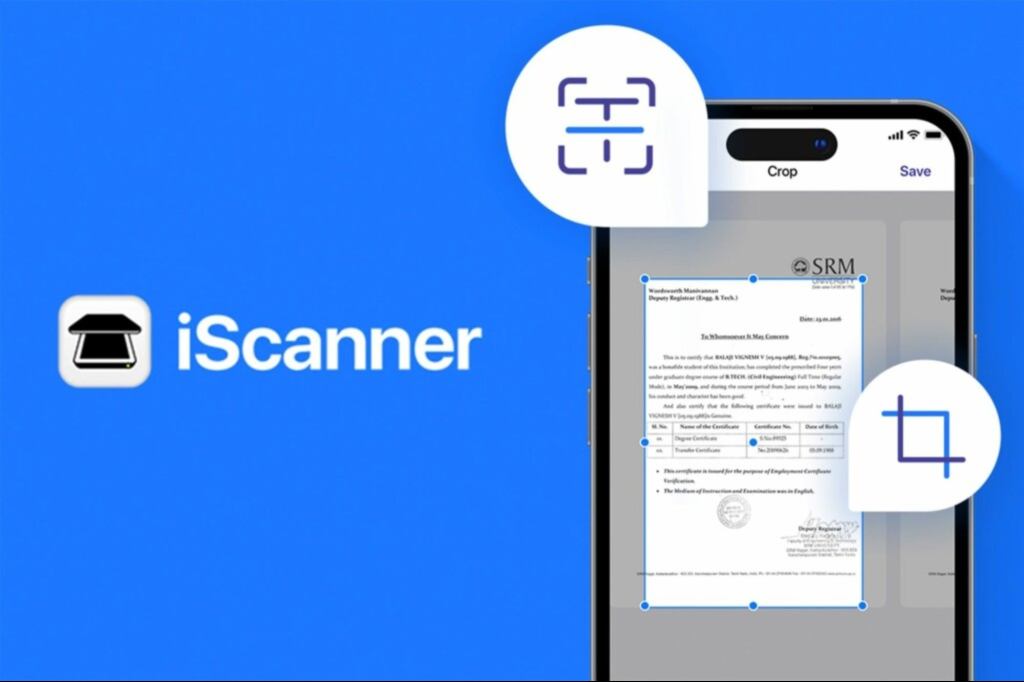
A scanner is a handy tool to use, but not to have taking up space on your desk. Thankfully, there’s an alternative to a bulky office machine for creating copies, and it’s more portable, easier to use, and more versatile — and it gives better results, too. Using your phone or tablet’s camera, the iScanner app can make high-quality scans of documents, photos, even ID cards, and then edit them, file them, and convert them into exactly what your team needs. Right now, you can get a lifetime subscription to iScanner for just $27.99 with code SCAN to save more than $170 on the regular price of $199.90.

Whether you need copies of contracts, receipts, notes, tickets, or tax information to keep your business running smoothly, iScanner can help. The U.S.-based app easily digitizes your files to be exported in whatever format you need: as a PDF, JPG, or TXT file. You can even make the into Microsoft Office-compatible file types like Word documents, Excel spreadsheets or PowerPoint presentations. Once you’ve scanned your document, use the app to sign it or to fill in form fields — you can even blur text and lock your files with a PIN code so your business information stays secure.

The iScanner app also enables quick edits, like color correction and blur and artifact removal, and has AI-powered functions that can detect and adjust your document borders, recognize text in multiple languages and correct for off-center or curved scans.

With your lifetime subscription, you’ll get future updates to the program, as well as 200 MB of lifetime storage for your files. You can access the iScanner app using iPhones and iPads, as well as with Android phones and tablets. (Please note that this program is not available in Argentina, Chile, Ecuador, Italy, Japan, Mexico, Russia, Spain and Venezuela.)

Keep the scanning functionality, but ditch the desktop scanner — with iScanner, you have the scanning and filing tech you need at your fingerprints, no extra space required.

Get a lifetime subscription to iScanner for for $27.99 with code SCAN (reg. $199.90).

StackSocial prices subject to change.

A scanner is a handy tool to use, but not to have taking up space on your desk. Thankfully, there’s an alternative to a bulky office machine for creating copies, and it’s more portable, easier to use, and more versatile — and it gives better results, too. Using your phone or tablet’s camera, the iScanner app can make high-quality scans of documents, photos, even ID cards, and then edit them, file them, and convert them into exactly what your team needs. Right now, you can get a lifetime subscription to iScanner for just $27.99 with code SCAN to save more than $170 on the regular price of $199.90.

Whether you need copies of contracts, receipts, notes, tickets, or tax information to keep your business running smoothly, iScanner can help. The U.S.-based app easily digitizes your files to be exported in whatever format you need: as a PDF, JPG, or TXT file. You can even make the into Microsoft Office-compatible file types like Word documents, Excel spreadsheets or PowerPoint presentations. Once you’ve scanned your document, use the app to sign it or to fill in form fields — you can even blur text and lock your files with a PIN code so your business information stays secure.

The iScanner app also enables quick edits, like color correction and blur and artifact removal, and has AI-powered functions that can detect and adjust your document borders, recognize text in multiple languages and correct for off-center or curved scans.

https://www.entrepreneur.com/science-technology/replace-your-desktop-scanner-with-this-28-app/502188


Comparing AI Models With This Tool Can Save Your Business Time and Money

Disclosure: Our goal is to feature products and services that we think you’ll find interesting and useful. If you purchase them, Entrepreneur may get a small share of the revenue from the sale from our commerce partners.

Learning how to effectively leverage AI tools for your business is key to optimizing profits and time. According to a recent McKinsey report, AI represents a potential $4.4 trillion opportunity for corporations in growth potential. For entrepreneurs and business owners juggling multiple responsibilities, finding the right AI tool can mean the difference between spending hours on a task or wrapping it up in minutes. The challenge? Each AI model has different strengths, and testing them individually wastes valuable time.

ChatPlayground AI solves this problem by putting over 25 leading AI models in a single interface. Enter one prompt and instantly compare outputs from GPT-5.1, Claude Sonnet 4.5, Gemini 2.5 Pro, DeepSeek V3, and many more side by side. Whether you’re drafting investor pitches, generating marketing copy, debugging code, or analyzing business documents, you can quickly identify which AI gives you the best result for your specific need.

What makes this new AI platform so unique?

The platform includes practical tools that streamline business workflows. Chat with uploaded PDFs and images to extract insights from contracts, financial reports, or product mockups. Use the prompt engineering features to refine your queries for more accurate responses. The Chrome extension integrates seamlessly into your browsing, letting you access AI assistance without switching tabs. All your conversations are saved for future reference, making it easy to track project progress or revisit past brainstorming sessions.

For entrepreneurs running lean operations, the lifetime subscription model eliminates recurring monthly costs that can add up quickly. The Unlimited Plan provides unrestricted messages per month, priority access to new features, and support for teams running constant experiments.

Get a ChatPlayground AI Unlimited Planon sale for $79 (reg. $619).

ChatPlayground AI: Lifetime Subscription (Unlimited Plan)

See Deal

StackSocial prices subject to change.

Learning how to effectively leverage AI tools for your business is key to optimizing profits and time. According to a recent McKinsey report, AI represents a potential $4.4 trillion opportunity for corporations in growth potential. For entrepreneurs and business owners juggling multiple responsibilities, finding the right AI tool can mean the difference between spending hours on a task or wrapping it up in minutes. The challenge? Each AI model has different strengths, and testing them individually wastes valuable time.

ChatPlayground AI solves this problem by putting over 25 leading AI models in a single interface. Enter one prompt and instantly compare outputs from GPT-5.1, Claude Sonnet 4.5, Gemini 2.5 Pro, DeepSeek V3, and many more side by side. Whether you’re drafting investor pitches, generating marketing copy, debugging code, or analyzing business documents, you can quickly identify which AI gives you the best result for your specific need.

What makes this new AI platform so unique?

The platform includes practical tools that streamline business workflows. Chat with uploaded PDFs and images to extract insights from contracts, financial reports, or product mockups. Use the prompt engineering features to refine your queries for more accurate responses. The Chrome extension integrates seamlessly into your browsing, letting you access AI assistance without switching tabs. All your conversations are saved for future reference, making it easy to track project progress or revisit past brainstorming sessions.

https://www.entrepreneur.com/science-technology/comparing-ai-models-with-this-tool-can-save-your-business/502187


4 AI Tools to Help You Start a Profitable Solo Business in 2026

Opinions expressed by Entrepreneur contributors are their own.

Most AI advice optimizes tasks. This setup replaces leverage.

In this video, I break down the four AI tools I use to run a profitable solo business in 2026 — without hiring, without coding and without duct-taping random workflows together. These are not hacks. They’re systems you can actually run.

Instead of chasing productivity, this stack is built around one idea: Let AI handle the coordination, so you focus on decisions that move revenue.

What you’ll get:

  • Market Signal Engine: How I detect demand early — spotting topics, keywords and trends before they spike — then turn that signal into content and offers that compound instead of burn out.
  • Always-On Revenue Engine: The automation layer that follows up, qualifies leads, personalizes responses and nudges deals forward while you’re offline — without sounding robotic.
  • Automation Backbone: How I convert scattered, manual work into clean, repeatable workflows across docs, calendars, inboxes and CRM — so nothing slips and nothing needs babysitting.
  • Content Control System: The exact process I use to generate hooks, titles and a publishing cadence in minutes — then test, refine, and scale what actually performs.

Inside, I’ll show you:

  • My step-by-step setup, from blank slate to first automation.
  • The exact prompts, checklists and handoff points between tools.
  • Where people waste time (and the two tweaks that unlocked most of my growth).
  • Templates you can duplicate to launch in a weekend.

If you’re a solo entrepreneur who’s doing everything yourself, this is the operating system that lets you scale faster, work fewer hours, and keep your margins intact. Copy the stack, run the playbook, and watch the numbers move.

The AI Success Kit is available to download for free, along with a chapter from my new book, The Wolf is at The Door.

Most AI advice optimizes tasks. This setup replaces leverage.

In this video, I break down the four AI tools I use to run a profitable solo business in 2026 — without hiring, without coding and without duct-taping random workflows together. These are not hacks. They’re systems you can actually run.

Instead of chasing productivity, this stack is built around one idea: Let AI handle the coordination, so you focus on decisions that move revenue.

https://www.entrepreneur.com/growing-a-business/4-ai-tools-to-help-you-start-a-profitable-solo-business-in/502318


The First Step to a Successful Career Pivot — Without Losing Momentum

Opinions expressed by Entrepreneur contributors are their own.

Key Takeaways

  • Most career pivots fail because they’re driven by urgency or frustration instead of disciplined self-assessment.
  • A clear, evidence-based audit turns experience into direction and preserves momentum through change.

At some point in every career, the path you are on stops matching the person you have become. Sometimes the shift is subtle. Other times it is unmistakable. But the feeling is always the same. You sense it is time for a change, and you do not yet know where that change leads.

A successful pivot does not begin with the next role or the next idea. It begins with understanding yourself accurately. Not optimism. Not pressure. Not habit. Accuracy. That clarity comes from a disciplined self-audit, and it is the single most important step in determining whether your next move becomes a true inflection point or simply another chapter of misalignment.

A pivot is about realignment. Let me share with you how to conceive and execute a self-audit that can catalyze your career.

Experience only becomes useful when you examine it

Your career builds a trail of evidence of how you perform in different environments, what kind of problems you naturally solve, where you create momentum and where you slow down. That evidence is only valuable if you take the time to interpret it.

Early in my career, I spent time in fast-growth environments where the pace was relentless and the expectations were high. Later, I worked in turnaround conditions where the requirements were entirely different. These experiences taught me something fundamental. The environment you choose matters. It determines whether your strengths multiply or fade. Find an environment that is meaningful to you, and it will make all the difference.

A self-audit forces you to step back and look at the environments where you have done your best work and the ones where you have not. It also reveals patterns that are too easy to overlook when you are focused on the day-to-day.

Four questions that define a successful pivot

1. Where do I do my best work?

Every leader has an operating rhythm. Some excel in ambiguity and rapid change. Some excel when structure, process, and consistency create clarity. Others thrive when a business needs to be rebuilt from the ground up.

When you know your rhythm, you know which environments you can sustain and which environments will drain you. A pivot should move you toward the places where you naturally excel.

2. What am I willing to commit to in the next stage?

Every career chapter carries a cost. Entrepreneurship requires sacrifice and total ownership. Corporate leadership requires alignment and patience. Turnaround work requires intensity and resilience.

A pivot only works when you are prepared for the demands of the next phase. Talent alone is not enough. You have to be willing to meet the requirements of the role you choose.

3. What strengths and limitations show up repeatedly?

You can learn a great deal from the feedback that has followed you throughout your career. That feedback often reveals your most reliable strengths and the constraints you need to account for.

However, as Harvard Business Review notes, processing professional feedback “goes far beyond listening to it in the moment and implementing it. It involves continuous reflection, conversation and practice.”

You are greater than your worst criticism and maybe not as perfect as your highest compliment. Parse through the most common feedback you’ve received, and see if you can at least appreciate how colleagues understand you.

4. What direction is the market moving?

Careers do not evolve in isolation. The market plays a role. Sometimes opportunities expand. Sometimes perceptions shift. Sometimes timing changes the trajectory.

A strong pivot accounts for both internal readiness and external reality. When you align the two, you create momentum. When you ignore the market, even the right internal move can stall.

A pivot is a reallocation of strength, not a reset

One of the most important lessons I have learned is that a pivot doesn’t erase what came before it. Your experience doesn’t vanish; it compounds.

Leadership, judgment, operational discipline, customer understanding and the ability to navigate complexity are transferable. They apply across industries, business models and stages of growth. A pivot simply places those capabilities in a context where they matter more.

The leaders who navigate pivots successfully are the ones who recognize the through lines in their own careers and position themselves where those strengths can deliver the greatest impact.

Alignment creates acceleration

When your work aligns with your strengths, your operating rhythm, and the realities of the market, something important happens. Momentum returns. Decisions become clearer. Opportunities begin to make sense again.

A pivot shouldn’t be a reaction. It should be a strategic shift supported by evidence. The self-audit eliminates guesswork and replaces it with direction.

If you are considering a transition, begin with the audit. It is the foundation of any successful pivot and the clearest path to unlocking the next stage of your career.

Sign up for the Entrepreneur Daily newsletter to get the news and resources you need to know today to help you run your business better. Get it in your inbox.

Key Takeaways

  • Most career pivots fail because they’re driven by urgency or frustration instead of disciplined self-assessment.
  • A clear, evidence-based audit turns experience into direction and preserves momentum through change.

At some point in every career, the path you are on stops matching the person you have become. Sometimes the shift is subtle. Other times it is unmistakable. But the feeling is always the same. You sense it is time for a change, and you do not yet know where that change leads.

A successful pivot does not begin with the next role or the next idea. It begins with understanding yourself accurately. Not optimism. Not pressure. Not habit. Accuracy. That clarity comes from a disciplined self-audit, and it is the single most important step in determining whether your next move becomes a true inflection point or simply another chapter of misalignment.

https://www.entrepreneur.com/growing-a-business/the-first-step-to-a-successful-career-pivot-without/501849


Fear and Uncertainty Stopped Me From Investing — Here’s the Simple Framework I Used to Never Hesitate Again

Opinions expressed by Entrepreneur contributors are their own.

I learned the cost of waiting for certainty early in my investing career. A friend introduced me to a micro trading app. There was no revenue and no meaningful user base, and the valuation seemed disconnected from the company’s current standing. I wanted more proof. I wanted stronger signals and cleaner data. I convinced myself that a better picture was coming if I held off.

The company became Robinhood.

That decision stayed with me. It showed how expensive hesitation can be and how misleading the idea of “complete clarity” really is. Early-stage work rarely offers perfect information. The moment you want the most certainty is usually the moment you have the least. Markets move, customers shift and the information you wait for often doesn’t show up until long after the opportunity has passed.

This is why progress slows when leaders treat uncertainty as a reason to pause. The companies that move fastest tend to be led by people who understand that clarity forms through action over analysis. Instead of waiting for the complete picture, they move when they reach a workable level of conviction. That is the foundation of One Sigma Confidence.

What One Sigma Confidence actually means

The name borrows from basic statistics, but the rule itself is simple. When you feel roughly 70% confident in a direction, it is time to act. Not with bravado, and not with unquestioning optimism. With grounded conviction that acknowledges what you know, what you believe, and what remains uncertain.

This mindset is effective because it acknowledges the realities of early-stage work. Very few decisions come with a complete data set. High-growth environments reward forward movement over intellectual perfectionism. One Sigma Confidence gives you the structure to make timely decisions without drifting into recklessness.

The cost of over-analysis

Over-analysis masquerades as discipline, yet it often reflects fear. Founders delay product launches while they wait for perfect customer feedback. Investors request more proof even after the core questions have been answered. Team members hold off on key decisions because they want someone to guarantee the outcome.

The cost shows up slowly. Momentum fades. Opportunities pass. Competitors ship. Investors reallocate attention to founders who are moving. A polished plan with no traction rarely outperforms a scrappy plan supported by real-world learning.

The people who advance are the ones who accept that partial information is not a flaw. Instead, they embrace ambiguity as a normal condition of building something new.

A moment when 70% was enough

One of my strongest investments came from a situation where I did not have the whole picture. I invested in a robotics company after scoring the team, the idea, the valuation and the alignment across my framework. The total landed above my threshold, yet it still left more open questions than I preferred.

I knew the founder had the right temperament. I knew the problem they sought to solve was real. I knew the early signals deserved attention. That was enough to move.

Years later, John Deere acquired the company for $250 million.

That outcome underscores what the Robinhood miss taught me in reverse. Acting at 70% is not a gamble, but rather a disciplined way to participate in opportunities that rarely arrive with perfect clarity.

Why action produces better insight than planning

Good judgment does not come from waiting. It comes from taking steps, observing how the world responds, and making adjustments. Every customer conversation, early sale, investor debate and product test creates a new data point. The patterns become easier to see once you are in motion.

This is why founders who act at 70% confidence tend to pivot faster. They gather real information instead of theoretical projections. Their teams stay engaged because they can see progress. Investors trust them because their updates reflect movement rather than speculation.

The same applies to investors. Those who rely only on decks and models often miss what becomes obvious once they meet the founder, observe the follow-through, and see how the idea holds up under pressure. Action reveals a signal faster than planning.

How investors and founders use the rule in practice

For investors, One Sigma Confidence protects against emotional swings. It anchors decisions in a consistent framework rather than relying on instinct alone. A clear rubric across team strength, idea quality, valuation, and alignment helps determine whether a company meets the threshold. You don’t have to get it right every time. The goal is to be disciplined.

It also helps with portfolio management. Companies move through green, yellow, and red zones over time. Investors who update those rankings regularly develop stronger pattern recognition. They identify which founders deserve more support, which need guidance and which may not recover. The rule creates a rhythm of steady evaluation instead of reaction.

For founders, the rule provides permission to move. Leadership becomes quieter, more confident, and more transparent. A team can handle uncertainty when the person at the front makes timely decisions and communicates clearly. Investors appreciate that steadiness as well. They want founders who take action, surface concerns early and adjust with intention.

70% confidence feels like partial clarity paired with forward energy. It rarely feels comfortable, and comfort is not required. What matters is that once your confidence crosses that threshold, hesitation can no longer add value.

Clarity builds through movement

One Sigma Confidence is a practical skill. It is learned through repetition and strengthened through honest evaluation. It rewards the people who respect uncertainty while still committing to a direction. The companies that thrive are led by people who understand this rhythm.

Sign up for the Entrepreneur Daily newsletter to get the news and resources you need to know today to help you run your business better. Get it in your inbox.

I learned the cost of waiting for certainty early in my investing career. A friend introduced me to a micro trading app. There was no revenue and no meaningful user base, and the valuation seemed disconnected from the company’s current standing. I wanted more proof. I wanted stronger signals and cleaner data. I convinced myself that a better picture was coming if I held off.

The company became Robinhood.

That decision stayed with me. It showed how expensive hesitation can be and how misleading the idea of “complete clarity” really is. Early-stage work rarely offers perfect information. The moment you want the most certainty is usually the moment you have the least. Markets move, customers shift and the information you wait for often doesn’t show up until long after the opportunity has passed.

https://www.entrepreneur.com/growing-a-business/i-let-fear-of-uncertainty-cost-me-robinhood-heres-the/501121


New to Franchising? Here’s Your Guide to the Must-Know Industry Acronyms.

Opinions expressed by Entrepreneur contributors are their own.

Key Takeaways

  • Becoming a franchisee involves learning a significant amount of industry-specific information and terminology, which can be overwhelming for newcomers.
  • This article serves as an essential explainer for the most common franchise-related acronyms.
  • Give yourself grace and educate yourself at your own pace rather than trying to master everything immediately.

When aspiring entrepreneurs decide to take that proverbial leap of faith and choose franchising as a means to become their own boss, it can obviously be an overwhelming time.

So much information is available. So many different franchise concepts to choose from, with over 3,500 in today’s marketplace. So many business models to review. So many different avenues for seeking help in the form of assistance from industry experts, such as franchise consultants, brokers, attorneys and financial planners. And so many franchise-related acronyms that get tossed around so freely during conversations.

Wait, what was that last one again? Well, as they say … IYKYK.

In all seriousness, many newcomers to the franchise investigative process can easily be overwhelmed by the sheer number of acronyms that are associated with some of the industry’s most common phrases. But take heart, as this article promises to be the essential explainer for all franchise-related acronyms.

We’ll even do our best to categorize them into specific groups where you’re most likely to encounter them. Examples include acronyms in the legal process, franchise development and sales, financial metrics, and the areas of operation and support. In each instance, acronyms will be featured in bold type, so let’s go ahead and get started.

Common acronyms for industry and associations

The franchise industry’s biggest trade organization is the IFA, which stands for the International Franchise Association. This membership-driven nonprofit organization is dedicated to helping people of all backgrounds and experience levels understand franchising through education, collaboration and advocacy.

Many of the IFA’s members are Certified Franchise Executives (CFEs) or Certified Franchise Sales Professionals (CFSPs) and include these extensions in their titles.

Franchise opportunities fall under the jurisdiction of the Federal Trade Commission (FTC), most commonly noted in their oversight of Franchise Disclosure Documents (FDDs), which we’ll be discussing in much further detail in a subsequent section.

Common acronyms for franchise sales and development

Once candidates begin participating in the franchise investigative process, you’ll most certainly encounter acronyms such as an LOI, or Letter of Intent, which is a non-binding document outlining key sales terms. If these deal points are codified, these terms will be included in the PSA, or Purchase and Sale Agreement, in which assets are bought or sold.

If you need help navigating the investigative process, you might encounter an FSO, which stands for Franchise Sales Organization — or enlist the help of an FBC, or Franchise Business Consultant.

There are also many different kinds of franchisees, such as single-unit owners, MUFOs (Multi-Unit Franchise Owners) and MFs (Master Franchisees) who are also considered ADs, or Area Developers. To get there, they probably had to sign an MA, or Master Agreement.

Common acronyms for franchise operations and support

Once you get further along in the investigative process, you’ll encounter several different aspects of the franchisor’s business model. Before you begin, you may be asked to sign an NDA, or Non-Disclosure Agreement. Because you’ll be hearing about operational terms such as IP, or Intellectual Property and possibly Learning Management Systems, or LMS.

Another common acronym is the franchisor’s CRM, or Customer Relationship Management system.

You’ll definitely hear about SOPs, or Standard Operating Procedures, and plenty about OJT, or On-the-Job Training.

Lastly, expect to hear about the Quality Assurance (QA) efforts and how they work to meet the metrics outlined in the KPIs, or Key Performance Indicators.

Common acronyms for legal terms and compliance

Attorneys play an integral role in the franchise investigative process. The franchisor will have their team, and it’s highly advisable for you to enlist the aid of your own legal counsel to help you with your DD, or Due Diligence.

Legal counsel can help you review and discuss the Franchise Disclosure Document (FDD), which, aside from the franchise agreement itself, is the most important document you’ll encounter in the investigative process.

The FDD is split into 23 specific sections called “Items.” In numerical order, some examples include Item 7, which refers to your initial estimated investment. Item 11 is dedicated to the franchisor’s support and training.

Item 19, the most crucial of all, is where the franchisor discloses key metrics related to their valuation, earnings, profitability and financial performance — which often includes EBITDA information — Earnings Before Interest, Taxes, Depreciation and Amortization.

Item 19 may also include stats such as AUV, Average Unit Volume, and other metrics for calculating Return on Investment (ROI).

During negotiations, you may also learn about ROFR, Right of First Refusal, and ROFO, Right of First Offer.

While the aforementioned acronyms have hopefully broadened your understanding of the phrases behind them, there are simply too many to list in a single article. Whenever you happen to encounter a new one that’s unfamiliar to you, be sure to give yourself a little grace in learning the meaning behind it.

FYI, it’s OK to say IDK. Because IMO, you don’t have to learn everything ASAP. There’s also no need for you to experience FOMO, as franchising is here to stay. Just look for a new set of FAQs wherever you can find it and continue educating yourself at your own pace. If you need more help, just LMK because you can feel free to AMA. I’ll always do my best to RSVP by the EOD.

TTYL.

Sign up for our weekly Franchise newsletter to get the latest franchise news, advice and opportunities. Get it in your inbox.

Key Takeaways

  • Becoming a franchisee involves learning a significant amount of industry-specific information and terminology, which can be overwhelming for newcomers.
  • This article serves as an essential explainer for the most common franchise-related acronyms.
  • Give yourself grace and educate yourself at your own pace rather than trying to master everything immediately.

When aspiring entrepreneurs decide to take that proverbial leap of faith and choose franchising as a means to become their own boss, it can obviously be an overwhelming time.

So much information is available. So many different franchise concepts to choose from, with over 3,500 in today’s marketplace. So many business models to review. So many different avenues for seeking help in the form of assistance from industry experts, such as franchise consultants, brokers, attorneys and financial planners. And so many franchise-related acronyms that get tossed around so freely during conversations.

https://www.entrepreneur.com/franchises/the-essential-explainer-for-all-franchise-related-acronyms/501079