I Asked ChatGPT’s New Agent What to Post Next — It Got 50,000 Views in 48 Hours

Opinions expressed by Entrepreneur contributors are their own.

Most entrepreneurs are still using AI like a basic assistant — plugging in prompts and hoping something sticks. But that’s not how today’s top creators are getting 50K views in 48 hours.

This video reveals how I used OpenAI’s brand-new ChatGPT Agent — a tool most entrepreneurs don’t even know exists — not for keyword research or guesswork, but to predict what to post next using real-time signals from Reddit, YouTube, and Substack.

The result? A viral video, top 2 media ranking, and a strategy you can replicate today.

What you’ll discover:

  • The viral forecasting prompt I now run every Monday, so I never have to guess what to post again
  • How to reverse-engineer your competitor’s entire funnel (without clicking their ads or hiring a consultant)
  • The traffic play that helped me rank in Google’s AI-generated results in record time
  • The secret to building a content calendar in 10 minutes flat — with emotional hooks and scroll-stopping titles that actually work

This isn’t just another AI hack. It’s a total shift in how smart solopreneurs are using ChatGPT’s new autonomous Agent to predict, build, and scale faster than most teams.

If you’re ready to build smarter, grow faster, and dominate your niche before everyone else catches on, this is the video to watch.

The AI Success Kit is available to download for free, along with a chapter from my new book, The Wolf is at The Door.

Most entrepreneurs are still using AI like a basic assistant — plugging in prompts and hoping something sticks. But that’s not how today’s top creators are getting 50K views in 48 hours.

This video reveals how I used OpenAI’s brand-new ChatGPT Agent — a tool most entrepreneurs don’t even know exists — not for keyword research or guesswork, but to predict what to post next using real-time signals from Reddit, YouTube, and Substack.

The result? A viral video, top 2 media ranking, and a strategy you can replicate today.

The rest of this article is locked.

Join Entrepreneur+ today for access.

https://www.entrepreneur.com/science-technology/i-asked-chatgpts-new-agent-what-to-post-next-it-got/495609


‘We’re Very Open’: Apple CEO Tim Cook Says He Wants to Buy Startups. Could Your Company Be Next?

Last week, on Apple’s earnings call, CEO Tim Cook said he was looking to acquire companies.

“We’re very open to [mergers and acquisitions],” Cook said at the time. “We basically ask ourselves whether a company can help us accelerate a roadmap. If they do, then we’re interested.”

Related: She Was CEO of OpenAI for 2 Days. Now Her Secretive AI Startup Has Raised $12 Billion.

Cook noted that of the seven or so companies that Apple had acquired so far in 2025, several were not AI-focused and came from “all walks of life.” He also said the company was making deals fast — every few weeks.

Apple CEO Tim Cook BRENDAN SMIALOWSKI/AFP | Getty Images

What is Apple looking for in a startup?

“We are not stuck on a certain size company,” Cook said.

Apple has about $133 billion of cash, so price isn’t the issue. Rather, the question would be how a startup can fit into the Apple ecosystem with consumer products.

Business Insider notes that Apple’s largest acquisition of all time was Beats Electronics in 2014 for $3 billion.

The outlet asked several experts in the field which companies Apple should consider buying, and many big names were thrown into the ring — including Perplexity, the popular AI-powered search engine.

Related: A Newly Acquired Startup Just Offered Its 200-Person Team a Choice — Work Weekends or Take a Buyout

Another notable suggestion was Thinking Machines Lab, the startup founded by former OpenAI CTO Mira Murati. The company has raised $12 billion so far, though it has yet to launch any products. In July, Murati posted on X that the company would be sharing its first product “in the next couple of months.”

Still, Perplexity and Thinking Machines Lab could be too pricey (both could end up costing somewhere close to $20 billion, BI estimates, if they were even for sale at all), so smaller companies definitely have a shot.

Maybe it’s time to give your pitch deck a refresh.

Join top CEOs, founders, and operators at the Level Up conference to unlock strategies for scaling your business, boosting revenue, and building sustainable success.

https://www.entrepreneur.com/business-news/apple-ceo-tim-cook-says-he-wants-to-buy-startups/495696


Elon Musk Warns Microsoft That Its Partner, OpenAI, Is About to Eat It Alive

After Microsoft CEO Satya Nadella posted on X that OpenAI’s GPT-5 service is included in Microsoft 365 Copilot, Copilot, GitHub Copilot, and Azure AI Foundry, competitor Elon Musk wasted no time predicting that “OpenAI is going to eat Microsoft alive.”

OpenAI CEO Sam Altman brushed off Musk’s tweet during an appearance on CNBC’s “Squawk Box” on Friday with a short: “You know, I don’t think about him that much.”

Altman went on to note that previously, Musk had nothing but criticism for OpenAI.

“I thought he was just, like, tweeting all day [on X] about how much OpenAI sucks, and our model is bad, and, you know, [we’re] not gonna be a good company and all that,” Altman said.

Related: Elon Musk Says X Found the Vine Archive, Restoring Access

Nadella took a much more playful approach to Musk’s dire warning about Microsoft getting eaten alive, posting on X: “People have been trying for 50 years, and that’s the fun of it!”

This is far from the first time these two tech leaders have clashed. The two cofounded OpenAI in 2015, and Musk left in 2018 after a disagreement over the direction of the company’s mission.

Musk’s offer to acquire control of OpenAI for $97.4 billion was denied by Altman earlier this year, with Altman posting a snarky “No thank you, but we will buy Twitter for $9.74 billion if you want” note on social media.

Related: Sam Altman Says Elon Musk Is ‘Clearly a Bully’ Who Likes to Get in Fights with Rivals

Join top CEOs, founders and operators at the Level Up conference to unlock strategies for scaling yourbusiness, boosting revenue and building sustainable success.

After Microsoft CEO Satya Nadella posted on X that OpenAI’s GPT-5 service is included in Microsoft 365 Copilot, Copilot, GitHub Copilot, and Azure AI Foundry, competitor Elon Musk wasted no time predicting that “OpenAI is going to eat Microsoft alive.”

The rest of this article is locked.

Join Entrepreneur+ today for access.

https://www.entrepreneur.com/business-news/elon-musk-warns-openai-will-eat-microsoft-alive/495695


Sweetgreen Is Cutting Staff — and a ‘Loved’ Menu Item. Here’s How the Salad Chain Plans to Turn Things Around After Posting Disappointing Earnings.

Sweetgreen, the popular eatery known for its $16 salads, is streamlining its staff and its menu after reporting disappointing earnings this week.

According to Restaurant Business, Sweetgreen has made job cuts equating to 10% of open and existing positions on its California-based support team. Sweetgreen employed over 6,400 workers as of the end of last year.

Meanwhile, the chain will also discontinue its $4.95 Ripple Fries, marketed as a healthier alternative to French fries, a mere five months after introducing the option.

Related: AT&T and Sweetgreen Are Following Amazon’s Lead With Stricter Return-to-Office Mandates — Though Amazon’s Plan Has Hit a Snag

Sweetgreen CEO Jonathan Neman said on a Thursday earnings call with analysts that while consumers “loved” the air-fried ripple fries and had a “great reaction” to the product, it was a “distraction” to employees and added extra cooking complexity to their day.

Sweetgreen has already tested removing the fries from its menu in certain stores, and seen “huge improvements in customer satisfaction” as employees focus on the salad chain’s core products, Neman said on the call. Sweetgreen will discontinue the item next week, he added.

Sweetgreen made these changes to its staff and menu after posting disappointing quarterly earnings. On Thursday, Sweetgreen announced its second-quarter results, noting that same-store sales fell by 7.6%. The chain reported a net loss of $23.2 million, up from $14.5 million in the same period last year. Total revenue increased by just 0.5% year-over-year to $185.6 million.

What is Sweetgreen’s turnaround plan?

Though Sweetgreen may have reported poor financial results this week, the salad chain has a turnaround plan in place that includes offering larger sizes of proteins, improving the taste of its chicken and salmon, and offering discounts on salads ($13 instead of $15) for members.

Mitch Reback, Sweetgreen’s chief financial officer, said on the earnings call that the company was also bringing back seasonal options and chef collaborations, as well as presenting new offerings at “more moderate price points.”

“While we’re not yet where we want to be, we’re confident that these actions position Sweetgreen to emerge stronger, more focused, and better aligned with what our guests and investors expect from us,” Reback said on the call.

Related: These College Friends Wanted to Sell Better Food. Now, Their Company Is Publicly Traded.

According to Reback, the changes have already taken effect and have helped sales in the current quarter.

Sweetgreen’s stock was down over 70% year-to-date at the time of writing. The company’s market value was a little over $1 billion.

Join top CEOs, founders and operators at the Level Up conference to unlock strategies for scaling your business, boosting revenue and building sustainable success.

Sweetgreen, the popular eatery known for its $16 salads, is streamlining its staff and its menu after reporting disappointing earnings this week.

According to Restaurant Business, Sweetgreen has made job cuts equating to 10% of open and existing positions on its California-based support team. Sweetgreen employed over 6,400 workers as of the end of last year.

Meanwhile, the chain will also discontinue its $4.95 Ripple Fries, marketed as a healthier alternative to French fries, a mere five months after introducing the option.

The rest of this article is locked.

Join Entrepreneur+ today for access.

https://www.entrepreneur.com/business-news/sweetgreen-layoffs-cutting-support-staff-ripple-fries/495690


How to Train AI to Actually Understand Your Business

Opinions expressed by Entrepreneur contributors are their own.

A few months ago, I was in a strategy session with a mid-sized company that had just implemented an AI assistant to support their sales team. The promise was bold. The tool would draft personalized emails, prioritize leads and surface insights from their CRM.

Within a week, they were disappointed. The emails sounded flat. The lead scoring made no sense. The insights felt irrelevant. But the problem wasn’t the AI. The problem was the missing context.

The AI was functioning exactly as designed. It just had no idea who their customers really were, how their sales team operated or what made the brand sound like itself. They gave the system data. But they didn’t give it meaning. And in today’s AI-powered world, meaning is everything.

Related: What Is Artificial Intelligence (AI)? Here Are Its Benefits, Uses and More

Why context is the competitive edge

Most AI conversations revolve around capability: What can this tool do? Can it automate tasks? Draft emails? Forecast revenue? But capability without clarity leads nowhere.

AI isn’t here to think for you — it’s here to accelerate decisions you already know how to make. It does that best when it understands your world. That understanding is built through context.

With the right context, AI becomes an amplifier. Without it, it’s a liability.

The difference between content and context

Most businesses are producing more content than ever — blogs, emails, product pages. But content alone doesn’t move the needle anymore.

Context is what tells AI how to interpret that content. It creates structure, order and trust. It’s the invisible framework that helps AI reflect your business accurately and meaningfully.

This isn’t about writing more — it’s about designing a system that reflects the truth of your business in a way machines can understand.

The five layers of context every business needs

In my work with clients across sectors, I’ve seen one pattern hold true. The businesses that win with AI are not the ones that use the most tools. They’re the ones who master their own message and operational clarity.

These are the five core layers I help clients define and deploy:

1. Foundational clarity: What you do, who you serve, what you offer and what sets you apart — communicated consistently across every channel.

2. Customer understanding: Document the problems your customers face, the results they want and the language they use. This informs everything from prompts to positioning.

3. Brand tone and voice: AI defaults to neutral. Your job is to teach it how you sound — whether bold, technical, nurturing or direct — and embed that in your AI strategy.

4. Platform consistency: Your website, LinkedIn, press coverage and directories should tell the same story. AI builds a digital “knowledge graph” of you, and inconsistencies erode trust.

5. Process transparency
Internal workflows matter. AI works better when it understands how leads move through your system, what onboarding looks like and where handoffs happen. Without that, automation gets messy.

Related: AI for the Underdog — Here’s How Small Businesses Can Thrive With Artificial Intelligence

What this looks like in practice

I once worked with a founder who was frustrated that AI couldn’t write sales emails that sounded human. But when I looked at the prompt they were using, it simply said “Write a follow-up email to a new lead.”

That’s not a prompt. That’s a guess, so we rewrote it using their actual business context. We included who the lead was, what problem they were facing, what the founder wanted to emphasize and the kind of tone that reflects their values. The result was something they were proud to send. That’s the power of context engineering.

We are moving toward a world where AI agents will become the default discovery layer for customers. People will no longer browse. They’ll ask a question. The agent will answer. So, if your business lacks clarity, structure and contextual trust, you won’t even be in the running. But if your business is architected with context, the machine will recommend to you confidently. It will summarize you accurately. It will help you scale with integrity and speed.

The future of business belongs to the owners who take time to articulate their nuance. AI does not reward noise. It rewards clarity.

The brands that win in this next chapter will not just be visible. They will be deeply understood, and the only way to be understood by a machine is to first understand yourself.

Ready to break through your revenue ceiling? Join us at Level Up, a conference for ambitious business leaders to unlock new growth opportunities.

A few months ago, I was in a strategy session with a mid-sized company that had just implemented an AI assistant to support their sales team. The promise was bold. The tool would draft personalized emails, prioritize leads and surface insights from their CRM.

Within a week, they were disappointed. The emails sounded flat. The lead scoring made no sense. The insights felt irrelevant. But the problem wasn’t the AI. The problem was the missing context.

The AI was functioning exactly as designed. It just had no idea who their customers really were, how their sales team operated or what made the brand sound like itself. They gave the system data. But they didn’t give it meaning. And in today’s AI-powered world, meaning is everything.

The rest of this article is locked.

Join Entrepreneur+ today for access.

https://www.entrepreneur.com/growing-a-business/how-to-train-ai-to-actually-understand-your-business/494496


Your Teams Are Working Hard, But You’re Not Seeing Growth. Here’s the Real Problem — and How to Solve It.

Opinions expressed by Entrepreneur contributors are their own.

Throughout my career, I’ve seen a recurring pattern inside countless organizations, from agile mid-market players to global enterprises. I’ll see talented, hard-working teams in marketing, sales, customer success and R&D pushing relentlessly to hit their numbers. On paper, everyone is doing their job. Yet, the organization as a whole feels stuck, fighting against an invisible current of internal friction.

This is a frustration I hear constantly from CEOs and other executives. They see the immense effort but not the exponential results that should follow. There’s a palpable disconnect they can’t quite pinpoint, because the problem isn’t a lack of talent or effort. The problem is that their go-to-market (GTM) engine isn’t a cohesive unit; it’s a collection of high-performing but disconnected silos. And in today’s volatile market, this internal fragmentation isn’t just inefficient — it’s a direct threat to survival.

Related: How to Break Down Silos in Your Company by Building Lanes

The real problem: Your biggest threat is internal fragmentation

A fragmented go-to-market is one of the most significant, yet hidden, costs in business. When teams operate in isolation, the symptoms are immediate and corrosive. Budgets are wasted on redundant tools and overlapping efforts, and because cross-functional finger-pointing becomes the norm, employee morale inevitably drops. It gets worse when misaligned KPIs incentivize teams to optimize for their own success, often at the expense of the company’s larger goals and, most critically, the customer’s experience.

This internal chaos, in turn, spills outward. From the customer’s perspective, the experience is disjointed and frustrating. They are forced to navigate a maze of different departments that don’t seem to talk to each other. But this isn’t just a minor inconvenience; it’s a strategic vulnerability because while you’re busy managing internal friction, your more agile, integrated competitors are delivering the seamless, personalized and relevant experiences that customers now demand. So they aren’t just stealing market share; they are making you obsolete.

The 3 pillars of an integrated go-to-market engine

Breaking down these silos requires more than a simple reorganization. It demands a fundamental shift in mindset. Based on my experience and reinforced by what I see every day in the SAMA community, this transformation is built on three core pillars that connect and build on one another.

  1. Shared metrics, shared mission: A fascinating thing happens when you get leaders from marketing, sales and product in the same room. And when you peel back the layers, they discover they have much more in common than they thought. In fact, they’re all accountable to the same macro-outcomes: customer acquisition cost (CAC), lifetime value (LTV) and net promoter score (NPS). Therefore, the first step to integration is to elevate these shared metrics above any siloed functional goals. This aligns everyone around a single, unified mission: creating and retaining high-value customers.

  2. Radical empathy: Once you have a shared mission, you need a new way of working together to achieve it. After all, structure follows strategy, but culture determines success. You cannot simply mandate collaboration; you have to cultivate it, and that begins with empathy. This means creating forums where teams can openly discuss their priorities, challenges and processes. When the sales team understands the data behind marketing’s lead-scoring model, and the product team hears firsthand from customer success about user frustrations, the dynamic shifts. As a result, what were once transactional handoffs become genuine collaborations built on trust.

  3. A unified view of the customer: The ultimate outcome of this mission-aligned, empathetic collaboration is the ability to see the business through a single, powerful lens: the customer’s. This unified perspective is powered by a cohesive GTM engine that gathers data and insights at every touchpoint, creating a true 360-degree view of the customer journey. And in the age of AI, this becomes the very foundation for resilience. Instead of just analyzing historical data, your organization can finally build predictive models to anticipate needs, identify risks and uncover opportunities for innovation. With that, the entire business moves from being reactive to proactive, creating a competitive moat that is nearly impossible for fragmented competitors to cross.

When these three pillars are in place, the result is a formidable competitive advantage. The organization becomes more agile, more innovative and more attuned to the customer.

Related: The Best Leaders Follow These 13 Rules of Cross-Functional Collaboration

Your playbook for breaking down the silos

And the good news is that this transformation doesn’t require some massive, multi-year initiative. For any leader who recognizes their organization is caught in this silo trap, the path forward begins with three surprisingly direct and intentional steps:

  • Step 1: Get the leaders in a room and define the “why.” The first move is to convene the heads of marketing, sales, customer success and R&D, but the purpose here is critical: The first conversation must center on the why. This means framing a shared mission around the business impact you expect and, most importantly, the value it will deliver to the customer. This initial step transforms what could be just another meeting into the formation of a new, unified leadership coalition.

  • Step 2: Map your common ground. From there, it’s about getting everything on the table. Have each leader present their team’s top priorities and the primary KPIs they are measured against. As you put these on a whiteboard, the shared metrics — LTV, CAC, churn — will become obvious. This simple exercise visually dismantles the illusion of separate missions and builds a foundation of shared accountability.

  • Step 3: Build a unified plan. Once that common ground is established, the conversation naturally shifts toward identifying one or two critical gaps — like improving lead conversion, reducing customer churn, or launching a new product — that no single team can solve alone. The key then becomes to collaboratively build a single, unified plan to tackle it, complete with shared responsibilities and metrics for success. This first joint effort, however small, is what begins to build the crucial muscle memory for cross-functional collaboration.

These steps are not just a one-time fix; they are the building blocks of a new operational rhythm. By making this process a habit, organizations move from concepts to execution and begin to instill a resilient, integrated culture from the ground up.

Related: How to Build a Solid Go-to-Market Strategy for 2025

The future is collaborative, not isolated

Yet still, the pushback I often hear from busy executives is that while this sounds great on paper, they simply lack the time for another initiative. The reality, however, is that this is not additive. This is a strategy for unlocking immense productivity and leverage from the resources you already have. It’s about making your entire organization more effective at a time when budgets are tight and every dollar counts.

I recently gave a keynote at a large energy company that had completely shifted its operating model to ensure this kind of GTM integration was baked into its culture. Instead of treating it as an extra project, they embraced it as the only way to get better together and meet the relentless pace of customer and market demands.

In an era of unprecedented disruption, having the best product or the most aggressive sales team is no longer enough. The ultimate competitive advantage is organizational alignment. So, the question is no longer if you should integrate your go-to-market teams, but how quickly you can do it. Because your growth, and perhaps survival, depends on it.

Throughout my career, I’ve seen a recurring pattern inside countless organizations, from agile mid-market players to global enterprises. I’ll see talented, hard-working teams in marketing, sales, customer success and R&D pushing relentlessly to hit their numbers. On paper, everyone is doing their job. Yet, the organization as a whole feels stuck, fighting against an invisible current of internal friction.

This is a frustration I hear constantly from CEOs and other executives. They see the immense effort but not the exponential results that should follow. There’s a palpable disconnect they can’t quite pinpoint, because the problem isn’t a lack of talent or effort. The problem is that their go-to-market (GTM) engine isn’t a cohesive unit; it’s a collection of high-performing but disconnected silos. And in today’s volatile market, this internal fragmentation isn’t just inefficient — it’s a direct threat to survival.

Related: How to Break Down Silos in Your Company by Building Lanes

The rest of this article is locked.

Join Entrepreneur+ today for access.

https://www.entrepreneur.com/growing-a-business/the-hidden-costs-of-siloed-teams/495140


The Real Reason AI Isn’t Working at Your Company — and the 3-Step Fix to Change That

Opinions expressed by Entrepreneur contributors are their own.

You’re all-in on AI. Your team? Not quite there yet.

You’ve tested the tools, seen the potential, maybe even scored a few quick wins. But turning that into confident, consistent use across your company? That’s a different story.

From my conversations with fellow leaders, I know this gap is common. Even with access to powerful tools, teams often hesitate – or sometimes outright resist – embracing AI in their workplace. A BCG report confirms it: most AI adoption challenges stem from people and processes, not the technology itself. Hence, the main hurdle remains the readiness of your team to use innovative tools and solutions.

The good news is that this problem can be solved. A thoughtful strategy can turn AI into a natural part of your team’s daily work. Below, I’ll outline the most common obstacles I’ve seen and share practical ways to help your team build confidence around them.

The real barriers to AI adoption

AI is everywhere nowadays, but many teams are still unsure how to put it to work. In my experience, the majority of AI adoption challenges arise from a few recurring obstacles that stop interest from becoming action:

  • Unclear relevance. Most employees don’t see how AI applies to their daily tasks. The benefits sound promising, but without a clear link to their responsibilities, it’s hard to see the point. Generic advice like “automate tasks” or “save time” only adds confusion — teams need concrete, role-based examples to know where to begin and how it adds value.
  • Lack of support. Even when teams are excited about AI, they’re often left on their own, without onboarding, training or shared resources. This leads to isolated experiments, inconsistent use, duplicated effort and missed chances to learn from each other.
  • Fear around AI. Many employees lack confidence in using it. Unclear boundaries, fear of mistakes, especially in sensitive contexts and worries about job security often result in resistance to AI altogether.

Related: How to Successfully Implement AI into Your Business — Overcoming Challenges and Building a Future-Ready Team

Three proven steps to overcome AI adoption challenges

However, these blockers aren’t fixed. With the right strategy in place, teams can go from hesitant to confident without needing a huge overhaul. Here’s how to create the kind of structure that makes AI part of the daily workflow.

Provide AI training that makes sense

If you want your team to embrace AI in the workplace, you need to start with training that’s practical, clear and aligned with how people actually work.

When choosing a training, consider:

  • Clarifying what AI is. Skip jargon and focus on how it works in your company’s context. Practical, real-world examples go a long way.
  • Breaking myths. Misconceptions like AI being a threat to jobs or always delivering flawless results can quietly undermine adoption. Address them head-on and set realistic expectations about what AI can and can’t do.
  • Making it role-specific. Show how AI supports the specific responsibilities of each role. Demonstrate how it can help with familiar tasks, so it feels like a natural extension of their work.

To make the experience more engaging, personalize it. Tailor prompt libraries to different departments — marketing, HR, operations — so teams can explore use cases that reflect their daily tasks. This makes AI easier to grasp and more exciting to try out.

PwC is a great example of what this can look like in action. They launched an AI Academy that’s already trained 90% of their employees in prompt design and responsible AI use. Their focus on trust, accessibility and hands-on application has helped teams adopt AI more confidently across the board.

Pick an AI partner that thinks beyond technology

Once your team understands AI’s value, the next step is choosing a partner who can scale that vision.

Start by looking at how they develop AI as a skill across teams. Are they actively investing in long-term capability? At Accedia, for example, we run internal AI trainings and initiatives like our Innovation Development Center, where team members can explore real use cases and build practical AI experience.

Equally important is a partner’s ability to grasp your business context. The right one invests time in understanding how your organization works, offering dedicated delivery leads who collaborate with your team, ask the right questions and tailor solutions to specific needs.

Finally, the right provider helps you map out where AI will drive the most value and where it may introduce risk. They align efforts with organizational goals, highlight high-stakes decisions and ensure AI is implemented in a responsible, context-aware way.

Related: AI Isn’t Plug-and-Play — You Need a Strategy. Here’s Your Guide to Building One.

Make AI part of work culture

The way your company approaches innovation directly shapes how easily AI is adopted. When it is encouraged across teams, people feel more comfortable experimenting. Here are a few ways beyond frequent communication I’ve tried in my team to support that mindset:

  • Encourage cross-team collaboration. Eliminate organizational silos by bringing people together to work. Sharing knowledge and solving problems side by side leads to fostering new ideas and very often, better results.
  • Let people follow what excites them. By supporting AI initiatives outside day-to-day tasks, you give your team space to explore what genuinely excites them, which often sparks new ideas and brings unexpected value to the business.
  • Make innovation everyone’s job. Avoid letting it live only in one team. Consider forming a small group of “innovation ambassadors” who can help spread ideas, answer questions, and inspire others to get involved.

Conclusion

Successfully navigating AI adoption challenges means creating an environment where employees understand how technology enhances their roles, receive training to use it confidently, and view innovation as a shared responsibility. When that happens, AI in the workplace stops being a trend and starts driving lasting progress. Don’t let hesitation define your company’s future. Lead the shift from resistance to results and turn your team into your biggest AI advantage.

Ready to break through your revenue ceiling? Join us at Level Up, a conference for ambitious business leaders to unlock new growth opportunities.

You’re all-in on AI. Your team? Not quite there yet.

You’ve tested the tools, seen the potential, maybe even scored a few quick wins. But turning that into confident, consistent use across your company? That’s a different story.

From my conversations with fellow leaders, I know this gap is common. Even with access to powerful tools, teams often hesitate – or sometimes outright resist – embracing AI in their workplace. A BCG report confirms it: most AI adoption challenges stem from people and processes, not the technology itself. Hence, the main hurdle remains the readiness of your team to use innovative tools and solutions.

The rest of this article is locked.

Join Entrepreneur+ today for access.

https://www.entrepreneur.com/science-technology/the-real-reason-ai-isnt-working-at-your-company-and/494411


This Happiness Expert at Harvard Business School Reveals the ‘Big Mistake’ You’re Making — Plus the Money and Career Secrets That Lead to Real Satisfaction

“The first big mistake that people make is thinking that happiness is a feeling,” Arthur Brooks, professor at Harvard Business School and author of the forthcoming book The Happiness Files: Insights on Work and Life, says.

Image Credit: Jenny Sherman Photography. Arthur Brooks.

On the first day of class, Brooks asks his students to define “happiness.” Many of those students have a relatively sophisticated understanding of startups and business, but they tend to misunderstand “the startup of their life,” Brooks finds.

“If you want to become a billionaire in the business of life, it’s not about money or power,” Brooks says. “It’s about love and happiness, and they don’t even know what the currency is. They talk about their feelings, and I say, ‘That’s wrong. Feelings are relevant, but they’re nothing more than evidence of your happiness.'”

Related: ‘Finances Fuel Life Goals.’ These Top Money Secrets Can Make You Happier and More Successful, According to an Expert.

Brooks points to Thanksgiving dinner as an example: The smell of turkey is evidence of Thanksgiving dinner, but if you want to improve your nutritional profile and stay healthy, you need to be familiar with the ingredients and macronutrients on your plate.

“Chasing feelings [of happiness], which is like chasing the smell and trying to get healthy, is not going to work,” Brooks says. “You need to become good at understanding the science of enjoyment, satisfaction and meaning. Those are the macronutrients of happiness.”

Entrepreneur sat down with Brooks to learn more about how people can build happier careers and lives.

How do you find a satisfying job or career?

Ambitious twenty-somethings often ask Brooks what they should look for if they want to find satisfaction in their job or career.

The answer is a “very big, ethereal term,” according to Brooks: “Calling.”

“ Now, that doesn’t mean that you have to be Mother Teresa,” Brooks says. “It doesn’t mean that at all. Being a roofer can be your calling. Raising your children at home can be your calling. There are a lot of things that can be your calling, but you’re trying to find the thing that you were meant to do, which is to say that you’re trying to find something that will bring you a lot of meaning.”

Related: How to Find the Right Career Calling and Reduce Stress

Finding your calling doesn’t mean you’re going to have fun all the time or be satisfied every day of the week, but paying attention to two metrics can help you figure out if you’re doing what you’re meant to do, Brooks says.

“ If you’re earning your success, [meaning] your hard work and merit and personal responsibility are acknowledged and rewarded, and [you’re] serving other people, then you’ll feel like you’re meant to do what you’re doing, and that will be your calling,” Brooks explains.

Why don’t promotions and raises actually make you happy?

Think securing that title change or salary bump at work will make you happy? Think again.

Mother Nature doesn’t design people to be happy — Mother Nature designs people to be successful, Brooks says.

“Success 250,000 years ago didn’t mean getting to IPO with your startup, because there was no such thing,” Brooks says. “The equivalent was survival and mates. Sufficient calories, being safe for the night, getting through the winter and finding as many mates as you could. Propagating the species was the equivalent of ‘I made my first billion’ back in the day.”

Related: Why Aren’t You Happy, Even When You Get What You Want? This Founder Teamed Up With the Dalai Lama Himself to Cure Your ‘Insatiable’ Desire.

People who follow the impulse for professional success, thinking it will make them happy, often find themselves in an endless cycle that never brings the desired result, Brooks notes.

“If money, power and the admiration of other people are an intermediate goal to get to something more valuable — love and happiness — then great,” Brooks says. “But if it’s the end goal, it’s like drinking seawater. The more you drink, the thirstier you get.”

So, how much money do you really need to be happy?

In 2010, Princeton University professors Daniel Kahneman and Angus Deaton published a paper that showed that an increase in income improved people’s well-being — until they hit $75,000. After that, happiness plateaued.

Ten years later, research from a senior fellow at the University of Pennsylvania, Matthew Killingsworth, found that well-being does increase beyond the $75,000 threshold.

However, a collaborative project from Kahneman and Killingsworth, along with the University of Pennsylvania’s Barbara Mellers, in 2023 revealed that money can continue to buy happiness for people who are already happy, but it can only curb unhappiness to a point for those who are not.

“The suffering of the unhappy group diminishes as income increases up to [$100,000] but very little beyond that,” the report stated. “This income threshold may represent the point beyond which the miseries that remain are not alleviated by high income.”

Happiness and sadness activate overlapping and distinct areas of the brain.

“When you’re poor and become less poor, you have less of those negative emotions because you’re able to eliminate the things that are bothering you a lot, like making rent, paying your light bill, [raising your kid] in a safe neighborhood,” Brooks says. “But once you get past a very low threshold, you’re no longer eliminating those sources of unhappiness.”

Related: Science Says Money Does Buy Happiness If You Spend It the Right Way

Brooks suggests people try to reach an income level that eliminates their sources of unhappiness, then focus on the other areas of their life — like family, friendship, love and faith — that actually make them happy.

“Along the way, if you create a great business, and you love doing that, and it’s really fun and you bless a lot of people, [then go] to IPO and become a billionaire — more power to you,” Brooks says. “But it’s not the billion that’s going to do the heavy lifting for you.”

What should you spend money on for maximum happiness?

People can spend their money in five different ways, but one of them won’t contribute to their happiness, according to Brooks.

And that’s constantly buying more stuff just for the sake of it.

 ”Mother Nature tells you to [buy more stuff],” Brooks says. “That’s the evolutionary imperative, that peacocking: If I’ve got two Ferraris and nine watches and five houses, then I’m going to be showing all these excess resources and people are going to like me more. But you’re not going to be happier, and you’re going to be drawing the wrong kind of person.”

Related: This Financial Expert Reveals the Simple Spending Hack That Will Make You Happy, Even in a Recession

Brooks maintains that real happiness comes from spending money in the other four ways.

You can buy experiences to share with loved ones. You can outsource work so you have the time to read a book or do another activity you enjoy. You can donate money to support causes that matter to you or save and invest it for the future.

How can you cope with the anxiety of career uncertainty and potential layoffs?

Some people handle workplace uncertainty and layoff anxiety better than others.

As someone who isn’t “very risk-averse” and has changed jobs and rebuilt his career numerous times, Brooks isn’t intimidated by professional unknowns because he sees the value in embracing each new experience, he says.

“[Dealing with uncertainty] becomes easier when you recognize your own career as part of your entrepreneurial adventure,” Brooks explains. “You, as a person, are the enterprise. Your job or your career is one part of that. It’s naturally changing, and that means when it’s changing, you have to look at that not just with fear, anxiety and dread, but also with a sense of excitement.”

Related: 4 Tips To Overcome Career Transition Anxiety

Liminal periods of uncertainty have the potential to be some of the most fruitful times, according to Brooks.

“That’s when entrepreneurs in the business of life really thrive,” Brooks says. “It’s not going to be easy, but that’s okay. If you reframe it mentally as a time of fertility, a time of generativity, it’s a lot easier to deal with, and you’ll be more alert to opportunities.”

What should people do if happiness eludes them?

To anyone who feels dissatisfied, whether in their work, personal life or both, Brooks recommends asking one question: Am I behaving like a startup entrepreneur with my life or not?

“ If things aren’t going well in the business, you’d say, Okay, what am I missing about the market?” Brooks says. “What are the risks that I should be taking that I’m not taking, or risks that I am that I shouldn’t be? Am I paying attention to the currency that I’m trying to accumulate? Because that’s what entrepreneurs are always asking.”

Related: I Treated My Health Like a Business. It Changed My Life.

According to Brooks, it’s a mistake to approach your life like a “moribund legacy company” that doesn’t need to be profitable. Instead, he suggests operating like a startup that’s constantly evolving toward its vision.

“If I’m living on the edge of my seat, treating my life like an adventure, trying to accumulate fortune [in terms of the] billions of happiness — then life is great,” Brooks says.

Ready to break through your revenue ceiling? Join us at Level Up, a conference for ambitious business leaders to unlock new growth opportunities.

https://www.entrepreneur.com/living/harvard-business-happiness-expert-shares-money-career-tips/495565




How to Build a Startup That Actually Attracts a Venture Capitalist

Opinions expressed by Entrepreneur contributors are their own.

When it comes to raising capital, too many startup founders chase investors before building something worth investing in. I’ve been on both sides of the conversation, as an entrepreneur raising funds and as an advisor helping founders position themselves for growth. The venture capital world doesn’t reward effort. It rewards traction, clarity and risk mitigation.

The good news? Making your startup attractive to VCs isn’t about smoke and mirrors. It’s about being strategic from day one.

Related: 4 Ways to Prepare to Raise Venture Capital

1. VCs don’t buy ideas — they buy momentum

Every founder thinks their idea is brilliant. But VCs don’t fund ideas. They fund execution.

If you haven’t tested the market, generated early traction or proven demand, you’re not building a startup — you’re writing a thesis.

Momentum could look like early revenue, an active waitlist, a successful beta rollout or even partnerships that validate the product’s relevance. You don’t need millions in the bank to show movement. You need signals that your idea works in the real world.

Too often, I see founders spending months on pitch decks and branding before speaking to a single customer. Flip that. Build, test, refine, then pitch.

2. Get obsessively clear on the problem you’re solving

VCs invest in problems, not just products. The bigger and more urgent the problem, the more compelling the opportunity.

One of the biggest red flags I see in startup decks is vague problem statements. “Our app makes life easier” isn’t compelling. “We reduce failed deliveries for ecommerce businesses by 30%” is.

I tell founders regularly that if a 10-second elevator pitch doesn’t make the investor’s eyebrows lift, you’re not close enough to the pain point.

Drill deep. Use data. Use emotion. Use lived experience. And then show how your product offers measurable relief.

3. Your team is half the pitch

At the early stage, VCs are betting more on people than products. That means your team, or at least your founding story, matters deeply.

I often ask, “Would I want to work for these people?” If the answer is no, why would someone want to back them?

What makes your team uniquely positioned to solve this problem? Is it domain expertise? Insider experience? Past success?

If your team looks like four college friends who thought up an app on a Friday night, that’s fine, but you need to prove you can execute like a seasoned unit. Highlight your operational discipline, your learning velocity and how you handle uncertainty together.

Related: What Venture Capitalists Look For When Investing In A Startup

4. Brand signals matter more than you think

This might sound odd coming from a founder of a digital PR company, but the truth is: Brand matters to VCs. A clean narrative, strong digital presence and earned media coverage all contribute to perceived credibility.

I’ve seen term sheets land faster for founders who looked investable online, even when the numbers were similar.

Investors are human. They Google you. They skim your LinkedIn. They check if you’ve been mentioned in relevant media or podcasts. Make sure what they find builds confidence, not confusion.

Invest early in your digital footprint. It doesn’t need to be perfect — it needs to be intentional.

5. Make it easy to say yes

VCs don’t just invest based on potential. They invest based on pattern recognition and risk management. Your job is to remove friction from the decision.

That means being transparent with your numbers, your roadmap and your current gaps. It means having your data room in order. It also means speaking the investor’s language.

I warn early-stage founders, “If your pitch sounds like an ad, not a strategy, you’re in trouble.”

Make it easy to see the opportunity, the upside and the plan for deploying capital wisely. The best founders don’t oversell. They clarify, document and invite collaboration.

6. VCs want to back founders, not fix them

One of the simplest and hardest truths in venture capital is this: VCs want to invest in people they trust to make good decisions without hand-holding.

That doesn’t mean you need to have all the answers. It means you need to have a learning mindset, the humility to take feedback and the strength to lead anyway.

I often look for founders who can be both teacher and student, confident in their vision, but curious enough to keep evolving.

In your pitch, show how you’ve adapted, improved and bounced back. VCs love grit, and they respect reflection.

Related: Seeking VC Funding? Make Sure You Have the Answers to These 5 Questions

Final thought: Think like an investor before you pitch one

The most investable founders are the ones who understand capital as a tool, not a trophy. They don’t pitch out of desperation. They pitch because they’ve done the work, built the momentum and are now ready to scale what already works.

Before you chase funding, build what a smart investor would want to buy into: clarity, traction, a credible team and a repeatable growth engine.

“A VC isn’t looking to rescue you — they’re looking to join you,” I remind every founder I mentor.

At the end of the day, you’re not just pitching a company. You’re inviting someone to help build it with you.

Make sure it’s a story worth joining.

https://www.entrepreneur.com/starting-a-business/how-to-build-a-startup-that-actually-attracts-a-vc/495102


‘Not Just a Transactional Deal’: How Madison Reed’s Investment in Women’s Sports is Rewriting the NIL Playbook

Opinions expressed by Entrepreneur contributors are their own.

Women have always faced pressure to meet narrow and often conflicting societal expectations. For female athletes, that pressure presents a paradox — being strong on the court while still being seen as “feminine” off of it.

“Growing up, I felt like if you were good at sports, people would label you a tomboy or say you weren’t girly enough,” says UConn basketball star Azzi Fudd.

Now, Fudd is helping change that narrative. She’s at the center of a bold partnership between UConn Athletics and prestige beauty brand Madison Reed that challenges outdated expectations and redefines what confidence can look like.

Founded by UConn alum and seasoned entrepreneur Amy Errett, Madison Reed is deepening its investment in women’s basketball through its Team ColorWonder campaign, expanding its roster for the 2025–26 season, and launching new initiatives with brand ambassadors like Fudd and Paige Bueckers.

“This movement of athletes being celebrated for their confidence and beauty is still new,” Errett says. “When people think of Madison Reed, I want them to think of the aspiration to feel confident — on their terms.”

Related: ‘Consumers Deserve Better’: How Superstar QB Patrick Mahomes Is Brewing a Better Future for Coffee Drinkers

Highlighting what matters

Madison Reed was born out of a personal problem waiting to be solved. Founder Amy Errett saw her friends struggling with greying hair and frustrated by the harsh ingredients in traditional dyes. She set out to create a better alternative — one that delivered salon-quality results with cleaner formulas and greater accessibility.

Her first focus was the at-home market, which makes up roughly half of the women’s hair dye industry.

“It never works if somebody buys one thing from you and doesn’t come back,” Errett explains. “It’s like men and shaving. Women usually have a regular cadence for coloring their hair.”

After finding early traction, she expanded Madison Reed’s reach through partnerships with Ulta, Walmart and Amazon.

Eventually, Errett set her sights on the other half of the market: salons. After hundreds of stylists reached out asking to buy Madison Reed’s color tubes, she had a realization — why not hire their own cosmetologists?

What began as a product-focused business evolved into one that also offers services, with Madison Reed now operating almost 100 stores. While the service is cosmetic, the brand’s success is rooted in what’s behind it: high-quality ingredients and a deep commitment to care, from providing access to employee medical benefits to offering customers a 100% money-back guarantee.

“Customer service is a lost art,” Errett says. “When you show up for your customers, they stay loyal. And we’ve seen that.”

Equally important is how the company treats its employees — something Errett believes is often overlooked in the industry.

“We don’t just hire based on whether someone’s a great stylist, controller, marketer or data analyst,” she explains. “We also hire for the ‘how,’ which is culture.”

Madison Reed is grounded in five core values — Love, Joy, Courage, Trust and Responsibility — displayed in every hair color bar.

“As long as our cosmetologists are happy, and we give them career paths, we have an army,” Errett says.

Related: This Small Gesture from a Stranger Changed How I Handle Stress in a High-Pressure Career

Athletes and aesthetics

As women’s sports exploded, Errett saw an opportunity for Madison Reed to be one of the first beauty brands to enter the space.

“Female athletes embody everything we stand for,” she says.

A UConn alum and member of the UConn Foundation’s Board of Directors, Errett saw the university as a natural fit for the brand’s first partnership, especially with its powerhouse women’s basketball program, featuring stars like Azzi Fudd and WNBA No. 1 pick Paige Bueckers.

“Partnering with a brand like Madison Reed is incredible,” says Fudd. “It was founded by a woman, and its mission to promote confidence in women aligns with the values of women’s sports.”

The partnership goes beyond photo ops and Instagram collabs. Madison Reed has secured naming rights for UConn’s Gampel Pavilion and XL Center, becoming the first female-founded and alumni-founded brand to do so.

“One thing about NIL partnerships is that a lot of them don’t have aligned goals,” Errett says. “The only way this works is if both the athletes and the university benefit.”

In this arrangement, Madison Reed can host photoshoots on the UConn court, offering the school added publicity while simplifying logistics for everyone involved.

Related: ‘Nobody’s Ever Seen This Before’: How These 2 NYC Sports Icons Are Infusing Swagger into Next-Gen Eyewear

Equity helps create empowerment

For the athletes, the deal is split 50/50 between cash and equity, with franchising rights included for players who may want to open their own store in the future.

“Talking with Amy about equity and potential franchise opportunities got me excited,” says Fudd. “It showed she’s not interested in just a transactional deal. She genuinely wants to empower women in sports, and she’s willing to share her knowledge and be a mentor however she can.”

Bueckers’ partnership extended beyond her time at UConn and into the WNBA, including her color line, “Uconnic Blonde,” while Fudd is exploring a for-credit internship with the company to gain hands-on experience in entrepreneurship and marketing while pursuing her MBA.

Fudd may be young, but she’s already earned a seat at the table with some of the most elite athletes and entrepreneurs in sports. One of them is Steph Curry, whom she first met as one of the inaugural female attendees at his camp in 2018. He later invited her to a business summit, where she saw a completely different side of the NBA star.

“I only knew him as a basketball player, so that experience opened my eyes,” Fudd says. “Watching him played a role in why I decided to pursue my MBA. I want to understand my business and not just rely on people I hire for help.”

Conclusion

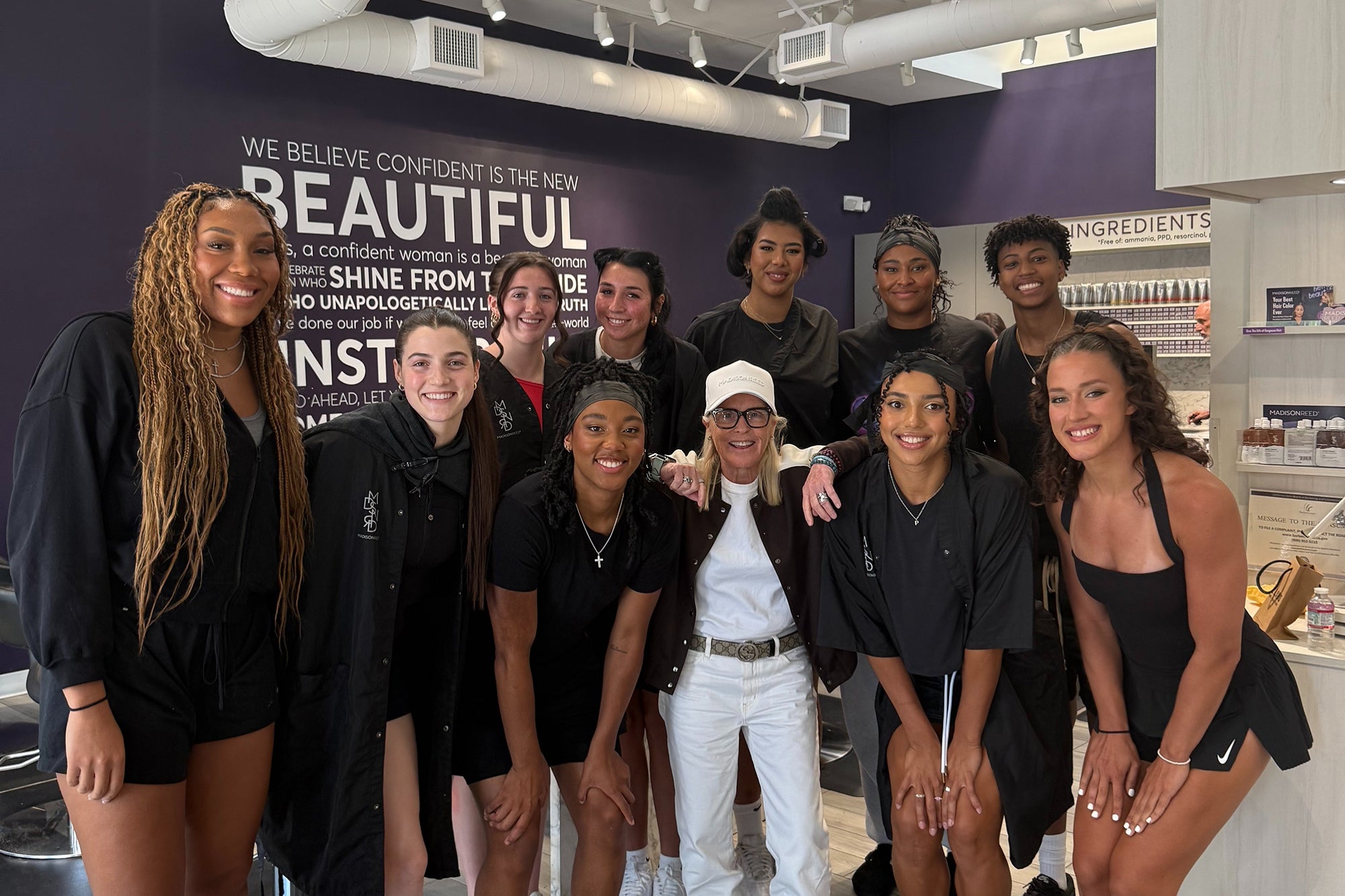
Madison Reed kicked off the second year of its partnership at the 2025 ESPYs by hosting the UConn team at its Los Angeles-area Hair Color Bar for a private “Get Ready With Me” event. Players and coaches enjoyed professional styling, including color, gloss, treatments and blowouts before the show.

“For a long time, female athletes weren’t offered brand deals at all — let alone beauty deals,” says Errett. “Now, they’re being recognized not just for their talent, but for their confidence, beauty and the inspiration they bring to young fans and parents. Seeing someone like Azzi celebrated for who she is — inside and out — alongside so many other accomplished women… how amazing is that?”

https://www.entrepreneur.com/growing-a-business/madison-reeds-investment-in-womens-sports-is-rewriting/495431