Mark Zuckerberg Reportedly Made One Person a $1.5 Billion Job Offer — and Was Rejected. Here’s How Google, Microsoft, and OpenAI Are Competing with Meta in the AI Talent Wars.

Skyrocketing salaries and secretive recruiting efforts have taken over Big Tech as the AI talent wars heat up, with companies including Meta, Google, and Microsoft vying for employees by offering highly competitive compensation.

A key player in the battle is Meta CEO Mark Zuckerberg, 41, who reportedly offered Andrew Tulloch, an AI researcher and co-founder of Thinking Machines Lab, a compensation package worth as much as $1.5 billion over at least six years. The Wall Street Journal reported that Tulloch turned down the offer, but plenty of others have taken the money and joined Zuckerberg’s tech giant.

Related: Meta Is Reportedly Offering Up to Nine-Figure Pay for Researchers on Its New Superintelligence AI Team

Scale AI co-founder and former CEO Alexandr Wang, 28, joined Meta after the company paid $14.3 billion for a 49% stake in his company. In a June memo, Zuckerberg called Wang “the most impressive founder of his generation,” and said that in addition to leading Meta’s superintelligence team, Wang would also be Meta’s Chief AI Officer.

Zuckerberg also highlighted the massive scale of talent poaching happening in Silicon Valley by revealing that other members of his superintelligence group, now called TBD Labs, per a Thursday report from The Wall Street Journal, include researchers poached from Google, OpenAI, and Anthropic.

Meanwhile, Apple has also lost talent to Meta, with four AI researchers joining Zuckerberg’s company in July alone. Meta offered former Apple manager Ruoming Pang a reported $200 million compensation package in early July to join Meta’s superintelligence effort — and Pang accepted.

Zuckerberg reportedly played a personal role in recruiting the TBD Labs team, secretly inviting potential hires to join him at his homes in Palo Alto and Lake Tahoe to discuss offers. According to Bloomberg, Zuckerberg even rearranged the seating arrangements in Meta’s offices to position the superintelligence team closer to him.

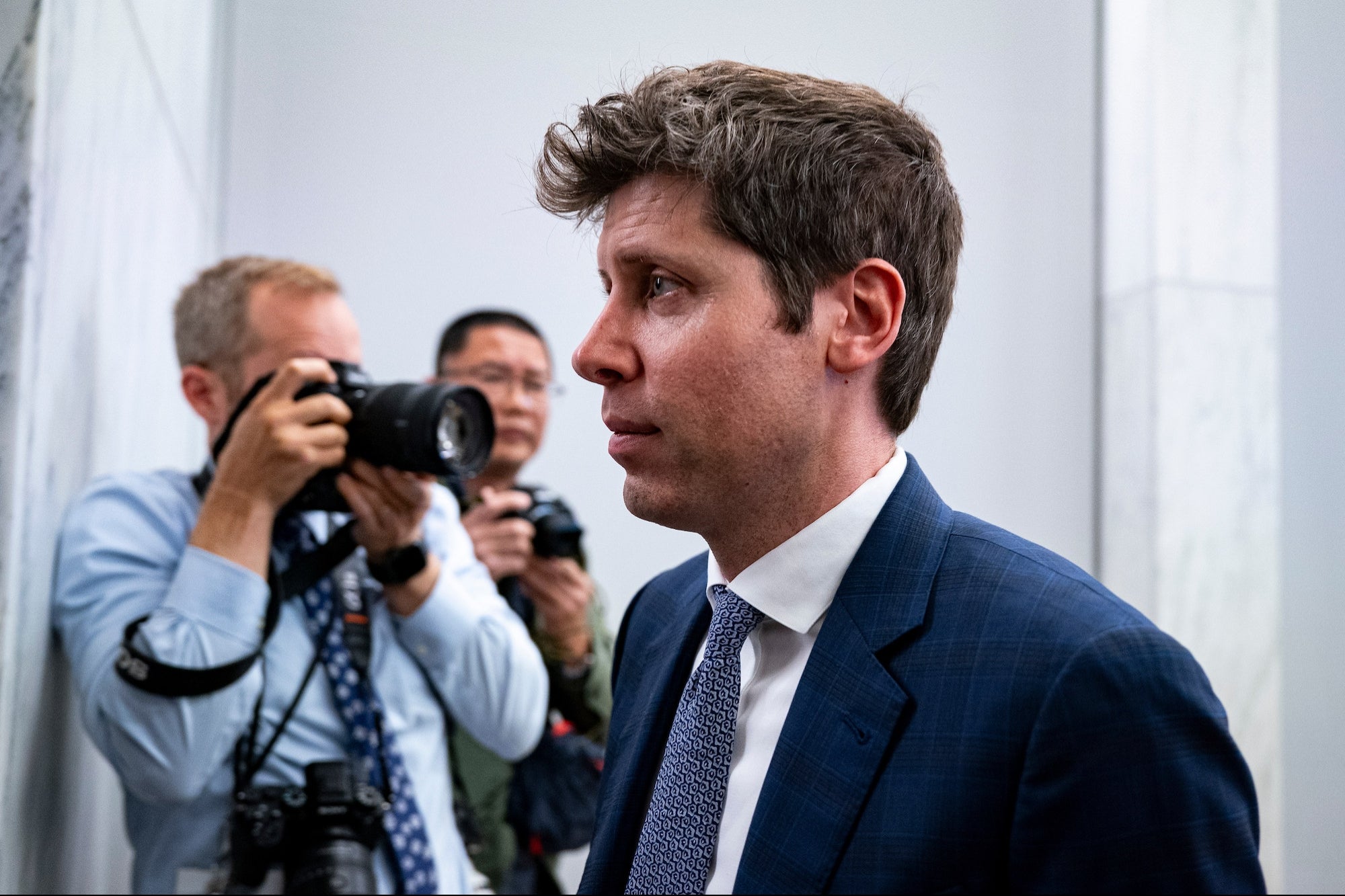
Mark Zuckerberg. Photographer: David Paul Morris/Bloomberg via Getty Images

The AI push in hiring mirrors a deep investment in AI infrastructure, with Meta committing up to $72 billion, Microsoft $80 billion, and Google up to $85 billion towards building AI facilities this year.

Here’s a look at how others are competing:

Related: Google Is Paying $2.7 Billion to Reportedly Rehire an Early Employee Who Built an AI Chatbot Before ChatGPT

Microsoft

Microsoft AI CEO Mustafa Suleyman has been looking at his former workplace, Google, for fresh AI talent to join the Microsoft team. The Wall Street Journal reported this week that Suleyman, who worked at Google for over a decade and rose to lead the applied AI team, has been copying Zuckerberg by reaching out to recruits personally and offering them better pay.

So far, Suleyman’s efforts have resulted in Microsoft poaching at least 24 employees from Google, mostly from the DeepMind AI group, per WSJ. The poaching includes executives and researchers alike, including Google’s former Vice President of Engineering, Amar Subramanya.

The median salary at Microsoft last year was $193,744, according to a proxy filing with the U.S. Securities and Exchange Commission.

Google

Google signed a $2.4 billion deal with AI coding startup Windsurf last month to bring key talent to the Google DeepMind AI team. Windsurf’s co-founder and CEO, Varun Mohan, co-founder Douglas Chen, and a select group of other researchers from the startup joined Google. As part of the deal, Google obtained a nonexclusive license to Windsurf technology.

Google did the same thing last year, signing a $2.7 billion agreement with Character.AI, a personalized superintelligence startup, in exchange for access to talent, particularly Character AI co-founders Noam Shazeer and Daniel De Freitas. In this deal, too, Google received a nonexclusive license to the startup’s technology.

OpenAI

OpenAI CEO Sam Altman, 40, said in mid-June that Meta had been offering its staff $100 million signing bonuses and “even more than that” in overall compensation in an attempt to poach them away. Meta’s Chief Technology Officer, Andrew Bosworth, refuted the claim.

By the end of June, eight OpenAI researchers had taken the offer and joined Meta’s superintelligence team. In a June 28 memo to staff, OpenAI Chief Research Officer Mark Chen likened the situation to someone breaking into his home and stealing something. He promised that OpenAI was “recalibrating” compensation in response to the offers while keeping pay “fair” for everyone.

On Friday, The Verge reported that some employees received bonuses worth millions earlier this week before the company launched its new GPT-5.

Join top CEOs, founders and operators at the Level Up conference to unlock strategies for scaling your business, boosting revenue and building sustainable success.
https://www.entrepreneur.com/business-news/meta-makes-billion-dollar-job-offer-competing-for-ai-talent/495672


How to Become the Leader Everyone Trusts and Follows With One Skill

Opinions expressed by Entrepreneur contributors are their own.

I believe that reason is the highest expression of leadership. At this level, intelligence and clarity take the lead, while emotional reactivity takes a back seat. It’s here that leaders rise above instinctive responses. This emotional intelligence allows them to process complex information and make smart decisions. Leaders are able to face challenges with precision and composure.

But reason goes far beyond being smart. It’s about being able to sift through complexity and spot what’s true. It is about acting in ways that are both logical and aligned with strong values.

This level of leadership makes science, philosophy and conceptual thinking come alive. Think of Nobel Prize winners, visionary statesmen or great minds like Albert Einstein. These people made decisions based on reason and appreciated education, truth and hard work in learning. Leaders who rely on reason to make decisions are better able to bring significant changes, build stronger relationships and achieve better results.

Related: This Is the Single Trait Every Great Leader Needs

The hallmarks of reason: A leader’s analytical toolkit

Leaders grounded in reason have a unique ability; they can take complex situations and make sense of them. They look beyond the surface to find meaning and use logic as their compass.

They’re able to spot patterns others might miss and make clear distinctions between what’s important and what’s not. Instead of being guided by emotion, they base their decisions on credibility, relevance and long-term value.

Imagine a leader managing a cross-department project where everyone has competing needs. A reactive leader might get overwhelmed or play favorites. However, a leader who uses reason takes a step back, listens carefully, evaluates each team’s input and crafts a strategy that brings everyone together. This kind of clear thinking doesn’t just keep things fair; it brings out the best in people and resources.

Reason also helps leaders handle abstract concepts. This ability is essential when mapping out a long-term vision. Picture a CEO designing a five-year plan: Instead of chasing trends or guessing, they use logic, data and insight to shape a roadmap that’s both bold and achievable.

The alignment of reason and truth

Reason is more than a mental skill; it’s grounded in a deep commitment to truth. Leaders at this level understand that rational thinking has to be anchored in facts and integrity. That’s what turns knowledge into wisdom.

Take negotiations, for example. A reactive leader might twist the facts to get their way. However, a reason-based leader values honesty and transparency. They know that trust is the foundation for lasting success. They approach discussions with clarity and fairness, which helps them build stronger relationships and a reputation for integrity.

This commitment to truth also protects them against ego. While the ego likes to bend reality to fit its agenda, reason demands evidence and logic. It invites discipline and discernment over self-serving narratives.

Related: Want to Build a Successful Business? Let Go of Your Ego

Moving beyond ego: Logic over control

The ego doesn’t like reason. It prefers control, manipulation and being right. At its worst, it twists logic to justify itself or dominate others. Some leaders use data selectively or speak in clever soundbites, not to find truth but to protect their image or gain power.

But when a leader chooses reason, something shifts. They let go of defensiveness and embrace objectivity. They’re able to mediate fairly, resolve conflicts wisely and make decisions that benefit the whole team, not just their own ego.

This mindset also breaks down the old power structures. Instead of leading through authority or charisma, leaders at this level influence through clarity, collaboration and solid ideas.

Jim Collins’ research on “Level 5” leaders supports this view. The best leaders are humble yet determined. They care more about the company’s success than their personal image, which is a powerful example of reason in action.

From reaction to response: The power of the pause

One of the most defining traits of reason is the shift from reacting to responding. Reactions come from emotional triggers like fear, pride or anger etc. They’re fast, often defensive and usually not very helpful. Responses, on the other hand, are thoughtful, grounded and aimed at long-term growth.

Psychologist Viktor Frankl captured this beautifully, “Between stimulus and response there is a space. In that space is our power to choose our response. In our response lies our growth and our freedom.” This represents the difference between emotional reactivity and rational leadership.

Picture a leader being challenged in a meeting. A reactive response might be to shut down the criticism or snap back defensively. However, a leader operating from reason would pause, consider the feedback and respond with thoughtfulness. That moment of reflection turns tension into trust and builds a culture where openness is welcome.

Related: Proactive or Reactive: Which Mode Are You In?

How reason shapes teams and cultures

Leaders who operate from reason naturally elevate their organizations. They create environments where logic, learning and truth are not just considered as values, they’re part of the culture. This paves the way for innovation, trust and progress.

Imagine a CEO who leads with transparency, relies on data and invites insights from all levels of the company. Employees feel seen, heard, respected and empowered to contribute. That’s not just good leadership. It’s the foundation for long-term success.

And the ripple effect doesn’t stop there. Reason-based leadership influences entire communities and industries. It promotes education, personal growth and meaningful dialogue. It raises the collective standard, not just within the organization but beyond it.

The bottom line: Reason as a leadership superpower

The ability to reason is more than a nice-to-have skill. It’s the gold standard of leadership. It replaces emotional reactions, ego-driven choices and impulsive behavior with calm, clarity and purpose.

Leaders who operate from reason inspire trust and make smart decisions. They shape environments where people and ideas can thrive. They don’t just lead; they elevate. In doing so, they create a lasting impact, not just in their organizations but in the world around them.

I believe that reason is the highest expression of leadership. At this level, intelligence and clarity take the lead, while emotional reactivity takes a back seat. It’s here that leaders rise above instinctive responses. This emotional intelligence allows them to process complex information and make smart decisions. Leaders are able to face challenges with precision and composure.

But reason goes far beyond being smart. It’s about being able to sift through complexity and spot what’s true. It is about acting in ways that are both logical and aligned with strong values.

This level of leadership makes science, philosophy and conceptual thinking come alive. Think of Nobel Prize winners, visionary statesmen or great minds like Albert Einstein. These people made decisions based on reason and appreciated education, truth and hard work in learning. Leaders who rely on reason to make decisions are better able to bring significant changes, build stronger relationships and achieve better results.

The rest of this article is locked.

Join Entrepreneur+ today for access.

https://www.entrepreneur.com/leadership/how-to-become-the-leader-everyone-trusts-and-follows-with/494254


The One Mistake Entrepreneurs Should Never Make, According to This Founder and Investor Who Sold Her Last Company for $235 Million

On every episode of How Success Happens, I get to talk to incredible people who have done incredible things despite the many roadblocks and risks entrepreneurs face.

This week, I spoke with Kim Perell, a nine-time founder, best-selling author, investor in 100+ companies, and a proud mom of four.

If you’re a fan of Entrepreneur, you know Perell from her role as an investor on our show Elevator Pitch, and now she’s gearing up to co-host Entrepreneur’s event of the year, Level Up, in Las Vegas on August 22-23. I will definitely be there, and you should too. (Get tickets here.)

Perell has a new book out called Mistakes That Made Me a Millionaire. Mark Randolph, the co-founder of Netflix, calls it “indispensable reading.” In the book, Perell gives an unblinking account of her entrepreneurial journey and breaks down how she turned career missteps into secret weapons that propelled her forward. Trust me, when you’re done listening, you’re going to want to get that idea out of your head and get to work!

Check out our entire conversation here, and read below for three success takeaways I gleaned from our inspiring convo.

  1. Be patient. Kim says there are no overnight successes. After losing her corporate job, she started her own digital marketing company from her kitchen table, using a $10,000 loan from her grandmother. “I sat at my kitchen table for three years, 16 hours a day, just grinding it,” she recalls. “It is hard. It is lonely. But you have to be tenacious, and when everyone else would give up, you have to keep pushing forward.” Her tenacity paid off. She sold that company for $20 million. And she didn’t stop there — the last company she sold went for $235 million. In case you’re wondering, yes, she paid back that loan to her grandmother, plus interest.
  2. Take your shot. When it comes to investing, Kim says she always backs great people over great ideas. “I want adaptable people who can find a way to win regardless of circumstance. And honestly, the idea always changes.” And she encourages everyone to go to Level Up and take their shot with her. “Pitch me your idea, I can’t wait!”
  3. Business failure isn’t personal failure. Kim credits her success to learning from mistakes but not dwelling on them. “Your business can fail, but don’t define or label yourself as that failure,” she says. “You have to be able to say ‘That was just something that happened’ and move on.” She adds, “The only mistake you should never make is giving up on yourself.”

Related: Guy Fieri Teaches His Team This Customer Service Secret — And It Can Unlock Unexpected Success For Your Business Too

3 Things to Know About Kim

  • Kim keeps a personal highlight reel on her phone to look at whenever she’s feeling doubtful.
  • Her favorite way to turn off her business brain is spending time with her kids. “I have four kids, and when they’re all together, you can’t think about anything else!”
  • If you are not “earning or learning” at your job after three years, Kim says it is time to move on

Subscribe to How Success Happens to get a dose of inspiration twice a week! Apple | Spotify | YouTube

Buy Kim’s book, Mistakes That Made Me a Millionaire, on sale now.

Kim Perell

On every episode of How Success Happens, I get to talk to incredible people who have done incredible things despite the many roadblocks and risks entrepreneurs face.

This week, I spoke with Kim Perell, a nine-time founder, best-selling author, investor in 100+ companies, and a proud mom of four.

If you’re a fan of Entrepreneur, you know Perell from her role as an investor on our show Elevator Pitch, and now she’s gearing up to co-host Entrepreneur’s event of the year, Level Up, in Las Vegas on August 22-23. I will definitely be there, and you should too. (Get tickets here.)

The rest of this article is locked.

Join Entrepreneur+ today for access.

https://www.entrepreneur.com/starting-a-business/kim-perell-shares-the-mistakes-that-made-her-a-millionaire/495135


The Lifetime Version of QuickBooks Is Going Viral at More Than 70% Off

Disclosure: Our goal is to feature products and services that we think you’ll find interesting and useful. If you purchase them, Entrepreneur may get a small share of the revenue from the sale from our commerce partners.

Entrepreneurs and business owners are doing the math: QuickBooks online might seem affordable at first, but with add-ons like payroll and reporting, you could be shelling out more than $3,000 a year just to stay organized. When they discover our QuickBooks lifetime subscription is now on sale for $199.97, they make the switch instantly (MSRP $699).

It’s the same powerful accounting platform you already know and love, minus the fees. (Or, now that it’s finally affordable, you can try out this software and own it.) Plus, since you can download it right to your computer, you don’t have to worry about having an internet connection to work.

Don’t know much about QuickBooks? Learn more:

QuickBooks 2024 includes a robust suite of tools to streamline your entire financial workflow. You get features like sales order and purchase order management, job costing, bank feeds, inventory tracking, fixed asset tracking, and even time tracking for freelancers or teams. It also allows you to generate reports to monitor performance, stay ready for tax season, and see which clients are actually paying on time.

For freelancers, it means fewer mistakes when reporting income and a clearer view of your true earnings. For startups, it provides structure that helps with budgeting, expense planning, and growth forecasting. And for business owners, it’s a comprehensive solution for handling payroll prep, inventory, and client invoicing without hemorrhaging money on monthly software fees.

Get the lifetime version of QuickBooks while it’s down to $199.97 for a limited time (MSRP $699). No coupon is needed to get this price.

Intuit® QuickBooks® Desktop Pro Plus 2024 (1 User) for Windows: Lifetime License

See Deal

StackSocial prices subject to change.

Entrepreneurs and business owners are doing the math: QuickBooks online might seem affordable at first, but with add-ons like payroll and reporting, you could be shelling out more than $3,000 a year just to stay organized. When they discover our QuickBooks lifetime subscription is now on sale for $199.97, they make the switch instantly (MSRP $699).

It’s the same powerful accounting platform you already know and love, minus the fees. (Or, now that it’s finally affordable, you can try out this software and own it.) Plus, since you can download it right to your computer, you don’t have to worry about having an internet connection to work.

Don’t know much about QuickBooks? Learn more:

The rest of this article is locked.

Join Entrepreneur+ today for access.

https://www.entrepreneur.com/money-finance/the-lifetime-version-of-quickbooks-is-going-viral-at-more/495437


OpenAI Just Released a New ChatGPT That’s ‘Much Smarter Across the Board,’ According to Its CEO. Here Are Some GPT-5 Prompts to Get You Started.

OpenAI unveiled GPT-5 on Thursday, which the company is calling its “smartest, fastest, [and] most useful model yet.” In a press release, the company said the new model puts “expert-level intelligence in everyone’s hands” and is a “significant leap in intelligence over all our previous models.”

On Wednesday, OpenAI CEO Sam Altman called it a “major upgrade” and said that after the new model, using older versions felt “miserable.”

Related: OpenAI CEO Sam Altman Says AI Agents Are Like a Team of ‘Junior Employees’

In addition to improvements in coding, math, health, and other areas, the new GPT-5 also lets users choose a “personality” in settings. The default personality is still available and noted to be “clear, neutral, and adaptable.” Other options include “cynic” (sarcastic and dry, blunt but witty); “robot” (precise, emotionless, direct answers without extra words); “listener” (warm, laid-back, and calm with “light wit”); and “nerd” (playful, curious, celebrates knowledge and discovery).

And while previous reports highlighted the sycophancy of past models, OpenAI says that GPT‑5 “is less effusively agreeable” and “uses fewer unnecessary emojis.”

“It should feel less like ‘talking to AI’ and more like chatting with a helpful friend with PhD‑level intelligence,” the company wrote.

Related: Here’s What ‘Terrifies’ OpenAI’s CEO About Financial Institutions Today

GPT-5 is available for all users. OpenAI recommends these prompts to get started:

Create your own video game

  • Create a single-page app in a single HTML file with the following requirements:
  • Name: Jumping Ball Runner
  • Goal: Jump over obstacles to survive as long as possible.
  • Features: Increasing speed, high score tracking, retry button, and funny sounds for actions and events.
  • The UI should be colorful, with parallax scrolling backgrounds.
  • The characters should look cartoonish and be fun to watch.
  • The game should be enjoyable for everyone.

Create your own drum simulator

  • Create a single-page app in a single HTML file with the following requirements:
  • Name: Virtual Drum Kit
  • Goal: Play a drum kit using keyboard or clicks.
  • Features: Multiple drum sounds, record and playback mode.
  • The UI should be music-studio themed, polished, modern. Make it as beautiful as possible.

You can try GPT-5 free here.

OpenAI unveiled GPT-5 on Thursday, which the company is calling its “smartest, fastest, [and] most useful model yet.” In a press release, the company said the new model puts “expert-level intelligence in everyone’s hands” and is a “significant leap in intelligence over all our previous models.”

On Wednesday, OpenAI CEO Sam Altman called it a “major upgrade” and said that after the new model, using older versions felt “miserable.”

Related: OpenAI CEO Sam Altman Says AI Agents Are Like a Team of ‘Junior Employees’

The rest of this article is locked.

Join Entrepreneur+ today for access.

https://www.entrepreneur.com/business-news/openai-chatgpt-releases-smarter-new-model-gpt-5/495621


Universal Pictures Just Added an Anti-AI Legal Warning to the End of Its Movies, Including ‘How to Train Your Dragon’

Take a closer look at “How to Train Your Dragon,” the live-action movie released in June. Embedded in the end credits of the movie is a warning: Universal Pictures, the major American film studio behind the film, will take legal action if any company or individual uses the film for AI training.

The end credit warning, which says that a movie “may not be used to train AI,” also appeared in “Jurassic World Rebirth,” released in July, and “The Bad Guys 2,” which came out in August, per The Hollywood Reporter.

Related: ‘Bottomless Pit of Plagiarism’: Disney, Universal File the First Major Hollywood Lawsuit Against an AI Startup

Alongside the message is a more standard one that states that the movie “is protected under the laws of the United States and other countries” and threatens “civil liability and criminal prosecution” if faced with “unauthorized duplication, distribution, or exhibition.”

Universal recently joined Walt Disney Pictures in taking legal action against an AI image-generating startup called Midjourney. In June, Disney and Universal filed a complaint accusing Midjourney of duplicating iconic characters from their copyrighted works in its AI outputs.

Midjourney made $300 million last year, partly by generating media containing copyrighted characters created by the studios, the complaint alleges. The document goes on to list characters like Hiccup from “How to Train Your Dragon” and Po from “Kung Fu Panda” as examples of Universal creations that Midjourney allegedly reproduced.

Related: Netflix Co-CEO Says the Company Used AI on a TV Show for the First Time: ‘Completed 10 Times Faster’

Universal Pictures generated $1.88 billion in box office revenue in the U.S. and Canada in 2024, a 3% decline from the previous year. Meanwhile, Disney was the top studio globally in 2024, bringing in $5.46 billion at the box office.

Instead of taking legal action against AI, other Big Eight film studios have begun to incorporate the technology into their movies. For example, Netflix disclosed last month that it used AI to generate footage for one of its shows for the first time. The Argentine science fiction show, “El Eternauta,” or “The Eternaut,” featured an AI-created scene showing a collapsing building.

Netflix claims to have completed the AI-generated scene “10 times faster” than if it had used standard tools.

Join top CEOs, founders and operators at the Level Up conference to unlock strategies for scaling your business, boosting revenue and building sustainable success.

Take a closer look at “How to Train Your Dragon,” the live-action movie released in June. Embedded in the end credits of the movie is a warning: Universal Pictures, the major American film studio behind the film, will take legal action if any company or individual uses the film for AI training.

The end credit warning, which says that a movie “may not be used to train AI,” also appeared in “Jurassic World Rebirth,” released in July, and “The Bad Guys 2,” which came out in August, per The Hollywood Reporter.

Related: ‘Bottomless Pit of Plagiarism’: Disney, Universal File the First Major Hollywood Lawsuit Against an AI Startup

The rest of this article is locked.

Join Entrepreneur+ today for access.

https://www.entrepreneur.com/business-news/universal-issues-warning-to-ai-companies-in-movie-credits/495615


Instagram’s New Map Feature Tracks and Shares Your Location. Here’s How to Turn It Off.

Instagram unveiled its new “Instagram Map” feature this week, letting users share their most recent location when using the app. The feature is similar to Snapchat’s “Snap Map,” TechCrunch notes. Instagram had previously added location-sharing in November 2024, but it was for DMs only.

Of course, this has led to a flurry of posts on social media about safety issues. Meta told the New York Post in a statement that Instagram Map is “off by default, and your live location is never shared unless you choose to turn it on. If you do, only people you follow back—or a private, custom list you select—can see your location.”

Related: Instagram Is Paying Some Users Up to $20,000 to Bring New People to the Platform

Meanwhile, Head of Instagram Adam Mosseri posted on the app Thursday to clarify: “Quick Friend Map clarification: your location will only be shared if you decide to share it, and if you do, it can only [be] shared with a limited group of people you choose. To start, location sharing is completely off.”

“Personally, I use the map to share what I’m up to with a handful of my closest friends, and I curate that list carefully,” he wrote.

Still, some users posted in the comments that their location was on by default without knowing. Several Reddit threads have noted the same. Here’s how to make sure it’s off (if you prefer).

Related: Instagram’s CEO Says He ‘Experienced a Sophisticated Phishing Attack’ With Google

How to turn off your location on Instagram Map

  • Go to your DM inbox, and select the “Map” circle next to “Notes.”
  • Open the map view (you’ll see your friends who are sharing locations, whether yours is off or on).
  • In the top right corner, select “Settings.”
  • You’ll see a prompt: “Who can see your location?” and then select “No one.”
  • Hit “Done” to save.

Join top CEOs, founders and operators at the Level Up conference to unlock strategies for scaling yourbusiness, boosting revenue and building sustainable success.

Instagram unveiled its new “Instagram Map” feature this week, letting users share their most recent location when using the app. The feature is similar to Snapchat’s “Snap Map,” TechCrunch notes. Instagram had previously added location-sharing in November 2024, but it was for DMs only.

Of course, this has led to a flurry of posts on social media about safety issues. Meta told the New York Post in a statement that Instagram Map is “off by default, and your live location is never shared unless you choose to turn it on. If you do, only people you follow back—or a private, custom list you select—can see your location.”

Related: Instagram Is Paying Some Users Up to $20,000 to Bring New People to the Platform

The rest of this article is locked.

Join Entrepreneur+ today for access.

https://www.entrepreneur.com/business-news/how-to-turn-off-instagrams-new-map-feature/495612


Stop Trying to Avoid Conflict. Here’s How to Turn Disagreements Into Growth.

Opinions expressed by Entrepreneur contributors are their own.

Conflict. Most entrepreneurs see it as a dreaded, disruptive force — something to avoid at all costs. But if there’s one thing we’ve learned from the explosive growth of Web3 brands, it’s that conflict can actually become your greatest ally.

Especially in the rapidly evolving landscape of blockchain and fintech, disagreements, friction and controversy aren’t setbacks; they’re stepping stones to greater innovation, resilience and community strength.

Related: The 10 Benefits of Conflict

Learning from Web3 giants

Web3 businesses like Binance, Coinbase and Robinhood didn’t just succeed because they had strong technology or savvy leadership teams. They thrived because they navigated conflicts head-on, learning tough lessons along the way and converting those disagreements into tangible growth.

Take Binance, for example. As one of the largest cryptocurrency exchanges globally, the company faced numerous conflicts, especially concerning regulatory scrutiny and compliance issues across various countries. Many observers predicted these regulatory pressures would severely hinder Binance’s growth or even force it out of certain markets.

However, instead of succumbing to pressure, Binance strategically leaned into these conflicts. They openly engaged with regulators, embraced transparency and enhanced their compliance frameworks proactively. This direct engagement turned regulatory conflicts into opportunities to solidify their position as a trusted, compliant leader in the crypto market, significantly contributing to their sustained global success.

Coinbase provides another compelling case study. As the first publicly traded cryptocurrency exchange in the United States, Coinbase encountered intense conflict, particularly around its stance on regulatory clarity and its relationship with regulators like the SEC. The company openly challenged ambiguous regulations, advocating for clearer rules that benefit the broader crypto industry.

This willingness to confront regulatory conflict directly not only elevated Coinbase’s reputation as a market leader but also positioned it as a trusted intermediary between the traditional financial world and emerging blockchain markets. Today, Coinbase’s proactive stance has solidified its reputation and driven sustained growth, enabling greater institutional adoption and trust.

Founded by the Winklevoss twins, Gemini also encountered significant challenges, particularly around regulatory compliance and market trust. Facing stringent scrutiny from regulators, Gemini chose not to shy away from the conflict but to embrace it openly and transparently.

They proactively engaged with regulatory authorities, becoming one of the first fully regulated cryptocurrency exchanges in New York. This approach built significant credibility and trust among both institutional investors and individual customers, transforming regulatory challenges into strategic opportunities for growth and leadership.

Related: How to Turn Workplace Conflict into a Strategic Advantage

Leveraging conflict strategically

What lessons can entrepreneurs take from these examples? How can you transform conflict into an accelerator for growth rather than a barrier?

First, understand that conflict reveals where your brand needs improvement. Criticism, disagreements or friction highlight gaps in your business, whether related to communication, compliance, strategy or transparency. Binance used regulatory challenges as feedback to significantly enhance its compliance frameworks. Coinbase leveraged its conflicts with regulatory bodies to establish itself as a transparent advocate for industry standards. Conflict became their roadmap to improvement.

Second, use conflict to actively engage your community. In Web3 and fintech, community trust is crucial. When conflicts arise, engaging openly with stakeholders deepens trust and loyalty. Gemini demonstrated this effectively during regulatory challenges. Instead of dismissing criticisms, they actively communicated with users and regulators, showing transparency about decisions and actively improving their compliance measures in response to feedback. This proactive communication turned skeptical users into informed, engaged advocates.

Third, embrace the long-term value of conflict-driven resilience. Every disagreement, whether internal or external, builds organizational strength. Conflict prepares your team to handle future challenges more effectively. Companies that succeed in volatile markets like Web3 aren’t those who avoid friction, but those who strategically embrace it to build resilience and adaptability.

Related: How to Use Workplace Conflict to Strengthen Team Communication and Build a Better Culture

Looking forward

Moving forward, the most successful businesses will be those that handle conflict strategically. The blockchain and fintech space remains young, dynamic and inherently turbulent. Companies that thrive will do so precisely because they embrace conflict as part of the growth process, not as an exception to it.

Ultimately, conflict in business, especially in innovative sectors like Web3, is inevitable. But the way you respond is entirely within your control. Binance, Coinbase, and Gemini show us a clear blueprint: Lean into friction, engage openly, adapt strategically, and emerge stronger. Managed effectively, conflict isn’t just a friend; it’s your secret weapon for sustainable, meaningful growth.

Conflict. Most entrepreneurs see it as a dreaded, disruptive force — something to avoid at all costs. But if there’s one thing we’ve learned from the explosive growth of Web3 brands, it’s that conflict can actually become your greatest ally.

Especially in the rapidly evolving landscape of blockchain and fintech, disagreements, friction and controversy aren’t setbacks; they’re stepping stones to greater innovation, resilience and community strength.

Related: The 10 Benefits of Conflict

The rest of this article is locked.

Join Entrepreneur+ today for access.

https://www.entrepreneur.com/growing-a-business/why-entrepreneurs-should-stop-trying-to-avoid-conflict/495083


Why Your Next Big Business Innovation Should Be Your Legal Strategy

Opinions expressed by Entrepreneur contributors are their own.

In the race for innovation, businesses typically invest in tech, marketing and operations. Yet, one of the most powerful and underutilized growth levers sits quietly in the background: your legal strategy.

Traditionally seen as a cost center or defensive function, legal is rarely viewed as a driver of revenue or innovation. But in today’s complex regulatory environment, companies that embed legal thinking into their core strategy gain a clear competitive edge — protecting intellectual property, navigating emerging markets and building reputations grounded in trust and compliance.

Here’s how to turn legal into a growth engine — and why forward-thinking leaders are doing it now.

Related: Online Legal Tools Save Time and Money. But They Aren’t Lawyers.

1. Use legal strategy to protect and monetize innovation

Case in point: Tesla doesn’t just innovate in automotive tech — it aggressively protects its IP and uses litigation strategically. By securing patents early and publicly sharing some, Tesla built a moat and a brand known for cutting-edge transparency.

Too often, businesses file patents only after launching a product, leaving themselves vulnerable. Instead, they should involve legal counsel during R&D to ensure patentability, avoid infringement and time filings to maximize defensibility. Proactive legal teams also help structure licensing deals or spin-offs that generate new revenue streams.

A University of Connecticut article put it best: “Legal knowledge is the last great source of untapped competitive advantage.” Companies that grasp this shift use legal foresight not just for protection, but to unlock growth.

2. Let legal drive brand trust and market differentiation

Consumers today care about ethics, including data privacy, fair labor and responsible sourcing. Companies that build compliance into the core of their operations — not just their legal disclaimers — win customer loyalty.

For example, Patagonia’s public commitment to environmental and labor standards isn’t just PR, it’s supported by a legal backbone that guides supply chain contracts, employee policies and intellectual property use. That legal strategy reinforces the company’s brand at every touchpoint.

Even small businesses can follow suit. Transparent privacy policies, ethical employment agreements and sustainable practices — backed by strong legal frameworks — can differentiate your brand. It’s not just risk mitigation; it’s reputation building.

Related: Nine Common Legal Mistakes Small Business Owners Make

3. Turn compliance into first-mover advantage

Most see regulation as a burden. But the savviest companies see it as an opportunity to lead.

For example, General Data Protection Regulation (GDPR) compliance in the EU was expensive, but those who adapted early gained customer trust and avoided costly penalties. Many also discovered competitive advantages: cleaner data practices, better marketing segmentation and clearer consent frameworks.

The 2024 ACC/Exterro report found that 84% of legal operations teams now engage proactively in business planning. These teams help companies anticipate regulation shifts, not just react to them.

Emerging industries like clean tech, AI and health data are regulatory minefields. But early legal involvement allows you to develop compliant offerings ahead of competitors, capture early market share, and even shape policy.

A tech-forward legal partner is key

The American Bar Association’s 2024 AI TechReport showed that over 30% of attorneys now use AI tools, with adoption surging at larger firms. These technologies do more than automate — they surface insights, identify trends, and improve outcomes.

That’s why entrepreneurs should partner with firms that don’t just “do law,” but operate like agile, tech-enabled businesses.

Legal doesn’t have to be just a back-office function — it can be a real engine of innovation. Start by bringing legal into the conversation early. Involving legal leaders in product planning and C-suite strategy helps you spot opportunities and risks before they become costly problems. Look for legal partners who aren’t stuck in the past — firms that use AI, understand your industry, and go beyond the billable hour can add strategic value, not just react to issues.

It’s also worth being proactive. Regular audits of your contracts, data policies, intellectual property, and governance can uncover untapped value and reduce risk. Make compliance part of your culture — not just a checklist — with training that connects policies to real values like transparency and fairness. Finally, don’t just view legal as a cost center. Track how legal contributes to smoother product launches, protects your brand reputation and supports long-term revenue growth. That’s real ROI.

Related: Why AI Isn’t Your Advantage — Your People Are

Think legal, think growth

In today’s landscape, legal strategy isn’t just about risk — it’s about results. From protecting innovation to navigating new markets and building brand trust, a proactive legal function helps you move faster, safer and smarter than the competition.

The next wave of business innovation won’t just be built in code or factories — it’ll be forged in contracts, compliance and courtroom foresight. Make legal your advantage.

In the race for innovation, businesses typically invest in tech, marketing and operations. Yet, one of the most powerful and underutilized growth levers sits quietly in the background: your legal strategy.

Traditionally seen as a cost center or defensive function, legal is rarely viewed as a driver of revenue or innovation. But in today’s complex regulatory environment, companies that embed legal thinking into their core strategy gain a clear competitive edge — protecting intellectual property, navigating emerging markets and building reputations grounded in trust and compliance.

Here’s how to turn legal into a growth engine — and why forward-thinking leaders are doing it now.

The rest of this article is locked.

Join Entrepreneur+ today for access.

https://www.entrepreneur.com/growing-a-business/why-your-next-big-business-innovation-should-be-your-legal/495148


How Putting People Before Profit Fueled My Company’s Long-Term Success

Opinions expressed by Entrepreneur contributors are their own.

Never have I been more grateful to be a business owner than when I recently caught up with a close friend and former colleague from my corporate days. This man is the definition of dependable. He’s hardworking, always prioritizing work and rarely complains or asks for anything.

Recently, he suffered a major hardship and needed to step back temporarily to focus on his family. Initially, his company was sympathetic and accommodating. In the end, however, he lost the job he had dedicated so much of his time and energy to.

Related: Winning Includes Putting People First in Your Business. This is How You Do It.

Corporations are not people…

As his friend, I am heartbroken. As a business owner, I am appalled. While I understand that businesses answer to their shareholders, what I struggle to reconcile is the decision to overlook loyalty and dedication of service for a minuscule amount of money. Learning how little regard the company had for my friend’s hardship only reaffirmed the promise I made when I started my company and vowed never to put profit before people.

Not long after my friend told me his story, one of my team members experienced a traumatic event. Instead of taking the “corporate” approach, citing policy, discussing FMLA and generally making a terrible situation more stressful, my business partner and I leaned in to support them. We made it clear that their well-being comes first. Never did it occur to either of us to let them go during a difficult time in their life because they couldn’t show up and make money for the company. My only thought was to help in any way I could.

…They’re only powered by people

The corporate world is famously unkind, but to find out that your years of service count for nothing at a time of personal hardship is nothing short of cruel. I am sure that had my friend been granted the flexibility he needed, he would have made it up to the company tenfold once he was able to return to work, but that can never happen because his company did not see it that way.

When team members know they will have support at work, especially during their most challenging moments, they are not just motivated; they are inspired. They will freely give you more of their time and attention, and they will care more about their work. Loyalty to your people breeds loyalty in return.

“Culture” and “assets”

What the corporate world has so tragically dismissed is the role of human kindness in cultivating human capital. Many large companies make a big deal about their team members being their most valuable asset, but what they really mean is that they value their team members for the revenue they generate.

As soon as that is no longer the case, they cut ties and find someone else to fill the spot. That kind of culture breeds resentment and fosters corruption because, when companies fail to protect their “most valuable asset,” those assets are less keen to protect the company.

Related: Why Kindness Is A Crucial Quality For Leaders

True human capital is measured in respect, not dollars

My people are my company. Without them, I would fail as an entrepreneur. I’ve worked hard to find the right people, train them, nurture their skills and create an environment that fosters creativity, because when they are happy, it shines through in their work. While this leadership style may not always be the most profitable in the short term, it has been a key factor in my company’s long-term success.

So, when something unexpected happens, I will be there to offer my support. My people know that, and I have every confidence that they would step up for me if ever I needed them to.

Never have I been more grateful to be a business owner than when I recently caught up with a close friend and former colleague from my corporate days. This man is the definition of dependable. He’s hardworking, always prioritizing work and rarely complains or asks for anything.

Recently, he suffered a major hardship and needed to step back temporarily to focus on his family. Initially, his company was sympathetic and accommodating. In the end, however, he lost the job he had dedicated so much of his time and energy to.

Related: Winning Includes Putting People First in Your Business. This is How You Do It.

The rest of this article is locked.

Join Entrepreneur+ today for access.

https://www.entrepreneur.com/leadership/how-putting-people-before-profit-fueled-my-companys-success/495063