These Are the Hottest Zipcodes in the U.S. Right Now, According to New Data

Realtor.com released its “Hottest ZIP Codes” report for 2025 this week, which highlights “where buyer interest is strongest and homes are flying” — even in this real estate market.

The country’s top 10 zip codes largely fall within “desirable suburban corridors,” according to the report, with Northeast and Midwest communities ranking high on the list. Shoppers (or listing lurkers) from top-earning metro-areas, including Boston, New York, and Washington, D.C., dominated web traffic.

Related: Here’s How Much You Need to Make Per Year to Buy a Typical Home in the U.S., According to a New Report

No. 1 on the list was Beverly, Massachusetts (zip code 01915) with its “coastal charm” and “relative affordability.” (Though Beverly’s median listing price, $719,000 in June, is more than $250,000 above the national norm, it’s still around 16% below the Boston metro average.)

The rankings measure market demand through unique views per property and the number of days a listing remains active on Realtor.com. According to the report, listings in the high-ranking zip codes had 3.6 times more views and sold 30 to 42 days faster than the U.S. average.

Here’s a look at the top five hottest zip codes in 2025.

Related: Barbara Corcoran Finds a Buyer in One Day for Her $12 Million ‘Palace in the Sky’ Penthouse

1. Beverly, Massachusetts (01915)

Median listing price 2025: $746,000

Days on market: 16

Beverly, Massachusetts | Getty

2. Marlton, New Jersey (08053)

Median listing price 2025: $495,000

Days on market: 17

3. Loeminster, Massachusetts (01453)

Median listing price 2025: $441,000

Days on market: 18

Leominster is the second-largest city in Worcester County, Massachusetts. Getty stock

4. Ballwin, Missouri (63021)

Median listing price 2025: $350,000

Days on market: 22

5. Wayne, New Jersey (07470)

Median listing price 2025: $664,000

Days on market: 22

Getty

For the full list, visit Realtor.com.

Join top CEOs, founders and operators at the Level Up conference to unlock strategies for scaling your business, boosting revenue and building sustainable success.

https://www.entrepreneur.com/business-news/these-are-the-hottest-zip-codes-for-home-sales-realtor/495560


The Best Ideas Don’t Always Come From Brainstorming — They Might Surprise You Instead

Opinions expressed by Entrepreneur contributors are their own.

Being an entrepreneur means experiencing a range of emotions, sometimes in quick succession: there’s frustration, inspiration, exhaustion, glee, satisfaction, anger, excitement, despair — to name a few. It’s a rollercoaster.

Success hinges on being able to manage those feelings, and not letting them unbalance the even keel needed to keep going through the highs and lows. But there is one emotion I always make a special note of, every time I feel it: surprise.

Surprise is what prompted me to start my company, Jotform. It was 2005, and I was working as a developer at a New York media company, coding custom web forms for editors who needed them quickly. One day, after building yet another nearly identical form, I did what any burned-out developer would do — I searched for a tool to make the process easier.

That search turned up nothing, and there it was: surprise. Could it possibly be that such a tool didn’t exist? It didn’t. And that’s when I knew I had a good idea on my hands.

Over time, I came to understand that surprise isn’t just a fleeting emotion. It’s a signal. Evidence that something’s been overlooked, or that an assumption that seemed widely accepted might, in fact, be wrong. And for entrepreneurs, those moments — if you know how to pay attention — can be the starting point of something big.

Related: 70 Small Business Ideas to Start in 2025

When surprise strikes

When something surprises me, I don’t brush it off — I investigate. I’ve learned that those unexpected moments often contain more insight than hours of brainstorming. If you stumble on an idea, the next step is to build a minimum viable product, or MVP, and get it into users’ hands as soon as possible.

Obviously, not every surprise will lead to a product — a lot of MVPs end up dead in the water, which is why I advise building them quickly. But the practice of noticing and reflecting on the unexpected builds a kind of mental radar, one that keeps you alert to opportunities others miss.

The same is also true for less pleasant surprises. I once had a Jotform customer — a well-known brand — ask me to send a salesperson to their office to learn more about our other products. I was completely caught off guard. Salespeople? We had no salespeople. Until that point, Jotform had been entirely self-service.

I was so stunned that I sent no one, and didn’t go myself, either. Surprise! We lost the client to a competitor, one that had a sales team. But that moment stayed with me and became the impetus to build Jotform Enterprise, which today is growing so quickly it will surpass our self-service version within a few years.

Surprises like these, pleasant or otherwise, are rarely random. They test assumptions and expose blind spots. And if you’re paying attention, they can reveal what should come next.

Systematizing surprise

You can’t plan for a surprise, obviously, but you can get better at spotting it. Over the years, I’ve learned to build what I think of as a “surprise radar:” a system that keeps me tuned in to the unexpected, even in the most ordinary moments.

The first step for me is to always stay curious, even — or perhaps especially — when doing routine tasks. It can be easy during these times to switch off your critical thinking brain. But those are often the best moments to notice inefficiencies or strange patterns. Why does this process take so long? Why do we always do it this way?

This way of thinking is what’s called a beginner’s mindset, and it can be tough to adopt if you are not a beginner in your field. Once we’ve gained enough knowledge in a given area, our brains forge shortcuts that, while timesaving, also reduce our capacity for surprise. It becomes easy to stop questioning how things are done.

Related: The Accidental Entrepreneur: 3 Tales of Entrepreneurial ‘Eureka’ Moments

One strategy to keep your brain from slipping into autopilot is to conduct a time audit, which can help you figure out where you’re sinking your precious time. There are plenty of different platforms for this, like Reclaim or Toggl, but what matters is that you can clearly understand what tasks are taking up too much of your day.

From there, search for automation or AI tools that can relieve the burden for you. If it’s been a few months since your last search, do it again — AI technology is evolving rapidly, and options that may not have existed just last week may well exist now.

If you’re still coming up short, consider this a potential opportunity. Someone will probably fill this void eventually. Why not you?

It’s also critical to get outside of your comfort zone. Read books and articles on topics seemingly unrelated to your job. Talk to people in different industries, with different expertise or whose ideas don’t align with your own.

Will this be uncomfortable? Sure. But that’s the point. Surprise exists at the edge of expectations, just outside of what you thought you knew. If you only stick to the familiar, you’ll rarely be surprised. And without surprise, innovation is unlikely. The more you train yourself to notice the unexpected, the more you’ll start seeing it not as a disruption, but as a guide.

Being an entrepreneur means experiencing a range of emotions, sometimes in quick succession: there’s frustration, inspiration, exhaustion, glee, satisfaction, anger, excitement, despair — to name a few. It’s a rollercoaster.

Success hinges on being able to manage those feelings, and not letting them unbalance the even keel needed to keep going through the highs and lows. But there is one emotion I always make a special note of, every time I feel it: surprise.

Surprise is what prompted me to start my company, Jotform. It was 2005, and I was working as a developer at a New York media company, coding custom web forms for editors who needed them quickly. One day, after building yet another nearly identical form, I did what any burned-out developer would do — I searched for a tool to make the process easier.

The rest of this article is locked.

Join Entrepreneur+ today for access.

https://www.entrepreneur.com/starting-a-business/caught-off-guard-you-may-have-found-your-next-big-idea/494132


This Small Gesture from a Stranger Changed How I Handle Stress in a High-Pressure Career

As a young lawyer in the early aughts, my first months as an in-house general counsel were chaotic. The previous counsel had left abruptly weeks before I arrived, and there was no one to fill me in on the multitude of open cases and ongoing projects.

I felt lost and overwhelmed. Management didn’t seem to care; everyone expected me to immediately pick up where my former counsel left off, and I was extremely stressed.

Following a meeting, I stepped back into my office, and sat there, gazing. Then, someone approached me and asked if they could enter. He was a consultant who attended the meeting, and it was the first time we met.

Placing a heart-shaped pink card on my desk, he said, “You’re going to be alright. It will get better.” It was (he would later tell me) a card out of a stack he had bought for his daughter’s party. Looking for a way to cheer me up, he brought me one of them.

Related: 5 Ways to Fix Your Lack of Inspiration

That gave me hope. For the first time since I started working there, I felt seen and understood.

It also taught me that there are meaningful skills beyond education and job experience — things that, as a young person in an era devoid of terms like “toxicity in the workplace” and “soft skills,” I thought were the only ones that mattered. I learned that empathy, emotional intelligence, and good communication are pivotal for personal growth and development in any environment.

Related: This Keepsake Reminds Me of My First Dream — And Why I’m Grateful It Never Came True

When I looked for a cofounder to build the children’s health management app Encurage, this experience guided me to prioritize these skills, and partner with someone who doesn’t shy away from or ignore the rough days. His name is Victor Horton, and as a bootstrapped company, we experience many such days — and being able to lean into our feelings together was what helped us emerge with a working product, traction, and revenue.

Now navigating growth and the path to profitability, there are inevitably more of these days ahead. I still keep the card in my desk. It’s a fond memory, and a reminder to keep our mental wellness in check.

Ready to break through your revenue ceiling? Join us at Level Up, a conference for ambitious business leaders to unlock new growth opportunities.

As a young lawyer in the early aughts, my first months as an in-house general counsel were chaotic. The previous counsel had left abruptly weeks before I arrived, and there was no one to fill me in on the multitude of open cases and ongoing projects.

I felt lost and overwhelmed. Management didn’t seem to care; everyone expected me to immediately pick up where my former counsel left off, and I was extremely stressed.

Following a meeting, I stepped back into my office, and sat there, gazing. Then, someone approached me and asked if they could enter. He was a consultant who attended the meeting, and it was the first time we met.

The rest of this article is locked.

Join Entrepreneur+ today for access.

https://www.entrepreneur.com/living/this-small-gesture-from-a-stranger-changed-how-i-handle/494375


Learn the Languages That Open Markets, Deals, and Conversations with Babbel

Disclosure: Our goal is to feature products and services that we think you’ll find interesting and useful. If you purchase them, Entrepreneur may get a small share of the revenue from the sale from our commerce partners.

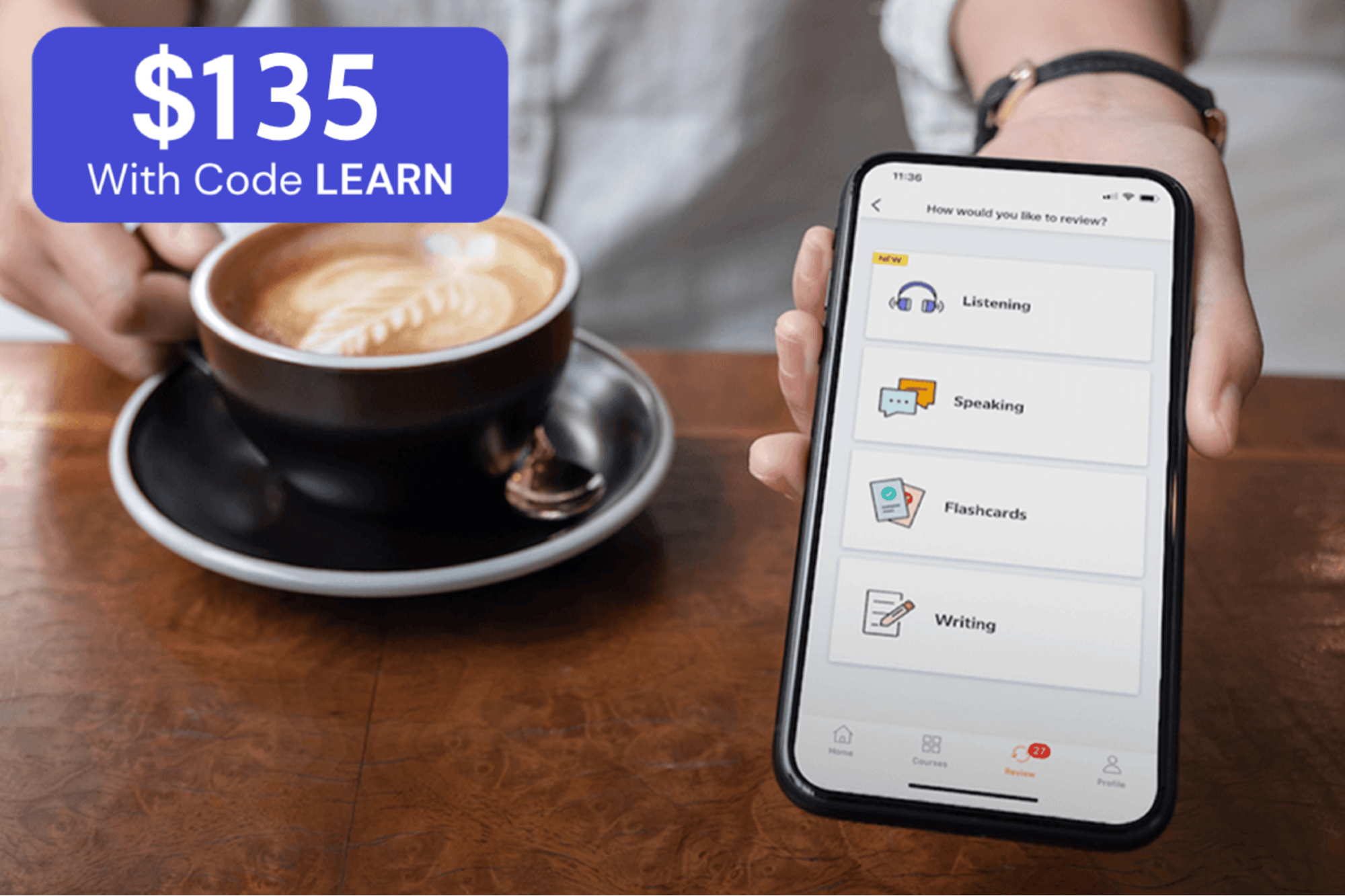
A second (or third, fourth, fifth…) language isn’t just a personal milestone — it’s a business advantage. For entrepreneurs working with international teams, global clients, or traveling for opportunities, language barriers can slow momentum. That’s where Babbel comes in.

Designed by linguists and backed by studies from respected educational institutions, Babbel’s language platform emphasizes real-life conversation. This lifetime deal is currently available for just $134.99 (MSRP $599) with promo code LEARN but only until 11:59 p.m. Pacific on August 7.

Instead of gamified drills, you’ll find practical lessons on topics like transportation, business, dining, and social interactions — the kind of communication you’ll actually use when working or negotiating abroad.

With a lifetime subscription, you get unlimited access to courses in 14 languages, including Spanish, French, German, Italian, and more. Lessons run just 10–15 minutes, and they’re accessible on desktop or mobile, online or off, so you can even brush up on the way to your important meeting overseas. Babbel also uses speech-recognition technology to fine-tune your pronunciation, plus personalized review sessions to reinforce retention.

Whether you’re prepping for a business trip, pitching a client in Paris, or simply want to build trust with global partners, Babbel helps you speak with clarity and cultural understanding. And with AI-powered conversations built into the platform, you can practice responding to prompts in real time, which is a rare feature even among top-tier language apps.

Don’t wait to use promo code LEARN to get a lifetime subscription to Babbel Language Learning for $134.99, valid through August 7. It’s a one-time investment that can pay off in business fluency for years to come.

StackSocial prices subject to change.

A second (or third, fourth, fifth…) language isn’t just a personal milestone — it’s a business advantage. For entrepreneurs working with international teams, global clients, or traveling for opportunities, language barriers can slow momentum. That’s where Babbel comes in.

Designed by linguists and backed by studies from respected educational institutions, Babbel’s language platform emphasizes real-life conversation. This lifetime deal is currently available for just $134.99 (MSRP $599) with promo code LEARN but only until 11:59 p.m. Pacific on August 7.

Instead of gamified drills, you’ll find practical lessons on topics like transportation, business, dining, and social interactions — the kind of communication you’ll actually use when working or negotiating abroad.

The rest of this article is locked.

Join Entrepreneur+ today for access.

https://www.entrepreneur.com/living/learn-the-languages-that-open-markets-deals-and/495322


Microsoft Is Reportedly About to Crack Down on Remote Work

Microsoft is planning to implement a stricter return-to-office mandate as soon as next year, sources told Business Insider.

Since the pandemic, Microsoft has had a flexible work arrangement, allowing remote work as much as half of the time. According to the BI report, Microsoft is considering increasing the requirement for in-person work for employees based in its Redmond, Washington, headquarters to at least three days a week starting in January.

Microsoft is still working out the details of the plan and intends to announce it in September, the sources said. A Microsoft spokesperson told BI that the company was considering revising its flexible work schedule, but had yet to finalize any changes.

Related: Microsoft Just Became the Second Company in History to Achieve a $4 Trillion Valuation — Here’s How

A return-to-office mandate could impact tens of thousands of Microsoft employees. As of June 30, Microsoft employed 228,000 workers, with 125,000 located in the U.S.

If Microsoft implements a stricter return-to-office policy, it would join a slew of other companies that have tightened the limits on remote work recently — or eliminated it altogether.

In 2025, both AT&T and Sweetgreen revised their stances on remote work, with AT&T asking U.S. staff to work all five days from the office while Sweetgreen mandated four days. Both companies previously required staff to work in person three days a week.

Meanwhile, Amazon announced a sweeping return-to-office mandate in September, requiring employees to work from the office five days a week starting in January instead of adhering to a hybrid schedule. Though the move met with pushback from staff — and inspired 500 employees to sign a letter in protest — Amazon persisted with the move.

Related: Amazon Tells Thousands of Employees to Relocate or Resign

According to a study conducted last year by Bamboo HR, return-to-office mandates were often layoffs in disguise, designed to pare down a workforce without conducting official job cuts. About a quarter of C-Suite executives surveyed wanted to inspire “voluntary turnover” with stricter return-to-office policies.

Mass Layoffs Despite Stellar Earnings

Microsoft recently conducted mass layoffs, eliminating 9,000 roles in July, or nearly 4% of its workforce. Two months earlier, in May, Microsoft laid off over 6,000 employees, or 3% of its workforce.

At the same time, Microsoft has reported stellar earnings, greater than analyst expectations. Last month, Microsoft announced that for the quarter ending June 30, revenue was up 18% from the previous year, reaching $76.4 billion, while net income was $27.2 billion, a 24% increase.

Related: Microsoft’s CEO Says the Company’s Mass Layoffs, Despite Financial Success, Are ‘Weighing Heavily on Me’ in an Internal Memo

Microsoft CEO Satya Nadella explained the job cuts in a memo to staff released on Microsoft’s corporate blog last month. Nadella acknowledged the discrepancy between Microsoft’s “thriving” financials and his decision to still lay off staff.

“This is the enigma of success in an industry that has no franchise value,” Nadella wrote, without explaining further.

Microsoft stock is up over 24% year-to-date at the time of writing.

Join top CEOs, founders and operators at the Level Up conference to unlock strategies for scaling your business, boosting revenue and building sustainable success.

Microsoft is planning to implement a stricter return-to-office mandate as soon as next year, sources told Business Insider.

Since the pandemic, Microsoft has had a flexible work arrangement, allowing remote work as much as half of the time. According to the BI report, Microsoft is considering increasing the requirement for in-person work for employees based in its Redmond, Washington, headquarters to at least three days a week starting in January.

Microsoft is still working out the details of the plan and intends to announce it in September, the sources said. A Microsoft spokesperson told BI that the company was considering revising its flexible work schedule, but had yet to finalize any changes.

The rest of this article is locked.

Join Entrepreneur+ today for access.

https://www.entrepreneur.com/business-news/microsoft-plannings-return-to-office-mandate-report/495561


At 24, She Immigrated to the U.S. and Worked at Walmart. Then She Turned Savings Into a ‘Magic’ Side Hustle Surpassing $1 Million This Year.

This Side Hustle Spotlight Q&A features 35-year-old New York City-based entrepreneur Mehek Khera. Khera is the founder and CEO of Niramaya Foods, a snack brand “rooted in wellness and inspired by Indian heritage.”

At the age of 24, Khera left New Delhi, India and immigrated to the U.S., where she landed a job at Walmart. Then burnout and health issues motivated her to start a health-forward side hustle.

Niramaya is hitting $1 million in revenue for the first time in 2025. Learn how Khera transformed Niramaya into the successful business behind Naan pretzels and dips, here. Responses have been edited for length and clarity.

Image Credit: Niramaya Foods. Mehek Khera.

Want to read more stories like this? Subscribe to Money Makers, our free newsletter packed with creative side hustle ideas and successful strategies. Sign up here.

What was your day job or primary occupation when you started your side hustle?
I was working in retail at Walmart ecommerce, managing the category and supply chain for beauty and apparel. It was fast-paced, high-pressure and fulfilling in many ways — but over time, the long hours, lack of real food and stress began to take a toll on my body and mind.

Related: This 26-Year-Old’s Side Hustle Turned Full-Time Business Led to $100,000 in 2.5 Months and Is On Track for $2.5 Million in 2025

When did you start your side hustle, and where did you find the inspiration for it?
Niramaya began to form in 2020, during a season of burnout and health struggles. I was dealing with chronic, undiagnosed autoimmune conditions and couldn’t find answers. I left my job and turned to nutrition school — and through that, rediscovered the healing power of the foods I grew up with: vibrant dals, functional spices, sabzis made from fresh vegetables. I realized those recipes, passed down through generations, were medicine in themselves, and yet, I couldn’t find them on any shelf in a way that felt clean, convenient or modern. That gap between culture and convenience, tradition and today, became the foundation for Niramaya.

What were some of the first steps you took to get your side hustle off the ground? How much money/investment did it take to launch?
I started in my kitchen, playing with recipes, taking feedback seriously and testing early versions at local markets. I knew I couldn’t do this casually, so I saved up about $50,000 over two years to afford the minimum order quantities for our first co-manufacturer. I researched tirelessly, made hundreds of phone calls and eventually found a partner that aligned with our mission. We developed early packaging, launched a small website and put real products into people’s hands. That’s when the magic started.

Related: This 29-Year-Old’s Side Hustle Brought People ‘to the Dark Green Side.’ It Made $10,000 Within 2 Days and Sees 6 Figures a Month.

Image Credit: Courtesy of Niramaya Foods

Are there any free or paid resources that were especially helpful?
Founder networks like Startup CPG, Naturally Network and SKU Accelerator made a world of difference. Slack groups for CPG founders were fast, brutally honest and incredibly supportive. On the tools side: Notion for tracking everything, Canva for design, QuickBooks for finances. But the most valuable resource by far? Talking to consumers face-to-face during demos. No software can replace that.

If you could go back and change one process or approach, what would it be?
I wouldn’t change the path — every challenge taught me something I needed. But I would better prepare for the sheer resource drain. Budget twice the money and give yourself twice the time. Everything takes longer and costs more than you think — and that’s not a flaw: It’s just the nature of the game.

Related: They Started a Side Hustle Producing an ‘Obvious’ Food Item. It Hit $300,000 Monthly Revenue Fast — On Track for Over $20 Million in 2025.

What’s something about this side hustle turned business that surprised or challenged you the most?
How capital-intensive retail really is. Getting onto shelves is just the start — then comes the real work of driving velocity, educating the shopper and staying top-of-mind. Another challenge was re-educating people about Indian food. So many assume it’s just “heavy curry.” But our cuisine is so much more: vibrant, clean, gut-friendly, plant-forward. Translating that truth through packaging, product and language has been both a challenge and a privilege.

Can you recall a specific moment when something went wrong — how did you handle it?
At one of our early retail partners, our dips were priced too high and placed on the very top shelf — almost invisible to the consumer. Rather than panic, I calmly reached out to the buyer with sales data and shelf psychology insights and offered to support with demos and social posts if they would consider revisiting price and placement. They agreed. That moment reminded me that being proactive, respectful and solutions-oriented goes a long way in retail.

Image Credit: Courtesy of Niramaya Foods

How long did it take to see consistent revenue?
We started seeing steady traction around nine months in. We began with smaller independents, a few regional stores and a lot of in-person events. It was grassroots, but it taught me how to listen, adapt and scale responsibly.

What does growth and revenue look like today?
Today, Niramaya is available in over 1,200 retail doors across the country, including Sprouts, Albertsons and a strong base of New York City independents. This will be our first year in seven figures. We’re launching new SKUs and doubling down on retailers who believe in what we’re building.

What do you enjoy most about running this business?
The deep creative satisfaction of building something that feels true and seeing it touch people. When someone says, “I’ve never tasted anything so clean and bold at once,” I know we’re doing something meaningful. We’re not just selling food: We’re shifting the perception of Indian flavors and bringing more people into the fold.

Related: Tired of ‘Culturally Obtuse’ Products, This 27-Year-Old Took His Side Hustle From $1,000 a Month to 7-Figure Revenue: ‘Pick the Right Opportunity to Pursue’

What’s your best piece of specific, actionable business advice?
Start before you feel “ready.” But don’t build in a bubble. Get feedback constantly, especially from your customers. Stay lean. Build trust with your partners. Don’t be afraid to ask dumb questions. And remember — relationships will carry you farther than any marketing campaign. Be generous, be honest and follow through.

Ready to break through your revenue ceiling? Join us at Level Up, a conference for ambitious business leaders to unlock new growth opportunities.

This Side Hustle Spotlight Q&A features 35-year-old New York City-based entrepreneur Mehek Khera. Khera is the founder and CEO of Niramaya Foods, a snack brand “rooted in wellness and inspired by Indian heritage.”

At the age of 24, Khera left New Delhi, India and immigrated to the U.S., where she landed a job at Walmart. Then burnout and health issues motivated her to start a health-forward side hustle.

Niramaya is hitting $1 million in revenue for the first time in 2025. Learn how Khera transformed Niramaya into the successful business behind Naan pretzels and dips, here. Responses have been edited for length and clarity.

The rest of this article is locked.

Join Entrepreneur+ today for access.

https://www.entrepreneur.com/starting-a-business/walmart-employees-magic-side-hustle-surpasses-1-million/495550


VCs Are Focusing More on Purpose and Less on Profits — Here Are the 5 Things They’re Looking For in Founders

Opinions expressed by Entrepreneur contributors are their own.

Venture investors are adapting to the times, and are increasingly open to working with Al technologies and investing in both new and emerging sectors such as longevity and wellness, areas of the global economy which have seen over 75% more funding in 2023 and projected to reach $8 trillion by 2030 according to a recent UBS report.

Trends are showing that venture investors are also becoming more conscientious in choosing their startups. With Environmental, Social and Governance (ESG) factors rising to importance among investors worldwide, according to an article written by an expert from EY, it is increasingly apparent that purpose-led investors are gaining traction in the VC space too.

An article written on BusinessCloud summarises that one of the main reasons why investors are betting on purpose in 2025 is that purpose-led companies “deliver profits, are transparent and, more importantly, resilient.” A study conducted by B Lab Global showed that B Corp companies, which operated on principles on sustainability, outperformed ordinary businesses in revenues.

As an entrepreneur and a venture investor myself, I am also driven by a deep sense of purpose: to help more people achieve a longer health span across the globe. I carefully select to support other entrepreneurs and brands who share my vision. The more aligned my values are with a startup entrepreneur’s, the more likely we are to begin a partnership together to achieve our common goals.

This is how venture investors are increasingly thinking about their future endeavours. I am keen to help others in the community understand the five key factors that entrepreneurs need to possess to capture the attention of a purpose-led venture investor.

Related: Doing Well by Doing Good — How Purpose-Driven Entrepreneurs Are Changing the World

1. A leader with a strong vision

Regardless of whether investors share the values exuded by a business venture or not, it is crucial for an entrepreneur to exhibit a strong and clear vision for their startup from the get-go.

A visionary entrepreneur would have a strong sense of purpose and direction for their business, and this will also be a trait shared with the purpose-led venture investor themself.

An entrepreneur’s eloquently communicated vision for their startup, together with an honest picture of the business’s current framework, strengths and opportunities, will help the investor visualize the future that they could help create by investing in the business themselves.

It is common knowledge in the VC world that although investors rarely accept deals, they almost never budge away from the entrepreneurs they believe in. And these entrepreneurs often begin their pitch with a powerful vision statement that investors can’t stop thinking about.

2. A business built on trust

One of my most important beliefs is that trust is like a mirror — once broken, it simply can’t be pieced together again.

A purpose-led investor operates on trust and therefore will expect the entrepreneur standing in front of them to think the same way. An entrepreneur will have to show the investor that the start-up thus far has been successful because of the meaningful relationships it has built on, whether these are with employees, contractors or most importantly, the customer base.

A business built on trust is one that is constructed with precision and a lot of care. It also indicates long-term growth and longevity for the entity, as opposed to it being one that burns bridges with overly risky transactions and bad decisions. In a nutshell, trust is the main driver of success for a business.

Related: Purpose-Driven Companies Grow 3 Times Faster — So Here’s How to Become One Without Sacrificing Profit.

3. Understanding the servant leadership style

Purpose-led investors look to partner with individuals with strong conviction, not only in terms of business ideas but also in terms of the leadership style they practice. An entrepreneur who embraces the servant leadership style is one who focuses on serving the greater good, who prioritizes the health, well-being and success of people and the communities they serve.

I have practiced the servant leadership style in my career, and it is a humbling experience, as it is all about being a leader who leads without prioritizing their own ego. There are three Cs to becoming a servant leader, and that is about: compassion, character and competence.

While it is not compulsory for entrepreneurs to exhibit this leadership style, I believe that at least understanding its philosophy will be beneficial. This is especially for when entrepreneurs deal with purpose-led investors who will be attracted to qualities such as authenticity, integrity and a desire to support others in an entrepreneur, especially when they pursue a business with a purpose.

4. Commitment to measuring social impact

A startup wanting to create a social impact is an attractive prospect, but what’s more important is whether it can sustain itself financially in the long term without compromising its ideals. This is where entrepreneurs need to include in their pitch a way to measure the impact they will be creating and how that will effectively translate into ROI for the investor.

Showing a commitment to measuring the impact a company has created means that the entrepreneur is dedicated to learning from any mistakes that might occur and ensuring that the original intent of the business is not lost.

Purpose should also not be taken for granted, as without methods to measure impact, companies can later on be privy to public accusations of impact washing. So you’ve also got to walk the walk. Research shows that 60% of brands with purpose-driven initiatives are not measuring their impact on society. It’s best to be wary of statistics like these and stand out as a startup that not only has a vision but also has the framework to produce tangible results.

Related: Most Startups Ignore This One Asset That Makes or Breaks Their Success

5. Good market knowledge

This goes without saying, but most types of investors will expect entrepreneurs to know their target market, understand their competition and have a good grasp of the trends that are dominating the sector they are interested in.

A good knowledge of the regional cultures associated with their intended markets is also an important factor for an entrepreneur, as purpose-led investors often favour an internationalist outlook.

Venture investors are adapting to the times, and are increasingly open to working with Al technologies and investing in both new and emerging sectors such as longevity and wellness, areas of the global economy which have seen over 75% more funding in 2023 and projected to reach $8 trillion by 2030 according to a recent UBS report.

Trends are showing that venture investors are also becoming more conscientious in choosing their startups. With Environmental, Social and Governance (ESG) factors rising to importance among investors worldwide, according to an article written by an expert from EY, it is increasingly apparent that purpose-led investors are gaining traction in the VC space too.

An article written on BusinessCloud summarises that one of the main reasons why investors are betting on purpose in 2025 is that purpose-led companies “deliver profits, are transparent and, more importantly, resilient.” A study conducted by B Lab Global showed that B Corp companies, which operated on principles on sustainability, outperformed ordinary businesses in revenues.

The rest of this article is locked.

Join Entrepreneur+ today for access.

https://www.entrepreneur.com/money-finance/vcs-are-focusing-more-on-purpose-and-less-on-profits/494097


‘We Don’t Believe in Work-Life Balance’: A Newly Acquired Startup Just Offered Its 200-Person Team a Choice — Work Weekends or Take a Buyout

AI coding startup Cognition acquired fellow AI startup Windsurf’s intellectual property, product, and staff last month in a deal with an undisclosed price.

This week, The Information reported that after cutting 30 employees from the Windsurf team last week, Cognition is giving the remaining 200-person group a choice: Accept a buyout equivalent to nine months’ salary, or stay on the team and work long hours, at least six days or 80 hours a week. According to an internal email viewed by the outlet, Windsurf employees have until August 10 to decide to stay or take the buyout.

Related: OpenAI Is Acquiring Former Apple Designer Jony Ive’s Startup for $6.5 Billion

“We don’t believe in work-life balance — building the future of software engineering is a mission we all care so deeply about that we couldn’t possibly separate the two,” Cognition CEO Scott Wu wrote in an email, viewed by the outlet.

Wu further backed up his stance in a post on X on Tuesday, which acknowledged that Cognition has “an extreme performance culture” and that the company is “upfront” about the atmosphere when hiring.

“We routinely are at the office through the weekend and do some of our best work late into the night,” Wu wrote in the post. “Many of us literally live where we work… we understand it’s not for everyone.”

A typical buyout starts at four weeks of pay, plus an additional week for every year spent at the company, according to CNBC. Nine months is a higher buyout than usual.

Windsurf has faced a turbulent few months. The startup was initially in talks with OpenAI for a $3 billion acquisition, but the deal fell apart in early July.

Then, Google stepped in and agreed to pay $2.4 billion in exchange for nonexclusive licensing rights to Windsurf’s technology and access to Windsurf talent to join Google’s AI effort. Google hired CEO Varun Mohan, co-founder Douglas Chen, and a select group of researchers from Windsurf as a part of the deal. The rest of Windsurf was ultimately acquired by Cognition on July 14.

Related: Google Swoops in to Make a $2.4 Billion Deal With a Startup Previously Promised to OpenAI

Windsurf, which claims that its AI code editor is “the most powerful way to code with AI,” has more than a million worldwide users.

Cognition, meanwhile, asserts that it has built the first AI software engineer that can act autonomously to engage with users through Slack and GitHub. After a March funding round, the startup’s valuation rose to $4 billion, crossing the $1 billion threshold and making it a unicorn.

Join top CEOs, founders and operators at the Level Up conference to unlock strategies for scaling your business, boosting revenue and building sustainable success.

AI coding startup Cognition acquired fellow AI startup Windsurf’s intellectual property, product, and staff last month in a deal with an undisclosed price.

This week, The Information reported that after cutting 30 employees from the Windsurf team last week, Cognition is giving the remaining 200-person group a choice: Accept a buyout equivalent to nine months’ salary, or stay on the team and work long hours, at least six days or 80 hours a week. According to an internal email viewed by the outlet, Windsurf employees have until August 10 to decide to stay or take the buyout.

Related: OpenAI Is Acquiring Former Apple Designer Jony Ive’s Startup for $6.5 Billion

The rest of this article is locked.

Join Entrepreneur+ today for access.

https://www.entrepreneur.com/business-news/ai-coding-startup-work-weekends-or-take-a-buyout/495554


Are You Putting Each Dollar to Work? Here’s How Playing It Safe With Capital Can Actually Be Risky.

Opinions expressed by Entrepreneur contributors are their own.

If one of your employees didn’t have a clear role or goals, you’d probably take immediate steps to fix that. You’d define what success looks like for that individual and make sure they had the necessary tools to do their job. So why not give your capital the same attention?

Too many business owners let their money sit idle with no clear purpose, and it costs them more than they realize. It’s common to think of capital as a cushion — something to fall back on during lean times. But the most successful companies treat capital like a resource, not a safety net. They assign every dollar a job and hold it accountable for results.

Related: How Much Cash Do You Need for Your Business’s Safety Net?

The problem with idle capital

Idle capital refers to money sitting in your account, earning little to no return. Maybe it’s a bloated emergency fund or cash you raised without a clear plan. It may feel safe, but it can quietly drag down your business performance.

With inflation still running high, money that sits still is losing value, and every dollar sitting on the sidelines is a dollar not helping you grow. For example, you could use $100,000 in excess reserves to launch a marketing campaign, hire a new team member or upgrade your equipment. Any of those investments could deliver far better returns than a savings account.

Debt can be a powerful tool — but only when it’s structured to support your business goals. It can become a problem when businesses take on high-interest loans for short-term needs while sitting on unused cash or when the repayment schedule doesn’t match the company’s cash flow. In these cases, borrowing can become more of a burden than a benefit.

Businesses that hold on to excess capital without a clear plan often fall behind those that put their resources to work. While it may feel safer to keep cash on hand just in case, that caution can quietly limit your company’s growth and performance over time.

Related: Avoid These 10 Mistakes Entrepreneurs Make with Money

How to put your capital to work

Just like you wouldn’t hire someone without a clear job description, every dollar in your business should have a defined purpose. Here are the steps you’ll take to get started:

  • Define the role: What is each pool of capital meant to do? For example, growth capital might support expansion, new hires or product development. Operating capital should help smooth out cash flow and reduce the need for financing. You do need an emergency reserve, but it should be sized appropriately — you don’t want it to be so large that it slows you down.

  • Set expectations: Every dollar should have a measurable return, whether it’s a marketing campaign with an expected return on investment or equipment designed to boost productivity. Either way, you need to track whether the capital is delivering on its purpose.

  • Create a review system: Group your capital into categories and revisit each group regularly to see how it’s performing. For example, imagine reallocating unused cash toward upgrading your production equipment. That investment could lead to lower operating costs and improved efficiency — a much better return than letting the money sit idle.

The goal is to treat your capital with the same thoughtfulness you give your hiring decisions. Give it a purpose, track its output, and adjust when needed.

Aligning your capital with your business strategy

The way you allocate capital should reflect your company’s goals. Whether you’re planning to enter a new market or improve your margins, your money should work in alignment with your business plan.

However, too many businesses manage capital from a place of fear rather than taking a strategic approach. They sit on large reserves “just in case,” even when those funds could be fueling growth. Ironically, that caution can become risky, especially if competitors are investing and gaining ground.

Capital planning shouldn’t be limited to once a year during budget season. It should be part of your ongoing strategic conversations. If your goals shift, your capital plan should shift too, so you should ask yourself regularly: Are we putting our money where our strategy is?

Related: 5 Hard-Earned Cash-Management Lessons for Entrepreneurs

The bottom line

Idle employees are a problem, but idle capital can be just as costly. Every dollar should have a job and be held accountable for results. If your capital isn’t working for you, it’s working against you, so you should treat your capital like a key team member — with a role, expectations and regular performance reviews.

Start with a simple audit: Where is your capital today? What is each dollar supposed to achieve? Are you measuring results? Are you holding onto cash out of habit or fear? Do your capital allocations align with your current priorities?

Businesses that succeed in the long term regularly reevaluate how they deploy their capital. They aren’t afraid to make changes when something isn’t working. And they hold their capital to the same high standards they set for their people.

https://www.entrepreneur.com/money-finance/why-your-cash-reserve-is-probably-hurting-more-than-helping/495002


How Giving Back Became The Unexpected Driver of My Company’s Success

Opinions expressed by Entrepreneur contributors are their own.

Ten years ago, I was faced with a choice: I could make a small downpayment to buy my first home, or I could follow my dream, invest in myself and start my own business.

I bet on myself and chose to follow my dream. And while that dream was anchored in building my own business from the ground up, I also had the seed of an idea to ensure my business would give back to my community and help create a brighter and more positive world.

In fact, ever since I was a child growing up in Soviet Ukraine, I have had a burning desire to make change and a hunger to create a better future for both myself and my loved ones in my community. So as soon as it was financially possible, at Soft2Bet, we began investing in philanthropy. As we did, something unexpected happened: the more seriously we invested in community impact, the stronger our business became.

Now I believe that philanthropy, done correctly, can serve as an agent of change and has the ability to make an impact on a wider community, while also driving business. If you’re a founder or business owner, you don’t need to wait until you’ve “made it” to start giving back. You can begin weaving purpose into your business today — and in this article, I’ll share the practical steps we took to align profit with impact, and how you can do the same no matter your stage or size.

Related: 5 Entrepreneurial Reasons to Embrace Philanthropy

Start with purpose

Every founder hears the phrase mission-driven, but too often it’s treated like a marketing slogan. In reality, embedding a clear mission early on is one of the most powerful strategic decisions you can make.

Some of the world’s most recognized brands have figured this out. Apple, for example, matches employee donations and volunteer hours through its Employee Giving program, raising $880 million for more than 44,000 organizations over 11 years. It’s a simple but powerful system that aligns the company’s values with those of its team.

In our own experience, directing a portion of business profits to youth education programs created unexpected ripple effects. Motivation improved. Recruiting got easier. Conversations with partners deepened. We learned that people want to be part of something that matters.

You don’t need a perfectly worded mission statement. You need a real one—and the discipline to follow through on it.

Align giving with your strengths

Philanthropy is most effective when it’s connected to what your business already does well. Google’s Ad Grant program is a good example — it gives nonprofits $10,000 per month in free advertising. That helps raise awareness for good causes while encouraging broader use of Google’s core platform.

The same logic applies to smaller or mid-sized businesses. Suppose you’re in technology, fund digital education. If you’re in logistics, support supply chain innovation. Contribute where you have expertise — not just money. That’s how you create meaningful, scalable impact.

Give people something to believe in

Values-driven businesses outperform in more ways than one. They attract stronger talent, build trust faster and create a culture that retains high performers.

When employees feel proud of the company’s broader impact, their emotional investment increases. That lowers turnover, boosts engagement and makes it harder for you to compete.

Support the ecosystem you operate in

Philanthropy doesn’t have to be charity. Some of the most overlooked opportunities lie in strategic investment, supporting the very ecosystem that surrounds your business.

Launching a fund to support early-stage founders or social ventures can uncover new talent and keep your industry future-focused. Even outside of tech, the same principle applies: a small business can sponsor a trade program, fund local innovation, or mentor the next generation. These aren’t just good deeds — they’re good strategy.

Make your impact measurable

Philanthropy should be treated like any other part of the business: it should be measured, reported, and refined. Take Amazon’s Housing Equity Fund as a model. With a goal of creating 20,000 affordable homes near its major business hubs, the company has already invested over $1.4 billion and built 14,000 homes with clear, trackable results.

Whether you’re funding one local program or one hundred global initiatives, clarity and accountability are key. Done right, community impact doesn’t distract from business outcomes — it drives them.

Related: 10 Philanthropic Organizations Entrepreneurs Should Consider Supporting

Final thought

The most resilient companies are built on more than revenue. They’re built on purpose. If you’re building something today, consider not just how your business can grow, but how it can contribute. The returns may surprise you.

Ready to break through your revenue ceiling? Join us at Level Up, a conference for ambitious business leaders to unlock new growth opportunities.

Ten years ago, I was faced with a choice: I could make a small downpayment to buy my first home, or I could follow my dream, invest in myself and start my own business.

I bet on myself and chose to follow my dream. And while that dream was anchored in building my own business from the ground up, I also had the seed of an idea to ensure my business would give back to my community and help create a brighter and more positive world.

In fact, ever since I was a child growing up in Soviet Ukraine, I have had a burning desire to make change and a hunger to create a better future for both myself and my loved ones in my community. So as soon as it was financially possible, at Soft2Bet, we began investing in philanthropy. As we did, something unexpected happened: the more seriously we invested in community impact, the stronger our business became.

The rest of this article is locked.

Join Entrepreneur+ today for access.

https://www.entrepreneur.com/leadership/how-giving-back-became-the-unexpected-driver-of-my/494287