Grace Is a Leadership Strategy — Here’s How CEOs Can Use It Effectively

Opinions expressed by Entrepreneur contributors are their own.

If you haven’t watched the latest season of “The Bear” yet, I highly recommend it to any small business owner. Without giving anything away, the plot is an eye-opening exposé of what it takes to keep a business afloat and the lengths CEOs must sometimes go to ensure survival.

I believe that restaurateurs are some of the ultimate entrepreneurs. They take chances every day in one of the most challenging business models with a high failure rate. As such, there’s a lot to learn from leaders like Chef Carmy. Starting with, you have to be conscious of doling out grace and empathy — and before you do so with your team, it needs to start with doing the same for yourself.

Related: Why This Underrated Trait Separates Top Leaders from the Rest

True victory is knowing everything can’t be a win

Mistakes happen in life and business. Choices and big decisions are necessary, and you’re not always going to get it right. But it’s not about avoiding the difficult moments; it’s about how you handle them in the moment, head-on, that will be the biggest differentiator in your success.

This is paramount in a startup entering its growth phase, where things are moving very fast and there isn’t always time to pump the brakes. When everyone’s pushing really hard and you’re all accelerating at the same time, you’re going to hit road bumps inevitably. But if you have a mindset of “these things happen” and give grace to yourself and your team, it will better prepare you for your next strategic move. On the other hand, being reactive and punitive will only break the ecosystem further as teams face impossible standards to solve the situation.

If you’ve ever had a startup with very narrow margins, you know the immense pressure I’m talking about. Maybe you were on your last three weeks of cash, or lost your most significant partnership and the company went on life support. The most successful founders don’t give up; they get back on the horse and do what they do best — staying inventive and finding a way to pivot in a new direction. The companies that fail are the ones that refuse to recognize or acknowledge a Plan B.

Join top CEOs, founders and operators at the Level Up conference to unlock strategies for scaling your business, boosting revenue and building sustainable success.

It starts with positive self-talk & positive behaviors

There is a top-down approach to this organizing principle. If you want everyone on the same page with the same mentality of rallying around a mission, it must start with the one at the top. Given the stressful nature of the job, it’s easy for CEOs to develop unhealthy habits: not sleeping well, not eating well and getting caught up in a constant panic mode. When you feel unwell, though, it’s difficult to give yourself grace, let alone anyone else.

Positive self-talk is a great first step, and it can be nurtured by having a good sounding board that you go to for counsel and support. I fully believe in utilizing your advisors as much as possible because they may be able to provide different perspectives and encourage you when challenges arise.

Yet, holding yourself accountable is also important, as is being honest about your own role in the circumstances. It’s impossible to give yourself grace when you’re lying or masking information, all the while knowing the truth in the back of your mind.

Best practices for coaching your team

Once you’ve established how to be kind to yourself as a CEO, it’s essential to establish this mindset within the company. I like to lead with the idea that it’s okay to fail, but it’s never okay not to try. Effort is always rewarded, even if the results didn’t go as we intended.

At my company, we tend to overcommunicate, which I believe is a benefit in the long run to align as coworkers and human beings. We do regular check-ins to see how people are feeling and where they need support, whether it’s our weekly all-hands meeting or smaller one-on-ones with managers and their teams. One-on-ones are also encouraged to be taken outside the office, whether by walking around the neighborhood, grabbing coffee or lunch together, or an after-hours dinner or event. This way, people may feel more comfortable leaving the work environment.

Related: Forget Investors and Co-Founders — Here’s How I Built a Lean, Scalable Business on My Terms

The value of learning from mistakes

An interesting thing happens when you allow mistakes to happen naturally — you actually learn more from the stuff that doesn’t work than what does. It’s why having postmortems is critically important. Rather than just moving on from the situation, take inventory of what happened, see why it didn’t work and understand what could’ve been done differently to bring a different result.

This, too, should be done with grace. Encourage teams to work collaboratively to gain insights rather than hold a session to reprimand anyone’s actions. Whether you’re in a line kitchen like “The Bear” or have a less dramatic working environment, it always takes everyone’s cooperation to come up with the right recipe for success.

If you haven’t watched the latest season of “The Bear” yet, I highly recommend it to any small business owner. Without giving anything away, the plot is an eye-opening exposé of what it takes to keep a business afloat and the lengths CEOs must sometimes go to ensure survival.

I believe that restaurateurs are some of the ultimate entrepreneurs. They take chances every day in one of the most challenging business models with a high failure rate. As such, there’s a lot to learn from leaders like Chef Carmy. Starting with, you have to be conscious of doling out grace and empathy — and before you do so with your team, it needs to start with doing the same for yourself.

Related: Why This Underrated Trait Separates Top Leaders from the Rest

The rest of this article is locked.

Join Entrepreneur+ today for access.

https://www.entrepreneur.com/leadership/grace-is-a-leadership-strategy-heres-how-ceos-can-use/495071




These $999 MacBooks Are Now Only $200

Disclosure: Our goal is to feature products and services that we think you’ll find interesting and useful. If you purchase them, Entrepreneur may get a small share of the revenue from the sale from our commerce partners.

For business owners, reliability and efficiency often matter more than having the flashiest specs. If you need a dependable laptop for everyday business tasks like managing emails, working in the cloud, or reviewing documents, a refurbished MacBook Air can be a smart, budget-conscious choice. This one, for example, would normally cost $999, but now it’s available to Entrepreneur readers for $199.97 (reg. $999) with free shipping.

A reliable computer for work

This 13.3-inch Apple MacBook Air is built for simplicity and performance. It has a 1.8GHz Intel Core i5 processor and 8GB of RAM, which is more than enough for typical office workflows, whether you’re handling invoices, updating spreadsheets, or jumping on a quick video call. With 128GB of solid-state storage, you’ll get fast access to your files and smoother startup times compared to older hard drives.

The display offers a 1440 by 900 resolution, which keeps text and visuals crisp during presentations or multitasking. It’s also equipped with Intel HD Graphics 6000, which can easily handle streaming, light design tasks, and business software. Built-in Wi-Fi and Bluetooth keep you connected, whether you’re working from the office, a coworking space, or your home network. Plus, with up to 12 hours of battery life, you can get through your day without scrambling for an outlet.

This MacBook comes refurbished with a Grade A/B rating, meaning it may have light wear like small scuffs or scratches, but it functions like new. It also includes a MagSafe wall charger and a third-party 90-day parts and labor warranty.

If you’re looking for a cost-effective way to add another workstation or upgrade a personal business device, this MacBook Air is a practical solution, and you can get it for only $199.97 right now.

Apple MacBook Air 13.3″ (2017) 1.8GHz i5 8GB RAM 128GB SSD Silver (Refurbished)

See Deal

StackSocial prices subject to change

For business owners, reliability and efficiency often matter more than having the flashiest specs. If you need a dependable laptop for everyday business tasks like managing emails, working in the cloud, or reviewing documents, a refurbished MacBook Air can be a smart, budget-conscious choice. This one, for example, would normally cost $999, but now it’s available to Entrepreneur readers for $199.97 (reg. $999) with free shipping.

A reliable computer for work

This 13.3-inch Apple MacBook Air is built for simplicity and performance. It has a 1.8GHz Intel Core i5 processor and 8GB of RAM, which is more than enough for typical office workflows, whether you’re handling invoices, updating spreadsheets, or jumping on a quick video call. With 128GB of solid-state storage, you’ll get fast access to your files and smoother startup times compared to older hard drives.

The rest of this article is locked.

Join Entrepreneur+ today for access.

https://www.entrepreneur.com/science-technology/these-999-macbooks-are-now-only-200/495269


People Often Ask Me This One Question About Franchising. Here’s What I Tell Them.

People often ask me the same question: “How do I know if franchising is the right decision for me?”

As the leader of the International Franchise Association (IFA), I know some things to be true: Franchising is an incredibly powerful business model. It has opened the door for hundreds of thousands of entrepreneurs as well as millions of employees. And according to IFA members, despite recent macroeconomic challenges, franchisors are seeing more interest from potential franchisees than last year.

But that doesn’t mean franchising is right for everyone, or that every brand is right for you. So here’s what I (and the IFA) always tell people, whenever they ask if they should buy a franchise.

Related: The Pros and Cons of Franchising Your Business

Your north star must be conducting due diligence in the presale process. Gather as many data points as you can to make the most informed decision before investing — and once you’re looking at a brand, focus on these three areas:

1. Understand the brand.

Compare offerings across multiple franchise brands to ensure that the brand is the right fit for your values and interests. This should involve a thorough review of the Franchise Disclosure Document (FDD), as well as a complete understanding of the financial obligations on franchisees — not just initial costs, but ongoing cost requirements and fees, such as marketing, technology, and remodels, and how they may change over time. When franchisees are dissatisfied with their investment, it is often because they did not fully understand the amount and timing of these costs.

Any prospective franchisees should also consult with a franchise attorney — a professional who focuses on franchise agreements (which is different from your franchise broker, personal accountant, or attorney). While the FDD contains 23 pieces of critical information, it is an unwieldy and dense document not readily digestible to newcomers.

2. Talk to franchisees.

It’s important to talk with franchisors, but remember: They’re incentivized to present their brand in the best light. A brand’s franchisees might speak differently. They’ll often give you unfiltered, real-world insights into factors like day-to-day operations, training, how long it took to become profitable, system changes implemented, and whether they would make the same decision again. That’s why you should speak to as many franchisees as possible. Also, ask to speak to the leadership of the brand’s franchise advisory council and independent franchisee association.

Related: 5 Must-Do Steps to Evaluate Franchise Opportunities Like a Pro

3. Embrace the risk.

Franchising is an established pathway to business ownership, but success in business is never guaranteed. More importantly, not all franchise brands are created equal.

For example, many franchise brands are very new. It might be exciting to join them, but they can also be riskier, particularly if they’re undercapitalized or have inexperienced leadership. Industry research by FranConnect suggests that many early-stage franchise brands will never make it past 27 locations.

That’s why it’s critical to understand the many factors that impact whether franchise brands continue to grow — including consumer demand, market conditions, competition, unit economics of the franchised businesses, brand leadership’s experience in franchising, access to capital, and regulatory changes, among others.

Related: The Basics of Making Money in Franchising

Ask yourself if your lifestyle and personality are compatible with handling the ups and downs of small business ownership. Are you prepared to run your own business, build a team of employees, and navigate relationships with suppliers, landlords, and lenders? Are you committed to serving your customers to the fullest — in accordance with the standards established by the franchisor — to protect the equity in your own franchised business, and also that of other franchisees, your employees, and your customers?

To make a franchise succeed, everyone involved must work together. That’s why, ultimately, the question is yours to answer: Once you know all this, is franchising right for you?

Join top CEOs, founders and operators at the Level Up conference to unlock strategies for scaling your business, boosting revenue and building sustainable success.

People often ask me the same question: “How do I know if franchising is the right decision for me?”

As the leader of the International Franchise Association (IFA), I know some things to be true: Franchising is an incredibly powerful business model. It has opened the door for hundreds of thousands of entrepreneurs as well as millions of employees. And according to IFA members, despite recent macroeconomic challenges, franchisors are seeing more interest from potential franchisees than last year.

But that doesn’t mean franchising is right for everyone, or that every brand is right for you. So here’s what I (and the IFA) always tell people, whenever they ask if they should buy a franchise.

The rest of this article is locked.

Join Entrepreneur+ today for access.

https://www.entrepreneur.com/franchises/is-franchising-right-for-you-heres-how-to-find-out/494370


He Turned a Personal Health Crisis Into a Company Earning $100 Million a Year — ‘I Knew There Had To Be a Better Way.’

Opinions expressed by Entrepreneur contributors are their own.

When he was 15 years old, Max Clarke would wake up to find blood pouring from his nose. The nosebleeds were relentless, sometimes happening multiple times a week. Doctors couldn’t diagnose it. By the time Clarke got to university, he was exhausted and still without answers.

So he did something about it.

He changed his diet. Started meditating. Practiced yoga. Took supplements. Focused on sleep. “I’ve never had a nosebleed since,” Max Clarke says. “Doctors were saying I needed surgery, but I knew there had to be another way.”

That experience gave him a mission — to take the guesswork out of wellness by helping people find what actually works for them, without having to sort through endless advice, or no advice at all.

Related: Nobody Was Talking About Nasal Breathing for Sleep Until This Former NFL Player Built a Brand Around It: ‘You Feel So Much Better’

From importer to innovator

Clarke launched his company, Healf, with his brother in 2021. It started with curating the best wellness products from around the world—the kinds of things he had used to heal himself—and making them available in the UK, where options were limited.

But that was just the beginning. “We were hearing the same thing again and again from customers,” Clarke says. “They’d say, These are all amazing products, but how do I know what’s right for me?'”

So, Clarke and his team built a platform called Healf Zone, which uses at-home blood testing kits and wearable integrations to help users understand what’s happening inside their bodies. Then, using AI and machine learning, the system looks at the data and recommends personalized wellness products, nutrition plans, and lifestyle tweaks.

Build a company by solving one problem at a time

Rather than setting out to launch a wellness empire, Clarke tackled challenges as they emerged. First, they addressed the lack of product quality. Then, the limited access to global products in the UK. After that, they helped customers learn which products were right for them. Each solution led to the next phase of the business.

The takeaway: Don’t try to launch the perfect company out of the gate. Build by listening and iterating. “You don’t need to know how it’s all going to come together. You just need to solve the next problem.”

Related: What This Founder Thinks Most Supplement Brands Get Wrong—and How He Fixed It With David Beckham

Be obsessed with your customer

Since launch, the business has grown to more than $100 million in annual revenue in under four years. Clarke credits this to customer obsession as a core principle. That includes same-day deliveries, hand-carrying orders to celebrities and athletes, and responding to urgent requests in real time.

One example is a billionaire aboard a yacht at the Cannes Film Festival, who urgently requested a specific product the company sold. Clarke’s team personally flew it from the UK to the French Riviera, making the delivery just in time for the party.

“We’ll do whatever it takes,” Clarke says. “One of our standards that we live by is never settle.”

Create a culture that works hard

Clarke built the company around five core principles: work harder than anyone else, never settle, obsession beats talent, stronger together, and the Healf lifestyle—a philosophy rooted in prevention over treatment and living well through movement, nutrition, mindfulness, and sleep.

Employees work seven days a week. Performance reviews are done every three months. Clarke personally does one-on-ones with team members on Sundays.

His advice for other entrepreneurs is to build your culture early and protect it. Be transparent about what you expect. Reward results, not titles.

Hire for heart, not just smarts

Clarke learned some of those lessons the hard way. Early on, he put too much weight on advice from industry veterans and occasionally hired for pedigree instead of passion. Now, he trusts his instincts and not just the depth of their resume.

And Healf has tweaked the interview process. “We were hiring people who were incredibly smart, incredibly driven, incredibly behind the mission, but they just didn’t have that depth that’s needed when things get really hard. So now we’re trying to hire people who we say have big hearts.”

Act like it’s still day one

Despite explosive growth, its ambitions are bigger than ever. The company is getting ready to expand internationally, and longer term, Clarke wants to build physical experiential wellness studios in major global cities that blend diagnostics with community.

For him, the mission hasn’t changed. It’s still about helping people feel better, faster — and giving them the tools to do it without having to guess.

“Even now, everyone in the company is very much behind this idea that it’s still day one,” Clarke says. “We’re not even scratching the surface of how much value we can add.”

Clarke doesn’t see Healf as a supplement brand, nor a biohacking platform. He sees it as a category-defining system to turn data and signals from your body into intelligent actions.

“Healf isn’t just here to play the game. We’re here to change it.”

When he was 15 years old, Max Clarke would wake up to find blood pouring from his nose. The nosebleeds were relentless, sometimes happening multiple times a week. Doctors couldn’t diagnose it. By the time Clarke got to university, he was exhausted and still without answers.

So he did something about it.

He changed his diet. Started meditating. Practiced yoga. Took supplements. Focused on sleep. “I’ve never had a nosebleed since,” Max Clarke says. “Doctors were saying I needed surgery, but I knew there had to be another way.”

The rest of this article is locked.

Join Entrepreneur+ today for access.

https://www.entrepreneur.com/living/how-a-health-crisis-sparked-a-100m-a-year-company/495331


Stop Duct-Taping Your Tech Stack Together: This All-in-One Tool Is Hundreds of Dollars Off

Disclosure: Our goal is to feature products and services that we think you’ll find interesting and useful. If you purchase them, Entrepreneur may get a small share of the revenue from the sale from our commerce partners.

If your agency’s tech stack looks like a graveyard of subscriptions and browser tabs, you’re not alone. CRMs, funnel builders, invoicing software, schedulers—it’s a lot. And worse? None of it talks to each other.

And then there’s Sellful. This all-in-one, white-label business suite is designed specifically for entrepreneurs and agencies who are tired of duct-taping 15 apps together just to run a business. For just $349.97, you’re getting lifetime access to a platform that would normally set you back nearly $1,500—and that’s before the monthly SaaS costs you’re already juggling.

So what does it do? Almost everything, including websites, CRMs, email and SMS marketing, sales funnels, appointment schedulers, online courses, project management, POS, HR tools, and even AI-powered automation to tie it all together. There’s also a full-blown ERP system with client portals, contract signing, chat, and ticketing—all white labeled, so it looks like your own custom software.

For agencies, it’s a no-brainer: Sellful lets you spin up client sites, automate invoicing, manage social posts, and even onboard new leads—all from one dashboard with your branding front and center. You get 10 sites/sub-accounts included, and each can have unlimited contacts, pages, products, and users.

Whether you’re running a digital agency, launching an online education brand, or juggling eCommerce projects, Sellful is your tech cofounder. No code. No monthly fees. Just clean design, powerful features, and serious time-saving potential.

Own your brand, simplify your backend, and scale like a boss.

Get lifetime access to Sellful for just $349.97 (MSRP: $1,497) for a limited time.

Sellful – White Label Website Builder & Software: ERP Agency Plan (Lifetime)

See Deal

StackSocial prices subject to change.

If your agency’s tech stack looks like a graveyard of subscriptions and browser tabs, you’re not alone. CRMs, funnel builders, invoicing software, schedulers—it’s a lot. And worse? None of it talks to each other.

And then there’s Sellful. This all-in-one, white-label business suite is designed specifically for entrepreneurs and agencies who are tired of duct-taping 15 apps together just to run a business. For just $349.97, you’re getting lifetime access to a platform that would normally set you back nearly $1,500—and that’s before the monthly SaaS costs you’re already juggling.

So what does it do? Almost everything, including websites, CRMs, email and SMS marketing, sales funnels, appointment schedulers, online courses, project management, POS, HR tools, and even AI-powered automation to tie it all together. There’s also a full-blown ERP system with client portals, contract signing, chat, and ticketing—all white labeled, so it looks like your own custom software.

The rest of this article is locked.

Join Entrepreneur+ today for access.

https://www.entrepreneur.com/science-technology/stop-duct-taping-your-tech-stack-together-this-all-in-one/495264


4 Easy Ways to Build a Team-First Culture — and How It Makes Your Business Better

Opinions expressed by Entrepreneur contributors are their own.

At the end of the day, a boutique law firm is a small business, which means that in addition to being an attorney, a founding partner is also a small business owner who must adopt a collective mindset. Our firm works because we work together; if you’re looking to level up your small business, you should be ready to wear multiple hats and rely on full-team collaboration. At Wigdor LLP, we prioritize collaboration both in and outside the courtroom. Here are four practical ways we foster a team-first culture — and why doing so is key for any founder looking to run a law firm like a business.

1. Host events outside the office

Breaking away from the office often results in breakthrough thinking. Casual, off-site environments help our team relax, which yields more creative thinking. It also fosters stronger relationships and seamless collaboration once we’re back at our desks. When people get to know each other beyond their roles at work, they’re far more effective together in high-stakes moments.

It was over a welcome lunch at a Mykonos-themed restaurant that one of our senior associates workshopped with the marketing team to craft an attention-grabbing quote about the implications of a new law that they were then able to pitch to a law journal — all springing from a discussion recapping the latest reality TV shenanigans. And we always mix up the teams at our annual summer tennis competition to balance skill levels and have found that working together on the court translates to more effortless collaboration once we’re back at the office.

Related: Why There Is No Substitute for the Annual ‘Offsite’ With Your Team

2. Make team-building events do double duty

We are quick to recognize when something can serve multiple purposes. Continuing legal education, also known as CLE, is a requirement in our field, but I encourage our attorneys to take these sessions in groups — and make sure to host at least five per year to make group learning accessible. We always host the sessions over lunch because no one ever seems to say no to a free sandwich.

We see the importance of maximizing return on effort, so we like to take the continuing education content that our attorneys work so hard on and repurpose it. A one-hour-long meeting may start as a team-building event, but it lives on as multiple blog posts on our own site as thought leadership pieces that we can pitch to national business publications and as social media content, all helping us expand our firm’s digital footprint and establish our employees as experts.

Related: How to Make Your Content 300% More Effective While Also Saving Time and Money

3. Ensure each case is a team effort

At Wigdor, each case is assigned to at least one partner, one associate and one paralegal, allowing joint problem-solving and fresh perspectives. While some attorneys like to maintain full control and resist working together with their team, our law firm is different. The more minds deliberating solutions, the better — whether it’s a law firm or a small business.

Paralegals and associates are in the trenches with partners, actively participating in the case from beginning to end. We further promote collaboration by hosting monthly status meetings so attorneys have insight into what other teams are working on, igniting ideas to benefit their own litigation. We have high expectations for everyone on the team and reward hard work. We challenge younger legal minds to participate more, from oral arguments to authoring legal news pieces. We could not do the work we do without the full team participating.

One of our recent associate hires joined Wigdor specifically looking for the opposite experience of their previous firm, which was fully remote, not collaborative and felt very isolating. The associate wanted an environment where they could roll up their sleeves in person, working on big cases and learning from a more synergetic team. Since joining, they have had a full case load and multiple opportunities to join precedent-setting matters, which is something that would perhaps be reserved for partners at other firms. This model of cross-level collaboration, where diversity of thought is valued, is a powerful tool for any small business leader who wants to develop a confident, engaged team.

Related: How to Transform Your Workplace Culture with Cross-Pollination

4. Encourage young leaders to discover their strengths

One of my favorite things to do is to help early leaders lean into their unique skills. The key is to get them talking (taking them to a one-on-one lunch usually works) until you discover their affinities and then nurture those skills into expertise. When a senior associate mentioned their partiality for deposing witnesses, I recognized that their interrogative acumen and evaluative listening skills would make them the ideal person to lead the paralegal interview and hiring process — and we’ve built our strongest paralegal team to date.

When it comes to paralegals, we hire them for two-year engagements to ensure they get full exposure to the legal process and better prepare them for law school. Once at the firm, they always have a seat at the table, literally. When we head to court for a trial, a seat at the plaintiff’s table is always reserved for the paralegal who has assisted on the case. They often spend months researching the matter — sometimes even helping to draft statements used in a briefing — and get to see their work used in action at a hearing. Offering hands-on opportunities to junior members, whether it’s a paralegal at a law firm or a first-time manager at a brick-and-mortar store, makes them feel valued and allows them to see how their hard work contributes to the team’s success.

It may be my name on the door, but my firm would never prosper if I tried to do it all on my own. Prioritizing team building is the best way to improve employee happiness and encourage collaboration, and collaboration is critical when it comes to small businesses. Whether it’s a scavenger hunt in Grand Central Terminal or structuring a cross-functional case team, developing those scenarios that foster collaboration will set your small business up for growth.

At the end of the day, a boutique law firm is a small business, which means that in addition to being an attorney, a founding partner is also a small business owner who must adopt a collective mindset. Our firm works because we work together; if you’re looking to level up your small business, you should be ready to wear multiple hats and rely on full-team collaboration. At Wigdor LLP, we prioritize collaboration both in and outside the courtroom. Here are four practical ways we foster a team-first culture — and why doing so is key for any founder looking to run a law firm like a business.

1. Host events outside the office

Breaking away from the office often results in breakthrough thinking. Casual, off-site environments help our team relax, which yields more creative thinking. It also fosters stronger relationships and seamless collaboration once we’re back at our desks. When people get to know each other beyond their roles at work, they’re far more effective together in high-stakes moments.

The rest of this article is locked.

Join Entrepreneur+ today for access.

https://www.entrepreneur.com/leadership/4-easy-ways-to-build-a-team-first-culture-and-how-it/493425


Tell Your Story and Share Your Strategies with the $49 Youbooks Tool

Disclosure: Our goal is to feature products and services that we think you’ll find interesting and useful. If you purchase them, Entrepreneur may get a small share of the revenue from the sale from our commerce partners.

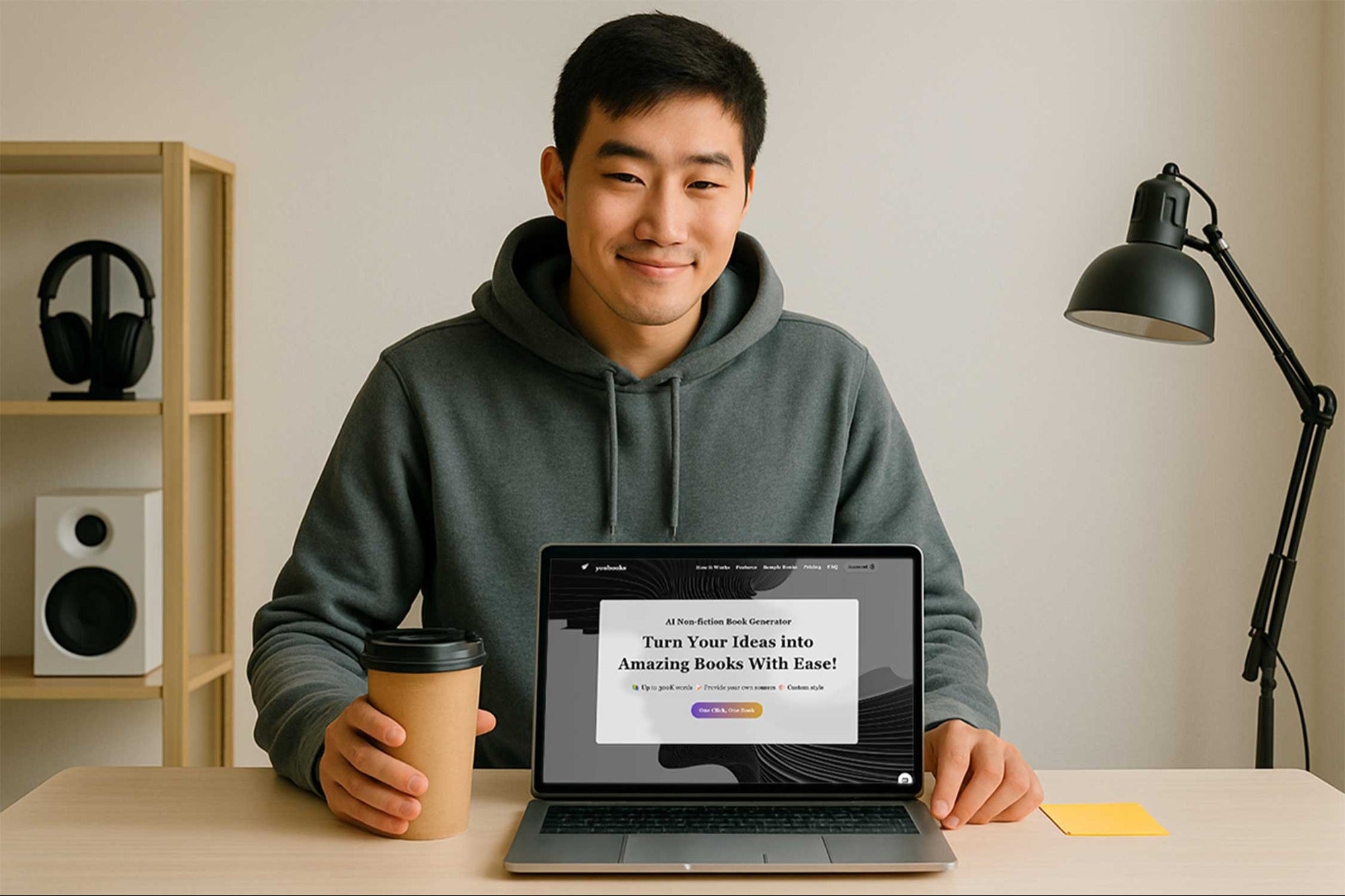
If you’ve ever thought, I should write a book about this, but then remembered you’re also running a business, managing clients, and keeping 47 tabs open just to stay afloat—well, same. That’s why Youbooks is a stunning tool. And right now, you can use it for life for just $49.

This AI-powered non-fiction book generator was made for entrepreneurs, founders, coaches, consultants, and all-around busy people with a lot of know-how and no time to type it out. For less than one dinner out, you get lifetime access to a powerhouse writing platform that collaborates with multiple top-tier AI models (ChatGPT, Claude, Gemini, Llama—you name it). That means smarter content, sharper structure, and zero writer’s block.

Youbooks doesn’t just spit out fluff—it builds full-on manuscripts up to 300,000 words, and it pulls in real-time research from the web to back up your ideas with facts, stats, and sources. Want your voice to shine through? Upload writing samples or internal documents so your final product reads like you—not like a robot.

Whether you’re turning a coaching framework into a course companion, expanding a podcast series into a book, or publishing an industry guide to establish yourself as the expert in your niche, Youbooks makes it all possible—with full commercial rights to your content.

Plus, every month, you get 150,000 credits to generate new books, upload your sources, and keep the content flowing. No upsells. No subscriptions. No ghostwriters ghosting you. Just you, your ideas, and a very smart machine helping you bring them to life.

Your story is worth telling. Now it’s easier—and way cheaper—than ever to tell it.

Get lifetime access to Youbooks for just $49 (MSRP: $540) for a limited time.

Youbooks – AI Non-Fiction Book Generator: Lifetime Subscription

See Deal

StackSocial prices subject to change.

If you’ve ever thought, I should write a book about this, but then remembered you’re also running a business, managing clients, and keeping 47 tabs open just to stay afloat—well, same. That’s why Youbooks is a stunning tool. And right now, you can use it for life for just $49.

This AI-powered non-fiction book generator was made for entrepreneurs, founders, coaches, consultants, and all-around busy people with a lot of know-how and no time to type it out. For less than one dinner out, you get lifetime access to a powerhouse writing platform that collaborates with multiple top-tier AI models (ChatGPT, Claude, Gemini, Llama—you name it). That means smarter content, sharper structure, and zero writer’s block.

Youbooks doesn’t just spit out fluff—it builds full-on manuscripts up to 300,000 words, and it pulls in real-time research from the web to back up your ideas with facts, stats, and sources. Want your voice to shine through? Upload writing samples or internal documents so your final product reads like you—not like a robot.

The rest of this article is locked.

Join Entrepreneur+ today for access.

https://www.entrepreneur.com/science-technology/tell-your-story-and-share-your-strategies-with-the-49/495262


Boost Team Productivity and Security With Windows 11 Pro, Now $15 for Life

Disclosure: Our goal is to feature products and services that we think you’ll find interesting and useful. If you purchase them, Entrepreneur may get a small share of the revenue from the sale from our commerce partners.

If you run your business from a PC—or manage a team that does—then your operating system isn’t just background software. It’s your daily control hub, the foundation for security, productivity, and system compatibility. That’s why I recently upgraded to Microsoft Windows 11 Pro, now available for only $14.97 (reg. $199) as a lifetime license.

Windows 11 Pro isn’t just a cosmetic upgrade. It builds on the Windows 10 foundation with performance improvements, enhanced multitasking features, and business-level security—all of which make a noticeable difference when you’re managing clients, projects, or internal systems. I’ve personally seen faster boot times, smoother app switching, and stronger integration with cloud platforms like OneDrive and Microsoft 365.

The productivity features alone have been a big win. Snap Layouts and virtual desktops make it easier to organize workstreams—whether I’m reviewing contracts on one screen or tracking project timelines on another. And with built-in BitLocker encryption and remote desktop access, I can safely access files and devices when I’m on the go or working remotely.

From an IT and business management perspective, the Pro version gives you access to key features like Group Policy, Hyper-V virtualization, and enterprise-grade identity management. It’s ideal for small business owners scaling their operations or freelancers managing client data.

There’s also an upgraded AI assistant, Copilot. It’s powered by ChatGPT-4o and can help with image and article generation, answer your questions, and even help you study for certification exams.

Best of all, this is a one-time purchase—no subscription or recurring fees ever again. That means predictable costs, fewer licensing headaches, and software that won’t suddenly become inaccessible due to missed renewals.

Whether you’re looking to upgrade your own PC, equip a small team, or prep a new workstation without blowing your software budget, this deal offers a low-lift way to future-proof your setup.

Equip your work or office devices when you grab one of these Windows 11 Pro lifetime licenses now for just $14.97 (reg. $199), a fraction of the standard cost, for a little while longer.

Microsoft Windows 11 Pro

See Deal

StackSocial prices subject to change.

If you run your business from a PC—or manage a team that does—then your operating system isn’t just background software. It’s your daily control hub, the foundation for security, productivity, and system compatibility. That’s why I recently upgraded to Microsoft Windows 11 Pro, now available for only $14.97 (reg. $199) as a lifetime license.

Windows 11 Pro isn’t just a cosmetic upgrade. It builds on the Windows 10 foundation with performance improvements, enhanced multitasking features, and business-level security—all of which make a noticeable difference when you’re managing clients, projects, or internal systems. I’ve personally seen faster boot times, smoother app switching, and stronger integration with cloud platforms like OneDrive and Microsoft 365.

The productivity features alone have been a big win. Snap Layouts and virtual desktops make it easier to organize workstreams—whether I’m reviewing contracts on one screen or tracking project timelines on another. And with built-in BitLocker encryption and remote desktop access, I can safely access files and devices when I’m on the go or working remotely.

The rest of this article is locked.

Join Entrepreneur+ today for access.

https://www.entrepreneur.com/science-technology/boost-team-productivity-and-security-with-windows-11-pro/495200


This Mac and Microsoft Bundle Pays for Itself in Productivity

Disclosure: Our goal is to feature products and services that we think you’ll find interesting and useful. If you purchase them, Entrepreneur may get a small share of the revenue from the sale from our commerce partners.

When given the choice, 72% of employees would choose an Apple device, according to a global study by Jamf. That’s no big surprise — Macs pack a lot of perks. If you’re in the market for a new device to tackle your work and play, this bundle gives you everything you’ll need to boost your productivity.

Right now, you can score a MacBook Pro, Apple’s most powerful and portable device, and a Microsoft Office lifetime license for Mac, all for just $419.99 (reg. $1,799).

Work smarter, not harder with this MacBook Pro and Microsoft Office bundle

Get ready to tackle even the lengthiest to-do list with this MacBook Pro. It’s ready to multitask thanks to the 10th Gen Intel Core i5 processor with a 2GHz base speed and 16GB of RAM, and you can keep important files local with 512GB of SSD.

You’ll have plenty of space to see it all on the 13.3-inch Retina display, which offers stunning visuals and Apple’s True Tone technology, which automatically adjusts screen colors to reduce eye strain. Typing is comfortable on the Magic Keyboard, and the Touch Bar offers easy access to shortcuts. This laptop is grade A refurbished, which means it will arrive in near-mint condition.

While you can get a lot done on this MacBook Pro, you’ll need the right tools for the job. This bundle gives you access to a lifetime license to Microsoft Office Home and Business for Mac 2021, which can help you accomplish even more via six helpful apps.

This Microsoft Office license includes classics like Word, Excel, PowerPoint, and Outlook, while also giving you access to newer additions with a basic version of Teams and a free version of OneNote. You’ll own these apps for life, with no subscription fees required.

Take advantage of this steal on a Microsoft Office for Home and Business for Mac 2021 Lifetime License and a MacBook Pro for only $419.99 (reg. $1,799).

StackSocial prices subject to change.

When given the choice, 72% of employees would choose an Apple device, according to a global study by Jamf. That’s no big surprise — Macs pack a lot of perks. If you’re in the market for a new device to tackle your work and play, this bundle gives you everything you’ll need to boost your productivity.

Right now, you can score a MacBook Pro, Apple’s most powerful and portable device, and a Microsoft Office lifetime license for Mac, all for just $419.99 (reg. $1,799).

Work smarter, not harder with this MacBook Pro and Microsoft Office bundle

The rest of this article is locked.

Join Entrepreneur+ today for access.

https://www.entrepreneur.com/science-technology/this-mac-and-microsoft-bundle-pays-for-itself-in/495201


How This Legendary Bay Area Rapper Built an Empire — One Hustle At a Time

Opinions expressed by Entrepreneur contributors are their own.

A tycoon is defined as a powerful, wealthy figure in business — someone who’s achieved dominance in their field. Few in hip-hop embody that term more than Earl “E-40” Stevens, the legendary Bay Area rapper often credited with bringing it into the culture’s vernacular.

Before he built a wine empire, launched a bestselling cookbook or created his own line of tequila, E-40 was just a kid from Vallejo hustling tapes out of a briefcase.

“Coming from the streets, I’m glad I listened to my grandma, to the church,” Stevens says. “They taught me to give back, stay prayed up, stay positive and leave the negativity behind.”

Now, a few decades and a few million dollars later, Stevens is still hustling with heart, always honoring the community that shaped him.

Related: Why the World’s Best CEOs Are Training Like Athletes — and How You Can, Too

Out of the trunk

While he’s best known for his distinctive Bay Area style and slang, Stevens is as much an entrepreneur as he is an artist — if not more. He started rapping at Grambling State University, where he and his friends formed a group called The Drifters and wrote a song that became the school’s unofficial anthem.

As his music started to take off, Stevens moved back to the Bay to chase rap full-time. Teaming up with his cousin, brother and sister, he formed MVP and hit the studio to record an EP. But making music was only half the battle — the other half was selling it.

“We had to sell tapes out of the trunk of our car,” Stevens says. “They used to call me Briefcase Earl, because I’d always walk around with a briefcase full of consignment sheets and a trunk full of cassettes, vinyl, or CDs.”

He remembers going block by block, stopping at liquor shops, auto body garages, barbershops and dropping off tapes on consignment.

As they continued to grow, Stevens and co tried to pitch their music to a local distributor. Unfortunately, one exec wasn’t keen on the idea.

“He said my voice was too fast, and that B-Legit rapped like he was reading,” Stevens recalls.

Not to be deterred, Stevens sought counsel from his uncle, Saint Charles, a one-time R&B musician himself.

“He grabbed this big ass distribution book, like the size of an encyclopedia,” Stevens laughs. “It had listings for all the retail stores that sold rap music.”

The group sat down and put together a one-sheet with some basic information about themselves, and began sending it out to record stores along with some tapes on consignment.

“Back then, it might take two or three weeks for the packages to get to places like Nebraska or Texas,” Stevens says. “But once they got there and people started playing the tapes in mom-and-pop stores, folks were like, ‘Who are these dudes?'”

The group, now called The Click, was beginning to attract national attention, and not long after, the same executive who had said Stevens rapped too fast was calling his uncle to order 5,000 cassettes.

After six years of selling records independently, Stevens and The Click signed a multi-million dollar distribution deal with Jive Records in 1994, and the rest is history. But music is just one piece of the puzzle when it comes to Earl Stevens.

Beyond the booth

As the unofficial ambassador of the Bay Area, Stevens often found himself immersed in the local nightlife. As his fame grew, he built close relationships with club owners — one of whom eventually brought him into the business. That early taste of ownership in the food and beverage world sparked his next venture.

Since stepping into the space in 2013, Stevens has built an empire. Under his “Earl Stevens Selections” label, he’s launched over 17 still and sparkling wines, along with a growing portfolio of spirits: E. Cuarenta Tequila, Tycoon Cognac, Kuiper Belt Bourbon, Kuiper Belt Gin and Tycoon Vodka.

He’s also created pre-mixed cocktails under the Sluricane brand and introduced a golden lager, E. Cuarenta Cerveza, with more products on the horizon.

In 2021, he expanded into food with the launch of Goon With The Spoon, a brand that now features packaged sausages, burritos, beef jerky and a line of ice creams. Flavors include Cookie Dough, Bourbon Vanilla, Vanilla Bean, Strawberry, Mint Chocolate, Salted Caramel and even Chicken & Waffles.

In November 2023, E-40 released his own cookbook called Goon With The Spoon, which featured his favorite recipes and became a New York Times bestseller.

“It came about naturally,” he says. “I’m an adult beverage consumer, and I love cooking and eating. The Lord blessed me with good taste buds and a good voice.”

Image credit: Good With The Spoon

One business particularly near and dear to him is The Lumpia Company, a Filipino food business which he co-owns.

“I grew up in the hillside of Vallejo, where there’s a strong Filipino community,” Stevens shared. “From a young age, I played ball with a lot of Filipino kids. We’d hang out after games, and sometimes I’d go up the hill to their houses. Their aunties would always be cooking, and there was always lumpia. I became a huge fan of it back then, and to this day, I still am.”

Related: How One Firm is Engineering a Sports Revolution

From rapper to business owner, chef to actor, Stevens has become such a multihyphenate that even a wordsmith of his caliber might struggle to list all his titles in one breath.

“I went cold turkey on the streets way back in the day, and I’m glad I did,” Stevens says. “I got rewarded a thousand times over. I became a millionaire, a multi-millionaire, at a young age. I’m just grateful to still be doing it in my 50s — at this pace, at this level. And I’m proud I was able to pass the blueprint on to others.”

https://www.entrepreneur.com/living/how-this-entrepreneur-built-a-bay-area-empire-one/494973