Cancel Culture Isn’t Going Anywhere — Here’s How Smart Leaders Respond

Opinions expressed by Entrepreneur contributors are their own.

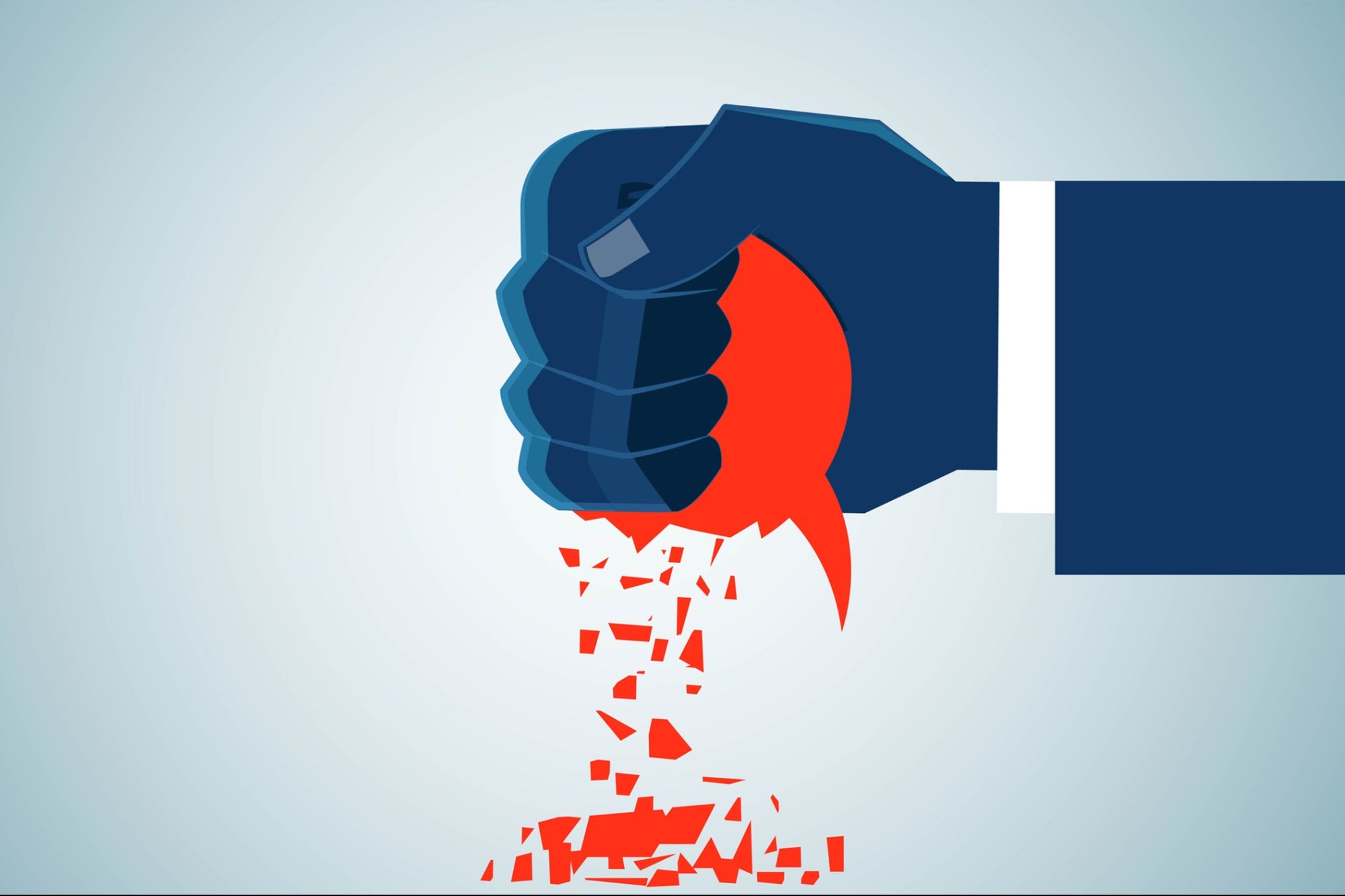
Today’s leaders are expected to speak up — not just for business, but for society. According to the 2023 Edelman Trust Barometer, 73% of people believe CEOs should step in when governments fail, and 68% feel empowered to pressure organizations into change. This isn’t just about leadership — it’s about leverage. Public expectations are high, and the cost of silence or missteps can be steep.

Thought leadership now exists in a landscape of hypervisibility. Social media amplifies every comment, every slip. There are no warning shots — just consequences.

So where does that leave leaders? Caught between the demand to lead and the fear of being “cancelled.”

This article explores how cancel culture is reshaping the rules of engagement—and how modern leaders can navigate it with clarity, credibility and confidence.

Related: Cancel Culture Is Lazy. We Need Revision Culture Instead.

Understanding cancel culture

At its core, cancel culture is amplified public accountability. It’s the collective decision to disengage from individuals or organizations seen as offensive or unethical. Social media often fuels the outrage, which can quickly damage reputations and opportunities.

Some see it as justice. Others, as mob rule. A 2022 Pew Research Center study revealed a divide: 58% believe calling out others promotes accountability, while 38% see it as unfair punishment.

It’s a tense environment for leaders. Share an opinion and risk backlash. Stay silent and risk irrelevance. That hesitation is reshaping thought leadership—and not for the better.

Leadership voices on thin ice

Public sentiment shifts fast. What’s acceptable today might spark outrage tomorrow. That unpredictability keeps leaders in the crosshairs. As a result, many opt for silence —but that’s risky too. Diluted ideas turn thought leadership into thought followership: safe, bland and forgettable.

The real risk isn’t saying the wrong thing. It’s saying nothing at all. Modern leadership requires clarity, conviction and the courage to speak from a foundation of values and insight—even as the ground shifts beneath you.

Cancel culture and B2B: the hidden impact

Cancel culture headlines usually spotlight consumer brands, but the effect in B2B is quieter and more insidious.

Imagine this: Business A approaches Business B for a promising deal. Then, Business A backs out over a years-old tweet from Business B’s founder. No press, no hashtags — just a lost opportunity behind closed doors.

This is micro cancel culture. And for smaller companies without the PR or legal teams to manage reputation risks, it creates serious vulnerability.

The result? Companies start choosing “safe” over smart. Innovation suffers. Integrity is replaced with risk aversion.

Related: Here’s the No. 1 Thing Brands Can Do to Avoid Public Outrage and Cancel Culture

Cancel-proof thought leadership strategies

In today’s climate, it’s not just what you say — it’s how, when and why. Here’s how to lead with courage and credibility:

Embrace a micro-program strategy: Skip rigid campaigns that age fast. Break bold ideas into short, agile pieces that can evolve with current events. Test messaging early and often.

Stay true to your values: Speak up only on issues that align with your mission. A 2023 Weber Shandwick study found one-third of consumers believe companies should only take stands when it’s relevant to their business.

Balance instinct with inclusion: Speed matters, but so does perspective. Build diverse voices into your decision-making process and vet your partnerships carefully.

Use research as a shield and spotlight: Data makes bold ideas harder to dismiss. Root your opinions in real-world research and trend analysis to shift the conversation from emotion to evidence.

Own your mistakes—fast: Perfection isn’t required. Accountability is. PwC reports 38% of consumers will forgive a brand that apologizes and takes action. Act quickly, correct transparently and move forward.

Final thoughts

Cancel culture isn’t going anywhere. Public expectations around business responsibility are only rising. The real challenge for leaders isn’t avoiding controversy — it’s staying relevant and trustworthy in a shifting world. Let values guide your message. Let data back it up. Let courage drive it forward.

Cancel culture can feel like a threat — but it can also serve as a filter that pushes leadership toward greater clarity, integrity and long-term credibility.

The goal isn’t to dodge scrutiny. It’s to build a brand that can withstand it.

Ready to break through your revenue ceiling? Join us at Level Up, a conference for ambitious business leaders to unlock new growth opportunities.

Today’s leaders are expected to speak up — not just for business, but for society. According to the 2023 Edelman Trust Barometer, 73% of people believe CEOs should step in when governments fail, and 68% feel empowered to pressure organizations into change. This isn’t just about leadership — it’s about leverage. Public expectations are high, and the cost of silence or missteps can be steep.

Thought leadership now exists in a landscape of hypervisibility. Social media amplifies every comment, every slip. There are no warning shots — just consequences.

So where does that leave leaders? Caught between the demand to lead and the fear of being “cancelled.”

The rest of this article is locked.

Join Entrepreneur+ today for access.

https://www.entrepreneur.com/leadership/cancel-culture-isnt-going-anywhere-heres-how-smart/491199



How to Earn Customer Trust and Boost Sales Without Big Ad Budgets

Opinions expressed by Entrepreneur contributors are their own.

For every one dollar businesses invest in public relations (PR), they earn an average of $5.50 back in media coverage. For this reason and more, major corporations consider PR indispensable.

PR can make a big difference for companies and organizations of all sizes, however. As consumers’ trust in traditional advertising and marketing has waned, PR has emerged as a vital part of strategic business communications. This is especially true at key moments in an organization’s development, such as in the months before launching a new enterprise, product or service.

The problem with traditional advertising and marketing

Research has shown that customers today are much more skeptical of advertising and marketing campaigns than their predecessors. According to a December 2024 report from YouGov, 53% of survey participants said ads are a waste of time, and 52% said they don’t trust TV ads.

The distrust is particularly marked among members of the younger generations. A Connect by Live Nation survey recently discovered that only one in four of these customers say they trust brands. Instead, they want transparency, authenticity and realness.

Luckily, PR offers exactly that kind of transparent, authentic and honest approach that today’s consumers crave.

Related: How to Master Public Relations and Build Lasting Trust in a Changing World

PR’s unique approach to strategic communications

PR can disarm the cynical and build trust with target audiences. Instead of paying to put self-interested messages in front of people, PR earns the media’s attention by offering legitimate value to readers, viewers and listeners.

PR professionals have many different strategies for attracting this media coverage. Much of it comes down to staying on top of the news cycle, having an in-depth understanding of clients’ areas of expertise and building relationships with journalists and editors. Publicists then combine these factors to create opportunities to shine the spotlight on their clients.

For instance, when a hurricane has just ravaged a community, publicists understand that many members of the public will be worried about the prospect of losing their own homes in another such event. The publicists can take advantage of this opportunity by offering to allow journalists to interview their clients who specialize in insurance. This gives the client a chance to explain how homeowners can best protect their property before a storm.

While the client never explicitly promotes their own insurance products in their commentary, the fact that they are willing to take the time to be helpful and offer guidance reflects well on them and their company. Being featured in the media also enhances their search engine optimization (SEO), which means search engines are likely to rank them higher in online search results.

This is just one example — the important thing is that talented publicists understand how to pique the media’s interest in their clients at any given time.

Related: 5 Common Misconceptions About Public Relations

Why PR makes a difference

This sort of media appearance or mention — often called “earned media” — is very different from a promotional ad. It offers education, knowledge, expertise and goodwill toward the public, not an attempt to sell something to them.

Yet, PR is also an effective way to promote clients’ products and services. The company’s valuable advice and ethical behavior create a positive connection with viewers. Doing PR fosters trust, which can pay off when members of the audience seek to purchase a relevant product or service later.

Indeed, according to the Edelman Trust Barometer, survey respondents identify earned media as a better way to win their trust than any other kind of marketing. As the same study also reports, industry experts are trusted more than any other source, including peers, celebrities, and influencers.

The combination of authority and empathy is a winning one. That’s the combination PR offers. As a result, studies show that PR has a positive impact on the bottom line.

ALSO READ: How You Can Leverage These PR Strategies to Build Your Company’s Credibility and Trust — Even When Under Attack

PR buoys the bottom line

A 2020 survey showed that, after hearing about a product on a podcast, 64% of listeners visited the company’s website, and 55% ended up purchasing the item. Meanwhile, 70% of those same people said they fast-forward through ads.

According to research and advisory firm Forrester, companies that garner earned media can generate as many as 20 times more leads than those that only pay for advertising.

As these numbers show, PR buoys businesses at any given time. Yet there are also key moments when it’s even more important to do PR.

The right time to do PR

Studies indicate that PR makes a particular difference at certain times in their development. Doing PR in the months leading up to the launch of a new product, service or business helps the enterprise take off better than advertising.

My own experience bears out these conclusions. For instance, one of my PR agency’s clients — an anti-aging wellness center — was worried that no one would show up to their grand opening. We reached out to influencers based in his community and sent media advisories to local news outlets and the Chamber of Commerce, which promoted the event on its own social media accounts. This created buzz, and as a result, the grand opening was packed with people, many of whom booked appointments.

Again, this is just one example. Basically, PR introduces people to new products, services and businesses more effectively than advertising because it mobilizes third parties that are considered more trustworthy than a brand would be itself.

PR delivers results

While every company stands to benefit from cultivating trust with consumers, doing PR is particularly important for new companies and businesses that foresee launching new products or services in the coming year. For the best results, be proactive and start well in advance. This will give your PR team time to strategize, do market research, and create the key connections necessary for optimal outcomes.

Major corporations engage in PR because it delivers results. That’s why businesses of all sizes should do so, too.

Ready to break through your revenue ceiling? Join us at Level Up, a conference for ambitious business leaders to unlock new growth opportunities.

https://www.entrepreneur.com/growing-a-business/how-to-earn-customer-trust-and-boost-sales-without-big-ad/489854


Adopting This Mindset Can Protect Your Small Business From Costly Mistakes

Opinions expressed by Entrepreneur contributors are their own.

There is the old Russian proverb, “Trust, but verify,” made famous by a former president’s comment on a nuclear weapons treaty. To me, that particular verbiage signals a negative connotation, which is why I prefer the phrase “trust and verify.”

The desire to trust others remains an intricate part of business. Something within us wants to believe most, if not everything, that our employees, clients and vendors proclaim. However, one of the most valuable lessons learned in my 20-plus years as an entrepreneur involves verifying essential information that I instinctively want to trust.

Based on most guidelines, we are a small company. That means our senior staff devotes considerable resources to recruiting potential employees and marketing our services to what we believe will be profitable and long-term clients. Fortunately, most of these relationships create productive employees and profitable clients.

On the other hand, lies the reality that one poor hire or an underperforming account can hurt our bottom line. That’s precisely why it’s essential to verify key information before extending an employment offer or signing a contract with a client or vendor. While subjective, my new strategy delivers fewer disappointments and more revenue.

Related: Protect Your Company From Resume Fraud

Employment verification

Applicants often submit pristine resumes that highlight their incredible experience and accomplishments. I am fortunate that so many excellent candidates desire to work for my organization.

Yet, sometimes, that shining resume contains false, inaccurate or misleading information. An offer is extended and accepted, only to determine months later that the fantastic new hire did not or could not deliver.

Do you or your staff routinely confirm employment timelines, performance claims or educational levels? If not, I recommend you begin immediately. A 2024 survey referenced in HRO Today, a leading human resources website, found that over half of employees admitted to lying on a resume.

When discrepancies arise, ask the applicant to explain. Evaluating their reaction may offer insight into how they can handle pressure or difficult situations. Naturally, an outright fabrication doesn’t deserve a second chance. Move on and devote your efforts to finding employees who fit your needs and the organization’s culture.

Customer verification

The same holds true for clients and customers. You may spend months or years working on a list of prized prospects and finally land that big whale. Your team invested countless hours and valuable marketing dollars to deliver that sought-after signature. Then, the excitement may fade later when the prized account consistently fails to pay promptly or doesn’t provide the promised business.

Does someone on your team research prospects to confirm vital information regarding their reputation or financial solvency? How do their clients or customers rate the company?

We once fired a Fortune 100 company when their accounts receivable hit 180 days. Becoming a lender isn’t our forte, so severing the relationship made sense. Confirming our payment expectations can save both parties time and money.

Related: The 7-Step Guide To Finding the Right Clients and Avoiding the Ones Who Waste Your Time

Vendor verification

Verifying vendor information hits home with me. As a CEO, I devote significant time not only to staying informed about my industry but also to keeping up with trends to increase market share and revenue.

Some digital marketing firms I retained promised substantial website traffic or backlinks, but only provided dismal results and an expensive invoice. While some marketing strategies are subjective, performing due diligence on their claims and contacting other clients may have impacted our decision process.

No one can argue that artificial intelligence remains a growing tool for both businesses and consumers. For example, hiring qualified human transcriptionists (labor cost) is our most significant expense. Does it make sense to employ AI platforms to transcribe client files and possibly reduce labor costs?

To answer that question, I wanted to measure the accuracy rates of companies that offered AI transcription services against experienced and qualified human transcriptionists. Keep in mind that we strive for and guarantee a 99% accuracy rate. Can the great AI machines match or exceed such a high goal?

The answer is no. For this exercise, we gathered 14 files from various industries, ranging from a single speaker (a short monologue) to a board meeting with more than 20 speakers, and compared accuracy percentages from the first 500 words. The mean average for AI transcription came in at just below 62%, compared to the 99% accuracy rate of human transcriptionists.

Will advancements in AI technology eventually generate a 99% accuracy rate? Maybe. However, humans still maintain an accuracy edge when handling complex cases where human knowledge and expertise are crucial.

Related: Authentication Technology Is Shaping Vendor-Partner Verification And On-boarding

Trust is given and earned

Employing verification practices makes good business sense. However, don’t forget that trust remains a vital part of our business practices. I want my employees, clients and vendors to trust me, so I extend the same courtesy to them.

It bothers me when I see companies within my industry make false or misleading claims. That’s why I’m careful how I position our services. I not only want my clients to trust me, but I also encourage them to verify my capabilities. Confirming my ability and promises to perform only builds more trust and, hopefully, more long-term and profitable relationships.

Make time to review your verification practices or implement some guidelines. Verifying information also provides valuable insight into a variety of subjects that should benefit your own business practices.

Trust will always remain a critical part of our world’s business culture. Implementing a “trust and verify” strategy within your organization benefits everyone. Do employees, customers and vendors trust your organization?

There is the old Russian proverb, “Trust, but verify,” made famous by a former president’s comment on a nuclear weapons treaty. To me, that particular verbiage signals a negative connotation, which is why I prefer the phrase “trust and verify.”

The desire to trust others remains an intricate part of business. Something within us wants to believe most, if not everything, that our employees, clients and vendors proclaim. However, one of the most valuable lessons learned in my 20-plus years as an entrepreneur involves verifying essential information that I instinctively want to trust.

Based on most guidelines, we are a small company. That means our senior staff devotes considerable resources to recruiting potential employees and marketing our services to what we believe will be profitable and long-term clients. Fortunately, most of these relationships create productive employees and profitable clients.

The rest of this article is locked.

Join Entrepreneur+ today for access.

https://www.entrepreneur.com/leadership/this-mindset-can-protect-your-business-from-costly-mistakes/494595


The Fastest Way to Remove Bad Press (And What to Do If You Can’t)

Opinions expressed by Entrepreneur contributors are their own.

It’s never easy dealing with bad press or negative online coverage — whether it stems from a genuine mistake or something more serious, like defamation. The good news? In many cases, there are effective ways to remove harmful content entirely. And even if it can’t be taken down, the right strategies can push that coverage out of sight, so it’s far less likely to be seen.

The impact of negative press can be serious. It can lead to lost trust, a damaged reputation and missed opportunities. People may hold back from reaching out simply because that bad coverage is the first thing they see.

That’s why it’s so important to take steps to manage the fallout and begin turning things around.

Here are some ways to get rid of bad press entirely.

Legal option: Defamation

Sometimes, bad press is shared illegally, and in those cases, you may have legal options to get it taken down.

If someone spreads false information about you or your business and presents it as fact, it could qualify as defamation. That includes libel (if written) and slander (if spoken).

However, defamation laws vary by state, and determining whether something is legally defamatory isn’t always straightforward, especially when it’s published online, which adds another layer of complexity.

If an attorney confirms that the content is defamatory, they can issue a cease-and-desist letter, request a correction or retraction or even file a lawsuit if that’s the best course of action for your situation.

Join top CEOs, founders and operators at the Level Up conference to unlock strategies for scaling your business, boosting revenue and building sustainable success.

Responding to doxxing

If negative press coverage has resulted in you being doxxed, you can use Google to remove that information from its search results by filling out a form, particularly if it was posted with malice.

Examples of this type of information include your address, social security number, credit card number, an image of your handwritten signature and a copy of your passport.

Battling exploitative removal practices

If you’ve contacted a person or organization to request that negative information be taken down and were told you’d need to pay for its removal, Google may be able to step in. In cases like this, where content takedown is tied to extortion or financial demand, Google can choose to de-index the content from its search results. However, this option typically doesn’t apply to business review platforms.

Related: 3 Kinds of Bad Press (And How to Handle Each of Them)

Explicit content

If the negative coverage involves explicit content that was shared without your consent, you can also ask Google to remove it from search results. This applies to real content as well as AI-generated or manipulated media, especially when it includes your likeness or falsely identifies you as being involved.

Violations of community guidelines

Many platforms like Reddit, Facebook or discussion forums have community guidelines in place. If the content violates these rules — and often it does — you can report it directly to the platform’s moderation team. Be specific about what rules were violated and request their removal accordingly.

Burying negative search results

If you’ve tried everything and still can’t get the bad press removed, don’t worry — there are still effective ways to suppress it.

Why is suppression important? Because the majority of people never scroll past the first few search results. Very few make it to the 10th result, and even fewer click onto page two. That means your goal is to push the bad press down, so what shows up first is something positive.

Replace it with positive content

One of the best ways to shift focus away from negative press is to publish positive content actively. The good news? Google tends to favor fresh content. That gives your new, positive material an edge over older, negative stories.

Start with your website. Improve the design, update your content, and publish blog posts or announcements that reflect your values, successes and community engagement. You can also write articles on platforms like Medium, LinkedIn and Substack.

Be active on your social media accounts as well. Post regularly and positively, and link to your new content to strengthen its visibility. Everywhere you have control — your site, your bios, your press kit — make sure the information is accurate and up to date.

Pro tip: Google places high value on backlinks. When your positive content is linked across credible sources, it becomes more likely to rank higher than the negative press.

Related: How to Handle Bad Press Before It Burns Your Brand

Encourage positive customer reviews

If you run a business, one of the most powerful things you can do is encourage satisfied customers to leave honest, positive reviews. This is especially important if negative press is tied to poor ratings or public criticism.

That said, the best way to earn good reviews is to be good at what you do. Stay authentic, trustworthy, and customer-focused. If that’s always been your approach, keep going. If not — or if negative feedback came as a result of poor service — now’s the time to fix it and move forward.

Issue a public apology (if necessary)

If the negative coverage was the result of a mistake you or your company made, consider offering a sincere, public apology. A thoughtful response that takes responsibility and outlines how you’re making things right can go a long way toward rebuilding trust.

In the end, while it may feel overwhelming to face a wave of bad press, it’s not the end of the story. With the right mix of legal action, online strategy and reputation management, you can reduce the visibility of harmful content — or remove it altogether — and begin reshaping your public image in a meaningful way.

It’s never easy dealing with bad press or negative online coverage — whether it stems from a genuine mistake or something more serious, like defamation. The good news? In many cases, there are effective ways to remove harmful content entirely. And even if it can’t be taken down, the right strategies can push that coverage out of sight, so it’s far less likely to be seen.

The impact of negative press can be serious. It can lead to lost trust, a damaged reputation and missed opportunities. People may hold back from reaching out simply because that bad coverage is the first thing they see.

That’s why it’s so important to take steps to manage the fallout and begin turning things around.

The rest of this article is locked.

Join Entrepreneur+ today for access.

https://www.entrepreneur.com/starting-a-business/how-to-remove-bad-press-and-reclaim-your-online/494762


Astronomer’s HR Chief Resigns, Hopefully Marking the Last Time Anyone Mentions the Coldplay Kiss-Cam Scandal

Unicorn tech startup Astronomer has confirmed that both of the executives involved in the now-infamous Coldplay concert kiss-cam scandal are no longer with the company.

Former CEO Andy Byron resigned last week after he and the company’s Chief People Officer, Kristin Cabot, were publicly caught on camera in a not-work-appropriate moment on the big screen. The encounter went mega-viral and has led to an endless supply of memes – and the resignations of two executives.

Related: Astronomer’s New CEO Addresses the Viral Coldplay ‘Kiss Cam’ Fiasco: ‘Unusual and Surreal for Our Team’

CNBC is reporting that Cabot has also departed the company.

“Kristin Cabot is no longer with Astronomer; she has resigned,” a company spokesperson told CNBC Thursday in an email.

Last week, Astronomer co-founder and interim CEO Pete DeJoy wrote on LinkedIn that it’s been “unusual and surreal” for the team at the private data infrastructure startup since the scandal went viral around the world.

Related: The CEO of Google’s AI Initiative Is Worried About 2 Things, and Neither Is AI Replacing Jobs

“The events of the past few days have received a level of media attention that few companies—let alone startups in our small corner of the data and AI world—ever encounter,” DeJoy wrote. “The spotlight has been unusual and surreal for our team and, while I would never have wished for it to happen like this, Astronomer is now a household name.”

Join top CEOs, founders and operators at the Level Up conference to unlock strategies for scaling your business, boosting revenue and building sustainable success.

https://www.entrepreneur.com/business-news/astronomer-hr-head-kristin-cabot-resigns-after-viral-scandal/495067


Here’s Why I Tell Enterprise Companies to Make Time for Play

Opinions expressed by Entrepreneur contributors are their own.

I recently found myself in a room full of engineers and program managers at an enterprise company. These were data-driven people, laser-focused on delivery. I only had minutes to get them all in the right mindset to be creative and open.

I wasn’t sure how my warm-up was going to go.

The warm-up was a simple activity. As a team standing up in a circle, I asked them to say the ABCs and each take turns saying a letter. But they could not go in sequential order in the circle. And they had only one minute to complete the task. If they messed up in any way — such as two people saying a letter at the same time — they had to start over again.

I watched as the team started “A”…”B”… then two people said “C” at the same time. They all laughed and started from the top.

This happened again and again, everyone knowing full well that their minute was ticking away. The group laughed through the pressure. And finally, the minute was up. But smiles remained. I let them know it was okay for them not to finish, and I congratulated them for trying and having a good time.

In fact, most teams don’t finish. This warm-up activity has a reason behind it — a moral that applies to their work and their lives.

In most companies with which I’ve worked, teams are so deadline-driven that they don’t bother developing a strategy before they dive in. They don’t feel they have the time to slow down and establish a game plan with a beginning, middle and end. The only goal is to ship. Unfortunately, that is the root of the problems plaguing so many teams that create products, services and programs that are not effective. They need to slow down to speed up.

If the group in this room had taken even 10 seconds to establish a strategy upfront (i.e., pointing at the next person to say a letter), they would have easily finished the activity in 30 seconds.

Warm-ups should be fun — they should encourage people to interact, laugh, look at each other and fail or succeed together — but that shouldn’t be their only purpose. A warm-up should be a micro-intervention in disguise; a purposeful ritual that shapes a team’s culture, helps teammates become more vulnerable and primes their brains to be open to innovation. Corporations lack innovative solutions because they don’t encourage their teams to play, but the right warm-up exercise can fix that.

Related: The Surprising Benefits of Having Fun at Work

“Without vulnerability, you have no innovation.”

In her Netflix show, Brené Brown says this about corporate teams: “Without vulnerability, you have no innovation. If you’re not willing to build a vulnerable culture, you can’t create.” I really believe this and take it to heart. And the science supports it.

Amy Edmondson of Harvard coined the concept of psychological safety — the belief that you won’t be embarrassed or punished for speaking up. It’s a key ingredient for team performance. Warm-ups that invite a bit of silliness or discomfort (e.g., movement, storytelling, improv) help to model vulnerability and reinforce psychological safety. By creating a space that lets people be a little silly together, you can build trust amongst your team — and trust drives collaboration.

Which brings me to another study.

Breaking mental ruts and boosting creativity

The brain’s default mode network (DMN) governs daydreaming and habitual thinking. A state change — like laughter, physical movement or novelty — disrupts the DMN and boosts divergent thinking. So, getting your team out of their usual state can physically wake up their brains and make them more receptive to out-of-the-box thinking.

This doesn’t have to be a heavy lift. Exchanges that include personal storytelling or shared experiences, whether they’re warm-ups, non-work-related Slack messages, or even taking five minutes at the top of every meeting to just chat about something meaningful but unrelated to work, can help team members see each other as humans, not just roles, leading to better communication and compassion.

Related: “Want to Boost Your Team’s Performance? Make Them Laugh”

Building real connections

Another warm-up that I led went something like this: I told everyone in the room to stand up, form a circle and grab the hands of two people across from them. Once they all had joined hands, I told them that — without letting go — they all had to unwind themselves as a team. I was met with disbelief and nervous laughter. But they went for it. They strategized to figure out who stepped over and under whom, methodically understanding how to unwind themselves from the human knot they were in. And they did it.

In fact, they were in two circles that overlapped, which was soon met with the observation, “A Venn diagram — how cool!” And that right there was the day’s micro-intervention: There was no big hairball of a problem that they could not solve if they approached it collaboratively and with consideration for one another. Truly connected.

Play is where innovation thrives

Innovation is so hard for teams to get right, and one of the main reasons is that people allow their brains to go on autopilot when they are at work. It’s said that insanity is doing the same thing over and over again and expecting different results, and that’s exactly what happens. But think about when you were a kid, at your most creative and curious. Your mind was at its peak of expanding and learning, not just because of school, but because you played.

Rick Ruben, one of the most creative, seminal and celebrated record producers of our time, says in his book, The Creative Act: A Way of Being: “We’re not playing to win, we’re playing to play. Perfectionism gets in the way of play, and play is the heart of creative work.” And he’s right. Play is so important if you want to get out of your head and create something meaningful.

Some cynical people think these warm-ups are often a waste of the first 10 minutes of these meetings, but I know it’s the most important 10 minutes because I’ve seen it work. Build that time in. Trust in it. Create that safe space. The more your team laughs, smiles, moves and plays together, the more innovative and productive they will become.

Related: 5 Ways to Inspire Creativity and Innovation in Your Employees

I recently found myself in a room full of engineers and program managers at an enterprise company. These were data-driven people, laser-focused on delivery. I only had minutes to get them all in the right mindset to be creative and open.

I wasn’t sure how my warm-up was going to go.

The warm-up was a simple activity. As a team standing up in a circle, I asked them to say the ABCs and each take turns saying a letter. But they could not go in sequential order in the circle. And they had only one minute to complete the task. If they messed up in any way — such as two people saying a letter at the same time — they had to start over again.

The rest of this article is locked.

Join Entrepreneur+ today for access.

https://www.entrepreneur.com/leadership/heres-why-i-tell-enterprise-companies-to-make-time-for-play/494650


Why Retirees Have a Hidden Edge as Entrepreneurs

Opinions expressed by Entrepreneur contributors are their own.

Retirement used to be seen as the end of the hustle, a time to slow down and relax. However, retirees are abandoning that old playbook. Most retirees want to have the time to do the extra things they could not in their lifelong careers.

Due to better health, economic uncertainty and the desire to stay connected to mainstream life and purpose, many people decide to start something new instead of winding down. In fact, 79% of small businesses are owned by people over 50, either baby boomers (30%) or Generation Xers (49%).

Retirement can be a great time to launch a business. Whether to fulfill a long-held dream, make money from a hobby or give back while staying active — here are seven reasons why.

Related: 17 Must-Attend Conferences for Entrepreneurs Ready to Scale

1. You bring experience that cannot be bought

With decades of experience under your belt, imagine walking into a startup meeting. You’ve handled office politics, weathered economic storms and mastered the art of human interaction. It’s not just theory; it’s hard-won knowledge derived from experience. You know what works and what doesn’t and how to pivot gracefully when things go wrong. Young entrepreneurs often learn these lessons on the fly, but what about you? You’re an experienced navigator.

Or, to put it another way, you understand the nuances of customer behavior and the value of a firm handshake. This is a goldmine.

2. You’re freer to choose what matters to you

Corporate ladders? Continually striving for promotion? Those days are behind you now. You now have the opportunity to create something that resonates with your soul.

Have you ever dreamed of opening a bed-and-breakfast that reflects your love of hospitality? What about an online store where you can display your handcrafted treasures? How about a consulting gig where you share your expertise? Perhaps you should start a small nonprofit dedicated to a cause you are passionate about.

Related: The Overlooked Money Moves That Help Entrepreneurs Build Long-Term Wealth

It’s not about climbing a ladder but creating a legacy. Ultimately, creating something aligned with your values and passions brings joy and significance to your life.

3. Time is finally on your side

Do you remember when you were juggling work and family and scribbled business ideas on napkins? You are liberated from that chaos when you retire. You now have time, that precious commodity that has eluded you for so long. Whether you grow your business slowly or quickly, you can plan meticulously, experiment without pressure, and grow at your own pace.

Imagine crafting your business plan over leisurely coffee breaks or testing market strategies without being hampered by immediate deadlines. It’s not about rushing but building something that thrives on thoughtful cultivation.

4. It’s possible to start small and smartly

Don’t be fooled by outdated images of sprawling offices and massive investments. In today’s entrepreneurial landscape, there are a lot of options. For example, with online platforms, remote work tools and a global market at your fingertips, you can start a successful business from home. Also, many retirees start with part-time businesses. They can test the waters and grow organically without being burdened by heavy debt.

You could run a shop on Etsy from your spare bedroom, offer online consulting from your garage or even develop an online product sitting at your kitchen table.

5. A built-in network is already available to you

You have woven a tapestry of connections through decades of professional and personal relationships. However, it’s not just about names in a Rolodex or your contacts in your phone. These are potential partners, collaborators and mentors. In addition to promoting your venture, they can provide invaluable referrals and guidance.

In short, you should never underestimate the power of your network. Despite the digital age, personal recommendations continue to be extremely valuable.

Related: How to Network at Events Like a Pro and Watch Your Startup Soar

6. It keeps you mentally sharp and socially active

Running a business is a mental workout that requires problem-solving, learning, and strategizing on a daily basis. As such, you’ll keep your mind active and engaged, avoiding the stagnation that can creep in after retirement. Furthermore, it lets you stay connected to your community, meet new people, and cultivate a sense of purpose.

Imagine the thrill of learning new digital marketing strategies, the satisfaction of solving a complex business challenge or the joy of connecting with customers who appreciate your work.

7. Your legacy, your way

Here’s your chance to create something lasting, something reflective of your values and passions. This legacy might be a family-run business passed down to future generations. It could also be a brand that brings you immense pride. Or, maybe, it’s a project that makes a tangible impact on your community.

Ultimately, you can build a successful business that embodies your vision, a legacy that positively impacts the world.

Related: How to Build a Legacy For Your Company You Can Be Proud Of

Retirement isn’t an end; it’s the introduction to a new chapter, a chance to write your own story. It’s a time of unparalleled freedom, wisdom and opportunity. So dust off that idea notebook, turn on your laptop, and take the leap — because being “retired” doesn’t mean being done. Maybe, instead, it just means you’re ready to begin living your most fulfilling and best entrepreneurial life yet.

Retirement used to be seen as the end of the hustle, a time to slow down and relax. However, retirees are abandoning that old playbook. Most retirees want to have the time to do the extra things they could not in their lifelong careers.

Due to better health, economic uncertainty and the desire to stay connected to mainstream life and purpose, many people decide to start something new instead of winding down. In fact, 79% of small businesses are owned by people over 50, either baby boomers (30%) or Generation Xers (49%).

Retirement can be a great time to launch a business. Whether to fulfill a long-held dream, make money from a hobby or give back while staying active — here are seven reasons why.

The rest of this article is locked.

Join Entrepreneur+ today for access.

https://www.entrepreneur.com/starting-a-business/why-you-should-start-a-business-after-retirement/489739


Apple Is Letting You Test (and Complain About) the New iOS 26 Before It Comes Out. Here’s How.

Your iPhone screen will look a lot different after Apple releases its new iOS 26 update this fall.

That’s why the tech giant is giving customers a preview of its new operating system, iOS 26, which will be the biggest change to the iPhone’s user interface design since 2013.

Related: Apple’s Next Big Launch Is Reportedly Foldable iPhones. Here’s When It Will Be Revealed.

.adbox div { display: flex; align-items: center; justify-content: center; }

The redesign, called “Liquid Glass,” changes the look of the iPhone, replacing the buttons and user experience with translucent designs and more animated features. The concept lets the user see under the buttons while using them.

But the update isn’t fully ready to go. Apple wants public feedback on the design changes and user experience before the update is fully released.

How to try Apple’s new iOS 26

The public beta version was made available for preview on Thursday.

To begin, iPhone users sign up for Apple’s beta program on the company’s website.

Then open your iPhone and go to the Settings menu. Select General and look for Software Updates. There should now be an option for Beta Updates below it.

Select iOS 26 Beta and download.

Related: Apple Is Finally Offering AppleCare Coverage for Multiple Devices on One Plan. Here’s How It Works.

Join top CEOs, founders and operators at the Level Up conference to unlock strategies for scaling your business, boosting revenue and building sustainable success.

https://www.entrepreneur.com/business-news/how-to-try-apple-ios-26-beta-preview-liquid-glass/495059


Microsoft’s CEO Says the Company’s Mass Layoffs, Despite Financial Success, Are ‘Weighing Heavily on Me’ in an Internal Memo

Despite Microsoft’s position as the No. 2 most valuable company in the world, behind Nvidia, with a market value of $3.8 trillion, the tech giant has laid off more than 15,000 people this year.

In a memo to staff on Thursday morning, released publicly on Microsoft’s corporate blog, Microsoft CEO Satya Nadella addressed the recent job cuts, calling the decisions some of “the most difficult” that he had to make.

“Before anything else, I want to speak to what’s been weighing heavily on me, and what I know many of you are thinking about: the recent job eliminations,” Nadella wrote.

Related: Microsoft Is Laying Off More Workers as AI Continues to Trim Workforces

Nadella acknowledged “the uncertainty and seeming incongruence of the times we’re in” but noted that Microsoft is “thriving,” with exceptional market performance, strategy, and growth. For example, Microsoft’s stock price rose to an all-time high, hitting a closing price above $500 for the first time earlier this month.

Nadella also stated that the company is investing more in AI infrastructure than ever before, pouring over $80 billion into AI in the fiscal year that ended in June.

“Microsoft is being recognized and rewarded at levels never seen before,” Nadella wrote. “And yet, at the same time, we’ve undergone layoffs. This is the enigma of success in an industry that has no franchise value.”

Nadella explained the disconnect between thriving financials and layoffs by stating that “progress isn’t linear” and that it is “sometimes dissonant, and always demanding.” He noted that headcount at Microsoft “is relatively unchanged” as the company continues to hire new workers, and he doesn’t promise that there won’t be more layoffs in the future. Microsoft reported employing 228,000 workers as of June 2024.

Microsoft CEO Satya Nadella. Photographer: Chona Kasinger/Bloomberg via Getty Images

In the memo, Nadella also redefined Microsoft’s mission from a “software factory” to an “intelligence engine.” He said that the company’s future opportunity was to bring AI to all eight billion people on the planet.

Related: Microsoft Executive Says Using AI Has Saved $500 Million in Productivity Costs, as the Company Conducts Mass Layoffs

Meanwhile, Microsoft has made huge profits recently, with its net income equaling about $75 billion across its last three fiscal quarters. For the first three months of 2025, the company’s profit rose to $25.8 billion, up 18% from the previous year, beating Wall Street expectations.

Microsoft stock is up 22% year-to-date.

Join top CEOs, founders and operators at the Level Up conference to unlock strategies for scaling your business, boosting revenue and building sustainable success.

Despite Microsoft’s position as the No. 2 most valuable company in the world, behind Nvidia, with a market value of $3.8 trillion, the tech giant has laid off more than 15,000 people this year.

In a memo to staff on Thursday morning, released publicly on Microsoft’s corporate blog, Microsoft CEO Satya Nadella addressed the recent job cuts, calling the decisions some of “the most difficult” that he had to make.

“Before anything else, I want to speak to what’s been weighing heavily on me, and what I know many of you are thinking about: the recent job eliminations,” Nadella wrote.

The rest of this article is locked.

Join Entrepreneur+ today for access.

https://www.entrepreneur.com/business-news/microsoft-ceo-explains-recent-layoffs-in-internal-memo/495027


A Popular Protein Bar Company Is Selling… Raw Fish. Here’s Why.

Gen Z is obsessed with eating more protein (at least on TikTok), and now brands from Pepsi to Starbucks are adding it to foods and changing packaging to cash in on the trend. Some are even adding a whole new product.

David Protein, which sells a line of popular high-protein snack bars (and claims it has more protein per calorie than any bar on the market), now sells something with even more protein — cod.

Related: Starbucks Is Looking to Remove Seed Oils From Some of Its Food Products

After hearing feedback from customers who were trying to avoid processed foods, David Protein CEO and co-founder Peter Rahal told the Wall Street Journal that the company was looking to do “something bold that sparks the conversation” while finding a new product.

Rahal, who previously founded Rxbar, which sold to Kellogg for $600 million, said they found it with cod. The 6-ounce frozen fillets have 23 grams of protein.

David Protein’s wild-caught Pacific cod is sourced from a sustainable fishing company, according to the company. It sells in a four-pack for $55 online and is marketed as having “slightly more protein per calorie than a David bar.” The fillets need to be boiled before consuming.

Keagan Tigges, chief of staff at David, told National Fisherman that the price “reflects direct, traceable sourcing and peak freshness.”

Related: Coca-Cola Is Releasing Coke Made with Cane Sugar. Here’s When It’s Expected in Stores.

“Most of our customers are in the continental U.S., where high-quality cod is harder to find and often more expensive and expensive to ship from Alaska,” Tigges said. “This is a premium, ultra-lean protein source for people serious about building muscle and reducing fat.”

How much protein you actually need depends on your weight and lifestyle factors, according to the Mayo Clinic.

On average, protein should account for 10% to 35% of your calories. If taking in 2,000 calories a day, it averages to around 200 to 700 calories from protein, or approximately 50 to 175 grams.

Join top CEOs, founders and operators at the Level Up conference to unlock strategies for scaling your business, boosting revenue and building sustainable success.

https://www.entrepreneur.com/business-news/david-protein-is-now-selling-frozen-cod-fillets/495011