Is AI Too Good at Tracking Stock Market Trends?

Disclosure: Our goal is to feature products and services that we think you’ll find interesting and useful. If you purchase them, Entrepreneur may get a small share of the revenue from the sale from our commerce partners.

Managing business finances often means balancing long-term growth with day-to-day operations. For business owners who are looking to invest in the stock market without dedicating hours to research or hiring a financial advisor, platforms like Sterling Stock Picker offer a more structured approach to portfolio management, and it’s only $55.19 to get lifetime access (reg. $486).

How does Sterling Stock Picker work?

Sterling Stock Picker uses AI to make investing simpler, more accessible, and a lot less intimidating. Instead of spending hours trying to make sense of the stock market on your own, you can use AI tools to guide your decisions based on your financial goals, risk tolerance, and portfolio performance. It’s built for practical use, especially if you’re a business owner who is managing your investments on the side.

You’re not navigating the market alone. Sterling’s AI helper Finley can answer questions written in plain English and give you clear, actionable answers about stock performance, investment strategies, and market trends. It’s not trying to replace a financial advisor, but it’s a reliable support system when you’re weighing options or trying to understand what’s happening in the market, the company says.

Sterling gives you tailored stock recommendations, shows you which sectors are trending, and explains why a certain stock might be worth watching. Its “North Star” technology even tells you when to buy, hold, or sell based on real-time data. If you want to be more hands-on, tools like “Stock Rockets” highlight companies with strong growth potential, helping you spot new opportunities.

The Done-For-You portfolio builder is also a practical touch. You input your preferences and Sterling helps build a diversified portfolio that aligns with your risk profile. You’ll get updates and suggestions as conditions change, but you’re always in control.

For business owners who want to be more engaged in their personal or company investing without hiring someone full-time, Sterling Stock Picker offers a clear, AI-supported path forward. It works on both desktop and mobile, and right now, a lifetime subscription is available for a one-time cost.

Use code SAVE20 to get a Sterling Stock Picker Lifetime Subscription on sale for $55.19.

Sale ends soon.

Sterling Stock Picker: Lifetime Subscription

See Deal

StackSocial prices subject to change

Managing business finances often means balancing long-term growth with day-to-day operations. For business owners who are looking to invest in the stock market without dedicating hours to research or hiring a financial advisor, platforms like Sterling Stock Picker offer a more structured approach to portfolio management, and it’s only $55.19 to get lifetime access (reg. $486).

How does Sterling Stock Picker work?

Sterling Stock Picker uses AI to make investing simpler, more accessible, and a lot less intimidating. Instead of spending hours trying to make sense of the stock market on your own, you can use AI tools to guide your decisions based on your financial goals, risk tolerance, and portfolio performance. It’s built for practical use, especially if you’re a business owner who is managing your investments on the side.

The rest of this article is locked.

Join Entrepreneur+ today for access.

https://www.entrepreneur.com/money-finance/is-ai-too-good-at-tracking-stock-market-trends/494670
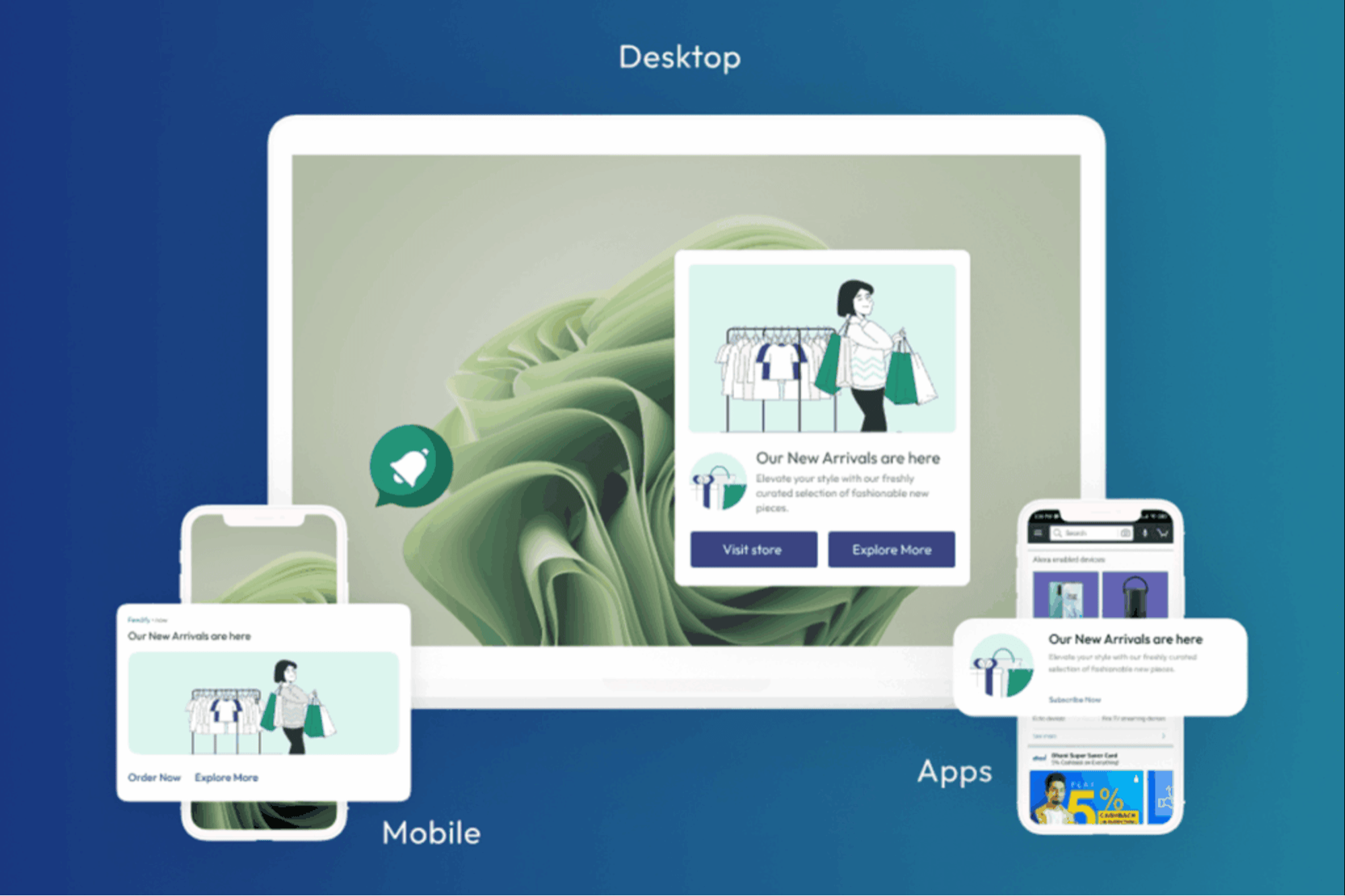


Why Top Brands Use Push Notifications to Boost Engagement

Disclosure: Our goal is to feature products and services that we think you’ll find interesting and useful. If you purchase them, Entrepreneur may get a small share of the revenue from the sale from our commerce partners.

Businesses that use mobile push notifications see up to an 88% boost in app engagement, while 65% of users come back within 30 days when push is enabled, according to data from conversion rate optimization firm Invesp. That kind of retention is every entrepreneur’s dream—and Feedify makes it easy to tap into.

Feedify puts a full suite of engagement tools into one sleek, cloud-based platform. For a limited time, you can get a lifetime subscription to a Feedify Push Notification Tool Rising Star plan on sale for $59.99 (reg. $450), featuring a robust toolkit covering two domains, mobile optimization, campaign auto‑responders, analytics, and more.

Want to send personalized web and mobile push messages based on visitor behavior? Check. Need exit‑intent popups or targeted newsletter campaigns? Also check. From welcome notes to abandoned-cart nudges and post‑purchase surveys, you can do it all with unlimited subscribers, unlimited notifications, and real‑time analytics. Just imagine firing off a tailored push message seconds after someone leaves your page—or asking for feedback right after a sale—and seeing the spark of customer connection that follows.

Trusted by over 10,000 businesses, Feedify makes targeting easy: segment users by behavior, launch surveys, collect after‑sale insights, monetize as a publisher—you name it. And every campaign comes with instant real‑time feedback so you can pivot faster than your competition.

This lifetime offer is built for ambitious professionals and small‑business owners aiming to streamline marketing without juggling multiple tools.

Grab lifetime access to Feedify’s Rising Star plan for 86% off at $59.99 for a limited time.

Feedify Push Notification Tool: Lifetime Subscription

See Deal

StackSocial prices subject to change.

Businesses that use mobile push notifications see up to an 88% boost in app engagement, while 65% of users come back within 30 days when push is enabled, according to data from conversion rate optimization firm Invesp. That kind of retention is every entrepreneur’s dream—and Feedify makes it easy to tap into.

Feedify puts a full suite of engagement tools into one sleek, cloud-based platform. For a limited time, you can get a lifetime subscription to a Feedify Push Notification Tool Rising Star plan on sale for $59.99 (reg. $450), featuring a robust toolkit covering two domains, mobile optimization, campaign auto‑responders, analytics, and more.

Want to send personalized web and mobile push messages based on visitor behavior? Check. Need exit‑intent popups or targeted newsletter campaigns? Also check. From welcome notes to abandoned-cart nudges and post‑purchase surveys, you can do it all with unlimited subscribers, unlimited notifications, and real‑time analytics. Just imagine firing off a tailored push message seconds after someone leaves your page—or asking for feedback right after a sale—and seeing the spark of customer connection that follows.

The rest of this article is locked.

Join Entrepreneur+ today for access.

https://www.entrepreneur.com/growing-a-business/why-top-brands-use-push-notifications-to-boost-engagement/494648


5 AI Tools Doing Overtime So You Can Run a Profitable Solo Business (Without Losing Your Mind)

Opinions expressed by Entrepreneur contributors are their own.

Most solo entrepreneurs are stuck doing everything themselves — chasing leads, managing content and drowning in admin. But the ones scaling to six and seven figures? They’re using AI to build a business that works without them.

In this video, you’ll discover five AI tools that helped me turn my one-person operation into a self-sustaining business engine:

  • The Automation Engine: Connect your systems and cut your task list in half — without writing a single line of code.
  • The Research Companion: Replace browser tab chaos with an AI assistant that remembers, summarizes and handles your day-to-day decisions.
  • The Strategic Advisor: Get instant clarity on what’s working, what’s not and where to focus — with your own AI-powered business consultant.
  • The Memory Machine: Capture every meeting, extract insights and auto-follow-up — so you never drop the ball again.
  • The Product Builder: Turn your ideas into real software or digital tools — without hiring a developer or writing a spec.

These aren’t shortcuts — they’re leverage. And when used together, they’ll help you reclaim your time, scale faster and stay focused on what actually grows your business.

If you’re ready to stop reacting and start scaling, this is the video to watch.

The AI Success Kit is available to download for free, along with a chapter from my new book, The Wolf is at The Door.

Most solo entrepreneurs are stuck doing everything themselves — chasing leads, managing content and drowning in admin. But the ones scaling to six and seven figures? They’re using AI to build a business that works without them.

In this video, you’ll discover five AI tools that helped me turn my one-person operation into a self-sustaining business engine:

  • The Automation Engine: Connect your systems and cut your task list in half — without writing a single line of code.
  • The Research Companion: Replace browser tab chaos with an AI assistant that remembers, summarizes and handles your day-to-day decisions.
  • The Strategic Advisor: Get instant clarity on what’s working, what’s not and where to focus — with your own AI-powered business consultant.
  • The Memory Machine: Capture every meeting, extract insights and auto-follow-up — so you never drop the ball again.
  • The Product Builder: Turn your ideas into real software or digital tools — without hiring a developer or writing a spec.

The rest of this article is locked.

Join Entrepreneur+ today for access.

https://www.entrepreneur.com/science-technology/5-ai-tools-doing-overtime-so-you-can-run-a-profitable-solo/494768


Meet the Person Who Invented Plastic that Dissolves in Water

Disclosure: Our goal is to feature products and services that we think you’ll find interesting and useful. If you purchase them, Entrepreneur may get a small share of the revenue from the sale from our commerce partners.

Everyone’s heard the warnings: The world produces 450 billion tons of plastic waste every year. It’s polluting our oceans and landfills, and it’s even invading our bodies. But what if we didn’t just recycle or “reduce” plastic use? What if we could make plastic disappear entirely?

That’s the idea behind Timeplast. And investors have just a few days left—until July 31—to back the company.

Developed by chemical engineer and former PepsiCo executive, Manuel Rendon, Timeplast’s patented tech looks like plastic, acts like plastic, and works in everything from packaging to agriculture to 3D printing. But unlike traditional plastics—or even “bioplastics”—it doesn’t take 1,000 years to break down. It fully dissolves in water, leaving behind no microplastics, toxins, or residue, the company says.

Think of it like what Tesla did to combustion engines, or what Impossible Foods did to meat. A complete reinvention of plastic itself.

Here’s why you shouldn’t miss out on the chance to invest.

Timeplast says it is truly the first of its kind

Most so-called biodegradable plastics aren’t what they claim to be. They may “break down” under industrial composting conditions. Think: high heat, special facilities, and long timelines. But even then, they leave behind microplastics and chemical residues.

Rendon witnessed this firsthand while working in global sustainability at PepsiCo. Billions of dollars were being spent on packaging changes that still created pollution. He knew it would take a radical shift to solve the plastic problem.

So he spent the next 10 years developing a patented water-soluble polymer designed to behave like plastic, without the toxic afterlife.

There’s no material like it, and the world is taking notice.

They’re unlocking a $1.3T plastics market

Timeplast’s materials are already being tested and sold in multiple industries. More than 1,000 paying customers have used the product. And demand continues to build as manufacturers look for ways to hit ESG goals, reduce waste costs, or avoid new microplastic regulations taking effect in the U.S. and Europe.

The company is also expanding their product line, with the recently unveiled Pabyss™ reactor. It’s a modular system that is designed to eliminate plastic waste entirely by accelerating the dissolution process. Think of it like a recycling system, but instead of grinding and melting plastic, it makes it vanish, the company says.

Pabyss™ is an early glimpse at Timeplast’s long-term vision of a closed-loop ecosystem that prevents plastic pollution from the start. And that vision is starting to gain traction, just as the regulatory and public pressure to act reaches a breaking point.

With real traction, strategic IP, and a massive market tailwind behind it, Timeplast is now opening the door to investors.

The Timeplast investment window is closing soon

Right now, Timeplast is accepting public investments to help scale operations and meet demand. They’re already receiving attention from Fortune 500 companies and selling out of products.

But what’s next could be even bigger, because their applications aren’t limited to plastic alone. Their potential ranges across packaging, agriculture, consumer goods, and industrial manufacturing.

With so much opportunity ahead, it helps to have a CEO who was instrumental in shaping the sustainability policy at one of the largest food and beverage companies in the world.

Investors right now have an opportunity to back a systemic shift.

But the current investment opportunity ends July 31 at 11:59 p.m. PT.

With demand surging, new global partnerships forming, and a growing spotlight on microplastic pollution, many believe Timeplast is positioned to become a defining company in the next wave of sustainable tech.

The clock is ticking.

Learn more and invest in Timeplast while the opportunity lasts.

This is a paid advertisement for Timeplast’s Regulation CF Offering. Please read the offering circular at invest.timeplast.com.

Everyone’s heard the warnings: The world produces 450 billion tons of plastic waste every year. It’s polluting our oceans and landfills, and it’s even invading our bodies. But what if we didn’t just recycle or “reduce” plastic use? What if we could make plastic disappear entirely?

That’s the idea behind Timeplast. And investors have just a few days left—until July 31—to back the company.

Developed by chemical engineer and former PepsiCo executive, Manuel Rendon, Timeplast’s patented tech looks like plastic, acts like plastic, and works in everything from packaging to agriculture to 3D printing. But unlike traditional plastics—or even “bioplastics”—it doesn’t take 1,000 years to break down. It fully dissolves in water, leaving behind no microplastics, toxins, or residue, the company says.

The rest of this article is locked.

Join Entrepreneur+ today for access.

https://www.entrepreneur.com/money-finance/meet-the-person-who-invented-plastic-that-dissolves-in-water/494763


President Donald Trump Signs the GENIUS Act to Make the U.S. the ‘Crypto Capital of the World’

President Donald Trump signed the GENIUS Act (Guiding and Establishing National Innovation for US Stablecoins Act) into law on Friday in a live ceremony. The legislation sets regulations for stablecoins and was passed in a bipartisan vote of 308 to 122.

At the signing ceremony, Trump said he wants to make the U.S. the “crypto capital of the world.” White House AI and Crypto Czar David Sacks said the law helps pave the way for American dominance in the crypto industry by “creating clear rules of the road” and updating “archaic” payment systems.

A stablecoin’s value is pegged to a fiat currency, in this case, the U.S. dollar. Cryptocurrencies like Bitcoin are not. The GENIUS Act makes it law that “permitted payment stablecoin issuers” must hold reserves for every dollar of stablecoins offered. A reserve can be “any government-issued asset approved by regulators,” such as bank deposits and short-term treasury bills.

“Congratulations to our GREAT REPUBLICANS for being able to accomplish so much, a record, in so short a period of time,” Trump wrote on Truth Social Friday.

Watch the ceremony, here:

[embedded content]

Related: From Tom Brady to Kevin O’Leary – See Who Lost Big in the Wake of the FTX Crypto Collapse

Join top CEOs, founders and operators at the Level Up conference to unlock strategies for scaling your business, boosting revenue and building sustainable success.

President Donald Trump signed the GENIUS Act (Guiding and Establishing National Innovation for US Stablecoins Act) into law on Friday in a live ceremony. The legislation sets regulations for stablecoins and was passed in a bipartisan vote of 308 to 122.

At the signing ceremony, Trump said he wants to make the U.S. the “crypto capital of the world.” White House AI and Crypto Czar David Sacks said the law helps pave the way for American dominance in the crypto industry by “creating clear rules of the road” and updating “archaic” payment systems.

A stablecoin’s value is pegged to a fiat currency, in this case, the U.S. dollar. Cryptocurrencies like Bitcoin are not. The GENIUS Act makes it law that “permitted payment stablecoin issuers” must hold reserves for every dollar of stablecoins offered. A reserve can be “any government-issued asset approved by regulators,” such as bank deposits and short-term treasury bills.

The rest of this article is locked.

Join Entrepreneur+ today for access.

https://www.entrepreneur.com/business-news/president-donald-trump-signs-genius-act-crypto-capital/494832


AI Is Changing Public Relations — Here’s How to Stay in Control

Opinions expressed by Entrepreneur contributors are their own.

Last week, I had to dig deep into a new client’s background — fast. They were in the middle of a substantial PR crisis, and time was not on our side.

In the past, I would’ve turned to Google and manually sifted through page after page of results. I’d look at their website, news mentions, social media activity, reviews and even obscure forum posts. The goal was always the same: get a full picture of who they are, how they operate and what’s already public that could help — or hurt — their reputation.

Doing that kind of research the old way can take hours.

Now, it’s far more efficient thanks to AI. Tools like ChatGPT, Claude and Grok can quickly summarize public information, giving me a snapshot in seconds instead of hours. But this shortcut comes with a big caveat: we also have to consider what these systems are saying about people and companies, and how they’ve come to those conclusions.

Large language models (LLMs), the tech powering these AI tools, are trained on massive datasets pulled from across the open web. That means your brand’s online presence isn’t just being seen by people anymore — it’s being interpreted and summarized by machines, too.

This changes the game for public relations.

Because while LLMs can be incredibly powerful, they’re still prone to hallucinations — a polite term for making things up. And if you’ve spent even five minutes with Google’s new AI Overviews (AIOs), you’ve seen it firsthand.

Some examples I’ve personally encountered in AIOs:

  • That Gouda is the best-selling cheese in the U.S.
  • That you should add non-toxic glue to pizza to keep cheese from sliding off
  • That drinking urine is an effective treatment for kidney stones

Related: Why AI-Forward Communication is the Future of Public Relations

Ridiculous? Absolutely. But it underscores a bigger issue: these systems can spread false or misleading information quickly and at scale.

Even with less extreme topics, hallucinations happen. I once asked Grok to summarize my background. It confidently told me I’d served in the Army Airborne. In reality? I was a Marine.

As more people rely on AI to answer questions they once typed into search engines, the accuracy and relevance of your brand’s presence in these models is becoming critical. Not only do you want to make sure the information is correct, but you also want your brand to show up at all. Ideally, you want to appear in answers about your industry, not just yourself.

So, how do you influence what these systems say? Unfortunately, it’s not as easy as feeding them your preferred narrative. If it were, AI tools would already be flooded by spam from low-quality marketers.

Instead, LLMs prioritize information from trusted sources across the web, and not all sources are weighted equally. Your company’s official website helps, but third-party credibility matters far more.

That’s why editorial media coverage remains the most powerful tool in modern PR — and it matters now more than ever. There are two core elements here: high-quality editorial features and press releases.

Editorial features — stories published by reputable media outlets that quote you or spotlight your work — carry the most weight. Why? Because they’re difficult to manipulate. Getting published requires a compelling topic, a unique perspective and often, relationships with journalists. You have to earn it. That’s exactly why LLMs treat this kind of coverage as a strong trust signal.

The more insight you share in those features, the better. If you’re quoted briefly, it suggests your voice is just one of many. But if your expertise shapes the bulk of the story, that sends a much stronger signal — both to readers and to the algorithms parsing it.

That’s also why it’s smart to pursue interviews and contributor content in addition to being quoted. These allow you to go deeper, share your thinking more fully and increase the likelihood that your perspective makes it into an AI summary.

Press releases still matter, too — but in a more limited way. They’re a paid channel, so anyone can publish them, but there’s still some editorial oversight. Editors at distribution services do basic fact-checking and screen for hyperbole before syndicating them to media outlets. The key is to make sure your press release is actually newsworthy. A strong release can also prompt journalists to cover your story further.

While LLMs pull data from various formats — text, audio, video — text-based articles still produce the fastest and most reliable impact when it comes to influencing AI responses.

Related: Yes, AI Might Take Your PR Job. Here’s What You Can Do About It.

In many ways, AI has transformed PR. But the fundamentals haven’t changed. You still need to earn high-quality media coverage. The difference is that now, those features are no longer just about reaching human audiences — they’re about training the machines that shape perception at scale.

The companies and individuals who recognize this shift and act on it now will gain a long-term advantage. Those who don’t? They’ll get left out of the conversation — by people and by AI alike.

Last week, I had to dig deep into a new client’s background — fast. They were in the middle of a substantial PR crisis, and time was not on our side.

In the past, I would’ve turned to Google and manually sifted through page after page of results. I’d look at their website, news mentions, social media activity, reviews and even obscure forum posts. The goal was always the same: get a full picture of who they are, how they operate and what’s already public that could help — or hurt — their reputation.

Doing that kind of research the old way can take hours.

The rest of this article is locked.

Join Entrepreneur+ today for access.

https://www.entrepreneur.com/growing-a-business/ai-is-changing-public-relations-heres-how-to-stay-in/492257


The CEO of the World’s Most Valuable Company Says This Would Be His College Major in 2025

What would Jensen Huang study if he were 20 years old again?

Nvidia’s 61-year-old CEO answered this question during a trip to Beijing on Wednesday, as reported by CNBC. Huang, who graduated from college two years early at the age of 20 and is now the CEO of the most valuable company in the world, said that the “20-year-old Jensen” would have “probably chosen more of the physical sciences” over “the software sciences.”

The physical sciences include disciplines that study non-living systems, such as physics, earth science, and chemistry. Software sciences, on the other hand, include fields like computer science and AI engineering.

Huang didn’t major in either of those areas. His LinkedIn profile shows that he graduated from Oregon State University in 1984 with a Bachelor of Science in Electrical Engineering. He received a Master’s in the same field from Stanford University in 1992. Electrical engineers make the physical computer hardware used by software engineers and developers.

Related: Nvidia CEO Says ‘100% of Everybody’s Jobs Will Be Changed’ Due to AI

Huang did not elaborate on why he would have picked the physical sciences over software engineering, but he has stated in the past that AI equalizes software development, allowing even non-programmers to generate code. At London Tech Week last month, Huang said that everyone can write code simply by prompting AI using natural language.

“There’s a new programming language,” Huang said at the event. “This programming language is called ‘human.'”

Huang has repeated the same message before. Last year, he said that AI would take over coding, making learning programming languages optional.

Nvidia CEO Jensen Huang arrives for a press conference in Beijing earlier this week. Photo by ADEK BERRY/AFP via Getty Images


Huang previously said that if he were in school today, the first thing he would do is “learn AI.” In a January interview on the podcast “Huge Conversations,” Huang said that students should be asking the question, “How can I use AI to do my job better?”

“Learning how to interact with AI is not unlike being someone who is really good at asking questions,” Huang said on the podcast.

He also said in the interview that he uses AI as a personal tutor to learn new things, program, write, and analyze concepts. Huang uses the $20 a month version of ChatGPT as a tutor and Perplexity’s AI search engine to learn more about subjects like biology.

Related: Nvidia’s CEO Says It No Longer Matters If You Never Learned to Code: ‘There’s a New Programming Language’

Meta CEO Mark Zuckerberg was also asked what students should study. In an interview last year with Bloomberg, Zuckerberg said that the most important skill young people should embrace is thinking “critically” and “learning values.”

Zuckerberg said in the interview that he hires new people based on their demonstrated ability to dive deep into a field and master it. Zuckerberg has been on a hiring spree lately, poaching AI experts from companies like OpenAI, Google, and Anthropic to build a new AI team.

Huang co-founded Nvidia in 1993 and has served as its CEO ever since. Nvidia is the biggest company in the world, with a market capitalization of $4.21 trillion at the time of writing.

Join top CEOs, founders and operators at the Level Up conference to unlock strategies for scaling your business, boosting revenue and building sustainable success.

What would Jensen Huang study if he were 20 years old again?

Nvidia’s 61-year-old CEO answered this question during a trip to Beijing on Wednesday, as reported by CNBC. Huang, who graduated from college two years early at the age of 20 and is now the CEO of the most valuable company in the world, said that the “20-year-old Jensen” would have “probably chosen more of the physical sciences” over “the software sciences.”

The physical sciences include disciplines that study non-living systems, such as physics, earth science, and chemistry. Software sciences, on the other hand, include fields like computer science and AI engineering.

The rest of this article is locked.

Join Entrepreneur+ today for access.

https://www.entrepreneur.com/business-news/nvidia-ceo-says-he-would-major-in-the-physical-sciences/494829


Amazon Ring Staff Reportedly Must Prove That They Use AI To Get Promoted

Ring founder Jamie Siminoff is back at Amazon after a two-year break, now leading the tech giant’s home security camera division as a VP. The division is called RBKS for its entities: Ring, Blink, Key (in-home delivery service), and Sidewalk (wireless network).

And according to an email viewed by Business Insider, if employees at RBKS want a promotion, their applications will now have to describe how they use AI at work. This is meant to reward “innovative thinking” and promote speed and efficiency, Siminoff wrote.

Related: ‘No Longer Optional’: Microsoft Staff Mandated to Use AI at Work

“When we combine innovative technology with our missions, we create something truly special,” Siminoff wrote in the email viewed by Business Insider.

Siminoff famously pitched his video doorbell company, then called “Doormat,” on “Shark Tank” in 2013 and left without a deal. Then, after the company was acquired in 2018 for a reported $1 billion by Amazon, he went back on the show, this time as a Shark investor, sitting alongside Kevin O’Leary and Mark Cuban, the same people who rejected him years prior.

Amazon isn’t the only tech giant that’s requiring the use of AI for promotions and performance reviews.

In June, Microsoft also began considering formal metrics for evaluating how much employees use AI during the workday.

Julia Liuson, president of the developer division at Microsoft, reportedly sent an email to managers that said “using AI is no longer optional,” and the time spent using internal AI tools, both in-house and from the competition, should be measured in employee performance reviews.

Related: Duolingo’s CEO Clarifies AI Stance After Backlash — Read the Memo

Join top CEOs, founders and operators at the Level Up conference to unlock strategies for scaling your business, boosting revenue and building sustainable success.

Ring founder Jamie Siminoff is back at Amazon after a two-year break, now leading the tech giant’s home security camera division as a VP. The division is called RBKS for its entities: Ring, Blink, Key (in-home delivery service), and Sidewalk (wireless network).

And according to an email viewed by Business Insider, if employees at RBKS want a promotion, their applications will now have to describe how they use AI at work. This is meant to reward “innovative thinking” and promote speed and efficiency, Siminoff wrote.

Related: ‘No Longer Optional’: Microsoft Staff Mandated to Use AI at Work

The rest of this article is locked.

Join Entrepreneur+ today for access.

https://www.entrepreneur.com/business-news/amazon-ring-founder-use-ai-if-you-want-a-promotion/494830


Guy Fieri Teaches His Team This Customer Service Secret — And It Can Unlock Unexpected Success For Your Business Too

On every episode of How Success Happens, I get to talk to awesome people and find out how they do what they do. This week, I sat down with the living embodiment of the word “awesome”: Guy Fieri.

I flew to Las Vegas to meet up with the Mayor of Flavortown himself at Customer Contact Week, a massive gathering of business and tech leaders showcasing the latest solutions, tools, and strategies for seamless customer operations across a variety of industries.

Related: Martha Stewart Shares the Tree She Most Identifies With and How It Shapes Her Business Mindset

We sat down with a bottle of his Santo Tequila and a container of tenders from his Las Vegas Chicken Guy! outpost and chatted about how the restaurateur, entrepreneur, TV star, and philanthropist got to where he is today. And importantly, how he is using his unique position to support restaurant industry workers, as well as first responders, law enforcement, and the military through his Guy Fieri Foundation.

Listen to our entire conversation here or watch the video above. Below are some highlights of our chat, which have been edited for length and clarity.

Subscribe to How Success Happens: Apple | Spotify | YouTube

What does the word “success” mean to you? How has that definition changed over time?
I think the word success for me means impact — having the energy and the connections and the empowerment to make really big things happen. My wife asked me what I’m going to do when I retire, what’s gonna be the end game? And I said, it’ll all be philanthropy. I was down at my house in Mexico for a week’s vacation, and a little restaurant on the beach had burned down. No insurance, the place was just destroyed. There was another restaurant in town that was closed on Tuesdays, so I went to the restaurant owner and said, “Hey, can I borrow your restaurant on Tuesday?” I grabbed my friend, and we did a pop-up in that spot. And in this little fishing village in Mexico, they raised $15,000 in one night for the owner and his displaced workers. That’s what success is.

Since we’re here during Customer Contact Week, can you share your best to entrepreneurs about leveling up the customer experience?
One of my favorite books is Dale Carnegie’s How to Win Friends and Influence People. I think people miss one of the points of the book, which is that you need to understand that everybody sees the world from their own perspective. The first thing I teach any of my team members is that when they are dealing with a guest who is having a negative experience, remember it’s not personal. You didn’t screw up the steak. You didn’t make the table reservation late. But that does not relieve you of the responsibility to engage that guest. What is the first thing anybody wants to hear when something goes wrong? I am so sorry. That’s very frustrating, and I am here to try to remedy this the best I can. Offer them a seat at the bar, get them something to drink. Engage. People tend to shut down and get defensive in those situations. We feel attacked. But you need to give your customers consideration and treat them as you would want to be treated. That is transformative.

Related: Bar Rescue’s Jon Taffer Shares the Small Business Practice That Drives Him Nuts

We’re talking here on Friday the 13th Eve. Are you superstitious?
I’m not superstitious. But I’m very spiritual, though. I never believed in the afterlife or any of that kinda stuff, but when my little sister passed away, I started to get these feelings. I needed to talk to her. I went to a medium, and it was crazy, so many people from my past were showing up. There’s no way anybody could make this up. Someone could study you for 10 years, and there’s no way they can say the things to you that are being said. I asked if my sister was going to show up, and the medium said, “She’s been here the whole time.” And I said, “Why isn’t she talking to me?” She said, “Oh, your sister says she talks to you every day.” We were raising my nephew; he was 10 when she passed away, and she said she was with us the whole time. And that just connected everything for me. Here’s my theory: a baby in a bassinet can’t talk or understand us, but there’s some connection that happens when we lean in. It’s there. So I wonder if we are the baby in the bassinet, and there is some higher power that we connect with, even if we can’t speak or understand.

Listen to the rest of the conversation here.

About How Success Happens

Each episode of How Success Happens shares the inspiring, entertaining, and unexpected journeys that influential leaders in business, the arts, and sports traveled on their way to becoming household names. It’s a reminder that behind every big-time career, there is a person who persisted in the face of self-doubt, failure, and anything else that got thrown in their way. Subscribe now on Apple, Spotify, YouTube or wherever you get your podcasts.

https://www.entrepreneur.com/leadership/guy-fieri-shares-his-customer-service-success-secret/494760


Astronomer’s CEO and HR Chief Were Caught in a Coldplay Kiss-Cam Scandal. Here’s How the Unicorn Tech Company Has Responded So Far.

It was the Coldplay kiss cam moment that caused cringes around the world.

The CEO of a unicorn tech company and his head of human resources appear to have been caught on camera in a not-so-work-appropriate moment that has since gone viral. Now the two executives, Astronomer CEO Andy Byron and Chief People Officer Kristin Cabot, are facing public (and workplace) backlash.

What happened at the Coldplay concert?

On Wednesday evening at Gillette Stadium near Boston, a popular segment of Coldplay’s show took an unexpected turn. The band’s camera crew singles out people in the crowd and puts them up on the jumbotron, and lead singer Chris Martin improvises a song. This time around, the camera landed on a snuggling couple who quickly tried to hide their faces. Martin quipped, “Either they’re having an affair or they’re just very shy.”

A video of the moment quickly went viral, and as the video spread, it revealed that Martin might have been on to something. The man in the video was Byron, and the woman was the company’s human resources chief, Cabot. The problem? Byron is married to someone else.

What is Astronomer?

Astronomer is a private data infrastructure startup that reached “unicorn” status in 2022 with a $1 billion or more evaluation. According to the company’s LinkedIn page, “Astronomer empowers data teams to bring mission-critical analytics, AI, and software to life.”

How does a CEO scandal like this affect the workplace?

The incident creates potential legal troubles and a crisis of leadership for the company, David Rice, HR expert at People Managing People, told Entrepreneur via email.

“The big issue is the example that it sets. Obviously, a CEO should know better. But the fact that it’s with the chief people officer is even worse,” Rice wrote. “She should definitely know better, and that is going to lead to a complete mistrust in HR, no matter what happens next.”

“Both are on the hook here, and no online apology is going to make this go away,” says Rice, pointing out why companies need to have very clear HR policies about inter-office relationships and the consequences of not adhering to them.

Has Astronomer responded?

An Astronomer spokesperson told Newsweek and the New York Post that the supposed apology from Byron that has been circulating online is fake. So far, that has been the company’s only comment, as of press time.

Variety reports that the fake apology from Byron was posted on X, with the imposter writing that they wanted to apologize to his wife, family, and colleagues, and noted, “I am a Coldplay fan. And not just of the first two albums. I also like the recent stuff.”

Another fake post, attributed to Coldplay, read: “Starting with our next show, we’re introducing camera-free audience sections for people and their sidepieces.”

Related: IBM Replaced Hundreds of HR Workers With AI, According to Its CEO

It was the Coldplay kiss cam moment that caused cringes around the world.

The CEO of a unicorn tech company and his head of human resources appear to have been caught on camera in a not-so-work-appropriate moment that has since gone viral. Now the two executives, Astronomer CEO Andy Byron and Chief People Officer Kristin Cabot, are facing public (and workplace) backlash.

What happened at the Coldplay concert?

The rest of this article is locked.

Join Entrepreneur+ today for access.

https://www.entrepreneur.com/business-news/astronomer-ceo-hr-head-face-coldplay-kiss-cam-scandal/494823