‘First Piece of Advice I Gave My Kids About Money’: Kevin O’Leary Says You Can Be a Millionaire on a $65,000 Salary. Here’s How.

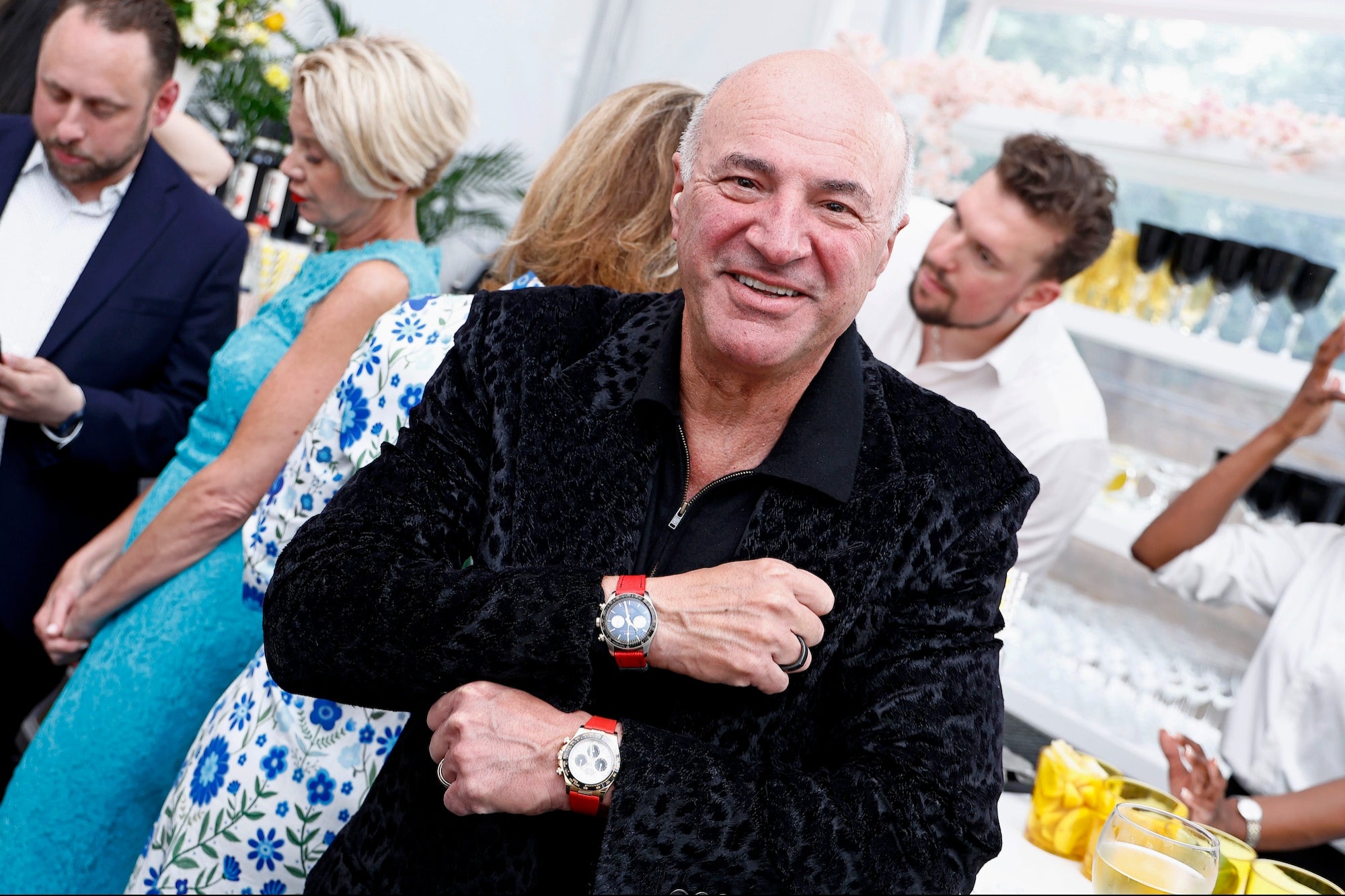
Kevin O’Leary has been vocal about saving money for years. In 2024, he said people who spend $5 on coffee are “idiots” and doubled down on his disdain for wasteful spending earlier this month — “I can’t stand it when I see kids that are making 70 grand a year spending $28 for lunch,” he said on the “Diary of a CEO” podcast.

Now, in a post on X on Monday, the longtime “Shark Tank” investor explained why he feels this way, noting that his children received the same advice at a very young age.

Related: ‘Can Make a Ton of Money’: Kevin O’Leary Says This Is the Most Overlooked Startup Opportunity Right Now

“What’s the first piece of advice I gave my kids about money, and the last piece of advice, and the advice I always give them? Don’t spend it,” O’Leary said. “Save it. Invest it. Let it compound.”

O’Leary said that the market gives 8% to 10% interest, so take a set amount from every paycheck, gift, or income of any kind, and invest it.

“Take 15% of every paycheck, I don’t care how big it is. Or any gift Granny gives you. Or anything you get in a side hustle, and invest it,” O’Leary said in the video.

With this system, O’Leary says that by the time you are 65, you’ll have “millions in the bank, even if you only have a salary of $65,000.”

However, there is one caveat to it all: “Just don’t buy crap you don’t need,” he said. (And we know he means $5 coffee and $15 desk salads.)

Related: Here’s How to Get an Investment for Your Business, According to ‘Sharks’ Kevin O’Leary, Barbara Corcoran, and Daniel Lubetzky

Join top CEOs, founders and operators at the Level Up conference to unlock strategies for scaling your business, boosting revenue and building sustainable success.

https://www.entrepreneur.com/business-news/kevin-oleary-how-to-be-a-millionaire-by-retirement/494651


Here’s How Much a Typical Microsoft Employee Makes in a Year

How well does it pay to work at Microsoft?

According to federal filings, seen by Business Insider on Tuesday, Microsoft is compensating software engineers from $82,971 to $284,000 in base salary. It’s slightly lower than other tech giants; Google pays software engineers from $109,180 to $340,000, and Meta pays anywhere from $120,000 to $480,000.

Related: Here’s How Much a Typical Salesforce Employee Makes in a Year

Microsoft product managers can make up to $250,000, while product designers can take home up to $208,058. Data scientists are offered salaries of up to $274,500 at the tech giant, as business analysts are paid up to $191,580.

The data is drawn from 5,400 documents Microsoft filed with the U.S. Department of Labor during the first quarter of 2025. The filings are required when Microsoft hires foreign workers through the H-1B visa program, which allows highly skilled professionals to work in specialty occupations.

The documents show the base annual salaries awarded to H-1B visa workers, excluding additional compensation in the form of signing bonuses and stock options.

The typical Microsoft employee makes nearly $200,000. A mid-level employee at Microsoft made $193,744 for the fiscal year 2024, per a filing the company submitted to the U.S. Securities and Exchange Commission (SEC) in December.

According to the H-1B filings, Microsoft pays other roles as follows:

  • Business Program Manager: $102,380 to $195,100
  • Cloud Network Engineer: $122,700 to $220,716
  • Customer Experience Engineer: $126,422 to $239,585
  • Data Analyst: $132,385 to $205,000
  • Electrical Engineer: $138,995 to $247,650
  • Research Scientist: $146,054 to $208,000
  • Technical Program Manager: $120,900 to $238,000

The SEC filing showed that Microsoft CEO Satya Nadella received an annual total compensation of $79.1 million in 2024, or 408 times more than that of the median employee. Stocks comprised most of Nadella’s compensation.

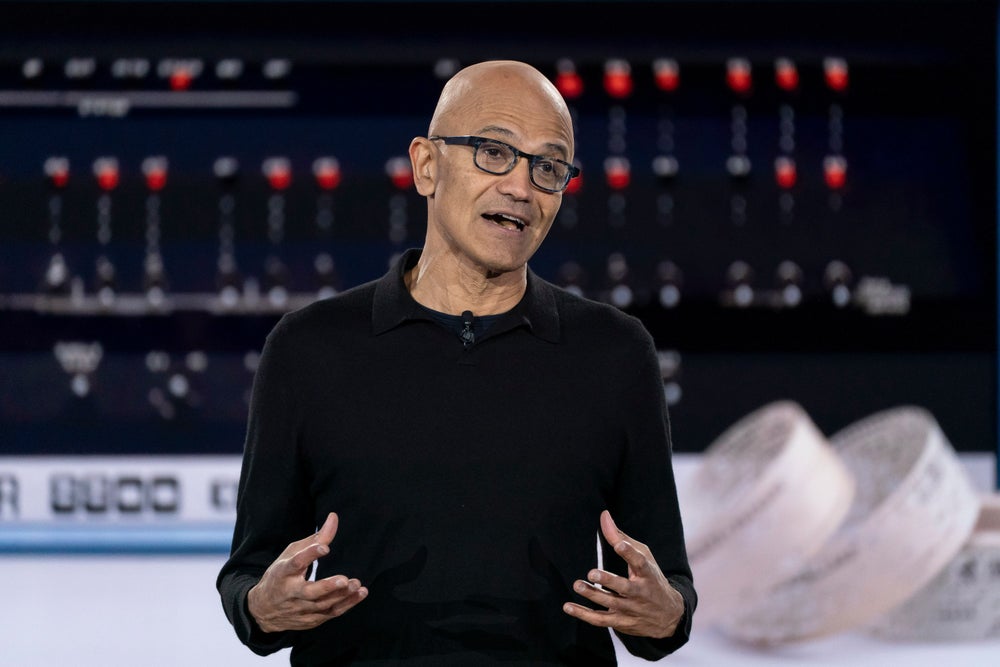
Microsoft CEO Satya Nadella made nearly $80 million in 2024. Photographer: David Ryder/Bloomberg via Getty Images

In comparison, Google CEO Sundar Pichai earned over $10.7 million in 2024, roughly 32 times more than the $331,894 earned by the median Google employee last year.

Related: Here’s How Much a Typical Nvidia Employee Makes in a Year

Microsoft recently laid off thousands of employees, including 6,000 employees in May. Earlier this month, the company announced that it would be cutting an additional 9,000 workers, or around 4% of its workforce.

Microsoft is one of the most valuable companies in the world, second only to Nvidia, with a market value of $3.769 trillion at the time of writing.

For the full list of roles and salaries at Microsoft for H-1B workers, click here.

Join top CEOs, founders and operators at the Level Up conference to unlock strategies for scaling your business, boosting revenue and building sustainable success.

https://www.entrepreneur.com/business-news/how-much-do-microsoft-employees-make-salaries-revealed/494647


4 Surprising Patent Myths That Could Cost You Big — What You Need to Know Now

Opinions expressed by Entrepreneur contributors are their own.


When people hear the word “patent,” they often think of complicated legal jargon or massive tech companies. As defined by the World Intellectual Property Organization (WIPO), a patent is an exclusive right granted for an invention that provides inventors with legal protection. But whether you’re a solo entrepreneur, a scientist, or a small business owner, patents can play a crucial role in protecting your unique ideas and innovations. For me, patents have been a very personal part of my journey as an entrepreneur and scientist, especially in my pursuit of protecting my ideas and leaving a lasting impact with my work.

The world of patents is a complicated one, with a number of requirements that anyone looking to file must meet. Additional complexities come into the mix depending on the country you’re filing in. For readers who are considering protecting their own inventions or products, understanding these nuances is key. With so many moving parts, it’s no surprise that there are a number of widespread myths surrounding U.S. patents in particular. These myths can lead to confusion and misunderstandings, making it even more intimidating to begin the patent process.

I’ve authored multiple patents, many rooted in bioscience, detox technology and environmental sustainability. And along the way, I’ve uncovered some pretty surprising truths — and debunked quite a few myths — about how the U.S. patent system really works. Whether you’re just starting to explore patents or already in the process, the best way to break down common myths about U.S. patents is to debunk them with facts.

Below, I take a look at four U.S. patent myths and address the real truth behind them to help you make better informed decisions related to your own patents, so you can protect your ideas and bring your innovations to life.

Related: How to Identify the Patent-Worthy Innovations in Your Business

Debunking four U.S. patent myths

There are a number of myths surrounding U.S. patents, from the length of patent validity to the actual steps of the patent filing process. One that’s especially persistent is the idea that having a patent automatically means you will make money. I wish it were that simple. If you’re an innovator hoping to monetize your invention, understanding this distinction will save you time and disappointment.

A patent is just one part of the bigger picture — it’s a protective tool, not a guarantee of profit. You still need a solid plan, strong partnerships and the right timing to actually bring that innovation to life. Let’s clear up four common U.S. patent myths to provide you with a clearer understanding of what a patent can actually do for your journey.

Myth 1: There is only one kind of U.S. patent

There are actually three types of U.S. patents that you can file for. The United States Patent and Trademark Office (USPTO) lists the three types of patents as follows:

  • Utility: For new or improved processes, machines and inventions.
  • Design: For new, original and ornamental designs, such as the shape or pattern of a useful item.
  • Plant: For new kinds of plants invented or discovered through asexual reproduction.

The specific type of U.S. patent you’ll want to file for will depend on your idea, invention or innovation. Before you begin the patent process, start with a deep dive into what’s already out there. A thorough patent search can save you a lot of time and frustration. Then, make sure you’re clear on what kind of patent you need — utility, design or plant — because each has a different purpose and process. For you, this means your invention’s unique features will dictate your approach, so getting this step right early is critical.

Myth 2: You need to be a lawyer or tied to a large company to receive a patent

This is one of the biggest myths I ran into early on, and it’s simply not true. While it helps to have legal experts involved, especially when you’re trying to protect your work globally, many of my patents came from deeply personal research and experiences.

I was hands-on with every single step, from the science to the strategy. You can absolutely be an independent innovator and still protect your ideas. You don’t need a massive machine behind you — just a clear vision, dedication and the right guidance. So, if you’re worried you don’t “fit the mold” of who can file patents, rest assured that many successful inventors started exactly where you are now.

Myth 3: Patents are valid forever

It’s not surprising that this myth is popular, especially given how confusing the different types of U.S. patents can be to the general public. Tie in the legal complexities of patents, and it’s easy to see how patent protection periods get lost in the mix. Patents are not valid forever. The three types of U.S. patents all have different lengths of validity. According to the USPTO, utility and plant patents have a period of up to 20 years “from the date the first non-provisional application for patent was filed.” A design patent is valid for a period of 15 years from the date it’s granted.

If you’re considering your patent as a long-term asset, it’s important to plan accordingly. Knowing the expiration timeline helps you strategize how to maximize the value of your invention while your patent is active.

Related: Unlocking the Market Potential of Your Patent Portfolio — A Guide for Entrepreneurs

Myth 4: A U.S. patent protects my idea/invention globally

In 2023, the U.S. was second behind China as the country with the most patent applications filed worldwide. U.S. patent applications totaled 518,791 that year. Any patents filed in the U.S. that are granted will provide legal protection within the country, not globally.

Patents are territorial rights, meaning the protections a patent provides are only applicable in the country where the patent is filed and granted. But that’s not to say you can’t protect your idea or invention worldwide —you can think globally. If your invention has the potential to help people outside the U.S., explore international patent options early. You may need to apply in individual countries or use international systems like the Patent Cooperation Treaty (PCT).

I’ve learned that having a team that understands both the science and the legal side makes everything smoother and more successful when seeking international patent coverage. For innovators like you aiming to expand your impact, early global strategy can be a game-changer.

For anyone who’s looking to protect their ideas, seeking a U.S. patent is a crucial step to take. And by debunking the myths and misconceptions that surround them, you’ll be able to make better informed decisions as you start the patent process for yourself. But remember, filing a patent isn’t just about protecting your idea — it’s about building a legacy. Every time I’ve submitted an application, I’ve done it knowing I was adding something meaningful to the world. And for me, that makes every challenge and every late-night research session worth it. If you’re on a similar path, know that your dedication to protecting your ideas today could lead to innovations that change tomorrow.

Join top CEOs, founders and operators at the Level Up conference to unlock strategies for scaling your business, boosting revenue and building sustainable success.


When people hear the word “patent,” they often think of complicated legal jargon or massive tech companies. As defined by the World Intellectual Property Organization (WIPO), a patent is an exclusive right granted for an invention that provides inventors with legal protection. But whether you’re a solo entrepreneur, a scientist, or a small business owner, patents can play a crucial role in protecting your unique ideas and innovations. For me, patents have been a very personal part of my journey as an entrepreneur and scientist, especially in my pursuit of protecting my ideas and leaving a lasting impact with my work.

The world of patents is a complicated one, with a number of requirements that anyone looking to file must meet. Additional complexities come into the mix depending on the country you’re filing in. For readers who are considering protecting their own inventions or products, understanding these nuances is key. With so many moving parts, it’s no surprise that there are a number of widespread myths surrounding U.S. patents in particular. These myths can lead to confusion and misunderstandings, making it even more intimidating to begin the patent process.

The rest of this article is locked.

Join Entrepreneur+ today for access.

https://www.entrepreneur.com/growing-a-business/4-surprising-patent-myths-that-could-cost-you-big-what/492234


The 2025 Business Guide to Using Reddit Effectively

Opinions expressed by Entrepreneur contributors are their own.

With over 1.2 billion monthly active users and a growing presence in Google’s search results, Reddit has quietly become one of the most powerful drivers of brand visibility.

Customers are no longer searching only on Google. Many are typing in your brand name plus “Reddit” to tap into the platform’s unfiltered feedback and peer-to-peer advice. They want to know what real people are saying about your product, so much so that Reddit’s appearance in Google search results has jumped considerably over the last year.

If you’re not showing up on Reddit — intentionally and authentically — you’re not in control of your own reputation.

What is Reddit, and why is it becoming an influential channel?

Reddit is a user-generated content (UGC) platform divided into thousands of subreddits — topic-specific communities moderated by users. These are highly active contributors, critics and vocal fans.

As of 2025, Reddit sees more than 97 million daily active users, 365 million weekly and 1.2 billion monthly. That’s nearly triple the 430 million monthly users it had in 2019. Its appeal has expanded well beyond the tech-savvy demographic. Everyone from car shoppers to CFOs now turns to Reddit for research and peer insights.

Related: ‘Faster, Smarter, and More Relevant’: Reddit Tests AI That Combs the Site For You

Why Reddit matters for your brand

Search behavior is changing. Users trust content that sounds like them — language from peers, not brands. That’s why Google, Bing and AI search tools are increasingly surfacing Reddit content as authoritative responses.

But visibility is only part of the equation.

Reddit also functions as a brand barometer. A single negative comment can spin into dozens of upvoted replies. A helpful answer from a customer support rep can earn goodwill that outlasts a hundred emails. It’s all about steering conversations at the moments that matter most.

And Reddit’s impact is sticky. Unlike social feeds where posts disappear in a matter of hours, high-ranking Reddit threads can stay visible — and relevant — for years. They show up in organic search. They’re indexed by AI. They’re cited in follow-up discussions. In short: They last.

Related: How to Keep Eyes on Your Business Even When Google’s Algorithm Changes, According to a Marketing Expert

What makes Reddit SEO and marketing unique

Marketing on Reddit is unlike any other platform. The audience is sharp, opinionated and allergic to fluff. What works here often runs counter to what succeeds elsewhere:

  • No spray and pray: Broad messaging won’t land. You need specificity.
  • No brand gloss: Highly produced content is viewed with suspicion.
  • No shortcuts: One-off posts get ignored or flagged. Trust is cumulative.

Redditors value honesty, participation and domain knowledge. That makes it one of the most rewarding platforms for subject matter experts, but one of the harshest for brand reps who show up just to push product. Effective Reddit marketing starts with showing up where your audience already is and contributing to the conversation as a peer, not as a sponsor.

How to leverage Reddit

Done right, Reddit supports nearly every pillar of your marketing stack:

  • Search visibility: Targeted engagement can help you rank for branded and unbranded queries, especially for long-tail and product-related queries.
  • Content strategy: Reddit surfaces real questions and unmet needs. Treat this as fuel for content that resonates with your target audience.
  • Product development: Threads highlight where your offering falls short or exceeds expectations. It’s a goldmine for refining features and messaging.
  • Reputation management: Active, authentic responses from branded accounts can clarify misinformation, defuse criticism and reframe the narrative.
  • Trust-building: Showing up regularly without selling earns credibility. Over time, that translates into influence.

You can’t fake it on Reddit. But if you’re willing to do the work, the payoff — traffic, loyalty, influence — is unusually durable.

Building your Reddit marketing strategy

Reddit success is iterative. It’s a slow burn, not a viral hit. That’s why we recommend a three-phase approach to grow your brand on the platform: Crawl-Walk-Run.

Crawl

Start slow. This phase is about becoming fluent in Reddit’s culture. Identify the subreddits where your audience gathers and begin reading, not posting. Pay attention to tone. Take note of the questions that get thoughtful responses and which get buried. Figure out what users consider helpful and what gets flagged.

Set up one to three branded accounts, ideally with usernames that match your business identity but sound human, not robotic. You’re not here to drop links. You’re here to observe and engage lightly. Upvote useful content. Reply to a thread only when you can add meaningful context or value. Prioritize relevance over reach.

Reddit doesn’t reward flashy entrances. At this stage, your success depends on whether users accept you as a participant. If you rush this phase, you risk being flagged or shadowbanned. Take the time to learn the language before you speak.

Related: I Trusted the Wrong Marketing Metrics for Years — Here’s What I Track Now Instead

Walk

Now that you’ve got the context, you’re ready to be more active. This is when you shift from listening to joining the conversation.

Start responding to questions related to your expertise. Share insights and experiences. Reference tools or tactics that have worked for you, but avoid sounding like a commercial. When you do mention your brand, keep it natural. For example, you might share it as one possible solution among many.

At this stage, start tracking mentions of your brand. Tools like Brandwatch or native Reddit search can help you monitor conversations and jump into relevant threads. Address questions. Clarify misinformation. Say thank you to users who recommend you.

This is also the stage to test your content pillars — recurring themes that align with what users care about and what your brand knows best. That might mean sharing security best practices if you’re in fintech or productivity hacks if you’re in SaaS. The key? Show up regularly. Respond thoughtfully. And don’t overreach.

Run

Once your brand is recognized and respected in key subreddits, you’re ready to scale. The “Run” phase is about building infrastructure that supports deeper engagement.

Launch a branded subreddit where your audience can ask questions, share tips or report issues. Think of it as your own space within Reddit. This gives you a centralized place to engage while maintaining a transparent, community-first tone.

Host ask-me-anything (AMA) sessions with team members — founders, product leads or subject matter experts. This is a chance to show up as real humans. Just make sure your participants are prepared. Redditors ask sharp questions, and canned answers won’t cut it.

Explore Reddit Ads to amplify high-performing organic posts. Native ad formats can help you reach new users without sacrificing authenticity, as long as your content adds value.

At this stage, you’ll likely need to participate daily, moderate in real time and coordinate with your social, customer support and PR teams. Reddit isn’t just part of your marketing stack anymore. It’s a core channel that deserves real resourcing.

Best practices and common pitfalls

Reddit isn’t a place where you can repurpose your Twitter threads or recycle blog copy. It’s a space that demands sincerity and restraint. Here’s what to do (and what to avoid):

What to do:

  • Be upfront about who you are and who you represent. Authenticity builds trust.
  • Study each subreddit’s rules before participating. Respect is a must if you want to gain traction on the platform.
  • Focus on being useful. Solve real problems rather than pitch products.
  • Monitor the impact of your activity, both on the platform and in search rankings.
  • Commit to regular engagement. Relationships don’t form overnight.

What to avoid:

  • Don’t overproduce your content. Slick visuals or overly polished videos can feel out of place.
  • Ignoring context is a recipe for disaster. What works in r/marketing may get deleted in r/startups.
  • Don’t go silent for long stretches. Inconsistency reads as inauthentic.
  • Don’t make promises you can’t back up. Reddit users remember, and they will follow up.
  • Boilerplate, copy-paste responses are a fast track to trouble. Reddit can spot scripted replies instantly. If it feels canned, chances are it’ll get flagged or roasted.

Measuring Reddit impact

You can’t manage what you don’t measure. Here are the most relevant metrics to track as you scale your Reddit presence:

  • Brand mentions (volume and sentiment)
  • Comment upvotes and engagement rates
  • Thread longevity and search visibility
  • Traffic from Reddit to your site (via tagged links or direct)
  • Conversions or assisted conversions from Reddit visitors

Look beyond vanity metrics. A single, high-impact comment in the right thread might outperform a paid campaign in both reach and authority.

Tools that can help with measuring these metrics include:
If you’re serious about measuring Reddit’s impact, you need more than just upvotes and comments. Here are some tools to level up your tracking game:

1. Brand24 or Mention
Use these for tracking brand mentions across Reddit (and the rest of the web). They pull in volume, sentiment, and trending conversations so you’re not flying blind.

2. Reddit Keyword Monitor Pro
This tool is tailor-made for Reddit. Set up alerts for keywords or brand names and get real-time updates when they’re mentioned. Ideal for timely engagement.

3. Google Analytics (GA4)
Track traffic and conversions from Reddit. Set up UTM parameters to see exactly what’s driving clicks and sales—or where your funnel’s leaking.

4. Ubersuggest
While it’s more SEO-focused, Ubersuggest can still show you if Reddit links are helping your pages rank or if any backlinks are giving you SEO juice.

5. Hypefury or Buffer
If you’re syndicating Reddit insights to other platforms (or vice versa), tools like these help schedule and measure cross-platform performance.

6. Sprout Social
This one’s more for social listening and engagement reporting. If Reddit is part of a broader strategy, you’ll want centralized reporting.

Conclusion

Reddit is now an essential part of the digital marketing ecosystem. It shapes search results. It informs buying decisions. And it holds unmatched power for gauging brand sentiment.

Ignoring it gives others the microphone.

But for those willing to contribute with humility, value and consistency, Reddit offers reach and relevance.

Start now. Your competitors already have.

https://www.entrepreneur.com/social-media/everything-you-need-to-know-about-reddit-for-businesses-in/494551


Lawmakers Introduced a Bill to Make the Current Version of the Joint Employer Rule Permanent. Here’s What It Means for the U.S. Franchise Industry.

Franchise owners could soon see relief from one of the industry’s most contentious legal issues: the joint employer standard. A bill working its way through the U.S. House of Representatives aims to permanently define when two businesses can be considered joint employers — an issue with major implications for the more than 800,000 franchise establishments across the country. Together, those businesses generate hundreds of millions in annual economic output and support close to nine million jobs in the U.S.

Related: Considering franchise ownership? Get started now to find your personalized list of franchises that match your lifestyle, interests and budget.

The Save Local Business Act, sponsored by Rep. James Comer (R-KY), would lock in the current, narrower joint employer definition that requires “direct and immediate control” over essential terms of employment. This would replace the shifting regulatory standards that have bounced back and forth for more than a decade, depending on which party controls the National Labor Relations Board (NLRB).

At stake is the legal relationship between franchisors and franchisees. Under a narrow joint employer standard, franchisees are considered independent operators responsible for hiring, firing, scheduling and supervising their own employees. But under broader definitions — like the one the NLRB attempted to implement in 2023 — franchisors could be held liable simply for having the potential to influence those decisions, even if they never exercised that power.

Related: ‘Send a Man Next Time’: How an Entrepreneur and Her Daughters Built a $2.5 Million Franchise in a Male-Dominated Field

The 2023 rule faced immediate backlash from the business community, including franchise owners, labor attorneys and trade organizations, led by the International Franchise Association. Many argued that it was too vague and broad, leaving employers uncertain about their legal responsibilities. A federal judge struck down the rule in March 2024, calling it overly expansive and difficult to enforce.

Despite that legal win for franchise businesses, the concern remains that future administrations could revive similar language. The Save Local Business Act is designed to prevent that by codifying the narrower standard into federal law.

Previous attempts to expand the joint employer standard have had measurable economic consequences. When a broader rule was adopted in 2015, the franchise sector saw an estimated $33 billion in lost output, according to IFA research.

Related: I Walked Away From a Corporate Career to Start My Own Small Business — Here’s Why You Should Do the Same

The uncertainty has also made some franchisors more hesitant to support or expand their franchise networks. Under a broader rule, offering training, guidance or shared HR tools could expose them to legal liability, undermining the collaborative model that helps local owners succeed.

Supporters of the new bill argue that locking in a clear, consistent joint employer definition would restore confidence for franchise operators, investors and employees alike. They say the current model balances brand standards with local control and allows small business owners to grow within a proven system.

Related: 3 Lessons I Learned Selling My Billion-Dollar Company

Opponents of the bill, including some labor advocates, argue that the narrow standard makes it harder for workers to hold the appropriate parties accountable in cases of labor violations. They believe companies that benefit from franchise labor should also share in the responsibility.

Still, for most franchise businesses, the issue is about clarity, not politics. Whether they run gyms, restaurants, home services or child care centers, local owners are looking for regulatory stability so they can plan for growth without fear of surprise liability.

The Save Local Business Act now heads to committee and may be folded into broader labor or small business legislation later this year. Whether or not it passes, the debate over who qualifies as a joint employer is likely to remain a flashpoint in labor policy — and a top priority for the franchise sector heading into 2025.

Join top CEOs, founders and operators at the Level Up conference to unlock strategies for scaling your business, boosting revenue and building sustainable success.

https://www.entrepreneur.com/franchises/congress-moves-to-clarify-joint-employer-rule/494610


Nvidia CEO Says ‘100% of Everybody’s Jobs Will Be Changed’ Due to AI

In a new interview, Nvidia CEO Jensen Huang says AI is “the greatest technology equalizer” the world has ever seen — and that “100% of everybody’s jobs will be changed” as a result.

Huang told CNN‘s Fareed Zakaria on Sunday that AI was an “equalizer,” meaning that it “lifts” people who aren’t well-versed in technology to be able to use it. Huang said ChatGPT, an AI chatbot with over 500 million global weekly users, was an example of how people can easily use AI with little to no formal training in interacting with it.

“Look at how many people are using ChatGPT for the very first time,” Huang told Zakaria. “And the first time you use it, you’re getting something out of it… AI empowers people; it lifts people.”

Related: Here Are the 10 Highest-Paying Jobs with the Lowest Risk of Being Replaced By AI: ‘Safest Jobs Right Now’

AI results in people being able to do more with the technology than they would have without it, Huang said. He elaborated that he was “certain” that the “work that we do in our jobs” would be dramatically transformed due to AI.

Huang, who has been leading Nvidia as CEO since co-founding it in 1993, said his own work has changed because of AI.

“The work will change,” Huang said in the interview. “My job has already changed. The work that I do has changed, but I’m still doing my job.”

Huang said that “some” jobs would be lost because of AI, but “many” jobs would be created thanks to the technology. He predicted that AI would result in productivity gains across industries, lifting society as a whole.

Nvidia CEO Jensen Huang. Photo by Chesnot/Getty Images

Huang’s predictions are less dire than those of Dario Amodei, the CEO of $61.5 billion AI startup Anthropic. In May, Amodei told Axios that within the next five years, AI could wipe out half of all entry-level white-collar jobs and cause unemployment to rise to 10% to 20%. In March, he stated that AI would write “all of the code” for companies within a year.

Adam Dorr, research director at the think tank RethinkX, stated that by 2045, AI and robotics could make human jobs obsolete.

“We don’t have that long to get ready for this,” Dorr told The Guardian last week. “We know it’s going to be tumultuous.”

Related: ‘Fully Replacing People’: A Tech Investor Says These Two Professions Should Be the Most Wary of AI Taking Their Jobs

In a new interview, Nvidia CEO Jensen Huang says AI is “the greatest technology equalizer” the world has ever seen — and that “100% of everybody’s jobs will be changed” as a result.

Huang told CNN‘s Fareed Zakaria on Sunday that AI was an “equalizer,” meaning that it “lifts” people who aren’t well-versed in technology to be able to use it. Huang said ChatGPT, an AI chatbot with over 500 million global weekly users, was an example of how people can easily use AI with little to no formal training in interacting with it.

“Look at how many people are using ChatGPT for the very first time,” Huang told Zakaria. “And the first time you use it, you’re getting something out of it… AI empowers people; it lifts people.”

The rest of this article is locked.

Join Entrepreneur+ today for access.

https://www.entrepreneur.com/business-news/nvidia-ceo-ai-will-change-everyones-jobs-including-my-own/494599


“I Never Managed a Bar, Let Alone Opened a Place’: How This Musician Created His Dream Venue and Built a Thriving Nightlife Business

David Handler embodies the classic line: “If you build it, they will come.”

After graduating from the Manhattan School of Music, the violinist and composer wasn’t happy with the spaces available for audiences to experience live classical music. “The costs were prohibitive, and the concert rituals were confusing — when am I allowed to cough?” he told Entrepreneur. “I realized there was a problem of packaging that was disassociating younger listeners from the music I had an almost religious devotion to. Not just classical music, but really ambitious deep listening kind of music.”

In 2008, he and classmate Justin Kantor founded (Le) Poisson Rouge, a music and multimedia art venue, in the spot that was once home to the legendary New York City jazz club The Village Gate. Since opening its doors, LPR has become known for hosting performances by boundary-pushing artists, as well as intimate shows from icons like Thom Yorke, Yo-Yo Ma, Lady Gaga, Iggy Pop, Lorde, Beck and Philip Glass.

Handler spoke with Entrepreneur about how he turned his passion into a thriving business and offered his best advice for those who dream of bringing their artistic vision to life. (Answers have been edited for length and clarity.)

New York City has so many music venues. What did you feel was missing when you launched LPR?
The music that we now hear in concert halls used to be played in chambers that much more closely resembled a jazz club. The music was a living, breathing thing, and people were interacting with it in a different way. There was less pretension. At the time we decided to open LPR, it seemed like there was this reciprocal interest — art institutions needing more spontaneity and nightlife needing a little bit more substance. So I wrote a business plan to try and revive the arts and deepen late-night culture in New York City.

Julian Verlard performs at LPRSinger-songwriter Julian Velard performs at LPR. (Photo Credit: LPR)

How did you get started writing your business plan?
I was 27 years old, and it was a tall order. I had never managed a bar, let alone opened a place. So in my pitch, I told would-be investors who were already donors to uptown institutions and said, “Look, I am a conservatory graduate, I have a finger on the pulse of what is also cool as a young person. If you give me a fraction of what you’re donating to Carnegie Hall or the Metropolitan Opera House, I will
expand listenership and audience, and you might even see a return, which you will certainly never see from a donation.”

Related: This Band Has Millions of Streams on Spotify. The Only Problem — the Music and the Band Members Were Generated by AI.

How did you end up where the Village Gate once stood?
The Village Gate has a really illustrious cultural history. But in between the Gate and LPR, it was a nightclub called Life. And that caused a lot of problems. I basically had to bust out my violin at community board meetings to prove that I was not just a punk wanting to ruin the neighborhood. And along the way, we picked up a relationship with John Storyk, who designed Electric Lady Studios for Jimi Hendricks. When I told him I was going to do everything from metal to string quartets to drag bingo nights, he was down and decided to help create this space that we now know as LPR.

You were trained as a musician. What do you think gave you the confidence to pursue entrepreneurship?
I saw a gap. You hear people talk about sort of stumbling onto success or leading with your heart. That’s me. It was a mission that I was really passionate about, and it was very dear to me. I almost didn’t think of it as a business as much as a method of delivery or a way of spreading the gospel of the music and art I believed in. Before algorithms and recommendation engines, I made bespoke music mixes for friends. I had friends who listened to metal and they didn’t know Stravinsky. So I’d be like, “You can hear the same dissonance in the music you know in some of this new stuff.” That was exciting to me. A purely business-minded idea wouldn’t work for me because it exists only for that business end. This works because there’s so much passion behind it.

Related: As Gen Z Embraces Physical Media, This Entrepreneur Launched a New CD Music Service: ‘I’m Packaging All These Orders Nonstop’

Any moments that stand out to you as feeling like your plan was working?
I remember going down the line one night and speaking with someone who flew here from South America to see a show. And then right next to them was somebody who had no idea what they were in line to see. But because it was at LPR, and we earned their trust through some other night, they were like, “I don’t know this genre, but I’m going to give it a shot at LPR because I know that the standard is high.”

What would you advise to someone reading this who dreams of opening their own music or art venue?
There are a lot of location-specific logistics. In New York, for instance, some of the toughest stuff was getting a liquor license. And there’s this weird triangle of getting a liquor license and funding and signing a lease. You can’t sign a lease or get funding until you can sell liquor. And let’s face it, that’s where you’re going to make your money. If you don’t think you’re in the bar business by opening a music venue, you’re kidding yourself. And you can’t get a liquor license before you have a place to sell it. So there’s a lot of chicken-and-egg going on. But aside from logistics, I think it’s about having a clear, distilled-down vision of what the market needs and delivering it in an uncompromised way. But that doesn’t mean that you don’t evolve. We just partnered with KYD Labs to become one of the first major US venues to move all ticketing fully to blockchain technology. And always keep in mind what success means to you. I have to look at numbers for the business, but honestly, that’s not what guides me. It’s the deeper stuff in my life, in my family, in my own art and the artists we work with — those are the metrics that I want to live by.

Related: Best-Selling Author and Cartoonist Stephan Pastis on His Creative Process: ‘I Often Look Down to Make Sure I Have Pants On’

David Handler embodies the classic line: “If you build it, they will come.”

After graduating from the Manhattan School of Music, the violinist and composer wasn’t happy with the spaces available for audiences to experience live classical music. “The costs were prohibitive, and the concert rituals were confusing — when am I allowed to cough?” he told Entrepreneur. “I realized there was a problem of packaging that was disassociating younger listeners from the music I had an almost religious devotion to. Not just classical music, but really ambitious deep listening kind of music.”

In 2008, he and classmate Justin Kantor founded (Le) Poisson Rouge, a music and multimedia art venue, in the spot that was once home to the legendary New York City jazz club The Village Gate. Since opening its doors, LPR has become known for hosting performances by boundary-pushing artists, as well as intimate shows from icons like Thom Yorke, Yo-Yo Ma, Lady Gaga, Iggy Pop, Lorde, Beck and Philip Glass.

The rest of this article is locked.

Join Entrepreneur+ today for access.

https://www.entrepreneur.com/starting-a-business/how-le-poisson-rouge-went-from-idea-to-music-destination/494543


I Burned Down My House — and Learned a Leadership Lesson I’ll Never Forget

Opinions expressed by Entrepreneur contributors are their own.

Among the milestones of childhood — your first lost tooth, first bike ride, first day of school — burning down the family home doesn’t usually make the list. But growing up on a farm in Idaho, my childhood wasn’t exactly typical.

I was eight. I hadn’t done anything intentionally reckless — just left a lampshade-less reading lamp resting on a pillow. On my way downstairs to breakfast, I left the light on. A little while later, my dad smelled smoke. By the time help arrived, the fire had consumed everything. Our home was gone.

What amazes me most now isn’t the fire — it’s what my father chose to do afterward.

The weight of a mistake and the wisdom of timing

I didn’t find out it was my fault until I was 16.

Apparently, the fire chief had advised my father not to tell me right away. The emotional weight of responsibility at that age could’ve been damaging. I’m grateful my dad waited. His decision wasn’t just kind — it was strategic. It allowed me to grow up without carrying a burden I wasn’t ready to process.

Looking back, I see this now as a masterclass in leadership. Not the kind they teach in business school — but the kind that matters most when you’re running a company, managing people and deciding how to handle failure.

Related: From Pain to Power — How to Understand the Link Between Childhood Trauma and Entrepreneurship

How you handle mistakes shapes your culture

As a small business owner, your team is smaller, your margin for error thinner and your influence bigger. That means every misstep can feel amplified. But it also means that how you respond to mistakes doesn’t just fix a problem — it defines your culture.

The best leaders don’t respond to every mistake the same way. They know when to be firm and when to give someone the grace to grow.

Here’s what I’ve learned about finding that balance:

1. Not all mistakes are created equal

Some errors are innocent, caused by inexperience, unclear instructions or bad luck. Others are rooted in carelessness, repeated oversight or a disregard for values. Learn to spot the difference before you react.

For example, a new employee sends a wrong invoice once? That’s a teaching moment. An experienced team member sends wrong invoices every month? That’s a pattern.

2. Grace builds loyalty

When people feel safe owning their mistakes, they grow faster and become more loyal. Correct gently. Ask questions. Share how you’ve screwed up in the past. Turning a mistake into a learning opportunity builds stronger teams and better humans.

You might say, “Let’s walk through what happened and figure out how to make sure it doesn’t happen again.”

3. Consistency builds accountability

If someone keeps making the same mistake, or it’s something that could hurt your business or brand, be direct. Set clear expectations. Communicate consequences. Your team needs to know that while you’re kind, you’re also serious about standards.

You could say, “We’ve talked about this before. I need to know you’re taking it seriously — and what you’ll do differently next time.”

4. Correct the behavior, not the person

You can be tough without being cruel. Focus on the behavior, not the character of the person. Never shame. When employees feel respected, even hard feedback is easier to receive and more likely to be applied.

5. Set the tone from the top

How you handle mistakes teaches your team how to handle their own. If you hide failures, blame others or explode under pressure, you create fear. If you own your mistakes and respond with clarity, you model what growth looks like.

Your people will copy you, for better or worse.

Related: Resentment Has No Place in Business. Here’s Why Leaders Must Learn to Forgive and Forget.

The takeaway

The fire I accidentally started taught me a lesson I never forgot: some truths are better delivered with wisdom than with speed. The same goes for leadership.

Every mistake is a crossroads. Handle it wrong, and you create fear or resentment. Handle it right, and you build loyalty, maturity and trust. That’s not just better leadership — it’s a better business.

Ready to break through your revenue ceiling? Join us at Level Up, a conference for ambitious business leaders to unlock new growth opportunities.

Among the milestones of childhood — your first lost tooth, first bike ride, first day of school — burning down the family home doesn’t usually make the list. But growing up on a farm in Idaho, my childhood wasn’t exactly typical.

I was eight. I hadn’t done anything intentionally reckless — just left a lampshade-less reading lamp resting on a pillow. On my way downstairs to breakfast, I left the light on. A little while later, my dad smelled smoke. By the time help arrived, the fire had consumed everything. Our home was gone.

What amazes me most now isn’t the fire — it’s what my father chose to do afterward.

The rest of this article is locked.

Join Entrepreneur+ today for access.

https://www.entrepreneur.com/leadership/i-burned-down-my-house-and-learned-a-leadership-lesson/492299


Google Swoops in to Make a $2.4 Billion Deal With a Startup Previously Promised to OpenAI

OpenAI’s $3 billion deal to acquire the AI coding startup Windsurf fell apart — so Windsurf turned to OpenAI competitor Google instead.

Bloomberg reported last week that after Windsurf’s deal with OpenAI crumbled, Google stepped in and struck a deal with the AI coding startup to pay around $2.4 billion for talent and licensing rights.

Google is not investing in Windsurf, but is rather paying to hire the startup’s CEO Varun Mohan, co-founder Douglas Chen, and a small group of other senior Windsurf staffers to work on Google’s DeepMind AI team. Most of Windsurf’s 250 employees will stay with the startup and focus on creating innovations for its business clients.

“We’re excited to welcome some top AI coding talent from Windsurf’s team to Google DeepMind to advance our work in agentic coding,” Google said in a statement, per Reuters.

Related: How a Love of Chess Led the CEO of Google’s DeepMind to a Career in AI — and a Nobel Prize

Google will also have a nonexclusive license to use Windsurf’s technology, meaning that Windsurf can license its platform to other companies.

Google CEO Sundar Pichai. Photo by Jakub Porzycki/NurPhoto via Getty Images

Windsurf’s deal with Google arrives months after the AI coding startup was reported to be in talks with Google rival OpenAI for a $3 billion acquisition. Bloomberg reported that the deal collapsed because Windsurf wanted to prohibit major OpenAI investor Microsoft from accessing its intellectual property.

Windsurf and OpenAI had entered into an exclusivity period for the acquisition offer, which ended as of Friday, OpenAI told Bloomberg. Windsurf is now able to consider other bids.

Windsurf, previously known as Codeium, offers AI coding tools like Cascade, an AI agent that codes, corrects, and thinks multiple steps ahead. According to PitchBook data, the startup was founded in 2021 and is based in Mountain View, California. Windsurf announced in April 2024 that it had over 500,000 active users and over 500 paying enterprise clients.

OpenAI, meanwhile, was founded in 2015 and came out with ChatGPT in November 2022. The startup closed a $40 billion fundraising round in March at a $300 billion valuation, the biggest tech funding round on record from a private company. ChatGPT now has 500 million global weekly users, OpenAI disclosed in March.

Related: Saying ‘Please’ and ‘Thank You’ to ChatGPT Costs OpenAI ‘Tens of Millions of Dollars’

Google’s decision to hire new AI talent arrives as Meta poaches former staff members for its superintelligence team. Former Google DeepMind researchers Jack Rae and Pei Sun joined Meta last month to help the company work towards superintelligence, or AI that surpasses human capabilities.

Meta isn’t just poaching from Google. OpenAI CEO Sam Altman, 40, stated last month that Meta was trying to poach OpenAI staff with “giant” $100 million signing bonuses and “more than that” in compensation per year, a statement that Meta executives later refuted.

Shares of Google’s parent company, Alphabet, were down about 5% year-to-date. Alphabet is the fifth-largest company in the world, with a market value of $2.2 trillion.

OpenAI’s $3 billion deal to acquire the AI coding startup Windsurf fell apart — so Windsurf turned to OpenAI competitor Google instead.

Bloomberg reported last week that after Windsurf’s deal with OpenAI crumbled, Google stepped in and struck a deal with the AI coding startup to pay around $2.4 billion for talent and licensing rights.

Google is not investing in Windsurf, but is rather paying to hire the startup’s CEO Varun Mohan, co-founder Douglas Chen, and a small group of other senior Windsurf staffers to work on Google’s DeepMind AI team. Most of Windsurf’s 250 employees will stay with the startup and focus on creating innovations for its business clients.

The rest of this article is locked.

Join Entrepreneur+ today for access.

https://www.entrepreneur.com/business-news/google-inks-ai-talent-deal-with-ai-coding-startup-windsurf/494596


Why Ethical Luxury Is the Post-COVID Gold — And What That Means for Your Business

Opinions expressed by Entrepreneur contributors are their own.

Luxury isn’t about more anymore. It’s about meaning.

I’ve walked red carpets draped in elegance. I’ve stood on the aspirational side of the velvet ropes once seen as symbols of success. But over time, I’ve learned: if luxury comes at the cost of our conscience, it’s not luxury…it’s illusion.

Today’s luxury consumer isn’t dazzled by shine alone. They’re asking deeper questions: “Where did this come from?” “What’s the real story behind it?” “Does this reflect who I am?”

I’ve studied the diamond industry extensively. It’s a clear case study in how legacy models are being challenged. Traditional mining comes with a staggering environmental price. A single carat can displace 250 tons of earth, consume four cubic meters of water and release 109 kg of CO₂ into the atmosphere. In contrast, most lab-grown diamonds are now being produced using clean, renewable energy, either having already transitioned or are actively shifting toward more sustainable sources.

That’s not a footprint. That’s a crater. And people are waking up to it.

The new standard is no longer just craftsmanship. It’s consciousness. Until recently, luxury brands relied on opacity: unclear sourcing, inflated markups and hidden impacts. But the pandemic did more than disrupt supply chains. It rewired desire.

We’ve hit an inflection point. And the brands leading the next chapter? They’ve already stopped pretending business as usual will work.

Related: What Is Sustainable Fashion? Everything You Need To Know.

The market shift

When the world doubted, I said with conviction that diamonds were old school, and lab-grown was the future. But even I didn’t realize how fast that future would arrive.

What we’re seeing now is a full-blown shift. In India, where heritage is prized, and in Europe, where tradition defines value, the next generation is buying with both eyes open. When we started Solitario, a jewelry brand specializing in lab-grown diamonds, we knew we were doing more than launching a product. We were challenging a legacy industry to evolve.

In countries like the Democratic Republic of Congo, where diamond mining is rampant, the downstream effects are devastating: Deforestation, water contamination and loss of biodiversity. On top of that, illegal trafficking in these regions funds armed conflict, destabilizing entire communities.

This is what luxury used to hide behind price tags. But that mask has slipped.

We didn’t polish the narrative. We cleaned it up until only the truth remained. We engineered traceability into our model. No exploitation, no greenwashing, no fluff. Just a product that stands on the merits of both ethics and aesthetics.

In Europe, 70% of luxury shoppers consider sustainability adoption by luxury brands important, while the U.S. market is catching up. Research shows that a quarter of American consumers in this bracket consider ethics as very important in their purchasing decisions, and we expect that trend to accelerate.

If your product’s story can’t be told with pride, then it’s time to rewrite it.

Related: Why Having A Strong Brand Isn’t a Luxury — But a Necessity

The business case for sustainable luxury

The lab-grown diamond market is projected to grow in financial value at nearly 10% annually, reaching $55.6 billion by 2031. So, from our perspective, our main challenge is how to scale sustainably in a strictly business sense whilst maintaining environmental consciousness.

The old luxury playbook of over-capitalized, high-margin, limited distribution is being outpaced. Today, brands that lead with values are drawing real traction through lean, franchise-driven models.

We’ve had 70+ franchise requests land in our inbox. Not through paid intermediaries. Just brand conviction alone.

In my experience, vertical integration through direct lab relationships also provides better control over quality and costs. Governments are taking notice. India now offers zero import duties on lab-grown diamond seeds and machinery, positioning the sector as a strategic national industry.

Meanwhile, institutional capital is getting pickier. ESG regulations are tightening. And Millennials and Gen Z, now the dominant consumer base for diamonds in the U.S. and China, don’t chase labels. We didn’t scale because we shouted louder. We scaled because we listened better. These generations are value-aligned rather than brand-loyal and demand traceability.

The question isn’t whether traditional luxury brands can evolve. It’s whether they can do it fast enough to stay relevant in a world that now expects receipts: ethical, operational and financial.

Rewriting the rulebook

What’s happening in luxury jewelry is part of a larger trend and even cultural movement. The next decade of business will belong to those who can hold profit and purpose in the same breath.

From carbon fiber in wristwear to ethical innovations in edtech and agritech, disruption now means more than invention. It means intention.

For every venture I back, I ask two questions:

  • Is it good for business?
  • Is it good for the world?

If the answer isn’t yes to both, it’s a pass. Moral conviction and market clarity are not mutually exclusive. It’s more than OK to have a clear conscience and make your model scalable and profitable.

If we can make luxury cleaner, fairer and still perform at an IPO level, then we have rewritten the rulebook. Our upcoming IPO, for example, is grounded in unit economics and capital-efficient expansion. Our growth has come without heavy debt or marketing bloat, simply because the underlying business model works. Put another way, values scale better than virality.

Redefining luxury

This approach is attracting institutional attention precisely because it is designed for scrutiny. That is the real disruptive factor. What we are really witnessing is luxury itself being redefined.

As leaders, it’s our duty not to simply reflect culture, but to help shape it. So I suggest using what I call “weaponized curiosity” to build better systems. Instead of asking, “What will sell?”, a better angle is, “What will serve?” That is how we will build a new legacy for the generations to come.

https://www.entrepreneur.com/growing-a-business/post-covid-luxury-isnt-louder-its-ethical/494163