4 Documentaries Every Serious Investor Should Watch (and Why the Wealthiest Already Have)

Opinions expressed by Entrepreneur contributors are their own.

Key Takeaways

  • Award-winning documentaries aren’t entertainment for serious investors — they’re tools for understanding how systems, incentives and hidden risks shape long-term outcomes.
  • These four films reveal why process, perspective and discipline matter more than prediction.

Most successful business owners, investors and wealth strategists share a quiet habit: They’re ruthless about what they ignore.

They don’t chase forecasts. They don’t react to every headline. And they don’t confuse constant information with real understanding. Experience has taught them that the biggest risks to capital don’t arrive as surprises; they build slowly inside systems, incentives and assumptions that go unquestioned for years.

That’s why some of the most valuable education shaping sophisticated capital today isn’t coming from market commentary or social media. It’s coming from documentaries — thoughtful, prestige-driven films that explain how the world actually works.

These films don’t give answers. They help you think more clearly.

1. Tune Out The Noise: Why process beats prediction

A perfect place to start is Tune Out The Noise, directed by Academy Award–winning filmmaker Errol Morris.

This isn’t a documentary about where markets are headed next. It’s about why most people misunderstand markets in the first place. The film follows Nobel Prize-winning economists whose academic research quietly transformed modern investing ideas that now power pension funds, endowments and family offices around the world.

What makes the film so compelling is its restraint. There’s no hype, no hot takes, no forecasts. Just evidence, humility and discipline. The takeaway lands with clarity: Markets will always surprise you, but a sound process doesn’t have to.

2. Inside Job: When incentives break the system

If Tune Out The Noise explains how smart systems work, Inside Job explains how they fail.

Directed by Charles Ferguson and narrated by Matt Damon, the Academy Award–winning documentary revisits the 2008 financial crisis with unnerving clarity. What stays with viewers isn’t the collapse itself, but the realization that it wasn’t caused by a lack of knowledge. It happened because people were rewarded for taking short-term gains while pushing long-term risk onto someone else.

Banks, regulators, academics and rating agencies were rewarded for behavior that made the system fragile. For investors and wealth professionals, the lesson is enduring: Risk often hides behind credentials, complexity and respectable institutions.

3. Money for Nothing: The power you don’t see

While Inside Job shows what happens when systems break, Money for Nothing: Inside the Federal Reserve focuses on the quiet forces that shape markets every day.

Narrated by Liev Schreiber, the film offers rare access to central banking figures, including Ben Bernanke, Janet Yellen and Paul Volcker.

This is macroeconomics without the jargon. Entrepreneurs who’ve lived through credit tightening, rate shocks or liquidity cycles will recognize the stakes immediately. The film makes clear that monetary policy isn’t abstract; it quietly influences growth plans, insurance structures, valuations and long-term strategy.

4. The Bleeding Edge: Why health is a wealth issue

Not every influential risk documentary lives squarely in finance. The Bleeding Edge, directed by Academy Award–nominated filmmaker Kirby Dick, explores the unintended consequences of rapid medical innovation.

At its core, the film is about what happens when complexity outruns oversight, a theme wealth strategists know well. Health outcomes shape longevity, insurability, healthcare costs and quality of life. In that sense, health risk is financial risk, and ignoring it undermines even the best-laid plans.

Why sophisticated capital pays attention to these films

What connects these documentaries isn’t celebrity or controversy. It’s credibility. Award-winning directors. Nobel-level ideas. Policymakers and institutions that shape trillions of dollars in outcomes.

These films don’t flatter the viewer with certainty. They challenge assumptions. And that’s exactly why serious investors, family offices and advisors keep returning to them.

They understand that durable success doesn’t come from guessing better — it comes from thinking better.

The quiet advantage

In an age obsessed with prediction, these films offer something rarer: perspective.

They remind us that outcomes vary, cycles change, and surprises are inevitable, but systems endure. The people who protect and grow wealth over generations don’t consume louder information. They consume better information.

Sometimes the smartest move isn’t tuning in.

It’s knowing when — and how — to tune out the noise (pun intended).

Sign up for the Entrepreneur Daily newsletter to get the news and resources you need to know today to help you run your business better. Get it in your inbox.

Key Takeaways

  • Award-winning documentaries aren’t entertainment for serious investors — they’re tools for understanding how systems, incentives and hidden risks shape long-term outcomes.
  • These four films reveal why process, perspective and discipline matter more than prediction.

Most successful business owners, investors and wealth strategists share a quiet habit: They’re ruthless about what they ignore.

They don’t chase forecasts. They don’t react to every headline. And they don’t confuse constant information with real understanding. Experience has taught them that the biggest risks to capital don’t arrive as surprises; they build slowly inside systems, incentives and assumptions that go unquestioned for years.

https://www.entrepreneur.com/leadership/4-documentaries-every-serious-investor-should-watch/501851




Why Founders Who Underestimate PR Pay the Price — and How Strategic PR Wins Investors, Partners and Market Confidence

Opinions expressed by Entrepreneur contributors are their own.

Key Takeaways

  • PR isn’t just publicity — it’s the strategic bridge that turns founder excellence into trust, relevance, and opportunity.
  • Being great alone won’t get founders noticed; the market responds to those who craft a narrative that can be understood even when they’re not in the room.

Start-up founders often underestimate the power of public relations, but doing so comes at a cost: at best, missed opportunities; at worst, a crisis that spirals out of control without a lifeline. PR is not a glossy “top coat” applied to a finished product or milestone. Entrepreneurs would do better to see it as a foundational tool that creates organizational wins, not just announces them.

All too often, founders mismanage public relations, creating a costly disconnect — missed opportunities at best. Many entrepreneurs treat PR as a finishing touch applied once a product or milestone is nearly complete. In reality, PR is foundational. It shapes outcomes; it is not the proverbial icing on the cake. Understanding this distinction changes everything.

At its core, public relations is the deliberate creation of a reality in which public recognition, when it comes, is not only controlled and likely, but almost inevitable. The objective is not media coverage for its own sake, but the cultivation of relevance, trust and authority.

Consider a highly capable founder attempting to secure a partnership with a major corporation over six months. The product was superior. The strategic fit was clear. Yet the effort stalled because no one could see it. The barrier was not competence, but trust — specifically, the absence of a narrative that could speak on the founder’s behalf when they weren’t in the room. That invisible gap is where PR lives. It bridges the distance between a company’s current market perception and its desired identity, credibility and visibility.

With that framework in mind, here are five truths that challenge common misconceptions founders hold about PR.

1. Visibility is not a trophy — it is a tool

Visibility is not something earned only after revenue appears; it is leverage used to generate revenue in the first place. In saturated markets, media attention is no longer vanity — it is a strategic asset. Credible coverage from respected outlets functions as powerful social proof, serving as non-dilutive capital. It compounds over time, influencing opportunities that are rarely visible in the moment.

2. The goal is not noise — it is a signature

Publicity seeks applause; PR seeks understanding. Stardom is fleeting — reputation endures. The issue isn’t simply getting featured, but being positioned correctly. Every interview, byline or mention is a brick in a structure. Are those bricks scattered randomly or placed with intention?

PR is the engineering of clarity. It identifies a distinct value proposition and articulates why it matters more than competing alternatives. Without that clarity, coverage becomes noise. With it, a founder’s market imprint — their persona — becomes recognizable, relevant and respected.

3. Authority is a cycle, not a crown

Authority is not granted all at once; it is built through a repeatable process. It often begins with a single, well-defined point of view rooted in genuine insight. Feedback and response then fuel amplification, creating momentum.

Like a flywheel, the early stages require sustained effort—pitching, explaining and seeking opportunities. Over time, momentum builds. Journalists call. Speaking invitations arrive. Coverage begets coverage. This is not about viral moments; it is about the cumulative impact of consistent, intentional action.

4. Reputational shielding must precede crisis

Many companies think about crisis PR only once trouble hits—which is already too late. Reputation is not created under pressure; it is revealed. When a lawsuit, data breach or failure occurs, the narrative will be filled in regardless of a company’s consent.

Proactive PR is not merely celebratory—it is mission-critical risk management. It establishes credibility before it is needed and gives stakeholders a record of leadership, values and expertise. Founders who have invested in narrative and visibility don’t panic in downturns. They provide context. They rely on goodwill. They activate trusted media relationships. They stand on a reputation that already exists.

5. Silence is not safety; it is vulnerability

The belief that “flying under the radar” preserves stability is deeply flawed. Silence concedes strategic ground—particularly mindshare. While one company stays quiet, competitors shape the narrative.

Invisibility has real costs. Opportunities go unnoticed. Search engines treat silence as nonexistence. Markets reward presence, relevance and consistency—not restraint.

Intentional PR accounts not only for what is said, but for the spaces surrounding the story — where trust is formed implicitly. This is where publicity becomes leverage. Founders who grasp this don’t chase attention for its own sake. They build resilient systems, brick by brick, each placed with purpose.

Sign up for the Entrepreneur Daily newsletter to get the news and resources you need to know today to help you run your business better. Get it in your inbox.

Key Takeaways

  • PR isn’t just publicity — it’s the strategic bridge that turns founder excellence into trust, relevance, and opportunity.
  • Being great alone won’t get founders noticed; the market responds to those who craft a narrative that can be understood even when they’re not in the room.

Start-up founders often underestimate the power of public relations, but doing so comes at a cost: at best, missed opportunities; at worst, a crisis that spirals out of control without a lifeline. PR is not a glossy “top coat” applied to a finished product or milestone. Entrepreneurs would do better to see it as a foundational tool that creates organizational wins, not just announces them.

All too often, founders mismanage public relations, creating a costly disconnect — missed opportunities at best. Many entrepreneurs treat PR as a finishing touch applied once a product or milestone is nearly complete. In reality, PR is foundational. It shapes outcomes; it is not the proverbial icing on the cake. Understanding this distinction changes everything.

https://www.entrepreneur.com/growing-a-business/how-strategic-pr-wins-investors-partners-and-market/501362


Everyone’s Using AI for Email Marketing — Here’s Why Most Are Getting It Wrong

Opinions expressed by Entrepreneur contributors are their own.

Key Takeaways

  • A common mistake in email marketing is using AI as a tactical shortcut without understanding customer needs and intent.
  • Successful AI-powered email marketing focuses on anticipating and meeting customer needs at the right time, rather than just sending messages faster.
  • AI should be the co-pilot, not the pilot. The most effective campaigns combine AI’s analytical power with authentic human touches.

While we were working alongside many early-stage ecommerce businesses some time ago, there was one pattern that really stood out. The email campaigns of these companies were gorgeous, filled with great-looking AI-generated subject lines, dynamic product blocks and perfectly timed sending “schedules” … but they all saw an increase in their unsubscribe rate and saw their revenue stagnate.

At first glance, it looked paradoxical. These companies were using great marketing technology, right? And they followed the best practice checklists to every letter, didn’t they?

It wasn’t the tools that caused this — it was the assumptions these email marketers made while using them.

They viewed “AI in email marketing” as just another tactical shortcut; they viewed “AI” as just an easy way to automate the creation of email copy, personalize an email at scale or achieve higher open rates through some sort of algorithmic guesswork.

Peter Drucker was ahead of his time when he stated that, “It is the customer that determines what a business is.” This continues to be true today, but businesses have found ways to honor it through new methods.

AI should not replace our judgment, but should be used to increase customer relevance in a manner that could not be achieved by manual segmentation. The risk of AI does not come from using it but from using it without a strategy.

The “spray-and-pray” trap, upgraded

The “spray-and-pray” philosophy of digital marketing (i.e., sending out the same basic email to an entire mailing list and hoping for a small number of responses) required no understanding of the customer or what would connect them emotionally.

But personalization without insight is just noise with a first name field.

In fact, an analysis of 40 billion emails found that campaigns that used automatic triggering based on customer behavior would result in greater than 50% open rates as well as significantly higher lifetime value of the customer.

Yet, many companies’ use of AI is as simple as changing “Hi [First Name]” to “Hi [First Name], We Miss You!” without understanding the context behind that message and what will make it more likely for a customer to make a purchase.

This is what separates successful and unsuccessful campaigns. The success of AI marketing is dependent on having a clear strategy regarding the intent of the message.

  • What specific problem does my product/brand solve?

  • What is in it for me?

  • How can I make my life easier, more fulfilling or less stressful than it is currently?

Without understanding these concepts, even the best algorithm will result in sub-optimal campaigns.

Automating campaigns is just one step in the evolution of marketing. Looking ahead, we have to understand how to develop predictive marketing, allowing the consumer’s needs to dictate how to communicate.

From automation to anticipation

Using AI in email traffic is not as much about getting faster — it is much more about understanding better!

For example, send-time optimization (sending the email at the best time based on the likelihood of the recipient to open it) can seem like a technical aspect of an email system. When you dig deeper, however, you begin to understand how it reflects an overall cultural shift in email marketing from demanding attention on your scheduled time frame to meeting customers at the place that they are at the time that you send them your email.

Similarly, recommendation engines that use predictive analytics to suggest products based on a customer’s immediate need are valuable not only because they “predict” what a customer may want. Studies show that personalized product recommendations — often powered by AI — can also increase conversion rates by an average of 22.66%, demonstrating the commercial value of anticipatory suggestions!

The results were boosted with marketing messages such as:

“You may want to consider investing in a rain jacket for your next trail run.”

By accurately predicting a customer’s need for a product, businesses have significantly driven an increase in sales with limited marketing spend.

That’s empathy, scaled.

The real risk is losing the human thread

Although AI is capable of creating a subject line, it does not have the capacity to capture the nuanced humor of an entrepreneur who has experienced the same challenges as his or her client.

Although it can analyze the tone of an email, AI cannot express this meaning in the same way as an individual.

There are situations where artificial intelligence has artificially swapped a formal sign-off of “Best Regards” with one that was intended to sound “cool and trendy” — for example, “Stay Lit Fam.”

Those campaigns resonate with the very audience that was intended to be targeted because the brand’s voice was not created with a natural reflection of an authentic relationship with customers.

When it comes to effective email marketing strategies, the most successful marketers use AI technology as a supportive tool to assist them with email writing; in other words, AI takes on the role of co-pilot and not pilot when creating a campaign.

Email marketers begin their campaigns by reviewing the data collection from interviews, support tickets and user behavior, and provide that information to artificial intelligence.

Even better, email marketers will add in emotional context, such as handwritten PS notes and their failed product stories, to provide authenticity to their campaigns. For example: “We noticed you’ve been quiet — everything okay?”

That’s the kind of content that builds trust in an age of AI spam.

Start small, think strategically

You can start small and build your tech stacks to achieve your business goals with strategic testing.

1. Audit one campaign to see how your AI is utilizing personalization based on users’ actions, or whether you’re only using location or other demographics, to send the personalized message.

2. Humanize the customer experience by including a line that only a human could have written based on the customer experience; for example, using something like a customer review or shared customer experience.

3. Measure how many people click on your emails and how many of them become repeat purchasers or provide feedback, such as returning to inquire about additional products.

In my opinion, focus on proving your value before you scale your business. Validate whether your messaging is being received before you automate your communications on a larger scale.

Email marketing isn’t dying. Irrelevant email is.

Marketers who are successful will not be the ones who use the “best AI” — they will be the ones who understand that behind every inbox is a human being.

And that’s something no algorithm can fake.

Key Takeaways

  • A common mistake in email marketing is using AI as a tactical shortcut without understanding customer needs and intent.
  • Successful AI-powered email marketing focuses on anticipating and meeting customer needs at the right time, rather than just sending messages faster.
  • AI should be the co-pilot, not the pilot. The most effective campaigns combine AI’s analytical power with authentic human touches.

While we were working alongside many early-stage ecommerce businesses some time ago, there was one pattern that really stood out. The email campaigns of these companies were gorgeous, filled with great-looking AI-generated subject lines, dynamic product blocks and perfectly timed sending “schedules” … but they all saw an increase in their unsubscribe rate and saw their revenue stagnate.

At first glance, it looked paradoxical. These companies were using great marketing technology, right? And they followed the best practice checklists to every letter, didn’t they?

https://www.entrepreneur.com/growing-a-business/the-right-and-wrong-way-to-use-ai-in-email-marketing/501723


After Years of Leading Teams, I’ve Learned 3 Ways the Best Leaders Turn Problems Into Progress

Opinions expressed by Entrepreneur contributors are their own.

Key Takeaways

  • Operational friction, not strategy, is often the real constraint on performance.
  • Sustainable change succeeds when teams help design, adopt and champion systems.

Ask any business leader what keeps them up at night, and they will likely cite challenges like market conditions, revenue growth, cost control or talent retention. But if you dig deeper, the root cause is often operational — issues around process, people, systems and serving clients.

Teams want to deliver gold-standard results, but they’re often hampered by manual processes and administrative friction. And those issues may silently grow and intensify until they begin to impact every aspect of the business.

I see this daily in veterinary medicine, where high burnout rates cost the sector upwards of $2 billion per year. It’s a challenging environment with long hours, stressful workloads and patients that can’t even tell you what’s wrong. But I’ve found that the best way to boost performance and even increase capacity with maxed-out teams is to address the underlying operational issues.

As a growth-focused CEO who has helped healthcare organizations transform their operations, I’ve seen firsthand how the right systems can alleviate some of the burden on overstretched teams. When you optimize workflows, standardize procedures and automate repeatable tasks, you create efficiency — and with it, the mental space for your team to focus on what they’re really passionate about.

Here are three steps to turn process friction into operational excellence, so you can unlock the full potential of your people and business.

1. Architect the change with your team, not for them

Studies show that less than one-third of organizational transformation projects succeed. That’s because change is hard. For me, managing the burden of transformation comes down to balancing the volume and speed at which it occurs — both factors that matter immensely when teams are already at their limits.

But there’s a third reality that’s just as critical: it’s nearly impossible to overhaul operations without buy-in from the people doing the work. I’ve seen new systems fail because those who will actually use them didn’t take part in selecting and shaping them.

To achieve meaningful change, you need to involve your teams deeply in the process and let their needs inform your decisions.

For leaders, this process can feel slow and inefficient. But in my experience, when you ensure people feel included, they’re more likely to embrace the change — and even champion it. And that can speed up the process once it gets underway, with better adoption outcomes at the end.

What does that look like in practice? For me, it’s about opening up lines of communication and encouraging participation in decision-making. Case in point: in selecting a new practice information management system (PIMS), we invited our clinic and hospital teams to a series of forums where they could meet with software vendors, test various solutions, ask questions, participate in working groups and share candid feedback about how to make their day-to-day work easier.

That kind of hands-on exposure has helped generate buy-in, and it will lay the groundwork for a smoother rollout. But most importantly, by taking the time to gather everyone’s input, we made more informed decisions about the best tools to carry us all forward.

2. Standardize the routine to make space for the personal

In veterinary medicine, procedures like vaccinations, dental cleanings and spay/neuter surgeries follow established protocols, but some variation inevitably comes down to a vet’s personal style.

The challenge in this industry, as in any other, is that it’s easy for teams to get stuck in routines that aren’t very efficient. They may not realize the benefits of process efficiency until they experience a different way of doing the work. Standardizing workflows brings clarity and consistency, and it also helps surface operational insights that might otherwise be hidden in day-to-day variability.

Of course, certain situations require walking a fine line between standard protocols and individual preferences. For us, it’s about creating structured processes that support clinical priorities. For example, clear admin workflows make it possible to track the metrics that impact the bottom line: daily appointment volume, wait times and, ultimately, client satisfaction. They also make it easier to spot bottlenecks and take action before they become significant issues.

You never want to become so beholden to your processes that they negatively impact the quality of service. But by standardizing workflows and tracking key metrics, you can reduce disorder, optimize training, decrease mistakes and make space and time for the kind of personal touch that truly elevates the service you provide.

3. Embrace AI as an empowerment tool

Let’s face it: in spite of its current shortfalls, AI has the potential to lighten the load significantly. This is undoubtedly true of vets, who often work after hours on documentation and communicating with pet parents.

Many clinics are now adopting the same AI-powered speech recognition tools used in human healthcare to automate note-taking during appointments. Integrated scheduling systems are also helping to optimize patient flow, helping clinicians work efficiently throughout the day.

On the client side, modern portals allow pet parents to self-manage appointments, access wellness plans, receive automated reminders and refill prescriptions — reducing inbound calls while strengthening their connection with the clinic. It’s a valuable empowerment tool that lets pet parents stay engaged and informed, without adding extra work for clinic staff.

Veterinary medicine is not unique in benefiting from AI. This moment offers an incredible opportunity for everyone. When AI handles repetitive tasks, teams gain the bandwidth to focus on higher-value work and the ability to respond quickly when client needs shift.

In the end, it’s the organizations that are willing to invest in finding the right solutions — not just automating what should stay in human hands, but streamlining workflows and aligning systems with outcomes — that will reap the benefits. Because when operations work well, everything else tends to fall into place.

Key Takeaways

  • Operational friction, not strategy, is often the real constraint on performance.
  • Sustainable change succeeds when teams help design, adopt and champion systems.

Ask any business leader what keeps them up at night, and they will likely cite challenges like market conditions, revenue growth, cost control or talent retention. But if you dig deeper, the root cause is often operational — issues around process, people, systems and serving clients.

Teams want to deliver gold-standard results, but they’re often hampered by manual processes and administrative friction. And those issues may silently grow and intensify until they begin to impact every aspect of the business.

https://www.entrepreneur.com/leadership/how-strong-leaders-use-better-systems-to-drive-better/501898


What Every Founder Needs to Know About Protecting Company Data in 2026

Opinions expressed by Entrepreneur contributors are their own.

Key Takeaways

  • Data security is no longer about locked doors and trusted employees with sets of keys.
  • In a world where everything is stored in the cloud, offshore labor and AI-powered tools, a single weak link can expose your most sensitive information.
  • Keeping data local, limiting access on a strict need-to-know basis and holding vendors to higher standards is now mandatory for every business.

It wasn’t long ago that protecting your company’s data meant locking your desk drawer and reminding the lobby security guard to check the doors during his evening rounds. Today, however, our concerns extend beyond just the security guard or an enterprising thief.

In addition to foreign hackers, internal leaks from disgruntled employees exposing sensitive data and accidental exposure can all lead to opportunities for blackmail and extortion. Do you recall the executive meeting where the marketing team shared your latest product research? Ordering a written transcript for executives in the West Coast office seemed like a good idea. Are you certain that the transcription company you hired can ensure that the audio file or completed transcription hasn’t fallen into the wrong hands?

The burden of safeguarding valuable data weighs heavily on every entrepreneur. Fortunately, there are straightforward steps you and your employees can take to minimize the risk of data theft.

Keep sensitive data local

If you own or operate a U.S.-based company, keeping sensitive data within U.S. borders is a wise decision. When data is transferred to another country, there is a significant risk of losing the legal protections provided under U.S. laws.

The location of your company data determines who can legally access or subpoena it. Where a company’s data centers are physically located is typically not a random decision. Most companies strategically choose such locations based on factors that may include regulatory requirements, proximity to users, data volume and the provider’s global infrastructure.

If your business handles sensitive information such as legal, health or personal information, U.S.-only storage and processing significantly reduces exposure to overseas exploitation — including blackmail and coercion risks that can extend to employees, courts and law enforcement — while improving your legal recourse and compliance posture.

In my industry, some companies claim to be based in the U.S. merely because they lease office space or employ a handful of “executives.” However, many of these companies are actually owned by foreign entities and often rely on inexpensive overseas labor. Even if a company is U.S.-based, what matters is where they store your data.

Issues can arise when audio or video files contain sensitive legal or medical information. U.S. and other countries’ laws dictate how companies must protect this type of data. The Health Insurance Portability and Accountability Act (HIPAA) safeguards patient health information handled by U.S. entities. The Act also requires that such data be protected when transferred outside the country. The European Union’s General Data Protection Regulation (GDPR) also limits transferring personal data outside the European Economic Area (EEA) to ensure sensitive data stays protected.

Complications can arise when U.S. laws conflict with those of foreign nations. These disputes have led to significant legal battles and prolonged international diplomatic negotiations.

The best and safest way to ensure sensitive data remains protected is to keep it within U.S. borders. Let’s review several ways to protect your company’s sensitive data.

Who can access your company data?

Protecting company data involves understanding both its location and who has access to it. Evaluating internal access is crucial, but it’s equally important to understand the data security protocols of your vendors.

Start with a data audit checklist for both your organization and your vendors. Do you know exactly where the data is stored, who has access to it, and at what levels?

Many of us are familiar with U.S. government security clearances from watching drama and crime thrillers. The lowest level of security clearance is “Confidential.” Individuals assigned this clearance undergo a basic background check.

The next level is “Secret.” Individuals with this security clearance undergo a more stringent background check because disclosure at this level could cause significant damage.

The highest level is “Top Secret,” which is granted to a select group of individuals who undergo an extensive background examination that may take months or even years to complete. Revealing Top Secret information could result in long-term damage to military, business or intelligence operations.

While the CIA-style information may be intriguing, there are two key considerations companies should keep in mind when designing their data security plans.

  • The three security clearances outlined above are designed to separate access to specific information.

  • Each level is formulated on a “need-to-know basis.”

Your primary focus should be on determining which employees within your organization require access to particular information or data. For instance, does the Vice President of Sales at a pharmaceutical company need access to the latest clinical research results for a new drug? Probably not. On the other hand, a junior lab technician who is inputting data or assisting with experiments likely does need that access. Conversely, the lab technician does not need access to projected sales figures after the drug’s approval.

Take a close look at precisely who needs access to what data and for what reasons. Assign access accordingly and restrictively. If an individual or team no longer requires access to certain data, it is important to limit or remove that access.

Vendor security

Hold your vendors and outside consultants to the same standards you uphold internally. A good starting point is to implement a non-disclosure agreement (NDA). Have your attorney or legal department draft NDAs for outside parties who need access to internal information.

It is important to ask the right questions before engaging a vendor. Just as owners and executive staff invest time in preparing key questions when interviewing for important staff positions, preparing questions for potential vendors can help you evade data security pitfalls. Here are a few examples:

  • Can you contractually guarantee that all data storage and processing will occur on U.S. servers, even when using AI?

  • Where are your subprocessors and support locations based?

  • Is there any external access to these locations from outside the U.S.?

  • Do you ever export logs, backups, crash dumps or model telemetry to overseas locations?

  • Do any individuals outside the U.S. review transferred data (even snippets) for quality assurance or labeling purposes?

  • Can we utilize a U.S.-pinned region with zero retention and no‑train AI?

  • Do you have a breach playbook and a U.S.‑based incident response?

  • Will you sign our Data Processing Agreement (DPA) with U.S.-only clauses and liquidated damages?

Granted, some of the questions above may be excessive. Depending on your data security needs, they provide a solid foundation for identifying vendor weaknesses. Additionally, be aware of offshore vendors, lax compliance standards and outdated security protocols.

Advantages and disadvantages of AI data protection tools

AI has significantly impacted data security in various ways. On the positive side, AI enhances data security through advanced threat detection, which helps reduce incident response times. However, there are also challenges, such as AI-generated malware attacks and the risk of sensitive data leakage from shadow AI tools.

Let’s focus on the benefits of AI in threat detection. In addition to the previously mentioned advantages, AI tools can analyze patterns from both past and current attacks, enabling a better understanding of how to prevent future attempts to breach data systems.

Another valuable application of AI involves machine learning (ML), which can identify vulnerabilities in code that might go unnoticed during manual inspections. Developing proactive tactics is often more effective than relying solely on defensive strategies.

AI data security is a complex and complicated subject. However, whether it’s someone from your IT team or an outside consultant, developing a comprehensive data security plan should move to the top of your to-do list today.

Key Takeaways

  • Data security is no longer about locked doors and trusted employees with sets of keys.
  • In a world where everything is stored in the cloud, offshore labor and AI-powered tools, a single weak link can expose your most sensitive information.
  • Keeping data local, limiting access on a strict need-to-know basis and holding vendors to higher standards is now mandatory for every business.

It wasn’t long ago that protecting your company’s data meant locking your desk drawer and reminding the lobby security guard to check the doors during his evening rounds. Today, however, our concerns extend beyond just the security guard or an enterprising thief.

In addition to foreign hackers, internal leaks from disgruntled employees exposing sensitive data and accidental exposure can all lead to opportunities for blackmail and extortion. Do you recall the executive meeting where the marketing team shared your latest product research? Ordering a written transcript for executives in the West Coast office seemed like a good idea. Are you certain that the transcription company you hired can ensure that the audio file or completed transcription hasn’t fallen into the wrong hands?

https://www.entrepreneur.com/science-technology/how-to-keep-your-companys-data-out-of-the-wrong-hands/501659


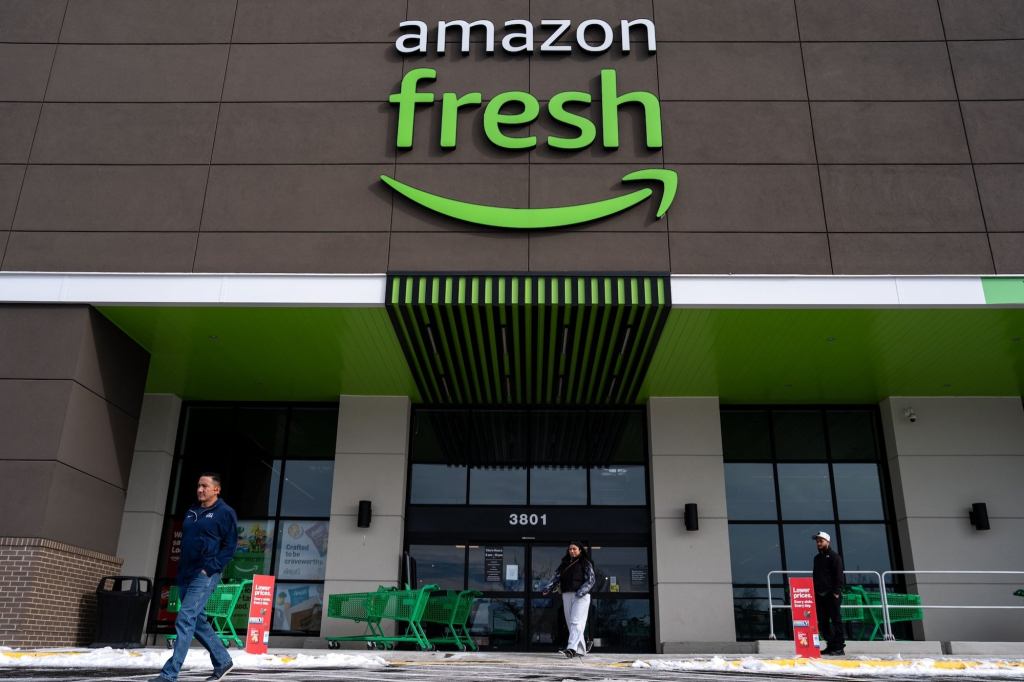
Amazon Is Shutting Down Every Amazon Go and Amazon Fresh Store. Here’s What Went Wrong.

The era of Amazon Fresh and Amazon Go is officially over. The e-commerce giant announced it’s closing all 72 locations after a decade-long experiment. Amazon will convert some locations into Whole Foods stores and plans to open more than 100 new Whole Foods locations in coming years.

The branded stores failed to deliver a distinctive customer experience with a scalable economic model, according to The Wall Street Journal. Amazon Fresh offered a more mass-market selection than Whole Foods but struggled to win customers despite high-tech shopping carts and cheaper prices. Amazon Go’s checkout-free convenience stores also never resonated on a large scale, with the company already trimming its fleet by more than half since 2023.

But Amazon physical retail isn’t completely dead. The closures come just days after Amazon won approval to open its largest-ever store in Orland Park, Illinois. Amazon is clearly betting that going bigger is better than its previous mid-sized retail experiments.

Read more

The era of Amazon Fresh and Amazon Go is officially over. The e-commerce giant announced it’s closing all 72 locations after a decade-long experiment. Amazon will convert some locations into Whole Foods stores and plans to open more than 100 new Whole Foods locations in coming years.

The branded stores failed to deliver a distinctive customer experience with a scalable economic model, according to The Wall Street Journal. Amazon Fresh offered a more mass-market selection than Whole Foods but struggled to win customers despite high-tech shopping carts and cheaper prices. Amazon Go’s checkout-free convenience stores also never resonated on a large scale, with the company already trimming its fleet by more than half since 2023.

But Amazon physical retail isn’t completely dead. The closures come just days after Amazon won approval to open its largest-ever store in Orland Park, Illinois. Amazon is clearly betting that going bigger is better than its previous mid-sized retail experiments.

Read more

https://www.entrepreneur.com/business-news/amazon-is-closing-every-amazon-go-and-amazon-fresh-store/502248


Business Lessons From Curt Cignetti and the Indiana Hoosiers’ Worst-to-First Turnaround

Opinions expressed by Entrepreneur contributors are their own.

Key Takeaways

  • Proven, underestimated talent plus clear leadership outperforms pedigree, brand recognition and tradition.
  • Belief, discipline and execution turn structural change into sustained competitive advantage.

By now, we have all learned there is a new sheriff in the world of college football. No, not my beloved alma mater, Michigan. Not other “blue bloods” like Alabama, Georgia, Texas or Ohio State. It is the team that, up until two years ag,o had more losses than any other program in history: the Indiana Hoosiers.

In just two years since the hiring of their head coach, Curt Cignetti, they sit alone atop college football as the 16-0 national champion this year, including three wins over teams ranked in the top five (tripling such top-five ranked wins in their entire 138-year history).

How was this even possible? This worst-to-first story will go down as one of the greatest stories in college football history.

Let’s dissect this further, as there are a lot of valuable business lessons to be gleaned here for your businesses.

To summarize how this amazing turnaround happened for Indiana, it came down to the following things: market conditions changed to their benefit; ownership embraced the desire to win at football; they hired a smart leader; the leader had a clear vision of the type of team he wanted to recruit; and, lastly, they all bought into the vision, believing the impossible was actually possible, and put in the hard work to make it happen.

Let’s dig into each of these points.

Market conditions changed in college football

Two things happened in college football in the last couple of years that forever changed the sport: (i) the NCAA allowed players to get paid, through name-image-and-likeness deals; and (ii) the NCAA allowed players to freely transfer between teams through the transfer portal.

Paying the players meant that the schools with large alumni bases (Indiana is the largest) and wealthy alumni (like Mark Cuban at Indiana) could amass large sums of money to put them on a more even footing with the historical “blue blood” programs. The transfer portal enabled players to move between teams if they didn’t feel they were getting enough playing time or didn’t like their coaches, which meant the historically second and third-string players at the “blue blood” programs were now starting at the other schools that were willing to pay for their services. These changes became the big equalizer in college football.

I don’t like a lot of these changes, as it feels like the Wild West right now with limited guardrails being imposed by the NCAA. But these changes were earth-shattering for the sport. Instead of a season ending with 4-to-5 teams that were capable of winning a playoff and the championship, now there were 15-20 teams that were good enough to go on a run and win a championship. This created more parity than ever before.

As we apply this to our businesses, think of what artificial intelligence is doing in the workplace; it is the great equalizer, putting both big companies and small startups on a more equal footing.

Your startup’s market conditions have materially changed in the last couple of years; how are you going to capitalize on that?

Ownership embraced the desire to win

Indiana was never really considered a “football school”. On the other hand, with their success under coaches like Bobby Knight and players like Isiah Thomas and Steve Alford, they were always considered a “basketball school”.

But basketball isn’t where the lion’s share of athletic revenues is generated — they come from football. And Indiana was never going to truly maximize their athletic revenues until they set a clear goal of being successful in football. University President Pamela Whitten and Athletic Director Scott Dolson made that a priority and began to invest accordingly.

What is the “North Star” vision for your business, and are you making the appropriate investments to enable you to hit that target? If not, you will never get there.

They hired a smart leader

Not many college football fans had heard of Curt Cignetti before his time at Indiana. His name was never mentioned in the list of college football’s great coaches, like Kirby Smart at Georgia, Ryan Day at Ohio State or Dabo Sweeney at Clemson. But when Indiana’s leadership started to research him, it was clear he was a winner wherever he went.

In 2009, he was on Nick Saban’s coaching staff at Alabama that won a national championship (and who better to learn from than college football’s greatest coach of all time). Between 2011-16, he turned around a struggling IUP program into a perennial conference champion. In 2019, he led James Madison to the FCS (Division II) national championship.

When Curt Cignetti famously told the media, “I win. Google me!”, he wasn’t kidding.

The business lesson here is to hire smartly. It isn’t always the person with the biggest brand logos on their resume, or the most attention, that will be the best hire. Do your homework, peel back the layers of the onion, and you may find your own “diamond in the rough”.

They recruited the right type of players

Most college football recruiting classes are ranked by how many five-star high school recruits a team signs. Indiana didn’t have a single five-star recruit on the roster that won the national championship.

Cignetti took a different approach and made three smart moves: First, he brought roughly 15 players with him from James Madison when he took the Indiana job — experienced players who had already won a national championship and could help establish that same winning mindset in a new locker room.

Second, he leaned heavily on the transfer portal rather than high school recruiting, preferring proven college players over untested high school prospects. Third, he targeted players who shared his “chip on the shoulder” mentality — under-recruited and under-appreciated athletes eager to prove themselves, like quarterback Fernando Mendoza, who went on to win the Heisman Trophy and defeat his hometown team, Miami, which hadn’t even considered him good enough to walk on.

It turned out to be a powerful recipe for success.

The same holds true for your business — people really matter. Find the experienced staff member, perhaps from your competitors, wanting to prove they can succeed at the next level.

They all bought into the vision and put in the work

Bo Schembechler, the famous Michigan football coach, once said, “What the mind can conceive and believe, the mind can achieve. And those who stay will be champions.”

Curt Cignetti must have said the same thing to his team. If you think of Indiana as all-time biggest losers, that is where we will stay. But if you actually believe you are on an equal footing with the greats like Ohio State, Alabama, Oregon and Miami, you can actually beat them (which they did in four consecutive games).

But more than believing, they had to put in the work, winning in the weight room, practices, coaching sessions, film watching and game planning, as well. That “chip on their shoulder” was particularly helpful here to get them to put in that needed work. Big picture: Winning is a mindset, and to get there, it requires discipline, which Indiana had in spades.

Are you clearly communicating your vision to your staff? Have they bought into that vision? Are they putting in the hard work that will be required to win (e.g., gain market share and exceed your goals)? If not, back to the drawing board, as without that vision, a clear strategy and communication, religious management and hard work, you will never get there.

Closing thoughts

When Indiana went 11-2 in 2024, Cignetti’s first year, I thought it was a fluke, catching better teams by surprise. But when Indiana was the first team ever to go 16-0 to win the national championship in 2025, beating top-ranked teams by large margins of victory, I knew Indiana was no longer a “basketball school,” and their football success was here to stay. Which is bad news for my Michigan Wolverines and everyone else in the Big Ten.

In the last two years, Northwestern has now passed Indiana as the team with the most all-time losses in college football. Maybe Dave Braun and his coaching staff will be the next team to achieve the “impossible,” winning a national championship in the coming years.

Indiana has certainly given them and every other team in football that winning playbook, which everyone is trying to copy in hopes of “catching lightning in a bottle” for their programs. Expect to see more “historical underdogs” hoisting the championship trophy in years to come, thanks to Indiana and Curt Cignetti paving the way, proving what is actually possible with a well-conceived vision, strategy, team and execution.

Which “blue blood” will your business beat for your “national championship”?

Key Takeaways

  • Proven, underestimated talent plus clear leadership outperforms pedigree, brand recognition and tradition.
  • Belief, discipline and execution turn structural change into sustained competitive advantage.

By now, we have all learned there is a new sheriff in the world of college football. No, not my beloved alma mater, Michigan. Not other “blue bloods” like Alabama, Georgia, Texas or Ohio State. It is the team that, up until two years ag,o had more losses than any other program in history: the Indiana Hoosiers.

In just two years since the hiring of their head coach, Curt Cignetti, they sit alone atop college football as the 16-0 national champion this year, including three wins over teams ranked in the top five (tripling such top-five ranked wins in their entire 138-year history).

https://www.entrepreneur.com/leadership/the-new-sheriff-of-college-football-has-a-message-for/502151


This Internet Pioneer Just Launched an AI Answer Engine to Compete With Google and ChatGPT

Internet pioneer Yahoo just made a surprising move.

This week, Yahoo launched Yahoo Scout, a new AI answer engine designed to compete with Google and ChatGPT. The beta version debuted on desktop and mobile within Yahoo’s existing search app on iOS and Android in the U.S., according to Axios. Scout runs on Anthropic’s Claude AI model, Yahoo’s proprietary data from three decades, and Microsoft Bing’s grounding API.

Yahoo has 250 million monthly users in the U.S. and 18 trillion annual signals across its ecosystem. Unlike competitors, Yahoo Scout includes inline citations and links to sources in every response, aiming to drive traffic back to publishers. Yahoo is testing ads at launch with a small percentage of queries, taking a different approach from OpenAI’s subscription model. “Our goal is to make it free for everyone,” said Eric Feng, senior VP of Yahoo Research Group.

Read more

Internet pioneer Yahoo just made a surprising move.

This week, Yahoo launched Yahoo Scout, a new AI answer engine designed to compete with Google and ChatGPT. The beta version debuted on desktop and mobile within Yahoo’s existing search app on iOS and Android in the U.S., according to Axios. Scout runs on Anthropic’s Claude AI model, Yahoo’s proprietary data from three decades, and Microsoft Bing’s grounding API.

Yahoo has 250 million monthly users in the U.S. and 18 trillion annual signals across its ecosystem. Unlike competitors, Yahoo Scout includes inline citations and links to sources in every response, aiming to drive traffic back to publishers. Yahoo is testing ads at launch with a small percentage of queries, taking a different approach from OpenAI’s subscription model. “Our goal is to make it free for everyone,” said Eric Feng, senior VP of Yahoo Research Group.

Read more

https://www.entrepreneur.com/business-news/yahoo-is-back-and-its-taking-on-google/502247


How I Built $700 Million in Businesses Without Outside Investors

Opinions expressed by Entrepreneur contributors are their own.

This article is part of the America’s Favorite Mom & Pop Shops series. Read more stories

For many independent entrepreneurs, especially in industries dominated by conglomerates, private equity, or mega-groups, it can feel like the game is already over.

I used to believe that too.

But over the past 20 years, I’ve built and exited multiple technology companies, scaled family-owned businesses across multiple regions and completed more than $700 million in cumulative transactions — all without losing control of our companies or culture and without relying on outside investors.

Today, I operate through a self-funded family office model that gives me something big investors can never buy: speed, conviction and the ability to make generational decisions instead of quarterly ones.

What I’ve learned is simple: independent entrepreneurs aren’t losing — they’re playing the wrong game. Over the years, I’ve developed a system to fight back by thinking differently, and the same principles apply to almost any business. Here’s my playbook:

1. Run every company like a startup, not a legacy business

Most independent businesses slow down as they grow — too much tradition, too much “this is how we’ve always done it.” I reversed that pattern. Every business I run, whether tech, retail, or service-based, operates with:

  • Daily standups
  • Scoreboards and real-time KPIs
  • Clear accountability for every role
  • Fast iteration with zero bureaucracy

Tracking metrics in real-time — like customer acquisition, operational efficiency and service delivery — lets you make decisions based on your own data, not assumptions. Speed, transparency and relentless accountability always outperform tradition, no matter your industry.

2. Build digital infrastructure before scaling

Before expanding into multiple locations or markets, I built digital technology and operational frameworks from scratch. These tools didn’t just provide capital — they created systems we still rely on today.

Many entrepreneurs scale before fixing systems, creating operational drag. Without consistent ways to track performance, onboard teams or forecast resources, growth can become chaotic. Digital clarity creates financial clarity and allows you to scale without losing control.

For example, our proprietary tools connect every part of the business — from marketing to operations to customer service — providing real-time visibility into performance. This enables faster decisions, better resource allocation and a competitive edge over groups that rely on outdated reports and slow approvals.

3. Control your capital, don’t rent it

One of the biggest advantages independents have is freedom from quarterly return pressures. That’s why our family office is self-funded. We reinvest heavily into operations, technology, talent and scalable systems.

Owning your capital gives you control over the timetable. We can acquire underperforming assets, improve them, and see results within months rather than waiting for approval from outside investors. Independents can move faster, capture opportunities and make strategic decisions that larger players can’t.

4. Focus on your core advantage

Entrepreneurs often spread themselves too thin, chasing multiple markets, products, or ideas. Our edge comes from focus: improving the customer experience and maximizing operational efficiency. Everything else is noise.

By concentrating on your strengths, you can grow faster than competitors who scale without a strategy. Focusing energy on what you do best creates differentiation, builds expertise, and drives results across industries.

5. Make talent the center of your business

Every business I’ve grown — whether tech, retail, or service — has been built on talent. Capital is important, but people compound faster than money.

We invest early in high-performance operators, marketers, data analysts, culture-builders and customer experience leaders. Independent businesses can compete with larger groups if they treat talent as a growth strategy, not a cost. Empowered teams execute faster, innovate smarter and deliver experiences that leave competitors scrambling.

6. Build for the long hold, even if you plan to exit

It may seem counterintuitive, but building a business as if you’ll own it for 30 years creates optionality. Strong infrastructure, disciplined operations, and repeatable processes attract buyers naturally.

Our tech startups received unsolicited acquisition offers because they were well-run. The same is true for other businesses—long-term thinking doesn’t delay exits, it makes them easier and more profitable.

7. Embrace adaptability and discipline

Markets change. Consumer behavior shifts. Technology evolves. Entrepreneurs who succeed combine flexibility with rigor.

In our businesses, we innovate rapidly while maintaining structured operating rhythms. Strict processes and standards coexist with the ability to pivot quickly when conditions shift. Success belongs to those who can adapt without losing precision.

Be a disruptor, regardless of your industry

Big investors and conglomerates aren’t the enemy. Competition isn’t the enemy. The only enemy is stagnation.

Independent entrepreneurs who combine startup-style execution, digital-first operations, strong talent, long-term thinking, and disciplined capital allocation can outperform larger competitors. Stop trying to compete with the big players. Change the game instead.

Sign up for the Entrepreneur Daily newsletter to get the news and resources you need to know today to help you run your business better. Get it in your inbox.

For many independent entrepreneurs, especially in industries dominated by conglomerates, private equity, or mega-groups, it can feel like the game is already over.

I used to believe that too.

But over the past 20 years, I’ve built and exited multiple technology companies, scaled family-owned businesses across multiple regions and completed more than $700 million in cumulative transactions — all without losing control of our companies or culture and without relying on outside investors.

https://www.entrepreneur.com/growing-a-business/how-i-built-700-million-in-businesses-without-outside/499774


How Entrepreneurs Can Unlock High-Impact Opportunities in the Public Sector

Opinions expressed by Entrepreneur contributors are their own.

Key Takeaways

  • Unlike private businesses, which exist to make a profit, public institutions prioritize impact, equity and public trust.
  • If entrepreneurs want to work with the public sector (and they should), they need to adjust their lens, which means seeing beyond short-term wins and looking toward long-term impact.
  • They must stop pitching purely in business terms and start connecting to public outcomes. They must ask better questions, show up differently and build relationships as contributors to something larger than themselves.

We often talk about markets, innovation and disruption when we talk about entrepreneurship — but we rarely talk about government. The public sector is usually seen as slow, bureaucratic and risk-averse. For many entrepreneurs, it’s not even on the radar as a potential space to work in.

But that’s a mistake. Not because government is easy to work with — it isn’t — but because it operates with a completely different mindset, and when entrepreneurs understand that mindset, a whole new set of opportunities can open up.

Understanding the difference in purpose

Unlike private businesses, which exist to make a profit, public institutions are designed to create impact — especially social and economic outcomes that benefit everyone, not just paying customers. A public agency doesn’t measure its success in revenue or margins, but in how much it improves lives, builds equity and maintains public trust. This doesn’t mean budgets and spending don’t matter — they absolutely do — but money is not the goal. It’s the tool.

This difference in purpose leads to a difference in how performance is measured. In the private sector, the big question is “Are we making money?” In the public sector, the question is closer to “Are we making a difference?” And that difference might not show up in a financial report. It might be an increase in access to clean water, a drop in unemployment or simply delivering basic services fairly and reliably across a community. These are outcomes you can’t always capture in numbers, especially not in the short term.

What often gets misunderstood is that the public sector isn’t just focused on outcomes — it’s also focused on fairness. Efficiency matters, but not at the cost of equity. If a service is fast and cheap but only works well for part of the population, that’s a failure. Governments have to think about the whole population, not just the easiest to serve or the most profitable. That’s one reason public projects take longer, cost more or involve more regulations. They’re designed to avoid shortcuts that might leave people behind.

Now, consider how entrepreneurs are wired. In most cases, they’re trained to optimize for speed, cost-effectiveness and growth. They’re constantly looking for the next breakthrough or the leanest model. That’s not wrong — it’s how most successful companies are built. But when that mindset meets the public sector’s more deliberate, impact-focused approach, there’s a disconnect. Entrepreneurs want to move fast and break things. Governments need to avoid breaking public trust.

Expanding the private sector mindset

So here’s the critical insight: If entrepreneurs want to work with the public sector — and they should — they need to adjust their lens. It’s not about abandoning the private sector mindset, but expanding it. Efficiency still matters, but so does effectiveness. Growth is important, but so is equity. The question becomes: How can we design solutions that both work well and serve the broader public good?

Across all levels of government, from local municipalities to international organizations, public bodies are constantly seeking contractors and partners to help them deliver services, build infrastructure and solve complex problems.

This kind of mindset shift matters even more when we look at global programs like the United Nations Sustainable Development Goals. These aren’t just big ideas; they’re specific targets that governments around the world are trying to reach, from cutting poverty and improving education to building sustainable cities and fighting climate change.

But it’s not enough for governments to say they’re working on these goals — they need to show real, measurable progress. That opens up space for entrepreneurs who can build solutions that don’t just work, but also prove their impact. Whether it’s tech for tracking outcomes, tools for reaching underserved communities or systems that make services more transparent and accountable, there’s a growing need for partners who can help turn big ambitions into results people can see and feel.

These engagements can take many forms — fixed-price contracts, cost-reimbursable models, public-private partnerships — and each one reflects a specific approach to risk, accountability and public value. The point is: The public sector needs outside expertise. But it needs it on its own terms.

What entrepreneurs must understand

Entrepreneurs who take the time to understand those terms, who study how governments define success, who learn the language of public value, have a real advantage. They stop pitching purely in business terms and start connecting to public outcomes. They ask better questions. They show up differently. They build relationships not just as vendors, but as contributors to something larger than themselves.

And when they do that, they often find that the public sector isn’t as closed off or inaccessible as it first seemed. In fact, there’s a growing openness in many agencies to new ideas, new technologies and new ways of thinking — especially from those who demonstrate that they understand the mission, not just the mechanics.

The opportunity here is not just about getting government contracts. It’s about aligning with a sector that influences almost every part of society, from transportation to health to education to digital infrastructure. Entrepreneurs who learn to operate in this space can have an outsized impact. They can build resilient, long-term partnerships. And they can contribute to real, measurable change in people’s lives.

Of course, this kind of work isn’t easy. It takes patience, flexibility and a willingness to work within systems that aren’t always optimized for speed. But for those who can make the mental shift — from efficiency-only thinking to impact-driven thinking — the rewards are there. Not just financial, but reputational and relational.

In a time when public challenges are growing more complex and urgent, from climate change to housing crises to aging infrastructure, the role of the private sector in helping solve them is becoming more critical. But to truly contribute, entrepreneurs need to understand the mindset of the public sector, not just the process. That means seeing beyond short-term wins and looking toward long-term impact.

Entrepreneurship is often about solving problems in new ways. The public sector offers problems worth solving — at scale, with meaning and with the potential to improve lives far beyond the market. But it starts with mindset. Understand theirs, and you might just discover opportunities you never considered.

Sign up for the Entrepreneur Daily newsletter to get the news and resources you need to know today to help you run your business better. Get it in your inbox.

Key Takeaways

  • Unlike private businesses, which exist to make a profit, public institutions prioritize impact, equity and public trust.
  • If entrepreneurs want to work with the public sector (and they should), they need to adjust their lens, which means seeing beyond short-term wins and looking toward long-term impact.
  • They must stop pitching purely in business terms and start connecting to public outcomes. They must ask better questions, show up differently and build relationships as contributors to something larger than themselves.

We often talk about markets, innovation and disruption when we talk about entrepreneurship — but we rarely talk about government. The public sector is usually seen as slow, bureaucratic and risk-averse. For many entrepreneurs, it’s not even on the radar as a potential space to work in.

But that’s a mistake. Not because government is easy to work with — it isn’t — but because it operates with a completely different mindset, and when entrepreneurs understand that mindset, a whole new set of opportunities can open up.

https://www.entrepreneur.com/leadership/how-to-win-big-with-public-sector-partners/501639