Microsoft Claims Its AI Is Better Than Doctors at Diagnosing Patients, But ‘You Definitely Still Need Your Physician’

Microsoft says its new AI tool performs four times better than experienced human doctors at diagnosing complex health conditions — but the company’s AI CEO says human physicians are still needed to help treat the illnesses.

In a paper released on Monday titled “The Path to Medical Superintelligence,” Microsoft introduced an AI tool that correctly diagnosed complex cases up to 85% of the time and arrived at the diagnoses more cost-effectively than human physicians.

Related: ‘No Longer Optional’: Microsoft Staff Mandated to Use AI at Work, According to a New Report

The team used more than 300 complex case studies from the New England Journal of Medicine (NEJM) and had the AI tool imitate a panel of physicians to find the right diagnosis. The AI tool asked questions of the data, recommended what tests the hypothetical patient should get, and arrived at a diagnosis as it learned more information. As researchers added more data to the AI tool, it updated its best estimate of the diagnosis in real-time and explained the reasoning behind its conclusion.

Microsoft researchers said that the AI tool correctly “solved” more than eight out of 10 NEJM case studies — much better than the average success rate of two out of 10 for human physicians. The AI also ordered fewer hypothetical tests to arrive at the right diagnosis, making it more cost-effective than a human doctor.

Human doctors are usually characterized by breadth, like a general family physician, or depth, like a specialist. The team noted that the AI tool demonstrated “clinical reasoning abilities” that “exceed those of any individual physician” due to its ability to combine both breadth and depth of expertise.

The AI tool isn’t ready for clinical use yet and will only be approved after safety testing and clinical validation. However, Microsoft AI CEO Mustafa Suleyman says it could help Microsoft provide “high-quality” health advice in response to the 50 million health-related queries it receives every day through its Copilot AI assistant and Bing search engine.

“Although this is just early research, we’re hoping that as we get this into production, it will give everybody access to very high-quality health information,” Suleyman told Yahoo! Finance on Monday.

Microsoft AI CEO Mustafa Suleyman at a company event about Microsoft Copilot on April 4, 2025. Photo by Stephen Brashear/Getty Images

The AI tool examines existing medical information, synthesizes it, and gives it back to humans at the right time — but it still needs human doctors to hold it accountable, Suleyman said. Doctors are also required to plan and oversee treatment after a diagnosis.

“You definitely still need your physician,” Suleyman told the outlet, adding that the AI tool will likely get rolled out “in partnership with physicians themselves.”

Related: Microsoft AI CEO Says Almost All Content on the Internet Is Fair Game for AI Training

Microsoft is currently testing the AI tool in real clinical environments to see how it performs on the job before any broader rollout.

Microsoft is one of the most valuable companies in the world at the time of writing, second only to Nvidia, with a market cap of over $3.6 trillion.

https://www.entrepreneur.com/business-news/microsoft-says-its-ai-diagnoses-patients-better-than-doctors/494103


Stop Obsessing Over Growth. Adopt This Mindset to Start Creating Real Value in Your Business.

Opinions expressed by Entrepreneur contributors are their own.

Most business owners obsess over growth. More customers. More features. More revenue. But private equity (PE) investors focus on something different: capital efficiency.

They ask a sharper question: Where is our next dollar best spent? This isn’t just a finance exercise. It’s a mindset. And it’s one every business owner can adopt, whether you’re bootstrapped, funded or somewhere in between.

By thinking like a capital allocator, you stop reacting to growth and start engineering value. You shift from chasing momentum to building a machine.

Related: 21 Ways Startups That Have Used Capital Efficiency to Stay Ahead

What is capital allocation, and why should you care?

At its core, capital allocation is deciding how and where to deploy your limited resources (cash, time, people) to generate the best returns.

PE firms live by this. They don’t just grow businesses — they transform them through precise capital deployment. Every decision flows through a return on capital lens.

This same discipline, applied to your business, changes everything from how you hire to how you scale.

In fact, many founders are now using these strategies even without raising institutional capital. Here’s how fundless founders are scaling like PE firms, proving that you don’t need a fund to think like one.

1. Every dollar should have a job (and a return)

In the PE world, no dollar moves without a purpose. That same clarity should exist in your business. Before spending, ask:

  • What is the expected return?

  • How soon will it pay back?

  • What’s the risk-adjusted upside?

Thinking this way forces prioritization. For example, if you’re considering a $50K rebrand, you should ask: Will this rebrand drive customer conversion or retention? Or would that same $50K drive more ROI through performance marketing or a key hire?

To help quantify this, many institutional operators use ROCE (Return on Capital Employed), a simple metric that tracks how effectively you’re using capital to create profit.

2. Define your internal “buy box”

Private equity firms use a “buy box,” a set of strict filters that define which businesses they’ll acquire. It helps them stay disciplined and avoid shiny distractions.

As a founder, you should build a similar filter, not for M&A (yet), but for internal capital allocation.

  • What kinds of projects do you greenlight?

  • What’s the minimum ROI or payback threshold?

  • What types of spending are always a “no?”

This framework protects you from spreading yourself (and your budget) too thin. It also lays the foundation for growth via acquisition when you’re ready. More founders are scaling through micro-acquisitions, and having a buy box in place makes that process repeatable.

Related: 4 Ways to Make Value Creation Core to Your Business

3. Value creation beats growth every time

Ask any PE investor: It’s not just about growth. It’s about value creation.

That means focusing on:

A business with flat revenue but rising EBITDA is often more valuable than one growing top line with no profits.

In fact, CFOs in top-performing companies are shifting their focus from reporting to building systems that actually drive enterprise value.

If you’re not thinking about your business like an asset, you’re missing half the picture.

4. Be exit-ready always

You may not want to sell. However, you should build as if you could at any moment.

PE-backed companies operate with an exit in mind from day one. That means:

Even if you never exit, this mindset leads to better operations, stronger team alignment and higher optionality.

If a strategic acquirer called tomorrow, would your business be ready? Could they run it without you? If not, it’s time to tighten the machine. You can take cues from how fundless founders are structuring their companies as sellable assets.

5. Build dashboards, not just to-do lists

Capital allocators don’t rely on gut feelings. They rely on dashboards that reflect real-time performance.

In your business, this might look like:

  • CAC vs. LTV by channel

  • Contribution margin by product line

  • Cash runway, burn rate and payback period

  • Net revenue retention

  • Team efficiency (revenue or margin per FTE)

If you can’t see it, you can’t scale it. And you don’t need a CFO to get started. This breakdown shows how to build institutional-grade systems even if you’re operating solo or lean.

Related: How to Use Real-Time Data to Fine-Tune Your Business Decisions

6. Make capital allocation a habit, not a headache

This isn’t just a quarterly exercise. Capital allocation is a daily discipline.

Every time you say “yes” to a spend, ask:

  • What are we saying “no” to?

  • What is the expected return?

  • Is this aligned with our buy box?

When you shift to this mindset, decisions become clearer, waste gets cut, and every dollar starts to do more work.

This isn’t about turning your business into a spreadsheet. It’s about building a company that actually compounds in value.

When you start thinking like a capital allocator:

  • Growth becomes intentional

  • Teams stay focused

  • Cash is preserved for high-impact moves

  • Optionality increases your scale or allows you to sell on your terms.

Because in the end, you’re not just running a business; you’re building a financial asset. The earlier you treat it that way, the more leverage you create.

Most business owners obsess over growth. More customers. More features. More revenue. But private equity (PE) investors focus on something different: capital efficiency.

They ask a sharper question: Where is our next dollar best spent? This isn’t just a finance exercise. It’s a mindset. And it’s one every business owner can adopt, whether you’re bootstrapped, funded or somewhere in between.

By thinking like a capital allocator, you stop reacting to growth and start engineering value. You shift from chasing momentum to building a machine.

The rest of this article is locked.

Join Entrepreneur+ today for access.

https://www.entrepreneur.com/money-finance/why-entrepreneurs-should-stop-obsessing-over-growth/493610


The 4 Phases Every Day Trader Needs to Go Through Before Making Money

Opinions expressed by Entrepreneur contributors are their own.

It may be true that no two humans or day traders are exactly alike. But after having dealt with literally thousands of traders in my career, I see themes.

It’s useful to know these themes before you embark on the day trading journey, because making certain decisions at key intersections of your journey can save you a lot of grief and money.

Phase 1: Beginner’s luck

Given what you see on social media, it’s no wonder that day trading looks incredibly appealing. We hear about people who seemingly plop down at a keyboard as a beginning day trader and make a wad of money. Day trading looks like fun! I can imagine some of the thoughts going through people’s heads:

  • I hang out on social media, and I’m a great gamer. My reaction time is faster than anyone I know, so how hard can day trading be? I can bail out immediately if things go south, so I’m safe.
  • I got a tip, bought some stock and made more money in 15 minutes than I’ve ever made in my life over such a short period!
  • I’ve had not one, not two, but three profitable trades in a row! You know, I just might be a natural at this.

If all you did until now was invest a little and make some easy money, well, good for you. It does happen. But here comes the first key intersection. The wrong turn is now to think you’re special and maybe even immune to the learning curve everyone else must follow: “Why trade in a simulator if I already made real money? All I need to do is lather, rinse, and repeat what I already did!”

The danger is that you follow those thoughts by doing something dumb like quitting your job or putting all your savings into your trading account.

If you do this, invariably — and I mean invariably — you will have a shocking awakening. You’ll lose big time, and it will only be a question of whether it was 80 percent of your account or 95+ percent. Most beginner’s luck casualties bail out at this point.

Related: Ask Yourself These Questions Before You Start Trading

Phase 2: Building the foundation

If you decide to stick around, you’re in for a slog. You need to learn the profession, but you’ll have few profits to show for it. You’ll be thinking: Wow, I never realized there was this amount of stuff to learn! Day trading is an actual profession.

That will scare off many people. If you stick with it, you’ll realize that trading in a simulator is your ticket to survival. You can actually trade along with what the real market is doing, but you won’t have to risk your livelihood to do it. Congrats: When you realize that the Sim is your best friend, you’ve reached an important milestone.

You’ll be in Phase 2 until you trade for several weeks and reach the point that you’re a breakeven trader. You’ll have some good and bad stretches, but they cancel themselves out. As you get more proficient in learning candlestick patterns and especially observing your own emotions, you gradually become profitable for a few weeks in a row. More people will bail out at this phase, because it’s taking real work to learn these skills, and it’s not nearly as fun as it was at the beginning.

Phase 3: Real money trader

After all this work, it’s humbling to be still called a “beginner”, but you won’t mind. You’re finally wrapping your head around this profession and seeing what it will take to get really good at it. You’ll be thoroughly familiar with a few patterns that stocks follow and will gain some confidence and even some profits. You’ll also realize that you must learn a lot more in order to make consistently profitable trades in the kaleidoscope that each day brings.

Some people will stick with it; others will feel like it’s just too much work to overcome the regular setbacks this phase involves, compared to the payoff so far.

Related: 5 Things You Need in Order to Be a Successful Day Trader

Phase 4: The professional

You’ve proven your chops. You’ve made consistent money in both strong and weak markets, but the big lesson learned is you can NEVER let down your guard.

You will have days when you don’t pay attention to the many guardrails or principles, and you get beaten to a pulp. But you’ll finally have the perspective to know in hindsight what happened, how you violated one or more of those principles, and how costly that lesson was. If you stick with day trading, you’ll gradually get your emotions more under control so you can step back and see what’s happening more dispassionately.

It will never become easy, but it will get easier and more rewarding. You might even look back and realize how lucky you are to spend the morning in serious concentration on the market and then be able to spend the rest of the day doing what you want.

Does it ever become “too good to be true”? No. When it’s showtime, you really need to be on your game. After all, the markets are merciless. They do not care how well you did yesterday, or last year, and how large your bank account is.

They’re consistently ruthless, and you make consistent money only when you’re focused and highly disciplined. Every morning, you start from scratch. If you’re not OK with that, then this is not the right profession for you.

But if you somehow can get past these many gauntlets and continue to make profitable trades—wow. What a crazy profession! You don’t need to commute to work, then attend lots of meetings as you gradually work your way up the corporate ladder. There’s an entirely different path to success. Only a few will navigate the twists and turns, but for them, it will be worth the effort.

It may be true that no two humans or day traders are exactly alike. But after having dealt with literally thousands of traders in my career, I see themes.

It’s useful to know these themes before you embark on the day trading journey, because making certain decisions at key intersections of your journey can save you a lot of grief and money.

Phase 1: Beginner’s luck

The rest of this article is locked.

Join Entrepreneur+ today for access.

https://www.entrepreneur.com/money-finance/before-you-start-day-trading-know-these-stages/493382


‘It’s Bigger Than My Birthday’: He Retired in 2001, But His Former Employer Still Pays Him More Than $1 Million a Year

Former Major League Baseball (MLB) player Bobby Bonilla played his last professional game in 2001 for the St. Louis Cardinals.

But the six-time All-Star still gets paid from a different former team – the New York Mets — in the form of a $1.19 million check every year on July 1.

“It’s bigger than my birthday,” Bonilla told USA TODAY Sports. “When that day comes, I get texts all day long, and couple of days after, and maybe a day or two before. Everybody just seems to love that day and have fun with it. It’s become a pretty big thing.”

Related: ‘We Got Back to Work’: Kevin Bacon Opens Up About Losing ‘Millions’ in Bernie Madoff’s Ponzi Scheme

The Mets wanted to buy out the remaining $5.9 million on Bonilla’s contract after the 1999 season, but instead deferred the payments to $1,193,248.20 annually, paid on July 1, starting in 2011 through 2035.

Bonilla played his last game for the Mets in 1999. At the time, the contract deferment seemed like a good idea, ESPN notes, as the Mets were “invested” with Bernie Madoff and expected large returns, but took heavy losses in the scandal. The Madoff investments nearly “ruined” the team, the New York Times wrote.

Bonilla, meanwhile, will be 72 when his payments stop. An 8% interest was negotiated, which means the former MLB player will get almost $30 million from the deal, ESPN notes.

Former Major League Baseball (MLB) player Bobby Bonilla played his last professional game in 2001 for the St. Louis Cardinals.

But the six-time All-Star still gets paid from a different former team – the New York Mets — in the form of a $1.19 million check every year on July 1.

“It’s bigger than my birthday,” Bonilla told USA TODAY Sports. “When that day comes, I get texts all day long, and couple of days after, and maybe a day or two before. Everybody just seems to love that day and have fun with it. It’s become a pretty big thing.”

The rest of this article is locked.

Join Entrepreneur+ today for access.

https://www.entrepreneur.com/business-news/bobby-bonilla-day-mets-still-pay-ex-player-over-1m-a-year/494098


An Accident at Age 18 Inspired Her to Start a Business — Then Build a Brand With $35 Million in Sales: ‘Everyone Wants a Slice’

Victoria Lynch, founder of global hair extension brand Remi Cachet, had a passion for styling hair from a young age. As a 14-year-old in the UK, she braided synthetic hair and styled family and friends; her home salon had a six-month waiting list at one point. She continued to hone her craft over the years, doing hair part-time alongside a morning factory job, until an accident at 18 changed the trajectory of her life.

Image Credit: Courtesy of Remi Cachet. Victoria Lynch.

 ”I had a road traffic accident with a bus,” Lynch tells Entrepreneur, “and that left me with some injuries that affected my lower spine. I ended up with degenerative discs in my lower spine. I only had two weeks off work, and then I went back to work at the factory.”

Lynch’s injuries made it difficult to be on her feet all day at the factory and the salon. She began to consider what the next phase of her career might look like. People often asked Lynch to teach them how to do hair, but she knew that if she was going to make her mark on the industry, she needed qualifications at the professional level. So she attended college for those qualifications, then dove into entrepreneurship.

“That brand was specifically for that consumer market.”

Lynch used money from her savings account to start her first hair extension brand, Additional Lengths, in 2003.

“ Extensions weren’t popular in the same capacity we see them today,” Lynch says, “and I created that brand with that end-user in mind because I was still working and doing hair. I was still supplying products directly to my clients. So that’s how I set up the business — that brand was specifically for that consumer market.”

In an era before social media helped facilitate business growth on a larger scale, Lynch focused on word-of-mouth marketing within her community.

“I was very much speaking to my local community at the start,” Lynch explains, “and I was working on boundaries that they dictate and put in place based on their disposable income. What is my local community looking to pay? How can I sign up salons in my area for them to cater to their needs? Additional Lengths was built on a low cost, but trying to achieve high quality.”

Related: ‘Immediately Profitable’: Former Lululemon Executives Turned Their ‘Side Project’ Into an 8-Figure Brand Worn By Olympians — and You’ll Probably See It This Summer

Lynch grew Additional Lengths for the next 10 years. But the brand wasn’t just popular with consumers; trade professionals started to purchase the products too, resulting in a “very mixed message” between the two customer groups, Lynch says. Lynch wanted to create a line of high-end extension products that would cater to the professional market specifically, and felt that building an entirely new brand identity was the way forward.

“It was a brand by a professional, directly for a professional.”

So, in 2013, Lynch launched her next hair extension brand: Remi Cachet.

“Being a hair professional and understanding the audience, especially from the industry side as well as the end user, that was just the right direction for me,” Lynch says. “And it paid off because Remi Cachet became the number one trade professional brand in the UK. It was a brand by a professional, directly for a professional.”

Lynch made Additional Lengths the sole authorized distributor of her new brand to utilize the logistics and knowledge that were already in place, she notes. Then it was a matter of using that existing infrastructure to develop Remi Cachet’s distinct brand identity and tone.

“ I never positioned that I owned that brand,” Lynch says. “I wanted the trade space to think, Oh my God, what is this brand?“

Remi Cachet did resonate with industry professionals, and as she’d done with her first business, Lynch harnessed the power of word-of-mouth marketing to grow the brand.

Image Credit: Courtesy of Remi Cachet

“I’ve built a trade audience that now relies on our service and product to operate.”

Now, Remi Cachet continues to see success in the UK, and in January 2025, the brand launched in the U.S. on the red carpet, partnering with hairstylists to get its product on celebrities including Ellie Goulding, Margaret Qualley, Mikey Madison, Kim Kardashian and more. The brand boasts $35 million in sales, per the company.

“If social media [went] offline tomorrow, the foundations that I’ve built and established my business on would be firmly in place no matter what happened,” Lynch says. “I’ve built a trade audience that now relies on our service and product to operate and retain their own business growth and goals.”

Related: After This LGBTQ Couple Lost Their Jobs Within 30 Days of Each Other, They Started a Business — With Goats. It Led to More Than $150 Million.

What’s more, after more than 20 years as an entrepreneur in the haircare industry, Lynch only recently hired her first sales team.

“Not many businesses can say they’ve achieved the revenue numbers and size that we have without having a sales team, but I’ve done it,” Lynch says. “And I dare say that is probably down to how I maneuvered the business, the decisions I made in the business: Let the product do the talking. Let the product build the relationships and trust in what you’re doing.”

“I want it to be the brand that’s on everybody’s lips for the right reasons.”

Like many businesses, Remi Cachet ran into complications with U.S. expansion due to recent tariffs, causing the brand to “put a little pin” in some of its plans. However, the brand still intends to prioritize global expansion on the whole. In the short term, that means focusing outside of the U.S. on markets where it can go after “low-hanging fruit and quick wins.”

Lynch looks forward to Remi Cachet’s growth on a global scale, confident that even as white-label brands proliferate like never before, her company’s commitment to understanding its product and customer will continue to set it apart.

Related: ‘You Can Go Viral Overnight’: This College Student and His Brother Spent $5,000 to Start a Side Hustle — Now Their Brand’s Making Over $175 Million

“Everyone wants a slice of that pie, but that pie is getting smaller and smaller,” Lynch says. “Being established and knowing the market and being able to serve people [gives us an advantage] whether we are there [on the ground] in the U.S. or not. Long term, I want to position Remi Cachet [for] global domination. I want it to be the brand that’s on everybody’s lips for the right reasons.”

This article is part of our ongoing Women Entrepreneur® series highlighting the stories, challenges and triumphs of running a business as a woman.

Join top CEOs, founders and operators at the Level Up conference to unlock strategies for scaling your business, boosting revenue and building sustainable success.

https://www.entrepreneur.com/starting-a-business/how-an-accident-at-age-18-led-to-a-business-with-35m-sales/494043


How This Massive Food Company Turned Its Fleet of Trucks into Rolling Billboards — And the Lesson It Teaches About Brand-Building

Opinions expressed by Entrepreneur contributors are their own.

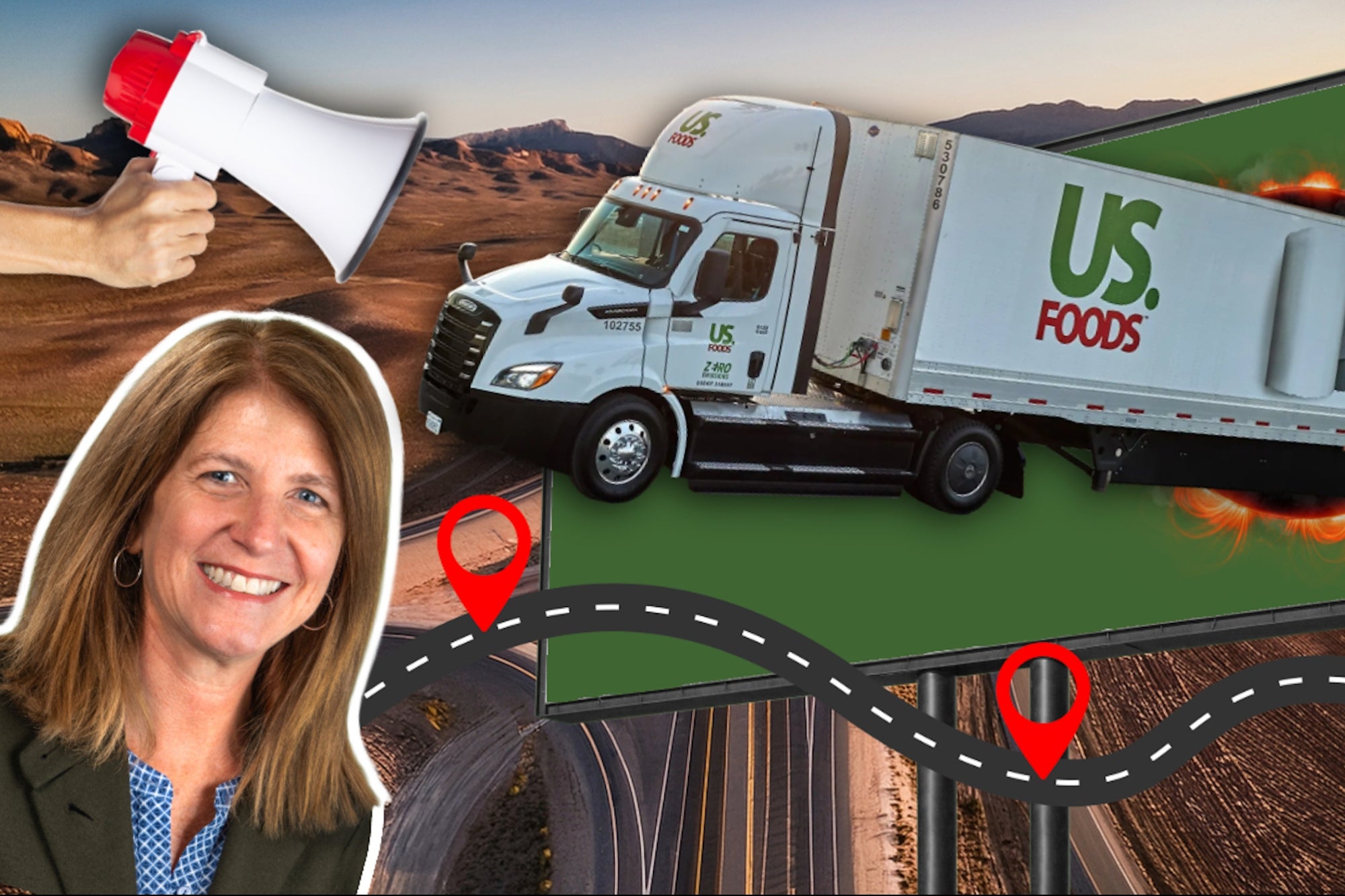
Think brand-building is all about logos and hashtags? Diane Hund from US Foods would argue it’s much more personal than that.

The chief marketing officer of US Foods shared how people, from drivers to sales reps and specialists, bring the brand to life every day.

“We don’t have a product on a retail shelf with our name on it,” Hund tells Shawn Walchef, host of Restaurant Influencers. “Our brand is our people, and how we show up for you every single day.”

Related: These College Friends Wanted to Sell Better Food. Now, Their Company Is Publicly Traded.

It’s a philosophy that resonates with US Foods’ vast network of over 250,000 restaurant and food operator partners nationwide. Every interaction counts, from a driver making a delivery to a rep answering a late-night call.

Those US Foods trucks you see on the road are more than rolling billboards. “When we went public, we rewrapped every single truck,” Hund says. “It’s about consistency and pride. Every time you see one of our trucks, it’s a reminder of who we are and what we stand for.”

Hund believes that true brand consistency starts on the inside, with every associate representing the brand. “It’s about building trust and accountability from the ground up,” she says.

Related: A Conversation About AI With Sam Altman Blew Their Minds — So They Wrote the Playbook for Businesses That Want to Use the Tech

AI in the food service space

No modern brand can ignore the digital landscape, and Hund is a big believer in meeting operators where they are. “Digital is where it’s got to be,” she says. “Our operators are spending time online, and we need to be there with them on Meta, Instagram, YouTube and wherever they’re looking for solutions.”

US Foods is investing in AI-powered tools that help restaurant operators keep up with changing customer expectations. From dynamic menu design to on-brand visuals, Hund’s team is helping restaurants create marketing materials that feel authentic and engaging.

“We’ve been making menus for years,” she says. “But now, with AI, we can help you design something that’s truly reflective of your brand, even if you don’t have time for a photoshoot.”

Hund also talked about the 2025 US Foods Food Fanatic event in Las Vegas, which has two days of education, inspiration and solutions tailored for restaurant operators. “We’re bringing operators from across the country together,” she says. “It’s about more than just products. It’s about helping them run better restaurants.”

When it comes to leadership, Hund’s focus is on passion, expertise and a team that understands both food and marketing. “When you bring those two together, you can do some pretty incredible things,” she says.

She’s also optimistic about women’s opportunities in the industry. “It’s easier than ever for women to succeed,” she says. “And if leaders like me and Kelly Esten at Toast can help open doors, that’s what we’re here to do.”

Hund’s message to restaurant operators is clear: Brand consistency, human touch and digital innovation are not optional. They are the recipe for thriving in today’s competitive landscape.

Related: His Bakery’s Window Got Smashed — But What He Did Next Actually Helped His Business

About Restaurant Influencers

Restaurant Influencers is brought to you by Toast, the powerful restaurant point-of-sale and management system that helps restaurants improve operations, increase sales and create a better guest experience.

Toast — Powering Successful Restaurants. Learn more about Toast.

Restaurant Influencers is also supported by NEXT INSURANCE. See why 600,000+ U.S. businesses trust NEXT for insurance.

Related: Giada De Laurentiis’s Major Deal With Amazon Is a New Frontier for the Chef and Entrepreneur

Think brand-building is all about logos and hashtags? Diane Hund from US Foods would argue it’s much more personal than that.

The chief marketing officer of US Foods shared how people, from drivers to sales reps and specialists, bring the brand to life every day.

“We don’t have a product on a retail shelf with our name on it,” Hund tells Shawn Walchef, host of Restaurant Influencers. “Our brand is our people, and how we show up for you every single day.”

The rest of this article is locked.

Join Entrepreneur+ today for access.

https://www.entrepreneur.com/growing-a-business/us-foods-cmo-on-brand-building-ai/493790


Mark Zuckerberg Reveals Meta Superintelligence Labs, Names Who He Poached From OpenAI, Google, Anthropic

Meta CEO Mark Zuckerberg, 41, is reshaping the company’s AI efforts to focus on superintelligence, or AI that surpasses human intelligence.

In a memo to employees on Monday, released in full by CNBC, Zuckerberg announced that a new group called Meta Superintelligence Labs, or MSL, will house Meta’s AI initiatives going forward. Alexandr Wang, the 28-year-old former CEO of AI training data startup Scale AI, will lead the group and assume the newly created role of Meta’s Chief AI Officer (Meta has a separate Chief AI Scientist, Yann LeCun).

Related: ‘I’ll Fight to Keep Every One of You’: OpenAI Responds to Meta Poaching Talent, Says It Is ‘Recalibrating’ Pay

In the memo, Zuckerberg called Wang the “most impressive founder of his generation” and said that former GitHub CEO Nat Friedman would “partner” with Wang to lead the MSL team. The new unit will encompass Meta’s existing teams that focus on developing AI models and AI products. It will also include Meta’s fundamental AI research (FAIR) team.

“As the pace of AI progress accelerates, developing superintelligence is coming into sight,” Zuckerberg wrote in the memo. “I believe this will be the beginning of a new era for humanity, and I am fully committed to doing what it takes for Meta to lead the way.”

Meta previously announced a $14.3 billion investment in Scale AI earlier this month in exchange for a 49% stake and fresh talent from the startup, including Wang.

Alexandr Wang. Photographer: David Paul Morris/Bloomberg via Getty Images

Zuckerberg also wrote that Meta would bring on 11 new hires for MSL, including researchers from competitors like OpenAI, Google, and Anthropic. The new team includes former Google DeepMind researchers Jack Rae and Pei Sun, OpenAI researchers Trapit Bansal and Hongyu Ren, and Anthropic software engineer Joel Pobar.

In the memo, Zuckerberg said that Meta’s vision for AI was “personal superintelligence for everyone” and that the company was going to start working on its next generation of AI models to debut “in the next year or so.”

Meta CEO Mark Zuckerberg. Photographer: David Paul Morris/Bloomberg via Getty Images

Meta has a broad reach: Zuckerberg disclosed in May that the company’s AI is used by more than one billion monthly active users across its apps, including Facebook, Instagram, and WhatsApp.

The company is also investing heavily in AI, with plans to spend $60 billion to $65 billion this year alone on AI infrastructure.

Related: Meta Takes on ChatGPT By Releasing a Standalone AI App: ‘A Long Journey’

Meta also isn’t afraid to spend heavily on AI talent. OpenAI CEO Sam Altman stated earlier this month that Meta was offering “$100 million signing bonuses” and “more than that” in compensation to many OpenAI researchers in an effort to poach talent.

Meta’s CTO, Andrew Bosworth, refuted the claims last week in a leaked all-hands meeting, saying that Altman was “being dishonest” about the signing bonuses and compensation.

“Look, you guys, the market’s hot,” Bosworth said at the meeting. “It’s not that hot.”

Meta is the sixth most valuable company in the world, at press time, with a market cap of over $1.8 trillion.

Meta CEO Mark Zuckerberg, 41, is reshaping the company’s AI efforts to focus on superintelligence, or AI that surpasses human intelligence.

In a memo to employees on Monday, released in full by CNBC, Zuckerberg announced that a new group called Meta Superintelligence Labs, or MSL, will house Meta’s AI initiatives going forward. Alexandr Wang, the 28-year-old former CEO of AI training data startup Scale AI, will lead the group and assume the newly created role of Meta’s Chief AI Officer (Meta has a separate Chief AI Scientist, Yann LeCun).

Related: ‘I’ll Fight to Keep Every One of You’: OpenAI Responds to Meta Poaching Talent, Says It Is ‘Recalibrating’ Pay

The rest of this article is locked.

Join Entrepreneur+ today for access.

https://www.entrepreneur.com/business-news/mark-zuckerberg-reveals-meta-superintelligence-labs/494047


NASA Will Start Live Streaming on Netflix Soon. Here’s What to Expect.

NASA and Netflix are teaming up to bring NASA+ live programming, such as rocket launches, spacewalks, and live views of Earth from the International Space Station, to the streaming service’s audience, NASA announced in a press release Monday.

“The National Aeronautics and Space Act of 1958 calls on us to share our story of space exploration with the broadest possible audience,” said Rebecca Sirmons, general manager of NASA+, in a statement. “Together, we’re committed to a Golden Age of Innovation and Exploration, inspiring new generations, right from the comfort of their couch or in the palm of their hand from their phone.”

Related: Netflix’s New Chapter Means Price Hikes and Record-High Subscriber Growth

Netflix reaches a global audience of more than 700 million people, the statement notes, which will help NASA reach a larger audience. The programming starts this summer.

Currently, NASA+ is available for free, with no ads, through the NASA app and on the agency’s website. It will remain available for non-Netflix customers, the statement says.

Related: Jeff Bezos’ Blue Origin Is Laying Off 1,400 Employees: ‘No Easy Way to Communicate This’

NASA and Netflix are teaming up to bring NASA+ live programming, such as rocket launches, spacewalks, and live views of Earth from the International Space Station, to the streaming service’s audience, NASA announced in a press release Monday.

“The National Aeronautics and Space Act of 1958 calls on us to share our story of space exploration with the broadest possible audience,” said Rebecca Sirmons, general manager of NASA+, in a statement. “Together, we’re committed to a Golden Age of Innovation and Exploration, inspiring new generations, right from the comfort of their couch or in the palm of their hand from their phone.”

Related: Netflix’s New Chapter Means Price Hikes and Record-High Subscriber Growth

The rest of this article is locked.

Join Entrepreneur+ today for access.

https://www.entrepreneur.com/business-news/nasa-netflix-team-up-to-live-stream-rocket-launches/494046


‘I’ll Fight to Keep Every One of You’: OpenAI Responds to Meta Poaching Talent, Says It Is ‘Recalibrating’ Pay

Meta has reportedly been compiling a list of top talent to poach in the AI talent wars — and OpenAI researchers are on it.

According to recent reports, Meta has successfully poached eight OpenAI staff members in the past two weeks for its AI efforts. Now, OpenAI leadership is reassuring staff that the company is fighting back against Meta in the war for AI talent.

OpenAI Chief Research Officer Mark Chen sent a memo to staff on Saturday stating that OpenAI would take steps to counter Meta stealing talent. The memo was sent to employees in Slack and obtained by Wired.

“I have a visceral feeling right now, as if someone has broken into our home and stolen something,” Chen stated in the memo. “Please trust that we haven’t been sitting idly by.”

Chen said that he was collaborating with OpenAI CEO Sam Altman to talk to employees with competing offers from Meta. Company leadership is “recalibrating” compensation and “scoping out creative ways to recognize and reward top talent” in response to these offers, Chen wrote.

Related: Meta Is Reportedly Offering Up to Nine-Figure Pay for Researchers on Its New Superintelligence AI Team

However, while OpenAI wants to keep its staff, it also wants to keep compensation “fair” among employees.

“While I’ll fight to keep every one of you, I won’t do so at the price of fairness to others,” Chen wrote in the memo.

OpenAI CEO Sam Altman. Photo by Justin Sullivan/Getty Images

Last week, Meta reportedly hired top OpenAI researcher Trapit Bansal and three other OpenAI employees who set up the company’s Zurich office: Lucas Beyer, Alexander Kolesnikov, and Xiaohua Zhai. The Information reported on Saturday that Meta had hired four more OpenAI AI researchers: Shengjia Zhao, Jiahui Yu, Shuchao Bi, and Hongyu Ren.

Meta’s hiring push is due to the company’s focus on a new superintelligence lab. The team will consist of roughly 50 employees who will work closely with Meta CEO Mark Zuckerberg to develop superintelligence, or AI that exceeds human intelligence in reasoning, memory, and knowledge. Zuckerberg reportedly wants Meta to be the first company to achieve superintelligence, with the goal of bringing advanced AI capabilities to Meta’s products, like its chatbot and smart glasses.

Related: Meta Is Reportedly Planning to Release New AI Smart Glasses With Oakley and Prada

Zuckerberg has been prepared to compensate new superintelligence employees handsomely. The New York Times reported that the CEO offered potential new hires compensation in the millions.

Altman said earlier this month that Meta was trying to recruit OpenAI researchers with “$100 million” signing bonuses and “more than that” in compensation, but that none of OpenAI’s “best people” had taken the offer.

However, Meta leadership has pushed back against Altman’s statement. At Meta’s leaked all-hands meeting last week, Meta’s Chief Technology Officer, Andrew Bosworth, said that Altman was “being dishonest” about the size and scope of the offers. One of the OpenAI employees Meta poached, Lucas Beyer, also posted on X that he did not receive a $100 million signing bonus.

Meta was up over 23% year to date at the time of writing.

Meta has reportedly been compiling a list of top talent to poach in the AI talent wars — and OpenAI researchers are on it.

According to recent reports, Meta has successfully poached eight OpenAI staff members in the past two weeks for its AI efforts. Now, OpenAI leadership is reassuring staff that the company is fighting back against Meta in the war for AI talent.

OpenAI Chief Research Officer Mark Chen sent a memo to staff on Saturday stating that OpenAI would take steps to counter Meta stealing talent. The memo was sent to employees in Slack and obtained by Wired.

The rest of this article is locked.

Join Entrepreneur+ today for access.

https://www.entrepreneur.com/business-news/openai-is-fighting-back-against-meta-poaching-ai-talent/494040


Grief Forced Me to Step Away From My Company. These 5 Systems Made It Possible.

Opinions expressed by Entrepreneur contributors are their own.

When you’re running a business, taking time off usually means planning weeks (or months) in advance. You take great pains to line up coverage, prep clients, schedule out social media posts and hope nothing unexpected comes up while you’re away.

But life doesn’t always give you a heads-up. Recently, I had to step away from my company for a full two weeks after losing my dad to brain cancer. He had been fighting the disease for a while, but when things rapidly progressed and he entered hospice care, I knew I needed to be fully present with him and my family. Planning a funeral, getting all of his affairs in order, being there for my loved ones and going through my own grieving journey led to an emotionally overwhelming two weeks. And for the first time in my entrepreneurial career, I was able to fully step away, and the business kept running.

Money still came in. Clients were taken care of. Social media didn’t miss a beat. Proposals kept going out. And it reminded me why I built my business the way I did.

Whether you’re in the middle of a personal crisis or just in need of a vacation, you shouldn’t have to choose between your life and your business. Here are some of the strategies that made it possible for me to unplug for two weeks, and how you can start applying them to your own business right now.

Related: Why You Still Need to Take Time Off in a Time of Crisis

1. Build a team you trust not only to “do,” but to think

It’s one thing to have a team that completes tasks. It’s another to have people who can anticipate problems and come up with solutions before you even know there’s a fire. The real MVPs on my team are more than doers, they’re thinkers. They know our goals, understand our clients and make decisions confidently. If your team constantly waits for your approval before they take action, you’re the bottleneck. And I’ve been that bottleneck before.

Empower your team to act in your absence by encouraging independent thinking and clearly defining what success looks like. When I had to step away, I didn’t have to worry about whether things would fall through the cracks, because my team had it handled. That kind of leadership and trust is priceless.

2. Systematize everything

If your business only works when you’re working, you don’t have a business — you have a job. One that owns you. The key is to get everything (especially the knowledge in your head) into systems your team can access. In my business, we use a work management platform to manage all of our client projects. Every deadline, deliverable and task is visible. So when someone needs to step in (like when my project manager went on maternity leave last year), it’s seamless.

Start documenting your processes now. It doesn’t have to be fancy. A shared Google Doc with step-by-step instructions works just fine. If you ever want to scale or sell your business, documented systems are essential.

3. Delegate outcomes, not just tasks

Entrepreneurs are notorious for micromanaging. I’ve been there, thinking I could do it faster or better because I’ve been in marketing for 20-plus years. But that mindset limits growth.

Instead of assigning tasks, delegate goals. Give your team the “what” and let them figure out the “how.” In doing so, it builds confidence, encourages ownership and often leads to better results than you would’ve achieved on your own. Making this shift will let you focus on the big picture and step away when needed because your team knows how to move the ball forward.

Related: Delegating Doesn’t Mean You Lose Control — It Means You Maximize Your Impact. Here’s How to Do It Effectively.

4. Automate everything you can

When I was out, my business’s billing ran automatically through an online payment processing platform. Our emails continued going out weekly through our CRM system. Social media posts were scheduled out a month in advance. All of that happened without me lifting a finger.

That’s the power of automation. You don’t need a massive tech stack. Just look at where you’re repeating tasks and ask, “Can this be automated?”

Think about:

  • Online scheduling tools for appointments
  • Recurring invoices and ACH billing
  • CRM email sequences to nurture leads
  • Social media schedulers to stay consistent

These tools won’t just save you time, they’ll also give you peace of mind.

Related: How I Automated 50% of My Business Tasks and Scaled Without Hiring More Employees

5. Practice being absent

This one might sound strange, but it’s essential: Learn how to be gone. If your business can’t function without you, then it’s not truly scalable. Take small steps by blocking off time where you’re intentionally unavailable. Skip a meeting or take a few hours off in the middle of the day. Start slow if you need to, but start.

Eventually, when something unexpected happens — or when an exciting opportunity comes along — you’ll be able to step away without everything falling apart. Entrepreneurship is about freedom. Not just financial freedom, but time freedom too. It doesn’t matter if it’s a personal emergency or just a trip you’ve been dreaming of taking; you should be able to step away from your business and trust that it will keep moving in your absence.

I didn’t build this kind of business overnight. It took years of trial and error, delegation, automation, and growing a team I could count on, which wasn’t easy. But I can tell you from experience: It’s worth it. Because when life happens — and it will — the last thing you should have to worry about is whether your business will survive without you.

When you’re running a business, taking time off usually means planning weeks (or months) in advance. You take great pains to line up coverage, prep clients, schedule out social media posts and hope nothing unexpected comes up while you’re away.

But life doesn’t always give you a heads-up. Recently, I had to step away from my company for a full two weeks after losing my dad to brain cancer. He had been fighting the disease for a while, but when things rapidly progressed and he entered hospice care, I knew I needed to be fully present with him and my family. Planning a funeral, getting all of his affairs in order, being there for my loved ones and going through my own grieving journey led to an emotionally overwhelming two weeks. And for the first time in my entrepreneurial career, I was able to fully step away, and the business kept running.

Money still came in. Clients were taken care of. Social media didn’t miss a beat. Proposals kept going out. And it reminded me why I built my business the way I did.

The rest of this article is locked.

Join Entrepreneur+ today for access.

https://www.entrepreneur.com/leadership/grief-forced-me-to-step-away-from-my-company-these-5/491663