‘No Longer Optional’: Microsoft Staff Mandated to Use AI at Work, According to a New Report

A new report from Business Insider claims that Microsoft is considering formal metrics for evaluating how much employees use AI during the workday.

The outlet viewed an email from Julia Liuson, president of the developer division at Microsoft, which told managers to include time spent using internal AI tools, both in-house and from the competition, in employee performance reviews.

Related: ‘Not Cool’: Sam Altman Says Lawsuit Over Secret Jony Ive Project Is ‘Silly’

“AI is now a fundamental part of how we work,” Liuson wrote in the email. “Just like collaboration, data-driven thinking, and effective communication, using AI is no longer optional — it’s core to every role and every level.”

AI use at work is already on the rise. This week, Salesforce CEO Marc Benioff told Bloomberg that AI was handling half of all work at his company.

AI is taking care of “30% to 50% of the work at Salesforce now,” Benioff said.

Meanwhile, a new report from SignalFire, a venture capital firm that monitors the job movements of over 650 million employees on LinkedIn, found that advances in AI have already led big tech companies to reduce the hiring of new graduates (down 25% from 2023 to 2024).

Related: Meta Poaches the CEO of a $32 Billion AI Startup — After Trying to Buy the Company and Being Told No

https://www.entrepreneur.com/business-news/microsoft-staff-told-to-use-ai-more-at-work-report/493955


I Achieved Success — But Realized It Wasn’t Sustainable Until I Made This Crucial Shift in Leadership

Opinions expressed by Entrepreneur contributors are their own.

Four years ago, I hit a breaking point.

On paper, I had everything — degrees from Harvard and Oxford, a Rhodes Scholarship, bestselling books and stood alongside icons like Oprah and Richard Branson. I had launched global movements and built international organizations. But inside, I was empty.

A traumatic event in 2020 forced me to confront what I’d been ignoring: I was burned out, disillusioned and spiritually disconnected.

I had followed the script for success — achievement, recognition, scale — but it had left me physically depleted and mentally adrift. And while the personal toll was staggering, the professional cost was even greater. I realized something many leaders quietly suspect: You can’t lead well when you’re running on empty.

Related: How to Escape Entrepreneurial Burnout When You Can’t Just Quit

Fulfillment isn’t a luxury — it’s a leadership strategy

Burnout among top leaders is more than a personal problem. A 2024 study found 55% of CEOs reported experiencing a mental health issue in the past year — a 24% increase from the year before.

Leaders who feel unfulfilled make poorer decisions, struggle to build trust and drain culture. But when leaders feel connected to purpose, teams thrive. Engagement and retention go up. So does creativity, clarity and momentum.

Fulfillment fuels everything.

From breakdown to breakthrough

What pulled me out wasn’t another productivity hack — it was a deeper reset. I asked questions I’d been avoiding: Who am I without the work? What truly brings me joy? What do I want this all to mean?

That journey led me through a full personal overhaul — biohacking, longevity medicine and deep self-reflection. But the biggest shift wasn’t physical. It was internal. It was about redefining success — not as output, but as alignment.

Here’s what I now practice — and share with the leaders I mentor.

Reclaim your morning

Instead of starting the day in reaction mode (email, Slack, to-do lists), I protect the first 90 minutes for myself. Meditation, movement, reading — whatever connects me to clarity before the noise begins.

Tip: Ask yourself each morning: What would make today feel meaningful, regardless of outcome? Start there.

Audit your energy, not just your time

Your calendar reveals what you truly value. If most of it drains you, no supplement or sprint will fix it. I started building “fulfillment time” into my schedule — mentoring, hiking, ideating. It made me a better, more present leader.

Try this: Look at last week’s calendar. Highlight everything that lit you up in green. Everything that drained you in red. Then, make one adjustment.

Lead from purpose, not just pressure

Metrics matter. But when pressure is your only motivator, burnout is inevitable. Purpose sustains you.

Create a one-line purpose statement for yourself as a leader. Keep it visible. Let it guide how you show up for your team.

Talk about fulfillment out loud

For years, I kept conversations about meaning and mental health private. Now, I bring them into team check-ins and leadership meetings.

When we normalize these discussions, we build more human, resilient cultures. Try asking your team: What part of your work has felt most meaningful lately?

Related: How to Escape Entrepreneurial Burnout When You Can’t Just Quit

The wake-up call that too many leaders ignore

If you’re succeeding outwardly but feeling lost, it’s not weakness — it’s a signal.

Your burnout isn’t a badge of honor. And your fulfillment isn’t a personal indulgence — it’s a professional responsibility. Because when you’re grounded, whole, and purpose-driven, the ripple effect is powerful: stronger teams, healthier cultures and companies built to last.

You didn’t come this far just to feel numb at the top. Do the work. Define what matters. And lead like it.

Four years ago, I hit a breaking point.

On paper, I had everything — degrees from Harvard and Oxford, a Rhodes Scholarship, bestselling books and stood alongside icons like Oprah and Richard Branson. I had launched global movements and built international organizations. But inside, I was empty.

A traumatic event in 2020 forced me to confront what I’d been ignoring: I was burned out, disillusioned and spiritually disconnected.

The rest of this article is locked.

Join Entrepreneur+ today for access.

https://www.entrepreneur.com/leadership/my-success-felt-hollow-until-i-made-this-pivotal/492625


Meta’s Chief Technology Officer Says Sam Altman Is ‘Being Dishonest’ About $100 Million Signing Bonuses Poaching Claim

Meta’s technology chief is calling OpenAI CEO Sam Altman “dishonest” for claiming that Meta is offering nine-figure compensation packages to new employees on its secretive AI superintelligence team.

According to The Verge, at a company-wide all-hands meeting on Thursday, Meta’s Chief Technology Officer, Andrew Bosworth, pushed back against Altman’s remarks last week that Meta was offering “$100 million signing bonuses” and “more than that” in compensation to poach OpenAI employees.

“Sam is just being dishonest here,” Bosworth, 43, said at the leaked meeting. “He’s suggesting that we’re doing this for every single person… Look, you guys, the market’s hot. It’s not that hot.”

Related: Meta Takes on ChatGPT By Releasing a Standalone AI App: ‘A Long Journey’

Altman, 40, said last week that he was “really happy” that none of OpenAI’s “best people” had chosen to join Meta. Now, Bosworth says that OpenAI staff aren’t joining Meta because Altman has been countering Meta’s offers, “creating a small market” of possible employees to lead Meta’s AI efforts.

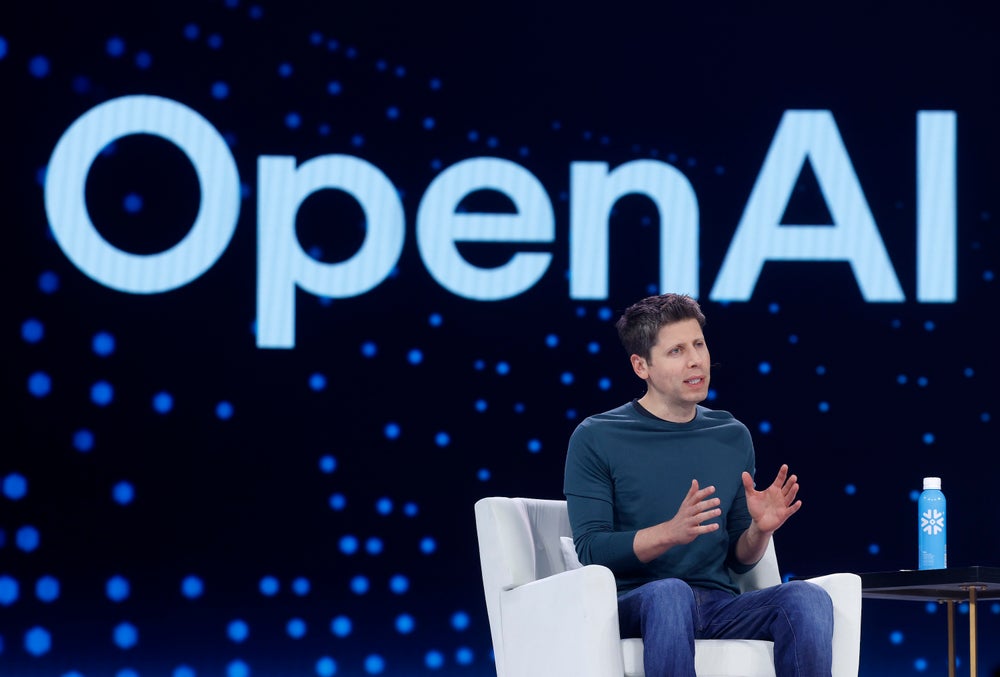
OpenAI CEO Sam Altman. Photo by Justin Sullivan/Getty Images

Still, Meta has successfully poached talent from OpenAI. According to a Thursday TechCrunch report, AI researcher Trapit Bansal, who has been working at OpenAI since 2022, has left the company for Meta. A Wednesday report from The Wall Street Journal revealed that Meta poached three additional OpenAI researchers who worked at OpenAI’s Zurich office: Lucas Beyer, Alexander Kolesnikov, and Xiaohua Zhai.

Beyer posted on X on Thursday that the trio did not receive $100 million signing bonuses, calling the rumor “fake news.”

Meta has also poached the CEO of $32 billion AI startup, Safe Superintelligence, Daniel Gross, and former GitHub CEO Nat Friedman.

Related: Meta Poaches the CEO of a $32 Billion AI Startup — After Trying to Buy the Company and Being Told No

Meta CEO Mark Zuckerberg, 41, has recently doubled down on a push for superintelligence, AI that exceeds human intelligence in reasoning, memory, and knowledge. According to a Bloomberg report from earlier this month, Zuckerberg is assembling a team of around 50 experts to work on superintelligence with the goal of one day infusing it across the company’s products, including the bestselling Ray-Ban Meta smart glasses.

Meta also made one of its largest deals yet this month, investing $14.3 billion in Scale AI, a startup that provides data to train AI systems. As part of the deal, Scale AI’s 28-year-old CEO Alexandr Wang will join Meta in a leadership role on the superintelligence team. The investment caused Scale AI’s valuation to more than double from $14 billion to $29 billion.

AI voice cloning startup Play AI is also reportedly in talks with Meta about an acquisition, though the deal has yet to be publicly announced.

Meta stock was up over 21% year-to-date at the time of writing. The company is one of the most valuable in the world, with a market capitalization of over $1.8 trillion. OpenAI was worth $300 billion as of late March.

Meta’s technology chief is calling OpenAI CEO Sam Altman “dishonest” for claiming that Meta is offering nine-figure compensation packages to new employees on its secretive AI superintelligence team.

According to The Verge, at a company-wide all-hands meeting on Thursday, Meta’s Chief Technology Officer, Andrew Bosworth, pushed back against Altman’s remarks last week that Meta was offering “$100 million signing bonuses” and “more than that” in compensation to poach OpenAI employees.

“Sam is just being dishonest here,” Bosworth, 43, said at the leaked meeting. “He’s suggesting that we’re doing this for every single person… Look, you guys, the market’s hot. It’s not that hot.”

The rest of this article is locked.

Join Entrepreneur+ today for access.

https://www.entrepreneur.com/business-news/meta-cto-sam-altman-dishonest-for-100m-bonus-claim/493945


A Business Owner’s Guide to Maximizing Summer Profits

Opinions expressed by Entrepreneur contributors are their own.

For certain businesses, summer is not just a season — it is an engine that drives success for the rest of the year. Hospitality and tourism businesses, for example, tend to make the bulk of their annual revenue between June and September due to increased travel, which leads to a surge in hotel occupancy, shopping, restaurant patronage, and tour and attraction bookings.

This concentrated period of activity presents an unparalleled opportunity for growth, especially for business leaders prepared to optimize finances, staffing and marketing. Here are three tips leaders in the hospitality, retail, service and tourism sectors can use to maximize those lucrative months.

Related: How Entrepreneurs Can Position Their Businesses for Growth This Summer

1. Budget for the rush

According to Deloitte’s 2025 summer travel outlook, 53% of Americans plan to go on vacation this summer, with average spend per household sitting just above $4,600. Smart financial planning is key to securing a share of this revenue. Business leaders can start by reviewing historical data, such as peak periods, sales numbers and bestselling products or services, to make revenue projections — keeping in mind that past performance is not always indicative of future results.

For example, landmark events such as Taylor Swift’s Eras Tour and Beyoncé’s Renaissance Tour injected more than $5 billion into the U.S. economy in Q3 2023, with concert-goers (respectively) spending an average of $1,500 and $1,800 on flights, food, hotels and tickets. Those won’t necessarily be replicable results. However, understanding consumer behavior during those periods can help business leaders prepare for future summer events, like the 2026 FIFA World Cup and the 2028 Summer Olympics, and tailor their offerings to maximize revenue opportunities.

Reviewing past expense reports is also crucial for creating a realistic, effective summer budget, as they provide a detailed record of where money was spent, allowing leaders to identify trends and potential cost increases. Business owners should also consider consulting financial and legal advisors to review their budgets, get advice on cash-flow management and re-examine supplier contracts.

2. Optimize operations

Reviewing past financial performance and consumer behavior also helps determine where to optimize operations. For retailers, that might mean ensuring that point-of-sale and inventory-management systems are equipped to handle a surge in demand. With potential for increased foot traffic, the store’s physical layout may also need to be updated to improve customer flow, reduce bottlenecks and enhance the shopping experience.

Having an adequately staffed, well-trained team is also crucial to a seamless customer experience. While installing self-service checkout stations to reduce the need to hire seasonal or temporary employees may be tempting, a 2024 Drexel University study found that human cashiers foster greater customer loyalty and repeat business.

With that in mind, leaders should prioritize the development of effective training programs that empower seasonal and temporary staff to provide exceptional service from day one. Then, they can explore technology solutions to automate scheduling, ensuring optimal staff coverage while minimizing administrative overhead.

3. Refresh marketing

Though plenty of Americans will continue to travel this summer, a 2025 outlook from the Bank of America Institute predicts more cautious consumer travel spending. For businesses in hospitality, retail, service and tourism, now is the time to sharpen marketing strategies to capture those limited dollars.

To gain a better sense of what audience members want out of their summer experience, business leaders might use online polls to gather input and foster a stronger connection. However, they also need to be prepared to pivot their strategies based on findings. To maximize impact, businesses should segment their audience and craft messaging that speaks directly to each segment’s interests. A tourism business, for example, may target adventure seekers, foodies and families — each will be drawn to different amenities and activities.

Related: 6 Strategies to Make Your Business Sizzle This Summer

Finally, collecting and amplifying user-generated content can be an excellent strategy for gaining brand exposure and showcasing original content. Using the business’s location geotag or a unique but simple hashtag can incentivize customers to share their experiences, delivering authentic social proof and expanding the reach of marketing efforts organically.

Summer is a key financial period for businesses in many sectors, but capitalizing on its potential requires strategic effort, not just wishful thinking. Business leaders need to optimize their financials and operations and give customers a compelling reason to choose them over the competition. In doing so, they will set themselves up to make the most of this busy season’s opportunities.

For certain businesses, summer is not just a season — it is an engine that drives success for the rest of the year. Hospitality and tourism businesses, for example, tend to make the bulk of their annual revenue between June and September due to increased travel, which leads to a surge in hotel occupancy, shopping, restaurant patronage, and tour and attraction bookings.

This concentrated period of activity presents an unparalleled opportunity for growth, especially for business leaders prepared to optimize finances, staffing and marketing. Here are three tips leaders in the hospitality, retail, service and tourism sectors can use to maximize those lucrative months.

Related: How Entrepreneurs Can Position Their Businesses for Growth This Summer

The rest of this article is locked.

Join Entrepreneur+ today for access.

https://www.entrepreneur.com/growing-a-business/a-business-owners-guide-to-maximizing-summer-profits/492979


Your Diversity Statement Isn’t Enough — Here’s What You Need to Do as a Leader to Drive Real Change

Opinions expressed by Entrepreneur contributors are their own.

As a manager, you’re not just responsible for engagement, productivity and retention — you’re responsible for creating opportunity. That’s the heart of inclusive leadership.

The data has been clear for years: the relationship between a manager and their employee is the most important driver of performance. As a leader, your role isn’t just operational — you are the connector, advocate and catalyst. You don’t just include your employees on the team — you equip them to belong.

The number one inclusive leadership behavior? Creating opportunity for and with your people.

Don’t let the noise around DEI distract you from this truth: when we generate opportunity, we scale inclusive leadership. Employees begin opening doors — not only for themselves, but for each other. This kind of leadership is collaborative, contagious and culture-defining.

Creating opportunity is about more than offering new tasks or promotions. It’s the discipline of making new things possible for every employee, based on who they are and what they need to thrive.

Here are seven powerful ways to lead more inclusively by creating opportunity:

1. Hiring and onboarding

Hiring with equity in mind means proactively sourcing diverse candidates and reducing bias at every stage — from how job descriptions are written to how interviews are conducted. Inclusive leaders work with cross-functional hiring panels, ask consistent questions and focus on qualifications, not assumptions.

Once hired, onboarding becomes the first real opportunity to demonstrate belonging. That means creating space for employees’ full identities — including preferred names and pronouns, accessibility needs and personal strengths — so they can contribute with confidence from day one.

Related: 11 Mindset Traits of Successful Entrepreneurs

2. Defining and living organizational values

Company values shouldn’t live in a handbook — they should be reflected in how strategy, culture and people decisions are made. Leaders are responsible for helping their teams connect the dots between the work they do and the values the company claims to uphold.

This includes defining what inclusive behavior looks like in action: showing respect for different identities, actively including underrepresented voices and holding people accountable when values are compromised. It’s about building a culture that’s not just high-performing, but values-driven.

3. Developing people intentionally

Inclusive leaders don’t just assign tasks — they create opportunities for meaningful growth. That starts by understanding what motivates each team member and leveraging tools like AI and collaborative learning to meet individual needs.

It also means recognizing that younger or less experienced employees often have more to contribute than they’re given credit for. Development should be a two-way street, with mentoring, project ownership and cross-level learning all part of the equation.

4. Giving feedback that builds trust

Feedback is a core leadership skill — but inclusive leaders go further by adapting how they deliver it. They know what works for one person may not work for another, and they take the time to learn each team member’s preferences around recognition, coaching and critique.

They also prioritize feedback as a system, not just a moment. That includes following up with internal candidates who weren’t selected for roles and giving them actionable guidance to grow. Feedback becomes not just a tool for accountability, but for opportunity.

5. Mentoring and sponsoring across lines of difference

Mentorship opens doors. Sponsorship pushes them open.

Inclusive leaders provide both — particularly to those who are underrepresented or less likely to receive informal advocacy. That might look like matching mentoring pairs across levels, functions, or backgrounds. Or speaking up for an employee’s promotion when they’re not in the room.

Sponsorship is especially powerful when it’s intentional, consistent and tied to performance, not proximity. It’s how high-potential talent rises — and how inclusion moves beyond intention to action.

Related: How to Revolutionize Your Organization Through the Power of Inclusive Leadership

6. Designing workplaces that engage everyone

Whether hybrid, remote or in-person, employees want balance and purpose, not just policies. Leaders set the tone by building cultures where flexible work is respected and connection isn’t left to chance.

That includes creating intentional forums for engagement, like skip-level meetings and cross-team collaborations. Employees want to feel seen by their leaders and connected to their organization’s mission. It’s not about checking boxes — it’s about cultivating energy, clarity and trust.

7. Advancing and promoting with equity in mind

Most employees define opportunity through growth. For some, that means promotions. For others, it’s added responsibilities, increased influence or specialized assignments.

Inclusive leaders ensure that advancement isn’t left to chance or informal networks. They evaluate whether internal opportunities are being equitably offered — and whether expectations around readiness, time-in-role, or leadership style are fair. In today’s workplace, especially with younger generations, long waits and outdated hierarchies won’t cut it. Opportunity has to be both visible and viable.

A new model for leadership

Inclusive leadership doesn’t belong to a single department or job title. It’s a mindset and skill set every employee should be invited to develop. Encourage your team to explore what inclusive leadership means to them — and create a culture where participation is welcomed, tracked, and tied to real results.

The more we build systems that equip every employee to lead inclusively — regardless of level — the more opportunity we generate across the organization.

Because the best leaders don’t just open doors.
They teach others how to do the same.

As a manager, you’re not just responsible for engagement, productivity and retention — you’re responsible for creating opportunity. That’s the heart of inclusive leadership.

The data has been clear for years: the relationship between a manager and their employee is the most important driver of performance. As a leader, your role isn’t just operational — you are the connector, advocate and catalyst. You don’t just include your employees on the team — you equip them to belong.

The number one inclusive leadership behavior? Creating opportunity for and with your people.

The rest of this article is locked.

Join Entrepreneur+ today for access.

https://www.entrepreneur.com/growing-a-business/your-diversity-statement-isnt-enough-heres-what-you/490891



How I Stopped Letting Emotion Sabotage My Leadership — And How You Can Too

Opinions expressed by Entrepreneur contributors are their own.

For years, I let fear, ego, and loyalty influence my biggest decisions. It felt noble. Human, even. But looking back, I can see how much it held us back.

Once I learned to pause, recognize what I was feeling and act from clarity — not emotion — everything changed. I became a better CEO. The business grew faster, ran smoother and became more profitable. And I showed up with a level of calm and confidence that transformed how others responded to me.

Now I lead with clarity, not chaos. And the difference is felt by everyone around me — my team, our clients, our partners and myself.

Related: 4 Emotional Struggles You Must Confront as an Entrepreneur

The real cost of emotion-driven leadership

As CEOs, we’re responsible for making decisions that serve the company’s long-term health. That doesn’t mean we stop feeling — it means we stop letting our emotions make the final call.

I’ve made decisions I thought were compassionate, only to realize they were driven by fear or ego. I kept underperforming team members because I was scared of confrontation. I over-accommodated a demanding client because I didn’t want to lose the deal. I held on to outdated systems because I’d built them and was too attached. I even took strategic advice I didn’t fully believe in, just because it came from someone I respected.

Each time, the result was the same: confusion, drag and unnecessary setbacks. The team felt it. Our clients felt it. And I felt it most of all.

The three emotional triggers behind bad decisions

Almost every poor decision I made traced back to one of three emotional undercurrents: fear, fear of abandonment, and ego. Whether it was the fear of failure, of losing key people, or of being seen as wrong or weak, these emotions clouded my ability to lead clearly. Ego, especially, was just a sneaky form of fear disguised as confidence.

The shift that changed everything

Today, I use a simple internal check. If I don’t feel calm, comfortable, and confident, I don’t move forward. I pause. I name the emotion—whether it’s fear, defensiveness, or discomfort—and I picture it sitting in the passenger seat, not behind the wheel. Then I act from what’s best for the company, not from my own need to feel safe or seen.

This mental habit has changed how I communicate, make decisions, and lead under pressure.

What happened when I started leading with clarity

I started prioritizing performance over loyalty. I no longer let clients dictate terms that didn’t work for the team. I stopped holding on to systems that no longer served us. I made tough financial calls faster and communicated them more clearly. And I started trusting our strategic vision over outside noise.

The business responded. We moved faster, executed better, and gained more trust from clients. Internally, the culture became more open and resilient. The team knew I was leading from stability, not stress.

Related: 8 Ways Emotionally Ignorant Entrepreneurs Sabotage Their Teams

The habit that made me a better CEO

Of all the things I’ve learned from great coaches, books and peers, this was the most transformational: pause and check for emotional interference. When in doubt, slow down. Notice what you’re feeling. Then lead anyway — from a place of grounded clarity, not reaction.

That’s how I stopped being the biggest bottleneck in my business.
And it’s how I became the kind of leader I always wanted to be.

For years, I let fear, ego, and loyalty influence my biggest decisions. It felt noble. Human, even. But looking back, I can see how much it held us back.

Once I learned to pause, recognize what I was feeling and act from clarity — not emotion — everything changed. I became a better CEO. The business grew faster, ran smoother and became more profitable. And I showed up with a level of calm and confidence that transformed how others responded to me.

Now I lead with clarity, not chaos. And the difference is felt by everyone around me — my team, our clients, our partners and myself.

The rest of this article is locked.

Join Entrepreneur+ today for access.

https://www.entrepreneur.com/leadership/how-i-stopped-letting-emotion-sabotage-my-leadership/492547


The Data Looks Bad — But Is It? Here’s When You Should Ignore Your Metrics (and When to Panic).

Opinions expressed by Entrepreneur contributors are their own.

Here’s a fun thing that happens in product management. You wake up one morning and your daily active users are down 15%. Your conversion rate, though? Up 8%. Customer satisfaction scores just hit an all-time high, but your churn rate is creeping upward. Your metrics dashboard looks like a Jackson Pollock painting, except instead of paint splatters, it’s conflicting signals that make you question everything you thought you knew about your product.

The thing about metrics is that they’re like teenagers. Sometimes they’re telling you something important. Sometimes they’re just being dramatic. The trick is figuring out which is which before you make a decision you’ll regret.

Let’s start with a fundamental truth: Not all metrics deserve equal attention at all times. This sounds obvious until you’re in a meeting where someone is freaking out because time-on-page dropped by 12 seconds. Is that bad? Maybe. Or maybe you just made your product more efficient.

According to research from McKinsey, companies that excel at data-driven decision making are 23 times more likely to acquire customers. Great. But here’s what they don’t tell you: Being data-driven doesn’t mean reacting to every data point like it’s a fire alarm.

If you were driving a car and every warning light demanded immediate action, you’d never get anywhere. Some lights matter more than others. Some can wait. The same principle applies to product metrics. Yet somehow, we’ve created a culture where every metric fluctuation triggers a crisis meeting.

Related: 5 Steps to Creating Metrics That Matter for Your Company

Decision framework

So, when should you actually panic? Here’s a framework that’s served me well.

First, look for metric combinations that tell a story. Single metrics lie. When daily active users drop but session duration increases, that’s not necessarily bad. Maybe you’re shedding casual users while your core audience becomes more engaged. That could actually be progress.

The real warning signs come in clusters. Declining user growth plus increasing churn plus dropping engagement? Now you’ve got a pattern worth investigating. It’s like medical symptoms. A headache alone might mean nothing. A headache with fever and sensitivity to light? Time to see a doctor.

PayPal discovered this the hard way in its early days. They were obsessing over user acquisition metrics while missing the bigger picture: Their fraud rates were climbing faster than their legitimate transaction volume. The metrics were all there, but nobody was looking at them together.

Second, distinguish between leading and lagging indicators. Some metrics predict the future. Others just confirm what already happened. Confusing the two is like using your rearview mirror to navigate forward.

Customer support ticket volume? That’s often a leading indicator. When it spikes, something is broken. Revenue? Usually lagging. By the time revenue drops, the problem started months ago.

Netflix figured this out when it noticed password sharing complaints increasing before subscriber growth stalled. The complaints were the canary in the coal mine. The growth stall was just the inevitable result.

Third, understand your metric’s natural volatility. Some metrics are drama queens by nature. They fluctuate wildly as part of their normal behavior. Others are steady until something’s genuinely wrong.

Ecommerce conversion rates can swing 30% day to day based on traffic sources, time of month and even weather patterns. A single day’s dip means nothing. But if your enterprise software’s monthly recurring revenue suddenly drops? That’s not normal volatility. That’s a customer jumping ship.

Spotify learned this when it initially panicked over daily listening hour variations. Turns out, people just listen to less music on Tuesdays. Once they understood the natural patterns, they could spot actual anomalies.

Fourth, consider the cost of being wrong. What happens if you ignore this metric and you’re wrong? What happens if you panic and you’re wrong?

Sometimes the cost of overreacting exceeds the cost of waiting. Imagine redesigning your entire onboarding flow because new user activation dropped for a week. You spend months on the project, only to discover the drop was seasonal.

Other times, waiting is catastrophic. When security breach indicators spike, you don’t wait for statistical significance. You act immediately because the downside of being wrong is minimal compared to the downside of being right but slow.

Related: Use the Metrics That Really Matter in Your Business

Metric hierarchy

Here’s my advice. Build yourself a metric hierarchy. At the top, put the three to five numbers that genuinely predict your business’s health. These get daily attention. Everything else? Check weekly or monthly.

More importantly, train your team to think in stories, not statistics. When someone comes to you with a metric panic, ask them to tell you the user story behind the number. What’s actually happening to real people using your product?

The truth is, most metric movements are noise. The signal is rare, which is precisely why it’s so valuable when you find it. The best product managers I know have developed an almost intuitive sense for which metrics deserve attention.

Until you develop that intuition, remember this: Your metrics are tools, not masters. They should inform your decisions, not make them for you. Sometimes, the wisest decision is to close the dashboard and talk to an actual user.

Because at the end of the day, products succeed when they solve real problems for real people. No metric, no matter how sophisticated, changes that fundamental truth.

Related: Why Focusing on KPIs Too Much Can Backfire

Here’s a fun thing that happens in product management. You wake up one morning and your daily active users are down 15%. Your conversion rate, though? Up 8%. Customer satisfaction scores just hit an all-time high, but your churn rate is creeping upward. Your metrics dashboard looks like a Jackson Pollock painting, except instead of paint splatters, it’s conflicting signals that make you question everything you thought you knew about your product.

The thing about metrics is that they’re like teenagers. Sometimes they’re telling you something important. Sometimes they’re just being dramatic. The trick is figuring out which is which before you make a decision you’ll regret.

Let’s start with a fundamental truth: Not all metrics deserve equal attention at all times. This sounds obvious until you’re in a meeting where someone is freaking out because time-on-page dropped by 12 seconds. Is that bad? Maybe. Or maybe you just made your product more efficient.

The rest of this article is locked.

Join Entrepreneur+ today for access.

https://www.entrepreneur.com/growing-a-business/heres-why-you-shouldnt-obsess-over-metrics/493395


Here’s What the ‘One, Big, Beautiful Bill’ Means for the Franchise Industry

New federal legislation, dubbed the “One, Big, Beautiful Bill,” is drawing attention for its potential impact on the franchise sector. Backed by the International Franchise Association (IFA), the bill includes tax provisions that could deliver significant financial relief for franchise small businesses and their employees.

According to IFA, the legislation would benefit the more than 830,000 franchise small businesses operating across the United States, which together employ millions of workers. On June 26, several franchise owners from around the country joined IFA president and CEO Matt Haller at the White House to discuss the bill’s potential impact with President Donald Trump.

Related: Considering franchise ownership? Get started now to find your personalized list of franchises that match your lifestyle, interests and budget.

“The numbers are clear: The tax provisions in the One Big, Beautiful Bill will have a hugely positive impact on America’s 830,000 franchise small business owners and their nine million employees across a range of industries, from restaurants to retailers to hotels and home services,” Haller says. “IFA, our member brands and franchise owners have been laser-focused on ensuring permanent tax relief. IFA thanks President Trump for putting the importance of protecting franchise small business owners front and center, and lawmakers for their work to get this bill across the finish line.”

The proposed legislation includes several tax changes with the potential to significantly impact the franchise industry. One key provision is the extension of the 199A deduction, which allows pass-through entities — such as LLCs and S corporations — to deduct a portion of their income. This is especially relevant to franchising, where most franchisors operate under pass-through structures.

Related: 3 Lessons I Learned Selling My Billion-Dollar Company

Another major provision is the continuation of bonus depreciation, which would enable franchises to expense an estimated additional $16 billion in the first 12 months after the bill takes effect — capital that could be put towards equipment purchases, renovations or new location development.

The bill also proposes a shift in how businesses calculate their interest deductions, moving from EBIT (earnings before interest and taxes) to EBITDA (which includes depreciation and amortization). This adjustment could allow franchise businesses to deduct an additional $6 billion in interest expenses.

For frontline workers, the legislation offers potential savings as well. A proposed elimination of federal taxes on tips could result in $6 billion in collective annual savings for tipped employees, while removing federal taxes on overtime pay could save franchise workers more than $300 million each year. Together, these provisions aim to boost both operational flexibility for business owners and take-home pay for employees across the franchise sector.

Related: How I Turned AI Into a Teammate, Not Just a Tool — and How You Can, Too

New federal legislation, dubbed the “One, Big, Beautiful Bill,” is drawing attention for its potential impact on the franchise sector. Backed by the International Franchise Association (IFA), the bill includes tax provisions that could deliver significant financial relief for franchise small businesses and their employees.

According to IFA, the legislation would benefit the more than 830,000 franchise small businesses operating across the United States, which together employ millions of workers. On June 26, several franchise owners from around the country joined IFA president and CEO Matt Haller at the White House to discuss the bill’s potential impact with President Donald Trump.

Related: Considering franchise ownership? Get started now to find your personalized list of franchises that match your lifestyle, interests and budget.

The rest of this article is locked.

Join Entrepreneur+ today for access.

https://www.entrepreneur.com/franchises/what-the-big-beautiful-bill-means-for-franchise-owners/493935


Getting a Wharton MBA Was ‘a Waste of Time,’ According to a Global Bank CEO. Here’s the Degree He Recommends Instead.

Bill Winters, the CEO of 160-year-old bank Standard Chartered, says that the MBA he earned from the University of Pennsylvania Wharton School of Business was a “waste of time” — but the humanities undergraduate degree he received from Colgate University was more worth it.

In an interview that aired earlier this week, Bloomberg’s Francine Lacqua asked Winters, 63, what he would recommend for young people to study. Winters responded by saying that he studied international relations and history as an undergraduate, graduating in 1983. He recommended those fields, stating that majoring in those areas taught him “how to think.”

But his MBA from Wharton in 1988 was unnecessary, he said.

“I got an MBA later, but that was a waste of time,” Winters told Bloomberg. “I learned how to think at university. For the 40 years since I left university, those skills have been degraded, degraded, degraded.”

Related: Goldman Sachs CIO Says Coders Should Take Philosophy Classes — Here’s Why

Winters explained that critical thinking skills are “coming back” and becoming more important in the workforce now because AI is taking over tasks on the technical side.

“I really think in the age of AI that it’s critical that you know how to think and communicate,” Winters said.

He clarified that communication doesn’t mean to act like ChatGPT and churn out answers, but to know an audience and anticipate their needs with curiosity and empathy. Technical skills are being needed “less and less,” Winters said.

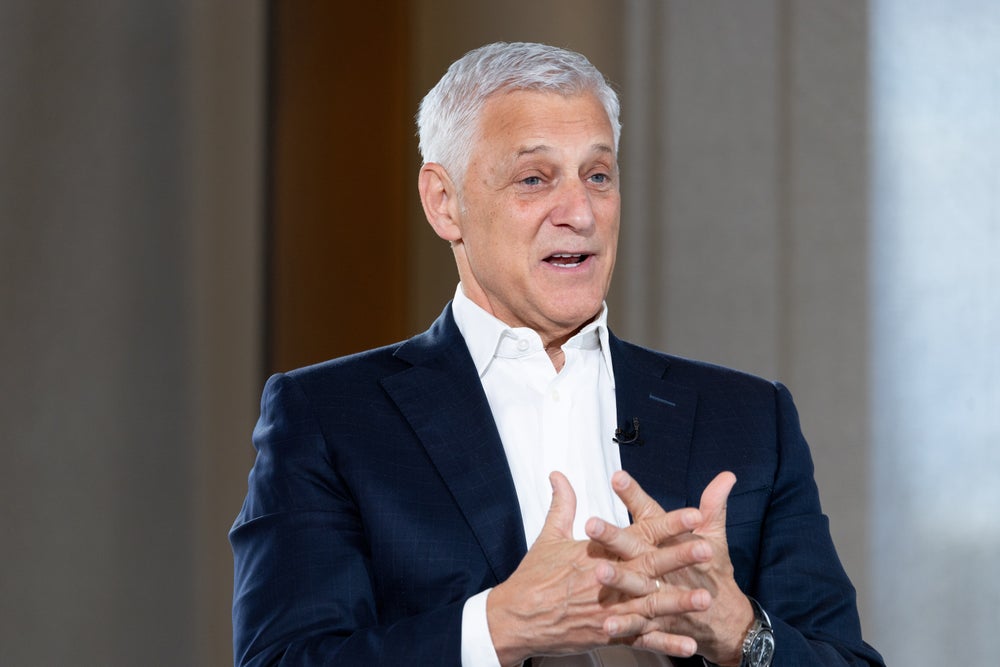
Bill Winters. Photographer: Jason Alden/Bloomberg via Getty Images

Winters started his career at JPMorgan in 1983, rising over nearly three decades to become the co-CEO of JPMorgan’s investment bank. He was considered a potential successor to JPMorgan CEO Jamie Dimon, but was ousted by Dimon in October 2009. He started his own fund management business, Renshaw Bay, in 2011 and joined Standard Chartered as CEO in 2015.

Related: Using ChatGPT? AI Could Damage Your Critical Thinking Skills, According to a Microsoft Study

Winters isn’t the only executive encouraging the study of the humanities. Goldman Sachs’ Chief Information Officer, Marco Argenti, wrote in a post in the Harvard Business Review last year that engineers should take philosophy classes in addition to standard engineering courses. That’s the advice he gave his college-age daughter who was thinking about what to study.

Meanwhile, big tech companies are rapidly adopting AI in their operations as the technology sweeps over technical skills. AI generates about 30% of new code at Google and Microsoft, and up to half of software development within the next year at Meta.

“Vibe coding,” or having AI code entire apps and projects based on prompts, is also on the rise. Even Google CEO Sundar Pichai stated earlier this month that he had used AI coding assistants to “vibe code” a webpage in his spare time.

Bill Winters, the CEO of 160-year-old bank Standard Chartered, says that the MBA he earned from the University of Pennsylvania Wharton School of Business was a “waste of time” — but the humanities undergraduate degree he received from Colgate University was more worth it.

In an interview that aired earlier this week, Bloomberg’s Francine Lacqua asked Winters, 63, what he would recommend for young people to study. Winters responded by saying that he studied international relations and history as an undergraduate, graduating in 1983. He recommended those fields, stating that majoring in those areas taught him “how to think.”

But his MBA from Wharton in 1988 was unnecessary, he said.

The rest of this article is locked.

Join Entrepreneur+ today for access.

https://www.entrepreneur.com/business-news/standard-chartered-ceo-wharton-mba-was-a-waste-of-time/493868


Salesforce CEO Says AI Is Doing Over 30% of Tasks at the Company: ‘Higher-Value Work’

Salesforce CEO Marc Benioff said AI is handling a lot of work at his company previously done by humans — up to half of all work.

In an interview on Bloomberg’s The Circuit with Emily Chang on Thursday, Benioff said that AI is doing “30% to 50% of the work at Salesforce now.”

Related: AI Is Going to ‘Replace Everybody’ in Several Fields, According to the ‘Godfather of AI.’ Here’s Who He Says Should Be ‘Terrified.’

Salesforce sells AI products that tout the ability to handle tasks without human supervision, which Benioff told Bloomberg has about 93% accuracy. Customers include entertainment behemoth Walt Disney Co., among others.

“All of us have to get our head around this idea that AI can do things that before we were doing,” Benioff added. “We can move on to do higher-value work.”

Tech companies are incorporating AI into daily tasks across Silicon Valley. At Microsoft, engineers are using AI to write 20% to 30% of the code for company projects, CEO Satya Nadella said at Meta’s LlamaCon conference in April.

Related: Google CEO Sundar Pichai Says AI Will Advance Humanity in These 4 Key Ways

Meta CEO Mark Zuckerberg indicated at the same conference that AI will take over half of the company’s software development within the next year.

Meanwhile, CEO Sundar Pichai said on an earnings call in April that the company was using AI to write “well over 30%” of new code, up from 25% in October. Google employees are increasingly accepting AI-suggested code, he said.

https://www.entrepreneur.com/business-news/salesforce-ceo-marc-benioff-ai-is-handling-half-of-tasks/493870