If You Ask This Question During a Job Interview, You Might Get Ghosted

These days, it takes an average of six months for job applicants to get hired for a new role, according to a recent Wall Street Journal report.

Given that timeline — and the fact that some job-seekers might put in hundreds of applications before they receive an offer letter — it can pay, literally, to be strategic during the interview process.

Many hiring managers will ask interviewees if they have any questions for them at the end of an interview. It’s an opportunity for candidates to further express their interest in and qualifications for the role.

Related: The Ultimate Guide on How to Prepare for a Job Interview

There are a lot of great questions to ask in an interview — and some that might be best avoided, depending on your career goals.

A new study from SideHustles.com found that although pay transparency is the No. 1 most important thing gig workers look for in job listings, hiring managers will ghost one in 10 candidates who ask about pay during an interview.

The lack of transparency around compensation can not only throw a wrench in an applicant’s job search but also make it more difficult for employers to find the right talent.

Related: 7 Mistakes to Avoid Making During a Job Interview, According to a Business Etiquette Expert

One in four gig workers would never apply to jobs without listed pay, and 68% don’t trust companies that hide pay information because they believe it means the job pays poorly (74%), has a high turnover rate (49%) or fosters a toxic culture (35%), according to the report.

What’s more, 20% of workers say that pay transparency in their industry has gotten worse, per SideHustles.

Related: Why Do You Want to Work Here? Here’s How You Can Ace the Question Every Time

Hannah Williams, the Gen Z content creator behind the account Salary Transparent Street, told Entrepreneur that young professionals who want to make sure their salaries are fair should always be prepared to negotiate once they receive an offer — and wait 24 hours before accepting any new role.

“Even if you’re satisfied with the rate, tell them you need 24 hours to review the offer,” Williams said. “This has not only helped me get more money in the final offer if the company is pressured to fill the role, but has also brought me peace of mind in thinking through and making my final decision.”

These days, it takes an average of six months for job applicants to get hired for a new role, according to a recent Wall Street Journal report.

Given that timeline — and the fact that some job-seekers might put in hundreds of applications before they receive an offer letter — it can pay, literally, to be strategic during the interview process.

Many hiring managers will ask interviewees if they have any questions for them at the end of an interview. It’s an opportunity for candidates to further express their interest in and qualifications for the role.

The rest of this article is locked.

Join Entrepreneur+ today for access.

https://www.entrepreneur.com/living/the-job-interview-mistake-that-causes-hiring-managers-to/493867


The Costly Email Mistake Too Many Founders Make — and How to Avoid It

Opinions expressed by Entrepreneur contributors are their own.

There’s a reason every website you visit wants your email address: it’s the most valuable type of contact info in the digital world. Last year, email marketing revenue surpassed $9.5 billion, and by 2028, it’s projected to reach $18.9 billion.

But here’s where so many founders get it wrong: they treat email like a loudspeaker. Build or buy a list, send a “blast,” and repeat whenever you want to make more sales. Only email doesn’t work like that — at least, not if you want to connect with people and see your revenue increase. Your email list isn’t just a collection of email addresses. It’s a living system, and when you neglect it, your sender reputation suffers.

Related: Don’t Sleep on Email Marketing — Here’s Why It’s Still Your Business’s Most Powerful Tool

What taints your email sender reputation

Every email sender has a reputation with inbox providers – services like Google, Yahoo or Outlook that make email communication possible. That reputation helps their algorithms determine whether an email should go to the inbox or the spam folder.

In simple terms, it’s like your email trust score. The better it is, the more likely your messages will reach your audience. The worse it gets, the harder it becomes to land anywhere near the inbox.

Unfortunately, many well-meaning founders damage their reputation without even realizing it. Here are some of the common mistakes they make:

  • Buying or scraping lists
  • Never cleaning or validating email addresses
  • Skipping email warmup altogether

Whenever you send an email, you’re building – or tarnishing – your reputation with email providers. And once that reputation is damaged, fixing it is a lot harder than protecting it in the first place.

So, what can you do today to improve and maintain a strong sender reputation and get your emails into the inbox? Follow this checklist below, and your email marketing will become one of the most reliable channels in your business.

Use your own email list

Purchasing a list of contacts and dumping it into your CRM or email platform may feel like a quick win, but it almost always backfires. I’ve seen countless business leaders take this shortcut and pay the price – bounces, spam complaints and dismal engagement.

To reap the benefits of email marketing, build and nurture your own email list. It takes more effort, but the results are real and sustainable.

Make sure everyone opts in

Building your own email list doesn’t mean you can simply add people to it. Customers and prospects need to subscribe to your emails and grant you explicit permission to reach out. It might take longer to grow your list this way, but the payoff is huge: higher engagement, better deliverability and a list full of people who want to hear from you.

Warm up your domain and IP

Many founders get so excited about sending that first email that they skip a crucial step: warming up their domain and IP. That can tank your email deliverability before you even get started.

Email warmup is closely tied to your sender reputation:

  • If you’ve never sent a mass email, reaching out to thousands of people out of the gate is a huge red flag to email providers.
  • Instead, start slowly. Increase your volume gradually to build trust with Gmail, Outlook, Yahoo and other providers. Or find a good email warm-up tool.
  • Even regular senders can benefit from warming up their emails, especially after switching platforms or letting their lists go cold. It helps re-establish credibility and improve inbox placement.

Check your contacts regularly

Even if everyone on your list has opted in, that doesn’t mean their email address is still valid or that they’re still clicking on your emails. An astounding 28% of the average database degrades every year. People change jobs, abandon their inboxes or mark your messages as spam if they’re no longer interested.

Regular list pruning helps you filter out:

Email providers are watching how your list behaves. High bounce rates, spam complaints and low click rates affect your sender reputation. Clean your list at least once a quarter — or more often if you send campaigns weekly.

Look at the big picture

Open rates used to be the end-all-be-all of email marketing. But thanks to privacy updates and stricter data regulations, those numbers are less reliable than ever.

If you want a true picture of how your emails are performing, shift your focus to metrics that offer more in-depth insights:

  • Click-through rates — are people taking action?
  • Bounce rates — could your list be outdated?
  • Spam complaints — are your messages annoying your audience?
  • Engagement over time — are people clicking or tuning you out?

These numbers reveal how your audience feels about your emails and whether inbox providers perceive you as trustworthy. Focus on long-term engagement, not just one-off opens.

Related: 8 Simple Email Marketing Tips to Improve Your Open and Click Through Rates

Think like your subscriber

Before you send your next email, stop and ask: Would I open this? Would I care?

So many brands write for themselves, not for the person on the other side of the screen. But if you want people to engage, you have to earn their attention. That means being clear, consistent and genuinely helpful.

Email marketing isn’t dead, but lazy email marketing definitely is.

Treat your list with the same respect you’d want in your own inbox. Build trust over time. Show up regularly. Say something worth reading. That’s how you stay out of spam — and in business.

There’s a reason every website you visit wants your email address: it’s the most valuable type of contact info in the digital world. Last year, email marketing revenue surpassed $9.5 billion, and by 2028, it’s projected to reach $18.9 billion.

But here’s where so many founders get it wrong: they treat email like a loudspeaker. Build or buy a list, send a “blast,” and repeat whenever you want to make more sales. Only email doesn’t work like that — at least, not if you want to connect with people and see your revenue increase. Your email list isn’t just a collection of email addresses. It’s a living system, and when you neglect it, your sender reputation suffers.

Related: Don’t Sleep on Email Marketing — Here’s Why It’s Still Your Business’s Most Powerful Tool

The rest of this article is locked.

Join Entrepreneur+ today for access.

https://www.entrepreneur.com/growing-a-business/the-costly-email-mistake-too-many-founders-make-and-how/492465


This Former Marine Beat Death Twice and Turned His Wake-Up Call Into A Wellness Business

Opinions expressed by Entrepreneur contributors are their own.

Anthony Vennare tried to live a healthy lifestyle. As a former Marine and founder of multiple gyms, he meticulously tracked his workouts, supplements, and health data. “I was insanely fit, using every wearable, taking supplements, tracking food down to the ounce,” he says. “But I still got cancer.”

Vennare was diagnosed with a brain tumor at age 30. He underwent treatment during the height of the COVID-19 pandemic, isolated and uncertain about his future. A few years later, the cancer returned, forcing him to confront his mortality all over again. Vennare had watched multiple family members, including his father and grandmother, die from brain tumors. When he got his diagnosis, it felt like a death sentence.

But despite the tragic news, Vennare did something unexpected. He ditched the supplement hype and performance-obsessed culture and poured his energy into building Fitt Insider, a media platform that shares industry news and insights.

Vennare shared his courageous story in the latest episode of One Day with Jon Bier.

Built on facts, not fluff

Fitt Insider was never about profit. Vennare started it with his brother as a newsletter to make sense of a trillion-dollar industry—and share that info with business leaders in the space. “It wasn’t meant to be a business at all,” said Vennare. “I wanted data. I wanted news. I wanted a filter and a curation lens that gave me trust and the things I need to know about.”

But the insights were so valuable that they gained more readers organically. By 2020, the audience had exploded. It turned out that there was a huge audience hungry for trustworthy, well-curated analysis.

From its humble beginnings, Fitt Insider has evolved into a hub for health and wellness operators, including a job board, recruiting firm, podcast, consulting services, investment fund, and a B2B event series.

“We reach hundreds of thousands of people every week. No nonsense. No fluff.”

Related: 4 Things Every B2B Brand Should Be Doing to Earn Trust in 2025

Sticking to the basics

Vennare says the lack of regulation in the health and supplement industry allows bad actors to profit from misinformation and ineffective products.

“There’s just so much nonsense and so much being sold to the consumer from every creator,” explains Vennare. “There was a study that came out that said that a large percentage of supplements on Amazon have no traces of the actual ingredient that they’re selling.”

He believes much of the wellness industry is hype. Most people don’t need tech-forward solutions or diagnostics with one hundred biomarkers. They simply need to make some free and easy lifestyle changes.

“A majority of the people, especially in the United States, need to walk, eat healthier, be active, be off their phones, and be a little bit more social.”

After two serious health scares, Vennare no longer believes in biohacking or “doing everything right” as the answer. He stripped his routine down to the essentials.

Related: The Supplement Business Has a Trust Problem. This Tech Startup Wants to Fix That.

Relying on integrity

Fitt Insider maintains a level of editorial integrity that’s rare in B2B media.

It’s that grounded perspective that drives Vennare’s work today. He’s no longer interested in chasing flashy exits or jumping on wellness fads. Now in recovery, Vennare is focused on living simply, staying active, and building something lasting. “I’m not chasing optimization anymore,” Vennare said. “I just want to feel good, look good, and be active.”

Related: 70 Small Business Ideas to Start in 2025

Anthony Vennare tried to live a healthy lifestyle. As a former Marine and founder of multiple gyms, he meticulously tracked his workouts, supplements, and health data. “I was insanely fit, using every wearable, taking supplements, tracking food down to the ounce,” he says. “But I still got cancer.”

Vennare was diagnosed with a brain tumor at age 30. He underwent treatment during the height of the COVID-19 pandemic, isolated and uncertain about his future. A few years later, the cancer returned, forcing him to confront his mortality all over again. Vennare had watched multiple family members, including his father and grandmother, die from brain tumors. When he got his diagnosis, it felt like a death sentence.

But despite the tragic news, Vennare did something unexpected. He ditched the supplement hype and performance-obsessed culture and poured his energy into building Fitt Insider, a media platform that shares industry news and insights.

The rest of this article is locked.

Join Entrepreneur+ today for access.

https://www.entrepreneur.com/living/former-marine-turns-health-scare-into-b2b-wellness-media/493863


Jeff Bezos’ Venice Wedding Weekend Is Underway. Here Are the Celebrities Who Have Arrived and Who Else Is Expected.

The threat of protests has not dampened the mood of the nuptials of Amazon founder Jeff Bezos and journalist Lauren Sánchez in Venice. The multi-day affair, dubbed the “Wedding of the Century,” is reportedly costing upwards of $55 million and has drawn celebrity guests from around the world, as well as vocal local protestors.

About a dozen local organizations—including housing advocates, anti-cruise ship campaigners, and university groups—have united under the banner “No Space for Bezos.” They say that their city is being treated as a billionaire’s playground and highlights wealth inequity. Their small-scale demonstrations have included hanging protest banners on iconic landmarks, and a Bezos dummy was floated down the Grand Canal in an Amazon box clutching cash.

Related: Bezos-Sánchez Wedding Draws Business, Protests to Venice

Despite locals not feeling the love in the air, several celebs have arrived to celebrate the couple: Kim Kardashian, Khloé Kardashian, Kris Jenner, Oprah Winfrey, Orlando Bloom, Diane von Furstenberg, Ivanka Trump, Jared Kushner, and Tom Brady have all been spotted.

Jeff Bezos and Lauren Sanchez are seen leaving the Aman Hotel in Venice ahead of Jeff Bezos’ wedding on June 26, 2025, in Venice, Italy. (Photo by Stefano Mazzola/GC Images)

Amazon founder Jeff Bezos and Lauren Sanchez gesture in direction of a Bezos’ lookalike from the taxi boat at the Aman Hotel in Venice on June 26, 2026. ANDREA PATTARO/AFP | Getty Images

Kris Jenner, Khloe Kardashian, and Kim Kardashian stand on a taxi boat as they leave the Gritti Palace Hotel ahead of the wedding of Amazon’s founder Jeff Bezos with Lauren Sanchez in Venice on June 26, 2026. MARCO BERTORELLO/AFP via Getty Images

Other notable names expected to attend are Leonardo DiCaprio, Mick Jagger, entertainment mogul Barry Diller, and NFL Hall of Famer Tony Gonzalez, who is Sánchez’s ex-boyfriend. CBS News reports that the guest list is capped at around 200, and at least 95 private planes have requested landing permission at Venice’s Marco Polo Airport.

The official ceremony is set for Friday on the Island of San Giorgio Maggiore and will feature a performance by Matteo Bocelli, son of Andrea Bocelli.

Following the ceremony, the newlyweds and their guests will dine at the Arsenal of Venice, a shipyard on the city’s outskirts.

Related: Jeff Bezos’ Miami Neighbor Sells Plot of Land for $110M

The threat of protests has not dampened the mood of the nuptials of Amazon founder Jeff Bezos and journalist Lauren Sánchez in Venice. The multi-day affair, dubbed the “Wedding of the Century,” is reportedly costing upwards of $55 million and has drawn celebrity guests from around the world, as well as vocal local protestors.

About a dozen local organizations—including housing advocates, anti-cruise ship campaigners, and university groups—have united under the banner “No Space for Bezos.” They say that their city is being treated as a billionaire’s playground and highlights wealth inequity. Their small-scale demonstrations have included hanging protest banners on iconic landmarks, and a Bezos dummy was floated down the Grand Canal in an Amazon box clutching cash.

Related: Bezos-Sánchez Wedding Draws Business, Protests to Venice

The rest of this article is locked.

Join Entrepreneur+ today for access.

https://www.entrepreneur.com/business-news/jeff-bezos-lauren-sanchez-wedding-kicks-off-in-venice/493849


Her Show Was Canceled – But the Setback Taught Busy Philipps a Powerful Lesson for Creators and Entrepreneurs

Opinions expressed by Entrepreneur contributors are their own.

Busy Philipps wasn’t trying to disrupt the celebrity marketing model when she first cried on Instagram stories. She wasn’t pitching brand deals or testing a strategy. She was just being real. But it turns out that unfiltered vulnerability — streamed to millions — wasn’t just cathartic. It was transformative.

Long before “authentic marketing” became a buzzword, Philipps was living it. And in doing so, the Freaks and Geeks and Dawson’s Creek actress discovered something Hollywood had long taught her to avoid: Being yourself online can actually be a superpower.

“Since I was a teenager, how I was portrayed in the media was always just very dependent on a reporter and the space they had allotted for a profile of a young actress like myself,” Philipps says. “I loved being able to have a direct line to people… being able to put [myself] directly out to the fans.”

Philipps’ Instagram stories marked a turning point in how she connected with the public. Rather than polished outcomes, she shared messy, behind-the-scenes moments to build deeper connections. And after years of curated press coverage and red carpet appearances, social media gave her the chance to control her own narrative and pursue opportunities she was passionate about.

Related: From Pennies to Millions: What It Felt Like to Make Money for the First Time

Her breakthrough moment came after her first late-night show, Busy Tonight, was canceled. In the old celebrity playbook, that kind of public career pivot would’ve been tightly managed. Philipps took another route — she processed her disappointment openly. “Oh, honey, I dwell,” she says. “I was just deeply feeling the injustice of the thing…but the more meetings we took, the more I thought, Why do these people get to determine what success looks like for me?“

Instead of jumping on the next available offer, Philipps paused and listened to her instincts. She passed on a major deal, ultimately paving the way for her QVC series, Busy This Week. “I called [executive producer Caissie St. Onge] and said, ‘Just hear me out. I feel like we can go directly to advertisers and get them to fund our talk show.'”

That gut-driven decision led Philipps to a larger realization: Creators could bypass traditional gatekeepers and build something of their own. For entrepreneurs, the takeaway is equally powerful: Don’t just chase the next opportunity. Wait for the one that aligns with your values.

Related: 5 Secrets to Success From a Sustainable Business That’s Grown 95% in 3 Years

Today, Philipps is much more than an actress — she’s a producer, podcast host, QVC personality and investor in mission-driven brands. What sets her apart isn’t just the breadth of her work, but the intentional way she uses her influence. On her QVC series, every product is selected with purpose, and many sell out quickly.

“There was a dress that Caissie wore that sold out immediately,” Philipps shares. “And when Tina Fey was on the show, there was this slightly terrifying Christmas squirrel that she had a lot to say about — but that squirrel sold out less than a week later.”

As a late-night host, Philipps’ approach is collaborative, honest and driven by care — a strategy that any entrepreneur can learn from. “I might be a f****** visionary, but I didn’t go to business school, and I don’t know how to code,” she says. “You’re only as good as the people you’re working with. QVC has been an incredible partner because they’re open to all the ideas.”

Related: Want to Work With Influencers? Here’s What Small Business Owners Need to Know.

Philipps brings that same mindset to investing. She doesn’t partner with a brand unless she believes in it. “With [BEHAVE Candy], I literally was just buying it,” she says. “Then my agent brought it to me, and I was like. ‘Familiar with the brand? I literally have it in my pantry.'”

What matters most to Philipps is the “why” behind a business. The brands she supports, including BEHAVE and Period., share a common purpose. They’re built by founders who care about making a positive impact, not just turning a profit.

“We have a surplus of s*** in the world, so…why? Why do we want it? Why do we need it? What good is it to the world? And what good are you gonna be to the world?”

By leading with her values, Philipps has built a following that trusts her deeply, supporting the products and platforms she stands behind. That connection is the foundation of long-term influence. Whether you’re an actress or a small business owner, people are attracted to authenticity with a purpose.

As Philipps puts it: “Is it doing something good in the world? That’s what matters to me.”

These are some of the principles that Philipps followed to get to where she is today:

  • Own your voice. Don’t wait for permission to share your story. People connect with truth more than polish.
  • Take your time. It’s okay to dwell after a setback. Wait for what feels right.
  • Surround yourself with great people. Your team matters. Find people who fill in the gaps and support your vision.
  • Invest in alignment. Don’t chase influence—cultivate values-based partnerships.
  • Turn missteps into momentum. Even a public failure can become a launching pad if handled with transparency and care.

Related: This Local Bakery Has Lines Out the Door. Here Are the Secrets to Its Success.

https://www.entrepreneur.com/growing-a-business/how-a-setback-led-to-success-for-busy-philipps/493806


How to Beat Your Deadlines and Reach Goals Faster — Without Burning Out

Opinions expressed by Entrepreneur contributors are their own.

We’ve all faced high-pressure situations that force us to learn quickly, not because we wanted to — but because we had to. Whether it’s cramming for a crucial exam, racing to meet a demanding deadline at work, or having to get your life back in order after getting laid off, we’ve all experienced moments that require us to get out of our comfort zone and figure things out, fast.

To do this, I practice what I like to call “Voluntary Force Functions.”

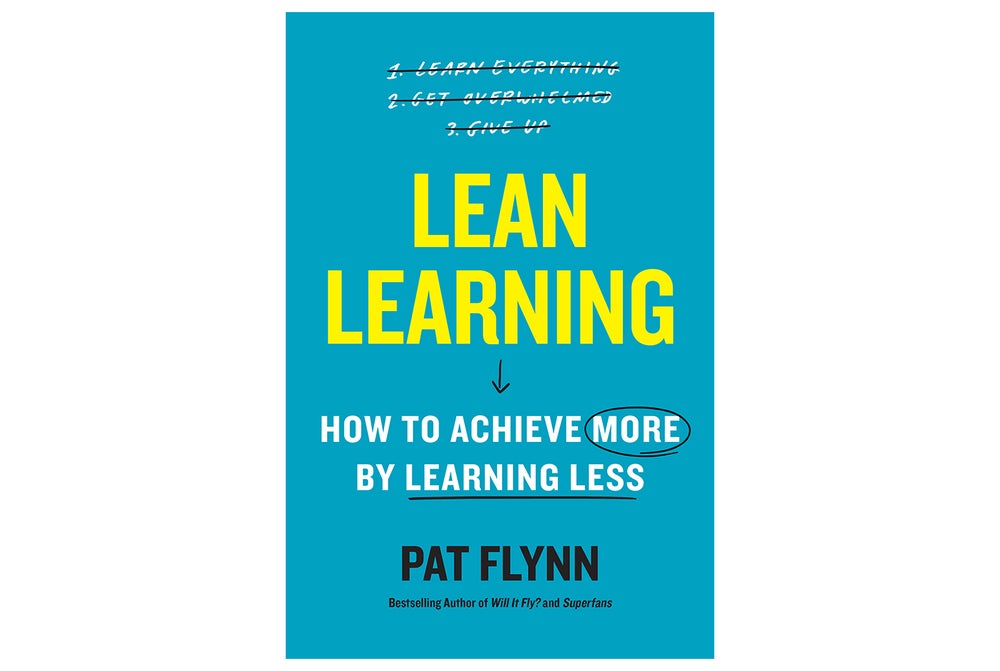
As an entrepreneur and advisor to several start-up companies, I’ve seen firsthand what a self-inflicted challenge can do to a person’s mental and physical health. It’s why I wrote my new book, Lean Learning: How to Achieve More by Learning Less.

Please understand that a Voluntary Force Function is not about “hustle” or having to sacrifice happiness and comfort to endure pain like it’s a rite of passage to success. Instead, these scenarios are about purposefully extending yourself just beyond your comfort zone, for a measured amount of time, to experience personal and professional development.

Voluntary Force Functions are designed to create intentional constraints that compel action. They are the chosen conditions that make a desired behavior nearly inevitable. These functions excel at long-term habit formation or to overcome procrastination on daunting tasks, serving as structural changes to our environment and routine that promote ongoing success.

Let’s break down each element of an effective Voluntary Force Function.

A Leap of Faith Moment

What exactly is a “Leap of Faith Moment”? It’s that pulse-racing moment when you decide to turn “someday” into “starting now.”

Remember that this leap of faith you take is not about reckless abandon. It’s a deeply considered decision that launches you out of the planning phase and into action. It’s about trusting your ability to rise to the challenge and that you have the resources and resilience to see it through.

A Time-Locked Commitment

The key to a time-locked commitment is to treat your deadlines as nonnegotiable. People set goals for themselves, or deadlines, only to push them back repeatedly. I see this pattern again and again among my students. Although I understand life can interrupt our plans, I also know that when a deadline truly cannot be moved, we somehow find a way to meet it.

The easiest way to solidify your commitment, if it’s not baked into the leap of faith you’ve already made, is to put it on your calendar — but not in the way you probably think you should.

Ask a champion of yours (ideally, a mentor) to create the deadline on their calendar and invite you to the event. You won’t be able to move it, and you’ll know it’s on the calendar of the person who is holding you accountable. It will be harder to get out of, which means you are more likely to follow through.

High Stakes

It’s vital to keep in perspective what “high stakes” means. We imagine the worst: irreparably damaging our reputation or making a mistake so severe that recovery is impossible. But by realistically assessing the risks and asking ourselves, “What’s the worst that could happen?” we uncover the truth — our fears are exaggerated.

When setting up your own Voluntary Force Functions, aim for stakes that push you out of your comfort zone but remain within a threshold that promotes action. This might involve making a promise to a mentor, risking a sum of money, or something else. Not doing it needs to hurt a little— but not be so terrifying you’re afraid to risk it.

Find that sweet spot where the risk is enough to keep you driven, but not so daunting it overwhelms you. Author Steven Pressfield suggests that fear is not always an enemy; it emerges precisely when we are about to do something meaningful, something that matters. Let that guide your efforts.

High stakes should motivate, not debilitate.

Meaningful Challenge

When designing your own Voluntary Force Functions, it’s crucial to select challenges that are not only difficult but also deeply meaningful to you and align with your values.

Consider the following:

Personal resonance: Choose a challenge that resonates with your core values and aligns with your long-term goals. Whether it’s con- fronting a long-held fear, mastering a complex skill, or making a significant impact in your community, the challenge should feel pro- foundly important to you.

Motivation through meaning: The more the challenge matters to you personally, the stronger your drive will be to engage with it and succeed. This connection turns a daunting task into a compelling mission, infusing your efforts with purpose and determination.

Assessing impact: Ask yourself, what are the potential outcomes of conquering this challenge? How will overcoming this particular hurdle enhance your life or career? Understanding the tangible benefits can provide additional motivation and clarify the challenge’s value.

By ensuring your challenges are meaningful, you’re not just setting goals, you’re crafting milestones that reflect your deepest aspirations and desired impact. This alignment makes the journey as rewarding as the destination, ensuring sustained effort and engagement.
Rewards on the Other End

This is key to the Lean Learning process: you have to keep going. The small wins are only significant when you leverage them for larger wins down the line.

In designing your own Voluntary Force Functions, first think beyond the immediate challenge— but then zoom out and consider what else it could make possible. Ask yourself: “What new opportunities could this open up for me, if I did?”

Perhaps, mastering public speaking could lead to leadership roles or more keynote opportunities. My conquering a personal fitness goal could inspire a business idea or health blog. Or, maybe like me, a weird obsession with trading cards could open up a whole new career for you. Consider the doors your current challenge might unlock, but don’t limit yourself to what you think is possible. Just be open to what could come. You never know what bigger skills your next pursuit will help you build.

Try to keep the bigger picture in mind, even if you don’t know what the future holds. Think of how mastering this fear or that skill could catapult you into all kinds of arenas, enhancing your life and career. This broader perspective can serve as a powerful motivator, especially when obstacles arise. You’re not just doing this for today; you’re doing it for what could come tomorrow.

By viewing your current challenge as a stepping- stone to greater things, you reinforce the value of pushing through, ensuring that each step forward not only brings personal growth but propels you to broader opportunities. It’s not just about what you achieve by conquering the challenge—it’s about what conquering the challenge allows you to achieve next.

Excerpted from LEAN LEARNING: How to Achieve More by Learning Less. Copyright © 2025 Pat Flynn. Reproduced by permission of Simon Acumen, an imprint of Simon & Schuster. All rights reserved.

We’ve all faced high-pressure situations that force us to learn quickly, not because we wanted to — but because we had to. Whether it’s cramming for a crucial exam, racing to meet a demanding deadline at work, or having to get your life back in order after getting laid off, we’ve all experienced moments that require us to get out of our comfort zone and figure things out, fast.

To do this, I practice what I like to call “Voluntary Force Functions.”

As an entrepreneur and advisor to several start-up companies, I’ve seen firsthand what a self-inflicted challenge can do to a person’s mental and physical health. It’s why I wrote my new book, Lean Learning: How to Achieve More by Learning Less.

The rest of this article is locked.

Join Entrepreneur+ today for access.

https://www.entrepreneur.com/living/how-to-beat-your-deadlines-and-reach-goals-faster/493809


Kickstarter Campaign Raises Record $44 Million With 3D UV Printer Designed for Entrepreneurs: ‘Overwhelming Support’

When eufyMake, the creative tool brand under electronics company Anker Innovations, launched a Kickstarter campaign in April, it had an ambitious goal — to raise half a million dollars within two months to fund a new 3D printer, capable of printing designs on everything from blocks of wood to tote bags.

The campaign immediately took off, raising over $10 million in 14 hours, according to a press release.

Now, with less than two days to go before the campaign ends, Seattle-based eufyMake has raised over $44 million, breaking the Kickstarter record for the most funded project in the history of the crowdfunding site. (The previous record of $41.7 million was set by fantasy author Brandon Sanderson’s Kickstarter campaign in March 2022 for four new novels.)

“We’re incredibly grateful for the overwhelming support from our backers,” Frank Zhu, senior vice president of Anker Innovations and Eufy business group lead, stated in the press release. “Thanks to our community, we’re not just launching a product — we’re helping more people turn their ideas into something real.”

Related: A 3D Printer Used By Microsoft, Ford, and NASA Is Now Commercially Available — Here’s What It Can Do

The product that has garnered interest from 17,220 individual backers is EufyMake’s UV printer, which could enable businesses to create new products. UV printers, or ultraviolet curing inkjet printers, use UV light to dry inks instantly as they are printed on a variety of materials, like wood, metal, and glass.

[embedded content]

EufyMake claims to have made the world’s first personal UV printer, the E1. The printer turns 2D designs into 3D-textured artwork, with no prior experience with the technology required. A user places any surface under the printer and can print out a personalized message, photo, or design on the surface. There’s a 3D element — the printer can stack filament to create texture in the finished product.

The E1 is capable of printing directly on objects like phone cases, laptops, tote bags, cups, or banners, opening the doors for businesses that focus on customized products. The printer has a maximum print area of 180 by 130 millimeters, and can work with objects up to 50 millimeters thick.

Related: ‘Creators Left So Much Money on the Table’: Kickstarter’s CEO Reveals the Story Behind the Company’s Biggest Changes in 15 Years

The E1 costs nearly $2,000, but the price tag hasn’t deterred backers. One popular option on Kickstarter, with over 3,700 backers at the time of writing, is the sold-out $1,970 early bird E1 rotary bundle, which allows users to print on cups, tumblers, and ceramic mugs as well as print 3D textures up to 5 millimeters in height on solid surfaces. The estimated delivery for the bundle is in July.

Options still available for sale include the E1 Basic Bundle kit, which is priced at $1,900. The bundle is capable of printing 3D textures that are up to 5 millimeters in height on metal, wood, acrylic, ceramic, and solid materials. Nearly 100 backers have chosen this option at the time of writing, and the estimated delivery window for the product is in August.

The most expensive option still available for sale is the $2,752 deluxe bundle, which allows users to print designs on fabrics like tote bags, wallets, and hats, as well as print on flat surfaces like banners.

The E1 Kickstarter campaign closes on June 28 at 9:57 a.m. Eastern Time.

When eufyMake, the creative tool brand under electronics company Anker Innovations, launched a Kickstarter campaign in April, it had an ambitious goal — to raise half a million dollars within two months to fund a new 3D printer, capable of printing designs on everything from blocks of wood to tote bags.

The campaign immediately took off, raising over $10 million in 14 hours, according to a press release.

Now, with less than two days to go before the campaign ends, Seattle-based eufyMake has raised over $44 million, breaking the Kickstarter record for the most funded project in the history of the crowdfunding site. (The previous record of $41.7 million was set by fantasy author Brandon Sanderson’s Kickstarter campaign in March 2022 for four new novels.)

The rest of this article is locked.

Join Entrepreneur+ today for access.

https://www.entrepreneur.com/business-news/3d-printer-breaks-kickstarter-record-raises-44m/493857


4 Things Every B2B Brand Should Be Doing to Earn Trust in 2025

Opinions expressed by Entrepreneur contributors are their own.

Your average decision-maker’s inbox is overflowing with so-called “thought leadership.” In fact, a recent analysis of over 8,000 long-form LinkedIn posts revealed that more than half were likely written by AI. Buyers are becoming adept at spotting this; separate research shows that 50% of them will stop reading the moment a post feels machine-generated.

This has created a market where getting noticed is easy, but earning trust is incredibly difficult. For businesses with complex sales cycles involving legal, finance and IT departments, genuine trust is the ultimate competitive advantage.

Related: 5 Ways to Build Brand Customer Trust (and Why It Matters More Than Ever Before)

Let AI handle speed, not strategy

AI helps us move fast. It flags competitor news before it trends and gives us testing data while most people are still on their first coffee. But speed is only helpful if you know when to slow down. AI can’t tell you when your messaging no longer hits or when your audience is losing interest. That takes human judgment and experience.

While adopting AI is necessary for any business to remain competitive, this same technology is not equipped to handle the nuanced decisions that require genuine human experience and understanding. AI won’t catch when your message stops landing or when your market starts to shift under you. That’s your job as a leader. These decisions fall to those whose insights are shaped by firsthand experience from taking late-night support calls and persuading skeptical investors.

When automation is used correctly (to increase efficiency and manage repetitive work), it provides the speed businesses need while leaving the vital work of creating a persuasive narrative to talented humans.

Lead with the founder’s voice

Big contracts may pass successfully through legal and finance, but they still begin with a gut-level “yes” from one real person. Buyers need to see a face they can call when, say, the integration freezes at 2:00 a.m. or a new privacy law turns the plan upside down. They won’t get that reassurance from glossy pitch decks alone. It comes through small, personal signals like a founder who writes (or edits) her own LinkedIn posts instead of farming it out, records a quick 5-minute voice note for an industry podcast because the topic can’t wait or hops into a conversation thread to admit a misstep and explain the fix.

Those moments prove there’s a human who will stay accountable even after the contract is signed. When leaders show up in their own words, they clear the unspoken bar every buying committee sets: Can we trust these people when things get messy? If you’re able to clear that bar early, the rest of the approval chain starts moving a lot faster.

Related: What Do Modern B2B Customers Want? It’s More Complex Than You Think

Earned media builds trust and appears where it counts

Being featured in a respected publication is a powerful shortcut to building credibility. It works on three levels: journalists vet your claims for prospects, search engines amplify your reach, and decision-makers view the coverage as a stamp of approval.

Recent research further confirms this, with 67% of B2B leaders stating that features in trade media directly shape their brand’s reputation. My own agency experienced this firsthand. After an article about us was published, demo requests doubled. The bigger shift, however, was tonal. The majority of our leads began conversations with questions about implementation and internal team integration, and they never doubted our viability because a trusted source had already vouched for us.

Tell one story, everywhere

When people bump into your brand, they should feel as if they’re hearing the same voice finish the same sentence. That kind of repetition is what branding is all about. The more often a buyer sees the same core promise in different places, the faster “Who are these folks?” turns into “I know these folks” and, eventually, “I trust these people.”

That same powerful story must present what problems you solve, why you matter in your vertical and how you prove results. Then, apply that message consistently everywhere. For example, a LinkedIn post might carry the conversational version, a press quote can feature a compelling statistic and your website can support it with case studies or “As Seen In” logos. While tailoring the delivery for the audience is important, the central theme must never shift.

When all public touchpoints reinforce the same idea, visibility solidifies into credibility, and prospects are not left wondering if they’re seeing three different companies in three different places.

Related: How to Maintain Brand Authenticity in an Increasingly Skeptical World

As marketing tools like language models get slicker and growth hacks continue to promise the world, it’s crucial to remember that slow-earned trust that convinces a skeptical buyer to say yes can never be replicated nor fabricated. In a year’s time, the noise will have faded. But the gap between being seen and being trusted is where the next generation of market leaders will find their edge.

Your average decision-maker’s inbox is overflowing with so-called “thought leadership.” In fact, a recent analysis of over 8,000 long-form LinkedIn posts revealed that more than half were likely written by AI. Buyers are becoming adept at spotting this; separate research shows that 50% of them will stop reading the moment a post feels machine-generated.

This has created a market where getting noticed is easy, but earning trust is incredibly difficult. For businesses with complex sales cycles involving legal, finance and IT departments, genuine trust is the ultimate competitive advantage.

Related: 5 Ways to Build Brand Customer Trust (and Why It Matters More Than Ever Before)

The rest of this article is locked.

Join Entrepreneur+ today for access.

https://www.entrepreneur.com/growing-a-business/what-every-b2b-brand-should-be-doing-to-earn-trust-in-2025/493511


Amazon Whole Foods Boss Says Internal Bureaucracy Is ‘Ridiculous’ and Wasting Company Time in a Leaked Meeting

An Amazon grocery executive says the company’s internal bureaucracy is “ridiculous” and that the retail giant is working to reduce it.

At an internal meeting last week for Amazon’s grocery team, an employee asked how the company planned to speed up decision-making due to the “multiple levels” needed for approval. The meeting leaked on Wednesday when Business Insider obtained a recording of it.

Amazon’s Vice President of Worldwide Grocery and Whole Foods CEO, Jason Buechel, responded to the employee’s concern by characterizing internal bureaucracy as “ridiculous” and saying that Amazon is trying to speed up processes in several areas, like spending approvals. According to Buechel, bureaucracy slows down Amazon’s grocery business and holds the company back.

Related: Amazon Tells Thousands of Employees to Relocate or Resign

“The feedback I’ve gotten from team members and employees is that ultimately, we’re wasting time,” Buechel said at the meeting. “It’s taking too long for decisions and approvals to take place, and it’s actually holding back some of our initiatives.”

Jason Buechel. Photo by Leigh Vogel/Getty Images for Concordia Summit

Amazon’s emphasis on reducing bureaucracy extends up to CEO Andy Jassy. In September, alongside a return-to-office mandate, Jassy introduced a “bureaucracy mailbox” for employees to submit examples of where they saw unnecessary processes or rules at the company. By November, that inbox had received more than 500 emails and Amazon had acted on more than 150 suggestions.

Jassy also announced in September that the company would eliminate excess layers of middle management by the end of March. Amazon achieved this goal by pausing the hiring of new managers, demoting some managers, and requiring existing managers to increase their number of direct reports.

At a leaked all-hands meeting in November, Jassy said that “one of the reasons” he was still at Amazon was “because it’s not a political or bureaucratic place.”

“The reality is that the [senior leadership team] and I hate bureaucracy,” Jassy said at the meeting.

Related: ‘I Hate Bureaucracy’: Leaked Internal Amazon Document Reveals How the Tech Giant Is Cutting Down on Middle Management

Amazon has laid off more than 27,000 employees since 2022 to cut costs, and recently conducted layoffs in various departments. The retail giant cut dozens of jobs in its Goodreads site and Kindle division earlier this month.

Amazon’s grocery business faced layoffs earlier this week when the company laid off at least 125 employees who worked in a Fresh grocery store in Federal Way, Washington. An Amazon spokesperson told The Seattle Times that the employees had the option to transfer to similar roles at nearby sites.

Amazon employs 1.56 million full-time and part-time employees.

An Amazon grocery executive says the company’s internal bureaucracy is “ridiculous” and that the retail giant is working to reduce it.

At an internal meeting last week for Amazon’s grocery team, an employee asked how the company planned to speed up decision-making due to the “multiple levels” needed for approval. The meeting leaked on Wednesday when Business Insider obtained a recording of it.

Amazon’s Vice President of Worldwide Grocery and Whole Foods CEO, Jason Buechel, responded to the employee’s concern by characterizing internal bureaucracy as “ridiculous” and saying that Amazon is trying to speed up processes in several areas, like spending approvals. According to Buechel, bureaucracy slows down Amazon’s grocery business and holds the company back.

The rest of this article is locked.

Join Entrepreneur+ today for access.

https://www.entrepreneur.com/business-news/amazon-whole-foods-ceo-slams-internal-bureaucracy/493808


Starbucks Is Changing Its Pricing. Here’s What to Know.

In order to make things faster and easier for baristas and potentially cheaper for customers, Starbucks is switching to a flat-fee system for syrups.

Beginning Tuesday, in stores in the U.S. and Canada, any combination of sauces and syrups will be a flat fee of 80 cents, whether you ask for one pump or four. Adding syrups to already pre-flavored beverages is free, per Bloomberg. Before the new changes, prices varied depending on flavor, number of pumps, and drinks being purchased.

Related: Starbucks Is Hiring In-Store Human Workers After Replacing People With Machines — and Finding It Didn’t Work

Matcha powder add-ons will now cost $1 per scoop, chai concentrate is now set at 80 cents per serving, and dried fruit is now 50 cents each.

Starbucks has been making a slew of changes since Brian Niccol joined as CEO last fall, promising to turn around the company’s lagging sales.

“We’re getting back to Starbucks. We’re refocusing on what has always set Starbucks apart — a welcoming coffeehouse where people gather, and where we serve the finest coffee, handcrafted by our skilled baristas,” he wrote at the time. “This is our enduring identity. We will innovate from here.”

The company has since cut items from the menu, implemented a new dress code for baristas, and closed its former “open door” policy.

Related: Starbucks Is Hiring a ‘Global Content Creator’ to Travel, Drink Coffee, and Get Paid Six Figures

In order to make things faster and easier for baristas and potentially cheaper for customers, Starbucks is switching to a flat-fee system for syrups.

Beginning Tuesday, in stores in the U.S. and Canada, any combination of sauces and syrups will be a flat fee of 80 cents, whether you ask for one pump or four. Adding syrups to already pre-flavored beverages is free, per Bloomberg. Before the new changes, prices varied depending on flavor, number of pumps, and drinks being purchased.

Related: Starbucks Is Hiring In-Store Human Workers After Replacing People With Machines — and Finding It Didn’t Work

The rest of this article is locked.

Join Entrepreneur+ today for access.

https://www.entrepreneur.com/business-news/starbucks-changes-pricing-for-syrups-powders/493798