Build a Career Safety Net That Runs Itself with This $39 Tool

Disclosure: Our goal is to feature products and services that we think you’ll find interesting and useful. If you purchase them, Entrepreneur may get a small share of the revenue from the sale from our commerce partners.

If you’re running a business, leading a team, or wearing multiple hats as a founder, you already know time is your most valuable asset. So when it comes to hiring—or even pivoting into a new opportunity—LoopCV offers the automation edge you didn’t know you needed.

Right now, you can secure lifetime access to LoopCV Premium for just $39 (regularly $599).

LoopCV is an AI-powered job automation tool that is designed to take the exhausting manual grind out of the job search. Whether you’re a business owner looking for fractional work, a founder exploring consulting gigs, or a team leader who is coaching laid-off employees, LoopCV can handle the repetitive outreach for you.

Upload your résumé, define your ideal roles and target locations, and LoopCV will automatically apply to jobs daily, send personalized emails to recruiters, and track your results with real-time performance data. You can even A/B test different résumés to see what resonates best in your industry.

And it’s not just for job seekers. Small-business owners and startup founders can also use LoopCV to scout freelance talent, build partnerships, or explore new verticals—all without committing hours to job boards. Need a project-based marketing consultant or a part-time developer? Set up a loop targeting those roles, and let LoopCV surface the candidates or opportunities.

For entrepreneurs, this tool can help you generate project leads, land speaking opportunities, or even explore strategic hires with minimal lift. It integrates with over 30 job boards, including LinkedIn, Indeed, and USAJobs, so you’re always in the loop.

Time is money. Let LoopCV hustle for you in the background while you stay focused on growing your business.

Get lifetime access to LoopCV Premium while it’s on sale for just $39 (regularly $599) for a limited time.

LoopCV Premium Plan: Lifetime Subscription

See Deal

StackSocial prices subject to change.

If you’re running a business, leading a team, or wearing multiple hats as a founder, you already know time is your most valuable asset. So when it comes to hiring—or even pivoting into a new opportunity—LoopCV offers the automation edge you didn’t know you needed.

Right now, you can secure lifetime access to LoopCV Premium for just $39 (regularly $599).

LoopCV is an AI-powered job automation tool that is designed to take the exhausting manual grind out of the job search. Whether you’re a business owner looking for fractional work, a founder exploring consulting gigs, or a team leader who is coaching laid-off employees, LoopCV can handle the repetitive outreach for you.

The rest of this article is locked.

Join Entrepreneur+ today for access.

https://www.entrepreneur.com/science-technology/build-a-career-safety-net-that-runs-itself-with-this-39/493444


This $180 Chromebook Offers Flexibility and Performance for On-the-Go Entrepreneurs

Disclosure: Our goal is to feature products and services that we think you’ll find interesting and useful. If you purchase them, Entrepreneur may get a small share of the revenue from the sale from our commerce partners.

Almost half of entrepreneurs rely on their laptops daily, according to data from global market research firm Ipsos. That’s not a huge shock, considering these portable computers let you get work done anywhere. As an entrepreneur, you’re used to bringing work home… and on vacation. And right now, you can get a super versatile device, an ASUS Chromebook CM30, for just $179.99 (reg. $329.99).

This Chromebook is durable, versatile, and ready for your busy schedule

Entrepreneurs have to be flexible, and the ASUS Chromebook CM30 can keep up with everything a workday throws at you. It can even go from laptop to tablet, thanks to a detachable 10.5-inch touchscreen. There’s also a garaged push-pop stylus with fast-charging technology that you can use to jot down notes, graphs, and more.

This 2-in-1 device lets you tackle anything anywhere, with a MediaTek Kompanio 520 processor that lets you do all the multitasking required of an entrepreneur. You’ll also be working on the Chrome OS, so you’ll have access to all the cloud-based apps you’re already using.

8GB of RAM and 128GB eMMC storage ensure you have sufficient space to download your favorite apps and save important files locally. Dual 5MP cameras are available on the front and rear, letting you take pictures, video chat, and more.

If you’re hard on your devices, the ASUS Chromebook will be a great fit for you. It’s made from a military-grade, durable aluminum chassis so that it can withstand heavy handling. You’ll also be able to get a full workday in and more, thanks to the 12 hours of battery life.

This particular model is an open box device, which means it was likely excess inventory from store shelves. It will be verified to be in new condition and placed in clean packaging before it arrives at your doorstep.

Bring home an ASUS Chromebook CM30 for just $179.99 (reg. $329.99).

StackSocial prices subject to change.

Almost half of entrepreneurs rely on their laptops daily, according to data from global market research firm Ipsos. That’s not a huge shock, considering these portable computers let you get work done anywhere. As an entrepreneur, you’re used to bringing work home… and on vacation. And right now, you can get a super versatile device, an ASUS Chromebook CM30, for just $179.99 (reg. $329.99).

This Chromebook is durable, versatile, and ready for your busy schedule

Entrepreneurs have to be flexible, and the ASUS Chromebook CM30 can keep up with everything a workday throws at you. It can even go from laptop to tablet, thanks to a detachable 10.5-inch touchscreen. There’s also a garaged push-pop stylus with fast-charging technology that you can use to jot down notes, graphs, and more.

The rest of this article is locked.

Join Entrepreneur+ today for access.

https://www.entrepreneur.com/science-technology/this-180-chromebook-offers-flexibility-and-performance-for/493442


How to Handle Negative Feedback and Turn Bad Reviews Into Great News For Your Business

Opinions expressed by Entrepreneur contributors are their own.

No matter how robust your brand’s customer service is, you can’t avoid negative feedback — noise that can block out all the great things your business offers and does. Social media is rife with videos highlighting incidents where customers feel wronged and the torrent of negative comments that follow. Reviews on Google, Yelp, Facebook, Open Table, TripAdvisor and other platforms are filled with dissatisfied customers, and that can upend a business’s good standing.

Sometimes, there are missteps, and the reviews and feedback reflect a breakdown in service or product delivery. Other times, people are venting or trolling with no cause. You can’t take it personally, but don’t ignore what they say. Customers rely on reviews when discovering or purchasing products and services. Bad reviews can turn them away and cause a reputational crisis for your business.

Your online business reputation depends on a proactive, strategic approach for identifying, monitoring, managing and responding to negative reviews. You’ll seize opportunities to build trust, improve customer service and enhance customer relations.

Related: Your Customers Are Talking About You — Here’s How to Turn Their Feedback Into Profit

Identifying customer issues

If a negative or bad comment appears on social media or one of the consumer review platforms, take a breath and figure out what’s behind the review. Put yourself in the customer’s shoes to see if the review or comment was justified. Go beyond the words and anger to determine where things went wrong. Then respond — genuinely and professionally.

Monitoring online reviews

You won’t know customer dissatisfaction exists without monitoring your online reviews. There are various tools and strategies available to do so. For example, you can use Google Alerts or ReviewTrackers to provide you with real-time alerts when new reviews are posted on platforms like Yelp, Facebook, TripAdvisor and Google.

Also, ensure your business is claimed and verified on the major platforms so you can respond to reviews and receive notifications of activities. Optimize your business profiles. You want potential customers to find accurate, useful information when they are looking up reviews about your brand. Make sure photos, location, hours and business description are up to date.

Managing online reviews

Designate a “review response” team or personnel to respond to reviews. Share these tips with the individual or team responsible for handling reviews:

  • Don’t let emotions come into play when crafting responses to negative comments.
  • Thank customers for their feedback and let them know your intention to do better.
  • If the customer is justifiably dissatisfied, apologize and show empathy without overdoing it.
  • Make things right if possible. For example, offer an opportunity to revisit your restaurant with dessert on the house. Send out a replacement product that got lost in the mail at no cost. Offer a discount on a future product.
  • If all goes well, encourage the customer to modify the comment with an updated review so others can see your good-faith efforts. When you acknowledge customer dissatisfaction and do what you can to turn things around, you’ll find that these consumers will become your biggest champions and cheerleaders.

In some cases, contact reviewers offline to discuss their experience. During the conversation, ask the customers to update their reviews. If they choose not to update the comment, you can respond online that the issue was resolved.

Related: How to Better Manage Your Brand’s Reputation in the Digital Age

Go beyond the negative, highlight the positive

In dealing with bad reviews, in addition to responding and turning dissatisfied customers into advocates for your business, beefing up your online reputation with positive comments and reviews is equally critical. Positive reviews influence buying behavior and help win people over, even if there is the occasional bad comment.

When asking for a positive review, timing is everything. Encourage reviews at the point of purchase, following an event or fulfilling a service. For example, send a quick text or email saying, “Happy you had a great experience. Would you mind leaving us a quick review?” Make it easy for your customers to leave a comment with a link to the review page.

Make getting positive reviews part of your brand strategy

Train your staff to ask for reviews in their communication. For example, recently, my colleague had an issue with a product that was delivered to the wrong house. It was the delivery service and not the retailer that made the error. The delivery service would not rectify the situation; however, the retailer was happy to send a replacement product. My colleague received an email with an invoice ($0) listing the products reshipped to her home and a gentle nudge to leave a review about the service and resolution. She was more than happy to do so and spread the word.

Respond to positive reviews, too. This shows you care about your customers’ feelings and helps build trust with future reviewers. Don’t be shy about sharing great reviews as testimonials on your website and social media platforms. Other satisfied customers on social will chime in and reinforce the great experience your brand delivers, further boosting your online reputation.

Getting some negative reviews is not all bad. They help you pinpoint areas that need improvement. In addition, they help create a balanced, authentic brand profile. While you want most of your feedback to be positive, having occasional negative comments and responding to them builds trust and credibility.

No matter how robust your brand’s customer service is, you can’t avoid negative feedback — noise that can block out all the great things your business offers and does. Social media is rife with videos highlighting incidents where customers feel wronged and the torrent of negative comments that follow. Reviews on Google, Yelp, Facebook, Open Table, TripAdvisor and other platforms are filled with dissatisfied customers, and that can upend a business’s good standing.

Sometimes, there are missteps, and the reviews and feedback reflect a breakdown in service or product delivery. Other times, people are venting or trolling with no cause. You can’t take it personally, but don’t ignore what they say. Customers rely on reviews when discovering or purchasing products and services. Bad reviews can turn them away and cause a reputational crisis for your business.

Your online business reputation depends on a proactive, strategic approach for identifying, monitoring, managing and responding to negative reviews. You’ll seize opportunities to build trust, improve customer service and enhance customer relations.

The rest of this article is locked.

Join Entrepreneur+ today for access.

https://www.entrepreneur.com/growing-a-business/how-to-turn-bad-reviews-into-great-news-for-your-business/491773


Tackle Decision Fatigue With This CEO-Worthy AI Tool

Disclosure: Our goal is to feature products and services that we think you’ll find interesting and useful. If you purchase them, Entrepreneur may get a small share of the revenue from the sale from our commerce partners.

It feels like entrepreneurs can make more than 1,000 decisions a day on everything from business to teams to strategies. If you could use some help with some of those, let SkillWee, the AI-Powered Decision-Making App, assist you.

SkillWee helps you make smarter, data-backed decisions. And right now, a lifetime subscription can be yours for just $49.99 (reg. $299.99).

Save time and avoid making mistakes with this AI-powered tool

Decision fatigue is real — especially when you’re an entrepreneur. Think of SkillWee as your very own AI-powered assistant ready to help you make data-driven decisions. It lets you test business strategies totally risk free, analyze any potential outcomes and get real-time insights before you take action.

Need some advice on whether you should hire more people? What about tips on how to secure funding? SkillWee provides AI-powered recommendations on these kinds of topics with answers based on data-driven insights.

SkillWee was built for entrepreneurs and professionals, and is designed to help you think like a CEO and strengthen your decision-making skills. It’s a great way to weigh your options before deciding things, helping you avoid expensive mistakes in the future.

Since SkillWee is powered by AI, it will adapt to your unique learning style and goals as you go. It can also offer personalized feedback, so you can learn as you go. There are game-like scenarios that even make it fun.

Aside from helping you in your day to day, SkillWee can also help you build some essential soft skills. Choose from decision-making, leadership, communication, and more to sharpen your professional skills as you use this tool.

Take advantage of this lifetime subscription to SkillWee AI-Powered Decision-Making App, now only $49.99 (reg. $299.99).

StackSocial prices subject to change.

It feels like entrepreneurs can make more than 1,000 decisions a day on everything from business to teams to strategies. If you could use some help with some of those, let SkillWee, the AI-Powered Decision-Making App, assist you.

SkillWee helps you make smarter, data-backed decisions. And right now, a lifetime subscription can be yours for just $49.99 (reg. $299.99).

Save time and avoid making mistakes with this AI-powered tool

The rest of this article is locked.

Join Entrepreneur+ today for access.

https://www.entrepreneur.com/science-technology/tackle-decision-fatigue-with-this-ceo-worthy-ai-tool/493441


The Best Defense Against Uncertainty Isn’t a Single Strategy — It’s a Mindset

Opinions expressed by Entrepreneur contributors are their own.

The small business landscape has never been more complex. Shifting consumer expectations, ongoing macroeconomic headwinds and evolving workforce dynamics are forcing business owners to rethink traditional strategies and embrace more adaptive ways of operating.

A decade ago, the playbook looked different. Today, businesses face a swirl of uncertainty — tariff fluctuations, inflationary pressure, late payments and unpredictable policy shifts. Small businesses sit at the epicenter of these changes, asking: What’s truly different? What lessons still apply? And how can we continue to adapt and grow in this high-stakes environment?

A new reality: Pressure and possibility coexist

Challenges are nothing new for entrepreneurs. But today’s pressures are more intense, more layered and more sustained. From interest rate uncertainty to global trade tensions, small businesses often lack the cushion larger enterprises rely on to absorb these shocks.

Yet in that vulnerability lies strength. Small businesses are uniquely agile. They can pivot faster, stay closer to customers and innovate with purpose. The ability to adapt swiftly is what separates those who merely survive from those who grow stronger in adversity.

Related: 7 Reasons to Trust Your Gut When Starting a Business

How today’s small businesses are future-proofing for growth

1. Start with financial clarity

Cash flow is the lifeline of any small business. But clarity goes beyond just watching the bottom line — it means being proactive about payments, forecasting accurately and understanding how external economic trends affect your operations. Late payments and rising costs are disruptive, but preventable.

Business owners should work closely with accountants, bookkeepers, and local business groups to interpret policy and economic shifts. Staying informed isn’t optional — it’s your edge. Leaders who build financial agility into their operations will be far better positioned to seize opportunities and weather shocks.

2. Build operational resilience

The pandemic reminded us how fast things can change. Businesses that successfully moved online, adapted their customer experience or adopted new tools proved how vital resilience and nimbleness are.

But resilience isn’t just for crisis response — it should be baked into your day-to-day operations. Continuity plans, regular process reviews and a willingness to iterate based on feedback are key. Agility is no longer a competitive advantage — it’s a survival trait.

3. Innovate with intention

Innovation doesn’t mean chasing every new tool or trend. As AI and automation reshape industries, small business owners must ask: Is this the right investment now? Will it help solve a real challenge or improve efficiency?

True innovation is rooted in purpose. Whether it’s embracing digital tools that streamline operations or aligning your brand with social values, growth comes from clarity, not complexity. Technology is a powerful enabler—but only when aligned with your mission and customer needs.

Related: How User-Generated Content Helps You Build Trust and Credibility

4. Stay deeply connected to customers

Consumer expectations are evolving fast, and agility depends on staying in sync with those shifts. Case in point: nearly 90% of U.S. consumers prefer to pay by card — yet many small businesses still don’t accept them. Adapting to preferences like this strengthens loyalty and accelerates cash flow.

But flexibility is just part of the picture. Transparent communication — especially when external factors like regulation or supply chain disruptions arise — helps manage expectations and builds trust. Strong customer relationships aren’t just good for business — they’re the foundation for longevity.

Final takeaway: Lean into the unpredictable

In today’s unpredictable world, the most successful small business owners aren’t avoiding change — they’re leaning into it. They’re arming themselves with insights, embracing flexibility and leading with purpose. That mindset — not any single tactic — is what future-proofs a business.

The small business landscape has never been more complex. Shifting consumer expectations, ongoing macroeconomic headwinds and evolving workforce dynamics are forcing business owners to rethink traditional strategies and embrace more adaptive ways of operating.

A decade ago, the playbook looked different. Today, businesses face a swirl of uncertainty — tariff fluctuations, inflationary pressure, late payments and unpredictable policy shifts. Small businesses sit at the epicenter of these changes, asking: What’s truly different? What lessons still apply? And how can we continue to adapt and grow in this high-stakes environment?

A new reality: Pressure and possibility coexist

The rest of this article is locked.

Join Entrepreneur+ today for access.

https://www.entrepreneur.com/leadership/the-best-defense-against-uncertainty-isnt-a-single/493394


Meta Poaches the CEO of a $32 Billion AI Startup — After Trying to Buy the Company and Being Told No

Meta is taking an aggressive approach to hiring new members of its Superintelligence lab, the group tasked with developing AI that is more intelligent than human beings.

CNBC reports that earlier this year, Meta attempted to acquire Safe Superintelligence (SSI), a top AI startup valued at $32 billion. OpenAI founding member Ilya Sutskever co-founded SSI in June 2024, one month after leaving his post as chief scientist at OpenAI. The startup aims to take a security-first approach to building superintelligence, or an AI with advanced capabilities.

Sutskever reportedly turned down Meta’s offer to buy SSI and refused Meta’s offer to hire him, sources told CNBC. Meta then began talks for a possible deal with SSI’s CEO, Daniel Gross, and former GitHub CEO Nat Friedman. Gross and Friedman run a venture capital firm together called NFDG, named after the combination of their initials.

Related: Meet Alexandr Wang, the 28-Year-Old Who Went from MIT Dropout to Billionaire Meta Hire: ‘I Wanted to Make a Difference’

Now, multiple sources tell CNBC that Meta is taking a stake in NFDG in exchange for Gross and Friedman joining Meta as part of its Superintelligence lab. The size of Meta’s investment in NFDG is unclear.

Gross and Friedman will reportedly work on AI products at Meta under another new hire: Scale AI CEO Alexandr Wang. Wang announced last week that he would be leaving Scale AI for Meta as part of a $14.3 billion investment Meta made in the startup.

SSI co-founder Ilya Sutskever. Photo by JACK GUEZ / AFP

The new hires will reportedly be compensated well. According to a Bloomberg report last week, Meta is offering up to a nine-figure pay for researchers on its Superintelligence team. OpenAI CEO Sam Altman confirmed this week that Meta tried to recruit OpenAI researchers by offering $100 million signing bonuses and even higher compensation packages as leverage.

According to Bloomberg, Meta CEO Mark Zuckerberg has been personally leading the recruitment effort for the Superintelligence team. He has invited leading AI researchers and engineers from other companies to meet with him at his homes in Palo Alto and Lake Tahoe to talk about offers to join Meta. Zuckerberg’s aim is for Meta to be the first company to achieve superintelligence, which it can then use to power its products, like its AI chatbot and AI smart glasses.

Related: Meta Is Reportedly Planning to Release New AI Smart Glasses With Oakley and Prada

Meta’s move to bring on fresh talent like Wang, Gross, and Friedman arrives as the company tries to hold onto existing AI talent. Menlo Ventures venture capitalist Deedy Das posted on X last week that he had heard of three cases last week of Meta losing AI researchers to OpenAI and Anthropic despite offering compensation of $2 million or more.

“The AI talent wars are absolutely ridiculous,” Das wrote.

Meta stock was up 15% year-to-date at the time of writing.

Meta is taking an aggressive approach to hiring new members of its Superintelligence lab, the group tasked with developing AI that is more intelligent than human beings.

CNBC reports that earlier this year, Meta attempted to acquire Safe Superintelligence (SSI), a top AI startup valued at $32 billion. OpenAI founding member Ilya Sutskever co-founded SSI in June 2024, one month after leaving his post as chief scientist at OpenAI. The startup aims to take a security-first approach to building superintelligence, or an AI with advanced capabilities.

Sutskever reportedly turned down Meta’s offer to buy SSI and refused Meta’s offer to hire him, sources told CNBC. Meta then began talks for a possible deal with SSI’s CEO, Daniel Gross, and former GitHub CEO Nat Friedman. Gross and Friedman run a venture capital firm together called NFDG, named after the combination of their initials.

The rest of this article is locked.

Join Entrepreneur+ today for access.

https://www.entrepreneur.com/business-news/meta-poaches-safe-superintelligence-ceo-for-new-ai-team/493604


74% of Entrepreneurs Complain the Sales Cycle Is Getting Longer. I Took These 3 Steps to Shorten It and Accelerate My Company’s Growth.

Opinions expressed by Entrepreneur contributors are their own.

If you are shopping for a pair of new running shoes, how long does it typically take you to make a decision? If you’re picky, the process could take months. No matter which industry you operate in, sales cycles have the potential to take longer than they should.

While factors do include picky shoppers (even I have been known to look far and wide for the perfect dress), certain marketing tactics can still persuade the most challenging prospects.

A recent survey reported that 74% of businesses say sales cycles are getting longer. That translates to spending more resources (time and money) to generate flatlined results.

In running my own business, PostcardMania, I’ve faced this and much more, yet kept our growth on an upward trajectory. In fact, last year set a new revenue record for us at $119 million, and we’ve grown 239% faster in the last five years than we did in the previous decade, averaging 17% annual revenue growth now versus 5% then.

Here’s a breakdown of the road-tested marketing tactics that have helped me accelerate our growth and shorten the sales cycle.

Related: How to Shorten Your Sales Cycle and Convert More Leads

Step 1: Expand the top of the funnel by increasing leads without spending more — this is how I lowered my average cost per lead

About 28% of businesses say generating leads is a challenge. My top strategy is simple: Don’t stop marketing, and remain consistent.

When the pandemic hit in 2020, many companies decided to cut back on their marketing budget, but I held fast.

My decision to continue marketing consistently throughout the pandemic resulted in a 9.24% increase in leads — an additional 186 leads a week — without any increased costs or doing anything differently. After all was said and done, PostcardMania’s annual revenue was up 10% that year despite the chaos.

But for those who cut back on their marketing, research shows they likely suffered.

A recent study examined the long-term effects when two large brands under financial pressure cut back on advertising. One cut their marketing spend by 27% and the other by 65%. In the first quarter following the cuts, the first company saw revenue drop 66%, and the other was down 51%.

This study just goes to demonstrate something I’ve been saying for decades: You need to market consistently, week in and week out, if you want to grow your business.

It doesn’t matter which marketing channel you choose. Just make sure you’re tracking your marketing and responses so that you can attribute your new customers and sales accurately to know what’s working and what isn’t.

Once you know what works for your business, do more of it! And if you can, put it on autopilot.

One of my clients, a real estate investor, implemented a direct mail automation that automatically sent postcards to people who visited his website for more than 30 seconds without converting. After mailing just over 100 of these mailers, he closed two new sales worth $70,000.

Since these automated campaigns run daily, this means you could have new leads every single day. This would compound over time and eventually generate a whole new list of new customers for you.

Related: How I Built a Sales Funnel That Generates Over $80 Million

Step 2: Review your lead follow-up funnel and consider creating a better balance of online and offline communications

Following up with prospects is just as important as generating new leads. In my experience, the right balance of online and offline communications helps move leads down the sales funnel to purchase.

And the research backs me up here — studies show that integrated direct mail and digital campaigns elicit 39% more attention than single-media digital campaigns. In fact, nearly 2 out of 3 consumers (60%) say they are extremely or very likely to respond to advertising they see across multiple channels.

Follow-ups are like reminders, and you need to send out a lot of them to provoke action. Ideally, these reminders happen simultaneously in order to keep your brand top of mind. So if you are mailing postcards weekly, you should also be running online ads on Instagram, Facebook and Google, as well as SMS messages and email.

These channels all work together to bring prospects back to your website or pick up the phone to make a purchase. Professional marketers are in lockstep on this: 91% believe integrating direct mail and digital has a positive impact on campaign performance.

At PostcardMania, we continue to mail postcards every single week, but we also prioritize pay-per-click ads, remarketing, video-based ads on social media and daily email blasts. All of these methods together have helped us continually increase our revenue year over year.

Related: How to Boost Your Business With Direct Mail Automation and Retargeting — a Detailed Beginner’s Guide

Step 3: Explore other marketing channels to replace some of your email touchpoints

You are generating leads with consistent marketing, executing online and offline follow-up, but what if your marketing messages aren’t even being seen or opened? This phase of the sales funnel can last for some time before a prospect makes a final purchase.

Email is a top method of communication for businesses, yet emails have a low open rate of 37% — and it could get even worse as more consumers are ignoring emails or mass deleting them. I know I do! One study showed that emails and text messages were the top two most irritating channels when it comes to being bombarded with marketing.

About 33% of businesses struggle with declining open rates, but they can be improved by launching the right marketing campaigns

Instead of focusing on what is standard, focus on what works. The main marketing strategy I’ve used to draw prospects in has been direct mail, and that has never changed for the past 27 years.

I’ve built my business from the ground up with zero capital, primarily based on direct mail marketing, and today we make over $100 million in annual revenue. We started out mailing 1,000 postcards a week advertising our services, and now we mail over 230,000 a week.

The facts also don’t lie; research confirms that direct mail has a much higher open rate of 90%. A business can also get around open rates altogether with postcards, catalogs or brochures since the recipient sees the message and images immediately. This gives your business a better chance of making a lasting impression.

Another direct mail advantage: less competition in the mailbox versus the inbox. Personally, I dislike fielding hundreds of emails every day. The USPS reports the average household receives 7,750% more emails than mail pieces per day — an average of two direct mail advertisements as opposed to 157 emails a day.

All of these methods together have helped us continually increase our revenue year over year. I’ve tackled my challenges head-on with these marketing methods, and I know with effort, you’ll do the same.

https://www.entrepreneur.com/growing-a-business/take-these-3-steps-to-shorten-your-sales-cycle/493199


How to Stop Overthinking and Start Moving Your Business Forward

Opinions expressed by Entrepreneur contributors are their own.

Are you a doctor? Me neither. So why do we spend so much time obsessing over business decisions like we’re performing open-heart surgery? If I had to make a medical decision, I would really be in trouble. And that’s why I don’t. But guess what? A lot of medical decisions are made quickly.

I’ve worked in both giant corporations and scrappy startups. You know what sets them apart? In large companies, 99% of the time is spent worrying about the 1% of things that might go wrong. In small ones, 99% of the time is spent sprinting forward — because there’s no time to sweat the small stuff. Get moving or start dying (metaphorically). It’s that simple.

In essence, what I’m talking about is the difference between paralyzing risk management and bold risk acceptance. One keeps the wheels spinning; the other keeps the business moving.

I once wrote a LinkedIn post that simply said: “The biggest mistake you can make is being afraid to make one.” It’s something I remind myself of on tough days. Because no matter how chaotic it gets, what we do isn’t life or death — it’s business. And business requires momentum. It doesn’t require months of groupthink.

Related: Entrepreneurs Don’t Overthink Things. They Make a Decision and Go With It.

How do you keep the business moving?

1. Be ruthless, but thoughtful, about hiring

I worked at a company where closing a deal required six levels of approval. Six. Levels. Of. Approval. That’s not process — it’s pure bureaucracy and pain. As you grow, be intentional. Every hire should have a clear purpose and deliver real value. If you can’t answer these questions in a positive manner:

  • What does this role do?

  • How does it help us grow?

  • Is it really a full-time position?

  • Would it be better to outsource it than keep it in-house?

…then don’t hire. You’re building a team, not a padded org chart.

2. Make the call at 51%

You don’t need 100% certainty to act. You don’t even need 60%. If you’re 51% sure — leaning ever so slightly toward one direction — that’s enough. It has to be. Waiting for perfection leads to paralysis. Move. Decide. Adjust later if needed. Deal with the fallout, if it comes. In my experience, the big scary “what-ifs” rarely happen. What does happen? Nothing — because no decision gets made.

3. Two days max

If it’s a decision that keeps your business running, it shouldn’t take more than a day or two. That includes tough calls like terminations. Sure, major events like acquisitions or IPOs deserve more deliberation. This isn’t a one-size-fits-all prophecy. But day-to-day? You’re stalling if it drags on. Every extra day adds uncertainty — and that’s a cost you don’t want. Let me tell you a secret: The decision you come to on day 30 is likely the same one you came to on day two. Try it sometime and see … or don’t, because that means you’re seriously delaying.

4. If you’re wrong? The world won’t end.

In most cases, the worst-case scenario is a loss of revenue. Not good — but not fatal either. As long as your decisions are ethical, you’ll live to fight another day. Don’t let fear of failure keep you frozen. Action beats inaction. Every time.

Related: Time to Stop Overanalyzing and Start Making Decisions!

How to think less and do more

1. Build smart consensus

Get input from your team, but don’t let collaboration become a boomerang. Bounce ideas around, align direction, and then execute. Note, this does not mean that everyone has to agree. Quite the opposite. Use smart consensus to inform your decision. This isn’t picking curtains — it’s about moving the business forward. Stop polishing decisions and just ship them.

2. Get expert advice (but don’t marinate in it)

Need a legal opinion or some financial expertise? Great — get it. Find a lawyer. Hire an accountant. Use experts like a compass, not a crutch. Their guidance should help you move faster, not slow you down. You should get additional warm fuzzies relying on information provided by an expert who has seen the problem before. That should give you even less incentive to delay.

3. Trust your gut

Seriously. Your gut’s smarter than you think. I once ignored mine and joined a hot startup that felt “off.” Turns out, it was. The founders ended up under federal indictment. Your instincts are data, too. Learn to listen. When your gut is screaming, pay attention. Your first impression is often the correct one.

Related: Overcome This Common Entrepreneurial Struggle and Stop Sabotaging Your Progress

Time is the real currency

Time isn’t just money; it’s everything. You only get so much of it. Long, drawn-out decisions not only stall your business — they eat into your life.

When you take forever to make a call, you’re not just delaying growth — you’re delaying freedom, balance and personal progress. So don’t waste time trying to perfect every move. Businesses aren’t built on perfection. They’re built on momentum.

Ask yourself: What feels better — crawling or driving a Ferrari?

Start the engine. Let’s go.

Are you a doctor? Me neither. So why do we spend so much time obsessing over business decisions like we’re performing open-heart surgery? If I had to make a medical decision, I would really be in trouble. And that’s why I don’t. But guess what? A lot of medical decisions are made quickly.

I’ve worked in both giant corporations and scrappy startups. You know what sets them apart? In large companies, 99% of the time is spent worrying about the 1% of things that might go wrong. In small ones, 99% of the time is spent sprinting forward — because there’s no time to sweat the small stuff. Get moving or start dying (metaphorically). It’s that simple.

In essence, what I’m talking about is the difference between paralyzing risk management and bold risk acceptance. One keeps the wheels spinning; the other keeps the business moving.

The rest of this article is locked.

Join Entrepreneur+ today for access.

https://www.entrepreneur.com/growing-a-business/how-to-stop-overthinking-and-start-taking-action/493054


‘I Got the Feeling I Was Hitting the Glass Ceiling’: This Entrepreneur Quit Her Corporate Job to Start Her Own Agency. It’s Projected to Make $31.5 Million in Revenue This Year.

Jaqi Saleem is the founder and CEO of digital experience agency Qualified Digital, and founder of Jaqi Purpose Co., a mission-driven investment fund. Here she breaks down her best advice for sustainable growth, fundraising, and creating a culture of collaboration.

Please give us the elevator pitch of your business.
My company, Qualified Digital, is an award-winning digital experience agency that competes with top consultancies 100-1,000 times our size to serve Fortune 500 clients like Mayo Clinic, CVS, Hitachi Vantara, CommonSpirit Health, Kaiser Permanente, Novo Nordisk, Bristol-Myers Squibb and TransUnion. Our 360° approach, in partnership with industry leaders like Adobe, blends B2B and B2C expertise to craft seamless customer journeys. Our tagline is “The Experience of Connection”.

Or, if you want a simpler soft pitch, we can use my Mom’s description: “I think they put the buttons on the internet.” You are not wrong, Mom, we do that too.

What inspired you to create this business?
The truth is, I started this digital customer experience agency completely by accident. After over 15 years at agencies — and getting the feeling I had hit a glass ceiling — I decided to give independent consulting a try. A couple of months in, a customer offered me an opportunity to build and fund my own guerrilla dream team to pick up some business-critical projects after an unexpected and rapid split with their previous digital agency. I didn’t hesitate — I called all of the smartest people I knew and asked them to join me. I was gratified and humbled when they did. Fast forward 7.5 years, Qualified Digital is private equity backed by Stella Point Capital, and has 100+ teammates composed of the smartest people I now know.

Related: ‘We Didn’t Know We Could Do That!’ These Co-Founders Built a Unique Photography Business That Tapped an Unexpected Need — And Now Is Found in 60 Cities

What advice would you give entrepreneurs looking for funding?
Make sure you are looking for a partner who adds value and is aligned to your vision, not just a check. Don’t be pompous, but be curious in ways that show you need to know about the potential investor, as well. Don’t ask them questions you could find on their website; welcome them into the conversation; leave room for their voice, as the dynamic changes and creates more opportunity to connect. They are investing in you as a leader, as much as in your business, so be human, not a well-dressed robot. While you want to be prepared to speak the entire time, hope and invite a dialogue and anticipate what they might ask so you don’t freeze or skip a beat. Practice, practice, practice, not just for presenting your investor deck in the order it is laid out, but for any direction that the conversation may go. I often keep an appendix of items that likely wouldn’t make it into a brief pitch, but may be a confidence builder if they ask a pointed question and you can show you are on top of it.

Lastly, and this is extremely important: ensure they don’t see you as a project. Investors don’t want to do your job; they need to believe that you can execute on an incredible idea, not just that you have one. Especially if you don’t have a track record to point to, develop a clear plan or include a partner who can lead on the business front. Clear plans are important, either way, so they feel they can press the easy button by just funding and advising.

Female-owned businesses only get 2 per cent of VC funding — what specific advice can you give to women business owners seeking to emulate what you achieved in getting PE investment?
Knowing that stat can be intimidating, but don’t let it get in your head. It might stop you from asking at all, and we need to change that number, not perpetuate it.

I did not run into any resistance in my process, and ran a competitive one, which I highly recommend. This allowed me to command the value I knew Qualified Digital was worth, gender identity aside.

If you are at the right stage, really consider bringing on a banker to represent you. They come with fees, but the right ones, with the right network, are worth their weight in gold.

Related: He Hated Furniture Shopping. So He Built a Business to Do It for Him. Here’s How This Unconventional Founder Is Finding New Customers and Growth.

What kind of growth have you seen?
In the early years, starting from scratch, Qualified Digital grew 100% YoY+. As our revenue numbers increased, that percentage has naturally changed. Last year, we delivered 45%+ growth. This year, through the combination of organic growth and our recent acquisition of Xpediant Digital, we are on track to deliver another 40% growth year for 2025 and are projecting $31.5M in revenue.

What tips can you give to other founders on maintaining company culture when your team is either partially or fully remote?
I’m proud of the work-life balance that we’re able to give our team by being a fully remote company. We have over 100 employees and FTE equivalents on our team, based all across the US and around the world, and that team is able to pick up and drop off their kids at school, take care of their mental and physical health, and do the things they love like travel, or whatever passions or hobbies they have. QD’s company culture encourages a mindset that is both entrepreneurial and collaborative, and I feel that is one of the things that really sets us apart.

My advice is: create an energy that multiplies, and it will. Culture cascades from the top, so your team has to want you to win, they have to want each other to win, and they have to want to win themselves. And most of all: hire great humans and interesting people. Your team is the magic, and it is your job as a leader to protect that culture from those who draw down on it.

What advice can you give about making the decision to acquire another company, such as your recent acquisition of Xpediant Digital?
See a clear 1+1 = 3. Do not buy revenue, buy a value multiplier, whether that is a new capability, new industries, or products that accelerate what you do. Is it a value add to your existing clients, or is it all about new clients you can add value to? Either way, just ensure you have a clear vision that helps your team and their team get excited to execute on that vision. Make sure the company is a culture fit; that your team and their team will be proud to stand shoulder to shoulder and excited to collaborate.

Remember, when you are hungry, everything can look like a steak (or a portobello mushroom burger if that’s more your style).

Related: They Started a Side Hustle in Their College Dorm and Bootstrapped Their Way to a Massive Business: ‘It’s Always Been About Being Scrappy’

You also make investments through your investment fund, Jaqi Purpose Co. What tips can you give entrepreneurs seeking to pitch to investors like you?
Show me the problem, show me that solving that problem adds a social or mission-oriented outcome, and then show me the solution you have for that problem and how you are doing so. Show me there is a market or need for it, that no one else is doing it (well), and that if you had the money, you would be able to deliver what and by when. Be ready to show me that you are ready. I want to invest in things that matter, which means I want that investment to be successful. It cannot just be an idea, it needs to be a plan. A plan that you can execute on with guidance and money, not one that would be a project I would take on.

What does the word “entrepreneur” mean to you?
If I am honest, the word entrepreneur is still a word that I have to remember to match myself to. I love this question, because it challenges old thinking I had around the word.

Taking a step back, acknowledging that I am an entrepreneur, I would say this: It is someone who is relentlessly passionate about the business, product or problem they are solving; someone who is not afraid of failing, but mostly because they think they won’t in the long run; know that controlled failure is an essential part of the process in any kind of meaningful success; someone who teeters the line of confidence and delusion, just enough to take the big risky swings necessary to drive meaningful impact, but with the humility and pragmatism that keeps them grounded and taking the right swings; someone who builds with the end in mind, making space for the right amount of uncertainty and evolution, but with some sense of what success looks like in the end.

Is there a particular quote or saying that you use as personal motivation?
“I have no particular talents — I am just passionately curious” – Einstein. I love this quote, and in fact, “passionately curious” is one of our five core values at Qualified Digital. It was just so relatable to me. It eroded some of that “them but not me” impostor mindset. If Einstein says he has no special talents, and his superpower is curiosity, well then, that is a recipe I could put to action.

Jaqi Saleem is the founder and CEO of digital experience agency Qualified Digital, and founder of Jaqi Purpose Co., a mission-driven investment fund. Here she breaks down her best advice for sustainable growth, fundraising, and creating a culture of collaboration.

Please give us the elevator pitch of your business.
My company, Qualified Digital, is an award-winning digital experience agency that competes with top consultancies 100-1,000 times our size to serve Fortune 500 clients like Mayo Clinic, CVS, Hitachi Vantara, CommonSpirit Health, Kaiser Permanente, Novo Nordisk, Bristol-Myers Squibb and TransUnion. Our 360° approach, in partnership with industry leaders like Adobe, blends B2B and B2C expertise to craft seamless customer journeys. Our tagline is “The Experience of Connection”.

Or, if you want a simpler soft pitch, we can use my Mom’s description: “I think they put the buttons on the internet.” You are not wrong, Mom, we do that too.

The rest of this article is locked.

Join Entrepreneur+ today for access.

https://www.entrepreneur.com/starting-a-business/meet-the-entrepreneur-behind-qualified-digital/493503


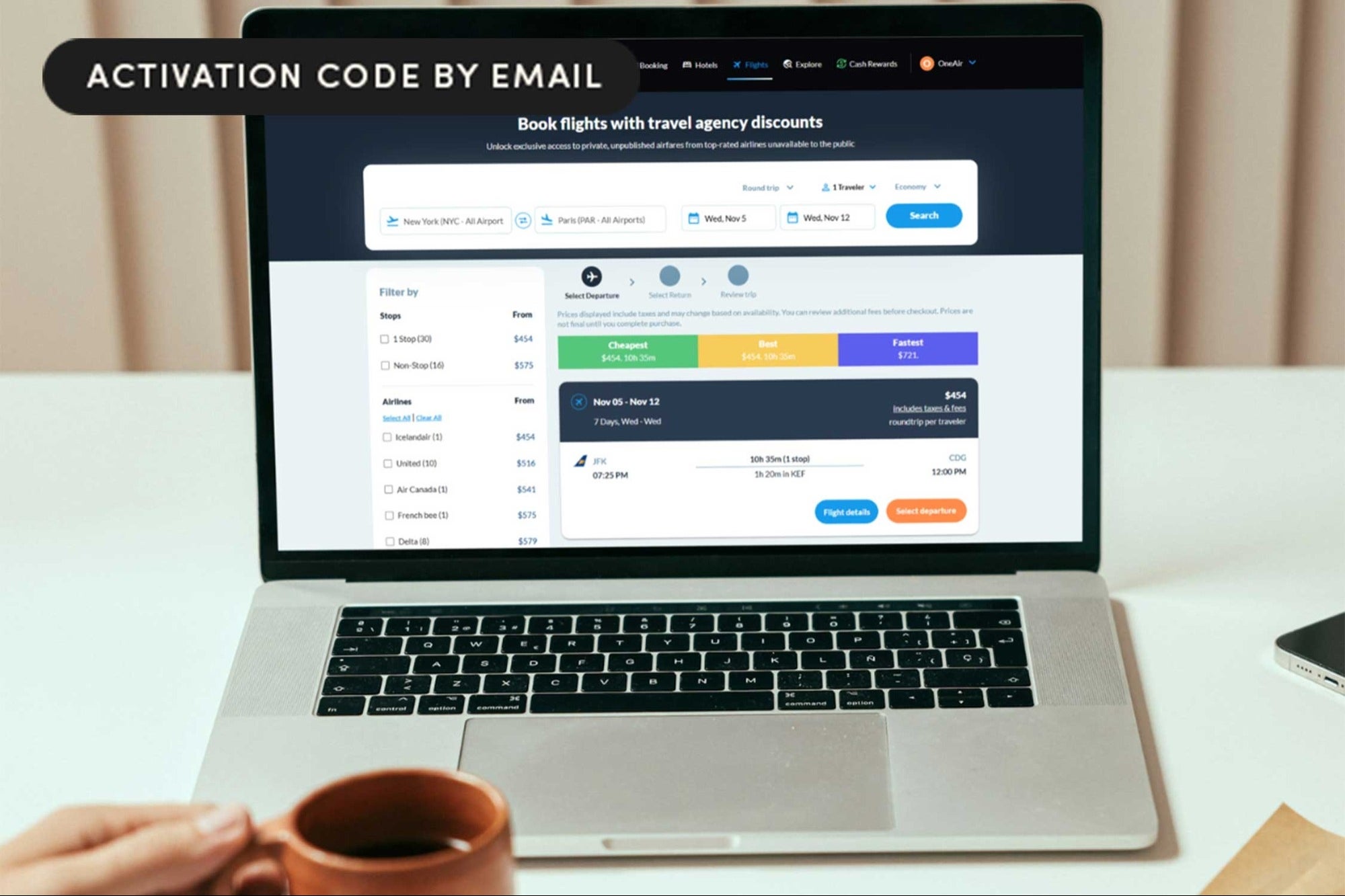
Cut Business Travel Costs for Good with OneAir Elite

Disclosure: Our goal is to feature products and services that we think you’ll find interesting and useful. If you purchase them, Entrepreneur may get a small share of the revenue from the sale from our commerce partners.

For business owners and professionals who travel often, airfare and hotel costs can quietly erode margins. But what if your travel platform actively worked to lower those expenses—automatically? With OneAir’s Lifetime Elite Plan, you get a powerful, AI-driven booking and savings tool for just $59.99 (regularly $790) when you use code FLY30 through July 20.

OneAir is designed for individuals who view travel as an investment, not a luxury. The platform scans millions of hotel and flight prices in real time, alerting you when rates drop for trips from your preferred departure airport. You don’t have to constantly monitor deals—OneAir does the work for you.

It goes one step further: if you’ve already booked a flight or hotel and the price drops, OneAir’s Smart Monitoring automatically rebooks the same itinerary at the lower price and refunds the difference. No more second-guessing whether you should have waited to book.

Unlike public travel sites, OneAir gives you access to private, wholesale hotel rates and unpublished flight deals—including premium cabins on over 700 airlines. On average, members save $50 to $150 on flights and $20 to $150 per night on hotels. You’ll also earn up to 10% back in OneAir Cash Rewards, which can be applied to future travel.

For small business owners, consultants, and remote teams, OneAir is more than a booking tool—it’s a cost-cutting asset. With just one trip, the savings can exceed the price of lifetime access.

If you’re ready to reduce overhead, travel smarter, and save automatically, OneAir Elite is your ticket.

Don’t miss the opportunity to get a lifetime of flight deals for the one-time payment of $59.99 for OneAir Elite. Use code FLY30 through July 20.

OneAir Elite: Lifetime Subscription (Save Money On Your Existing Hotel and Flight Bookings)

See Deal

StackSocial prices subject to change.

For business owners and professionals who travel often, airfare and hotel costs can quietly erode margins. But what if your travel platform actively worked to lower those expenses—automatically? With OneAir’s Lifetime Elite Plan, you get a powerful, AI-driven booking and savings tool for just $59.99 (regularly $790) when you use code FLY30 through July 20.

OneAir is designed for individuals who view travel as an investment, not a luxury. The platform scans millions of hotel and flight prices in real time, alerting you when rates drop for trips from your preferred departure airport. You don’t have to constantly monitor deals—OneAir does the work for you.

It goes one step further: if you’ve already booked a flight or hotel and the price drops, OneAir’s Smart Monitoring automatically rebooks the same itinerary at the lower price and refunds the difference. No more second-guessing whether you should have waited to book.

The rest of this article is locked.

Join Entrepreneur+ today for access.

https://www.entrepreneur.com/living/cut-business-travel-costs-for-good-with-oneair-elite/493440