Why the Most Powerful CEOs Today Lead With Authenticity, Not Silence

Opinions expressed by Entrepreneur contributors are their own.

The public perception of a CEO’s personal brand is paramount. People don’t care about performative social media posts, and are suspicious when leaders always say “the right things”. Instead, they want to know that the companies they invest in are led by authentic leaders who speak to their values, principles and vision for the future.

This era calls for authentic human branding. The most trusted companies are led by executives who bring clarity and transparency to the forefront, and don’t allow the necessity to look perfect to distract from the brand being real. These kinds of leaders breathe life into mission statements, anchor company values, and turn brands into movements.

The most successful CEOs understand that people follow people, not statements. Investors, employees and customers all want to feel connected to a leader who can actually be connected to. A real face behind the brand. When that connection exists, loyalty deepens, talent is attracted and market value rises.

The power of showing up

CEOs today aren’t just expected to lead their companies from a business standpoint; they’re expected to represent a vision for where the world is going. And the leaders who embrace that role, rather than shy away from it, are seeing powerful returns.

Satya Nadella at Microsoft. His leadership ushered in not only a new era of innovation but a deeply humanized culture shift. His personal brand, anchored in empathy and curiosity, became a beacon at Microsoft. Despite recent controversy, Satya has not tried to make the perfect statement; he remained true to his brand and called recent decisions “painful but necessary”. It wasn’t loud, but it was intentional.

Or consider how Richard Branson’s personality and values infused Virgin with a sense of adventure and purpose that no other brand could possibly replicate. His visibility wasn’t accidental. It was strategic, and it turned his personal credibility into a global brand asset.

These leaders didn’t wait for others to define their narratives. They stepped into the role with them. They’re real people with real stories, not actors who are playing a role. And in their authenticity, they’re able to hold onto trust from their consumers.

Related: How to Embrace Authenticity in a World Craving Transparency

Your brand is your legacy

A well-developed personal brand doesn’t just support your company; it shapes your legacy.

Some believe that legacy is measured in profit margins alone. But in truth, it’s measured in the culture you cultivate, and the fruits that are bred from it. Your story as a CEO, when clearly told and consistently shared, becomes the connective tissue between your vision and the people who bring it to life.

People are no longer just buying products or services. They’re buying into leadership and ideas. They want to see the person, not just the numbers. Real people care about who’s behind the curtain, and they want that person to be real, visible and principled.

That’s not pressure. That’s potential.

Visibility creates culture and confidence

When CEOs lead with clarity and grace, they don’t just create external alignment, but they also set the tone for their internal teams.

A visible, vocal leader provides employees with a sense of direction and purpose. It’s easier to rally around a mission when you know who’s steering the ship and why they care.

This is especially true for younger generations in the workforce. Sure, they’re looking for salaries, but they also care about shared values. And when leaders communicate those values publicly, consistently and with sincerity, they transform the company into a place people want to belong, not just work.

This visibility also creates confidence in times of uncertainty. In moments of crisis or transition, people look to leadership for guidance. And CEOs who are already present, trusted, and understood don’t have to scramble to build the perfect statement. The culture they’ve built will speak for them.

Conviction is a competitive advantage, while silence creates vulnerability

Some CEOs hesitate to step into the spotlight because they fear backlash or missteps. But authenticity doesn’t demand perfection; it demands clarity.

You don’t have to weigh in on every cultural flashpoint or chase every trend. What matters is choosing the moments that align with your values and showing up with consistency and conviction.

The belief that “no comment” is safe is a myth.

Always staying silent on societal or cultural issues doesn’t communicate neutrality; it communicates disconnection, caution, or worse, cowardice. In an era where brands are personified by their executives, what you don’t say can shape perception as much as what you do.

Consider the corporate fallout during the height of the Black Lives Matter movement or Pride Month. Brands that tried to split the difference, releasing hollow statements or avoiding the topic altogether, were often called out for performative allyship or outright hypocrisy. Some never recovered their credibility.

Contrast that with Nike, which embraced public risk by supporting Colin Kaepernick. The campaign sparked outrage and celebration in equal measure, but most importantly, it clearly told the market where Nike stood. That clarity did cost them. But more importantly, it deepened loyalty and sharpened brand identity.

Related: Why Personal Branding Matters More Than Ever for Successful Entrepreneurs

The opportunity ahead

The bar for leadership has changed. The expectations are higher, but so is the payoff.

Today’s CEOs have the rare opportunity to be more than operators of a business. They can be authors of a movement and agents of change.

And building that legacy starts with showing up, telling your story and sharing your perspective in a way that fuels authentic connection and inspires belief.

Your personal brand isn’t a distraction from leadership. It’s the clearest expression of it. Because the most powerful brands today don’t just sell, they stand for something.

The public perception of a CEO’s personal brand is paramount. People don’t care about performative social media posts, and are suspicious when leaders always say “the right things”. Instead, they want to know that the companies they invest in are led by authentic leaders who speak to their values, principles and vision for the future.

This era calls for authentic human branding. The most trusted companies are led by executives who bring clarity and transparency to the forefront, and don’t allow the necessity to look perfect to distract from the brand being real. These kinds of leaders breathe life into mission statements, anchor company values, and turn brands into movements.

The most successful CEOs understand that people follow people, not statements. Investors, employees and customers all want to feel connected to a leader who can actually be connected to. A real face behind the brand. When that connection exists, loyalty deepens, talent is attracted and market value rises.

The rest of this article is locked.

Join Entrepreneur+ today for access.

https://www.entrepreneur.com/leadership/why-ceos-must-lead-with-their-face-not-just-their-title/493036


Business Travel Can Wreck You—Here’s What To Do About It

Opinions expressed by Entrepreneur contributors are their own.

Andrew Herr spent years advising Navy SEALs, elite athletes, and Fortune 500 executives on how to maximize performance under pressure. From the battlefield to the boardroom, one problem kept coming up. “Travel wrecks me,” his clients told him.

And they weren’t exaggerating. According to industry data, 93% of long‑haul travelers report experiencing fatigue, malaise, and impaired concentration from jet lag.

That frustration led Herr to create Flykitt, a system designed to eliminate jet lag and help travelers stay focused and functional. It’s now used by professional athletes, executives, and anyone who’s tired of arriving in a new city wiped out before the work even begins.

Herr recently joined me on the One Day with Jon Bier podcast to explain the real reason for the lag in jet travel—and why the usual fixes rarely work.

The problem starts with cabin pressure

Jet lag isn’t just about adjusting to new time zones. It starts before you even land.

“When you’re flying, you’re usually going to about 8,000 feet of relative air pressure,” Herr explains. “That drop in pressure and the lower oxygen level cause inflammation, which lowers your energy levels, disrupts sleep, messes with your joints, causes anxiety, and stops your circadian rhythm from resetting.”

That’s why you feel so foggy and stiff after sitting on a plane, even if you didn’t fly overnight. “It’s not just the dry air,” he adds. “Flying causes your body to fight itself.”

Related: 6 Tricks to Tackling Jet Lag

Sleeping the whole flight isn’t enough

Travelers often think that as long as they sleep during the flight, they’ll rally once they land. But even beyond the inflammation, Herr warns that mistimed sleep–and even too much–can leave you just as jet-lagged. For example, if you sleep at the wrong time or too much, you won’t fall asleep the next night, and then you’re in trouble. To feel great, it’s about syncing your rest timing to work with your body’s internal clock.

In the Flykitt jet lag app, the algorithm calculates the ideal window to fall asleep, based on your flights, your arrival time, and your body’s rhythms, all personalized to you. “We guide you on optimal sleep timing and supplements to block the inflammation and get you to sleep the exact right amount on the plane,” Herr explains. “That helps you adjust smoothly to the new time zone when you land.”

The goal isn’t just to get rest. It’s about recalibrating your body to adapt from where you’ve been to where you’re going.

Caffeine isn’t the solution

Many travelers rely on coffee and other caffeinated beverages throughout the day to get them through but Herr says this can be the wrong tactic. When your body is inflamed and your sleep-wake cycle is out of whack, a lot of caffeine can amplify the problem. “It might even make it worse if you’re already inflamed or anxious,” he says. So, Flykitt includes a special circadian reset mix that includes just the right amount of coffee to optimize how you feel without overdoing it.

Flykitt will also roll out what Herr calls a “focus module”—a structured set of tools designed to support mental clarity and energy. It will combine short breathwork exercises, stress relief techniques, and brain-supporting supplements to help your system rebound naturally.

Related: Do You Drink More Coffee Than Elon Musk, Mark Zuckerberg and Other Creative Leaders?

Recovery can take longer than you think

Jet lag doesn’t hit all at once, and it doesn’t resolve itself after one night of sleep.

“What people notice is, even after they get to the new location, they still feel off,” Herr says. “They’re not sleeping well, they’re not digesting properly, they feel brain fog, and their mood’s off.”

Many travelers assume the body will naturally bounce back the next day. But Herr says that misconception leads to more problems. “Most people wait until they feel terrible to take action,” he says.

His advice: Don’t wait until you’re wrecked. Do the work upfront and avoid the crash. Flykitt’s recovery protocol starts the morning you leave and continues for 36 hours after landing.

Jet lag is not inevitable

Most travelers accept jet lag as just part of the deal. You fly long hours, you feel awful for a few days, you power through. But Herr says it doesn’t have to be that way.

“We’re finding people in a spot where their whole routine is disrupted, so they’re used to feeling terrible,” he says. “And when they feel the impact of what using the right tools at the right time can do for sleeping better, eating better, and managing stress, it clicks.”

Flykitt’s approach is built around that moment of clarity—when people realize they don’t have to lose days of productivity or enjoyment just because they crossed a few time zones.

“You can struggle through it,” Herr says. “But why would you when you don’t have to?”

Related: This CEO Says the Secret to Growth Is Knowing Who You’re Not For

Andrew Herr spent years advising Navy SEALs, elite athletes, and Fortune 500 executives on how to maximize performance under pressure. From the battlefield to the boardroom, one problem kept coming up. “Travel wrecks me,” his clients told him.

And they weren’t exaggerating. According to industry data, 93% of long‑haul travelers report experiencing fatigue, malaise, and impaired concentration from jet lag.

That frustration led Herr to create Flykitt, a system designed to eliminate jet lag and help travelers stay focused and functional. It’s now used by professional athletes, executives, and anyone who’s tired of arriving in a new city wiped out before the work even begins.

The rest of this article is locked.

Join Entrepreneur+ today for access.

https://www.entrepreneur.com/living/why-business-travel-wrecks-you-and-what-to-do-about-it/493515


Why Hustle Culture Is the Most Dangerous Lie Founders Still Believe

Opinions expressed by Entrepreneur contributors are their own.

Death by overwork. In Japan, they call this phenomenon “karoshi,” a term coined to capture the ultimate cost of the “rise and grind” hustle culture — the human life.

With 70% of the C-suite reporting they’re seriously considering finding another career, turnover costs due to employee burnout have reached a staggering $322 billion globally. Add burnout being linked to a host of physical and mental health struggles, from depression to heart disease and it’s not a far reach to theorize that something isn’t working.

Undoubtedly, there’s always another goal to crush, but is it worth working until we quite literally…drop? Are our greater efforts leading to greater rewards, or are we simply paying a price we never intended to pay?

Related: Why Hustle and Work-Life Balance Are 2 Clichés I Wish Would Go Away

How did we get here?

While hustle culture didn’t happen overnight, by 2015, the average full-time worker in the United States was logging a 47-hour workweek. Somewhere between Silicon Valley tech startups, the explosion of the gig economy in the early 2010s and the rise of social media influencers, overwork became a normalized way of life. Not only did the emergence of startups like Apple and Facebook glamorize the full-throttle, no-excuses grind, but after the 2007-2009 recession, hustling felt like a lot more than a mindset — it became a survival tactic.

Wanting to prove our worth, we listened as influencers like Grant Cardone or Gary Vaynerchuk told us from their G-Wagons that the recipe for success was to grind harder. As our physical, mental and emotional resources were slowly sapped, what we once valued was forced to take a backseat. Wellness, relationships and sleep be damned. Just a little more hard work, more hours, more networking, more output, more…more. After all, our worth was measured in the number of hours we worked, wasn’t it? If hashtags were to be believed, #sleepisfortheweak.

Soon, we were a caricature of our former selves, swimming in a sea of sameness fueled by adrenaline, caffeine and the latest “self-improvement” mantra we picked up on TikTok. After all, if we were going to reach that unreachable dream, someone had to pay the cost.

Does hustle culture deliver what it promises?

Earlier this year, Elon Musk posted on X that “Very few…actually work the weekend, so it’s like the opposing team just leaves the field for two days! Working the weekend is a superpower.” Twelve hours later, the world learned that the DOGE employees were working a staggering 120 hours a week.

Was Musk right? Does working more hours give us superhuman powers, or does his “simple math” fail to add up? Let’s take a closer look.

  • A Stanford University study found that overwork comes with diminishing returns. Logging more than 55 hours a week actually decreases your productivity.
  • According to Gallup, the risk of burnout for engaged employees doubles when an employee works 45 hours or more per week, with the risk climbing even higher for employees who aren’t engaged in their jobs.
  • After recognizing burnout as a global health issue in 2019, the World Health Organization (WHO) reported that working long hours can put you at a significantly higher risk of stroke and heart disease.
  • According to another study, the life of an entrepreneur doubles your risk of depression and triples your chances of becoming an addict — all thanks to factors we’ve normalized, like the stress and isolation of the job.

Despite these alarming statistics, new findings show a shift is happening. While the Baby Boomers may still be stuck sipping on the hustle-culture Kool-Aid, younger generations like millennials and Gen Z are increasingly prioritizing healthier lifestyles and work-life balance over a bigger paycheck.

In fact, work-life balance is their number one priority when choosing a new job, with millennials leading the charge. In other words, they’re waking up and realizing there’s truth to Dolly Parton’s words: You don’t have to “get so busy making a living that you forget to make a life.”

Related: Hustle Culture Is Lying to You — and Derailing Your Business

How to de-hustle your way to a life worth living

I don’t know about you, but if my #alwaysbeclosing mantra has me so locked in that I’m on the fast track to barely recognizing myself, are all those late-night hours still the badge of honor I thought they were? If I hustle my way from an abundant life with loved ones to a one-man show, will my “success” really justify the cost of what I’ve lost? If relentless stress has my mental health nosediving, are soaring profits truly worth making short work of the one life I’ve got?

Seven years ago, I decided I was done being another mindless cog in the hustle machine. I’d taken a hard look at what I’d become and realized I no longer recognized the man in the mirror. I’d lost my authenticity, what made me…me. My creativity was sapped, and my work was essentially a carbon copy of my colleagues. My hustling hadn’t just cost my creativity — it had cost my company, my customers, my relationships and my well-being. It was time to de-hustle my life.

No, I didn’t decide to take up forest bathing or goat yoga, but I did integrate a set of “de-hustling” principles I still follow today. Adopting these hasn’t just transformed how I live, but they’ve been a game-changer in how I run my business. It turns out that de-hustling didn’t kill my business — it’s increased our revenue every year by at least 30%.

A real hustler operates like this:

  • Works no more than 30 hours per week and often enjoys three-day weekends
  • Prioritizes time with loved ones and themselves
  • Keeps work as a second, third or fourth priority
  • Explores diverse cultures and ideas to develop a richer intellect
  • Rejects systems and recipes for chasing the dollar
  • Operates with true strategy and purpose, where every action is connected to a measurable outcome
  • Leads with empathy and compassion

In the end, adopting a living-first mentality isn’t about dreaming smaller or capping your potential. It’s about slowing down, ditching the autopilot of the grind and being intentional and efficient. It’s about caring for ourselves and choosing presence over the quick plateaus of performance. It’s about spending time with those we love and doing the things that make us feel alive. It’s about building a life and business without sacrificing what matters most at the altar of rhetoric disguised as self-improvement.

Welcome to de-hustling — where your life as a real hustler begins.

Death by overwork. In Japan, they call this phenomenon “karoshi,” a term coined to capture the ultimate cost of the “rise and grind” hustle culture — the human life.

With 70% of the C-suite reporting they’re seriously considering finding another career, turnover costs due to employee burnout have reached a staggering $322 billion globally. Add burnout being linked to a host of physical and mental health struggles, from depression to heart disease and it’s not a far reach to theorize that something isn’t working.

Undoubtedly, there’s always another goal to crush, but is it worth working until we quite literally…drop? Are our greater efforts leading to greater rewards, or are we simply paying a price we never intended to pay?

The rest of this article is locked.

Join Entrepreneur+ today for access.

https://www.entrepreneur.com/leadership/how-to-quit-the-hustle-grind-before-it-breaks-you/493055


There’s a Hidden Cost of Overnight Growth — Here’s What It Is and Why Slow and Steady Wins the Race

Opinions expressed by Entrepreneur contributors are their own.

A long time ago, in the days when my startup was still in its infancy, I craved what I saw other entrepreneurs enjoying: Major, explosive growth. The kind that snatches headlines and earns thousands — no, millions — of shares on social media. The kind of growth that fuels conference panels and cocktail hour gossip.

Now? I am so glad my company never had that.

As scintillating as a big launch day story can be, there’s a hidden cost to going viral too soon. Think about it: How many companies have you seen rocket into the stratosphere like a firework, only to flame out just as quickly?

At my company, Jotform, we recently had a major launch. In the months since we released our new product, the outcome has been exactly as I’d wanted: a slow, steady climb in usage. Why would I want that over a viral hit? Let me explain.

Related: Startup Culture Prioritizes Scaling Fast — Here’s Why That’s Actually a Huge Mistake

The pitfalls of explosive growth

To answer why an entrepreneur would hope for anything less than a runaway smash, let’s look back on what happened to the exercise bike company Peloton during the pandemic, when usage surged. The company reacted by pushing its manufacturing capabilities beyond its limits, causing quality and customer satisfaction to take a hit. When the pandemic finally waned, the company was left with a bloated inventory and supply capacity it no longer needed.

SaaS companies don’t generally have the issues associated with producing physical products, but the problems are often similar: When usage skyrockets overnight, your systems get tested in ways they weren’t designed for. Support tickets pile up. Bugs get exposed in the worst possible ways — publicly, and all at once. Teams scramble, often abandoning longer-term thinking in favor of short-term firefighting.

Even worse, early users drawn in by hype might not be long-term customers, which means the feedback you’re acting on isn’t actually helpful. Too much growth, too quickly, decimates your ability to listen closely and refine your product in response to real needs.

Improving your product gradually

One of the most valuable things about slow growth is that it offers you the opportunity to improve your product. At Jotform, we released our AI agents and immediately got to work tweaking them based on the feedback we received. I know what we’re doing is working, because I’m watching their use increase over time.

Steady growth gives you space to iterate, not just react. I understand it can be difficult to resist the urge to meet demand, but I caution against rushing. Writing for Harvard Business Review, Gary P. Pisano explains that “good growth strategists do not fall into the trap of thinking they can grow fast now and fix things later. They recognize that more-measured growth over a sustained period will lead to much better financial results than explosive growth for a short period of time.” I completely agree — the “move fast and break things” ethos is a recipe for overwhelm and loss of trust.

A more disciplined approach lets you catch issues early, optimize systems before they’re overburdened, and prioritize features that truly matter to your core users, not just the loudest voices. In our case, it meant identifying which use cases were gaining traction and which needed further support, all without burning out the team or breaking what we’d built.

Related: Don’t Be Fooled By Overnight Success Stories — Building a Business Takes More Time Than You Think. Here’s How to Play the Long Game.

Learn about actual customer use

When growth is gradual, you get something far more valuable than vanity metrics: insight into how people actually use your product. Not how you hope they’ll use it or how they describe it in a survey, but real behavior, in real environments. At Jotform, one of our biggest discoveries after launching our AI agents was that usage wasn’t just happening inside our platform. It was happening on users’ own websites.

We started seeing thousands of daily views coming from embedded agents — far more than we initially expected. That told us that customers weren’t just experimenting with the tool; they were integrating it into their businesses. We saw custom buttons, branded interfaces and even AI agents connected to WhatsApp. These weren’t casual users — they were adapting our product to their needs in creative, sometimes surprising ways. This information has been instrumental in helping us chart our path forward from here.

Building for the long-term

When you grow slowly, you don’t just learn more — you build better. You’re able to lay a strong foundation that can support future scaling, instead of racing to patch things together after the fact. At Jotform, that meant making smart decisions about infrastructure, support systems and product design based on real patterns rather than assumptions.

It also meant giving our team the time to build sustainably, without chaos. When the next wave of users arrives — and it will — we’ll be ready, not scrambling, because growth that lasts isn’t about the moment or the initial hype. It’s about what happens in the months and years that follow.

A long time ago, in the days when my startup was still in its infancy, I craved what I saw other entrepreneurs enjoying: Major, explosive growth. The kind that snatches headlines and earns thousands — no, millions — of shares on social media. The kind of growth that fuels conference panels and cocktail hour gossip.

Now? I am so glad my company never had that.

As scintillating as a big launch day story can be, there’s a hidden cost to going viral too soon. Think about it: How many companies have you seen rocket into the stratosphere like a firework, only to flame out just as quickly?

The rest of this article is locked.

Join Entrepreneur+ today for access.

https://www.entrepreneur.com/growing-a-business/im-so-glad-my-company-never-went-viral-heres-why/492333


Why This Sports Festival Might Be the Most Ambitious Live Event in America

Opinions expressed by Entrepreneur contributors are their own.

The digital revolution opened up a universe of opportunity for marketers. Millions can be reached in seconds with just a few clicks. But in a screen-saturated world, people crave something deeper: a real connection.

“Compared to a digital marketing campaign, live events may reach fewer people,” says Fanatics Events CEO Lance Fensterman. “But digital is shallow. It’s a quick scroll and move on. Live events are deep and immersive. They allow you to truly interact with fans and give them experiences they’ll never forget.”

Fensterman put that philosophy into action in his first year at Fanatics, leading the launch of Fanatics Fest NYC in 2024, a three-day festival that blends sports, culture and entertainment into one in-person experience. The inaugural event drew over 70,000 attendees last summer.

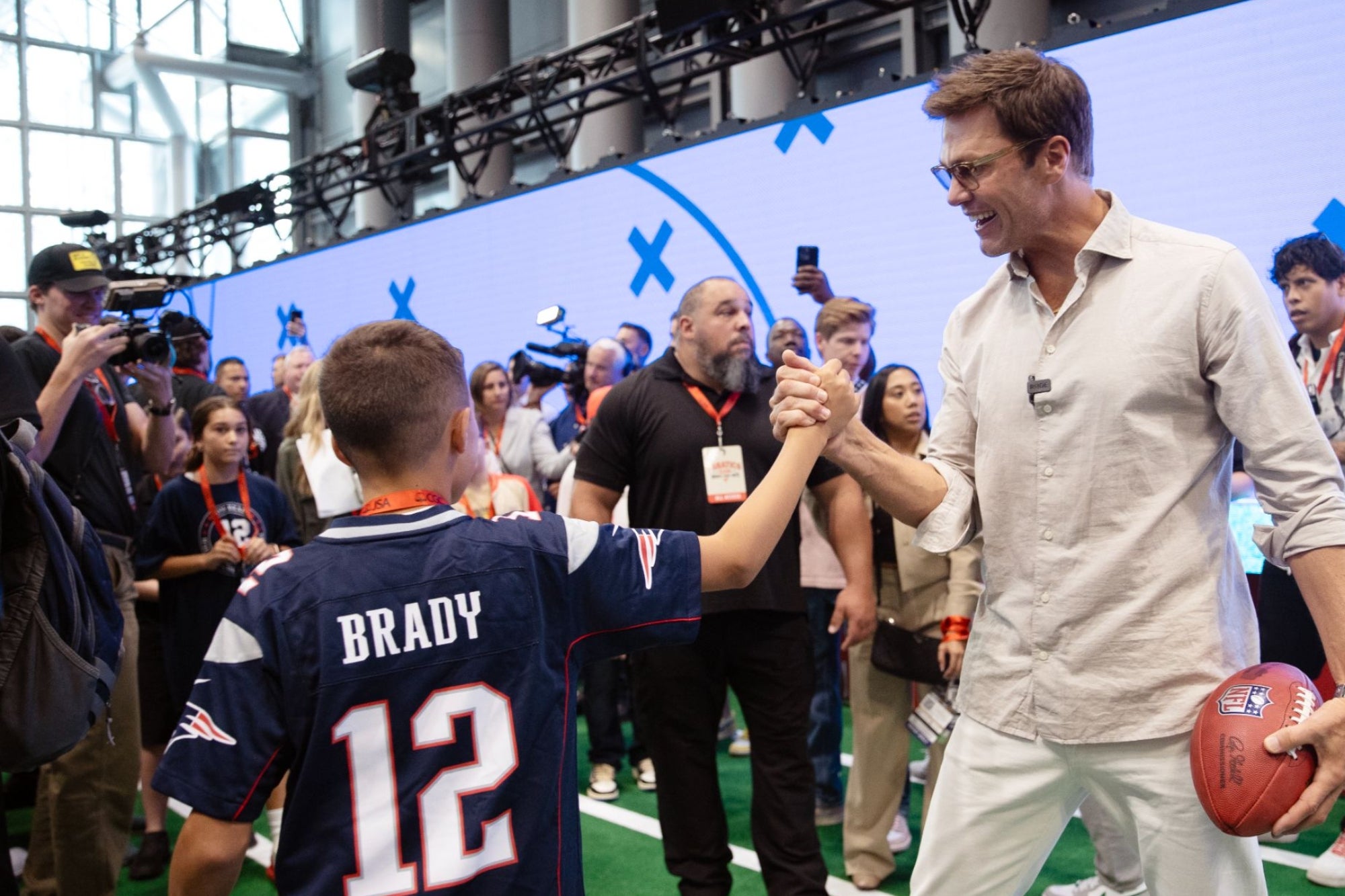
This weekend, Fanatics Fest returns to the Javits Center, with Fensterman at the helm once again, bringing together more than 500 athletes, celebrities and artists — including Tom Brady, LeBron James, Travis Scott and Kevin Hart — from June 20–22.

Fanatics Fest is an ambitious undertaking, but it’s in experienced hands. Before joining Fanatics, Fensterman served as president of ReedPop, where he helped turn niche gatherings into major pop culture events like New York Comic Con, ComplexCon and Star Wars Celebration.

“If you think about the early days of Comic Con, these were people who didn’t have a place,” Fensterman recalls. “We built this world where they were not just safe, but they were stars.”

Related: How Global Digitization is Transforming Sports

Focus on the fans

The sports world brings its own set of challenges, but Fensterman’s mission remains the same: bring people together around a shared passion.

“A consistent theme throughout my career has been giving fans what they want,” he says. “When you can do that, you create moments and experiences they’ll never forget.”

That fan-first mindset is especially important when navigating the diverse and often divided landscape of sports culture.

“Sports fans are tribal,” Fensterman says. “They group around specific teams or leagues.”

The self-described nerd likens it to Harry Potter houses, tight-knit communities with distinct identities. WWE fans, for example, are fiercely loyal but may be less inclined to engage with fans of other sports.

“When you look at other sports events, they’re largely organized by team or sport,” he notes, pointing to NBA All-Star Weekend and the NFL’s Super Bowl Experience. “We’ve tried to zoom out and show people there’s an entire world where sports, entertainment and culture intersect—regardless of tribe.”

Think of it like a music festival. You might show up for the headliner but end up discovering two side-stage acts you fall in love with — or years later, brag that you saw a breakout band before they made it big. That’s the kind of atmosphere Fensterman wants to create at Fanatics Fest.

“What you’re hoping is, someone comes because they wanted to see the New York Greats panel, but then they rediscover their love of card collecting, or they catch a simulcast of the Club World Cup and realize European soccer is actually really cool,” he says. “Those kinds of cross-pollination moments are exciting — when fans come for one thing and end up connecting with something entirely new.”

Related: ‘Nobody’s Ever Seen This Before’: How These 2 NYC Sports Icons Are Infusing Swagger into Next-Gen Eyewear

Control the chaos

The flip side of planning something this all-encompassing is knowing when to stop.

“Fanatics is the most ambitious organization I’ve ever been around,” Fensterman says, noting he was still making tweaks to the schedule the morning of our interview. “But we have to go pencils down at some point, because we have to physically build all of this.”

Once they’ve finalized the schedule, Fensterman and crew face the daunting challenge of escorting A-Listers through a raucous crowd of avid sports fans without incident.

“It’s all about giving fans a frictionless experience to access the things they love,” Fensterman says. “We don’t want talent or athletes sneaking through back corridors— we want them moving through the crowds. But the challenge is, how do you do that without someone like LeBron James getting overrun?”

No matter how meticulously Fensterman and his team plan, the only way to understand the logistics of a behemoth like this is to experience it. And after last year, they know what to expect.

“My focus is on making new mistakes,” Fentsterman says. “It’s about constant innovation–fixing what didn’t work last year, trying bold new ideas and creating a culture where people feel safe to experiment, take risks and push boundaries.”

Elevate the experience

This year’s Fanatics Fest is set to be four times bigger than last year’s event, with twice the staff — and with that growth comes a small bump in ticket prices. But Fensterman says the added cost is well worth it.

“We raised prices slightly this year because we felt there was room to do so,” he explains. “Even during economic downturns, it’s still a great value. Compared to the cost of a movie per hour, 10 to 12 hours of immersive entertainment is an affordable way for a family to spend the day doing something special.”

One of this year’s biggest additions is Fanatics Games, where a lucky group of fans will get the once-in-a-lifetime chance to compete against 50 of the biggest names in sports and entertainment in a series of skill challenges, with prizes up to $1 million in cash. The star-studded lineup includes LeBron James, Tom Brady, Kevin Durant, DJ Khaled, John Cena, Joe Burrow, Kai Cenat and many more.

Fanatics Fest 2025 is unlike anything the sports world has seen. From its star-studded lineup, to its mission of uniting fans across all sports, to its unique offerings like Fanatics Games, Fensterman and his team are ushering in a new era of sports events.

The only question now is how they’ll top it next year.

The digital revolution opened up a universe of opportunity for marketers. Millions can be reached in seconds with just a few clicks. But in a screen-saturated world, people crave something deeper: a real connection.

“Compared to a digital marketing campaign, live events may reach fewer people,” says Fanatics Events CEO Lance Fensterman. “But digital is shallow. It’s a quick scroll and move on. Live events are deep and immersive. They allow you to truly interact with fans and give them experiences they’ll never forget.”

Fensterman put that philosophy into action in his first year at Fanatics, leading the launch of Fanatics Fest NYC in 2024, a three-day festival that blends sports, culture and entertainment into one in-person experience. The inaugural event drew over 70,000 attendees last summer.

The rest of this article is locked.

Join Entrepreneur+ today for access.

https://www.entrepreneur.com/growing-a-business/this-sports-festival-might-be-the-most-ambitious-live-event/493169


Upgrade Your Workflow With Two Essential Microsoft Tools for Just $55

Disclosure: Our goal is to feature products and services that we think you’ll find interesting and useful. If you purchase them, Entrepreneur may get a small share of the revenue from the sale from our commerce partners.

More than 1.2 billion people worldwide use Microsoft Office, according to data from World Metrics. Some of these programs have been around since 1989, so they clearly have staying power. And now you can join this large pool of happy users for just $54.97 with The Ultimate Microsoft Office Professional 2021 for Windows: Lifetime License and Windows 11 Pro Bundle, on sale through July 20.

Outfit your PC with Microsoft Office and Windows 11 for just $55

Whether it’s your first time using the Microsoft Office suite of apps, or it’s been a few years (or decades) since you took advantage of their power, now’s the time to outfit your computer with Microsoft Office Professional 2021. Not only will you receive eight helpful tools, but you’ll also get a license for the latest operating system, Windows 11 Pro.

Boost your productivity with Microsoft Office essentials: Word, Excel, Outlook, PowerPoint, OneNote, Teams, Publisher, and Access. Don’t let the 2021 label fool you — this version includes three more apps than the 2024 release. It also lets you work on familiar interfaces, without having to deal with AI integrations.

Once you’ve explored all the new apps, you can enjoy a new operating system with this Windows 11 Pro license. It was made with the modern professional in mind, so it’s great for entrepreneurs. It also offers improved cybersecurity and DirectX 12 Ultimate, which improves your gaming experience.

Give your old PC a new lease on life with The Ultimate Microsoft Office Professional 2021 for Windows: Lifetime License and Windows 11 Pro Bundle, now just $54.97 (reg. $418.99) through July 20.

StackSocial prices subject to change.

More than 1.2 billion people worldwide use Microsoft Office, according to data from World Metrics. Some of these programs have been around since 1989, so they clearly have staying power. And now you can join this large pool of happy users for just $54.97 with The Ultimate Microsoft Office Professional 2021 for Windows: Lifetime License and Windows 11 Pro Bundle, on sale through July 20.

Outfit your PC with Microsoft Office and Windows 11 for just $55

Whether it’s your first time using the Microsoft Office suite of apps, or it’s been a few years (or decades) since you took advantage of their power, now’s the time to outfit your computer with Microsoft Office Professional 2021. Not only will you receive eight helpful tools, but you’ll also get a license for the latest operating system, Windows 11 Pro.

The rest of this article is locked.

Join Entrepreneur+ today for access.

https://www.entrepreneur.com/science-technology/upgrade-your-workflow-with-two-essential-microsoft-tools/493438


This Founder Noticed a Stark Change at a Local Pride Parade — and Says It Creates a ‘Real Opportunity’ for Small Businesses

A few weeks ago, Tanner Graham, co-founder and CEO of creative brand agency General Idea, noticed a glaring development while attending a Pride parade in small-town Pennsylvania: Major corporations that would typically march, from blue-chip banks to insurance, pharmaceutical companies and beyond, were absent.

Image Credit: Courtesy of General Idea. Tanner Graham.

 ”It was definitely a very different tone this year,” Graham tells Entrepreneur. “Those Fortune 500 companies that in the past few years have strongly expressed their support for LGBTQ+ initiatives and showed a clear support of Pride initiatives have retracted [that support].”

Related: Here are 4 Proven Strategies to Champion LGBTQIA+ Beyond Pride, All Year Long

Instead, Graham witnessed small and local businesses step in to march and maintain the momentum established in years past.

“It creates a real, new opportunity this year, and probably for the next several years.”

Since the 2018 founding of their full-service, luxury beauty and fashion-focused agency, Graham and General Idea co-founders Ian Schatzberg and Semjon Doenhoff have always centered diversity, equity and inclusion. The five leaders that make up General Idea’s C-suite all identify as LGBTQ+.

Graham sees large companies’ decrease in support for Pride and LGBTQ+ initiatives as a chance for small businesses to increase their own efforts.

“There’s a real opportunity to be leaders,” Graham explains, “because as the bigger companies and especially the publicly traded companies have had to turn down the volume [on their LGBTQ+ initiatives], it creates a real, new opportunity this year, and probably for the next several years to come.”

Related: 3 LGBTQ Entrepreneurs Share How Being Out and Proud Fuels Their Business

Graham calls on small business leaders to concretely and consistently commit to their values.

General Idea is a certified member of the National LGBT Chamber of Commerce (NGLCC), which includes annual membership fees to support their network of initiatives. The agency has also made donations to the Transgender Law Center for several years and continues to support LGBTQ+ causes in 2025 through donations to Ali Forney Center, which provides life-saving services to LGBTQ+ youths, and SAGE, a national advocacy and services organization that looks out for LGBTQ+ elders.

Graham says leaders should not only communicate company values outwardly but also show their teams and organizations why it’s so important to stand up for their beliefs.

“Diversity [brings] the best ideas, the most forward-thinking ideas.”

As the General Idea co-founders first considered how to develop a modern marketing agency and provide the best service for their clients, they focused on hiring people with skillsets that would complement each other within the current and shifting marketing landscape, Graham says.

“Diversity [brings] the best ideas, the most forward-thinking ideas,” Graham explains. “Ultimately, as marketers, our goal is to speak to a diverse range of customers. We didn’t set out to necessarily create an LGBTQ+ C-suite, but at the same time, it felt like a snowball effect. The people that we got to know and decided to bring into the agency and elevate into running their departments happened to be diverse in that regard, and it’s worked really well for us.”

General Idea has partnered with celebrity brands like Savage X Fenty, Ariana Grande and Swarovski over the years.

In addition to its C-suite, General Idea has about 50 employees. The company prioritizes hiring “exceptional” thinkers and creators who work hard and have a strong appreciation for culture and an ability to tap into current trends and future opportunities, Graham says.

Related: Diversity Is Not the Same to Everyone. Here’s Why That Matters

General Idea hires also must have a knack for finding solutions — because that’s at the heart of the business.

 ”Every client comes to us because they have a problem to solve,” Graham says, “whether they need to sell more products or connect with new audiences, so for us, first and foremost, it’s about understanding what those problems are and getting to the core of that. And a lot of times, it’s not so clear at the beginning.”

Graham notes that General Idea doesn’t bill itself as an advertising agency, though depending on a client’s needs, advertising might be part of a “multi-pronged” solution.

Related: Why Diverse Leadership Is a Competitive Advantage — and How Women Can Lead the Shift

“Our most rewarding projects sometimes are the projects that come in thinking they’re one thing and then end up resulting in a different type of output,” Graham says, “because it means that we’re not taking these briefs and problems at face value, but rather we’re partnering with our clients [and] shepherding them into what we believe will create the best possible result.”

“We really want to create an environment that empowers people to feel safe.”

In a moment when certain companies are being “quieter around what their values are,” Graham and General Idea see their commitment to LGBTQ+ issues and diversity at large as a path forward — and one that will prepare them and their team to keep up with a “rapidly” evolving marketing domain and “completely different world” wrought by AI.

“We really want to create an environment that empowers people to feel safe, [to] feel like they can express their beliefs and be who they are,” Graham says. “We want to create opportunities for people to thrive within those senses of security.”

A few weeks ago, Tanner Graham, co-founder and CEO of creative brand agency General Idea, noticed a glaring development while attending a Pride parade in small-town Pennsylvania: Major corporations that would typically march, from blue-chip banks to insurance, pharmaceutical companies and beyond, were absent.

Image Credit: Courtesy of General Idea. Tanner Graham.
 ”It was definitely a very different tone this year,” Graham tells Entrepreneur. “Those Fortune 500 companies that in the past few years have strongly expressed their support for LGBTQ+ initiatives and showed a clear support of Pride initiatives have retracted [that support].”

The rest of this article is locked.

Join Entrepreneur+ today for access.

https://www.entrepreneur.com/leadership/ceo-sees-new-opportunity-for-small-businesses-during-pride/493391


I Spent 20 Years Watching Brands Rise or Fade—This Is What Separates Them

Opinions expressed by Entrepreneur contributors are their own.

Most entrepreneurs reserve public relations (PR) for major announcements like product launches, funding rounds or crisis management. But the most successful founders don’t wait for pivotal moments to seek attention. They invest early in building a personal and business reputation that speaks for itself.

In crowded markets, credibility acts as a natural attractor and risk reducer. It signals integrity, reliability and trustworthiness — qualities that not only shape public perception but also open the door to unseen opportunities.

After two decades working with founders, C-suites, and visionary brand leaders, one truth has stood out: those who prioritize consistent visibility and strong messaging over the long haul outperform those who treat PR as a one-time tactic. Brands that embed credibility into their DNA — ideally from day one — are better positioned to attract capital, strategic partners, loyal customers and media attention.

If you’re serious about long-term success, it’s time to treat visibility and credibility as core business strategies — not last-minute fixes. Here’s where to start:

1. Clarify and own your value proposition

Most founders know their product, but struggle to explain their deeper purpose. Media readiness starts with clarity: What problem does your solution uniquely solve? What market space do you dominate with authority?

Your messaging should present your distinct value in a clear, compelling narrative that can be understood in seconds by investors, customers and the press. This is the foundation of credibility: people can’t believe in what they can’t understand.

Related: How to Build Credibility When Selling to Customers Who’ve Never Heard of You

2. Invest early in thought leadership

Thought leadership isn’t self-promotion — it’s a public expression of your expertise, perspective and values. Founders who share insights generously (before asking for attention) establish themselves as credible voices.

Start by writing advice-driven articles, speaking at relevant industry events or offering commentary as a media expert. Participate in real-time discussions through platforms like LinkedIn, Twitter, Reddit AMAs, Instagram Live or niche Slack and Discord communities. These casual, interactive formats humanize your brand and demonstrate accessibility, transparency and relevance.

Credibility is built through consistency, not by sporadic posts or self-serving announcements.

3. Leverage your origin story

Every entrepreneur has a story. The best know how to use it.

Your company vision came from somewhere—your frustrations, your experiences, your drive to solve a particular problem. That story makes your brand relatable and memorable. It’s the emotional bridge between your mission and your market.

Your personal narrative should appear on your “About” page, in social content, in media interviews and as part of your pitch strategy. People remember stories, not specs. Facts inform — but stories persuade.

4. Build media relationships before you need them

Breakthrough media coverage rarely comes from blasting out a press release. It comes from relationships.

Whether you DIY or work with a publicist, start by identifying journalists, editors, and podcast hosts who cover your industry. Follow their work. Comment thoughtfully on their articles. Share insights or story angles that align with their focus.

Position yourself as a trusted expert before you pitch. That way, when a critical moment comes — your product launch, your funding round, your viral moment — they already know who you are.

5. Create a digital footprint that reinforces your authority

In today’s world, your first impression lives on Google. If someone searches your name or company, will what they find reflect your expertise and credibility?

Audit your digital presence. Make sure your bios are consistent across platforms. Treat LinkedIn as your thought leadership hub. Ensure your website reflects professionalism and authority, not just basic functionality.

In short, make it easy for people to believe in you, because they can find evidence that others already do.

Related: How to Build Credibility and Trust With Effective Content Creation

Visible Credibility leads to strategic leverage

People respond to those they trust. They take meetings, return emails, and share opportunities with leaders who’ve earned their attention through visible, consistent credibility.

Entrepreneurs who treat trust-building as an ongoing strategy — not a crisis response—are the ones who build resilient, opportunity-rich businesses. When the pressure hits (and it will), your credibility will do the talking.

Most entrepreneurs reserve public relations (PR) for major announcements like product launches, funding rounds or crisis management. But the most successful founders don’t wait for pivotal moments to seek attention. They invest early in building a personal and business reputation that speaks for itself.

In crowded markets, credibility acts as a natural attractor and risk reducer. It signals integrity, reliability and trustworthiness — qualities that not only shape public perception but also open the door to unseen opportunities.

After two decades working with founders, C-suites, and visionary brand leaders, one truth has stood out: those who prioritize consistent visibility and strong messaging over the long haul outperform those who treat PR as a one-time tactic. Brands that embed credibility into their DNA — ideally from day one — are better positioned to attract capital, strategic partners, loyal customers and media attention.

The rest of this article is locked.

Join Entrepreneur+ today for access.

https://www.entrepreneur.com/leadership/i-spent-20-years-watching-brands-rise-or-fade-this-is/491876


Meta Is Trying to Poach OpenAI Employees With ‘Giant’ $100 Million Offers, Sam Altman Says

The AI talent wars are heating up as Meta attempts to poach talent from OpenAI with $100 million signing bonuses and even higher salaries — but OpenAI CEO Sam Altman says the company’s “best people” have turned down Meta’s offer.

On an episode of the “Uncapped” podcast that aired on Tuesday, Altman, 40, spoke candidly about Meta’s efforts to recruit OpenAI researchers with “giant offers.” While Meta’s efforts have been unsuccessful so far, Altman expressed disbelief at the nine-figure signing bonuses and salaries. The average employee at OpenAI makes $1.13 million per year, according to Levels.fyi.

“They [Meta] started making these giant offers to a lot of people on our team,” Altman said in the podcast interview. “$100 million signing bonuses, more than that comp [compensation] per year. It is crazy. I’m really happy that, at least so far, none of our best people have decided to take them up on that.”

Related: Here’s How Much a Typical Google Employee Makes in a Year

Altman said that the reason OpenAI researchers chose to stay at the startup instead of moving to higher salaries at Meta was because they think OpenAI has “a much better shot” of reaching superintelligence, or the point where AI surpasses human intelligence in memory, reasoning, and knowledge.

He said that OpenAI had created a “special” type of culture that wasn’t based on high upfront compensation but on the work and the mission of the startup. OpenAI’s mission of developing AI to benefit “all of humanity” comes first, with the financial incentives flowing from achieving that mission, Altman said.

“I hope that we can be the best place in the world to do [AI] research,” Altman asserted.

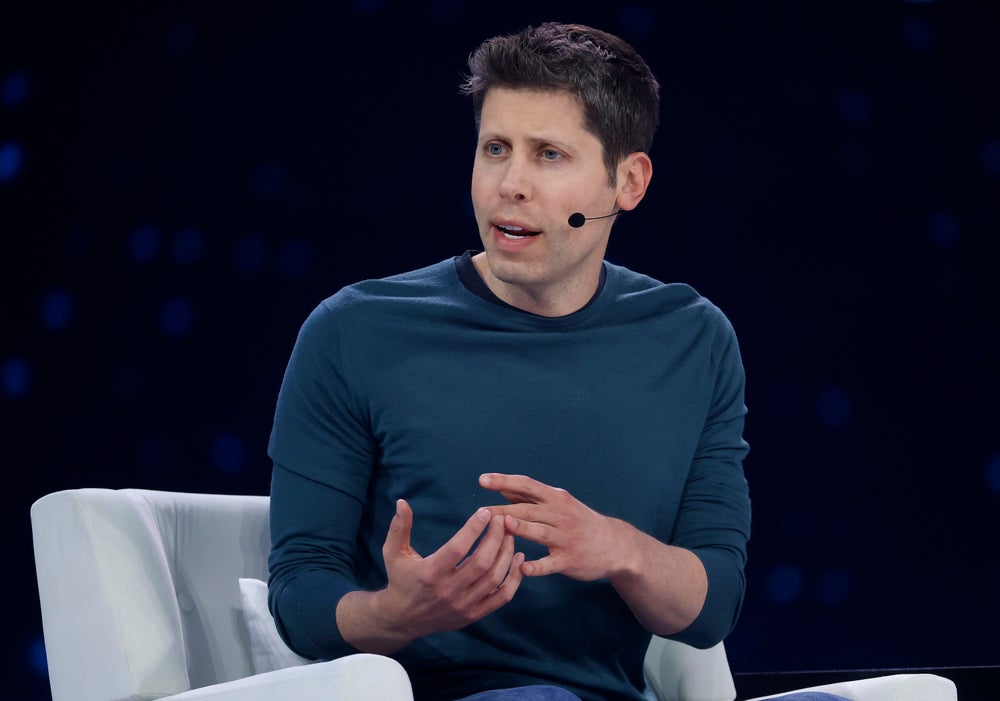
OpenAI CEO Sam Altman. Photo by Justin Sullivan/Getty Images

Meta has recently started assembling a 50-person team, the Superintelligence lab, and CEO Mark Zuckerberg, 41, is reportedly overseeing the hiring. According to a Bloomberg report last week, Zuckerberg has been offering AI researchers compensation packages ranging from seven to nine figures to join the team.

Zuckerberg wants to pull ahead of rivals like OpenAI and Google and make Meta lead the race to achieve superintelligence, according to the report.

Related: The Former Chief Scientist Behind ChatGPT Is Starting His Own Company — With Only One Goal and One Product in Mind

However, Meta still appears to be losing AI talent. Deedy Das, a principal at venture capital firm Menlo Partners, wrote on X that he had heard of three cases last week of Meta losing researchers to OpenAI and Anthropic despite offering them more than $2 million per year.

“The AI talent wars are absolutely ridiculous,” Das wrote.

Meta has also recently made a hefty investment in exchange for fresh talent. The company announced last week that it was investing $14.3 billion into data labeling startup Scale AI, in return for a 49% stake in the startup and the acquisition of talent. Scale AI’s 28-year-old CEO Alexandr Wang will reportedly join Meta’s superintelligence team in a top leadership role.

Both Meta and OpenAI have substantial user bases. Zuckerberg said in May that Meta’s AI assistant has one billion monthly active users. Meanwhile, OpenAI said in late March that it had 500 million weekly active users.

The AI talent wars are heating up as Meta attempts to poach talent from OpenAI with $100 million signing bonuses and even higher salaries — but OpenAI CEO Sam Altman says the company’s “best people” have turned down Meta’s offer.

On an episode of the “Uncapped” podcast that aired on Tuesday, Altman, 40, spoke candidly about Meta’s efforts to recruit OpenAI researchers with “giant offers.” While Meta’s efforts have been unsuccessful so far, Altman expressed disbelief at the nine-figure signing bonuses and salaries. The average employee at OpenAI makes $1.13 million per year, according to Levels.fyi.

“They [Meta] started making these giant offers to a lot of people on our team,” Altman said in the podcast interview. “$100 million signing bonuses, more than that comp [compensation] per year. It is crazy. I’m really happy that, at least so far, none of our best people have decided to take them up on that.”

The rest of this article is locked.

Join Entrepreneur+ today for access.

https://www.entrepreneur.com/business-news/openai-ceo-sam-altman-says-meta-made-100m-offers-to-staff/493508


You Built a Successful Business — But Your Inner Self Got Neglected in the Process. Here’s What You Can Do About It Now.

Opinions expressed by Entrepreneur contributors are their own.

There’s something powerful about creating and designing your own business that gives us entrepreneurs a sense of pride and accomplishment. From the earliest days of planning out a product or service to building the marketing strategy to landing your very first contract, each of those moments began with a design.

And it’s this design that’s held near our innermost parts — the reason we often call our businesses our babies. We put so much thought into how we want our brand and business to be perceived, so much so that we stay up at night working long days and fine-tuning every aspect of our brand. All the while, we’re losing sleep, not eating right, or worse, our stresses alter our perception of ourselves.

A question that recently came up in a conversation with colleagues was, “How did I become this person? When and where did I change throughout this process?” After we’ve built businesses and developed well-defined brands, how did we lose steam when designing ourselves? What does it mean to design yourself? Well, we are human, not business entities after all. However, much of our inner selves is heavily designed and shaped by our environments, childhoods, life experiences and relationships.

And adding on to that, the changes that can take place during the times we’re focused on business and work can sneak up on us, which is when we tend to disconnect from the person we were before designing our business. The disconnect can feel like a place of unfamiliarity and stagnation. There is good news: When we take back control of this design, it can lead to massive transformations.

Related: How This Female Founder Never Lost Herself When Starting a Successful Business

Who really designed you?

As I talked with that colleague about who we’ve become over the years, she said she didn’t recognize this person who had become so wrapped up in work anymore. We chatted about the topic longer, and I listened as she dissected all of the voices and experiences that have shaped this new person — someone she didn’t like. I asked a simple question, “Who do you say that you are?” She was stunned and stumbled over her words a bit. It became apparent to me that the inner self often gets neglected while we’re designing other aspects of our lives — especially our businesses.

We’re told things like, “You don’t have the skills for that,” or “You’re not a good fit” or my favorite, “I don’t see the value in your service.” Ouch. These phrases can sting, or worse, leave gaps where our minds try to fill in with assumptions and negative thoughts. Sit for a moment and think about how anything you’ve heard from clients, competitors or naysayers might’ve translated into your inner design. How do you feel about that? Do you believe the things that have been said?

Taking control of your design

Regaining control over your inner design may sound like a daunting task. But don’t be discouraged! While I can’t promise overnight results, I’ll offer some tips that may help you dig deeper into this phenomenon and hopefully push you to think about how to take back control of your design.

1. Self-reflect: What traits do you love about yourself? What traits do you want to improve upon? Why do you like certain parts of yourself, or why not? Really start thinking about these questions and forming answers that you believe in. For example, during a training session years ago when I was selling jewelry, I was coached on how to approach customers. I was told that I was too quiet and passive. I needed to be more aggressive if I wanted to see sales conversions.

The feedback was a little more harsh than that, if I recall! I went home and was upset for a while, thinking, “I don’t like aggressive sales tactics.” Why? Because I knew that I wouldn’t like it as a customer, so why would I do it to others? In short, I decided that I liked the way I sold. Low pressure and listening to what the customer wanted was my method. And guess what? Within just a few months, I had become the highest-selling gold jewelry salesperson. I didn’t want my coach’s voice dictating who I needed to be in order to be successful. Ask yourself the hard questions, give yourself an answer and live it.

Related: Are You Living Your Most Authentic Self?

2. Question your motives: Why are you working so hard? Who are you trying to impress? Are you working on a relationship for the wrong reasons? Yes, this is more reflection with a twist! What I’ve found over the years is that often our motives can tell us a lot about who we are. Our motives are held close to our chests, and we rarely reveal them to others. But if we practice the art of questioning why we do what we do, we might find that our motives could be holding us back from living our true design.

As an example, I was in a situation where I wasn’t quite getting what I wanted out of a relationship in a new field. You see, I was just starting to become familiar with folks in the fashion scene here in Chicago, and I was going to multiple events per day. It was burning me out. I had to stop and ask myself: Why was I doing this? My answer shifted something inside me. I peeled back an answer — a truth that I felt I wasn’t well known — I was a nobody in the fashion world. And I was living for a world that, in part, I had built up within my mind.

I felt the need to show up as much as possible so I could get ahead in this “world.” I was draining myself and putting stress on people close to me with the motive of trying to appear as a fashion person. I listened to the voice telling me that I was nobody. My motive made me realize that I wasn’t truly in control of my design. I was trying to appear as someone I was not (I changed my focus to building solid relationships authentically). Relationships with boundaries that I dictate. Question your motives and answer honestly. The answer might take some time to come to you. When it does reveal itself, things in your life might begin to make more sense.

3. Practice saying the positive out loud: Yes, say it out loud into the world. Imagine your business growing in a void — it can’t! Your business grew and developed because you spoke about its design, you shared your ideas, and you were excited to explore everything your business had to offer the world. Now, when we think about ourselves, how often do we say things in our heads (some good, but mostly bad)? Get out of your head. Find those things you like about yourself and say them out loud. Create an inner-self elevator pitch that you feel good about repeating.

For a practical example that doesn’t just involve repeating affirmations in a mirror or regurgitating items on your resume, try speaking things out loud as if you were speaking on behalf of yourself to a new person. Try saying something like, “DeAnna has a quiet confidence, and she really holds herself to a high standard in life. You can trust her because she’s a pretty honest person.” Oh, I’m blushing!

Compare this type of self-dialogue to, “I have strong client services experience, and I’ve helped companies navigate internal concerns. I have excellent communication skills. I am kind, and loved, and I deserve this life!” Bleh, generic (I mean absolutely no offense to you if these are your affirmations). If you’ve been able to get through steps one and two, you will be able to speak honestly and truthfully about your inner design. You’ll be able to speak from a place that is real — a place that you love.

Related: 6 Essential Mantras to Refocus Your Life and Business

The power of your inner design

This is the power that allows you to walk into a business meeting, an interview, a prospect call or any room and confidently know who you are, regardless of what others may think. You can be the big fish; you can be the pond for all I know. You can be the person you’ve designed. Building on the conversation I had with my friend, even someone who feels they’ve lost their sense of identity can still design and create who they want to be. It’s called storytelling for a reason; you tell the story of you.

Being in a strong state of awareness is a major power source that has driven some of the most influential people in history to their success. That same power is something you have access to. And it starts with your thoughtful design. As entrepreneurs, we can’t just wander through business — we’ll be walked over. I personally don’t want that for any of you. I want to see you all living the design of your life to the best of your ability. Keep in mind that your design may require some updates and improvements along the way. As long as you remain in control of those changes, you won’t lose yourself again.

How would you design your inner self? Or, how do you like your current design?

There’s something powerful about creating and designing your own business that gives us entrepreneurs a sense of pride and accomplishment. From the earliest days of planning out a product or service to building the marketing strategy to landing your very first contract, each of those moments began with a design.

And it’s this design that’s held near our innermost parts — the reason we often call our businesses our babies. We put so much thought into how we want our brand and business to be perceived, so much so that we stay up at night working long days and fine-tuning every aspect of our brand. All the while, we’re losing sleep, not eating right, or worse, our stresses alter our perception of ourselves.

A question that recently came up in a conversation with colleagues was, “How did I become this person? When and where did I change throughout this process?” After we’ve built businesses and developed well-defined brands, how did we lose steam when designing ourselves? What does it mean to design yourself? Well, we are human, not business entities after all. However, much of our inner selves is heavily designed and shaped by our environments, childhoods, life experiences and relationships.

The rest of this article is locked.

Join Entrepreneur+ today for access.

https://www.entrepreneur.com/living/how-entrepreneurship-can-disconnect-you-from-your-inner-self/492685