Build a Brand That Gets You Noticed—Starting with This One Tool

Opinions expressed by Entrepreneur contributors are their own.

In a digital-first world, your first impression rarely happens in person. It happens online — in Google results, on LinkedIn, in your byline. Whether you’re a founder, freelancer or future exec, how you show up digitally shapes the opportunities you get. But until recently, building a credible, polished personal brand required time, money and professional help.

AI is changing that. It’s not just transforming how businesses operate. It’s transforming how individuals present themselves.

AI can amplify — or undermine — your brand

AI branding tools promise speed, scale and studio-quality polish. But here’s the truth: AI won’t fix a messy brand. It will just make the mess more visible.

Too many people expect AI to do all the work — to generate their voice, define their message and reach their audience. But when you skip the foundational work, the content it produces tends to feel generic or misaligned. The brands that succeed with AI are led by people who are clear about what they stand for, how they speak and who they’re speaking to.

AI is an amplifier. If you feed it clarity, you get consistency. If you feed it confusion, you get noise.

Related: How Generative AI Will Revolutionize The Future of Your Brand

Creative vision still matters

Think of AI as your assistant, not your replacement. The best results come when you approach it like a creative director — providing direction, editing with care and injecting personal perspective. AI can help you write faster, create visuals and automate workflow, but it can’t replace your lived experience or your intuition.

Your tone, stories and opinions are what make your brand memorable. AI helps scale that — not substitute it.

Applying AI with intention

If you’re just getting started, focus on three areas where AI can make the biggest impact.

Start with your visual identity. If you don’t have professional photos, AI-generated headshots can instantly upgrade your presence across LinkedIn, websites, pitch decks and even speaking proposals. One consultant I worked with used consistent AI-generated photos across her content, creating a recognizable image that made her brand feel more credible and cohesive — without a photoshoot.

Then, apply AI to your messaging and content. Use it to brainstorm ideas, draft outlines and edit posts. But always refine the output to make sure your voice comes through.

Finally, look at workflow automation. AI can summarize calls, suggest content ideas and even help manage your calendar.

What success looks like

I’ve personally seen solopreneurs use AI-generated headshots, content templates and automation to transform their brand on a shoestring budget — getting booked for podcasts, signing new clients and landing speaking gigs.

The common thread? They didn’t treat AI as a shortcut. They treated it as a creative partner.

What to watch out for

Of course, AI isn’t without risk. The biggest mistake is outsourcing your voice completely. If your content starts to sound like everyone else’s, you lose what makes you distinctive. Authenticity is still the currency of trust.

Another trap is tool overload. New AI platforms launch daily, but chasing them all will scatter your focus. Start simple. Master one or two that support your workflow, like ChatGPT for writing or Gemini for quick summaries, and grow from there.

Related: AI for the Underdog — Here’s How Small Businesses Can Thrive With Artificial Intelligence

The future belongs to those who adapt

AI is no longer optional. It’s a strategic advantage for anyone building a reputation online. As it becomes more embedded in content creation, branding and business ops, the people who learn to use it thoughtfully will stand out.

More importantly, AI is lowering the barrier to high-quality personal branding. You no longer need a team or a five-figure budget to look like a pro. What you do need is vision, clarity, and the willingness to lead the process.

If you bring the perspective, AI can bring the power.

In a digital-first world, your first impression rarely happens in person. It happens online — in Google results, on LinkedIn, in your byline. Whether you’re a founder, freelancer or future exec, how you show up digitally shapes the opportunities you get. But until recently, building a credible, polished personal brand required time, money and professional help.

AI is changing that. It’s not just transforming how businesses operate. It’s transforming how individuals present themselves.

AI can amplify — or undermine — your brand

The rest of this article is locked.

Join Entrepreneur+ today for access.

https://www.entrepreneur.com/starting-a-business/build-a-brand-that-gets-you-noticed-starting-with-this/491194




Don’t Wait for a Breach — Here Are 5 Easy Steps to Fortify Your Cybersecurity

Opinions expressed by Entrepreneur contributors are their own.

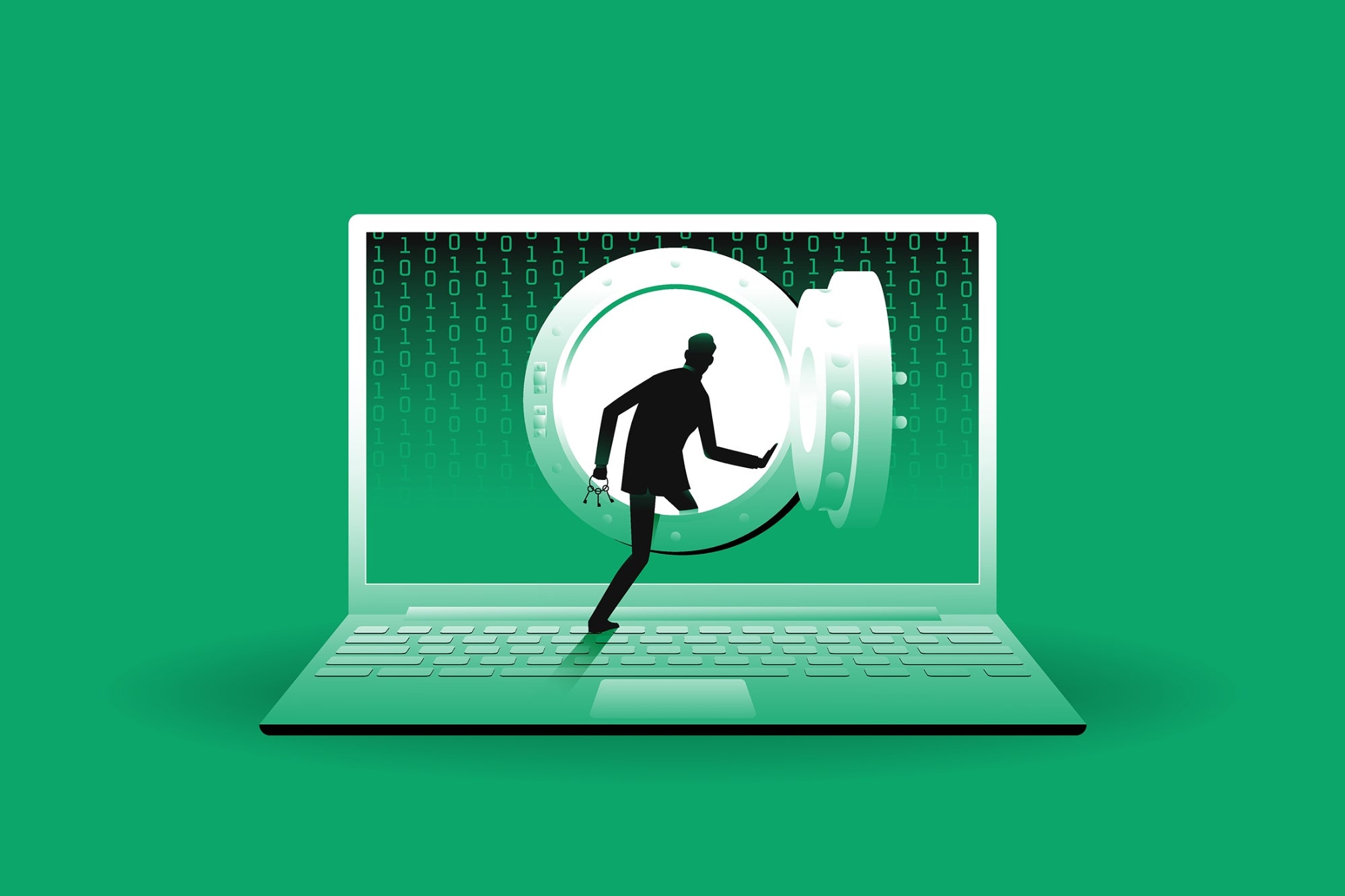
Cybercrime is projected to cause over $639 billion in losses in the United States in 2025 — and some projections expect those costs to grow as high as $1.82 trillion by 2028.

Needless to say, it has never been more important for enterprises to improve their cybersecurity, particularly as hacking attempts become increasingly sophisticated. Fortunately, cybersecurity solutions are also growing more sophisticated, and implementing them can be surprisingly straightforward.

1. Emphasize employee education

Employee education should always be the first priority for enterprise businesses. Human error is believed to have contributed to 95% of data breaches in 2024. Even more alarming, 80% of incidents were linked to just 8% of staff members. More often than not, these breaches are the result of successful phishing attacks that target careless or inattentive employees.

Enterprises cannot afford to take a “once and done” mindset toward educating employees about cybersecurity risks. Employee education must be persistent and repeated. Many organizations have found success by conducting monthly phishing test emails, which help employees better recognize common phishing attempts while also helping leaders identify those who need additional training.

Related: Cyber Attacks Are Inevitable — So Stop Preparing For If One Happens and Start Preparing For When One Will

2. Update cybersecurity requirements for all workers

While providing educational resources is a good first step, enterprises can also reduce their risk for employee-related cyber attacks by making some basic upgrades to their cybersecurity requirements.

Common examples include setting mandatory password rules (such as the inclusion of special numbers and characters) and requiring multi-factor authentication. Multi-factor authentication or systems that don’t rely on a password (such as biometrics or push notifications) are generally considered more secure and easier for employees than requiring them to frequently update their passwords.

While requiring a VPN when accessing company resources, particularly for remote or hybrid employees, has long been a standard practice for many, a recent increase in VPN-related attacks indicates that VPNs are no longer the most secure option for enhancing cybersecurity.

3. Incorporate zero trust principles

Adopting a “zero trust” security framework is rapidly becoming the go-to solution for enterprises. Rather than focusing on perimeter security, the zero trust approach requires that all users, devices and applications be verified and authenticated. Users and devices are only ever given the minimum level of access that is required for them to perform their tasks.

Implementing a zero trust framework generally relies on using solutions like SASE (secure access service edge), which merge network and security functions in a cloud-based application to determine access rights and identify threats among dispersed workforces. At the same time, policy management is centralized to ensure all security and access policies are applied consistently and properly.

With a zero trust framework, organizations essentially operate as if a breach has already occurred, using security tools that minimize the scope of a potential attack. This ultimately reduces the risk of successful cyber attacks while limiting damage if a breach occurs.

4. Keep all software and applications up to date

Outdated software is another area where enterprises often allow for unplanned vulnerabilities. In fact, software and application updates are often made specifically to account for newly discovered security vulnerabilities.

With the average enterprise using over 1,000 apps, it can become surprisingly easy for out-of-date software or applications that haven’t been updated properly (or are no longer supported by the developer) to go unnoticed and create cybersecurity risks. Such vulnerable systems can go unnoticed for years, allowing for data theft or increasing the risk of a ransomware attack.

To address this common issue, enterprises should ensure that apps and software are set to implement automatic updates. Updates could also be scheduled for times when they won’t cause significant downtime. Enterprises should regularly audit the applications they use to identify out-of-support software, as well as areas where apps could be consolidated. Similarly, out-of-date hardware should be replaced as needed to ensure it can continue to receive necessary security updates.

Related: How to Make Sure Your Business Can Handle Cyber Threats

5. Back up your data

Finally, no enterprise cybersecurity plan is complete without a robust system for data backups. The rise of ransomware attacks, which seek to lock enterprises out of devices or files, has made this a necessity. A successful ransomware attack now costs banks an average of $6.08 million.

Data backups can help reduce periods of extended downtime, allowing the enterprise to resume operations quickly, even if access or data are lost. Cloud storage solutions and automated backup tools from SaaS platforms can help create backups consistently, while also using AI tools to monitor for and detect threats.

In addition to cloud-based backups, enterprises may also benefit from using options like external hard drives as an offline backup solution. This adds an extra layer of protection in case of data loss from a cyber attack or other incident.

Develop a stronger cybersecurity profile

Even the easiest-to-implement cybersecurity strategies require time and some level of financial investment. However, taking steps such as improving employee knowledge and training and partnering with the right cybersecurity partners can make a dramatic difference in reducing your organization’s risk of a successful cyber attack.

You don’t have to become a cybersecurity expert yourself to improve your enterprise cybersecurity. But with a proactive, targeted approach, you can make a difference — and much quicker than you might expect.

Cybercrime is projected to cause over $639 billion in losses in the United States in 2025 — and some projections expect those costs to grow as high as $1.82 trillion by 2028.

Needless to say, it has never been more important for enterprises to improve their cybersecurity, particularly as hacking attempts become increasingly sophisticated. Fortunately, cybersecurity solutions are also growing more sophisticated, and implementing them can be surprisingly straightforward.

1. Emphasize employee education

The rest of this article is locked.

Join Entrepreneur+ today for access.

https://www.entrepreneur.com/science-technology/5-easy-steps-to-fortify-your-cybersecurity/491559


Your ‘Midlife Crisis’ Isn’t a Failure — It’s Your Chance to Pivot With Purpose

Opinions expressed by Entrepreneur contributors are their own.

The term “midlife crisis” has been around for decades and has a major branding problem. The word crisis has a negative connotation. We think of a breakdown, a lack of clarity or a downward spiral.

Sure, maybe it’s a bit of those things, but that’s not accounting for the full story.

Let’s flip the script. What if, instead of seeing it as a crisis, we saw it as a rebrand? A pivot meant to redefine success and rediscover passions on your terms.

We don’t have to stay stuck. The world changes, we change and what once mattered might not hit the same anymore. That’s okay. Growing pains come with growth.

The real problem isn’t the shift — it’s ignoring it. It’s staying on autopilot, chasing outdated goals just because they once made sense. That’s when you find yourself staring at a promotion, a paycheck or a milestone and thinking… is this it?

Related: Is It Time to Pivot Your Business? 3 Clear Signs You Shouldn’t Ignore

That feeling? It’s not failure. It’s a signal. It’s your gut telling you it’s time for a reset. That doesn’t make it a full-blown crisis. Your “why” isn’t static. Our purpose evolves. What drove us in our 20s might not cut it in our 40s. What inspired us last year might not hold weight today.

I’ve always been set on honoring a gut feeling, but I’m also leaning to recalibrate.

Some of the best products (and people) rebrand. They don’t just tweak their logo or hair color—they reinvent themselves.

  • Poppi started as Mother Beverage, a humble apple cider vinegar drink, before a bold rebrand turned it into the billion-dollar powerhouse it is today.
  • Lifetime Fitness dropped the “Fitness” to become “Lifetime,” signaling a shift from just gyms to a full-scale wellness and lifestyle brand.
  • RXBAR went from cluttered packaging to a minimalist, “No B.S.” label, making it a category leader in the protein bar department.
  • Phil Collins was the drummer for Genesis before launching a solo career in his 40s that made him a megastar.
  • Paul Simon reshaped his sound completely with Graceland at 45, proving that reinvention can redefine a legacy.
  • Taylor Swift mastered the art of evolution from a country artist to a record-breaking pop star and billionaire.

Some of the biggest revelations come from the willingness to pivot.

Why shouldn’t we do the same in our own lives? If you’re staring down a midlife “crisis,” maybe it’s not a breakdown — it’s just time for your next great rebrand.

Related: Why Post Malone’s Personal Pivot is a Masterclass in Rebrands

How do you rebrand the midlife crisis into a midlife breakthrough? It’s about intentional reflection, honest questioning and trusting your gut.

Let’s break it down:

Step 1: Reflect on peak moments

Think back to times when you felt most alive or proud. Was it leading a team, mentoring others or building something from scratch?

Those moments are breadcrumbs leading you back to what fuels you. Take note and adjust accordingly.

Step 2: Ask yourself the hard questions

Dig deeper. Ask yourself: Why am I doing this? What kind of impact do I want to have? Would I still pursue this if no one were watching? If your answers don’t sit right, it’s time to pivot.

Step 3: Align your goals with your values

Once you redefine your “why,” make sure your goals reflect it. If your purpose is helping others grow, look for mentorship opportunities. If you thrive on creativity, start that passion project.

Aligning your goals with what excites you ensures that your wins feel meaningful, not just impressive on paper.

Step 4: Embrace flexibility

Your purpose isn’t set in stone. It’s okay to pivot, outgrow old dreams or want something different. Give yourself permission to change course. Growth isn’t about staying the same; it’s about adapting with confidence.

Related: If You Don’t Learn How to Pivot Your Business, You’ll Watch It Perish

Step 5: Move your body

Also, have you worked out or spent a moment in nature recently? That might be the most important check. Everything changes when you reframe your midlife shift as an opportunity instead of a crisis.

Here’s what happens when purpose leads the way:

  • Clarity in decisions. No more overthinking. When you know your “why,” choices become more apparent. If it aligns with your purpose, it’s a yes. If it doesn’t, it’s a no. Trust your gut.
  • Increased resilience. Purpose makes you unstoppable. When you’re connected to something bigger than a paycheck or a title, setbacks don’t derail you. You’re not just chasing success; you’re chasing meaning.
  • Authentic connections. People are drawn to those who move with intention. When you lead with purpose, others notice. It creates opportunities, relationships and collaborations that matter.
  • Fulfillment beyond success. Redefining success on your terms makes every milestone feel richer. You stop chasing things for the sake of achievement and start building a life that excites you.

Rebranding the midlife crisis isn’t about having all the answers. It’s about shifting from autopilot to intentional action. Whatever you want to call it: a revelation, rebrand, reset, etc.

Find purpose in the pivot.

The term “midlife crisis” has been around for decades and has a major branding problem. The word crisis has a negative connotation. We think of a breakdown, a lack of clarity or a downward spiral.

Sure, maybe it’s a bit of those things, but that’s not accounting for the full story.

Let’s flip the script. What if, instead of seeing it as a crisis, we saw it as a rebrand? A pivot meant to redefine success and rediscover passions on your terms.

The rest of this article is locked.

Join Entrepreneur+ today for access.

https://www.entrepreneur.com/living/why-the-midlife-crisis-is-just-a-moment-for-reinvention/492607


The Overlooked AI Advantage That’s Helping Businesses Move Faster and Smarter

Opinions expressed by Entrepreneur contributors are their own.

In my work advising enterprise leaders on AI adoption, I’ve seen a surprising pattern emerge. While the industry is preoccupied with building ever-larger models, the next wave of opportunity isn’t coming from the top — it’s increasingly coming from the edge.

Compact models, or small language models (SLMs), are unlocking a new dimension of scalability — not through sheer computational power, but through accessibility. With lower compute requirements, faster iteration cycles and easier deployment, SLMs are fundamentally changing who builds, who deploys and how quickly tangible business value can be created. Yet, I find many entrepreneurs are still overlooking this significant shift.

Related: No More ChatGPT? Here’s Why Small Language Models Are Stealing the AI Spotlight

Task fit over model size

In my experience, one of the most persistent myths in AI adoption is that performance scales linearly with model size. The assumption is intuitive: bigger model, better results. But in practice, that logic often falters because most real-world business tasks don’t inherently require more horsepower; they require sharper targeting, which becomes clear when you look at domain-specific applications.

From mental health chatbots to factory-floor diagnostics requiring precise anomaly detection, compact models tailored for focused tasks can consistently outperform generalist systems. The reason is that larger systems often carry excess capacity for the specific context. The strength of SLMs isn’t just computational — it’s deeply contextual. Smaller models aren’t parsing the entire world; they are meticulously tuned to solve for one.

This advantage becomes even more pronounced in edge environments, where the model must act fast and independently. Devices like smartglasses, clinical scanners and point-of-sale terminals don’t benefit from cloud latencies. They demand local inference and on-device performance, which compact models deliver — enabling real-time responsiveness, preserving data privacy and simplifying infrastructure.

But perhaps most importantly, unlike large language models (LLMs), often confined to billion-dollar labs, compact models can be fine-tuned and deployed for what might be just a few thousand dollars.

And that cost difference redraws the boundaries of who can build, lowering the barrier for entrepreneurs prioritizing speed, specificity and proximity to the problem.

The hidden advantage: Speed to market

When compact models come into play, development doesn’t just accelerate — it transforms. Teams shift from sequential planning to adaptive movement. They fine-tune faster, deploy on existing infrastructure and respond in real time without the bottlenecks that large-scale systems introduce.

And that kind of responsiveness mirrors how most founders actually operate: launching lean, testing deliberately and iterating based on real usage, not solely on distant roadmap predictions.

So instead of validating ideas over quarters, teams validate in cycles. The feedback loop tightens, insight compounds, and decisions start reflecting where the market is actually pulling.

Over time, that iterative rhythm clarifies what actually creates value. A lightweight deployment, even at its earliest stage, surfaces signals that traditional timelines would obscure. Usage reveals where things break, where they resonate and where they need to adapt. And as usage patterns take shape, they bring clarity to what matters most.

Teams shift focus not through assumption, but through exposure — responding to what the interaction environment demands.

Related: From Silicon Valley to Everywhere — How AI Is Democratizing Innovation and Entrepreneurship

Better economics, broader access

That rhythm doesn’t just change how products evolve; it alters what infrastructure is required to support them.

Because deploying compact models locally — on CPUs or edge devices — removes the weight of external dependencies. There’s no need to call a frontier model like OpenAI or Google for every inference or burn compute on trillion-parameter retraining. Instead, businesses regain architectural control over compute costs, deployment timing and the way systems evolve once live.

It also changes the energy profile. Smaller models consume less. They reduce server overhead, minimize cross-network data flow and enable more AI functionality to live where it’s actually used. In heavily regulated environments — like healthcare, defense or finance — that’s not just a technical win. It’s a compliance pathway.

And when you add up those shifts, the design logic flips. Cost and privacy are no longer trade-offs. They’re embedded into the system itself.

Large models may work at planetary scale, but compact models bring functional relevance to domains where scale once stood in the way. For many entrepreneurs, that unlocks a completely new aperture for building.

A use case shift that’s already happening

Replika, for example, built a lightweight emotional AI assistant that achieved over 30 million downloads without relying on a massive LLM because their focus wasn’t on building a general-purpose platform. It was on designing a deeply contextual experience tuned for empathy and responsiveness within a narrow, high-impact use case.

And the viability of that deployment came from alignment — the model’s structure, task design and response behavior were shaped closely enough to match the nuance of the environment it entered. That fit enabled it to adapt as interaction patterns evolved, rather than recalibrating after the fact.

Open ecosystems like Llama, Mistral and Hugging Face are making that kind of alignment easier to access. These platforms offer builders starting points that begin near the problem, not abstracted from it. And that proximity accelerates learning once systems are deployed.

Related: Microsoft Compact AI Model Phi-4 Takes on Mathematical Challenges

A pragmatic roadmap for builders

For entrepreneurs building with AI today without access to billions in infrastructure, my advice is to view compact models not as a constraint, but as a strategic starting point that offers a way to design systems reflecting where value truly lives: in the task, the context and the ability to adapt.

Here’s how to begin:

  1. Define the outcome, not the ambition: Start with a task that matters. Let the problem shape the system, not the other way around.

  2. Build with what’s already aligned: Use model families like Hugging Face, Mistral and Llama that are optimized for tuning, iteration and deployment at the edge.

  3. Stay near the signal: Deploy where feedback is visible and actionable — on-device, in context, close enough to evolve in real time.

  4. Iterate as infrastructure: Replace linear planning with movement. Let each release sharpen the fit, and let usage — not roadmap — drive what comes next.

Because in this next AI wave, as I see it, the advantage won’t belong solely to those building the biggest systems — it’ll belong to those building the closest.

Closest to the task. Closest to the context. Closest to the signal.

And when models align that tightly with where value is created, progress stops depending on scale. It starts depending on fit.

https://www.entrepreneur.com/science-technology/the-ai-advantage-most-entrepreneurs-are-missing/492745


How David Beckham and Shaun Neff Are Creating Buzz Around Their New Snack Brand BEEUP

Something new is buzzing around Target store shelves — BEEUP, a honey-powered fruit snack co-founded by soccer superstar David Beckham and serial entrepreneur Shaun Neff.

While the world is well aware of Beckham’s prowess on the pitch, they might not know about his other true passion: beekeeping. “Beekeeping began as a hobby with my sons, but quickly grew into a deep appreciation for honey as a powerful superfood that provides natural energy,” says Beckham. “I am excited to make this wholesome, nutritious ingredient available for active kids and families in the form of these incredible BEEUP snacks.”

Related: Kendall Jenner and Odell Beckham Jr Team Up on Oral-Care Beauty Brand

BEEUP harnesses nutrient-dense honey to offer kids and families a naturally sweet upgrade from refined sugars. It is non-GMO, free from synthetic dyes, fake flavors, and contains an excellent source of Vitamins A, C, and E.

“David has always been someone I looked up to,” says Neff, who has launched products with the likes of Kendall Jenner and Odell Beckham Jr. “I have built several businesses with a lot of amazing talent, and one of the main things I look for in a partner is passion. And when I saw David’s incredible documentary, and learned about his love for beekeeping, honey and its superpower ingredient, it just hit me as an entrepreneur. I said let’s go start a business — I was all in.”

“I’ve been really impressed by David’s attention to detail, from packaging to how many samples we’ve tested to really get the product and brand to where it is today,” Neff added.

Credit: BEEUP

Neff says that planning a launch starts with having a great product, but there are several other factors that are vital to its long-term success.

“Packaging is key to communicating your brand to customers,” Neff says. “ Anytime there’s a new brand launching, you’re going to be talking to retailers who already have a lot of product on the shelf. Our packaging uses a kind of sticker look to show what’s inside in a fun way, and for our main logo, the B is actually nicknamed Becks, which is David Beckham’s nickname. It’s very important that you not only have a great product, but that your packaging serves a purpose and you’re telling a story.”

BEEUP’s 10-packs come in three flavors: Very Berry, Tropical Mix, and Sour Watermelon, and are available at Target stores nationwide, Target.com, beeupsnacks.com, and @beeupsnacks on Instagram.

Something new is buzzing around Target store shelves — BEEUP, a honey-powered fruit snack co-founded by soccer superstar David Beckham and serial entrepreneur Shaun Neff.

While the world is well aware of Beckham’s prowess on the pitch, they might not know about his other true passion: beekeeping. “Beekeeping began as a hobby with my sons, but quickly grew into a deep appreciation for honey as a powerful superfood that provides natural energy,” says Beckham. “I am excited to make this wholesome, nutritious ingredient available for active kids and families in the form of these incredible BEEUP snacks.”

Related: Kendall Jenner and Odell Beckham Jr Team Up on Oral-Care Beauty Brand

The rest of this article is locked.

Join Entrepreneur+ today for access.

https://www.entrepreneur.com/starting-a-business/david-beckham-shaun-neff-launch-beeup-snacks/493051


Take a Look: This Single AI Platform Pulls Together Some of the Most Popular AI Models

Disclosure: Our goal is to feature products and services that we think you’ll find interesting and useful. If you purchase them, Entrepreneur may get a small share of the revenue from the sale from our commerce partners.

For modern business owners, just using AI is the baseline. A simple ChatGPT prompt might have been able to keep work moving quickly and competitively a few years ago, but industries have advanced. Now, the question isn’t whether or not your business is using AI, it’s whether you’re business is using AI better, cheaper, and with more depth than your competitors.

If you want to go beyond simple prompts and use AI across your business, try 1min.AI. This single AI platform pulls together some of the most popular AI models like GPT-4.0 and Midjourney, so you can use them across projects for a lower price than you’d be able to get any of them individually. Right now, it’s only $99.99 (reg. $540) to get a 1min.AI Advanced Lifetime Business Plan.

How does 1min.AI work?

Instead of juggling multiple subscriptions or jumping between different apps, 1min.AI puts everything in one place. You get access to multiple AI models, including OpenAI’s GPT-4o, Anthropic’s Claude 3, Google Gemini, Meta’s Llama, and more. That means you can use the best models for writing, image generation, data analysis, customer service, and creative projects, all under one roof.

Beyond just text, 1min.AI also includes tools for image editing, video creation, audio transcription, translation, and even interactive PDF summarizing. Business owners can generate blog posts, social media content, product images, marketing videos, and customer outreach materials without needing separate platforms. Everything is powered by flexible monthly credits, plus there are plenty of ways to earn free credits just by logging in or referring others.

There’s still time to get a 1min.AI Advanced Lifetime Subscription for $99.99.

1min.AI Advanced Business Plan Lifetime Subscription

See Deal

StackSocial prices subject to change

For modern business owners, just using AI is the baseline. A simple ChatGPT prompt might have been able to keep work moving quickly and competitively a few years ago, but industries have advanced. Now, the question isn’t whether or not your business is using AI, it’s whether you’re business is using AI better, cheaper, and with more depth than your competitors.

If you want to go beyond simple prompts and use AI across your business, try 1min.AI. This single AI platform pulls together some of the most popular AI models like GPT-4.0 and Midjourney, so you can use them across projects for a lower price than you’d be able to get any of them individually. Right now, it’s only $99.99 (reg. $540) to get a 1min.AI Advanced Lifetime Business Plan.

How does 1min.AI work?

The rest of this article is locked.

Join Entrepreneur+ today for access.

https://www.entrepreneur.com/science-technology/take-a-look-this-single-ai-platform-pulls-together-some-of/493282


Discover How AI Can Transform the Way You Work With This $20 E-Degree

Disclosure: Our goal is to feature products and services that we think you’ll find interesting and useful. If you purchase them, Entrepreneur may get a small share of the revenue from the sale from our commerce partners.

Eleven percent of American businesses reported saving more than $100,000 since integrating ChatGPT into their workflows, according to data from Statista. If you don’t want to be left behind, it’s time to familiarize yourself with ChatGPT and AI tools.

You can now elevate your skills from the comfort of home with the ChatGPT and Automation E-Degree. Right now, you can get all 25 hours of instruction for just $19.97 (reg. $790) until July 20.

Learn to automate like a pro with this AI-powered e-degree

The ChatGPT and Automation E-Degree provides 12 courses filled with more than 25 hours of content that can get you up to speed on the world of artificial intelligence. All courses are taught by Eduonix Learning Solutions, a team of professionals dedicated to distributing high-quality tech training content.

These courses will explore practical, real-world applications of ChatGPT and help you customize and adapt the tool for different industries. It provides hands-on experience you can immediately apply as an entrepreneur, showing you ways to streamline your processes with smart automation.

You’ll also learn how you can use ChatGPT to help enhance your creativity, communication, and data visualization. You’ll also figure out how to turn raw data into visual stories and improve conversational skills with AI.

Whether you’re trying to optimize your workflows or you’re looking to push the boundaries of what AI can do in your own field, these courses are built to help you excel today and in the future.

Discover how AI can improve your entrepreneurial life with the ChatGPT and Automation E-Degree, on sale now for just $19.97 (reg. $790) through July 20.

StackSocial prices subject to change.

Eleven percent of American businesses reported saving more than $100,000 since integrating ChatGPT into their workflows, according to data from Statista. If you don’t want to be left behind, it’s time to familiarize yourself with ChatGPT and AI tools.

You can now elevate your skills from the comfort of home with the ChatGPT and Automation E-Degree. Right now, you can get all 25 hours of instruction for just $19.97 (reg. $790) until July 20.

Learn to automate like a pro with this AI-powered e-degree

The rest of this article is locked.

Join Entrepreneur+ today for access.

https://www.entrepreneur.com/science-technology/discover-how-ai-can-transform-the-way-you-work-with-this/492923


Why Knowing Your Customer Drives Smarter Growth (and Higher Profits)

Opinions expressed by Entrepreneur contributors are their own.

It’s one thing to have an idea of who your customers are. But it’s quite another to actually know them. The more companies learn about their target audience — whether through purchase data, reviews, focus groups or other methods — the better they’ll be positioned to unlock growth.

Thanks to AI adoption in marketing and the availability of more industry and consumer-level data than ever before, companies have never been in a better position to know their customers in a way that drives smarter growth and higher profits.

Related: How Understanding Your Customers Can Help You Create Copy That Sells

Provide more personalized customer experiences

The main purpose of knowing your customer is to better understand their needs and why they would make use of your products or services. One of the most obvious examples of this comes from Amazon’s personalized product recommendations, which suggest goods related to an item that a customer is considering. These suggestions are drawn directly from the company’s own data based on what other customers have purchased, as well as the individual’s history.

Amazon’s data-driven model has become a powerful element in driving growth and additional sales among its existing customers. As far back as 2013, “also bought” recommendations accounted for 35% of Amazon’s sales. The success of this model has played a major role in positioning Amazon as the go-to online retailer for so many customers, causing other retailers to attempt to replicate this design.

Understanding your customers can also be applicable in less retail-oriented settings. For example, a report from BuzzRx found that women aged 30-39 filled the most mental health and ADHD prescriptions in the United States out of any demographic.

For healthcare providers, understanding the higher prevalence of these conditions in this age group (as well as which prescriptions are most commonly filled) can lead to higher-quality care. While not necessarily profit-related, this personalized support can help healthcare providers retain patients and provide better care.

Tailor your messaging appropriately

Knowing your customer also enables smarter marketing that is likely to result in higher sales. By understanding customer needs and preferences, marketers can ensure that their campaigns will reach the right people, on the right platforms, with the right type of messaging. If any one of those three factors is off, your marketing budget could go to waste.

Furthermore, by gaining a deep understanding of your target audience, you can adjust your messaging and tactics as needed as circumstances change. For example, during the height of the pandemic, Lowe’s released a commercial highlighting various ways that suburban parents could turn their backyard into a fun place to spend quality time, even as pandemic-related closures limited traditional summer plans like going to the movies or visiting the beach.

By understanding how customers might be feeling when they were spending more time at home, Lowe’s and its rival Home Depot saw significant sales growth during the early days of the pandemic.

Targeted marketing that understands audience pain points can result in a massive lift on your advertising return on investment. In fact, 74% of customers report being more likely to stick with brands that they feel understand them and provide relevant communications. This only happens when you learn more about your customers.

Guide your product development

Finally, businesses that understand customer preferences can use that information to improve their products and services. Savvy businesses take customer feedback very seriously, whether in the form of complaints or even recommendations for a product, service or new features that could meet additional needs.

This can also be true when a product or service doesn’t resonate with your customer base. In an interview with CNN, former Nintendo of America President, Reggie Fils-Aimé, was quick to note that the failure of the company’s Wii U console was a direct contributor to the success of its follow-up — the Nintendo Switch.

Aside from making improvements to the design of the system itself, Fils-Aimé also referenced how the company learned the importance of providing a “crystal clear” value proposition to differentiate the console, as well as a steady flow of games. The lessons learned from what previously did not resonate with customers have led to the Nintendo Switch selling over 150 million units to date.

Whether you are refining an existing product or developing new offerings that will better meet market demands, knowing your customer can drive more innovative and customer-oriented product development. This will, in turn, make your products more desirable to your target audience, creating higher sales potential.

Related: Customers Are Changing – Is Your Business Ready?

Knowing your customers is a competitive advantage

Truly knowing your customers can provide a powerful competitive advantage in any industry. By using your knowledge of your customers to offer more personalized, higher-quality experiences, adjust your marketing and even guide product development, you can build an ecosystem that increases customer satisfaction and loyalty.

Remember, acquiring a new customer can be five to 25 times more expensive than keeping your existing customers. With greater knowledge of your customers, you’ll be able to keep your current base and drive more purchases, while also being able to acquire new customers in a more cost-effective way.

It’s one thing to have an idea of who your customers are. But it’s quite another to actually know them. The more companies learn about their target audience — whether through purchase data, reviews, focus groups or other methods — the better they’ll be positioned to unlock growth.

Thanks to AI adoption in marketing and the availability of more industry and consumer-level data than ever before, companies have never been in a better position to know their customers in a way that drives smarter growth and higher profits.

Related: How Understanding Your Customers Can Help You Create Copy That Sells

The rest of this article is locked.

Join Entrepreneur+ today for access.

https://www.entrepreneur.com/growing-a-business/why-knowing-your-customer-drives-smarter-growth-and-higher/492162


AMD’s CEO Claims Their New Chips ‘Match’ Nvidia’s at a Lower Price, and Even Sam Altman Is Excited: ‘An Amazing Thing’

Though Nvidia is the undisputed leader in AI chips, capturing over 80% of the market, AMD CEO Lisa Su says AMD’s latest chips are “outperforming” Nvidia’s with “greater efficiency.”

Su said at an AMD launch event on Thursday in San Jose, California, that AMD’s new MI350 chips are up to 35 times faster than previous generations, per Bloomberg. The MI350 chips began shipping out earlier this month.

Related: ‘The Decade of Autonomous Vehicles’: Nvidia CEO Predicts Major Growth in Robotics, Self-Driving Cars

When it comes to running AI programs, Su claims that AMD’s MI355 chip offers “greater efficiency” compared to Nvidia’s B200 and GB200 chips, which were released in 2024. She said that the MI355X chip “matches the performance of the significantly more expensive and complex [Nvidia] GB200” at a lower price point. Demand has pushed up the price of AI chips, which can each cost tens of thousands of dollars, according to The New York Times. Nvidia’s chips can cost up to four times more than competing AMD chips.

OpenAI CEO Sam Altman made an appearance on stage with Su at the event to say that his company would use the latest AMD chips.

“It’s going to be an amazing thing,” Altman said at the event, per CNBC.

AMD CEO Lisa Su. Photo by Chip Somodevilla/Getty Images

Su said that the MI355 chip processes 40% more tokens, or units of text that AI models use to understand and process knowledge, compared to chips from competitors like Nvidia.

“MI355 can deliver up to 40% more tokens per dollar than competing solutions,” Su said at the event.

Despite Su’s assertions that AMD chips are more efficient than Nvidia’s, Nvidia leads the AI chip market with 85.2% of the market share compared to AMD’s 14.3%, according to estimates shared with Bloomberg by global research firm IDC.

Other companies place Nvidia even further ahead. Jon Peddie Research, a leading analysis firm, reported last week that Nvidia had 92% of the market for AI chips in the first quarter of 2025, compared to 8% for AMD.

Nvidia and AMD are the industry leaders in advanced computer graphics chips, which are foundational to AI development. Nvidia CEO Jensen Huang said in September that his biggest worry was intense demand for AI technology, as tech companies pour billions of dollars into investments in AI infrastructure. Some of Nvidia’s biggest clients, including Meta, Microsoft, Amazon, and Google, have each pledged tens of billions of dollars towards AI spending this year.

Related: How Nvidia CEO Jensen Huang Transformed a Graphics Card Company Into an AI Giant: ‘One of the Most Remarkable Business Pivots in History’

In turn, Nvidia and AMD have also grown their bottom line.

Nvidia achieved a record full-year revenue of $130.5 billion, up 114% from a year ago, for the fiscal year ending Jan. 31. Analysts predict that Nvidia’s AI chip sales will rise to $262 billion by 2030.

AMD also set a new record in 2024, with revenue of $25.8 billion, up 24% year-over-year. The company had a market capitalization of $190 billion at the time of writing, compared to Nvidia’s $3.49 trillion.

https://www.entrepreneur.com/business-news/amd-ceo-claims-new-ai-chips-outperform-nvidias/493272


The Hidden Risk That Crashes Startups — Even the Profitable Ones

Opinions expressed by Entrepreneur contributors are their own.

In startup life, we’re trained to obsess over growth — more customers, more capital, more momentum. But when markets turn and uncertainty creeps in, all of that becomes secondary to one thing: liquidity.

Not in the crypto sense. Not in the Wall Street sense. I’m talking about your business’s ability to move. To hire. To sell. To adapt. To survive.

Liquidity is oxygen. And when it runs out, even the strongest companies start to choke.

What happens to your business when liquidity dries up

Crypto markets offer an exaggerated version of what happens in every sector. In boom times, platforms are flush with users and capital. Everyone is a buyer. Everyone is making noise. Confidence fuels acceleration.

But when trading volumes disappear and liquidity dries up, the whole system seizes. Deals stall. Prices swing. Projects that once felt unstoppable are suddenly frozen. Not because they failed on merit, but because they couldn’t keep moving in a tighter environment.

Traditional businesses face the same risk. Think back to March 2020, when the pandemic paralyzed global commerce overnight. Or the capital crunch of 2023–2024, when rising interest rates and a pullback in venture funding forced even promising startups to triage their spending.

Founders who had raised too fast, overbuilt too early, or hired aggressively without validating demand found themselves stuck. Not because the market didn’t need their solution, but because they no longer had the liquidity to pivot, refocus or wait it out.

Customers pulled back. Investors paused. Budgets froze. Revenue pipelines thinned. And in many cases, good companies couldn’t breathe.

Related: 4 Ways Modern Entrepreneurs Break Through Old Barriers to Start New Businesses

Liquidity is not the same as profitability

This is where many founders get caught off guard: your business can be profitable on paper and still die in a liquidity crunch.

You can be earning revenue, but still unable to make payroll. You can have high margins and loyal customers, but still run out of time and flexibility.

Why? Because when capital slows down, timelines stretch. Sales cycles take longer. Hiring gets harder. Investors take more time to commit.

In those moments, the advantage shifts. The companies that win aren’t necessarily the ones with the biggest topline. They’re the ones who are the most nimble. The ones that stay in motion.

How to stay liquid when everyone else freezes

If you’re building in a slow or uncertain market, the game changes. It’s no longer about maximizing growth at all costs. It’s about staying flexible, responsive, and resilient. Here’s how.

1. Ship faster, not bigger
Speed matters more than scale. Instead of placing a bet on one massive quarterly release, break things down into weekly, shippable progress. Smaller, faster iterations reduce risk and keep your team learning in real time. That momentum becomes your lifeline.

Use tools like Linear, Trello, or Notion to run lean sprints that drive clarity and direction without adding complexity. Fast cycles help you adapt as the market shifts and show external stakeholders that you’re alive and moving.

2. Get closer to your customers
In a liquidity crunch, your best insights don’t come from metrics—they come from conversations. Talk to customers every week. Ask where they’re hesitating. Ask what would make them stay longer, pay more, or refer a friend.

If you’re not talking to customers regularly, you’re guessing. And guessing is expensive in tight markets. Customer insight helps you build the right things, message more clearly and solve actual pain points rather than vanity features. It also increases retention and deepens brand trust — two things that compound over time.

3. Own your distribution
When capital dries up, attention becomes harder to buy and easier to earn. Paid acquisition gets less efficient. Budgets get slashed. That’s where owned channels become priceless.

Start or double down on your newsletter. Build a small but engaged community on Slack or Discord. Post content that educates, shares your journey, or showcases your customers. Be useful. Be consistent. Be human. If you don’t have a direct line to your audience, now is the time to build one.

4. Monitor your burn multiple
Don’t just track your bank balance — track how efficiently you’re turning dollars into revenue. Your burn multiple (how much you’re spending for every $1 of new revenue) is a leading indicator of sustainability.

Tools like Runway, Forecast, or even simple spreadsheet models can help you simulate scenarios and identify risk areas before they become existential.

Your goal isn’t just to reduce spend—it’s to make every dollar smarter.

5. Diversify your access to capital
When capital is scarce, optionality becomes leverage. Don’t rely on a single funding source, especially not traditional VC.

Explore grants. Pursue customer prepayments or multi-month commitments. Test lightweight partnerships. Consider alternative instruments like SAFEs or convertible notes. In some cases, even bartering services or offering revenue-share arrangements can buy you time.

The key is to build financial flexibility before you need it. Because once you need it, it’s already too late to negotiate from strength.

Related: Don’t Let Too Much of a Good Thing Crash Your Startup

Be ready before the flood

Here’s what many forget: when capital returns, it doesn’t trickle — it floods. And by the time the headlines announce a turnaround, the best-positioned companies have already made their moves. So keep your systems warm.

Keep your investor updates consistent, even if you’re not actively raising. Keep your waitlist nurtured. Keep your onboarding flows tight. Make sure your infrastructure can scale without breaking under pressure. You don’t need to overbuild. You just need to de-risk the basics.

When attention spikes again — and it will — investors and customers will chase traction, not potential. You want to be the one who’s already running, not just starting to stretch.

Build for movement, not hype

In boom times, hype looks like a strategy. But in hard times, movement is the only thing that matters.

The companies that survive aren’t lucky. They’re prepared. They’re lean. They’re liquid. They keep shipping, keep listening, keep showing up — even when no one’s watching.

So don’t build for headlines. Don’t wait for a trend to lift you. Build for optionality. Build for clarity. Build for momentum.

Because in startup life — especially when conditions get rough — the difference between survival and failure is simple.

It’s the ability to move.

https://www.entrepreneur.com/growing-a-business/the-hidden-risk-that-crashes-startups-even-the/491577