This One Trait Is the Competitive Edge Every Leader Needs in the Age of Uncertainty

Opinions expressed by Entrepreneur contributors are their own.

Leadership today is a high-wire act — complex, high-stakes and relentlessly scrutinized. The rules have changed. The tools have evolved. And the expectations have never been higher. Executives are no longer judged solely on operational efficiency or bottom-line results; they’re evaluated on how well they lead people, build culture and foster trust.

In this new environment, one leadership trait is emerging as a quiet powerhouse: empathy. Once sidelined as a “soft skill,” empathy has become a strategic differentiator. It’s the foundation for authentic connection, decisive leadership and sustainable growth. In fact, in today’s fractured, fast-moving world, empathy may be the most essential executive competency of all.

Related: Why Empathy is Crucial to Your Success in the Business World

The empathy imperative

The global landscape of business has changed. Remote work, cultural upheavals, mental health crises and a workforce that values meaning as much as money demand something more from leadership. What they demand is connection.

Empathy — the ability to understand and share the feelings of another — is not just about being nice. It is about being effective. Empathetic leaders inspire trust, improve team performance and drive innovation. In fact, a study by Catalyst found that employees with empathetic leaders are more likely to report being innovative, engaged and willing to work longer hours.

Performance through understanding

Empathy sharpens decision-making. When executives understand the perspectives of their team, customers and stakeholders, they make better-informed choices. Empathy doesn’t cloud judgment — it clarifies it. It helps leaders anticipate needs, defuse tensions and align diverse interests.

John C. Maxwell, in The 21 Irrefutable Laws of Leadership, emphasizes the Law of Connection: “Leaders touch a heart before they ask for a hand.” This isn’t just poetic. It’s practical. Emotional connection precedes strategic commitment.

Culture that outperforms

Companies led with empathy outperform their peers. Why? Because culture compounds. In empathetic cultures, people feel seen and valued. That creates psychological safety — the bedrock of creativity and performance.

Simon Sinek put it succinctly in Leaders Eat Last: “Leaders would sooner sacrifice what is theirs to save what is ours. And they would never sacrifice what is ours to save what is theirs.” Empathy breeds loyalty and resilience. It’s a currency that pays dividends in crises and compound interest in good times.

Related: Why This One Leadership Trait is Crucial for Tough Decisions — and 3 Ways to Cultivate It

Empathy at the board level

While executive empathy is often discussed in the context of team dynamics and company culture, its impact at the board level is just as critical — and frequently overlooked. Boards that prioritize empathetic leadership make better governance decisions, attract more diverse and capable members, and build stronger trust with stakeholders.

In moments of crisis, boards anchored in empathy respond with thoughtfulness rather than reaction. They don’t just weigh financial metrics — they consider the human impact of every strategic choice. In doing so, they cultivate long-term value and social credibility, reinforcing that empathy is not only compatible with fiduciary duty — it enhances it.

Training empathy like a muscle

Empathy is not innate to all leaders, but it can be developed. The best leaders treat it like a muscle: something to be trained and exercised daily. That means listening more than speaking. Asking better questions. Seeking to understand before being understood.

It also means modeling vulnerability. As Brené Brown notes in Daring Greatly, “Vulnerability is not weakness; it’s our greatest measure of courage.” Executives who dare to be human inspire teams who dare to be great.

Leading in the future

Empathy is not a retreat from rigor. It is a recommitment to relevance. In a world of artificial intelligence and automation, the most human leaders will be the most successful. The future belongs to those who can balance competence with compassion, vision with validation and drive with dignity.

In the words of Stephen R. Covey: “Seek first to understand, then to be understood.” That’s not just a habit of highly effective people. It’s the hallmark of today’s most impactful executives.

Related: You Might Think You’re a Great Leader — But Do Your Employees Agree? Here’s How to Harness Empathy to Drive Team Success

Turning empathy into action

For leaders ready to put empathy into practice, here are five actionable steps:

  1. Start with listening: Make active listening a daily leadership habit. In one-on-ones, ask questions that go beyond performance. Listen not just for answers, but for emotions, hesitations and aspirations.

  2. Conduct empathy audits: Assess your organization’s emotional climate. Use surveys, focus groups or informal check-ins to understand how people are really feeling. Then act on what you hear.

  3. Lead with storytelling: Share your own challenges and failures. When leaders model vulnerability, they create space for honesty, courage and connection.

  4. Embed empathy in strategy: When making big decisions — layoffs, restructures, product pivots — pause and ask: How will this impact the people behind the metrics? Use empathy as a lens, not just a value.

  5. Coach for empathy: Develop it in others. Encourage managers and future leaders to prioritize empathy in their own leadership styles. Offer training, mentorship and accountability.

In uncertain times, people don’t just need leaders who can perform. They need leaders who can connect. Executive empathy isn’t a “nice-to-have.” It’s a necessity for any leader serious about building a resilient, innovative and human-centered organization.

Leadership today is a high-wire act — complex, high-stakes and relentlessly scrutinized. The rules have changed. The tools have evolved. And the expectations have never been higher. Executives are no longer judged solely on operational efficiency or bottom-line results; they’re evaluated on how well they lead people, build culture and foster trust.

In this new environment, one leadership trait is emerging as a quiet powerhouse: empathy. Once sidelined as a “soft skill,” empathy has become a strategic differentiator. It’s the foundation for authentic connection, decisive leadership and sustainable growth. In fact, in today’s fractured, fast-moving world, empathy may be the most essential executive competency of all.

Related: Why Empathy is Crucial to Your Success in the Business World

The rest of this article is locked.

Join Entrepreneur+ today for access.

https://www.entrepreneur.com/leadership/every-leader-needs-this-trait-to-succeed-in-uncertain-times/492092


This Cognitive Performance Coach for Special Operators Says Leaders Must Do This One Thing

Opinions expressed by Entrepreneur contributors are their own.

There is no doubt that special operators like SEALs and Rangers are able to function under extreme pressure. But this is no accident. It is a result of cognitive performance coaching from people like Brittany Loney.

Loney is the founder and CEO of Elite Cognition and has almost 20 years of experience training high-performing operators from communities as diverse as tactical units, professional and Olympic athletes and corporate executives. Her work has been featured in the Harvard Business Review, peer-reviewed academic journals, textbooks, and various other programs. Her unique perspective comes from understanding how the brain performs under extreme pressure and translating those lessons into practical leadership principles. In this interview, we asked her to apply her years of working with elite performers to the 7 Questions from Entrepreneur.

Related: The 3 Decision-Making Rules You Should Steal from This SWAT Commander

Q1: What’s the role of a leader from your perspective?

Loney: To put themselves last, and to put the mission first, the vision first, and others first.

Q2: What’s the one thing that every leader needs to know?

Loney: To stay humble and distance their ego from the situation.”

Q3: What’s your most important habit?

Loney: To have a set of daily habits that I have identified that really help me every day. For me, movement and journaling help me gain clarity.

Q4: What’s the most important thing for building an effective team?

Loney: To value conflict in a productive manner. Task conflict is okay, and teach people how to navigate that. It should never become social conflict.

Q5: What’s the biggest mistake you see leaders make?

Loney: Not admitting weakness and not showing vulnerability to a team when it would be effective to do so.

Q6: What’s the best way to deliver bad news?

Loney: Honestly and directly and then show care afterwards.

Related: I Created a Meeting to Call Out My Team’s Mistakes. What Happened Next Surprised Me

Q7: What’s something you’ve changed your mind about recently?

Loney: It’s not recent, but growing up, I always thought leaders had to take charge and lead from the front, and I think it would be to walk alongside and really learning how to do that. It took about 15 years for me to learn how to walk alongside someone as a guide versus telling them what to do.

The full interview with Brittany Loney can be found here:

There is no doubt that special operators like SEALs and Rangers are able to function under extreme pressure. But this is no accident. It is a result of cognitive performance coaching from people like Brittany Loney.

Loney is the founder and CEO of Elite Cognition and has almost 20 years of experience training high-performing operators from communities as diverse as tactical units, professional and Olympic athletes and corporate executives. Her work has been featured in the Harvard Business Review, peer-reviewed academic journals, textbooks, and various other programs. Her unique perspective comes from understanding how the brain performs under extreme pressure and translating those lessons into practical leadership principles. In this interview, we asked her to apply her years of working with elite performers to the 7 Questions from Entrepreneur.

Related: The 3 Decision-Making Rules You Should Steal from This SWAT Commander

The rest of this article is locked.

Join Entrepreneur+ today for access.

https://www.entrepreneur.com/leadership/the-one-thing-leaders-must-do-according-to-a-performance/492987


This College Student’s Practical App Just Won Apple’s Annual Competition. CEO Tim Cook Commends Her Innovation and Says She ‘Demonstrates What’s Possible.’

“Growing up in LA, I’ve always been aware of the wildfire risks that come with living in Southern California,” Marina Lee, a 21-year-old computer science student at the University of Southern California, tells Entrepreneur. “But the urgency truly hit home when my grandmother found herself in the evacuation zones during the recent LA wildfires back in January — she called me because she got an evacuation alert on her phone.”

Image Credit: Courtesy of Apple. CEO Tim Cook and Marina Lee.

Lee recalls being overwhelmed by the situation and unsure of what to pack, where to go and how to stay updated. Realizing that so many other people were probably experiencing the same confusion and fear, she decided to build an app to solve the problem: EvacuMate.

Related: She’s Been Coding Since Age 7 and Presented Her Life-Saving App to Tim Cook Last Year. Now 17, She’s on Track to Solve Even Bigger Problems.

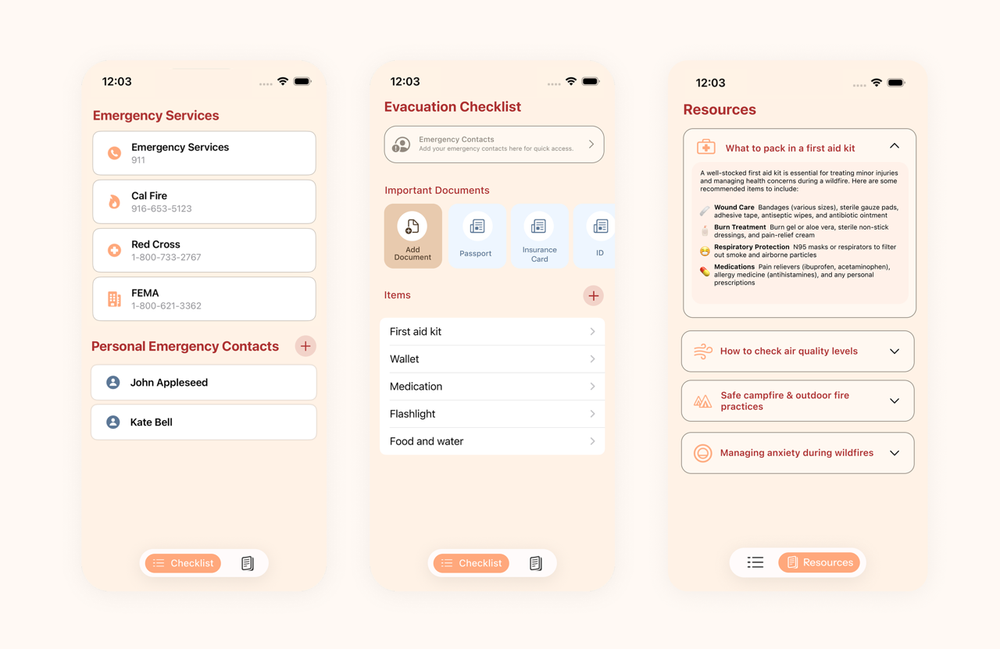
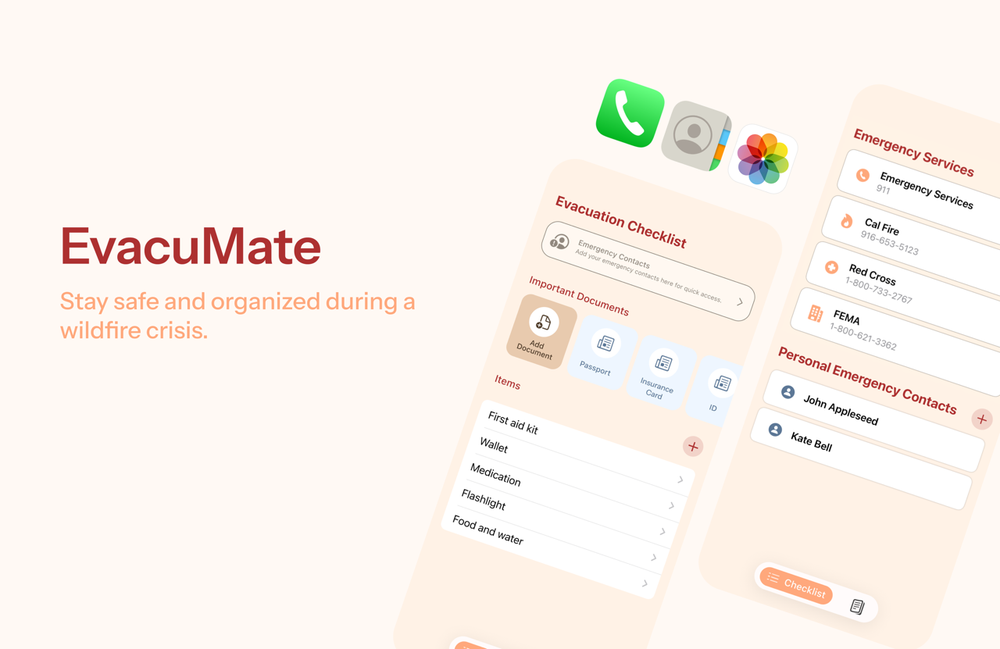
Lee’s EvacuMate helps users prepare an emergency checklist of essential items, upload copies of important documents via their iPhone camera roll and import emergency contacts through their iPhone’s contacts list. The app also allows users to monitor air quality levels and put together a first-aid kit.

Image Credit: Courtesy of Marina Lee

It took Lee about one month to develop the app and submit it to Apple’s Swift Student Challenge, a competition that invites students across the globe to enter their original app playgrounds built with Apple’s Swift coding language.

Most students begin preparing their submissions months in advance, so the deadline “felt a little tight,” Lee notes. However, she was ready to rise to the occasion, having started her coding journey in middle school and completed several projects in the years since.

Related: Apple Is Making a Major Change to Its Operating Systems Across All Products. Here’s What We Know.

As a “very creative” person, Lee first focused on the app’s design and layout, she says. Then she turned her attention to the practical features. Lee asked friends and family for feedback as she worked on EvacuMate, and the “very collaborative process” allowed her to engage with her target audience and understand how they’d interact with the app.

Image Credit: Courtesy of Marina Lee

“I  definitely look forward to meeting other Swift Student Challenge winners [at WWDC].”

Out of this year’s 350 winning submissions, Lee was selected as one of the 50 distinguished winners invited to attend the Worldwide Developers Conference (WWDC) at Apple Park. The 2025 conference, which takes place in-person and online from June 9-13, kicks off with CEO Tim Cook‘s keynote address and will showcase the company’s new technology and software.

“Developers across America are innovating every day to build amazing apps that improve people’s lives, and Apple is committed to supporting their work,” Cook says. “It was wonderful to meet Marina, because she demonstrates what’s possible when coders use their skills to make a difference in their communities — including her hometown of Los Angeles. Her app could be a great resource for people at times when they need it most, and I can’t wait to see what she does next.”

Some of this year’s other distinguished winners include Taiki Hamomoto, 22, of Japan, whose app Hanufada Tactics teaches users how to play the traditional Japanese card game; Luciana Ortiz Nolasco, 15, of Mexico, whose app BreakDownCosmic offers a virtual gathering place for astronomy enthusiasts; and Nahom Worku, 21, who grew up in Ethiopia and Canada and developed the app AccessEd, which provides learning resources that are available with or without Wi-Fi connectivity.

Related: This 17-Year-Old High School Student Has a $20,000-a-Month Side Hustle — and It All Started With a Skill He Learned in Class

“I  definitely look forward to meeting other Swift Student Challenge winners [at WWDC] and other developers in general from across the world,” Lee says. “Throughout my years of involvement in the hackathon community, I’ve been able to build lasting friendships and connections with students from all across the world, but it was only through a virtual setting. So attending this conference would really bring that experience in person.”

Lee is currently interning as a front-end engineer at Amazon in Seattle, Washington. The role focuses on web design and building user interfaces, a process that, like coding, also gives her the chance to get creative, she says. She hopes to pursue similar work that allows her to merge her passion for creativity, art and coding after she graduates from college.

Related: Meet the 16-Year-Old Stanford Intern Whose AI Project Could Save Your Life — Plus 5 Other Young Tech Visionaries Recognized By Apple

Other young people who want to learn how to code and potentially pursue an engineering career should consider participating in hackathons, 24-48-hour events where students collaborate on projects and attend workshops, Lee says. Lee recalls being intimidated at first, but the experience laid the foundation for where she is now.

“I met some new friends that I still keep in touch with to this day,” Lee says. “[The experience] allowed me to learn more about coding and become more involved in the hackathon community. I started organizing some [hackathons] myself and mentoring at other hackathons. It’s a good first step in coding and really allows you to [join] the community.”

“Growing up in LA, I’ve always been aware of the wildfire risks that come with living in Southern California,” Marina Lee, a 21-year-old computer science student at the University of Southern California, tells Entrepreneur. “But the urgency truly hit home when my grandmother found herself in the evacuation zones during the recent LA wildfires back in January — she called me because she got an evacuation alert on her phone.”

Image Credit: Courtesy of Apple. CEO Tim Cook and Marina Lee.

The rest of this article is locked.

Join Entrepreneur+ today for access.

https://www.entrepreneur.com/science-technology/meet-a-swift-student-challenge-winner-attending-apples-wwdc/492984


Some Whole Foods Locations Are Experiencing Empty Shelves After a Main Distributor Was Hacked

Whole Foods shoppers are experiencing empty shelves after a major distributor for the grocer was hit with a cyberattack last week.

United Natural Foods Inc. (UNFI), which works with more than 11,000 suppliers and has over 28,000 employees, said it was hacked earlier this month, and it expects its systems to be back online by June 15, per Bloomberg. The company reported $31 billion in annual revenues in August 2024.

Related: A Whole Foods Customer Told the Company’s Founder: ‘You’re Just Not a Good CEO’ — Here Was His Response

Meanwhile, the delay has led to barren shelves. Videos are starting to appear on TikTok, where viewers can see a notice posted on shelves (and on Reddit) that says the grocer is experiencing a “temporary out-of-stock issue.”

@bibio_b #fyp #florida #miami #tiktokscenescontest #VocêNasceuParaMudar ♬ Vibes – ZHRMusic

A Whole Foods employee in Arkansas told CNN their “frozen cooler is empty, our bread hearth is bare, and customers are increasingly upset.” The anonymous employee added that the team is “deep-cleaning our freezers” now that they have the chance because the “normally overstocked freezers are now completely bare.”

@onlyava_7 Whole Foods what’s really good ? cuz why the shelves bare and damn near empty #wholefoodshaul #WhoelfoodsShopper #WhatsReallyGood #groceryshopwithme ♬ original sound – OnlyAva

@michaellefrier What is happening at Whole Foods …was it a fluke or is it starting? #fyp #foryoupage #fypシ゚viral ♬ original sound – Michaelle Frier

In a statement, UNFI said it is working closely with its customers, suppliers, and associates “to minimize disruption as much as possible.”

Related: Whole Foods Was Accused of ‘Shrinkflation’ After Changing Its Berry Chantilly Cake Slices.

https://www.entrepreneur.com/business-news/whole-foods-sees-empty-shelves-after-distributor-hacked/493092


A.I. Could Destroy the Power of Video Marketing — But Only if we Allow it

Opinions expressed by Entrepreneur contributors are their own.

I built my business on one core belief: people trust video. Or at least, they used to. Now, I am not so sure. Lately, I keep seeing more videos that look real but are not. Deepfakes. A.I.-generated avatars. At first, I was impressed by the technology. Now, I am concerned. If brands do not act soon, video — one of the most trust-rich tools in marketing — could lose its credibility entirely and I believe this collapse of trust is coming faster than we expect.

Related: Considering franchise ownership? Get started now to find your personalized list of franchises that match your lifestyle, interests and budget.

The story starts with why video works. For years, video connected brands and audiences at a human level. You could see a founder’s voice crack while talking about their mission. You could watch a franchisee smile while telling the story of opening a new location. You could feel a CEO‘s passion as they described a vision for the future. Video built emotional connection because it was real. You believed what you saw.

The risk is not just that A.I. video exists, it’s that audiences will no longer be able to tell what is genuine.

Now, that line is blurring. With one prompt, an A.I. model can generate a testimonial or a leadership message that looks and sounds authentic. But the person on screen is not real, the voice is not theirs and the moment never happened. The risk is not just that A.I. video exists. It is that audiences will no longer be able to tell what is genuine. And when they cannot tell, they will stop trusting the entire medium.

I believe brands will soon face a choice. In the next few years, audiences will demand that video content be labeled clearly: human or not. Just as we expect to know if a product is organic or sustainably sourced, we will want to know if a video was created by a person or an algorithm. Brands that embrace this transparency will build trust, brands that do not will erode it.

Related: The Franchise Candidate You Should Think Twice About — And Why

At FranchiseFilming, we have always chosen to film real people. No scripts, no avatars, no green screens. We travel to locations, capture franchisees in their own environments and document their stories with care. I have filmed veterans who credit franchising with helping them rebuild their lives. Parents who opened businesses to leave a legacy for their children. Immigrants who built new lives through entrepreneurship. The power of these stories comes from their humanity. No A.I. model can replicate that. The pauses, the tears, the laughter — these are not things you can prompt into existence, they are earned through real experience.

This commitment to authenticity matters now more than ever.

This commitment to authenticity matters now more than ever. As A.I. content floods our feeds, brands will be tempted to chase efficiency over trust. I understand the appeal. A.I.-generated video is fast and inexpensive. But if you lose your audience’s trust, no amount of speed or savings will make up for it. Trust, once lost, is nearly impossible to regain.

As leaders, we need to set the standard. That starts with labeling content clearly. If a video features an A.I.-generated voice or avatar, say so. If it features a real person, filmed on location, say that too. The more transparent we are, the more trust we preserve. And beyond labeling, we must recommit to telling human stories. Real stories still win, they always will. In the coming years, this will become a competitive advantage. In a world saturated with artificial content, authenticity will stand out. People want to connect with other people. They want to feel something genuine, they want to trust what they see.

Related: How the IFA Plans to Strengthen the $800 Billion Franchise Industry in 2025

The question is not whether A.I. video will continue to grow — it will. The question is whether we, as brand leaders, will have the courage to protect what makes video powerful in the first place: truth. If we do not, we risk turning one of marketing’s most human tools into yet another source of skepticism.

I believe this is a moment for leadership. The brands that act now — that lead with honesty, transparency and real stories — will win in the long run. The ones that chase shortcuts will not. Video is still the most powerful storytelling tool we have, but only if people believe it.

I built my business on one core belief: people trust video. Or at least, they used to. Now, I am not so sure. Lately, I keep seeing more videos that look real but are not. Deepfakes. A.I.-generated avatars. At first, I was impressed by the technology. Now, I am concerned. If brands do not act soon, video — one of the most trust-rich tools in marketing — could lose its credibility entirely and I believe this collapse of trust is coming faster than we expect.

Related: Considering franchise ownership? Get started now to find your personalized list of franchises that match your lifestyle, interests and budget.

The story starts with why video works. For years, video connected brands and audiences at a human level. You could see a founder’s voice crack while talking about their mission. You could watch a franchisee smile while telling the story of opening a new location. You could feel a CEO‘s passion as they described a vision for the future. Video built emotional connection because it was real. You believed what you saw.

The rest of this article is locked.

Join Entrepreneur+ today for access.

https://www.entrepreneur.com/franchises/saving-the-power-of-video-in-a-deepfake-world/493028


Starbucks Is Hiring a ‘Global Content Creator’ to Travel, Drink Coffee, and Get Paid Six Figures

Starbucks is hiring a global coffee creator to travel the world, tell the company’s story, presumably drink lots of coffee — and get paid six figures for it.

The “coffee-obsessed” Global Coffee Creator will work on a one-year contract, traveling the world (the job posting lists Milan, Tokyo, Colombia, Dubai, and Costa Rica) to capture the “vibes, culture, and people” of all things coffee-related.

Related: Starbucks Is Hiring a Pilot to Captain Its Company Aircraft. Here’s How Much It Pays.

Starbucks is pitching the role as “more than a job; it’s your chance to immerse yourself in the world of coffee, meet new people, and see new places.” The position requires someone who can create social content that highlights menu items and specialty drinks from 10 to 15 designated Starbucks locations across the globe.

Travel costs are provided by Delta Air Lines and Marriott Bonvoy, per the Starbucks blog. The pay range is listed at $80,100 to $136,000 for the one-year contract.

Hopeful applicants are required to submit a TikTok video with their application. To apply, you must be at least 18 years old, a U.S. resident, and have a valid passport. Proficiency in social media platforms, such as TikTok and Instagram, is important, as is experience using design software (Photoshop, InDesign, Final Cut Pro, and CapCut), per the listing.

The role is fully remote, and the posting says applicants can work from anywhere, though we’d assume being close to an international airport would be helpful.

Applicants have until June 14 to apply.

Related: Starbucks Is Hiring In-Store Human Workers After Replacing People With Machines — and Finding It Didn’t Work

Starbucks is hiring a global coffee creator to travel the world, tell the company’s story, presumably drink lots of coffee — and get paid six figures for it.

The “coffee-obsessed” Global Coffee Creator will work on a one-year contract, traveling the world (the job posting lists Milan, Tokyo, Colombia, Dubai, and Costa Rica) to capture the “vibes, culture, and people” of all things coffee-related.

Related: Starbucks Is Hiring a Pilot to Captain Its Company Aircraft. Here’s How Much It Pays.

The rest of this article is locked.

Join Entrepreneur+ today for access.

https://www.entrepreneur.com/business-news/starbucks-is-hiring-a-coffee-obsessed-content-creator/493042


50 Side Hustle Ideas to Make Extra Money in 2025

Opinions expressed by Entrepreneur contributors are their own.

Are you looking for ways to make extra money on the side while maintaining your day job? You’re not alone. Whether it’s to pay off debt, save up an emergency fund or simply have a little more money in your pocket, there are plenty of opportunities available to help you supplement your income.

From online freelancing jobs to traditional side hustles, this article includes a comprehensive list of 50 profitable ideas that can help you make extra money on the side. With the right combination of creativity, determination, and hard work, you can start earning extra income in no time.

Read on for some of the best side hustles that can help you start making money today!

Related: Start Your Side Hustle Today

1. Sell items on eBay, Craigslist or Facebook Marketplace.

One of the surest ways you can make a little extra money if you’re in a bind is to sell items on sites like eBay, Craigslist or Facebook Marketplace. Any used items like furniture, household appliances, collectibles or anything else that you’re just not using or are collecting dust, can be sold online to make extra cash.

If you’re serious about this, you can even do it professionally for others and collect a small commission for each sale. Take quality photos and write a good description and you’ll be in great shape.

Related: 8 Places to Sell Stuff Fast When You Really Need the Money

2. Recycle used smartphones on Gazelle.

I’ve sold a few used smartphones on Gazelle and it’s a no-hassle way of making some extra cash if you have an old iPhone, Samsung smartphone or another device sitting around. While it’s not the most lucrative side hustle, you will be able to get a little bit of extra money that might just help you out depending on your financial situation.

Related: 8 Money Mistakes to Avoid on Your Way to Being Wealthy

3. Drive for Uber or Lyft.

One of the most widely available side hustles is to drive for Uber or Lyft. The sharing economy has quite literally exploded, and both Uber and Lyft are at the forefront. The best part? You can turn on and off your availability through these networks with the simple click of a button, effectively allowing you to make extra bucks with ridesharing in your spare time.

Related: These Are the Best Cities for Uber and Lyft Drivers (Infographic)

4. Deliver for PostMates.

Another great option for earning extra income is to deliver for PostMates. Similar to working for Uber and Lyft, you can work whenever you want. While the pay might not be enormous, you do have the ability to earn tips. If you’re in a highly trafficked area such as Los Angeles or New York City, this is a great way to earn some cash without quitting your day job–and you don’t even need a car. A similar food delivery service is DoorDash.

Related: A Night of Money, Mansions and Mexican Food Showed Us How Delivery Could Reshape Franchising

5. Rent your spare room on Airbnb.

Airbnb offers a great resource for people that are willing to rent out a spare room or even their entire home. If you’re in a bind for some fast cash, Airbnb offers you an avenue for creating a great side hustle.

You’ll get paid 24 hours after a guest checks in, which is to avoid any problems or potential scams that might arise. Some people earn their primary income just by renting out their real estate on Airbnb.

Related: 5 Reasons You Should Join the Sharing Economy Revolution

6. Manage social media for small businesses.

Many small businesses need a social media manager and simply don’t have the time nor the expertise to be constantly posting on social media platforms like Facebook, Instagram, Snapchat or Twitter. Take it upon yourself to contact local businesses and offer up your services for a contracted monthly fee. Managing a social media account is an easy way to make extra money online no matter where you live.

Related: 10 Questions You Must Ask When Hiring a Social Media Consultant

7. Sell services on Fiverr.

Fiverr helped give birth to the Gig Economy. Although services start out at $5, some Fiverr sellers are earning six-figure-plus revenues annually. You can sell just about anything on this platform, from podcast development to proofreading. However, to succeed and become a Super Seller, you need to deliver massive amounts of value, even at those lower price-points.

Related: How Student Loans Are Crushing Millennial Entrepreneurialism

8. Tutor over Skype.

Another creative side hustle idea: You can tutor people over Skype, no matter where you might live. This is great, especially if you’re a digital nomad and you’re looking to earn more money than the local job market can potentially provide. Tutor people from the United States or United Kingdom if you’re traveling through Asia or another low-cost-of-living country around the world.

Related: To Rapidly Enhance Your Business, Stop Selling and Start Teaching

9. Start a blog.

Okay, so you won’t make good money that fast with a blog. But, if you start a blog and deliver enormous amounts of value, you could set yourself up with a platform for ending a tremendous amount of passive income. This hustle idea is something you can easily build on the side with just a few hours of work per week, but you need to stay consistent and post great content regularly.

Related: 17 Tips for Entrepreneurs Who Blog

10. Create an online course.

Create an online course with a platform like Udemy or Teachable and leverage some of your skills to create a healthy extra income. Depending upon how much time you invest in your course, you could make a substantial side revenue stream by creating courses that deliver tremendous amounts of value.

Related: How to Start Developing Your eLearning Courses

11. Build a sales funnel with ClickFunnels.

As an online marketer and a software engineer, I am obsessed with sales funnels. However, many people struggle with creating the proper funnel that converts. It takes a high degree of technical and marketing knowledge. However, ClickFunnels, a SaaS business with over 40,000 customers, which was started by Russell Brunson, takes all the guesswork out of that. Build a sales funnel and automate your selling with a platform like this.

Related: 5 Steps to Building Your First Online Sales Funnel

12. Write an ebook.

I’ve long been drawn to the passive income supplied by creating an ebook and publishing an accompanied print-on-demand paperback. By using platforms like KDP and CreateSpace , both by Amazon, you can easily create and sell an ebook that costs nothing to produce, and a paperback that earns you money only when it sells, removing much of the prior friction it took to get published.

Related: 10 Truths About Self-Publishing for Entrepreneurs With a Book Idea

13. Produce an audiobook.

Use a platform like ACX to create and sell audiobooks on platforms like Audible and iTunes. If you have a great idea for a non-fiction audiobook where you can teach a difficult skill, like stock trading, foreign currency investing, accounting, online marketing or others, you can easily create a five-figure monthly income with the right volume of audiobooks.

14. Become a personal chef.

Are you a good cook? You could become a personal chef and prepare meals for other people. You could easily market your services on social media or even go all out and build yourself a website. There are also plenty of websites you can use to market your services such as HireAChef.

15. Walk dogs.

Almost anyone can walk dogs. If you live in a dog-filled neighborhood, create a few flyers on your computer and slip them into mailboxes. Identify yourself as a dog walker and pitch your price. Build up a steady stream of clients and your dog-walking service will grow over time.

Related: Meet Wag, an App to Help You Find a Dog Walker

16. Babysit or become a nanny.

If you need to make some quick cash, you could always start babysitting or even become a part-time nanny. You use a variety of sites to do this like Care.com or SitterCity or even post your services on social media sites. You’ll get vetted and rated for your services, so be sure to provide a top-notch experience.

Related: This 15-Year-Old Founder Is Raking in Six Figures With Her Booming Babysitting Business

17. Clean houses.

Housekeeping is always a viable side hustle. There are loads of private families and homeowners that are renting out their homes on a short-term basis that need housekeeping or house cleaning services. You can list your services on a site like HouseKeeper.com and many others to promote your services.

Related: 5 House Cleaning Franchises You Can Buy Now to Turn a Tidy Profit

18. Participate in marketing focus groups.

Marketing companies are always holding focus groups to study the consumer’s response to products, services and advertisements across a variety of mediums. I used to participate in these studies often in college, and so can you to generate some extra cash. You don’t need any special training to do it.

Related: A Family-and-Friends Focus Group Gave This Franchise a Thumbs-Up

19. Have a garage sale.

You could always hold a garage sale to make some extra money by getting rid of excess clutter in your house. This is great if you have children that have outgrown toys or you simply have a large number of items that you’re looking to part ways with. Post up some signs around town or advertise on Craigslist.

20. Create YouTube tutorials.

Although this isn’t the quickest way you can make extra income, creating YouTube tutorials can help you earn a respectable amount of money as long as what you deliver is engaging and keeps people interested for long enough. You could also use free tutorials to upsell viewers on products and services you might be offering.

Related: Here’s How You Can Actually Make Money With YouTube

21. Sell technical services on Upwork.

I’ve used Upwork as a platform to hire graphic and web designers for a long time. But Upwork also provides a platform for accountants, lawyers and other professionals to earn money. Keep in mind that you’re keeping with thousands of other service providers so getting this off the ground will take you some time.

22. Design logos on 99Designs.

If you’re graphically inclined and can use programs like Photoshop and Illustrator, you could potentially compete for design work on 99Designs. However, you won’t get paid unless your graphic design is chosen as the winning design, meaning you need to be a very good designer to make extra income that’s worthwhile here.

Related: How Much Should a Quality Logo Really Cost?

Ready to start a business with proven success? Discover franchising, where owners enjoy a 92% success rate. Take our quick 2-minute assessment to find the franchise that’s right for you!

23. Use TaskRabbit.

TaskRabbit links you up with people that are looking to complete specific tasks in your area. Tasks include things like lifting heavy furniture, assembling furniture and so on. You’ll need to register and get vetted but it’s a simple way you can make a bit of extra income in your spare time.

Related: The Top Tools Entrepreneurs Can Use to Outsource Their Life

24. Sell products on Etsy.

Another perfect side hustle: Use Etsy to sell crafts or other homemade items. Etsy is one of the largest resources for selling handmade goods on the internet. You could also sell digital items such as digital posters that can be printed out.

25. Teach a language.

If you know a second language, and you’re well-versed enough in it, you could teach it to others as a second job. If you’re traveling as a digital nomad, you could teach English as a second language in your country of choice.

Related: 4 Reasons Entrepreneurs Should Learn Another Language

26. Wash and detail cars.

Wash and detail cars in your area. Hand out flyers in your neighborhood or post on social media offering your services. Mobile car washing and detailing has become a relatively lucrative business in more upscale neighborhoods.

Related: 105 Service Businesses to Start Today

27. Open a mobile pet grooming service.

Try your hand at pet grooming. Purchase and outfit a mobile van so that you can groom pets on the go. This does require a small investment, but it’s a side job you could enjoy when you have spare time.

Related: Beyond the Food Truck: 10 Unique Mobile Businesses

28. Start a food truck.

Purchasing a food truck requires a substantial investment, but the food truck business is growing significantly. Location and cuisine choice is important to the success of this side hustle. Be sure to do ample research before getting started.

Related: Why Food Truck Businesses Are Revving Up (Infographic)

29. Become a freelance article writer.

Earn extra bucks by freelance writing articles for other people. If you have a passion for writing, you could help out other bloggers or even become a ghostwriter for well-known business leaders. Use sites like Freelancer, Upwork and others to advertise your services as a freelance writer.

Related: The 5 Skills You Need to Become a Successful Content Writer

30. Personal training.

A great option for the fitness junkie: Find clients you can help out to achieve their weight loss or fitness goals. Create meal plans or construct workout routines and you could make an admirable income for your efforts. Make sure to get the proper fitness training certifications first.

Related: How To Add Wellness Coaching to Your Personal Training Business

31. Give music lessons.

If you play the piano, guitar or another instrument, consider teaching others in your local area. Advertise online through social media or through your personal or professional networks.

32. Become an affiliate marketer.

Affiliate marketing is an extremely alluring industry. However, many affiliate marketers don’t make much money. If you have the skills it takes to succeed in this arena, you could quite literally make a small fortune. But be careful not to get drawn into pie-in-the-sky hopes or dreams of making easy money without putting in much effort.

Related: Affiliate Marketing Is Broken But Ecommerce Companies Can Adapt

33. Do email marketing.

Email marketing is one of the most profitable forms of marketing that exists in the digital marketing space. However, attracting subscribers and making a personal connection with them takes a good deal of work. Use platforms like LeadPages, Aweber, Constant Contact, MailChimp and ConvertKit to get things off the ground.

Related: 7 Statistics That Prove Email Marketing Isn’t Dead

34. Write resumes.

If you have a skill for writing resumes, use sites like LinkedIn and other professional platforms to advertise your resume writing services. Do a few for free and grab some raving reviews, then watch your sales skyrocket.

Related: The Do’s and Don’ts of the Modern Resumé (Infographic)

35. Become a house sitter.

Become a professional house sitter and watch homes for people that go on vacation or have a second home and don’t spend much time there. HouseSitter.com and Care.com both offer house-sitting jobs.

Related: More Than 200 Franchise Opportunities for Less Than $50,000

36. Teach driving lessons to students.

Are you a great driver? Why not get licensed as a driving instructor? You can advertise your services both online and offline, or use a site like Indeed.com to search for part-time driving instructor jobs.

Related: This App Helps Students Navigate the Road to Getting Their Driver’s Licenses

37. Become a local tour guide.

If you live in a vacation destination, consider becoming a local tour guide. You could even offer your services for free and then ask for a tip at the end, drawing more people into touring with you.

Related: The Key Factors to Consider Before Becoming a Travel Host

38. Become a virtual assistant.

Virtual assistants are in high demand, but it only makes sense from an income standpoint if you have the spare time and are highly organized, because the workload can rival full time work. It also doesn’t hurt to live in an area with a lower cost of living.

Related: Learn the 4 Principles That Helped This Virtual Company Become One of the Best Cultures in America

39. Do interior decorating.

If you have an eye for design, consider doing interior decorating for clients. Use a site like Houzz to advertise your skill and services to the masses.

Basic knowledge of colors and fabrics is helpful, as well as experience in taking measurements, creating floor plans, and working with a budget. Once you’ve gained experience, you can even consider starting your own business!

Related: Starting a Business as an Interior Designer or Decorator

40. Sell on CafePress.

CafePress allows you to sell items that feature a digital design. If you’re a great graphic designer, you could create a number of designs that would fit different formats such as shirts, hats and cups, and earn a commission when they sell.

You don’t need to have any design experience; all you need is a computer with a good internet connection and the ability to create basic designs in graphics software. CafePress will pay you for every item sold in your store.

The more you sell, the higher your profits will be. There are no upfront costs involved in setting up a store on CafePress, and you can even add links to your store from other websites or social media accounts.

So if you have a creative side and want to make some extra cash, selling items on CafePress could be the perfect side hustle.

Related: 7 Ways to Relieve Boredom by Hustling for Extra Cash

41. Invest with LendingClub.

LendingClub is a peer-to-peer lending service that you can invest in. If you have some extra cash and you’re looking to put it to use, you can leverage this platform to invest in businesses from a wide range of industries. Risk is calculated for you using algorithms, and the more risk in an investment, the more potential for reward.

Related: Why Peer-to-Peer Lending Could Be a Good Investment Choice

42. Run Instagram or Tiktok ads for other businesses.

If you have experience running ads for yourself, you could offer your services to other businesses. You can charge a fee for setting up and managing the campaigns. This is especially interesting if you can run successful campaigns as it will attract more customers that want to get in on it.

If you are a marketing whiz, seek out brands that don’t seem to be connecting with Gen-Z on social media. Offer a freebie to get started and quickly work your way up to $1,000 a month or more without taking up too much of your time.

43. Sell NFTs

Non-fungible tokens (NFTs) are digital assets that have become extremely popular in the past few years. A lot of people are interested, from business owners and investors to side hustlers like you.

NFTs use blockchain technology to register unique pieces of artwork, music, or other items so they can be bought and sold online.

If you’re creative and have something original to offer, selling NFTs can be a great way to make extra money as a side gig. All you need to do is create your artwork, music, or other items and upload them to a marketplace like OpenSea or Rarible.

From there, buyers can purchase your NFTs with cryptocurrency or digital payments like PayPal. With each sale you make, you’ll earn a profit. And since NFTs can be resold, you may even find that they continue to bring in revenue over time.

So if you’re looking for a good side hustle, selling NFTs is definitely worth considering.

Related: What Is an NFT? Inside The Next Billion-Dollar Crypto Sensation.

44. Edit videos

If you have the right equipment and software, editing videos has a lot of earning potential. You can edit promotional materials for companies or create content for YouTube channels. Since creators want their content trending, video editors are in-demand.

You don’t need to be a professional videographer to get started; all you need is some basic video editing skills and an eye for detail. With enough time and dedication, you can make editing videos your full-time job.

For example, people want more video from their favorite brands. That means businesses need more video producers. Learn how to become one yourself by mastering Adobe Premiere Pro CC.

Get The Adobe Premiere Pro CC Video & Audio Production Course Bundle for $24 (Reg. $1,194) with code WELOVEDAD.

45. Become a Notary Public

Want a gig that allows you to engage with people and enjoy flexible hours? Consider becoming a Notary Public. You can sign up for courses, like those from the National Notary Association or the Loan Signing System, to learn notarial laws and how to navigate loan documents. This side hustle has the potential to be even more lucrative if you start your own signing service business.

46. Offer AI prompt consulting services

In the age of rapidly advancing AI, there’s no shortage of related side hustles to consider. Individuals or organizations that need help creating and optimizing prompts for AI systems — think large language models (LLMs) like ChatGPT or Gemini — hire experts to do just that. If you have in-demand knowledge or training in your field, use it to earn some extra cash.

Related: How Can You Use AI to Start a Side Hustle? These Are the 10 Best-Paying Ones Right Now.

47. Sell a niche subscription box

Curating and selling a subscription box could be a lucrative and fulfilling side hustle if you have a passion for products you want to share with others. From charcuterie to makeup, books and more, the possibilities are nearly endless. Choose your niche and test the market. If there’s enough demand to scale, consider connecting with a marketing team and logistics company to take your business to the next level.

48. Pet sit

If you like spending time with animals and want to make some money doing it, look no further than a pet-sitting side hustle. Pet owners need reliable help to care for their pets when they’re away — and will often pay well to know they’re in good hands. This could be a suitable gig if you have experience with animals or are willing to learn. Trusted House Sitters and Care.com are two popular options for connecting homeowners with sitters for extended stays.

49. Rent outdoor spaces

If you have outdoor space that’s sitting empty, someone might be willing to pay for it. Side-hustlers earn passive income by renting out their pools on Swimply, land on Sniffspot, parking spots on Neighbor and more. Don’t let your unused property go to waste: Turn it into extra cash.

Related: A Simple, Leisure-Focused Side Hustle Earns This Couple a Lucrative Extra Income Stream: ‘Our First Year We Made $84,000.’

50. Rent items you’re not using

Likewise, there’s a good chance that someone wants to rent items you own but don’t use day-to-day. From renting out baby gear on BabyQuip to clothing on Pickle, cars on Turo and more, there’s probably a market for those quality possessions you’re able to part with temporarily. For some people, these rental gigs even have the potential to out-earn their day jobs.

Check out Entrepreneur’s other guides and resources for more informational articles like this one!

https://www.entrepreneur.com/starting-a-business/not-sure-how-to-make-money-on-the-side-here-are-44-ideas/293954



The Strongest Cultures Are Built Through Consistency. Here’s Why — and What Leaders Should Be Doing Every Day.

Opinions expressed by Entrepreneur contributors are their own.

If you’ve ever walked into a workplace with a high-performing team, you can immediately feel it: a shared sense of purpose, a rhythm in how people communicate and clarity about what matters. That kind of culture doesn’t happen by accident. It’s not the result of a single all-hands meeting or a set of company values on a poster. It’s built through something far more subtle and far more powerful: consistency.

As the founder of ButterflyMX, I’ve learned that the small things you repeat every day shape your company more than the big things you announce once in a while. The way you recognize a win, the stories you tell, the questions you ask: those moments become the fabric of your culture.

And the secret to making them stick? Repetition.

Related: Consistency Is the One Rule in Building a Great Company Culture

The misconception about culture

When leaders think about building culture, they often imagine big moments: mission statements unveiled at all-hands meetings, team offsites with whiteboard sessions or company-wide emails outlining values. Those things can help, but they’re not what culture is made of.

Culture doesn’t live in a slide deck; it lives in the everyday interactions people have with one another. It’s in how meetings start and end, how performance is discussed, how wins are recognized and how setbacks are handled. In short, culture is what people come to expect, day after day.

And that expectation is shaped through repetition. What’s said and done repeatedly becomes what’s believed. Over time, that belief system becomes your culture, whether it’s intentional or not.

Repetition builds identity

Think about the most iconic brands. They have strong branding and strong repetition. The same logo, the same tagline and the same emotional message are reinforced again and again until it becomes part of how people identify with the brand.

The same principle applies to teams. When leaders consistently communicate the same values, language and expectations, they’re doing more than just messaging; they’re helping people understand what the team stands for.

For example, if a leader opens every Monday standup by asking, “What did you learn last week?” Over time, the team starts to value curiosity and growth. If recognition always focuses on collaboration, people learn that team success matters more than individual wins.

Repetition isn’t boring. It’s how identity takes root.

Related: 3 Tips for Building a Thriving Company Culture

Rituals that anchor behavior

Rituals are the bridge between intention and culture. They’re the small, consistent behaviors that turn values into action. And the best part? They don’t have to be complicated.

A ritual could be as simple as ending every meeting with a round of shoutouts. Or kicking off a monthly all-hands with a customer success story. Or closing the week with a short message from leadership reinforcing a core value. These micro-moments create continuity, even when the business is growing fast or navigating change.

When leaders commit to rituals, they give their teams something to hold onto. Over time, these repeated behaviors become cultural anchors. They provide rhythm. They build trust. And they remind everyone what matters most, without needing to say it out loud.

How to reinforce messages without sounding like a broken record

The challenge with repetition is that leaders sometimes worry they’ll sound stale. But the trick isn’t changing the message — it’s changing the delivery.

You can reinforce the same cultural idea in different formats. Tell a story one week. Share a data point the next. Highlight a team member who exemplifies a core value. Ask your team to reflect on a question that ties back to your principles. The content evolves, but the underlying message stays consistent.

The key is to stay aligned, not robotic. When people hear the same themes reflected in different ways, through leadership, peers and even customers, it stops feeling like a mandate and starts feeling like shared truth.

Related: What Makes a Great Company Culture (and Why It Matters)

Start small, stay consistent

You don’t need a full playbook to start shaping culture. Pick one message you care about, maybe it’s ownership, kindness or resilience, and start reinforcing it intentionally. Find a way to bring it into your 1:1s, team meetings or recognition moments. Then do it again. And again.

Consistency builds trust. And trust builds momentum. When people know what to expect from their leaders, they’re more likely to mirror those behaviors and take initiative themselves.

The strongest cultures aren’t built in a burst of inspiration. They’re built through deliberate, repeated action. Start small and don’t stop.

At its core, leadership is less about grand gestures and more about what you choose to repeat. Every small action, every consistent message, every intentional ritual — it all adds up. That’s how culture takes shape.

So, if you want to build a team that knows what it stands for and shows up accordingly, don’t just say it once. Say it often. Show it often. Lead by doing, again and again.

Because the most powerful cultures aren’t built by accident; they’re built by leaders who understand the hidden power of consistency.

If you’ve ever walked into a workplace with a high-performing team, you can immediately feel it: a shared sense of purpose, a rhythm in how people communicate and clarity about what matters. That kind of culture doesn’t happen by accident. It’s not the result of a single all-hands meeting or a set of company values on a poster. It’s built through something far more subtle and far more powerful: consistency.

As the founder of ButterflyMX, I’ve learned that the small things you repeat every day shape your company more than the big things you announce once in a while. The way you recognize a win, the stories you tell, the questions you ask: those moments become the fabric of your culture.

And the secret to making them stick? Repetition.

The rest of this article is locked.

Join Entrepreneur+ today for access.

https://www.entrepreneur.com/leadership/how-consistency-shapes-a-strong-company-culture/492620


Saying ‘I’ll Just Do It’ is Holding You Back. Here’s How to Finally Let Go

Opinions expressed by Entrepreneur contributors are their own.

“Nobody can do it to my level of quality.”

Sound familiar? I hear this refrain repeatedly from fellow entrepreneurs and our customers at Marketcircle. Though I was fortunate to have experience leading teams before starting my business, I’ve watched countless small business owners struggle with this mindset. It creates a critical growth ceiling that many never break through.

The reality is simple: you only have 24 hours a day. If you insist on doing everything yourself, your business can never grow beyond what you personally can accomplish in those hours.

Related: Are You Running Your Business, or Is Your Business Running You?

The trap of self-reliance

Most solopreneurs and small business owners start with a side gig, gain confidence and then transition to full-time. The problem emerges when you reach capacity but still believe nobody else can match your standards.

The consequences are predictable:

  • Working 18-hour days with no end in sight
  • Sacrificing personal relationships and health
  • Hitting an income ceiling limited by your available hours
  • Never being able to take time off

I’ve seen countless talented entrepreneurs burn out because they couldn’t escape this trap. They’re working in their business rather than on it.

Testing your delegation readiness

Want to know if you’re stuck in this trap? Ask yourself one simple question: can you take a vacation? If your business would collapse without your daily involvement, you haven’t built systems — you’ve built a job.

Another indicator: when faced with explaining a task to someone else, do you find yourself saying, “I might as well just do it myself”? That’s a warning sign that your business growth is on borrowed time.

Breaking through the mental block

The foundation of letting go starts with a mindset shift. You must recognize that there are people who can do certain tasks not just adequately but actually better than you.

This was a revelation for me. I pride myself on being a good architect, yet a developer on our team consistently outperforms me in this area. Rather than threatening my ego, this frees me to focus on areas where I add unique value.

Watching shows like “Chef’s Table” on Netflix can be eye-opening. These displays of extraordinary skill in specific domains remind us that expertise exists everywhere. When you acknowledge this reality, hiring becomes less about filling vacancies and more about discovering specialists who elevate your entire operation.

Teaching principles, not just steps

Many entrepreneurs fail at delegation because they only teach steps — “do this, then this, then this” — without explaining the underlying principles.

This attracts and retains what I call “button-pushers,” who need constant direction. When something unexpected happens (and it always does), they’re lost.

A more effective approach:

  1. Explain why you organize things the way you do.
  2. Share the reasoning behind processes.
  3. Teach the principles that guide decisions.
  4. Let them understand the context, not just the actions.

One example from our work developing Daylite: when organizing code, I spent time explaining to our team why we structured elements in specific ways based on certain patterns and principles. Initially, this took longer than just dictating steps, but the payoff was worth it — team members began making independent decisions that maintained our quality standards without requiring my input.

Setting clear expectations

For delegation to succeed, expectations must be crystal clear. This requires:

  1. Thoughtful planning: Determine what you actually want accomplished.
  2. Clear expectations: Don’t assume people understand what you want.
  3. Defined timeframes: Agree on when things should be done.
  4. Regular check-ins: Verify progress without micromanaging – trust, but verify.

I struggle with this myself. I often assume people understand what I want, but that’s not necessarily true. Taking time to establish clear expectations upfront prevents frustration on both sides.

Finding solution-seekers

True delegation demands having the right people to delegate to. Along my entrepreneurial journey, I’ve identified three distinct types: Negative Spinners who fixate on problems, Silent Types who follow orders without contribution and Solution Seekers who naturally explore possibilities.

Only by finding these Solution Seekers can you genuinely let go. These team members don’t just complete tasks — they improve processes and spot opportunities independently. Their problem-solving mindset extends your impact rather than merely replacing your time.

At Marketcircle, this approach has transformed how we operate. When complex business challenges arise, having team members who contribute creative alternatives allows me as CEO to focus on strategic direction while trusting they’ll navigate the day-to-day hurdles effectively.

Related: Take Control of Your Business by Treating It Like a Knife Fight

The ultimate liberation

The irony of control is that you gain more by letting go. By building systems, teaching principles, and finding people who excel in areas where you’re merely competent, you create a more resilient organization.

This doesn’t just free your time — it multiplies your impact. Instead of being limited by your 24 hours, you leverage the intelligence and energy of an entire team.

When entrepreneurs make this shift, they build better businesses and they reclaim their lives. They can focus on vision and growth while their teams handle execution. They can finally take that vacation. And paradoxically, their businesses often perform better without their constant intervention.

So, are you ready to let go?

“Nobody can do it to my level of quality.”

Sound familiar? I hear this refrain repeatedly from fellow entrepreneurs and our customers at Marketcircle. Though I was fortunate to have experience leading teams before starting my business, I’ve watched countless small business owners struggle with this mindset. It creates a critical growth ceiling that many never break through.

The reality is simple: you only have 24 hours a day. If you insist on doing everything yourself, your business can never grow beyond what you personally can accomplish in those hours.

The rest of this article is locked.

Join Entrepreneur+ today for access.

https://www.entrepreneur.com/growing-a-business/still-saying-ill-just-do-it-thats-why-youre-stuck/492221


Only 21% of Employees Are Engaged at Work. Here’s How Leaders Can Turn Things Around.

Opinions expressed by Entrepreneur contributors are their own.

Only 21% of employees worldwide are engaged at work. Let that sink in. In today’s workforce, more than half of employees (62%) feel disconnected from their work, while 17% report being actively disengaged. This isn’t a motivation problem — it’s a meaning problem. And it signals a critical opportunity for leaders to rethink how we create environments where people can thrive.

Here’s what’s striking: It’s not just about pay. Or perks. Or even flexible hours. According to the latest State of the Global Workplace report, 50% of employees are watching for or actively seeking a new job, and meaningful work is consistently among the top factors driving these decisions.

This is where most leaders get it wrong. In today’s workforce, culture is no longer a bonus — it’s a baseline. The modern employee is asking: Does this work matter? Do I matter? If the answer isn’t clear, they’re already halfway out the door.

Related: The Key to Employee Engagement Is Purpose. Here’s Why — and How to Foster It in Your Workplace.

The leadership clarity gap

The disconnect between what leaders think drives engagement and what actually does is staggering. Research reveals that while most executives believe their organizations provide clear purpose, only about a third of employees experience that purpose in their daily work. This perception gap explains why so many well-intentioned engagement initiatives fail.

In my own leadership journey, I’ve found that clarity isn’t just a nice-to-have — it’s everything. Leadership isn’t about charisma or command; it’s about being deeply grounded in your own values and purpose. When that happens, people don’t need to be pushed, they’re naturally pulled toward something meaningful.

The manager connection

Here’s what I see too often: managers who want to lead well but were never given the tools. According to Gallup, 70% of team engagement comes down to the manager, but most have never had real training. So instead of leading with purpose, they’re left guessing.

And when managers are unclear, so are their teams. That’s not just a statistic; it’s a signal that we’ve prioritized the wrong things. If we want people to stay, grow, and contribute at a high level, we need to start by equipping the people we expect to lead them.

From transactional to transformational

The shift from transactional to transformational leadership doesn’t require a radical overhaul, it starts with small, consistent actions grounded in purpose. I’ve seen teams change dramatically simply because a leader started having honest conversations, listening more deeply or sharing the “why” behind the work.

The data reflects this: Employees who have meaningful check-ins with their managers are nearly four times more likely to be engaged. Those who feel their opinions matter are far more likely to bring their full selves to the work.

But at the core, it’s not about stats — it’s about connection. Transactional leadership keeps people compliant. Purpose-driven leadership makes them come alive.

Related: Workers Are Disengaged. Here’s How Employers Can Win Them Back.

Beyond the quarterly cycle

One of the most revealing insights from my work with leadership teams is that engagement isn’t primarily driven by compensation or even work conditions. The real differentiator is leadership clarity, the extent to which employees understand how their work contributes to something larger than themselves.

This explains why so many well-compensated professionals still feel disconnected from their work. It’s not about the paycheck; it’s about the purpose. And purpose isn’t something you can manufacture with team-building exercises or mission statements on the wall. It emerges from authentic leadership that connects daily tasks to meaningful outcomes.

The path forward

So, what does this mean for you?

If you’re a leader still relying on perks, pizza parties and performance bonuses to drive engagement, it’s time to rethink your approach. Ask yourself: Do your people know why their work matters? Do they feel seen and heard? Do you?

Purpose isn’t a perk. It’s your leadership advantage, the one thing competitors can’t replicate. And in a world where disengagement is the default, leaders who get this right will be the ones who win.

As workplace research makes clear, the great workplace shift isn’t about resignation or quiet quitting. It’s about purpose seeking its proper place. Leaders who recognize and respond to this fundamental human need won’t just retain their teams, they’ll unleash their full potential.

Related: 5 Ways Employee Engagement Makes Your Company More Competitive

The ripple effect

Here’s what happens when you get this right: Engaged employees don’t just stay longer, they become your strongest advocates. They refer top talent, go the extra mile without being asked and create the kind of culture that competitors can’t poach or replicate. I’ve watched organizations transform not through expensive restructures or flashy initiatives, but through leaders who finally understood that their people weren’t looking for more benefits. They were looking for more meaning.

The companies thriving in today’s market aren’t the ones with the best perks packages. They’re the ones where Monday morning feels different because people wake up knowing their work matters. Where managers have real conversations instead of checking boxes. Where purpose isn’t a poster on the wall, but a living, breathing part of how decisions get made.

Every day you delay this shift, you’re not just losing talent. You’re losing the battle for the future of work itself. The leaders who act now, who choose connection over control and purpose over process, won’t just survive the engagement crisis — they’ll use it as their competitive advantage while everyone else is still wondering why their people keep leaving.

Only 21% of employees worldwide are engaged at work. Let that sink in. In today’s workforce, more than half of employees (62%) feel disconnected from their work, while 17% report being actively disengaged. This isn’t a motivation problem — it’s a meaning problem. And it signals a critical opportunity for leaders to rethink how we create environments where people can thrive.

Here’s what’s striking: It’s not just about pay. Or perks. Or even flexible hours. According to the latest State of the Global Workplace report, 50% of employees are watching for or actively seeking a new job, and meaningful work is consistently among the top factors driving these decisions.

This is where most leaders get it wrong. In today’s workforce, culture is no longer a bonus — it’s a baseline. The modern employee is asking: Does this work matter? Do I matter? If the answer isn’t clear, they’re already halfway out the door.

The rest of this article is locked.

Join Entrepreneur+ today for access.

https://www.entrepreneur.com/leadership/heres-what-most-leaders-get-wrong-about-employee-engagement/492372