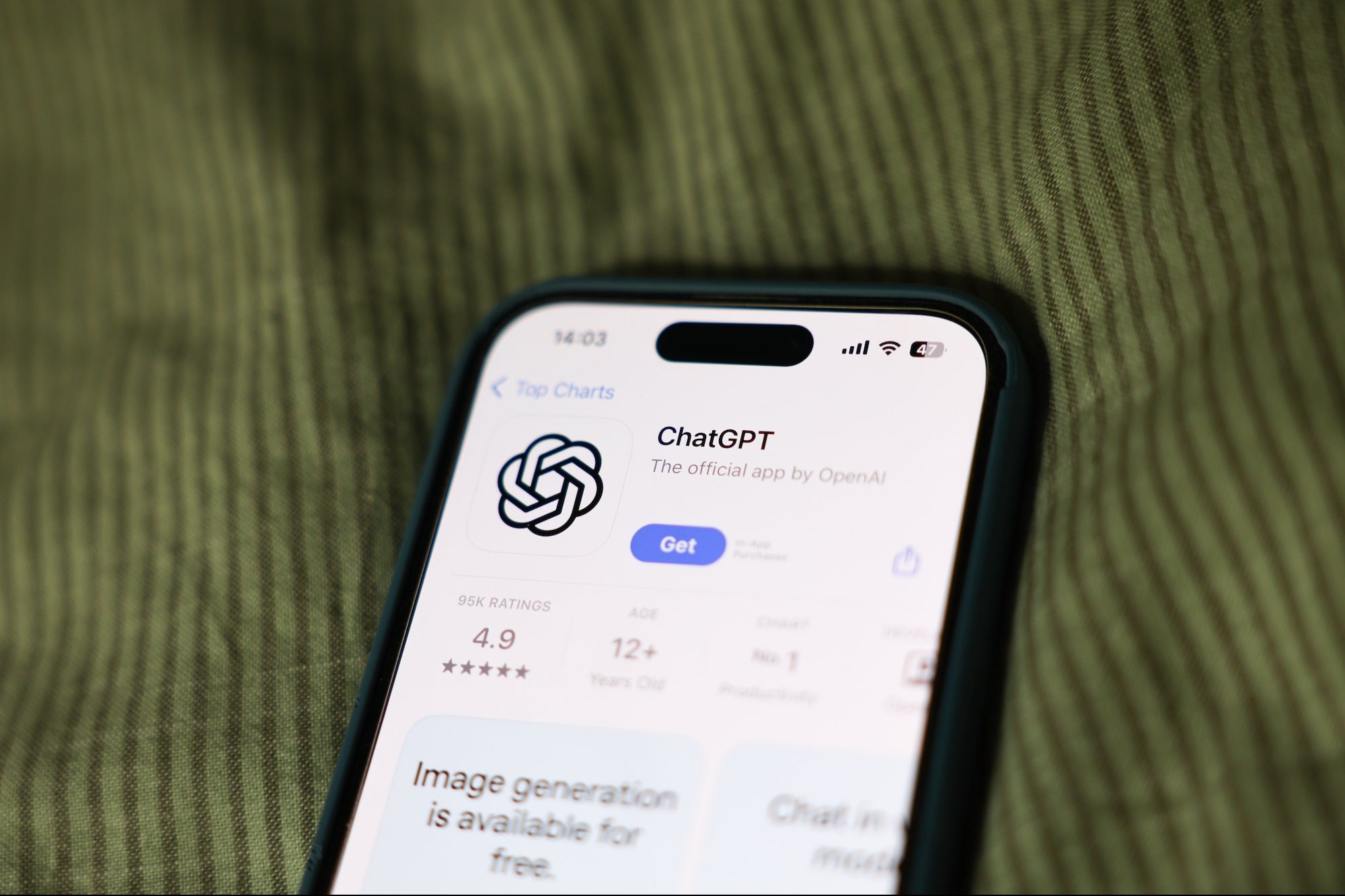
ChatGPT Is Down in a Massive Outage Affecting Thousands: ‘Currently Experiencing Issues’

OpenAI’s ChatGPT is down for thousands of users on Tuesday, according to Down Detector.

The outage began early Tuesday and has continued past noon ET. The issue appears to be affecting users in North America, Europe, and Australia.

Related: OpenAI Is Creating AI to Do ‘All the Things That Software Engineers Hate to Do’

OpenAI is aware of the ongoing problem, noting “elevated error rates” on ChatGPT and Sora (OpenAI’s video generation model) for at least nine hours.

“We are seeing continued recovery across API and ChatGPT,” the company said on its website. “We will provide further updates as progress is made.”

Related: ‘The Coolest Piece of Technology the World Has Ever Seen’: OpenAI Is Acquiring Former Apple Designer Jony Ive’s Startup for $6.4 Billion

This is a developing news story and will be updated.

https://www.entrepreneur.com/business-news/chatgpt-is-down-in-a-massive-outage-experiencing-issues/493045


How Online Businesses Can Scale, Improve and Maximize Profitability — Even in a Volatile Economy

Opinions expressed by Entrepreneur contributors are their own.

The entrepreneur’s journey is rife with ups and downs and zigs and zags, regardless of whether you’re just starting out or you’ve scaled your brand into an enterprise operation. Today’s nerve-wracking rollercoaster business landscape is a case in point. With the dizzying pace of tariff changes from the current administration and the volatility of market reactions, ecommerce business owners are bobbing and weaving to limit exposure and safeguard margins.

It’s entirely likely that trade curveballs will continue to fly throughout 2025, creating uncertainty and profitability concerns for ecommerce brands and omnichannel retailers across every industry. In the face of this retail precarity, understanding the critical tipping points of your ecommerce operations — and what questions you need to ask at each stage — is an integral step for scaling growth, building stability and protecting the bottom line in any economy.

Related: 5 Trends Influencing the Future of Ecommerce

Tipping point: Simple automation with software

Your basement is piled high with inventory and you’ve roped the entire family into packing orders. Does this sound familiar? Unfortunately, the all-hands-on-deck bootstrap approach to the start-up phase of building an online business is not sustainable as you gain traction.

Given the limits of a basic ecommerce platform, manual label printing, and consumer-grade shipping tools — not to mention your rudimentary inventory management system (a.k.a. an Excel spreadsheet) — the need to automate aspects of fulfillment becomes apparent.

At this point, your ecommerce business has reached a critical inflection point, leaving many entrepreneurs wondering where to start. Begin by considering the following:

  1. What’s the simplest way to fulfill orders for my customers?
  2. How do I print labels?
  3. Which shipping partner should I choose?
  4. How should I charge for shipping?
  5. What’s my delivery promise?

Simple integrated software can make a world of difference to your daily workload. Consider bulk label printing and basic shipping software with pre-negotiated rates and standardized shipping options. With these tools, you can eliminate the need to manually enter and update information in your shipping system, saving time and improving inventory accuracy.

Related: 5 Things to Know Before Launching a New Product

Tipping point: Order volume growth

As your sales grow to 20-100+ orders per day, revenue becomes more predictable and the focus shifts to creating efficiencies in your business. Due to storage constraints and the need to meet customer expectations for on-time delivery, fulfilling orders out of the home is no longer the efficient or cost-effective choice.

Think about:

  1. Is it time to move inventory to a warehouse? To scale inventory and keep pace with growing customer demand, consider moving inventory to a small warehouse. Alternatively, outsourcing fulfillment using a third-party logistics (3PL) provider is an option; if you sell via online marketplaces such as Amazon or Walmart, you could consider services like Fulfilled by Amazon (FBA) or Walmart Fulfillment Services (WFS).
  2. What processes can I automate to increase efficiency? For example, automating the selection of carrier and shipping service using shipping software with real-time rate shopping can help you reduce transportation costs while enabling you to keep your delivery promise to enhance your brand reputation.

As your business scales to 500-1,000+ orders per day, the need for and dependence on people to manage volumes becomes a growing challenge. Your warehouse can also become a bottleneck, impeding fulfillment speed and negatively impacting the customer experience. Relying on a manual pick-pack-ship workflow slows down order processing and increases the risk of errors. Plus, as SKU count expands, better warehouse space utilization is crucial for optimizing picking speed and accuracy.

This volume-driven tipping point necessitates the transition to an automated warehouse management system (WMS) to simplify and accelerate order fulfillment. It’s time to ask:

  1. Is my warehouse running as efficiently as it can? Am I dependent on new warehouse staff to grow shipping volume? Are they properly trained on picking and dispatch workflows and returns management processes? Consider implementing advanced warehouse optimization and automation strategies on the warehouse floor — barcode scanning, multi-order picking, system-driven walking routes, task-based replenishment and automated carrier selection — to save time and labor costs while improving order accuracy and inventory control.

    For all of your single-item orders, consider batch shipping to reduce complexity to get more orders out the door faster. Keep in mind that returns also rise with increased order volumes. It’s time to think about returns management more strategically by introducing a tech-supported process that simplifies and expedites returns for customers and operations.

  2. Is our team ready to handle peak? Periodic seasonal or event-driven spikes in order volume can overwhelm operations if you’re not prepared, crippling fulfillment efforts and frustrating customers. By removing paper and manual processes from the pick-pack-ship workflow, your team can scale quickly and seamlessly during peak periods. In the same vein, inventory forecasting is a valuable strategy at this stage to enhance inventory control. Consider implementing demand planning tools to prevent stockouts or overstock.
  3. How should I optimize my carrier contracts and relationships? It’s easy to get complacent with carrier selection when you’re distracted by keeping the warehouse running smoothly as order volumes escalate. But reviewing carrier contracts and negotiating better carrier rates on an annual basis can cut shipping costs and make sure you’re getting the best services for your needs.
  4. How could 3PLs supplement my own distribution center (DC)? If you’ve relied solely on in-house fulfillment up to this point, consider the benefits of 3PL partnerships. For example, perhaps it’s more efficient and cost-effective to service the East Coast with your local DC and fleet while outsourcing to a 3PL partner to manage fulfillment for West Coast customers.

Related: Scaling Isn’t About Flashy Ideas — It’s About Process. 8 Steps to Get It Right

Tipping point: Sales channel diversity

Selling on multiple channels brings unique challenges, whether you’re just starting out selling items through your website and eBay, or whether you’re a seasoned direct-to-consumer (D2C) pro, shipping thousands of items daily via Amazon, Walmart and Wayfair.

Regardless of your multichannel model, the primary challenges and risks — centered around the complexity of managing inventory efficiently and accurately across multiple channels to meet fulfillment demands — are the same: overselling (translates to unhappy customers) and overstocking (ties up capital and valuable warehouse space).

Without the right systems and technology in place to sync multichannel sales activity, inventory management can easily go off the rails. Review your approach to order processing across the different marketplaces and distribution channels and how it impacts the customer experience:

  1. How do I organize and keep track of inventory across multiple channels as sales take off? Regardless of the complexity of your sales channel diversity, implementing an integrated order management system (OMS) to consolidate orders from multiple channels and marketplaces is critical to ensure order accuracy and improve inventory control.
  2. Is my warehouse team ready to process orders from multiple marketplaces and/or sales channels in an efficient manner? Have we considered the additional workload that is created by adding a new channel? Are there additional steps or new requirements to consider and is my warehouse team proficient in executing necessary workflows with agility to meet customer demand?
  3. How do I balance profitability with customer delivery expectations? Omnichannel consistency is vital for building brand loyalty and driving repeat business. By syncing stock across all sales channels in real time — coupled with an integrated returns management system — you can protect margins while meeting your delivery promise to customers, regardless of whether they purchased items from your website, Amazon or other online marketplaces.

Recognizing the critical operational tipping points ecommerce businesses face is fundamental to managing the operational and growth factors that are within your control. By asking the right questions, you’ll be better equipped to optimize operations at each stage and implement the best tools and technologies to build scalable processes, satisfy customer expectations and sustain profitability amidst tariff commotion and economic volatility.

The entrepreneur’s journey is rife with ups and downs and zigs and zags, regardless of whether you’re just starting out or you’ve scaled your brand into an enterprise operation. Today’s nerve-wracking rollercoaster business landscape is a case in point. With the dizzying pace of tariff changes from the current administration and the volatility of market reactions, ecommerce business owners are bobbing and weaving to limit exposure and safeguard margins.

It’s entirely likely that trade curveballs will continue to fly throughout 2025, creating uncertainty and profitability concerns for ecommerce brands and omnichannel retailers across every industry. In the face of this retail precarity, understanding the critical tipping points of your ecommerce operations — and what questions you need to ask at each stage — is an integral step for scaling growth, building stability and protecting the bottom line in any economy.

Related: 5 Trends Influencing the Future of Ecommerce

The rest of this article is locked.

Join Entrepreneur+ today for access.

https://www.entrepreneur.com/growing-a-business/how-online-businesses-can-scale-improve-and-maximize/491031


Meta Is Reportedly Offering Up to Nine-Figure Pay for Researchers on Its New Superintelligence AI Team

Meta is putting together a new 50-person team to pursue superintelligence, or AI that surpasses human intelligence in every aspect, including memory, reasoning, and knowledge.

Meta CEO Mark Zuckerberg, 41, has been personally assembling a group of experts to join the secretive superintelligence team, inviting leading AI researchers and engineers at other companies to meet with him at his homes in Palo Alto and Lake Tahoe to discuss offers, according to a Bloomberg report on Tuesday.

Zuckerberg wants Meta to be the first company to achieve superintelligence, outpacing rivals like OpenAI and Google, and bring advanced AI capabilities to Meta’s products, including its chatbot and AI-powered Ray-Ban smart glasses.

Related: Meta Lays Off Virtual Reality Division Employees: ‘Deeply Saddened’

According to The New York Times, Zuckerberg has offered potential superintelligence team members compensation packages ranging from seven to nine figures — and some have already accepted the offer.

Meta CEO Mark Zuckerberg. Photographer: David Paul Morris/Bloomberg via Getty Images

One reported recruit is 28-year-old billionaire AI startup founder Alexandr Wang. Meta is in talks to invest up to $10 billion in Wang’s company, Scale AI, which was valued at nearly $14 billion last year with backing from Amazon and Microsoft. The deal would mark Meta’s largest external investment yet. Wang and other Scale AI employees are expected to join the superintelligence team after the deal closes, per Bloomberg.

The outlet also reports that seating arrangements at Meta’s Menlo Park headquarters now reflect Zuckerberg’s focus on superintelligence as the CEO goes “founder mode” and takes a more hands-on management approach — reportedly by reorganizing desks at headquarters so that new staff on the superintelligence team will sit close to him.

Related: Meta Ends Fact-Checking Program, Replaces It With New System: ‘We’ve Seen This Approach Work on X’

The approach arises as Meta loses AI talent to competitors. Menlo Ventures venture capitalist Deedy Das posted to X on Monday that though Meta offers more than $2 million per year for AI talent, it has lost multiple AI researchers this week alone to OpenAI and Anthropic.

“The AI talent wars are absolutely ridiculous,” Das wrote.

Zuckerberg said in May that more than one billion users tap into Meta AI every month across the company’s family of apps.

Meta stock was up 17% year-to-date at the time of writing.

Meta is putting together a new 50-person team to pursue superintelligence, or AI that surpasses human intelligence in every aspect, including memory, reasoning, and knowledge.

Meta CEO Mark Zuckerberg, 41, has been personally assembling a group of experts to join the secretive superintelligence team, inviting leading AI researchers and engineers at other companies to meet with him at his homes in Palo Alto and Lake Tahoe to discuss offers, according to a Bloomberg report on Tuesday.

Zuckerberg wants Meta to be the first company to achieve superintelligence, outpacing rivals like OpenAI and Google, and bring advanced AI capabilities to Meta’s products, including its chatbot and AI-powered Ray-Ban smart glasses.

The rest of this article is locked.

Join Entrepreneur+ today for access.

https://www.entrepreneur.com/business-news/meta-is-offering-nine-figure-pay-for-superintelligence-team/493040


Raised By an Immigrant Single Mom, She Experienced ‘Culture Shock’ Working at Goldman Sachs. Here’s What She Wants You to Know About ‘Black Capitalism.’

“I’ve always been someone who has a curiosity about people and society and culture,” Dr. Rachel Laryea tells Entrepreneur.

Image Credit: Courtesy of Penguin Random House. Dr. Rachel Laryea.

Raised by a single mother who immigrated to the U.S. from Ghana, Laryea started her career at Goldman Sachs and holds a dual PhD in African American studies and sociocultural anthropology from Yale University — experiences that helped shape the founding of her lifestyle brand Kelewele, current research at JPMorgan Chase and her new book, Black Capitalists: A Blueprint for What Is Possible.

“It was certainly a culture shock,” Laryea says of her time working in Goldman Sachs’ corporate services and real estate division, “and I’ve had a few culture shocks in my short life thus far. But it was also an experience that set me on [my] trajectory in a very pragmatic way, that unlocked a lot of the questions and curiosities that led me to write [Black Capitalists].”

Related: 5 Trailblazing Black Women Entrepreneurs Share How They’re Breaking Barriers — And How You Can Too

In her academic work, Laryea examined Black radical tradition and how history and critical race theory around the Black lived experience intersect with capitalism. Often, such scholarship suggests that Black people can’t have a relationship with capitalism that isn’t exploitative because of the history of American capitalism, given that Black people “were, and often still are, the laborers of capitalism, but hardly ever the beneficiaries of it,” Laryea says.

However, at Goldman Sachs, Laryea saw many people of color have “ complicated, interesting, contradictory relationships” with the “belly of the beast” — Wall Street. The experience made her rethink a lot of what she’d learned and consider how to make space for Black people within the U.S. economic system, to explore how they might benefit from capitalism themselves.

“Anyone can be invested in and practice Black capitalism.”

Laryea’s work on Black Capitalists began as she researched and wrote her dissertation, which focused on Black capitalists in the trans-Atlantic industry. As she continued with the project, she confronted the question of how people might use the tools of capitalism to uplift their communities.

Image Credit: Courtesy of Penguin Random House

Laryea’s book hinges on two essential terms: “Black capitalist” and “Black capitalism.”

“ I define a Black capitalist as an individual who identifies as a Black person and strategically repositions themselves within the economy in order to benefit from it [and] in order to create social good,” Laryea explains.

On the other hand, “Black capitalism” is race agnostic, Laryea notes. “Anyone can be invested in and practice Black capitalism,” she says, “because it can be an individual or collective that is doing that same thing of repositioning themselves within the economy in order to create social good.”

Related: This Black Founder Was Denied a Business Loan and Set Out to Prove the ‘Gatekeepers’ Wrong. He’s Made More Than $500,000 So Far — But It’s Just the Beginning.

According to Laryea, that communal mindset has the potential to “rupture” contemporary ideas about capitalism — about what it can be and how we can participate in it.

“For many people, the idea of a Black capitalist is oxymoronic or even an identity crisis.”

Laryea admits that some people will have a “visceral reaction in a negative way” to the title of her book: Black Capitalists.

“For many people, the idea of a Black capitalist is oxymoronic or even an identity crisis because the question becomes, How could I adopt an economic system that has never allowed me to benefit from it, and in fact has only been exploitative towards me and my community?” Laryea explains.

It’s a tense question that’s fueled by a history of legalized slavery in the U.S., generations of economic trauma carried into the present and the continuously widening racial wealth gap, Laryea says.

Related: America is Becoming the Land of Inequality and Diminishing Returns. Here’s Why.

Laryea also notes the distinction between a Black capitalist and a Black person who participates in capitalism. In the latter case, someone who is participating in capitalism to “reproduce the harms of capitalism” wouldn’t fit within Laryea’s definition.

“It became apparent to me that I would need to use my own story.”

A couple of the stories Black Capitalists unpacks are those of a Black Goldman Sachs employee and Ifa priest who describes himself as a “spy” gaining access, acquiring excess resources and giving back to his Black communities in Brooklyn, New York, and the Nigerian entrepreneur Wemimo Abbey, who co-founded unicorn fintech company Esusu, which allows low-to-moderate-income households in the U.S. to report rent payments and build credit.

“[Esusu is] this win-win-win construct,” Abbey told Entrepreneur in 2023. “It’s a win for the renter because they can establish their credit score or build their credit score and not go through what my mother and I went through when we came to this country, and during a tough time, [renters also] get access to zero-interest rent relief. The landlord can also get paid instead of evicting the renter. And the last win is for society — to prevent eviction and homelessness.”

Related: This Black Founder Stayed True to His Triple ‘Win’ Strategy to Build a $1 Billion Business

Laryea also made the “difficult choice” to tell her own story in the book. As she conducted interviews for the book, many of the women she spoke with had concerns about being included and identifiable despite anonymity.

“It became apparent to me that I would need to use my own story in a way to stand in for so many of the women that I spoke to,” Laryea explains. “Because at the end of the day, so many of our stories and experiences were similar in terms of how we navigate corporate America — so many of the negative experiences that we’ve had, the diminishing returns many of us experience in being in these spaces but never really reaping the benefits of them.”

Ahead of the publication of Black Capitalists on June 10, Laryea hopes the book moves readers to unified action.

“What’s so important, especially in the time in which we’re living, [is to] lock arms and get on the same page about how we are going to live through this moment and get through this moment,” Laryea says. “We know that capitalism isn’t going to be dismantled tomorrow, so from a pragmatic standpoint, it’s a question of, How can we can use the tools of this system in order to create social good [and] a more equitable system, in a constant endeavor to get us to something that’s a little bit more just?”

https://www.entrepreneur.com/business-news/raised-by-an-immigrant-single-mom-she-experienced-culture/492759



Paramount Global Is Laying Off Hundreds of Employees

Paramount Global is cutting hundreds of employees, about 3.5% of its U.S. staff, according to a memo viewed by CNBC and Reuters.

The memo, which said laid-off staff would be notified on Tuesday, was from the company’s trio of CEOs — George Cheeks (CBS), Chris McCarthy (Showtime and MTV Entertainment Studios), and Brian Robbins (Paramount Pictures and Nickelodeon).

Related: ‘I’m Smarter Now…But Also Poorer’: Warren Buffett Says Berkshire Hathaway Ditched Its Entire Stake in Paramount at a Big Loss

“We recognize how difficult this is and are very thankful for everyone’s hard work and contributions,” the CEOs wrote in the memo, per CNBC. “These changes are necessary to address the environment we are operating in and best position Paramount for success.”

In August 2024, Paramount announced during its Q2 2024 earnings that it was laying off 15% of its U.S. workforce, around 2,000 employees.

According to a regulatory filing, Paramount’s workforce includes 18,600 full- and part-time global employees as of December 2024.

Related: Paramount Is Laying Off Hundreds of Employees Just Days After ‘Blockbuster’ Super Bowl LVIII Success

https://www.entrepreneur.com/business-news/paramount-is-laying-off-hundreds-of-employees/493034


‘Juice Jacking’: TSA Warns Air Travelers to Protect Themselves from This Growing Security Scam

Looking to give your phone a little extra juice before boarding your flight? Think twice — and then think again – before plugging directly into a public USB charging station.

In a Facebook post, the TSA warns that those stations are prime hunting spots for data and identity thieves, thanks to a practice called “juice jacking.” Per the TSA’s post, “Hackers can install malware at USB ports (we’ve been told that’s called ‘juice/port jacking’). So, when you’re at an airport do not plug your phone directly into a USB port.”

Related: Instagram Head Adam Mosseri Experiences Google Phishing Scam

You don’t have to let your devices die, however. The TSA writes: “Bring your TSA-compliant power brick or battery pack and plug in there.” Power outlets cannot be hacked the way USB ports can, so you can safely recharge with no worries.

The TSA also warns about the dangers of Wifi hacking.

“Don’t use free public WiFi, especially if you’re planning to make any online purchases. Do not ever enter any sensitive info while using unsecure WiFi,” the agency warns, adding that travellers should use cellular or enable a VPN if connecting to Wifi.

In this growing age of cybercrime sophistication, caution is going to be your best ally in protecting your passwords, finances, photos, and everything else we store on our phones.

Looking to give your phone a little extra juice before boarding your flight? Think twice — and then think again – before plugging directly into a public USB charging station.

In a Facebook post, the TSA warns that those stations are prime hunting spots for data and identity thieves, thanks to a practice called “juice jacking.” Per the TSA’s post, “Hackers can install malware at USB ports (we’ve been told that’s called ‘juice/port jacking’). So, when you’re at an airport do not plug your phone directly into a USB port.”

Related: Instagram Head Adam Mosseri Experiences Google Phishing Scam

The rest of this article is locked.

Join Entrepreneur+ today for access.

https://www.entrepreneur.com/business-news/tsa-warns-air-travelers-about-airport-juice-jacking-scam/493037


Giada De Laurentiis’s Major Deal With Amazon Is a New Frontier for the Chef and Entrepreneur

Opinions expressed by Entrepreneur contributors are their own.

Giada De Laurentiis didn’t set out to become famous. She wasn’t chasing TV deals or dreaming of launching a digital brand. When Food Network first asked her to submit an audition tape, she resisted.

“I just wanted a job so I didn’t have to rely on my family,” she tells Restaurant Influencers host Shawn Walchef.

The camera saw something she hadn’t planned for. So did the culture. Before the Emmy Awards and restaurant openings, De Laurentiis was a quiet kid in a very loud family. Born in Rome and raised in Los Angeles, she grew up in a household where tradition mattered, and heritage wasn’t negotiable.

Related: These College Friends Wanted to Sell Better Food. Now, Their Company Is Publicly Traded.

Her grandfather was a towering presence. A pasta maker turned film producer, he brought the whole family to the United States, chasing the promise of success in Hollywood.

Their world was a fusion of food and film. De Laurentiis remembers afternoons spent at her grandfather’s Italian food hall, watching customers marvel at imported cheeses, hanging salamis and ingredients they had never seen before. This was long before Italian food had gone mainstream in America. The experience was immersive, almost theatrical.

It left an imprint. She didn’t know it at the time, but those after-school visits would shape how she thought about food, emotion and hospitality. What drew people in wasn’t just the flavor. It was the feeling and the story.

“I wanted to do something that created that same reaction,” she says, thinking back to how guests responded to her grandfather’s markets.

Even as she studied food anthropology, trained in Paris and worked in fine dining, the storytelling instinct never left — it was part of her DNA. And when she finally said yes to a taped audition, it showed.

“I honestly had no desire to be in front of the camera,” she admits. “There was no plan.”

Everyday Italian became a breakout hit. But in De Laurentiis’s mind, the goal was never stardom: it was independence and self-definition.

Related: Fans Are Tattooing This Pizza Brand’s Logo on Their Skin for a Year of Free Slices

Building her Giadzy brand

Giadzy, the lifestyle brand De Laurentiis launched in 2016, started as a simple blog. It’s now a curated marketplace, media hub and ecommerce platform that reflects her take on Italian living: simple meals, joyful hospitality and stories that matter.

With recipe kits, travel tips and premium pantry staples sourced from Italy, Giadzy is a direct extension of De Laurentiis’s upbringing and personal ethos.

That foundation has positioned her for bigger moves. She recently partnered with Amazon on both a digital storefront and a new multi-year Amazon Studios unscripted series deal for Prime Video. She and Amazon are blending content and commerce in a way that lets her audience go from watching to cooking to shopping — all in the same digital space.

At the same time, she’s expanding her restaurant footprint. De Laurentiis’s Las Vegas location just passed the 10-year mark, a major milestone anywhere, let alone on the Strip. When she opened it, the Vegas dining scene was overwhelmingly male-led. As one of the few women stepping into that space with her name on the marquee, many doubted she would last. She didn’t just last — she built something that redefined what Vegas dining could feel like.

Related: This Chef Lost His Restaurant the Week Michelin Called. Now He’s Made a Comeback By Perfecting One Recipe.

She’s now bringing the same approach to Chicagoland, where she’s launching two new restaurants: Sorellina and Sorella. One casual, one elevated. Both are designed to feel warm, bright and inviting — no moody steakhouses or overdone menus, just intentional design and food that speaks.

“I’m not trying to do what everyone else is doing,” De Laurentiis says. “I’m trying to create places that feel like me.”

That’s what her brand has always been about. Not chasing trends, but staying rooted in something deeper. “I don’t know what I’m doing half the time,” she laughs. “But I keep learning. And that’s what keeps me going.”

About Restaurant Influencers

Restaurant Influencers is brought to you by Toast, the powerful restaurant point-of-sale and management system that helps restaurants improve operations, increase sales and create a better guest experience.

Toast — Powering Successful Restaurants. Learn more about Toast.

Restaurant Influencer is also supported by NEXT INSURANCE. See why 600,000+ U.S. businesses trust NEXT for insurance.

Related: How a Spot on ‘The Montel Williams Show’ Sparked a Restaurant Power Brand for This Miami Chef

Giada De Laurentiis didn’t set out to become famous. She wasn’t chasing TV deals or dreaming of launching a digital brand. When Food Network first asked her to submit an audition tape, she resisted.

“I just wanted a job so I didn’t have to rely on my family,” she tells Restaurant Influencers host Shawn Walchef.

The camera saw something she hadn’t planned for. So did the culture. Before the Emmy Awards and restaurant openings, De Laurentiis was a quiet kid in a very loud family. Born in Rome and raised in Los Angeles, she grew up in a household where tradition mattered, and heritage wasn’t negotiable.

The rest of this article is locked.

Join Entrepreneur+ today for access.

https://www.entrepreneur.com/growing-a-business/inside-giada-de-laurentiiss-deal-with-amazon/492763


Why Your Beautiful Product Is Failing While ‘Ugly’ Competitors Thrive

Opinions expressed by Entrepreneur contributors are their own.

Here’s a fun fact about Craigslist. It looks like it was designed in 1995 because, well, it basically was. Purple links, wall of text, zero visual hierarchy. Design students use it as an example of what not to do. And yet it processes millions of transactions every month while dozens of beautifully designed competitors have died trying to dethrone it.

This should bother you. It bothers me. As product managers, we’re supposed to know better. We talk about user experience, design thinking, and all that jazz. But then Craigslist sits there, ugly as sin, making money hand over fist.

The uncomfortable truth is that entrepreneurs and product teams fall in love with the wrong things. We obsess over pixel-perfect interfaces while users just want to get stuff done. We debate typography while competitors with Comic Sans eat our lunch. This isn’t just about aesthetics — it’s about fundamentally misunderstanding what makes products succeed.

Take Google’s homepage circa 1999. Sparse. Brutal. Just a logo and a search box. Meanwhile, Yahoo was building this gorgeous portal with news, weather and stock quotes. Yahoo had the better design by every conventional measure. More features. Better visual hierarchy. Actual graphics. Google looked like a student project. Guess which one won.

Related: Good Product Design Is More Than Aesthetics — How to Balance Pretty With Practical to Attract More Investors

Design theater

The psychology behind this is fascinating. A significant 34.6% of visitors worldwide indicate that they strongly favor information structures that are simple and easy to understand. Yet somehow, when we’re building products, we convince ourselves that users want something more sophisticated. More elegant. More beautiful.

It’s what I call “design theater” — when form becomes performance art rather than purposeful function. You see it everywhere. Startups spending months perfecting their onboarding animations while their core product barely works. Enterprise software companies hiring expensive design agencies to create “delightful experiences” for users who just need to export a spreadsheet.

Reddit is another perfect example. Reddit has 234 million unique users, 8.19 billion monthly pageviews and 25 million daily votes — all while looking like it hasn’t been updated since 2005. The site works because it delivers exactly what users want: content, conversation and community. Not gradients. Not micro-interactions. Just the stuff that matters.

Stated preference vs. actual behavior

But here’s where it gets interesting. Users say they want beautiful design. They really do. In surveys and focus groups, they’ll tell you they prefer the prettier option every single time. Then they go home and use the ugly one that actually works.

This disconnect between stated preference and actual behavior is critical for product managers to understand by leveraging data and emerging techniques like conversational interfaces to tailor interactions and anticipate user needs. The data tells a different story than the focus groups. Always trust the data.

Related: Your Product’s Design Could Be Costing You Customers. Here’s What You’re Doing Wrong (and How to Fix It).

How do you know when to prioritize form versus function? Here’s my framework.

First, understand the job your product is doing. Clayton Christensen’s “jobs to be done” theory applies perfectly here. Nobody hires Craigslist to have a beautiful browsing experience. They hire it to sell their couch or find an apartment. The ugliness actually helps — it signals that this is a no-nonsense marketplace where real people do real transactions.

Second, find your threshold of acceptable ugliness. Yes, that’s a real thing. Every product category has a baseline aesthetic requirement. Dating apps need to look better than tax software. But even within categories, there’s surprising flexibility. Hacker News looks terrible and thrives. Designer News looks beautiful and struggles. Same audience, same purpose, different outcomes.

Third, test your assumptions ruthlessly. Not with surveys. Not with interviews. With actual behavior. Launch an ugly version and a pretty version. See which one converts better. You might be surprised. I’ve seen this play out dozens of times — the “worse” design wins because it loads faster, works better on mobile or just gets out of the user’s way.

The challenge for product managers is pushing back on design-first thinking without becoming the villain. You don’t want to be the person who killed joy. But you also can’t let your team spend six months polishing something that should have shipped in two weeks.

Here’s what works

Frame everything in terms of user outcomes. Instead of debating whether the button should be four pixels or six pixels from the edge, ask what user problem you’re solving. Instead of arguing about color schemes, talk about cognitive load. Make the conversation about effectiveness, not aesthetics.

Also, celebrate ugly wins. When Reddit’s valuation hits another billion, mention it. When Craigslist outlasts another competitor, bring it up. Build a culture that values results over refinement.

This doesn’t mean you should make ugly products on purpose. Delightful design can certainly make good products great, but that only matters if the product is actually useful, usable and reliable in the first place. The point is to sequence your priorities correctly. Function first. Then form. Always in that order.

Related: The Art of Creating Great Products

The most successful products find the sweet spot — just enough design to not actively repel users, but not so much that it gets in the way of the job to be done. They understand that sometimes, ugly is exactly what users need.

Your beautiful product might be failing because you’re solving the wrong problem. You’re making it pretty when you should be making it work. That’s the trap. And now you know how to avoid it.

Here’s a fun fact about Craigslist. It looks like it was designed in 1995 because, well, it basically was. Purple links, wall of text, zero visual hierarchy. Design students use it as an example of what not to do. And yet it processes millions of transactions every month while dozens of beautifully designed competitors have died trying to dethrone it.

This should bother you. It bothers me. As product managers, we’re supposed to know better. We talk about user experience, design thinking, and all that jazz. But then Craigslist sits there, ugly as sin, making money hand over fist.

The uncomfortable truth is that entrepreneurs and product teams fall in love with the wrong things. We obsess over pixel-perfect interfaces while users just want to get stuff done. We debate typography while competitors with Comic Sans eat our lunch. This isn’t just about aesthetics — it’s about fundamentally misunderstanding what makes products succeed.

The rest of this article is locked.

Join Entrepreneur+ today for access.

https://www.entrepreneur.com/science-technology/why-your-beautiful-product-might-be-failing/492181


Meet Celebrity Chef Robert Irvine — Free Food and Drinks Event in NYC

Many of us were first introduced to Robert Irvine, the take-charge chef who is equally skilled at whipping up meals as he is at kicking some butt, on his Food Network show Dinner: Impossible.

An entrepreneur and philanthropist, Irvine is passionate about helping and inspiring others. On June 17th, he is sitting down for a live taping of our podcast, How Success Happens — and you are invited!

This event will feature Irvine sharing his success tips, a live Q&A where you can ask him anything, plus light bites and drinks — and it is all free!

How Success Happens LIVE
When:
Tuesday, June 17 at 7:00pm
Where: Convene at 101 Greenwich Street, New York, NY 10006
RSVP: Sign up here

As skilled as he is in the kitchen, he’s not too shabby in the boardroom either. Irvine has had massive success building companies like FitCrunch and Irvine Spirits, is the author of Overcoming Impossible, and created the Robert Irvine Foundation, a nonprofit devoted to helping military veterans and first responders.

“I love talking to people,” Irvine says. “I am usually the last person to leave these events — so bring your questions and tons of energy. This is going to be a lot of fun!”

Reserve your spot, seats are limited!

Here’s a little taste of what Irvine has to share.

[embedded content]

Many of us were first introduced to Robert Irvine, the take-charge chef who is equally skilled at whipping up meals as he is at kicking some butt, on his Food Network show Dinner: Impossible.

An entrepreneur and philanthropist, Irvine is passionate about helping and inspiring others. On June 17th, he is sitting down for a live taping of our podcast, How Success Happens — and you are invited!

This event will feature Irvine sharing his success tips, a live Q&A where you can ask him anything, plus light bites and drinks — and it is all free!

The rest of this article is locked.

Join Entrepreneur+ today for access.

https://www.entrepreneur.com/leadership/meet-celebrity-chef-robert-irvine-free-live-event/492980


5 Ways We Can Improve Men’s Mental Health in Business

Opinions expressed by Entrepreneur contributors are their own.

Men’s mental health is in crisis worldwide. Statistics show that men account for 70% of suicides worldwide, as described in an article by Rob Whitley, a professor in psychiatry from McGill University in Canada. Despite this alarming fact, men are less likely than women to seek help when experiencing poor mental health. This is due to the fact that there is still a social stigma that makes many men believe that being perceived as vulnerable or seeking help goes against the norms of societal constructions of masculinity.

Interestingly, research by Mind, a UK mental health charity, found that work life is the main source of men’s mental health issues. The charity found that one in three men attribute work stress to the ill effects on their mental wellbeing, which is twice as many as women who report this. According to another study conducted by CV Library in 2019, 61% of men surveyed wanted to quit their work as it affected their mental health, compared to only 48.5% of women who said so.

Moreover, the pressure to perform well in business has meant that CEOs and entrepreneurs are disproportionately affected by mental health issues, too, compared to the wider public, according to an article published in Small Business Economics.

Related: Taking Care of Mental Health Is Powerful, Not Weak

When the Priory Group, a mental healthcare facilities provider in the UK, interviewed 1,000 men for a survey on men’s mental health, they discovered that although 60% of men have talked about their mental health with someone at some point in their lives, 40% of men still haven’t discussed their mental health issues with close friends, family or even a medical professional. Among these men who have never opened up about their mental health, the majority reported that the underlying reason for it is that they’d learned to deal with it themselves, with the second and third most popular reasons being, “I don’t wish to be a burden to anyone” and “I’m too embarrassed.”

These findings tell me that there is a way forward, but it requires out-of-the-box thinking. To tackle men’s mental health in business, we need to craft solutions that will make men more likely to seek help in their workspaces, without feeling embarrassed about it. Here are five ways we can do this:

1. Bringing awareness to the workplace

One of the first steps to destigmatizing the shame many men face with regard to mental health issues is to normalize the discourse around mental health issues. According to an independent workplace mental health review by Lord Dennis Stevenson and Paul Farmer conducted in 2017, “the correct way to view mental health is that we all have it and we fluctuate between thriving, struggling and being ill and possibly off work.” Bringing the realization that even a seemingly healthy and productive employee or business leader can have underlying mental health issues will lessen the pressures many men face around seeking help.

Through normalizing these discussions via newsletters, group projects and even casual training sessions, a workplace can be an easier space for men to discuss their mental health challenges if the subject matter is actively framed as something that everyone collectively could go through.

Related: 6 Common Barriers to Happiness and Productivity for Men

2. Reduce the usage of the term “mental health”

To ensure that mental health services in the workplace are utilized by men, it is vital that we change the language we use to describe the problem in the first place. Using the term “mental health” can be distressing or off-putting for men, according to research, and instead, more specific terms such as “stress” or “burnout” should be used to describe mental health problems.

Men prefer focusing on and talking about problems that are more solvable, so avoiding broader terms when discussing mental health issues can make them open up more. Asking men specific questions relating to work performance could be easier for them to tackle instead of asking more general questions like, “Are you okay?”

3. Encourage lifestyle-based solutions

Men can often feel isolated if they are identified as having a personal problem in their workplace. Instead, greater benefits could be achieved in men’s mental health when mental health solutions are tied to wider lifestyle solutions, creating workplace activities that carry out themes such as sportsmanship, camaraderie and teamwork. Making mental health something that a company can work together to improve will make men’s participation more likely, since the focus is not entirely on them as individuals.

Well-being outings, group mentorships and friendly sporting events could be promoted as activities that could improve the collective well-being of a workplace and help colleagues work together collaboratively. According to the mental health charity Mind’s “Get It Off Your Chest” study, men have a high preference for physical activities when it comes to tackling their mental health.

4. Provide access to online therapy

Research has found that men are more likely to seek help when they can consult a mental health professional, especially when this can be done online, where anonymity can be guaranteed. This approach would also ensure that men would be confident to discuss their mental health struggles without feeling like they’re putting their job or position at the company at risk.

Related: We Need a Real Commitment to Mental Health at Work. Here’s How (and Why).

5. Create good senior role models

Men are more likely to be empowered to take care of themselves and others when other men in leadership positions are seen to be doing the same. It can be very powerful, for instance, for a male CEO or senior executive to talk to their employees about their own mental health struggles and explain how they work towards their mental well-being. The same could be said about the CEO and entrepreneurial communities, where businesses can work together to ensure that their leaders can work collaboratively and share personal experiences to improve their mental health and well-being together.

Men’s mental health is in crisis worldwide. Statistics show that men account for 70% of suicides worldwide, as described in an article by Rob Whitley, a professor in psychiatry from McGill University in Canada. Despite this alarming fact, men are less likely than women to seek help when experiencing poor mental health. This is due to the fact that there is still a social stigma that makes many men believe that being perceived as vulnerable or seeking help goes against the norms of societal constructions of masculinity.

Interestingly, research by Mind, a UK mental health charity, found that work life is the main source of men’s mental health issues. The charity found that one in three men attribute work stress to the ill effects on their mental wellbeing, which is twice as many as women who report this. According to another study conducted by CV Library in 2019, 61% of men surveyed wanted to quit their work as it affected their mental health, compared to only 48.5% of women who said so.

Moreover, the pressure to perform well in business has meant that CEOs and entrepreneurs are disproportionately affected by mental health issues, too, compared to the wider public, according to an article published in Small Business Economics.

The rest of this article is locked.

Join Entrepreneur+ today for access.

https://www.entrepreneur.com/living/5-ways-we-can-improve-mens-mental-health-in-business/491623