The Costliest Startup Mistakes Are Made Before You Launch

Opinions expressed by Entrepreneur contributors are their own.

Behind every digital product — whether it’s a mobile app, a web platform or a SaaS tool — lies a foundation of tools and technologies that determine how it’s built, how it scales and how it survives. This combination is known as the technology stack: programming languages, frameworks, infrastructure, databases and more.

It’s not an exaggeration to say that the choice of tech stack is just as critical as the product idea itself. No matter how innovative the concept, poor technical implementation can quietly — and quickly — destroy it.

For non-technical founders, the tech stack can feel like a black box — something the dev team just “handles.” But here’s the trap: early choices often seem fine. Then months later, you realize you’ve built something fragile — a product that’s hard to scale, expensive to maintain and nearly impossible to upgrade without breaking everything.

Founders often make early tech decisions based on what feels most practical — what’s fast, affordable, or easy to build with. And in the short term, that works. But the real danger shows up later: when the product can’t scale, breaks under pressure or becomes too costly to maintain.

Here are four common traps I see founders fall into — and how to avoid them before they slow you down.

The clock is ticking

Roughly one-third of the product rescues we’ve handled stemmed from stack-related issues, and the next case of a proptech startup is not an exception

This startup had chosen Rust for its core logic and Xamarin for its mobile app. Rust, while powerful and high-performing, isn’t well-suited for products that require fast iteration and flexibility. Xamarin, meanwhile, was discontinued in 2023, meaning the app was essentially outdated before launch.

Worse still, the architecture relied on heavy client-side processing instead of server-side logic, leading to major bottlenecks as usage grew. Performance dropped, data became fragmented across devices and the system started to fall apart.

Their options? Rebuild the system entirely — or replatform with a different stack. Both costly. Both painful.

How bad stack choices show up

By the time stack-related issues become visible, the damage has often already spread to other parts of the business. Here’s what that looks like:

  • It’s difficult to attract and retain talent. There are very few developers using this outdated/rare language or framework. Another option — they are either incompetent or overprice the services due to the shortage of skilled specialists in the market.
  • There’s no room for future startup scaling. One day, you find that the tech stack you used to build the minimal viable product (MVP) or prototype suddenly becomes unsuitable for adding new functionalities, increasing users or handling server load.
  • You’re patching holes instead of building. While you’re constantly fixing bugs and makeshift solutions due to poor documentation or lack of community support, you’re not investing in new features. This directly impacts your time-to-market and gives competitors a head start.

Related: You Can Unleash Maximum Efficiency and Streamline Your Processes By Doing This One Thing

4 stack traps to avoid

Too often, stack decisions are made for short-term reasons — cost, speed and convenience. But the real threat is long-term: lack of scalability, maintainability and flexibility. These are the four most common patterns I see founders fall into:

1. Choosing familiarity over expertise

Many founders default to working with friends, former colleagues or the most “comfortable” dev team — even if they’re not experts in the tech their product really needs.

The result? Outdated or inappropriate tools get used because “that’s what we know.” When things start to break, personal relationships make it harder to course-correct. Loyalty shouldn’t outweigh good judgment.

2. Chasing trends without understanding

Just because a language or framework is trendy doesn’t mean it’s right for your product. Some technologies surge in popularity but lack mature ecosystems or long-term support.

When hype-driven choices meet real-world complexity, things fall apart. And if your core developers leave, finding replacements becomes a scramble — or worse, impossible.

3. Overengineering or cutting too many corners

Founders usually fear one extreme but ignore the other. On one end: slap-together MVPs that don’t scale. On the other hand: overly complex architectures (like microservices for a simple app) that waste time and money.

Either way, you end up with tech debt that drains resources or forces a total rebuild — both of which are avoidable with better planning.

4. Letting budget dictate your stack

Early-stage startups naturally watch every dollar. But choosing the “cheapest” path — low-code tools, no-code platforms, or underqualified vendors — often costs more down the line.

Some dev shops push specific technologies not because they’re right for your product, but because they’ve got idle teams waiting to use them. That misalignment leads to slow progress, mounting technical debt, and brittle systems.

Related: Why Your Business Should Simplify and Consolidate Its Tech Stack

Final words

If your startup has high stakes — whether it’s investor commitments, aggressive scaling plans or a complex product roadmap — don’t gamble on guesswork. I always recommend consulting an experienced chief technical officer (CTO) or technical advisors before making irreversible decisions. In technology, as in business, making informed choices from the start is what separates success from failure.

Behind every digital product — whether it’s a mobile app, a web platform or a SaaS tool — lies a foundation of tools and technologies that determine how it’s built, how it scales and how it survives. This combination is known as the technology stack: programming languages, frameworks, infrastructure, databases and more.

It’s not an exaggeration to say that the choice of tech stack is just as critical as the product idea itself. No matter how innovative the concept, poor technical implementation can quietly — and quickly — destroy it.

For non-technical founders, the tech stack can feel like a black box — something the dev team just “handles.” But here’s the trap: early choices often seem fine. Then months later, you realize you’ve built something fragile — a product that’s hard to scale, expensive to maintain and nearly impossible to upgrade without breaking everything.

The rest of this article is locked.

Join Entrepreneur+ today for access.

https://www.entrepreneur.com/starting-a-business/the-costliest-startup-mistakes-are-made-before-you-launch/489548




The Most Revolutionary Products Don’t Come From ‘Eureka’ Moments. Here’s What You’re Not Seeing.

Opinions expressed by Entrepreneur contributors are their own.

Tech conferences have become modern revival meetings. Founders take the stage to share their “moment of revelation,” conveniently forgetting the three years of mundane iteration that preceded it. That AI platform “conceived during a meditation retreat?” Look closer and you’ll find a team that spent 36 months methodically testing algorithms while their founder was busy fundraising.

As a product manager who’s spent years in the trenches of technology development, I’ve watched countless innovations get rewritten into neat, dramatic narratives that bear little resemblance to how they actually unfolded. The messy reality never makes it into the keynote speeches.

Related: Most Entrepreneurs (Unintentionally) Lie When They Tell Their Stories, and They’re Setting You Up for Failure

The disruption theater

The stories we tell about technological change have about as much relation to reality as superhero origin stories do to actual scientific progress. Nobody gets bitten by a radioactive algorithm. Yet, the innovation industry thrives on selling the myth that transformation comes in blinding flashes rather than through persistence. It’s easier to sell tickets to disruption theater than to workshops on incremental improvement.

Look, visionaries matter. But so do the people who turn visions into functioning systems that don’t crash every time a customer tries to log in. For every celebrated founder with a “revolutionary idea,” there are dozens of product managers, engineers and designers who transformed that half-baked concept into something that actually works.

The long, boring road to “overnight” success

Look at nearly any “disruptive” company’s actual development timeline. The carefully curated origin story masks years of wrong turns and dead ends. That “game-changing” enterprise software? It typically begins as a solution to some mundane problem nobody else cared about fixing. For years, it exists as “that weird project some engineers are tinkering with.” Then suddenly, it’s “visionary,” but only after it finally works.

Most technological progress resembles geological change more than volcanic eruptions. It’s the steady pressure that ultimately reshapes landscapes. Nobody stands around watching continents drift, yet here we are.

In my experience leading product teams, breakthrough moments are almost always preceded by countless small decisions, course corrections and unglamorous compromises. The final product that seems so elegantly obvious in hindsight was anything but obvious during development.

Related: Don’t Be Fooled By Overnight Success Stories — Building a Business Takes More Time Than You Think. Here’s How to Play the Long Game.

Why organizations, not technologies, determine success

Two competing companies implement identical technology stacks. One transforms their industry; the other files for bankruptcy. The difference isn’t the technology. It’s organizational factors that never make the business magazine profiles. Things like whether middle managers were included in decision processes. Whether training was treated as an afterthought. Whether teams were given time to adapt workflows. Not exactly the stuff of keynote speeches.

The innovation industry has a vested interest in making technological change seem both mystical and purchasable — an impressive trick when you think about it. Sort of like selling both the disease and the cure, but with better branding.

The unsung heroes of real innovation

The people who actually transform companies aren’t usually in the innovation awards photos. They’re the ones creating understandable documentation when the official materials are incomprehensible. They’re running unofficial training sessions during lunch breaks. They’re building shadow support systems that make everything work.

We’ve created entire industries dedicated to selling innovation frameworks that do everything except acknowledge the actual mechanics of change. Anyway, good luck getting that on a consultant’s proposal.

From a product management perspective, I’ve seen the most substantial technological advances emerge not from mystical “aha” moments but from teams that maintained a steady focus on solving real problems for real users. These teams valued learning over fanfare, feedback over speculation and adaptation over rigid planning.

What this means for your business

Most companies are desperately searching for the next big thing while systematically undermining the small, consistent improvements that actually drive progress. They fund innovation labs while starving maintenance budgets — which is like investing in expedition gear while your house foundation crumbles. Want to know if a company is serious about innovation? Check whether they celebrate failed experiments as much as successes.

Here’s what really matters:

First, value persistence over brilliant flashes of insight. The teams that succeed aren’t necessarily the smartest. They’re the ones that keep showing up, day after day, refining their approach based on what they learn.

Second, invest in implementation, not just ideation. A mediocre strategy executed brilliantly almost always outperforms a brilliant strategy executed poorly. This means allocating resources for training, documentation and organizational change — not just development.

Third, recognize and reward the real drivers of technological change. Those quiet, competent people solving problems behind the scenes often create more value than the loudest voices in the room.

Related: To Achieve Sustainable Success, You Need to Stop Focusing on Disruption. Here’s Why — and What You Must Focus on Instead.

Maybe the most disruptive thing we could do is stop obsessing over disruption. Instead of chasing unicorns, companies might try paying attention to the workhorses already moving their organizations forward — one unremarkable day at a time. That’s not the story that makes for exciting keynotes. But it’s the story that actually builds lasting value.

The next time you hear an innovation story that sounds too clean, too perfect, too dramatic — it probably is. Behind every “disruption” is a long trail of boring decisions, ignored warnings, failed attempts and incremental improvements that only look revolutionary when you skip over all the hard parts.

Tech conferences have become modern revival meetings. Founders take the stage to share their “moment of revelation,” conveniently forgetting the three years of mundane iteration that preceded it. That AI platform “conceived during a meditation retreat?” Look closer and you’ll find a team that spent 36 months methodically testing algorithms while their founder was busy fundraising.

As a product manager who’s spent years in the trenches of technology development, I’ve watched countless innovations get rewritten into neat, dramatic narratives that bear little resemblance to how they actually unfolded. The messy reality never makes it into the keynote speeches.

Related: Most Entrepreneurs (Unintentionally) Lie When They Tell Their Stories, and They’re Setting You Up for Failure

The rest of this article is locked.

Join Entrepreneur+ today for access.

https://www.entrepreneur.com/leadership/the-boring-truth-behind-techs-biggest-breakthroughs/491404


I Tried to Modernize a Brand — Here’s What Worked (and What Didn’t) at the 20-Year-Old Company

Opinions expressed by Entrepreneur contributors are their own.

I joined RXNT in 2019 to lead a rebranding effort, inheriting two decades of ground-breaking corporate history and an aging brand identity that no longer reflected the company’s story or lofty goals. The company was celebrating 20 years of innovation, but needed a refresh.

After launching as an electronic prescribing software in 1999, the company was saddled with a narrow perception despite expanding into a broader range of solutions over time. The e-prescribing specialization did serve us well with the market exploding in the early 2000s, but as competition stiffened and expanded, our brand’s limited perception held us back.

It didn’t take long to realize that to change our perception and stand out in a sea of stale, antiquated identities, we had to be bold.

Overcoming outdated perceptions

Every established organization faces an inflection point: you’ve built a track record, earned industry trust, and your name is well-known, but familiarity is working against you. In our case, doctors knew RXNT primarily as an e-prescribing solution, which limited our growth. Potential customers looked at us through a narrow lens and assumed we only offered one piece of the puzzle.

We’d spent years developing a perception of affordability, ease-of-use and support, which were all incredibly valuable. However, a focus on intangible qualities overshadowed how much our products and features had expanded and developed. In a crowded marketplace full of established players with big venture-capital budgets and bigger teams, being “safe” meant blending into the background.

Without any real transformation, there was a risk of stagnation in a quick-moving industry: in short, evolve or be left behind. The solution was a positioning shift with our language, strategy and identity.

From the initial beta launch of e-prescribing in 2000, new practice solutions were added periodically — electronic health records, then medical billing, mobile applications, patient portal and more. To combat outdated consumer perceptions, our entire brand strategy was re-envisioned during the rebranding process. We focused on RXNT as a complete, integrated solution in contrast to many competitors who offer only siloed or specialty-specific solutions.

We needed to stop being viewed as an add-on, instead becoming the backbone for a healthcare practice’s entire day-to-day. Why use many mismatched puzzle pieces from vendors across the health IT industry when providers can add RXNT and run their entire practice from intake to payments?

Related: Follow These Strategies to Take Your Brand to the Next Level

A fresh, energetic look with trust as foundation

The medical space — from practices, to insurance, to software — often takes a conservative approach to branding. Blue is by far the most dominant color across the space, used to evoke stability, trust and professionalism. Again and again, we encountered patterns of safe, clinical, monotonous brands. Even RXNT’s dominant color was blue, and to break away from our outdated image, we needed to differentiate ourselves from the same-old approach.

Choosing a vibrant color palette was our first bold step. We landed on a bright combination of orange and blue, a purposeful departure from the conservative standard in the industry. Blue still has a place in our palette, but the combination felt youthful, fresh and exciting.

By rethinking everything from our website to our campaign visuals, we carried the identity throughout the brand experience. We refreshed our iconography, opting for more dynamic, modern visuals that spoke to innovation instead of the usual compliance or functionality. We also chose authentic imagery that was more likely to resonate, rather than generic stock images of happy-looking doctors.

Of course, differentiation is not nearly enough by itself. In healthcare, trust is everything, and if the rebrand came across as all flash and no substance, we’d risk pushing away clients who valued our stability.

We were careful to balance bold visuals with messaging that showcased our proven track record and dedication to stable, secure solutions. In other words, we used color, design and tone to signal new energy without compromising the trust we had spent years building.

Related: What Small Business Owners Can Learn From This Multi-Billion-Dollar Beverage Company’s Rebrand

Navigating the change

With two decades of innovation already behind us, many of our customers were well-established and had been with us for many years. Any kind of sweeping change always carries a risk that your customer base will no longer identify with you — with a rebrand, the perception they’ve built about your brand may no longer match the story you’re telling. But the reality is, if you’re growing and staying relevant is important to you (as it should be), it’s necessary to embrace change while keeping your brand history in sight.

We navigated that balance by sticking to our roots of integrity and honesty, making sure customer service continued to be a core part of our values, and making decisions for the long term rather than the cash grab. We also communicated our vision for the rebrand early and explained why it was time for change, making sure to highlight the benefits and the “why” using real data and customer feedback as highlights.

Our past did follow through into the rebrand — we kept the company name and wove in hints of our original identity to strike a balance between a fresh look and familiarity. It pays homage to our history as one of the first medical software solutions on the market, using three colors to reflect the overlap between health and technology.

Playing it safe is the biggest rebranding risk

Ultimately, rebranding isn’t just about your look. It’s about strategic positioning, shaping perceptions for your ideal customer and committing to a long-term vision that aligns with broad company goals.

More than 5 years on, letting go of the safe choice was the backbone of this transformation. By pushing for energy and distinction — and getting the rest of the team on board — we fundamentally changed how the market viewed us, which opened the gates for future innovation and growth.

For businesses considering a rebrand in an established industry, dare to go boldly. You may ruffle some feathers, but staying put in the safe lane poses a far greater threat to your future.

I joined RXNT in 2019 to lead a rebranding effort, inheriting two decades of ground-breaking corporate history and an aging brand identity that no longer reflected the company’s story or lofty goals. The company was celebrating 20 years of innovation, but needed a refresh.

After launching as an electronic prescribing software in 1999, the company was saddled with a narrow perception despite expanding into a broader range of solutions over time. The e-prescribing specialization did serve us well with the market exploding in the early 2000s, but as competition stiffened and expanded, our brand’s limited perception held us back.

It didn’t take long to realize that to change our perception and stand out in a sea of stale, antiquated identities, we had to be bold.

The rest of this article is locked.

Join Entrepreneur+ today for access.

https://www.entrepreneur.com/starting-a-business/what-worked-and-didnt-when-i-modernized-a-20-year-old/490905


Warren Buffett Is Making a Big Change to Next Year’s Berkshire Hathaway Annual Meeting

Berkshire Hathaway’s annual meeting in Omaha, Nebraska, a massive event known as the “Woodstock of Capitalism,” will be making a big change next year.

CEO and Chairman Warren Buffett, 94, has taken the stage just about every year for the last five-plus decades to answer shareholders’ questions—and sometimes for a whopping five hours. But at the end of this year’s Q&A session earlier this month, Buffett made the surprise announcement that he’s stepping down as CEO.

Related: Warren Buffett Says to Forget About 10,000 Hours of Practice — If You Want to Master Something, Do This Instead

Attendees wait in line outside CHI Health Center during a shareholders’ shopping day ahead of the Berkshire Hathaway annual shareholders meeting in Omaha, Nebraska, US, on Friday, May 2, 2025. Dan Brouillette/Bloomberg | Getty Images

The Omaha World Herald first reported that the soon-to-be former CEO will skip the dais for next year’s grilling. Instead, Buffett’s successor, Greg Abel, 62, who is taking over the reins on Jan. 1, 2026, will be on stage answering to the company’s 40,000 or so attendees.

Buffett is continuing at Berkshire as chairman of the board and will still attend the meeting, but he’ll sit below the podium on the main floor with the other Berkshire directors, per CNBC.

Related: The Warren Buffett Indicator Says It Is Time to Buy

A cardboard cutout depicting Berkshire Hathaway CEO Warren Buffett during a shareholders’ shopping day ahead of the Berkshire Hathaway annual shareholders meeting in Omaha, Nebraska, US, on Friday, May 2, 2025. Dan Brouillette/Bloomberg | Getty Images

Buffett revealed his decision to step down as CEO in the final five minutes of this year’s five-hour question-and-answer session. In an interview last week with The Wall Street Journal, Buffett said he decided to pass the torch because “it was unfair, really,” to Abel, who he says is ready to lead.

“The difference in energy level and just how much he [Abel] could accomplish in a 10-hour day compared to what I could accomplish in a 10-hour day — the difference became more and more dramatic,” Buffett told the WSJ.

https://www.entrepreneur.com/business-news/warren-buffett-exit-changes-berkshire-hathaway-annual/491855


Deepfake Fraud Is Becoming a Business Risk You Can’t Ignore. Here’s the Surprising Solution That Puts You Ahead of Threats.

Opinions expressed by Entrepreneur contributors are their own.

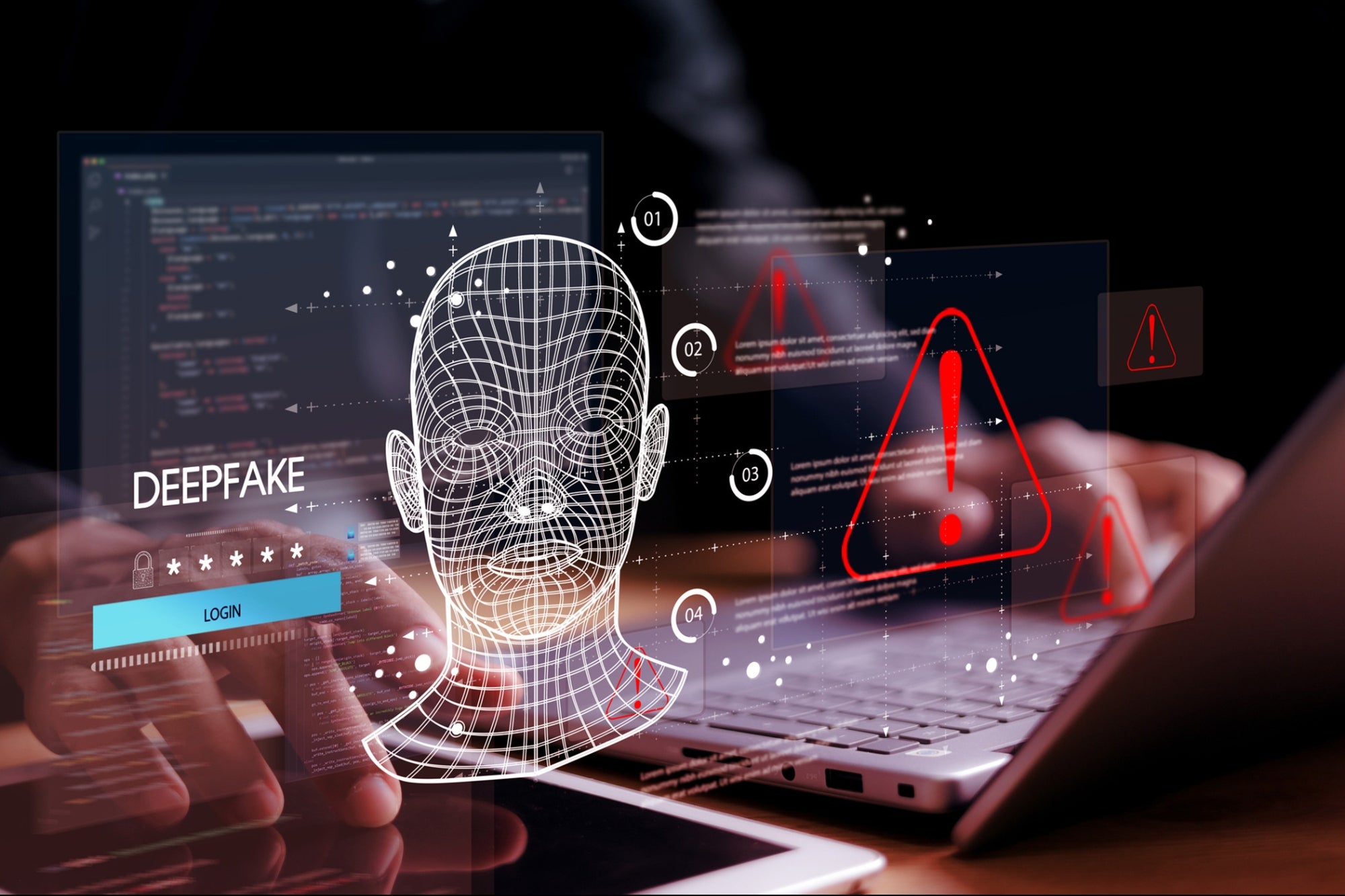
In January 2024, a finance director at a UK firm transferred $25 million to fraudsters after a video call with what appeared to be the company’s CFO — a very sophisticated deepfake. This incident is far from isolated. The global losses projected due to ecommerce fraud surged from US$44 billion in 2024 to $107 billion in 2029; a massive 141% increase, according to a report from Juniper Research.

Compounding the problem, a staggering 60% of consumers now doubt the authenticity of online content, citing concerns over AI-generated misinformation, deepfakes and content overload, as revealed in Accenture’s Life Trends 2025 report survey.

For entrepreneurs and business leaders, the threats are twofold: reputational damage from deceptive synthetic media and legal liability as governments worldwide enact stringent AI disclosure laws.

Current solutions like watermarking and AI detection tools are reactive by nature. Watermarking can be easily removed or forged, while AI detectors fail to identify manipulated content by nearly 30%, according to University of Pennsylvania researchers, by simple tweaks like added whitespace or typos. Legal actions, meanwhile, often come too late to mitigate damage.

Thankfully, a solution exists: blockchain + AI-powered digital twins.

Related: Hackers Targeted a $12 Billion Cybersecurity Company With a Deepfake of Its CEO. Here’s Why Small Details Made It Unsuccessful.

The rise of digital twins

Digital twins or avatars are a bridge between the physical and digital world, helping optimize systems and personalize our day-to-day experiences (travel, work, shop, healthcare system and beyond). By embedding AI avatars with NFT passports, which act as tamper-proof digital certificates stored on the blockchain, these IDs create a verifiable record of an avatar’s origin and any subsequent modifications — ensuring entrepreneurs and businesses can verify authenticity at source rather than scrambling to detect fakes after the fact.

Consumer trust is inextricably linked to transparency. A 2024 Edelman report found that 62% of consumers only trust AI-generated content if its provenance can be verified. Blockchain-based authentication addresses this demand head-on. There is a growing trend of integrating NFT-based digital passports across various industries to enhance product authenticity, traceability and customer engagement.

The corporate world is already adopting this approach. For instance, Breitling, a Swiss luxury watchmaker, partnered with Arianee to provide each watch with a blockchain-based digital passport. Since then, there have been over 200,000 NFTs created, with approximately 30% customer adoption. In the Art & Collectibles industry, Arteïa launched its Arteïa Connect, a secure digital passport for artworks anchored on the blockchain and securely linked to the piece via encrypted NFC tags, ensuring authenticity and provenance.

Even the healthcare industry is adopting similar frameworks. The UK NHS’s Digital Staff Passport uses blockchain to authenticate medical professionals, while Mayo Clinic partnered with Safe Health Systems to deploy AI-powered provider IDs for telehealth — critical steps to combat impersonation scams. By certifying authenticity at the point of creation, businesses are thus fostering trust while mitigating the risk of reputational damage.

Related: Blockchain, NFTs and the New Standard for Identity and Security

Navigating the AI wave

For entrepreneurs, navigating the AI landscape requires a proactive approach.

First, recognize that public-facing figures are prime targets for deepfake manipulation. Regular monitoring for fraudulent content is essential. Second, anchor digital identities to verifiable technologies like blockchain. Third, staying ahead of regulatory shifts is equally critical. The EU AI Act, the world’s first comprehensive AI law set to take effect this year, imposes fines of up to 7% of global revenue for undisclosed synthetic media.

Similar measures are emerging worldwide, from the US Deepfake Act to India’s draft deepfake penalties, signaling a global trend toward stricter oversight. Regulators want proof, not promises. The blockchain’s immutable audit trails provide exactly that. And, finally, treat digital identity protection with the same rigor as cybersecurity. Assign accountability within your team, conduct regular audits of AI tools, and consider partnerships with insurers specializing in deepfake liability.

The future path is clear: Deepfake fraud is no longer a hypothetical threat but a present-day liability. While detection tools play an important role, blockchain-based authentication offers a proactive defense mechanism. Just like SSL certificates secure ecommerce, NFT passports can do the same for AI by securing identity and authenticity.

For entrepreneurs and businesses, the choice is clear: to build trust through verification now, or risk losing everything to a synthetic scam tomorrow. In the rapidly advancing age of AI, authenticity won’t just be important, it will be the foundation of trust and competitive advantage.

In January 2024, a finance director at a UK firm transferred $25 million to fraudsters after a video call with what appeared to be the company’s CFO — a very sophisticated deepfake. This incident is far from isolated. The global losses projected due to ecommerce fraud surged from US$44 billion in 2024 to $107 billion in 2029; a massive 141% increase, according to a report from Juniper Research.

Compounding the problem, a staggering 60% of consumers now doubt the authenticity of online content, citing concerns over AI-generated misinformation, deepfakes and content overload, as revealed in Accenture’s Life Trends 2025 report survey.

For entrepreneurs and business leaders, the threats are twofold: reputational damage from deceptive synthetic media and legal liability as governments worldwide enact stringent AI disclosure laws.

The rest of this article is locked.

Join Entrepreneur+ today for access.

https://www.entrepreneur.com/science-technology/how-to-protect-your-business-from-deepfake-fraud/491362


23andMe Is Selling Its Customers’ Genetic Data to Drug Maker Regeneron: ‘The Power of Genetics and Data’

Genetic testing startup 23andMe, which filed for bankruptcy earlier this year, announced on Monday that it has agreed to sell the genetic data of its 15 million users, along with its core business, to drug developer Regeneron Pharmaceuticals. The acquisition, which followed a bankruptcy auction, is valued at $256 million and is expected to close in the third quarter of this year.

Regeneron told 23andMe customers that it would adhere to 23andMe’s privacy policy, which allows customers to request to delete their personal information.

Related: ‘Surprised and Disappointed’: All Independent Board Members of 23andMe Resign, Leaving Only the CEO

“We assure 23andMe customers that we are committed to protecting the 23andMe dataset,” Aris Baras, head of the Regeneron Genetics Center, said in a press release.

Baras explained that the Regeneron Genetics Center has experience with genetic data, processing the genetic information of nearly three million people in research studies since it was founded in 2013. Regeneron “shares 23andMe’s founding vision of the power of genetics and data,” Baras stated.

Regeneron’s acquisition includes 23andMe’s personal genome service, which conducts DNA testing for genetic predispositions, ancestry, and traits based on a small saliva sample. Under the acquisition, 23andMe will continue its daily operations as a personal genomics service, but as a subsidiary of Regeneron, and continue to offer genetic testing.

Anne Wojcicki. Photo by Cindy Ord/VF24/Getty Images for Vanity Fair

Related: ‘Difficult but Necessary’: 23andMe Is Cutting 40% of Its Workforce

The only part of 23andMe’s business that the acquisition does not cover is its telehealth division, Lemonaid Health, which 23andMe plans to shut down. Company staff in divisions other than Lemonaid Health, numbering around 300 employees, will keep their jobs.

The deal still has to be approved by the judge overseeing the bankruptcy in the U.S. Bankruptcy Court for the Eastern District of Missouri.

23andMe filed for bankruptcy in late March following a tumultuous few years. The company’s reputation took a hit after a data breach in 2023 exposed the data of nearly seven million people, or about half of the company’s users. 23andMe agreed to pay $30 million in September to settle a lawsuit about the breach, but data privacy remains a point of concern.

23andMe founder Anne Wojcicki, 51, resigned as 23andMe’s CEO following news of the bankruptcy but continued to serve on the company’s board of directors. Wojcicki, who co-founded 23andMe in 2006 and owns 49% of the company, said that she had resigned from the CEO role in order to be “in the best position” to bid for total ownership of the company.

Wojcicki submitted a few rejected proposals to buy 23andMe, one in July 2024 and another in February to purchase all of the company’s shares that she didn’t already own in cash for $2.53 per share, for an equity value of $74.7 million.

In September, all of 23andMe’s independent directors resigned from the board due to strategic differences with Wojcicki. They have since been replaced. The company laid off 40% of its workforce, or over 200 people, in November to cut costs.

23andMe went public in 2021 and was valued at around $6 billion that year at its peak.

Related: Silicon Valley Pioneer and Former YouTube CEO Susan Wojcicki Dies at 56 — Here’s How She Transformed the Tech Industry

Genetic testing startup 23andMe, which filed for bankruptcy earlier this year, announced on Monday that it has agreed to sell the genetic data of its 15 million users, along with its core business, to drug developer Regeneron Pharmaceuticals. The acquisition, which followed a bankruptcy auction, is valued at $256 million and is expected to close in the third quarter of this year.

Regeneron told 23andMe customers that it would adhere to 23andMe’s privacy policy, which allows customers to request to delete their personal information.

Related: ‘Surprised and Disappointed’: All Independent Board Members of 23andMe Resign, Leaving Only the CEO

The rest of this article is locked.

Join Entrepreneur+ today for access.

https://www.entrepreneur.com/business-news/23andme-is-selling-all-user-data-to-drug-developer-regeneron/491854


Want to Start a Side Hustle Helping a Small Business? Here Are the Gigs That Pay the Most.

Want to start a side hustle? Helping out a small enterprise might be the perfect opportunity to make some extra money outside of your 9-5 — and just in time for National Small Business Month.

Although 69% of small business owners feel positive about their financial outlook for 2025, hiring remains difficult, with 89% admitting it’s a struggle to find qualified workers, according to a survey from Goldman Sachs.

Related: These Are the 10 Highest-Paying ‘Little-to-No-Experience-Required’ Side Hustles Right Now

If you’re wondering which small business-related gigs could pay the most, look no further than NetCredit’s recent study, which examines side hustle earning potential for a single day of work. Researchers looked through thousands of publicly available job ads to produce the ranking.

The average pay for a 24-hour job completion for any business side hustle doesn’t exceed $100 on Fiverr, the research found.

However, some business-adjacent tasks may get close to earning that much: side hustles related to applications and registrations net an average of $97.50 for a day’s work, to project management $90 and to interview preparation $85, per the study.

Related: This 17-Year-Old High School Student Has a $20,000-a-Month Side Hustle — and It All Started With a Skill He Learned in Class

Side hustle jobs related to business planning, pitch decks, sales, market research and legal documents and contracts average $50 or more a day, according to NetCredit.

Check out NetCredit’s infographic below for the full breakdown of the business side hustles that pay the most over a 24-hour period:

Image Credit: Courtesy of NetCredit

https://www.entrepreneur.com/starting-a-business/side-hustles-helping-small-businesses-gigs-that-pay-the/491715


A One-Time Payment of $20 Gets You Access to 1,000+ Courses Forever

Disclosure: Our goal is to feature products and services that we think you’ll find interesting and useful. If you purchase them, Entrepreneur may get a small share of the revenue from the sale from our commerce partners.

Remember when learning new skills meant signing up for expensive classes, sitting in freezing (or sweltering) classrooms under fluorescent lights, and wondering if the vending machine would ever accept your crumpled dollar bill? Yeah, StackSkills EDU Unlimited is here to wipe that memory clean.

For just $19.97—yes, less than your last food delivery—you can grab lifetime access to 1,000+ online courses. IT, coding, graphic design, business strategy, marketing—you name it, it’s probably already waiting for you. New courses are added monthly, so your library actually grows with you over time, not against you.

This is real-world learning made for real-world schedules. Whether you’re a business leader trying to sharpen your digital strategy, a parent plotting a return to the workforce, a freelancer adding a new service, or a student supplementing a less-than-exciting course catalog—StackSkills gives you the flexibility to learn on your own time, from any device, without having to sacrifice your sanity (or your weekend plans).

And StackSkills isn’t about fluff. Their 350+ elite instructors are people who’ve been there, done that, and are ready to show you how they actually succeeded (and yes, sometimes how they failed—because that’s where the real lessons live). Each course includes progress tracking, certificates, and even quarterly live Q&As to keep you engaged and growing.

Compared to one college course that costs, what, $600, $1,000, more?—$19.97 for lifetime access is almost criminally affordable. Plus, you’ll be able to pivot your learning as new trends pop up, industries shift, and opportunities arise. No need to re-enroll, re-pay, or re-think every time you want to pick up a new skill.

It’s lifetime learning—built for people who actually have lives.

Take the leap. Own your growth. And seriously, stop paying $300 just to sit through a PowerPoint for beginners class. StackSkills has you covered for life.

Get lifetime access to StackSkills by EDU for just $19.97 (reg. $600) through June 1.

EDU Unlimited by StackSkills: Lifetime Access

See Deal

StackSocial prices subject to change.

Remember when learning new skills meant signing up for expensive classes, sitting in freezing (or sweltering) classrooms under fluorescent lights, and wondering if the vending machine would ever accept your crumpled dollar bill? Yeah, StackSkills EDU Unlimited is here to wipe that memory clean.

For just $19.97—yes, less than your last food delivery—you can grab lifetime access to 1,000+ online courses. IT, coding, graphic design, business strategy, marketing—you name it, it’s probably already waiting for you. New courses are added monthly, so your library actually grows with you over time, not against you.

This is real-world learning made for real-world schedules. Whether you’re a business leader trying to sharpen your digital strategy, a parent plotting a return to the workforce, a freelancer adding a new service, or a student supplementing a less-than-exciting course catalog—StackSkills gives you the flexibility to learn on your own time, from any device, without having to sacrifice your sanity (or your weekend plans).

The rest of this article is locked.

Join Entrepreneur+ today for access.

https://www.entrepreneur.com/living/a-one-time-payment-of-20-gets-you-access-to-1000-courses/491730


What 8 Years in Corporate Life Did — and Didn’t — Prepare Me For as a Founder

Opinions expressed by Entrepreneur contributors are their own.

As a consultant, chaos was a problem I had to solve. As a founder, it’s the air I breathe.

I entered the startup world armed with what I thought was the ultimate toolkit: a consulting background. Years of strategy decks, stakeholder management and cross-functional collaboration taught me how to turn chaos into structure and solve problems fast. I thought I had seen it all.

But I quickly realized that the transition from consultant to founder wasn’t so much a pivot — it was a free fall. See, consultants and founders couldn’t be more different. Consultants are trained to be perfect, founders need to be scrappy. Consultants are trained to eliminate chaos, founders need to thrive in it. Consultants have a safety net, founders don’t.

Related: Are You Ready to Be a CEO, a Founder or Both? Here’s How to Know

Let’s dive right in.

This is what consulting did prepare me for:

  1. Finding structure in chaos: I am stating the obvious here, but it is essential for founders to be able to execute on their vision; and to do that effectively, founders need structure. Something as simple as creating an organized folder structure — which coincidentally was my first task as an associate — can go so far as securing your term sheet with investors when they ask for the data room during the due diligence process. Being due diligence-ready isn’t just about having your documents in order; it’s about demonstrating transparency and building confidence with potential investors.
  2. Thinking on the spot: As a founder, it feels like you’re in the middle of the ocean and you need to swim your way back to shore. Consulting prepared me for that. I remember being chucked into remote environments to explain technical workflows to non-technical people — in my third language nonetheless. Thinking fast and adapting your message to whoever’s in front of you isn’t just useful — it’s how you create openings. It’s how you pitch before your product is ready. It’s how you get a meeting before there’s anything to show.
  3. Burning the midnight oil: Let’s be real, consultants — at least, the good ones — are machines and can be extremely productive. Founders are part of a world where being busy includes attending a lot of conferences, exhibitions and the post-event functions that come with them. Consultants can rarely afford such luxuries. Crunchtime is real and forces them to converge their efforts on work. Knowing when to lock in and say no is crucial as a founder.

This is what consulting did not prepare me for:

  1. Building and failing fast: Most founders and visionaries fall into the fallacy of building an end-to-end super solution that promises to be the holy grail of their customers — myself included. Enter the pivots. Your startup does not succeed when it builds out your vision — that is often just a very expensive dream. It succeeds when you find out what your customers are willing to pay for as quickly as possible. As Eric Ries puts it in The Lean Startup, the key is learning what customers actually want – not what you think they should want.
  2. Storytelling as an art: In my first days as a founder, I walked into a potential client’s office long before I had a product or even a live website. I took the consulting route and brought a strategy deck with me. I got destroyed that meeting. Off the bat, it sounds like a mistake — but it was the best decision I could have made. I took note of the feedback and acted on them immediately. Get out there, pitch your idea and ask for feedback! Feedback helps you figure out what sticks, what doesn’t and how to sharpen your message until it cuts through.
  3. Learning how to network: I did more networking in my first year as a founder than I did during my eight years as a consultant. Let that sink in. I thought I was networking as a consultant, but I was really just moving within the same orbit. As a founder, the galaxy is yours to explore. From day one, you find yourself networking with fellow founders from all walks of life, angel investors, venture capitals, tech builders, community leads — you name it. And the best part is, they don’t care about your CV. They care about your energy, passion and convinction. A study by Queen Mary University of London found that the quality of a startup’s network significantly impacts its chances of success, often more so than initial funding or team size.

Related: Are You Thinking Like a Founder? 4 Principles Every Successful Team Should Follow

In the end, the transition from consultant to founder was less about applying what I knew and more about unlearning what I thought I knew. And if you’re willing to unlearn, embrace different perspectives, take constructive criticism, to be honest with yourself and to move fast without all the answers — you will find yourself growing in ways no corporate job could ever offer.

As a consultant, chaos was a problem I had to solve. As a founder, it’s the air I breathe.

I entered the startup world armed with what I thought was the ultimate toolkit: a consulting background. Years of strategy decks, stakeholder management and cross-functional collaboration taught me how to turn chaos into structure and solve problems fast. I thought I had seen it all.

But I quickly realized that the transition from consultant to founder wasn’t so much a pivot — it was a free fall. See, consultants and founders couldn’t be more different. Consultants are trained to be perfect, founders need to be scrappy. Consultants are trained to eliminate chaos, founders need to thrive in it. Consultants have a safety net, founders don’t.

The rest of this article is locked.

Join Entrepreneur+ today for access.

https://www.entrepreneur.com/leadership/what-8-years-in-corporate-life-did-and-didnt/490207


Take Your Time Back With This Multi-Tasking Ad Blocker, Now $15 for Life

Disclosure: Our goal is to feature products and services that we think you’ll find interesting and useful. If you purchase them, Entrepreneur may get a small share of the revenue from the sale from our commerce partners.

TL;DR: The AdGuard Family Plan helps you browse online with no distractions, and now it’s only $15.97 (reg. $169.99) with code FAMPLAN through June 1.

The average person sees around 10,000 ads a day, according to data from Siteefy.com. Think of how much time you could free up by blocking them all? Entrepreneurs need every spare second they can get, and AdGuard is here to save the day and prevent all those ads from distracting you every day.

Get all those seconds back with a lifetime subscription to AdGuard Family Plan, now just $15.97 (reg. $169.99) with code FAMPLAN through June 1.

Ditch the ad distractions for good with this lifetime subscription to AdGuard

You don’t have time for distractions. Let AdGuard’s ad-blocking module provide peaceful internet browsing, without any pop-ups, banners, or video ads, so you can get your work done.

Entrepreneurs often work with sensitive data, so you can also appreciate that AdGuard doubles as a security guard. It can protect your data privacy, keeping your personal info hidden from trackers and activity analyzers. It also defends you against malware and phishing websites, which could be disastrous for your business.

If you have children in the house, you can also take advantage of AdGuard’s parental control features. It helps ensure your children avoid inappropriate content on the internet.

This lifetime subscription to AdGuard’s Family Plan provides ad blocking, security, and parental controls for up to nine devices. It’s compatible with Android and iOS operating systems so that you can safeguard tablets, laptops, and smartphones.

Protect nine devices with this AdGuard Family Plan, now just $15.97 (reg. $169.99) with code FAMPLAN through June 1.

StackSocial prices subject to change.

TL;DR: The AdGuard Family Plan helps you browse online with no distractions, and now it’s only $15.97 (reg. $169.99) with code FAMPLAN through June 1.

The average person sees around 10,000 ads a day, according to data from Siteefy.com. Think of how much time you could free up by blocking them all? Entrepreneurs need every spare second they can get, and AdGuard is here to save the day and prevent all those ads from distracting you every day.

Get all those seconds back with a lifetime subscription to AdGuard Family Plan, now just $15.97 (reg. $169.99) with code FAMPLAN through June 1.

The rest of this article is locked.

Join Entrepreneur+ today for access.

https://www.entrepreneur.com/science-technology/take-your-time-back-with-this-multi-tasking-ad-blocker-now/491652