Outfit Your Team with Android Tablets for Just $75 Each

Disclosure: Our goal is to feature products and services that we think you’ll find interesting and useful. If you purchase them, Entrepreneur may get a small share of the revenue from the sale from our commerce partners.

Equipping a team with modern, mobile tech can be a balancing act—functionality and performance matter, but so does staying within budget. That’s where this deal on the onn. 11″ Tablet Pro really shines. A Walmart store brand, these onn. tablets are just $74.99 (regularly $159), it’s an easy decision for business leaders looking to scale their tech resources without scaling costs.

Despite its budget-friendly price tag, this tablet is built for everyday productivity. It runs on Android 13, offering a familiar interface that syncs smoothly with cloud-based apps, email platforms, messaging tools, and more. It’s great for teams already using Android phones—onboarding is minimal, and the user experience is intuitive.

The large 11-inch LCD is crisp and vibrant with a 2000 x 1200 resolution, making it ideal for streaming presentations, reviewing reports, or even hosting virtual meetings. Whether you’re using it for point-of-sale systems, training materials, front-desk kiosks, or remote communications, this tablet delivers a sharp, responsive experience.

Under the hood, the 2.2GHz octa-core processor and 4GB of RAM provide reliable speed for multitasking. Combined with 128GB of internal storage (expandable via microSD), there’s plenty of room for documents, media, and business apps. Plus, dual cameras allow for both video conferencing and on-the-go image capture, which is useful for field teams, social media managers, and sales staff.

Battery life is often a pain point with mobile devices, but this one lasts up to 16 hours, giving your team an all-day companion that won’t die mid-task. Whether it’s used in the office or on the road, charging anxiety becomes a thing of the past.

And since this is an open-box unit, you’re getting a like-new device at nearly half the price. Each tablet is thoroughly tested and verified. Although the box may exhibit minor signs of handling, the hardware inside remains in new condition.

Get this onn. 11″ Tablet Pro for just $74.99 (regularly $159) while it’s still available.

StackSocial prices subject to change.

Equipping a team with modern, mobile tech can be a balancing act—functionality and performance matter, but so does staying within budget. That’s where this deal on the onn. 11″ Tablet Pro really shines. A Walmart store brand, these onn. tablets are just $74.99 (regularly $159), it’s an easy decision for business leaders looking to scale their tech resources without scaling costs.

Despite its budget-friendly price tag, this tablet is built for everyday productivity. It runs on Android 13, offering a familiar interface that syncs smoothly with cloud-based apps, email platforms, messaging tools, and more. It’s great for teams already using Android phones—onboarding is minimal, and the user experience is intuitive.

The large 11-inch LCD is crisp and vibrant with a 2000 x 1200 resolution, making it ideal for streaming presentations, reviewing reports, or even hosting virtual meetings. Whether you’re using it for point-of-sale systems, training materials, front-desk kiosks, or remote communications, this tablet delivers a sharp, responsive experience.

The rest of this article is locked.

Join Entrepreneur+ today for access.

https://www.entrepreneur.com/science-technology/outfit-your-team-with-android-tablets-for-just-75-each/491573



This 2-in-1 Chromebook Is a No-Brainer Buy at Just $180

Disclosure: Our goal is to feature products and services that we think you’ll find interesting and useful. If you purchase them, Entrepreneur may get a small share of the revenue from the sale from our commerce partners.

Every business leader knows the value of smart resource allocation. Whether you’re equipping a growing team, upgrading your personal tech stack, or planning for remote work flexibility, the tools you choose matter—and so does the price.

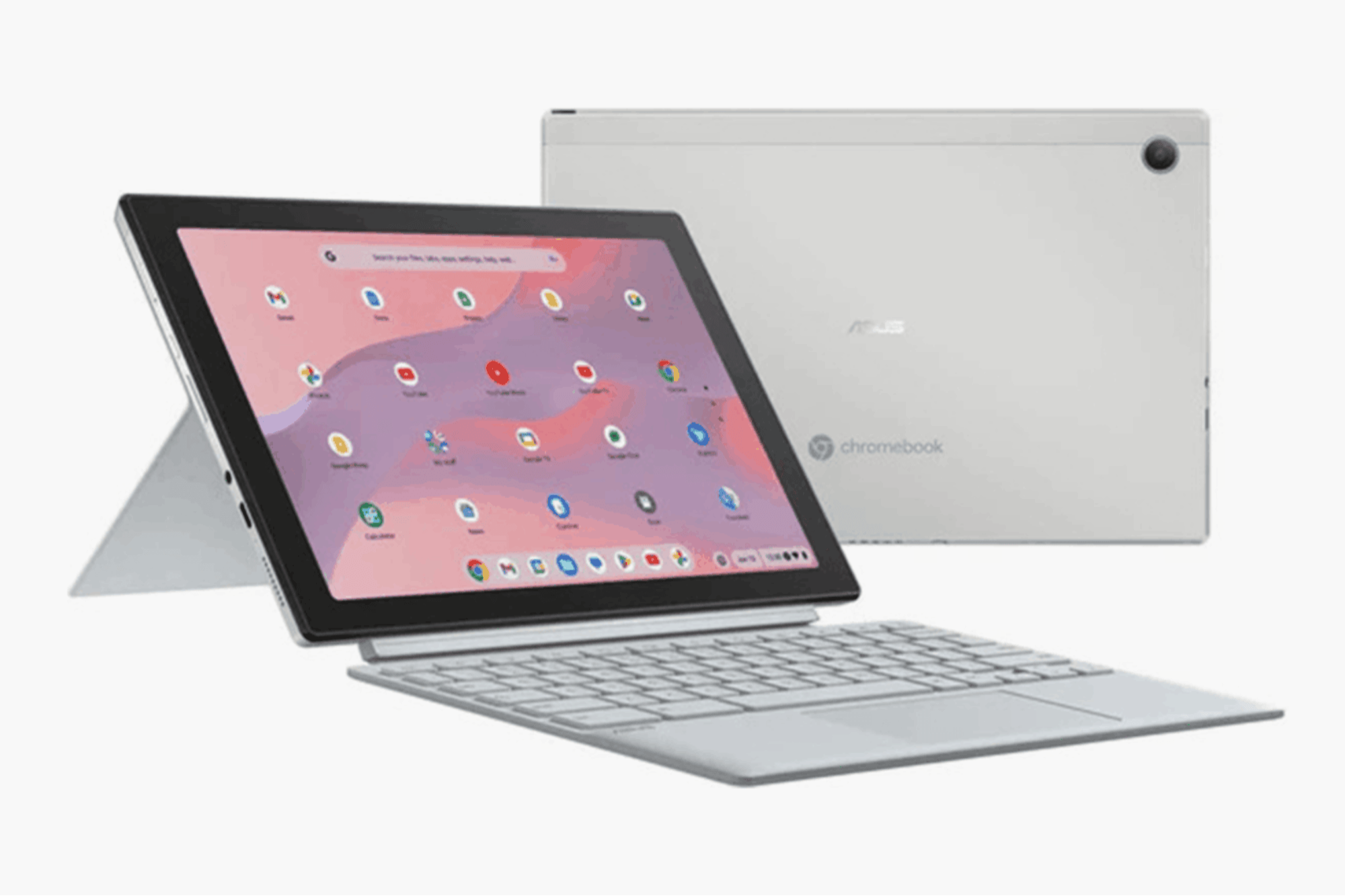
That’s what makes this deal on the ASUS Chromebook CM30 (2024) so compelling. For just $179.99, you get a new, open-box 2-in-1 Chromebook that’s as functional as it is flexible. With a regular price of $329.99, this open-box offer delivers serious value for professionals who need performance, portability, and adaptability.

Let’s start with the specs: Powered by the efficient MediaTek Kompanio 520 processor and backed by 8GB RAM and 128GB eMMC storage, this Chromebook easily handles multitasking, from Google Workspace to video calls and cloud-based applications. Chrome OS keeps things simple, secure, and snappy, with built-in virus protection and fast boot-up times.

The 10.5-inch WUXGA touchscreen gives you a bright, detailed display that’s great for meetings, presentations, and note-taking. Need more precision? The garage-stylus (two-way push-pop stylus) is built-in and always ready, perfect for signing documents or sketching ideas on the fly. And thanks to the magnetic detachable keyboard and versatile kickstand, you can seamlessly switch between laptop and tablet modes depending on the task.

But this Chromebook isn’t just about performance—it’s built for real-life conditions. With a military-grade aluminum chassis, Wi-Fi 6 + Bluetooth 5.3, and 12-hour battery life, it’s designed to work where you do: home, office, coffee shop, or on the go.

As a bonus, it’s made with 30% recycled aluminum, offering eco-conscious design without sacrificing durability. And while it’s listed as “open box,” this simply means it may have been handled on retail shelves or returned unused—each device is fully tested and verified in excellent condition.

Whether you’re buying for yourself, a team, or a project budget, this Chromebook delivers real-world value at a price that’s hard to beat.

Pick up this ASUS Chromebook CM30 while it’s on sale for just $179.99 (reg. $329.99).

ASUS Chromebook CM30 (2024) Detachable Touchscreen 8GB RAM 128GB eMMC (Open Box)

See Deal

StackSocial prices subject to change.

Every business leader knows the value of smart resource allocation. Whether you’re equipping a growing team, upgrading your personal tech stack, or planning for remote work flexibility, the tools you choose matter—and so does the price.

That’s what makes this deal on the ASUS Chromebook CM30 (2024) so compelling. For just $179.99, you get a new, open-box 2-in-1 Chromebook that’s as functional as it is flexible. With a regular price of $329.99, this open-box offer delivers serious value for professionals who need performance, portability, and adaptability.

Let’s start with the specs: Powered by the efficient MediaTek Kompanio 520 processor and backed by 8GB RAM and 128GB eMMC storage, this Chromebook easily handles multitasking, from Google Workspace to video calls and cloud-based applications. Chrome OS keeps things simple, secure, and snappy, with built-in virus protection and fast boot-up times.

The rest of this article is locked.

Join Entrepreneur+ today for access.

https://www.entrepreneur.com/science-technology/this-2-in-1-chromebook-is-a-no-brainer-buy-at-just-180/491572


How I Scaled from Side Hustle to 7 Figures Using 4 AI Tools (No Tech Skills Needed)

Opinions expressed by Entrepreneur contributors are their own.

If you’re only using AI to pump out blog posts or social media content, you’re thinking too small. The real game-changers? They’re building businesses that run on autopilot — using next-gen AI agents to automate sales, operations and marketing around the clock, with zero employees.

In this video, I’ll break down the four AI agents that can turn a simple side hustle into a 7-figure business.

  • Revenue-generating agent: Replace entire sales teams with AI that qualifies leads, books calls and handles follow-ups — it’s like having a top-tier sales rep that never takes a day off.
  • Executive assistant agent: Say goodbye to calendar chaos and inbox overwhelm. Use AI to handle scheduling, inbox management, travel planning and data entry — freeing up hours each week.
  • Workflow and SOP agent: Automate your SOPs and streamline onboarding with screen-recording AI that turns your processes into step-by-step guides — no more micromanaging.
  • Pulse agent for marketing: Analyze sales data, audit content and predict campaign performance before you hit launch — this is the tool that tripled my sales in just 14 days.

Whether you’re a solopreneur or scaling a lean team, these four agents can cut overhead, boost productivity, and give you a serious edge – without the headaches of hiring and managing people. Hit play to see how it’s done.
Download the free “AI Success Kit” (limited time only). And you’ll also get a free chapter from my brand new book, “The Wolf is at The Door – How to Survive and Thrive in an AI-Driven World.”

If you’re only using AI to pump out blog posts or social media content, you’re thinking too small. The real game-changers? They’re building businesses that run on autopilot — using next-gen AI agents to automate sales, operations and marketing around the clock, with zero employees.

In this video, I’ll break down the four AI agents that can turn a simple side hustle into a 7-figure business.

  • Revenue-generating agent: Replace entire sales teams with AI that qualifies leads, books calls and handles follow-ups — it’s like having a top-tier sales rep that never takes a day off.
  • Executive assistant agent: Say goodbye to calendar chaos and inbox overwhelm. Use AI to handle scheduling, inbox management, travel planning and data entry — freeing up hours each week.
  • Workflow and SOP agent: Automate your SOPs and streamline onboarding with screen-recording AI that turns your processes into step-by-step guides — no more micromanaging.
  • Pulse agent for marketing: Analyze sales data, audit content and predict campaign performance before you hit launch — this is the tool that tripled my sales in just 14 days.

The rest of this article is locked.

Join Entrepreneur+ today for access.

https://www.entrepreneur.com/science-technology/from-side-hustle-to-7-figures-4-ai-tools-you-need-to/491710


Own a The Little Gym Franchise: A Brand with 45+ Years in Child Development

The Little Gym franchise empowers you to own a business that helps children build confidence, physical skills, and social connections through fun, movement-based programs. Backed by decades of experience and the support of Unleashed Brands, franchisees benefit from comprehensive training, ongoing operational support, and powerful marketing resources.

Benefits of owning a The Little Gym franchise:

  • Proven Success: Over 45 years of experience and hundreds of locations worldwide.

  • Growing Demand: Parents are increasingly seeking enrichment programs that foster healthy development and lifelong skills.

  • Turnkey Support: From site selection to grand opening and beyond, you’ll receive expert guidance every step of the way.

  • Community Impact: Make a positive difference for families in your area while building a profitable business.

https://www.entrepreneur.com/franchises/own-a-the-little-gym-franchise-a-brand-with-45-years-in/491779


Did Apple Block Fortnite From the App Store? Here’s What We Know.

Fortnite players in the U.S. and E.U. have been caught in a battle royale that they hope will soon end: Apple vs. Epic Games.

On Friday, Fortnite, which is owned by Epic Games, said that Apple blocked access to the online game on iPhone devices, writing on X: “Apple has blocked our Fortnite submission so we cannot release to the U.S. App Store or to the Epic Games Store for iOS in the European Union.”

An Apple spokesperson told CBS News that it had asked Epic Sweden to “resubmit the app update without including the U.S. storefront of the App Store so as not to impact Fortnite in other geographies. We did not take any action to remove the live version of Fortnite from alternative distribution marketplaces.”

Related: Coinbase CEO Says Company Won’t Pay Hackers’ Ransom

Fortnite says that the game will remain unavailable globally on iOS until Apple unblocks it. They say that they submitted Fortnite to Apple for review last week, and Epic Games CEO Tim Sweeney said that Apple should feel free to accept or reject whatever they like, but added, “App Review shouldn’t be weaponized by senior management as a tool to delay or obstruct competition, due process, or free speech.”

In 2020, Epic Games sued Apple after Fortnite was booted from the App Store, stating that Apple held an illegal monopoly with the App Store, and its commission of up to 30% on in-app payments violated U.S. antitrust rules, reports Reuters. In 2024, it was allowed back.

Hopefully, the tech giants will settle their differences soon so that players can get back to killing each other on their iPhones.

Fortnite players in the U.S. and E.U. have been caught in a battle royale that they hope will soon end: Apple vs. Epic Games.

On Friday, Fortnite, which is owned by Epic Games, said that Apple blocked access to the online game on iPhone devices, writing on X: “Apple has blocked our Fortnite submission so we cannot release to the U.S. App Store or to the Epic Games Store for iOS in the European Union.”

An Apple spokesperson told CBS News that it had asked Epic Sweden to “resubmit the app update without including the U.S. storefront of the App Store so as not to impact Fortnite in other geographies. We did not take any action to remove the live version of Fortnite from alternative distribution marketplaces.”

The rest of this article is locked.

Join Entrepreneur+ today for access.

https://www.entrepreneur.com/business-news/is-fortnite-apple-blocked-from-the-apple-app-store/491783


These Are the College Majors With the Lowest Unemployment Rates — and Philosophy Ranks Higher Than Computer Science

Majoring in nutrition, art history, or philosophy could set you up for more employment success than majoring in a STEM (science, technology, engineering, math) field like chemistry or physics.

The Federal Reserve Bank of New York tracked the unemployment rate for recent college graduates ages 22 to 27 and found that it hit 5.5% in February, above the 2.6% rate experienced by college graduates of all ages.

The bank published data that month showing that some college majors were more affected by unemployment than others. According to the bank, the college majors with the lowest unemployment rates for the calendar year 2023 were nutrition sciences, construction services, and animal/plant sciences. Each of these majors had unemployment rates of 1% or lower among college graduates ages 22 to 27.

Art history had an unemployment rate of 3% and philosophy of 3.2%, each below the national average nationwide unemployment rate of 4.2% in April.

Related: Goldman Sachs CIO Says Coders Should Take Philosophy Classes — Here’s Why

Meanwhile, college majors in computer science, chemistry, and physics had much higher unemployment rates of 6% or higher post-graduation. Computer science and computer engineering students had unemployment rates of 6.1% and 7.5%, respectively.

Still, those fields were among the most highly compensated. Both computer engineering and computer science had median early-career annual earnings of $80,000, one of the highest out of any discipline. In comparison, art history majors earned $45,000 per year while philosophy majors made $48,000 and nutrition majors $75,000. All three fields had higher salaries than the median personal income in the U.S. in 2023, which was $42,220.

Over 32% of computer science college graduates went on to obtain master’s degrees or higher, compared to 48% of art history and nutrition students, and 58% of philosophy majors.

Most students who majored in chemistry or physics also obtained graduate degrees. Nearly 68% of physics and 66% of chemistry students in college decided to pursue and receive higher degrees. Physics graduates were among the most highly compensated, with median annual earnings of $70,000. Chemistry lagged behind with a median yearly pay of $55,000.

Related: These 3 Professions Are Most Likely to Vanish in the Next 20 Years Due to AI, According to a New Report

Companies are increasing their recruitment of humanities majors to obtain diverse perspectives. Last year, BlackRock’s chief operating officer, Robert Goldstein, spoke at a conference about the investment company’s need for humanities majors, even though the firm focuses on finance and technology.

“We have more and more conviction that we need people who majored in history or English, in things that have nothing to do with finance or technology,” Goldstein said. “It’s that diversity of thinking and diversity of people and diversity of looking at different ways to solve problems, that really fuels innovation.”

According to Federal Reserve Bank of New York data, history majors and English majors each made around $45,000 in median annual earnings, with an unemployment rate of around 4.6%.

Goldman Sachs’ Chief Information Officer, Marco Argenti, also noted last year that a standard engineering degree might not suffice anymore, particularly as AI learns to write high-quality code. Argenti suggested that it may be necessary to pair a computer science degree with an additional degree in philosophy.

In April, Microsoft CEO Satya Nadella stated that the company’s engineers are using AI to write 20% to 30% of code, while Google CEO Sundar Pichai said on an earnings call that Google was using AI to write “well over 30%” of new code.

Related: ‘Maybe We Do Need Less Software Engineers’: Sam Altman Says Mastering AI Tools Is the New ‘Learn to Code’

Majoring in nutrition, art history, or philosophy could set you up for more employment success than majoring in a STEM (science, technology, engineering, math) field like chemistry or physics.

The Federal Reserve Bank of New York tracked the unemployment rate for recent college graduates ages 22 to 27 and found that it hit 5.5% in February, above the 2.6% rate experienced by college graduates of all ages.

The bank published data that month showing that some college majors were more affected by unemployment than others. According to the bank, the college majors with the lowest unemployment rates for the calendar year 2023 were nutrition sciences, construction services, and animal/plant sciences. Each of these majors had unemployment rates of 1% or lower among college graduates ages 22 to 27.

The rest of this article is locked.

Join Entrepreneur+ today for access.

https://www.entrepreneur.com/business-news/college-majors-with-the-lowest-unemployment-rates-report/491781


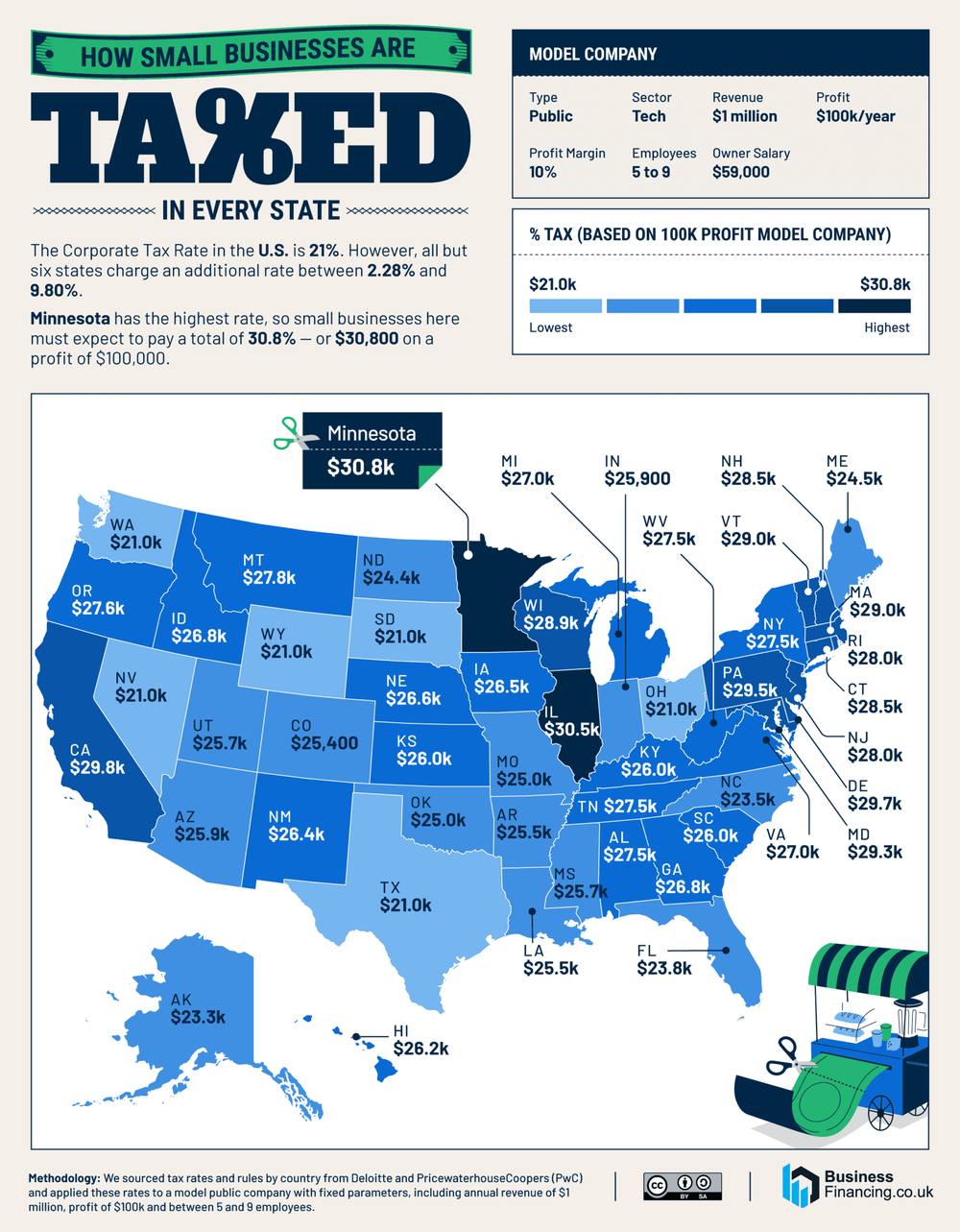
Which States Have the Lowest Taxes for Small Businesses? Here’s the New Data.

Corporate tax rates, the percentage of a company’s profits that it pays to the government, can widely vary from state to state. Most states (except six: Nevada, Ohio, South Dakota, Texas, Washington, and Wyoming) charge a local corporation tax on profits of $100,000 on top of the federal rate of 21%.

But which state charges the most? To find out, U.K.-based finance site, BusinessFinancing.co.uk, created a hypothetical company and applied every state’s tax rules using data from Big Four firms, Deloitte and PricewaterhouseCoopers.

Related: 4 Tax Strategies Every High-Earning Entrepreneur Needs to Know for 2025

The fake company was public, in the tech sector, and had a revenue of $1 million. It also had five to nine employees, made a profit of $100,000 a year, and had a 10% profit margin. The owner’s salary was $59,000.

Based on this data, the study found that Minnesota businesses would pay the most, about 30.8% on profits of $100,000 (or $30,800) on top of the federal amount. Illinois would pay the second highest, about 30.5%. California (29.8%), Delaware (29.7%), and Massachusetts (29%) rounded out the top five.

Related: How Much Money Do You Need to Retire Comfortably in Your State? Here’s the Breakdown.

The lowest tax payment was about $21,000 on profits of $100,000. Six states tied for the lowest (besides the six that don’t charge anything, of course). Ohio, Nevada, South Dakota, Texas, Washington State, and Wyoming all were tied for the lowest.

The report also looked at global trends and found that the country with the highest tax rate for small businesses was Guyana. The business the study created would have had to pay $40,000 on profits of $100,000.

The countries with the lowest taxes on small businesses were the Bahamas (which charges a small license fee), Bahrain, and the United Arab Emirates, which, per the study’s model, did not charge corporate tax on profits of $100,000.

Related: Hidden Fees Cost U.S. Small Businesses $153 Billion Each Year — Here’s How to Make Sure You Don’t Lose a Dime

Corporate tax rates, the percentage of a company’s profits that it pays to the government, can widely vary from state to state. Most states (except six: Nevada, Ohio, South Dakota, Texas, Washington, and Wyoming) charge a local corporation tax on profits of $100,000 on top of the federal rate of 21%.

But which state charges the most? To find out, U.K.-based finance site, BusinessFinancing.co.uk, created a hypothetical company and applied every state’s tax rules using data from Big Four firms, Deloitte and PricewaterhouseCoopers.

Related: 4 Tax Strategies Every High-Earning Entrepreneur Needs to Know for 2025

The rest of this article is locked.

Join Entrepreneur+ today for access.

https://www.entrepreneur.com/business-news/which-states-have-the-lowest-taxes-for-small-businesses/491120


This Fun Friday Night Family Ritual Taught Me a Surprising Lesson About AI and Creativity

Opinions expressed by Entrepreneur contributors are their own.

The first time I hosted a Prompt Party, I didn’t call it that. I was just trying to keep my five-year-old busy on a rainy Friday evening.

He wanted to make a video where our dog, Calvin, cooked up scrambled eggs with green onions. So we opened Sora, typed in a prompt and watched a pixelated masterpiece come to life. It was weird. And wonderful. And most of all, it was ours.

That was the spark.

Since then, we regularly gather for what’s become a tradition: Prompt Parties. They’re our family ritual where imagination leads, AI follows, and joy is the goal, not the output.

Related: Don’t Be Afraid Of AI — Your Fears Are Unfounded, and Here’s Why

Why we started Prompt Parties and why they stuck

Like many parents working in tech, I’ve had to confront some big questions:

  • How do I introduce AI to my kids without overwhelming them?

  • How do I make it feel like a tool, not a threat?

The answer, I’ve learned, is play.

Our Prompt Parties are casual. Pancakes optional. We brainstorm ideas, type in prompts and generate AI videos or images together using tools like Sora. Then we laugh, critique, remix and sometimes fall down rabbit holes of absurdity.

One week, the prompt was:

“Create the most photorealistic close-up of a blister pack of 8 pills, but instead of pills, there are tiny, adorable octopuses in different colors and textures. Each octopus is fully visible in side view, squished gently into its compartment like a soft gummy, but looking cheerful and content.”

The result? “Happy Octopus Pills.” A serotonin hit disguised as AI art. Feel free to try these on your own; I’d love to see what the output is.

That same day, my son Kai asked if Calvin (our side-eyeing dog) could wear a top hat and judge people like a Victorian aristocrat. We obliged:

“Dog side-eyeing like it knows your secrets. Make the side eye more intense. Have him wearing a top hat and human clothes.”

We’ve made LEGO towers with real-life bears in clown makeup. We’ve explored haunted castles and invented cereal mascots. There are no rules. Just prompts and possibility.

The science behind silliness

Shawn Achor, the positive psychology researcher behind The Happiness Advantage, argues that happiness isn’t a luxury; it’s a precursor to performance. Joy improves creativity, resilience and cognitive ability.

And guess what?

AI makes joy accessible in entirely new ways. It rewards curiosity, makes ideas tangible and bridges the gap between imagination and execution.

For kids, it’s magic. For adults, it’s a masterclass in thinking differently.

When we turn AI into play, we reduce the fear factor. We shift the narrative from “this tech will replace you” to “this tech can collaborate with you.” And that’s a lesson worth learning early.

Related: Here’s What Sora, OpenAI’s Text-to-Video Creator, Can Really Do

Building AI literacy without the creep factor

Let’s be real: Some parts of AI feel a little dystopian. Deepfakes. Chatbots impersonating humans. Kids don’t need all of that.

What they do need is agency.

Here’s how we keep Prompt Parties joyful and grounded:

  • Use bounded, kid-safe tools. We use Sora, not Midjourney. And we steer clear of tools that generate ultra-realistic humans or open-ended chat. We don’t ever use images of them or real people.

  • Stay involved. Every prompt goes through me. We sit side by side. If a result feels off, we talk about it. Not with fear, but with curiosity.

  • Celebrate their ideas. Whether the prompt results in a perfectly rendered image or a total flop, we cheer the attempt. It’s not about what the AI makes. It’s about what they imagined.

  • Turn screen time into story time. Most creations begin as drawings, stories or re-enacted scenes with stuffed animals. This feeds into active play and imagination later. AI is the spark, not the endpoint.

What Prompt Parties have taught me

I started this as a way to teach my kids about AI. But I’ve learned just as much in the process.

  • Originality beats polish. The octopus pill pack wasn’t technically perfect. But it made us laugh, think and feel. That’s the metric that matters.

  • Emotions drive retention. A child who gets to play with AI will remember how it works far more than one who just reads about it.

  • We’re not raising consumers. We’re raising creators. The real win isn’t AI literacy, it’s creative confidence. When kids learn they can steer technology, not just consume it, you change the trajectory of how they’ll interact with the world.

A surprising takeaway: Creativity is a form of courage

Here’s what I didn’t expect when we started Prompt Parties:

The courage it takes for a child to say an idea out loud before they know how it will turn out. To imagine something no one’s ever seen. To press “generate” without knowing what they’ll get back.

That’s not just play. That’s bravery.

And it reminded me: Creativity isn’t about talent. It’s about permission. Permission to be original. To be ridiculous. To be seen.

Related: 3 Ways Parents and Educators Can Guide Children’s Responsible Use of GenAI

These parties aren’t just building AI fluency. They’re building resilience, voice and self-trust.

Because the world they’re growing up in won’t just reward knowledge. It will reward perspective. The ability to think differently, speak clearly and imagine what doesn’t yet exist.

And that starts with a question: What if?

Each Friday, we ask a simple question: What do you want to create today?

That question has generated more laughter, connection and creative spark than anything else I’ve tried as a parent.

So, if you’re wondering how to bring AI into your home without the creepy vibes, start there.

Give your kids the prompt (and the permission) to play.

Because teaching them how to be curious, thoughtful, joyful humans in an AI world might just be the most powerful lesson of all.

The first time I hosted a Prompt Party, I didn’t call it that. I was just trying to keep my five-year-old busy on a rainy Friday evening.

He wanted to make a video where our dog, Calvin, cooked up scrambled eggs with green onions. So we opened Sora, typed in a prompt and watched a pixelated masterpiece come to life. It was weird. And wonderful. And most of all, it was ours.

That was the spark.

The rest of this article is locked.

Join Entrepreneur+ today for access.

https://www.entrepreneur.com/science-technology/this-fun-family-ritual-revealed-a-surprising-truth-about-ai/490659


Turn Your Emails into Trust-Building, Revenue-Driving Machines — Without Ever Touching The Spam Folder

Opinions expressed by Entrepreneur contributors are their own.

Wondering if you should invest in email to market your business? Wonder no more: 93% of people check email daily, and 35% spend up to five hours a day in their inboxes, ZeroBounce found in its latest Email Marketing Statistics Report. What’s more, 41% of consumers check their email intently, hunting for brand discounts.

That makes email one of your biggest opportunities to drive sales and build loyalty – if you show up with the right message. Here’s how to stand out in your prospects’ inboxes and make email work for you.

1. First, keep your emails out of spam

If you want people to see your emails, keeping them out of the spam folder is the first step. It doesn’t matter how good your offer is; if your message lands in junk, it’s game over.

To get your emails in the inbox, use this short checklist of best practices:

  • Maintain your database up-to-date. Remove obsolete contacts regularly and weed out dormant subscribers if they don’t open your emails for more than six months.
  • Make sure your emails are authenticated properly (think SPF, DKIM and DMARC). These protocols tell mailbox providers that you are, in fact, you, not a scammer pretending to be you.
  • Remove people who unsubscribe within two days to avoid being penalized by large email providers like Google, Yahoo and Outlook.

Your goal is to become a sender people trust and mailbox providers recognize as legitimate. That’s how you earn a spot in the inbox — and stay there.

Related: More Than a Quarter of Your Email List May Be Bad – Here Are 5 Ways to Clean It

2. Work on building trust

Email is a powerful way to grow your business, but many people associate it with spam and an overload of marketing offers. If you want to stand out, first you have to earn your audience’s trust.

Instead of constantly pushing for the sale, focus on making your emails helpful. Share useful articles, expert tips and other resources – even if your call to action (CTA) still leads to a product or service. This approach draws people in rather than overwhelming them, and it builds long-term loyalty and engagement along the way.

3. Make your emails feel personal

Once you’re in the inbox and building trust, the next step is to make your emails feel like they’re meant for each of your subscribers, not for your whole list. Here are three simple ways to achieve that:

  • Segment your audience into smaller groups so you can make your emails hyper-relevant. Your prospects will be much more likely to open, click and convert.
  • Even simple personalization – like using your customers’ first names — can improve engagement.
  • Experiment with text-only emails. No fancy images, no pushy messaging — just an email that looks like it could be from a friend or colleague. Just make sure it feels natural, not forced.

Being relevant and human earns your audience’s trust and respect. And when people feel seen, they’re far more likely to stick around and buy.

Related: 5 Ways to Delight Your Customers With Email

4. Write subject lines that earn the click

You made it to the inbox, now you need to win the open. Your subject line is your first (and often only) shot to grab attention.

Avoid clichés like “Hurry!” or “Don’t miss out,” which scream spam and often trigger filters. Instead, focus on clarity, curiosity or value. What’s in it for the reader? Why should they care right now?

Here are a few quick pointers:

• Keep it short and scannable — under 50 characters works best on mobile.
• Use action-oriented language, but skip the hype.
• Test subject lines regularly to see what resonates (even small tweaks can make a difference).

Think of your subject line like a headline. If it doesn’t make you want to click, rewrite it.

5. Design for fast reading

No one’s settling in with a cup of tea to savor your email. People skim. They scroll. They’re checking on the go. So if your email looks like a wall of text, it’s probably going straight to the trash folder.

To make your emails easy to scan, use short paragraphs and bullet points to highlight key takeaways. You can also break things up with subheadings and bold text. And keep mobile in mind — most people check email on their phones. If your layout’s clunky or the CTA button is buried, you’ll lose the click.

Related: 3 Tricks for Getting More Email Clicks

6. Make your offer crystal clear

If your prospects have to reread your email to figure out what you want them to do, they won’t do it. So make your offer pop. Whether it’s 20% off, early access, or a free resource, spell it out and make the CTA unmistakable.

When writing your next email, remember to:

• Stick to one main call-to-action per email.
• Use clear, specific CTA buttons like “Get My Discount” or “Download the Guide.”
• Place your CTA early and repeat it at the end for the skimmers.

When people instantly understand what you’re offering and why it matters, they’re more likely to take action.

Wondering if you should invest in email to market your business? Wonder no more: 93% of people check email daily, and 35% spend up to five hours a day in their inboxes, ZeroBounce found in its latest Email Marketing Statistics Report. What’s more, 41% of consumers check their email intently, hunting for brand discounts.

That makes email one of your biggest opportunities to drive sales and build loyalty – if you show up with the right message. Here’s how to stand out in your prospects’ inboxes and make email work for you.

1. First, keep your emails out of spam

The rest of this article is locked.

Join Entrepreneur+ today for access.

https://www.entrepreneur.com/growing-a-business/turn-your-emails-into-trust-building-revenue-driving/491265


5 Things You Need to Stop Doing as a Solopreneur

Opinions expressed by Entrepreneur contributors are their own.

Artificial intelligence and other technological advances, along with the rise in the “gig economy,” have sent the number of solopreneurs in the United States soaring. SellersCommerce reports that in 2025, there are now 41.8 million solopreneurs, which means a whopping 85.8% of small businesses in the U.S. are solopreneurships.

But just because there are 41.8 million solopreneurs, that doesn’t mean there are 41.8 million successful solopreneurs. Statistics indicate that many of these small business owners are struggling to gain a foothold in their market. In fact, a recent University of North Carolina study found that 21% of new small businesses fail in the first year and 50% fail within five years.

In my work as a provider of advanced technology platforms to solopreneurs, I have discovered that there are five key mistakes the solopreneurs often make that prevent them from achieving profitability over the long term. Stop doing these things, and your chances of experiencing greater success skyrocket!

Related: Solopreneur Success: 5 Tips for Growing a One-Person Business

1. Stop working without a plan

WinSavvy estimates that nearly one out of every three entrepreneurs start their business without a formal business plan. That means there is no set business structure to limit chaos, no roadmap to follow in difficult times and no set goals to maintain the solopreneur’s focus.

Without a plan, these solopreneurs often find themselves working on the wrong things and pursuing the wrong business opportunities, which reduces their profits and puts the future of their business in jeopardy. So, take time to make a plan and then commit to following it. You’ll end up saving time and lots of stress, and you’ll dramatically increase your chances for success.

2. Stop taking marketing for granted

When the budget is tight, it is easy to cut back on marketing, especially those campaigns that don’t produce direct profits. But this is almost always a mistake. There is an old adage, “You can have the best product in the world, but you aren’t going to make any sales if no one knows about it.” Well, guess what? This has become a popular saying for a reason — because it’s true. Solopreneurs should be using a variety of marketing techniques — from email marketing to content and referral marketing and more — to build their brand, attract new customers and generate more sales.

3. Stop ignoring the financial side of the business

It’s not enough to simply send invoices to clients. Solopreneurs interested in long-term success must also track cash flow and routinely analyze financial data to assess business performance, identify trends and set more accurate goals for the future. The good news is that staying on top of financial data is much simpler today, thanks to a variety of easy-to-use tools, such as Stripe, Wave or Solowise. Many of these programs utilize AI and machine learning to instantly provide in-depth financial information in an easily understandable format.

Related: 3 Challenges Every Solopreneur Faces and How to Overcome Them

4. Stop putting yourself second to your business

Starting a business is a massive undertaking, and it is understandable that many solopreneurs want to devote all their energy and attention to their business to give it the best chance for success. But the truth is, devoting all your time to your business and ignoring yourself and your relationships ultimately ends up putting your business at risk.

It’s important for solopreneurs to have time away from their business to recharge their batteries. When you do that, you’ll be able to go back to your business and get more work done in less time. What you don’t want to do is perpetuate a cycle where you exhaust yourself with work, as you’ll get less done while making more mistakes. Take time to be with loved ones and to exercise and look after your health. Doing this responsibly will pay huge dividends as you move forward.

5. Stop trying to do it all!

There are a number of reasons why solopreneurs don’t succeed, but by far, one of the most common is failing to effectively manage all the different aspects of their business.

The truth is, solopreneurs have to be experts at a number of different things — from lead generation to sales to order fulfillment to customer service and more. While many have knowledge in some of these areas, very few have knowledge in all of these areas. That lack of knowledge and experience leads to an imbalance that typically proves to be too difficult for many solopreneurs to overcome.

In the past, solopreneurs were limited in what they could do to shore up their weak areas. Their main options were to do hours and hours of research online and hope that the resources they came across were accurate, or spend money to purchase books, courses and other training material from self-proclaimed solopreneur experts.

Now there is another option — technology. Today’s AI and machine learning (ML) platforms put information and resources at solopreneurs’ fingertips that they never had access to before — and they have been quick to take advantage of them. The U.S. Chamber of Commerce reports that 90% of small businesses in the United States use at least one AI program today. Here are some tools entrepreneurs can use: Calendly and Acuity for scheduling, Trello and Notion for project management, and Zapier for automation and productivity.

When it comes to subscription-based services, it’s important to choose a tool that has all the features you need — without paying for unnecessary extras. So when choosing them, try to focus on the ones that are made for small businesses or solopreneurs.

Related: Solopreneurs Are Quietly Building 6 to 7 Figure Empires — Here’s How

The most successful solopreneurs have figured it out. They understand that they don’t have to do everything themselves. By utilizing technology and by prioritizing their own well-being, solopreneurs can avoid the traps that have caused so many to fail in the past. The key is to start small. Tackle one problem area at a time to avoid becoming overwhelmed. Then build upon your success. In no time, you could have a smooth-operating business that allows you to enjoy all the best benefits of the solopreneur lifestyle — like time freedom and wealth creation!

Artificial intelligence and other technological advances, along with the rise in the “gig economy,” have sent the number of solopreneurs in the United States soaring. SellersCommerce reports that in 2025, there are now 41.8 million solopreneurs, which means a whopping 85.8% of small businesses in the U.S. are solopreneurships.

But just because there are 41.8 million solopreneurs, that doesn’t mean there are 41.8 million successful solopreneurs. Statistics indicate that many of these small business owners are struggling to gain a foothold in their market. In fact, a recent University of North Carolina study found that 21% of new small businesses fail in the first year and 50% fail within five years.

In my work as a provider of advanced technology platforms to solopreneurs, I have discovered that there are five key mistakes the solopreneurs often make that prevent them from achieving profitability over the long term. Stop doing these things, and your chances of experiencing greater success skyrocket!

The rest of this article is locked.

Join Entrepreneur+ today for access.

https://www.entrepreneur.com/growing-a-business/5-things-you-need-to-stop-doing-as-a-solopreneur/491336