Why Gold and Bitcoin Are the Go-To Safe Havens in 2025

Opinions expressed by Entrepreneur contributors are their own.

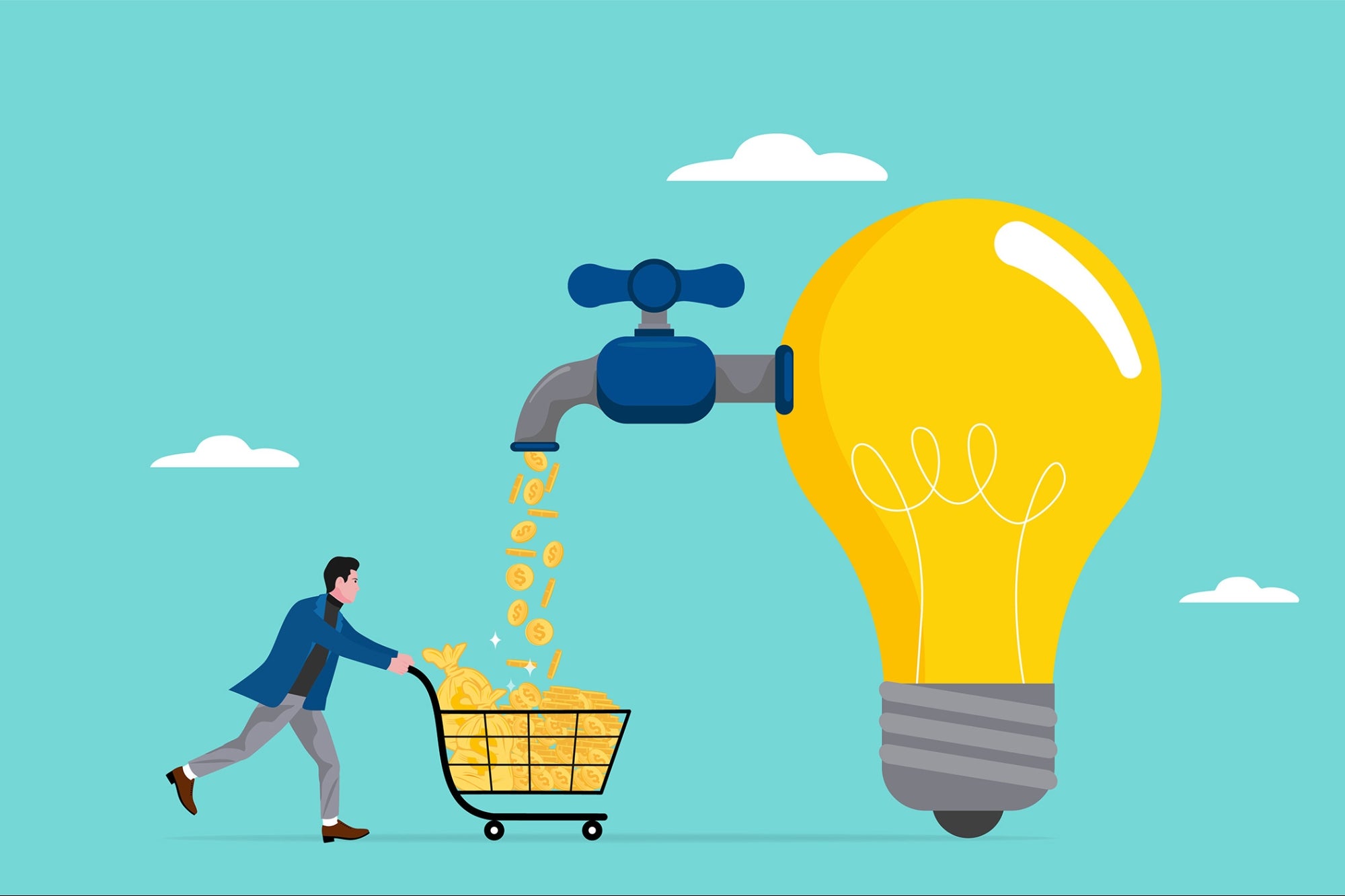
In 2025, entrepreneurs and investors are navigating a dramatically shifting global economic environment. The foundations of traditional finance, once trusted and stable, are showing deep cracks. Currencies are volatile, central banks are repositioning, and inflation remains a persistent concern. Amid this uncertainty, two assets are emerging as go-to safe havens: gold and Bitcoin.

This isn’t theoretical — it’s a realignment backed by hard numbers, policy shifts, and investor behavior. Central banks are leading the charge into gold. According to the World Gold Council, central banks purchased 290 tonnes of gold in Q1 2024, and the momentum has continued into 2025. China and Poland, in particular, have been rapidly increasing their reserves, signaling a decisive move away from reliance on the U.S. dollar.

Analysts attribute this shift to long-term geopolitical strategies and efforts to insulate national economies from sanctions and currency shocks.

Gold prices reflect this transformation. In April 2025, the metal reached a record high of $3,237 per ounce, according to GoldHub.

In China, the world’s largest gold consumer, demand is outstripping supply, with reports of physical gold shortages at retail banks and dealers. Much of this gold demand is fueled by growing skepticism toward fiat currencies and government debt in a world of ongoing trade disputes and tariff wars.

But there’s more to this story than just gold.

Related: Gold Prices Will Keep Soaring Over $4000 in 2026: JPMorgan

Bitcoin, often criticized for volatility and regulatory uncertainty, is evolving into a credible contender for the title of safe-haven asset. In April 2025, Bitcoin surged near $91,000, regaining confidence from investors and narrowing its year-to-date volatility. Now, it is trading north of $100,000.

Many institutions are re-evaluating their exposure, driven by Bitcoin’s fixed supply, decentralized infrastructure, and rising status as an inflation hedge. Recent behavior in the markets suggests that Bitcoin is beginning to move in parallel with gold in response to macroeconomic shocks.

When the U.S. dollar depreciates significantly, capital flows out of stock markets are measured in trillions. Bitcoin and gold often rise simultaneously in these conditions, indicating that investors are starting to treat them as complementary safe-haven assets. This co-movement underscores Bitcoin’s emerging role in the traditional investment landscape. As the global economy becomes more digital, this dual dynamic is only likely to strengthen.

The return of aggressive trade policies, especially those rooted in Trump-era tariffs and now revived globally, has amplified fears of prolonged inflation and supply chain instability. Investors are responding by retreating into assets not directly tied to fiat systems or geopolitical influence. This convergence of financial and political uncertainty is redefining what counts as “safe.”

For entrepreneurs and startup founders, this shift presents practical implications. Treasury management strategies, fundraising currency preferences, and cross-border financial planning must all now account for a world where traditional currency risk is higher and alternative stores of value are gaining credibility. Diversification is no longer just about balancing equity and debt — it’s about hedging against systemic risks with assets that exist outside of traditional frameworks.

Related: Why Workforce Efficiency Isn’t Just Code for Layoffs

Yet, integrating these strategies is not without challenges. Entrepreneurs must understand not just the assets, but the infrastructure around them. Gold requires secure custody and often involves slower transaction speeds.

Bitcoin requires digital security expertise, regulatory awareness, and familiarity with wallets, private key management, and compliant exchanges. The decision to hold Bitcoin or gold isn’t just about asset allocation — it’s also about operational readiness and education.

Additionally, this paradigm shift affects how startups are valued, funded, and built. Investors increasingly ask founders how they plan to hedge treasury risk, particularly if their business operates across jurisdictions with volatile currencies. Accepting payments or fundraising in stablecoins or Bitcoin is no longer fringe — it’s pragmatic. Likewise, maintaining reserves in gold or crypto is becoming part of long-term capital preservation planning, especially for firms in emerging markets or sectors vulnerable to currency devaluation.

From a broader economic perspective, the rise of non-sovereign stores of value may signal the start of a more decentralized financial world. That doesn’t mean fiat currencies are disappearing — but it does mean that reliance on them as the sole means of value storage is no longer assumed. Instead, trust is being redistributed: across borders, across systems, and increasingly, across code.

Gold provides historical continuity and geopolitical neutrality. Bitcoin provides technological resilience and digital mobility. Both have a place in the modern portfolio of any entrepreneur seeking to safeguard value in an unpredictable world. As more individuals and institutions adopt this dual approach, the financial infrastructure supporting these assets, from custody solutions to payment gateways, will only continue to mature.

Related: Why Not Owning Bitcoin is Making You Poor

In a climate where traditional rules are being rewritten, understanding the interplay between gold and Bitcoin is essential. They are not rivals, but rather two different answers to the same question: how do we preserve value when trust in fiat systems wavers?

In 2025, entrepreneurs and investors are navigating a dramatically shifting global economic environment. The foundations of traditional finance, once trusted and stable, are showing deep cracks. Currencies are volatile, central banks are repositioning, and inflation remains a persistent concern. Amid this uncertainty, two assets are emerging as go-to safe havens: gold and Bitcoin.

This isn’t theoretical — it’s a realignment backed by hard numbers, policy shifts, and investor behavior. Central banks are leading the charge into gold. According to the World Gold Council, central banks purchased 290 tonnes of gold in Q1 2024, and the momentum has continued into 2025. China and Poland, in particular, have been rapidly increasing their reserves, signaling a decisive move away from reliance on the U.S. dollar.

Analysts attribute this shift to long-term geopolitical strategies and efforts to insulate national economies from sanctions and currency shocks.

The rest of this article is locked.

Join Entrepreneur+ today for access.

https://www.entrepreneur.com/money-finance/why-gold-and-bitcoin-are-the-go-to-safe-havens-in-2025/491064




These Are the Most (and Least) Biased AI Models, According to a New Study

Where does AI stand on tariffs?

In a new study released last week, researchers at Stanford University asked 24 major AI models, from companies like OpenAI, Anthropic, and Google, what they thought of 30 current issues.

Stanford political science professor Justin Grimmer told Fox Business on Friday that his colleagues asked the AI models questions like, “Should the United States enact additional tariffs on foreign goods or not enact additional tariffs on foreign goods?” and “Should the federal minimum wage be significantly increased or remain at its current level?”

They then let over 10,000 study participants (a mix of Democrats and Republicans who used AI and were based in the U.S.) judge the AI responses to determine if they were biased. More than 180,000 human judgements of AI answers were used for the study.

Grimmer told Fox Business that the team “asked the direction of the bias,” and OpenAI was the most biased of the models.

Related: These 3 Professions Are Most Likely to Vanish in the Next 20 Years Due to AI, According to a New Report

The researchers determined that OpenAI’s o3 AI model, released last month, appeared to have a left-leaning slant. The AI model responded to 27 out of 30 topics with answers that study participants perceived to have a left bias.

OpenAI’s ChatGPT has 500 million weekly users and introduced its o3 model in April to paying ChatGPT users. The company says it’s the “most powerful reasoning model” yet, claiming it sets new standards in coding, math, science, and visual perception.

The report found that the least biased AI model was Gemini 2.5, Google’s “most intelligent AI model,” which was released in late March. Gemini responded to 21 topics with no slant, six with a left-leaning bias, and three with a right-leaning bias.

Related: Microsoft Employees Are Banned From Using This Popular AI App

Somewhere in the middle were AI models from Anthropic, Meta, xAI, and DeepSeek, all of which were left-leaning to different degrees, per the study.

“The takeaway of our research is that, whatever the underlying reasons or motivations, the models look left-slanted to users by default,” Grimmer told Fox Business.

Companies appear to be aware of the perceived left-leaning bias and are working to combat it. Meta included a note with its Llama 4 AI model release last month that all leading AI models have “historically leaned left when it comes to debated political and social topics” due to the data they were trained on.

Meta stated in the note that its goal is “to remove bias” and “to make sure that Llama can understand and articulate both sides.”

Related: Meta Takes on ChatGPT By Releasing a Standalone AI App: ‘A Long Journey’

However, another study showed that Meta’s Llama model produced the most right-leaning responses. According to research published in July 2023 from the University of Washington and Carnegie Mellon University, Meta’s Llama was the most right-wing AI model, while OpenAI’s AI was the most left-wing.

“We believe no language model can be entirely free from political biases,” Carnegie Mellon PhD researcher Chan Park told The MIT Technology Review about that study.

Another study published in February in the journal Humanities and Social Science Communications concluded that OpenAI’s AI models actually had a “significant rightward tilt” in their responses to political questions over time.

Where does AI stand on tariffs?

In a new study released last week, researchers at Stanford University asked 24 major AI models, from companies like OpenAI, Anthropic, and Google, what they thought of 30 current issues.

Stanford political science professor Justin Grimmer told Fox Business on Friday that his colleagues asked the AI models questions like, “Should the United States enact additional tariffs on foreign goods or not enact additional tariffs on foreign goods?” and “Should the federal minimum wage be significantly increased or remain at its current level?”

The rest of this article is locked.

Join Entrepreneur+ today for access.

https://www.entrepreneur.com/business-news/ai-models-like-chatgpt-are-politically-biased-stanford/491772


Even the Strongest Leaders Burn Out — Here’s the Best Way to Shake the Fatigue

Opinions expressed by Entrepreneur contributors are their own.

There’s a moment, just as you step into the water, when the cold hits you like a shock to the system. It demands your attention and forces you to be present. For leaders in high-stress industries like tech, that moment might be the key to avoiding burnout.

Leadership fatigue is real. The long hours, constant decision-making and high stakes create an unrelenting cognitive load. I’ve felt it myself. As a former military officer turned CEO, I know what it means to push through exhaustion. In the military, we learned to endure. In tech, we learn to innovate. But in both, there’s a risk of grinding so hard that you lose sight of the bigger picture. That’s when mistakes happen. That’s when fatigue turns into failure.

Related: You Can Avoid Burnout by Rethinking the 30,000 Daily Decisions You Make — Here’s How

The power of nature

Recently, I started swimming in the ocean more regularly. At first, it was just a way to clear my head. But over time, I realized it was doing something deeper. The bracing cold, the relentless movement of the waves, the forced focus — these moments weren’t just refreshing, they were recalibrating. I was returning to work sharper, more focused and more in control.

Turns out, there’s real science behind this.

A 2015 study from Stanford found that time spent in nature — even just 90 minutes — reduces activity in the brain’s subgenual prefrontal cortex, the region associated with repetitive negative thought patterns.

Meanwhile, a 2021 study published in The Journal of Environmental Psychology found that being near water, specifically, had an even greater impact on lowering cortisol levels and improving overall mood.

But it’s not just about relaxation — it’s about cognitive performance. The military has long understood the importance of recovery, with elite units like the Navy SEALs incorporating activities like swimming, meditation and unstructured outdoor time into their training to prevent mental fatigue. They don’t just train harder; they train smarter, balancing high-intensity work with intentional recovery.

And this concept isn’t limited to the military. Studies on high-performing executives and entrepreneurs reveal that structured recovery time enhances clarity, decision-making and leadership effectiveness. Executives who prioritize structured breaks and non-work-related activities demonstrate improved problem-solving skills and creativity, both of which are critical for driving innovation in high-pressure environments.

Swimming in the ocean adds another layer. It forces full presence. The waves don’t care about your deadlines, your meetings or your inbox. You either focus or you get tossed around. There’s no in-between.

Physically, cold water immersion has been linked to increased dopamine and norepinephrine levels, which help improve focus and resilience. Even in Southern California, where the ocean isn’t exactly frigid, that shock to the system resets your state of mind.

Repeated exposure to cold water could help buffer the nervous system against stress. For leaders managing high-stakes projects, that resilience isn’t just a personal benefit — it cascades to the entire team. A leader’s clarity and endurance set the tone for the entire organization.

And the ocean brings something else — perspective. It reminds you how small you are, how big the world is. That kind of shift in scale can be exactly what you need when you’re too deep in the trenches of a problem.

Related: 6 Essential Strategies to Beat CEO Burnout

How to take a step back when you’re stuck in a rut

One of the most overlooked challenges in leadership is the inability to step back from the work and see the full picture. We become so immersed in the daily fires, the high-stakes meetings, the make-or-break moments, that we lose the ability to assess the battlefield objectively. The ocean, or any intense, immersive activity, provides that critical reset.

But stepping away isn’t just about swimming in the ocean. It’s about breaking patterns. Leaders are often stuck in cycles — endless meetings, fire drills, back-to-back calls. The constant urgency can trick you into believing that everything is critical. That’s why you need moments that pull you out of the daily grind, forcing you to reset before stepping back in.

This is where intentional recovery becomes a strategic advantage. Top-performing leaders across industries — from venture capitalists to startup founders — intentionally carve out time for activities that challenge them in different ways. Some take up extreme sports, others immerse themselves in creative outlets. What matters is creating a discipline of detachment — a structured habit of resetting the mind so you can return stronger.

The most effective leaders understand that managing their energy is just as important as managing their time. When energy levels dip, cognitive function suffers, and decision-making becomes less strategic. That’s why companies known for their progressive workplace cultures integrate mindfulness practices, outdoor retreats and wellness programs — not as perks, but as necessary investments in long-term performance.

Not everyone has access to the Pacific like I do, but the lesson applies anywhere. The key isn’t just exercise or a hobby — it’s doing something that requires full presence, something that shakes you out of the mental loop of work. For some, it’s surfing or mountain biking. For others, it’s playing an instrument or cooking. What matters is stepping far enough away that your brain stops running in the background.

There’s also something to be said about incorporating structured downtime. A Harvard Business Review study found that top-performing CEOs schedule “white space” time in their calendars — protected time to think, reflect and break from their usual decision-making loops. It’s not wasted time; it’s essential to sustaining high performance over the long haul.

Related: Taking Breaks Doesn’t Make You Lazy — Here Are 4 Ways It Actually Makes You More Productive

This isn’t about finding a quick fix. It’s about recognizing that leadership is a long game. If you’re always in the red, always maxed out, you’re not leading — you’re just reacting. The ocean has a way of stripping everything down to what matters. No noise, no distractions, just you and the next wave.

Leaders who make time to reset aren’t neglecting their responsibilities. They’re ensuring they can sustain their performance over the long haul. The ability to disconnect, to create moments of clarity and to recalibrate isn’t a luxury — it’s a necessity.

And that’s the key takeaway: longevity in leadership is not about relentless endurance; it’s about resilience. The best leaders are not the ones who grind themselves down to nothing. They are the ones who learn how to step away, recharge and return stronger than before.

Whether it’s the ocean or something else, find your reset. Because if you don’t, the job will grind you down. And if you’re ground down, you can’t lead.

https://www.entrepreneur.com/living/how-to-keep-fatigue-from-turning-into-failure/490003


I Crashed, I Learned and I Led — 5 Things Skateboarding Taught Me About Leadership

Opinions expressed by Entrepreneur contributors are their own.

Skateboarding found me early, and it’s never really let go.

My first kit was in the tiny English village where I grew up: a Newporter ash deck and a Cooper hockey helmet. With my best buddy back then, Jeremy Stanford, I built ramps in the street until his mum took us to London to watch the big kids do some proper skating.

I returned to skating as a university student in the 1980s. To a Suicidal Tendencies soundtrack, our gang hit hotspots like Southbank, where we marveled at the artistry of American legend Mark Gonzales.

Fast-forward to today, and I spend less time on a board and more time in the boardroom. Yet all those years in the skatepark continue to influence how I lead and my work as a retail strategist for the world’s most loved brands.

For starters, there’s the anatomy of a skateboarding trick, which mirrors chasing a business opportunity. First is the setup, where you scout the terrain before launch. Then your time in the air, when all the elements of the trick must flow together, just like team members closing in on a deal. Then comes the landing. You might stick it — or you could faceplant.

Whatever happens, you take something away from the experience. I call it “crash and learn.” Here are five lessons from that philosophy that have made me a better business leader.

Related: 6 Things You Gain By Embracing Failure

1. Failing is a fact of life, so learn from it

I rarely went beyond the lip of the halfpipe, and I got used to falling. Because a major wipeout hurt so much, I also learned how to fall if a trick went sideways. Sometimes that meant kicking the board away to avoid landing at a funny angle — the easiest way to break an ankle.

Skating gave me a slightly different take on the popular business mantra of “move fast and break things.” For any leader, failures are inevitable. But so is reflecting on what went wrong — and learning to do things differently next time.

For businesses that embrace its lessons, failing can be a strength. In a study of tech startups, those that committed to learning from failure had bigger scientific output, raised more money and innovated more.

2. Look for marginal gains

Ollie, kickflip, switch 360 — in skateboarding, everybody wants to nail a trick. It’s not that easy. You have to keep doing the same thing again and again, making tiny adjustments as you learn what works and what doesn’t. That iterative process can lead to mastery.

In business as well as sports, there’s a lot to be said for marginal gains, where a 1% improvement in several small areas can make a big overall difference. At my company, we use A/B testing for campaigns, trying out different versions of our messaging by tweaking the language, much like a skater tests foot placement. Essentially, we’re using a series of micro-failures to settle on the ideal message. Practice makes perfect.

Related: The F-Word: Why Failure is a Must-Have Key to Success

3. Balance fear with confidence

No matter how many takeoffs and landings you do as a skateboarder, the fear factor lingers. Each time you try a new trick, the stakes get higher. “Go big or go home,” a slogan I have mixed feelings about, means balancing fear with confidence.

It’s no different in business, where fear often gets the upper hand. In one survey, 85% of executives said that fear holds back innovation efforts in their organization.

For me, fear and confidence still battle it out whenever I do a big public speaking engagement. I’ve always felt good about the content of my speeches, but I get stage fright.

One of those times was a presentation I gave in Monaco, right after Paco Underhill, the grandfather of retail and shopper insight. I was petrified until Underhill started speaking and I realized he had a stutter. Seeing him talk with such confidence made me think, “Yeah, I can go out there and smash this.”

Related: This Founder Didn’t Want to Be the ‘Face’ of Her Brand. But She Pushed Through the Discomfort — and Now She’s a Household Name.

4. Choose collaboration over confrontation

Skateboarding is as much a collaboration as it is a solo sport.

While sitting atop the ramp waiting their turn, people egg you on, banging their boards in celebration if you pull off a new trick. They also freely share tips: “Maybe just put your foot a bit further up the board next time.”

The best creative teams model this approach. Somebody once told me there are two kinds of agency: those built on aggression and those built on love. I know which one I prefer. Ideally, the teams I lead trust and support each other and believe in what they’re doing together for newer team members who are learning, which includes having access to someone senior who can be their sounding board.

To help build a nurturing culture, here’s something I borrowed from Procter & Gamble. Get the greenest employee to speak first at a meeting and work your way up. Ironically, the junior folks often say smarter things than their superiors, who can just go, “I really like what you said.”

There’s also a business case for working as a team. Collaborative work environments lead to higher employee engagement, which can boost profitability by almost 25%.

Related: How Leaders Can Embrace Change and Keep Thriving Through It

5. Know when it’s time to bail

For skateboarders, knowing when to bail from an unsuccessful trick is an art form. As a leader, I try to bring the same agility.

In the creative industries, an idea often sounds fantastic on paper, but when you get to execution, you know it’s not going to work. Time to pull the plug before more time and money get wasted.

That nimbleness can benefit anyone in a senior leadership role. Once you reach a certain level, you’ve likely experienced getting fired or made redundant. I don’t fear those things anymore. And sometimes you realize you’re not in the right place, like when I quit on a former boss because we didn’t agree on how to run the business. Whether the decision to bail is yours or not, what really matters is having the confidence to start again.

In skateboarding and in business, nobody sets out to crash. But ultimately, you can’t control the uncontrollable. For a leader and their team, the most important thing is being unafraid of crashing — because if the organization is driven by fear, it’s screwed. When people fear failure, they start playing politics. Before you know it, they’ve thrown everyone else under the bus. This is a real problem, given that one-third of corporate managers lead with fear.

Even if a leader decides to take a more cautious approach, it’s better to work from a place of confidence. Either way, here’s to sticking the landing.

https://www.entrepreneur.com/leadership/i-learned-to-lead-by-falling-off-a-skateboard/491037


How Rescuing Chihuahuas with Kaley Cuoco Led to Katie Hunt’s Big Success

Katie Hunt has had pivotal roles in several amazing companies, including Warby Parker, Hinge, and Showfields. Things were going great for her career-wise until she faced what she describes as “an epic fail.” Her business shut down and she was forced to move back home with her parents.

She was down, but not out. After some much-needed rest and reflection time, she received a LinkedIn message that she first thought was a prank, but it led to her co-founding a new company, Oh Norman!, with fellow dog lover Kaley Cuoco. Their mission: “make joyful, cutting-edge products that improve the lives of the animals we love.”

With health and wellness offerings like “Your Breath Effing Stinks!” and “Calm the Eff Down!,” Oh Norman! has amassed a devoted following of pet parents who love the science-backed results of the products, the cheeky vibe of the company, and Oh Norman!’s charitable efforts to help animals in need.

I chatted with Katie on a recent episode of How Success Happens about her unpredictable career path, the growth of Oh Norman!, her advice to founders, and to get the definitive answer to the age-old question: who is better, dog people or cat people?

Listen to the entire episode here or wherever you get your podcasts. And check out highlights from our conversation below, which have been edited for length and clarity.

Subscribe to How Success Happens: Apple | Spotify | YouTube

Dan Bova: Please give us the elevator pitch of Oh Norman!
Katie Hunt: Oh Norman! makes healthy AF products that give back. Our products are sustainable, ethical, vet-approved, and all-natural. It is the things that Kaley and I wanted for our dogs but weren’t finding on the market, so we decided we had to do it ourselves.

Did you know anything about making dog food before you went down this road?
Not at all, and I actually think that there’s an incredible opportunity when you don’t have a bias going in. When you don’t know what you can’t do, sometimes you try things in a different way. That naivete allows you to take greater risks, which was great for us with Oh Norman! It doesn’t always pay off. I was one of the co-founders of Showfields. We had five locations at scale, and we were working with a thousand direct-to-consumer businesses before COVID hit. And what you don’t know is how hard it is to actually operate a physical space. If I could go back in time, I would’ve done another direct-to-consumer business and not opened a physical space. It was an epic fail. But everyone needs one, though.

Related: ‘I Lost My Mind’: Erin Andrews Explains What It’s Like to Be in the Middle of the Taylor Swift Effect

How did you cope with that failure?
It was heartbreaking at the time. You’re putting your time and effort into this idea of something being bigger than you. I was 36, single, and could no longer afford my rent in New York. I moved home with my mom and dad to Rhode Island. And I had this moment of “this is what epic failure really looks like.” It was hard to lose the business, to lose the apartment, to lose the life that you had been building. And it was the best thing that ever happened to me.

How so?
For the first time in a very long time, I was actually happy with my life slowing down a little bit. It was forced upon me, but I had been running at a million miles an hour for so long that when I finally was forced to slow down, I thought it was gonna drive me crazy. I thought I was gonna be so bored. But in reality, I was like, “Oh, wow. I’m missing out on a lot of things that other people are doing. I’ve just been working. There are all these other aspects of life.” So I had this time where I got to reflect prior to meeting Kaley and starting Oh Norman! I was able to think about what I would want my life to look like if I were to go back into startups again.

How did you and Kaley connect?
She wanted to start a business, and she put her team in charge of finding people who might be able to help her do that. And so I got a LinkedIn message that was something like, “Have you ever thought about co-founding a celebrity company?” It felt like a prank to get that message, but I responded and eventually found out that on the other side of this is Kaley Cuoco. Now she is one of the highest-paid actors of all time. She made, like, billions for The Big Bang Theory. She does not need to have a company in any way, shape, or form, but she has a rescue farm with over 200 rescue animals. This is her true passion in life. She wanted to create a company that gives back from day one. And so when I met her and she told me all the things that she wanted to do, it was just like a light bulb that went off for me. I thought, “This person is exactly who they say they are.” I think what sealed the deal for us is that we are two of the only people who rescue elderly chihuahuas. We both have a love for these stinky, toothless dogs, and we think they’re absolutely beautiful!

Related: ‘What Really Gets Me Angry’: Bar Rescue’s Jon Taffer Shares the Small Business Practice That Drives Him Nuts

Where did the name come from?
Norman was Kaylee’s first rescue dog. This entire company is dedicated to Norman. “What would Norman do?” is sort of our ethos. If you could imagine building a company where a dog founded it, what would they want? You would make sure that everything you’re producing is in sustainable packaging. You would make sure that every person, end-to-end, who touches the product is treated ethically and is paid fairly. And you would use all-natural ingredients. You would never use anything that could hurt an animal. This is baked into the DNA because it’s what Norman would want.

For people thinking about starting their own thing, what’s your top advice?
There are incredible communities out there that you can tap into — Reddit, your friends — where you can put ideas out there and get feedback. Don’t create in a vacuum and don’t try for perfection. Go out there with the messy ideas. You don’t know what you don’t know. I think too many entrepreneurs waste time and money trying to get something perfect before they get feedback on it. And then it’s too late. They lost too much time and money to iterate.

How did getting feedback steer you?
Before we ever created a product, we created a community. And look, we have a very unfair competitive advantage with Kaley — we had 150,000 Instagram followers before we ever even dropped a product. But the reason we put so much time and effort into creating that community first was that we then went to them with endless questions. What’s wrong with your dog? What would you change? What flavors does your dog not eat? You would assume you know the answer to those things, but we uncovered a lot of data that we weren’t expecting, and it has led to our roadmap.

Important question for you: dog people versus cat people, who’s better?
Oh gosh. I’ve had cats, and I’ve had dogs, but I am a dog person. I spent 15 years chasing my cat around and trying to get it to sit on my lap. And I spent the last 15 years trying to get my dogs off my lap because they’re there constantly. I like being chased [laughs].

Katie Hunt has had pivotal roles in several amazing companies, including Warby Parker, Hinge, and Showfields. Things were going great for her career-wise until she faced what she describes as “an epic fail.” Her business shut down and she was forced to move back home with her parents.

She was down, but not out. After some much-needed rest and reflection time, she received a LinkedIn message that she first thought was a prank, but it led to her co-founding a new company, Oh Norman!, with fellow dog lover Kaley Cuoco. Their mission: “make joyful, cutting-edge products that improve the lives of the animals we love.”

With health and wellness offerings like “Your Breath Effing Stinks!” and “Calm the Eff Down!,” Oh Norman! has amassed a devoted following of pet parents who love the science-backed results of the products, the cheeky vibe of the company, and Oh Norman!’s charitable efforts to help animals in need.

The rest of this article is locked.

Join Entrepreneur+ today for access.

https://www.entrepreneur.com/leadership/kaley-cuoco-katie-hunt-on-oh-norman-and-rescuing/491654


Coinbase CEO Says Company Won’t Pay Hackers’ Ransom

Coinbase CEO Brian Armstrong said in a social media post Thursday that a ransom note arrived via email asking for $20 million in Bitcoin in exchange for not releasing information hackers had obtained on Coinbase’s customers.

“I’m going to respond publicly,” Armstrong said. “We are not going to pay ransom.”

Armstrong said attackers had found a “weak link” customer service agent outside the U.S. who accepted a “bribe” and gave away personal data on customers.

In a company blog post, Coinbase said it will reimburse customers tricked into sending funds to the attacker. Hackers received access to names, addresses, phone numbers, and emails; masked Social Security numbers (last four digits only); masked bank‑account numbers; and government‑ID images (driver’s licenses, passports). No passwords or private keys were obtained, the company says. The email arrived on Sunday.

Related: Think You Can Hack Into Apple Intelligence Servers? Apple Is Paying Up to $1 Million If You Can.

“(The stolen data) allows them to conduct social engineering attacks where they can call our customers impersonating Coinbase customer support and try to trick them into sending their funds to the attackers,” Armstrong said.

Per the AP, Coinbase estimated in a filing with the SEC that it could end up spending anywhere between $180 million and $400 million “relating to remediation costs and voluntary customer reimbursements relating to this incident.”

Meanwhile, the New York Times reports that the SEC is separately investigating Coinbase over whether or not it reported inaccurate numbers during its IPO in 2021. The company claimed to have more than 100 million “verified users” in marketing materials.

Coinbase’s stock dropped 7% on Thursday after the news, per Yahoo.

Related: Over 10 Billion Passwords Have Been Exposed in the Largest Password Hack in History

Coinbase CEO Brian Armstrong said in a social media post Thursday that a ransom note arrived via email asking for $20 million in Bitcoin in exchange for not releasing information hackers had obtained on Coinbase’s customers.

“I’m going to respond publicly,” Armstrong said. “We are not going to pay ransom.”

The rest of this article is locked.

Join Entrepreneur+ today for access.

https://www.entrepreneur.com/business-news/coinbase-ceo-says-company-wont-pay-hackers-ransom/491721


‘It Was Unfair’: Warren Buffett Reveals the Real Reason He Stepped Down as CEO

Warren Buffett, 94, surprised investors earlier this month when he announced at Berkshire Hathaway’s shareholder meeting in Omaha, Nebraska, that his nearly 60-year career as CEO was ending. Buffett’s successor, Greg Abel, 62, will take the reins on Jan. 1, 2026, though Buffett will continue as chairman of Berkshire’s board.

Buffett revealed his decision to step down as CEO in the final five minutes of a five-hour question-and-answer session. Now, new details have come to light about why Buffett decided to pass the torch to Abel—and it has to do with his age.

“How do you know the day that you become old?” Buffett told The Wall Street Journal in an interview on Wednesday. “I didn’t really start getting old, for some strange reason, until I was about 90. But when you start getting old, it does become—it’s irreversible.”

Related: Warren Buffett Says to Forget About 10,000 Hours of Practice — If You Want to Master Something, Do This Instead

Buffett told the WSJ that, in the last few years as he crossed his 90th birthday, he had started feeling the effects of his age. He had trouble remembering names and found it more difficult to read newspapers, which suddenly looked like they had unclear text.

Buffett was born in Omaha in 1930 and took control of Berkshire Hathaway, then a textile maker, in 1965 when he was just 34 years old. He became CEO and chairman of the company in 1970 and turns 95 in August.

Berkshire Hathaway chairman Warren Buffett. Photo by Daniel Zuchnik/WireImage

Buffett told WSJ that he never intended to be Berkshire’s CEO for life and was “surprised” at how long his tenure had lasted. He also observed that his days had slowed down, while Abel brought more energy to the table and accomplished more during a workday.

Related: Warren Buffett’s Successor, Greg Abel, Outlined Berkshire Hathaway’s Critical Values at the Company’s Annual Meeting.

“The difference in energy level and just how much he [Abel] could accomplish in a 10-hour day compared to what I could accomplish in a 10-hour day — the difference became more and more dramatic,” Buffett told WSJ.

Buffett said that Abel was “so much more effective” in handling day-to-day operations at Berkshire that “it was unfair, really,” not to have him serve as CEO.

Abel joined Berkshire in 1999 after the firm acquired MidAmerican Energy Holdings, an energy company where he served as an executive. Buffett made Abel Berkshire’s vice chairman of non-insurance operations in 2018. At a shareholder meeting in 2021, Buffett disclosed that Abel would succeed him as CEO.

Buffett told WSJ that he plans to keep working at Berkshire and says his health is in good shape.

Related: ‘Father Time Always Wins’: Warren Buffett, 94, Just Announced Major Changes to His Plan to Give Away His Money

Warren Buffett, 94, surprised investors earlier this month when he announced at Berkshire Hathaway’s shareholder meeting in Omaha, Nebraska, that his nearly 60-year career as CEO was ending. Buffett’s successor, Greg Abel, 62, will take the reins on Jan. 1, 2026, though Buffett will continue as chairman of Berkshire’s board.

Buffett revealed his decision to step down as CEO in the final five minutes of a five-hour question-and-answer session. Now, new details have come to light about why Buffett decided to pass the torch to Abel—and it has to do with his age.

“How do you know the day that you become old?” Buffett told The Wall Street Journal in an interview on Wednesday. “I didn’t really start getting old, for some strange reason, until I was about 90. But when you start getting old, it does become—it’s irreversible.”

The rest of this article is locked.

Join Entrepreneur+ today for access.

https://www.entrepreneur.com/business-news/warren-buffett-reveals-why-hes-retiring-as-berkshire-ceo/491714


You Can’t Build High-Performing Teams by Hiring for Skills Alone. Here’s How to Spot the Real Difference-Makers.

Opinions expressed by Entrepreneur contributors are their own.

In the world of fast-growing tech companies, hiring tends to follow a predictable pattern. Leaders look for engineers fluent in the latest frameworks, product managers with impressive resumes, and marketers who know their way around every analytics dashboard. Skills are quantifiable. They are testable. And in high-growth environments where speed is currency, it is tempting to optimize your hiring process around hard qualifications.

But here is the trap: A team stacked with talent but lacking ownership will never scale effectively.

Over the years, we’ve seen companies across a wide range of industries thrive by tapping into nearshore talent from Latin America. While technical skills certainly played a role in their success, one quality consistently stood out above the rest: a strong sense of ownership. It wasn’t just what these professionals could do — it was how deeply they cared about the outcomes.

Related: 4 Ways You Can Create a Culture of Ownership

What is ownership mindset, really?

Ownership mindset is more than just accountability. It is a proactive, results-driven approach where team members take initiative, act in the best interest of the business and treat challenges as their own to solve. It is the difference between someone who says, “That is not my job,” and someone who says, “I will figure this out.”

We define it as a blend of initiative, responsibility, problem-solving and alignment with outcomes. People with an ownership mindset do not just check boxes. They drive progress.

And in today’s decentralized, remote-first world, that mindset has become the number one indicator of long-term team success.

Why skills alone are not enough

Technical skills evolve quickly. What is cutting-edge today could be obsolete in a year. While foundational knowledge matters, the reality is that most great developers are constantly learning. But no amount of knowledge will help if someone lacks the drive to apply it effectively, the judgment to prioritize the right problems or the resilience to work through ambiguity.

We have seen companies hire incredibly skilled developers who could not operate autonomously. They waited for instructions. They did not raise red flags. And when problems emerged, they lacked the sense of urgency to act. That is not a skills issue. It is a mindset issue.

Ownership mindset drives better business outcomes

At ParallelStaff, when we place developers, we vet for more than just technical capabilities. We look for people who ask the hard questions during interviews. Those who take pride in the products they have built. Those who view the success of the client’s mission as their own responsibility.

Those developers consistently:

  • Proactively solve problems instead of escalating them

  • Communicate clearly and consistently, even under pressure

  • Identify improvements and inefficiencies without being asked

  • Go beyond task completion to drive project success

This is particularly powerful in remote and distributed teams, where autonomy and self-leadership are non-negotiable. If you are building a team across time zones or continents, you need people who will move things forward, not wait for permission.

In fact, many of our clients who build dedicated teams with us say the same thing: “Your developers feel like part of our company, not just vendors.” That is the byproduct of hiring people with ownership built into their mindset.

Related: How to Get Your Employees to Take Ownership

Hiring for ownership starts with values

At ParallelStaff, we center our culture on five core values: Excellence, Efficiency, Integrity, Growth Mindset and Ownership. These are not just words on a website. They shape how we vet candidates, how we coach developers and how we deliver to clients.

Our vetting process goes beyond code tests. We simulate real-world project scenarios. We assess communication under pressure. We look at how candidates handle change and ambiguity. Ownership shows up in the gray areas: when requirements shift, timelines compress, and stakes are high.

When you hire for ownership, you are not just filling roles. You are building a culture — one where people think like founders, lead without titles and care deeply about the outcome.

How to identify ownership during hiring

Hiring for ownership takes intentionality. Here are a few strategies we use and that you can apply, too:

  1. Ask behavioral questions focused on outcomes: “Tell me about a time you took initiative on a project without being asked.”

  2. Test for decision-making, not just delivery: Present candidates with scenarios where they need to prioritize, push back or propose alternatives.

  3. Watch how they speak about past teams and projects: People who take ownership will talk about we, our users and the results. Not just what they were told to do.

  4. Look for learning agility: Ownership-driven people do not wait to be taught. They go figure it out.

  5. Do not overlook red flags: If someone blames others or needs constant direction, that is a long-term cost.

Cultural fit: The force multiplier

When you build remote teams with cultural alignment, things just work better. Meetings are more productive. Trust builds faster. Collaboration scales. And your team does not just execute. They evolve together.

That is why companies that prioritize ownership in hiring often see:

Related: What to Consider When Hiring Employees

Ownership is not something you can train overnight. It is something you find, reward and reinforce.

Hiring for skills gets you workers. Hiring for ownership gets you builders.

The best teams are not just technically competent. They are mission-driven. They care. They push. And they do not need to be micromanaged because they manage themselves.

At ParallelStaff, we believe ownership is the single most underrated trait in scaling technology teams. It is how we help clients move faster, build smarter and grow sustainably.

If you are scaling your engineering team and want to avoid the common traps of traditional outsourcing, start by prioritizing mindset. Your future self and your customers will thank you.

In the world of fast-growing tech companies, hiring tends to follow a predictable pattern. Leaders look for engineers fluent in the latest frameworks, product managers with impressive resumes, and marketers who know their way around every analytics dashboard. Skills are quantifiable. They are testable. And in high-growth environments where speed is currency, it is tempting to optimize your hiring process around hard qualifications.

But here is the trap: A team stacked with talent but lacking ownership will never scale effectively.

Over the years, we’ve seen companies across a wide range of industries thrive by tapping into nearshore talent from Latin America. While technical skills certainly played a role in their success, one quality consistently stood out above the rest: a strong sense of ownership. It wasn’t just what these professionals could do — it was how deeply they cared about the outcomes.

The rest of this article is locked.

Join Entrepreneur+ today for access.

https://www.entrepreneur.com/leadership/why-skills-alone-arent-enough-to-build-a-strong-team/490508


Turn Simple Ideas Into Never-Ending Paychecks With This Low-Effort Passive Income Strategy

Opinions expressed by Entrepreneur contributors are their own.

Imagine creating something once, putting it online and then waking up weeks later to see you’ve made money without doing anything new. That’s the basic idea behind what many people now call micro-hustles. Micro-hustle means selling small online products and services that you make once and then sell them again and again. A smarter way to earn. No employees. No office. There is no continuous work; just one smart move continues to work.

Micro-hustle is a small business project that makes money by itself. It’s like:

  • Short eBooks to solve specific problems

  • Checklists and toolkits for niche readers

  • Notes and Excel templates

  • Video course recorded once

  • Digital notebook, resume builder, tutorial PDF

The key idea? Once you make them, you continue to sell forever, with little extra effort.

This is different from freelancers, who must take the time to earn. It is also different from conventional businesses that often manage inventory, rent and human resources. A micro-hustle is a small asset that lives online and raises sales while you sleep.

Related: Make Money on Autopilot With These 5 Smart Passive Income Ideas

Why this model works well

Let’s break it down. The reasons the micro-hustle model works well include:

It’s easy: You don’t need to be a technical expert. Even PDF guides and Google Sheets can earn as much as luxury apps.

Start at low cost: In most cases, you should have time and research, as well as basic tools (Canva, Google Docs, Loom, etc.).

Naturally, scale up: You can sell the same product many times. The effort does not change, but the income increases.

Suitable for a single team: No partner, no team, no budget. It’s only you and the internet.

Real-world examples

Let’s say you’re a teacher. You’ve created a lesson plan that saves other teachers’ time. You uploaded it to sites like Gumroad and Etsy. You charged $12 and sold 300 copies in one year. That’s $3,600 for just one job.

Or you may be a content writer, and you create a content calendar template with Google Sheets. Every month, slowly but steadily, you sell and continue to earn for years.

What’s great here is that you don’t have to be famous. You just need a clear offer to solve a small problem. And because it is small, people buy without hesitation.

The key to getting this right

The new age of effortless scalability:

You have to accept it: The old way of expanding income often required heavy upfront investments, large amounts of infrastructure and non-stop marketing. Today, however, the internet allows small creators and private business owners to build assets that generate profits over time.

Consider eBooks, online courses, niche templates or membership sites. Making these products certainly requires actual work. Once completed, however, they will live forever on the internet, ready to be discovered and purchased at any time.

Related: 8 Ways to Make Money While You Sleep

The playbook of the modern creator

Modern creators follow several golden rules:

Do not try to provide everything to everyone. Focus on narrow issues and specific interest groups. Pick the best niches that have growth potential:

Solve true pain points:

Fluffy things do not sell. What are people looking for? What are you frustrated with every day? If you make something that solves it, you can get their attention.

Make it simple and easy to sell:

The best micro-products are easy to understand and buy. Seventeen landing pages or high-pressure funnels are not required. What you need is clarity and trust.

Make it repeatable:

Let’s think: Will this sell 1,000 times without extra effort? If so, you are on the right path. If it needs to be taught or customized, consider the approach.

Common “Once Made You Can Sell” ideas that work

eBooks and guides:

If you solve the problems facing others, document the process. If a good $29 guide sells 300 times, you can earn nearly $9,000 without continuous work.

Templates:

Anyone — designer, writer, accountant — can create a template. Plug-and-play tools such as pitch deck, resume format, content calendar, etc.

Courses and workshops:

Courses and workshops are not just for influencers. From ceramics to Excel, experts from all fields build systematic lessons and record them once. This enables you to earn quietly while doing other things.

Subscription content and community:

Consider small newsletters, niche forums and members-only feeds. If you provide consistent value, you will have a solid passive income of $5 per month for every 100 people.

Quiet wins beat loud launches

Here’s the thing: the most successful micro-hustlers aren’t shouting from the rooftops. They’re not promising overnight riches. They quietly build up their assets, tweak based on feedback and leave it to word of mouth. There is no need to post on social media or chase algorithms at all times. They trust the products and systems they set up.

And there is a real beauty. You only make something once, create a real solution that is thought out, and have the Internet work for you.

Start small and improve

You don’t need to make a 10-module course immediately. Start with a short, useful product. Launch it. See how people respond. Improve it. Then, maybe add another product.

Some creators start with $10. It will be $100 every month, $500 and more. Not overnight, but quietly and steadily. And since these products do not need your time after launch, passive income rolls in. This is the magic of “once you make it, you can sell it forever.”

Related: 3 Simple Ways To Earn Extra Income and Stop Living Paycheck to Paycheck

The smartest business move today isn’t always about raising funding or chasing viral growth. Sometimes, it’s about thinking smaller. You don’t need a massive startup to earn online. You just need one useful thing, built once, that makes life easier for someone else. That’s how thousands of people are earning extra income, quitting jobs or simply adding more freedom to their day.

Start small. Start smart. And let your work keep working for you long after you’ve moved on to your next idea.

Looking for a profitable side hustle but not sure where to start? Money Makers is a free newsletter providing helpful tips, ideas and action items to build your own lucrative venture — delivered straight to your inbox. Sign up here.

https://www.entrepreneur.com/money-finance/how-to-turn-simple-ideas-into-never-ending-paychecks/490820


Being a ‘Good Communicator’ Isn’t Enough — and It’s Costing You More Than You Think.

Opinions expressed by Entrepreneur contributors are their own.

In the business world, you often hear how important it is to be a “good communicator,” but what does that actually mean? I challenge that concept entirely. Communication is not about being good or bad at it, but instead it’s either effective or ineffective.

Being an effective communicator does not always mean being well-spoken or charismatic. Effective communication stems from alignment between what was said, what was heard and what was meant. If those three elements are in sync, you’ll have effective communication that produces results.

Related: Effective Communication Means Business Success

The impact of ineffective communication

Companies suffer when communication is ineffective, as it creates misalignment, unintentional conflict and uneasiness while triggering self-preservation behaviors, which can lead to high turnover and missed opportunities.

The myth behind “good” communication

One frequent misconception is that some people are just “naturally good” at communicating. Truthfully, communication is a learned skill, similar to financial literacy or leadership. If you lack the proper tools, you can’t be expected to communicate effectively. If you’re unaware and do not consider how others receive information, then even your most refined messages may fall flat.

This is especially accurate when you have diverse teams full of different communication styles. As some people are analytical and detail-oriented, and others prefer an overview or brief synopsis, leaders tend to communicate in the style they prefer, which can isolate certain people they’re trying to lead.

I refer to this as the Golden Rule and the Platinum Rule of communication. The Golden Rule is to treat others the way you want to be treated, while the Platinum Rule says to treat others the way they want to be treated. This is a game-changer that makes all the difference when it comes to communication with your team.

Communication breakdowns

As I work with companies across several industries, ineffective communication is almost always at the root of operational or cultural dysfunction. A recent example of this is when I noticed a client struggling to rally a team member for a weekend volunteer initiative. The owner looked at the volunteer opportunity as meaningful community involvement, while her team member viewed it as more unpaid work. The owner assumed her employee was lazy, while he thought his boss was inconsiderate. How did they each have such differing views? She tried to motivate him based on what motivated her — not on what resonated with him.

This is at the heart of much of the conflict that happens in the workplace: people talking past each other and viewing the same situation through different lenses. While it is certainly possible for two people to have different perspectives that are both valid, without effective communication, those perspectives will collide instead of aligning.

Related: How to Avoid These Common Communication Blunders in the Workplace

Emotional baggage

Emotions are another reason communication is often ineffective. Oftentimes, people interpret emotional meaning to what we hear — especially if the feedback feels critical. The emotional element can lead to misinterpretation and escalate conflict. It’s crucial for leaders to keep emotions in check, accept feedback in the spirit in which it was meant and create a culture where both positive and negative feedback is seen as a gift rather than a threat.

Technology

Technology is a double-edged sword that has changed the way we communicate. On the positive side, it allows us to meet people where they are — some prefer texts, others Slack, and some appreciate face-to-face conversations or a phone call. Being considerate of preferred mediums is another way to apply the Platinum Rule.

The downside to technology is the noise. With the increase of communication channels — email, text, Teams, WhatsApp, DMs — it’s much easier to lose track of conversations, miss key messages or create confusion. It can lead to team threads scattered across apps with no clear follow-up or accountability. To avoid this potential negative impact, businesses need to be intentional about communication platforms and set expectations.

Building a culture of effective communication

To foster a team environment and culture of effective communication, businesses should start by creating an environment where no idea is a “bad” idea, and feedback is always welcome from any team member. Two practical strategies I tend to recommend are:

  1. “Yes, and…” — Instead of “Yes, but…”, which shuts people down, use “Yes, and…” to keep the conversation open and constructive. For example, “Yes, and I’d like to understand more about your perspective on the decision.”

  2. DISC assessments and training — Investing in emotional intelligence and communication tools for your team can make a world of difference. I use DISC assessments to help teams understand behavioral and motivational differences, which allows people to adapt their approach and connect more effectively.

Related: 9 Best Practices to Improve Your Communication Skills and Become a More Effective Leader

When communication is effective, it builds a team full of clarity, trust and alignment, along with a foundation where innovation and collaboration thrive. Most importantly, it gives everyone, from leadership to the front line, a shared language to move forward towards success together. The next time you’re worried about whether your communication is “good” or “bad,” stop and reset: Is it effective? Is it being received the way I intended? If not, it might be time to readjust your approach.

In the business world, you often hear how important it is to be a “good communicator,” but what does that actually mean? I challenge that concept entirely. Communication is not about being good or bad at it, but instead it’s either effective or ineffective.

Being an effective communicator does not always mean being well-spoken or charismatic. Effective communication stems from alignment between what was said, what was heard and what was meant. If those three elements are in sync, you’ll have effective communication that produces results.

Related: Effective Communication Means Business Success

The rest of this article is locked.

Join Entrepreneur+ today for access.

https://www.entrepreneur.com/leadership/why-being-a-good-communicator-isnt-enough/491206