How Smart Entrepreneurs Write Press Releases That Actually Drive Growth in 2025

Opinions expressed by Entrepreneur contributors are their own.

Press releases haven’t always been digital.

The very first one was written back in 1906 by a PR pioneer named Ivy Lee. After a major train accident in the United States, he crafted a written statement and hand-delivered it to journalists so they could report the story accurately. Over time, press releases moved from paper to fax machines, and then eventually to email.

Now, we are over a hundred years later, and press releases have gone fully digital. They’re optimized for search engines, published online, and shared across the web. But with over ten thousand press releases going out every single day, most of them are ignored. Why? Because they’re too long, too fluffy and too impersonal.

The truth is, a great press release still has power. It can boost your brand’s visibility, land you media coverage, bring in valuable backlinks, and even drive leads — if you know how to do it right.

Here’s how to write one that actually gets results in 2025.

Related: Millions of Small Businesses Will Soon Be for Sale. Here’s How Smart Entrepreneurs Are Cashing In

1. Start with a headline that grabs attention

Your headline is your one shot to make someone stop and read. You’ve got just a few seconds to make it count. So skip the buzzwords and cut the fluff. Keep it short, clear and focused on the outcome.

For example:

Instead of saying, “Company XYZ Announces Product Expansion Across Europe,” try something like, “Company XYZ Expands to Five New Cities After Huge Growth in Early 2025.”

Or instead of “Startup Launches AI-Powered Platform to Help Businesses,” say, “New AI Tool Helps Businesses Cut Support Costs by 40%.”

See the difference? One is vague and forgettable. The other is specific and makes you want to learn more.

2. Write like a human, optimize like a pro

It’s not enough to have a good headline — the rest of the release needs to hold attention too. That means writing in clear, simple language. No corporate jargon. No filler. Just say what matters, in a way real people will actually want to read.

At the same time, think about search engines. Use keywords that relate to your industry or announcement, but don’t force them in. Keep your writing natural. Use subheadings, short paragraphs and pull quotes to break things up.

And keep it short. Under 800 words is ideal. Enough to tell a compelling story, but short enough that people won’t get bored halfway through.

3. Pitch smarter, not louder

Here’s the biggest mistake people make with press releases: they send them to everyone. That’s not how you get coverage. That’s how you end up in the spam folder.

Instead, build a short, targeted list of reporters and editors who actually cover your space. Read their recent work. Mention it in your pitch. Show them why your story fits with what they already write about. And if you want to go even further, offer them early access. Let them see the release before it goes live. Make them feel like a partner, not just a name on a spreadsheet.

If you’re short on time or connections, hire a PR firm that already has strong media relationships. They know who to pitch, when to pitch and how to get results.

4. Share it like you mean it

Publishing your release is just the beginning.

Once it’s live, share it on your company blog. Post it across your social channels — LinkedIn, Twitter, Reddit, even Discord or Slack communities if they’re relevant. Tag people, mention partners, and use a shorter, more casual version of the announcement to draw people in.

Email it to your subscribers with a quick note explaining why it matters.

And yes, consider paid distribution too, especially if you want to reach industry-specific sites.

Related: Is There Still a Need for Press Releases When Newspapers Are Going Extinct?

Final thoughts

Press releases aren’t dead. But the boring ones definitely are.

If you want to stand out in 2025, you need to think differently. Lead with a hook. Be clear and honest. Send it to the right people. And don’t just hit publish — get out there and amplify it.

A great press release isn’t just news. It’s a tool to open doors, spark interest, and build momentum.

Make yours count.

Press releases haven’t always been digital.

The very first one was written back in 1906 by a PR pioneer named Ivy Lee. After a major train accident in the United States, he crafted a written statement and hand-delivered it to journalists so they could report the story accurately. Over time, press releases moved from paper to fax machines, and then eventually to email.

Now, we are over a hundred years later, and press releases have gone fully digital. They’re optimized for search engines, published online, and shared across the web. But with over ten thousand press releases going out every single day, most of them are ignored. Why? Because they’re too long, too fluffy and too impersonal.

The rest of this article is locked.

Join Entrepreneur+ today for access.

https://www.entrepreneur.com/growing-a-business/how-smart-entrepreneurs-write-press-releases-that-actually/489953


How to Build a Business That Serves Your Life, Not the Other Way Around

Opinions expressed by Entrepreneur contributors are their own.

Ask any entrepreneur why they chose to start a business, and you’ll probably get a hundred different answers. However, you’re likely to see an underlying theme emerge. While the individual reasons might be different, they typically boil down to a single idea — freedom. One of the best things about being an entrepreneur is being able to escape the confines of a traditional job, giving you more control over your schedule and earning potential.

Despite their best intentions, many entrepreneurs find themselves trapped in a business that demands more time and energy than they anticipated. Instead of achieving the freedom to run their own life, their business calls the shots. The good news is that you don’t have to give up your business to regain your freedom. It’s all about intentionally designing your business model in a way that supports your personal vision, allowing you to reclaim your time and fulfillment.

Related: My Business Became My Prison. This Is How I Broke Free.

1. Revisit your “why”

Businesses can evolve over time. As they grow, they can take on a life of their own, and in some cases, deviate entirely from the vision that you originally had for the business. While you may have envisioned your life as an entrepreneur who isn’t tied to a schedule, your business can quickly consume your every moment.

Sit down and reflect on the reasons why you started the business in the first place. Are you achieving these goals? Only once you have a clear vision of your ideal life can you start adjusting your business model. These principles can then guide you as you make business decisions in the future.

2. Conduct a time audit

Entrepreneurs have a lot of things on their plate. It’s easy to work 12-15 hours in a day and still feel like you didn’t accomplish anything. One of the best ways to reclaim your time is to find out exactly how you are spending it through a time audit. A time audit involves tracking how you spend your time over a period, such as a week or a month.

While this exercise can feel tedious, it can be tremendously helpful in understanding where you are spending your valuable time and identifying opportunities to delegate tasks or eliminate waste altogether. You might be surprised to find that you are spending a ridiculous amount of time on a certain task, such as checking email, that could be much better utilized on high-value activities.

Related: 5 Ways to Get Real Freedom as a Business Owner (Without Surrendering Control)

3. Automate or delegate tasks

Many tasks in your business are critical and must be done, but that doesn’t mean that you have to do them yourself. As you are conducting your time audit, look out for tasks that can be automated with technology or delegated to another person. For example, if you spend a considerable amount of time sorting and responding to email, you might leverage an automated tool to help keep your inbox organized. The good news is that tools and features like this are becoming increasingly common with the rise of artificial intelligence.

It’s especially important to avoid tasks that must be done but don’t produce a lot of value. Tasks that are repetitive or require special knowledge, such as bookkeeping, might be better suited for one of your team members. By getting things off your plate, you can shift your focus to more value-added activities like strategic planning or developing client relationships.

4. Set clear boundaries

Entrepreneurs often struggle unblurring the lines between their work and their personal lives. Separating the two unfortunately is necessary for avoiding burnout and protecting your mental well-being. Start by establishing clear boundaries such as scheduling downtime to step away from the business and recharge. It’s important that unless the request is truly an emergency, you stick to your boundaries.

It’s not enough to create these rules for yourself. It’s critical that you communicate these boundaries to your team, so they understand what is expected of them. A good practice is to ensure there is a senior manager in place who can help support the team and make decisions when you are unavailable.

Related: I’m Very Busy — Yet I Still Have Lots of Free Time. Here are 10 Hacks I Use To Actually Enjoy My Life

5. Reverse engineer your exit

While you may not have any plans to retire or sell your business any time soon, going through the practice of reverse engineering your exit strategy can be a powerful way to reclaim your freedom. Imagine you are planning to retire a year from now. What can you do to ensure that the business can function without you? With this approach, you’ll be able to create processes that are sustainable without your involvement. At the end of the day, it’s hard for your business to hold you captive if you’ve built it so that it can function without you.

Building a successful business doesn’t always have to be about revenue. There are lots of other important benefits and personal value that you can gain running a business. The idea is to find the right balance where you earn the money you need to live the life you want without being consumed by the business itself.

Ask any entrepreneur why they chose to start a business, and you’ll probably get a hundred different answers. However, you’re likely to see an underlying theme emerge. While the individual reasons might be different, they typically boil down to a single idea — freedom. One of the best things about being an entrepreneur is being able to escape the confines of a traditional job, giving you more control over your schedule and earning potential.

Despite their best intentions, many entrepreneurs find themselves trapped in a business that demands more time and energy than they anticipated. Instead of achieving the freedom to run their own life, their business calls the shots. The good news is that you don’t have to give up your business to regain your freedom. It’s all about intentionally designing your business model in a way that supports your personal vision, allowing you to reclaim your time and fulfillment.

Related: My Business Became My Prison. This Is How I Broke Free.

The rest of this article is locked.

Join Entrepreneur+ today for access.

https://www.entrepreneur.com/growing-a-business/how-to-build-a-business-that-serves-your-ideal-life/491116


‘Great Admiration for What You’ve Done’: David Letterman Surprises ‘Nite Show’ Live Audience to Help Send Off Retiring Host

Danny Cashman, 47, has been hosting “The Nite Show” at Husson University in Bangor, Maine, for 15 years. The local program airs on several Maine television stations on Saturday nights (and has a YouTube channel). It’s set up like a traditional late-night variety show, with an in-house band, an opening monologue, sketches, interviews with live guests, and musical performances.

Cashman’s top inspiration for his show was “The Late Show with David Letterman,” according to the Portland Press Herald, and he’s asked the now-retired Letterman, 78, to be a guest on his program for many years. On Saturday night, it finally happened.

Related: At Least 50 Local TV Meteorologists Across the Country Were Just Laid Off — Here’s Why

Dubbed a “mystery guest,” no one in the audience knew Letterman was actually going to appear. So it was a huge surprise when he walked out and joined Cashman at his desk to be his final live guest for one of the last episodes.

“This is a self-made man,” Letterman said, after receiving a standing ovation from the crowd and sitting down in the guest chair. “This is the product of his life for the last 20 years.”

[embedded content]

Despite being a local program airing against NBC’s Saturday Night Live, Cashman told Letterman that his show has remarkably high ratings during the time slot. Still, Cashman said it was time to put down the microphone. (He told News Center Maine that it just felt like “the time was right to do some other things.”)

“This is no small accomplishment, because I’m guessing this is not network supported, it has not been syndicated supported, I have great admiration for what you’ve done,” Letterman said.

Letterman also talked about the struggles he has faced since leaving his own show.

“It’s not easy, it took me quite a long time to break the daily routine,” Letterman said. “Now people treat me differently.”

Here’s the full episode.

Related: This Entrepreneur Pranked Mark Cuban on National Television. The Shark Was So Impressed He Offered to Invest $640,000 — in Empty Boxes.

Danny Cashman, 47, has been hosting “The Nite Show” at Husson University in Bangor, Maine, for 15 years. The local program airs on several Maine television stations on Saturday nights (and has a YouTube channel). It’s set up like a traditional late-night variety show, with an in-house band, an opening monologue, sketches, interviews with live guests, and musical performances.

Cashman’s top inspiration for his show was “The Late Show with David Letterman,” according to the Portland Press Herald, and he’s asked the now-retired Letterman, 78, to be a guest on his program for many years. On Saturday night, it finally happened.

Related: At Least 50 Local TV Meteorologists Across the Country Were Just Laid Off — Here’s Why

The rest of this article is locked.

Join Entrepreneur+ today for access.

https://www.entrepreneur.com/business-news/retired-david-letterman-surprises-local-nite-show-audience/491638


78% of Projects Fail Because of This One Problem — Here’s How Continuous Learning Solves It

Opinions expressed by Entrepreneur contributors are their own.

Why does traditional training fail tech teams? It’s jarring to know that 78% of organizations abandon projects partway through because they didn’t have employees with the necessary IT skills. Today, skill gaps are considered the biggest barrier to business transformation.

Here’s a reality check: 39% of existing skills will be outdated by 2030. For firms, this number translates to lost revenue, delayed projects and weakened competitiveness.

These growing skill gaps are making it harder to innovate and retain top talent. To stay ahead, these firms need to lean into their agility and rethink how teams learn and grow in real time.

After leading cross-functional technology through 25 years of rapid industry shifts, I’ve seen what works. Two practical strategies have consistently helped mid-sized tech firms build stronger, future-ready teams without massive budgets.

Related: 5 Ways to Create a Culture of Innovation

Strategy 1: Let your team learn by doing

Engineers don’t learn best by sitting in classrooms; they learn by building real solutions.

Stretch Projects: Stretch projects provide the perfect opportunity for your team to learn new skills while also delivering on your roadmap. They’re like sprints, but learning is done on the go. One of my teams had to fix a crashing application, and in the process, they learned how to use Docker. It was chaotic, but the learning was real.

Microlearning: In my experience, pairing these with microlearning sessions keeps teams engaged without derailing deadlines. These could be quick tutorials by senior engineers or docs tied to the project’s needs. This model mirrors the iterative nature of software development itself: test, fail, refine, repeat. You’d be amazed how fast your team grows.

Balance: Remember not to rush; stretch projects are great for learning, but be mindful of burnout and disrupting workflows, which may challenge smaller teams with tight deadlines. Limit stretch projects to 20% of the workload, balancing with regular tasks.

Here’s the playbook you can start with:

  • Begin by auditing your team’s skills. Create structured opportunities for engineers to apply new skills hands-on.
  • Assign stretch projects tied to sprint deliverables.

This will help you with faster deployment cycles, improved innovation and stronger retention of technical skills.

Strategy 2: Get your team to share the know-how

But learning by doing is just one piece; teams must also learn from each other.

About 80% of executives and 72% of IT professionals say their organizations often invest in new technology without ensuring employees are properly trained to use it, a gap I’ve bridged with peer-learning sessions.

Knowledge Sharing: Some of the best learning happens when your team comes together to swap ideas. I saw a serverless API project stall because engineers lacked AWS training, and stretch projects helped us fix that fast, because I had experienced engineers overseeing it.

When knowledge sharing becomes a cultural norm, mid-market firms transform training from an external activity into a core competency. Over time, this keeps your team sharp and ready to take on emerging challenges.

Peer learning: Provide a platform to your team by implementing monthly workshops where everyone shares what they’ve learned. Peer learning is a great way to keep this institutional knowledge alive and build a team that can think beyond just the code. It’s a simple approach that lets mid-sized firms like yours stay nimble and deliver top-notch work without the big budgets of larger companies.

Institutional knowledge: While technical upskilling is vital, peer learning also plays a key role in retaining often-overlooked business-critical skills that can quietly erode with turnover. In fact, LinkedIn data shows that companies with high turnover often lose key capabilities like business strategy and project planning.

To put this into practice, try these:

  • Build a culture of peer-to-peer learning.
  • Host monthly knowledge-sharing sessions,
  • Encourage team collaboration on real projects

You can try platforms like Coursera, GitHub Learning Lab, Pluralsight and AWS. Free resources like video tutorials, open-source community and online learning forums are invaluable for upskilling.

These will mean faster skill-building, stronger team collaboration and a more agile workforce.

How to make it stick: reward growth, not just delivery

Now, here’s the important part. Hands-on and peer-driven learning creates momentum, but without recognition or growth opportunities, even engaged teams can lose steam.

Career Growth: Gen Z employees (17%) are the most likely to stay because of upskilling opportunities, compared to Millennials (9%), Meanwhile, 67% of employees say they would leave their company altogether if there were no opportunities for internal mobility.

If mid-sized firms can’t provide these kinds of opportunities, engineers will look for them elsewhere not just for more money, but to stay relevant and keep progressing in their careers.

Cost of Turnover: Hiring a new IT employee takes 10 weeks in the U.S., compared to 9 weeks globally, and costs over $8,000 more on average than an upskilled one. You want to keep your best people? Align learning and development with their career growth. That’s why investing in your current engineers is faster, cheaper and more effective.

Incentives: Make it your top priority to encourage your talent to pursue certifications in high-demand areas like AI, DevOps and cloud security. It is always good to celebrate their achievements. Offer them tangible rewards such as summit invitations, speaking opportunities or passes to major tech conferences that show that they are making a difference. Recognition matters.

Try gamifying it with hackathons, 15-minute coding challenges or building a cloud-native prototype. Tech teams love those!

Early on, my team started small. An AI prototype took one sprint and transformed our skillset. We went on to build AI-specialized teams as we grew.

These “DIY” upskilling approaches allow firms to bypass the rigid and expensive learning models enterprises often rely on.

The two strategies use an often-overlooked advantage mid-market firms possess: agility. But when paired with a strong reinforcement mechanism, these two strategies can help you build a culture where learning, collaboration and recognition fuel long-term growth.

Related: How Brands Can Turn Rewards Programs Into Long-Term Loyalty

Next steps for tech leaders

Despite the so-called saturation, AI and ML remain new, with only 8% of companies scaling AI at an enterprise level and using it in their core business strategy

So, this quarter, pilot a stretch project to start with an automation tool, a cloud-native application or an AI-driven feature, maybe a chatbot?

These steps will pinpoint skills your team needs now, ensuring you stay competitive. In my experience, the firms that prioritize upskilling today will shape technology markets of tomorrow and tomorrow is not that far.

Conclusion

With 40% of organizations already planning to reduce staff as some skills become obsolete and 50% aiming to transition staff into new, growing roles, I see upskilling not just as a defensive move against market disruption but also as an offensive strategy for radical growth.

By encouraging fearless innovation through stretch projects and tying skills acquisition to tangible career rewards, mid-market tech teams can scale with limited resources.

Do this correctly, and by 2026, I see your team nailing data tools and automation, building solutions that stand out. My passion for creating great software keeps me hooked on this approach, and I’m betting you’ll see the difference if you start now and get your team learning.

I ask that you see skill-building not just as a milestone but as a journey. It will help you build a learning culture where capability grows and sticks.

https://www.entrepreneur.com/leadership/why-traditional-training-is-failing-tech-teams/490778


The Recession Mistake That Cost My Business $1.5 Million — and the Decision That Put Us Back on Top

Opinions expressed by Entrepreneur contributors are their own.

There is some chatter about what’s going to happen with the economy based on all of the recent changes. I personally think we’re heading for a boom and not a recession, but I understand that some are nervous about what may happen.

I thought this would be a good time to share my own experience on this topic. I’ve been in business for 27 years, and we’re currently doing over $110 million in revenue. I have almost 400 salaries to pay every week and have no investors or raised capital to fall back on. We have to make the revenue every week, no exception.

I have led this company through two recessions and found something interesting about my own business that may apply to yours as well.

Hear me out: a strong economy is great, but a rough economy calls for a similar roadmap. So, don’t stop your marketing or expansion plans in anticipation of what may happen.

Let me explain…

In 2008, I made a mistake that cost my business, PostcardMania, over $1.5 million.

In 2020, I made certain not to repeat that mistake, and we actually ended up growing revenue 10% that year.

Today, our financials are healthier than ever. We went from averaging 5% annual revenue growth in the decade pre-2020 to averaging 17% annual growth post-2020, a 239% increase in growth rate.

I credit a lot of our recent growth to making better decisions when 2020 got tough. As a result of these experiences, I now feel ready to meet any economic climate, and I want that for you and your business as well.

So, here’s my experience and advice on what you can do to feel ready regardless of what may come.

Related: How I Turned a Marketing Mistake Into $1 Million in New Business

During the Great Recession of 2008, I reduced my marketing, and it cost me millions

For years, banks approved high-risk mortgages to under-qualified home buyers. When enough of those homeowners defaulted on their loans, it cascaded into a housing market bust and banking emergency. The event triggered one of the worst recessions in U.S. history.

At the time, my business heavily relied on clients in the real estate and mortgage industries — 46% of our revenue came from these clients.

One of my financial advisors suggested that I reduce my marketing to preserve cash. I went against my better judgment and followed this advice. The following year was our worst financially. While we only lost about $150,000 in 2008, those losses ballooned to $1.5 million in 2009 because of the damage we did to our marketing.

By 2010, I raised our budget back up to pre-crash levels and even a bit more to quickly correct the problem. As a result, 2010 ended up setting a new all-time-high revenue record for us.

Related: What I Learned From Spending $5.9 Million on Marketing Last Year

I corrected my mistake by marketing more and marketing smarter

When I corrected course and increased our marketing, I also diversified it. I dove deeply into our company data to analyze where our leads and revenue were coming from — or as deeply as I could.

As a small business owner who started out with zero funding, I didn’t have many tools to figure this out, and worse, I hadn’t properly hammered home the importance of tracking to my staff. You would be shocked at how many clients’ industries were categorized as “unknown” when we clearly knew their industry — we had designed postcards for them!

We turned to those postcard designs to tell us which industries were buying the most from us and bringing in the most revenue. We found that, while we had previously been pretty reliant on the real estate and mortgage industries, there were dozens of different types of businesses that were buying direct mail from us that we had never actively targeted.

So, to correct my big recession mistake, I not only increased my marketing, but I also started targeting new industries that were proven to be buyers. With these two adjustments, our numbers rebounded and finally improved.

I swore to myself that I would never cut my marketing again — and this was put to the test 12 years later.

Related: Don’t Slash Your Marketing Budget to Shreds in a Recession — Use These 3 Cost-Cutting Measures Instead.

In 2020, I kept my marketing stable, won leads from the competition and finished the year 10% up

The Great Recession was pretty scary, but the pandemic of 2020 was even scarier in some ways. Businesses were closing left and right because of the shutdowns, so many of them stopped purchasing from us, too. Our weekly revenue plummeted by an average of 41%.

The knee-jerk reaction was still to stop spending, but I had learned my lesson, and I knew those cost cuts were NOT going to come from my marketing budget. We drew funds from our savings to keep payroll and marketing going.

It was a terrifying six weeks. More money was going out every week than we had coming in, and our reserves were being steadily depleted.

But we not only survived — we flourished!

In the six months following, our leads shot up 9.24%, an additional 186 leads a week without doing anything differently. While everyone else around me gave in and cut back, we stayed strong and kept going, and that allowed our marketing to be more effective than ever. It led directly to more leads and revenue for us.

Before the shutdowns, we averaged $1.25 million a week, and after, we averaged $1.3 million. After all was said and done, PostcardMania’s annual revenue was up 10% that year despite the chaos.

It wasn’t easy, and sacrifices were made, but it was worth it because today we are so much further ahead than many of our competitors who did the opposite.

So, what am I doing right now to be recession-proof? I’m investing heavily in my marketing and continuing to expand the parts of our marketing that drive top-line growth. If you’re concerned about the economic climate, I highly suggest you look into your marketing and client data now so you can make informed marketing decisions to ensure you have the momentum necessary to overcome any recession.

There is some chatter about what’s going to happen with the economy based on all of the recent changes. I personally think we’re heading for a boom and not a recession, but I understand that some are nervous about what may happen.

I thought this would be a good time to share my own experience on this topic. I’ve been in business for 27 years, and we’re currently doing over $110 million in revenue. I have almost 400 salaries to pay every week and have no investors or raised capital to fall back on. We have to make the revenue every week, no exception.

I have led this company through two recessions and found something interesting about my own business that may apply to yours as well.

The rest of this article is locked.

Join Entrepreneur+ today for access.

https://www.entrepreneur.com/money-finance/the-recession-mistake-that-cost-me-15-million/491078


This Local Bakery Has Lines Out the Door. Here Are the Secrets to Its Success.

Opinions expressed by Entrepreneur contributors are their own.

On a busy Saturday afternoon in Mountain View, California, the line at Alexander’s Patisserie — a pastry shop known for its precision and innovation — can stretch out the door. Customers eye a display case of delicacies, from black sesame croissants to more than 20 flavors of macarons. It’s easy to assume the appeal is in the presentation, but beneath the patisserie’s viral popularity is an authentic story: one of team leadership, craftsmanship and a dedication to continuous improvement.

Central to this story is Shuyao Cao, better known as Chef Shu. As the pastry chef behind the Alexander’s menu, she leads with creativity and intention, uniting the business with a collaborative spirit.

Related: Want to Work With Influencers? Here’s What Small Business Owners Need to Know.

“I feel like our whole team, everyone has their own talents,” Cao says. “Each one of them is unique, and I take the string from them, and then I put it together. I can’t come up with [the brunch menu] all by myself.”

The team dynamic is evident from the moment customers walk in the door. Whether staff are managing a packed tea service or catching up with regulars, the atmosphere is warm and welcoming. David Brungard, vice president of operations for Alexander’s Group Corporate, says Cao’s leadership has helped make this work environment possible.

“[Chef Shu] earned every single person’s respect, including the dishwasher, because she does everything,” Brungard says. “She cleans the walk-in, makes the croissants, comes up with ideas and walks around to taste stuff. She makes family meals for our employees so that when they come to work, [they don’t have to eat pastries all day].”

According to Brungard, Cao’s hands-on leadership style has fostered a workplace culture built on trust and appreciation: “The level of quality in your life depends a lot on how you feel when you are at work, and [Chef Shu] knows how to make everyone in our team feel valued,” he says.

Related: 5 Secrets to Success From a Sustainable Business That’s Grown 95% in 3 Years

One of the patisserie’s most talked-about menu items — the famous flat croissant — wasn’t even for customers at first. “I wanted to try it because it went viral in my Asian area,” Cao says. “I wanted to taste it myself, so I made one at the patisserie, and the front and the back of the house really enjoyed it. So I said, ‘Let’s put it on the menu.'”

Since then, Cao’s flat croissants have become a fan favorite, driving traffic in-person and on social media. But trending pastries are only responsible for a portion of the patisserie’s success. What keeps Alexander’s relevant is its commitment to adaptation through customer feedback.

“ We see how customers react and how much we sell every day,” Cao says. “We see how people react on the internet, too. I read every review the customer leaves me, and I mean it. I take opinions, and then I let the whole team taste it. Even [Brungard], when he comes, I pull him.”

For Brungard, reviews function as both valuable feedback and a celebration of the team’s efforts: “When they mention an employee by name in a raving review, it makes me super happy because they deserve the credit,” he says. “I love it when the public recognizes their hard work. And then when they don’t, I take it on. That’s what I’m here for.”

Part of Alexander’s staying power comes from thoughtful sourcing that spares no expense for quality. “We use chocolate imported from France… the best chocolate in the world,” Cao says. “We make sure we use an AOP butter for our croissant. AOP butter is super expensive, and only one region of France makes it.”

And when specialty ingredients aren’t available through traditional vendors, Cao gets creative. “Sometimes I find matcha powder [or] the best sesame paste brand in the supermarket or the Chinese grocery store,” she says. “I can pick out different stuff for myself and then ask my sales guy if he can find me a bulk item.”

Related: How This North Carolina Lawn Care Company Earns Customer Loyalty

From recipe tasting to fixing kitchen equipment, Cao and Brungard run operations like clockwork, but always with heart. “Part of our meeting is to talk about new products, reviews, what’s broken in the kitchen,” Brungard says. “How can I fix it? How can I give you what you need to be successful?”

This behind-the-scenes support reinforces a company-wide policy: Take care of the team, and they’ll take care of the guest.

Ultimately, Alexander’s success comes from the patisserie staying true to its values. Thoughtful leadership and room for experimentation allow the team to chase their passions, resulting in a sweeter experience for the guests. “When you put love into something, it reverberates into the world,” Brungard says.

Consider Alexander’s Patisserie’s guiding principles for creating a thoughtful experience for both customers and staff:

  • Lead from within. Respect is earned. Set the tone by working alongside the team and staying hands-on in the operation.
  • Innovate with intention. Let curiosity, creativity and customer feedback drive your menu changes, rather than trends alone.
  • Feedback helps you pivot and grow. Read and discuss every review to identify areas for refinement and improvement.
  • Quality begins with sourcing. Whether it’s imported French butter or the perfect sesame paste, sourcing should be deliberate and can help your business align with its (and customers’) values.
  • Culture is the secret ingredient. A welcoming team translates into a positive guest interaction. When your team feels supported, the entire operation succeeds.

Related: She Runs a James Beard Award-Nominated Restaurant. Here’s Her 2-Step Process for Hiring the Best Employees.

Listen to the episode below to hear directly from Cao and Brungard, and subscribe to Behind the Review for more from new business owners and reviewers every Thursday.

Editorial contributions by Alex Miranda and Kristi Lindahl

This article is part of our ongoing America’s Favorite Mom & Pop Shops™ series highlighting family-owned and operated businesses

https://www.entrepreneur.com/growing-a-business/the-secrets-to-success-for-alexanders-patisserie/490819


‘The Worst Time of My Life’: $100 Million Deli Fraudster Sentenced to Prison

This deli made too much bread not to attract attention.

In September of 2023, North Carolina businessman Peter L. Coker Sr., his son Peter Coker Jr., and a third accomplice, James T. Patten, pled guilty to securities fraud in a scheme that falsely valued their single-location New Jersey-based Hometown Deli at $100 million.

The Cokers and Patten artificially inflated the price of two companies, Hometown International, which owned the deli, and E-Waste, to make them more appealing to private firms. It was later revealed that Hometown only owned one money-losing deli, and E-Waste was not operating in any capacity.

Related: Reality Stars Are Sentenced To Prison For a ’15-Year Fraud Spree’

Today, Coker Sr., 82, was sentenced Tuesday to six months in prison and ordered to serve six months of home confinement after his release. He will also be required to pay a $500,000 fine and up to $644,000 in restitution, reports CNBC.

“I’m terribly sorry for my part,” Coker Sr. said at his sentencing. “This episode has been the worst time of my life.”

“I’m sorry for every investor harmed by my actions,” he added.

Related: ‘We Got Back to Work’: Kevin Bacon Opens Up About Losing ‘Millions’ in Bernie Madoff’s Ponzi Scheme

Coker Jr. and Patten’s sentencing will follow. After his initial arrest in 2022, Coker Jr. went on the run and was found hiding in a hotel room in Thailand’s Phuket province. He will face deportation after he serves his sentence, per CNBC.

“This was a fraudulent scheme from the inception,” Judge Christine O’Hearn said at the start of the hearing. She labeled the companies worthless and said she “learned more than I ever care to” about their fraudulent operations.

This deli made too much bread not to attract attention.

In September of 2023, North Carolina businessman Peter L. Coker Sr., his son Peter Coker Jr., and a third accomplice, James T. Patten, pled guilty to securities fraud in a scheme that falsely valued their single-location New Jersey-based Hometown Deli at $100 million.

The Cokers and Patten artificially inflated the price of two companies, Hometown International, which owned the deli, and E-Waste, to make them more appealing to private firms. It was later revealed that Hometown only owned one money-losing deli, and E-Waste was not operating in any capacity.

The rest of this article is locked.

Join Entrepreneur+ today for access.

https://www.entrepreneur.com/business-news/100-million-deli-fraudster-sentenced-to-prison/491561


She Quit Her Job at Trader Joe’s After Starting a Side Hustle With $800 — Then She and Her Brother Grew the Business to $20 Million

This Side Hustle Spotlight Q&A features siblings Jaime Holm and Matt Hannula. Holm is the founder and VP of design, and Hannula is the CEO at Tinker Tin, which spearheads experiential marketing and advertising projects for companies like Lexus and on Hollywood sets like the infamous trailers of the Manson family in Once Upon a Time in Hollywood.

Holm started Tinker Tin as a side hustle more than a decade ago while working at Trader Joe’s and recalls taking phone calls about the business in between stocking bananas; eventually, she had so many inquiries that she quit the job to focus on the venture full-time. Responses have been edited for length and clarity.

Image Credit: Courtesy of Tinker Tin. Matt Hannula and Jaime Holm.

When did you start your side hustle, and how did you get it up and running?
Holm: I started Tinker Tin 13 years ago. I had just gotten married and was reminiscing about the time I spent living in a camper and surfing in Australia before my now-husband and I started dating. I was perusing the internet to see if there were any campers or funky vans to rent in California for a road trip. At that point, the U.S. had things like RV America and maybe one other company that rented modern-day RVs, but that was it. I told my husband we should find an old, funky trailer, fix it up and rent it out like I did when I was in Australia. He liked the idea. (He had worked on hot rods in high school.)

Related: She Quit Corporate Life to Pursue a Side Hustle With Her Sister. They Saw Over $100,000 During Launch Weekend — and Now Have an 8-Figure Brand.

From there, we got our first camper for $800 and became the first vintage trailer rental company in the U.S. We pivoted fairly quickly from camping rentals to renting these vintage trailers out to Hollywood studios for movies and commercials. We started getting calls for branded trailers for cosmetic companies’ road shows, such as LUSH or Pacifica, and we did activations for Facebook, Pepsi, Williams Sonoma, New Belgium and many more. The companies would always ask us to build a retail display to pair with the trailer to showcase their product. Early on, the companies stopped asking for the trailer rentals and started solely asking for us to design and build another retail product display, and then another. It went from one to hundreds to thousands, to not just a single retail display SKU, but then to designing and building entire retail stores. That’s how we went from being inspired by vintage camping to a full-fledged design and manufacturing company.

If you could go back in your business journey and change one process or approach, what would it be, and how do you wish you’d done it differently?
Holm: I might hire for key positions faster. We are a zero-debt company, so we saw slower growth in the beginning and [had] some burnout from having a skeleton team for longer than we probably should have. Once my brother became an owner in the company and our CEO, and I was able to step back and focus on what I do best without juggling the entire company — that is when our true growth took off. Matt was able to implement lean manufacturing principles, our combined vision and so much more to streamline our growth.

Hannula: When scaling a business, talent is so important. Sometimes, it is hard to get good talent early on, especially paying for it, but if I could have interviewed folks longer, asked more questions, run personality tests, etc., we would have saved so much stress, time and money (actual cost and costs from mistakes and underperformance).

I also wish I had fired faster. When running and scaling the business, it often felt like a death sentence to fire someone because I “thought” I needed them. But really, getting rid of a bad seed or poor talent is the exact thing I should have done early on to help scale better, faster and more efficiently.

Image Credit: Courtesy of Tinker Tin

Related: These College Friends Started a Side Hustle Out of ‘Sheer Frustration.’ It Did $1 Million in the First 9 Months and $20 Million in Year 4.

When it comes to this specific business, what is something you’ve found particularly challenging and/or surprising that people who get into this type of work should be prepared for, but likely aren’t?
Hannula: The devil is in the details, especially in manufacturing. There are so many moving parts that make or break manufacturing. Tying it into building a product specific to a client adds another complexity. We always say here at Tinker Tin, “Do the right things, right.” Focusing on what we should be doing and how to do it correctly. There is no room for big mistakes in manufacturing because it’s not just a lost sale — it’s a lost product. The pain compounds when mistakes happen, and being aware of these mistakes early on is very critical to success. You can burn cash flow very quickly by not getting it right. One missed screw could render a product useless.

Can you recall a specific instance when something went very wrong? How did you fix it?
Holm: In the beginning, when we were looking to expand our retail client base, we would design beautiful stores, retail displays and more for free. These decks were gorgeous, and the clients were so happy! As young entrepreneurs, we didn’t want to scare them away with design contracts or large manufacturing limits out of the gate. We got word that some of the retail clients were shopping out our designs in China or using the decks for their board of investors to make them look good, but would never circle back with us. This was a big fail on our parts, but it also gave us a lot of confidence in our capabilities. Instead of taking a scarcity approach, we treated this process as R&D and were able to restructure, knowing our worth and value add to our clients was bar none.

Hannula: I could write a book called The Million Things That Went Wrong, VERY WRONG! The one that comes to mind was when we first started producing large quantities of product in Mexico. Logistics matters in Mexico, and having trustworthy logistics partners through the entire supply chain is as critical as it gets. Long story short, we had a bad partner within our supply chain that ended with us losing a semitruck of product worth over $250,000 for about two weeks. The supply chain went silent. We pulled in the sheriff, the Department of Justice and the CIA in local offices to shed light on the entire situation. Luckily, because I own a cybersecurity services company, we were able to run very detailed information searches on the entire supply chain and received valuable information that brought the criminals back online. After this event, we fired our entire supply chain. A supply chain that took over a year to develop, and we got rid of it instantly. It was painful but 100% necessary in order to have the confidence that it will never happen again.

How long did it take you to see consistent monthly revenue? How much did the side hustle earn?
Holm: Luckily for us, it was fairly quick out of the gate within the first year. Our industry didn’t exist, so it was a big fish, small pond scenario that worked in our favor. In year one, we made a couple hundred thousand. Our side hustle turned into a real business that supported our family in the first year, which was not what we had anticipated or planned on.

Related: This 34-Year-Old Was ‘Wildly Un-Passionate’ About His Day Job, So He Started a 9-Figure Side Hustle: ‘Be an Animal’

What does growth and revenue look like now?
Holm: We started with one employee on payroll and an entire family of volunteers. We grew year over year, and 13 years later, we are a $20 million company with no debt, and three of us in the family are full-time now — no more volunteers.

Hannula: When I came onto Tinker Tin in 2018, we had done $650,000 the year prior. Now we’re at $20 million — and just scratching the surface. Manufacturing is not a space that everyone is jumping into. We are fresh and focused on building a manufacturer of tomorrow. We near-shored a while back because we saw the issues and tensions with China bubbling up over a decade ago. We plan to continue to bolster our domestic manufacturing presence in the U.S. and Mexico.
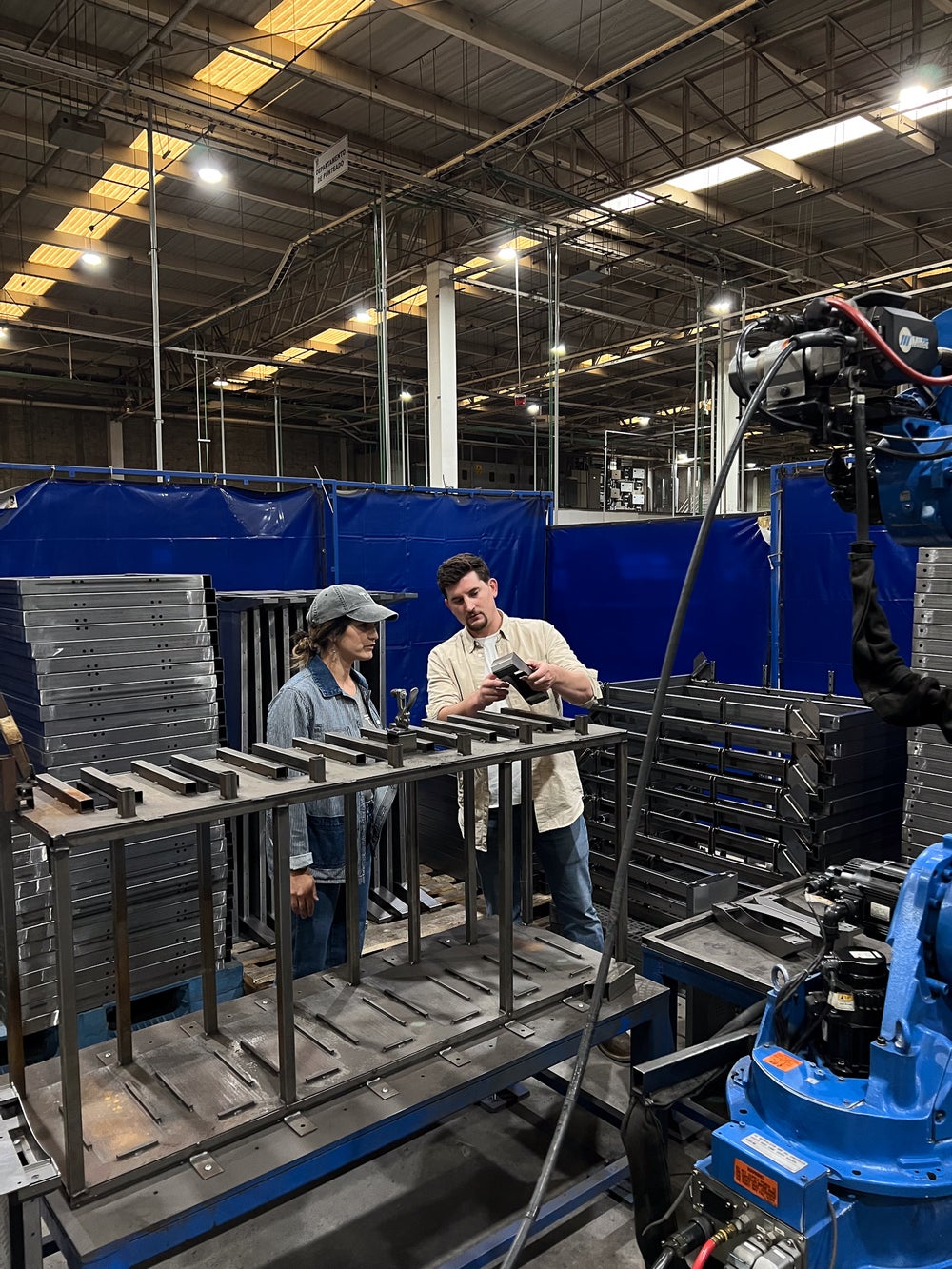
Image Credit: Courtesy of Tinker Tin

What do you enjoy most about running this business?
Holm: We hang our hat on “beauty at scale,” and this is something I absolutely love — to be able to design a retail display that is not just a pretty rendering, but translates into a physical product that looks better than the digital. These days, everything looks prettier online versus in person, but I believe in the tiny details, the tiny “whys” throughout each project. It keeps me excited.

Hannula: Every day, there’s a new problem to solve. For some, this is stressful, exhausting and just plain terrible, and although I feel those emotions, I enjoy all of the challenges. An entrepreneur buddy of mine once said, “Pressure is a privilege,” and I couldn’t agree more. The pressure of running a successful business is one of the greatest privileges one can experience. Creating something for yourself that you can control and choosing to do all the things that suck and getting the reward for all the things that go well is just an incredible feeling. As Jaime always says, it’s all about the journey, not the finish line.

Related: This 17-Year-Old High School Student Has a $20,000-a-Month Side Hustle — and It All Started With a Skill He Learned in Class

What is your best piece of specific, actionable business advice?
Holm: Don’t let your hobbies take a back seat, and if you don’t have any hobbies, do not let your business become your hobby. Hobbies are your inner fire-starter that help the hard work days feel less hard. They help regulate your nervous system, can motivate or inspire new ideas and can help you mentally check out and re-check in with yourself and your truth. Losing your sense of self in your business helps no one, especially the business. Having a hobby allows you to separate yourself from your work in a way that invites you to step into your creative side more fully.

Hannula: It is maybe cliche, but I have not experienced any better advice than working your ass off. If you can force yourself to work your ass off day in and day out, you will crush it. Every success takes time and hard work. No one ever hit a home run without swinging the bat. The more you swing the bat, the more effort you put into it daily, weekly, monthly, yearly (it’s not overnight), [the more] you will succeed. Also, you have to commit! 100%. If you have an idea and try it for a couple of months or a year, that’s probably not enough time. If you have an idea and you hit hard and commit and don’t do anything else, you might be successful quickly, but you will be successful in the long run.

https://www.entrepreneur.com/starting-a-business/former-trader-joes-employee-grew-her-side-hustle-to-20m/491471





Nissan Is Doubling Its Initial Layoff Announcement, Cutting 20,000 Jobs: ‘A Wake-Up Call’

Six months after revealing layoffs affecting 9,000 workers, Nissan is more than doubling that amount and cutting 20,000 jobs within the next two years instead.

In an announcement on Tuesday, Nissan publicized a recovery plan called “Re:Nissan,” which aims to save the company 500 billion yen ($3.4 billion). The cost savings will partly be realized through layoffs affecting 15% of Nissan’s 133,580-person global workforce, or about 20,000 workers, to take effect by 2027.

Nissan stated that the job cuts will affect roles in divisions like manufacturing, research and development, marketing, and administration, though it is unclear which exact roles and locations will be affected.

The automaker is also planning to close seven of its 17 vehicle production plants by 2027 to save costs under the recovery plan. In the U.S., Nissan currently employs about 21,000 people and operates three manufacturing plants.

Related: ‘Very Challenging’: Nissan Appoints a New CEO Amid Effort to See the Company ‘Survive’

The “Re:Nissan” plan arrived as the company announced its most recent financial results on Tuesday for the fiscal year 2024 (the 12 months ending in March), a net loss of 670.9 billion yen ($4.5 billion). The automaker also saw its operating profit decline 88% from 2023, hitting 69.8 billion yen ($472 million) in 2024.

“As you can see, our full-year financial results are a wake-up call,” Nissan CEO Ivan Espinosa, 46, said during a press conference on Tuesday, per Reuters. “The reality is very clear. Our variable costs are rising. Our fixed costs are higher than our current revenue can support.”

Nissan CEO Ivan Espinosa. Photo by Richard A. Brooks / AFP

Nissan has also recently faced weak sales. The company’s global vehicle sales totaled 3.35 million in 2024, a drop from 3.37 million in 2023. In the U.S., sales of Nissan vehicles reached 924,008 units in 2024, a slight increase of 2.8% from the previous year, but down over 30% since 2019.

The automaker is also reeling from a failed partnership. Nissan said in December that it was in talks with Honda on a possible merger, but negotiations fizzled out less than two months later, after Honda proposed turning Nissan into a subsidiary and Nissan rejected the possibility.

Related: Should CEOs Take a Pay Cut to Avoid Layoffs and Cutting Jobs? It’s Complicated, Experts Say

Espinosa now frames fiscal year 2025 as “a year of transition” towards profitability. Nissan is looking to become profitable by fiscal year 2026.

“Nissan must prioritize self-improvement with greater urgency and speed, aiming for profitability with less reliance on volume,” Espinosa said at the press conference. “This is what we’re setting out to do with our new recovery plan.”

Espinosa has only recently stepped into the CEO role after serving as Nissan’s chief planning officer for a year. He replaced Makoto Uchida, 58, as Nissan CEO on April 1.

Nissan had a market cap of $8.42 billion at the time of writing, down from $38.87 billion in May 2018.

Six months after revealing layoffs affecting 9,000 workers, Nissan is more than doubling that amount and cutting 20,000 jobs within the next two years instead.

In an announcement on Tuesday, Nissan publicized a recovery plan called “Re:Nissan,” which aims to save the company 500 billion yen ($3.4 billion). The cost savings will partly be realized through layoffs affecting 15% of Nissan’s 133,580-person global workforce, or about 20,000 workers, to take effect by 2027.

Nissan stated that the job cuts will affect roles in divisions like manufacturing, research and development, marketing, and administration, though it is unclear which exact roles and locations will be affected.

The rest of this article is locked.

Join Entrepreneur+ today for access.

https://www.entrepreneur.com/business-news/nissan-is-laying-off-20000-workers-in-the-next-two-years/491560


Microsoft Is Laying Off Over 6,000 Employees, About 3% of Its Workforce. Here’s Why.

Microsoft is laying off around 3% of its workforce, beginning Tuesday.

While Microsoft didn’t give an exact number, as of June 2024, the tech giant employed around 228,000 full-time workers, which means more than 6,600 employees could be laid off.

Related: One of Microsoft’s Most Popular Products Is About to Skyrocket in Price

“We continue to implement organizational changes necessary to best position the company for success in a dynamic marketplace,” a Microsoft spokesperson said in a statement to CNBC.

It’s the largest layoff from the company since 2023, when it cut 10,000 jobs and froze salaries for full-time employees. (The company restarted salary raises based on performance in 2024.)

Microsoft said the new cuts will affect all locations and levels, including LinkedIn and Xbox, but the focus is on reducing managers, per the AP.

In January, Business Insider reported that layoffs at Microsoft were coming “soon,” focused on “underperforming employees” in various roles, including security, the company said. Those layoffs reportedly already occurred.

Related: Microsoft Employees Are Banned From Using This Popular AI App

Then, on an April earnings call, Chief Financial Officer Amy Hood said that the company would increase its “agility” by “reducing layers with fewer managers.” Microsoft reported better-than-expected results, with $25.8 billion in quarterly net income.

Microsoft, which is headquartered in Redmond, Washington, is currently the most valuable company in the world, with a market cap of $3.337 trillion at press time.

https://www.entrepreneur.com/business-news/microsoft-is-laying-off-over-6000-employees-report/491556