101 Small Business Ideas to Start in 2026

Opinions expressed by Entrepreneur contributors are their own.

What if I told you there’s a way to generate over 100 business ideas in minutes — and instantly narrow it down to the three you’re most likely to succeed with?

Most entrepreneurs don’t fail because they lack motivation. They fail because they build businesses that don’t match their skills, energy or lifestyle. They grind for months, feel stuck, hit burnout and eventually walk away.

But what if you flipped the process?

Instead of forcing yourself into a business model, what if AI helped you design a business around you?

In this video, I’ll show you exactly how to use AI to:

• Generate 101 personalized business ideas based on your skills, personality and income goals
• Narrow those ideas down to your top 3 highest-alignment opportunities that actually fit your long-term vision
• Run AI-powered “what if” scenarios to pressure-test ideas before you commit time or money
• Build a 90-day execution roadmap with the right niche, monetization strategy and tools to move fast with clarity

By the end, you’ll walk away with more than just ideas — you’ll have clarity, confidence and a plan designed specifically for you.

If you’ve read The Wolf is at The Door or grabbed my AI Starter Kit, you know this already: the future belongs to those who reinvent strategically, not randomly.

Everything is broken down step-by-step — so you can start building smarter, not harder.

The AI Success Kit is available to download for free, along with a chapter from my new book, The Wolf is at The Door.

What if I told you there’s a way to generate over 100 business ideas in minutes — and instantly narrow it down to the three you’re most likely to succeed with?

Most entrepreneurs don’t fail because they lack motivation. They fail because they build businesses that don’t match their skills, energy or lifestyle. They grind for months, feel stuck, hit burnout and eventually walk away.

But what if you flipped the process?

https://www.entrepreneur.com/growth-strategies/101-small-business-ideas-to-start-in-2026/502121


When Your Employees Go Viral — Here’s How Leaders Should Really Respond

Opinions expressed by Entrepreneur contributors are their own.

Key Takeaways

  • Learn why a single viral moment can create dramatically different outcomes for employees and your brand.
  • Discover the leadership approach that turns unpredictable online attention into clarity and control.

One video. Two employees. Millions of views.

Both worked at the same gym. Both appeared in the same viral clip. Both suddenly had more attention on them than they’d ever experienced before. From the outside, it looked like one story. Inside the business, it quickly became two.

In the world of multi-unit retail, a single viral moment at Unit A can set the precedent — or the fire — for the entire brand. As a franchise executive, that experience at a publicly traded national fitness brand forced me to answer a question more leaders are facing today: What do you do when your employees become the story — and the internet wants an instant verdict?

You can’t predict virality. But in a high-performing franchise, your team should know exactly how you will respond.

Watch before you act to protect your brand

The clip wasn’t malicious. Just light, behind-the-scenes content showing the gym environment and two employees’ personalities. It was posted on a personal account, but our logo and environment were visible.

My phone lit up. Screenshots. Links. Alerts. Some leaders would instinctively “shut it down” to protect the brand. I did something different: before reacting, gather context.

We watched the full video, not just the “outrage” clips. We checked facts — were employees on the clock? Were member privacy rights violated? We talked to the employees. Intent matters as much as impact.

The facts were the same for both employees. The outcomes were not.

Turn visibility into opportunity

One employee treated the virality as a responsibility. They realized they represented more than themselves — they represented the brand and their coworkers.

We implemented a simple “social media operating system”:

  • No filming while responsible for member safety or service.
  • Zero tolerance for filming members without explicit consent.
  • Total transparency — when in doubt, ask.

They honored the rules, built a positive presence and eventually left to pursue social media full-time on great terms. They became the blueprint for growing with a brand rather than at its expense.

Stop risk in its tracks before it spreads

The second employee chose visibility over responsibility. As the views climbed, they began filming during their shifts, prioritizing “content” over their core duties. This wasn’t a “PR issue”; it was a performance and safety issue. In retail, if an employee is focused on their camera angle, they aren’t focused on:

  • Member experience: Serving the person standing in front of them.
  • Operational standards: Maintaining cleanliness and Safety checks.
  • Team culture: Not leaving their coworkers to pick up the slack.

We followed a clear coaching sequence: review, sit-down, expectations and documentation. But when the behavior didn’t change, termination was the only way to protect the integrity of the franchise unit.

Lead through virality with clear rules

These experiences revealed four essential truths for managing employees in the age of virality:

  1. Start with context, not control – Audit first, act second. Leadership can’t be outsourced to the internet.
  2. Protect authenticity while enforcing standards – Distinguish between cringe-worthy content and true violations of values.
  3. Give guardrails, not gag rules – Simple boundaries empower employees instead of suppressing creativity.
  4. Create predictability for trust – Consistency builds confidence for employees, franchisees, and investors alike.

Build a franchise culture that survives the spotlight

Virality is unpredictable. Leadership shouldn’t be. How you respond to these moments shapes culture, trust and long-term brand health. In multi-unit retail, a single mistake can cascade — but a consistent process protects people, values and reputation.

Sign up for the Entrepreneur Daily newsletter to get the news and resources you need to know today to help you run your business better. Get it in your inbox.

Key Takeaways

  • Learn why a single viral moment can create dramatically different outcomes for employees and your brand.
  • Discover the leadership approach that turns unpredictable online attention into clarity and control.

One video. Two employees. Millions of views.

Both worked at the same gym. Both appeared in the same viral clip. Both suddenly had more attention on them than they’d ever experienced before. From the outside, it looked like one story. Inside the business, it quickly became two.

https://www.entrepreneur.com/leadership/when-your-employees-go-viral-heres-how-leaders/501409


I Hid Behind My Brand for a Decade. Here’s How I Unlocked Real Growth When I Became the Face of It.

Opinions expressed by Entrepreneur contributors are their own.

Key Takeaways

  • Founders struggle with the idea of being the face of their brand because they’re used to being good at things before they do them publicly. They only want to step into visibility once they feel polished.
  • However, audiences and customers want to understand who they’re buying from and why they should believe them.
  • To step into visibility without feeling like a performer, talk like an operator (not a creator), let clarity beat energy, repeat yourself and accept that looking inexperienced is part of credibility.

For the first decade of my career, I hid behind the brand. Not intentionally. I told myself it was professionalism. I told myself it was strategy. I told myself that being behind the scenes was a sign of maturity. In reality, it was fear — fear of being judged, fear of looking inexperienced, fear of saying the wrong thing publicly before I had everything perfectly figured out.

Fast forward 15 years into entrepreneurship, and here’s the truth most founders are quietly running into: Hiding behind your brand is no longer a growth strategy. It’s a ceiling.

Today, founders are becoming the brand. Not because everyone suddenly wants to be a content creator, but because trust has shifted. Audiences, customers and even the media don’t want polished logos or faceless messaging anymore — they want context and perspective. They want to understand who they’re buying from and why they should believe them.

And yet, despite knowing this, many founders are frozen.

It’s not because they don’t have something to say, but because they’re terrified of looking stupid.

The real reason founders struggle to show up

Most high-performing founders are used to being good at things before they do them publicly. They build competence privately, then step into visibility once they feel polished. Leadership, decision-making, execution — those happen behind closed doors.

Content doesn’t work that way.

Content asks you to be seen mid-process. It exposes thought patterns, opinions and edges before they’re perfect. And for founders who’ve spent years being the responsible one, the expert, the authority in the room, that feels deeply uncomfortable.

So they stall.

They overthink their messaging. They wait until they have “more clarity.” They tell themselves they’ll show up once things are bigger, cleaner or more impressive. In reality, they’re avoiding the vulnerability of being visible before they feel bulletproof.

The irony is that authority isn’t built by perfection. It’s built by repetition, conviction and clarity over time.

The mistake most founders make when they go front-facing

When founders finally decide to show up, many immediately get it wrong.

They perform instead of position.

They chase trends that don’t fit them. They overproduce content that feels stiff. They try to sound like experts instead of speaking like operators. They post because they feel like they should, not because they have something they actually believe.

That’s when content feels cringey — not because visibility itself is embarrassing, but because visibility without positioning feels hollow.

If you don’t know what you stand for, being visible just amplifies confusion.

What finally changed for me

Somewhere around year 15 of building businesses, something clicked. I stopped trying to look impressive and started telling the truth — about what I believe, what I’ve seen work, what I think is broken and what I refuse to do anymore.

And here’s the unexpected part: Things got easier.

Clients aligned faster. Opportunities felt more natural. I stopped explaining myself to people who weren’t a fit. I stopped contorting my voice to be palatable. I stopped worrying about whether everyone would like what I had to say.

That’s when growth stopped feeling forced.

The confidence didn’t come from posting more. It came from finally not giving a fuck about being universally approved.

Authority isn’t about being everywhere — it’s about being known for something

Founders don’t need to become influencers. They need to become identifiable.

The founders who are winning right now aren’t talking about everything. They’re talking about one thing, consistently, from their lived experience. They’ve stopped trying to educate the masses and started speaking directly to the people who already resonate with them.

Authority is built when:

  • You take a clear point of view

  • You repeat it unapologetically

  • You resist the urge to dilute it for broader appeal

Being front-facing isn’t about charisma. It’s about conviction.

How to step into visibility without feeling like you’re performing

If you’re a founder who knows you need to be more visible but hates the idea of “creating content,” start here:

Talk like an operator, not a creator. Share decisions, trade-offs, lessons learned and things you no longer believe. The internet doesn’t need more tips — it needs perspective.

Let clarity beat energy. You don’t need to be loud, polished or high-vibe. You need to be clear. Confidence reads even when it’s quiet.

Repeat yourself on purpose. If you’re worried you sound redundant, you’re probably just getting consistent. Authority is built through familiarity, not novelty.

Accept that looking inexperienced is part of credibility. Being early, honest and in process is often more powerful than being overly refined.

The fastest way to look credible is to stop trying to look impressive.

The real growth unlock

Here’s what most founders don’t realize: Becoming front-facing isn’t just a marketing move. It’s a personal one.

When you stop hiding behind your brand, you stop outsourcing your identity. You stop waiting for validation from metrics, media hits or other people’s approval. You allow your business to grow with you instead of ahead of you.

The founders who win this year won’t be the loudest, most polished or most viral. They’ll be the clearest. They’ll allow themselves to be seen before they feel ready. They’ll trust that authority is built through presence, not performance.

Visibility creates awareness. Authority creates demand.

And authority requires being seen.

Sign up for the Entrepreneur Daily newsletter to get the news and resources you need to know today to help you run your business better. Get it in your inbox.

Key Takeaways

  • Founders struggle with the idea of being the face of their brand because they’re used to being good at things before they do them publicly. They only want to step into visibility once they feel polished.
  • However, audiences and customers want to understand who they’re buying from and why they should believe them.
  • To step into visibility without feeling like a performer, talk like an operator (not a creator), let clarity beat energy, repeat yourself and accept that looking inexperienced is part of credibility.

For the first decade of my career, I hid behind the brand. Not intentionally. I told myself it was professionalism. I told myself it was strategy. I told myself that being behind the scenes was a sign of maturity. In reality, it was fear — fear of being judged, fear of looking inexperienced, fear of saying the wrong thing publicly before I had everything perfectly figured out.

Fast forward 15 years into entrepreneurship, and here’s the truth most founders are quietly running into: Hiding behind your brand is no longer a growth strategy. It’s a ceiling.

https://www.entrepreneur.com/growing-a-business/how-i-unlocked-real-growth-by-becoming-the-face-of-my-brand/501461




All Founders Use the Same 5-Step AI Privacy Playbook — But Most Haven’t Discovered This Crucial 6th Step

Opinions expressed by Entrepreneur contributors are their own.

Key Takeaways

  • The standard 5-step AI privacy playbook is necessary and helps manage risk, but it has a major blind spot — it accepts that data will leave your environment at some point.
  • Client-side filtering — detecting and redacting sensitive data within the browser before anything transmits to any AI provider — is the sixth step that most founders miss.
  • If personally identifiable information never leaves the user’s device, no third party can misuse it, leak it or retain it improperly.

Meta fined €1.2 billion. Amazon hit for $812 million. Microsoft ordered to pay $20 million for retaining children’s data without parental consent. The headlines keep coming and the pattern is clear — regulators are no longer issuing warnings. They are issuing penalties.

For founders building AI-powered products and services, the privacy playbook has become essential reading. Most now follow the same five steps. But after building an EdTech platform for a UK university, I discovered these steps share one fundamental flaw — and fixing it changed everything.

The standard playbook

If you have spent any time researching AI and data protection, you have encountered these five steps in some form. They represent the consensus view on protecting client data when using AI tools.

Step 1: Classify your data

Before any data touches an AI system, know what you are working with. Public information, internal documents and sensitive client data require different handling. The founders who skip this step are the ones who end up in compliance nightmares later. A simple three-tier classification — public, internal and confidential — takes an afternoon to implement and prevents most accidental exposures. Start here before evaluating any AI tool.

Step 2: Choose AI tools with proper agreements

Free versions of ChatGPT and other consumer AI tools train on your inputs by default. Enterprise versions offer contractual guarantees that your data stays private. Look for SOC2 compliance, explicit no-training clauses and clear data retention policies. The contract matters as much as the capability. Building trust and transparency with customers starts with the vendors you choose to trust with their information.

Step 3: Redact and anonymize before sending

Mask personally identifiable information before it reaches any AI system. Names become placeholders. Account numbers get tokenized. Email addresses disappear. This can be automated at the API layer or handled through pre-processing scripts. The goal is simple: If data does leak, it should be meaningless to anyone who intercepts it.

Step 4: Isolate AI from production systems

Treat AI tools like a new employee on their first day — limited access, supervised interactions and no keys to the production database. Use read-only replicas. Create sandboxed environments. The AI gets what it needs to do its job and nothing more. One misconfigured API connection can expose your entire customer base.

Step 5: Build human guardrails

Technology alone cannot solve this. Written policies, approval processes for new AI tools and regular training for your team create the human layer that catches what automation misses. According to recent research, 27% of employees admit they would feel comfortable sharing sensitive work information with AI tools without checking company policy first. Your policies need to be clearer than their assumptions.

The blind spot

These five steps are necessary. Follow them. But they share one assumption that most founders never question — all of them accept that data will leave your environment at some point. Enterprise agreements protect data after it reaches a third party. Redaction scrubs data before it travels. Policies govern what gets sent. Every step manages what happens around the transmission of data, not whether transmission happens at all.

This matters because trust is still required somewhere in the chain. You trust your enterprise AI vendor’s security. You trust their employees. You trust their subprocessors and their jurisdiction’s legal protections. For most use cases, this calculated trust is acceptable. But for founders handling children’s data, health information, financial records or academic data, “acceptable” may not be enough.

Microsoft’s $20 million settlement proves that even trusted vendors make mistakes — and regulators hold the data controller responsible regardless. Understanding what’s at stake before a breach happens is the difference between preparation and damage control.

The 6th step most founders miss

When building an AI-powered learning platform for Artificial Intelligence University, we needed privacy guarantees that went beyond contracts and policies. Student data could not risk exposure — full stop. We evaluated every major AI provider and found none offered what we needed. So we built it ourselves.

The solution was client-side filtering — detecting and redacting sensitive data within the browser before anything transmits to any AI provider. The approach is detailed in our technical white paper published through AIU.

The principle is straightforward: If personally identifiable information never leaves the user’s device, no third party can misuse it, leak it or retain it improperly. Enterprise agreements become a backup layer rather than the primary protection. This is how we built CallGPT to handle privacy — processing at the source rather than trusting the destination.

The founders who solve privacy at the point of origin rather than the point of arrival build something competitors cannot easily replicate: genuine trust. As AI tools become standard infrastructure, the differentiator will not be whether you use them. It will be whether your clients ever had to wonder where their data went. The first five steps protect you from liability. The sixth protects something more valuable — your reputation.

Sign up for the Entrepreneur Daily newsletter to get the news and resources you need to know today to help you run your business better. Get it in your inbox.

Key Takeaways

  • The standard 5-step AI privacy playbook is necessary and helps manage risk, but it has a major blind spot — it accepts that data will leave your environment at some point.
  • Client-side filtering — detecting and redacting sensitive data within the browser before anything transmits to any AI provider — is the sixth step that most founders miss.
  • If personally identifiable information never leaves the user’s device, no third party can misuse it, leak it or retain it improperly.

Meta fined €1.2 billion. Amazon hit for $812 million. Microsoft ordered to pay $20 million for retaining children’s data without parental consent. The headlines keep coming and the pattern is clear — regulators are no longer issuing warnings. They are issuing penalties.

For founders building AI-powered products and services, the privacy playbook has become essential reading. Most now follow the same five steps. But after building an EdTech platform for a UK university, I discovered these steps share one fundamental flaw — and fixing it changed everything.

https://www.entrepreneur.com/science-technology/your-ai-data-privacy-playbook-is-missing-this-1-crucial-step/501452


Entrepreneurs Can Upgrade Their Content Creation Strategy With AI-Powered Efficiency Thanks to This Tool

Disclosure: Our goal is to feature products and services that we think you’ll find interesting and useful. If you purchase them, Entrepreneur may get a small share of the revenue from the sale from our commerce partners.

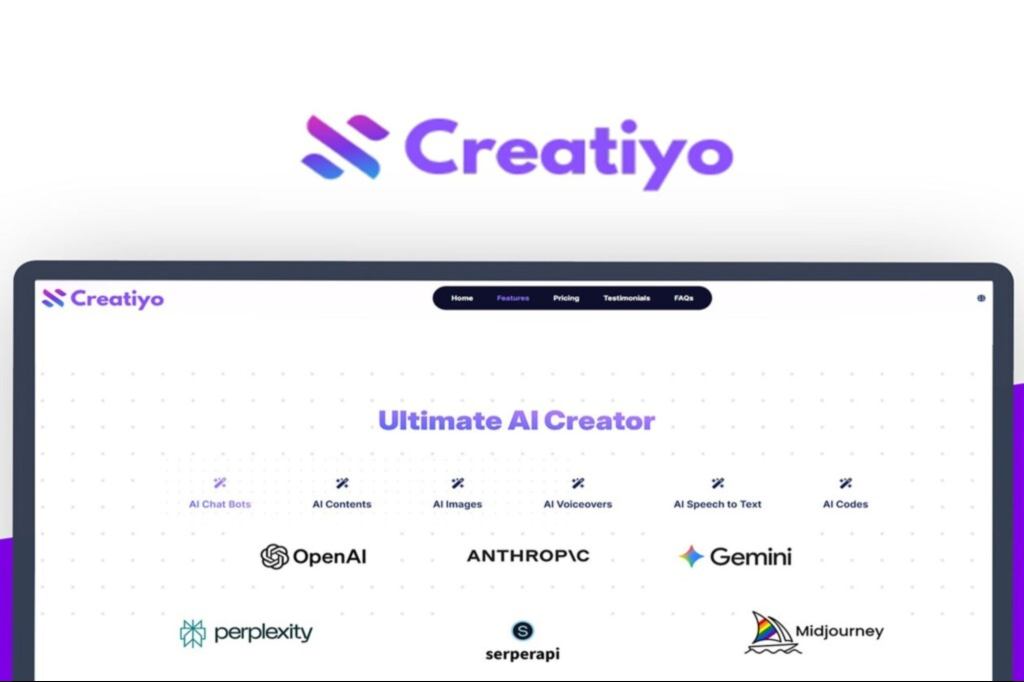
Sixty-eight percent of small-business owners are already using AI tools in their daily operations, accrding to Forbes. If you’re looking for a one-stop shop for your business’s AI needs, it’s time to check out Creatiyo AI. This tool lets you tackle all of your content creation in one convenient place, and right now, a lifetime subscription to its Pro LTD Plan is just $79 (MSRP $199).

Take content creation off your plate with this AI-powered powerhouse

Entrepreneurs can always benefit from having something taken off their plate. Now, you can take off a laundry list of items with the power Creatiyo AI. This all-in-one content creation station is ready to help you get everything done and give you back precious time in the process.

From writing long-form articles and generating marketing images to providing professional-quality voiceovers and writing code, Creatiyo AI makes content creation as easy as a few prompts and clicks. Got existing content that could use an upgrade? It can also revamp your content in just one click.

Let Creatiyo AI build an AI chat bot that is ready to engage with your customers, or upload a Word, PDF, or CSV file and let it provide a summary and analysis of your entire document. You can also let it run your social media, with the option to let it generate, post, and schedule your content to your Instagram, Facebook, and LinkedIn accounts.

Creatiyo AI doesn’t just help with content creation, it can also help with your SEO by analyzing your website. Your subscription also supports 2FA security and lets you share with up to 10 team members.

This Pro LTD lifetime subscription gives you 2.5 million words, 300 media credits, 140 minutes of AI Speech-to-text, and 205,000 characters monthly.

Get a lifetime subscription to Creatiyo AI Pro LTD Plan for just $79 (MSRP $199).

StackSocial prices subject to change.

Sixty-eight percent of small-business owners are already using AI tools in their daily operations, accrding to Forbes. If you’re looking for a one-stop shop for your business’s AI needs, it’s time to check out Creatiyo AI. This tool lets you tackle all of your content creation in one convenient place, and right now, a lifetime subscription to its Pro LTD Plan is just $79 (MSRP $199).

Take content creation off your plate with this AI-powered powerhouse

Entrepreneurs can always benefit from having something taken off their plate. Now, you can take off a laundry list of items with the power Creatiyo AI. This all-in-one content creation station is ready to help you get everything done and give you back precious time in the process.

From writing long-form articles and generating marketing images to providing professional-quality voiceovers and writing code, Creatiyo AI makes content creation as easy as a few prompts and clicks. Got existing content that could use an upgrade? It can also revamp your content in just one click.

https://www.entrepreneur.com/growing-a-business/entrepreneurs-can-upgrade-their-content-creation-strategy/502090


TikTok Finally Has a Deal. Here’s Who Just Bought 80% of the App.

After six years of uncertainty, TikTok finally has a deal. TikTok announced Thursday that ByteDance struck a deal with non-Chinese investors to create a new U.S. TikTok. Oracle, Emirati investment firm MGX, Silver Lake, and Michael Dell’s investment entity will own more than 80% of the venture valued at $14 billion, according to The New York Times. ByteDance will retain just under 20% and keep TikTok’s algorithm, which it will license to the new entity.

The deal addresses national security concerns that Beijing could use the app to surveil or manipulate its 200 million U.S. users. Adam Presser, TikTok’s former head of operations, will lead the U.S. company. President Trump, who formally delayed enforcement of a ban law multiple times, celebrated the announcement: “I am so happy to have helped in saving TikTok!”

Critics question whether the arrangement truly resolves security concerns since ByteDance retains the algorithm. “They may have saved TikTok, but the national security concerns are still going to continue,” said Michael Sobolik of the Hudson Institute.

Read more

After six years of uncertainty, TikTok finally has a deal. TikTok announced Thursday that ByteDance struck a deal with non-Chinese investors to create a new U.S. TikTok. Oracle, Emirati investment firm MGX, Silver Lake, and Michael Dell’s investment entity will own more than 80% of the venture valued at $14 billion, according to The New York Times. ByteDance will retain just under 20% and keep TikTok’s algorithm, which it will license to the new entity.

The deal addresses national security concerns that Beijing could use the app to surveil or manipulate its 200 million U.S. users. Adam Presser, TikTok’s former head of operations, will lead the U.S. company. President Trump, who formally delayed enforcement of a ban law multiple times, celebrated the announcement: “I am so happy to have helped in saving TikTok!”

Critics question whether the arrangement truly resolves security concerns since ByteDance retains the algorithm. “They may have saved TikTok, but the national security concerns are still going to continue,” said Michael Sobolik of the Hudson Institute.

Read more

https://www.entrepreneur.com/business-news/bytedance-sells-majority-of-tiktok-to-us-investors/502152


Getting a Divorce? Don’t Rush It. Why Speed Is the Most Expensive Decision You’ll Make

Opinions expressed by Entrepreneur contributors are their own.

Key Takeaways

  • Speed in divorce offers short-term relief but often creates long-term financial and strategic costs.
  • Deliberate pacing leads to better outcomes than rushing decisions driven by discomfort or uncertainty.

Divorce is often discussed as an emotional event, but in practice, it is also a high-stakes decision-making environment. And like many high-pressure situations in business, the instinct to move quickly can quietly produce the most costly outcomes.

In business leadership, speed is often rewarded. Acting decisively, cutting through ambiguity and pushing toward resolution are traits most executives rely on daily. But divorce operates under a different set of dynamics.

In practice, many executives and high achievers come into the process assuming that divorce should move quickly as long as they are willing to invest enough. They are used to being in control, to removing obstacles through decisive action, and to seeing timelines compress when resources are applied.

What often comes as a surprise is that divorce does not function that way.

There are limits to speed that are built into the system itself. Court calendars, statutory timelines, disclosure requirements, procedural safeguards and the need for full financial transparency impose constraints that cannot be bypassed, regardless of experience, influence or financial capacity. In some cases, attempting to force speed only introduces more friction.

When urgency replaces analysis, speed becomes a liability.

Over the years, I’ve seen how quickly the desire to “be done” can override long-term thinking. People don’t rush because they are careless. They rush because uncertainty is uncomfortable. Divorce introduces ambiguity across finances, identity, reputation and future stability — all at once. When that discomfort peaks, speed starts to feel like progress.

It rarely is.

Why urgency feels productive — and isn’t

Under pressure, the brain looks for relief. In divorce, that relief often comes from making a decision, any decision, simply to reduce uncertainty. The problem is that early decisions are frequently made before all the relevant information is available.

Financial records may still be incomplete. Long-term implications may not be fully modeled. Temporary emotions may be dictating permanent agreements.

In business terms, this is the equivalent of signing a deal before due diligence is finished – not because the opportunity is sound, but because waiting feels worse than acting.

The cost of that choice is rarely visible at the moment it’s made.

The hidden price of moving too fast

What I see most often isn’t dramatic failure. It’s quiet erosion.

People agree to terms that limit flexibility later. They give up leverage they didn’t realize they had. They optimize for short-term relief instead of long-term stability. Months or years later, when circumstances change, those early decisions resurface as constraints.

At that point, the question isn’t whether the divorce moved quickly. It’s whether it moved wisely.

Many regrets I hear are not about how long the process took. They are about what was agreed to too quickly.

Speed distorts priorities

Another consequence of urgency is narrowed focus. Under stress, people fixate on one variable – a particular asset, a specific outcome, a desire to regain control — while losing sight of the broader picture.

In business leadership, this would be like optimizing one department at the expense of the entire organization. The numbers may look good in isolation, but the overall structure weakens.

Divorce works the same way. Decisions made under pressure tend to solve the immediate problem while creating downstream costs that are harder to undo.

The difference between momentum and strategy

None of this suggests that delay is inherently good. Prolonged conflict can be draining and destructive. But there is a meaningful difference between moving forward deliberately and moving forward impulsively.

Strategic pacing allows time for emotions to settle, facts to surface and consequences to be understood. It replaces reaction with intention.

In leadership, this is the discipline of resisting the urge to act until the full landscape is visible. In divorce, the same discipline applies.

Relief is not resolution

Speed is seductive because it promises relief. Resolution, however, requires clarity. And clarity takes time.

The leaders who navigate divorce most effectively are not the ones who feel the least emotion. They are the ones who recognize how pressure distorts judgment and take deliberate steps to counteract it.

They slow the process just enough to ensure decisions align with long-term goals rather than short-term discomfort.

The real takeaway

In business, finishing first doesn’t matter if the outcome is wrong. Divorce follows the same rule.

The most expensive decision is rarely staying in the process longer. It is committing to outcomes before understanding their cost.

Time, when used intentionally, is not the enemy. In many cases, it is the most valuable asset a person has.

Key Takeaways

  • Speed in divorce offers short-term relief but often creates long-term financial and strategic costs.
  • Deliberate pacing leads to better outcomes than rushing decisions driven by discomfort or uncertainty.

Divorce is often discussed as an emotional event, but in practice, it is also a high-stakes decision-making environment. And like many high-pressure situations in business, the instinct to move quickly can quietly produce the most costly outcomes.

In business leadership, speed is often rewarded. Acting decisively, cutting through ambiguity and pushing toward resolution are traits most executives rely on daily. But divorce operates under a different set of dynamics.

https://www.entrepreneur.com/leadership/why-rushing-your-divorce-can-be-your-most-expensive-mistake/501767


Elon Musk Says He’s an Alien — But Thinks Humanity Might Be Alone in the Universe

Elon Musk proclaimed he’s an alien during a Thursday appearance at the World Economic Forum in Davos. “I’m often asked, ‘Are there aliens among us?’ And I’ll say that I am one,” the billionaire told BlackRock CEO Larry Fink. But despite the claim, Musk said he thinks it’s very unlikely there is intelligent life beyond Earth. And that belief drives his $600 billion business empire.

“I think we need to assume that life and consciousness is extremely rare and it might only be us,” Musk said, arguing that he would have already seen one with his 6,000 satellites. “And if that’s the case, then we need to do everything possible to ensure that the light of consciousness is not extinguished.” This philosophy underpins Tesla and SpaceX, worth $1.4 trillion and $800 billion respectively. He sees Mars as an insurance policy for humanity’s future and Tesla as creating “sustainable abundance” to preserve civilization.

Critics argue that Musk’s survivalist mindset justifies extreme measures and frames complex challenges as simple engineering problems rather than systemic issues that require collaborative change.

Read more

Elon Musk proclaimed he’s an alien during a Thursday appearance at the World Economic Forum in Davos. “I’m often asked, ‘Are there aliens among us?’ And I’ll say that I am one,” the billionaire told BlackRock CEO Larry Fink. But despite the claim, Musk said he thinks it’s very unlikely there is intelligent life beyond Earth. And that belief drives his $600 billion business empire.

“I think we need to assume that life and consciousness is extremely rare and it might only be us,” Musk said, arguing that he would have already seen one with his 6,000 satellites. “And if that’s the case, then we need to do everything possible to ensure that the light of consciousness is not extinguished.” This philosophy underpins Tesla and SpaceX, worth $1.4 trillion and $800 billion respectively. He sees Mars as an insurance policy for humanity’s future and Tesla as creating “sustainable abundance” to preserve civilization.

Critics argue that Musk’s survivalist mindset justifies extreme measures and frames complex challenges as simple engineering problems rather than systemic issues that require collaborative change.

Read more

https://www.entrepreneur.com/business-news/elon-musk-says-hes-an-alien-but-humanity-is-alone-in/502150


Amazon Is Cutting 30,000 Corporate Jobs — And a Big Wave Starts Next Week

Amazon is planning a second round of job cuts starting as soon as Tuesday as part of its goal to eliminate 30,000 corporate workers, Reuters reports. The company cut 14,000 white-collar jobs in October and expects to eliminate roughly the same number this round. Jobs in Amazon Web Services, retail, Prime Video, and human resources units are expected to be on the chopping block.

CEO Andy Jassy said the cuts aren’t financially or AI-driven. “It’s culture,” he told analysts during the company’s third-quarter earnings call. “You end up with a lot more people than what you had before, and you end up with a lot more layers.”

The 30,000 jobs represent nearly 10% of Amazon’s corporate workforce, though only a small fraction of its 1.58 million total employees. Most Amazon workers are in fulfillment centers and warehouses.

Read more

Amazon is planning a second round of job cuts starting as soon as Tuesday as part of its goal to eliminate 30,000 corporate workers, Reuters reports. The company cut 14,000 white-collar jobs in October and expects to eliminate roughly the same number this round. Jobs in Amazon Web Services, retail, Prime Video, and human resources units are expected to be on the chopping block.

CEO Andy Jassy said the cuts aren’t financially or AI-driven. “It’s culture,” he told analysts during the company’s third-quarter earnings call. “You end up with a lot more people than what you had before, and you end up with a lot more layers.”

The 30,000 jobs represent nearly 10% of Amazon’s corporate workforce, though only a small fraction of its 1.58 million total employees. Most Amazon workers are in fulfillment centers and warehouses.

Read more

https://www.entrepreneur.com/business-news/amazon-to-cut-16000-jobs-next-week/502131


How I Learned to Lead With Renewed Purpose After Burnout — and Actually Feel Energized

Opinions expressed by Entrepreneur contributors are their own.

Key Takeaways

  • True success in leadership requires aligning achievements with a sense of purpose, rather than merely accumulating accomplishments.
  • Burnout among high-performing leaders can be mitigated by embracing rest and renewal as vital for resilience, not signs of weakness.
  • Sustainable leadership involves strategic self-management, focusing on meaningful progress and operating from a state of wholeness.

Success is both a privilege and a responsibility. For many ambitious leaders, it begins as a calling to build, innovate and make an impact. Over time, however, that sense of purpose can evolve into an unending pursuit of achievement. We start to judge our worth by the amount we produce, the meetings we attend, the projects we finish and the milestones we hit. Yet, the more we accomplish, the less fulfilled we often feel.

I have firsthand experience of that season. After years of leading large-scale technology and transformation programs across various industries, I found myself operating on autopilot. My schedule was packed, but my spirit felt hollow. What once ignited passion now felt like pressure. I was not tired of the work itself; I was weary of what success had begun to mean.

Burnout seldom comes with notice. It sneaks in quietly through late nights, missed family moments and the slow loss of joy in what once inspired us. We tell ourselves that it is just a busy season or that things will settle down after the next deadline. But deep down, we know something is not right.

My wake-up call happened during what should have been a moment of celebration. A major project was delivered successfully, the kind of win that should have felt rewarding. Yet, I felt nothing. That silence inside prompted a tough question: Am I leading from purpose or pressure?

That question marked a turning point. It revealed how much I had let productivity replace peace. It challenged me to redefine success, not as a list of accomplishments but as a state of alignment with purpose. Recovering from burnout was not about quitting my job; it was about reclaiming my purpose. Many high-performing leaders mistakenly see rest as a sign of weakness, when in reality, renewal actually strengthens resilience. No one can sustain excellence while running on empty.

I began rebuilding gradually. I started each morning with prayer and reflection before opening my inbox. I practiced saying no without guilt. I learned that protecting my peace was not selfish; it was a strategic move. Through that process, I discovered that real productivity is not measured by volume but by alignment. Leaders thrive when they operate from a state of overflow rather than depletion. The best decisions, creativity and innovation emerge when the mind is clear and the heart is grounded.

Burnout is frequently caused by work that lacks clear structure, and leaders who shoulder every responsibility themselves often face exhaustion. To aid recovery and prevent burnout, consider adopting these habits:

  1. Minimize distractions through automation.
  2. Ensure your tasks are aligned with your core purpose.
  3. At the end of each week, reflect on what activities boost your energy and which ones deplete it.

Next, adjust your approach as needed. Sustainable leadership entails developing strategies that foster both growth and harmony. When the applause subsides and pressures rise again, purpose remains the steady anchor. It sustains leadership when motivation decreases. Purpose reminds us that leadership is about stewardship, not ownership. When guided by purpose, the impact of pressure lessens.

Leaders who have endured burnout and become stronger possess valuable wisdom. They no longer lead out of urgency but from a place of understanding. They recognize that saying no to distractions creates space for strategy and that success rooted in peace lasts longer than success driven by panic. Redefining what success means does not mean lowering ambition; instead, it means elevating purpose.

Every burnout story holds the potential for a breakthrough. The transformation starts when we stop asking how much we can handle and instead ask what we are truly called to take on. Leadership is not about constant activity but about meaningful progress. The most impactful leaders are not the busiest; they are the most aligned. They lead with wholeness, humility and hope.

If you are feeling exhausted, take comfort. Burnout is not the end; often, it is a sign to start again. Your next chapter in leadership will come not from pushing harder but from leading more deeply with peace, purpose and renewed vision. View this as an opportunity for reflection and growth. Use this time to reconnect with your core values, reassess your priorities and rejuvenate your spirit.

Be patient and kind to yourself during this phase. Remember, even in fatigue, there is room for renewal and for a stronger, more resilient version of yourself to emerge. Your leadership journey continues, and every challenge is a step toward greater insight and strength.

Sign up for How Success Happens and learn from well-known business leaders and celebrities, uncovering the shifts, strategies and lessons that powered their rise. Get it in your inbox.

Key Takeaways

  • True success in leadership requires aligning achievements with a sense of purpose, rather than merely accumulating accomplishments.
  • Burnout among high-performing leaders can be mitigated by embracing rest and renewal as vital for resilience, not signs of weakness.
  • Sustainable leadership involves strategic self-management, focusing on meaningful progress and operating from a state of wholeness.

Success is both a privilege and a responsibility. For many ambitious leaders, it begins as a calling to build, innovate and make an impact. Over time, however, that sense of purpose can evolve into an unending pursuit of achievement. We start to judge our worth by the amount we produce, the meetings we attend, the projects we finish and the milestones we hit. Yet, the more we accomplish, the less fulfilled we often feel.

I have firsthand experience of that season. After years of leading large-scale technology and transformation programs across various industries, I found myself operating on autopilot. My schedule was packed, but my spirit felt hollow. What once ignited passion now felt like pressure. I was not tired of the work itself; I was weary of what success had begun to mean.

https://www.entrepreneur.com/leadership/how-i-learned-to-lead-with-renewed-purpose-after-burning-out/499057