Your Product’s Design Could Be Costing You Customers. Here’s What You’re Doing Wrong (and How to Fix It).

Opinions expressed by Entrepreneur contributors are their own.

I’ve lost count of how many times I’ve done this: standing like an idiot before a door with a handle screaming “PULL ME!” while a tiny sign says “push.” We all have. Don Norman, the User Experience (UX) legend, labeled this a “Norman Door“: design so bad it needs instructions to use.

And I’m here to tell you: Your product might be a Norman Door.

In my years as a product manager, from enterprise to small business software, I’ve cringed watching users struggle with prototypes my team swore were intuitive. This door problem isn’t abstract design theory. It’s a product disease that’s bleeding your conversion rates dry.

Related: The 10 Obstacles Keeping You From Great Product Design

Affordances aren’t just design jargon

When I first learned about affordances, visual cues showing how something works, it seemed like design-school fluff. Then I watched a user test where people couldn’t find our “obviously placed” save button, and suddenly Don Norman didn’t seem so theoretical.

Take Robinhood‘s original interface. While dinosaur brokerages buried users in cavernous websites, Robinhood stripped investing to its essentials: up means good, green equals money, swipe to act. It wasn’t just “easier.” It fundamentally changed who wanted to invest by making actions obvious.

The mistake product managers and teams make is designing for ourselves. Most products make perfect sense if you built it and already know how it works. But customers only have what is in front of them, and that needs to be intuitive.

Your customers are always right

When users struggle with your product, it’s tempting to blame them. “They didn’t read the manual.” “They need training.” “Not our ideal customer persona.”

This is the product version of slapping a “PUSH” sign on a door with a pull handle. Good design doesn’t need a manual.

Bad error messages are my personal pet peeve here. Many are written by developers for developers: “Error code 5432: Null pointer exception in transaction handler.” Great, helpful.

HCI research (and common sense) shows that effective error messages need to explain what happened in human language, clarify consequences and suggest a fix. When Slack tells you “You’re trying to upload a file larger than 50MB” and immediately suggests “Try compressing it or using our Google Drive integration,” they’re preventing the rage-quit I’ve seen too many times in usability tests.

Related: How Prioritizing UX Design Can Fuel Long-Term Growth in the Next Decade

Constraints as a business strategy

Industrial designers use constraints intentionally — like how a SIM card only fits one way (though I still somehow get it wrong every time). Product constraints aren’t limitations; they’re clarity engines. The most successful products I’ve worked with deliberately limit options to prevent catastrophic errors and the blank stare of cognitive overload.

Look at how Figma entered the design tool space. Rather than trying to cram in every Adobe feature accumulated since 1990, they constrained their tool to the essential components of interface design. They deliberately avoided complex layer effects in favor of making collaboration seamless. I watched countless designers switch over once they realized these “limitations” actually sped up their workflow dramatically.

For your business (and mine), this means ruthlessly killing features that don’t support your core value. Features that don’t align can actively undermine your UX.

The feedback loop that actually matters

Don Norman’s “gulf of evaluation” — the gap between what users expect and what happens — applies as much to your quarterly business reviews as it does to your checkout flow.

When a user takes an action in your product, how quickly do they know if it worked? If the answer is “they have to check email” or “they’ll find out later,” you’ve created an evaluation gulf that will drown user confidence.

I’ve been guilty of this. My team once built an “instant” data export feature that actually took 30 seconds to run — with zero feedback during processing. User testing revealed people were clicking the button 5-6 times, thinking it was broken. We added a progress bar, and users now wait patiently.

Amazon mastered this with one-click ordering. The moment you tap “Buy Now,” you get confirmation that your order is processing. It resolves the uncertainty anxiety that kills conversion rates.

For your product strategy, this means investing as much in confirmation states as feature development. Users remember uncertainty more than they remember your feature list.

Related: What a Complete User Experience Process Looks Like — and How Investing in One Can Benefit Your Business

Apply these principles now

These HCI principles are practical business tools I use daily. Here’s how to apply them immediately:

  1. Find your product’s “Norman Doors” by watching new users interact without help (and resist the urge to explain when they struggle)

  2. Map the entire user journey, flagging every moment of confusion or surprise

  3. Review error states with the same rigor you apply to feature development (seriously, audit them all)

  4. Evaluate feature requests against your core constraints instead of automatically adding them to your backlog

The products that win aren’t those with the most features or flashiest tech. They’re the ones that communicate clearly, prevent errors gracefully and deliver feedback instantly. They’re doors that you know how to open the first time.

Though honestly, those “PUSH” and “PULL” sign manufacturers are probably doing just fine. There’s always money in bad design.

https://www.entrepreneur.com/growing-a-business/why-your-products-design-could-be-costing-you-customers/490271



Is AI a Hero or a Villain? These 4 Rules Will Decide

Opinions expressed by Entrepreneur contributors are their own.

AI is forging a new era for business innovation. Over 50% of US companies with more than 5,000 employees use artificial intelligence on a daily basis, a figure that climbs to 60% for those exceeding 10,000 employees.

However, such a quick spread of AI comes with a set of ethical considerations. On average, 40% of employees find that AI use has resulted in diverse ethical dilemmas, defined by the Capgemini Research Institute as outcomes that are non-transparent, unfair or biased. The question is how we can boost efficiency and make AI work for the best interests of society. Let’s explore four key principles that will turn AI into your business hero.

Related: AI Is Most Likely to Replace These 3 Professions: AI Experts

1. Prioritizing transparency

According to the CX Trends Report, 65% of customer experience leaders now see AI as a strategic necessity. Meanwhile, businesses need to move beyond the ‘black box’ approach and show how they work with AI systems — clear explanations of how algorithms function, the data they utilise, decision-making processes and any potential biases. This fosters trust and ensures that all parties (customers, partners, other stakeholders) can confidently engage with AI-driven technologies.

Cosmetic retailer Lush publicly champions ethical AI usage, engaging in open dialogue and communicating its ethical AI position through various channels, including social media. The company is committed to transparency: it’s clear through its refusal to employ social scoring systems or technologies that could compromise customer privacy or autonomy.

Similarly, Adobe, when releasing its Firefly generative AI toolset, provided clear information about the data used for model training, including details on all utilised images, confirming ownership or public domain status. These measures empower users to make informed decisions regarding copyright compliance.

2. Ensuring privacy

While employees increasingly start to use AI on a daily basis, often without explicit employer knowledge, this trend can come with potential privacy concerns. A recent study by CybSafe and The National Cybersecurity Alliance highlights that 52% of individuals who use AI for work have not received training on safe AI usage.

At the same time, 38% of employees admitted they shared sensitive information without getting the permission of their employer, potentially exposing confidential data, intellectual property or customer details. Furthermore, 65% of respondents said they do not feel secure in the means of AI-related cybercrime, underscoring the growing recognition of associated threats.

Professionals must attentively review the privacy policies and terms of service of AI solutions, focusing on data collection, usage, storage and third-party sharing to ensure security and maintain customer trust. This understanding is a strong foundation for informed communication with clients regarding the risks and benefits of AI.

Consequently, organisations must create clear guidelines and instructions for protecting employee and organisational data. Ethical AI implementation begins with developing comprehensive policies addressing accountability, explainability, fairness, privacy and transparency.

Chinese chatbot DeepSeek R1 is a great example of the consequences of neglecting security measures. Security testing conducted by researchers from Cisco and the University of Pennsylvania revealed that the system failed to block any of 50 potentially harmful commands. In contrast, other leading AI models proved to show higher security levels, with vulnerabilities ranging from 26% to 96%.

Related: 7 AI Tools That Help You Build a One-Person Business

3. Eliminating bias

Research, recently published in JAMA Network Open, indicates that 83.1% of AI models carry a high risk of bias, with common issues as inadequate sample sizes and insufficient handling of data complexity. AI is learning from the prompts created by people, so it can reflect preconceived notions from the data they are trained on, underscoring the necessity of serious fairness testing and fact-checking.

Striving for equity when developing algorithms is a very important yet complex task, as data often mirrors existing social inequalities and developers may unintentionally introduce their own biases.

To mitigate this, it is essential to utilise data that accurately represents reality, rather than perpetuating existing disparities.

Related: AI Remembered My Confidential Data — and That’s a Problem

4. Amplifying human potential

The true potential of AI lies not in replacing human efforts but in enhancing the overall performance, using it as a complement, not a substitute for human input. For instance, while humans alone may achieve an average accuracy of 81%, and AI alone 73%, their collaboration can reach 90% accuracy. AI can efficiently handle routine tasks, freeing up teams to focus on more strategic, empathetic and creative tasks.

A compelling example of this approach is my company’s rebranding, where AI was employed to generate a special visual style. While AI excelled in providing a visual framework and idea generation, it also required the refining of skilled designers and illustrators to ensure quality and coherence. Zendesk’s AI chatbots handle standard customer inquiries, reducing the workload on human operators. When complex issues arise, the chatbot seamlessly transfers the conversation to a real person to get a special touch of human empathy.

Integrating these four principles — transparency, privacy, bias elimination and collaboration — is a strong formula for bringing AI’s benefits into your business while still harnessing its power ethically. The future of AI hinges on our commitment to responsible development and deployment, ensuring it serves as a hero in our increasingly digital world.

https://www.entrepreneur.com/leadership/ais-role-is-up-to-you-these-4-rules-make-the-difference/490359


‘Our Mission Remains the Same’: OpenAI Reverses Course, Says Its Nonprofit Will Remain in Control of the Business

Months after publicly stating its intention to shake up its corporate structure, OpenAI has reversed course and decided that its nonprofit arm will keep controlling its for-profit business.

According to an OpenAI blog post published Monday, the company’s board of directors decided that OpenAI will continue to rely on the oversight and control of its nonprofit division moving forward.

“OpenAI was founded as a nonprofit, and is today overseen and controlled by that nonprofit,” OpenAI board chairman Bret Taylor wrote in the blog post. “Going forward, it will continue to be overseen and controlled by that nonprofit.”

The company’s for-profit LLC, which has lived under the nonprofit since 2019 and will continue doing so, will become a public benefit corporation (PBC). A PBC is a for-profit business that must consider the public good in addition to profit in its decisions. The nonprofit division of OpenAI will control and be the biggest shareholder in the PBC.

“Our mission remains the same,” Taylor noted. OpenAI’s mission is “to ensure that artificial general intelligence benefits all of humanity.”

Related: Everyone Wants to Buy Google’s Chrome Browser — Including OpenAI, According to a Top ChatGPT Executive

In December, OpenAI publicly indicated in a blog post that it was thinking about making its for-profit section a PBC, but one that had complete control over OpenAI’s operations and business. The non-profit side would not oversee the for-profit, but would instead be in charge of charitable initiatives.

Taylor wrote on Monday that OpenAI chose to reverse course and have the nonprofit retain control over the for-profit business after talking to civic leaders and with the offices of the Attorney General of Delaware and the Attorney General of California.

More than 30 civic leaders, former OpenAI staffers, and Nobel laureates delivered letters to the offices of the attorneys general last month to ask that they stop OpenAI’s effort to break from its non-profit governance.

OpenAI CEO Sam Altman. Photographer: Nathan Laine/Bloomberg via Getty Images
OpenAI has recently been embroiled in a legal battle with Elon Musk, who helped co-found the company and left in early 2018 following a failed bid to take it over. Musk has since filed lawsuits against OpenAI and its CEO, Sam Altman, accusing them of breaking OpenAI’s founding agreement and working to maximize profits for Microsoft instead of humanity as a whole. Microsoft has invested close to $14 billion in OpenAI.

Musk even led an unsolicited offer to buy OpenAI for $97.4 billion in February, which Altman quickly shot down on X. As of press time, Musk had yet to comment.

Related: OpenAI Is Creating AI to Do ‘All the Things That Software Engineers Hate to Do’

OpenAI started as a nonprofit in 2015 and transitioned to a “capped profit” company in 2019, meaning that the company’s profits were limited to a certain amount, with excess profits given to the nonprofit parent organization. The for-profit arm raised $1 billion from Microsoft in 2019, alongside a $100 million initial fundraising round.

In November 2022, OpenAI launched its AI chatbot ChatGPT, which was used by 500 million global weekly users as of March, up from 400 million in February.

OpenAI closed a $40 billion funding round in March, the biggest private tech deal ever, which valued the company at $300 billion.

https://www.entrepreneur.com/business-news/openai-says-it-will-stay-under-nonprofit-control/491122


Skechers Is Going Private in a Nearly $10 Billion Deal, the Footwear Industry’s Biggest Ever. Here’s What to Know.

Shoemaker Skechers announced on Monday that it had agreed to be acquired by investment firm 3G Capital in a $9.4 billion deal that would take the company private after nearly three decades as a public entity. It’s the biggest-ever deal in the footwear industry and was unanimously approved by the Skechers board of directors.

The transaction will close in the third quarter of this year and be funded by a combination of cash from 3G Capital as well as debt financing from JPMorgan Chase Bank, per Bloomberg. 3G Capital has agreed to pay $63 per share, a 30% premium to Skechers’ average stock price.

After the deal closes, Skechers will no longer be listed on the New York Stock Exchange. The company will still be led by Founder, Chairman, and CEO Robert Greenberg and its current leadership team, including COO David Weinberg.

“With a proven track record, Skechers is entering its next chapter in partnership with the global investment firm 3G Capital,” Greenberg stated in a press release. “Given their remarkable history of facilitating the success of some of the most iconic global consumer businesses, we believe this partnership will support our talented team as they execute their expertise to meet the needs of our consumers and customers while enabling the Company’s long-term growth.”

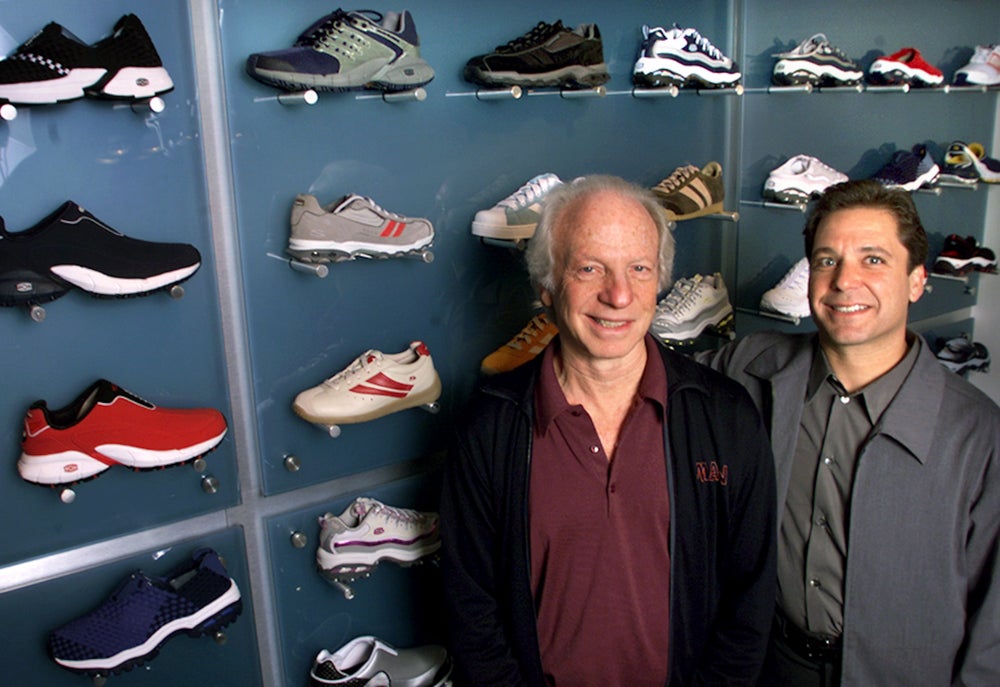
Skechers founders Robert Greenberg (left) and son Michael Greenberg (right) in a Skechers display room. Photo by Carlos Chavez/Los Angeles Times via Getty Images

Skechers is one of many footwear companies that signed a letter to President Donald Trump last week asking for a reprieve from reciprocal tariffs, which are as high as 145% for imports from China and at a baseline of 10% for all countries.

Related: The Duty-Free Loophole on Cheap Goods From China Closes Friday. Here’s How It Will Affect Your Wallet.

“As leading U.S. footwear businesses, manufacturers, and retailers, we urge you to exempt footwear from the reciprocal tariffs,” the letter, which was signed by Nike, Adidas, Under Armour, and Puma, reads. It goes on to state that the tariffs could cause “substantial cost increases” and make footwear inventory run low in the U.S.

Skechers is the third-largest footwear company in the U.S. after Nike and Deckers, with a market capitalization of $9.25 billion at the time of writing. The shoemaker was founded in 1992 and went public in 1999 at an initial public offering price of $11 per share.

Skechers’ most recent earnings report, released last month, shows that sales reached a record-high $2.41 billion during the first quarter of the year ending March 31, up 7.1% year-over-year. Wholesale sales increased by 7.8% during the quarter.

The company stated in the report that the strong quarterly sales reflected “strong global demand.” International sales outside the U.S. contributed to 65% of Skechers’ business.

Related: Analysts Like The Fit Of Skechers USA

Meanwhile, 3G Capital has made a name for itself with its emphasis on cost-cutting and restructuring since it was founded in 2004. The firm focuses on zero-based budgeting, or on having executives begin at zero for their budget for every new quarter instead of starting with the expenses of the previous quarter.

3G Capital previously agreed to buy a majority stake in blinds and shutters maker Hunter Douglas NV for $7.1 billion in 2021. The firm also orchestrated the 2015 merger between Kraft Foods Group and The H.J. Heinz Company with the help of Warren Buffett’s Berkshire Hathaway.

Shares of Skechers were up over 24% at the time of writing.

https://www.entrepreneur.com/business-news/skechers-is-going-private-in-a-942-billion-footwear-deal/491119


10 Charitable Organizations Every Entrepreneur Should Support

Opinions expressed by Entrepreneur contributors are their own.

From Tel Aviv to tech boardrooms, my entrepreneurial journey has taken me through building businesses, navigating painful failures, celebrating meaningful exits and eventually investing in other founders’ visions. I’m an Israeli immigrant who came to the U.S. with little more than ambition and a belief that hard work could move mountains. Over time, I’ve seen firsthand how startups are born from nothing but grit and vision — but as those companies grow, they begin to touch more than just market share. They influence culture. They inspire communities. And they bear the responsibility to give back.

In recent years, my focus has shifted from just building companies to helping others build theirs and, just as importantly, encouraging them to align their success with meaningful causes. After joining the Israeli-American Council (IAC) as a council member, I realized that beyond the business pitch decks and M&A spreadsheets lies something even more impactful: service. Through our initiatives supporting Jewish solidarity, educational programs and bridging relationships between American and Israeli entrepreneurs, I found that philanthropy isn’t just a “feel-good” endeavor — it’s a strategic advantage. It grounds founders, strengthens brand identity, builds community and invites purpose into what can sometimes feel like a grind.

So, here’s my call to fellow founders, startup CEOs and emerging entrepreneurs: Integrate charitable alignment into your DNA. Not for press. Not for optics. For impact.

Related: 5 Entrepreneurial Reasons to Embrace Philanthropy

Make-A-Wish Foundation

Mission: Make-A-Wish creates life-changing wishes for children with critical illnesses, turning dreams into reality during their most difficult battles.

Startup life is full of “impossible” dreams — something Make-A-Wish embodies in a very human way. Supporting them isn’t just about giving; it’s about reminding your team what hope looks like. Tech company Atlassian has funded dozens of wishes through employee-led campaigns, showing how company culture can be both productive and profoundly kind.

Team Rubicon

Mission: Team Rubicon unites the skills and experiences of military veterans with first responders to rapidly deploy emergency response teams.

Startups are built on agility — and Team Rubicon is a masterclass in organized action under pressure. They’re a phenomenal organization to support, especially for founders with veteran ties or a passion for community disaster response. Their recent deployment to Maui after wildfires made national headlines.

Operation Gratitude

Mission: Operation Gratitude delivers care packages and personalized letters to deployed troops, veterans, wounded heroes and first responders.

Startups often talk about grit and sacrifice, and Operation Gratitude honors the Americans who live those values every day. Supporting this organization provides tangible appreciation to service members and can unify teams around shared patriotic values. It’s especially meaningful for companies with veteran employees or founders, or those wanting to show support for public servants.

The Trevor Project

Mission: The Trevor Project provides crisis intervention and suicide prevention services to LGBTQ+ youth.

Today’s workforce values inclusion, and The Trevor Project is on the frontlines of emotional and mental health. Their work intersects with DEI (Diversity, Equity and Inclusion) priorities that many startups strive for. Salesforce has championed LGBTQ+ causes through The Trevor Project, showing how social alignment can reflect core brand values.

Israeli-American Council (IAC)

Mission: The IAC builds an engaged and united Israeli-American community that strengthens the Israeli and Jewish identity, the American Jewish community and the bond between the people of the United States and Israel.

Beyond my personal affiliation, IAC offers incredible opportunities for founders to connect with global networks, Jewish and Israeli-American business leaders, and to support education, cultural diplomacy and solidarity during global crises. When Israel faced economic and emotional turmoil during recent conflicts, IAC quickly mobilized both humanitarian aid and business support.

Related: 10 Philanthropic Organizations Entrepreneurs Should Consider Supporting

DonorsChoose

Mission: DonorsChoose empowers public school teachers by funding their classroom projects, from books to science kits.

Education is the ultimate upstream investment. Many of today’s innovators were inspired by great teachers — yet those teachers often lack basic resources. Supporting DonorsChoose lets entrepreneurs impact students directly, and startups can align product donations, campaigns or even team volunteering around local classrooms.

Feeding America

Mission: Feeding America is the largest hunger-relief organization in the United States, providing meals through a network of food banks.

No one innovates well on an empty stomach. Hunger is closer than many founders realize, especially in cities with both tech hubs and underserved populations. Recent partnerships with companies like Amazon and General Mills show how even operational efficiencies (like surplus distribution) can be used for social good.

Girls Who Code

Mission: To close the gender gap in tech by equipping young women with the computing skills to pursue 21st-century careers.

Founders often talk about the pipeline problem — Girls Who Code solves it. Their alumni now work at Google, Meta and hundreds of other startups. Supporting them isn’t just charitable; it’s a strategic investment in a more balanced, innovative future.

Operation Underground Railroad (O.U.R.)

Mission: O.U.R. works to rescue children from sex trafficking and exploitation and partners with local law enforcement around the world.

Modern slavery is real — and profitable. It’s time for ethical businesses to help end it. O.U.R. gives companies a direct way to engage in awareness, funding and rescue missions. With ongoing cases in Central America and Southeast Asia, their work is urgent and impactful.

St. Jude Children’s Research Hospital

Mission: St. Jude leads the way the world understands, treats and defeats childhood cancer and other life-threatening diseases.

St. Jude combines compassion with cutting-edge research — a formula every biotech or health-tech founder should admire. What sets them apart is that families never receive a bill. Startups can support them through percentage-of-revenue donations, corporate sponsorships or employee matching programs.

Startups are inherently optimistic. They are born from belief. But belief without action is hollow. These ten organizations aren’t just charity checkboxes. They’re powerful channels for meaning, connection and responsibility. When founders integrate giving into their companies, they don’t just enrich the world — they enrich their teams, their culture and themselves.

Related: The Business Of Giving Back: Five Reasons Why Philanthropy Should Be At The Core Of Your Corporate Strategy

As someone who has gone from bootstrap to boardroom, from failure to fortune and from founder to funder — I can tell you this: Success that stands alone feels empty. But when your company becomes a vehicle for change, everything you build starts to matter more.

So, the next time you pitch your business, ask yourself: What are you building it for?

https://www.entrepreneur.com/leadership/10-charitable-organizations-entrepreneurs-should-support/490291


From the Boardroom to the Ballots — Why Entrepreneurs Are the New Politicians

Opinions expressed by Entrepreneur contributors are their own.

There was a time when becoming an entrepreneur meant deliberately escaping the rigid structures of government and public service. Founders, inventors and innovators sought independence to build something greater, faster and freer than what the public sector could ever allow.

But in 2025, that story is reversing.

Today’s political arena is no longer dominated solely by career politicians, lawyers or military leaders. Instead, we are witnessing the rise of the entrepreneur-statesman — the founder-turned-public figure, the CEO-turned-candidate, the tech builder forced into policymaking not by ego, but by necessity.

Because the world is in crisis, and entrepreneurs are stepping in to fix what traditional systems cannot.

Related: 8 Entrepreneurs and Their Stint as Politicians

From Silicon Valley to Washington D.C.

Some of the most powerful names in tech and business are no longer sitting quietly in their boardrooms. They’re entering public life — influencing, legislating and sometimes outright running for office.

Here are just a few notable examples:

  • Elon Musk – No official title in government (anymore), yet his influence over national security (via Starlink), public policy (through Tesla’s energy roadmap) and free speech (via X/Twitter) puts him at the heart of global leadership decisions.

  • Mark Zuckerberg – Through Meta, he’s shaping how billions of people access information, communicate, and even vote. His appearances before Congress are not PR stunts — they are global governance moments.

  • Donald Trump – Once a real estate mogul and media personality, Trump became the ultimate symbol of the business-to-politics crossover. A two-time President of the USA. Whatever your politics, he changed the game.

  • Peter Thiel – A venture capitalist and PayPal co-founder, Thiel is influencing conservative politics and national defense through deep involvement in AI, surveillance tech and political campaign funding.

  • Vivek Ramaswamy – A biotech entrepreneur who entered the 2024 Republican presidential primaries with a mission to bring “outsider logic” and innovative thinking to government.

  • Andrew Yang – The former CEO and founder of a test prep company became a progressive voice on automation, UBI and digital currency, and ran for President and Mayor of NYC.

  • Jeff Bezos & Eric Schmidt – Not elected, but operating as major advisors to government on space, defense, AI and infrastructure. They represent a quiet but powerful form of private-public governance.

  • Jared Kushner & Ivanka Trump – Blending real estate empires and political clout, they embody the next-gen business-government crossover — powerful, global, strategic.

These are not fringe cases — they are the new normal. And it’s not about desire. It’s about necessity.

Why entrepreneurs have to step in

We are living in a time of extraordinary uncertainty and systemic failure:

  • Global economic instability
  • Historic inflation and collapsing public trust in fiat currencies
  • Social unrest and polarization amplified by digital media
  • The explosion of AI, crypto and blockchain technology — largely misunderstood by legislators
  • Talk of World War III, cyberwarfare and weaponized information
  • Generational shifts in how power is built and exercised

Governments are often decades behind these trends. Traditional policymakers simply aren’t equipped to understand, let alone regulate or innovate within, these new paradigms.

So who is? — The people who built them.

That’s why the brightest minds — founders, builders and innovators — are now entering politics not to “join the club,” but because there is no other choice.

Entrepreneurs are designed to solve problems. They are trained to spot inefficiencies, scale quickly and outmaneuver outdated systems. And today, the world’s most urgent problems require that exact mindset, not in Silicon Valley, but in Senate chambers and cabinet offices.

The risk of staying out

We’ve reached a point where not getting involved is no longer an act of humility — it’s negligence.

If our brightest engineers don’t shape AI policy, who will?
If blockchain experts don’t guide digital currency frameworks, who will?
If innovators don’t protect civil liberties in the digital age, who will?

In a time of rapid technological revolution, the government can’t be run by people who don’t understand the machine.

As Winston Churchill so brilliantly put it:

“To each, there comes in their lifetime a special moment when they are tapped on the shoulder and asked to do something special… What a tragedy if that moment finds them unprepared or unqualified.”

That shoulder tap is happening now, and many entrepreneurs are answering the call.

Public service is the new unicorn

What used to be a radical career shift — leaving your company to enter public life — is now becoming a moral imperative for the most elite minds of our generation.

This is about more than legacy. It’s about responsibility.

Governments need startup logic.
Public policy needs product thinking.
Civilization itself needs builders who understand scale, speed and the stakes.

This isn’t the end of capitalism — it’s the evolution of leadership.

Once, the dream was to build a billion-dollar company and stay clear of politics. Now? The dream is impact. And the deepest, most meaningful impact today lies in reshaping how our societies govern, grow and survive.

Entrepreneurs aren’t replacing politicians, they’re becoming the next generation of them…and our future might just depend on it.

https://www.entrepreneur.com/leadership/why-entrepreneurs-are-becoming-the-new-politicians/490183


‘It Will Be Protected’: President Donald Trump Says This Is When the TikTok Ban Extension Will End

On April 5, President Donald Trump extended the deadline for a TikTok sale to go through before being banned from U.S. app stores. This was the second extension already, and some experts, including “Shark Tank” star and venture capitalist Kevin O’Leary, suggested that there won’t be a third.

They may have been wrong.

Related: What Businesses Can Do Now to Prepare for a Possible TikTok Ban, According to a CEO

In an interview with NBC’s “Meet the Press” that aired Sunday, Trump called TikTok “very interesting” and suggested he’d continue issuing extensions until a deal gets done.

In the interview, which was pre-taped on Friday at Mar-a-Lago in Palm Beach, Florida, Trump said: “Perhaps I shouldn’t say this, but I have a little warm spot in my heart for TikTok.”

“I’d like to see it done,” he added.

In April 2024, Congress passed a law that gave TikTok until January 19, 2025, to separate from its parent company, China-based ByteDance, or face a ban in U.S. app stores. At the time, lawmakers were concerned about the Chinese government accessing U.S. user data and the spread of Chinese propaganda.

Although a deal has yet to get done, there are numerous interested parties.

Related: ‘I Am Open to Investing’: Mark Cuban Announces Open Call for ‘Anyone’ Who Can Build a TikTok Alternative

Bids have been submitted from Amazon, billionaire and former L.A. Dodgers owner Frank McCourt (who teamed up with O’Leary and Reddit co-founder Alexis Ohanian), AI startup Perplexity, AppLovin, Larry Ellison, and more.

Trump first tried to ban TikTok in 2020, but has since changed his mind. He reiterated to NBC that he has “a little sweet spot in my heart” for the app.

“TikTok is…it’s very interesting, but it will be protected,” Trump told NBC.

When asked if tariffs could be a TikTok bargaining chip, Trump said he would not eliminate tariffs, but suggested that everyone wants to make a deal.

“They want to do business very much,” he said, per Reuters.

The current 90-day extension ends in mid-June.

Related: Dubai Chocolate’s Popularity on TikTok Is Causing a Pistachio Shortage

https://www.entrepreneur.com/business-news/president-donald-trump-says-tiktok-will-be-protected-in-us/491110


These Sleep Earbuds Can be Perfect for the Office, Now 25% Off

Disclosure: Our goal is to feature products and services that we think you’ll find interesting and useful. If you purchase them, Entrepreneur may get a small share of the revenue from the sale from our commerce partners.

Working at the office has many perks, from better in-person collaboration to free snacks in the kitchen. However, one major downside can be the distracting noises of your nearby co-workers. Block them out with earbuds designed for sleep when you get SleepEEZ mini noise-blocking earbuds for $25.99 (reg. $34.99).

How does -20db sound to you?

Can you imagine just cranking the volume dial down on everyone in the cubicles next to you? You can’t do that. But you can pop in SleepEEZ earbuds and get an in-ear seal that blocks noise all on its own, so you’ll experience -20db noise reduction immediately.

Use the quiet time to get work done or Bluetooth stream motivational music from your phone. Need to take a call or jump into a Teams chat? The built-in voice mics let you answer your phone or talk to your phone’s voice assistant without readjusting the earbuds.

Get a good night’s sleep before the work day

The only time of day you’ll want to have these earbuds out is while they’re charging (which you’ll need to do after about five hours of use; the case holds an extra 15 hours of charge). The built-in sleep tools make it easy to relax after a long day and rest before returning to the office.

Use the sleep timer to set between 30 minutes and two hours to fall asleep. You can stream your favorite white noise or podcast and know your headphones will shut off automatically. The earbuds also automatically mask low-frequency noises to help you get better sleep.

And you’ll stay comfortable the whole time thanks to the mini design of these earbuds. Even side and stomach sleepers can position the breathable, silicone ErgoLoops. The pressure-free fit blocks noise for uninterrupted sleep.

If better office productivity and deeper sleep are worth $25.99, then you can’t miss this deal for SleepEEZ earbuds.

StackSocial prices subject to change.

https://www.entrepreneur.com/science-technology/these-sleep-earbuds-can-be-perfect-for-the-office-now-25/491043


Your Business Doesn’t Need to Be Perfect — Here’s How Customer Loyalty Really Works

Opinions expressed by Entrepreneur contributors are their own.

Loyalty earns you the opportunity to make a second mistake. I learned this working at USAA, a financial services organization famous for its member loyalty. During one particularly isolated system outage, I called a member who had banked with USAA for over 50 years to apologize. He said, “Don’t worry about it,” he said, “you guys are normally so on top of things, so this must be a tough one to crack. I trust you.”

That experience stuck with me — not because it made loyalty sound transactional, but because it revealed something deeper: true loyalty isn’t about perfection, it’s about trust. And trust is built over time, mistake by mistake. It’s a lesson I’ve carried with me into business. After 20 years in leadership roles, and now as CEO of Boardroom, a national upscale men’s grooming salon, I believe loyalty hasn’t vanished — but it has evolved. Today’s clients, employees, and partners are loyal because you earn that trust over and over again. Here’s how you should approach that challenge.

Related: Considering franchise ownership? Get started now to find your personalized list of franchises that match your lifestyle, interests and budget.

Experience, not proximity

There was a time when your dry cleaner, your bank — even your barber — earned your loyalty simply by being nearby. Those days are gone.

Clients today have more options than ever. What keeps them coming back is a combination of convenience, the experience you provide, and the relationships you build. At Boardroom, we realized that to create something lasting, we had to be more than just “good.” We had to be consistently better than expected.

That means obsessing over the details — from the hi’s to the bye’s. We want every visit to feel like more than a service — it has to feel like an experience.

Related: Here’s how we determined our annual Franchise 500 ranking and what we learned from the data.

People are still the heart of loyalty

As a society, we’ve embraced technology to streamline things. This includes the client journey — but no app can replicate what happens when someone feels genuinely seen. Your people should create those moments. For example, a stylist asks a client about last week’s job interview. A front desk team member notices a regular seems time-pressed and offers a streamlined service to get them on their way. A warm smile and greeting by name when a client walks in.

Loyalty inside the business is just as vital as loyalty from the outside. When your team is invested, your clients can feel it. One of our earliest team members, who helped open our very first salon 20 years ago, is still with the company today. Her loyalty isn’t just a testament to her commitment, it’s a reflection of how she’s been treated, empowered, and valued through every season of our growth. And her consistency has earned the loyalty of hundreds of clients over two decades. That’s the compound interest of trust.

Related: 70 Small Business Ideas to Start in 2025

Your promise doesn’t change

I’ve had to make bold moves in my business history, as many have — closing our office and going fully remote, expanding through M&A and franchising, and introducing new technologies. Change is part of growth.

But through those shifts, it’s important that your promise doesn’t change. For us, it’s always been to help men relax, look great, and feel confident by delivering a better experience than expected and treating them like they matter. That mission has stayed rock solid, even as the methods evolve.

And it’s working. Our existing client retention has improved by 6 percent over the past year — and we’re still improving.

Related: I Walked Away From a Corporate Career to Start My Own Small Business — Here’s Why You Should Do the Same

Authenticity is the future

We’re entering an era where technology can simulate connection. Companies are spending billions to deepen this synthetic familiarity—but in doing so, they’re commoditizing trust. I get automated emails every day that inject my name, my title, my professional history — even my love of the Red Sox — and they always feel just a little off. The leaders and companies who win long-term will be the ones who invest in authentic relationships. The ones who earn their reputation through consistency, not cleverness. Through presence, not programming.

Loyalty isn’t a lifetime pass, it’s a daily effort. It’s built when people see you at your best and worst — and you show up for them either way. I’ve been lucky to work with clients, colleagues, and teammates who’ve given me that opportunity to make a second mistake. My goal is to make each one count, because when loyalty is earned, it endures.

Related: Want to Own a Business? These Franchises Cost Less Than $10,000 to Get Started.

https://www.entrepreneur.com/franchises/mistakes-dont-kill-loyalty-broken-promises-do/490599


This Silent Threat Could Be Eating Into Your Real Estate Profits — Here’s How You Can Prevent It

Opinions expressed by Entrepreneur contributors are their own.

While squatters have become well-known within the rental management sphere for the complex problem they pose to landlords, phroggers are lesser known and equally, if not more, complex.

Phrogging poses a threat not only to your rental management business but also to your tenants’ safety. This article will give you all the details you’ll need to prevent, detect and stop phrogging before it’s too late.

Related: Increase Your Rental Property Revenue by Making This One Simple Change

What is phrogging?

Now, what is phrogging? The definition is as follows: Phrogging is the rare yet dangerous practice of a person secretly moving into an occupied property and living alongside the homeowner or renter without their knowledge. These phroggers can go undetected for months and use often unused rooms like attics, crawl spaces and basements.

Phrogging is a very real threat. They live side by side with homeowners and tenants as they conduct their day-to-day activities. They are invading their right to privacy, safety and security.

From a monetary perspective, phroggers live in your units for free and drive up utility bills while making your tenants uneasy about living where they have a right to live. Tenants who have had to unfortunately live with phroggers may feel that they need to move elsewhere to feel safe again, leaving you with more vacancies to fill.

How is phrogging different than squatting

Phrogging may sound similar to squatting, but the two are very different. While they both involve someone occupying a home that isn’t theirs, phrogging is much scarier.

Squatting generally includes someone living in an unoccupied, typically abandoned home, and using legal loopholes and their state’s eviction laws to remain in that home for as long as possible — usually with the intention to make it their own.

Phrogging, on the other hand, involves someone who intends to live in an already occupied home. They will eat the owner/tenant’s food, use their bathrooms and occasionally steal their belongings little by little. Phroggers are looking for short-term stays and will move from home to home until they get caught.

Related: Maryland Couple Says Mysterious Strangers Moved Into a House They Just Purchased and Now Are Refusing to Leave

Spotting a phrogger

Since phrogging is relatively rare, tenants experiencing a phrogger usually won’t spot it until the conduct is unignorable. Phroggers will come out of their hiding spots at night or while the occupant is at work and use the home as if it were their own.

Spotting a phrogger usually starts with noticing missing food items or noticing that items have moved from their usual spots. You may also hear voices or footsteps in your home while you’re home alone. It’s possible that your pets become more agitated than normal or start to act upset, detecting a stranger in the home. Another clear sign is high utility bills, since having an additional person taking up space in your property can cause your bills to jump significantly.

Steps to take if you find a phrogger

Hopefully, you never find a phrogger in your home, but if you or your tenants are sure that you have a scary and unwanted roommate living in your attic or basement, here are the steps you need to take to stay safe.

  1. Confirm that the phrogger is there: If you notice the signs of a phrogger we just discussed, try to document everything you can. When it comes time to prosecute this person, you’ll need all the evidence you can collect. Take photos and videos, and write down any other important notes you think could help your case.

  2. Consult an attorney: Squatting differs from phrogging legally, too. Consulting legal counsel will help you navigate your state’s phrogging laws to take the appropriate legal steps and remove the phrogger.

  3. Call the authorities: Following the legal advice you gather from your attorney, call the police so they can safely remove the phrogger. Law enforcement’s actions may differ based on what state you’re in, but their procedures are the only way you can ensure that your phrogger is dealt with legally and safely.

Above all, do not take matters into your own hands. This is a matter for law enforcement — protect your home and yourself by following these steps.

Related: Smart Investors Know These 5 Rental Property Secrets

How can you prevent phroggers?

Whether you dealt with a phrogger firsthand or not, landlords will want to take steps to prevent them. Tenants will want to know that you’ve taken these precautions to feel safe living in your units.

  1. Install a security system: Security systems detect movement and alert the tenant/homeowner when it’s set. Some systems even call law enforcement on their own when activated. Alarm systems not only detect movement within the home, but they also detect when windows or doors open unexpectedly.

  2. Inspect your properties regularly: While it’s unlikely that you’d be able to catch a phrogger without living in the property yourself, when you do inspect your properties, be sure to look for signs of someone living in spaces like attics or crawl spaces.

  3. Communicate with your tenants: Letting your tenants know the signs of phrogging is a great way for them to catch phroggers early or prevent their presence altogether. They’re the most likely people to catch them, so communication about prevention and the most common signs is crucial!

While phrogging is rare, without proper precautionary measures, it could happen to you and your tenants. Be proactive, diligent and consistent with your rental inspections. That way, you’ll be in the best position to fight a phrogger if they happen to choose to occupy one of your properties.

https://www.entrepreneur.com/starting-a-business/this-hidden-threat-can-diminish-your-rental-property-revenue/490050