How This Founder Turned Hustle and Live Events Into a Celebrity Matchmaking Engine

Opinions expressed by Entrepreneur contributors are their own.

The term “entrepreneur” generally refers to anyone who starts a company. But it best applies to those who build businesses that are difficult to neatly define. Bettie Levy fits squarely into the latter category.

A music industry veteran and the founder of BCL Entertainment, Levy wears many hats, from event producer to brand strategist to CEO. Her work spans corporate events featuring A-list talent to high-level brand partnerships between major companies and cultural icons.

In short, she’s a celebrity matchmaker — just not for dating. If a brand wants Ludacris in a JIF campaign, Busta Rhymes at a launch party or New Kids On The Block at a private party, Levy is your woman. Now, she’s ready to share her story in hopes of inspiring others to carve their own unconventional paths.

A proud Boston University alum, Levy always believed she would one day start her own company. But like most college students, she didn’t have every detail figured out. What she did know was that she loved music and live events.

That passion led her to pursue an internship at Sony Music during college, which helped crystallize her path.

“It brought all my interests together,” Levy says. “And it was very important to have that corporate experience.”

Levy continued to build her résumé across the music industry, starting her career at Columbia Records after graduating from college, followed by Epic Records. When Sony Music CEO Don lenner left the company to launch IMO Entertainment, Levy was asked to join.

“I went from the big building at 550 Madison to a loft in the Village,” she recalls. “I was now learning about the startup world.”

At IMO, Levy was tasked with generating new business for the company.

“It gave me the freedom to try new things,” she says. That freedom translated into relentless cold calls and emails in search of the next partnership. “I was reaching out to companies I thought would be great to work with in this new production and label space,” Levy explains. The process reinforced a lesson that would shape her career: anything is possible with persistence — and strong communication.

The timing mattered. Levy was coming up as the voicemail faded, and email and text became the dominant modes of business communication. Clearly and convincingly conveying her point in writing became one of the most critical skills behind her success.
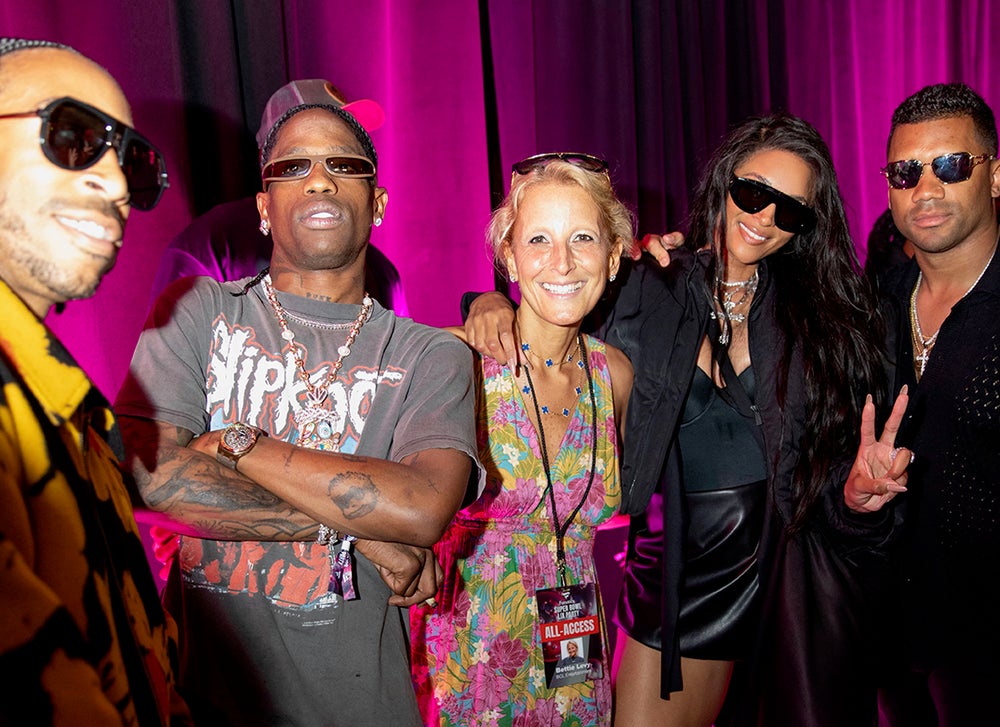
Image Credit: BCL Entertainment

Building a foundation

After working at both an established corporation and a fast-growing startup, Levy had the tools to pursue her longtime goal of starting her own business. But she was deliberate about the process.

“I didn’t want to start a company and immediately send out email blasts promoting myself and my business,” she says. “I wanted to build relationships and grow the client base from the ground up. I knew in my gut that eventually I’d expand to the point where I’d be ready to talk about it, but I had a lot of work to do first.”

From the beginning, Levy knew authenticity and a personal touch would be the foundation of her company.

“I remember someone asking me, ‘Where’s your 50-person staff and your office on Madison?’” she recalls. “Sixteen years later, that’s still not the vibe.”

Today, BCLE operates across nearly every corner of the entertainment industry, working with actors, artists, athletes, and everyone in between.

“We take a very hands-on approach to finding the right talent for what the client is looking for,” Levy explains. “Whether it’s an event or a partnership, the process is the same.”

Thanks to her time at Sony, and IMO, Levy entered entrepreneurship with preexisting celebrity relationships — but BCLE was far from an overnight success.

“We started with smaller projects, built on existing relationships, and grew from there,” she says. “It’s not like we were booking massive acts for astronomical fees on day one.”

Delivering at scale

Today, BCLE operates on two primary fronts: partnerships and events. On the partnership side, Levy has helped to architect deals such as musician Darius Rucker’s multi-league apparel line with Fanatics.

“The line started as a collaboration between Darius, Fanatics, and the NFL across all 32 teams,” Levy says. “Over the years, it has expanded from the NFL to all 30 MLB teams and into the NCAA. We just launched NHL in Fall 2025, and we will keep growing. Wait for more exciting news in 2026.”

That side of the business is rooted in relationship-building and a deep understanding of the brief. Events, though focused on a similar goal, come with an entirely different set of demands.

“It’s everything from venue procurement to logistics, set production, and décor,” Levy explains. “You have to think about the message you’re trying to convey. If it’s a fundraising event, for example, how do you motivate people to donate?”

For Levy, success in events comes down to teamwork and an obsession with detail.

“You can’t leave anything out,” she says. “One missed element can create a catastrophic domino effect.” Behind every meticulously designed gala, branded shoot, or charity initiative is a grind most people never see. “There’s this perception that it’s one big party,” she adds. “That perception is because I absolutely love what I do and have built. The reality is I’m answering my phone at three or four in the morning and maybe sleeping an hour or two.”

Levy’s impact stretches far beyond the events she produces. She’s deeply involved in causes that matter to her, partnering with organizations such as Room to Read, the Dolphins Cancer Challenge, and the Pace Women’s Justice Center.

“At my core, I love making people happy,” she says. Whether she’s turning around a project with barely any lead time or shepherding a months-long production from first brainstorm to curtain call, the work is driven by one constant: the joy it delivers. “I love being on site and watching it all come together — seeing the happiness it brings,” she says.

Corporate, private, or charitable, every event matters. And for Levy, doing the work well — and doing good in the process — remains the goal.

The term “entrepreneur” generally refers to anyone who starts a company. But it best applies to those who build businesses that are difficult to neatly define. Bettie Levy fits squarely into the latter category.

A music industry veteran and the founder of BCL Entertainment, Levy wears many hats, from event producer to brand strategist to CEO. Her work spans corporate events featuring A-list talent to high-level brand partnerships between major companies and cultural icons.

In short, she’s a celebrity matchmaker — just not for dating. If a brand wants Ludacris in a JIF campaign, Busta Rhymes at a launch party or New Kids On The Block at a private party, Levy is your woman. Now, she’s ready to share her story in hopes of inspiring others to carve their own unconventional paths.

https://www.entrepreneur.com/starting-a-business/how-this-founder-built-a-celebrity-matchmaking-machine/501816




I’m an Introvert Who Made 6 Figures Online Without Becoming an Influencer. These 3 Secrets Helped Me Succeed.

Opinions expressed by Entrepreneur contributors are their own.

Key Takeaways

  • User-generated content (UGC) is short-form video or photo content that everyday people create for brands to use in their ads or marketing — and it doesn’t require a following.
  • To succeed with UGC, you need a skill someone will pay for (not necessarily an audience). Brands pay for content that converts.
  • You also need a community of like-minded creators and a process that keeps you going on the days you want to quit.

I did not grow up wanting to be a content creator. I started adulthood in a government job with decent benefits and a deep creative itch I couldn’t scratch. When I became a mom, I wanted to stay home with my kids, but I also needed to contribute financially. That’s when I discovered online side hustles, and eventually, user-generated content, or UGC.

UGC is the kind of short-form video or photo content that everyday people create for brands to use in their ads or marketing. It doesn’t require a following, and it doesn’t live on your personal channels. You’re simply creating content that helps a product make sense to someone else, and brands pay well for that.

At first, I thought I was just reviewing products. It turned out to be the doorway to a new business model — one that helped me pay off over $60,000 in debt and eventually earn six figures a year. And here’s the thing most people don’t understand: I did it without going viral, without building a personal brand and without chasing likes.

The UGC space is flooded with advice that centers on visibility. Grow your platform. Build a niche. Get discovered. But after teaching this model to thousands of others, especially self-labeled introverts, parents and people with no online audience, I can say confidently that followers aren’t what get you paid. Here are three of the top things that do.

Related: I Paid Off Over $60K in Debt by Becoming an Anti-Influencer — Here’s How It Works

1. You need a skill someone will pay for, not necessarily an audience

When people ask me how to start with UGC, their first question is often, “Do I need a following?” I get it. We’ve been conditioned to believe that income comes from visibility. But what brands are actually paying for is content that converts. Can you help them show off a product? Can you tell a story that gets clicks? Can you explain how something works in a way that makes someone want to try it?

That’s the job. And you don’t need an audience to do it; you just need to start creating with intention and learn as you go.

One of the first videos I ever filmed that really took off was a simple product review shot in my kitchen. I didn’t overthink it. No makeup, no special setup, just me talking to the camera. I said, “You don’t have to be an influencer to get paid for videos,” and apparently, a lot of people needed to hear that, because the views took off fast. What mattered wasn’t the editing or aesthetic; it was that the message hit home. You don’t need a following. You need proof you can sell.

A lot of new creators assume they have to start with perfect gear. I get it — there’s pressure to look a certain way or film like a pro. And yes, having decent lighting and clean audio helps. But gear isn’t what gets you paid. What gets you paid is understanding how to communicate something clearly on camera: how to hold someone’s attention, how to make them feel understood, how to guide them to a decision. That’s the actual skill brands are looking for.

Related: Your Follower Count Is Irrelevant When It Comes to True Influence — These Are the Criteria That Really Matter

2. You need a community

The fastest way to stall out is to do this alone. I see it all the time. People get excited, buy a tripod, try to recreate a trending video and then quit after two posts because no one clapped for them.

You don’t need cheerleaders. You need people in the trenches with you.

When I started my Facebook group for introverts, I wasn’t trying to build a brand or start a funnel. I just wanted to connect with other people like me, creators who were figuring it out one video at a time and didn’t want to feel awkward asking beginner questions in public. I had spent so many late nights Googling things like “best mic for voiceovers under $30” or “how to make a product not look dusty on camera,” and I kept thinking, Why isn’t there a space where people actually talk about this stuff honestly?

That group started with maybe a dozen of us, and now it’s grown to over 19,000 members sharing wins, setbacks, gear links, script templates, screen recordings, side hustle income updates, etc. — everything you’d want to ask a more experienced friend if you weren’t afraid of sounding clueless.

It’s the kind of feedback, support and in-the-moment ideation that you can’t Google. Being around other creators shortens the learning curve and keeps you from spiraling after one awkward experience.

Related: 5 Steps to Make Money With a Small Online Following

3. You need a process that works on the days you want to quit

Confidence came later. What helped me early on was staying focused on the task at hand. I had projects to finish, clients to deliver for, and content to figure out. The more I showed up for the work, the less time I spent second-guessing myself.

There’s a lot of talk about visibility in this space. But what matters most is whether the content does its job. Can the viewer understand the product? Can they see how it fits into their life? Can the brand use the video in a campaign without needing to change much? That’s the real measure of value. You’re not being paid to be famous; you’re being paid to solve a business problem.

That mindset shift has made this work sustainable for me. I’m not building a personal brand or trying to become a personality. I’m building systems that allow me to earn steadily while keeping most of my life private. That’s what I want other people to see — that it’s possible to do this work on your own terms.

The Anti-Influencer Economy is for anyone who wants more freedom without the pressure to perform. It’s already working for creators who never thought of themselves as creators.

Key Takeaways

  • User-generated content (UGC) is short-form video or photo content that everyday people create for brands to use in their ads or marketing — and it doesn’t require a following.
  • To succeed with UGC, you need a skill someone will pay for (not necessarily an audience). Brands pay for content that converts.
  • You also need a community of like-minded creators and a process that keeps you going on the days you want to quit.

I did not grow up wanting to be a content creator. I started adulthood in a government job with decent benefits and a deep creative itch I couldn’t scratch. When I became a mom, I wanted to stay home with my kids, but I also needed to contribute financially. That’s when I discovered online side hustles, and eventually, user-generated content, or UGC.

UGC is the kind of short-form video or photo content that everyday people create for brands to use in their ads or marketing. It doesn’t require a following, and it doesn’t live on your personal channels. You’re simply creating content that helps a product make sense to someone else, and brands pay well for that.

https://www.entrepreneur.com/science-technology/how-i-made-6-figures-online-without-becoming-an-influencer/500955


What Mentorship Taught Me About Credibility, Timing and Trust

Opinions expressed by Entrepreneur contributors are their own.

This article is part of the America’s Favorite Mom & Pop Shops series. Read more stories

Key Takeaways

  • Leadership starts with how you show up, not what you say.
  • Assumptions shrink people. Curiosity expands them.
  • Mentorship changes how you define success.

Most leadership advice focuses on what you should achieve. My most important leadership lessons came from those who invested in me and from those I chose to invest in. I didn’t learn them in a corner office or after a big win. I learned them through mentorship, both from those who guided me early and from the young leaders I’ve had the privilege to mentor through my nonprofit, Youth Champions.

Mentorship did more than improve my skills. It reshaped how I define success and how I develop young people. It also taught me to take action before everything feels certain. If you care about meaningful results, those shifts matter.

Related: Everyone Needs a Mentor — But Being a Mentor Is Just as Important. Here’s Why.

1. Credibility starts before you speak

The first leadership principle I learned came from my dad: never ask someone to do something you are not willing to do yourself.

That sounds basic until you see how often leaders break it. Teams watch how you work. They notice whether you step in when something needs doing, whether that means trash pickup, a late night or the unglamorous tasks no one wants to do. When you stay above the work, your standards start to feel performative. When you share the work, expectations carry credibility.

This is not about being a martyr or proving you can outwork everyone. It is about setting a tone every day. People decide whether to trust you before they decide whether to follow your plans. If your behavior and your direction do not match, trust erodes quickly. When they consistently align, ownership spreads, accountability rises and the goal becomes a shared mission.

2. Progress comes from persistence, not perfect timing

Another mentorship influence that shaped me was David Gold, the founder of the 99 Cents Only Stores. What stood out to me was how he thought of others. He was always trying new ideas, kept trying when they did not land, and then kept improving the ones that did.

That mindset changed how I think about execution. Many leaders procrastinate because they want certainty or ROI first. They wait for perfect timing. In reality, that hesitation creates stalled momentum, missed opportunities and team members are conditioned to play it safe.

Mentorship taught me to treat progress like a practice. You move, learn from the results, adjust and go again. You do not need reckless speed; you only need forward momentum. Great leaders build meaningful projects because they have a stronger relationship with iteration than with perfection. They stay curious. They separate ego from execution. They learn from their results.

This mindset also changes how you handle failure. If your first attempt has to be the final answer, you will definitely avoid risk. But if you expect learning, you will make better decisions faster because you will gather real feedback sooner.

Related: 5 Reasons Why Mentoring Young People Will Make You a Better Leader

3. Assumptions limit people, but curiosity expands them

One habit I had to unlearn was making assumptions about people, situations and who could “add value” to me. Earlier in my career, I occasionally wrote people off if I couldn’t see an immediate benefit in the conversation. In hindsight, that mindset narrowed my perspective and limited my growth.

One of my mentors taught me that we all operate only within the limits of what we’ve learned so far. When you grasp that concept, you stop approaching conversations as an exchange to “get something” and start seeing them as an opportunity to learn.

This shift in perspective is the heartbeat of Youth Champions. We’ve built the organization on the twin pillars of growth mindset and radical accountability. Our mission is to challenge young people to own their narrative, have the courage to ask for guidance and constantly look for ways to lift themselves and others. These aren’t just ‘youth development’ tools; they are core leadership requirements for people of all ages in all industries.

Related: Why Your Hardest Workers Might Hurt Your Company

Mentorship is leverage, not charity

A misconception I often see, especially with entrepreneurs, is that mentorship is either a one-way gift you give or a transactional relationship you use. The truth is, mentorship is reciprocal, and its impact compounds over time.

My nonprofit is now almost a decade old, and I’ve spent the last nine years witnessing the ripple effect of our work firsthand. There is nothing quite like watching a young person graduate and thrive in their career, carrying forward everything they’ve learned. That long-term perspective has been one of my greatest teachers. It has shown me that mentoring is one of the most honest ways to lead. It requires you to get clear on what you believe and stay humble about what you still have to learn.

I also believe in what I call social leverage. When resources are limited, the most powerful thing you can do as a leader is to focus on leverage. You can choose to impact one person today, or you can build the systems and relationships that will eventually reach thousands of others. That level of impact requires significant upfront energy before results are visible.

To lead at that level, you can’t keep mentorship at a distance. Dive into it. Seek out the people and places that push your boundaries, because mentorship remains one of the fastest ways to sharpen your ability to learn and build sustained influence.

Key Takeaways

  • Leadership starts with how you show up, not what you say.
  • Assumptions shrink people. Curiosity expands them.
  • Mentorship changes how you define success.

Most leadership advice focuses on what you should achieve. My most important leadership lessons came from those who invested in me and from those I chose to invest in. I didn’t learn them in a corner office or after a big win. I learned them through mentorship, both from those who guided me early and from the young leaders I’ve had the privilege to mentor through my nonprofit, Youth Champions.

Mentorship did more than improve my skills. It reshaped how I define success and how I develop young people. It also taught me to take action before everything feels certain. If you care about meaningful results, those shifts matter.

https://www.entrepreneur.com/growing-a-business/why-the-best-leaders-dont-separate-mentorship-from/501298


The Top 10 Podcasts Entrepreneurs Should Be Listening to — and They’re Not About Business

Opinions expressed by Entrepreneur contributors are their own.

Key Takeaways

  • The podcasts shaping today’s best entrepreneurs don’t focus on business strategies. They focus on biology, decision making, stress, sleep, longevity and cognitive performance.
  • This is because execution depends on capacity, not tactics. No strategy survives a burned-out brain.
  • If you want to grow your business, you should listen to fewer business podcasts. Instead, listen to the ones that help you think better, last longer and lead more clearly.

Most entrepreneurs assume the podcasts that make them better are the ones in which founders talk about scaling, fundraising, leadership or strategy.

That assumption is wrong.

The podcasts quietly shaping the best entrepreneurs today do not focus on business tactics. They focus on biology, decision making, stress, sleep, longevity and cognitive performance. These are the systems that determine how well you actually execute.

Because no strategy survives a burned-out brain.

Entrepreneurs already understand leverage. The highest leverage is not another tactic. It is decision quality over time.

When those systems break down, execution follows.

That is why founders are paying attention to voices who explain how the mind and body actually function under pressure.

Related: 11 Health and Wellness Podcasts to Help Keep You Calm and Inspired

1. The Drive with Peter Attia, MD

This is essential listening for entrepreneurs who think long term.

Attia approaches health the same way strong founders approach companies. Reduce catastrophic risk. Protect the downside. Extend the runway.

His conversations around metabolic health, cardiovascular risk and longevity resonate deeply with entrepreneurs who understand that one major health event can undo decades of work.

2. Huberman Lab with Andrew Huberman, PhD

Huberman translates neuroscience into practical protocols that founders can actually use.

Focus, emotional regulation, stress response and sleep architecture are not just lifestyle topics — they determine how well you operate when the stakes are high.

If you lead people or make decisions under pressure, this podcast explains the biological layer underneath it all.

3. FoundMyFitness with Rhonda Patrick, PhD

Patrick connects nutrition, inflammation and micronutrients to brain performance and aging.

Many entrepreneurs underestimate how much an unstable metabolism affects cognition. This podcast makes it difficult to ignore.

Energy is not motivation. It is chemistry.

4. Lifespan with David Sinclair, PhD

Sinclair explores aging and epigenetics through a future-oriented lens that resonates with founders.

Longevity is not just about living longer. It is about staying sharp while you do.

Entrepreneurs who think in decades immediately understand why this matters.

5. The Tim Ferriss Show

Ferriss has interviewed elite performers across business, sports and science for years.

The pattern that emerges is consistent. Sleep discipline, recovery, stress management and mental clarity show up again and again among high performers.

Business success leaves clues. So does burnout.

Related: 8 Best Health and Wellness Podcasts to Learn the Latest Science in Nutrition, Fitness and Mental Wellness

6. Modern Wisdom with Chris Williamson

This podcast blends behavioral science, philosophy and discipline in a way entrepreneurs appreciate.

It explores how habits, cognition and belief systems shape outcomes, especially under pressure.

It is less about hacks and more about how effective people think.

7. The Rich Roll Podcast

Endurance, resilience and long-term reinvention define this show.

Entrepreneurs who want success without self-destruction tend to connect deeply with these conversations.

Longevity applies to careers, too.

8. The Genius Life with Max Lugavere

This podcast focuses on brain health, cognition and lifestyle choices that support clarity.

Founders who struggle with brain fog or inconsistent focus often realize the issue is not discipline. It is physiology.

9. The Dr. Gabrielle Lyon Show

Muscle-centric medicine and metabolic health are becoming central to longevity conversations.

Lyon’s work reframes strength and metabolism as foundations for sustained performance, not aesthetics.

Entrepreneurs are beginning to pay attention.

10. Dhru Purohit Podcast

Purohit bridges functional medicine, stress and lifestyle health in an accessible way.

For founders early in their health optimization journey, this podcast often becomes the entry point.

What these podcasts have in common

None of these shows are about business tactics.

They are about capacity.

  • Capacity to focus.

  • Capacity to regulate emotion.

  • Capacity to endure uncertainty.

  • Capacity to make good decisions repeatedly.

Entrepreneurs rarely fail because they lack ideas. They fail because their systems cannot sustain execution.

Related: My Relentless Ambition Cost Me My Health. Here’s How to Avoid Making My Mistakes.

The real edge founders do not talk about

Hustle is not obsolete. But it is incomplete.

The entrepreneurs building durable companies are designing lives that support clear thinking, resilience and long-term performance.

They understand something many people learn too late. You cannot outwork a nervous system that is breaking down.

If you want to grow your business, listen to fewer business podcasts. Listen to the ones that help you think better, last longer and lead more clearly. Because in the end, your company can only grow as far as your capacity allows.

Key Takeaways

  • The podcasts shaping today’s best entrepreneurs don’t focus on business strategies. They focus on biology, decision making, stress, sleep, longevity and cognitive performance.
  • This is because execution depends on capacity, not tactics. No strategy survives a burned-out brain.
  • If you want to grow your business, you should listen to fewer business podcasts. Instead, listen to the ones that help you think better, last longer and lead more clearly.

Most entrepreneurs assume the podcasts that make them better are the ones in which founders talk about scaling, fundraising, leadership or strategy.

That assumption is wrong.

https://www.entrepreneur.com/leadership/10-non-business-podcasts-every-entrepreneur-should-listen-to/500952


Apple Just Made Video and Music Editing Way More Affordable — But There’s a Catch

Apple announced Creator Studio, a $12.99 monthly bundle that includes six professional apps previously sold for hundreds of dollars each. Final Cut Pro alone costs $299.99 as a one-time purchase, while Logic Pro costs $199.99. There’s just one catch: You’re renting, not owning.

The move puts Apple in direct competition with Adobe’s Creative Cloud, which charges $59.99 monthly for its full suite, including Premiere Pro and Photoshop — though Adobe’s suite remains more comprehensive.

The bundle includes Final Cut Pro, Logic Pro, Pixelmator Pro, Motion, Compressor and MainStage, plus premium content for Pages, Numbers and Keynote. Apple is also rolling out AI-powered features across the apps — Final Cut Pro gets Transcript Search and Visual Search to find moments by describing them, while Logic Pro adds natural language search and Chord ID. Pixelmator Pro, which Apple acquired in 2024, hits iPad for the first time with full Apple Pencil support.

The bundle launches January 28 with a one-month free trial. Those who prefer to own their software outright can still purchase the products.

Read more

Apple announced Creator Studio, a $12.99 monthly bundle that includes six professional apps previously sold for hundreds of dollars each. Final Cut Pro alone costs $299.99 as a one-time purchase, while Logic Pro costs $199.99. There’s just one catch: You’re renting, not owning.

The move puts Apple in direct competition with Adobe’s Creative Cloud, which charges $59.99 monthly for its full suite, including Premiere Pro and Photoshop — though Adobe’s suite remains more comprehensive.

The bundle includes Final Cut Pro, Logic Pro, Pixelmator Pro, Motion, Compressor and MainStage, plus premium content for Pages, Numbers and Keynote. Apple is also rolling out AI-powered features across the apps — Final Cut Pro gets Transcript Search and Visual Search to find moments by describing them, while Logic Pro adds natural language search and Chord ID. Pixelmator Pro, which Apple acquired in 2024, hits iPad for the first time with full Apple Pencil support.

The bundle launches January 28 with a one-month free trial. Those who prefer to own their software outright can still purchase the products.

Read more

https://www.entrepreneur.com/business-news/apple-bundles-its-pro-apps-for-13month-with-one-catch/501893


Domino’s Is Quietly Dominating the Pizza Market by Mastering 3 Things Rivals Ignored

Domino’s is delivering big numbers in the pizza wars. While customers’ appetite for pizza has struggled lately, Domino’s U.S. sales grew 5.2%. The secret? CEO Russell Weiner focused relentlessly on three things competitors overlooked: loyalty programs, value deals and advertising scale.

“They’re really leveraging the fact that they have this huge advertising budget — it’s like four times or more the size of their nearest competitors,” Sara Senatore, Bank of America Securities senior restaurant analyst, told Fox Business News. Domino’s also made its loyalty program easier to join by adding more tiers and making points simpler to redeem, creating what Senatore calls a “virtuous cycle” where more users make marketing more effective.

This strategy has created a compounding effect. As more customers join the loyalty program, Domino’s can market directly to them through the app, bypassing expensive third-party platforms. That drives more orders, which fund bigger ad budgets, which attract more loyalty members. Meanwhile, competitors stuck to traditional strategies while the entire pizza business model fundamentally changed.

Read more

Domino’s is delivering big numbers in the pizza wars. While customers’ appetite for pizza has struggled lately, Domino’s U.S. sales grew 5.2%. The secret? CEO Russell Weiner focused relentlessly on three things competitors overlooked: loyalty programs, value deals and advertising scale.

“They’re really leveraging the fact that they have this huge advertising budget — it’s like four times or more the size of their nearest competitors,” Sara Senatore, Bank of America Securities senior restaurant analyst, told Fox Business News. Domino’s also made its loyalty program easier to join by adding more tiers and making points simpler to redeem, creating what Senatore calls a “virtuous cycle” where more users make marketing more effective.

This strategy has created a compounding effect. As more customers join the loyalty program, Domino’s can market directly to them through the app, bypassing expensive third-party platforms. That drives more orders, which fund bigger ad budgets, which attract more loyalty members. Meanwhile, competitors stuck to traditional strategies while the entire pizza business model fundamentally changed.

Read more

https://www.entrepreneur.com/business-news/dominos-dominates-pizza-market-with-this-strategy/501891


3 Free Ways to Increase Your Business’s Local Google Maps Ranking and Exposure Today

Opinions expressed by Entrepreneur contributors are their own.

Key Takeaways

  • Consistent, simple GBP updates signal trust and relevance to Google faster than most SEO tactics.
  • Active profiles win: fresh photos, complete info and real reviews drive local visibility quickly.

At my marketing agency, there are a lot of things we are testing and collecting data on regarding SEO (Search Engine Optimization) and how to improve the ranking and exposure of businesses to their ideal clients.

There are dozens of things we work on, and some make a bigger difference than others, but today I wanted to highlight 3 specific things that any small business can do for free to start improving their rankings within days.

This will work for any small local business that has a verified Google Business Profile set up and hasn’t been actively optimizing or updating it.

Related: This One Google Feature Is Eating Away at Your Online Traffic — Here’s How to Fight Back

Your Google Business Profile (GBP) and how Google uses signals from it

Google’s algorithm has one main goal, and that’s to show searchers the best and most relevant sources and information available. Hundreds of signals go into how Google’s algorithm determines “the most relevant” sources and information, and Google doesn’t disclose what those are.

That makes improving your rankings and exposure nothing but a guessing game. They do disclose “best practices” and the ways they encourage webmasters and business owners to behave, but again, there are no concrete steps or actions here.

This is because if they shared the different factors affecting search engine rankings and which ones matter the most, marketers and SEO agencies would manipulate the rankings for their clients.

This would result in situations where the “better business/source” doesn’t get the exposure it deserves, because a marketing agency working for a competitor manipulated the signals the algorithm uses and got their client to the top spot.

That’s not a great system, and Google keeps things secret for a reason.

Using the data and testing from reputable marketing agencies or marketers

One thing you can do is follow and listen to reputable marketing agencies and marketers, who are able to test different ways of doing things and get an idea for what causes improvements in the search rankings versus not.

Because they have dozens, or maybe hundreds of businesses they are working with, they have a huge data source and ability to test strategies and get an idea for what works better.

At my marketing agency, we often spot strategies that are working well, and sometimes really well. Our goal is not to manipulate the search results in an unethical way; our goal is to understand what strategies work well so that we can help our clients focus on these and improve their exposure for the great services they offer.

Now, let’s get into the 3 things you can do starting today to improve your results.

1. Fully optimize your GBP

How long has it been since you checked all our business info in your listing? Whether it’s been a while or not, our data has shown that Google prefers businesses that utilize their listing to the maximum and provide as much info as possible.

  • Log in to your GBP
  • Go to “edit business info.”
  • Take a look at the available sections, like about, services, your hours and even any reviews you haven’t responded to.
  • Update any sections with minimal info and fill out any empty ones with good information that mentions your services and location to boost for local relevancy.
  • Respond to any unanswered reviews. Google prefers active profiles that are engaging with their clients and customers. Responding quickly to new reviews is a great way to show you are active.

2. Add or update your business photos

  • Check your pictures and make sure you have the basics like your logo, photos of the office or location, and team pictures if you can (you should).
  • Whether you have all those photos or not, it’s time for an update. Like we’ve mentioned, Google prefers active businesses, and when you are adding photos consistently, this is another signal that you are active, and it helps potential clients see more about your business.
  • You can post any pictures here, like team members, the office, your services on-the-job or your product. Grab a recent picture and post it. Do that once a week.

Related: How to Use Personal Brand Photos to Stand Out on Social Media (and Be Remembered)

3. Ask a recent client for a review

Reviews are not only a great way to build trust and show that your clients are happy, resulting in more eyeballs on your business, but they are also a great signal to show Google you are actively providing great service to happy clients.

  • Think of a recent client or customer who was happy with your business
  • Take the link from Google where it says “ask for reviews” and copy it
  • Send a personalized text or email to the client and let them know a written review of their experience would mean a lot to you and your team. Paste the link, hit send. They’ll likely agree and leave a review, but sometimes people forget, so after a few days, send a follow-up if needed.

Congrats! You’ve just tapped into the algorithm

With those actions, you’ve made a few powerful zaps to Google’s algorithm, and they will notice. Now, if you want them to really notice, do this weekly or twice a week for 3-4 months, then come back and tell me how much more traffic you’re getting.

Key Takeaways

  • Consistent, simple GBP updates signal trust and relevance to Google faster than most SEO tactics.
  • Active profiles win: fresh photos, complete info and real reviews drive local visibility quickly.

At my marketing agency, there are a lot of things we are testing and collecting data on regarding SEO (Search Engine Optimization) and how to improve the ranking and exposure of businesses to their ideal clients.

There are dozens of things we work on, and some make a bigger difference than others, but today I wanted to highlight 3 specific things that any small business can do for free to start improving their rankings within days.

https://www.entrepreneur.com/growing-a-business/how-to-increase-your-businesss-google-maps-ranking/501201


Who Actually Helps You Grow on YouTube — And Who Just Gives Advice?

Opinions expressed by Entrepreneur contributors are their own.

Key Takeaways

  • Not all YouTube experts do the same job — strategy, execution and growth support vary widely.
  • Consultants usually diagnose problems, while managers and growth experts help execute solutions.
  • Channel audits offer clarity, but ongoing support is often what drives sustained YouTube growth.

In the burgeoning creator economy, things are constantly shifting and emerging. As a result, terminology can be complex, with multiple names for the same type of service, or several services being lumped together under the same term.

One sector in which this is particularly visible is support services for YouTube video creation. After all, the platform has surpassed 2.5 billion monthly global users. Today, high-profile YouTubers are shaping popular culture, and making billions in the process.

As a result, there’s now a wide range of companies and freelancers specializing in helping creators grow their reach.

Beyond having video editors and thumbnail artists at their back, many YouTubers now rely on YouTube channel managers, YouTube consultants or YouTube growth experts for help with video creation and the day-to-day operations of running a channel. But what’s the difference between these? And is it worth hiring one if you’re a channel owner?

Let’s dive in with some key facts:

  • YouTube channel managers, consultants and growth experts provide an overlapping range of services, including one-off channel audits and continuous support.
  • The principal aim of all of these professionals is to help creators grow their channels — usually through organic content optimization to win over the YouTube algorithm. Some, however, also advocate ads.
  • While the terms overlap, YouTube consultants often specialise in thoroughly vetting channels and providing data-backed strategy suggestions. YouTube channel managers focus on handling the day-to-day operations of running a channel. YouTube growth experts frequently go beyond these tasks and also provide support for monetization, video editing and graphic design.

One-off channel audit vs. continuous accompaniment

While the three terms, YouTube consultant, channel manager and growth expert, are often used interchangeably, some nuances separate them.

One of the aspects in which they differ is whether the expert you’re hiring provides an initial channel audit or continuous support.

For a channel audit, a YouTube expert will take a close look at:

  • Your content performance
  • Your channel analytics
  • The demographics of your audience
  • Trends in your niche and competitor performance
  • Your channel branding and current strategy orientation
  • Your overall goals for your channel

The goal? To pinpoint what resonates with your audience and what doesn’t. Based on these insights, they’ll provide detailed, data-backed suggestions to help you hone — or pivot — your content strategy.

For some, the handover of this document is the end of their work for you.

For others, that’s only the starting point. Some YouTube experts also help you with the implementation of these strategy suggestions. They handle the day-to-day running of your channel, including content uploads, video SEO, engaging your audience and analytics.

While there are exceptions, YouTube consultants often limit their services to one-off or periodic channel audits, while YouTube channel managers and YouTube growth experts provide more continuous support.

Related: How AI Is Completely Changing YouTube Content and What Creators Must Do Now

Channel metrics vs. wider growth strategy

Another distinction between different types of YouTube experts is whether they focus on improving your channel metrics, or whether they also offer wider growth strategy support.

YouTube consultants and, in many cases, YouTube channel managers focus on the analytics provided through YouTube Studio and external tools to fine-tune content strategy suggestions. Whether it’s subscriber numbers, view counts, average view duration or audience engagement, their main focus is to get creators’ channel metrics to a predetermined point and stimulate growth.

YouTube growth experts — and some YouTube channel managers — often go a step further and provide support for creators when it comes to channel monetization, branching out across other social media platforms and larger brand strategy decisions that have synergistic interactions with YouTube growth.

Freelancers vs. companies

Finally, there is the distinction between whether creators work with freelancers or with companies that specialize in providing organizational and strategy support in the day-to-day running of a YouTube channel.

Freelancers working in this area often style themselves “YouTube consultants” while agencies tend to promote “YouTube channel management services” or “YouTube growth services“.

For the latter, there are also overlaps with terms such as “YouTube channel marketing,” “YouTube promotion services,” or “YouTube channel advertisement.” In many cases, the latter kinds of services work with paid promotion — paying YouTube so that creators’ content appears in the search results and recommendations of a narrowly-defined target audience, at least in the short term.

Some, however, also provide the type of organic growth services that YouTube channel managers and YouTube consultants offer, aiming to optimize content so that it gets picked up by the YouTube algorithm.

Related: YouTube Takes on TikTok With New Tools: ‘You Can Build a Business’

The bottom line

The terminology for services and experts to support creators in growing their channels varies. While there are some broad trends, nuances will inevitably remain, especially given the constantly evolving nature of the creator economy.

If you decide to outsource some of your video creation workflows, the most strategic approach is to define their priorities and exactly which tasks they want to delegate before starting to look for experts to work with. That way, you can be sure you’ll end up working with the person or company who can deliver what your channel needs.

Key Takeaways

  • Not all YouTube experts do the same job — strategy, execution and growth support vary widely.
  • Consultants usually diagnose problems, while managers and growth experts help execute solutions.
  • Channel audits offer clarity, but ongoing support is often what drives sustained YouTube growth.

In the burgeoning creator economy, things are constantly shifting and emerging. As a result, terminology can be complex, with multiple names for the same type of service, or several services being lumped together under the same term.

One sector in which this is particularly visible is support services for YouTube video creation. After all, the platform has surpassed 2.5 billion monthly global users. Today, high-profile YouTubers are shaping popular culture, and making billions in the process.

https://www.entrepreneur.com/science-technology/before-you-hire-a-youtube-expert-know-which-one-you/501149


Why Traditional Reputation Management Fails in an AI-Driven World

Opinions expressed by Entrepreneur contributors are their own.

Key Takeaways

  • What you see on the first page of search results isn’t always the full story.
  • Small inconsistencies online can quietly shape how people — and AI — perceive your brand.

The old way of managing your online reputation was simple: search your name, check the first page and manage the links. It worked fine for years. But today, AI-powered summaries dominate search results. Many people never scroll past that box. It’s your brand’s new first impression.

People also ask AI tools like ChatGPT about companies and founders, and they expect fast, accurate answers. If the facts aren’t clear, the summaries can get fuzzy — or worse, negative. That’s why it’s essential to take control of the information that feeds AI, so it tells the story you actually want.

Start with a single source of truth

The first step is to have one page on your website that clearly tells your brand’s story. This page acts as a master record that both humans and AI can rely on. It should describe your role, your company, the products or services you offer and a few verified achievements. When the facts are easy to verify, AI can’t misrepresent you, and your search results begin to reflect your reality rather than outdated or contradictory information.

Related: Why Brand Mentions in AI Are Becoming a Business Metric

Make leadership bios consistent and clear

People search for leaders by name, and AI often uses public profiles to summarize them. Every bio should be concise and consistent across platforms. Keep the focus on what the person does, key results they’ve delivered and any important dates or milestones. Small inconsistencies — like different titles or locations across pages — can lead AI to generate messy or misleading summaries.

Focus on high-visibility profiles

Some pages carry more weight than others. Your company’s About page, leadership bios, LinkedIn profiles and trusted database listings are the places where AI will look first. Align titles, product names, locations and dates with your source-of-truth page. Even small discrepancies can create confusion. Over time, consistent profiles across high-visibility sites reinforce accuracy in AI summaries.

Provide content that both people and AI can use

AI often pulls from content your customers actually read, so creating helpful pages can shape how your brand appears. A FAQ page with real questions and short, factual answers makes it easy for AI to summarize your company correctly. Similarly, a page highlighting positive reviews and testimonials reinforces trust. These pages help AI present your brand accurately while also giving real customers the information they need.

Keep structure simple

AI and search engines connect names, roles and facts across your site and profiles. Make it easy for them to get it right. Consistency matters more than volume. You don’t need dozens of pages, but every page should match your source of truth in tone, titles and facts. When the structure is steady, AI produces summaries that align with reality instead of guessing.

Monitor AI summaries regularly

Check your AI summaries monthly for key searches: your company name, founder names, top products and common customer questions. Take screenshots, note recurring phrases and identify errors or gaps. This habit gives you insight into what people see and where adjustments are needed.

Strengthen your sources

You don’t need fifty mentions across the web. A few high-quality, trusted references go further. Focus on neutral news articles, recognized databases, case studies with real metrics or speaking bios from actual events. Avoid paid press that masquerades as credible news — AI prioritizes trust.

Related: 3 Ways AI is Changing How Startups Build Their Brand

Fix contradictions quickly

Assign someone to own “source hygiene.” Every change in title, location, product name or milestone should be reflected across all pages. Small inconsistencies may seem minor, but AI interprets them as conflicting information, leading to inaccurate summaries.

keep updates on a rhythm

Updating regularly keeps your information fresh and reliable:

  • Quarterly: Update bios, About page and key metrics.
  • Monthly: Add or adjust FAQ entries based on questions or support tickets.
  • Within 48 hours: Reflect major changes like funding, hires, product launches, recalls or public statements.

Fresh sources are picked up faster, while stale content invites AI to guess.

Measure what matters

Track metrics that show whether AI and search results are aligning with reality:

  • Sources AI cites.
  • Phrases used in summaries.
  • Branded click-through rates.
  • Lead quality from branded searches.
  • Time to hire for key roles.

If a tactic isn’t working after a couple of cycles, shift your effort to a more credible source.

A simple 7-day starter plan

To get started quickly, here’s a one-week approach:

  • Day 1: Draft your source-of-truth page.
  • Day 2: Update founder bios on your site.
  • Day 3: Align LinkedIn titles and dates.
  • Day 4: Launch a FAQ page with five real customer questions.
  • Day 5: Build a reviews page.
  • Day 6: Run priority searches and take screenshots.
  • Day 7: Secure one strong external source to reinforce your facts.

Following this approach helps you shape AI summaries instead of letting them shape your brand. Over time, search results, AI Overviews and customer perceptions will better reflect your reality — giving you control, clarity and trust.

Key Takeaways

  • What you see on the first page of search results isn’t always the full story.
  • Small inconsistencies online can quietly shape how people — and AI — perceive your brand.

The old way of managing your online reputation was simple: search your name, check the first page and manage the links. It worked fine for years. But today, AI-powered summaries dominate search results. Many people never scroll past that box. It’s your brand’s new first impression.

People also ask AI tools like ChatGPT about companies and founders, and they expect fast, accurate answers. If the facts aren’t clear, the summaries can get fuzzy — or worse, negative. That’s why it’s essential to take control of the information that feeds AI, so it tells the story you actually want.

https://www.entrepreneur.com/growing-a-business/why-traditional-reputation-management-fails-in-an-ai-driven/499424


Why Staying Neutral Could Cost Your Company Millions — and How to Avoid It

Opinions expressed by Entrepreneur contributors are their own.

Key Takeaways

  • The environment leaders are operating in has changed so dramatically that familiar crisis instincts are creating new risks instead of protection.
  • A different set of assumptions is now quietly separating organizations that recover from disruption from those that become cautionary tales.

Three years ago, I was writing a column called “The Age of Impact” and teaching crisis communications classes at Northwestern, shaped by the same ideas. Companies were competing to prove they cared — about employees, about justice, about the world. It felt like a new era of corporate responsibility was taking hold.

Then the ground shifted.

Anti-DEI campaigns turned inclusion initiatives into political targets. Generative AI leapt from industry conversation to mainstream consciousness almost overnight, transforming how we work. Polarization widened from a crack to a canyon.

My students started putting forward no-win scenarios: What if your CEO gets deepfaked the night before earnings? What if half your workforce wants you to speak out and the other half will quit if you do? The situations kept getting wilder — and then I noticed something alarming.

Corporate executives I counsel, chief communications officers, board members, CEOs running Fortune 500 companies, were asking almost the exact same questions.

When professionals across the entire spectrum of experience are terrified by the same problems, it’s not just a communications challenge — it’s an enterprise risk. Wells Fargo lost $80 billion in market cap after employees opened millions of fake accounts to meet sales targets — a scandal that festered internally for years before it exploded publicly. Target shed $15 billion in months after DEI backlash. These weren’t messaging failures. They were leadership failures with balance-sheet consequences.

Related: Your Business Isn’t Ready For the Next Crisis — Here’s How to Fix That Fast

The old playbook isn’t just obsolete — it’s actively dangerous

For all of us in crisis communications, it feels like the world shifted beneath our feet while we weren’t looking. The strategies that served us for decades — the careful statements, the measured responses, the wait-and-see approaches — aren’t just ineffective anymore. They’re making things worse.

The speed problem: When I started in this field, you had hours or even days to craft the perfect response. Today, silence for thirty minutes gets interpreted as guilt, indifference or incompetence.

The trust problem: Traditional media gatekeepers who once separated signal from noise are gone. We’re operating in a landscape where half-truths travel faster than facts, and your corporate statement competes directly with conspiracy theories for audience attention, if it reaches your audience at all.

The personalization problem: CEOs once spoke to “stakeholders” and “the public.” Now they’re speaking to micro-audiences who filter every message through the lens of “my people, my party, and me.” Broad-appeal communications strategies can’t navigate this new hierarchy of relevance.

The polarization problem: The old playbook assumed you could craft a message that would satisfy most reasonable people. That middle ground has been obliterated. Corporate positions on everything from DEI to trade policy are now filtered through political tribes and the employees whose identities are implicated in those debates bear the weight of every equivocation. Neutrality isn’t just impossible — it’s seen as cowardice by all sides. Watch what happened to Target. To Cracker Barrel. Companies that tried to thread the needle got shredded from both directions.

The weaponization problem: Perhaps most dangerous is that the old playbook’s emphasis on defensive posturing and liability protection has made companies sitting ducks for bad actors who understand how to exploit corporate communication patterns. They know you’ll be slow, cautious, and desperate to appear reasonable.

There is no longer any such thing as a clean win

The uncomfortable truth that many organizations clinging to the old playbook refuse to accept is that the era of tidy resolutions is over. Every major decision now comes with trade-offs, critics and constituencies who will be unhappy no matter what you do.

The companies that are winning understand this. They’ve stopped trying to please everyone and started focusing on the twelve to fifteen people whose trust actually determines their outcomes. They’ve accepted that engagement in this era will look messier and move faster than what traditional approaches allowed.

This isn’t surrender. It’s strategic clarity.

What this means for corporate leaders

First, take a position and own it. The lesson from Nike’s Kaepernick campaign is clear. Conviction pays, and waffling costs everything. But Nike went beyond taking a stand to mapping which stakeholders would leave, which would stay, and which would become more loyal. The backlash was priced in. People can accept disagreeing with you. What they will never accept is hypocrisy. Determine your core values, communicate them clearly and defend that ground fiercely when tested.

Second, stop trying to please everyone. Identify the specific people and groups whose trust actually determines your success, and design your communications strategy around them. For most organizations, that’s twelve to fifteen stakeholders, not thousands. Precision beats breadth.

Third, operate at campaign speed. The traditional 24-hour response window is now closer to 24 minutes. Structure your organization accordingly. Include proactive threat detection, pre-approved messaging frameworks, and real-time stakeholder monitoring. AI can help here. The same technology disrupting your environment can help you monitor threats, draft rapid responses, and adapt messaging across formats faster than any team could manually. Political campaigns have operated this way for decades. It’s time corporate communications caught up.

Fourth, truth is important, but trust matters more. In a crisis, what people believe about you matters more than your truth. Disinformation succeeds because they don’t trust the source delivering them the facts. The time to build credibility with your key stakeholders is not the day you get targeted. It’s now.

Related: Why Letting Go of Full Control of My Business Was the Hardest — and Smartest — Move I Ever Made

An inflection point

We are at an inflection point. Anyone who built their career on the old playbook needs to adapt or become the next cautionary tale. That includes boards: reputation failures trigger regulatory scrutiny, litigation exposure and disclosure obligations. This is a governance conversation, not just a communications one.

These are the questions I’ve spent the past three years wrestling with — first in the classroom, then on the front lines of some of the most complex communications challenges of our time and now advising leaders.

The companies that thrive are the ones that understand that speed, messiness and toughness aren’t liabilities. They’re survival skills.

Key Takeaways

  • The environment leaders are operating in has changed so dramatically that familiar crisis instincts are creating new risks instead of protection.
  • A different set of assumptions is now quietly separating organizations that recover from disruption from those that become cautionary tales.

Three years ago, I was writing a column called “The Age of Impact” and teaching crisis communications classes at Northwestern, shaped by the same ideas. Companies were competing to prove they cared — about employees, about justice, about the world. It felt like a new era of corporate responsibility was taking hold.

Then the ground shifted.

https://www.entrepreneur.com/growing-a-business/why-staying-neutral-could-cost-your-company-millions/500812