The Unexpected Way Podcasting Made Me a Better Leader and Decision-Maker

Opinions expressed by Entrepreneur contributors are their own.

Key Takeaways

  • Long-form content exposes gaps that short content hides. It forces founders to organize their thinking, clarify their systems and communicate with precision.
  • Hosting multiple podcasts exposed those gaps for me and helped me realize I needed a more documented and repeatable thinking process.
  • A documented thinking process not only clarifies your ideas, but it also strengthens communication inside your company, makes delegation easier and sharpens decision-making.

I used to assume I had a clear internal process for how I approached SEO, lead generation, automation and reputation management. That changed the moment I began hosting multiple podcasts. When you speak on record for the UK Lead Generation Podcast, the FatRank Podcast, the Online Reputation Management Podcast or any of the others, you quickly discover where your thinking is structured and where it is not.

Long-form content exposes gaps that short content hides. Once I saw those gaps, I realized I needed a more documented and repeatable thinking process.

Related: The 5 Reasons Why Long-Form Content Needs to be in Your Marketing Strategy

How long-form content forces your ideas into a usable structure

Writing can disguise unclear thinking. Long-form speaking cannot. A podcast requires a logical flow. It forces you to explain what you know in a way that another person can follow. When I recorded the Semantic SEO Podcast, for example, I had to break abstract ideas into actionable sequences.

When I recorded the AI SEO and Business Automation Podcast, I had to explain why certain workflows worked instead of simply relying on the fact that they did. These moments became prompts to organize the processes I had used instinctively for years.

Why founders underestimate the value of explaining their own work

Entrepreneurs often operate on instinct. They make decisions quickly because experience trains them to recognize patterns. The problem is that you cannot teach instinct until you translate it into a system.

Hosting multiple podcasts pushed me to take the implicit knowledge I had developed across different areas and make it explicit. I had to slow down and articulate not just what I do but why I do it. That step alone made my businesses more resilient because systems became transferable rather than locked in my head.

How talking through ideas reveals blind spots

When you run several shows, you switch contexts constantly. One day, you are discussing trust and perception on the Online Reputation Management Podcast. The next, you are breaking down performance thinking on The James Dooley Podcast. Then you might be analyzing technical concepts on the Semantic SEO Podcast or workflow structure on the AI SEO and Business Automation Podcast.

Switching contexts is not a distraction. It acts as a diagnostic tool. It reveals areas where your reasoning is solid and areas where your explanation becomes vague. Those vague areas usually point to operational blind spots that need attention.

Why documentation improves leadership

A documented thinking process does more than clarify your ideas. It strengthens your communication inside your company. Once your frameworks are organized, your team understands expectations faster. Delegation becomes easier. Decision-making becomes more consistent.

The work becomes less dependent on you. Recording multiple podcasts forced me to formalize ideas I had operated on for years without writing them down. The process improved how I lead because my communication became more structured.

How long-form thinking improves decision speed

It might seem counterintuitive, but slowing down to express your reasoning in a podcast makes you faster when solving problems. Once your frameworks are documented, you stop rebuilding them in your head each time you face a new situation. Pattern recognition becomes sharper because your thinking is categorized.

I know how to approach SEO decisions because I explained them on my SEO podcast. I know how to approach trust issues because I broke them down on my reputation management podcast. The more you speak through your systems, the more efficient your decision-making becomes.

How consistency builds authority

Authority is not created by knowledge alone. It is created by the ability to express that knowledge clearly and consistently. Hosting several podcasts taught me that clarity is a competitive advantage.

When you speak regularly about a topic, your thinking becomes more refined. Your ideas improve. Your explanations tighten. Authority grows from repetition paired with improvement. Multiple podcasts give you that repetition in a structured environment, making you more credible in the areas you operate.

Related: Why Podcasting Is Your Best Chance for Success

Why every founder should build a thinking process

A documented thinking process is not a luxury. It is a requirement for sustainable leadership. Running several podcasts highlighted this more clearly than any internal exercise I had tried. It taught me that founders benefit from hearing their own thoughts reflected back at them. If something is difficult to explain, it is usually because the idea is not fully developed. Once you confront that, you become a stronger strategist and a more effective operator.

Managing seven separate shows became more than a content strategy. It became a framework for personal development. It pushed me to refine my systems, articulate my reasoning and strengthen my decision-making. Long-form communication exposed gaps and forced clarity. That clarity translated directly into better leadership. Entrepreneurs focus heavily on output. They do not spend enough time organizing their thinking. Running multiple podcasts gave me a method to do both at once.

Key Takeaways

  • Long-form content exposes gaps that short content hides. It forces founders to organize their thinking, clarify their systems and communicate with precision.
  • Hosting multiple podcasts exposed those gaps for me and helped me realize I needed a more documented and repeatable thinking process.
  • A documented thinking process not only clarifies your ideas, but it also strengthens communication inside your company, makes delegation easier and sharpens decision-making.

I used to assume I had a clear internal process for how I approached SEO, lead generation, automation and reputation management. That changed the moment I began hosting multiple podcasts. When you speak on record for the UK Lead Generation Podcast, the FatRank Podcast, the Online Reputation Management Podcast or any of the others, you quickly discover where your thinking is structured and where it is not.

Long-form content exposes gaps that short content hides. Once I saw those gaps, I realized I needed a more documented and repeatable thinking process.

https://www.entrepreneur.com/growing-a-business/the-unexpected-way-podcasting-made-me-a-better-leader/500666




Walmart Teams Up With Google’s Gemini to Let Shoppers Buy With AI

Walmart announced it’s partnering with Google’s Gemini AI to let shoppers find and buy products directly through the chatbot. Incoming CEO John Furner and Google CEO Sundar Pichai unveiled the deal at the National Retail Federation’s Big Show in New York.

The companies didn’t reveal a launch date or financial terms, but the feature will roll out first in the U.S. before going global. This isn’t Walmart’s first AI shopping rodeo. The retail giant cut a similar deal with OpenAI’s ChatGPT in October for “Instant Checkout,” which lets customers buy without leaving the chatbot. Walmart even built its own AI assistant, a yellow smiley-faced chatbot called Sparky.

“The transition from traditional web or app search to agent-led commerce represents the next great evolution in retail,” Furner said. Outgoing CEO Doug McMillon has been blunt about AI’s impact, saying it “is going to change literally every job” at America’s largest private employer.

Read more

Walmart announced it’s partnering with Google’s Gemini AI to let shoppers find and buy products directly through the chatbot. Incoming CEO John Furner and Google CEO Sundar Pichai unveiled the deal at the National Retail Federation’s Big Show in New York.

The companies didn’t reveal a launch date or financial terms, but the feature will roll out first in the U.S. before going global. This isn’t Walmart’s first AI shopping rodeo. The retail giant cut a similar deal with OpenAI’s ChatGPT in October for “Instant Checkout,” which lets customers buy without leaving the chatbot. Walmart even built its own AI assistant, a yellow smiley-faced chatbot called Sparky.

“The transition from traditional web or app search to agent-led commerce represents the next great evolution in retail,” Furner said. Outgoing CEO Doug McMillon has been blunt about AI’s impact, saying it “is going to change literally every job” at America’s largest private employer.

Read more

https://www.entrepreneur.com/business-news/walmart-teams-up-with-googles-gemini-to-let-shoppers-buy/501813


This Coffee Mogul Wanted $90 Million for His Mansion — He Got $66 Million Instead

Even a coffee billionaire can feel the grind. Robert Stiller listed his Palm Beach mansion for $90 million in May but sold it this week for $66.14 million — barely more than what he paid three years ago.

Stiller co-founded Green Mountain Coffee Roasters, which eventually acquired Keurig. His 13,300-square-foot Colonial-style home has seven bedrooms, nine full bathrooms and sits on North Lake Way with a deepwater dock. Built in 2013, the property features high ceilings, a covered loggia, a pool with hot tub and flexible garage spaces currently used as a gym and staff quarters.

Stiller made headlines in April 2023 when he sold his oceanfront Palm Beach estate for $170 million, setting the record for the priciest home sale on the island. This time around, the deal was a bit more bitter.

Read more

Even a coffee billionaire can feel the grind. Robert Stiller listed his Palm Beach mansion for $90 million in May but sold it this week for $66.14 million — barely more than what he paid three years ago.

Stiller co-founded Green Mountain Coffee Roasters, which eventually acquired Keurig. His 13,300-square-foot Colonial-style home has seven bedrooms, nine full bathrooms and sits on North Lake Way with a deepwater dock. Built in 2013, the property features high ceilings, a covered loggia, a pool with hot tub and flexible garage spaces currently used as a gym and staff quarters.

Stiller made headlines in April 2023 when he sold his oceanfront Palm Beach estate for $170 million, setting the record for the priciest home sale on the island. This time around, the deal was a bit more bitter.

Read more

https://www.entrepreneur.com/business-news/coffee-mogul-wanted-90m-for-mansion-got-66m-instead/501786


Allegiant Is Buying Sun Country for $1.5 Billion to Become ‘More Competitive’

Two underdogs in the airline industry are joining forces. Allegiant announced Sunday it will acquire Sun Country Airlines for $1.5 billion, creating a combined leisure carrier to compete against Delta, American, United and Southwest.

Sun Country shareholders will receive $18.89 per share, a 20% premium over Friday’s closing price. Allegiant shareholders will own 67% of the combined company, with Sun Country shareholders holding 33%. The deal brings together two complementary networks: Allegiant operates from small and mid-sized cities, while Sun Country flies from larger hubs like Minneapolis. Together, they’ll serve 22 million annual passengers across 175 cities with over 650 routes and 195 aircraft.

The four major U.S. carriers — Delta, American, United and Southwest — control roughly 70 percent of the domestic market, making it tough for smaller players to compete alone. The deal is expected to close in the second half of 2026 pending regulatory approval.

Read more

Two underdogs in the airline industry are joining forces. Allegiant announced Sunday it will acquire Sun Country Airlines for $1.5 billion, creating a combined leisure carrier to compete against Delta, American, United and Southwest.

Sun Country shareholders will receive $18.89 per share, a 20% premium over Friday’s closing price. Allegiant shareholders will own 67% of the combined company, with Sun Country shareholders holding 33%. The deal brings together two complementary networks: Allegiant operates from small and mid-sized cities, while Sun Country flies from larger hubs like Minneapolis. Together, they’ll serve 22 million annual passengers across 175 cities with over 650 routes and 195 aircraft.

The four major U.S. carriers — Delta, American, United and Southwest — control roughly 70 percent of the domestic market, making it tough for smaller players to compete alone. The deal is expected to close in the second half of 2026 pending regulatory approval.

Read more

https://www.entrepreneur.com/business-news/allegiant-is-buying-sun-country-for-15-billion/501787


Water Is the Supply Chain Risk No One Talks About — Until It’s Too Late

Opinions expressed by Entrepreneur contributors are their own.

Key Takeaways

  • Water is no longer a utility cost; it is mission-critical industrial infrastructure.
  • Circular water systems are becoming survival requirements, not sustainability differentiators.

Water is the foundation of every industrial process on Earth, yet it remains overlooked, undervalued and dangerously vulnerable. Most executives still view water as a line item on a utility bill. In reality, it is mission-critical infrastructure.

That blind spot is costing industries billions. Nearly 40% of global semiconductor production is located in regions projected to face severe water stress by 2040. CDP reports that $77 billion in immediate corporate value is at risk from water disruption. More than half of major buyers now assess suppliers based on their water security.

This is not about sustainability points. It is about survival.

Related: Sustainability in Business: Lessons from the Food and Beverage Sector

Water has always been sacred

Long before scientific models and satellite data warned us about climate change, ancient civilizations understood water’s sacred role in sustaining life and harmony. For the Native Americans, water was revered as a living spirit — integral to ceremonies and viewed as a living relative rather than a resource.

In Indian philosophy, water is one of the five fundamental elements and features prominently in rituals and temple architecture; rivers are worshipped as Goddesses. In Chinese civilization, the Taoist principle of water’s adaptability and quiet strength was seen as the highest form of virtue.

From the Roman aqueducts to the Yellow River, as “the cradle of Chinese civilization,” ancient societies organized their lives, economies and spirituality around water. Today, as water becomes increasingly scarce, we are reminded that our ancestors treated water not as a commodity but as a shared responsibility.

Related: Why Your Business Can’t Afford to Ignore Sustainability Any Longer

The fragile heart of industrial power

Semiconductor manufacturing runs on astonishing volumes of ultrapure water. The most forward-thinking companies are rewriting the playbook by installing on-site reuse systems, leveraging reclaimed water and embedding circularity into facility design.

In Japan, Sony’s key suppliers now reuse more than 80% of their process water. In Arizona, new fabs are being designed to use reclaimed water as their primary source. In one prominent example, Taiwan Semiconductor Manufacturing Company (TSMC)’s new Arizona campus is building a 15-acre industrial water recycling facility aimed at converting industrial wastewater back into ultrapure water required for chip fabrication, underscoring the magnitude of the challenge in water-stressed regions.

The message is clear: in a world defined by scarcity, redundancy and circularity are not options. They are lifelines.

When communities push back, large industrial projects can face significant delays or even cancellations. In recent years, multiple proposed semiconductor and advanced manufacturing facilities have encountered public opposition, water-supply concerns and permitting challenges.

These dynamics show that drought conditions, strained municipal resources and local sentiment are now supply-chain risks as real as component shortages.

Pharmaceutical, mining and food producers face the same exposure. When leaders plan around outdated assumptions about water, today’s climate reality can bring production to a standstill.

Innovation is the new imperative

The technologies to solve this crisis already exist, and they are delivering tangible returns. Manufacturers are deploying closed-loop recycling, decentralized treatment and AI-powered monitoring that prevents outages before they happen.

What once began as pilot programs are now becoming industry standard. Sony’s 80% reuse rate is not a ceiling; it is the new baseline.

Entrepreneurs driving breakthroughs in zero-liquid-discharge systems, PFAS elimination, and smart water analytics are laying the foundation for a resilient industrial future. They are not just solving water. They are redefining infrastructure.

Related: Restaurants Are Throwing Away Billions of Gallons of Water — This Startup Said Enough

From ESG check box to business advantage

Water risk has moved from ESG disclosures to boardroom dashboards. Procurement teams are now factoring water resilience into sourcing and investment decisions. The companies that manage water with the same discipline as energy and data are emerging as the new leaders that are more efficient, more resilient and more trusted.

Those that fail to adapt are paying the price through expedited fees, stranded assets and public backlash.

The roadmap to resilience

  1. Map Your Water Dependency. Treat water as tier-one infrastructure. Identify exposure, vulnerabilities, and single points of failure.
  2. Engineer Circularity from Day One. Set minimum reuse targets for all facilities. Retrofit existing operations for recycling and prioritize reclaimed sources.
  3. Build Local Partnerships. Co-invest in municipal reuse systems and shared storage. Strengthen the communities you depend on.
  4. Price Water Risk Internally. Budget for scarcity and quality disruptions with the same rigor applied to energy volatility.
  5. Set Supplier Expectations. Embed water resilience metrics and contingency plans into every supplier contract.

Water is strategic infrastructure

Ancient civilizations understood that water sustains prosperity. It’s time to reclaim the respect our ancestors held for water — not just as a force for life, but as a guide for how we must now live, build and lead in a changing world.

Today’s industrial leaders must rediscover that truth and act on it.

Water volatility is no longer a future threat. It is a present condition. Companies that manage water as a strategic asset will lead in resilience, trust and growth.

Those that do not will keep asking why their best-laid plans collapse when the water runs out.

Key Takeaways

  • Water is no longer a utility cost; it is mission-critical industrial infrastructure.
  • Circular water systems are becoming survival requirements, not sustainability differentiators.

Water is the foundation of every industrial process on Earth, yet it remains overlooked, undervalued and dangerously vulnerable. Most executives still view water as a line item on a utility bill. In reality, it is mission-critical infrastructure.

That blind spot is costing industries billions. Nearly 40% of global semiconductor production is located in regions projected to face severe water stress by 2040. CDP reports that $77 billion in immediate corporate value is at risk from water disruption. More than half of major buyers now assess suppliers based on their water security.

https://www.entrepreneur.com/green-entrepreneur/why-water-is-the-hidden-supply-chain-risk-that-breaks/501191


Your Company’s Culture Isn’t ‘Fine’ — Here’s How to Stop Avoiding the Problem and Start Fixing It

Opinions expressed by Entrepreneur contributors are their own.

Key Takeaways

  • Identifying and repairing a dysfunctional company culture is essential for long-term success and employee satisfaction.
  • Leaders must confront cultural issues head-on by seeking genuine feedback, acknowledging problems and implementing sustainable changes.
  • A true cultural reset involves a systemic approach that aligns values, behaviors and operations within the organization.

Many leaders set out to build a culture people believe in. But that doesn’t mean it’s working. What if your company’s culture actually sucks? Maybe it started out great, but the business has grown, and things aren’t what they used to be. I’ve seen this happen dozens of times: Culture starts to crack, and no one wants to admit it.

The good news is that your culture can be fixed. It’s not the dysfunctional corporate ethos that’s the problem; it’s culture denial that can kill a company. Leaders often rationalize or ignore signs that the workplace is unhealthy rather than face the reality. Admitting there’s a problem means you’ve got to find a solution, and the task won’t be easy.

In today’s world, no one is going to tolerate a soul-crushing workplace. The best employees will quickly walk out the door. Living in denial is not an option. Leaders must drag reality into the daylight and deal with it.

Related: Culture Isn’t a Vibe — It’s the System That Decides for Your Company

How denial kills culture

Culture is incredibly fragile, like a soap bubble. A big splash, a trickle or even slight pressure can reshape or even decimate the delicate structure. Obviously, businesses endure a lot of big and little changes, meaning pressure is inevitable for a growing company. As a result, culture will have its ups and downs. Keeping it from breaking entirely takes work.

Some leaders start to hear employee rumblings about dissatisfaction and frustration, and their first instinct is to send a coffee gift card. While it’s a nice gesture, it’s like handing a bleeding person and bandage and leaving them to put it on themselves. The problems run much deeper than employees having to fork over their own cash for a latte.

Employees don’t come to work for perks like ping pong tables and free snacks; they want a place where the work matters, the expectations are clear and they’re treated with trust, fairness and basic human respect. Swag won’t deliver that, and neither will another off-site meeting.

By not acknowledging the shortcomings, leaders unconsciously trade long-term employee trust for their own short-term comfort. The culture continues to spiral until performance hits rock bottom. The longer the denial goes on, the more damage is done and the harder it is to fix it.

Rather than letting the problem fester in the dark, here’s how leaders can find the wound and surgically repair it, not just slap on a bandage.

1. Get clear on what culture really is

Many leaders conflate culture with perks or personalities. But culture is really just how things work around here. It’s the invisible system driving decisions, behaviors and norms, whether or not those things are written down.

So first, define the current culture honestly. Not aspirationally. Not defensively. Ask:

  • What behaviors actually get rewarded here?
  • What do we tolerate or ignore?
  • What’s the story our people tell each other when leadership isn’t in the room?

This isn’t about judgment. It’s about clarity. And clarity is the first step toward a solution.

Related: If Your Culture Is Off, So Is Your Profit — Here’s How to Make Sure They Align

2. Ask for (and actually listen to) feedback

Real leadership means asking employees what they actually think, not assuming you know what they’d say if you asked. Use 1-on-1s, surveys or town halls — whatever fits your size and structure. But make sure the feedback loop is real. If you ask for the truth, people will give it… once. If you ignore it, they’ll stop offering.

Culture isn’t just a set of rules; it’s an emotional climate. Encourage your team to describe not just what’s wrong, but how it feels to work in the current environment. This exercise doesn’t have to be a complete downer. You can ask them to share good stuff, too.

3. Own the results

Denial ends the moment a leader publicly acknowledges the gap between their intentions and the lived experience of their team. Good leaders own their mistakes, make the hard call and commit to fixing the problems. That visible act of speaking up demonstrates true leadership and accountability and leads to real solutions.

4. Design and commit to a cultural reset

Once you’ve named the dysfunction, re-center the organization around the culture you want to build. This begins with upgrading your business operating system — the foundational structure that aligns your people, processes and priorities. A healthy culture doesn’t emerge from slogans; it’s the byproduct of a clear, intentional system that defines how decisions get made, how work flows and how people grow.

This means clarifying structure and objectives. Ensure the org chart clearly defines who owns what and outlines visible career paths. Specify quantifiable company goals and set explicit performance expectations. When employees know exactly what they’re supposed to be doing and how it connects to the bigger picture, they feel empowered to succeed and invested in their work.

Create psychological safety consistently by modeling curiosity and humility, especially when mistakes happen. Make it clear that truth-telling and accountability are expected because clarity, not comfort, is what drives great work.

Related: Skip the Wellness Trends for 2026. Read These 8 Books Instead.

Don’t forget to evaluate your feedback process to see if it creates a gotcha culture. This sentiment creeps in when expectations are vague and feedback loops are inconsistent or punitive. To reset employee trepidation, shift from sporadic, fear-based feedback to ongoing coaching relationships rooted in mutual trust and shared purpose. This looks like weekly 1-1s to discuss tactical objectives and address challenges, and quarterly meetings to look at the big picture and future goals for both the employee and the company.

Overcommunication is a positive in rebuilding culture. Avoid fake change (new labels, same behavior); every shift should come with a clear explanation of why it matters and how day-to-day work will be different.

Culture is about intention, not perfection. If you’re willing to see things clearly, own what’s yours and build a system that reinforces the kind of work you believe in, you’re already on the right path.

And remember: You can’t fix what you won’t face. But you can absolutely build something great once you do.

Key Takeaways

  • Identifying and repairing a dysfunctional company culture is essential for long-term success and employee satisfaction.
  • Leaders must confront cultural issues head-on by seeking genuine feedback, acknowledging problems and implementing sustainable changes.
  • A true cultural reset involves a systemic approach that aligns values, behaviors and operations within the organization.

Many leaders set out to build a culture people believe in. But that doesn’t mean it’s working. What if your company’s culture actually sucks? Maybe it started out great, but the business has grown, and things aren’t what they used to be. I’ve seen this happen dozens of times: Culture starts to crack, and no one wants to admit it.

The good news is that your culture can be fixed. It’s not the dysfunctional corporate ethos that’s the problem; it’s culture denial that can kill a company. Leaders often rationalize or ignore signs that the workplace is unhealthy rather than face the reality. Admitting there’s a problem means you’ve got to find a solution, and the task won’t be easy.

https://www.entrepreneur.com/leadership/the-dangerous-lie-leaders-tell-themselves-about-company/500019


This eSIM Cuts International Roaming Fees For Just $25

Disclosure: Our goal is to feature products and services that we think you’ll find interesting and useful. If you purchase them, Entrepreneur may get a small share of the revenue from the sale from our commerce partners.

TL;DR: Get $50 in aloSIM credit for $24.97 and access affordable mobile data in 200+ countries without roaming charges.

With a large population of the global workforce now working remotely and international business travel rebounding to pre-pandemic levels, entrepreneurs face a familiar pain point: astronomical roaming charges. Traditional carriers often charge $20 per day for international data, turning a week-long business trip into a $140 line item on your expense report.

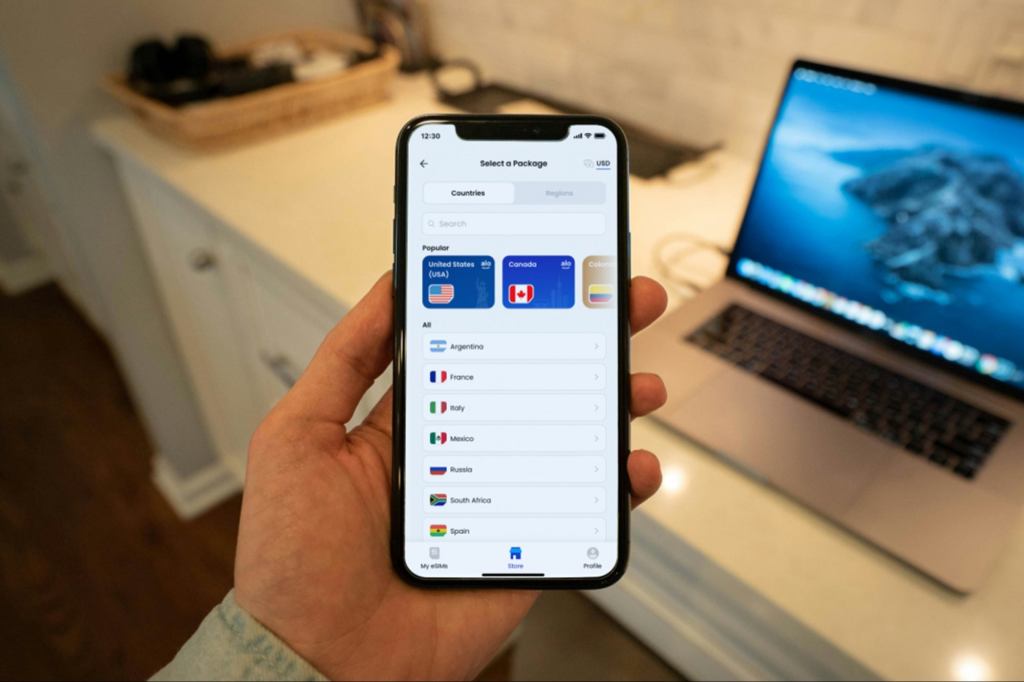
aloSIM’s eSIM card for travel data offers a smarter alternative. For $24.97, new customers get $50 in credit toward prepaid eSIM data packages that work in over 200 countries, potentially covering 11+ weeks of travel data since packages start at just $4.50 for seven days. An eSIM card is a fully digital SIM that you can install on a phone or tablet quickly and easily.

How eSIM technology benefits business travelers

Rather than juggling physical SIM cards or accepting punishing roaming fees, eSIM technology lets you download a digital SIM card directly to your compatible device. Once you’ve purchased credit through aloSIM, you simply select a data package for your destination, install the eSIM, and activate it upon arrival. You’ll connect to local 5G and LTE networks at local prices without the surprise charges that typically appear on your next carrier bill, the company says.

Your eSIM itself never expires and carries no monthly fees, though individual data packages are only valid for their stated duration (seven days, 30 days, etc.), and unused data doesn’t roll over. You have 12 months from redemption to use your $50 credit.

Compatible with Androids and iOS devices, each data plan includes a bonus Hushed phone number for the same duration, giving you a private line for voice calls and texts during your trip. Customer reviews highlight the platform’s reliability across diverse use cases. Business travelers praise the seamless coverage and competitive pricing, while others note it’s an affordable way to keep team members connected on hand-me-down devices during international projects.

With 4.5/5 stars on the App Store and 4.2/5 on Google Play Store, aloSIM has proven its reliability among mobile professionals. The service was recently featured on SaltWire for “changing the way people use their phones on vacation,” though for entrepreneurs, it’s less about vacation and more about maintaining productivity across borders without budget-breaking fees.

Get aloSIM’s $50 credit for $24.97 while this 50% discount is available. This deal is available for new customers only.

StackSocial prices subject to change.

TL;DR: Get $50 in aloSIM credit for $24.97 and access affordable mobile data in 200+ countries without roaming charges.

With a large population of the global workforce now working remotely and international business travel rebounding to pre-pandemic levels, entrepreneurs face a familiar pain point: astronomical roaming charges. Traditional carriers often charge $20 per day for international data, turning a week-long business trip into a $140 line item on your expense report.

aloSIM’s eSIM card for travel data offers a smarter alternative. For $24.97, new customers get $50 in credit toward prepaid eSIM data packages that work in over 200 countries, potentially covering 11+ weeks of travel data since packages start at just $4.50 for seven days. An eSIM card is a fully digital SIM that you can install on a phone or tablet quickly and easily.

https://www.entrepreneur.com/science-technology/this-esim-cuts-international-roaming-fees-for-just-25/501685


5 Hidden Tax Traps That Can Drain Your Profits — and How to Avoid Them

Opinions expressed by Entrepreneur contributors are their own.

Key Takeaways

  • Understanding and avoiding common tax pitfalls can help entrepreneurs significantly reduce financial burdens as their business grows.
  • Personal and business expenses should be kept separate to minimize audit risks, and worker classification needs to be accurate to avoid costly tax penalties and legal issues.
  • Investment in a retirement plan and proper management of estimated tax payments can lead to long-term benefits and save entrepreneurs from stressful tax seasons.

Entrepreneurial success feels powerful. Sales rise, clients multiply and opportunities begin to flow. But what most entrepreneurs never see coming is the increase in tax responsibility that grows right along with their business. The bigger your income becomes, the more exposure you have to costly mistakes.

These traps do not show up when you are struggling. They show up when you start winning. Knowing where they are and how they work is one of the smartest ways to protect your profit and stay ahead of problems that can slow down your momentum.

Trap 1: The wrong business structure

The first trap is running your business under the wrong structure. Most entrepreneurs start with a sole proprietorship or a single-member limited liability company because it seems straightforward. That simplicity becomes expensive as profits increase. These structures require you to pay self-employment tax on all your earnings in addition to regular income tax. As your business grows, this becomes a major financial burden.

At a certain point, shifting to a structure such as an S corporation or a partnership allows you to pay yourself properly and reduce your overall tax bill. The decision must be made with strategy, not emotion. Choosing the right structure at the right time is one of the strongest moves you can make to keep more of what you earn.

Related: I Ignored This Tax Strategy For 21 Years — and It Cost Me Hundreds of Thousands of Dollars

Trap 2: Lifestyle spending treated as business spending

The second trap appears when lifestyle creep gets mixed in with business expenses. As entrepreneurs start to experience real success, their lifestyle naturally elevates. There is nothing wrong with enjoying your wins. The trouble comes when personal spending starts showing up in the business books.

Many owners assume that if the business card covers it, the expense becomes deductible. That is not how the tax code works. The Internal Revenue Service wants proof that every expense is ordinary for your industry and necessary for your business. When the lines between personal and business spending blur, you increase your audit risk and set yourself up for penalties. The safest and smartest approach is complete separation. Personal spending stays personal. Business expenses stay documented.

Trap 3: Mistakes in worker classification

The third trap appears as your team grows. Many entrepreneurs try to classify workers as independent contractors because it seems easier than hiring employees. They want to avoid payroll taxes and additional reporting. But classification is based on control, not convenience.

If you decide how the worker performs their job, when they work, the tools they use or the method they follow, that person is most likely an employee. If the IRS or a state agency reclassifies that worker, you can owe back taxes, penalties, interest and even face legal issues. This is an expensive mistake, and one that happens more often than people realize. Strong entrepreneurs get advice early, so their hiring practices stay compliant and their growth does not create unnecessary risk.

Trap 4: No retirement plan for the owner

The fourth trap is failing to prioritize your own financial future. Entrepreneurs often pour everything into the business and forget to build a retirement plan. Without a plan such as a Solo 401(k), a SEP IRA or a defined benefit plan, you miss out on major tax advantages. These plans allow you to move money away from taxable income and into long-term savings that benefit you, not the government. A strong retirement plan reduces your tax bill today and strengthens your security tomorrow. Retirement planning is not something to delay until later. It should be part of your strategy now. The earlier you begin, the more powerful the long-term benefit becomes.

Related: 4 Ways To Eliminate (Or Significantly Reduce) Your Tax Bill

Trap 5: Missing or incorrect estimated tax payments

The fifth trap is failing to make accurate estimated tax payments. Employees have taxes withheld for them. Entrepreneurs do not. When your income climbs and your estimated payments stay the same, tax season becomes stressful. A year that should feel like a celebration suddenly becomes filled with penalties and unexpected balances due. This is one of the easiest traps to avoid. Review your income regularly. Update your estimated payments as revenue increases. Staying current with the IRS protects your cash flow and helps you stay in control of your financial picture.

Entrepreneurial success changes everything. It changes your income, your opportunities and the tax rules that apply to you. The entrepreneurs who build real wealth are not the ones who only know how to earn money. They are the ones who know how to keep it. When you understand these traps and plan ahead, you protect your profit, strengthen your future and grow with confidence. Success is not just about how fast you rise. It is about how wisely you manage what you build.

Key Takeaways

  • Understanding and avoiding common tax pitfalls can help entrepreneurs significantly reduce financial burdens as their business grows.
  • Personal and business expenses should be kept separate to minimize audit risks, and worker classification needs to be accurate to avoid costly tax penalties and legal issues.
  • Investment in a retirement plan and proper management of estimated tax payments can lead to long-term benefits and save entrepreneurs from stressful tax seasons.

Entrepreneurial success feels powerful. Sales rise, clients multiply and opportunities begin to flow. But what most entrepreneurs never see coming is the increase in tax responsibility that grows right along with their business. The bigger your income becomes, the more exposure you have to costly mistakes.

These traps do not show up when you are struggling. They show up when you start winning. Knowing where they are and how they work is one of the smartest ways to protect your profit and stay ahead of problems that can slow down your momentum.

https://www.entrepreneur.com/money-finance/how-to-avoid-5-hidden-tax-traps-that-can-drain-your-profits/499934


Power Your Work with AI Using Windows 11 Pro For $10

Disclosure: Our goal is to feature products and services that we think you’ll find interesting and useful. If you purchase them, Entrepreneur may get a small share of the revenue from the sale from our commerce partners.

For the first time since its introduction in 2021, Windows 11 finally overthrew Windows 10 to become the leading operating system this year.

Due to its artificial intelligence (AI) capabilities, cybersecurity, and enhanced multitasking and user interface, it’s now dominating the market, so if you’ve been waiting to make the switch, don’t get left behind. This is the perfect time; Windows 11 Pro is now $9.97 (MSRP $199). At 95% off, it’s barely an investment.

What’s new?

  • Multiple desktops if you want to separate business, school, side projects, and fun
  • Universal search that incorporates results from the internet
  • Keyboard shortcuts to minimize time between tasks
  • Hardware and software features to prevent cyberattacks, including multi-factor authentication, passkeys, and secure boot
  • CoPilot, your AI-powered assistant

Why upgrade now?

Compared to Windows 10 PCs, computers with Windows 11 “complete demanding workloads 42% faster on average” according to a 2023 study commissioned by Microsoft.

The onboarding process is smooth and fast, so you can get started on cutting little pockets of wasteful time from your workday as soon as possible.

Windows 10 is in the past — Microsoft stopped providing feature updates and security updates for the operating system earlier this year. This is a remarkable deal for Windows 11 Pro for just $9.97 (MSRP $199).

What can CoPilot do?

  • Brainstorm writing ideas with you
  • Generate images from your creative mind
  • Make coding suggestions to minimize time and flaws
  • Be your administrative assistant by finding flights, summarizing documents, replying to emails and more

This is a lifetime license, so once you make your purchase, you can redeem it within 30 days and install your new software onto your chosen PC. A whole new world of productivity awaits you, powered by one of the greatest technology companies today, dominating the frontier of AI.

Get Windows 11 Pro on sale for $9.97 today.

StackSocial prices subject to change.

For the first time since its introduction in 2021, Windows 11 finally overthrew Windows 10 to become the leading operating system this year.

Due to its artificial intelligence (AI) capabilities, cybersecurity, and enhanced multitasking and user interface, it’s now dominating the market, so if you’ve been waiting to make the switch, don’t get left behind. This is the perfect time; Windows 11 Pro is now $9.97 (MSRP $199). At 95% off, it’s barely an investment.

What’s new?

https://www.entrepreneur.com/science-technology/power-your-work-with-ai-using-windows-11-pro-for-10/501684


How a Single Feedback Habit Can Transform You Into the Leader Everyone Wants to Follow

Opinions expressed by Entrepreneur contributors are their own.

Key Takeaways

  • Constructive feedback should balance honesty with encouragement to build trust and accountability.
  • Leaders who embrace feedback demonstrate humility, openness and a commitment to continuous growth.
  • Building a feedback culture strengthens teams, fosters innovation and drives long-term success.

Leadership is often associated with vision, decision-making and strategy. Yet one of the most overlooked tools for growth is feedback. Both giving and receiving criticism play a central role in leadership development. Feedback helps leaders sharpen their abilities, understand how their actions affect others and create stronger team connections. Without it, blind spots remain hidden and growth slows.

Why feedback is essential for leaders

Great leaders are not defined by what they already know, but by how willing they are to learn. Feedback provides the mirror that reveals both strengths and weaknesses. According to a McKinsey study, organizations that encourage open feedback are 4.2 times more likely to outperform their peers in employee engagement and innovation.

For leaders, feedback builds self-awareness, which is the foundation of emotional intelligence. When leaders understand how their behaviors influence their teams, they can adjust accordingly, whether it means communicating more clearly or delegating more effectively.

A project manager once got feedback from their team that they were micromanaging too much and holding back creativity. At first, it was not easy to hear, but they decided to listen. Slowly, the manager stepped back and gave the team more freedom to make decisions. The change was clear. The team became more confident, shared new ideas and felt more motivated. What started as hard criticism turned into a chance for growth, both for the manager and the team.

Related: How Entrepreneurs Can Benefit From Valuable Feedback

How to give constructive feedback

Delivering feedback is one of the most delicate responsibilities of leadership. Poorly delivered criticism can demoralize a team member, while well-crafted feedback can inspire growth. Effective leaders balance honesty with respect.

A great framework for how to approach it is the SBI model (Situation, Behavior, Impact):

  • Situation: Describe the context (“In yesterday’s meeting…”).
  • Behavior: Focus on specific actions (“You interrupted a colleague several times…”).
  • Impact: Explain the effect (“It prevented others from sharing their ideas.”).

This approach avoids vague judgments and instead provides clarity and direction. Constructively framed feedback with specific behaviors in mind significantly improves performance outcomes.

Importantly, feedback should also include encouragement (if applicable). Highlighting strengths alongside areas for improvement ensures team members feel valued rather than criticized. For example: “Your presentation was engaging and well-structured. One way to make it even stronger would be to allow more time for questions at the end.” But be sure to stick to the truth and not fawn. The feedback should be stern if the situation requires it to be.

How to receive feedback as a leader

For many leaders, receiving criticism is harder than giving it. Yet the ability to accept feedback with acceptance is a mark of true leadership. Leaders who are defensive or dismissive shut down opportunities for growth, while those who listen with openness set a powerful example.

A practical strategy is to listen actively without immediately responding. Instead of justifying actions, leaders should thank the person for their input and reflect on it later. Some leaders even invite feedback deliberately, asking questions like, “What’s one thing I could do differently to support you better?” This not only encourages honesty but also signals that feedback is valued, not feared.

Building a feedback culture

Beyond individual exchanges, great leaders work to embed feedback into the culture of their organizations. A culture where feedback flows freely creates trust and accelerates development.

For example, consider a marketing team that holds short weekly check-ins. During these sessions, each member shares one strength they observed in a colleague and one suggestion for improvement. Over time, this practice reduces tension around feedback, encourages openness and helps team members grow together.

Practical steps include regular check-ins, anonymous surveys and celebrating examples of growth driven by feedback. When feedback is normalized, it shifts from being a source of fear to a driver of improvement. Teams become more agile, leaders remain adaptable and the organization as a whole benefits from continuous learning.

Related: You Need Constructive Feedback From Your Employees — Here’s How to Make Sure They Feel Safe Enough to Provide It.

Conclusion

Feedback is not criticism to be feared, but fuel for growth. Leaders who learn to give feedback with clarity and respect empower their teams to grow. Those who receive feedback with humility and openness inspire trust and model a culture of learning.

The most effective organizations are not those where leaders avoid tough conversations, but where feedback flows openly and constructively. Building this culture creates stronger leaders, more resilient teams and organizations that continuously adapt to change.

Sign up for How Success Happens and learn from well-known business leaders and celebrities, uncovering the shifts, strategies and lessons that powered their rise. Get it in your inbox.

Key Takeaways

  • Constructive feedback should balance honesty with encouragement to build trust and accountability.
  • Leaders who embrace feedback demonstrate humility, openness and a commitment to continuous growth.
  • Building a feedback culture strengthens teams, fosters innovation and drives long-term success.

Leadership is often associated with vision, decision-making and strategy. Yet one of the most overlooked tools for growth is feedback. Both giving and receiving criticism play a central role in leadership development. Feedback helps leaders sharpen their abilities, understand how their actions affect others and create stronger team connections. Without it, blind spots remain hidden and growth slows.

Why feedback is essential for leaders

Great leaders are not defined by what they already know, but by how willing they are to learn. Feedback provides the mirror that reveals both strengths and weaknesses. According to a McKinsey study, organizations that encourage open feedback are 4.2 times more likely to outperform their peers in employee engagement and innovation.

https://www.entrepreneur.com/leadership/this-feedback-loop-separates-great-leaders-from-the-rest/498993