Automate Your Way to More Job Interviews With This $25 Deal

Disclosure: Our goal is to feature products and services that we think you’ll find interesting and useful. If you purchase them, Entrepreneur may get a small share of the revenue from the sale from our commerce partners.

TL;DR: Get LoopCV Premium Plan: Lifetime Subscription for $24.97 (reg. $599) to automate job applications and track your success.

The job market remains competitive, with job-seekers spending an average of five months searching for their next role. For entrepreneurs who are pivoting between ventures or business professionals who are seeking new opportunities, manually applying to dozens of positions daily isn’t just time-consuming, it’s unsustainable. That’s where automation becomes your competitive advantage.

LoopCV Premium Plan: Lifetime Subscription transforms the job search grind into a streamlined system. This platform handles the repetitive tasks that drain your schedule, allowing you to focus on interview prep and strategic networking instead of clicking through endless application forms.

The job-application automation platform operates on a simple three-step process: upload your resume through the integrated CV Builder, select your target job titles and locations, then let LoopCV handle the outreach. The system searches 30+ job boards (including LinkedIn, Indeed, Monster, and Dice) collecting new postings daily and automatically submitting applications based on your preferences.

What sets LoopCV apart is its dual approach to job hunting. Beyond auto-applying to relevant positions, it also identifies recruiter contacts at target companies and sends personalized outreach emails using customizable templates. This combination ensures you’re not just another application in the pile. You’re proactively making connections.

The analytics dashboard provides actionable insights that most job seekers never access. Track email open rates, monitor which resume variations generate the most responses, and A/B test different approaches to optimize your success rate. With capacity for up to 50 parallel job searches and 300 monthly applications or emails, LoopCV lets you scale your search beyond what’s manually possible.

The Premium Plan typically retails for $599, but it’s currently available for $24.97. No subscriptions, no recurring fees.

Get LoopCV Premium Plan: Lifetime Subscription for $24.97 (reg. $599) today.

StackSocial prices subject to change.

TL;DR: Get LoopCV Premium Plan: Lifetime Subscription for $24.97 (reg. $599) to automate job applications and track your success.

The job market remains competitive, with job-seekers spending an average of five months searching for their next role. For entrepreneurs who are pivoting between ventures or business professionals who are seeking new opportunities, manually applying to dozens of positions daily isn’t just time-consuming, it’s unsustainable. That’s where automation becomes your competitive advantage.

LoopCV Premium Plan: Lifetime Subscription transforms the job search grind into a streamlined system. This platform handles the repetitive tasks that drain your schedule, allowing you to focus on interview prep and strategic networking instead of clicking through endless application forms.

https://www.entrepreneur.com/living/automate-your-way-to-more-job-interviews-with-this-25-deal/501649


5 Signs Your Startup Is Ready to Launch

Opinions expressed by Entrepreneur contributors are their own.

Key Takeaways

  • The article explores the key indicators entrepreneurs should consider before moving forward with a business idea.
  • It emphasizes the importance of preparation, testing and strategic planning to increase the chances of a successful launch.

Ever had a brilliant business idea but couldn’t quite pull the trigger? Maybe you’re unsure whether it will actually work. Maybe you don’t know the first step. Maybe the fear of becoming another statistic has you frozen.

And the fear is real. Only about 18% of first-time founders succeed.

After starting, scaling, and exiting a dozen-plus companies, and stumbling on several others, I can tell you this: luck helps, but success is about something more. Success is a process.

Here are the five signs that tell you you are truly ready to launch.

Related: Five Signs You’re Ready To Start Your Own Business

1. You have an idea that solves a real problem

The first question I ask myself is simple: “Will someone actually pay for this, and can I make a profit?”

One of my earlier companies built hit mobile games. Fun? Yes. Sustainable? Not at all. The business fizzled because we were chasing novelty instead of solving pain.

It wasn’t until we pivoted and built a business app that fixed a real bottleneck that revenue finally took off.

Fun is great. Depositing big checks is better.

You are not ready to launch until you can clearly articulate:

  • The problem
  • Who has it
  • How painful it is
  • Why your solution fixes it

No problem equals no business.

2. You have the people, money and systems ready

Once your idea is real, you need a simple, practical plan to guide execution. Focus on these four key areas:

  • Business and customer: Clearly define your story, target customer, what sets you apart, and your first measurable milestone—your Stage Gate.
  • People: Identify the specific roles and responsibilities required to reach that milestone.
  • Money: Estimate the resources and costs needed to get there, including staffing, tools, and operations.
  • Metrics: Determine the key performance indicators (KPIs) that will show whether your plan is on track or needs adjustment.

At the NSU Levan Center, I guide founders through this in 30 minutes, which quickly clarifies priorities and gaps. If your plan can’t be summarized clearly on four sticky notes, it’s not ready to launch.

3. You have made the idea real

Ideas do not inspire investors, partners or customers. Reality does.

When a beach property came up for sale near our Airbnbs on North Captiva Island, we had already lost three bids. So when this listing appeared, we moved fast. On the boat ride home, we named the property Sunset Escape. Before we reached the driveway, we had:

  • The domain registered
  • A logo commissioned
  • The brand is visualized across signage, golf carts and boats

When our offer was accepted, it felt inevitable because we had already made it real.

If your idea exists only in your brain, you are not ready to launch.

4. You have vetted the idea with the right community

Many startups fail not because the idea is bad, but because it hasn’t been properly tested with the right audience. Getting feedback from the right people early can save time, money, and effort.

Avoid:

  • Pitching only to professional naysayers who may dismiss ideas without context
  • Seeking validation from friends or family who aren’t familiar with startups

Do:

  • Join startup-focused communities or online forums where entrepreneurs exchange feedback
  • Attend local incubators or accelerators to connect with mentors and peers
  • Build a small advisory group of experienced founders, industry experts, or potential customers who can give specific, actionable feedback

A startup succeeds faster when you test ideas with people who understand the space and can provide constructive criticism — don’t try to navigate it alone.

Related: 5 Signs You’re Ready to Start Your Own Business

5. Your timing aligns with market demand

Successful launches often depend on introducing your product or service when the market is ready. Timing isn’t about luck — it’s about understanding trends, customer needs and competitive activity.

To increase your chances of success:

  • Observe industry trends: Track emerging technologies, customer behaviors, and gaps in the market.
  • Act quickly: Move fast to test, iterate, and launch once you see clear demand.
  • Simplify adoption: Make it easy for customers to try and buy your product.
  • Focus your efforts: Concentrate on doing one thing exceptionally well before expanding into other areas.

By paying attention to these practical signals instead of relying on abstract “waves,” you can make better-informed decisions about when to launch.

Now you are ready to launch

If you can:

  • Identify a real and pressing problem your customers face
  • Build a simple, focused strategy that outlines your business, people, money and metrics
  • Bring your idea into the real world with tangible assets or prototypes
  • Test it with the right advisors, peers or potential customers
  • Plan your launch around market readiness and practical timing

Then your startup is prepared to move forward. Execute carefully, stay focused and begin turning your idea into a sustainable business.

Key Takeaways

  • The article explores the key indicators entrepreneurs should consider before moving forward with a business idea.
  • It emphasizes the importance of preparation, testing and strategic planning to increase the chances of a successful launch.

Ever had a brilliant business idea but couldn’t quite pull the trigger? Maybe you’re unsure whether it will actually work. Maybe you don’t know the first step. Maybe the fear of becoming another statistic has you frozen.

And the fear is real. Only about 18% of first-time founders succeed.

https://www.entrepreneur.com/starting-a-business/5-signs-your-startup-is-ready-to-launch/499660


Manage a Lifetime of Complex Projects for Only $40

Disclosure: Our goal is to feature products and services that we think you’ll find interesting and useful. If you purchase them, Entrepreneur may get a small share of the revenue from the sale from our commerce partners.

A Project Management Institute study found that organizations waste an average of $122 million for every $1 billion invested due to poor project performance. If you’re managing multiple projects, juggling team schedules or trying to keep stakeholders informed without a proper system, things fall through the cracks. Now you can easily plan, execute and track projects from start to finish with a lifetime license for the Windows version of Microsoft Project Professional 2024 for just $39.97.

Enterprise-grade project management without the enterprise cost

Microsoft Project Professional 2024 gives you the tools large organizations use to manage complex projects. Pre-built templates help you start projects on the right track without building frameworks from scratch. The software auto-populates start and end dates based on task dependencies, so you’re not manually calculating timelines every time something shifts.

Gantt charts with task path highlighting show you exactly how tasks relate to each other and where bottlenecks might occur. Multiple built-in timelines let you visualize complex schedules in ways that make sense to different stakeholders. You can run what-if scenarios to test different task assignments before committing resources.

Built-in reports like burndown and Resource Overview give you data-driven insights to share with stakeholders. The timesheet feature captures time spent on both project and non-project work, which helps with accurate payroll, invoicing and resource allocation. Intuitive baselines let you track actual progress against your original project plan so you can spot deviations early.

The software syncs with Project Online and Project Server for teams that need centralized project management. Collaboration features let you hover over team members’ names to see their online presence and start chats or calls through Microsoft Teams for Business.

Please note that this is a one-time purchase that connects to your Microsoft Account, rather than to a specific device.

Get a lifetime license for the Windows version of Microsoft Project Professional 2024 for just $39.97.

Microsoft Project Professional 2024: Lifetime License for Windows

See Deal

StackSocial prices subject to change.

A Project Management Institute study found that organizations waste an average of $122 million for every $1 billion invested due to poor project performance. If you’re managing multiple projects, juggling team schedules or trying to keep stakeholders informed without a proper system, things fall through the cracks. Now you can easily plan, execute and track projects from start to finish with a lifetime license for the Windows version of Microsoft Project Professional 2024 for just $39.97.

Enterprise-grade project management without the enterprise cost

Microsoft Project Professional 2024 gives you the tools large organizations use to manage complex projects. Pre-built templates help you start projects on the right track without building frameworks from scratch. The software auto-populates start and end dates based on task dependencies, so you’re not manually calculating timelines every time something shifts.

Gantt charts with task path highlighting show you exactly how tasks relate to each other and where bottlenecks might occur. Multiple built-in timelines let you visualize complex schedules in ways that make sense to different stakeholders. You can run what-if scenarios to test different task assignments before committing resources.

https://www.entrepreneur.com/science-technology/manage-a-lifetime-of-complex-projects-for-only-40/501648


Hesitating on AI Could Cost You Everything — Here’s Why Bold Leaders Are Acting Now

Opinions expressed by Entrepreneur contributors are their own.

Key Takeaways

  • Leaders must focus on using AI to boost productivity and address workforce decline due to aging populations, rather than succumbing to fear-driven narratives about its dangers.
  • AI cannot replace our uniquely human traits; the key is to integrate AI in ways that enhance our humanity and quality of life.
  • Companies should adopt AI-centric strategies like creating digital CEO alter egos, preserving institutional knowledge and incentivizing AI innovation among employees.

Much of the AI discourse among business leaders revolves around fear. There are valid concerns with how we use AI and its effects, such as mass layoffs or eroding our humanity. However, we have no choice about whether we use AI.

The true challenge for leaders isn’t whether AI is safe to use, but how to use it wisely and urgently to sustain growth, productivity and human well-being in a rapidly changing world. From aging populations and talent shortages to the need for smarter education and innovation, AI offers the most powerful tool we have to boost productivity, preserve institutional knowledge and enhance human potential.

Instead of focusing on questions rooted in fear, let’s explore strategic and priority-focused questions that leaders should consider regarding the merits of AI.

Related: Does AI Actually Increase Productivity? These Ivy League Researchers Came to a Surprising Conclusion.

How can economies and companies grow as the population declines?

Declining and aging populations are a greater risk to prosperity and well-being than AI job losses or abuse. However, elected officials, education and most business leaders have largely ignored the consequences of declining birth rates and population aging for 50 years.

Population stability is the foundation of economic vitality. Across the developed world, birth rates have fallen below the level needed to sustain current populations, meaning workforces are shrinking and consumer bases are contracting. For any economy, long-term growth depends on a steady supply of productive workers and robust consumer spending. This means that sustaining population health isn’t just a demographic issue, but a business, quality of life and economic imperative.

National and global economies risk stagnation, increasing unemployment and deteriorating living standards comparable to the 20th Century’s Great Depression, when U.S. GDP shrank by nearly 30% from 1929 to 1933. Japan provides a current example of the stagnating economic effects of a declining and aging population. U.S. healthcare is another example with acute staffing shortages of doctors, nurses, other clinicians and caregivers, and a shortage of trained professionals to replace them. Make no mistake — other industries will follow.

Thankfully, the solution is straightforward: Leverage AI to boost productivity faster than population decline, while accelerating replacement education and training.

How can we implement AI to enhance our humanity and quality of life instead of degrading it?

We are facing a daunting challenge: how to integrate AI into learning, work and life without degrading humanity, while avoiding regulations that could hinder honorable pursuits and empower malicious takeover of AI leadership. This razor’s edge is an existential mid-21st-century wisdom challenge for every leader, organization, institution and individual.

The wisest decision begins by considering and thoroughly understanding a question that can readily guide integration with AI’s power: “What makes us human?” While the answers to this question are within reach, grounded in both science and our lived experiences, they’re often overlooked amid the rapid pace of technological change. Wise decisions can be lost in the distortions of our ego, which seeks perfection and certainty.

History offers contrary guidance. Innovation has enhanced society and the quality of life since the beginning. Every innovation had its detractors and “Doomsday” scenarios, including fire, literacy, electricity, nuclear energy, computers, television, the internet and smartphones.

Every breakthrough attracts both visionaries and those who misuse its power. Innovation is never flawless at the start. It’s a continuous process of refinement, where society and leadership work to channel new capabilities toward progress while containing the risks of misuse. And what marks true leaders in times of rapid change and innovation is the ability to not just create what’s possible, but guide it toward outcomes that strengthen the greater good.

AI and robotics mimic human behavior and excel at certain tasks. However, crucially, they cannot share human capacities such as intuition, intimacy, self-awareness, moral reasoning and free will. We blind ourselves to serious trouble when we believe otherwise.

Once we understand our humanness and AI’s lack of it, our AI integration “North Star” becomes enhancing our humanness.

Related: 3 Ways AI Can Make Humans Better (and How It Can Hurt Us)

What are constructive priorities for leaders, companies and individuals implementing AI and robotics?

Intelligent automation will soon change how we learn, work, live and adapt to accelerating change and complexity. Leaders are poised to guide stakeholders, particularly employees, to adapt enthusiastically instead of fearfully resisting the inevitable.

1. Adopt cutting-edge stakeholder communications to demonstrate AI’s usefulness and improve organizational agility

Every CEO should create their own mission-and-data-bounded AI alter ego — a digital version of themselves — curated to engage in personalized one-on-one communications with each stakeholder, including employees, customers, suppliers and shareholders. This practice is projected to become the norm within only a few years. Showcasing one’s own AI alter ego demonstrates leadership and confidence in controlled AI applications. The virtual CEO’s first mission should be explaining how and why each stakeholder can thrive in the emerging new reality.

2. Preserve institutional knowledge to fill talent and productivity gaps as valuable employees retire

Every company leader knows that a small percentage of employees have an outsized effect on company success and are virtually irreplaceable. Historically, population growth ensured a steady supply of younger talent to replace retiring veterans; however, this is no longer the case. By 2035, adults over 65 will outnumber those under 18. To make matters worse, young people are growing up slower as lifespan has expanded, leaving young incumbents less prepared to replace retirees. For the first time, AI can capture institutional knowledge and expertise rapidly and inexpensively to teach and coach young replacements for the group that previously led the company.

3. Create a voluntary retirement extension plan

Few people retire today following an Industrial Age model. Many are healthy, active and eager to continue contributing, but with less intensity and time commitment. Some companies are experimenting with extended retiree-friendly employment, but a transportable, scalable model has yet to emerge. Retiree talent will be an invaluable asset in the near future.

4. Create an AI competition

Some of your employees are likely already ahead of the company’s leaders and technology staff in terms of AI knowledge. An idea to consider that also encourages potential collaboration and company engagement is to create a competition for 5-10 AI ideas with meaningful incentives and a set of stringent requirements (such as bounded, controllable, secure models; ROI in 12 months or less; improved productivity, products or services without replacing people, and scalable or replicable in other parts of the company).

Related: How to Prepare Employees to Work With AI

Not embracing innovation means not moving forward

Major innovations always carry both promise and a level of risk. There is no safe, stationary path, only a wise one that amplifies what makes us uniquely human while leveraging the potential of integrated intelligent automation. Hesitation is the greater danger; slow or uncertain adoption threatens economic stagnation, loss of competitiveness and deeper demographic decline.

This is the moment for decisive leadership. Those who move forward with clarity and confidence, unafraid to admit what they don’t yet know while acting on what they do, will define the next era of growth and human progress.

Key Takeaways

  • Leaders must focus on using AI to boost productivity and address workforce decline due to aging populations, rather than succumbing to fear-driven narratives about its dangers.
  • AI cannot replace our uniquely human traits; the key is to integrate AI in ways that enhance our humanity and quality of life.
  • Companies should adopt AI-centric strategies like creating digital CEO alter egos, preserving institutional knowledge and incentivizing AI innovation among employees.

Much of the AI discourse among business leaders revolves around fear. There are valid concerns with how we use AI and its effects, such as mass layoffs or eroding our humanity. However, we have no choice about whether we use AI.

The true challenge for leaders isn’t whether AI is safe to use, but how to use it wisely and urgently to sustain growth, productivity and human well-being in a rapidly changing world. From aging populations and talent shortages to the need for smarter education and innovation, AI offers the most powerful tool we have to boost productivity, preserve institutional knowledge and enhance human potential.

https://www.entrepreneur.com/leadership/dont-hesitate-on-integrating-ai-youll-risk-becoming/500651


Stream Smarter for $14.97: Unlimited Entertainment for Busy Entrepreneurs

Disclosure: Our goal is to feature products and services that we think you’ll find interesting and useful. If you purchase them, Entrepreneur may get a small share of the revenue from the sale from our commerce partners.

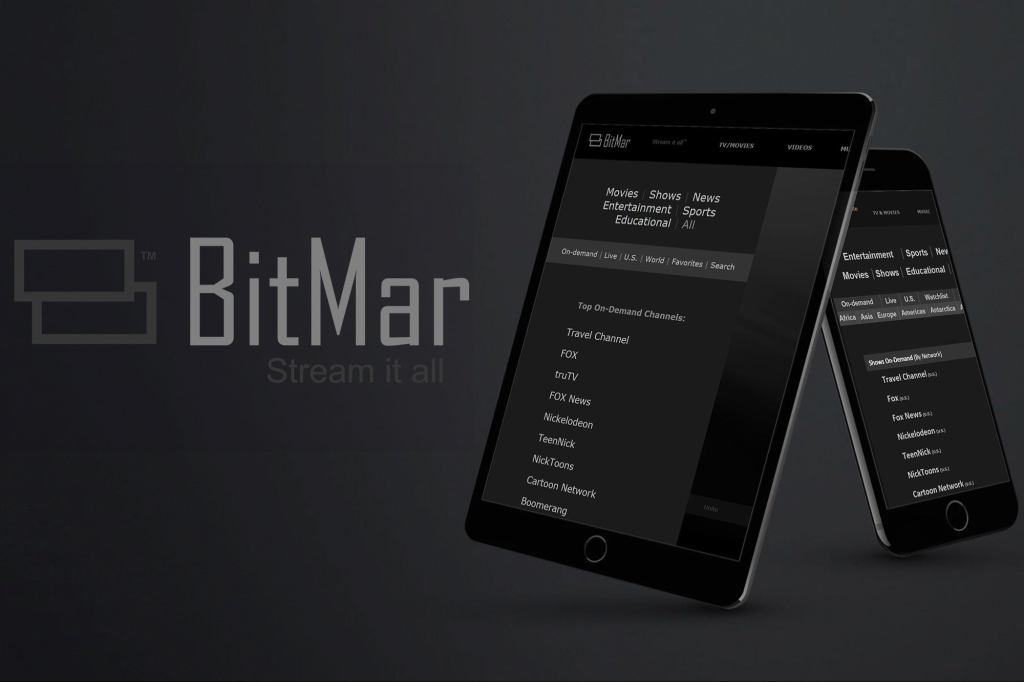
TL;DR: BitMar is a streaming content finder that’s offering lifetime access to millions of movies, TV shows, and channels for $14.97.

Between investor meetings, strategy sessions, and the daily grind of building a business, entrepreneurs need efficient ways to unwind. The average American now subscribes to four streaming services at a cost of roughly $50 per month, according to recent industry data. That’s $600 annually just to access fragmented content across multiple platforms.

BitMar’s lifetime content-finding subscription offers a different approach. For $14.97 (regularly $150), this AI-powered content finder aggregates millions of free movies, TV shows, channels, and videos from across the web into a single, streamlined interface.

How it works for business professionals

BitMar uses artificial intelligence technology similar to Bing’s search engine, but it’s specifically optimized to filter streaming content. The platform connects you to more than 200,000 free on-demand channels (locally, nationally, and internationally) plus millions of movies, TV shows, and songs from various sources across the web.

For entrepreneurs who are managing tight budgets, the value proposition is clear. You’re not paying for content itself, but for access to the platform, similar to an all-you-can-eat buffet model. The service includes fewer ads than watching directly on YouTube and works across up to five devices, from your laptop during travel to your smart TV at home.

BitMar is fully compliant with the Digital Millennium Copyright Act (DMCA), the company says. Content creators and owners monetize their work through the traffic BitMar directs to their content, making it a sustainable model for both users and creators. The platform has earned 4.1 out of 5 stars on Google Play Store.

Instead of juggling multiple streaming subscriptions that drain your monthly budget, you can access more entertainment than Cable, Netflix, Disney Plus, and Amazon Prime combined through this lifetime deal for a one-time payment.

Get BitMar Streaming Content-Finder: Lifetime Subscription for $14.97 (reg. $150).

StackSocial prices subject to change.

TL;DR: BitMar is a streaming content finder that’s offering lifetime access to millions of movies, TV shows, and channels for $14.97.

Between investor meetings, strategy sessions, and the daily grind of building a business, entrepreneurs need efficient ways to unwind. The average American now subscribes to four streaming services at a cost of roughly $50 per month, according to recent industry data. That’s $600 annually just to access fragmented content across multiple platforms.

BitMar’s lifetime content-finding subscription offers a different approach. For $14.97 (regularly $150), this AI-powered content finder aggregates millions of free movies, TV shows, channels, and videos from across the web into a single, streamlined interface.

https://www.entrepreneur.com/living/stream-smarter-for-1497-unlimited-entertainment-for-busy/501603


Stop Collecting AI Tools — Build a Business That Runs While You Sleep

Opinions expressed by Entrepreneur contributors are their own.

Most solopreneurs collect AI tools like they’re Pokémon.

A new one launches. You grab it.
The old one gathers dust.
And somehow, your business still runs on manual effort and late-night stress.

That’s because AI isn’t the bottleneck.
The real bottleneck is having a system that turns AI into outcomes.

In this video, I walk through my 5-Step SCALE Method — a practical framework for building real leverage so your business runs without you doing everything yourself.

Here’s what you’ll learn:

SCAN — Use ChatGPT Atlas like a browser with a brain
Turn Atlas into your research hub to move faster, pull insights from any page and eliminate repetitive tasks without endless copy-paste work.

COMPILE — Identify what to automate next
Use Atlas for a few weeks, then ask it to surface 10 manual tasks you could automate with n8n. You’ll immediately see where your time is leaking.

ASSESS — Let AI analyze your competitors
Activate Agent Mode to research your market for you—messaging, offers and positioning—so you’re not guessing what works.

LAUNCH — Build workflows that run while you sleep
Create an n8n or Zapier flow so one uploaded video turns into a steady stream of short-form content using tools like Opus Clip to drive attention and leads.

EVALUATE — Track what’s actually working
With Lovable and n8n, build a live dashboard that answers questions like:

  • What content is performing best this month?
  • Where is my funnel leaking leads?

You can even have it scan your site weekly and suggest improvements.

This isn’t about shiny AI tricks. It’s about building a business that compounds—using a system you can run as a solopreneur, without needing to be technical.

The AI Success Kit is available to download for free, along with a chapter from my new book, The Wolf is at The Door.

Most solopreneurs collect AI tools like they’re Pokémon.

A new one launches. You grab it.
The old one gathers dust.
And somehow, your business still runs on manual effort and late-night stress.

That’s because AI isn’t the bottleneck.
The real bottleneck is having a system that turns AI into outcomes.

https://www.entrepreneur.com/growing-a-business/stop-collecting-ai-tools-build-a-business-that-runs/501757


What 40 Years of Leadership Taught Me About Setting Goals That Deliver Results

Opinions expressed by Entrepreneur contributors are their own.

Key Takeaways

  • Why many leaders struggle with goal setting in uncertain times and what that hesitation reveals about how companies actually operate.
  • A proven leadership mindset for building focus, alignment and momentum as businesses plan for the year ahead.

I believe setting goals should be as automatic in the new year as turning the page on a calendar, yet I’m always surprised by how many CEOs don’t do it at all. Goals are the roadmap for a company’s journey, and without one, it’s hard to understand how leaders expect to arrive anywhere meaningful.

In my experience, leaders who avoid goal setting usually fall into one of two camps: they don’t have a clear process, or they feel paralyzed by economic uncertainty. But difficult conditions make direction more important, not less. When the seas are rough, you don’t abandon the map — you rely on it.

Related: 3 Startup Success Secrets Learned on a 40-Year Journey From Go-For to Billionaire

Goal setting 101

Goal setting isn’t static. Even with a strategy in place, business today requires constant adjustment. What some call herding cats, I simply call a normal Tuesday.

Our approach is straightforward: we maintain a one-year plan and a three-year plan, both revisited midway through the year to assess what’s working and what needs recalibration. Each plan includes no more than three primary goals. Fewer than three lacks focus; more than three turns strategy into a cluttered to-do list.

Those goals must be challenging, specific and measurable. “Double our revenue” is a goal. “Increase revenue” is not. We aim for what we call BHAGs — Big, Hairy, Audacious Goals — because they force the organization to stretch. If a brand grows from five locations to 50 instead of 100, that’s still meaningful progress. Playing it safe may allow you to claim success, but it rarely leads to real growth.

Involve the entire organization

Even after four decades in business, we continue to involve everyone in the goal-setting process. We survey teams across our franchise brands, gather ideas and vote on the most critical priorities. Inspiration can come from anywhere, and engagement creates ownership.

Each brand also defines success differently. A mature signage brand may focus on increasing average unit volume or expanding the number of million-dollar locations. A newer franchise may prioritize entirely different benchmarks. The key is alignment around goals that actually reflect where the business is today.

Measure what moves the goal

Setting goals isn’t enough — you must decide how you’ll measure progress. I call these lead measures: the specific actions that drive results. Every goal should have two or three lead measures attached to it.

If your goal is to double revenue, what daily or weekly sales activity will get you there? If you want to launch a new product every quarter, what milestones and deadlines must be met along the way? Big outcomes are built from consistent, repeatable actions.

Related: I Started My Business In My Mom’s Basement at the Age of 17. Here are 5 Rules I Wish I Had Known, But Had to Learn the Hard Way

New year, real progress

This is how businesses win — not by fixating on an end-of-year number, but by executing the right actions every day. Just as a basketball team wins one basket at a time, companies grow one call, one meeting and one decision at a time.

After 40 years, I’ve never been more optimistic. Clear, actionable goals have positioned us to finish 2025 strong and set the foundation for an even better 2026. That confidence doesn’t come from hope — it comes from discipline, clarity and a roadmap that shows exactly where we’re headed.

Key Takeaways

  • Why many leaders struggle with goal setting in uncertain times and what that hesitation reveals about how companies actually operate.
  • A proven leadership mindset for building focus, alignment and momentum as businesses plan for the year ahead.

I believe setting goals should be as automatic in the new year as turning the page on a calendar, yet I’m always surprised by how many CEOs don’t do it at all. Goals are the roadmap for a company’s journey, and without one, it’s hard to understand how leaders expect to arrive anywhere meaningful.

In my experience, leaders who avoid goal setting usually fall into one of two camps: they don’t have a clear process, or they feel paralyzed by economic uncertainty. But difficult conditions make direction more important, not less. When the seas are rough, you don’t abandon the map — you rely on it.

https://www.entrepreneur.com/growing-a-business/what-40-years-of-leadership-taught-me-about-setting-goals/500749


6 Principles That Help Startups Survive Downturns While Others Collapse

Opinions expressed by Entrepreneur contributors are their own.

Key Takeaways

  • Why market downturns expose hidden weaknesses in early-stage startups and force founders to rethink how they operate, spend and grow
  • A practical mindset shift founders can use to make smarter decisions under pressure and position their companies to emerge stronger when conditions improve

When markets tighten, hype stops working. In a downturn, startups don’t fail because founders lack ambition — they fail because cash discipline, focus and execution break down. I’ve seen promising companies collapse not from bad ideas, but from spending ahead of proof, hiring ahead of revenue and raising capital before they had leverage.

Downturns reward a different playbook: operate lean, stay flexible and make decisions that extend runway without sacrificing long-term viability. Here are six principles founders can use to survive tough markets and emerge stronger.

Why downturns are so hard for startups

A market downturn stress-tests every assumption a startup is built on. Customers hesitate, sales cycles stretch and investors pull back. For early-stage companies without predictable revenue, this shift can be existential.

What changes most isn’t demand — it’s tolerance for uncertainty. Customers want proof not promises. Investors want traction not vision. And founders must replace optimism with precision.

Related: I Spent $160,000 of My Family’s Savings to Bootstrap a Startup — Here’s What No One Tells You About Funding

Treat cash like oxygen

Cash flow — not vision — is what keeps a startup alive. Start by identifying what directly drives revenue or retention and cut everything else. Pause nice-to-have tools, renegotiate vendor contracts and question every recurring expense.

A simple rule: if it doesn’t help you acquire, retain or serve customers better this quarter, it’s a liability.

Operate lean enough to pivot

Downturns punish slow decision-making. Small teams with clear ownership can test, learn and adjust faster than layered organizations.

Ship MVPs, validate assumptions quickly and resist overbuilding. Speed isn’t about working more — it’s about removing friction.

Use AI and flexible talent to stay light

AI tools now replace work that once required full teams — from content and analytics to customer support and ops. Pair that with freelancers and contractors to access expertise without long-term commitments.

The advantage isn’t cost alone — it’s adaptability. You can scale effort up or down without breaking your burn rate.

Keep your day job longer than feels comfortable

Quitting too early adds unnecessary pressure. If your startup isn’t generating reliable income, your job is effectively your first investor.

Stability buys better decisions. Build traction nights and weekends, validate demand then go all-in when the business — not emotion — justifies it.

Build with believers not just employees

The strongest downturn-era startups are built by people aligned around mission not payroll. Co-founders, advisors and early contributors who believe in the outcome create durability money can’t buy.

Align expectations early. Document equity, roles and milestones. Trust compounds — or erodes — fast.

Delay funding until you have leverage

Raising too early trades flexibility for capital. Bootstrapping forces focus, customer obsession and discipline.

The best time to raise isn’t when you’re desperate — it’s when your business already works and capital accelerates what’s proven.

Related: Starting a Business? Before You Seek VC Money, Here’s Why Bootstrapping May Be the Better Choice.

Final thought

Downturns strip away noise. They expose which startups were built on fundamentals and which relied on momentum.

If you can build something sustainable now — when conditions are unforgiving — you won’t just survive the recovery. You’ll dominate it.

Key Takeaways

  • Why market downturns expose hidden weaknesses in early-stage startups and force founders to rethink how they operate, spend and grow
  • A practical mindset shift founders can use to make smarter decisions under pressure and position their companies to emerge stronger when conditions improve

When markets tighten, hype stops working. In a downturn, startups don’t fail because founders lack ambition — they fail because cash discipline, focus and execution break down. I’ve seen promising companies collapse not from bad ideas, but from spending ahead of proof, hiring ahead of revenue and raising capital before they had leverage.

Downturns reward a different playbook: operate lean, stay flexible and make decisions that extend runway without sacrificing long-term viability. Here are six principles founders can use to survive tough markets and emerge stronger.

https://www.entrepreneur.com/growing-a-business/6-principles-that-help-startups-survive-downturns-while/499477


Don’t Confuse Fast Growth With Real Success. Here’s Why High-Performing Entrepreneurs Choose to Take It Slow.

Opinions expressed by Entrepreneur contributors are their own.

Key Takeaways

  • Sustainable success comes from intentional, steady growth — not hastily scaling up or chasing short-term gains.
  • High-performing entrepreneurs focus on fundamentals like brand clarity, reliable systems, customer experience, training and marketing to create long-term stability.
  • A deliberate growth strategy protects brand integrity and gives you adequate time to ensure your operations and team are robust and resilient enough to handle success.

Slow and steady wins the race. Sometimes, you need to slow down to speed up. The journey of a thousand miles starts with one step. There are so many sayings that express the idea that slow progress is better than sudden success, yet most businesses don’t operate that way. On the contrary, business owners often feel an intense pressure to achieve instant success and dominate the market.

The owners of high-performing businesses understand that hastily scaling up or chasing short-term gains is not a viable long-term strategy, and they don’t equate slow progress with failure. These entrepreneurs choose to grow their businesses strategically, laying a solid foundation for sustainable success and resilience in down markets.

Related: Don’t Be Fooled By Overnight Success Stories — Building a Business Takes More Time Than You Think. Here’s How to Play the Long Game.

The success fantasy

Anyone who reads financial publications knows that the companies they feature are usually the ones experiencing unprecedented growth, never the ones chugging along at a steady pace. Why is that? We live in a success-obsessed world, and the story of the small business becoming an overnight sensation is the one that sells.

While the instant success story may not be a fairy tale, most of the time, the author leaves out key details, such as the many prior years of slow growth the company experienced before hitting the jackpot, or the impending nightmare that comes when it isn’t prepared for sudden success. Crazy fast growth is not the gift some would have you believe. In fact, without the proper systems, capacity, staffing or inventory to keep up, a burst of success could end up breaking a business.

Slow and steady wins, but it’s not a race

Bruce Lee is credited with saying, “Long-term consistency trumps short-term intensity.” Most successful entrepreneurs didn’t become so by banking on fast growth or seeking instant results. They chose the path of slow and steady. They started out playing the long game, focusing on fundamentals like brand clarity, reliable systems, customer experience, training and marketing to create long-term stability rather than accelerate short-term growth.

Intentional growth allows a business to preserve its integrity and the customer experience at every stage. Growing too quickly, without the proper foundation to support sustained rapid growth, can force a company to dilute its brand, lose its identity, compromise quality and overwork employees to keep pace with demand — a recipe for disaster.

Related: The Power of Slow Scaling

Slow now, strong later

Contrary to most people’s understanding of success, slow growth does not signal stagnation. A deliberate growth strategy means a business can take adequate time to ensure its operations and team are robust and resilient enough to handle success without risking the erosion of the very qualities that made it successful. By taking a measured approach to growth, a company’s infrastructure will be better able to scale up as activity increases while maintaining its independence and continuing to stand out from the competition.

For high-performing entrepreneurs, “slow now, strong later” are words to live by. They are the key to protecting brand integrity and ensuring their companies are prepared to manage growth. Their short-term goals all support their long-term vision for the company. Successful business owners focus on sustainable strategies that will pay off over time and building a strong foundation now to avoid having to rebuild later.

While we live in a world preoccupied with instant gratification, as business owners, we need to go against the flow and practice patience if we want to stick around longer than the current viral trend. With a slow, intentional growth strategy, we can build our companies to stand the test of time, providing exceptional value to our customers as well as stability for our employees and maintaining a strong market presence. In the end, the businesses that prioritize strategic, foundational growth will emerge as the true leaders of their industries.

Key Takeaways

  • Sustainable success comes from intentional, steady growth — not hastily scaling up or chasing short-term gains.
  • High-performing entrepreneurs focus on fundamentals like brand clarity, reliable systems, customer experience, training and marketing to create long-term stability.
  • A deliberate growth strategy protects brand integrity and gives you adequate time to ensure your operations and team are robust and resilient enough to handle success.

Slow and steady wins the race. Sometimes, you need to slow down to speed up. The journey of a thousand miles starts with one step. There are so many sayings that express the idea that slow progress is better than sudden success, yet most businesses don’t operate that way. On the contrary, business owners often feel an intense pressure to achieve instant success and dominate the market.

The owners of high-performing businesses understand that hastily scaling up or chasing short-term gains is not a viable long-term strategy, and they don’t equate slow progress with failure. These entrepreneurs choose to grow their businesses strategically, laying a solid foundation for sustainable success and resilience in down markets.

https://www.entrepreneur.com/growing-a-business/stop-chasing-fast-growth-heres-what-leads-to-real-success/500800


Skipping Background Checks Is a Risk No Founder Can Afford. Here’s the Threat You Might Not See Coming.

Opinions expressed by Entrepreneur contributors are their own.

Key Takeaways

  • Many business owners view background checks as an unnecessary expense, but the price is minimal compared to the legal and reputational damage caused by a problematic hire.
  • From verifying college degrees to uncovering criminal convictions, rigorous screening is the only way to ensure an applicant is truly who they claim to be.
  • To conduct an effective background check program, you must define clear parameters, identify the verifiable information that is needed, and inform applicants/employees about the type of background checks that will be required or performed.

Trust is an inherent part of our human nature; we tend to see and believe the best in others. However, when you discover that an employee intentionally withheld crucial information, such as a criminal conviction, the potential repercussions can far exceed their contributions to the company.

About 12 years ago, I encountered this very situation. When an individual applied for a position at our company, she completed and signed the job application but failed to disclose a prior criminal conviction. She worked closely with our small staff for almost two years. While I strongly believe in conducting thorough background checks before extending job offers, the tools we use for these checks today did not exist at the time of her hiring back then.

Since our company transcribes law enforcement, legal and medical files, we are required to adhere to the stringent standards set by the Health Insurance Portability and Accountability Act (HIPAA) and the mandates of the Criminal Justice Information Services (CJIS) division of the FBI.

The situation escalated when our company was obligated to provide background information to CJIS. Late one afternoon, the employee came into my office and informed me that she could not comply with the request for information.

“Of course you can,” I replied. “Everything required on the form is information you previously provided on your employment application.”

You can probably foresee the dilemma I faced. The employee had failed to disclose her prior criminal conviction on her job application. Though her dishonesty was unethical, the legal consequences for not disclosing such information on an employment application are not as severe as those related to HIPAA or CJIS forms. Failing to disclose prior convictions on those forms could result in felony charges and civil penalties for our company.

The following morning, I dismissed her for cause. The next week, she applied for unemployment benefits, claiming that the previous documents were forged and did not contain her signature. I appeared at a hearing weeks later, only to leave disappointed when a Colorado review board accepted her story and granted her benefits, despite my objections.

Related: Making The Right Choice: Building A Screening Policy For Job Candidates

The case for background checks

Today, my company conducts thorough fingerprint background checks through the Colorado Bureau of Investigation on every applicant, whether they are applying for a full-time, part-time or contract position. Some business owners and CEOs may view background checks as expensive and unnecessary. However, the cost is minimal compared to the potential liability of hiring a problematic employee.

At a minimum, you want to ensure that the person you are hiring is who they claim to be. Instances of padded resumes are common, as there are numerous cases of applicants submitting resumes with exaggerated educational and work histories.

It’s one thing for an applicant to falsely claim they increased annual sales by 500%, but it’s far more serious when someone asserts they earned a Master’s degree after only completing a few classes. This is not just misleading; it is outright deception. Here are some benefits of conducting background checks:

  • Check criminal histories to mitigate the risk of fraud and theft

  • Confirm the accuracy of educational and work credentials

  • Minimize the potential for workplace violence and abusive behavior

  • Ensure compliance with immigration laws

  • Check driving records for serious violations

Mitigating your company’s risk should be a top priority. Conducting background checks is an excellent first step in this process.

Legal and compliance considerations

When implementing a background screening process, it is essential to consider compliance and legal issues. It is advisable to have a legal expert review the specific federal and state statutes that regulate background checks.

You must also comply with the Fair Credit Reporting Act (FCRA) and the guidelines set by the Equal Employment Opportunity Commission (EEOC). Under federal law, discrimination based on race, color, religion, sex or national origin is prohibited. For example, a company cannot require background checks on applicants or employees of a specific race or religion. Additionally, there are extra protections for individuals who are over 40 years old and for those with disabilities.

The EEOC guidelines apply to companies that have 15 or more employees. For specific guidelines and requirements related to hiring and employment policies, particularly those involving background checks, it is important to consult a licensed labor attorney.

Related: How Employers Can Assess Job Applicants — and Avoid Costly Hiring Mistakes

What information does a background check reveal?

Background checks can vary in depth, ranging from minimal to extensive. Some companies conduct their own checks or hire small companies, while others hire private investigative firms.

Tyler Rogers, the CEO of Privin Consulting Network, is a military veteran who understands the complexities involved in managing corporate background checks. Practically every company uses some type of background check system. The key is understanding the legalities.

Just because an investigation uncovers certain information, sometimes they are prohibited from sharing everything per specific state or federal regulations. According to Rogers, companies have several options when verifying an applicant’s or employee’s professional and personal history. These options include:

  • Identity verification/public records search

  • Confirmation of education/licensing accomplishments

  • Internet search activity

  • Credit checks (when necessary)

  • Drug screen (when applicable)

  • Review of employment dates and responsibilities

  • Department of Motor Vehicles (DMV) Reports

  • Social networking/social media investigation

For more in-depth evaluations, companies looking to hire top executives may request human investigators to conduct personal surveillance and field investigations.

For example, a few months ago, two married executives from the same company were caught in an intimate moment on a concert video feed. As a result, an internal investigation revealed that both had violated company policy, leading to their dismissals. It didn’t take an undercover investigation to uncover the affair, but placing themselves in a public environment was a significant error in judgment.

In another case, a friend’s son recently applied for a Deputy Sheriff position. After submitting his resume online, he had to complete a series of steps, including a timed physical fitness obstacle course, an in-depth panel interview, a three-hour polygraph exam and a comprehensive background check. If he successfully completed all these stages, he would then undergo a medical exam, drug screening and psychological assessment. Only after passing all these requirements would the department extend a job offer.

Do you agree that our law enforcement officers should be held to the highest standards? I’m not suggesting that every company should invest the same resources in new recruits. However, since my employees transcribe law enforcement audio files, the FBI mandates that I perform extensive background checks on all employees and contractors.

How to implement an effective background check program

The first step in creating an effective background check program is to define clear parameters. Not every position requires an extensive background investigation, so it’s important to outline specific requirements for each role.

Next, identify the verifiable information that is needed. For positions in fields such as medicine, law and engineering, confirming educational qualifications and licensing is crucial due to their extensive requirements.

Selecting the right company for conducting employee background checks is also essential. When evaluating potential companies, ask for a list of their past clients that you can contact. Inquire about aspects such as job performance, accuracy, timeliness and cost.

Effective communication is another critical component of the process. Inform potential applicants and employees about the type of background checks that will be required or performed. Individuals who are concerned about previous issues or who have intentionally provided false or inaccurate information may choose to withdraw from consideration or resign.

The future of background screening

If you believe that future employment background checks will involve artificial intelligence, you are correct. AI-driven employment screenings are already in use. Just like with human screenings, it is essential to establish proper safeguards.

Continuous monitoring of high-risk positions should be a top priority. Employees who have access to sensitive information or significant assets need to be monitored consistently. Even FBI polygraph experts are required to undergo the same or similar examinations that they administer to others.

Finally, there is an increasing focus on the use of employee data. Individuals at certain levels may have access to highly sensitive information. Without effective monitoring, the risk of misuse and abuse is extremely high.

Related: How Background Verification Can Help to Hire the Right Candidate?

Background screening tools are an important safeguard

Hiring is undoubtedly one of the most important and costly aspects for any company or organization. It also represents a significant liability risk.

Implementing a comprehensive, fair and well-executed background screening program is essential for protecting your employees, customers and the reputation of your company. Keep in mind that the cost of conducting background checks is minimal compared to the long-term damage that can result from hiring an unethical employee or facing an expensive legal judgment.

Key Takeaways

  • Many business owners view background checks as an unnecessary expense, but the price is minimal compared to the legal and reputational damage caused by a problematic hire.
  • From verifying college degrees to uncovering criminal convictions, rigorous screening is the only way to ensure an applicant is truly who they claim to be.
  • To conduct an effective background check program, you must define clear parameters, identify the verifiable information that is needed, and inform applicants/employees about the type of background checks that will be required or performed.

Trust is an inherent part of our human nature; we tend to see and believe the best in others. However, when you discover that an employee intentionally withheld crucial information, such as a criminal conviction, the potential repercussions can far exceed their contributions to the company.

About 12 years ago, I encountered this very situation. When an individual applied for a position at our company, she completed and signed the job application but failed to disclose a prior criminal conviction. She worked closely with our small staff for almost two years. While I strongly believe in conducting thorough background checks before extending job offers, the tools we use for these checks today did not exist at the time of her hiring back then.

https://www.entrepreneur.com/leadership/the-one-hiring-step-that-no-founder-can-afford-to-overlook/500758