Why Are Google’s Founders Cutting Their Connection to California? One Reason.

Google has long been associated with Silicon Valley. After all, Sergey Brin and Larry Page founded their company in a garage in Menlo Park back in 1998. But now, the power duo is severing some of their connections to the state that made them extraordinarily rich.

In the 10 days before Christmas, an entity connected to Brin terminated or moved 15 California LLCs out of the state, according to documents reviewed by The New York Times. Seven of those companies were converted into Nevada entities.

Brin is following Page’s lead. More than 45 California LLCs associated with Page filed documents last month to either become inactive or relocate out of state.

The timing isn’t coincidental. A proposed California ballot measure would require residents worth more than $1 billion to pay a one-time tax equivalent to 5% of their assets. With the Google guys’ combined net worth exceeding $518 billion, that’s serious money at stake.

Read more

Sign up for the Entrepreneur Daily newsletter to get the news and resources you need to know today to help you run your business better. Get it in your inbox.

Google has long been associated with Silicon Valley. After all, Sergey Brin and Larry Page founded their company in a garage in Menlo Park back in 1998. But now, the power duo is severing some of their connections to the state that made them extraordinarily rich.

In the 10 days before Christmas, an entity connected to Brin terminated or moved 15 California LLCs out of the state, according to documents reviewed by The New York Times. Seven of those companies were converted into Nevada entities.

Brin is following Page’s lead. More than 45 California LLCs associated with Page filed documents last month to either become inactive or relocate out of state.

The timing isn’t coincidental. A proposed California ballot measure would require residents worth more than $1 billion to pay a one-time tax equivalent to 5% of their assets. With the Google guys’ combined net worth exceeding $518 billion, that’s serious money at stake.

Read more

Sign up for the Entrepreneur Daily newsletter to get the news and resources you need to know today to help you run your business better. Get it in your inbox.

https://www.entrepreneur.com/business-news/why-googles-founders-are-cutting-their-ties-to-california/501761


You Wouldn’t Hire Without a Job Description. Stop Deploying AI Without One

Opinions expressed by Entrepreneur contributors are their own.

Key Takeaways

  • AI agents need defined roles, clean data and oversight — not blind autonomy.
  • Treat AI like a hire. Give it scoped responsibilities, training and performance management.

Founders today face a practical dilemma that I see in almost every strategy meeting. They are desperate for the efficiency of AI but are terrified of introducing it into mission-critical workflows. They worry that an autonomous system might hallucinate, offend a client or break a process that took years to build.

The market has moved past the phase of idle experimentation. According to the 2025 AI Index Report from Stanford HAI, 78% of companies utilized AI in 2024.

The question is no longer if you use AI, but how autonomously you let it run. Against this backdrop, IBM calls 2025 the “year of AI agents,” while Capgemini emphasizes that trust — not capability — is now the main barrier to adoption.

To truly scale operations, you need to shift your mindset. You are not buying a software subscription. You are hiring a digital employee. The key to integrating AI without chaos is to choose the right tasks, structure your team knowledge and build reliable feedback loops.

Here is how to move from playing with chatbots to deploying a workforce.

Related: AI Won’t Fix Your People Problems — Here’s What I’m Seeing Inside Franchises and Frontline Teams

Understand the difference between talk and action

Before you deploy anything, your team must understand the strategic choice behind the technology. A standard chatbot is passive; it waits for a prompt and predicts the next likely word. Generative AI models like ChatGPT and Gemini mastered this prediction, but prediction alone is not agency.

As agentic AI matures, I see companies splitting into two camps. The first treats an agent as a universal helper that completes tasks by interacting with external tools. The second approach is ecosystem-driven, where the agent becomes a new point of entry into the company’s own services.

Ecosystem-level assistants, such as Alexa, Copilot or Alice AI, follow this second pattern. They act as connective tissue that routes users and completes workflows across first-party systems rather than just answering questions.

Real autonomy comes from this ability to decide and act inside real systems. We see the purest form of this in the physical world. Self-driving vehicles are not just predicting text. They are predicting how real-world objects will behave in the next second and making decisions based on that reasoning.

When you realize that an agent is closer to a self-driving car than a search engine, you realize that you cannot just turn it on and hope for the best. You need a management structure.

Define the role and scope of responsibility

The biggest mistake I see founders make is giving an AI agent a vague objective. You would never hire a human junior employee and tell them to simply “handle support.” You would give them a specific shift, a specific tier of tickets and a handbook of protocols.

You must do the same for your agent. Map the processes where automation adds clear value. Usually, this is in handling requests, classifying data or connecting disparate services.

Select two or three starting tasks. For example, do not ask the agent to manage all customer communication. Instead, ask it to draft responses for Tier 1 support tickets regarding shipping delays, which a human will then approve. Set measurable expectations regarding response time and accuracy.

Related: The Biggest AI Mistake Leaders Make Has Nothing to Do With the Technology Itself

Clean your data before you train

An AI agent relies entirely on the data you provide. In my experience, this is where most implementations fail. If your internal data is messy, your agent’s output will be messy.

Think of it like onboarding a new hire. If you hand a new employee a training manual full of contradictory information, typos and outdated policies, they will fail. Before you launch, you must review your current sources. Look at your CRM, your chat logs, your email threads and your call transcripts.

You need to clean this data by removing duplicates, fixing errors and archiving outdated entries. A strong starting dataset of at least several hundred high-quality examples will dramatically improve reliability.

Run a pilot with strict oversight

Once you have your “employee” and your “training manual” ready, you need a probation period. I recommend a pilot phase of four weeks.

Use this period to understand strengths and limitations. Since the agent works inside your processes, you must define clear collaboration rules. You need to decide who reviews its performance. In the first week, this should be a daily check. By the fourth week, it might be a weekly sample audit.

Most importantly, define what happens when it makes a mistake. An agent needs a “break glass in case of emergency” protocol where it can hand off a confused client to a human supervisor immediately.

Related: AI Can Clone Your Company in 48 Hours — But Here’s What You Need to Survive

Prepare your team for the change

Finally, remember that your human team needs to buy into this. Appoint an AI curator within your team who monitors quality and updates instructions.

When the agent processes 1,000 requests without escalation, celebrate that result. Show your team that because the agent handled the routine data entry, they were free to spend their day on high-value client strategy. If you treat your AI agents with the same rigor and management oversight that you treat your human staff, you will move from hype to impact very quickly.

Key Takeaways

  • AI agents need defined roles, clean data and oversight — not blind autonomy.
  • Treat AI like a hire. Give it scoped responsibilities, training and performance management.

Founders today face a practical dilemma that I see in almost every strategy meeting. They are desperate for the efficiency of AI but are terrified of introducing it into mission-critical workflows. They worry that an autonomous system might hallucinate, offend a client or break a process that took years to build.

The market has moved past the phase of idle experimentation. According to the 2025 AI Index Report from Stanford HAI, 78% of companies utilized AI in 2024.

https://www.entrepreneur.com/growing-a-business/this-is-the-quickest-way-to-ruin-your-business-with-ai/501106


The Biggest Opportunity in Real Estate Since 2008

Disclosure: Our goal is to feature products and services that we think you’ll find interesting and useful. If you purchase them, Entrepreneur may get a small share of the revenue from the sale from our commerce partners.

Something unusual is happening in commercial real estate. It’s a moment that comes around once every 15 years or so. Prices start to massively reward buyers. And buyers who understand market cycles begin assembling their war chests.

Prologis (NYSE: PLD) scaled their property holdings after 2008, and their stock gained 950% by 2021.

American Tower Corp (NYSE: AMT) did the same, and their stock gained 910% in that time period.

Finally, Crown Castle (NYSE: CCI) gained 1,300% after similar buying activity.

Today, these are some of the largest industrial real estate owners in the world, valued between $40 billion and $120 billion.

Now, the market is aligning again. This time, AARE is letting everyday investors in on the action.

What makes AARE’s opportunity even more interesting is that they’re not yet a public REIT. Like mutual funds for real estate, REITs (real estate investment trusts) allow investors to invest in large-scale property portfolios made up of income-producing real estate that is owned, operated, and/or financed by the trust.

And AARE is stilll at ~$39 million valuation, when their publicly traded peers are valued at more than 100x. A valuation gap this large means AARE investors have a chance at upside in addition to the classic income REIT investment.

A REIT portfolio 20+ years in the making

AARE has spent the last 20+ years building toward the ideal commercial real estate portfolio. With $2.75 billion+ in real estate transactions under their belt, the REIT strategy is straightforward:

  • Acquire income-producing commercial properties at discounted prices.
  • Build a diversified portfolio positioned for steady, long-term income.
  • Distribute up to 100% of taxable income to shareholders.

The company is targeting dividend payments within 24 to 36 months. That’s grounded in real performance, since they’re already generating cash flow and $7 million+ in recurring revenue, the company says.

Plus, up to 75% of their investor capital is directed into hard assets, anchoring AARE in tangible value, the company says. And now that the commercial real estate market favors buyers, AARE is adding even more. For investors, that means sharing in more income-generating residential and commercial properties.

Here’s why now is the moment to join them.

Real estate’s next ‘1,300%’ moment is underway

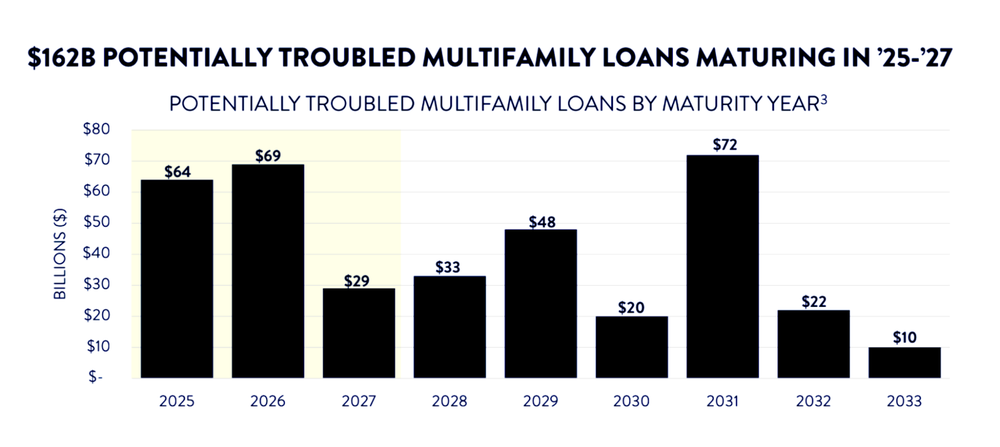
Between now and 2027, trillions of dollars in commercial loans, including roughly $162 billion in multifamily loans, will come due. Many owners can’t refinance at today’s rates. When debt matures and refinancing isn’t an option, sellers don’t always have a choice.

Image credit: AARE

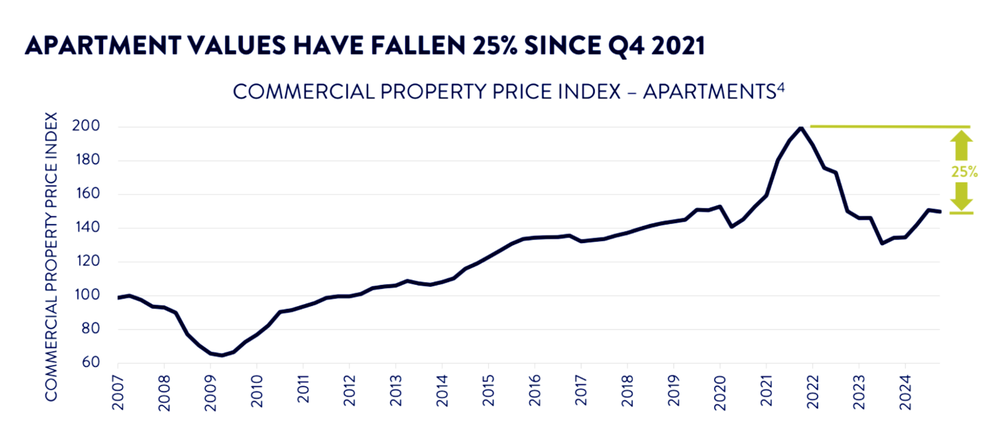
Since late 2021, apartment building values are down roughly 25%. That’s a big shift after a decade of steady growth.

Image credit: AARE

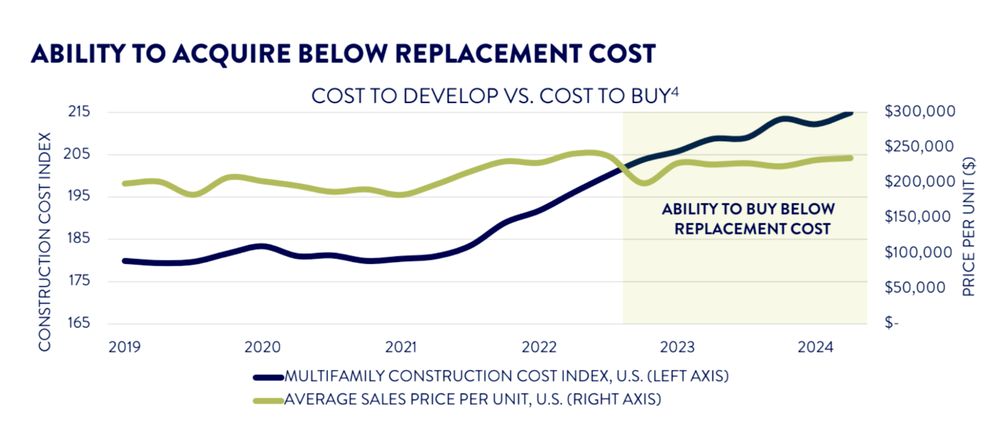
Construction costs have also jumped due to inflation and labor shortages. At the same time, building prices have fallen. This has created a promising scenario for buyers: existing properties now cost less than building new ones. It’s called buying “below replacement cost,” a classic value signal in real estate.

Image credit: AARE

The result: some of the most valuable real estate on the market is changing hands at 30% to 40% discounts.

Lastly, interest rates have reshaped the market over the last few years. From 2022 through 2024, the Federal Reserve raised rates at a historic pace. It increased borrowing costs and put pressure on property values across the commercial real estate market. But the cycle is now turning.

As the Federal Reserve begins lowering rates, financing conditions could slowly improve. This shift has the potential to create a tailwind that can turn disciplined acquisitions into value as the market recovers.

The AARE investment opportunity

While upside and income are never guaranteed, one thing is clear: commercial real estate is getting repriced. AARE has seen this cycle before, and now they’re acting on it.

Including everyday investors is a key part of this mission. They’re building long-term value by sharing access and income more broadly. And their Generous CapitalismTM initiative takes that even further, ensuring a portion of company profits are donated to carefully vetted charities. This way, investors can participate in owning income-generating properties while also having a meaningful impact on the community.

But there’s one more factor that separates AARE from an ordinary REIT. They have an entire services division that can generate revenue alongside the real estate portfolio. It’s also been operating for 20+ years, with the potential to pay special dividends in addition to REIT income.

AARE has already expanded to 25 states and plans to continue to expand to all 50 states as fast as operationally possible with its real estate services arm, the company says.

Historically, opportunities like this in commercial real estate deals were blocked by profit-eating middlemen and fees. AARE is choosing a different path. By opening their portfolio to everyday investors before becoming a public REIT, they’re allowing individuals to participate earlier.

Learn more about becoming an AARE shareholder here.

This is a paid advertisement for AARE Regulation CF offering. Please read the offering circular at https://invest.aare.com/

Investments in private placements, and start-up investments in particular, are long-term, illiquid, speculative and involve a high degree of risk and those investors who cannot afford to lose their entire investment should not invest in start-ups.

Something unusual is happening in commercial real estate. It’s a moment that comes around once every 15 years or so. Prices start to massively reward buyers. And buyers who understand market cycles begin assembling their war chests.

Prologis (NYSE: PLD) scaled their property holdings after 2008, and their stock gained 950% by 2021.

American Tower Corp (NYSE: AMT) did the same, and their stock gained 910% in that time period.

https://www.entrepreneur.com/money-finance/the-biggest-opportunity-in-real-estate-since-2008/501715


This $59 Device Lets You Solo-Mine Bitcoin From Your Desk

Disclosure: Our goal is to feature products and services that we think you’ll find interesting and useful. If you purchase them, Entrepreneur may get a small share of the revenue from the sale from our commerce partners.

Entrepreneurs tend to think differently about risk. Instead of chasing guaranteed returns, many look for asymmetric opportunities — small, controlled inputs with the potential for outsized outcomes. That mindset is exactly what makes solo Bitcoin mining interesting again, especially when it doesn’t require industrial infrastructure to get started.

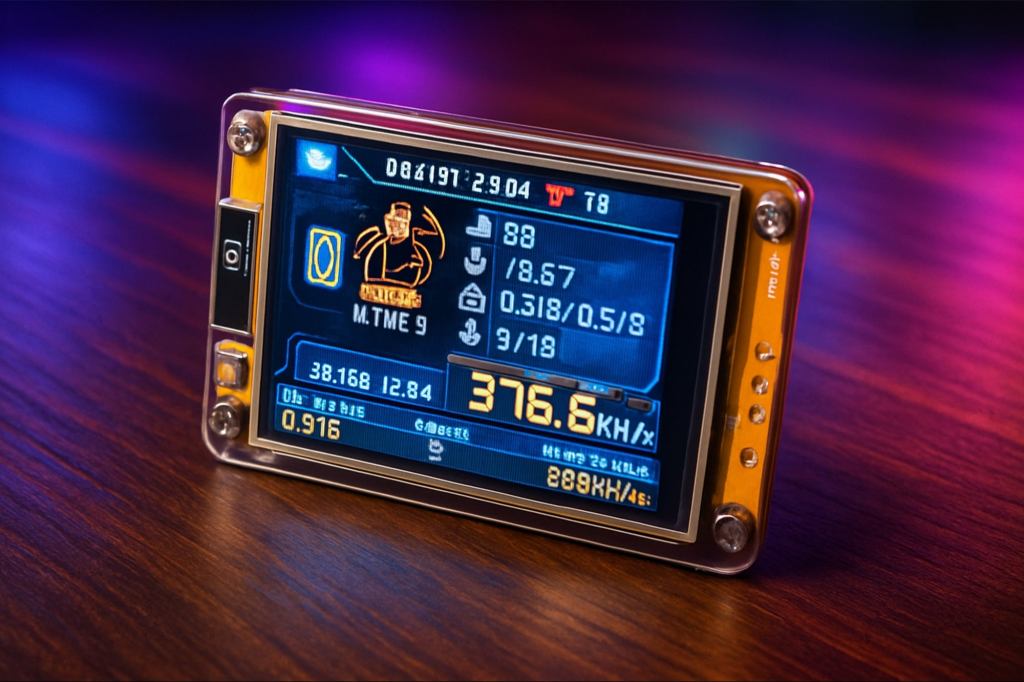
The BlockChance™ Bitcoin Ticket Miner takes a fundamentally different approach to mining, available for $59.99 (MSRP $149.99). Rather than earning tiny fractions of Bitcoin through pooled mining, it submits solo “tickets” for a chance to win an entire Bitcoin block reward. It’s a probability game, not a promise — but one designed to run quietly, efficiently, and continuously in the background while you focus on running your business. The device delivers a 1,000 KH/s hashrate, significantly higher than typical ticket miners, which means more tickets submitted and better odds over time.

For founders, consultants, and operators, the appeal is simplicity. The miner runs silently on a desk, draws less power than a light bulb, and doesn’t require a PC or technical setup. A built-in touchscreen shows real-time stats, while Wi-Fi connectivity keeps everything running autonomously. Once it’s plugged in, it’s essentially an always-on experiment in probability — one that doesn’t interfere with daily work.

This isn’t a replacement for traditional investments or revenue streams, and there are no guaranteed payouts. But as a long-term, low-maintenance exposure to Bitcoin mining upside, it can fit neatly into an entrepreneurial portfolio built around optionality and experimentation.

If the idea of running a silent, standalone Bitcoin miner alongside your daily workflow sounds compelling, the BlockChance™ Bitcoin Ticket Miner is available now for $59.99 — a small, fixed input for a shot at a very large outcome.

StackSocial prices subject to change.

Entrepreneurs tend to think differently about risk. Instead of chasing guaranteed returns, many look for asymmetric opportunities — small, controlled inputs with the potential for outsized outcomes. That mindset is exactly what makes solo Bitcoin mining interesting again, especially when it doesn’t require industrial infrastructure to get started.

The BlockChance™ Bitcoin Ticket Miner takes a fundamentally different approach to mining, available for $59.99 (MSRP $149.99). Rather than earning tiny fractions of Bitcoin through pooled mining, it submits solo “tickets” for a chance to win an entire Bitcoin block reward. It’s a probability game, not a promise — but one designed to run quietly, efficiently, and continuously in the background while you focus on running your business. The device delivers a 1,000 KH/s hashrate, significantly higher than typical ticket miners, which means more tickets submitted and better odds over time.

For founders, consultants, and operators, the appeal is simplicity. The miner runs silently on a desk, draws less power than a light bulb, and doesn’t require a PC or technical setup. A built-in touchscreen shows real-time stats, while Wi-Fi connectivity keeps everything running autonomously. Once it’s plugged in, it’s essentially an always-on experiment in probability — one that doesn’t interfere with daily work.

https://www.entrepreneur.com/money-finance/this-59-device-lets-you-solo-mine-bitcoin-from-your-desk/501638


Protein Is the New Secret Weapon Fast-Food Chains Are Using to Win You Over

Chains from Dunkin’ to Subway are kicking off 2026 with protein-heavy launches, pushing the nutrient from niche fitness trend to mainstream menu staple. The shift reflects growing demand for high-protein options fueled partly by weight-loss drugs like Ozempic and Zepbound that encourage smaller, protein-forward meals.

Dunkin’ added Protein Milk to its menu this week, letting customers boost coffees and lattes with 15 grams of protein. Subway rolled out Protein Pockets, soft tortilla wraps with over 20 grams of protein. Blaze Pizza launched a “Protein-zza” with cauliflower crust and double chicken, marketed as GLP-1-friendly. Jack in the Box took its Protein Bowls nationwide with up to 35 grams per serving.

The trend started gaining momentum last fall when Starbucks added protein lattes and cold foam. Chipotle unveiled its first high-protein menu in December, explicitly targeting GLP-1 users. Even wellness-focused chains like El Pollo Loco are doubling chicken on salads to push past 50 grams of protein.

Read more

Sign up for our weekly Franchise newsletter to get the latest franchise news, advice and opportunities. Get it in your inbox.

Chains from Dunkin’ to Subway are kicking off 2026 with protein-heavy launches, pushing the nutrient from niche fitness trend to mainstream menu staple. The shift reflects growing demand for high-protein options fueled partly by weight-loss drugs like Ozempic and Zepbound that encourage smaller, protein-forward meals.

Dunkin’ added Protein Milk to its menu this week, letting customers boost coffees and lattes with 15 grams of protein. Subway rolled out Protein Pockets, soft tortilla wraps with over 20 grams of protein. Blaze Pizza launched a “Protein-zza” with cauliflower crust and double chicken, marketed as GLP-1-friendly. Jack in the Box took its Protein Bowls nationwide with up to 35 grams per serving.

The trend started gaining momentum last fall when Starbucks added protein lattes and cold foam. Chipotle unveiled its first high-protein menu in December, explicitly targeting GLP-1 users. Even wellness-focused chains like El Pollo Loco are doubling chicken on salads to push past 50 grams of protein.

Read more

Sign up for our weekly Franchise newsletter to get the latest franchise news, advice and opportunities. Get it in your inbox.

https://www.entrepreneur.com/news-and-trends/protein-is-fast-foods-new-secret-weapon/501760


What Pain Taught Me That No New Year’s Resolution Ever Could

Opinions expressed by Entrepreneur contributors are their own.

Key Takeaways

  • Pain isn’t the enemy; it’s information pointing you toward necessary change.
  • Lasting growth comes from better questions, self-approval and consistent small shifts.

The biggest changes in my life did not come from resolutions. They came from pain. Physical pain. Emotional pain. Identity pain. The kind that forces you to slow down long enough to ask better questions.

That is also how I became friends with Brian Bradley.

Not through a business introduction or a formal program, but through a conversation that challenged how I thought about pain, responsibility, self-love love and leadership at a moment when I was finally ready to hear it.

As we step into a new year, I want to pass along three lessons from that relationship that changed how I show up as a wife, a mother and a boss, and gave me the structure and resilience to keep getting stronger instead of starting over every January.

Before you read on, I will ask one thing: suspend judgment. This is not about blame or fixing yourself. It is about understanding yourself.

1. Pain isn’t the problem. It is the signal.

Most of us want pain to stop.

That is human. When something hurts, the instinct is to ask, Why is this happening to me? But that question rarely leads anywhere useful.

A better question is, “What is this trying to show me?”

Brian helped me see pain differently. Not as punishment or failure, but as information. Pain is often the conduit that keeps us from dealing with something else. Something unresolved. Something misaligned.

That does not mean pain is your fault. Most pain blindsides us. Injury. Loss. Burnout. Life does not send a calendar invite.

But once the initial shock passes, pain gives you a choice. You can rush to silence it and return to your old baseline, or you can listen long enough to understand who you are being asked to become.

That shift alone changed how I approach my body, my work and my relationships. This is why Brian often says pain is a gift. Not because it is pleasant, but because it penetrates deep — so that you can transform.

Related: If You Don’t Have Integrity, Don’t Expect Success — Why Trust Is a Leader’s Most Valuable Asset

2. Better questions create better outcomes

One of the most practical things Brian taught me is deceptively simple: if you do not like the answer you are getting, ask a better question.

Doctors are human. Coaches are human. Leaders are human. The quality of the output is directly tied to the quality of the input.

This applies far beyond medicine.

Instead of asking, What should I do? Ask questions that force care and clarity. Questions that take someone off autopilot.

In fitness, most people focus on what workout they are doing. A better question is, How does this affect me physically, mentally, and emotionally?

In business, instead of asking, How do I grow faster? Ask, How does this decision affect my capacity to lead tomorrow?

When I aligned my actions with how I wanted to feel, I no longer needed external motivation. I built consistency by trusting myself instead. And consistency, not intensity, is what compounds over time. Tony Robbins calls this the two millimeter shift. Small, intelligent adjustments that change everything over time.

Related: I Spent 6 Hours Getting Scanned and Tested at the Ultra-High-End Longevity Clinic Biograph. Here’s What Happened.

3. Self-love is not narcissism. It is a requirement.

This is where people get uncomfortable.

We have been conditioned to believe that openly loving yourself is arrogant or self-absorbed. That confidence should be quiet. That self-approval needs to be earned. Brian dismantled that belief for me with one simple sentence: You cannot give away what you do not have.

You cannot offer patience, clarity, or leadership if you are depleted and resentful. You cannot serve others well if, deep down, you do not approve of yourself.

This is not about affirmations or hype. It is about self-approval.

One of the most powerful examples Brian shared was watching his sister struggle with her weight for years. She tried every program that promised transformation. Nothing — stuck.

So he coached her to do something radically different. For 21 days, she stood in front of the mirror and said, I love myself just the way I am. I approve.

For the first two weeks, the voice in her head pushed back hard. Liar, it said. Every time.

Then around day fifteen, something shifted. Instead of liar, the voice said, No, but you want to. And you will.

That was the turning point. She realized she did not yet see herself as worthy of change, love or abundance, and that insight changed everything.

When words or situations, even our own thoughts, hurt us, the pain often is not about intent. Words and thoughts become emotions in the receiver. That does not make anyone a villain. It makes self-awareness essential.

Humility is not thinking less of yourself. It is being secure enough to hear feedback, learn from it, and stay intact.

And that level of humility is only possible when self-love is already present.

Why this matters at the start of a New Year

Anyone can point at a camera and say, This is your year! What matters is whether you believe it when no one is watching.

Quiet belief. The kind that does not argue back. The kind that does not need applause. If you say, This is my year, and something inside you immediately pushes back, that is not failure. That is information.

This year is not about becoming someone new. It is about shedding what no longer serves you and asking better questions before repeating old patterns with a new calendar.

Pain, when listened to, becomes a teacher. Not because it is pleasant, but because it is honest.

How this changed how I show up

These lessons did not just change how I think. They changed how I live.

They made me more present as a wife, more patient as a mother, and more grounded as a leader. I stopped confusing exhaustion with virtue and discipline with punishment.

I built a structure that supports me instead of breaking me. And that structure created resilience, not rigidity.

I am stronger now, not because life got easier, but because I learned how to interpret it differently.

One of the things that sets Brian apart is that he does not hide behind a platform. He answers people. He listens. He gives without posturing.

If this article resonated with you, I will offer something simple: reach out to him directly and tell him what landed for you.

As we move into this new year, remember this: pain does not ruin lives. Avoidance does.

When you stop avoiding the signal and start listening to it, you do not just heal.

You evolve.

And that is a far better way to begin a year than any resolution ever written.

https://www.entrepreneur.com/leadership/how-pain-changed-me-more-than-any-resolution-ever-did/501125


Meta Is Going Nuclear to Power Its AI Data Centers

Mark Zuckerberg is betting big on nuclear power to fuel his AI strategy. Meta is working with three partners: Bill Gates-backed TerraPower and Oklo to build new facilities, while buying electricity from Vistra’s trio of plants in Pennsylvania and Ohio, according to The Wall Street Journal.

Meta wants the new reactors up and running between 2030 and 2032, which is an ambitious schedule for nuclear projects. But Wall Street loved the news, sending Vistra and Oklo shares up 15 percent. TerraPower plans to deliver 690 megawatts of capacity within six years, while Oklo’s Ohio facility could eventually produce 1,200 megawatts.

AI computing’s massive electricity requirements are forcing tech giants to secure their own power sources rather than relying solely on the grid.

Read more

Sign up for the Entrepreneur Daily newsletter to get the news and resources you need to know today to help you run your business better. Get it in your inbox.

Mark Zuckerberg is betting big on nuclear power to fuel his AI strategy. Meta is working with three partners: Bill Gates-backed TerraPower and Oklo to build new facilities, while buying electricity from Vistra’s trio of plants in Pennsylvania and Ohio, according to The Wall Street Journal.

Meta wants the new reactors up and running between 2030 and 2032, which is an ambitious schedule for nuclear projects. But Wall Street loved the news, sending Vistra and Oklo shares up 15 percent. TerraPower plans to deliver 690 megawatts of capacity within six years, while Oklo’s Ohio facility could eventually produce 1,200 megawatts.

AI computing’s massive electricity requirements are forcing tech giants to secure their own power sources rather than relying solely on the grid.

Read more

Sign up for the Entrepreneur Daily newsletter to get the news and resources you need to know today to help you run your business better. Get it in your inbox.

https://www.entrepreneur.com/business-news/meta-is-going-nuclear-to-power-its-ai-data-centers/501759


Why Most Managers Avoid Hard Conversations — and How to Stop Letting It Cost You Millions

Opinions expressed by Entrepreneur contributors are their own.

Key Takeaways

  • Effective management requires strong communication skills, including the ability to handle difficult conversations with transparency and empathy.
  • Avoiding tough discussions can lead to decreased morale, productivity decline and lost revenue, which is why you need to address issues head-on.
  • Investing in communications training and emotional intelligence can empower managers to foster a positive work environment and enhance team dynamics.

When we think of what makes a successful manager, we often think of those with a clear vision to guide their team toward strategic goals, who have the ability to inspire and empower employees and who possess strong organizational and time-management skills and effective problem-solving abilities, are confident decision-makers, are transparent, have integrity and are accountable. Successful managers are also those who have developed strong communication and interpersonal skills, actively listen, demonstrate emotional intelligence and are empathetic, creating a positive, supportive and collaborative work environment.

An integral part of having strong communication and interpersonal skills is the ability to engage in difficult conversations rather than shying away from addressing problems and issues head-on, even when they are uncomfortable. We often find ourselves dodging or suppressing issues in our personal lives, which can have a high emotional cost.

In a high-performance company, managers who avoid confronting what needs to be said or done can cost the business millions in missed opportunities, revenue and inefficiencies.

Related: These Are the 10 Most Difficult Conversations to Have in the Workplace — And How to Handle Them

What keeps managers from leveling with employees?

Most managers avoid confrontation because they feel uncomfortable speaking the truth. It’s awkward. They are afraid of how the person will react and if the person will become defensive. Often, they don’t know how to approach the matter or lack the confidence or skills to talk about a sensitive or difficult situation. There’s also a bit of wishful or magical thinking going on, where managers believe the situation will resolve itself, so they take a wait-and-see approach.

Some managers want to be liked and avoid being perceived as the “bad guy.” They don’t want to be the bearer of bad news, especially when there is no warning or perceived issue.

In some situations, the facts may be unclear, making it more challenging to substantiate what needs to be said, especially if the company’s policy on a specific issue is vague.

Related: Why You Shouldn’t Wait to Have the Hard Conversations With Your Employees

The domino effect: When things go unsaid

Let’s say you have an employee who is smart, puts in the time and gets things done. However, his attitude is rough around the edges, particularly in the way he speaks to his colleagues. You don’t want to rock the boat because he really knows his stuff. But you risk losing other valuable workers who are tired of tiptoeing around the brash individual, even as he gets things done.

Or you have an employee who is counting on a promotion. During her last performance review, she made it clear that she wanted a career path within the company, and you advised her that a management position would soon become available that was suited to her talents and skills. Unfortunately, since then, things have changed significantly at the company, and a promotion is not forthcoming in the near future. You haven’t had the conversation with her because you’re afraid she’ll quit.

In both cases, keeping silent makes things worse. Failing to address an employee’s rudeness or poor attitude can cause overall morale and productivity to decline, creating a toxic environment and the risk that good employees will leave the organization. Taking the time to have a genuine conversation and offering coaching and other communication training tools would not only help your employee become better at their job but would also signal to everyone that you value them, want to retain the team intact and embrace a positive culture.

In the other situation, failing to inform an employee that she won’t be receiving a promotion in the near future lacks transparency and fosters mistrust. It’s better to be up front, explain the current state of affairs at the company and work together to determine what would keep her challenged and willing to stay on until something truly opens up. At best, she takes the risk that a promotion with more responsibilities will arise down the road. At worst, she will appreciate your frankness even if she chooses to leave. Either way, you don’t want disgruntled, disillusioned employees working for you. This affects how they treat each other, your customers and your vendors, and it impacts your bottom line.

Related: Confront Underperforming Employees With Confidence By Following This Guide to Effective Accountability

Communications training: The power of straight talk

A critical component of management communications training should include strategies for initiating and having difficult conversations with employees. Offer best practices and techniques on how to conduct challenging conversations with empathy and respect. Showing empathy will likely help diminish a defensive response from an employee, making them more open to hearing and taking in what’s being said.

Provide role-playing exercises and real-life scenarios that help managers connect to situations they are most likely to encounter. They can practice tone, timing and phrasing in a safe environment. Practice will help managers refine their messaging and provide confidence that they can handle an uncomfortable conversation.

Additional training can include emotional intelligence, conflict resolution, giving and receiving feedback and managing reactions under pressure. This can help managers approach tough discussions with clarity, confidence and respect, turning potentially uncomfortable moments into opportunities for growth and stronger workplace relationships.

Related: 5 Strategies to Ace the Difficult Conversations in Your Business

Yes, it’s tough having to walk the tough talk, but it’s best to address the issue early and openly. Procrastinating will only make things worse for you, your team and the business. Having the hard conversations will make you a better leader and contribute to shaping a culture of transparency, openness and accountability.

Key Takeaways

  • Effective management requires strong communication skills, including the ability to handle difficult conversations with transparency and empathy.
  • Avoiding tough discussions can lead to decreased morale, productivity decline and lost revenue, which is why you need to address issues head-on.
  • Investing in communications training and emotional intelligence can empower managers to foster a positive work environment and enhance team dynamics.

When we think of what makes a successful manager, we often think of those with a clear vision to guide their team toward strategic goals, who have the ability to inspire and empower employees and who possess strong organizational and time-management skills and effective problem-solving abilities, are confident decision-makers, are transparent, have integrity and are accountable. Successful managers are also those who have developed strong communication and interpersonal skills, actively listen, demonstrate emotional intelligence and are empathetic, creating a positive, supportive and collaborative work environment.

An integral part of having strong communication and interpersonal skills is the ability to engage in difficult conversations rather than shying away from addressing problems and issues head-on, even when they are uncomfortable. We often find ourselves dodging or suppressing issues in our personal lives, which can have a high emotional cost.

https://www.entrepreneur.com/leadership/how-to-face-tough-conversations-and-stop-losing-money/499821


The Invisible Gaps That Are Slowing Your Company Down (and How to Close Them)

Opinions expressed by Entrepreneur contributors are their own.

Key Takeaways

  • When progress slows down inside a company, leaders often blame their teams and press them to move faster. But slow execution is rarely an effort issue. It’s more of a clarity issue.
  • Clarity usually breaks at the handoff point long before anyone even notices the impact. When handoffs break, everything else slows down, even when the team is working hard.
  • A handoff should answer three basic questions: Who owns the next step? What does “finished” look like? When will the next step be completed?

Work inside a company moves from one person to another and from one group to another. These transitions seem small, but they determine the speed and confidence of everything that follows. When they go well, work generally feels smooth. But when they go wrong, teams feel stuck even when everyone is truly giving their best effort.

I remember a time when I supported a team that cared a lot about doing good work. They prepared well, and they definitely put in the time. They did all they could to move their projects forward every day. When progress kept slipping, and leaders started asking why simple tasks took so long, it caused frustration.

From the outside, it seemed like there was a performance problem, but inside the team, it felt like a trust problem. People were just fed up with feeling watched or judged for delays they didn’t create or own.

They just wanted one simple thing, and that was for work to move from start to finish without confusion or continuous rework.

Related: Why Your Team Works Hard But Still Moves Slowly (and How to Fix It)

Why leaders often fix the wrong thing

When work slows down, most leaders react by either asking for more effort or more updates. They schedule extra check-ins and push for faster responses. It’s a natural leadership reaction, but at the same time, it focuses on the people instead of the system they’re working inside.

The reason is that slow execution is rarely an effort issue, but more of a clarity issue. And clarity usually breaks at the handoff point long before anyone even notices the impact.

Here’s what it looks like in practice.

A task leaves one person’s desk without a clear owner on the other side. Deadlines are then assumed instead of agreed upon. The definition of “done” shifts halfway through because no one confirmed the requirements in the first place. Each step feels small on its own, but together, they create the delays leaders blame on the team.

This is why the pressure cycle keeps repeating.

Leaders press the team to move faster. The team tries, but the gaps remain, and work continues to slow down.

What a clean handoff actually looks like

So, what does a clean handoff look like?

A handoff should answer three basic questions.

  1. Who owns the next step?

  2. What does “finished” look like?

  3. When will the next step be completed?

In my experience of supporting organizations from fast-growing startups to Fortune 500 clients, I’ve observed that most teams never make these questions explicit. They move work forward with quick mentions, passing comments or very vague updates. And it’s not because they’re careless, but because no one taught them how much these tiny moments matter.

A clean handoff isn’t about even more documentation. Ultimately, it’s about shared agreements. When those agreements are missing, even the strongest teams feel disorganized.

Related: How to Set Expectations and Get the Performance You Want From Your Team

A small shift with a big impact

In the team I advised, tension had built up by the time we looked at the problem. People were working late, and leaders still felt exposed when explaining delays to their own stakeholders. What they needed was a fix that didn’t blame anyone and was still able to change the outcome.

So, we reviewed one active project and paused at every handoff. At each point, we asked who owned the next step, what “done” meant and when it would be completed.

Almost every answer exposed a missing agreement.

Particularly:

Seeing this laid out was the turning point, because the team now realized the issue wasn’t a lack of skill or a lack of commitment. It was the invisible gaps between them.

They agreed to one simple rule:

No task would move forward until those three questions were answered out loud and written down. No exceptions.

The shift felt small; however, the impact showed up quickly. Here are three specific things I remember that stood out and that everyone witnessed:

  • Status meetings got considerably shorter because there was less confusion.

  • Backtracking dropped because expectations were clear.

  • Leaders didn’t have to chase updates.

The same people with the same tools suddenly had more momentum. A lot.

One small agreement, applied well, changed everything.

Why does this problem keep showing up?

The question you might be thinking right now is, “If handoffs are so important, why do teams keep struggling with them?“

Part of the answer is that leaders are trained to look at individual performance instead of system design. When something slips, they look at the person closest to the delay rather than the point where clarity was lost.

Another reason is that handoff problems tend to reveal themselves late.

A missed agreement today becomes a visible problem next week. By the time leaders notice it, the moment that caused the issue is long gone, so the root cause feels invisible.

The problem persists in three steps (most times):

  1. People get frustrated.

  2. Leaders push harder.

  3. The gap stays open.

And the cycle starts again.

How to fix handoffs without slowing anything down

Can you fix broken handoffs without adding or introducing heavy or burdensome processes and procedures? You certainly can, and here’s how.

Start with a single project that matters right now and walk through the next steps with the team. For each step, confirm who owns it, what finished means and when it will be done.

These are simple agreements as opposed to long documents. Their job is to bring clarity into the moments that usually, under normal circumstances, stay vague.

Then bring this standard into your regular meetings.

When someone says they’re passing something on, pause and confirm the owner, the definition of “done” and the date. It takes just seconds, but it saves days, and sometimes, even months.

This also reveals deeper patterns. You may find that one person is overcommitted or that two groups believe they own the same step. You may also discover missing capacity or missing structure. All these insights are valuable because they help you fix the system, rather than reacting to the symptoms.

Related: Why Clear Leadership Beats Cutting-Edge Tools Every Single Time

Where AI fits and where it doesn’t

Let’s add AI to the mix.

Many leaders want to use AI to speed up execution, and there’s no doubt that AI can help, but it can’t fix unclear handoffs. If ownership isn’t clear, no tool can tell your team who’s responsible. If the definition of “done” is fuzzy, AI will help you produce more versions of the wrong thing. If dates shift without agreement, automation will only speed up the confusion.

AI is very powerful; however, it only works well in systems that already have clarity built in. That’s why fixing handoffs today sets the stage for using AI effectively tomorrow.

Understand that your team isn’t the problem.

Your people care, and they want to move fast. When you focus on the small handoff moments that shape the flow of work, you’re removing friction they didn’t create and giving them what they need to deliver the results you expect and need.

Key Takeaways

  • When progress slows down inside a company, leaders often blame their teams and press them to move faster. But slow execution is rarely an effort issue. It’s more of a clarity issue.
  • Clarity usually breaks at the handoff point long before anyone even notices the impact. When handoffs break, everything else slows down, even when the team is working hard.
  • A handoff should answer three basic questions: Who owns the next step? What does “finished” look like? When will the next step be completed?

Work inside a company moves from one person to another and from one group to another. These transitions seem small, but they determine the speed and confidence of everything that follows. When they go well, work generally feels smooth. But when they go wrong, teams feel stuck even when everyone is truly giving their best effort.

I remember a time when I supported a team that cared a lot about doing good work. They prepared well, and they definitely put in the time. They did all they could to move their projects forward every day. When progress kept slipping, and leaders started asking why simple tasks took so long, it caused frustration.

https://www.entrepreneur.com/leadership/how-to-close-the-hidden-gaps-that-are-slowing-your-team-down/500753


You Have Six Seconds to Grab My Attention. Are Micro-Moments Your Marketing Edge?

Opinions expressed by Entrepreneur contributors are their own.

Key Takeaways

  • Winning brands meet high-intent needs instantly, not with prolonged storytelling.
  • Micro-moments reward usefulness, speed and context over reach and impressions.

Scroll-stopper videos that flash by in six seconds, voice prompts that answer before you finish the question, QR codes that load loyalty rewards while your coffee brews — today’s customer journey is stitched together from dozens of fleeting interactions rather than one long, linear funnel.

Welcome to the Attention Economy 2.0, where winning brands don’t just tell stories; they orchestrate micro-moments. The tiny, high-intent windows in which a consumer’s guard is down, curiosity is up and a decision feels friction-free.

If the first era of digital marketing prized impressions, the sequel prizes impact per second.

Related: The Key to Building Unshakeable Customer Relationships

Why micro-moments matter more than ever

Historically, marketers measured success by the tonnage of exposure: GRPs on television, CPMs on banner ads, follower counts on social media. The bet was simple: more visibility equals more recall, eventually nudging a purchase.

But as multitasking migrated from novelty to norm, sheer exposure started to lose potency. Deloitte’s 2024 Digital Consumer Trends survey found that the average smartphone owner now “checks in” 76 times a day, yet spends less than 45 seconds in over half of those sessions.

In that sliver of time, consumers arrive with laser-focused intent: to solve a micro-need (“I need the best route home”), scratch an itch (“What’s that song lyric?”), or buy with confidence (“Does this sunscreen work on sensitive skin?”).

Because these touchpoints are self-initiated, they carry higher intent density than passive impressions ever did. The marketer’s challenge has flipped from getting noticed to being useful at the exact second of need — and doing so across phones, wearables, in-car screens, smart speakers and augmented-reality overlays.

Related: Your Language Matters More Than You Think. Here’s How to Use Your Words to Build the Culture You Want.

Defining a micro-moment

Google popularised the term back in 2015, but its anatomy has evolved:

  1. Intent-Rich: The user arrives with a specific question, urge, or task.
  2. Context-Bound: Location, device, and even ambient conditions (e.g., car speed) shape urgency.
  3. Time-Compressed: Gratification must be delivered in ten seconds or less before attention resets.
  4. Platform-Fluid: The same journey may hop from a voice query to a map, then to a commerce app.

A modern micro-moment, therefore, is not merely “mobile first” but context first: it understands that a commuter on a Metro, a parent in a grocery aisle and a gamer on a Twitch break may all search “best energy snack,” yet each expects a different flavour of help.

Spotting high-impact moments: Data signals and discovery tactics

Search spike mining. Tools like Google Trends, Pinterest Predicts and TikTok Creative Center expose sudden lifts in “how-to,” “near me” and “best for” queries. Plotting those spikes against day-part and geo heatmaps pinpoints when and where your brand could fill an information gap.

Session-level analytics. Instead of reading aggregate time-on-site, drill into click-stream paths to identify pages or app screens where users hesitate, pinch-zoom or abandon carts. Those friction points flag micro-moments begging for faster cues — one-tap checkouts, AR try-ons or chatbot nudges.

Sensor and situational data. Connected cars, wearables and IoT devices broadcast contextual triggers: heart-rate surges, traffic slowdowns, temperature swings. A sports drink brand that surfaces hydration tips the instant a runner’s smartwatch crosses a threshold earns gratitude that banners never could.

Social “question clusters.” Natural-language clustering of Reddit, Discord and YouTube comments can reveal emergent micro-needs (“Can I repair this model myself?”) weeks before keyword tools catch up, letting first movers seed snackable answers.

Delivering value in under ten seconds: A three-step framework

  1. Compress the promise. Every micro-moment starts with a single-sentence value proposition the brain can process at a glance: “Scan for 15-minute delivery,” “Tap to try a shade in AR,” or “Swipe up to resume where you left off.” Pare headline, visual, and CTA to one coherent nugget, then A/B test for sub-second comprehension.
  2. Load instant proof. In classical persuasion, proof followed promise, but micro-moments demand simultaneity. Dynamic badges (“28 people booked this room today”), one-frame UGC testimonials, or auto-playing explainer GIFs deliver credibility without extra taps. If a shopper has to hunt for reassurance, the moment dies.
  3. Offer seamless finish lines. The best micro-moments either solve the need immediately (a one-click recipe link) or accelerate the next step (store inventory check with wallet integration). Avoid “Contact Us” dead ends. Instead, surface contextual finish lines: Apple Pay, WhatsApp booking or a pre-filled quiz that personalises in under 30 seconds.

Related: You’ve Got 8 Seconds to Grab a Customer’s Attention. Here’s What to Do.

Who’s doing it well?

Starbucks’ “order ahead” watch prompt. When an Apple Watch detects the owner arriving within 500 metres of a frequently visited store between 7-10 a.m., a haptic tap offers a one-button reorder. Average interaction: three seconds; perceived wait-time savings: several minutes.

The reward here is convenience, not coupons, bolstering authenticity.

IKEA Place AR snapshots. The furniture giant’s latest app lets users hold their phone up to an empty corner; in under eight seconds, the algorithm auto-recommends items that exactly fit the scanned space, tagged with real-time stock availability.

Conversions on those placements run 2.5x higher than standard catalogue browsing.

Duolingo’s contextual nudge. Rather than generic push notifications, the language app now triggers a bite-sized challenge when a user enters an airport geofence, proposing phrases like “Gate change” in the learner’s target language. Engagement rates beat daily streak reminders by double digits.

These examples succeed because the brand’s value proposition – speed, usefulness, delight – arrives precisely when the user would have searched for it anyway. That synchronicity is what keeps the tactic from feeling creepy.

Authenticity vs. clickbait

Short does not mean shallow. The temptation to game micro-moments with exaggerated hooks (“One weird trick …”) can spike clicks but erodes brand equity just as fast. Ground rules for authenticity:

  • Transparency first. Clearly label any personal-data use (“Using your ride history, we’ve mapped faster routes”).
  • Opt-in by design. Let users expand, snooze or switch channels effortlessly, signalling respect for autonomy.
  • Substance over spectacle. Even a six-second TikTok ad should teach, solve, or entertain; empty flash is forgotten in less time than it took to load.

Measuring success beyond view-through rates

Metrics must evolve with the medium. Rather than total impressions, focus on:

  • Time to value (TtV): Seconds between user action and perceived benefit (e.g., coupon applied, question answered).
  • Intent matching score: Share of micro-moment triggers that result in at least one downstream high-value action (add-to-cart, call, route request).
  • Incremental lifetime value (iLTV): Compare cohorts exposed to high-intent micro-moment interventions versus control for repeat purchase uplift.
  • Sentiment velocity: Speed and positivity of social chatter post-interaction indicate whether authenticity landed.

These metrics link fleeting engagements to durable revenue, rebutting the myth that micro-moments are too small to matter.

The road ahead

As ambient computing spreads — voice search in smart glasses, hyper-local 6G beacons, generative AI copilots — micro-moments will occur even before the conscious question forms. Brands that prep content libraries tagged by semantic intent and deploy real-time creative optimisation will meet that future head-on.

Yet the human litmus test remains unchanged: Did you genuinely help me?

Success in the Attention Economy 2.0 isn’t about hijacking every second; it’s about honoring the consumer’s finite focus with snack-sized clarity and substance. Nail that, and micro-moments won’t just win the click — they’ll earn enduring trust that outlasts any 30-second spot.

Key Takeaways

  • Winning brands meet high-intent needs instantly, not with prolonged storytelling.
  • Micro-moments reward usefulness, speed and context over reach and impressions.

Scroll-stopper videos that flash by in six seconds, voice prompts that answer before you finish the question, QR codes that load loyalty rewards while your coffee brews — today’s customer journey is stitched together from dozens of fleeting interactions rather than one long, linear funnel.

Welcome to the Attention Economy 2.0, where winning brands don’t just tell stories; they orchestrate micro-moments. The tiny, high-intent windows in which a consumer’s guard is down, curiosity is up and a decision feels friction-free.

https://www.entrepreneur.com/growing-a-business/why-six-second-micro-moments-are-the-new-battle-for-brands/500957