Jamie Dimon Does This in Meetings. I Didn’t — Until I Realized It Was Costing Me Big

Opinions expressed by Entrepreneur contributors are their own.

Key Takeaways

  • The article explores how our attention habits in meetings can shape both personal effectiveness and organizational culture.
  • It shares insights from a top CEO and personal experiences on managing focus in an age of constant connectivity.

Jamie Dimon doesn’t bring his phone to meetings.

The CEO of the trillion-dollar firm, JPMorgan Chase, said recently that he keeps his phone in his office during the workday, turning off all notifications except texts from his three daughters. When someone needs to reach him urgently, they call his office. During meetings, if he sees someone staring at an open screen, he tells them to close it, calling the behavior “disrespectful.”

For Dimon, it isn’t about control. It’s about something we’ve lost in the age of constant connectivity: presence.

I learned about the importance of being present, both at work and in my personal life, the hard way. Prior to the pandemic, I had all the hallmarks of success: running a highly successful, global organization; a loving family and a career that allowed me to share the stages around the world with icons like Oprah Winfrey and Richard Branson. But I was also burned out, disconnected and running on empty.

One of the patterns I had to break? The illusion that I could do multiple things at once and do them well.

I tried to lead meetings, but my mind was thinking about getting to the airport on time or responding to follow-up messages about an earlier meeting. At home, I was on my phone, distracted and disconnected from my family. I was physically there, but I wasn’t present. It made me miserable and my loved ones feel neglected.

At work, my staff followed my lead. We believed we were being effective by juggling multiple things at once. When I would look up during a meeting, half of the team was on their phone, while the rest tried in vain to accomplish even basic meeting objectives.

What we failed to understand and what science has since proven again and again is that the concept of multitasking is a myth.

Related: 5 Simple Productivity Hacks You’ll Wish You Knew Sooner

Your brain can only do one thing at a time

The human brain is incapable of completing more than one cognitive task at a time.

Responding to an email while listening to your colleague’s presentation. Reviewing a contract while participating in a video call. Writing a report while monitoring your inbox. These aren’t things you can truly do simultaneously. Instead, your brain rapidly switches back and forth among competing tasks, resulting in what’s known as a “switch cost“.

Studies show people almost always take longer to complete a task and make more errors when switching tasks than when they focus on a single task at a time. Research also shows that trying to rely on “multitasking” can, ironically, lead to a 40 percent drop in productivity.

According to neuropsychiatrist Dr. David Vago, “Every time you switch tasks, your brain pays a toll. Those tiny lapses add up to hours of lost clarity and connection. Attention is the most intimate energy we have. When we give it fully, we transform distraction into purpose.”

You know the feeling. You’re talking to your child, and they’re scrolling on their phone. You know instantly they aren’t really hearing you. Your words are competing with the endless scroll.

If that’s the experience at home, imagine what it looks like in a business setting.

When your CEO sees you glancing at your phone during a meeting, what message does that send? That the meeting isn’t important. That their time isn’t valuable. That whatever’s on that screen matters more.

Or picture pitching a client who keeps checking their watch notifications, eyes darting down every few minutes. How confident do you feel about closing that deal?

It’s hard to realize at the time, but your divided attention communicates louder than your words. In an era where everyone is overwhelmed by information and starved for genuine connection, presence can become your competitive advantage.

Leading through presence

Dimon explained that not having his phone on hand means he’s fully present and “100% focused” during meetings, as opposed to being distracted and “thinking about other things.”

That level of focus doesn’t just benefit him. It transforms the culture of the entire organization.

When you, as a leader, model presence, you give permission for everyone else to do the same. You signal that the work you’re doing together in that moment matters more than anything happening outside that room. You create space for deeper thinking, better questions, and more creative solutions.

Here’s what I’ve learned about building a culture of presence:

1. Set the tone from the top

Start your next meeting by putting your phone away, visibly. It sends that signal that the meeting is important and you’re there to hear from your team. It’s a small gesture with enormous impact.

Your team will mirror your behavior. If you’re checking messages, they’ll feel entitled to do the same. If you’re fully present, they’ll rise to match that standard.

2. Manage your connectivity

In an interview with CNN, Dimon said if someone sends him a text during the day, he probably won’t read it. He’s not avoiding communication, he’s being strategic about when he engages with it.

Instead of checking email and messages hundreds of times a day, designate specific times for this work. Maybe it’s 20 minutes at the start of your day, 20 minutes after lunch and 20 minutes before you leave. During focus time, close those windows entirely.

Developing the self-discipline to laser focus on a single task for 20 minutes can dramatically improve how much you accomplish.

Related: Being ‘Busy’ Isn’t Helping You Be Productive — 5 Tips to Become Truly Efficient at Work

3. Model deep work

When you’re working on a complex problem or strategic initiative, eliminate distractions entirely. Turn off notifications. Close unnecessary browser tabs. Put your phone in another room if necessary.

This isn’t just about productivity. It’s about demonstrating that certain work deserves undivided attention. Your team will notice, and they’ll start protecting their own focus time.

The fulfillment factor

The irony of our hyperconnected age is that we’ve never been more disconnected from what matters. We’re available to everyone and fully present for no one.

Presence isn’t just a productivity strategy. It’s a path to fulfillment.

When you stop fragmenting your attention across a dozen inputs and start giving yourself fully to the task, the person or the moment in front of you, something shifts. Work becomes more meaningful. Relationships deepen. You stop feeling like you’re always behind and start feeling like you’re exactly where you need to be.

Dimon comes prepared to meetings by doing the pre-reads in advance and giving the event 100% of his focus, stating that if he couldn’t give his full focus to his work, it would be time to move on.

That’s the standard worth aspiring to. Not perfection, but presence. Not doing everything at once, but doing one thing fully.

You don’t need to overhaul your entire work style overnight. Start with one meeting. One conversation. One task where you commit to being fully present.

You might be surprised by what you’ve been missing. And you’ll definitely be surprised by what you’re capable of when you’re fully present for it.

Key Takeaways

  • The article explores how our attention habits in meetings can shape both personal effectiveness and organizational culture.
  • It shares insights from a top CEO and personal experiences on managing focus in an age of constant connectivity.

Jamie Dimon doesn’t bring his phone to meetings.

The CEO of the trillion-dollar firm, JPMorgan Chase, said recently that he keeps his phone in his office during the workday, turning off all notifications except texts from his three daughters. When someone needs to reach him urgently, they call his office. During meetings, if he sees someone staring at an open screen, he tells them to close it, calling the behavior “disrespectful.”

https://www.entrepreneur.com/growing-a-business/jamie-dimon-does-this-in-meetings-i-didnt-until-i/499366



What Latina Founders Know About Building Influence That Silicon Valley Doesn’t

Opinions expressed by Entrepreneur contributors are their own.

Key Takeaways

  • For Latina founders, cultural identity isn’t just a backstory. It’s a growth strategy and the lens that informs how they build.
  • They’re redesigning the foundations of the creator economy and reshaping how influence is created, measured and sustained — using cultural instinct, community-driven thinking and tech fluency.
  • They’re doing it by prioritizing resonance (not just reach), building anticipation, making strategic use of AI without compromising creativity and letting their identity lead.

Recent data from the Latino Donor Collaborative shows that nearly 80% of Gen Z Latinas strongly identify with their heritage, and they expect the businesses they support to reflect that same cultural fluency. For a rising wave of Latina women founders, this isn’t just a consumer shift. It’s confirmation that identity itself can be a growth strategy.

These entrepreneurs weren’t handed a blueprint. They built one, navigating between cultural heritage and entrepreneurial ambition. For them, dual identity isn’t a backstory. It’s the lens that informs how they build — blending personal experience with market insight and designing platforms that feel as intuitive in Bogotá as they do in Miami.

They’re not simply participating in the creator economy. They’re redesigning its foundations. Using cultural instinct, community-driven thinking and tech fluency, they’re reshaping how influence is created, measured and sustained, not as an exception but as the new standard.

Related: How My Hispanic Heritage Fueled My Journey as an Entrepreneur

Why this new approach matters

The tech and media industries have long discussed “authenticity” but rarely delivered it. Campaigns are often engineered for scale without asking who they truly serve. Creator platforms promise opportunity, but are still built on systems that favor sameness. And when multicultural identity is highlighted, it’s too often in the form of tokenism, not real strategy.

That’s starting to shift, and Latina founders are part of the reason why.

Many of these entrepreneurs operate at the intersection of multiple cultures, languages and markets. Their lived experiences shape how they build, market and lead, and the results are hard to ignore. They’re not chasing the spotlight. They’re designing ecosystems where creators can thrive, where communities feel seen and where data works in service of voice — not the other way around.

This isn’t about branding. It’s about fundamentally rethinking what influence means and how it’s earned.

They’re making strategic use of AI without compromising creativity. They’re launching products with the same suspense and story arcs we’d expect from a global album release. They’re centering identity not as a message but as a method: a lens that guides product, storytelling and community building.

This approach not only reflects a shift in values but also a shift in results.

Influence is evolving. It’s no longer just about reach, aesthetics or virality. It’s about building trust, anticipation and cultural alignment at scale. Founders who understand this shift are creating campaigns that don’t just land — they last.

Here’s how they’re doing it, and what you can apply right now:

1. Prioritize resonance, not just reach

Big numbers are tempting, but visibility doesn’t always mean connection. Just because people saw it doesn’t mean it landed.

Latina founders often lead with instinct. They know how to read a moment, speak to a community and show up in a way that feels real. That’s what makes something stick. And in business — just like in music — stickiness is everything.

Latin music pulled in $490.3 million in U.S. revenue in the first half of 2025, according to the Recording Industry Association of America. Almost all of that came from streaming. Not radio, not one-time sales, but streaming. People didn’t just hear the music. They came back to it, over and over.

That’s the goal. Don’t just aim to be seen. Aim to be felt. Because the most powerful kind of influence doesn’t hit once. It lingers.

Related: How This Latina CEO Created the Fastest-Growing Hispanic Media Company in the U.S.

2. Build anticipation with “already-not-yet” moments

Although he’s not a Latina founder, Bad Bunny’s rise has still reshaped how Latin culture shows up on the global stage, not just in music, but in marketing, momentum and movement-building. His approach to rollout strategy is a case study in how anticipation can be crafted, not merely counted on.

Take his 30-show residency in Puerto Rico: 600,000 tickets sold and an estimated $713 million in economic impact, according to W Journal PR reporting. That wave of energy now carries into his upcoming Super Bowl halftime show — a cultural milestone, yes, but also a lesson in brand-building through suspense, scarcity and intentionality.

Latina founders can channel the same mechanics: Design your drop like a narrative arc. Use phased reveals, early access or micro-launches to invite curiosity before the big moment hits. When your audience feels like they’re part of the journey, they’re far more likely to stay for the destination.

3. Let AI scale the campaign, not replace the creators

Latina entrepreneurs are often natural storytellers. They know how to read a room, remix a trend and reach across audiences with authenticity. That kind of cultural and creative instinct can’t be outsourced to a machine.

AI can support the work, but it shouldn’t be the voice. Tools such as automation, personalization and content optimization can absolutely help scale your message, but they need human intuition to guide them. As reporting from the Harvard Division of Continuing Education notes, brand loyalty and differentiation still depend on emotional resonance, contextual awareness and clarity of purpose.

Use AI to lighten the operational lift, not to flatten your voice. Let the technology elevate what you already know how to do: connect.

4. Don’t downplay identity — let it lead

For Latina founders, identity isn’t just something you bring with you; it’s something you build with. And yet, too many are still told to soften their voice or “translate” their story to fit someone else’s mold. That instinct to neutralize for mass appeal? It often erases what makes your brand memorable in the first place.

The data backs this up. The State of Latino Entrepreneurship Summit shows Latine-led businesses are growing quickly and profitably, even as funding gaps persist. Meanwhile, research on multicultural teams in the Journal of International Business Studies shows that culturally diverse groups achieve higher creativity and performance when members’ different cultural identities are actively recognized and leveraged as resources, rather than minimized.

Your background, your language, your instincts — they’re not barriers. They’re the blueprint. Build from them, not around them.

Related: 7 Hispanic Business Leaders Reveal Their Top Advice For Taking Your Company From Zero to Success

The future is culturally fluent

The blueprint for building influence is changing. It’s no longer about being loud or early. It’s about being true to your audience, your culture and your creative instincts.

Latina founders are leading this shift not by mimicking what came before, but by creating something that feels fundamentally different — smarter tech, deeper resonance and a clearer sense of who it’s for. Their playbook proves that influence can be both scalable and deeply human. For anyone building with authenticity, that’s the future worth following.

Key Takeaways

  • For Latina founders, cultural identity isn’t just a backstory. It’s a growth strategy and the lens that informs how they build.
  • They’re redesigning the foundations of the creator economy and reshaping how influence is created, measured and sustained — using cultural instinct, community-driven thinking and tech fluency.
  • They’re doing it by prioritizing resonance (not just reach), building anticipation, making strategic use of AI without compromising creativity and letting their identity lead.

Recent data from the Latino Donor Collaborative shows that nearly 80% of Gen Z Latinas strongly identify with their heritage, and they expect the businesses they support to reflect that same cultural fluency. For a rising wave of Latina women founders, this isn’t just a consumer shift. It’s confirmation that identity itself can be a growth strategy.

These entrepreneurs weren’t handed a blueprint. They built one, navigating between cultural heritage and entrepreneurial ambition. For them, dual identity isn’t a backstory. It’s the lens that informs how they build — blending personal experience with market insight and designing platforms that feel as intuitive in Bogotá as they do in Miami.

https://www.entrepreneur.com/leadership/how-latina-founders-are-reshaping-the-creator-economy/500948


Why 2026 Is When AI, Payments and Blockchains Finally Operate as One

Opinions expressed by Entrepreneur contributors are their own.

Key Takeaways

  • By 2026, the internet will think, verify and move money automatically through one shared system.
  • AI makes decisions, blockchains prove them and payments enforce them instantly — without human middlemen.

2025 will be remembered as the last year AI, payments and blockchains operated as if they were separate systems. In 2026, these three forces will begin to lock together, reshaping the internet as completely as the smartphone reshaped our daily lives.

For the first time, the web will feel like a living organism. It will think, verify and exchange value through one shared layer of trust and intelligence. This will be the first true foundation for a self-coordinating internet.

In this new, united structure, AI will make the decisions, blockchains will verify those decisions are real, and then payment infrastructure will transport value to enforce those decisions the instant a decision is made.

We already see AI shaping significant portions of how we live and work. For example, the technology decides what millions of people see online, how goods move through supply chains and how loans are priced. But these systems largely remain secretive and closed off to the public. Very few people can easily check the logic behind how a model concluded or whether the data it used was trustworthy. As AI begins to run parts of the global economy, opacity stops being a technical issue and becomes a societal one.

Blockchains are the solution to that problem. Anyone can see what happened and when. A dataset, model, or decision can carry its own public record. The same math that secures a signature now protects an algorithm’s output, and once a decision can be traced, it can be trusted.

Moreover, using zero-knowledge proofs mean that this traceability doesn’t require exposing raw data; you can prove that rules were followed without revealing everything underneath.

Related: The Era of Blockchain Hype Is Over — Execution Is What Will Drive Adoption

The move from trust to proof has already begun, though few recognise it yet. A few governments now anchor public records onchain, so edits leave a visible trail. Cities from Seoul to Dubai are testing blockchain payment systems for taxes, welfare and cross-border transfers, verifying transactions without exposing personal data.

Even institutional funds, once the most conservative corner of finance, are being tokenised and settled on public ledgers.

And that push for efficiency doesn’t stop at funds; it’s transforming payments too. At present, the cross-border payment system still drags through multiple intermediaries, each taking time and fees. But digital currencies will soon cut out those middle steps.

On Polygon, billions now move through stablecoin payments every month, often in everyday amounts small enough to cover groceries or rent. Transfers clear in seconds and cost less than a cent. What once seemed like a niche experiment now supports freelancers, families and small businesses worldwide.

As this new infrastructure proves itself through daily use, established payment networks are starting to take notice and follow suit. Mainstream payments giant Stripe has already built on Polygon’s rails so that merchants can send and receive crypto payments instantly.

Once a contract or transaction is verified, the payment follows automatically. Intelligence, proof and value — three layers that used to operate apart — now complete each other in a single flow.

What once required a bank app now happens inside a chat. On Telegram or X, typing “Pay $20 to Alex” can move real money. Wallets like Bankr already process transfers in chat, verify them on-chain and issue records to both parties. Platforms such as Olas, an AI-agent network built on Ethereum and TON, the blockchain that powers payments and marketplaces inside Telegram, extend this model by running full financial systems within messaging apps. The chat window is becoming the bank.

The pattern repeats across industries. AI tools are already policing smart contracts, flagging errors before they can be exploited. Enterprises store their training data and model outputs on hybrid blockchains so they can prove how decisions were reached. Line by line, the world’s intelligence and its verification are migrating onto the same trust layer.

Related: Here’s How the CEO of a $76B Cloud Company Runs Meetings

For users, the experience will look simpler as digital wallets will hold identity, data and money together. Logging in, paying a bill, or signing a document will feel like just one step. When you book a service, like an Uber, the proof of payment and delivery will appear automatically. What changes is not the interface, but the trust mechanism underneath it.

By late 2026, we can anticipate that the boundaries between AI, blockchains and payments will truly start to blur. One will provide decisions, another will ensure the directives are genuine, the third will settle value exchange. Information will move across all three without waiting for human intermediaries. The internet, no longer a chain of separate systems, begins to move as a coordinated whole.

There won’t be a single standout moment to mark this transition, no simple switch being flicked over. It will come about gradually, through everyday experiences: wages will land instantly, factories will pay suppliers the moment goods arrive and governments will distribute social security payments through public ledgers that anyone can audit. None of this is especially glamorous, but it is Web3 technology finally delivering the efficiency it so long promised.

Related: This Ownership Shift is Going to Open Global Wealth to Everyone

We’ve already networked information. Now we’re networking value — from the decisions we make to the proofs we trust to the money we move.

The greatest technology shift of 2026 won’t be a new chain or a new model but the unceremonious formation of the converged internet, an infrastructure that can think, verify and pay on its own. Most people won’t notice the change. They’ll just find that the digital world suddenly works as it should — seamlessly.

Key Takeaways

  • By 2026, the internet will think, verify and move money automatically through one shared system.
  • AI makes decisions, blockchains prove them and payments enforce them instantly — without human middlemen.

2025 will be remembered as the last year AI, payments and blockchains operated as if they were separate systems. In 2026, these three forces will begin to lock together, reshaping the internet as completely as the smartphone reshaped our daily lives.

For the first time, the web will feel like a living organism. It will think, verify and exchange value through one shared layer of trust and intelligence. This will be the first true foundation for a self-coordinating internet.

In this new, united structure, AI will make the decisions, blockchains will verify those decisions are real, and then payment infrastructure will transport value to enforce those decisions the instant a decision is made.

https://www.entrepreneur.com/leadership/why-2026-is-the-turning-point-for-ai-crypto-and-global/500864


Your Business Strategy Suddenly Stopped Working. Here’s How to Pivot Without Panicking.

Opinions expressed by Entrepreneur contributors are their own.

Key Takeaways

  • Every entrepreneur eventually faces the moment when a once-reliable strategy suddenly stops performing, and the real differentiator becomes how quickly you can diagnose the shift and adapt.
  • When your strategy stops working, you need to assess what changed, pinpoint the real root cause and make controlled pivots so you can rebuild without blowing up what’s already working.

Growth as an entrepreneur depends on how quickly you adapt, not how long you can hold on. Every entrepreneur eventually hits this moment when a strategy, offer, funnel or marketing channel that’s been rock solid for months or even years suddenly flatlines. One day, you’re sitting there refreshing your dashboards, thinking, wait, what just happened?

The truth is, nothing in business works forever, so the real test of leadership is how quickly you diagnose the change and move into action. Business teams who work in a fast-paced, agile way see 30% better outcomes — and who doesn’t want that for their business?

If this sounds familiar, here’s how to break down what’s happening, figure out the root cause, pivot and rebuild without burning everything down in the process.

Related: Pivoting My Startup Saved It From Failing — Here’s How It Can Help Yours, Too

First: Slow down and assess instead of spiraling

The instinct when something stops working is to either panic-pivot, double down harder or just freeze out of stress. These are all extremely common and natural reactions, but they aren’t effective.

Instead, start by recognizing that one of these feelings is what you’re going through. Then, zoom out to look at the bigger picture to start to contextualize the change.

When something works for so long, we assume the strategy itself was the magic, not the ecosystem around it. The truth is that it’s the combination of everything — the strategy, the offer, the economy, the consumer behavior and sentiment, and even your priorities as a business owner — that makes something work.

Diagnose the root problem with data, not vibes

Most sudden dips come from one or several of these factors:

  1. The market changed: Maybe new competitors entered, buyer habits evolved, or economic shifts changed purchasing timelines. Ecosystems are constantly changing, so this is a common one!

  2. Your offer isn’t aligned anymore: Even great offers need refreshing. Sometimes your product solves a problem that people no longer prioritize, or the value proposition has changed with the entrance of a new innovation in the market. This is what Blockbuster experienced when Netflix came on the scene — their offer just didn’t make sense anymore.

  3. Your system was working, but it hit its ceiling: This often happens because you’ve maxed out your capacity, and your next level of scale broke your existing delivery process. It may be time to uplevel your team or redo your processes to get yourself out of this stuck place.

  4. You made internal changes that unintentionally disrupted performance: As you change things in your business, internal changes can break what was previously working. It makes sense — you’re disrupting the status quo, and that can actually be really good. But naturally, any change you make will affect other things, and you’ll need to continue to evolve.

Instead of assuming the whole thing is failing, isolate the exact pressure point. Track where the drop-off started and what was happening around that time. This can be the first stop in finding the root cause.

Related: 3 Things You Need to Know About Adapting to Succeed In the Business World

Map out where you’re actually trying to go now

Once you’ve diagnosed the issue, get clear on the future state you’re building toward. What are you actually aiming for with your business right now? What do you want to be known for, and how does that interact with the root cause you’ve identified?

For example, if you’re finding that your digital offerings aren’t doing as well now, but you want to continue working fewer hours in the way digital offerings allow, you may not want to launch a deeply operational business line.

A ton of entrepreneurs try to “fix” what’s broken without asking whether they even want to keep doing the thing they’re fixing. This just puts you right back into aimless territory, wasting your time and money in the process.

Make a controlled pivot

When something stops working, the worst thing you can do is bet the whole business on a giant, dramatic change because it’s impossible to identify what changes are working and which aren’t.

Instead, start small with just a single change at a time. Test a variation of your offer or a new marketing channel. Collect data quickly, evaluate it and either stop it or continue to double down. This way, you can test changes quickly without destabilizing your entire operation.

If you really want to speed up the process, talk to someone outside your brain. One of the hardest things about diagnosing a shift is that you’re too close to the problem to see it clearly. An external advisor, strategist or fractional COO can see patterns you can’t because you’re emotionally attached to the thing that used to work, and they can help you evaluate the data to inform those next steps.

Related: If You Don’t Learn How to Pivot Your Business, You’ll Watch It Perish — Here’s What a Successful Pivot Looks Like.

Leave nostalgia behind

The truth is, when something that’s always worked stops working, it’s not coming back the way it was. It’s a skill to be able to appreciate what’s worked and be ready to move on to the next iteration without heartbreak.

Each year, you’ll need to continue to iterate on your business, so the longer you try to hang on to the past, the more you’ll be disappointed and, frankly, wasting time.

To make your business sustainable, you have to be ready to evolve your business and yourself in a systematic way as the rest of the world changes around you.

Key Takeaways

  • Every entrepreneur eventually faces the moment when a once-reliable strategy suddenly stops performing, and the real differentiator becomes how quickly you can diagnose the shift and adapt.
  • When your strategy stops working, you need to assess what changed, pinpoint the real root cause and make controlled pivots so you can rebuild without blowing up what’s already working.

Growth as an entrepreneur depends on how quickly you adapt, not how long you can hold on. Every entrepreneur eventually hits this moment when a strategy, offer, funnel or marketing channel that’s been rock solid for months or even years suddenly flatlines. One day, you’re sitting there refreshing your dashboards, thinking, wait, what just happened?

The truth is, nothing in business works forever, so the real test of leadership is how quickly you diagnose the change and move into action. Business teams who work in a fast-paced, agile way see 30% better outcomes — and who doesn’t want that for their business?

https://www.entrepreneur.com/growing-a-business/how-to-pivot-when-your-business-strategy-starts-failing-you/500544


Entrepreneurs Can Save 90% on Lifetime Licenses for Microsoft Office and Windows 11 Pro

Disclosure: Our goal is to feature products and services that we think you’ll find interesting and useful. If you purchase them, Entrepreneur may get a small share of the revenue from the sale from our commerce partners.

TL;DR: Get lifetime licenses for Microsoft Office Professional 2021 and Windows 11 Pro for just $39.97 (regularly $418.99).

Small-business owners waste an average of 21.8 hours per month on administrative tasks that could be streamlined with proper software tools. Yet many entrepreneurs delay investing in professional-grade productivity suites due to prohibitive subscription costs that can exceed $150 annually per user.

The Ultimate Microsoft Office Bundle addresses this challenge head-on, offering entrepreneurs a comprehensive solution without recurring fees. This bundle combines two essential tools that form the foundation of modern business operations: Microsoft Office Professional 2021 and Windows 11 Pro. And they’re on sale for only $39.97 (reg. $418.99).

No more recurring fees

The Office Professional 2021 package includes the full suite of applications entrepreneurs rely on daily. Word handles everything from client proposals to marketing materials, while Excel’s advanced data analysis capabilities help track revenue, expenses, and key performance metrics. PowerPoint creates investor presentations that stand out, and Outlook manages the constant flow of client communications. The professional version also includes Publisher for marketing collateral and Access for database management, tools that typically require separate purchases.

Windows 11 Pro adds enterprise-level features that matter for business use. BitLocker device encryption protects sensitive client data, while Hyper-V allows you to run virtual machines for testing or development. The operating system’s improved productivity features, including snap layouts and enhanced voice typing, help you accomplish more in less time. Azure AD integration enables seamless collaboration with remote team members.

With over 5,000 bundles already sold and a 4.9/5 rating from verified purchasers, entrepreneurs have validated both the value and functionality of this offer. The lifetime licenses eliminate subscription fatigue while ensuring you have the tools needed to compete professionally.

Get The Ultimate Microsoft Office Windows 11 Pro Bundle for $39.97 (reg. $418.99).

StackSocial prices subject to change.

TL;DR: Get lifetime licenses for Microsoft Office Professional 2021 and Windows 11 Pro for just $39.97 (regularly $418.99).

Small-business owners waste an average of 21.8 hours per month on administrative tasks that could be streamlined with proper software tools. Yet many entrepreneurs delay investing in professional-grade productivity suites due to prohibitive subscription costs that can exceed $150 annually per user.

The Ultimate Microsoft Office Bundle addresses this challenge head-on, offering entrepreneurs a comprehensive solution without recurring fees. This bundle combines two essential tools that form the foundation of modern business operations: Microsoft Office Professional 2021 and Windows 11 Pro. And they’re on sale for only $39.97 (reg. $418.99).

https://www.entrepreneur.com/science-technology/entrepreneurs-can-save-90-on-lifetime-licenses-for/500968


TikTok Just Beat YouTube and Instagram as the Top News Source for Young People

Where are young people getting their news? The same app that brought us sea shanties and dance challenges.

According to new Pew Research Center data, forty-three percent of 18- to 29-year-olds said they regularly get news from TikTok in 2025, compared to 41 percent for both YouTube and Facebook and 40 percent for Instagram. The video app has been on a tear for the past few years. Only 32 percent named it as a regular news source in 2023.

Social media beat out every other format for news consumption, with 76 percent of young adults saying they often or sometimes get news from social, compared to 60 percent for news websites and 28 percent for email newsletters. TikTok’s rise comes as the platform faces ongoing scrutiny over data privacy and its Chinese parent company ByteDance.

Read more

Where are young people getting their news? The same app that brought us sea shanties and dance challenges.

According to new Pew Research Center data, forty-three percent of 18- to 29-year-olds said they regularly get news from TikTok in 2025, compared to 41 percent for both YouTube and Facebook and 40 percent for Instagram. The video app has been on a tear for the past few years. Only 32 percent named it as a regular news source in 2023.

Social media beat out every other format for news consumption, with 76 percent of young adults saying they often or sometimes get news from social, compared to 60 percent for news websites and 28 percent for email newsletters. TikTok’s rise comes as the platform faces ongoing scrutiny over data privacy and its Chinese parent company ByteDance.

Read more

https://www.entrepreneur.com/business-news/tiktok-is-now-the-top-news-source-for-young-people/501455


Someone Stole $400,000 Worth of Lobster Destined for Costco Using a ‘Sophisticated’ Phishing Scam

Thieves brazenly stole $400,000 worth of lobster from a Massachusetts facility earlier this month using an eleborate phishing scam. The lobster was supposed to go to Costco locations in Minnesota and Illinois, but the culprits had other plans.

First, they slightly altered the email domain name of a real trucking company, then showed up with fake commercial driver’s licenses and a tractor-trailer branded with the real company’s name. After picking up the lobster meat, the thieves turned off GPS trackers. The crustaceans haven’t been seen since.

Dylan Rexing, CEO of Rexing Cos., the logistics firm coordinating the shipment, said he believes a large criminal organization was behind the theft. “This is a very sophisticated crime,” he said. The FBI is reportedly hot on their tail.

Read more

Thieves brazenly stole $400,000 worth of lobster from a Massachusetts facility earlier this month using an eleborate phishing scam. The lobster was supposed to go to Costco locations in Minnesota and Illinois, but the culprits had other plans.

First, they slightly altered the email domain name of a real trucking company, then showed up with fake commercial driver’s licenses and a tractor-trailer branded with the real company’s name. After picking up the lobster meat, the thieves turned off GPS trackers. The crustaceans haven’t been seen since.

Dylan Rexing, CEO of Rexing Cos., the logistics firm coordinating the shipment, said he believes a large criminal organization was behind the theft. “This is a very sophisticated crime,” he said. The FBI is reportedly hot on their tail.

Read more

https://www.entrepreneur.com/business-news/thieves-stole-400k-worth-of-lobster-destined-for-costco/501418


Culture Isn’t a Vibe, it’s the System That Decides for Your Company

Opinions expressed by Entrepreneur contributors are their own.

Key Takeaways

  • Culture is an operating system, not a perk, guiding decisions when leaders aren’t present.
  • Clarity in culture reduces friction, speeds execution and empowers teams during constant change.

The past year has been relentless for founders and CEOs. Taxes shifted. Tariffs reappeared. Regulations tightened. Geopolitics escalated. And technology (especially AI) continued to rewrite how work gets done. For entrepreneurs, volatility is no longer an occasional disruption. It’s the environment you’re building inside.

So, when leaders gathered at the Wall Street Journal CEO Council Summit this fall, the most urgent conversation wasn’t about forecasting models or the next productivity tool. It was about culture.

Not culture as in perks or “how we like to work.” Culture as in the invisible system that determines how people behave when the plan breaks down. When priorities collide. When leaders aren’t in the room to make the call.

But how do you create a culture flexible enough to adapt, resilient enough to absorb shocks and disciplined enough to execute in constant change? This surfaced repeatedly in conversations with CEOs like AT&T’s John Stankey, Starbucks’ Brian Niccol and Chevron’s Mike Wirth.

Related: I Made Our Company Culture Public. Here’s What Happened to My Business

And Wirth’s experience offers an important lesson for entrepreneurs trying to scale without losing control. Culture doesn’t grow through inspiration. It grows through clarity.

Wirth became CEO of Chevron in early 2018 and was quickly tested. A global pandemic. Geopolitical conflict. Oil prices swung from negative territory to nearly $140 a barrel. Add a political environment that alternated between calling the industry irredeemable and denying climate change entirely, and you get a leadership stress test few founders would envy.

In moments like that, many leaders feel pressure to reinvent themselves. Chevron didn’t do that.

Instead, it relied on a long-standing framework called The Chevron Way. It defines the company’s purpose: to provide affordable, reliable and ever-cleaner energy that enables human progress and to be admired for people, partnership and performance. According to Wirth, respect for individuals, investment in people and a sustained commitment to diversity and inclusion sit at the core of that framework.

That didn’t make uncertainty disappear. But it did something far more valuable — it reduced confusion.

This is where many entrepreneurs misunderstand culture. They treat it as something that should remain loose so the company can stay agile. They worry that defining culture too clearly will slow innovation or limit creativity. In reality, the opposite happens.

Related: Leaders Who Accept ‘Good Enough’ Risk Failure — Don’t Be One of Them

Strong cultures are intentionally constraining. They narrow the range of acceptable behaviors so teams can move faster without constantly seeking approval. They remove second-guessing and create confidence about how decisions should be made, even when outcomes are unclear. Culture isn’t there to give people answers. It’s there to tell them how to decide.

When culture is vague, teams don’t feel empowered. They feel exposed. They wait and watch leadership closely for cues about what actually matters, because the stated values don’t offer enough guidance. In short, ambiguity doesn’t create freedom, it creates friction.

Founders often experience this firsthand as their companies grow. Early on, culture feels effortless because everyone sits in the same room and decisions happen organically. But as the organization scales, the founder can’t be everywhere. At that point, culture becomes the proxy for leadership. And if it’s poorly designed, it will work against you.

Another mistake entrepreneurs make is treating culture as a communication problem instead of a design problem. They invest in all-hands meetings, values and vision decks and carefully crafted language, assuming alignment will follow repetition. But culture isn’t absorbed through messaging. It’s shaped through decisions — especially the uncomfortable ones.

Who gets promoted when results are strong, but their behavior undermines trust? What tradeoffs are made when speed conflicts with quality? What stops being tolerated when pressure rises? Those moments teach people far more than any presentation ever will.

In volatile environments, culture is revealed not by what leaders say when things are going well, but by what they refuse to compromise when things aren’t. That’s when values either become operational or irrelevant.

This is why frameworks like The Chevron Way matter, regardless of company size. They aren’t branding tools. They’re operating systems. They create consistency across time, leadership changes and external shocks. They give people confidence to act without waiting for direction.

Sometimes entrepreneurs resist formalizing culture because it feels premature or bureaucratic. But culture will form whether you design it or not. The only question is whether it will support your strategy or sabotage it.

The leaders most focused on culture today aren’t trying to make their organizations more comfortable. They’re trying to make them more coherent. Because when strategy shifts faster than culture can support, execution stalls. Teams spend energy interpreting intent instead of delivering results.

Related: AI Is Paying Off in Finance — But Only for Leaders Who Use It the Right Way

And when culture lacks clarity, people default to self-protection instead of collaboration. They optimize for avoiding mistakes rather than creating value.

In an era defined by constant change, culture becomes either your most leveraged asset or your biggest liability. The founders who get this right don’t chase trends or rewrite values every year. They invest in clarity early. They define what matters before stress tests force the issue. And they build cultures that don’t just survive disruption but know how to operate inside it.

Key Takeaways

  • Culture is an operating system, not a perk, guiding decisions when leaders aren’t present.
  • Clarity in culture reduces friction, speeds execution and empowers teams during constant change.

The past year has been relentless for founders and CEOs. Taxes shifted. Tariffs reappeared. Regulations tightened. Geopolitics escalated. And technology (especially AI) continued to rewrite how work gets done. For entrepreneurs, volatility is no longer an occasional disruption. It’s the environment you’re building inside.

So, when leaders gathered at the Wall Street Journal CEO Council Summit this fall, the most urgent conversation wasn’t about forecasting models or the next productivity tool. It was about culture.

https://www.entrepreneur.com/growing-a-business/culture-isnt-soft-its-the-system-running-your-company/500865


Starbucks Is Abandoning Its City Saturation Strategy — And Closing Hundreds of Stores

The Onion once joked, “New Starbucks Opens In Rest Room Of Existing Starbucks,” and it seemed like you couldn’t walk down a city street without seeing that familiar logo. Now the chain is closing stores by the hundreds.

In September, CEO Brian Niccol announced Starbucks would close 187 stores as part of a $1 billion restructuring plan. But the closures more than doubled that number, as Starbucks has now shuttered roughly 400 stores nationwide, including 42 locations in New York and more than 20 locations in Los Angeles.

Niccol, hired last year from Chipotle, is abandoning the city saturation strategy that backfired amid competition from niche coffee shops, remote work and rising costs. Its new destination: suburban drive-throughs where rent and labor are cheaper.

Read more

The Onion once joked, “New Starbucks Opens In Rest Room Of Existing Starbucks,” and it seemed like you couldn’t walk down a city street without seeing that familiar logo. Now the chain is closing stores by the hundreds.

In September, CEO Brian Niccol announced Starbucks would close 187 stores as part of a $1 billion restructuring plan. But the closures more than doubled that number, as Starbucks has now shuttered roughly 400 stores nationwide, including 42 locations in New York and more than 20 locations in Los Angeles.

Niccol, hired last year from Chipotle, is abandoning the city saturation strategy that backfired amid competition from niche coffee shops, remote work and rising costs. Its new destination: suburban drive-throughs where rent and labor are cheaper.

Read more

https://www.entrepreneur.com/business-news/starbucks-shutters-400-stores-in-major-cities-nationwide/501416


This Exec Builds Massive Industry Events Like the National Restaurant Show. Here’s His Strategy.

Opinions expressed by Entrepreneur contributors are their own.

Key Takeaways

  • Viscidi believes the most valuable industry insights are found outside the four walls of a restaurant.
  • At events, emerging brands gain inspiration, community and the rare chance to learn from peers facing the same challenges.
  • From AI-powered matchmaking to curated formats like speed networking, Viscidi ensures operators and vendors make meaningful connections rather than hoping for chance encounters.

Marcus Viscidi is not just attending conferences. He is one of the people responsible for bringing them to life.

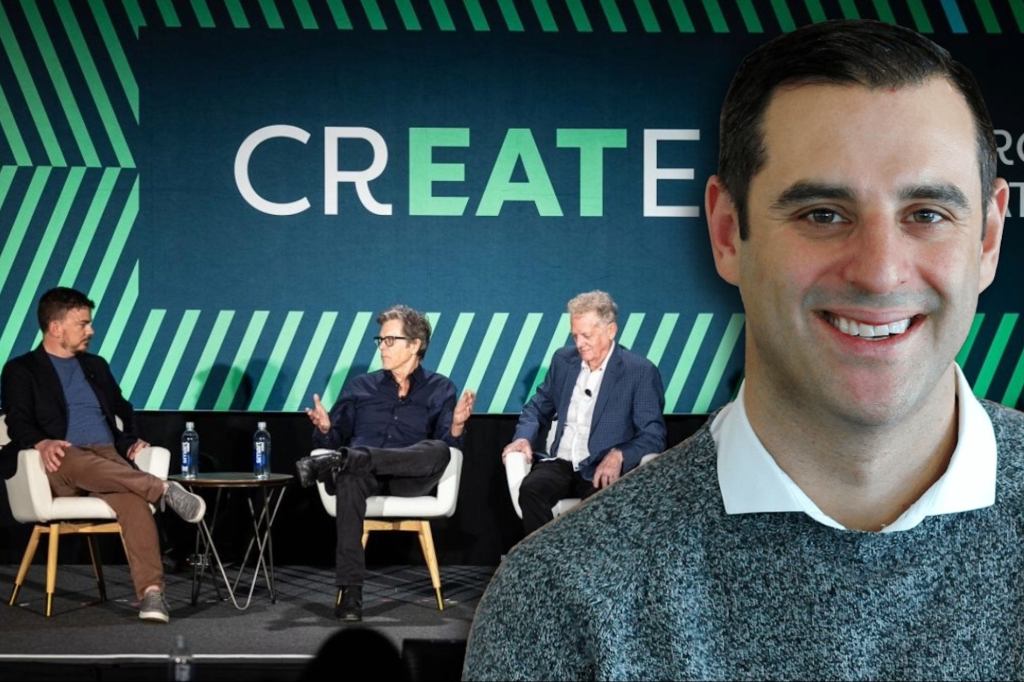
As a vice president of sales for Informa, the company behind some of the most influential gatherings in food, Viscidi oversees the impressive industry events portfolio that includes Create, Restaurant Leadership Conference, FS Tech and even the National Restaurant Association Show.

Related: This Michelin-Trained Chef Now Cooks for One of California’s Fastest-Growing Brands

The Create event in Nashville, Tennessee, was filled with operators who arrived ready to learn, argue, collaborate and grow. “This is the one event built specifically for emerging brands,” Viscidi says, a reminder that events like it exist because he and his team identified a gap no one else was filling.

It is the exact environment he thinks about every day. Not food costs or equipment decisions, but people. More specifically, what happens when you pull operators out of their restaurants and place them in a setting where curiosity takes over?

“Humans are social beings,” Viscidi says. “You get away from your day-to-day, you see content that inspires you, and you surround yourself with peers who help you level up.” He says it with ease, but the simplicity hides the truth.

In an industry defined by constant urgency, stepping back to think requires discipline.

For Viscidi, this segment of emerging brands is electric. It is also the reason he stayed in the events world after its darkest chapter. During Covid, he spent months canceling conferences, calling partners and asking them to hold deposits at a time when no one knew what the next week would bring.

There were days he wondered if events would ever return or if he needed a new career entirely.

But the moment doors reopened, operators rushed back. They came ready to reconnect, ready to trade ideas, ready to get better. They reminded him that gathering is not a luxury in hospitality. It is survival.

“You see who shows up,” he says. “People who represent hundreds of thousands of employees. People who cannot wait to be back in the room.”

Related: This Is the ‘Worst Thing’ CEOs Can Do, According to the Head of OpenTable

Built for outcomes

The strategic layer behind these gatherings is where Viscidi does his most intricate work. Good events are not built as spectacles.

They are designed as engines, tuned for the operators and suppliers who depend on them to make smarter decisions. Viscidi thinks about the audience before anything else. “You have to know who is in the room,” he says. “What you say to a CTO at McDonald’s is very different than what you say to a brand with 10 or 20 locations.”

That clarity shaped Create from the start. The event sits in a deliberate middle space. It is not a show floor full of noise, and it is not a closed leadership retreat. It is engineered to feel approachable while still giving operators access to the tools and relationships that matter.

The speed networking sessions captured that balance. Operators often come to events feeling like red meat, chased by vendors with a pitch. This time, they controlled the meetings through Grip, the AI matchmaking tool humming quietly underneath the agenda. It paired people based on criteria rather than chance encounters. Viscidi had modest expectations. “I was hoping for a B-minus,” he admits. “But it turned into a B-plus, maybe even an A-minus.” Conversations felt intentional. No one seemed drained, and no one felt ignored.

City selection follows the same logic. Nashville works because it draws nationally. Southern California works because hundreds of emerging brands sit within driving distance.

“Location is everything,” Viscidi says. “It has to be either easy to get to or worth the trip.”

Across the Informa portfolio, each event plays a different role. Restaurant Leadership Conference speaks to top executives. The National Restaurant Association Show gives independents and multi-unit operators a full industry view. FS Tech pushes the conversation forward. “Pick the event that matches the phase you are in,” Viscidi says. “A few good days can change your whole next quarter.”

What he builds is not simply programming. It is infrastructure. The kind that helps operators grow, vendors connect and the industry regain momentum in a difficult year.

Because when the right people are in the right room, progress becomes visible.

Related: Why a Super Bowl Champ Chose This Emerging Franchise Company to Create Impact Far Beyond Restaurants

About Restaurant Influencers

Restaurant Influencers is brought to you by Toast, the powerful restaurant point-of-sale and management system that helps restaurants improve operations, increase sales and create a better guest experience.

Toast — Powering Successful Restaurants. Learn more about Toast.

Key Takeaways

  • Viscidi believes the most valuable industry insights are found outside the four walls of a restaurant.
  • At events, emerging brands gain inspiration, community and the rare chance to learn from peers facing the same challenges.
  • From AI-powered matchmaking to curated formats like speed networking, Viscidi ensures operators and vendors make meaningful connections rather than hoping for chance encounters.

Marcus Viscidi is not just attending conferences. He is one of the people responsible for bringing them to life.

As a vice president of sales for Informa, the company behind some of the most influential gatherings in food, Viscidi oversees the impressive industry events portfolio that includes Create, Restaurant Leadership Conference, FS Tech and even the National Restaurant Association Show.

https://www.entrepreneur.com/growing-a-business/this-exec-builds-massive-industry-events-like-the-national/501108