Whole Foods Wants to Use AI to Turn Food Scraps Into Chicken Feed

Whole Foods Market has a plan for all those fruit and vegetable scraps piling up in the back of its stores: Turn them into chicken feed.

Starting in 2027, Whole Foods will use Mill Commercial, an AI-powered device that grinds and dehydrates food waste into coffee-ground-like material that can feed chickens at its private-label egg suppliers. Amazon invested in Mill to develop the technology.

The device can shrink waste volumes by up to 80 percent, cutting greenhouse gas emissions and saving money. It’s all part of Whole Foods’ goal to cut food waste in half by 2030.

Read more

Whole Foods Market has a plan for all those fruit and vegetable scraps piling up in the back of its stores: Turn them into chicken feed.

Starting in 2027, Whole Foods will use Mill Commercial, an AI-powered device that grinds and dehydrates food waste into coffee-ground-like material that can feed chickens at its private-label egg suppliers. Amazon invested in Mill to develop the technology.

The device can shrink waste volumes by up to 80 percent, cutting greenhouse gas emissions and saving money. It’s all part of Whole Foods’ goal to cut food waste in half by 2030.

Read more

The rest of this article is locked.

Join Entrepreneur+ today for access.

https://www.entrepreneur.com/business-news/whole-foods-recycles-food-waste-into-chicken-feed-with-ai/501016


A $30 PDF Editor That Beats the Big Names? Yes, Really.

Disclosure: Our goal is to feature products and services that we think you’ll find interesting and useful. If you purchase them, Entrepreneur may get a small share of the revenue from the sale from our commerce partners.

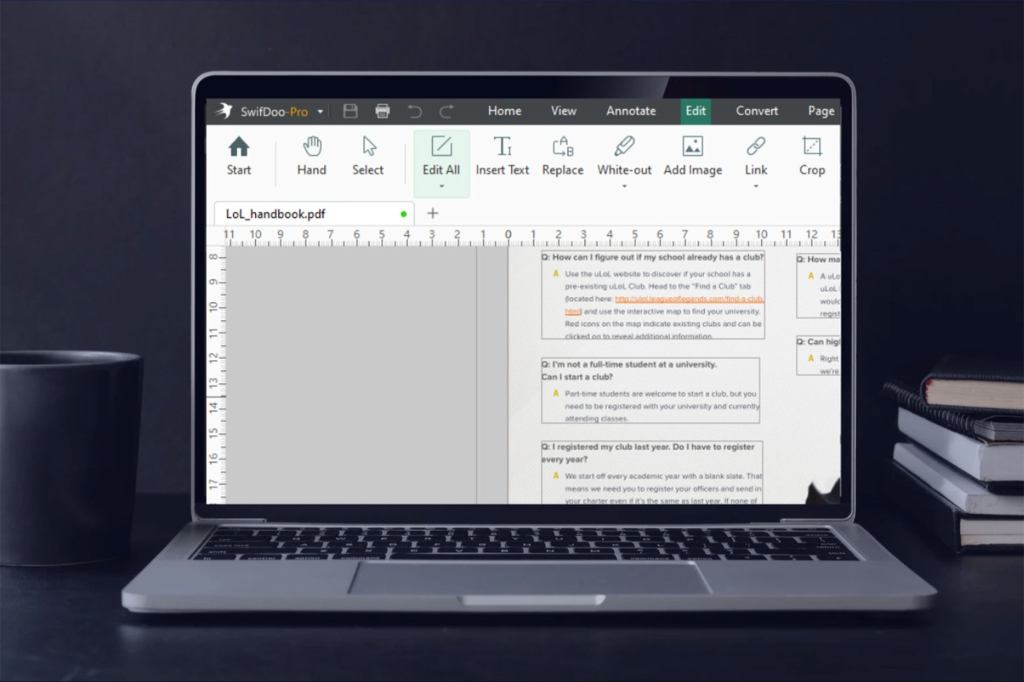
If PDFs fuel your daily workflow, this is one of the cleanest cost-to-capability upgrades available: SwifDoo PDF Pro for Windows is just $29.97 with code PRO (reg. $129) through Dec. 21 at 11:59 p.m. PT, giving you a full professional PDF toolkit with a single one-time payment.

A full-featured PDF editor built for real daily use

SwifDoo PDF Pro handles the essentials including editing text, images, and formatting, while also supporting markup, page reorganization, compression, secure signatures, and OCR for scanned documents. Instead of juggling multiple apps, you get one fast, lightweight environment that keeps teams efficient and aligned.

For business environments, batch processing, PDF-to-Office conversions, and file protection tools make it easier to update client files, produce proposals, and maintain consistent document standards across departments.

Right now, SwifDoo PDF Pro is $29.97 with code PRO, delivering a $99 savings on software that usually locks buyers into annual fees. With this offer, you pay once and keep the software—no renewals, no subscription creep, no year-two surprises.

Ideal for professionals who want control, clarity, and speed

Because this deal delivers full PDF capability without recurring fees, it aligns especially well with people who need predictable, efficient document workflows, including:

  • Professionals managing reports, contracts, and client deliverables
  • Small teams standardizing document workflows across Windows devices
  • Entrepreneurs who want predictable software costs
  • Anyone replacing costly annual PDF tools with a one-time alternative

If you prefer ownership over recurring charges, this sits firmly in your lane.

A perpetual, feature-rich PDF editor under $30 is rare. Download a lifetime license for SwifDoo PDF Pro for Windows for $29.97 with code PRO (reg. $129) before the offer ends on Dec. 21 at 11:59 p.m. PT and streamline your document workflow with a tool built for long-term efficiency.

StackSocial prices subject to change.

If PDFs fuel your daily workflow, this is one of the cleanest cost-to-capability upgrades available: SwifDoo PDF Pro for Windows is just $29.97 with code PRO (reg. $129) through Dec. 21 at 11:59 p.m. PT, giving you a full professional PDF toolkit with a single one-time payment.

A full-featured PDF editor built for real daily use

SwifDoo PDF Pro handles the essentials including editing text, images, and formatting, while also supporting markup, page reorganization, compression, secure signatures, and OCR for scanned documents. Instead of juggling multiple apps, you get one fast, lightweight environment that keeps teams efficient and aligned.

For business environments, batch processing, PDF-to-Office conversions, and file protection tools make it easier to update client files, produce proposals, and maintain consistent document standards across departments.

The rest of this article is locked.

Join Entrepreneur+ today for access.

https://www.entrepreneur.com/science-technology/a-30-pdf-editor-that-beats-the-big-names-yes-really/500771


PayPal Just Filed to Become a Real Bank—Here’s Why That Matters for Small Businesses

The payment giant is seeking approval to launch PayPal Bank, which would offer business loans, savings accounts, and FDIC insurance.

By Jonathan Small | edited by Jessica Thomas | Dec 17, 2025

This article is part of the America’s Favorite Mom & Pop Shops series. Read more stories

PayPal wants to cut out the middleman and become the bank itself. The payment company announced it submitted applications to Utah regulators and the FDIC to establish what will be called PayPal Bank.

If approved, PayPal Bankwould offer small business loans, interest-bearing savings accounts to customers, and FDIC insurance coverage for deposits. The bank would also work directly with Visa and Mastercard to complement its existing payment processing.

Mara McNeill, former President and CEO of Toyota Financial Savings Bank, has been tapped to lead PayPal’s new bank.

Read more

PayPal wants to cut out the middleman and become the bank itself. The payment company announced it submitted applications to Utah regulators and the FDIC to establish what will be called PayPal Bank.

If approved, PayPal Bankwould offer small business loans, interest-bearing savings accounts to customers, and FDIC insurance coverage for deposits. The bank would also work directly with Visa and Mastercard to complement its existing payment processing.

Mara McNeill, former President and CEO of Toyota Financial Savings Bank, has been tapped to lead PayPal’s new bank.

Read more

The rest of this article is locked.

Join Entrepreneur+ today for access.

https://www.entrepreneur.com/business-news/paypal-just-filed-to-become-a-real-bank/501014


California Gives Tesla 90 Days to Change ‘Autopilot’ Name — Or Face a Sales Ban

Turns out Tesla’s “Autopilot” and “Full Self-Driving” claims don’t actually let cars drive themselves — and now California is making Elon Musk‘s company pay for the confusion.

The automaker now has 90 days to fix the problem, or it will face a 30-day suspension of its sales license in the state. The California DMV won’t touch the manufacturing license, however, meaning factory operations will continue uninterrupted.

This is not the first time California has had beef with Tesla. The DMV first accused Musk’s company of false advertising in 2022, arguing the feature names implied autonomous operation despite requiring an attentive driver ready to take control at any time. Since then, Tesla renamed its premium driver-assistance option to “Full Self-Driving (Supervised).”

Read more

Turns out Tesla’s “Autopilot” and “Full Self-Driving” claims don’t actually let cars drive themselves — and now California is making Elon Musk‘s company pay for the confusion.

The automaker now has 90 days to fix the problem, or it will face a 30-day suspension of its sales license in the state. The California DMV won’t touch the manufacturing license, however, meaning factory operations will continue uninterrupted.

This is not the first time California has had beef with Tesla. The DMV first accused Musk’s company of false advertising in 2022, arguing the feature names implied autonomous operation despite requiring an attentive driver ready to take control at any time. Since then, Tesla renamed its premium driver-assistance option to “Full Self-Driving (Supervised).”

Read more

The rest of this article is locked.

Join Entrepreneur+ today for access.

https://www.entrepreneur.com/business-news/california-gives-tesla-90-days-to-fix-deceptive-claims/500958


Here’s How the CEO of a $13 Billion Social Media Giant Manages Stress

Key Takeaways

  • Evan Spiegel is the CEO of Snap, a social media company with a most recent market value of $13 billion.
  • In a recent interview, Spiegel said that he views stress positively, as a “gift” and a “learning opportunity.”
  • Other tech leaders, like Nvidia’s Jensen Huang, experience the stress of the CEO job more negatively.

Snap CEO Evan Spiegel manages the pressure of running a $13 billion social media company by reframing the way he thinks about stress and building habits that help him cope with it.

In a recent episode of the Grit podcast, Spiegel said that he views stress positively, calling it a “gift” and a “learning opportunity.” A key part of Spiegel’s approach to stress is to act as a buffer rather than a transmitter of stress. He believes that it is his responsibility to absorb pressure for his team and family rather than unloading it on them. He doesn’t want colleagues or loved ones to feel the weight of his role.

To make that possible, Spiegel relies on practical routines, including regular exercise, sauna sessions and meditation, to manage stress privately. Those habits allow him to keep leading while maintaining emotional stability at home and at work.

Related: Employee Burnout Is a Multi-Million Dollar Hidden Cost For Employers, According to New Research

“I’ve tried to find my own ways,” he said on the podcast. “I want to absorb that stress, right? I don’t want to unload that onto people that I care about.”

Spiegel argued that what matters most is how a person frames stress in their own mind. Seeing stress as a positive growth opportunity can have a “huge impact on your ability to manage it,” he said.

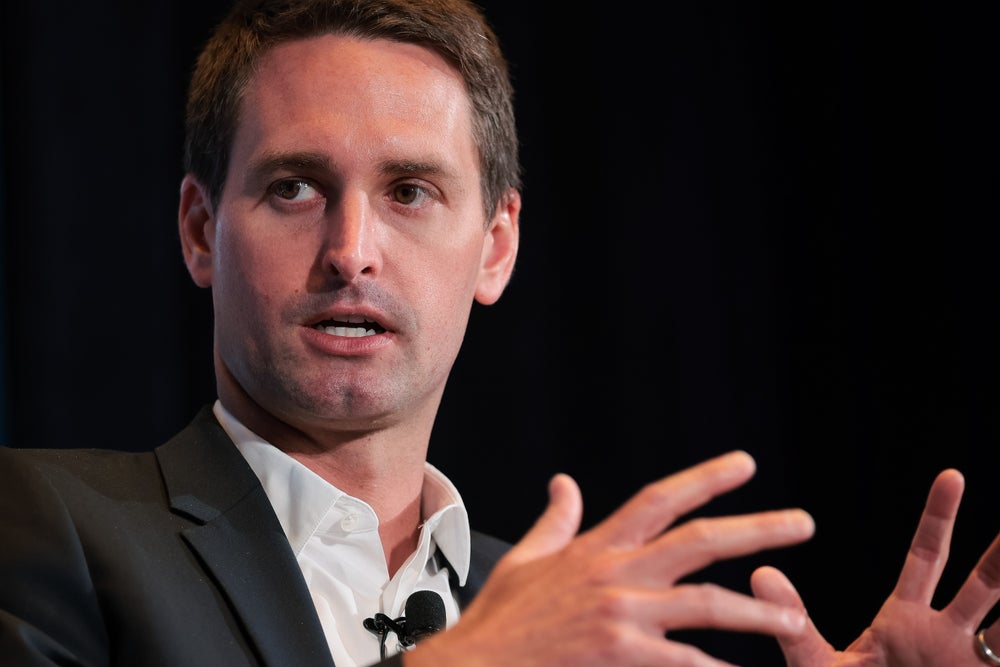
Evan Spiegel. Photo by Kayla Bartkowski/Getty Images

Research backs up his claim. Stanford psychologist Kelly McGonigal‘s 2015 book, The Upside of Stress, claimed that viewing stress as a positive challenge rather than something harmful can improve work performance and resilience. This positive mindset became essential for Spiegel after years of high-profile decisions, from turning down Meta’s $3 billion acquisition offer in 2013 to taking Snap public in March 2017.

Related: Snap’s CEO Says This One Trait Is ‘the X Factor’ for Entrepreneurs

Spiegel has been CEO of Snap for over 13 years, so being CEO for the long haul has made him better at managing stress.

“Once you’re just in a rhythm of dealing with stressful events all the time, it becomes very normal,” he said on the podcast.

Other tech leaders have different responses to stressful situations. Nvidia CEO Jensen Huang, for example, said earlier this month that he lives in a constant “state of anxiety” that Nvidia is “30 days from going out of business,” even though the company is currently the most valuable in the world and reported record revenue of $57 billion for its third quarter last month. Huang said on the podcast that he works “every moment” he is awake and is “exhausted.”

Ready to explore everything on Entrepreneur.com? December is your free pass to Entrepreneur+. Enjoy complete access, no strings attached. Claim your free month

Key Takeaways

  • Evan Spiegel is the CEO of Snap, a social media company with a most recent market value of $13 billion.
  • In a recent interview, Spiegel said that he views stress positively, as a “gift” and a “learning opportunity.”
  • Other tech leaders, like Nvidia’s Jensen Huang, experience the stress of the CEO job more negatively.

Snap CEO Evan Spiegel manages the pressure of running a $13 billion social media company by reframing the way he thinks about stress and building habits that help him cope with it.

In a recent episode of the Grit podcast, Spiegel said that he views stress positively, calling it a “gift” and a “learning opportunity.” A key part of Spiegel’s approach to stress is to act as a buffer rather than a transmitter of stress. He believes that it is his responsibility to absorb pressure for his team and family rather than unloading it on them. He doesn’t want colleagues or loved ones to feel the weight of his role.

The rest of this article is locked.

Join Entrepreneur+ today for access.

https://www.entrepreneur.com/business-news/how-to-manage-stress-according-to-the-ceo-of-13b-snap/501013


How the Best Leaders Make High-Stakes Decisions During Scary Times

Opinions expressed by Entrepreneur contributors are their own.

Key Takeaways

  • Strong decisions come from principles, not perfect data, especially in fast-changing environments.
  • Spotting early signals and learning quickly beats waiting for certainty or consensus.

In 2026, leaders will need to make high-stakes decisions with limited information, requiring frameworks and habits that anticipate change, balance risk and empower teams.

The pace of change these days is accelerating, and leaders face increasing pressure to make strategic decisions with incomplete or even conflicting information. Technology is part of the equation, but the real challenge is cultivating frameworks, habits and cultures that anticipate change instead of reacting to it.

Leaders must balance speed with deliberation, build resilient teams and focus on decision quality over perfection. The key to this involves setting priorities, spotting early signals and empowering teams to act confidently amid ambiguity.

Related: Why Most Small Businesses Fix the Wrong Bottleneck

Evolving the decision-making mindset

Earlier in my career, I made a lot of decisions under pressure, focused on short-term fixes and getting over the next hurdle. During volatile market moments, I would ‘tighten the reins’ and try to control every detail.

Over two decades of leading a services agency, which shifted into a resilience mindset: viewing the long game as equally important as short-term execution. This change means asking not just “What’s wrong?” but “How can we creatively adapt and come out stronger?” In this way, I shifted from reaction to resilience.

My next shift was from instinct to reflection. I intentionally built in more reflection time, more debriefs and more scenario planning. I’ve learned to examine how my own perceptions color my interpretation of situations. In moments of high stakes and uncertainty, I slow down deliberately to ask:

  • What do I actually know?
  • What don’t I know?
  • What might I be bringing in consciously or unconsciously?
  • Whose perspective do I need to add?

I also changed how I thought about leadership, moving from a top-down to a collaborative approach. I involve my leadership team – and sometimes broader teams – to surface blind spots in ambiguous or complex situations. Collaboration also builds buy-in. When people help frame the problem, they’re automatically more invested in the solution.

I find these frameworks useful when information is incomplete:

  • Anchor on principles – Decisions rooted in values and long-term priorities hold steady even when data shifts.
  • Scenario thinking – Mapping best-, worst-, and middle-case futures helps identify “constants” and low-regret moves.
  • 70% rule – Make decisions when you have about 70% of the picture, then adjust as life “shows up.”
  • Leverage collective insight – Diverse viewpoints challenge biases and uncover blind spots.
  • Resilience as a frame of mind – Uncertainty becomes an invitation to grow and adapt.

Related: This is the AI Mistake That’s Killing Otherwise Strong Companies

Spotting early signals before the market moves

Behavioral changes can act as early indicators. Small shifts in client questions, comments or concerns often signal emerging needs or pain points. Social conversations and subtle patterns in feedback reveal more than dashboards alone. Direct conversations with clients, team members and peers in the industry validate observations and act as an early warning system.

Monitoring emerging tech adoption, new tools and regulatory changes offers insight into what customers will expect next. Broader cultural movements influence buying behavior and brand expectations in profound ways, often before they show up in revenue data.

I identify signals earlier than competitors by keeping an open mind and continually questioning assumptions instead of relying on what used to work. I tap into my diverse personal and professional network for varied viewpoints. I use analytics tools to track patterns and look for what the “bigger picture” is pointing to. Then, I connect the dots across feedback, social chatter, competitor moves and internal performance to understand context, not just noise.

Building a culture that makes strong decisions at speed

Leaders can go wrong by trying to balance speed and accuracy. Many fall into the trap of chasing perfect accuracy, even though many variables are fundamentally uncontrollable. I often say of public relations: We try to control inherently uncontrollable things.

Choosing which strategic bets deserve resources can be tough. When everything feels important, focus on the bets with the biggest upside and learning value. Start small, test quickly and scale only what proves it can move the needle.

There are several common blind spots when trying to build adaptability. Assuming adaptability comes from processes alone rather than people’s mindset, curiosity and willingness to experiment. Another blind spot is overemphasizing planning and underemphasizing learning. Leaders are sometimes unwilling to try, fail, learn and try again.

Finally, adaptability fails when leaders underestimate the importance of psychological safety. Without it, adaptability stays theoretical.

To create a metrics-driven decision culture without slowing innovation, focus on insight, not volume; measure what truly informs better decisions. Provide context behind metrics so teams understand the “why,” not just the number. Treat metrics as a learning tool – not a policing mechanism – so accountability and speed can coexist.

Leaders need to ensure teams feel confident making decisions amid uncertainty. Teams need clarity on where they have decision authority and where alignment is needed. Leaders must set clear guardrails and model transparency.

A culture that celebrates learning over perfection gives people the courage to take decisive action even when variables are shifting.

Turning uncertainty into an advantage

The leaders who thrive are the ones who stop trying to predict every outcome and instead build resilience into their organizations. By evolving your decision-making habits, sharpening your ability to see early signals and creating cultures that empower teams to act, you can transform uncertainty into a competitive advantage.

The future will always be unpredictable, but leaders who prioritize adaptability, insight and principled decision-making will always be prepared for whatever comes next.

Key Takeaways

  • Strong decisions come from principles, not perfect data, especially in fast-changing environments.
  • Spotting early signals and learning quickly beats waiting for certainty or consensus.

In 2026, leaders will need to make high-stakes decisions with limited information, requiring frameworks and habits that anticipate change, balance risk and empower teams.

The pace of change these days is accelerating, and leaders face increasing pressure to make strategic decisions with incomplete or even conflicting information. Technology is part of the equation, but the real challenge is cultivating frameworks, habits and cultures that anticipate change instead of reacting to it.

The rest of this article is locked.

Join Entrepreneur+ today for access.

https://www.entrepreneur.com/leadership/how-the-best-leaders-make-high-stakes-decisions-during/500641


Watch Out for This Major Red Flag When You’re Starting a Business, Says a Serial Investor

Key Takeaways

  • Investors call out scattered and unfocused pitches.
  • Perell offers a solid piece of advice for any entrepreneur.

Season 13 of Entrepreneur Elevator Pitch is back with one of its most explosive episodes yet — and this ride to the top floor is packed with big personalities, bigger numbers and real-time drama you do not want to miss.

With just 60 seconds to pitch their business, founders step into the elevator and put everything on the line. The boardroom energy is electric as Kim Perell, Jon Bier and Dhani Jones react in real time, celebrating sharp storytelling and ruthless focus while calling out anything that feels scattered or unfocused.

This episode is a masterclass in what works (and what absolutely does not) in a pitch. Perell lays it out clearly: She wants founders who can “nail it and then scale it,” warning that trying to do too much too soon is a red flag.

Related: Do These Pitches Have What It Takes to Win Over a Board of Investors?

Bier pushes entrepreneurs to prove that great products are backed by smart operations and clear positioning, while Jones underscores that betting on yourself is only the beginning — you also need discipline, focus and a tight SKU strategy.

You’ll see passions flare, tough passes land and a heartfelt founder story that hits the investors right in the gut — plus the kind of boardroom tension that keeps you glued to the screen. As you watch, you’ll pick up actionable insights on framing your ask, highlighting traction and turning your story into the kind of pitch that makes investors lean in.

Stream this new episode of Entrepreneur Elevator Pitch now, and learn exactly what it takes to step into an elevator, own the moment and walk out with investor interest on your side.

Related: Can This Cheeky Fashion Brand Impress Investors in Just 60 Seconds?

Season 13, Episode 8 Board of Investors

Season 13, Episode 8 Entrepreneurs

  • Keith Lorren, founder of Spice King, which makes gourmet seasonings that are infused with aromatic essential oils, trace minerals and designed with ultimate precision
  • Eli Zelmati and Noam Mark, founders of Gymati, a deodorant that combines zinc, a natural odor fighter, with postbiotics that balance your skin’s microbiome, so you can sweat naturally and stay fresh all day
  • Scott and Julia Morris, founders of Roshambo, which makes flexible, safe eyewear for babies, toddlers and the whole family

Season 13 of Entrepreneur Elevator Pitch is presented by Amazon Business. New episodes stream on Wednesdays on Entrepreneur.com and EntrepreneurTV. Follow Entrepreneur Elevator Pitch on Facebook, YouTube and IGTV.

Related: This Business Got 30 Million Views on TikTok — Is It Worth Millions of Dollars?

Ready to explore everything on Entrepreneur.com? December is your free pass to Entrepreneur+. Enjoy complete access, no strings attached. Claim your free month.

Key Takeaways

  • Investors call out scattered and unfocused pitches.
  • Perell offers a solid piece of advice for any entrepreneur.

Season 13 of Entrepreneur Elevator Pitch is back with one of its most explosive episodes yet — and this ride to the top floor is packed with big personalities, bigger numbers and real-time drama you do not want to miss.

With just 60 seconds to pitch their business, founders step into the elevator and put everything on the line. The boardroom energy is electric as Kim Perell, Jon Bier and Dhani Jones react in real time, celebrating sharp storytelling and ruthless focus while calling out anything that feels scattered or unfocused.

The rest of this article is locked.

Join Entrepreneur+ today for access.

https://www.entrepreneur.com/starting-a-business/serial-investor-says-this-is-a-major-red-flag-in-pitches/498642


How I Turned an Unexpected Career Break Into My Biggest Opportunity Yet

Opinions expressed by Entrepreneur contributors are their own.

Key Takeaways

  • Career uncertainty and breaks aren’t setbacks — they’re opportunities to experiment, learn new skills and build small, tangible projects that can shape your next chapter.
  • Meaningful connections and intentional reflection during downtime can uncover unexpected opportunities and provide clarity through action, not just planning.

It’s a strange feeling — waking up without a roadmap. No meetings. No emails piling up. No job title on your LinkedIn that feels “current.” Whether you’ve just been laid off, are taking a career break or simply don’t know what’s next, there’s a silent pressure that creeps in: I should be doing more. I should have a plan.

I’ve been there. More than once, actually.

As a Mexican immigrant who arrived in the U.S. with no professional network, no job and a student visa that came with an expiration date, I’ve navigated periods of uncertainty that felt both terrifying and — though I couldn’t see it at the time — deeply formative. Those pauses were not setbacks. They were hidden invitations to rethink, retool and realign.

Related: 4 Core Strategies That Helped Me Turn Setbacks Into Success

If you’re heading into the holidays unsure of your next move, I want to reframe this moment for you. Free time, when used with intention, can be one of the most powerful accelerators of your career. Here’s how.

Stop chasing clarity — create it

When I graduated with my master’s degree, I didn’t have a job waiting for me. What I had was a handful of skills, a lot of ambition and no clear idea of how those things translated into a career. I thought I needed to “figure it out” before I took action.

But here’s what I learned: clarity rarely comes from thinking. It comes from doing.

If you’re feeling lost, start by lowering the pressure. Instead of trying to define your entire future, define your next experiment. Message someone in an industry you’re curious about. Take an online course in a subject that energizes you. Build a basic portfolio — even if no one sees it. Every action you take gives you a new data point about what feels right (and what doesn’t).

If you don’t know where to start, block 90 minutes twice a week as “exploration time.” Use it to take a class, start a project or talk to someone doing something you admire. You’re not wasting time — you’re testing hypotheses about your future. I often visit sites like Udemy, Codecademy and even YouTube to learn new skills or browse courses that can both expand my skill set and spark ideas for my next career move.

Use the downtime to stack weird skills

Some of the most valuable things I’ve ever learned had no obvious payoff at the time. Real estate tech. Video editing. Interior design. Back then, it seemed like I was all over the place. But when I eventually launched my company — a tech platform that uses unedited video tours to bring transparency to real estate — those “random” skills clicked into place like puzzle pieces.

We tend to underestimate the power of stacking skills that don’t seem directly related. But that’s where innovation often lives — at the intersection of unexpected knowledge.

My suggestion: choose one new skill to learn during your break or free time. Make it weird. Make it fun. Just make sure you’re curious about it. You’ll be amazed at how it pays off later in ways you can’t yet predict. Like my mother always says, the secret is to “always keep learning.”

Build something small — but real

When I had no job offers coming in, I stopped applying and started building. I designed a landing page for an idea I had. I created sample wireframes. I put together decks — not because anyone asked, but because it made the idea feel real. Those materials later helped me pitch what became my first tech startup.

Even if you don’t feel like an entrepreneur, there’s power in creating something tangible. It signals to yourself (and others) that you’re not waiting — you’re building. And that mindset shift matters. Pick a 30-day project with clear deliverables. Launch a one-page site. Start a newsletter. Create a case study. Even if no one sees it, you’ll know what you’re capable of — and that’s everything.

Reconnect without an agenda

Here’s a secret: most of my career breaks were bridged by conversations — not applications. In one of my lowest moments, I reached out to the real estate broker who helped me find my first NYC apartment. I told her about my background in tech and asked if she knew of anyone who could use support. That call changed my life. She hired me. We built an award-winning team. Years later, I launched my company based on what I learned while working with her, plus my existing skill set.

You don’t have to “network” in the traditional sense. Just reconnect. Share what you’re curious about. Ask what they’re working on. Stay top of mind, but do it with sincerity.

You want to know a big secret of mine? I actually leverage the holidays to reconnect with people in my industry.

Choose five people you haven’t spoken to in a while. Send each a short, honest message over the holidays. No pitch. Just a connection. Something like: “Happy Holidays! I’ve been exploring new directions and thought of you today. How are things on your end?”

Related: Why a 7-Week Break From Work Took My Business and Team to Record Growth

Don’t mistake stillness for stagnation

This is the hardest part. When you’re used to hustle, having nothing to do can feel like failure. But in my experience, stillness is where the seeds of your next chapter get planted. You don’t need to move fast — you need to move aligned.

Some of the most meaningful work I’ve done started during quiet seasons. The insight I needed — the idea that later turned into my company — didn’t come when I was busy. It came when I had the space to reflect.

Take time this holiday season to unplug, walk, journal or just be. Ask yourself not, “What should I do next?” but rather, “What feels true to me now?” Free time can be unnerving, especially when it’s not by choice. But it’s also a rare opportunity to reset. Without the noise, without the pressure, without the performance.

You don’t need all the answers. You just need a willingness to start small, stay open and show up. Because clarity doesn’t come before action, it comes from it. And this moment — this strange, unstructured moment — might be the one that changes everything.

Key Takeaways

  • Career uncertainty and breaks aren’t setbacks — they’re opportunities to experiment, learn new skills and build small, tangible projects that can shape your next chapter.
  • Meaningful connections and intentional reflection during downtime can uncover unexpected opportunities and provide clarity through action, not just planning.

It’s a strange feeling — waking up without a roadmap. No meetings. No emails piling up. No job title on your LinkedIn that feels “current.” Whether you’ve just been laid off, are taking a career break or simply don’t know what’s next, there’s a silent pressure that creeps in: I should be doing more. I should have a plan.

I’ve been there. More than once, actually.

The rest of this article is locked.

Join Entrepreneur+ today for access.

https://www.entrepreneur.com/starting-a-business/how-i-turned-an-unexpected-career-break-into-my-biggest/499461


Aspiring Franchise Owners Ask Me This — But They Should Be Asking Themselves 5 Questions

Opinions expressed by Entrepreneur contributors are their own.

Key Takeaways

  • Learn how to evaluate whether your professional experience and mindset align with what franchisors actually look for in successful owners.
  • Discover the key personal qualities that matter far more than specific degrees or backgrounds when deciding if franchise ownership is right for you.

When it comes to entrepreneurship, there’s a reason there’s not a single “how to” guide or a single story that maps success — there simply isn’t one. Why? It could be easy to say it’s because every new business requires energized originality and careful navigation on a unique path, but then what about franchising?

Let’s bust a myth right off the bat: entrepreneurship is not reserved for geniuses in a rarified space. Entrepreneurship is accessible and possible, even if — in fact, especially if – you’re not Bill Gates, Jeff Bezos or Steve Jobs.

As a franchise consultant who is often asked by prospective franchise owners whether they have the “right” education and background to become a franchise owner, I tell them, “You can’t major in franchising.” And it’s true. My degree is in finance, and I was a CPA for years before I wound up owning and running a fitness franchise.

All this to say, a lot of backgrounds can thrive in franchising. The whole point of franchising is that the franchisor (or parent company) is giving you a business in a box. So, anyone can do it, right? Wrong.

What they can’t roll out is strong leadership, management skills and cross-functional professional know-how, among other things. What franchisors need is top-level management skills applied in a smaller market. This is where the partnership comes in. They bring the industry, operations and playbook — you bring the strategic thinking, problem solving, communication, delegation and other professional leadership skills you’ve honed.

So rather than focusing on a specific path or education, take a moment to investigate the skills you’ve earned throughout your career. Ask yourself the five questions outlined in the following list. If you find yourself answering with conviction, it may be time to seriously consider franchising.

Related: Why You Should Buy a Franchise Instead of Starting Your Own

1. Are you willing to adapt and grow – even if it’s uncomfortable?

There’s no two ways about it. Business ownership has a way of quickly highlighting weak points in our knowledge. Ask yourself: How do I deal with not having the answers? Do I clam up and avoid the issue? Or do I dig down and learn? Entrepreneurship is humbling, and those willing to admit where there are gaps in their expertise but have the drive to expand their knowledge are the ones who succeed.

2. Are you driven by a scarcity or abundance mindset?

To be an effective entrepreneur, you must be able to see possibilities where others see roadblocks. Importantly, this is not to say that you ignore these roadblocks. Rather, you see the obstacles, but instead of allowing the fear of negative outcomes to dictate behavior, you think outside the box to develop solutions. In the entrepreneurial world, we say “around, over or through” obstacles.

3. Are you confident in your ability as a leader?

There’s a reason franchise owners are typically not fresh out of college or young professionals lacking prior work experience. While you don’t need a specific, curated background or education, one of the things that makes a prospective franchise owner appealing to a franchisor is earned leadership experience and confidence in their own capabilities. Are you someone who gets paralyzed by fear, or do you take action? One way to mitigate execution risk is with confidence in your capabilities, regardless of challenging circumstances.

Related: 3 Traits You Need to Succeed as a Franchisor, According to Top Franchise Leaders

4. Do you have a relentless determination and grit to succeed?

This is a big one. Entrepreneurship can look fun from the outside, but ask any business owner about their early days and they’ll tell you it’s a bare-knuckled street fight every day. You have to be willing to go to bat for your franchise, make sacrifices, do the uncomfortable things and operate from a “failure is not an option” mentality.

5. Do you have a strong future vision of what you want to accomplish?

You can put in all the Herculean effort you want, but if you don’t have a clear vision of what you’re working towards, then it may be in vain. I often tell my franchise candidates, you can’t hit a target you aren’t aiming for. Consider where you want to be in five years, 10 years — and not vague platitudes like “wealthy” or “successful,” but specific goals. Maybe it’s paying for your kids’ college education, maybe it’s riding off into the sunset in an Airstream, maybe it’s leaving a legacy for your family – whatever your future vision is, make it clear. Can you see it?

At the end of the day, franchising is a unique option for aspiring entrepreneurs. It strikes a fantastic balance between a true start-up and a traditional corporate path, making former corporate employees with a wide range of skills and experiences ideal candidates. In many ways, franchise owners are citizens of the land of wayward toys. A wide variety of backgrounds can lend themselves to successful franchise ownership; it just takes research to discover which franchise model is the best fit for your skills.

While this is certainly not an exhaustive list, answering these questions is a good first step in considering whether you should explore franchise ownership. Although you can’t major in franchising, your earned knowledge, experience and determination are the only credentials needed to travel this path of entrepreneurship.

Key Takeaways

  • Learn how to evaluate whether your professional experience and mindset align with what franchisors actually look for in successful owners.
  • Discover the key personal qualities that matter far more than specific degrees or backgrounds when deciding if franchise ownership is right for you.

When it comes to entrepreneurship, there’s a reason there’s not a single “how to” guide or a single story that maps success — there simply isn’t one. Why? It could be easy to say it’s because every new business requires energized originality and careful navigation on a unique path, but then what about franchising?

Let’s bust a myth right off the bat: entrepreneurship is not reserved for geniuses in a rarified space. Entrepreneurship is accessible and possible, even if — in fact, especially if – you’re not Bill Gates, Jeff Bezos or Steve Jobs.

The rest of this article is locked.

Join Entrepreneur+ today for access.

https://www.entrepreneur.com/franchises/aspiring-franchise-owners-ask-me-this-but-they-should/500409


Why Google Co-Founder Sergey Brin Says His Early Retirement Was ‘the Worst Decision’

Key Takeaways

  • Google co-founder Sergey Brin tried to retire from the company in 2019.
  • In a new talk released by Stanford University, Brin says retiring was “the worst decision” he could have made because it was isolating and cut him off from intellectual stimulation.
  • Within months, he started going back into the office and spending more time on what became Gemini, Google’s flagship AI model.

Google co-founder Sergey Brin, 52, says walking away from the tech giant in 2019 and “trying retirement” quickly proved to be the wrong move for him.

In a talk released recently by the Stanford University School of Engineering, Brin called his choice to retire “the worst decision.” He initially imagined a low-key life, picturing long days spent sitting in cafes and studying physics. Instead, the timing could not have been worse: The Covid-19 pandemic shut down public life, including the cafes he had intended to use for his new routine.

Instead of a rich intellectual sabbatical, Brin found himself isolated and cut off from the stimulation he was used to. He told Stanford University students that without intellectually demanding work, he was “just kind of stewing” and felt himself “spiraling” and “not being sharp.” He felt a pressing need to return to the office, which was closed at the time.

Related: Google Co-Founder Sergey Brin Is Back at the Company ‘Pretty Much Every Day.’ Here’s What He’s Working On.

“After a number of months, we started to have some folks going to the office, and I started to do that occasionally,” Brin said at the talk. “[I] then started spending more and more time on what later became Gemini, which is super exciting.”

Sergey Brin. Photo by Jamie McCarthy/WireImage

The work developing Gemini, Google’s flagship AI model, gave Brin a crucial technical and creative outlet. Today, Brin is back working full-time at Google, focusing on AI initiatives.

“I think that’s very rewarding,” he said. “If I’d stayed retired, I think that would’ve been a big mistake.”

Brin tied his retirement regret to a wider theme: Founders, including himself, often misjudge timing and readiness. He gave the $1,500 Google Glass smart glasses as an example, claiming he rushed a product that was not affordable or ready for the general public to market. He wanted to push an innovative product, but didn’t think through the technical details.

Related: Google Is Making AI ‘Intelligent Eyewear’ With Warby Parker After Eyeing Meta’s Ray-Ban Success

He has also urged members of his team to work more than the standard 40 hours per week — and all of it in the office. In a memo released earlier this year, he recommended that Google staff working on Gemini AI should work in the office “at least every weekday” and pushed 60-hour workweeks as the “sweet spot of productivity.”

Brin is the third-richest person in the world at the time of writing, with a net worth of $246 billion, according to the Bloomberg Billionaires Index. He follows Elon Musk and fellow Google co-founder Larry Page, who hold the first and second spots, respectively.

Ready to explore everything on Entrepreneur.com? December is your free pass to Entrepreneur+. Enjoy complete access, no strings attached. Claim your free month.

Key Takeaways

  • Google co-founder Sergey Brin tried to retire from the company in 2019.
  • In a new talk released by Stanford University, Brin says retiring was “the worst decision” he could have made because it was isolating and cut him off from intellectual stimulation.
  • Within months, he started going back into the office and spending more time on what became Gemini, Google’s flagship AI model.

Google co-founder Sergey Brin, 52, says walking away from the tech giant in 2019 and “trying retirement” quickly proved to be the wrong move for him.

In a talk released recently by the Stanford University School of Engineering, Brin called his choice to retire “the worst decision.” He initially imagined a low-key life, picturing long days spent sitting in cafes and studying physics. Instead, the timing could not have been worse: The Covid-19 pandemic shut down public life, including the cafes he had intended to use for his new routine.

The rest of this article is locked.

Join Entrepreneur+ today for access.

https://www.entrepreneur.com/business-news/why-googles-sergey-brin-calls-early-retirement-the-worst/500939