Threads Turns ‘Dear Algo’ Meme Into Official Feature After Users Wouldn’t Stop Complaining

Ever since its launch, Threads users have griped that the recommendation algorithm showed irrelevant content, missing the mark on their interests.

The complaints turned into a meme. Users started writing posts like “Dear algorithm, please connect me with users who also miss Gil Amelio” (Apple’s failed CEO from the 1990s), treating the algorithm like a benevolent deity that could grant wishes. The meme went viral.

Now Meta has turned their complaints into a feature. Write a post beginning with “dear algo” and your feed will actually adjust for three days. You can track requests in settings or retweet others’ posts. The feature is rolling out in the US, UK, Australia, and New Zealand.

Read more

Sign up for the Entrepreneur Daily newsletter to get the news and resources you need to know today to help you run your business better. Get it in your inbox.

Ever since its launch, Threads users have griped that the recommendation algorithm showed irrelevant content, missing the mark on their interests.

The complaints turned into a meme. Users started writing posts like “Dear algorithm, please connect me with users who also miss Gil Amelio” (Apple’s failed CEO from the 1990s), treating the algorithm like a benevolent deity that could grant wishes. The meme went viral.

Now Meta has turned their complaints into a feature. Write a post beginning with “dear algo” and your feed will actually adjust for three days. You can track requests in settings or retweet others’ posts. The feature is rolling out in the US, UK, Australia, and New Zealand.

Read more

Sign up for the Entrepreneur Daily newsletter to get the news and resources you need to know today to help you run your business better. Get it in your inbox.

https://www.entrepreneur.com/science-technology/threads-turns-dear-algo-meme-into-official-feature/502675


Machines Execute. Humans Lead — Here’s Why Great Leadership Still Matters in the Age of AI

Opinions expressed by Entrepreneur contributors are their own.

This article is part of the America’s Favorite Mom & Pop Shops series. Read more stories

Key Takeaways

  • AI accelerates execution, but human leaders need to define purpose, judgment, trust and accountability.
  • Effective AI leadership balances innovation with ethics, transparency, workforce empowerment and continuous upskilling.

AI is transforming operations and the way we work. As we enter a workplace revolution driven by AI integration, effective, strong and future-forward leadership is more critical than ever. As leaders, it’s essential to continue cultivating trust, transparency, engagement and confidence in this new business reality. It’s also critical to cultivate next-generation leaders.

Machines don’t lead. Humans do

AI can draft emails, write blogs, design websites, summarize meetings, automate busywork, and surface insights from mountains of data. It can make teams faster, leaner and more efficient.

But AI can’t define purpose. It can’t read the room, build trust or earn followership. It doesn’t set vision, rally people around a shared aspiration or create the sense of ownership that turns a strategy into reality. It can’t hold someone accountable with empathy, make judgment calls when the data is incomplete, or imagine the kind of ideas that fundamentally change a business.

Those responsibilities still belong to people… specifically, to leaders. AI executes. Humans lead.

For businesses to successfully leverage AI to drive future success, leaders must integrate human depth with digital competency.

Define and establish purpose in AI utilization

When using AI, define its purpose and how it will support your growth strategies, then share this with your team so they are ready and eager to adopt the platforms you’ve chosen. Lead by example, illustrating that AI is there to support your staff, to provide input and choices, but emphasize that decisions will be made based on a clear sense of the company’s purpose and be grounded in empathy and accountability.

Everyone in the C-suite must make a conscious effort to balance AI’s capabilities with the continued need to build trust throughout the organization.

Looking to buy a franchise but don’t know where to start? Entrepreneur Franchise Advisors will guide you through the process from start to finish — for free. Sign up here.

Address concerns about AI

Naturally, when AI is central to business transformation, there are concerns about job loss. Be clear with your staff that AI is a tool, not a replacement for human touch or judgment. There will always be a need for the human touch; technology augments what we do. For example, in healthcare, AI is helping physicians and nurses to spend more time with their patients.

Privacy issues, including the risk of releasing personal data to the public, are also a concern leadership should address through mitigation strategies and ongoing oversight, including strong data governance practices, clear usage policies, and safeguards aligned with applicable regulatory and compliance requirements.

Instill integrity in the AI mix

AI adoption requires assessing not only how a specific technology can serve your business but also whether you should use it and, if so, what, if any, human or social impacts it will have.

Set ethical standards and guidelines when deciding which platforms to integrate into your business and how they will be used. As leaders, you want to ensure that organizational progress with AI integration is both ethical and sustainable.

Empower your team

We often hear that employee empowerment is necessary to create a positive, nurturing workplace culture. With AI in place, empowering your team matters more than ever, as it invites curiosity, adaptability, and open feedback that can spark real innovation.

Leaders who encourage collaboration across all teams, inviting them to join the conversation early, are more effective at gaining AI buy-in and building trust. When various stakeholders in your organization have a seat at the table, you can get firsthand, frontline input on practical use cases, identify risks and reimagine how AI can be used in day-to-day workflows.

Encouraging cross-functional collaboration helps teams share insights, challenge assumptions, and make adoption smoother and more effective across the organization.

Sign up for the Money Makers newsletter to get weekly, expert-backed tips to help you earn more money — from real people who founded and scaled successful businesses. Get it in your inbox.

Agility is key: Be ready to pivot if and when necessary

To be future-ready, leaders must not only be consistent with their organization’s mission and values but also be flexible and adaptable, ready to pivot to capitalize on new opportunities as they arise. The pace of AI’s advancement is unprecedented, with new capabilities emerging almost daily. AI is reshaping operations, and leaders who have built a workplace with greater agility and are poised to leverage new tools will achieve greater, more sustainable success.

Commit to continuous AI upskilling

Create a skills-powered organization by providing training opportunities for multiple generations to stay current with emerging technologies and trends. This involves reskilling your current staff and maintaining a program that continuously trains all your people, including new talent. You want your people to have both the technical capabilities and human-centric skills – including judgment, problem-solving, and collaboration – to get the most out of AI technology.

For example, employees can be trained to identify new AI use cases within their roles, such as spotting inefficiencies, improving customer interactions, or enhancing data quality. Leadership and frontline teams can receive training on ethical decision-making, data privacy, and regulatory awareness, ensuring AI is used responsibly and in compliance as capabilities evolve.

AI is changing how business operates, and leaders’ behavior should change accordingly. Leadership needs to shift from top-down control to guidance that encourages experimentation, accountability, and continuous learning to engender buy-in and adoption and create a thriving culture and organization.

Key Takeaways

  • AI accelerates execution, but human leaders need to define purpose, judgment, trust and accountability.
  • Effective AI leadership balances innovation with ethics, transparency, workforce empowerment and continuous upskilling.

AI is transforming operations and the way we work. As we enter a workplace revolution driven by AI integration, effective, strong and future-forward leadership is more critical than ever. As leaders, it’s essential to continue cultivating trust, transparency, engagement and confidence in this new business reality. It’s also critical to cultivate next-generation leaders.

Machines don’t lead. Humans do

AI can draft emails, write blogs, design websites, summarize meetings, automate busywork, and surface insights from mountains of data. It can make teams faster, leaner and more efficient.

https://www.entrepreneur.com/leadership/why-ai-is-a-leadership-problem-not-a-tech-one/502359


This AI Stock Picker Can Help You Invest as Confidently as Warren Buffett

Disclosure: Our goal is to feature products and services that we think you’ll find interesting and useful. If you purchase them, Entrepreneur may get a small share of the revenue from the sale from our commerce partners.

The stock market has never been more accessible, or felt more overwhelming. Between nonstop headlines, wild price swings, and an endless stream of “expert” opinions, even motivated investors can freeze before making their first move. The result? Missed opportunities, second-guessing, and money left on the table.

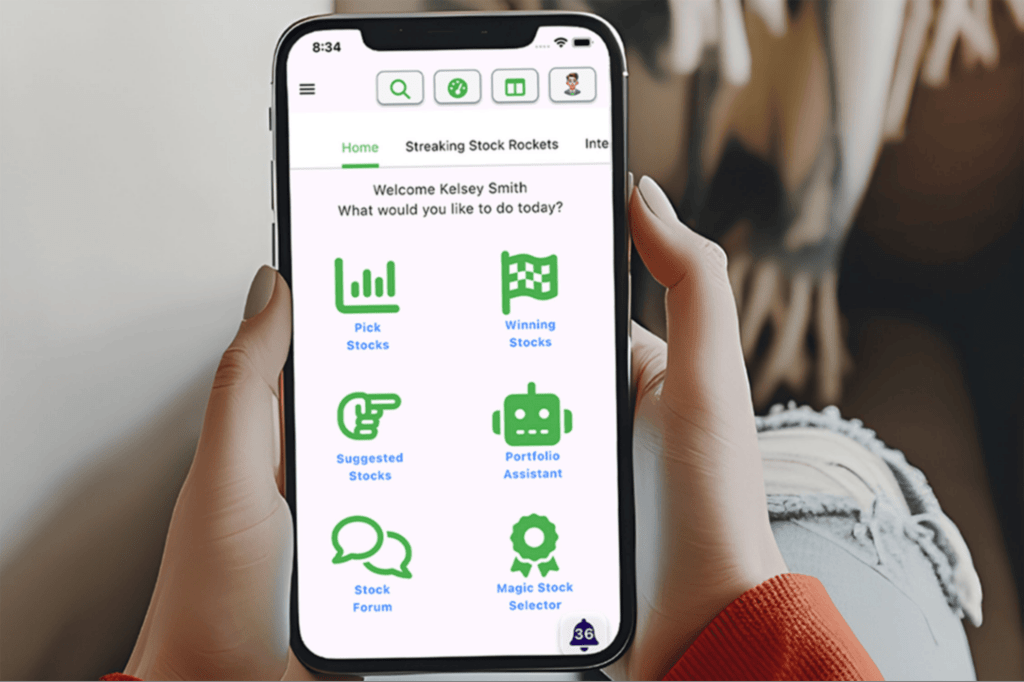
Sterling Stock Picker was built for this exact moment. Using smart, strategic AI, it helps investors cut through risk anxiety, build personalized portfolios, and actually understand why a stock is good before committing a single dollar. Whether you’re brand new to investing or just tired of emotional decision-making, Sterling offers a clearer, calmer way to grow wealth.

Through February 22, you can get a lifetime subscription for the lowest price yet: $55.19 (MSRP $486).

How it works: Invest in 3 simple steps

Sterling makes it surprisingly simple to start investing in stocks, even if this is your first time. Start by taking a five-minute quiz to assess your risk tolerance, so the platform understands how bold or cautious you want to be. This ensures all future recommendations are tailored to your comfort level.

Second, you can use the intuitive stock picker to explore companies that match your values, investment goals, and risk appetite. You don’t need to know what a PEG ratio is or how to read a balance sheet—Sterling does the number crunching for you and gives you a clear “buy,” “sell,” or “hold” recommendation using its patent-pending North Star tech.

Once you’re ready, the platform helps you build a diversified stock portfolio automatically. And if you have questions, such as whether a certain sector is a good bet right now or if a trending stock is too risky, you can ask Finley, your built-in AI investment coach powered by ChatGPT. It’s like having a financial advisor and mentor rolled into one.

There’s always risk associated with investing. But whether you’re investing $100 or $10,000, Sterling helps you invest with purpose, clarity, and confidence.

Get a Sterling Stock Picker lifetime subscription on sale for $55.19 until February 22 at 11:59 p.m. PT (MSRP $486). No coupon is needed.

Sterling Stock Picker: Lifetime Subscription

See Deal

StackSocial prices subject to change.

The stock market has never been more accessible, or felt more overwhelming. Between nonstop headlines, wild price swings, and an endless stream of “expert” opinions, even motivated investors can freeze before making their first move. The result? Missed opportunities, second-guessing, and money left on the table.

Sterling Stock Picker was built for this exact moment. Using smart, strategic AI, it helps investors cut through risk anxiety, build personalized portfolios, and actually understand why a stock is good before committing a single dollar. Whether you’re brand new to investing or just tired of emotional decision-making, Sterling offers a clearer, calmer way to grow wealth.

Through February 22, you can get a lifetime subscription for the lowest price yet: $55.19 (MSRP $486).

https://www.entrepreneur.com/money-finance/this-ai-stock-picker-can-help-you-invest-as-confidently-as/502584


How to Keep Your Health Plan Costs Manageable — Without Shortchanging Your Team

Opinions expressed by Entrepreneur contributors are their own.

Key Takeaways

  • A founder’s perspective on navigating rising health insurance renewals while balancing business realities and employee expectations.
  • Practical reflections on how growing companies approach benefits decisions, communication and renewal planning amid escalating healthcare costs.

If you run a business, there’s a familiar email you probably opened this fall: the one from your benefits broker with your 2026 health insurance renewal.

You scroll. You see a double-digit increase, and your stomach drops. You want to do right by your team. You also have a P&L to protect. And the three standard options you’re handed — pay the increase, raise deductibles or push more cost onto employees — all feel bad in different ways.

Over the last five years of building and scaling my company, I’ve lived that renewal meeting many times. Our headcount grew from a few dozen people to more than a hundred. At times, our brokers brought us quotes that were shockingly high. We pushed back, redesigned plans and tried to balance three realities:

  • Costs are going through the roof.
  • We want our people to feel genuinely supported.
  • We cannot absorb every increase without consequences elsewhere in the business.

This is not legal or actuarial advice. I’m not a benefits consultant. I’m a founder who has had to sign the renewal and then look my employees in the eyes. This is the playbook we’ve developed — one that any employer can adapt as you roll out your 2026 coverage and start preparing for 2027.

1. Get honest about the three levers you really control

When you strip away the jargon, most mid-sized employers have three main levers:

  • Employer contribution: what percentage of the premium you pay versus your employees
  • Plan design: deductibles, out-of-pocket maximums, co-pays and network structure
  • Communication: how clearly you explain what all of this means in real life

In our early renewals, I focused far too much on the first two and not nearly enough on the third. It’s tempting to treat health insurance like a procurement exercise: push the broker to shop carriers, negotiate the increase down, tweak deductibles and co-pays, sign and move on.

The problem is that your team only experiences the plan at the doctor’s office, pharmacy or ER — not in a spreadsheet. If you don’t explain the tradeoffs upfront, people will feel blindsided later.

Now, when we look at a renewal, we start with three questions:

  • What can the business realistically absorb this year?
  • What will our people feel at the point of care — in dollars, not percentages?
  • How are we going to tell that story in plain language?

If you can’t answer all three, you’re not ready to sign.

2. Show your team the real numbers, not just the new card

Even “good” plans come with real out-of-pocket costs. A typical family can easily face thousands of dollars in deductibles and coinsurance before hitting the out-of-pocket maximum. For someone who’s also missing work and juggling childcare and transportation, that’s not a line item — it’s a crisis.

As leaders, we often underestimate how confusing this is. We say “$2,500 deductible” and assume people know what that means in the middle of a stressful medical situation.

One simple change that’s helped us:

We turned the dense benefits booklet into a one-page explainer written in plain language:

  • What a deductible is and how much actually comes out of pocket at the point of care
  • What coinsurance means using a real example (e.g., “If you have a $5,000 surgery, here’s roughly what you’d owe under each plan option.”)
  • What the out-of-pocket maximum is and why it matters

We walk through that one-pager during open enrollment and give managers talking points. The goal isn’t to turn supervisors into benefits experts. It’s to remove the surprise factor, so an employee isn’t learning about deductibles for the first time while sitting in a hospital gown.

Over time, we’ve also had to acknowledge a hard truth: we’re doing more as a company — our total spend has gone up — and employees are still paying more than they did five years ago. Naming that honestly has built trust. People may not love the answer, but they appreciate the realness.

3. Offer first-dollar help where it matters most

If you can’t absorb the entire increase (most of us can’t), you still have options besides “good luck with the deductible.”

Think about first-dollar exposure — the cash your people have to come up with before insurance really starts helping. There are a few targeted ways to soften that impact:

  • Small emergency-expense support: Some employers offer a modest emergency benefit or hardship fund for genuine crises — not to cover every bill, but to bridge the worst moments.
  • Voluntary supplemental coverage: Accident, hospital indemnity and similar products can help employees who want extra protection through a small payroll deduction.
  • A standard hardship script: We’ve given managers guidance on what they can and can’t promise, and where to send someone who is clearly in financial distress.

The point is not to become a bank. The point is to acknowledge that the first $500–$2,000 of an unexpected medical event is often the most painful — and to decide, as a leadership team, what you’re willing and able to do about it.

4. Help people navigate confusing bills (without becoming their claims department)

Even if you offer a solid plan, people can still get hit with medical bills that make no sense.

A few years ago, someone in my family had a routine procedure. We did everything “right”: checked that the surgeon and hospital were in-network and confirmed it in advance. Weeks later, an out-of-network anesthesia group we’d never heard of sent a bill that was roughly ten times what we expected. It took years of back-and-forth to resolve.

If that’s confusing for someone who works in the insurance ecosystem, imagine how it feels for your average employee.

You don’t have to fix every claim personally, but you can:

Create a simple dispute playbook:

Align closely with your broker (and TPA if you’re self-funded):

  • Make sure there’s a single, clear escalation path
  • Know who at the broker’s office is accountable for resolving the ugliest claims — and hold them to it

The goal isn’t to promise that every bill will go away. It’s to make sure your people don’t feel completely alone when they get one they don’t understand.

5. Treat renewal as a nine-month process, not a nine-day scramble

Most employers treat renewal as a season. Your broker sends options, you react, make a decision, announce it and move on until next year.

In practice, the decisions you make now are shaped by what you did — or didn’t do — over the prior year.

A few ways to get ahead:

Capture a five-year story, not just this year’s quote. Ask your finance or HR lead (or, in our case, our head of benefits) to summarize:

  • Initial increase versus final negotiated increase each year
  • How deductibles, out-of-pocket maximums and employer contributions have changed
  • Major shifts in utilization (e.g., ER visits versus urgent care)

Seeing that trendline in one place changes the conversation from “Can we survive this year?” to “What are we building toward?”

  • Decide your non-negotiables in advance. For us, that might look like: “We won’t drop our employer contribution below X% on the base plan,” or “We won’t raise the deductible more than Y in a single year.” Your numbers will differ. What matters is deciding before you’re under pressure.

  • Know when to consider self-funding. We’re still on a traditional, fully insured plan. Many advisors suggest that once you reach 150–200 employees, self-funding or captives can be worth exploring, with stop-loss coverage above a certain threshold. If you’re approaching that size, start the conversation early so you’re not making a structural change in a panic.

6. Remember: health insurance is a human problem first

It’s easy to talk about health insurance like a spreadsheet problem — premiums, trend lines, loss ratios. But for employees, it shows up as a late-night urgent-care visit with a sick child, a surprise bill after surgery or a spouse who suddenly can’t work.

As founders and business leaders, we can’t fix the entire system. But we can do three things:

  • Make intentional, transparent choices about what we’re offering.
  • Explain those choices in language people can actually understand.
  • Put simple playbooks in place so the worst moments are less chaotic.

Do that, and you won’t just “get through” renewal season. You’ll turn it into something rarer: a moment where people can see that you took their real lives into account before you signed on the dotted line.

Sign up for the Entrepreneur Daily newsletter to get the news and resources you need to know today to help you run your business better. Get it in your inbox.

Key Takeaways

  • A founder’s perspective on navigating rising health insurance renewals while balancing business realities and employee expectations.
  • Practical reflections on how growing companies approach benefits decisions, communication and renewal planning amid escalating healthcare costs.

If you run a business, there’s a familiar email you probably opened this fall: the one from your benefits broker with your 2026 health insurance renewal.

You scroll. You see a double-digit increase, and your stomach drops. You want to do right by your team. You also have a P&L to protect. And the three standard options you’re handed — pay the increase, raise deductibles or push more cost onto employees — all feel bad in different ways.

https://www.entrepreneur.com/growing-a-business/how-to-keep-your-health-plan-costs-manageable-without/501124


This Overlooked AI Threat Can Damage Your Company Without Warning. Here’s How to Stay Ahead of It.

Opinions expressed by Entrepreneur contributors are their own.

Key Takeaways

  • Corrupted training data is a costly threat that undermines AI’s effectiveness and can lead to poor decisions, wasted resources, loss of trust and erosion of competitive advantage.
  • Corruption stems from issues like code reuse errors, incorrect data labelling and even intentional sabotage.
  • For effective and safe AI systems, leaders must ensure that they are trained properly and constantly monitored for accuracy.

These days, many business leaders will punt artificial intelligence as a main source of gaining an advantage over competitors. They are willing to splurge money on investing in AI and bringing in so-called high-quality teams to develop it.

Beneath all of this is often something unaddressed — widespread data corruption in training datasets. This can compromise your entire operation from the start. It is the destruction of data integrity from the start. It is something that will typically not be featured on a financial statement. However, it can be catastrophic as it impacts ROI, the strategy of a business and the trust of investors.

What causes the corruption?

Data corruption in AI is not just due to mistyped data. It tends to start in the learning process and happens as a result of a few factors. It can happen when a code used to identify a product is used again for an item that may be unrelated. This can cause an AI system to get confused. For example, it may suggest car oil to a customer looking for toys for a baby.

In incorrect data labelling, misleading instructions or tired workers may have misleading information in the form of pictures and writing. The AI model, which is learning, will thus learn from incorrect labels, and its ability to be accurate when it comes to giving advice and instructions will be compromised.

In the competitive business environment that we are in, it’s also possible for others to put misleading information into your systems in order to sabotage your business. They can do this through corrupted information, making changes to the attributes of your images or changes to your text. This can cause confusion to the AI that will be studying your business.

Sometimes the corruption can be hard to identify, and only a skilled technology professional can identify it. When this happens, it may be overlooked as it will be deemed to be functional. The systems will then learn from compromised information. The problems will happen and only be noticed later, when hard work has been done and a considerable amount of money has been spent.

What happens when misleading information is used?

When AI learns from misleading information, a model can still be developed. The final product will not be a downright failure. However, it is bound to malfunction and cause massive costs to your business.

Those who trust the input given by the AI systems may end up investing in areas as advised in decisions created by trusting compromised data. This can lead to wasted money, an overestimation of demand and resource mismanagement.

How misinformation damages systems

Should you rely on misinformation, your teams are bound to make irrational decisions. For instance, using the data, you may make misguided sales pitches and budget plans. This can lead to demand either being underestimated or overestimated. The decisions can appear to be logical at the time when they were made, and you will only discover later that they ended up setting you up to fail, as the data used to make them was deeply flawed.

Moreover, several hours, days, weeks and months could be spent trying to experiment with different ideas and techniques to try and gain performance improvement. This will impact innovation and idea execution.

If you are using AI customer service models, the information that it gives could be misguided or unprofessional. It may give, in the worst-case scenario, harmful or dangerous information to clients. This can lead to complaints and a loss of trust in your product.

How can you make AI systems successful?

The C-suite must always strive to ensure that AI is managed properly and continuously monitored. The accuracy of data is something that should be a core business priority, which is as important as making sure that your budget is accurate. Instead of just investing in up-to-date infrastructure for your business, you must also aim to ensure that the information is regularly monitored by seasoned professionals and is up to date and reliable.

There should be a system in place that tests the quality of data training. The system should be able to ensure that there is no corruption in the data and that it is valid and not compromised. Data, like anything, is also always losing its value. As a result, it must always be cleaned, re-labelled and always learning to stay relevant.

Simply put, if you are not regularly monitoring AI systems in your workplace, it will eventually backfire and spit out garbage. Running a business based on garbage input is bound to end in disaster. By always ensuring that the training data is up to date, business leaders can ensure that the AI in their business is making decisions based on truth.

For effective and safe AI systems, you must always ensure that they are trained properly and constantly monitored for accuracy. This will ensure that your final product is of high quality to stakeholders and customers.

Sign up for the Entrepreneur Daily newsletter to get the news and resources you need to know today to help you run your business better. Get it in your inbox.

Key Takeaways

  • Corrupted training data is a costly threat that undermines AI’s effectiveness and can lead to poor decisions, wasted resources, loss of trust and erosion of competitive advantage.
  • Corruption stems from issues like code reuse errors, incorrect data labelling and even intentional sabotage.
  • For effective and safe AI systems, leaders must ensure that they are trained properly and constantly monitored for accuracy.

These days, many business leaders will punt artificial intelligence as a main source of gaining an advantage over competitors. They are willing to splurge money on investing in AI and bringing in so-called high-quality teams to develop it.

Beneath all of this is often something unaddressed — widespread data corruption in training datasets. This can compromise your entire operation from the start. It is the destruction of data integrity from the start. It is something that will typically not be featured on a financial statement. However, it can be catastrophic as it impacts ROI, the strategy of a business and the trust of investors.

https://www.entrepreneur.com/science-technology/the-quiet-ai-threat-can-damage-your-company-without-warning/502168


What Rising Through the Ranks to CEO Taught Me About Leadership at Any Scale

Opinions expressed by Entrepreneur contributors are their own.

Key Takeaways

  • Empathy, adaptability and strategic foresight are essential for success, regardless of company size.

I’ve spent my career straddling the structured discipline of Fortune 500 companies and the entrepreneurial scrappiness of startups. Each side has its strengths. Startups move fast, fueled by creativity and urgency. Corporations scale big, built on systems and predictability.

But the future of leadership belongs to those who can bridge the two; leaders who think like founders and lead like CEOs.

Entrepreneurial leadership is the ability to remain agile and curious, like a founder, while maintaining the foresight and operational discipline of a seasoned executive. In an era of constant disruption, that combination is essential.

Related: I Shifted From Founder to CEO 20 Years Ago and Never Looked Back — Here’s How to Successfully Make the Leap

Treat failure like fuel

In many large organizations, failure is something to be managed rather than embraced. Metrics, quarterly targets and brand reputation often leave little room for experimentation. It’s safe, but that risk aversion can quietly stifle innovation.

Early in my career, I helped lead a new product launch that didn’t go as planned. We had done the research, built the plan and executed flawlessly (at least on paper). The market proved otherwise.

Instead of hiding from it, I brought the team together for an honest conversation about what went wrong. No finger-pointing. Just learning. That meeting changed how we worked. We began running smaller pilots, collecting feedback faster and rewarding curiosity over perfection.

Startups already know that every setback serves as important data. The difference between stagnation and growth often comes down to how quickly you can turn lessons into next steps. I tell executives all the time that failure isn’t fatal, complacency is.

Build “safe havens” for experimentation

Big companies talk about innovation endlessly. It sounds nice until you realize most innovation can’t survive big bureaucracy. Efficiency cultures tend to sideline creativity.

That’s why I believe in building “safe havens” for experimentation: small, cross-functional teams that operate with a startup mentality but have access to corporate resources. Their mission must be decoupled from immediate ROI. You want them to test, learn and translate what works back into the core business.

When I led a major retailer, we created one of these protected spaces for finding new product lines. The team experimented with a variety of product lines that at one point were considered to be very risky and not on-brand. Within a few short months, they identified several that were ready to roll out more broadly. It was a combination of quick wins, quick failure, and keen listening to customer feedback.

Innovation needs freedom before it can be scaled. You must permit your people to experiment and even fail if you expect them to create anything truly new.

Lead better by listening first

Leadership starts with listening. When I stepped into a new CEO role, I made a point to visit as many stores and offices as possible within my first 60 days. At one location, a front-line associate told me something I’ll never forget: “Our customers don’t just want faster service; they want to feel acknowledged and known.”

That important insight helped reframe our customer strategy. We moved from chasing speed to deepening connection.

It’s easy, especially when you’re expected to have all the answers, to fall into the trap of talking more than you listen. However, wise entrepreneurs know that every conversation holds valuable insights. Every customer complaint, every employee frustration, every quiet observation is a clue to your next opportunity.

Good leaders have mastered their business. The best are curious about the people who make it work.

Transform your dream into a scalable reality

Founders dream big. CEOs make those dreams scalable. Vision is essential, but without discipline, your vision is just a pretty picture.

I’ve worked with startups that burned out because they grew without structure. I’ve also seen established companies lose relevance because they clung to structure and forgot how to dream.

Today’s leaders must understand that speed doesn’t have to mean chaos, and structure doesn’t have to mean rigidity.

Entrepreneurial leadership is about knowing when to loosen the reins and when to tighten them. It’s the art of building systems that empower creativity rather than constrain it. When you strike that balance, you create organizations that can move quickly and remain resilient.

Related: Here’s What It Takes to Evolve From Hands-On Founder to Strategic CEO

Lead with purpose, not ego

As a leader, it’s often better to be a big megaphone than a big voice. When important decisions need to be made, when you’re brainstorming the perfect strategy, use your position to amplify the right voices in the room.

In retail and consumer businesses, I learned early that people don’t just work for paychecks; they work for purpose. They want to believe their work matters. When you align people around a shared mission, productivity, engagement, and even profitability improve.

During a major transformation effort, I made it a habit to meet weekly with cross-functional teams to discuss progress and address challenges. We did the stock-standard numbers review, but I also wanted to hear what inspired or frustrated them. Those conversations surfaced insights that no spreadsheet could ever provide.

Over time, I realized that transparency builds more loyalty than perfection ever could. When things go wrong, own it. When people succeed, share the credit.

The best leaders replace ego with empathy. The result is trust, the most powerful currency in business.

Reinvent before you’re forced to

Markets change. Technology evolves. Consumer expectations shift. The question isn’t if you’ll need to reinvent, it’s when.

I’ve seen companies wait too long to evolve, convinced that past success guarantees future relevance. It never does.

Whether you’re running a startup or an established brand, you have to build reinvention into your DNA. That means constantly scanning the horizon, questioning your assumptions and staying hungry to improve.

One of the lessons I’ve learned is that transformation demands a continuous posture of adaptability. The moment you think you’ve figured it all out, you’ve already fallen behind.

The new definition of leadership

Entrepreneurial leadership doesn’t care about titles or hierarchy. The entrepreneurs I’ve seen thrive have a different mindset.

They think like a founder by being bold, curious and customer-obsessed. They lead like a CEO through disciplined, strategic, and people-centered practices. The leaders who can merge those worlds will shape the next generation of business.

Because success isn’t final, and failure isn’t fatal. What matters most is the courage to keep learning and the humility to keep evolving.

Key Takeaways

  • Empathy, adaptability and strategic foresight are essential for success, regardless of company size.

I’ve spent my career straddling the structured discipline of Fortune 500 companies and the entrepreneurial scrappiness of startups. Each side has its strengths. Startups move fast, fueled by creativity and urgency. Corporations scale big, built on systems and predictability.

But the future of leadership belongs to those who can bridge the two; leaders who think like founders and lead like CEOs.

https://www.entrepreneur.com/leadership/what-rising-through-the-ranks-to-ceo-taught-me-about/502635



Why Founders Can’t Ignore Commodity Tokenization Anymore

Opinions expressed by Entrepreneur contributors are their own.

Key Takeaways

  • Commodity tokenization modernizes ownership and financing without changing the underlying physical assets.
  • Founders who understand commodity exposure early gain optionality in volatile, capital-constrained markets.

Most founders don’t think much about commodities. Oil, metals, power, raw materials — those are background inputs. Something suppliers deal with. Something finance prices in. Something outside the “real” business of building products and acquiring customers.

That mental model used to work. It doesn’t anymore.

As supply chains fragment, capital becomes more selective and volatility turns from cyclical to structural, commodities are creeping closer to the center of how companies are built, financed and scaled. One of the most misunderstood developments accelerating that shift is commodity tokenization.

Ignore the crypto noise for a moment. This isn’t about speculation. It’s about plumbing.

Sign up for How Success Happens and learn from well-known business leaders and celebrities, uncovering the shifts, strategies and lessons that powered their rise. Get it in your inbox.

So, what is commodity tokenization — really?

Strip away the jargon and tokenization is a pretty simple concept.

It’s the process of representing a real, verifiable commodity or commodity-linked asset — physical inventory, future production, royalties, streams — on digital rails. Each token corresponds to a defined economic interest, with rules around ownership, transfer and settlement baked in.

The important part is what doesn’t change: the asset is still real. Copper is still copper. Oil still has to be produced. Power still has to be generated.

Tokenization doesn’t replace the physical world. It changes how capital interacts with it.

Why founders should care (even if they’ve never traded a commodity)

Most founders don’t wake up thinking about nickel prices or power curves. But they do think about margins, timelines and cash burn.

That’s where commodities show up.

Energy costs hit operating expenses. Metals affect hardware pricing. Fuel shapes logistics. Power availability increasingly determines where data centers — and AI workloads — can even exist.

When those inputs move, companies don’t describe it as “commodity risk.” They call it missed forecasts, delayed rollouts or margin compression.

Tokenization matters because it offers new ways to manage that exposure, especially for companies that sit awkwardly between traditional capital markets and private contracts.

The problem with how commodity finance works today

Traditional commodity markets weren’t built for founders.

Physical ownership ties up capital. Futures and derivatives require scale, margin and expertise most operating companies don’t have. Private commodity assets — royalties, offtake agreements and long-dated production interests — are illiquid and usually locked inside institutional balance sheets.

Tokenization doesn’t magically fix these issues, but it changes the format. And format matters more than most people realize.

Digital ownership makes it easier to:

  • Structure partial interests
  • Finance or monetize assets incrementally
  • Reduce settlement friction
  • Increase transparency around ownership and cash flows

For founders, this is less about trading and more about optionality.

This isn’t crypto or an ETF. It’s infrastructure.

One reason commodity tokenization gets dismissed is that it’s often lumped in with speculative crypto narratives. That’s a mistake.

What’s actually happening looks more like what we’ve already seen in payments, equities and foreign exchange: real assets slowly migrating onto more efficient digital infrastructure.

Commodities are later to this shift because they’re physical and regulated. But that delay doesn’t make them immune — it makes the eventual transition more consequential.

When real assets move onto digital rails, old boundaries blur:

  • Treasury management starts to overlap with supply strategy
  • Operating assets begin to look like financial assets
  • Capital markets move closer to the physical economy

That’s where founders start to gain leverage.

Also, this is an ETF. ETFs are standardized and liquid, but blunt. Futures are efficient, but complex and often impractical for non-financial companies. Tokenized structures sit somewhere else entirely — closer to bespoke finance, but with far less friction.

That’s especially relevant for private companies and growth-stage businesses that don’t fit neatly into public-market instruments but still carry real commodity exposure.

Where this is headed

This isn’t a call for founders to issue tokens tomorrow or overhaul their treasury strategy overnight.

It is a call to start asking better questions sooner:

  • Which commodities quietly shape our cost structure?
  • Where are we assuming price stability or availability?
  • What happens to our model if those assumptions break?
  • How liquid — or illiquid — are the assets we depend on?

In tighter markets, the companies that struggle aren’t usually the ones with bad products. They’re the ones built on assumptions that no longer hold.

Sign up for the Money Makers newsletter to get weekly, expert-backed tips to help you earn more money — from real people who founded and scaled successful businesses. Get it in your inbox.

Commodity tokenization isn’t about hype or headlines. It’s about modernizing how real assets are owned, financed and managed in a more volatile world.

You don’t need to be a commodity expert to run a startup. But pretending commodities don’t matter is no longer a viable strategy. Founders who understand this shift early won’t just manage risk better. They’ll have more room to maneuver when everyone else is boxed in.

Key Takeaways

  • Commodity tokenization modernizes ownership and financing without changing the underlying physical assets.
  • Founders who understand commodity exposure early gain optionality in volatile, capital-constrained markets.

Most founders don’t think much about commodities. Oil, metals, power, raw materials — those are background inputs. Something suppliers deal with. Something finance prices in. Something outside the “real” business of building products and acquiring customers.

That mental model used to work. It doesn’t anymore.

https://www.entrepreneur.com/leadership/why-founders-cant-ignore-commodity-tokenization-anymore/502414


Think You Can’t Grow Without a High-Profile Investor? Here’s How I Built an 8-Figure Business Without One.

Opinions expressed by Entrepreneur contributors are their own.

Key Takeaways

  • You can still build a successful, scalable business without high-profile investors. In fact, doing so often allows for greater long-term control and strategic clarity.
  • The best business opportunities are hiding in your backyard. Real disruption often lies in solving everyday problems in industries that are overlooked by investors focused on trendier sectors.
  • More money sometimes does mean more problems. Taking money means giving up some control to investors who may lack your industry knowledge, which can be challenging.

I’ve met lots of entrepreneurs who were dejected when their pitches to investors didn’t net them a deal. And while rejection can be crushing, I want to offer some words of encouragement to anyone in a similar position:

Your company isn’t doomed to fail without a high-profile investor. If I built Roof Maxx into an eight-figure national brand without one, what’s to stop you from doing the same?

My brother Todd and I launched Roof Maxx in 2017 to provide homeowners with a cost-effective alternative to roof replacement. In the eight years since then, we never sold a stake in the business for startup capital, and it’s probably better that we didn’t.

To drive that point home, here are three important lessons I’ve learned about starting a business that many angel investors miss. Remember these if your next pitch gets rejected — it’s possible that your idea is brilliant, but you’re looking for help in the wrong place.

1. Real disruption isn’t always dramatic

People hear the word “startup,” and they tend to make assumptions. They might think about slick venture capitalists funding software platforms in Silicon Valley, or remember their favorite deals from Shark Tank.

But those are just two kinds of startup stories, and they tend to reflect the exception rather than the rule. For every brilliant invention that wins over a celebrity entrepreneur or major venture capital firm, there are countless others who put everything on the line to make those pitches and still get rejected.

You can forgive people for being a bit hypnotized by glamour. It’s why so many would-be actors move to Hollywood in their twenties, despite the fact that many of cinema’s greatest talents have hailed from far more obscure places.

But being closer to the seat of power is only useful if powerful people take interest in what you’re doing. And sometimes, their priorities are out of step with the lives of everyday people.

The three most likely industries to make a deal on Shark Tank are food and beverage services, health and fashion. Those three categories account for 45.5% of all deals made on the show, while home service only represents 8.1%.

Does that mean a home services business is less valuable? Absolutely not. It just might not be the easiest sell for investors who live in downtown high-rises or work in concrete jungles.

2. The best business opportunities are hiding in your backyard

Instead of clamoring alongside every other hopeful for a handful of opportunities in New York or California, my advice is to look for the opportunities hiding in your backyard. For me, that strategy ended up being practically literal.

Todd and I weren’t tech guys on the coast; we were roofers in Ohio. Before Roof Maxx, we didn’t know that much about software, and frankly might not have been that competitive if we had tried to go head-to-head with people who did.

But we knew about roofing. And when we talked to homeowners in our communities, we realized there was a massive business opportunity hiding out in the open that no one else was seeing.

At the time, nearly every contractor in the industry was pushing roof replacements. Most didn’t even offer repairs. Countless homeowners we met had called other roofers first, trying to get help for relatively minor problems. Instead, those contractors had tried to sell them brand new roofs because those deals made so much more money.

The answer was staring us in the face: Find a cost-effective way to restore and rejuvenate the roofs people already had. I began looking into the idea of using plant-based oils to restore the flexibility in aging shingles, and eventually arrived at the Roof Maxx product, which could add years of usable life to asphalt shingle rooftops for far less than what replacement normally costs.

3. More money sometimes does mean more problems

For many new founders, major capital investments are the stuff dreams are made of. But money isn’t the answer to every business problem. In fact, taking money at the wrong time or from the wrong party can create more problems than it solves.

Remember: Investors have their own ideas about how you should run your company. After all, once they invest, it’s their company too. And if they don’t have the same industry experience you have, the dynamic can quickly become difficult.

That’s one of the reasons Roof Maxx has always remained a family-owned business. We brought in outside talent with the necessary skills to help us expand, but we didn’t give up equity in the company.

Did that approach put millions of dollars in our bank account overnight? Of course not. But it did allow us to make strategic decisions without worrying about pushback from people holding our purse strings. As far as I’m concerned, having that kind of strategic clarity is even more valuable. It’s part of how we’ve been able to grow so quickly in under a decade.

So before you start chasing investors, ask yourself: How much do you really need them? Is your startup the kind where those relationships will help you grow, or can you get farther on your own by focusing on the opportunities close at hand and partnering with the people you already trust?

Sign up for the Entrepreneur Daily newsletter to get the news and resources you need to know today to help you run your business better. Get it in your inbox.

Key Takeaways

  • You can still build a successful, scalable business without high-profile investors. In fact, doing so often allows for greater long-term control and strategic clarity.
  • The best business opportunities are hiding in your backyard. Real disruption often lies in solving everyday problems in industries that are overlooked by investors focused on trendier sectors.
  • More money sometimes does mean more problems. Taking money means giving up some control to investors who may lack your industry knowledge, which can be challenging.

I’ve met lots of entrepreneurs who were dejected when their pitches to investors didn’t net them a deal. And while rejection can be crushing, I want to offer some words of encouragement to anyone in a similar position:

Your company isn’t doomed to fail without a high-profile investor. If I built Roof Maxx into an eight-figure national brand without one, what’s to stop you from doing the same?

https://www.entrepreneur.com/starting-a-business/how-i-built-an-8-figure-business-without-big-investors/501957


Lifetime Licenses for Microsoft Office Now Cost Less Than a Single Year of Microsoft 365

Disclosure: Our goal is to feature products and services that we think you’ll find interesting and useful. If you purchase them, Entrepreneur may get a small share of the revenue from the sale from our commerce partners.

Many professionals only rely on the core Office apps like Word, Excel, and PowerPoint. The bonus features included with Microsoft 365 can be useful on occasion, but savvy professionals know how to find more cost-effective options for things like cloud storage.

If you want a more budget-conscious alternative, Microsoft Office 2024 Home and Business is a one-time purchase alternative to Microsoft 365 that gives you new versions of the apps you rely on, minus the subscription. Right now, it’s only $99.97 on sale (reg. $249.99).

What’s included with a lifetime license?

Office 2024 Home and Business includes:

  • Word
  • Excel
  • PowerPoint
  • Outlook
  • OneNote

After you redeem your license, the apps run locally, so you can work offline and still create documents, spreadsheets, and presentations without relying on a browser session.

Office 2024 comes with some of the recent updates to the core apps. Excel can handle larger datasets and bigger workbooks, plus it adds support for dynamic arrays that spill results into adjacent cells. PowerPoint now has built-in recording for presentations with voice, video, and captions, which is useful for remote meetings, classes, or sending an update when you can’t present live. Outlook includes an updated accessibility checker that flags potential issues in formatting and clarity.

The suite also includes AI-driven helpers built into the apps, including suggestions for writing and formatting, help summarizing or translating text, and smarter analysis and visualization suggestions in Excel.

Microsoft 365 cost $99.99 per year, every year, and there’s no guarantee the price won’t go up. Microsoft Office 2024 comes with many of the same core tools for virtually the same price, but you only pay it once. It might be time to ditch the subscription.

Right now, you can get a Microsoft Office 2024 Home and Business Lifetime License for Mac or PC for only $99.97.

Microsoft Office 2024 Home & Business for Mac or PC Lifetime License

See Deal

StackSocial prices subject to change.

Many professionals only rely on the core Office apps like Word, Excel, and PowerPoint. The bonus features included with Microsoft 365 can be useful on occasion, but savvy professionals know how to find more cost-effective options for things like cloud storage.

If you want a more budget-conscious alternative, Microsoft Office 2024 Home and Business is a one-time purchase alternative to Microsoft 365 that gives you new versions of the apps you rely on, minus the subscription. Right now, it’s only $99.97 on sale (reg. $249.99).

What’s included with a lifetime license?

Office 2024 Home and Business includes:

https://www.entrepreneur.com/science-technology/lifetime-licenses-for-microsoft-office-now-cost-less-than-a/502583


Want to Innovate But Don’t Have Google’s Budget? Start With These 5 Strategic Moves.

Opinions expressed by Entrepreneur contributors are their own.

Key Takeaways

  • You don’t need a billion-dollar lab to innovate. With a micro-R&D strategy, you can transform your small business into an innovation-generating machine.
  • To successfully implement a micro R&D strategy, you must pursue ideas that truly excite you, create a financial sanity check and implement strict experiment thresholds.
  • You also need to quickly identify flaws in your concept and define go/no-go metrics to determine whether to move past the experimentation phase or throw it out.

When most people think of R&D, they envision state-of-the-art research facilities staffed with dozens of scientists and engineers in white lab coats. For multibillion-dollar corporations, this might be true. Companies like Google, Amazon and Microsoft spend tens of billions every year looking for the next breakthrough.

The reality is that most of their ideas fail or go nowhere. For them, it’s nothing more than a numbers game. For every 99 failures, they find that one unicorn product or innovation that will generate enough revenue to make up for the failed attempts and then some.

For startups or small businesses, entrepreneurs don’t have the luxury of these massive R&D budgets. When you invest $500 into a new technology, dedicate two days of a top employee’s time on an unproven service idea or delay a product launch to fund an experiment, that money isn’t a speculative bet. It’s a real strain on your cash flow. If the idea doesn’t pan out, your business feels the pain immediately, potentially jeopardizing your ability to make payroll or recoup the loss.

The good news is that the latest innovations in AI are democratizing the way businesses approach the research phase. AI models can quickly run entire market segmentation analysis, draft messaging variations, rapidly create iterations of new product ideas and spot potential gaps in customer reception.

The best part is that this no longer requires 10-figure R&D coffers. Entrepreneurs and small businesses actually have a leg up on major corporations that are bogged down with bureaucracy and armies of consultants.

By implementing a micro-R&D strategy, entrepreneurs can transform their small business into an innovation-generating machine.

1. Align passion to profit

Unlike the big corporations, small business owners have a limited amount of energy and focus to put into new ideas. It’s critical to create strict guardrails to only pursue ideas that truly excite you. Simply chasing trends that you don’t care about is a fast track to burnout and failure.

The goal is to find the intersection between what you naturally love to do and what the market is willing to pay for. By narrowing your focus, you’re going to be less likely to procrastinate and persist through small setbacks or mini-failures.

This approach ensures that you are working on ideas and innovations that have the best shot at success and are less likely to give up before you achieve a breakthrough.

2. Create a financial sanity check

As an entrepreneur, you know that every single dollar is a precious resource. There is nothing worse than pouring money into an idea that might not generate enough value to justify the costs. It’s critical to carefully evaluate the maximum potential upside before jumping into any new product or service development.

Start by estimating the minimum viable price point that you believe customers would pay. If it’s barely enough to cover your full-loaded costs, scrap it. Realistically, the projected margins should be equal to or greater than those of similar goods and services in your industry.

The goal of this exercise is to quickly eliminate as many potential R&D opportunities as possible so you’re left with just the ones that are likely to generate healthy profit for the business.

3. Implement strict experiment thresholds

Entrepreneurs are known for jumping headfirst into challenges. Unfortunately, this approach can also lead to thousands of dollars and countless hours spent chasing new ideas that might lead nowhere.

Micro-R&D requires small experiments to validate that ideas have potential before committing to a significant investment. By setting strict thresholds for experimentation, you can avoid it expanding into a major project.

A good rule of thumb is to spend less than $250 and no more than one day of focused effort to set up. For example, setting up a simple landing page to test demand or running a small targeted ad campaign. If your experiment exceeds this threshold, it’s no longer micro-R&D — it’s a commitment.

4. Kill your ideas quickly

As painful as it might sound, the goal of micro-R&D is to fail quickly. The sooner you identify flaws and weaknesses in your concept, the sooner you can fix it or move on before you’ve invested significant time, money and emotional capital.

Humans naturally want to hear good news, which often leads us to bouncing our ideas off friends, family members and our best customers. This, unfortunately, can create an environment where risks and issues are filtered out by people who don’t want to hurt your feelings.

Instead, get your ideas in front of your most critical and challenging clients. If they can’t find anything negative to say about the new product or service idea, you might be onto something.

5. Define go/no-go metrics

Before starting any micro-R&D efforts, you must have clear metrics that determine whether to move your idea past the experimentation phase or throw it out the window. For example, your “go” metric might require you to generate 10 leads from your new landing page.

Having clear metrics early will help you avoid making decisions based on subjective information or gut feelings. It’s important to understand that even a “no-go” outcome is still a win. You’ve successfully tested an idea without breaking the bank or dedicating months of your time to a failed experiment.

Building a successful micro-R&D process for your business will take time to dial in for your specific needs or industry. It’s critical to carefully note what works and doesn’t so you can refine your R&D strategy. With cutting-edge technology at everyone’s fingertips, the entrepreneur who moves the fastest wins and has the opportunity to ultimately control the conversation in their niche.

Sign up for the Entrepreneur Daily newsletter to get the news and resources you need to know today to help you run your business better. Get it in your inbox.

Key Takeaways

  • You don’t need a billion-dollar lab to innovate. With a micro-R&D strategy, you can transform your small business into an innovation-generating machine.
  • To successfully implement a micro R&D strategy, you must pursue ideas that truly excite you, create a financial sanity check and implement strict experiment thresholds.
  • You also need to quickly identify flaws in your concept and define go/no-go metrics to determine whether to move past the experimentation phase or throw it out.

When most people think of R&D, they envision state-of-the-art research facilities staffed with dozens of scientists and engineers in white lab coats. For multibillion-dollar corporations, this might be true. Companies like Google, Amazon and Microsoft spend tens of billions every year looking for the next breakthrough.

The reality is that most of their ideas fail or go nowhere. For them, it’s nothing more than a numbers game. For every 99 failures, they find that one unicorn product or innovation that will generate enough revenue to make up for the failed attempts and then some.

https://www.entrepreneur.com/growing-a-business/how-to-turn-your-small-business-into-an-innovation-machine/501951