How I Used 4 AI Tools to Build a 7-Figure Business While Working From Home
Most AI tutorials show you how to save a few minutes. This system replaced an entire team.
In this video, I break down the exact four-tool, plug-and-play AI stack I used to take a solo side hustle to seven figures in 12 months — no code, no hires, just simple workflows that compound over time.
Here’s what you’ll see inside:
The Demand Radar – How I continuously spot topics, keywords and buyer intent signals before competitors, then turn them into traffic that snowballs instead of flatlines.
Revenue Autopilot – The follow-up engine that nurtures, qualifies and personalizes at scale so sales keep moving even when I’m offline.
The Workflow Orchestrator – How I turn messy, repetitive tasks across my calendar, docs and CRM into clean, reusable automations that don’t break when life gets busy.
The Content Command Center – My system for generating hooks, titles and full publishing schedules in minutes, then testing and iterating for higher click-throughs and conversions.
You’ll also learn:
The step-by-step setup I used to go from blank slate to my first working automation.
The exact prompts, checklists and handoff points between tools so nothing falls through the cracks.
The biggest time-wasters most solopreneurs build into their “AI workflows” (and the two small tweaks that unlocked most of my growth).
Plug-and-play templates you can duplicate, customize and roll out in a single weekend.
If you’re a solo entrepreneur doing everything yourself, think of this as your operating system: a practical AI stack that helps you scale faster, work fewer hours and protect your margins. Copy the stack, run the playbook and watch your numbers start to move.
The AI Success Kit is available to download for free, along with a chapter from my new book, The Wolf is at The Door.
Most AI tutorials show you how to save a few minutes. This system replaced an entire team.
In this video, I break down the exact four-tool, plug-and-play AI stack I used to take a solo side hustle to seven figures in 12 months — no code, no hires, just simple workflows that compound over time.
Opinions expressed by Entrepreneur contributors are their own.
In this episode of The CEO Series, William Salvi sits down with @RyanSerhant , CEO and Founder of SERHANT and star of Netflix’s Owning Manhattan, inside a $45M New York City mansion to talk about the real cost of leadership, not the Instagram version.
In this interview, Serhant discusses the parts of himself he had to sacrifice to become a CEO, how he balances running a fast-growing company with being the face of a Netflix show and the mindset it takes to build a number one brokerage in the world. We filmed this episode in a beautiful home in Manhattan and had Serhant give us a tour.
In this episode of The CEO Series, William Salvi sits down with @RyanSerhant , CEO and Founder of SERHANT and star of Netflix’s Owning Manhattan, inside a $45M New York City mansion to talk about the real cost of leadership, not the Instagram version.
In this interview, Serhant discusses the parts of himself he had to sacrifice to become a CEO, how he balances running a fast-growing company with being the face of a Netflix show and the mindset it takes to build a number one brokerage in the world. We filmed this episode in a beautiful home in Manhattan and had Serhant give us a tour.
JPMorgan Chase CEO Says ‘You’ll Have Plenty of Jobs’ If You Master These Skills
Key Takeaways
Jamie Dimon is the CEO of JPMorgan Chase, the largest U.S. bank.
In a recent interview, Dimon advised workers to develop skills like critical thinking, communication and writing to unlock “plenty of jobs.”
Other CEOs, like Amazon’s Andy Jassy, agree with Dimon that curious minds get ahead.
JPMorgan Chase CEO Jamie Dimon says that it’s certain that AI “will eliminate jobs.” However, he also notes that mastering a few skills can help workers protect themselves.
“My advice to people would be critical thinking,” Dimon said in the interview, which aired earlier this week. “Learn EQ [emotional quotient or emotional intelligence], learn how to be good in a meeting, how to communicate, how to write. You’ll have plenty of jobs.”
Critical thinking involves the ability to analyze information and question assumptions, while a high EQ allows workers to handle conflict and collaboration well. Communication and writing skills mean explaining ideas clearly.
Dimon says these skills matter in every field, not just banking. He previously highlighted the importance of soft skills in CEOs, stating last year that good leaders get out from behind their desks to meet and communicate with clients and competitors. They are curious, ask a “million questions” and learn from every interaction, he said.
Jamie Dimon, CEO of JPMorgan Chase. Photographer: Eva Marie Uzcategui/Bloomberg via Getty Images
Other CEOs agree with Dimon that curious minds get ahead. Amazon CEO Andy Jassy said in a video published by Amazon last year that the difference between people with successful careers and those who stay “stagnant” is a hunger for learning. “You have to be ravenous and hungry to find ways to learn,” Jassy said.
Research has shown that using AI can lead to a drop in critical thinking skills. A study published earlier this year from MIT suggests that the use of chatbots like ChatGPT could weaken the neural connections that help users process information and think critically.
Brandon Daniels, the CEO of Exiger, an AI-powered supply chain risk management company, told Entrepreneur last month that if AI is used correctly, it actually demands deeper critical analysis, not less.
Daniels agreed with Dimon that workers need to develop critical thinking skills to get ahead in the age of AI and argued that to get the most out of AI, users need to fact-check it. Daniels said that the best results arrive when people combine their own judgment with AI, rather than letting the technology do all the work.
“We need more significant critical reasoning skills,” Daniels said. “The AI, in order to be effective, has to understand the nuances of your question, and you have to understand the limitations of the response.”
Ready to explore everything on Entrepreneur.com? December is your free pass to Entrepreneur+. Enjoy complete access, no strings attached.Claim your free month.
Key Takeaways
Jamie Dimon is the CEO of JPMorgan Chase, the largest U.S. bank.
In a recent interview, Dimon advised workers to develop skills like critical thinking, communication and writing to unlock “plenty of jobs.”
Other CEOs, like Amazon’s Andy Jassy, agree with Dimon that curious minds get ahead.
JPMorgan Chase CEO Jamie Dimon says that it’s certain that AI “will eliminate jobs.” However, he also notes that mastering a few skills can help workers protect themselves.
How I Found the Next Big Opportunity for Entrepreneurs While Recovering From Surgery
Opinions expressed by Entrepreneur contributors are their own.
Key Takeaways
The systemic gaps in healthcare — caused by overstretched teams, outdated workflows, communication silos and resource constraints — are prime entrepreneurial opportunities.
These gaps are not “medical problems.” They’re product problems, workflow problems and design problems that entrepreneurs are uniquely equipped to solve.
Entrepreneurs don’t need to disrupt the entire healthcare industry. The biggest opportunities lie in the smallest pain points.
When you are lying in a hospital bed after major surgery, you see things you normally would never notice.
Not dramatic events, not headline-level failures, but the small, invisible gaps — the ones that happen quietly, repeatedly and almost acceptably within the system.
These are not caused by “bad people,” but by overstretched teams, outdated workflows, communication silos and resource constraints.
And from an entrepreneur’s perspective, that is precisely where innovation begins.
Over the past week, as I recovered from a major surgery, I observed something that many patients have experienced, but few executives ever get to analyze firsthand: Hospitals are filled with highly skilled individuals, yet many of the systems supporting them remain fragmented, analog or simply stretched beyond capacity.
And when systems struggle, even the strongest medical teams are forced to compensate.
This experience led me to reconsider what “innovation in healthcare” truly means.
1. Communication failures are not human errors. They are system errors.
In any hospital, dozens of teams (surgical, nursing, nutrition, tech support, patient services) must work in perfect coordination.
Yet a 2023 Joint Commission report found that poor communication remains a root cause in more than 70% of serious adverse events.
These are not malicious errors. They are structural.
Entrepreneurs who understand workflow orchestration, AI-driven routing and cross-functional communication tools have an opportunity to redefine how medical environments function.
This is not about replacing people. It is about protecting them from system friction.
2. Staffing shortages are fueling operational gaps — and innovation demand
The American Hospital Association reports that 95% of U.S. hospitals face critical staffing shortages, particularly in nursing and nutrition departments.
What I witnessed firsthand reflects this data:
Teams juggling 20 to 40 patients, specialists covering multiple units and delays caused simply by human limitations.
This is not a failure of dedication. It is a failure of capacity.
Startups in the following areas have enormous room to grow:
Intelligent scheduling and load balancing
Digital-first nutrition workflows
Automated dietary compliance systems
Real-time patient monitoring
Assistive communication tools for voiceless or immobile patients
Staff reassignment algorithms driven by acuity, not availability
Healthcare is now one of the few industries where efficiency itself saves lives.
These are not “medical problems.” They are product problems, workflow problems and design problems. And entrepreneurs excel at solving these.
According to Deloitte, patient-experience-driven improvements can reduce readmission rates by up to 30%. Yet most hospitals lack affordable, scalable tools to modernize these processes.
Not every startup needs to disrupt the entire healthcare industry. Some of the biggest opportunities lie in the smallest pain points:
A better dietary order system
A universal communication panel across departments
A predictive model to route the right nurse to the right patient
A standardized documentation trigger for at-risk patients
Training modules that simulate real patient communication
A cross-team visibility dashboard that surfaces alerts, not just data
These “small” problems slow down thousands of hospitals every day.
Solve just one well, and you have a viable business.
5. As entrepreneurs, we often talk about resilience. Healthcare forces you to live it.
Leadership books teach resilience. Hospitals demand it.
Recovery taught me something important: Systems do not fail because people do not care. They fail because people are trying to care within imperfect systems.
Innovation in healthcare will thrive when entrepreneurs stop aiming only at medicine and start aiming at operations, communication and care coordination. That is where the real transformation begins.
If my experience taught me anything, it is this:
And when we close them, we are not just improving processes — we are honoring the people who show up every day to save lives.
Key Takeaways
The systemic gaps in healthcare — caused by overstretched teams, outdated workflows, communication silos and resource constraints — are prime entrepreneurial opportunities.
These gaps are not “medical problems.” They’re product problems, workflow problems and design problems that entrepreneurs are uniquely equipped to solve.
Entrepreneurs don’t need to disrupt the entire healthcare industry. The biggest opportunities lie in the smallest pain points.
When you are lying in a hospital bed after major surgery, you see things you normally would never notice.
Not dramatic events, not headline-level failures, but the small, invisible gaps — the ones that happen quietly, repeatedly and almost acceptably within the system.
He Started a Side Hustle in His Kitchen — Then Took a ‘Scary and Crazy’ Leap to Grow It to $15 Million Revenue
Key Takeaways
Jeff Perera launched Jeff’s Bagel Run from his home kitchen in November 2019.
A few years later, he sold his home to obtain the funds to open his first in-person store.
The company started franchising and now has 25 locations.
Jeff Perera, 48, describes the process of starting his business as a “love story.” It all started with him trying to make the perfect bagel for his wife, Danielle, at a transition point in their lives.
Perera, who had worked in retail for over two decades for big brands like Target, Apple, North Face and Adidas, went to work for a senior living company and was laid off in August 2019. At the same time, Danielle, who had been staying home with their daughter and son, was ready to rejoin the workforce and suggested that Perera be the stay-at-home parent.
Perera agreed to the change, which worked out well. Before Danielle rejoined the workforce, the pair found themselves regularly driving “a really long way to get bagels,” Perera tells Entrepreneur.
“She said, you know, you should just learn to make me one,” Perera says. “And so that’s how I started making bagels.”
Fast-forward six years, and Perera’s bagel business, Jeff’s Bagel Run, has 25 locations and is on track to exceed $15 million in total revenue this year. He has plans to open at least 40 stores next year.
Jeff Perera. Credit: Jeff’s Bagel Run
Jeff’s Bagel Run started in Perera’s kitchen in Florida. He says his first bagel was “terrible” and “looked more like a biscuit” because he didn’t know how to roll dough — but he stuck with it. Perfecting his bagel recipe became an obsession.
“I spent months just trying to get it right,” he says. He tried different types of bagels and different combinations of ingredients. His kitchen began to resemble a science lab, with recipes written on notes on top of dough stored in glass jars. Perera went through many iterations to land on a classic New York-style bagel.
“Ultimately, the bagel that I got, which is the one we make in our stores today, is the same recipe,” Perera says. “We just scaled it up to make it at a higher production rate versus the one dozen that I was making at home.”
Throughout the process, he documented his journey on Instagram and Facebook and shared pictures with friends and family. In November 2019, he posted a menu on his social media pages, saying that he was selling bagels if anyone was interested. Jeff’s Bagel Run was officially in business.
“I got one order [and] sold seven bagels,” Perera says. “It was really sad. But I did that.”
Though interest was tepid at first, Perera kept at it, and the orders kept coming in. By 2021, the operation had far outgrown his home kitchen, with bagel dough overflowing to refrigerators kept in his garage. At that point, Danielle was “all in” on the business, quitting her six-figure corporate job to help with orders. She suggested taking a risk that many would balk at — selling their house in order to have a cash cushion and help finance the business.
Perera agreed, and in the summer of 2021, the Pereras sold their house, which they had purchased in 2016, to finance the leap from home bakery to storefront retailer. They didn’t have investors, nor did they take on debt to lease their first space; instead, they cobbled together startup capital from savings and selling their home. They also launched a community-driven Kickstarter campaign, which raised more than $23,000 in a single day, to pay for ovens and small equipment.
In July 2021, Perera opened the doors to Jeff’s Bagel Run’s first store in Orlando, Florida.
“It was scary and crazy,” Perera says. “Some people thought we were nuts, but I don’t know. We thought we had something.”
Once Jeff’s Bagel Run’s doors opened, the lines never stopped forming, according to Perera. The business was open five days a week, Wednesday to Sunday, and was profitable from the beginning.
Part of the business’s success came from authentic social media marketing. Rather than crafting slick ads, Perera let word-of-mouth and community sharing power the brand.
“I was a big believer in not trying to create content,” he says. “I just focused on documenting what I was doing. I thought that if I shared enough of my story and was authentic in who I was while we were building the business, then I would be successful in growing the brand over time.”
As a result of Perera’s social media efforts, the business experienced growth fueled by repeat customers.
Jeff’s Bagel Run quickly expanded, first by taking a chance on acquiring a struggling local bakery for its second location, and then by attracting the attention of experienced franchise investors. The business’s first franchise location opened in 2024.
By the end of 2024, Jeff’s Bagel Run had 10 stores. Now, the franchise has 25 total stores across Florida, North Carolina, South Carolina, Georgia, Texas and Illinois. Perera says the original location continues to see 20% annual growth, even as new stores flourish nearby.
If Perera could change one thing about his entrepreneurial journey, it would be starting sooner.
“I don’t think I realized how much appetite for risk and for the challenge of entrepreneurship I had,” he says. “It was always in me.”
Want to read more stories like this? Subscribe to Money Makers, our free newsletter packed with creative side hustle ideas and successful strategies. Sign up here.
Key Takeaways
Jeff Perera launched Jeff’s Bagel Run from his home kitchen in November 2019.
A few years later, he sold his home to obtain the funds to open his first in-person store.
The company started franchising and now has 25 locations.
Jeff Perera, 48, describes the process of starting his business as a “love story.” It all started with him trying to make the perfect bagel for his wife, Danielle, at a transition point in their lives.
Perera, who had worked in retail for over two decades for big brands like Target, Apple, North Face and Adidas, went to work for a senior living company and was laid off in August 2019. At the same time, Danielle, who had been staying home with their daughter and son, was ready to rejoin the workforce and suggested that Perera be the stay-at-home parent.
Why Having Multiple Passports Will Soon Be a Financial Flex
Opinions expressed by Entrepreneur contributors are their own.
Key Takeaways
Where you’re born affects your ability to grow businesses and move freely.
Entrepreneurs with fewer travel restrictions can seize opportunities faster, build relationships and scale globally.
Not all passports are created equal, and that reality can hold back entrepreneurs and families — making it harder to expand businesses or seize new opportunities. That’s why more people are turning to investment migration, seeking additional residencies or citizenships to gain greater flexibility, security and freedom.
The ability to move freely isn’t just convenient — it’s a real strategic advantage, a new kind of wealth and a way to secure lasting freedom.
1. The inequality you don’t see, but feel everywhere
Wealth, education and opportunity are frequently portrayed as the primary divisions in contemporary life. However, even before these factors come into play, another form of inequality subtly shapes a person’s future: the power embedded in their passports.
A child born in Tokyo, Toronto or Berlin starts life with almost limitless mobility. But a child born in Lagos, Mumbai or Karachi faces invisible borders that can shape their opportunities for years. This gap touches everything — from education and career options to the ability to grow a business or move to safety when it matters most.
This divide is particularly stark for entrepreneurs. A founder with a high-mobility passport can connect with investors, partners, suppliers and new markets with a single booking. Meanwhile, another equally driven and talented founder might spend weeks gathering documents, waiting for embassy appointments and hoping for timely visa approval to seize an opportunity.
In global business, timing often distinguishes growth from stagnation. Passport inequality determines who competes on the global stage and who remains trapped in administrative limbo.
This harsh reality has become a significant force behind the rapid rise in investment migration. People are no longer seeking second citizenships for vanity or luxury; they pursue them because their ambitions necessitate them.
2. When mobility becomes a competitive advantage
Despite the growth of remote work, the world still thrives on relationships that inherently require physical presence. Whether pitching to a venture fund, negotiating a partnership, attending a trade event or exploring a new market, in-person interactions foster trust more swiftly than emails or video calls.
In this context, mobility becomes a business advantage, while its lack becomes a growth barrier.
A founder with a powerful passport can operate with agility, responding to market shifts in real time, observing consumer behavior firsthand and seizing opportunities as they arise. Such speed accumulates over a career.
Conversely, entrepreneurs from mobility-restricted countries often operate with invisible anchors. They plan trips months in advance, navigate unpredictable visa outcomes and brace themselves for delays that can derail entire strategies. Deals lost to bureaucracy rarely make headlines, but those who have experienced this understand the cost involved.
3. Investment migration is the modern answer to an old problem
Investment migration programs have emerged as a direct response to these disparities in recent years. By offering a structured route to residency or citizenship through investment, they enable individuals to gain access to systems that would otherwise require years of waiting or remain entirely inaccessible to them.
What was once considered a niche option for the ultra-wealthy is now embraced by entrepreneurs, investors, digital nomads and families who understand that mobility is a fundamental component of modern success.
The motivations are often deeply practical in nature. A second citizenship reduces reliance on a volatile home country, grants access to superior healthcare and education systems and simplifies cross-border banking, international hiring and corporate expansion in the host country.
Most importantly, it allows families to relocate when circumstances necessitate it rather than when the bureaucracy permits it. For many, this is not merely a lifestyle enhancement but also a form of risk management.
The generational impact of this is equally significant. Parents who seek a second citizenship often do so with their children in mind, aiming to provide their families with more choices, greater stability and increased global freedom than they experienced. Thus, investment migration becomes a tool for building the future, not just a means of enhancing mobility.
We are entering an era in which wealth is defined by more than just money. Increasingly, it is characterized by options: where you can live, work, protect your assets, raise your children and where you can go when the world shifts unexpectedly. Mobility has become a form of capital that influences everything from business resilience to personal security.
Passport inequality persists, and global uncertainty is only deepening this divide. However, investment migration offers a way to transcend borders rather than being confined by them, turning mobility from a birthright into a strategic choice.
For entrepreneurs, families and anyone seeking a life unbound by circumstance, second citizenship is more than just a document. It is the foundation of a future built on freedom — the freedom to act, move, build and belong on their own terms.
Key Takeaways
Where you’re born affects your ability to grow businesses and move freely.
Entrepreneurs with fewer travel restrictions can seize opportunities faster, build relationships and scale globally.
Not all passports are created equal, and that reality can hold back entrepreneurs and families — making it harder to expand businesses or seize new opportunities. That’s why more people are turning to investment migration, seeking additional residencies or citizenships to gain greater flexibility, security and freedom.
The ability to move freely isn’t just convenient — it’s a real strategic advantage, a new kind of wealth and a way to secure lasting freedom.
Why the Best Founders Build for the Sale They’re Not Yet Ready to Make
Opinions expressed by Entrepreneur contributors are their own.
Key Takeaways
“Exit-ready innovation” challenges entrepreneurs to think about resilience, scalability and buyer appeal from day one.
Founders should build structural independence, embed innovation into culture and maintain rigorous financial discipline and transparency.
They should also separate identity from ownership and treat exits as strategic milestones, not personal conclusions.
Founders who truly want to maximize the value of their companies must design for an exit long before they plan to make one. The most successful businesses are built with exit readiness as a guiding principle from day one. Companies that attract serious buyers are not merely profitable; they are structurally independent, relentlessly innovative and financially disciplined.
I call this philosophy “exit-ready innovation” — a framework that challenges entrepreneurs to think about resilience, scalability and buyer appeal from the outset. It is not about preparing to leave. It is about building enterprises strong enough to endure without you.
A business that cannot operate without its founder is not a business — it is a dependency. And dependency is one of the greatest red flags for acquirers. Companies that inspire buyer confidence are those that can run smoothly without daily involvement from the founder.
That level of independence requires disciplined systems, clearly defined processes and leadership teams empowered to make decisions without constant oversight. It also demands documented workflows, repeatable operating models and accountability structures that do not collapse when the founder steps away for a week.
Independence signals durability. It tells buyers that revenue, culture and execution are institutional — not personal. It demonstrates that the company is more than a personality-driven operation. In exit readiness, freedom from founder dependency is not optional; it is fundamental.
Innovation as proof of longevity
Static business models do not survive long enough to be acquired at a premium. Buyers are not paying for what your company has done —they are paying for what it can still become. Adaptability is the currency of future value.
In my approach, innovation is not a side initiative or a special department. It is the cultural DNA of the organization. Whether through technology adoption, evolving customer engagement strategies, new product lines or operational reinvention, the ability to change faster than the market demands is the clearest signal of long-term relevance.
Innovation is not an accessory. It is the evidence that a business will remain relevant in the years ahead.
For buyers, innovation reduces downside risk and increases upside potential. It shows that the company can survive disruption rather than be destroyed by it.
No amount of vision can compensate for sloppy financial management. Buyers do not acquire stories; they acquire data. Transparent reporting, clean financial records, defensible margins and accurate forecasting are not administrative details — they are deal-making assets.
Strong governance is what turns performance into credibility. Buyers look beyond topline revenue to assess customer concentration, recurring versus one-time income, margin stability, operating leverage and the predictability of cash flow.
Buyers are not just acquiring revenue streams. They are acquiring the confidence that the business can deliver on its projections.
Without that confidence, valuations collapse — or deals never happen at all.
Timing as strategy, not emotion
Even the most structurally sound, innovative and financially disciplined company must understand timing. Markets move in cycles. Capital tightens and loosens. Buyer appetite shifts. Exit timing is not emotional — it is strategic.
I advise founders to separate identity from ownership. A sale is not a surrender; it is a validation. When executed correctly, it confirms the strength of the company while opening new chapters of opportunity for the founder.
Emotion-driven exits destroy value. Strategy-driven exits multiply it.
A practical framework for founders
Exit-ready innovation can be reduced to four non-negotiable disciplines:
Build structural independence so the company thrives without the founder.
Embed innovation into culture so adaptability becomes reflex, not reaction.
Maintain rigorous financial discipline and transparency so credibility is never in question.
Treat exits as strategic milestones, not personal conclusions.
Exit readiness is not just a financial objective. It is a measure of how resilient, scalable and credible a business truly is. Companies built with independence, innovation and transparency are positioned to attract buyers — but more importantly, they are positioned to endure regardless of whether a sale ever occurs.
For me, the conclusion is simple but uncompromising: A business prepared for acquisition is, by definition, a business built to last.
Key Takeaways
“Exit-ready innovation” challenges entrepreneurs to think about resilience, scalability and buyer appeal from day one.
Founders should build structural independence, embed innovation into culture and maintain rigorous financial discipline and transparency.
They should also separate identity from ownership and treat exits as strategic milestones, not personal conclusions.
Founders who truly want to maximize the value of their companies must design for an exit long before they plan to make one. The most successful businesses are built with exit readiness as a guiding principle from day one. Companies that attract serious buyers are not merely profitable; they are structurally independent, relentlessly innovative and financially disciplined.
I call this philosophy “exit-ready innovation” — a framework that challenges entrepreneurs to think about resilience, scalability and buyer appeal from the outset. It is not about preparing to leave. It is about building enterprises strong enough to endure without you.
KFC Wants Fans to Decide the Fate of Potato Wedges
KFC’s Potato Wedges are back for a brief 72-hour window, and the chain says it will let customers decide whether the cult-favorite side makes a full-time return. The move comes after the wedges resurfaced twice this year, each time setting off a fresh wave of fan demand.
KFC put out the call on social media asking people to weigh in. Thousands responded with pleas to keep the wedges around, arguing that fries are everywhere but the chain’s seasoned potato wedges are one of a kind.
To test the appetite, KFC is offering limited-time Wings and Wedges deals and watching the response. If the turnout is strong, the wedges could land back on the permanent menu.
KFC’s Potato Wedges are back for a brief 72-hour window, and the chain says it will let customers decide whether the cult-favorite side makes a full-time return. The move comes after the wedges resurfaced twice this year, each time setting off a fresh wave of fan demand.
KFC put out the call on social media asking people to weigh in. Thousands responded with pleas to keep the wedges around, arguing that fries are everywhere but the chain’s seasoned potato wedges are one of a kind.
To test the appetite, KFC is offering limited-time Wings and Wedges deals and watching the response. If the turnout is strong, the wedges could land back on the permanent menu.
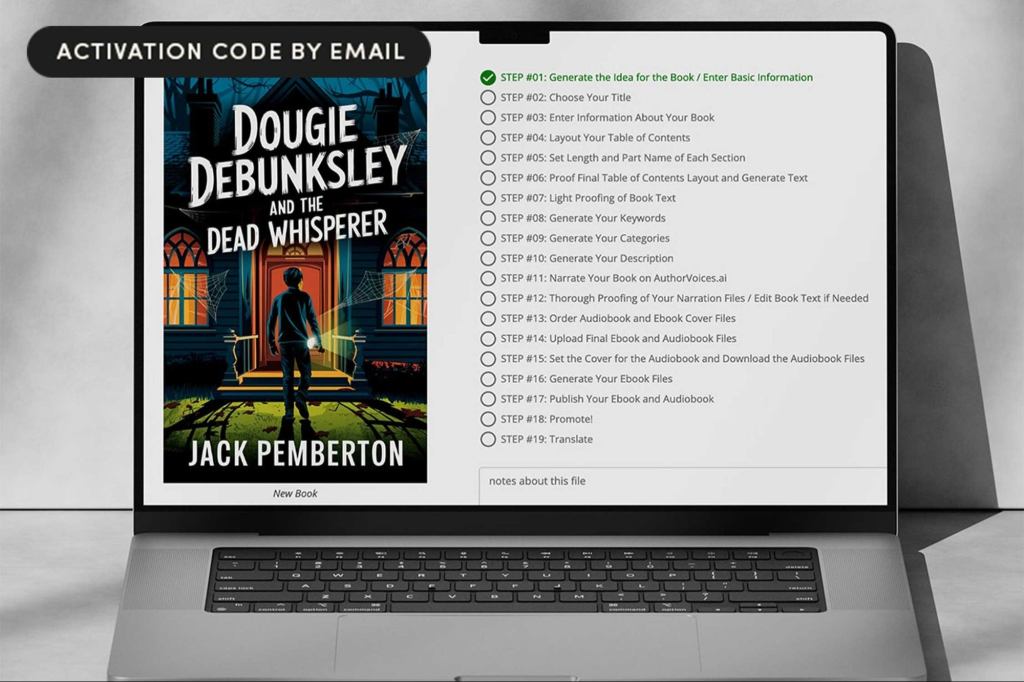
Turn Your Expertise into Published Books for Just $100
Disclosure: Our goal is to feature products and services that we think you’ll find interesting and useful. If you purchase them, Entrepreneur may get a small share of the revenue from the sale from our commerce partners.
Hiring a professional ghostwriter can cost between $30,000 and $80,000 for a single book, according to data from Reedsy, an online platform connecting writers with vetted publishing professionals. So it’s a good thing that entrepreneurs, coaches and experts looking to establish authority without that price tag can now affordably create professional ebooks with full commercial rights. BookBud.ai offers a complete AI-powered publishing solution and it’s currently available to new users for just $99.
Write, format, and publish in one platform
This isn’t just an AI writing tool. BookBud.ai provides 40 million non-expiring characters, enough to generate approximately 100 full-length books at your own pace. Unlike subscription-based AI platforms that reset your credits monthly, these characters never expire. You maintain complete control over your publishing timeline without worrying about unused credits disappearing.
The AI book-writing suite handles fiction, nonfiction, and children’s books with professional formatting for all major ebook platforms. The system generates content, then creates stunning AI-powered covers that give your books a market-ready appearance. You export in multiple formats, including print and audiobook options.
Multilingual support covers dozens of languages, allowing you to reach international markets with the same content. AuthorVoices.ai integration creates immersive audiobooks using advanced AI-cloned voices. You can transform a single piece of expertise into multiple formats and languages, maximizing your content’s reach and revenue potential.
The platform delivers full commercial rights. Publish on Amazon, Kobo, Apple Books, or any platform you choose while keeping 100% of royalties. For entrepreneurs building authority, coaches packaging their methodology or experts monetizing knowledge, this eliminates the traditional barrier between expertise and published content.
Most users complete a book from concept to distribution-ready format in approximately one hour. The system handles the technical publishing requirements, letting you focus on your content and business strategy. There are no subscription fees or recurring charges after your initial purchase.
Business owners who want to establish thought leadership, coaches packaging proprietary systems into sellable products, podcasters repurposing audio content into books and multilingual creators expanding into global markets will find this particularly valuable. The one-time cost replaces ongoing ghostwriting expenses while giving you unlimited publishing capacity.
Hiring a professional ghostwriter can cost between $30,000 and $80,000 for a single book, according to data from Reedsy, an online platform connecting writers with vetted publishing professionals. So it’s a good thing that entrepreneurs, coaches and experts looking to establish authority without that price tag can now affordably create professional ebooks with full commercial rights. BookBud.ai offers a complete AI-powered publishing solution and it’s currently available to new users for just $99.
Write, format, and publish in one platform
This isn’t just an AI writing tool. BookBud.ai provides 40 million non-expiring characters, enough to generate approximately 100 full-length books at your own pace. Unlike subscription-based AI platforms that reset your credits monthly, these characters never expire. You maintain complete control over your publishing timeline without worrying about unused credits disappearing.
The AI book-writing suite handles fiction, nonfiction, and children’s books with professional formatting for all major ebook platforms. The system generates content, then creates stunning AI-powered covers that give your books a market-ready appearance. You export in multiple formats, including print and audiobook options.
Oura Rings Spark Safety Concerns After Overheating Reports on Reddit
Oura, the popular health-tracking smart ring, is dealing with a wave of safety concerns after Reddit users posted photos of rings that appeared scorched or melted. Several users say their devices overheated during charging or while on their finger. Far-Yogurtcloset369 wrote, “I felt a fire on my finger tried to get the ring off fast.”
The company called the incidents “extremely rare,” adding that “while Reddit discussion threads can create the impression of scale, the two reported cases appear to be isolated incidents.” Oura said it is reviewing the reports and conducting further analysis to determine what occurred.
The claims have raised fresh questions about safety in the booming smart-ring category, where tiny batteries sit in constant contact with skin.
Oura, the popular health-tracking smart ring, is dealing with a wave of safety concerns after Reddit users posted photos of rings that appeared scorched or melted. Several users say their devices overheated during charging or while on their finger. Far-Yogurtcloset369 wrote, “I felt a fire on my finger tried to get the ring off fast.”
The company called the incidents “extremely rare,” adding that “while Reddit discussion threads can create the impression of scale, the two reported cases appear to be isolated incidents.” Oura said it is reviewing the reports and conducting further analysis to determine what occurred.
The claims have raised fresh questions about safety in the booming smart-ring category, where tiny batteries sit in constant contact with skin.