What My 75-Year-Old Bagel Shop Can Teach You About Building Trust and Community

Opinions expressed by Entrepreneur contributors are their own.

This article is part of the America’s Favorite Mom & Pop Shops series. Read more stories

Key Takeaways

  • Consistent actions, not words, build authentic trust with customers over time.
  • Teams learn company values through observed habits, not manuals or memos.
  • A clear purpose guides decisions, strengthens resilience and sustains community focus.

Seventy-five years in business is no small feat, and our family owns that with pride. Since 1947, we have kept the ovens warm through the 1970s inflation, the 1994 Northridge earthquake, the 2008–09 recession and the COVID-19 pandemic. Not every food vendor made it through those turns.

The pandemic was a different battle. As a federally recognized essential business, we stayed open, but customers couldn’t stay inside the stores for long. They had to grab their orders and go. It was a tough shift, but we didn’t give up. We adjusted quickly to online ordering, delivery and everything. The real challenge was proving we could still be there for our community while maintaining six feet of distance, of course.

Each shakeup changed how we work, what we sell and how people buy. A lot has changed except for one thing — our sense of community. We still greet people by name, box the extra bagels at close and send them to local groups that need them. The same neighborhoods that kept us going get the same care from us each day. That anchor carried us through every test and still guides how we operate.

Related: Your Customers Won’t Trust You Unless You Embrace These 5 Strategies

1. Trust is built by what you repeat

We talk a lot about values in business. Companies print them on posters and put them in brand manuals. I have learned that customers do not need to hear your values. They only need to see them in action, consistently. Trust is not built in a day and definitely not with a flashy gesture or a year-end charity check. It is constructed behind the scenes, with a thousand small promises kept. That repetition creates reliability, and dependability builds trust. People can tell when you are there for them, whether in good times or bad. They may not be aware of the details of your operations, but consumers sense authenticity when a business upholds its principles.

This authenticity isn’t about having the flashiest new product. It’s about the customer knowing, instinctively, that the quality will be the exact same on a slow Tuesday as during a holiday rush. It is embodied in the manager who remembers a regular’s name or the simple promise to make an order right if it ever goes wrong. These are the tangible moments where the ‘thousand small promises’ become a customer’s reality.

That kind of authenticity is the most valuable asset a brand can hold, and it is the one thing competitors cannot copy. They cannot fake a 75-year-old habit. It tells your customers, “We are who we say we are.” That is the kind of trust you can only earn.

2. Your team learns what matters by watching you

Culture shows up in the work people see us do. Manuals help, but habits do the teaching. Teams remember what you protect and what you refuse to cut.

At closing, new hires see the standard. We box up any extra bagels at the end of the day, set the paperwork and confirm pickup. It is not an if-we-have-time task. It is part of our daily closing.

This non-negotiable act does more than help move excess food. It demonstrates that our connection to the neighborhood is, quite literally, one of the last things we do before we lock the door.

We keep the process simple. Local schools, churches and nonprofits send a letter requesting donations, and we log who receives the food. It’s just how “our” system works, and everyone in the team knows it by heart.

That routine roots our business in the local culture. Most of our stores have partners to whom we donate on a daily or weekly basis. We support many groups, from the Salvation Army to the volunteers who build Rose Parade floats in Pasadena. For a full month, we make sure those volunteers have bagels while they work. Every year, they give us a plaque to remind us of that connection. It reminds our staff that we are not simply a company in the area, but a valued member of the community.

Related: How to Consistently Exceed Customer Expectations and Build Unshakeable Trust

3. Purpose helps you stay steady when it counts

Every company that survives for decades will have difficult periods, and that’s just how it is. In those moments, a clear purpose helps you stay steady. This is where a daily habit pays off. Because we have done it every day, it doesn’t feel “extra” for us.

For other companies, the temptation is to immediately look at the bottom line and identify these donations as a ‘cost’ that can be cut. It is often the easiest line item to slash. A purpose‑driven mindset changes this perspective. From being a cost, it becomes an investment in the ecosystem that supports your business and your staff. And because community is central to our work, even hard weeks don’t make us turn inward. They sharpen our focus and push us to show up stronger for our customers and the neighborhoods we serve.

That shifts the conversation to not only “Where can we cut costs?” but also to “What protects service, quality, and the people who count on us?”

Whatever the answer is, it always sets the order of work. It keeps the team focused, and it builds real resilience. As an entrepreneur, when you know why you show up each day, growth always feels steady and purposeful, whatever it may look like.

Key Takeaways

  • Consistent actions, not words, build authentic trust with customers over time.
  • Teams learn company values through observed habits, not manuals or memos.
  • A clear purpose guides decisions, strengthens resilience and sustains community focus.

Seventy-five years in business is no small feat, and our family owns that with pride. Since 1947, we have kept the ovens warm through the 1970s inflation, the 1994 Northridge earthquake, the 2008–09 recession and the COVID-19 pandemic. Not every food vendor made it through those turns.

The pandemic was a different battle. As a federally recognized essential business, we stayed open, but customers couldn’t stay inside the stores for long. They had to grab their orders and go. It was a tough shift, but we didn’t give up. We adjusted quickly to online ordering, delivery and everything. The real challenge was proving we could still be there for our community while maintaining six feet of distance, of course.

The rest of this article is locked.

Join Entrepreneur+ today for access.

https://www.entrepreneur.com/growing-a-business/what-my-75-year-old-bagel-shop-can-teach-you-about-building/500088
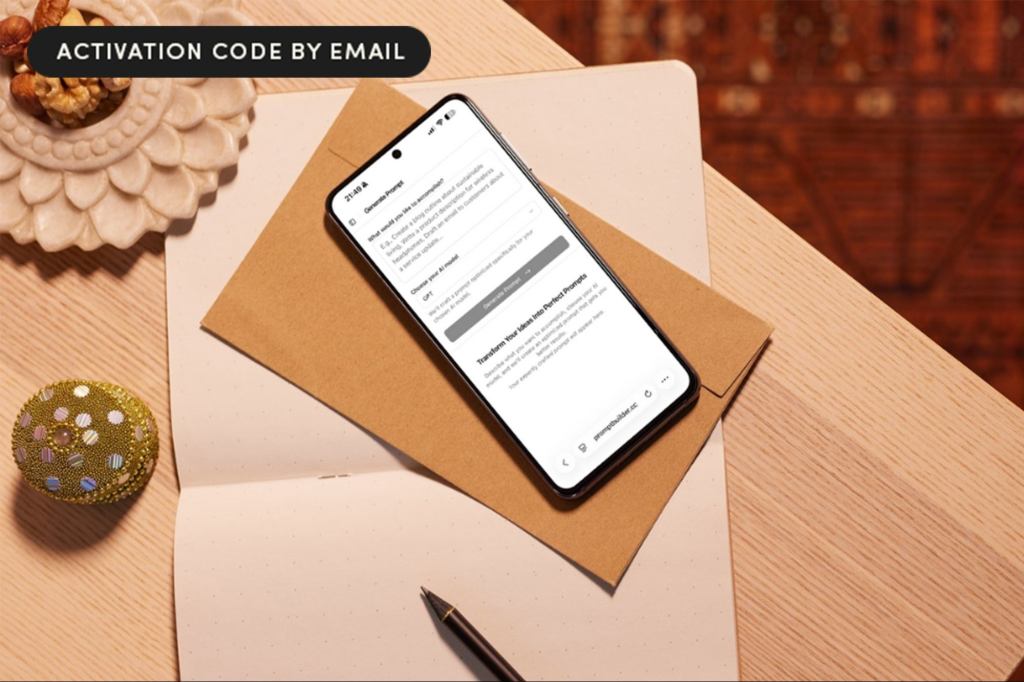



Leverage AI for Business Better With PromptBuilder for $40

Disclosure: Our goal is to feature products and services that we think you’ll find interesting and useful. If you purchase them, Entrepreneur may get a small share of the revenue from the sale from our commerce partners.

TL;DR: PromptBuilder turns basic ideas into optimized AI prompts in 15 seconds. Lifetime subscriptions start at $39 (reg. $324) with 1,000+ templates for ChatGPT, Claude, and eight other AI models.

According to recent data, professionals waste an average of two to three hours per week fine-tuning prompts for AI tools: time that could be spent on actual revenue-generating work. For entrepreneurs and business leaders who are already stretched thin, that’s a productivity killer.

Turn simple ideas into AI-optimized prompts

PromptBuilder – AI Prompt Engineer addresses this bottleneck by converting basic ideas into optimized, professional-grade prompts in under fifteen seconds. The Starter Plan for this lifetime subscription is currently available starting at $39 (regularly $324), offering eighty-seven percent savings for businesses looking to streamline their AI workflows.

The platform supports 10 AI models, including ChatGPT, Claude, Gemini, DALL·E, and Stable Diffusion. This cross-platform compatibility means teams can maintain consistency across different AI tools without learning separate prompt engineering techniques for each one.

PromptBuilder includes over 1,000 expert-built prompt-engineering templates tailored for business applications. Marketing teams can generate ad copy and campaign messaging. Product managers can develop specs, roadmaps, and PRDs. Developers can request code reviews and documentation. Data analysts can build SQL queries and reporting prompts. The smart optimization feature refines existing prompts using advanced AI techniques, while the built-in library system allows teams to store, tag, and share their most effective prompts.

For businesses managing social media presence, the platform generates platform-specific content for Twitter, LinkedIn, Instagram, and TikTok. This eliminates the need to manually adjust messaging for each channel’s requirements.

The Starter plan provides 500 prompts monthly with prompt history and priority support. Pro ($79) and Unlimited ($199) tiers scale for larger teams or higher-volume operations.

Get this PromptBuilder – AI Prompt Engineer: Lifetime Subscription today:

  • Starter $39 (reg. $324)
  • Pro $79 (reg. $684)
  • Unlimited $199 (reg. $1,764)

StackSocial prices subject to change.

TL;DR: PromptBuilder turns basic ideas into optimized AI prompts in 15 seconds. Lifetime subscriptions start at $39 (reg. $324) with 1,000+ templates for ChatGPT, Claude, and eight other AI models.

According to recent data, professionals waste an average of two to three hours per week fine-tuning prompts for AI tools: time that could be spent on actual revenue-generating work. For entrepreneurs and business leaders who are already stretched thin, that’s a productivity killer.

Turn simple ideas into AI-optimized prompts

PromptBuilder – AI Prompt Engineer addresses this bottleneck by converting basic ideas into optimized, professional-grade prompts in under fifteen seconds. The Starter Plan for this lifetime subscription is currently available starting at $39 (regularly $324), offering eighty-seven percent savings for businesses looking to streamline their AI workflows.

The rest of this article is locked.

Join Entrepreneur+ today for access.

https://www.entrepreneur.com/science-technology/leverage-ai-for-business-better-with-promptbuilder-for-40/500588


The Fed Just Cut Interest Rates. What This Means for Your Wallet.

The Federal Reserve pulled the trigger on another rate cut Wednesday, dropping its benchmark rate to a range of 3.5 to 3.75 percent. It’s the third time this year it has tried to nudge borrowing costs lower.

The decision did not come easily. Kansas City Fed President Jeffrey Schmid and Chicago Fed President Austan Goolsbee both dissented, saying the central bank should pause rather than cut again. But Chairman Jerome Powell pushed forward with the quarter-point cut.

The jury is out on what the Fed will do next year. Some want more cuts. Some want none. The only clear takeaway is that the fight inside the Fed is growing louder.

Read more

SpaceX Is Ready to Launch the Biggest IPO Ever in 2026

Buckle up. SpaceX is reportedly preparing to go public in mid-to-late 2026 and aims to raise $30 billion at a valuation of roughly $1.5 trillion, according to Bloomberg News. If successful, it would be the largest IPO in history, surpassing Saudi Aramco’s $29 billion listing in 2019.

The move is a new strategy for SpaceX, which had previously floated the idea of taking its Starlink division public while keeping the core company private.

Meanwhile, The Wall Street Journal recently reported that the company is finalizing another employee share sale valuing SpaceX at more than $800 billion. Employees will reportedly be allowed to sell up to $2 billion worth of shares at $420 each.

Read more

Instacart’s AI Pricing Experiments Could Be Costing You More


Photographer: David Paul Morris/Bloomberg via Getty Images

Instacart shoppers may be paying more for the exact same groceries, and most have no idea it’s even happening. A new investigation by Consumer Reports and Groundwork Collaborative found price swings of up to 23% on identical items, driven by Instacart’s AI-enabled pricing tests.

Instacart is using AI-driven pricing software that experiments with different price points in chains like Target, Safeway, Costco, and Kroger, with some items showing as many as five different price tags during the study.

Critics say the practice feels manipulative, especially when customers aren’t told they’re part of a live pricing experiment. Instacart argues the tests help retailers learn what shoppers value.

Read more

What’s Fueling DonutNV’s Explosive Growth? Not Just the Donuts.


Photo By Natalie Kolb/MediaNews Group/Reading Eagle via Getty Images

The mobile franchise world is on a roll, and DonutNV is riding shotgun. The mini donut and lemonade brand has grown to more than 140 franchise units across 25 states, part of a noticeable shift toward food concepts that don’t need costly storefronts and can pop up wherever crowds go.

Founded in 2014 by Amanda and Alex Gingold as a single mall kiosk, the company has gained momentum by making mini-donuts and squeezing fresh lemonade right in front of customers.

By manufacturing its own trailers, controlling logistics, and supplying products directly to franchisees, DonutNV has turned mobility into a business model that scales.

Read more

McDonald’s Yanks ‘Creepy’ AI Christmas Ad After Online Backlash

McDonald’s just learned the hard way that AI can’t fake holiday cheer. The fast-food giant pulled a 45-second AI-made Christmas advertisement in the Netherlands after viewers blasted it online, mocking its glassy-eyed characters and stitched-together scenes. One critic branded it “the most god-awful ad I’ve seen this year,” while others flat-out called it “creepy.”

Titled “It’s the most terrible time of the year,” the ad was supposed to show holiday hassles before steering people toward a McDonald’s meal. Instead, the robotic visuals sparked fears that AI is already replacing camera crews, actors, and editors.

McDonald’s admitted the fiasco was “an important learning” as it experiments with generative AI. Other brands like Coca-Cola and Google have also used AI for holiday campaigns. But the Dutch McDonald’s ad was too much

Read more

Target Is Cashing In on the Popularity of GLP-1 Drugs


David Paul Morris/Bloomberg via Getty Images

The rise of GLP-1 weight loss drugs such as Ozempic, Wegovy, Zepbound and Mounjaro is reshaping how Americans eat and shop. Millions of users report smaller appetites, and companies are racing to meet their changing needs.

Target says demand for high-protein and high-fiber foods is climbing fast as consumers try to fill nutritional gaps. Supplements are selling briskly, and the retailer plans to expand shelf space next year. Target is also seeing growth in athletic wear and home fitness equipment as shoppers adopt more active lifestyles.

Other brands are jumping in. Nestlé Health Science is creating products for GLP-1 users, and Conagra is labeling items that fit their diets.

Read more

The Federal Reserve pulled the trigger on another rate cut Wednesday, dropping its benchmark rate to a range of 3.5 to 3.75 percent. It’s the third time this year it has tried to nudge borrowing costs lower.

The decision did not come easily. Kansas City Fed President Jeffrey Schmid and Chicago Fed President Austan Goolsbee both dissented, saying the central bank should pause rather than cut again. But Chairman Jerome Powell pushed forward with the quarter-point cut.

The jury is out on what the Fed will do next year. Some want more cuts. Some want none. The only clear takeaway is that the fight inside the Fed is growing louder.

The rest of this article is locked.

Join Entrepreneur+ today for access.

https://www.entrepreneur.com/business-news/spacex-is-ready-to-launch-the-biggest-ipo-ever/500658


Investors Called This Pitch ‘Nearly Perfect.’ Was It Good Enough to Strike a Deal?

Key Takeaways

  • Clarity and storytelling win pitches.
  • Valuation and focus are non‑negotiable.
  • Adaptability under pressure earns respect.

Season 13 of Entrepreneur Elevator Pitch is cranking up the stakes again — and episode seven is an absolute must-watch. Founders have just 60 seconds in the elevator to win over powerhouse investors Kim Perell, Jonathan Hung and Laura Chau, and this episode delivers everything: emotional backstories, bold valuations and real-time drama as deals teeter on the edge.

In one pitch, Pierre Paul of We Hear You races the clock with a mission to make doors more inclusive for people of all abilities, prompting Chau to praise his delivery while probing, “How big is this market, and how much of a burning issue is it?” Hung warns that “hardware is hard to sell” if you cannot clearly define your buyer.

Related: Do These Pitches Have What It Takes to Win Over a Board of Investors?

Perell calls his elevator pitch “nearly perfect” but pushes him to tighten his story and connect the company name and product more clearly — a masterclass in how clarity can make or break a deal.

Later, repeat founder Kevin Lavelle steps in with Harbor, a next-gen baby monitor and remote night-nanny platform, and instantly shows what calm confidence looks like under pressure. Perell bluntly explains that “when someone pitches me, and they don’t tell me the valuation, I’m out,” underscoring how non‑negotiable the numbers are.

Then the tension spikes when Kalie Nitzsche pitches Fuzzy, a “modern green flag” identity-verification platform born from her own experience being scammed on a dating app. Hung challenges her decision to go B2B and B2C at once, noting that “it’s so hard to do one of them really well,” while Perell zeroes in on traction, asking how you can raise nearly $2 million with barely 100 users and no revenue.

Chau, seeing the surge in AI-driven scams, still leans in and structures an offer that hinges on execution, showing founders how to stay poised and negotiate even when investors are skeptical.

Related: Can This Cheeky Fashion Brand Impress Investors in Just 60 Seconds?

Watch this new episode to see founders get grilled on valuation, market size and focus — and to pick up powerful, real-world pitching lessons you can use with any investor: Lead with clarity, always know your ask, defend your market and be ready to adapt in the room. The drama is real, the feedback is raw, and the insights are priceless — don’t miss this episode of Entrepreneur Elevator Pitch.

Season 13, Episode 7 Board of Investors

Season 13, Episode 7 Entrepreneurs

  • Kalie Nitzsche, founder of Fuzzy, an identity-verification platform
  • Kevin Lavelle, founder of Harbor, a next-gen baby monitor
  • Pierre Paul, founder of We Hear You, a hardware company providing better accessibility for people of all abilities

Season 13 of Entrepreneur Elevator Pitch is presented by Amazon Business. New episodes stream on Wednesdays on Entrepreneur.com and EntrepreneurTV. Follow Entrepreneur Elevator Pitch on Facebook, YouTube and IGTV.

Related: This Business Got 30 Million Views on TikTok — Is It Worth Millions of Dollars?

This month only, you can use Entrepreneur+ for free. Get instant access to our full collection of stories, guides and resources.

Key Takeaways

  • Clarity and storytelling win pitches.
  • Valuation and focus are non‑negotiable.
  • Adaptability under pressure earns respect.

Season 13 of Entrepreneur Elevator Pitch is cranking up the stakes again — and episode seven is an absolute must-watch. Founders have just 60 seconds in the elevator to win over powerhouse investors Kim Perell, Jonathan Hung and Laura Chau, and this episode delivers everything: emotional backstories, bold valuations and real-time drama as deals teeter on the edge.

In one pitch, Pierre Paul of We Hear You races the clock with a mission to make doors more inclusive for people of all abilities, prompting Chau to praise his delivery while probing, “How big is this market, and how much of a burning issue is it?” Hung warns that “hardware is hard to sell” if you cannot clearly define your buyer.

The rest of this article is locked.

Join Entrepreneur+ today for access.

https://www.entrepreneur.com/starting-a-business/heres-what-happened-on-episode-7-of-elevator-pitch/498641


This CEO’s Controversial Interview Tactic Could Be the Secret to Hiring the Right People: ‘Wondering If I’m Insane or Brilliant’

Key Takeaways

  • Gagan Biyani is the CEO of education platform Maven and cofounder of the online learning platform Udemy.
  • In new social media posts, Biyani disclosed that he shares “direct feedback” with job candidates while the interview occurs.
  • He then assesses candidates in real-time — if they freeze or get offended by the feedback, he can tell that they aren’t a good fit.

A CEO is taking a controversial approach to hiring by giving candidates blunt, real-time feedback during interviews. He then registers their reaction as a pass-fail signal for the role.

Gagan Biyani, CEO of education platform Maven and cofounder of the online learning platform Udemy, said in recent identical posts on X and LinkedIn that he now shares “direct feedback” with candidates during interviews, sometimes in front of a panel and other times in a one-on-one setting.

He called the feedback section “the most telling part of a candidate’s interview” because if the candidate freezes up or gets offended, he can tell that they aren’t a good fit. On the other hand, if they lean in and find the feedback exciting, their reaction boosts their chances of an offer.

Related: Here’s How Many Interviews an AI Bot Creator Got in One Month

“Anyone else do this? I’m wondering if I’m insane or brilliant,” Biyani wrote in the post.

Biyani noted that he reserves feedback for candidates he likes, mostly for people with whom he is likely to move forward in the interview process. Sometimes he gives feedback to candidates he “really liked” but who weren’t the right fit for that position.

He wants to see if candidates can absorb comments and change course on the spot.

“No matter what, we expect the candidate to take the feedback in real-time and change their answers from then on out,” Biyani wrote in the post.

The interview technique has garnered mixed reactions on social media. One professional on LinkedIn commented that Biyani’s approach was “how you find resilient, adaptable team members.”

Related: Major Companies Are Bringing Back In-Person Job Interviews to Combat AI Cheating

Many others disagreed with Biyani’s tactic. The most-liked comment under his LinkedIn post argued that real-time feedback in interviews does not really measure coachability, but rather which candidates are “willing to suppress their nervous system response to humiliation, stress and social threat in exchange for a job.”

Career coach Kyle Elliott told Fortune on Tuesday that Biyani’s approach reads like an “insensitive science experiment,” emphasizing that the feedback is one-sided, lacks previous rapport and directly affects if someone gets the job.

“If your company doesn’t care about psychological safety [and] likes to put people on the spot… I suppose you could run this test,” Elliott told the outlet.

Ready to explore everything on Entrepreneur.com? December is your free pass to Entrepreneur+. Enjoy complete access, no strings attached. Claim your free month.

Key Takeaways

  • Gagan Biyani is the CEO of education platform Maven and cofounder of the online learning platform Udemy.
  • In new social media posts, Biyani disclosed that he shares “direct feedback” with job candidates while the interview occurs.
  • He then assesses candidates in real-time — if they freeze or get offended by the feedback, he can tell that they aren’t a good fit.

A CEO is taking a controversial approach to hiring by giving candidates blunt, real-time feedback during interviews. He then registers their reaction as a pass-fail signal for the role.

Gagan Biyani, CEO of education platform Maven and cofounder of the online learning platform Udemy, said in recent identical posts on X and LinkedIn that he now shares “direct feedback” with candidates during interviews, sometimes in front of a panel and other times in a one-on-one setting.

The rest of this article is locked.

Join Entrepreneur+ today for access.

https://www.entrepreneur.com/business-news/this-ceos-controversial-interview-tactic-divided-the/500647


Make This Counterintuitive Move to Become a More Effective Leader

Opinions expressed by Entrepreneur contributors are their own.

Key Takeaways

  • The instinct to act quickly has been praised as a hallmark of strong leadership. But strategic stillness creates space for better judgment and more focused action.
  • Learning when to pause is what separates reactive leaders from reflective ones. It’s about watching for signals, gathering input and deciding whether to adjust course or stay the path.
  • Getting adequate rest and sleeping on decisions sharpens your perspective, and silence helps empower teams and build trust.

Everywhere leaders turn, the message is the same: Move faster, do more, stay visible. Speed and decisiveness fuel progress, but without reflection, they can also cloud judgment.

According to LHH’s Views from the C-Suite 2025 report, more than half of global leaders report burnout, and 43% of organizations have seen major leadership turnover within their teams in the past year. When everything around you is moving, the challenge isn’t to slow down — it’s to know when to.

The instinct to act quickly — to fix, decide, respond — has long been praised as a hallmark of strong leadership. Yet seasoned executives know that awareness and timing make action effective. In this sense, stillness refines awareness, so every action begins with purpose.

Strategic stillness demands discipline: the ability to pause, rest or hold back just long enough to see clearly. Each form creates space for better judgment and more focused action. When balanced with decisiveness, restraint becomes a leader’s quiet advantage.

Related: The Case Against Haste: Why Slowing Down Is Good for Business

1. When pausing sharpens your next move

When everything around you rewards speed, pausing can feel uncomfortable. Yet leaders who step back to observe, reassess and recalibrate often make stronger, more sustainable moves. Strategic waiting is about watching for signals, gathering input and deciding whether to adjust course or stay the path.

As John Conway, CEO of Sparkling Bins, explained during a conversation, “Strategic stillness enables leaders to slow the pace, consider multiple perspectives and make informed, proactive choices.” His experience shows that awareness, not speed, drives sound judgment.

Conway described a moment when a rival entered the market with bold promises that drew quick attention. Rather than reacting impulsively, he paused to study the situation, assess the potential fallout and double down on what worked. By communicating steady value and staying focused on his long-term strategy, he let time expose the difference between flash and foundation.

This kind of pause is never passive. It’s an active process of watching, thinking and choosing when to act. Leaders who master this balance turn time into an advantage, ensuring that every move — whether it’s to pivot or persist — comes from clarity rather than urgency.

2. How sleeping on it sharpens perspective

Science supports what intuition has long told us: Rest restores judgment. Research from Harvard has shown that sleep enhances problem-solving and decision-making by improving cognitive clarity and emotional regulation — insights that continue to guide how leaders manage complex choices today. The mind uses rest to sort, filter and connect ideas that feel tangled in the moment.

In coaching sessions, I often encourage executives to “sleep on” major decisions, not as delay but as design. One client, under pressure to restructure her team, nearly acted on emotion after a challenging board meeting. She waited overnight, revisited her reasoning in the morning and discovered her impulse stemmed from frustration, not fact. That single night prevented a costly misstep and strengthened her confidence to lead with calm, not reaction.

A brief pause can transform judgment from defensive to deliberate. Leaders who sleep on decisions convey strength through restraint and show that measured response reflects mastery.

Related: This Is the Sleep Routine That Keeps Top CEOs at Peak Performance

3. How doing nothing helps others step up

Silence can be the most empowering sound in leadership. When a leader resists the urge to fill every gap, they create space for others to rise. Teams often interpret silence not as passivity, but as trust.

In one organization I coached, a CEO practiced “purposeful withdrawal” during brainstorming sessions. Rather than leading every discussion, she stayed quiet for the first ten minutes, allowing her team to shape the direction. The result was a surge in ownership and creativity. People spoke not because they were prompted but because they were trusted.

Microsoft’s Satya Nadella demonstrates this principle by empowering teams to lead major initiatives rather than directing every move himself. Under his leadership, this trust-based culture has turned what was once a rigid hierarchy into an ecosystem of shared ownership and innovation.

4. Why restraint is a mark of discipline

Strategic stillness is not natural in modern business. It requires the discipline to resist action when action feels easiest. It means holding back a reply, delaying a launch or sitting in silence when emotions surge. But through that restraint comes clarity.

Recent Harvard research analyzing how more than 1,100 CEOs across six nations spend their time suggests that executives who allocate more of their day to strategic leadership rather than managerial detail see measurable gains in organizational performance. Their secret? They know which moments deserve urgency and which demand observation.

Stillness, then, becomes its own form of speed — one that builds momentum through precision rather than motion. Leaders who practice it become anchors in turbulent environments. They calm teams, refine focus and elevate conversations from reactive to reflective.

Related: Balancing Leadership With Speed and Stability Is the Key to Growing Your Company — Here’s How to Do It Successfully

The quiet advantage

The next time you feel the pull to act immediately, pause just long enough to make sure the action serves your purpose. Strategic stillness gives momentum its meaning and turns movement into intention.

When leaders learn to pause with purpose, they often act with greater precision. Waiting sharpens judgment, rest restores clarity, and restraint builds trust. In a culture that prizes constant motion, knowing when to move — and when to hold — may be the true mark of leadership.

Key Takeaways

  • The instinct to act quickly has been praised as a hallmark of strong leadership. But strategic stillness creates space for better judgment and more focused action.
  • Learning when to pause is what separates reactive leaders from reflective ones. It’s about watching for signals, gathering input and deciding whether to adjust course or stay the path.
  • Getting adequate rest and sleeping on decisions sharpens your perspective, and silence helps empower teams and build trust.

Everywhere leaders turn, the message is the same: Move faster, do more, stay visible. Speed and decisiveness fuel progress, but without reflection, they can also cloud judgment.

According to LHH’s Views from the C-Suite 2025 report, more than half of global leaders report burnout, and 43% of organizations have seen major leadership turnover within their teams in the past year. When everything around you is moving, the challenge isn’t to slow down — it’s to know when to.

The rest of this article is locked.

Join Entrepreneur+ today for access.

https://www.entrepreneur.com/leadership/this-counterintuitive-move-will-make-you-a-better-leader/500141


The $119 Million Reason You Should Never Give Up on a Cold Lead

Opinions expressed by Entrepreneur contributors are their own.

Key Takeaways

  • Never stop following up (unless they officially unsubscribe).
  • Get more creative with your follow-up and diversify your delivery.
  • Make your follow-up easier by putting automations in place.

What does it take to achieve real success? Thomas Edison’s life offers a clear answer: persistence. He still holds the record for the most patents by a single inventor. He ran over 10,000 experiments while creating the light bulb and tested more than 17,000 plants in his search for natural rubber.

His secret was simple — he never quit. As he famously said, “I have not failed. I’ve just found 10,000 ways that won’t work.”

So, how far are you willing to go to reach your goals?

In marketing, it’s easy to get caught up on hacks, quick fixes or a magic shortcut to growth. While there are ways to accelerate progress, the hard truth is that long-term success is built on determination and persistence.

It took me 27 years to build a $119 million business, and the foundation was the same principle Edison lived by: I kept going.

You can’t predict whether a lead will close in three days or 3,000 — but you can control your consistency. There should never be a point when you stop marketing to your audience. Here are three best practices for effective follow-up.

Related: The 3 Greatest Lessons I’ve Learned After 25 Years in Business and $100 Million in Revenue

1. Never stop following up (unless they officially unsubscribe)

Have you ever looked at a text message from a friend or an email from a colleague and thought in that moment, “I’ll respond to this later,” only to completely forget to do that?

The same thing happens with your prospects. They may be interested, but they’re also busy; maybe they get distracted, or maybe they’re not ready to buy yet. In either case, don’t give up! Consistent follow-up is the key to bringing their attention back to you.

Keep sending your emails, SMS messages, direct mailers and any other follow-ups you do unless they tell you to stop, even if you feel like you’re being annoying.

I have contacts in my arsenal as old as my business, PostcardMania. That’s 27-year-old leads!

But guess what: Many of them are closing. And I don’t mean they’re closing shop — they are buying what we sell.

We did some research on this recently and found that in one week, we emailed 148,894 leads that first inquired three years ago — and, in that same week, 86 responded, and 12 of them converted.

We also looked further back to five-year-old leads and found that after 126,148 emails, 61 responded and seven converted.

That’s 19 new clients and 147 restarted sales conversations total from very old leads.

The truth is, there’s no good reason for you to eliminate contacts once they’ve reached out to you. The ones who are truly uninterested will unsubscribe on their own.

Don’t risk losing out on more revenue just because you lack faith in converting an old lead.

Related: Executing a Follow-Up Campaign in 4 Steps

2. Get more creative with your follow-up and diversify your delivery

It’s essential to follow up with your leads across different marketing channels — not just email or text — because every person has his or her own preferred marketing channel.

I personally love the tangibility of direct mail. I enjoy opening my mailbox and finding a physical letter or postcard waiting for me. It’s a welcome change from sifting through hundreds of emails every day. And research shows I’m hardly alone in this!

But you might not mind clicking through emails or responding to a text message. That’s exactly why reaching out on several channels matters. The more often your leads see your business show up in front of them, the more likely they are to remember you when the time comes.

And just because someone doesn’t buy from you immediately doesn’t mean they never will. They may be waiting for the right moment — when they need your service, when their budget opens up or even after trying a competitor and having a disappointing experience.

People choose businesses they already know and trust. Consistent follow-up not only builds strong awareness but also credibility.

3. Make your follow-up easier by putting automations in place

Scheduling automated emails or social posts is just part of doing business these days. But automated follow-up postcards or letters — does that actually exist?

It does. And honestly, it’s one of the smartest evolutions in direct mail I’ve seen in my 27-plus years doing this.

Direct mail automation lets you trigger mailers based on real actions your prospects take. Someone browses your site, pokes around a product page, then disappears without calling or filling out your form? They can get a postcard automatically — no staff intervention, no manual list pulling, nothing. Same with a lead who got a quote and then went quiet for two weeks. Instead of crossing your fingers, the system sends a friendly nudge in the mail for you.

You can even tailor the timing based on how “old” the lead is. Older leads might get a gentle monthly reminder; newer leads might get weekly touches. Once you set the rules, it all runs in the background while you focus on what you do best.

And here’s something I always remind business owners: You might not think you love direct mail, but the data shows most marketers do. About 88% of them say they see conversion rates from direct mail at least 5% higher than their next closest marketing channel.

Related: How to Boost Your Business With Direct Mail Automation and Retargeting — a Detailed Beginner’s Guide

The good news is that setting up direct mail automation is not the ordeal people imagine. Most CRMs today can talk to a direct mail automation platform easily. All those dormant leads sitting in your database — people who raised their hands once, then drifted away — you can wake them back up with zero manual effort.

I’ve had countless clients over the years tell me, “Joy, I’ve been getting your postcards forever. Now I’m finally ready.” That’s the magic of staying in front of people. Automation just makes it effortless.

Put this into practice, and you’ll be amazed at how much more revenue you can squeeze out of the leads you already have — without running yourself ragged.

Key Takeaways

  • Never stop following up (unless they officially unsubscribe).
  • Get more creative with your follow-up and diversify your delivery.
  • Make your follow-up easier by putting automations in place.

What does it take to achieve real success? Thomas Edison’s life offers a clear answer: persistence. He still holds the record for the most patents by a single inventor. He ran over 10,000 experiments while creating the light bulb and tested more than 17,000 plants in his search for natural rubber.

His secret was simple — he never quit. As he famously said, “I have not failed. I’ve just found 10,000 ways that won’t work.”

The rest of this article is locked.

Join Entrepreneur+ today for access.

https://www.entrepreneur.com/growing-a-business/the-119-million-reason-to-never-give-up-on-a-cold-lead/500013


Giving Holiday Cheer: Corporate Gifting Has Never Been Easier

Disclosure: Our goal is to feature products and services that we think you’ll find interesting and useful. If you purchase them, Entrepreneur may get a small share of the revenue from the sale from our commerce partners.

Corporate gifting is no longer just a holiday tradition; it’s a proven strategy for driving business growth. Thoughtful gifts can boost employee morale, increase prospect conversion, improve brand recall, strengthen client loyalty, and deliver measurable returns.

Boosting employee morale during the end-of-year holidays puts smiles on faces. It also helps owners retain staff, in turn avoiding costly hiring and onboarding processes. Owners can save between 50% and 200% of an employee’s annual salary by retaining them1.

Customers and clients love receiving gifts from the companies they shop and do business with, too. Long-accepted reporting shows that a 5% increase in customer retention produces more than a 25% increase in profit2. And customers that report a positive experience with a brand (like receiving an unexpected gift!) are likely to spend 140% more with that brand over time3. That’s huge.

How you can get started

Good news is, it’s not too late to put together a holiday gifting plan for employees, customers, or both. There’s no need to spend hours or days shopping or scouring online for the “perfect” gifts. Amazon Business’s 2025 Gift Guide simplifies the entire process, offering curated options that align with modern priorities like sustainability and efficiency.

Featuring hundreds of top gift ideas, stocking stuffers, and other festive goodies, the Guide is organized so you can explore categories or shop by interest to find thoughtful presents for everyone on your list. Simply sign into your Amazon Business account, or create a new account, and start shopping. From tech gadgets to wellness items to eco-friendly products, everything is there with prices to fit any budget.

Gifting at scale, simplified

Whether you’re shopping for 2 or 200, Amazon Business’s product voucher tool, Business Giving, makes holiday gifting a breeze. There’s no reason to stress about finding gifts for large numbers of employees and clients. With Business Giving, you can create a curated list of items so recipients can select their preferred gift.

And it’s simple to do in just a few quick steps:

  1. Define your budget, set a redemption timeframe, and choose whether you are gifting to employees (internal) or customers (external).
  1. Select the items you want recipients to choose from for redemption.
  1. Add recipient emails and voucher amounts individually or through a CSV upload.
  1. Generate and download voucher codes that you share with recipients via company newsletters, internal messaging tools, or personalized customer emails. Recipients then apply the voucher to their account and select their gift.
  1. Keep tabs on all the fun. With Amazon Business, you can track voucher redemptions and add more funds or recipients as needed.

No-hassle logistics

Recipients use a campaign link and the unique claim code you create to redeem their voucher, select an item from your curated catalog, and have it shipped directly to their address. Perhaps best of all, there’s no need for business owners and managers to worry about logistics—shipping, package tracking, returns, etc. Amazon Business manages it all.

Once your gifting campaign is over, any funds that remain unused are returned to your Amazon Business account.

For Business Prime members, corporate gifting also means getting something back. U.S.-based members with an active Duo, Essentials, or Small plan can earn Business Prime Rewards. Any business that creates and funds a business gifting campaign with at least $50 can receive 2,500 Business Prime Reward points that are redeemable on future purchases.

So, why wait? Click here to browse Amazon Business’s 2025 Gift Guide and get started creating a business gifting campaign today.

1 Gallup, This Fixable Problem Costs U.S. Businesses $1 Trillion
2 Bain & Company, Prescription for cutting costs: Loyal relationships
3 Deloitte, Creating effective customer experience strategies

Corporate gifting is no longer just a holiday tradition; it’s a proven strategy for driving business growth. Thoughtful gifts can boost employee morale, increase prospect conversion, improve brand recall, strengthen client loyalty, and deliver measurable returns.

Boosting employee morale during the end-of-year holidays puts smiles on faces. It also helps owners retain staff, in turn avoiding costly hiring and onboarding processes. Owners can save between 50% and 200% of an employee’s annual salary by retaining them1.

Customers and clients love receiving gifts from the companies they shop and do business with, too. Long-accepted reporting shows that a 5% increase in customer retention produces more than a 25% increase in profit2. And customers that report a positive experience with a brand (like receiving an unexpected gift!) are likely to spend 140% more with that brand over time3. That’s huge.

The rest of this article is locked.

Join Entrepreneur+ today for access.

https://www.entrepreneur.com/growing-a-business/giving-holiday-cheer-corporate-gifting-has-never-been/500646


What Will Happen To Your Business If You Die? Don’t Leave It to Chance

Opinions expressed by Entrepreneur contributors are their own.

Key Takeaways

  • Document your business transition plan to prevent confusion and stress for survivors.
  • Identify strategic partners early to preserve legacy and ensure long-term success.
  • Clear communication with all stakeholders mitigates conflict and preserves relationships after death.

I was recently engaged by the estate of a founder to assist in finding a new owner for their business after the founder died. There were a lot of valuable business lessons that came out of this process that I wanted to share with you.

Not for your estate survivors after you die, but instead for you before you die, so you don’t repeat the same mistakes of this other entrepreneur who failed to properly lay out a clear legacy plan in the event of his death, leaving the survivors scrambling looking for answers in the wake of his death.

The situation

The business here was a solo-owner charitable foundation that runs a big annual event, an event that was run by the founder for decades. The founder died with no clear plan for what to do with his business in the event of his death, especially with nobody in his family wanting to pick up the reins.

But everyone associated with the event wanted the event to survive for years to come, especially to honor the legacy of the founder. The problem was that we couldn’t get into the head of the founder to ask him who he would have liked to take over for him.

Instead, we had to come up with candidates on our own. And that left a big void for us to fill.

Step #1: Search for breadcrumbs left by the founder

The founder had considered putting a transition plan in place in the past, and we were fortunate to find a few files in his office that referenced those specific partners. He even went so far as having detailed merger discussions with two of them, the notes and draft agreement left behind in the files.

But how do we interpret that? Yes, they are good candidates because the founder thought they were good candidates in the past. Or, no, they are not good candidates because they never got to the finish line for some unknown reason?

We decided to pursue them, to see if there was any interest in rekindling those old discussions.

Related: Grief, Death and Entrepreneurship — 6 Useful Ways to Manage Loss While Growing A Business

Step #2: Speak to the staff and current board of the business

The surviving staff had been associated with this business for years and did offer up several specific suggestions of potential companies to reach out to, to take over the event. But the staff were more execution-level in their approach and thinking, and I was looking for more of a strategic-level list of companies where the missions of the two businesses were perfectly in alignment with each other, to increase the odds of long-term survival of the event.

The board was also helpful in that they presented themselves as a candidate to take over the event, given their decades of history there. But that presented a couple of problems. Their recommendation was biased for their own personal interests, and it is one thing to be a board advisor, and another thing to be the actual event operator, and they didn’t really have those needed operational, marketing and fundraising skills.

There was also the issue of the event having struggled for the last couple years to grow its audience back to historical heights, and the fear of handing the event off to the same team that oversaw such historical declines.

Worth adding, I was curious why only some of the board members reached out to me to express their views, and I hadn’t heard from the others. So, I called a few of them to seek their input, figuring they did not have a “horse in the race” and would give me a candid opinion.

Those were very telling conversations; the board members were not in alignment with each other, with one half of the board not really desiring the other half of the board to take over, to keep their involvement going forward. I wasn’t expecting that, but it certainly helped directionally find a partner that would be embraced by most.

And in this case, it wouldn’t be the fractured existing board.

Step #3. Figure out your exact needs and outreach to new partners

We came up with a scorecard of everything we wanted to find in a new partner. Things like strategic fit, financial resources, event production experience, event marketing experience, reputation, interest in preserving the legacy of the founder, personality fit, vision, etc.

Strategic fit was the most important, and we came up with a short list of organizations that served this same target market and reached out to each of them, interviewing each of the interested parties for the criteria above, and ultimately selecting a winner that “checked all the boxes” to move forward with the transition.

Related: What Happens to Your Business If You Die?

Step #4: Prepare for a lot of bruised feelings

In this project, we had five interested parties, but only one could win. And one of those parties, the current board, felt they were “entitled” to win this event given their decades of history with it. But it was clear for many reasons they lacked the needed skills to be successful in not only running the historical event, but growing it into something bigger and better than it had ever been in the past, to truly honor the founder’s legacy.

When many of these board members learned they did not win this process, they decided to entirely disengage with the event. Which is really sad. As that meant it really wasn’t about the event, or the cause, or the founder’s legacy that was important to them; it was simply their personal ambitions that were driving them.

That confirmed we made the right decision.

The other issue to navigate through was that all the various surviving family members had differing opinions of how the process should be run and who should ultimately win the event. And there was no way to make everyone happy, which bruised a lot of feelings because their opinions were not being listened to.

But without the founder making his intentions clear, and “lots of cooks in the kitchen” in the wake of his death, the project was ripe to leave people feeling discontent.

Step #5. Hug all legacy partners and make them still feel loved to embrace the new partner

In addition to making room for all the old board members to stay engaged in leadership roles with the new event owner, there were lots of event sponsors, vendors and other partners that needed to be communicated with and embraced to keep them involved in the future.

In this case, the event was so tied to the founder, that there was a risk of many of the historical partners not continuing their involvement going forward.

But with the right communication strategy, vision and outreach plan, we were successful in getting most historical partners to continue their involvement with the new ownership. But in the absence of the founder giving clear direction here, to ensure his legacy desires were communicated to all ahead of the time of his death, I think we did a good job of filling that void.

The moral of the story

The survivors of the founder should never have been in this situation in the first place, having to “guess” what the founder would have preferred to happen to his business in the event of his death.

You must document your desired transition plan for your business somewhere. It would have been so much easier for the survivors to simply shut down the business and move on with the rest of their lives. But in honor of the founder’s legacy, they put in the work to make a smooth transition happen.

Hopefully, the founder is happy with the selected outcome, but I guess we will never know for sure. Don’t put your own survivors in this same situation when you die.

Key Takeaways

  • Document your business transition plan to prevent confusion and stress for survivors.
  • Identify strategic partners early to preserve legacy and ensure long-term success.
  • Clear communication with all stakeholders mitigates conflict and preserves relationships after death.

I was recently engaged by the estate of a founder to assist in finding a new owner for their business after the founder died. There were a lot of valuable business lessons that came out of this process that I wanted to share with you.

Not for your estate survivors after you die, but instead for you before you die, so you don’t repeat the same mistakes of this other entrepreneur who failed to properly lay out a clear legacy plan in the event of his death, leaving the survivors scrambling looking for answers in the wake of his death.

The rest of this article is locked.

Join Entrepreneur+ today for access.

https://www.entrepreneur.com/leadership/what-will-happen-to-your-business-when-you-die/500070


Finance Influencer Reveals the One Habit All ‘Quiet Millionaires’ Share

Key Takeaways

  • Quiet millionaires are everyday Americans who have quietly crossed seven figures in net worth without inheritances or flashy lifestyles.
  • Financial influencer JC Rodriguez interviews these millionaires for his YouTube channel, and he found that they all share one habit.

Financial influencer JC Rodriguez, who conducts street interviews with millionaires for his platform The Frugal Rich, has over 500,000 subscribers on YouTube. He recently told Fox Business’ Varney & Co. that the “quiet millionaires” he interviews almost all share one simple habit: They build wealth through consistent, long-term saving and investing rather than chasing quick wins.

Rodriguez focuses on “quiet millionaires,” or everyday Americans who have quietly achieved seven figures in net worth without flashy lifestyles, viral fame or large inheritances. His street interviews highlight ordinary Americans who have spent decades living below their means and investing steadily. They are “millionaires just walking amongst us,” Rodriguez told Fox Business.

Across interviews with everyone from company presidents to couples to families who have dug themselves out of heavy debt, Rodriguez sees the same pattern: Disciplined behavior matters more than a high income. These millionaires automate investing into diversified portfolios and stay invested through market ups and downs.

Related: Here’s How Much Investing $10,000 in Nvidia When It Went Public Would Be Worth Now

“It really comes down to your behaviors with money, not so much your income,” Rodriguez told Fox Business. “People who don’t even have an outlier salary are still able to build wealth through consistent habits and investing into the market.”

[embedded content]

One married couple that Rodriguez interviewed said they began investing decades ago when they got married, before having kids.

“Starting young, that’s really the key,” Rodriguez told Fox Business. “Time in the market is more important than timing the market.”

The couple said their strategy was to avoid investing all of their money in trendy stock options, like AI chipmaker Nvidia. “A diversified equity portfolio,” the husband, a retired accountant, told Rodriguez. “Don’t put 50% of your money in Nvidia.” The wife, a retired lawyer, spoke to their lifestyle, saying that she considers herself “frugal.” “Not cheap, but frugal,” she said in the video.

Related: Mark Cuban Says ‘All Employees’ Should Have Stock Awards, Not Just CEOs

Another married couple was able to achieve millionaire status despite starting their adult life with a mountain of debt from student loans, a mortgage and a car payment. Over time, they paid off their debt and have been “debt-free for a long time now,” they told Rodriguez.

In another video, Rodriguez interviewed a company president named Jack. Rodriguez asked him how his investing strategy had changed over the years. “When you’re younger, you can take risks, but when you get older and ready to retire, [you take] less risks and [are] more conservative,” Jack said.

Global data shows millionaire ranks growing thanks to long-term investments. UBS’s 2025 Global Wealth Report estimates that the U.S. added over 379,000 new millionaires in 2024, more than 1,000 people per day, largely fueled by strong stock market performance and rising real estate values.

Ready to explore everything on Entrepreneur.com? December is your free pass to Entrepreneur+. Enjoy complete access, no strings attached. Claim your free month.

Key Takeaways

  • Quiet millionaires are everyday Americans who have quietly crossed seven figures in net worth without inheritances or flashy lifestyles.
  • Financial influencer JC Rodriguez interviews these millionaires for his YouTube channel, and he found that they all share one habit.

Financial influencer JC Rodriguez, who conducts street interviews with millionaires for his platform The Frugal Rich, has over 500,000 subscribers on YouTube. He recently told Fox Business’ Varney & Co. that the “quiet millionaires” he interviews almost all share one simple habit: They build wealth through consistent, long-term saving and investing rather than chasing quick wins.

Rodriguez focuses on “quiet millionaires,” or everyday Americans who have quietly achieved seven figures in net worth without flashy lifestyles, viral fame or large inheritances. His street interviews highlight ordinary Americans who have spent decades living below their means and investing steadily. They are “millionaires just walking amongst us,” Rodriguez told Fox Business.

The rest of this article is locked.

Join Entrepreneur+ today for access.

https://www.entrepreneur.com/business-news/this-is-the-one-habit-all-quiet-millionaires-share/500644