Paramount Just Launched a Hostile Takeover Bid to Block Netflix From Buying Warner Bros. Discovery
In a plot twist, Paramount made a hostile takeover bid for Warner Bros. Discovery this morning just days after the company agreed to sell major assets to Netflix. The company bypassed Warner Bros. Discovery’s board and went straight to shareholders, arguing Netflix’s offer is inferior.
Paramount is offering $30 per share in cash, valuing Warner Bros. Discovery at roughly $108 billion, and says its proposal would face fewer regulatory hurdles. Paramount’s offer doesn’t just include the studio and streaming business; but also cable networks like CNN.
The bid sets up a showdown between two entertainment giants, with shareholders now holding the power to decide which future Hollywood gets.
Hundreds of Business Groups Just Sent Congress an Urgent Warning About Franchising
Photo by Andrey Denisyuk/Getty
A powerful coalition of business groups sent a letter to Congress urging passage of the American Franchise Act.
The signatories include the American Hotel & Lodging Association, the International Franchise Association, Dunkin’ Donuts franchise owners and restaurant and hospitality groups from nearly every state. They argue that rapid changes to the joint employer standard have triggered costly litigation, job losses and major uncertainty for small business owners.
The bill would define franchisors and franchisees as independent employers, a move supporters say is crucial to protecting a $900 billion sector employing more than eight million Americans.
McDonald’s is changing how it evaluates its franchisees, and menu pricing is now part of the scorecard. Beginning January 1, the company will rate whether franchisees are offering enough “value” to customers, according to internal memos obtained by CNBC.
Franchisees, who set prices at roughly 95 percent of McDonald’s locations, will now be judged on how well those prices appeal to budget-conscious diners .
The move could cook up some tension. Some operators argue that steep discounts cut into profits, and they’re wary of McDonald’s tightening oversight without sharing the cost.
Your Next Phone Might Cost More Than You Think — Here’s the Surprising Reason Why
Photo by Xavier Lorenzo/Getty Images
Smartphones usually get pricier when companies add better cameras or more storage. But next year, analysts say a far less glamorous part could drive up prices: memory chips.
Manufacturers like Samsung and Micron are diverting memory production budgets over to AI data centers, where demand has exploded. That shift is pushing memory prices up as much as 30 percent this quarter, with another spike expected in early 2026.
Cheap Android phones could feel it first, since slimmer profit margins leave companies little choice but to charge more. And it’s not just phones at risk. Tablets, laptops, and smartwatches may all get more expensive.
Hershey’s Drops a Limited Edition Dubai Chocolate Bar
Photo courtesy of GoPuff
Hershey’s is jumping on the Dubai chocolate craze with a limited-edition bar inspired by the viral Middle Eastern treat, but good luck getting your hands on one. Hershey’s made only 10,000 bars.
The new Hershey’s Dubai-Inspired Chocolate Bar is layered with pistachio cream and crispy kadayif under classic milk chocolate.
They’re available for $8.99 exclusively through GoPuff in New York City, Philadelphia and Chicago. Once they sell out, the company says they’re gone for good.
Robotaxis Are Expanding Fast — But So Are the Safety Concerns
Michael Vi/Getty Images
Autonomous vehicles are rolling into more cities, with companies like Waymo, Uber and Avride announcing new testing and launches across Philadelphia, Dallas and soon Baltimore, St. Louis and Pittsburgh. Regulators in California are even paving the way for self-driving trucks on highways.
But as the number of robotaxis accelerates, so do the red lights. The National Highway Traffic Safety Administration wants answers from Waymo after reports that its robotaxis illegally passed stopped school buses 19 times in Austin. And a viral video shows a Waymo vehicle running over KitKat, a beloved bodega cat, raising fresh questions about whether robotaxis are ready for real streets.
Still, a recent study by Waymo showed its self-driving cars were involved in 91 percent fewer injury-causing crashes than cars driven by real-life humans.
Ready to explore everything on Entrepreneur.com? December is your free pass to Entrepreneur+. Enjoy complete access, no strings attached. Claim your free month.
In a plot twist, Paramount made a hostile takeover bid for Warner Bros. Discovery this morning just days after the company agreed to sell major assets to Netflix. The company bypassed Warner Bros. Discovery’s board and went straight to shareholders, arguing Netflix’s offer is inferior.
Paramount is offering $30 per share in cash, valuing Warner Bros. Discovery at roughly $108 billion, and says its proposal would face fewer regulatory hurdles. Paramount’s offer doesn’t just include the studio and streaming business; but also cable networks like CNN.
The bid sets up a showdown between two entertainment giants, with shareholders now holding the power to decide which future Hollywood gets.
This 31-Year-Old Ex-Microsoft Worker Used $3,000 to Start a Side Hustle — Now the Product’s in Erewhon and Eyeing $1 Million in Revenue
Key Takeaways
Patel launched his Indian-American fusion brand Confusion Snacks as a side hustle in May 2022.
By 2023, he was focused on the business full-time — here’s how he’s kept it growing since.
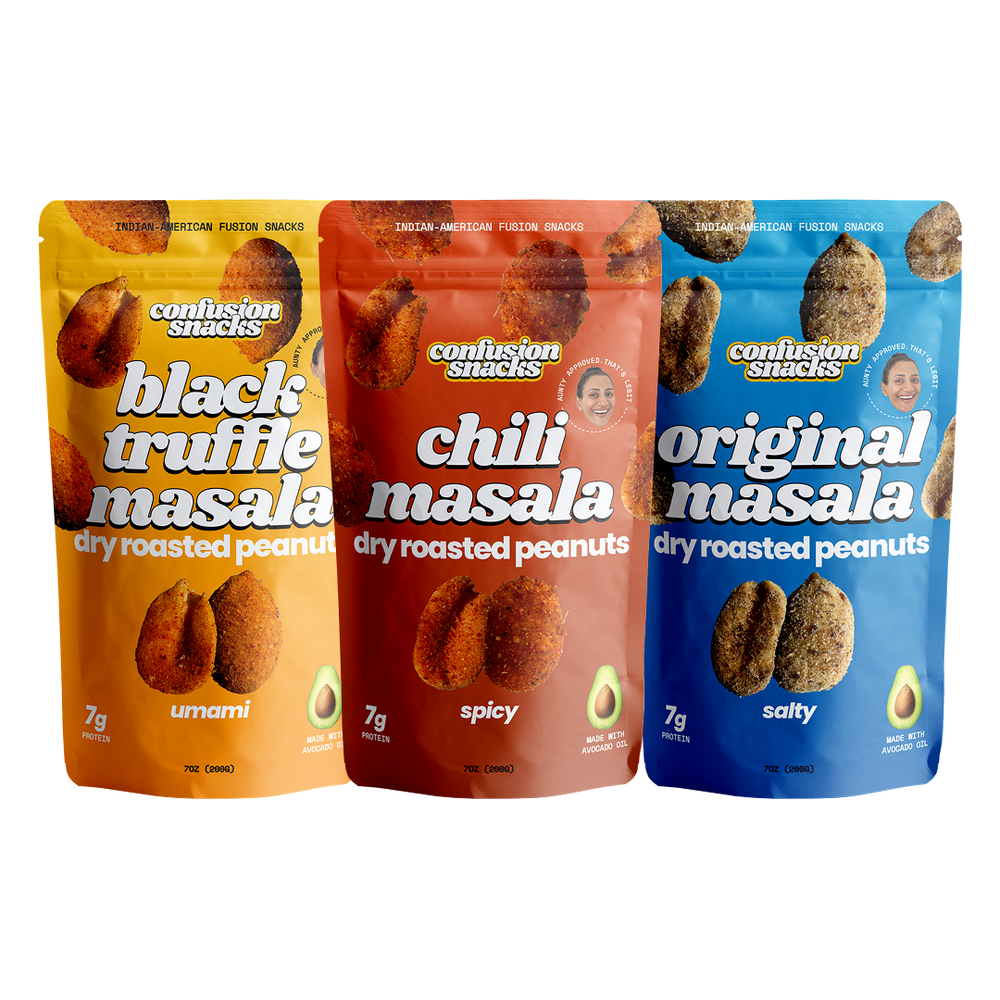
This Side Hustle Spotlight Q&A features New York City-based entrepreneur Aadit Patel, 31, founder of Indian-American fusion snack brand Confusion Snacks.
After college, Patel worked on Microsoft’s surface hardware team, where he saw firsthand how physical products come to life at scale; in 2016, he moved to Seattle, where he launched his chai-blend passion project Chaitheory. By 2019, he’d joined Scale AI and was running pilot programs acquiring enterprise customers to gain the experience needed to make a new snack brand side hustle successful.
Responses have been edited for length and clarity.
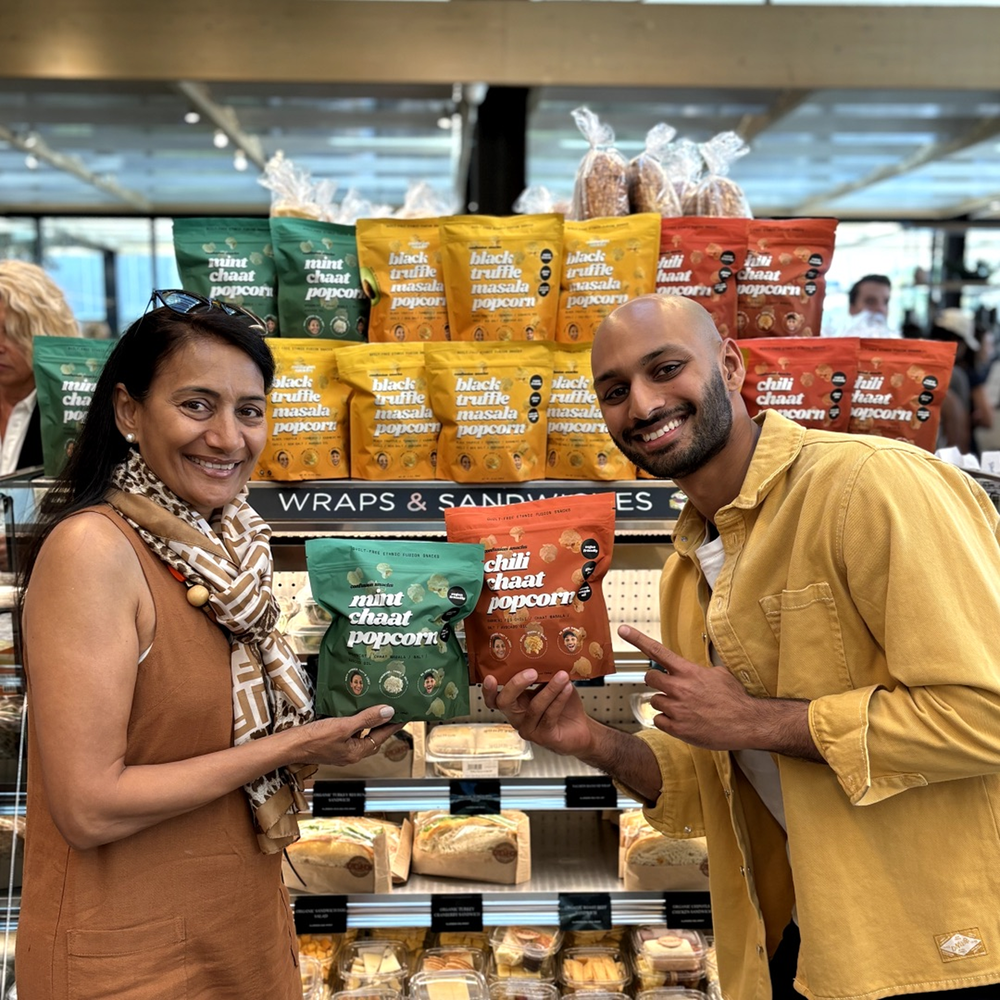
Image Credit: Courtesy of Confusion Snacks. Aadit Patel.
Want to read more stories like this? Subscribe to Money Makers, our free newsletter packed with creative side hustle ideas and successful strategies. Sign up here.
When did you start your side hustle, and where did you find the inspiration for it? In May 2022, I launched Confusion Snacks to bring global flavors to everyday snacking using clean, guilt-free ingredients.
It didn’t begin with the intention of starting a business. It began as a way for me to stay connected to my Indian-American identity.
Growing up, I lived at the intersection of two cultures, constantly learning how to carry forward my immigrant roots while adapting to American life. Many times, those identities felt like opposites. One side of me was devouring my mom’s homemade meals and dancing to Bollywood hits; the other side was crushing a bag of Hot Cheetos while singing Justin Bieber in the shower.
I loved both sides, but never fully felt “at home.” Eventually, I embraced the truth: I’m both Indian and American. And I wanted to create something that celebrated that duality instead of forcing a choice between them.
For me, the most natural way to build that “home” was through food — specifically snacks. I come from a family of avid snackers, and I’ve always felt that food is one of the best ways to bridge cultures. I wanted a snack that felt like me: not 100% Indian, not 100% American, but somewhere in that beautifully confusing middle.
At the same time, I noticed a cultural shift happening in the U.S. Snackers were becoming more curious and health-conscious, looking for global flavors, cleaner ingredients and options beyond the typical salty-sweet-cheesy aisle. Restaurants had brought ethnic flavors mainstream, followed by frozen meals and sauces — but the snacking aisle hadn’t caught up.
So, like any naive entrepreneur, I decided to shake things up.
“Body language is the most unfiltered feedback you’ll ever get.”
What were some of the first steps you took to get your side hustle off the ground? How much money/investment did it take to launch? The very first step was an online soft launch. We shared our variety pack link with family and friends, then watched something very exciting happen — people started sharing it with their circles. Suddenly, strangers were buying our snacks, which gave us our first real spark of confidence.
From there, we called about a hundred of those early adopters to capture their honest feedback. We wanted to understand what was working, what wasn’t and what flavors actually made people light up.
We took the next few months to refine the recipe, tighten up the branding and make sure the product matched the story we wanted to tell. Once we felt like things were headed in the right direction, we sold the snacks at our local LA farmers market. There’s nothing quite like watching someone try your product in front of you — body language is the most unfiltered feedback you’ll ever get.
And when that farmers market momentum kept building, we knew we had something worth taking further. So we took our first big leap into retail. Just four months later, in October 2022, we launched into Erewhon — our first major retail partner and the moment where this side hustle started to feel like a real company in the making.
To get everything off the ground, I invested about $3,000 of my savings — most of it spent on custom packaging, ingredients and cooking equipment. Luckily, years of tinkering with side projects meant I already knew how to build websites, design packaging and handle social content. And since my mom and I were making every single batch ourselves, we saved a ton by keeping so much in-house.
Image Credit: Courtesy of Confusion Snacks. The founder and his mom.
Are there any free or paid resources that have been especially helpful for you in starting and running this business? Joining the Startup CPG community is an absolute must if you’re launching a consumer packaged goods (CPG) brand. It’s a free, highly engaged community where you can connect with other founders, service providers and subject-matter experts who openly share what they’ve learned.
In the beginning, we truly didn’t know what we didn’t know. Being able to drop a question into their Slack and get real, practical answers from people who’ve been through it was priceless. Over time, we’ve also built incredible founder friendships and mentorships through that community — relationships that are genuinely invaluable.
Startup CPG also has chapters across many major cities and constantly hosts events, meetups and programs. It’s an amazing way to meet others in the space and get your product in front of real consumers early on.
If you could go back in your business journey and change one process or approach, what would it be, and how do you wish you’d done it differently? In the beginning, everything feels electric. Innovation naturally draws curiosity — customers get excited, retailers want to try something fresh and you start seeing little sparks everywhere. I call this the noveltyphase. It’s validating, energizing and honestly…kind of intoxicating. Those early moments of attention make you feel like you’ve cracked product-market fit or product-channel fit before you really have.
The mistake we made was assuming every spark was a signal. We doubled down on channels where we saw early excitement instead of slowing down to understand which ones actually had the potential to become sustainable pillars of the business. And what I mean by that is: getting crystal clear on who your core customer really is, designing your product in a way that naturally invites repeat purchase (everything from flavors to naming to pack size to price) and identifying the channels that can deliver your product to that customer profitably and consistently. Without those pieces, early excitement doesn’t convert into long-term traction.
Instead of building that clarity, we spread ourselves thin chasing fragmented pockets of demand — trying to support multiple retail accounts, dabbling in different online channels and reacting to every new opportunity because it felt like progress. That’s how you end up making decisions that feel “right in the moment” but aren’t rooted in long-term strategy. For us, that meant prematurely changing packaging to fit one specific channel and investing time and energy into channels that weren’t set up to deliver the economics or repeat purchases we needed.
Looking back, I wouldn’t ignore those early signals — they’re valuable. But I’d treat them as data points, not destinations. I’d be more disciplined about identifying one winning channel, proving strong sales and repeat behavior there and then expanding outward from a place of strength.
When it comes to this specific business, what is something you’ve found particularly challenging or surprising? One of the biggest challenges has been building a brand in a category that doesn’t really have a playbook.
Our value proposition is bringing global flavors into everyday snacking. We’ve seen those flavors shine in restaurants, frozen meals and sauces that help you cook at home, but not yet in the snacking aisle. That’s still a pretty new, emerging category. The closest examples we could find were snacks imported from Asia and sold in specialty grocers or online marketplaces. But our goal wasn’t just to serve that audience; we wanted to bring those flavors to everyone — the Indian kid craving something familiar, the American snacker looking for something new and everyone in between.
So we didn’t have a “look at what they did and copy that” roadmap. Instead, we turned to what every emerging founder turns to in 2025: LinkedIn. CPG founders were sharing huge wins, new retailer announcements, crazy sell-through stats — and we subconsciously started absorbing those stories as our playbook. If they were winning those dream accounts, then surely landing those same accounts meant we were on the right track too…right?
Not always.
What we eventually learned is that chasing the accounts everyone else is celebrating isn’t the same as building a successful business. Those big retailer wins look shiny (and honestly, they feel validating), but they’re not always aligned with your economics, your operations, your customer or your long-term vision. What works for someone else may not be the path that works for you.
The real challenge is staying anchored in your version of success, not the industry’s highlight reel. It means keeping your head down, understanding your consumer better than anyone else, figuring out where they actually shop and building your business around that — even if it’s not the buzzy path everyone is cheering for online.
It takes discipline to put your horse blinders on, especially when the internet keeps telling you to run in every direction at once. But in this industry, clarity beats FOMO every single time.
“When something falls apart, it might clear the path for something sturdier.”
Can you recall a specific instance when something went very wrong — how did you fix it? I woke up one morning to an email from our manufacturing partner saying that they no longer could produce for us due to an internal strategy shift where they focused on working with larger clients.
I told them that we respected their business decision and hoped to reconnect down the road, but without warning or a transition plan, our challenge was finding an alternative quickly.
What made it sting even more was how much we had poured into that partnership. We had spent a full year preparing them for our upcoming Whole Foods launch — weekly calls, on-site visits, transferring tribal knowledge, smoothing out quality issues, building trust. I genuinely believed we were growing together.
But their decisiveness became a strange sort of gift. Once I got past the initial shock, it forced me to flip into problem-solving mode. Instead of scrambling from a place of fear, I framed it as an opportunity: take everything I learned over the past 12 months and find a manufacturing partner who actually had the capacity and desire to build with us long-term.
We had to problem-solve asap with our Whole Foods launch on the horizon, and we could not afford to miss that launch.
This is where our values saved us. The one thing we always had — even when we were tiny, scrappy and making popcorn in a commercial kitchen — was the ability to build genuine relationships. We always led with: “We’re here for the long haul. We’re going to work our butts off. And we’re going to be the kind of partner who shows up — good days or bad.”
I picked up the phone and called the owner of the first manufacturer we ever worked with. They were the ones who helped us graduate from making popcorn by hand to an industrial process. That relationship hadn’t been flawless — we had plenty of scheduling and quality battles — but underneath it all was mutual respect. Even after we moved on, we stayed in touch, checked in and shared updates.
I told him what happened and asked if he knew anyone who might be a fit. By this point, he knew our product, our story and me well enough to point us in the right direction. He introduced us to a father-and-son team in the Midwest — a 40-year-old family-run manufacturer that specialized in working with small and medium brands. From the first conversation, it felt right. They understood the urgency without exploiting it. They communicated transparently. They cared about building something that made sense for both sides. No nickel-and-diming, no weird pressure, no drama.
Within three months, they were our new manufacturer and we were on track for our Whole Foods launch.
Looking back, I learned two big lessons:
When something falls apart, it might clear the path for something sturdier.
Lead with humanity. Always. Real relationships will carry you in ways luck never will.
How long did it take you to see consistent monthly revenue? What does growth and revenue look like now? It took about six months for us to start seeing consistent monthly revenue — this was when we started selling at Erewhon, our first major retail chain. The monthly revenue was just enough to cover the working capital needed to fund production runs, raw materials and in-store demos.
Our goal is to reach $1 million in revenue by the end of 2026.
What is your best piece of specific, actionable business advice? Especially for founders bootstrapping their business, first focus on building channels that you can control and make profitable, rather than chasing every opportunity that comes your way.
In the early days, there’s a constant tug-of-war: the accounts with the highest potential for your product to win aren’t always ready to work with you yet, and the ones willing to say yes might not be the right fit long-term. Sometimes the right channels take months or even years to win, and some promising opportunities can fizzle out before the finish line. Those long, fickle sales cycles are tough, especially when you need to keep the business afloat.
Instead, identify channels where your core customers live that allow you to fully control the experience — sales, distribution and retention, and generate enough cash flow to fund and grow the channel itself.
When you focus here, you can test the market faster, design SKUs specifically for that channel and drive repeat purchases through promotions, bundles and campaigns. These self-sustaining channels become a foundation you can scale from when larger, high-potential accounts are ready.
Building those profitable, controllable channels will keep your business growing and give you the stability to go after the bigger wins when the timing is right.
Entrepreneurs Don’t Have Time to Read — and Now With This App You Don’t Have To
Unlock key ideas from the world’s best nonfiction books.
Copied to clipboard
StackCommerce
Disclosure: Our goal is to feature products and services that we think you’ll find interesting and useful. If you purchase them, Entrepreneur may get a small share of the revenue from the sale from our commerce partners.
It’s common knowledge that entrepreneurs work a lot. Running a business doesn’t leave much free time — and it certainly doesn’t leave time for finishing books. If you want to stay knowledgeable in the world of nonfiction bestsellers with summaries that fit your busy schedule, there’s now an app for that called Headway Premium.
Headway Premium offers 15-minute summaries of the world’s best nonfiction books, easy to digest and adaptable to even the most chaotic schedules. You can choose to listen via a professionally narrated audio summary or read a written one, depending on when you’re fitting it in.
Over 15 million users are already taking advantage of Headway’s wealth of knowledge. There are over 2,000 summaries already available, with a new one added every month. Topics range from business strategies and personal development to health and wellness, and you have the option to work offline if you need to.
Headway Premium’s summaries highlight the key ideas, concepts, and principles from each book, though they don’t replace reading the full text. It’s a great way to stay on top of new topics and discover subjects you’d like to explore further. The app also incorporates gamified learning, tracking your progress, and allowing you to earn achievements and master new skills along the way.
It’s common knowledge that entrepreneurs work a lot. Running a business doesn’t leave much free time — and it certainly doesn’t leave time for finishing books. If you want to stay knowledgeable in the world of nonfiction bestsellers with summaries that fit your busy schedule, there’s now an app for that called Headway Premium.
Headway Premium offers 15-minute summaries of the world’s best nonfiction books, easy to digest and adaptable to even the most chaotic schedules. You can choose to listen via a professionally narrated audio summary or read a written one, depending on when you’re fitting it in.
Bring Bitcoin Mining into Your Office Without Noise, Heat, or Hassle
Disclosure: Our goal is to feature products and services that we think you’ll find interesting and useful. If you purchase them, Entrepreneur may get a small share of the revenue from the sale from our commerce partners.
Running a business means constantly weighing risk, reward, and long-term upside — and every now and then, an opportunity comes along that taps directly into that entrepreneurial mindset.
The BlockChance™ Bitcoin Ticket Miner and the BlockChance™ Bitaxe Bitcoin Miner both fall into that category. They aren’t just gadgets, they’re micro-miners designed for business leaders, tech professionals, and forward-thinkers who appreciate low overhead, future-leaning experimentation, and potential “asymmetric upside” — when the possible reward is much greater than the potential risk or downside.
And right now, each model is available for a limited-time price: the Ticket Miner for $59.99 (MSRP: $149.99) and the Bitaxe Miner for $199.99 (MSRP: $299.99) — both with free shipping.
Whether you’re a founder who likes tinkering with new tools, an IT leader who is curious about Bitcoin infrastructure, or a numbers-driven operator who sees value in optionality, these compact solo-mining devices offer a fascinating way to participate in the Bitcoin ecosystem.
It’s not designed to mine daily payouts. It’s designed for the thrill of asymmetry — small energy draw, very remote odds, very high upside. A startup founder would call it “optionality.” A quant would call it “tail-risk exposure.” A business owner might simply call it “interesting.”
With a built-in 2.8″ touchscreen, Wi-Fi/BLE connectivity, lifetime firmware updates, and whisper-quiet operation, it’s a simple and fun desk addition for anyone who understands the appeal of “one lucky block.”
BlockChance Bitaxe Bitcoin Miner:
If you want actual real-world hashing performance without the noise and power draw of an industrial rig, the Bitaxe is the business-friendly sweet spot.
Using the same BM1370 ASIC chip found in full-size commercial miners, the Bitaxe pushes ~1.2 TH/s while using only ~18 watts — less than many phone chargers. This is solo mining with real TH/s power, minus the warehouse.
It’s quiet, cool, and runs on Wi-Fi using an ESP32-S3 controller — no PC required. It’s designed for professionals who want meaningful hashing capacity without making their workspace sound like a server closet.
Either option also works well as a team gift, office curiosity, or conversation starter — especially for companies in finance, tech, consulting, cybersecurity, analytics, or engineering.
Pick from the available miners below while they are on sale:
Running a business means constantly weighing risk, reward, and long-term upside — and every now and then, an opportunity comes along that taps directly into that entrepreneurial mindset.
The BlockChance™ Bitcoin Ticket Miner and the BlockChance™ Bitaxe Bitcoin Miner both fall into that category. They aren’t just gadgets, they’re micro-miners designed for business leaders, tech professionals, and forward-thinkers who appreciate low overhead, future-leaning experimentation, and potential “asymmetric upside” — when the possible reward is much greater than the potential risk or downside.
And right now, each model is available for a limited-time price: the Ticket Miner for $59.99 (MSRP: $149.99) and the Bitaxe Miner for $199.99 (MSRP: $299.99) — both with free shipping.
Stop Wasting the End of the Year — Take These 5 Steps to Get Ahead in 2026
Opinions expressed by Entrepreneur contributors are their own.
Key Takeaways
Dig deep in Q4 for boosted sales opportunities to meet year-end targets.
Streamline operations and set actionable goals to propel your team for the year ahead.
Fortify financial planning and re-establish your competitive edge to stay ahead of market shifts.
The end of the calendar year can bring mixed emotions for business owners. Relief that targets have (almost) been met, concern about readiness for the busiest retail month of the year and even excitement at what’s to come next year. Regardless, founders surely know that the year’s end is not a time to wind down — quite the opposite. The weeks between now and Jan. 1 present a unique opportunity to capitalize on year-end momentum and lay the groundwork for next year’s growth.
Here are five ways founders can close out 2025 strong and set themselves up for success in 2026.
1. Dig deep to hit sales targets
For those founders looking to lock down sales targets for the year, this can be a stressful but very productive time. The fourth quarter traditionally offers the best sales conversion rates of the year as B2B buyers are rushing to exhaust budgets, consumers are in spending mode and decision-makers want to close deals before the holidays.
This is the moment to reach out to prospects who’ve gone quiet, offer compelling year-end incentives and follow up on pending proposals with renewed urgency. Whether you’re targeting enterprise clients scrambling to spend remaining budget or consumers looking for holiday deals, customers are never as receptive to making purchases as they are in these final weeks of the year.
For many businesses, the holiday season brings either peak activity or a welcome slowdown. For businesses in the latter category, this is a valuable opportunity for focus time. Smart founders use these quieter moments to streamline operations for the year ahead. Look into how you can automate repetitive processes to increase efficiency, ask employees to document procedures that currently exist only in their heads, and upgrade systems that have become bottlenecks. Making these operational improvements now will compound your success in 2026, freeing up resources for growth rather than maintenance.
3. Set goals and align your team
As French writer Antoine de Saint-Exupéry said, “A goal without a plan is just a wish.” The end of the year is the perfect time to set effective goals for the new year while ensuring your team is positioned to execute them.
When mapping out 2026 targets, balance optimistic growth projections with realistic resource constraints, and break up your goals into achievable milestones. Effective goal-setting requires honesty about your current position. Dig into the real numbers: revenue versus projections, customer acquisition costs, cash flow patterns and team productivity. This assessment might reveal uncomfortable truths, but it’s precisely this clarity that separates businesses that thrive from those that just survive.
Your goals mean nothing without the right team to execute them. Use this time for meaningful performance reviews, address any cultural issues that emerged in 2025 and plan investments in team development for the year ahead. The businesses that end 2025 aligned on their goals and are confident in their execution path, enter January energized for what’s ahead.
4. Strengthen your financial foundation
Every business owner knows that cash flow is king, making year-end the perfect time to fortify your financial planning. Start by projecting your monthly cash needs for at least the first half of 2026 and build contingency plans for different scenarios. Review your current expense structure and identify areas where you can optimize spending or reinvest savings into growth initiatives.
Financial reviews become even more critical if you’re looking to expand your business internationally in 2026. Taking your business global requires a fresh suite of financial tools that you’ll need to set up accordingly. Moving and managing money across borders also introduces currency considerations that many entrepreneurs underestimate. The last thing you want is to land a major international contract in March only to discover your financial provider can’t handle cross-border payments efficiently or conceals hidden fees that eat into your margin.
If you’ll soon be operating in multiple currencies, establish a multi-currency account, research foreign exchange risks in your target markets and identify providers that can move money internationally affordably, quickly and transparently.
New technologies, regulatory changes and shifting customer behaviors can reshape markets overnight. Use these final weeks to systematically analyze your competitive position. Start by gathering customer feedback from the past year — what did they love, what frustrated them, and what did competitors offer that you didn’t?
Consider conducting a formal competitor analysis: review pricing changes, new product launches and marketing messages from across your industry in 2025. This isn’t about copying what others do, but understanding how the landscape has shifted and where gaps exist. The goal is positioning yourself to capitalize on opportunities in real time rather than starting 2026 playing catch-up.
In short, use these final weeks of the year strategically. The work you do now won’t just determine how you finish 2025 — it will set the trajectory for your entire next year. While your competitors are mentally checking out for the holidays, you have the chance to gain ground that compounds throughout 2026. The businesses that treat the end of the year as a strategic opportunity rather than a countdown to vacation don’t just see more success — they create the conditions that make success inevitable.
Key Takeaways
Dig deep in Q4 for boosted sales opportunities to meet year-end targets.
Streamline operations and set actionable goals to propel your team for the year ahead.
Fortify financial planning and re-establish your competitive edge to stay ahead of market shifts.
The end of the calendar year can bring mixed emotions for business owners. Relief that targets have (almost) been met, concern about readiness for the busiest retail month of the year and even excitement at what’s to come next year. Regardless, founders surely know that the year’s end is not a time to wind down — quite the opposite. The weeks between now and Jan. 1 present a unique opportunity to capitalize on year-end momentum and lay the groundwork for next year’s growth.
Here are five ways founders can close out 2025 strong and set themselves up for success in 2026.
Get a Lifetime of Microsoft Office 2024 for Just $150
Disclosure: Our goal is to feature products and services that we think you’ll find interesting and useful. If you purchase them, Entrepreneur may get a small share of the revenue from the sale from our commerce partners.
The average small business now manages 13 different software subscriptions, costing thousands of dollars annually in recurring fees, a recent report by Deloitte says. If you want to cut unnecessary expenses without sacrificing productivity, you may want to make the switch to a lifetime license for Microsoft Office 2024 Home & Business for Mac or PC with a one-time payment of just $149.97.
Essential productivity tools without the recurring subscription fees
Office 2024 gives you Word, Excel, PowerPoint, and Outlook with all the business-focused features you need already built in. Unlike many subscription models, the suite installs directly on your computer, which means you can work on presentations, spreadsheets and documents whether you’re online or not.
Best of all, you just have to pay once and you own it forever. Microsoft 365 subscribers hand over $9.99 every month – that’s almost $120 annually for something you never fully own. With Office 2024, you get the same core apps without recurring charges eating into your budget year after year.
Excell 2024 can handle massive datasets without slowing down. Dynamic arrays let formulas populate results across multiple cells automatically, which helps cut down on manual work when you’re building financial reports, tracking inventory or managing customer data.
PowerPoint now supports recording with voice narration, video and closed captions. This will completely transform how you deliver remote presentations to clients or train team members in different locations without needing additional video editing software.
Word’s Focus Mode eliminates distractions by hiding unnecessary toolbars. Smart Compose uses AI to suggest contextually relevant text, speeding up document creation when you’re working against tight deadlines.
Turbocharge your teamwork with real-time co-authoring in Word, Excel, and PowerPoint, which allows multiple team members to work on the same document simultaneously. Plus, built-in chat and commenting features enable direct feedback without switching between applications.
The average small business now manages 13 different software subscriptions, costing thousands of dollars annually in recurring fees, a recent report by Deloitte says. If you want to cut unnecessary expenses without sacrificing productivity, you may want to make the switch to a lifetime license for Microsoft Office 2024 Home & Business for Mac or PC with a one-time payment of just $149.97.
Essential productivity tools without the recurring subscription fees
Office 2024 gives you Word, Excel, PowerPoint, and Outlook with all the business-focused features you need already built in. Unlike many subscription models, the suite installs directly on your computer, which means you can work on presentations, spreadsheets and documents whether you’re online or not.
Best of all, you just have to pay once and you own it forever. Microsoft 365 subscribers hand over $9.99 every month – that’s almost $120 annually for something you never fully own. With Office 2024, you get the same core apps without recurring charges eating into your budget year after year.
ChatGPT’s New Internet Browser Can Run 80% of a One-Person Business — Here’s How Solopreneurs Are Using It
What would happen if your browser could work like a full-time employee — researching, writing, organizing and planning without you touching a single tab?
That’s not a thought experiment anymore.
OpenAI just launched Atlas — the first AI-native browser that actually does the work for you.
While Chrome forces you to click, switch, search and repeat, Atlas turns your entire browser into a digital worker that runs your business alongside you.
And today, I’m going to show you exactly how solopreneurs are using it to save 40-plus hours a week and scale toward six and seven figures.
In this video, I’m breaking down eight plug-and-play use cases that solo entrepreneurs are using right now to scale toward six to seven figures and cut their workload in half:
• Content creation — Find breakout viral hooks, draft scripts and organize everything into a single Google Doc automatically. • Tab chaos killer — Ask Atlas what you were working on, and it instantly rebuilds your workflow or automation plan based on your browsing history. • Conversion boost — Audit landing pages using the latest research and get a ready-to-run test plan for higher conversions. • Inbox cleanup — Auto-unsubscribe from dead senders and get a clean report of what changed. • Inline editing — Rewrite any draft in your tone of voice directly inside the page, no copy-paste needed. • Smart purchasing — Compare tools, gear and software intelligently before you buy — save hours and avoid bad decisions. • Content intelligence — Scan Reddit, Substack and YouTube to build next week’s posting plan based on real audience demand. • SEO & findability — Run compact audits for Google and AI search engines like Perplexity so people actually find your work.
Inside the video, you’ll learn:
• My full Atlas setup from blank browser to first automation • The exact prompts I use to turn Atlas into a revenue-producing machine • How to eliminate 40-plus hours of manual work every single week • Why “zero-click searches” mean your current business model must evolve now
The way you use AI just changed. This is how you build your edge before everyone else catches on.
The AI Success Kit is available to download for free, along with a chapter from my new book, The Wolf is at The Door.
What would happen if your browser could work like a full-time employee — researching, writing, organizing and planning without you touching a single tab?
That’s not a thought experiment anymore.
OpenAI just launched Atlas — the first AI-native browser that actually does the work for you.
Uncover the Hidden Edge Top Franchisors Use to Win (And It’s Not More AI)
Opinions expressed by Entrepreneur contributors are their own.
Key Takeaways
AI is reshaping how franchisors create content — but there’s a crucial element it still can’t touch.
The franchisors growing fastest today are using a surprising approach that blends technology with something far more human.
AI has transformed how quickly brands can generate content. Scripts, captions, clips — all done in minutes. For busy franchisors and business owners, it sounds like the perfect solution: fast, inexpensive, scalable.
But here’s the truth every entrepreneur needs to hear: AI can create content. It cannot create a connection.
And in franchising — where trust, community and personal belief drive decisions — connection is everything.
AI tools are great at producing polished assets. But they can’t walk into a franchise location and ask, “Why did you start this?” They can’t sense when someone is nervous on camera. They can’t wait for the moment a franchisee lets their guard down and says the thing that actually makes the story meaningful.
Recently, during a shoot with a new franchise owner in the Midwest, she kept saying she wasn’t “good on camera.” So the team slowed down and simply talked. A few minutes later, she said quietly: “I wanted my kids to see me build something.”
You could feel the room shift. That single line became the heart of her entire story — the reason potential franchisees would trust her brand.
No AI tool would have known to wait for that moment. Because real stories aren’t written. They’re discovered.
And for entrepreneurs growing a franchise, that authenticity is the difference between someone scrolling past your content and someone saying, “This brand feels real. I want to learn more.”
AI can make content faster — but only humans make it believable
Entrepreneurs want efficiency. You want to grow faster, sell smarter and do more with fewer resources. AI absolutely helps with that:
Organizing footage
Transcribing interviews
Drafting outlines
Speeding up edits
Optimizing performance data
But none of those tasks define your brand’s identity.
Your identity comes from emotion — the one thing AI can’t authentically generate
When a franchise candidate sees a business owner’s voice shake when they talk about taking the leap, a manager tearing up while describing how the brand changed their life or a team laughing in the background of a real store, they’re not just seeing a business opportunity. They’re seeing themselves.
This is what moves people from interested to invested.
Why local storytelling still outperforms AI-generated content
Franchising is built locally. It happens in real communities, run by real people with real customers. That’s why filming on location still beats AI-generated content every time.
When prospective franchisees can see the actual space — the signage, the staff, the environment — something important happens: The brand becomes tangible. It stops feeling theoretical and starts feeling achievable.
AI can generate a perfect image of a storefront. But it cannot replicate:
The sound of morning hustle
The pride in an owner’s voice
The authentic rhythm of a community
The imperfect details that make a place feel lived-in
Those human details build trust — and trust fuels franchise growth.
What today’s smartest franchisors are doing
Entrepreneurs often face a false choice: use AI or stay fully human. But the winning strategy is hybrid.
Let AI handle the mechanics. Let humans handle the meaning.
The most successful franchisors today are:
Using AI for speed — Let AI shorten timelines, not emotional depth.
Investing in on-location storytelling — Prospects want to see real operators in real environments.
Prioritizing emotion over perfection — People relate to authenticity, not flawless scripting.
Repurposing strategically — One authentic story can fuel recruitment, marketing and community engagement. This approach allows entrepreneurs to scale without losing the human element that actually drives conversions.
When you sit across from a franchisee and ask them why they started, you give them a moment to reconnect with their purpose. And when they share that purpose on camera, viewers recognize it instantly — because purpose is universal.
AI can’t manufacture that.
Entrepreneurship, at its core, is human. Franchising, at its best, is people helping people succeed. And storytelling, at its most powerful, is one person saying: “Here’s why this changed my life — and how it might change yours.”
AI will keep advancing. It will keep making the process faster and the workflow smoother. But it will never replace the part of storytelling that makes people believe. Because the camera can capture the picture, but only people can capture the soul.
Key Takeaways
AI is reshaping how franchisors create content — but there’s a crucial element it still can’t touch.
The franchisors growing fastest today are using a surprising approach that blends technology with something far more human.
AI has transformed how quickly brands can generate content. Scripts, captions, clips — all done in minutes. For busy franchisors and business owners, it sounds like the perfect solution: fast, inexpensive, scalable.
But here’s the truth every entrepreneur needs to hear: AI can create content. It cannot create a connection.
7 Must-Read Books That Will Make You a Better Leader in 2026
Opinions expressed by Entrepreneur contributors are their own.
Key Takeaways
As organizations grow beyond initial products, markets and purposes, many leaders’ values get lost.
Some leaders fear that being authentic and relatable erodes authority.
Leadership has never been easy, but 2025 presented unique friction. Employees stayed put — not out of loyalty — but due to economic uncertainty and a declining job market. They see leaders discussing AI adoption without a clear strategy.
This complexity mixes with a growing demand for purpose. Work must feel meaningful. Furthermore, trust in business is eroding; 61% of the global population believes industry and the wealthy make their lives challenging.
These conditions emphasize the need for value-driven leadership. This approach aligns decisions with stated values. Culture reflects a leader’s example, not platitudes.
However, organizational complexity and pressure tempt leaders to stray from their principles. Managers need tools to stay anchored. These selections focus on leadership dilemmas, not just tactics. The ideas presented in these books translate values into everyday decisions.
1. The Compass Within: A Little Story About the Values That Guide Us by Robert Glazer
A parable uses storytelling to make a moral statement — spiritual insight wrapped in a fable. This is the style Glazer uses in his latest book to guide leaders toward making external decisions based on inner values. The Compass Within demonstrates how this internal compass can steer all choices.
The core idea is simple: integrity in decision-making stems from knowing your values. Once you understand your internal compass, saying no to tempting shortcuts becomes easier. When asked to make a fast decision, you can learn to pause and check which direction your compass points.
2. Headamentals: How Leaders Can Crack Negative Self-Talk by Suzy Burke, PhD, Ryan Berman, Rhett Power
The Compass Within focuses on using internal values for external decisions. In contrast, Headamentals masters the inner narrative, enabling leaders to act with clarity rather than chaos. In his newest book, Power explains how to master self-talk, including reframing inner negativity.
Value-driven leadership starts internally. Mental discipline and emotional awareness are necessary for recognizing when self-talk leads you astray. Consider the pressure to measure progress solely by metrics; self-doubt follows when numbers fall short. Headamentals teaches you to catch a negative thought and reframe it into a values-aligned affirmation. Perhaps a qualitative measure could demonstrate progress instead.
This month only, you can use Entrepreneur+ for free. Get instant access to our full collection of stories, guides and resources.
3. What Matters Next: A Leader’s Guide To Making Human-Friendly Tech Decisions by Kate O’Neill
Headamentals teaches leaders how to reframe negative self-talk into value-driven affirmations. O’Neill’s new book focuses on the role of ethics in technology decisions and the human-centric side of those choices.
AI may work and introduce surface-level efficiencies. But what is its larger impact on employee skill development, morale and purpose-driven work? O’Neill shows how to assess tech trade-offs using a human-centric lens and a values-first framework.
In many organizations, technology decisions betray values or missions. This book helps prevent this by demonstrating how to add at least one human impact question to your next tech project’s checklist.
4. The Systems Leaders: Mastering the Cross-Pressures That Make Or Break Today’s Companies by Robert E. Siegel
O’Neill’s book shows leaders how to navigate the balance between tech-driven decisions and humanity. In this book, Robert E. Siegel explores broader, abstract contradictions in complex organizations. For instance, leaders often feel they must choose between speed and quality, or innovation and stability.
When competing demands exist, it’s challenging to heed core values. The tension comes from wanting two opposing goals within systemic resource limits. Siegel argues that leadership is often about tension, not simplicity. Holding these organizational tensions without abandoning core values is key. Start by identifying one central conflict and mapping how your values can guide specific trade-offs.
5. Speak, Memorably: The Art Of Captivating An Audience by Bill McGowan And Juliana Silva
The previous books help leaders identify and listen to values. Speak, Memorably focuses on communicating them effectively. Effective communication is essential; you must convince and engage your workforce to anchor the culture.
People cannot see your values if they aren’t expressed well. Communication must be authentic, clear, and heartfelt. Using one principle from this book, draft a one-sentence value statement speech for your team. Practice, deliver, and refine until it resonates.
Knowing values and communicating them is a start. But how do you maintain a value-driven culture through growth? In his latest book, John Abrams shows leaders how to shift from creation mode to stewarding the company’s long-term mission, vision, and principles.
Abrams addresses the evolving leadership role and how to sustain culture as you scale. From Founder to Future shows how to serve your company’s legacy and mission as it expands. As organizations grow beyond initial products, markets and purposes, many leaders’ values get lost. This book helps guide the evolution of your leadership role, keeping your values alive as you scale.
7. The Relatable Leader: Create A Culture Of Connection by Rachel DeAlto
From Founder to Future shows how to carry values forward in the long term. The Relatable Leader demonstrates the importance of forming lasting, authentic connections. In modern leadership, connection is the currency of trust. But some leaders fear that being authentic and relatable erodes authority.
In this book, DeAlto explores how this fear is unfounded. A values-driven leader not only defines their inner compass but lives it through relational behaviors. The Relatable Leader helps you model connection and belonging in your leadership fabric. You’ll learn to identify one distant group and apply a relatable move, such as a small personal story, in your communications.
Adopting a new leadership style takes time. Start by selecting the book that addresses your most urgent need. Commit to applying one core idea from that text to your daily work each week.
Key Takeaways
As organizations grow beyond initial products, markets and purposes, many leaders’ values get lost.
Some leaders fear that being authentic and relatable erodes authority.
Leadership has never been easy, but 2025 presented unique friction. Employees stayed put — not out of loyalty — but due to economic uncertainty and a declining job market. They see leaders discussing AI adoption without a clear strategy.
This complexity mixes with a growing demand for purpose. Work must feel meaningful. Furthermore, trust in business is eroding; 61% of the global population believes industry and the wealthy make their lives challenging.
The CEO of the Most Valuable Company in the World Works 7 Days a Week in a ‘State of Anxiety’ Over Going Bankrupt: ‘It’s Exhausting’
Key Takeaways
Nvidia CEO Jensen Huang, 62, recently said that he works seven days a week, in a “state of anxiety” that Nvidia could go out of business.
Nvidia reported record revenue of $57 billion for its third quarter last month.
By contrast, other tech CEOs, like Linear’s Karri Saarinen, advocate for more work-life balance.
Nvidia may be the most valuable company in the world, with a market capitalization of $4.4 trillion at the time of writing, but that hasn’t stopped CEO Jensen Huang from working seven days a week. The co-founder and CEO recently disclosed that he still and lives in a constant “state of anxiety” driven by fear of the company going bankrupt.
In an appearance on The Joe Rogan Experience podcast, which aired earlier this week, Huang said he has described Nvidia as being “30 days from going out of business” for over three decades and that his feeling of insecurity “doesn’t leave.”
“To live on fumes at all times,” Huang said. “The feeling, no different from the feeling I had this morning when I woke up: ‘You’re going to be out of business soon.’”
Huang said the feeling “doesn’t change” even though Nvidia currently tops the charts in market value and reported record revenue of $57 billion for its third quarter last month. “The sense of vulnerability, the sense of uncertainty, the sense of insecurity — it doesn’t leave you,” he said.
Jensen Huang. Photographer: Graeme Sloan/Bloomberg via Getty Images
Huang co-founded Nvidia in 1993, immediately stepping into the role of CEO, a position he has now held for 32 years. The company started as a graphics card manufacturer, but has recently pivoted to creating AI chips that power the efforts of other tech giants, like Microsoft, OpenAI and Meta. In October, Nvidia briefly became the first company in history to achieve a $5 trillion market capitalization.
Huang doesn’t take Nvidia’s success as an indicator that it is time to rest on his laurels — quite the opposite. The 62-year-old CEO said on the podcast that he works seven days a week, “every moment” he is awake, including holidays like Thanksgiving and Christmas. He wakes up early in the morning, at 4 a.m., to read emails for a few hours and says he reads several thousand emails a day.
“It’s exhausting,” Huang said on the podcast. “Always in a state of anxiety.”
Huang mentioned that his two children, Spencer and Madison, both work for Nvidia and also work seven days a week. He did not say whether he expects his employees to have this kind of work ethic.
Not all CEOs subscribe to an always-on work mindset. Karri Saarinen, the 38-year-old CEO of project management startup Linear, built a $1.25 billion startup by prioritizing workplace wellness. Linear asks its 100 employees to work the standard 40 hours, and offers generous perks, including permanently remote work, five weeks of paid time off per year and four months of paid parental leave. Saarinen starts his day at 8 a.m. and ends by 4 p.m.
“If your life is a little more balanced, you’ll feel happier, more fulfilled — and it shows in your work,” Saarinen told Entrepreneur in an interview. “In our company, we always try to err on the side of quality, not quantity.”
Ready to explore everything on Entrepreneur.com? December is your free pass to Entrepreneur+. Enjoy complete access, no strings attached.Claim your free month.
Key Takeaways
Nvidia CEO Jensen Huang, 62, recently said that he works seven days a week, in a “state of anxiety” that Nvidia could go out of business.
Nvidia reported record revenue of $57 billion for its third quarter last month.
By contrast, other tech CEOs, like Linear’s Karri Saarinen, advocate for more work-life balance.
Nvidia may be the most valuable company in the world, with a market capitalization of $4.4 trillion at the time of writing, but that hasn’t stopped CEO Jensen Huang from working seven days a week. The co-founder and CEO recently disclosed that he still and lives in a constant “state of anxiety” driven by fear of the company going bankrupt.
In an appearance on The Joe Rogan Experience podcast, which aired earlier this week, Huang said he has described Nvidia as being “30 days from going out of business” for over three decades and that his feeling of insecurity “doesn’t leave.”