Google Search Is Entering Its Most Disruptive Era. Here’s How to Stay Visible.

Opinions expressed by Entrepreneur contributors are their own.

Key Takeaways

  • Organic traffic isn’t dying, but Google’s shift into AI-driven search is rewriting how people discover brands, evaluate solutions and build trust.
  • To stay visible, founders must create content that AI can’t replicate, infuse human expertise everywhere and build presence where your audience actually consumes content.
  • Founders should also work to become the definitive source on a narrow set of topics, optimize for brand authority (not traffic) and audit their digital authority signals.

Last quarter, one of my clients watched their organic traffic drop 35% while their qualified leads increased 28%. Another saw their blog visits cut in half, but closed their largest enterprise deal from a prospect who found them through an AI search summary.

This paradox is playing out across thousands of businesses right now, and most founders are drawing the wrong conclusion.

Organic traffic isn’t dying, but user behavior is changing so dramatically that the old playbook is no longer enough. Google’s shift into AI-driven search is rewriting how people discover brands, evaluate solutions and build trust. Entrepreneurs who adapt now will win the next decade of visibility.

For years, business owners have relied on a familiar formula: Publish helpful content, optimize for keywords, and let Google do the rest. But today’s search landscape looks nothing like it did even 18 months ago.

AI-powered search, new ranking patterns and massive shifts in consumer behavior are reshaping how people decide what to click and whether they click at all.

As a growth partner working across healthcare, government, ecommerce and emerging technology, I see a consistent pattern: Traffic is not disappearing, but how users seek and interpret information is fundamentally different. And businesses that don’t adjust will continue to see their website analytics decline and assume it’s “AI killing SEO.”

The reality is more nuanced and more hopeful.

Below is what entrepreneurs need to understand about the new era of search, and how to build a strategy that thrives in it.

Related: Is Your SEO Strategy Ready for the AI Search Engine Takeover? Act Now — or Risk Getting Left Behind.

1. AI overviews are changing search behavior, not replacing it

Many founders fear that AI summaries will eliminate clicks. But what’s actually happening is more interesting:

People still search. They just do it more efficiently.

According to early data from search platforms, commercial intent queries (e.g., buying products or services) continue to drive clicks at similar rates. Meanwhile, quick-fact queries produce fewer page visits, but those searches rarely converted anyway.

AI reduces friction in the discovery process. Lower friction typically leads to higher search volume overall. The pie isn’t shrinking; it’s being redistributed.

What this means for you: Your traffic mix will change, but your customer intent remains. Focus on the queries that drive revenue, not vanity traffic.

2. The real reason your traffic is down has nothing to do with AI

The biggest shift is behavioral, not algorithmic.

Users, especially those under 40, are abandoning traditional long-form blogs for:

  • Short-form video (YouTube Shorts, TikTok, Instagram Reels)

  • Community-driven threads (Reddit, Quora, niche forums)

  • Podcasts and audio content

  • YouTube walkthroughs and tutorials

  • User-generated content platforms

Research from Pew and various social platforms shows that Gen Z is three times more likely to start a product search on TikTok or YouTube than on Google. This shift is happening regardless of AI.

Google’s algorithm updates are following the audience. If users prefer a Reddit thread over a polished article, Google surfaces the thread. That’s not AI; that’s Google responding to user behavior signals.

What this means for you: You’re not competing with AI. You’re competing with how humans prefer to consume information in 2025.

3. Search rankings now favor voices, not websites

Google is increasingly asking: “Who do users actually trust?”

This means ranking signals are evolving to favor:

  • Authentic human perspective and lived experience

  • Demonstrated expertise (not just credentials)

  • Deep insights that go beyond surface-level information

  • Content that users engage with rather than bounce from

AI is commoditizing surface-level content. If a user can get the same answer from an AI summary, Google will devalue the page that provides it.

What this means for you: Your lived experience, results, failures, processes and opinions matter more than they ever have. Templated content is officially obsolete.

4. Depth, craft and perspective are becoming the only defensible SEO advantage

In an AI-summarized world, the content that will survive must offer:

  • Detailed frameworks you’ve built through experience

  • Case studies with real numbers and outcomes

  • Contrarian insights backed by evidence

  • Data-driven recommendations from proprietary research

  • Real stories and personal narrative

  • Your actual processes and methodologies

AI is exceptional at summarizing existing information. It cannot replicate original thought, hard-won expertise or proprietary methodology.

What this means for you: Stop writing content designed to rank. Start producing content designed to be remembered, referenced and impossible to replicate.

Related: Want to Be Discovered in AI Search? These Are the Sources That Matter

5. The rise of Generative Engine Optimization: Being in the answer, not just the results

Google is testing a more prominent citation model inside AI Overviews. But the shift is bigger than just Google. AI assistants like ChatGPT, Perplexity, Gemini, Copilot and Claude are rapidly becoming primary discovery tools for professionals and consumers.

This emergence of AI-driven discovery has given rise to what’s being called Generative Engine Optimization (GEO), the practice of ensuring your brand is not just ranked by traditional search engines, but cited, recommended and accurately represented across the entire AI ecosystem.

Unlike traditional SEO, which focuses on ranking positions, GEO focuses on becoming the authoritative source that AI engines trust and reference when answering user queries. This means your brand can appear:

  • Inside AI summaries as a cited expert

  • As a trusted source across multiple platforms

  • In recommendations without requiring a traditional click

  • With inline links that build recognition and authority

This is fundamentally a brand authority engine, not just a traffic engine — and it’s incredibly powerful for establishing market leadership.

What this means for you: Your goal is no longer just ranking. Your goal is earning citations and recommendations that position your brand as the definitive source in your category. This requires rethinking how you build authority signals, structure content and establish expertise across your entire digital footprint.

Organizations looking to understand this shift more deeply can explore frameworks for AI-era visibility strategy that address how brands are adapting to discovery across AI platforms.

6. Google is actively fighting the “dead internet” problem

Google has explicitly stated it’s prioritizing what it calls “content with real human perspective.” That includes:

  • Expert practitioners sharing real experience

  • Operators documenting their processes

  • Creators demonstrating craft

  • Niche specialists going deep on their domain

  • People willing to attach their name and reputation to insights

AI-generated content farms are being systematically filtered out. Human-driven expertise is being elevated in response.

What this means for you: Your edge is not writing more. Your edge is writing what only you can write — content grounded in your actual experience.

7. AI search is actually a win for niche businesses

AI encourages more specific, multi-layered queries:

Old query: “Best dress for a wedding”

New query: “Short red dress from an ethical local merchant under $200 for outdoor wedding photos in humid weather”

This specificity helps AI match users with businesses that would have never ranked for broad terms in traditional search. If you serve a specific niche with deep expertise, AI search dramatically increases your discoverability.

What this means for you: If you serve a specific audience exceptionally well, AI search is the biggest visibility opportunity you’ve had in years. Niche depth beats broad mediocrity.

The entrepreneur’s action plan for the AI search era

To stay visible, founders must re-architect their approach. Here’s your roadmap:

If you do nothing else, do this:

1. Create content deeper than AI can summarize

If AI can write it, Google can summarize it, and users won’t need your website. Your content must contain proprietary insight, specific methodologies or lived experience that can’t be replicated.

Next-level moves:

2. Infuse your human expertise everywhere

Your process, failures, opinions, case studies and the “why” behind your decisions — AI can’t replicate that. Make your perspective the product.

3. Build presence where your audience actually consumes content

If your customer prefers YouTube or TikTok, start speaking that language: Articles → Short clips → Carousels → Reddit answers → Podcast snippets → Tools → Frameworks. Your brand should exist across the modern discovery path.

4. Become the definitive source on a narrow set of topics

Topic specialization is the new keyword strategy. Own a vertical completely rather than being mediocre across many.

Advanced competitive play:

5. Optimize for brand authority, not just traffic

Citation-based visibility, podcast appearances, speaking engagements and community-led content are now integral to search strategy. Focus on being mentioned, not just visited.

6. Audit and modernize your digital authority signals

How does your brand appear when AI synthesizes information about your space? Are you cited? Recommended? Accurately described? This requires examining your entire digital footprint: structured data, consistent messaging, credible backlinks, expert positioning and thought leadership presence.

Search is evolving from a list of blue links into an ecosystem of answers, perspectives and trusted sources.

Related: Why AI Search Will Soon Decide If Customers Ever Find Your Brand

Entrepreneurs who cling to the old SEO models will lose traction steadily over the next 18 months. Those who embrace the new reality — human-led expertise amplified by strategic positioning in AI discovery — will build brands that outlast the algorithmic noise.

The future of search belongs to creators, operators and founders who bring real depth to the table.

Make your content impossible for AI to replace because it’s built on your lived experience, proprietary methods and hard-won insights — not generic information anyone can Google.

That’s the new competitive advantage.

The window to establish yourself as a trusted source in the AI era is now. The brands that move first will compound that advantage for years.

https://www.entrepreneur.com/growing-a-business/how-to-compete-in-the-ai-powered-search-era/500068



AI Is Flooding the Market With Generic Content. Take These Steps to Rise Above It.

Opinions expressed by Entrepreneur contributors are their own.

Key Takeaways

  • AI boosts efficiency and can produce content that is technically correct and grammatically flawless, but its message is often dull and generic.
  • You must actively guide AI through scalable systems that maintain cohesion across all platforms. Your role must shift from content creator to Narrative Architect.
  • To take on this role, you need to define your narrative pillars, map the narrative flow, teach the AI models, use data to drive brand refinement and build a narrative operating system.

The rise of AI has completely changed the game for entrepreneurs and small business owners. Tools like ChatGPT and Copilot have unlocked unprecedented productivity by automating repetitive processes, generating mountains of content and eliminating human error.

The challenge is that AI is also a double-edged sword. Everyone has access to the same tools, resulting in the market being flooded with content that fails to hit the mark. While AI can produce content that is technically correct and grammatically flawless, its message is often lifeless and generic. While speed was once the competitive advantage of AI, authenticity and strategic design are becoming more important.

This is where entrepreneurs often fail with AI. They believe that launching the latest and greatest AI model is the secret recipe to success. Unfortunately, many business owners have relied on AI so heavily that they have become nothing more than a passenger in their own story. Their brand’s voice eventually gets lost in an algorithmic jumble of buzzwords and incohesive content.

While AI can do the majority of the heavy lifting, it needs a lot of guidance. Entrepreneurs must understand that their primary role is driving cohesion across various platforms and mediums through scalable systems. Instead of simply being a content creator, you have to embrace the role of Narrative Architect, or Narritect.

Related: Why AI Makes Your Brand Voice More Valuable Than Ever

1. Define your narrative pillars

Like constructing a building, the first step to embracing the role of Narritect is to start with the foundation. Your narrative pillars are the non-negotiable attributes of your entire brand story. By understanding what you want people to experience through your brand, you can create a framework that ensures every post or piece of content aligns with this message.

Defining these core beliefs will provide your team, and more importantly, your AI tools, with the North Star they need. This is a critical step to ensure your brand has clarity at any scale. The last thing you want is to have to waste energy re-explaining your vision across numerous touchpoints with customers. Not only does this provide brand consistency, but it also provides relief from the business owner getting bogged down with every marketing or content decision.

2. Map the narrative flow

Most modern businesses operate across a myriad of platforms, from social media posts to email newsletters to website chatbots. Without narrative architecture, a brand’s message can become inconsistent, diluted or even contradictory across different touchpoints or over time. This can create chaos when trying to shape a consumer’s image of your brand.

As a Narritect, your job is to map the customer journey as a cohesive stream of experiences instead of a series of isolated events to ensure your brand identity stays intact throughout the awareness, engagement, conversion and advocacy stages.

A great way to test your narrative flow is to audit several customer touchpoints. Do they all express the same underlying message, tone or feel? If successful, every touchpoint should align perfectly with your narrative pillars. By creating this synchronization, you’ll be able to remove unnecessary static that can negatively influence consumer perception, brand recognition and trust.

Related: The Unbeatable Power of Storytelling in Today’s AI-Driven World

3. Teach the machines

One of the biggest challenges with AI is that it often defaults to a pre-programmed tone and voice of the underlying model. Unless you give it deliberate instructions, the output will be bland and generic. Many entrepreneurs have compensated by providing the AI model with basic brand guidelines.

The Narritect takes this a step further. Their focus is on helping the AI understand the soul of the brand itself. With this approach, you get the AI model to authentically create content that aligns with your narrative pillars rather than just parroting brand guidelines.

To accomplish this, entrepreneurs need to dedicate time to creating a comprehensive library of resources to train the AI model. These resources can include prompt libraries, detailed descriptions of brand tone and banned buzzwords or industry cliches. Only by helping your AI intimately understand your brand can you leverage it to truly amplify your brand’s authentic voice.

4. Use data to drive real brand refinement

Data is an extremely powerful tool when trying to drive customer engagement. We can measure success through open rates, impressions, clicks and conversions. The challenge is that on the surface, these metrics don’t always tell the whole story. Narritects take these indicators as an opportunity to dig deeper from the perspective of narrative. If the performance of a specific touchpoint declines, it’s critical to understand if the message or story has lost its effectiveness or has somehow become misaligned with your narrative pillars.

Leveraging data storytelling is a powerful way to accelerate trust with your consumer by refining your brand to match what customers are feeling and experiencing in real-time. The best way to do this is to pair quantitative metrics with qualitative data, such as surveys or reviews. This not only helps you refine your brand narrative but also demonstrates that you are genuinely listening to what your customer is saying about your brand.

Related: How to Humanize AI Content: 3 Strategies for Authentic Engagement

5. Build your narrative operating system (OS)

Most importantly, Narritects must have centralized systems in place to successfully and consistently deliver brand storytelling. This Narrative OS will serve as the framework that goes beyond a basic content calendar to guide you and your team. This framework includes a voice map, required narrative elements, best practices and guidelines on how the team will gather and respond to feedback. Having this operating system in place will ultimately ensure that your brand culture remains consistent through rapid changes in the industry, fads, trends and voice drift.

AI alone is no longer a competitive advantage. To truly build a brand that emotionally connects with consumers, entrepreneurs must build the right architecture that allows AI to intentionally and purposefully embody the brand’s authentic voice.

Key Takeaways

  • AI boosts efficiency and can produce content that is technically correct and grammatically flawless, but its message is often dull and generic.
  • You must actively guide AI through scalable systems that maintain cohesion across all platforms. Your role must shift from content creator to Narrative Architect.
  • To take on this role, you need to define your narrative pillars, map the narrative flow, teach the AI models, use data to drive brand refinement and build a narrative operating system.

The rise of AI has completely changed the game for entrepreneurs and small business owners. Tools like ChatGPT and Copilot have unlocked unprecedented productivity by automating repetitive processes, generating mountains of content and eliminating human error.

The challenge is that AI is also a double-edged sword. Everyone has access to the same tools, resulting in the market being flooded with content that fails to hit the mark. While AI can produce content that is technically correct and grammatically flawless, its message is often lifeless and generic. While speed was once the competitive advantage of AI, authenticity and strategic design are becoming more important.

The rest of this article is locked.

Join Entrepreneur+ today for access.

https://www.entrepreneur.com/growing-a-business/how-to-stand-out-when-ai-makes-every-brand-sound-the-same/499657


Why This Kind of Chart Still Defines Day Trading Success

Opinions expressed by Entrepreneur contributors are their own.

Key Takeaways

  • Candlestick charts reveal real-time market behavior, not yesterday’s headlines or predictions.
  • Every candle compresses open, close, high, low and direction into one visual signal.

The water streaming over Niagara Falls every second is nothing compared to the stock market, which is awash in more information every moment than a person could digest in a lifetime.

A lot of that information is what the stock market just did: “The Dow had its worst showing in nearly five months”, “GM misses analysts’ earnings estimates”…and so on. Then there’s no end to guessing what the market will do: “China’s throttling of magnet supply likely to depress industrial sector….”

Meanwhile, here’s the plain truth: The place where day trading money is made, and lost, is not in reports about the past, or in the talking heads’ predictions — it’s in knowing what’s happening right now, this very moment. The rubber meets the road where buyers meet sellers. And the way day traders keep their fingers on the pulse of what’s happening right this moment is through the lowly candlestick chart.

I say “lowly” because the multi-trillion-dollar world of high finance is comfortable using a method developed by a rice trader in Japan 300 years ago. Candlestick charts are alive and well centuries later because they compactly deliver five crucial bits of information.

Related: How to Keep the Right Perspective as a Day Trader

Look at any of the green and red candles above. Each candle represents an interval of time. Though a longer-term investor may have each candle represent one day, it’s typical for day traders to focus primarily on one-minute intervals (though we’ll have screens open for other intervals as short as ten seconds). For the one-minute chart, a new candle is displayed every minute that the market is open.

The fat part of the candle shows where the stock opened and closed. The next two pieces of information are the skinny wicks that many (but not all) candles have; those indicate the high and low for that interval. The fifth bit of information is the color of the candle. If it’s red, that means the price opened at the top of the fat portion of the candle and closed at the bottom of it.

It’s easy to have information overload the first time you watch these candles being formed on a stock you’re following. Wait, so the long, skinny wick at the top means the price went way up during that minute? But then it closed about where it opened because there’s no fat part of the candle? Huh? And every minute (or 30 seconds or even 10 seconds) I’m supposed to make sense of the latest one?

Yup, that’s your amazing brain at work. The first time you got behind the wheel of a car, it was crazy information overload, but now it’s automatic. I think of candlesticks like letters of the alphabet. There are a variety of shapes you will encounter. Once you learn the letters, you can focus on how they come together to make words. With enough exposure and experience, those words combine to say things like: “Buy now” or “Get out!”

Related: Unlock the Secret to a More Profitable Partnership in 6 Steps

Candlesticks are also similar to chess in the sense that the rules are relatively easy to learn, but real mastery takes a while. When you’re a day trader, you do not have the luxury of sitting back to nurse your latté for an hour, contemplating whether it’s an appropriate time to take a position in a stock. You have a few minutes at most, and often a few seconds.

Here’s where the fun begins:

  • When you see a sequence of fat green candles, but each one is a little shorter than the last, it may indicate that buyers are still there, but thinning out.
  • Maybe you see a few candles with only the thin wicks, and almost no fat part of the candle. It’s called a “Doji” candle, and it indicates a battle going on: The opening and closing prices for that interval didn’t move much, but there were strong upward and downward swings in that period. This often means that sentiment is changing.

Sometimes the candle shapes unambiguously shout their meaning, but often they suggest something. It’s up to you to test that message by looking at the context. You do that in three ways:

1. You look at more of the price action leading up to this moment. If you’re focused on the one-minute chart, then the last 20 or so minutes may yield clues;

2. You consider certain technical indicators. Day traders can choose from dozens of averages and ratios, most of which I’ve found to be inconclusive or downright distracting. Some, like relative volume, are critical. For example, if you see green candles on lots of volume, and red candles on weak volume, that may help to support the case for buying.

3. You use your experience. The pattern recognition that your brain’s so good at will only get more finely tuned with practice.

Related: Market Volatility Isn’t Your Enemy — It’s Your Greatest Opportunity. Here Are 6 Proven Ways to Profit From the Chaos.

There’s also what you could consider a window into the immediate future — it’s called “Level 2.” It doesn’t just display the “bid” and “ask” prices that everyone’s familiar with; it shows the depth of interest of buyers and sellers by listing the open orders waiting to be executed, with different prices and share sizes. It’s not a perfect system, but I find it invaluable; it’s like going from a grainy snapshot of prices to a 3D view of the marketplace at this very moment.

Though all the day traders I know use candlestick charts, they can be used for any asset: Forex, crypto, futures — you name it.

It’s impossible to overstate the importance of candlesticks to day trading. They’re not a crystal ball, but they are a window into what a stock is doing, and what other traders around the world are thinking about that stock. When you combine candlesticks with technical indicators and a healthy dose of practice and experience, you have a solid foundation for taking that next trade.

Key Takeaways

  • Candlestick charts reveal real-time market behavior, not yesterday’s headlines or predictions.
  • Every candle compresses open, close, high, low and direction into one visual signal.

The water streaming over Niagara Falls every second is nothing compared to the stock market, which is awash in more information every moment than a person could digest in a lifetime.

A lot of that information is what the stock market just did: “The Dow had its worst showing in nearly five months”, “GM misses analysts’ earnings estimates”…and so on. Then there’s no end to guessing what the market will do: “China’s throttling of magnet supply likely to depress industrial sector….”

The rest of this article is locked.

Join Entrepreneur+ today for access.

https://www.entrepreneur.com/money-finance/the-300-year-old-tool-that-runs-modern-day-trading/500014


These 3 Common Leadership Habits Silently Undermine Your Authority

Opinions expressed by Entrepreneur contributors are their own.

Key Takeaways

  • Top-tier leaders master the art of influence by creating space for others, actively listening and seizing informal opportunities to drive change.
  • Talking too much can limit a leader’s ability to empower their team, while deep listening builds trust and fosters collaboration.
  • Building influence extends beyond formal meetings into everyday interactions where trust and rapport are established.

As you climb the corporate ladder, your ability to influence employees, colleagues and higher-ups becomes a key leadership skill, yet it’s not one you’re typically taught in business school or on the job. It’s a skill that you must learn through experience, often by trial and error.

As an executive coach, leaders often ask me, “How do I become influential? Is there a trick to get people to like you at work?” While there’s no secret formula, there are proven ways to be more impactful, as well as common pitfalls that can limit your influence. Let’s explore three of the most frequent.

1. Talking too much

One of the most common barriers to influence is dominating conversations. While well-intended, talking too much can stifle innovation. If you want to influence effectively, you need to learn when to speak up and when to make room for your colleagues.

I recently coached a senior executive who was contributing actively in every meeting. Initially, she believed she was sharing her strategic vision. In reality, she was dominating the conversations and stifling creativity. She had hired senior leaders, yet treated them like junior staff. There might be times when you need to give direction, but leadership, especially as you climb the ladder, is about empowering your team, removing roadblocks and then getting out of their way, not telling them what to do.

We came up with several strategies to transform her from a manager to a true influencer. First, I challenged her to sit through an entire leadership meeting without speaking, as I wanted her to make space for her leaders to step up. She was nervous, but her team quickly took charge and presented issues — and solutions — that surprised her.

Second, I encouraged her to transition her engagement from monologues to questions. This repositioned her from a subject matter expert to a true leader who used her influence to unblock others and drive meaningful change.

Related: 15 Traits That Set Influential People Apart

2. Not listening enough

While not always the case, leaders who talk a lot often struggle to listen deeply. This can erode trust, as people who don’t feel heard are less likely to follow your lead. Think about it: Would you want to work for someone who doesn’t truly listen to you? Probably not.

A simple way to improve your listening skills is to take notes when others speak and repeat back what you heard. Try this, and I promise you’ll be shocked by how often you misinterpret what someone has said.

Another complementary strategy is to resist preparing your response while someone is talking. This requires a lot of intention and practice, especially in the workplace, but you’ll get better with time. Instead of thinking about what you’re going to say next, really focus on the other person. You don’t need to summarize every detail. Even just recapping the person’s emotions can be helpful: “It sounds like you were frustrated.”

One of my clients found it helpful to take a deep breath before responding. This short pause allowed her to ground herself and ensured she wasn’t responding too quickly. Her colleagues tended to share more during that silence, and the information she uncovered changed how she led.

3. Limiting influence to formal settings

Many leaders think influence only happens in formal meetings. In reality, there are plenty of opportunities to influence, including hallway conversations, email threads and Slack conversations. All of these can be just as powerful — if not more powerful — ways to drive change.

A long-term client came to me frustrated that she couldn’t get buy-in on a major project. After some digging, we discovered the primary issue: It wasn’t her idea but her approach. While her colleagues could count on her to get work done, she had only surface-level relationships with them.

I challenged her to engage in more informal — yet equally intentional and meaningful — conversations to build rapport and trust. As she was task-oriented by nature, she created a simple spreadsheet to keep herself accountable. She quickly strengthened her relationships and got several of her peers to verbally share their support for her ideas in meetings. Over time, these organic conversations became more natural, and she even ditched the spreadsheet.

Related: No One Talks About This Skill, But It’s Quietly Powering the Most Effective Leaders. Here’s How to Develop It.

Final thoughts on building your influencing skills as a leader

Remember that influencing skills aren’t innate, so try to be easy on yourself as you practice driving change through other people. Try one (or more) of the techniques and watch how your confidence, trust and impact grow. You’ve got this!

Key Takeaways

  • Top-tier leaders master the art of influence by creating space for others, actively listening and seizing informal opportunities to drive change.
  • Talking too much can limit a leader’s ability to empower their team, while deep listening builds trust and fosters collaboration.
  • Building influence extends beyond formal meetings into everyday interactions where trust and rapport are established.

As you climb the corporate ladder, your ability to influence employees, colleagues and higher-ups becomes a key leadership skill, yet it’s not one you’re typically taught in business school or on the job. It’s a skill that you must learn through experience, often by trial and error.

As an executive coach, leaders often ask me, “How do I become influential? Is there a trick to get people to like you at work?” While there’s no secret formula, there are proven ways to be more impactful, as well as common pitfalls that can limit your influence. Let’s explore three of the most frequent.

The rest of this article is locked.

Join Entrepreneur+ today for access.

https://www.entrepreneur.com/leadership/which-of-these-3-habits-are-silently-undermining-your/498553


I Watched a Business Pivot Successfully in Real Time — Here’s How They Did It

Opinions expressed by Entrepreneur contributors are their own.

Key Takeaways

  • When circumstances wipe out your original plan, don’t freeze up. Look for what you can do and double down on creativity.
  • Invest in relationships long before you need them.
  • When you have to pivot, adapt quickly and keep your audience and customer base at the center of your decisions.

Ever try surfing the unexpected? That’s what great entrepreneurs do every day — we turn change into a chance to shine. This year, I experienced this lesson up close and personal when I attended the Pacific Airshow in Huntington Beach, California — the biggest airshow in the U.S. by attendance, running for three consecutive days.

The whole atmosphere, with families gathered along the sand and a community spirit you just can’t find anywhere else, made it an unforgettable and amazing experience like no other. This was my very first time at this legendary event and it ended up being nothing short of spectacular. I’m already counting down the days until next year’s 10th anniversary show — right on the same year as the 250th anniversary of the U.S.!

Here’s what the Pacific Airshow taught me about surfing the waves of business pivots, plus tips you can use whenever life throws you a curveball.

1. Embrace the unexpected

When word hit that the U.S. military jets wouldn’t be able to fly due to the government shutdown, the airshow team could have just panicked. Instead, the organizers flipped the script and reorganized. They pulled together, called up the already-scheduled civilian pilots and international teams to ensure the show would still continue, filling the sky with thrilling routines and energy from all over the world. Seeing it firsthand was an extraordinary experience.

I spoke with the Pacific Airshow director, Kevin Elliott, who was born and raised in Huntington Beach. He said, “It’s a great testament to our civilian performers and to our international partners. We love our military and we are sure they are going to be back, no doubt. Today, what it is all about is being with family and friends on the beach for the day, and we are still having a great show.”

Business pivot takeaway: When circumstances wipe out your original plan, don’t freeze up. Look for what you can do and double down on creativity. Consider how many popular businesses started by changing directions.

Related: 7 Things I’ve Learned In 7 Years of Entrepreneurship

2. Build on your network

With their headliners grounded, the airshow team relied on their strong connections to pivot and rework the predetermined lineup of civilian performers and international military to keep the show running and outstanding despite the circumstances. They knew what to do, and their established relationships with these performers came through in a pinch.

Action step: Invest in relationships long before you need them. Whether it’s finding new suppliers, connecting with collaborators or just keeping an open mind to new opportunities, your crew can help you ride out storms (and catch the best waves).

3. Focus on experience

Despite the absence of military planes, the buzz along the sand was real. The crowd was in awe for every flip and flyby, soaking in a day that felt genuinely special. As a first-timer, I was blown away. I kept thinking, if this is “plan B,” next year’s 10th anniversary is going to be unbelievably epic.

Pro tip: When you have to pivot, keep your audience and customer base at the center of your decisions. Ask yourself: “How can we still make this fun and memorable for them?”

4. Stay positive and pump up the energy

Instead of treating the schedule change like a letdown, the airshow promoted the new lineup without the U.S. military acts, building positive energy and anticipation for fresh surprises. By encouraging the crowd to enjoy what’s different, everyone got swept up in the festive spirit.

Practical idea: When your business faces change, hype up what is happening, not what’s missing. This approach keeps you, your customers and your team optimistic.

5. Always be ready to adapt

Watching the Pacific Airshow crew in action, it was clear that flexibility and teamwork were their secret weapons. When one plan washed away, another came rolling in. That kind of creativity is at the core of thriving businesses everywhere.

Actionable example: Many companies flourish by adapting fast. Elliott said, “It’s like when you go to a Lakers game, and LeBron [James] injures himself. You don’t close up the arena. You still stay and watch the game.”

Related: I Failed My First Startup — Here’s How I Pivoted Without Losing Momentum

6. Celebrate the win, big or small

After three days of sunshine, sky-high thrills and amazing vibes, I walked away completely inspired. Change didn’t dampen the spirit one bit — it kicked it up a notch, actually. The lesson? Celebrate every pivot that brings value, even if it wasn’t your original plan to begin with.

Your move: Small wins count, too! Celebrate a successful launch, a happy customer review or even the team’s creative brainstorm on the fly. Each victory builds the momentum you need for the next wave.

Nothing says resilience like a crowd cheering on the sand, eyes on the sky, loving every moment — regardless of what’s on the schedule. And if the Pacific Airshow can pull off an unforgettable experience amid surprises, your business can, too.

So next time life switches up the setlist, don’t bail — grab your board, turn to your crew and ride that new wave with a smile.

Key Takeaways

  • When circumstances wipe out your original plan, don’t freeze up. Look for what you can do and double down on creativity.
  • Invest in relationships long before you need them.
  • When you have to pivot, adapt quickly and keep your audience and customer base at the center of your decisions.

Ever try surfing the unexpected? That’s what great entrepreneurs do every day — we turn change into a chance to shine. This year, I experienced this lesson up close and personal when I attended the Pacific Airshow in Huntington Beach, California — the biggest airshow in the U.S. by attendance, running for three consecutive days.

The whole atmosphere, with families gathered along the sand and a community spirit you just can’t find anywhere else, made it an unforgettable and amazing experience like no other. This was my very first time at this legendary event and it ended up being nothing short of spectacular. I’m already counting down the days until next year’s 10th anniversary show — right on the same year as the 250th anniversary of the U.S.!

The rest of this article is locked.

Join Entrepreneur+ today for access.

https://www.entrepreneur.com/leadership/i-watched-a-business-pivot-successfully-in-real-time/498287


The World Just Hit a Record Number of Billionaires — Here’s What’s Driving the Surge

Key Takeaways

  • According to a new report from Swiss bank UBS, the world now has 2,919 billionaires, an 8.8% increase from the previous year.
  • The U.S. is home to a substantial portion of the world’s billionaires.
  • Inheritances and soaring tech stock prices are minting more billionaires than ever.

There are more billionaires in the world than ever before, according to a new report from Swiss bank UBS.

The report found that the world now has 2,919 billionaires, representing an 8.8% increase from 2024. These billionaires have a combined net worth of about $15.8 trillion. Their total wealth rose by roughly 13% in a year, indicating that existing billionaires are becoming even richer, while new ones are emerging. UBS based its findings on surveys of its billionaire clients as well as a billionaire database it maintains with consulting firm PwC.

The report stated that there were 287 new billionaires added in 2025, with about 70% classified as self-made, meaning that they did not inherit their wealth, but rather, built it up on their own. Of the new global billionaires, 91 people inherited their fortunes, including several members of prominent pharmaceutical families in Germany. Over the next 15 years, an estimated $5.9 trillion is expected to be passed down to billionaire heirs, which is likely to sustain or increase the billionaire count further, per the report.

Another major driver in surging net worth, besides inheritances, is the AI-fueled boom in technology stocks like Nvidia, Meta and Oracle. The Magnificent Seven, a group of seven high-performing U.S. tech companies including Nvidia, Amazon, Apple, Meta, Microsoft, Google and Tesla, has seen its stock prices grow by a combined total of 25% this year.

Related: This AI Startup Just Made Its 4 Co-Founders Billionaires — And They’re All Under 30

That growth has led to the skyrocketing wealth of tech billionaires, including Oracle founder Larry Ellison and Nvidia CEO Jensen Huang, thanks to their companies’ AI-driven performances. Ellison is the second-richest person in the world, with a net worth of $274 billion, and his fortune has grown by $104 billion year-to-date as a result of the AI boom. Meanwhile, Huang is the ninth-richest person, with his net worth surging by $45 billion year-to-date to reach $159 billion at the time of writing, per the Bloomberg Billionaires Index.

Oracle CEO Larry Ellison. Photo by Anna Moneymaker/Getty Images

In the U.S. alone, 924 billionaires account for almost a third of the global billionaire population, per the report. There were 87 new self-made billionaires in the U.S. in 2025, including Ben Lamm, co-founder of genetics and bioscience company Colossal, and Michael Dorrell, co-founder and CEO of infrastructure investment firm Stonepeak.

Three-quarters of global billionaires (75%) see technology and AI as the most pressing challenge that younger generations will have to face.

“I see AI as both an enormous opportunity and a challenge,” one billionaire told UBS in the report. “How do we ensure technology serves society rather than replaces the human touch that’s so essential in hospitality and in life?”

Related: This 29-Year-Old Former Ballerina Just Became the World’s Youngest Self-Made Female Billionaire

Ready to explore everything on Entrepreneur.com? December is your free pass to Entrepreneur+. Enjoy complete access, no strings attached. Claim your free month.

Key Takeaways

  • According to a new report from Swiss bank UBS, the world now has 2,919 billionaires, an 8.8% increase from the previous year.
  • The U.S. is home to a substantial portion of the world’s billionaires.
  • Inheritances and soaring tech stock prices are minting more billionaires than ever.

There are more billionaires in the world than ever before, according to a new report from Swiss bank UBS.

The report found that the world now has 2,919 billionaires, representing an 8.8% increase from 2024. These billionaires have a combined net worth of about $15.8 trillion. Their total wealth rose by roughly 13% in a year, indicating that existing billionaires are becoming even richer, while new ones are emerging. UBS based its findings on surveys of its billionaire clients as well as a billionaire database it maintains with consulting firm PwC.

The rest of this article is locked.

Join Entrepreneur+ today for access.

https://www.entrepreneur.com/business-news/why-there-are-more-billionaires-in-the-world-now-than-ever/500523


Netflix Goes Big With $83 Billion Bid for Warner Bros. Discovery

Hollywood could be on the brink of its biggest shake-up yet. Warner Bros. Discovery, home to Harry Potter, Batman, and HBO, has entered exclusive talks to sell its studios and HBO Max to Netflix for $83 billion, people familiar with the negotiations said.

Netflix surged ahead after a bidding war with Comcast and Paramount by offering mostly cash and promising to keep Warner Bros. films in theaters. The pledge marks a strategic shift for a company known for prioritizing streaming.

“Our mission has always been to entertain the world,” Netflix co-CEO Ted Sarandos said. “Together, we can help define the next century of storytelling.”

Read more

Amazon May Ditch USPS and Build Its Own Postal Service


Photo by Ulrich Baumgarten via Getty Images

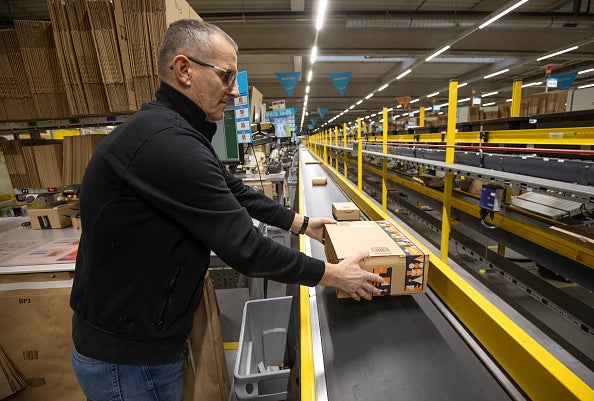
Amazon might stop relying on the U.S. Postal Service and create its own rival, nationwide delivery system, according to a report in The Washington Post. The company’s contract with USPS expires in October 2026, and tense renewal talks have been complicated by President Trump’s push to privatize the agency.

Amazon currently pays the USPS billions each year and accounts for about 7.5% of its revenue. But Amazon says it was blindsided when USPS signaled plans to auction off shipping capacity, adding uncertainty to its logistics plans.

With its growing fleet of planes, electric vans, drones, autonomous vehicles, and even rockets, Amazon now appears ready to play postman.

Read more

Trader Joe’s Reveals Why It Pulled One of Its Most Popular Items from the Shelves


Trader Joe’s

Trader Joe’s fans have lost a little holiday cheer this season after the grocer confirmed that its Candy Cane Joe-Joe’s will not return for 2025.

The uproar began when shoppers on Reddit noticed the cookies hadn’t returned. Some customers who did find boxes said they tasted “like toothpaste,” fueling speculation and panic among loyalists.

This week, Trader Joe’s confirmed it pulled the item after this year’s batch failed its taste standards. A tough break for holiday cookie hunters. Some shoppers reported snagging boxes before they disappeared, only to complain the cookies tasted overly minty.

Read more

Waymo Is in Hot Water After Self-Driving Cars Ignore School Bus Stop Signs


GDMatt66/Getty Images

Federal regulators are investigating Waymo after its robottaxis were caught driving past stopped school buses in Austin, Texas — an illegal move that puts children at risk.

Police say Waymo’s autonomous cars have blown past flashing red lights and extended stop arms at least 19 times this school year, even after the company claimed it had updated its software. Officials have issued 20 citations and demanded Waymo pause operations.

Waymo insists its vehicles now perform better than human drivers. But Texas regulators will decide if that claim passes the test, and the next school bus.

Read more

7-Eleven Brings Japan’s Cult-Favorite Egg Salad Sandwich to the U.S.


7-Eleven

Americans have been begging for it, and now it’s here. 7-Eleven has quietly launched its Japanese-style egg salad sandwich in select U.S. stores, answering years of online pleas from fans who discovered the viral snack abroad.

Based on Japan’s beloved tamago sando, the sandwich is built on soft milk bread and filled with a rich, Kewpie mayo-based egg salad that devotees once traveled 6,700 miles to taste. Anthony Bourdain famously called it “a pillow of love,” fueling its legend.

Back in Japan, this sandwich costs the equivalent of $1.50. Stateside, early customers are spotting it for $5.49. It’s pricey, but far cheaper than a 14-hour flight.

Read more

X Is Fined $130 Million in EU for ‘Deceiving Users.’ Musk Not Happy About It.


Photo by Emin Sansar/Anadolu Agency via Getty Images

The European Union fined Elon Musk’s platform X $130 million, arguing its paid blue-tick program misleads people into thinking accounts are verified when the company does not actually confirm identity. Regulators say the design “deceives users” and increases the risk of scams and impersonation.

U.S. officials reacted sharply. Secretary of State Marco Rubio called the penalty an attack on American tech companies, while FCC chair Brendan Carr accused Europe of punishing X simply for being successful. Musk reposted Rubio’s criticism and agreed.

X must now outline how it will comply with EU rules or face further fines under the Digital Services Act.

Read more

Hollywood could be on the brink of its biggest shake-up yet. Warner Bros. Discovery, home to Harry Potter, Batman, and HBO, has entered exclusive talks to sell its studios and HBO Max to Netflix for $83 billion, people familiar with the negotiations said.

Netflix surged ahead after a bidding war with Comcast and Paramount by offering mostly cash and promising to keep Warner Bros. films in theaters. The pledge marks a strategic shift for a company known for prioritizing streaming.

“Our mission has always been to entertain the world,” Netflix co-CEO Ted Sarandos said. “Together, we can help define the next century of storytelling.”

The rest of this article is locked.

Join Entrepreneur+ today for access.

https://www.entrepreneur.com/news-and-trends/netflix-goes-big-with-83-billion-bid-for-warner-bros/500476


Most Entrepreneurs Start Companies. The Smart Ones Buy Them.

Opinions expressed by Entrepreneur contributors are their own.

Key Takeaways

  • 90% of startups fail, while 80% of small businesses survive past 5 years; buying proven businesses dramatically improves your odds
  • 6 million baby boomer-owned businesses will change hands this decade, creating unprecedented acquisition opportunities
  • Existing businesses come with customers, cash flow, and proven models, eliminating the riskiest startup phases

Most entrepreneurs chase invention. Smart ones sometimes choose acquisition.

Consider this:

  • 90% of startups fail.
  • 80% of small businesses survive five years or more.
  • Millions of baby boomer–owned businesses will change hands this decade.
  • Many of those businesses already work but need new ownership.

This isn’t a knock on startups. It’s a reminder: the math often favors buying over building.

JMM: Just make money

I was once that founder with a napkin sketch and a spreadsheet: collecting domains, entering pitch competitions, driving across country to California and dreaming big.

Then I watched my father’s friend retire from dentistry at 53 and buy a small sheet metal company for 3x earnings. He’d never run a manufacturing business. Put down 10%. Had spent his entire career looking at teeth, not running a factory floor.

A year later, he was making more than he did in his entire twenty-five-plus-year dental career.

That changed how I saw entrepreneurship. Why was I trying to invent something…When I could buy something that already worked?

The biggest marketplace in the world

Every day, 10,000 baby boomers turn 65. Many own businesses, real ones like machine shops, clinics and distribution firms. Not unicorns, but durable.

Six million of these businesses will need to change hands this decade.

Most fall into a quiet lower end of the middle market:

  • Valued at $500K to $5M
  • Too small for private equity, unless there’s a roll-up in play
  • Too boring and stable to attract VC
  • Too unloved to spark a bidding war

Many sell for 2–4x earnings.

Three paths to ownership (Without being rich)

People hear “$2.5 million business” and stop listening. But buyers don’t pay full price out of pocket.

Path 1: The Bootstrap Buy

Use the business’s own cash flow. I bought my first company with 10% down, raised from friends and family. The seller carried 40% as a note. Banks covered the rest. My out-of-pocket? Less than a new car.

Path 2: The Partner Path

Some investors aren’t chasing unicorns; they’re looking for steady. Retired execs. Small family offices. Owners who’ve already had a win. A 20% return from a stable business beats most alternatives.

Path 3: The Creative Deal

One person I know bought a $3 million HVAC company with zero down. The seller stayed on. They split profits 50/50 for two years. Ownership transferred once the handoff was smooth.

Stop thinking like an employee who needs cash up front. Start thinking like a dealmaker who creates wins for everyone.

Related: How I Built a Framework to Accelerate Product-Market Fit

A shift in the landscape

Four trends are changing what it means to become an owner:

1. The Retirement Wave

By 2030, every baby boomer will be over 65. Many still own the companies they built.
Most don’t have a plan for what comes next. They’re not looking to grow. They’re looking for an exit.

2. The Financing Shift

Seller financing used to signal distress. Now it’s common. SBA loans are accessible.
Banks are open to small, cash-flowing deals again. Structures that seemed exotic 20 years ago are now standard.

3. The Remote Revolution

Geography matters less. You can run a manufacturer in Ohio from Denver. I once commuted to Pennsylvania from California. United Airlines was my office.

4. The Startup Slowdown

Capital is getting pickier. A business doing $2M in EBITDA looks better than a startup with $0 revenue and a $20M cap table. While most entrepreneurs pitch VCs, thousands of profitable businesses wait quietly for their next owner.

How to think like an acquirer

Builders chase ideas, but acquirers chase working systems.

  1. Start with industries that have recurring revenue, fragmented players, and low capital needs like HVAC, pest control, or property management.
  2. Look for stable businesses run by retiring owners, not failing ones.
  3. Pay for current cash flow, not future hopes.
  4. Structure deals with seller financing or earnouts to keep transitions smooth.

The real opportunity is to buy boring, steady businesses, then run them better. That’s how you skip the risky early stages and start with customers who already pay.

Related: Skip the Startup Struggle — Here’s How Buying a Business Lets You Profit Sooner

Ask “what could I buy?”

Most entrepreneurs start by asking: “What could I build?”

It’s a fair question if you’re drawn to invention. But there’s another question worth asking: “What could I buy?”

When you build, you’re betting on:

  • An unproven idea
  • Customers you haven’t met
  • Economics you hope will work
  • Yourself, starting from zero

When you buy, you’re betting on:

  • A model that already functions
  • Real customers with repeat behavior
  • Financial history you can inspect
  • Your ability to improve, not invent

One isn’t better. But one starts with momentum. Buying isn’t easy. You’ll lose deals. You’ll spend money and come up short. You’ll feel the weight of leading people who didn’t choose you.

But you’ll also walk into something that works. With a team. A reputation. A rhythm.

And maybe that’s all the permission you need to begin.

The path forward

The best time to buy a business was ten years ago. The second-best is now. Are you an entrepreneur who needs to invent? Or one who needs to own?

Some people need to start from scratch. But if you care more about freedom than fame, more about cash flow than cap tables, and more about ownership than originality, then there’s another way.

The businesses are out there. The owners are ready. The math is in your favor.

Get out there and JMM.

Key Takeaways

  • 90% of startups fail, while 80% of small businesses survive past 5 years; buying proven businesses dramatically improves your odds
  • 6 million baby boomer-owned businesses will change hands this decade, creating unprecedented acquisition opportunities
  • Existing businesses come with customers, cash flow, and proven models, eliminating the riskiest startup phases

Most entrepreneurs chase invention. Smart ones sometimes choose acquisition.

Consider this:

The rest of this article is locked.

Join Entrepreneur+ today for access.

https://www.entrepreneur.com/money-finance/most-entrepreneurs-start-companies-the-smart-ones-buy-them/500041


This 29-Year-Old Former Ballerina Just Became the World’s Youngest Self-Made Female Billionaire

Key Takeaways

  • Luana Lopes Lara is the cofounder of Kalshi, a platform that allows users to place bets on the outcomes of future events.
  • After a $1 billion funding round earlier this week, Kalshi is now valued at $11 billion.
  • Lopes Lara’s 12% stake in Kalshi brings her net worth to $1.3 billion, making her the world’s youngest self-made female billionaire.

Step aside, Lucy Guo — a new billionaire has joined the ten-figure club.

Kalshi cofounder Luana Lopes Lara, 29, became the youngest self-made female billionaire on Tuesday after her startup announced a $1 billion funding round at an $11 billion valuation. Venture capital firm Paradigm led the raise, which also drew participation from Sequoia Capital and Andreessen Horowitz.

Kalshi is a platform that allows users to place bets on the outcomes of future events, like elections, interest rate changes and celebrity divorces. The site is legal and regulated in the United States.

“We saw that most trading happens when people have some view about the future,” Lopes Lara previously told Forbes.

Kalshi co-founders Luana Lopes Lara (left) and Tarek Mansour (right). Credit: Kalshi

Kalshi’s valuation has doubled in less than two months. The startup was previously worth $5 billion after raising $300 million in October.

Related: This Billionaire Says Life ‘Hasn’t Really Changed That Much’ After Making Billions. Here’s Where She Spends Money.

Lopes Lara’s 12% stake in Kalshi catapults her net worth to $1.3 billion, making her the youngest female billionaire who didn’t inherit her wealth but rather created it on her own, per Forbes. She takes the crown from previous titleholder Lucy Guo, the 31-year-old cofounder of Scale AI, and singer-songwriter Taylor Swift, 35, who briefly held the title earlier this year.

Who Is Luana Lopes Lara?

Lopes Lara graduated from the Massachusetts Institute of Technology in 2018 with a Bachelor’s degree in computer science and mathematics, per her LinkedIn. She spent her college summers working for hedge fund Bridgewater Associates as a software engineer and Citadel Securities as a quantitative trader.

According to Forbes, Lopes Lara considers high school the “most intense years of her life.” She took academic courses from 7 a.m. to noon, and then ballet classes from 1 p.m. to 9 p.m. at the Bolshoi Theater School in Brazil.

The cutthroat program meant that she had to deal with classmates putting shards of glass in each other’s shoes to get ahead. She would study at night for academic competitions and won a gold medal at the Brazilian Astronomy Olympiad and a bronze medal at the Santa Catarina Mathematics Olympiad.

Related: This AI Startup Just Made Its 4 Co-Founders Billionaires — And They’re All Under 30

After her high school graduation, Lopes Lara worked as a professional ballerina in Austria for nine months before matriculating at MIT and starting her undergraduate studies.

At MIT, Lopes Lara met Tarek Mansour, a fellow computer science major who had worked as a quantitative trader and technologist at Goldman Sachs, Citadel and Palantir. The two started Kalshi together in 2018.

Ready to explore everything on Entrepreneur.com? December is your free pass to Entrepreneur+. Enjoy complete access, no strings attached. Claim your free month.

Key Takeaways

  • Luana Lopes Lara is the cofounder of Kalshi, a platform that allows users to place bets on the outcomes of future events.
  • After a $1 billion funding round earlier this week, Kalshi is now valued at $11 billion.
  • Lopes Lara’s 12% stake in Kalshi brings her net worth to $1.3 billion, making her the world’s youngest self-made female billionaire.

Step aside, Lucy Guo — a new billionaire has joined the ten-figure club.

Kalshi cofounder Luana Lopes Lara, 29, became the youngest self-made female billionaire on Tuesday after her startup announced a $1 billion funding round at an $11 billion valuation. Venture capital firm Paradigm led the raise, which also drew participation from Sequoia Capital and Andreessen Horowitz.

The rest of this article is locked.

Join Entrepreneur+ today for access.

https://www.entrepreneur.com/business-news/29-year-old-becomes-worlds-youngest-self-made-female/500473


AI Is Creating a New Legal Reality for Businesses — and You Can’t Afford to Ignore It

Opinions expressed by Entrepreneur contributors are their own.

Key Takeaways

  • AI is redefining what it means to be responsible. It doesn’t just make things faster or smarter; it exposes what companies could have seen and should have acted on.
  • Accountability is no longer something that happens after the fact. The moment an algorithm raises a red flag, the responsibility to act begins.
  • Companies that move quickly and transparently will earn trust and stand apart. Those that hesitate will face a new kind of risk that no lawyer or public statement can undo.

Artificial intelligence is changing how we work, build and live. It designs vehicles, manages farms, monitors consumers and tests products faster than any human team could. What is less discussed is how AI will reshape something much older than technology itself: the law of accountability.

For decades, courts have asked a simple question when products fail: What should the manufacturer have known? What was foreseeable? AI is changing that answer. It is expanding what a “reasonable manufacturer” can know and how quickly. This shift will ripple across nearly every industry, from automotive and consumer electronics to healthcare and robotics, and will redefine how companies prove they acted responsibly.

Related: The Hidden Costs of a Product Recall That Most Entrepreneurs Miss

AI and the new definition of knowledge

Manufacturers have always relied on structured engineering methods to identify and reduce risk. These systems were designed to detect weak points before a product reached consumers. They worked well within human limits.

AI expands those limits. It can analyze enormous amounts of design, performance and usage data, often in real time. It can highlight vulnerabilities long before a defect appears in the field, predict how a product might be misused and reveal subtle failure patterns that traditional analysis would miss.

That capability does more than make products safer. It also reshapes how foreseeability is judged in court. If a company’s own AI system identifies a potential hazard before it harms someone, that data may become evidence of what the company should have known. In legal terms, AI is expanding the boundaries of what is foreseeable and what is preventable.

The legal shift already underway

At the core of every product liability case lies a single question: Could the manufacturer reasonably have anticipated the harm? Courts have long held that companies are responsible for risks they knew or should have known.

Artificial intelligence raises the bar. A risk that once seemed unpredictable may soon be viewed as one that should have been prevented.

This shift is already visible in emerging cases involving autonomous vehicles, advanced medical devices and industrial robotics. Courts are beginning to consider how AI-generated safety data affects responsibility. When a company’s internal systems detect a pattern of failures, that knowledge is discoverable. Plaintiffs can and will argue that inaction on those insights amounts to negligence.

The result is a new legal reality. When technology itself can foresee danger, failing to act becomes far more difficult to defend.

A tool for safety, not just risk

AI does not automatically increase liability exposure. When implemented responsibly, it can make companies and their products safer and more defensible in court.

A manufacturer that uses AI to detect hazards early and acts on them creates a strong record of diligence. This record can demonstrate to regulators, juries and investors that the company exercised exceptional care. AI can document how risks were discovered, reviewed and corrected. That transparency is a major asset.

However, if the same company ignores or delays action on AI-generated warnings, that data can become damaging evidence later. In product liability litigation, discovery often reveals not just what a company knew, but when it knew it. AI makes that timeline clearer and much harder to dispute.

Related: Companies Often Choose Profits Over Consumer Safety — Here’s What It Takes to Hold Them Accountable

From best practice to legal expectation

The law evolves in predictable ways. What begins as an advanced safety measure becomes best practice. What becomes best practice often turns into the new standard of care. Eventually, it becomes a legal expectation.

As more manufacturers adopt AI safety systems, those who do not may appear negligent by comparison. Courts and regulators tend to measure “reasonable care” by what technology makes possible. In the near future, failing to use AI in risk analysis or product monitoring could be viewed as falling short of industry standards.

This evolution also affects the duty to warn, one of the most fundamental aspects of product liability. Once a manufacturer becomes aware of a potential danger, it must act reasonably to warn consumers or address the issue. AI’s ability to surface new risks in real time means that duty may now arise sooner, last longer and require more active post-sale vigilance.

Continuous accountability in real time

AI is not limited to product design. It also changes how safety is managed after a product reaches the market.

Imagine an algorithm that tracks how a product performs in real-world conditions. If it detects a recurring defect, a company that issues an immediate fix or safety notice demonstrates proactive responsibility. Over time, this consistent behavior builds a measurable record of care and strengthens brand trust.

Companies that fail to respond face the opposite outcome. Digital audit trails reveal exactly what the company knew and when. In litigation, such data can be devastating because it shows a choice not to act.

In the age of AI, accountability is continuous. The moment a credible warning appears in a company’s system, the legal and moral clock starts ticking.

AI as a brand of responsibility

Forward-looking companies can treat AI not as a compliance burden but as part of their brand identity. Investors, regulators and consumers increasingly value transparency and safety.

When a company documents how AI insights led to product improvements, recalls or redesigned components, it signals diligence and care. That record may one day be presented as evidence in a courtroom, but it will also serve as a public declaration of values.

In that sense, AI becomes part of corporate culture. It becomes a system that not only prevents harm but also demonstrates a company’s commitment to using its most advanced tools to protect people. In competitive industries, that distinction matters.

Challenges ahead

AI’s role in accountability is not without complications. Data interpretation can vary depending on how algorithms are trained and how human analysts review their output. Questions of transparency, data ownership and algorithmic bias remain unresolved.

Courts will need to decide how to weigh AI-generated insights and what counts as “knowledge” when that knowledge comes from a machine-learning system. Businesses must decide how to manage and preserve AI data, knowing that every insight could become discoverable evidence later.

The companies that prepare now by creating clear protocols for responding to AI-identified risks will be in the best position to adapt.

What this means for innovators

AI will not replace engineers or lawyers, but it will redefine their roles. It requires professionals to think about risk as an ongoing, dynamic process rather than a one-time checklist.

The defining cases of the next decade may not center on whether a product was defective in the traditional sense. Instead, they will ask whether a company used all available tools to detect and prevent that defect, and whether it acted when new information came to light.

For innovative businesses, this evolution presents both a challenge and a remarkable opportunity. Those who embrace AI as a proactive safety partner can set a new benchmark for responsibility and possibly reduce litigation exposure in the long run.

Related: How AI Revolutionizes Compliance Strategies, Shifting Them From Reactive to Proactive for Global Success

Key takeaways for entrepreneurs

  • Use AI proactively: Integrate it into design, testing and post-sale monitoring to identify hazards before they cause harm.

  • Document your diligence: Keep records showing how AI insights led to safety improvements or corrective actions.

  • Act on credible data: Once systems flag a potential risk, delaying or ignoring it can be legally indefensible.

  • Anticipate rising standards: What is considered “above and beyond” today may become the legal minimum tomorrow.

  • Turn safety into strategy: Treat AI as part of your brand’s integrity and as a competitive advantage in high-trust markets.

Artificial intelligence gives manufacturers and innovators the power to predict and prevent harm at a level that was once impossible. It also creates an unblinking record of what they knew and when they knew it.

Within that record lies both the promise and the responsibility of the AI age. The companies that act on this knowledge will not only reduce risk but also redefine what responsibility looks like in the 21st century.

Key Takeaways

  • AI is redefining what it means to be responsible. It doesn’t just make things faster or smarter; it exposes what companies could have seen and should have acted on.
  • Accountability is no longer something that happens after the fact. The moment an algorithm raises a red flag, the responsibility to act begins.
  • Companies that move quickly and transparently will earn trust and stand apart. Those that hesitate will face a new kind of risk that no lawyer or public statement can undo.

Artificial intelligence is changing how we work, build and live. It designs vehicles, manages farms, monitors consumers and tests products faster than any human team could. What is less discussed is how AI will reshape something much older than technology itself: the law of accountability.

For decades, courts have asked a simple question when products fail: What should the manufacturer have known? What was foreseeable? AI is changing that answer. It is expanding what a “reasonable manufacturer” can know and how quickly. This shift will ripple across nearly every industry, from automotive and consumer electronics to healthcare and robotics, and will redefine how companies prove they acted responsibly.

The rest of this article is locked.

Join Entrepreneur+ today for access.

https://www.entrepreneur.com/growing-a-business/how-ai-is-creating-a-new-legal-reality-for-businesses/499602