5 Ways AI Is Solving the Biggest Bottleneck for Engineering Teams Today

Opinions expressed by Entrepreneur contributors are their own.

Key Takeaways

  • The biggest bottleneck for engineering leaders isn’t writing code, but waiting for validation — especially across time zones.
  • AI eliminates this bottleneck by testing code the moment it’s written, allowing teams to release new features up to one day earlier per iteration.
  • AI-native testing unlocks faster time-to-market, lower operational costs, consistent global experience and employee well-being, among several other key benefits.

The primary bottleneck for engineering leaders today is not writing code, but waiting for validation. In distributed teams, a defect can delay release cycles by 12-24 hours, depending on cross-time zone workflows.

AI breaks this cycle.

Instead of passing the baton across time zones, teams operate with continuous confidence. Code is tested the moment it’s written. Feedback is instant, actionable and doesn’t require someone awake to interpret it.

The result? Engineers spend more time shipping features and less time waiting on test results.

Related: How AI Will Transform Software Development

The new reality: Software never sleeps

With SaaS being the norm, your product is always live, always used and always judged. Users log in across time zones with zero tolerance for downtime or regression. For engineering teams, this means:

  • Release pipelines must operate independently of regional work hours.

  • Testing needs to happen at the same pace as usage, 24/7.

  • Teams must collaborate across geographies while maintaining velocity.

AI-native testing platforms, like the one I’m working on, ensure tests run in the same environment globally, eliminating region-specific handoff delays.

Testing, triage and fixes occur in near real-time, regardless of when or where code was written. Teams no longer lose a day waiting for validation for team members in other time zones.

This acceleration allows teams to release new features up to one day earlier per iteration.

How AI keeps testing alive around the clock

What makes AI transformative isn’t just speed — it’s persistence. AI doesn’t clock out. It doesn’t wait for handoffs. Here’s how it enables round-the-clock testing:

1. Autonomous test creation

AI in test automation analyzed 3,600+ sources and found automated test generation as the most cited solution to reduce manual scripting effort.

AI agents generate, adapt and run test cases without waiting for human scripts. For example, a release build at 11:00 p.m. IST can be automatically validated without requiring manual intervention.

2. Adaptive test execution

Instead of running every test on every build, AI selects only the most relevant suites based on commit history and code changes. Enterprises adopting HyperExecute, an AI-native test execution cloud, have reported up to 70% faster test cycles compared to legacy automation.

Tests align with changes. You no longer waste cycles on low-risk areas at night; the AI ensures critical flows are always validated first, even outside office hours.

3. Global test scheduling and environment automation

AI runs tests and also optimizes where and when they run.

  • Global scheduling: Algorithms distribute test loads across cloud data centers, taking advantage of idle capacity during local off-peak hours.

  • Dynamic environments: AI can provision or de-provision the exact browser version, OS build or device emulator required. This eliminates manual setup tasks and reduces infrastructure overhead.

Enterprises achieve faster release cycles, lower operational costs and accurate test coverage across browsers, devices and geographies.

Related: Top 15 Test Automation Tools

4. Self-healing test suites

One of the biggest challenges in global testing is brittle test scripts that break with minor UI or API changes.

AI-native auto-healing solves this by maintaining a continuous testing loop with minimal manual intervention.

Thousands of tests are self-maintained, keeping CI/CD pipelines stable and operational around the clock. This ensures testing runs 24/7, in sync with continuous integration workflows.

5. Real-time anomaly detection and automated triage

When failures occur at 3:00 a.m., traditional pipelines wait, often losing an entire workday before a QA engineer can triage the issue.

AI-native triage detects anomalies, identifies root causes, highlights code changes and suggests fixes. This reduces mean-time-to-resolution from days to hours.

A McKinsey study found that enterprises using AI in QA reported a 20–30% reduction in customer-reported defects, directly improving product quality and time-to-resolution.

What this means for global enterprises

For enterprise leaders, AI-native testing unlocks the following strategic advantages:

  • Faster time-to-market: With AI-native validation running 24/7, release cycles shrink from weeks to days, allowing many teams to ship multiple times per day.

  • Lower operational costs: Redundant manual checks vanish, escalations drop, and test runs become optimized.

  • Consistent global experience: Customers in any time zone see the same reliability and performance.

  • Employee well-being: Teams no longer burn out covering “after-hours” issues. AI acts as the global test engineer.

  • AI eliminates the time-zone bottleneck by running tests the moment code is committed.

  • Reduced maintenance overhead: Self-healing and adaptive execution keep pipelines green without manual intervention.

  • Protection of critical user flows 24/7: Predictive prioritization guarantees vital paths, like login, checkout and payments, are always tested first.

  • Accelerated fixes and releases: Developers wake up to actionable insights, not backlogs, enabling immediate resolution.

When enterprises adopt AI-driven testing, they gain something even more valuable than speed: trust. Customers across North America, Africa and Asia experience the same level of reliability and performance.

When we built LambdaTest, our mission was to ensure that no user is missed because of where or when they log in. AI now operationalizes that vision by continuously running tests, maintaining scripts and surfacing actionable insights across regions.

Boomi, with over 650 developers and QA engineers worldwide, faced extended test cycles, delayed feedback and flaky tests.

Related: How AI Testing Can Increase ROI for Your Business

With LambdaTest’s AI Native HyperExecute, Boomi cut test execution time from about 9.5 hours to less than two. This shift freed up over 40 hours of engineering bandwidth each week across their distributed QA teams.

Since 2023, HyperExecute has been running 24/7 in the cloud, enabling a truly continuous, always-on testing system that operates seamlessly across time zones for 650+ developers and QA professionals.

Because modern products launch globally from day one, testing must also scale globally in both coverage and capability.

AI reframes quality assurance as a continuous and autonomous system that constantly monitors, adapts and improves.

Key Takeaways

  • The biggest bottleneck for engineering leaders isn’t writing code, but waiting for validation — especially across time zones.
  • AI eliminates this bottleneck by testing code the moment it’s written, allowing teams to release new features up to one day earlier per iteration.
  • AI-native testing unlocks faster time-to-market, lower operational costs, consistent global experience and employee well-being, among several other key benefits.

The primary bottleneck for engineering leaders today is not writing code, but waiting for validation. In distributed teams, a defect can delay release cycles by 12-24 hours, depending on cross-time zone workflows.

AI breaks this cycle.

The rest of this article is locked.

Join Entrepreneur+ today for access.

https://www.entrepreneur.com/science-technology/how-ai-is-solving-the-1-bottleneck-for-engineers-today/499504



I Built Products Backward for Years. This Radical Data-First Framework Changed Everything

Opinions expressed by Entrepreneur contributors are their own.

Key Takeaways

  • Define success through data first, then engineer features as extensions of that reality model.
  • Detach emotionally from features; build flexible systems designed for learning, not premature perfection.

Most founders build their products backwards. They start with wireframes, features, fancy UI and “something to show investors”. They spend tons of money developing those features separately and then wonder why nothing works together.

I’ve spent the last decade building platforms in fintech, healthcare and media — high regulated industries, where mistakes are expensive, and time-to-market is unforgiving. And I’ve walked this road many times myself, until I finally understood: starting by “building the product” is a lousy way to build a business.

A while ago, I began working with a finance-sector client who was already deep into production on a fancy AI application meant to automate internal processes. They had a promising idea, a beautiful interface and a surprisingly solid codebase when you looked at each feature in isolation. But when the first assembled version of the application appeared, the whole thing simply didn’t work together.

The engineering was good. The UI was good. But the product fell apart because everyone was building their own piece in a vacuum. The team was solving “local” problems and completely ignoring the global one, so half of the features contradicted the core logic. And the worst part, the founder was emotionally attached to every feature in this application (they were expensive enough), so removing them felt almost impossible.

I saw two core problems (and these are incredibly common):

  1. There was no unifying idea aligning the team around actual value, and
  2. The cost of pivoting (which every product must do) was unbearably high, hundreds of developer hours.

So I came up with my own methodology for every early-stage product: Data-First Development (DFD) Framework. It is a product methodology where you define the system’s data model before you define features, screens or user flows. And the product is built as a direct extension of that model.

Related: The Power Move Most Leaders Overlook — and How It Wins in High-Stakes Moments

How DFD works in practice

Every product, feature or internal function can be defined through three types of data:

  1. Baseline data – your definition of success,
  2. Input data – what the system receives,
  3. And output data – what it must reliably generate.

Here’s the practical sequence I use when I develop a new product:

  1. Decide what “good” looks like. Before anything is built, define the outcome you want. It’s your own definition of success that supports your traction.
  2. Understand what information the product can receive. What does the system actually get from users or the outside world? What facts does it have to work with?
  3. Define what data the product must produce. What result must it deliver every time: what decision, update, or state?
  4. Build the product as a flow from input to output. Features exist only if they help the system move information toward that desired result.

I used this approach for my employers and my clients. I use it in my own company. It helps conceptualize early-stage startups, and build fast MVPs, keeping the highest level of agility. It also helps fix product development cycles that have gone wrong.

I’ve shared this methodology with several university professors, and from their feedback, I learned that at first, the students think it’s easy to apply. But it is actually very counterintuitive because humans tend to think about products first, not data first.

But the highly regulated industries I specialize in — such as pharma, banking and streaming — have actually adopted this approach as a standard.

The product is not at the center; the data model is. The conceptual core defines traction, economics, and validation.

Make things disposable and focus on what matters

When you start with the data model, the structure of the product simplifies drastically. One of the most surprising things we discovered is that once the data model becomes the filter, most features simply disappear.

If a feature is only there because it looks nice, stop overinvesting in it. Stop polishing “maybe-features” as if they were final. Build data flow instead and play with information. When the product is built around a data model, throwing away staff is expected, and pivots stop feeling like painful resets. They become an expected, logical part of the roadmap.

The psychology changes: The team is not breaking anything; they are learning. The approach helps you be less emotional about building products.

Related: This Simple 2-Step Approach Helped Me Reach 1 Million Customers

Avoid sloppiness

Data-first thinking solves the core strategic problem — it aligns the team around the value the system must produce. When you start treating pivots as a natural part of product development, you begin investing far less into individual features.

This immediately creates a new problem: sloppiness. Early versions of products now fall apart visually, look rough and accumulate tech debt — a result of quick, shortcut decisions that create extra problems you’ll have to fix later.

Users should never feel like they’re given a raw prototype just because the founder is testing hypotheses. That feeling kills the vibe of a cool new application and destroys trust instantly. We need both flexibility and a high-quality product experience.

That’s why on the product level, I build UI constructors — a system of interchangeable components your engineers can assemble “on the fly”. In my company, we call it the “Lego Interface”. That means that instead of monolithic screens, we create atomic pieces (both design atoms and code atoms) that can be reused, rearranged and combined in endless ways. This lets us pivot fast without sacrificing quality.

For example, while building a platform for a film and TV distributor, we invested the first weeks not into features but into constructing a robust UI Constructor. When it was ready, the client could generate ideas instantly, assembling flows from existing components, testing hypotheses rapidly, and playing with the data model without expensive rewrites.

Granted, this model does not eliminate uncertainty. Uncertainty becomes something to navigate. But, developing products no longer feels like we are fighting a battle. It feels like building a relationship with reality.

Key Takeaways

  • Define success through data first, then engineer features as extensions of that reality model.
  • Detach emotionally from features; build flexible systems designed for learning, not premature perfection.

Most founders build their products backwards. They start with wireframes, features, fancy UI and “something to show investors”. They spend tons of money developing those features separately and then wonder why nothing works together.

I’ve spent the last decade building platforms in fintech, healthcare and media — high regulated industries, where mistakes are expensive, and time-to-market is unforgiving. And I’ve walked this road many times myself, until I finally understood: starting by “building the product” is a lousy way to build a business.

The rest of this article is locked.

Join Entrepreneur+ today for access.

https://www.entrepreneur.com/growing-a-business/how-i-built-a-framework-to-accelerate-product-market-fit/499937


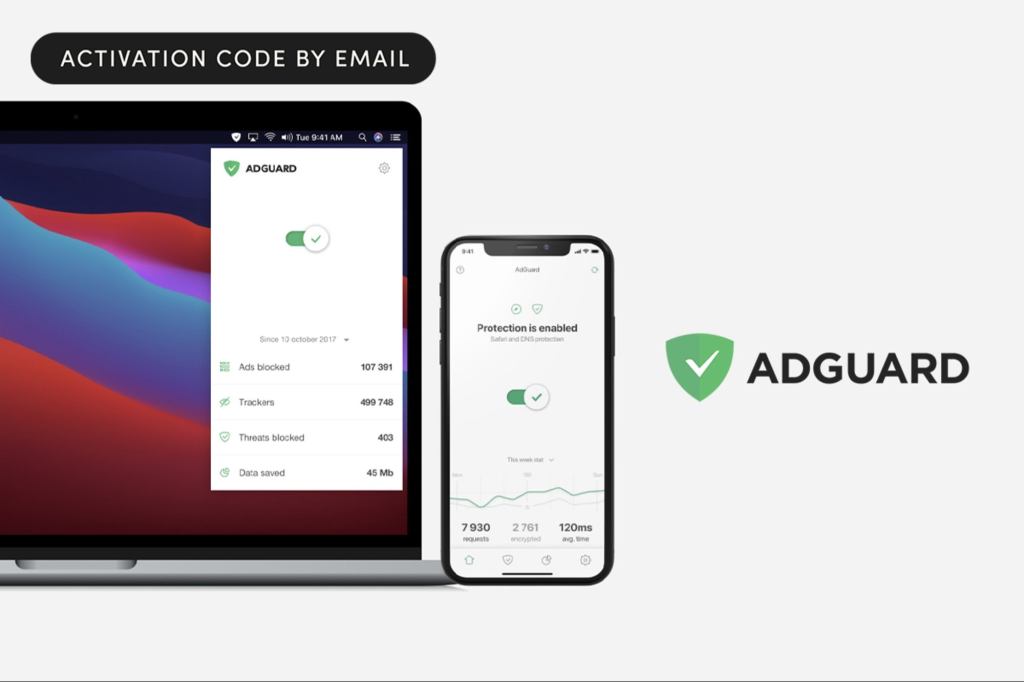
Block Ads, Malware, Trackers, and More With the AdGuard Family Plan for Just $15

Disclosure: Our goal is to feature products and services that we think you’ll find interesting and useful. If you purchase them, Entrepreneur may get a small share of the revenue from the sale from our commerce partners.

The average internet user encounters more than 5,000 ads daily, according to data from eMarketer. This will not only significantly slow down your daily workflow, but it can also put your business at risk in a number of different ways. Fortunately, you can now eliminate distractions and protect your team’s devices from malware with a lifetime subscription to the AdGuard Family Plan. Best of all, AdGuard Family Plan Lifetime Subscription is now down to $15.97 with code FAMPLAN (MSRP $169.99).

Advanced blocking that goes beyond basic ad removal

AdGuard eliminates all types of ads, including banners, pop-ups, and video ads that interrupt your browsing experience. The subscription is for up to nine devices, so it should cover your entire family or team’s smartphones, tablets, and computers.

Privacy protection keeps your data hidden from trackers and activity analyzers that follow behavior. This security layer prevents third parties from building profiles based on your browsing habits, protecting sensitive business research and competitive intelligence from being monitored.

Malware protection shields your devices against harmful websites and phishing attempts that target business credentials. AdGuard blocks access to dangerous sites before they load, preventing malware infections that could compromise client data or company systems, the company says.

The parental control feature restricts access to inappropriate and adult content, the company says. This can be valuable for businesses that provide devices to younger employees or interns. You can maintain a safe browsing environment on all company devices without needing to manage individual settings on each one.

The software only requires a one-time payment, with no recurring subscription fees. You receive continuous updates and new features automatically, ensuring your protection stays current against evolving advertising tactics and security threats. It’s easy to see why AdGuard’s Trustpilot rating is an impressive 4.7 out of 5 stars.

If you don’t need multi-device coverage, there’s also a deal on the AdGuard Solo Plan for individual users. With code SOLOPLAN, the price drops to $9.97 (MSRP $79.99) for a lifetime single-device license with the same core protection.

Get the AdGuard Family Plan for $15.97 (MSRP $169.99) with code FAMPLAN, or the Solo Plan for $9.97 (MSRP $79.99) with code SOLOPLAN

StackSocial prices subject to change.

The average internet user encounters more than 5,000 ads daily, according to data from eMarketer. This will not only significantly slow down your daily workflow, but it can also put your business at risk in a number of different ways. Fortunately, you can now eliminate distractions and protect your team’s devices from malware with a lifetime subscription to the AdGuard Family Plan. Best of all, AdGuard Family Plan Lifetime Subscription is now down to $15.97 with code FAMPLAN (MSRP $169.99).

Advanced blocking that goes beyond basic ad removal

AdGuard eliminates all types of ads, including banners, pop-ups, and video ads that interrupt your browsing experience. The subscription is for up to nine devices, so it should cover your entire family or team’s smartphones, tablets, and computers.

Privacy protection keeps your data hidden from trackers and activity analyzers that follow behavior. This security layer prevents third parties from building profiles based on your browsing habits, protecting sensitive business research and competitive intelligence from being monitored.

The rest of this article is locked.

Join Entrepreneur+ today for access.

https://www.entrepreneur.com/science-technology/block-ads-malware-trackers-and-more-with-the-adguard/500341


I Stayed at a Luxury Ranch With $20K-a-Night Accommodations. Here’s Its 5-Star Business Strategy.

Key Takeaways

  • Jim Manley owns The Ranch at Rock Creek, which is located on 6,600 acres just outside of Philipsburg, Montana.
  • Here’s how Manley turned the property he bought in 2007 into a luxury getaway that exceeds guest expectations.

“An institution is the lengthened shadow of one man,” the American essayist and poet Ralph Waldo Emerson once said.

The Ranch at Rock Creek, which spans 6,600 acres in Western Montana 20 miles outside of historic Philipsburg, embodies that idea as a thorough reflection of its owner, Jim Manley.


Image Credit: Courtesy of The Ranch at Rock Creek. Jim Manley.

As the founder and chairman of boutique investment bank Atlantic-Pacific Capital, Manley didn’t have a professional background in hospitality, but he did have a clear vision for the property he purchased in 2007: It would be a luxury, all-inclusive experience that left guests feeling carefree, like kids again — not nickel and dimed for every charge.

The Ranch at Rock Creek is the first guest ranch in the world to receive five stars from Forbes Travel Guide, which compiles its ratings via an anonymous, in-person inspection process.

Image Credit: Courtesy of The Ranch at Rock Creek

Related: I Stayed at a Luxury Villa That Costs Over $26,000 a Night. Take a Look Inside — and Learn Its Secrets for Surpassing High Expectations.

Guests can select from a range of accommodations, from the remodeled 19th-century Historic Barn to glamping cabins, luxury cabins and the Granite Lodge — designed much like those at U.S. national parks, the lodge is also conveniently located near the Silver Dollar Saloon, mercantile and spa.

The cost of a stay at The Ranch varies by season and accommodation, but during peak time, which runs from May 15 to September 1 and requires a five-night minimum stay, rates start at $3,600 a night for two people in a Classic Granite Lodge Room and run up to $20,000 per night at the 3,329 square-foot Bear House, which sleeps 12.

A stay at The Ranch includes all meals in its farm-to-table culinary program and a fully customizable itinerary, with a recommended two activities a day led by expert instructors.

Related: I Went on a $75,000 Luxury Air Cruise for 22 Days. Here’s a Peek Inside the Over-the-Top Travel Experience Unlike Any I’ve Had Before.

This past October, I spent four nights at The Ranch at Rock Creek. I had the opportunity to stay in both the Historic Barn’s Loft and a Premium Granite Lodge Room, both of which were well-appointed with the cowboy-core flair you might expect: rich leather, exposed wood, cowhide trims and equine accents.

Image Credit: Courtesy of The Ranch at Rock Creek. The Loft.

I also participated in a range of activities: horseback riding; sporting clays; a creekside hammock “respite” complete with a fire; sapphire mining (I even found a few); a photography class; and a UTV ride up to Jimmy’s Peak, which offered glimpses of Bighorn sheep and sweeping views of the property.

Here’s how Manley’s business strategy turned The Ranch at Rock Creek into a five-star reality.

1. Follow passion and commit to the vision

Manley grew up watching Westerns as a child in New Jersey and always dreamed of buying his own ranch, but once he started his search, it took him 20 years to find the place that would live up to his expectations.

“I did consider stopping [during those two decades] because I couldn’t find the perfect ranch,” Manley admits.

Fortunately, Manley’s real estate agent in Montana called one day and said a promising property was about to hit the market.

“It truly was everything I had hoped for in a ranch,” Manley says.

Image Credit: Courtesy of The Ranch at Rock Creek

The Ranch sits in Rock Creek Valley, which was at one point a 2,000-foot-deep lake ensconced in the Sapphire, John Long and Pintler mountains. Following the Homestead Act of 1862, the property began as a mining claim and has continuously operated as a working cattle ranch.

“I flew out the next day, saw what is now The Ranch at Rock Creek, and purchased it that same day,” Manley recalls.

Related: Want to Turn Your Passion Into a Business? Follow These 3 Important Rules

2. Don’t take on unnecessary business partners

As Manley began to bring The Ranch to life, people expressed an interest in becoming business partners on the endeavor.

However, Manley always wanted to go it alone to ensure everything aligned with his hopes for the property, noting that he even kept family members out of the early decision-making process.

“I didn’t want a business partner because I knew that we might not have the same vision for what The Ranch would become,” Manley explains. “I knew that when I built expensive additions like the Silver Dollar Saloon, added homes and cabins or implemented the various activities, that we would never see eye-to-eye.”

Because of that decision, Manley is able to innovate whenever necessary.

Currently, that includes the further development of the property’s winter program. The Ranch invested hundreds of thousands of dollars in ski gear so guests can take full advantage of the nearby Discovery Ski Area, which is just 35 minutes away, “with virtually no lift lines, three faces and 67 trails.”

Image Credit: Courtesy of The Ranch at Rock Creek. Discovery Ski Area.

Related: A Bad Business Partner Could Cost You Millions — Here’s How to Avoid a Toxic Partnership

3. Hire employees who add value and reflect the brand

Like any successful business owner, Manley fully appreciates the value of strong employees.

The Ranch interviews several people for each open position, Manley says. He notes that a “five-star” employee will reflect The Ranch’s brand and its core values.

“[Employees] need to be friendly, have an outgoing personality, be energetic and have a desire to serve the guests for all their needs efficiently and professionally,” Manley adds.

Related: 5 Rules for Hiring When Great Job Candidates Are Scarce

4. Give constructive criticism the right way

No matter how standout employees are, constructive criticism can support a business’s ongoing growth and success.

As with everything at The Ranch, Manley takes an intentional approach when it comes to delivering feedback to the team.

“Whenever I give any quasi-critical feedback to employees, I always start with telling them all the good things that they are doing and how positive their contribution is to The Ranch,” Manley says.

Leading with the positive first, then letting someone know what they can do to improve, takes the sting out of constructive criticism, Manley notes.

Image Credit: Courtesy of The Ranch at Rock Creek

Related: This Feedback Technique Can Make Criticism Easier to Deliver — and Easier to Hear

5. Honor the land and support the community

Manley takes pride in being a good steward of the land. Just one example: The Ranch never lets any of the water in the valley that’s been fertilized go back into Rock Creek.

“We make sure it stays in the valley so there is no pollution in the creek,” Manley explains. “[Additionally] we eliminated plastic use around 10 years ago, as it’s harmful to the environment.”

And, as long as the weather is decent, The Ranch encourages guests to walk or bike during the day, which minimizes dust and reduces its carbon footprint.

Related: Why Giving Back Is Good for You and Your Business This Season (and All Year Long)

The Ranch at Rock Creek also makes significant contributions to 10 charities in town, and even hosts the local high school’s prom on-site, in its effort to give back to the community.

“I feel our efforts have a positive impact on guests because they see how much we care about preservation and longevity of our ranch as well as the community that surrounds us,” Manley says.

Key Takeaways

  • Jim Manley owns The Ranch at Rock Creek, which is located on 6,600 acres just outside of Philipsburg, Montana.
  • Here’s how Manley turned the property he bought in 2007 into a luxury getaway that exceeds guest expectations.

“An institution is the lengthened shadow of one man,” the American essayist and poet Ralph Waldo Emerson once said.

The Ranch at Rock Creek, which spans 6,600 acres in Western Montana 20 miles outside of historic Philipsburg, embodies that idea as a thorough reflection of its owner, Jim Manley.

The rest of this article is locked.

Join Entrepreneur+ today for access.

https://www.entrepreneur.com/growing-a-business/the-ranch-at-rock-creeks-luxurious-5-star-business-strategy/500292


I’ve Worked With 10,000+ Brick-and-Mortar Retailers. Here’s What Actually Makes Stores Win

This article is part of the America’s Favorite Mom & Pop Shops series. Read more stories

Key Takeaways

  • Curate ruthlessly, stay in stock and use tech to predict demand before customers walk away.
  • Turn your store into a community hub where expertise, values and experience beat convenience alone.

Picture this: a men’s clothing boutique that mixes professional attire with a little weekend streetwear. Its wood-and-stone interior is masculine but warm. The salespeople live and breathe style, and they’re happy to share their knowledge.

That’s the store I’ve dreamed about opening — and a version of the sort of retailer I often see succeed.

Over the past 20 years, I’ve worked with tens of thousands of store owners on three continents, selling everything from apparel and housewares to eyeglasses and surfboards. Trends come and go, but they’ve taught me a few fundamental things about getting physical retail right and building a loyal customer base. They’ve also shown me what can go wrong.

For small retailers, the landscape is more competitive than ever. No wonder four out of 10 fail within five years. But successful merchants can turn the in-store shopping experience into a differentiator while also leveraging the latest tech. Here are some of my biggest learnings from the frontlines.

Related: Younger Shoppers Don’t Want ‘Human Contact’ — Where Does That Leave Stores?

It all starts with the right product

Having the right product might sound painfully obvious, but it’s the Achilles heel of physical retail. Stores have two big advantages: customers can try something and take it home right away. The catch? That product better be in stock. If I traipse all the way to a bike shop in my hometown of Montreal and the disc brakes I’m set on buying are sold out, I might not come back.

That doesn’t mean stocking everything. The best stores excel at curation and offer customers exactly what they want: quality, on-trend products, on shelves at the right time. Take LUC Design, which sources housewares, furniture, fashion and art from around the world for the collection it sells at its store in Tasmania.

Pulling this off is tough — and further complicated by shifting tariff and supply chain issues. Here’s where tech can assist. New tools give retailers seasonal order recommendations based on historical trends, as well as a more accurate forecast of their needs for the rest of the year.

Independent retailers can also access wholesale marketplaces that were previously only available to big players — along with the power to discover new brands. Ideally, ordering syncs seamlessly with their POS.

Be the expert people depend on

Customers don’t set foot in a store these days without doing their research first. To add value, you really need to know your stuff.

Expertise is a differentiator that gets customers off the couch, and it’s hard to fake. That’s why it’s so important to cultivate loyal staff who know what they’re talking about. More expertise equals higher sales (75% of shoppers are likely to spend more after getting high-quality service), better product curation and higher retention of loyal customers.

Leica Camera has made expertise part of its brand. Besides letting customers book an in-store session with a specialist, the camera and watch retailer holds photography workshops.

Of course, not even the most knowledgeable salesperson can be an expert on everything in the store. That’s where tech comes in. New apps, like those offered at Lightspeed, turn a handheld device into a well of product info, so any staff member is now a walking encyclopedia.

Related: How to Extend Your Brick-and-Mortar Holiday Sales Beyond the Holidays

Create a “third place” for shoppers

One of the benefits of a physical store is its ability to offer genuine connection and community.

That can take many forms, but for me, in-person, old-school tactics are most effective. I’m talking about special events, meetups, and free drinks or snacks. Compared to the lifetime value of a customer, these are cheap investments.

Offering food and drink really helps turn a shop into a “third place” where customers like to hang out. My clothing store, for instance, might have an espresso bar — much like the café at Rapha’s Clubhouses. The cycling apparel maker also hosts rides and guest speakers, a favorite of outdoor retailers.

VIP product drops and other exclusive perks can be a draw, especially with Gen Z. So can membership programs, but retailers should ensure it’s an actual club with real benefits, not just a plastic card and an incomprehensible points system.

Online presence matters for brick-and-mortar stores

The in-store experience is critical, but I’ve seen over and over again that a physical retailer can’t neglect its digital footprint. It lets customers find the place, see what it sells — and start their shopping experience before visiting the store.

At this point, a social media presence is table stakes. Some small retailers are adept at using social for content marketing. For example, streetwear brand Dime shares skateboarding videos on its Instagram, TikTok and YouTube channel.

Sharing your expertise online is another effective way to reach your target audience. I know bike shop owners who post how-to videos of repair and maintenance procedures. By providing value, they build a following and attract people to the shop.

Many brick-and-mortar retailers overlook the traditional website. I’m not saying plunge headfirst into ecommerce, which has its own challenges (and rewards). But for discoverability and accessibility, having a site is essential.

New tools are making that simpler and more affordable. Building a custom website for a small retail business can cost upward of $10,000 and take two to four months. The latest AI-powered tech does that heavy lifting in an instant, automatically creating a custom-branded website and product catalog that gives shoppers a real-time picture of what’s in stock.

Values are a definite differentiator. Lean into them

I’ve seen time and time again another retail truth: people shop with their values.

My company’s own research shows that nine out of 10 consumers are intentional about their purchases. The top drivers include sustainability, charitable giving, and even elements like local and national pride.

Brick-and-mortar businesses have an edge because they’re on the ground with customers and can align with values like those I just mentioned. More broadly, the act of shopping locally is an expression of values: money and jobs stay in the community, and the environmental impact is smaller.

Some retailers rally values-conscious shoppers by focusing on a mission. Tony’s Chocolonely, which sells its chocolate worldwide, aims to end forced labor and other exploitation in the cocoa industry.

Succeeding in brick-and-mortar comes back to understanding what customers care about. As I’ve seen so often, people come to stores to interact with other people — to feel like they’re part of a community, to get advice from an expert or simply to have a coffee with someone who shares their obsession.

Ultimately, physical retail is about giving value to get value. If I ever open my dream clothing store, those will be words to live by.

Key Takeaways

  • Curate ruthlessly, stay in stock and use tech to predict demand before customers walk away.
  • Turn your store into a community hub where expertise, values and experience beat convenience alone.

Picture this: a men’s clothing boutique that mixes professional attire with a little weekend streetwear. Its wood-and-stone interior is masculine but warm. The salespeople live and breathe style, and they’re happy to share their knowledge.

That’s the store I’ve dreamed about opening — and a version of the sort of retailer I often see succeed.

The rest of this article is locked.

Join Entrepreneur+ today for access.

https://www.entrepreneur.com/growing-a-business/what-20-years-in-retail-taught-me-about-building-stores/499938


Google’s Top Trending Search Term of 2025 Might Surprise You

What did the world obsess over this year? Google just released its annual Year in Search report, and this year’s breakout winner was “Gemini,” Google’s AI chatbot.

Unlike the everyday searches we type in (like “weather”), Google’s list highlights topics that surged in popularity compared with last year. And surprisingly, Gemini beat out major headlines such as India vs. England, Charlie Kirk and even DeepSeek, another AI tool that rocketed up the charts.

The rest of the report shows shifting tastes: hot honey topped food searches, Anora led movies, Mikey Madison was the most-searched actor, and Paris Saint-Germain F.C. dominated the sports category.

Read more

Sam Altman’s Secret Space Ambition Could Make Him Elon Musk’s New Rival


Kyle Grillot/Bloomberg via Getty Images

Sam Altman isn’t satisfied with battling Google and Anthropic on Earth. The OpenAI CEO has explored deals to own a rocket company, a move that would put him in direct competition with Elon Musk’s SpaceX, according to The Wall Street Journal.

Altman discussed investing billions through OpenAI to take a controlling stake in rocket maker Stoke Space. Why space? Altman has argued that the computing power needed to fuel advanced AI will eventually demand so much energy that it makes more sense to operate facilities off-planet, tapping the sun’s energy instead of the grid.

The talks have cooled, but Altman’s ambition hasn’t. He’s already committed tens of billions to a new data-center venture, launched a brain-computer interface startup that rivals Musk’s Neuralink, and is developing a social platform that could challenge X.

Read more

Subway Revived a Forgotten Program. The Twist Could Win You $10,000.


Photo by Peter Dazeley/Getty Images

Subway is reviving a piece of fast-food history. The sandwich chain has brought back its Sub Club loyalty program after a 20-year absence, offering customers free food and discounts as part of a nationwide value push.

Here’s how it works: Members earn a free footlong for every three they buy, or six six-inch sandwiches, and rack up points that can be converted into Subway Cash for future orders. The program also includes perks like birthday treats and exclusive offers.

To juice sign-ups, Subway is dangling a footlong incentive. Anyone who joins and redeems their first free sandwich by December 10 will be entered to win $10,000 — or a full Subway bread-baking oven for home use.

Read more

Trump Moves to Slash ‘Ridiculously Burdensome’ Fuel Rules


Photo by ANDREW CABALLERO-REYNOLDS / AFP via Getty Images

President Donald Trump is rolling back Biden-era fuel efficiency standards he calls an “EV mandate.” Instead of requiring cars to reach 50 miles per gallon by 2031, Trump wants to lower the target to 34 mpg.

Executives from Ford and Stellantis praised the move, saying the shift reflects real consumer demand and helps keep vehicles affordable. The change would cement earlier Trump policies that removed penalties for missing fuel targets.

Environmental groups warn the rollback could boost emissions and raise long-term fuel costs. The White House insists the new standards will ease financial pressure on drivers.

Read more

Zuckerberg Slams the Brakes on the Metaverse to Double Down on AI


David Paul Morris/Bloomberg via Getty Images

After years of pouring money into the metaverse, Meta is slashing spending on the effort by as much as 30 percent. Investors cheered the shift, pushing the stock higher.

The cuts target Horizon Worlds and Quest hardware, two pillars of the metaverse that never caught fire with consumers. Reality Labs alone has racked up more than $70 billion in losses since 2021, souring Wall Street on Mark Zuckerberg’s futuristic vision.

Now the CEO is redirecting resources towards AI. Meta is hiring top researchers, building massive infrastructure, and launching AI wearables like smart glasses that Zuckerberg says could replace smartphones.

Read more

Las Vegas Tourist Turns $25 Bet Into a $1.15 Million Jackpot


Photo by George Rose/Getty Images

Most Vegas visitors lose $25 before they locate the bathroom. One tourist turned it into a cool $1.15 million.

On Thanksgiving Day, a gambler at the Fontainebleau Las Vegas resort bet $25 on a Dragon Link slot machine and walked away with a jackpot topping $1,152,000. The casino confirmed the win, though the lucky player opted to remain anonymous.

Dragon Link has been the slot to play lately. Days earlier, another player won $1.14 million at The Venetian, and a Resorts World gambler snagged more than $11 million on a Megabucks machine.

Read more

What did the world obsess over this year? Google just released its annual Year in Search report, and this year’s breakout winner was “Gemini,” Google’s AI chatbot.

Unlike the everyday searches we type in (like “weather”), Google’s list highlights topics that surged in popularity compared with last year. And surprisingly, Gemini beat out major headlines such as India vs. England, Charlie Kirk and even DeepSeek, another AI tool that rocketed up the charts.

The rest of the report shows shifting tastes: hot honey topped food searches, Anora led movies, Mikey Madison was the most-searched actor, and Paris Saint-Germain F.C. dominated the sports category.

The rest of this article is locked.

Join Entrepreneur+ today for access.

https://www.entrepreneur.com/business-news/google-reveals-the-top-trending-search-term-of-2025/500420


MrBeast Is Expanding Into Unexpected Territory With His New Business Venture

Key Takeaways

  • Jimmy Donaldson, also known as MrBeast on YouTube, has over 450 million subscribers on the platform.
  • Donaldson owns more than half of Beast Industries, a company that oversees various brands, including Feastables chocolate.
  • Jeffrey Housenbold, the CEO of Beast Industries, announced on Wednesday that the company is working on Beast Mobile, a new phone plan service.

The world’s top YouTuber — whose real name is Jimmy Donaldson but who goes by MrBeast on the platform — is planning to launch a mobile phone service called Beast Mobile. It will be a new business venture under his broader company, Beast Industries.

Jeffrey Housenbold, the CEO of Beast Industries, disclosed the news on Wednesday at The New York Times‘ DealBook Summit. Housenbold also said that Beast Industries was laying the foundation to expand into financial services.

“We’re also launching a phone company, Beast Mobile, and a financial services platform in there, wrapped in financial literacy and access to the world’s information, in making sure we’re doing good while doing well,” Housenbold said at the summit, per Business Insider.

Housenbold envisions Beast Mobile as a phone service brand tied to Donaldson, aiming to leverage his massive audience of over 450 million subscribers to sell wireless plans. The service would be part of his effort to expand beyond YouTube into more traditional businesses and consumer products.

Related: YouTuber MrBeast Makes More Money From This ‘Sweet’ Side Hustle Than From His Videos

Instead of building its own cell network, Beast Mobile is expected to operate as a mobile virtual network operator (MVNO), which means it would run on infrastructure from a major carrier such as T-Mobile or Verizon. The business would focus on branding, marketing and acquiring customers.

“The ultimate objective is to focus on the marketing and sales and outsource everything to a third party,” MVNO consultant Alex Besen told Business Insider earlier this year.

Other celebrities have launched MVNO networks, like Ryan Reynolds with his Mint Mobile brand, which he sold to T-Mobile in 2023 for $1.35 billion.

Jimmy Donaldson. Photo by Michael M. Santiago/Getty Images

Beast Mobile fits into a broader diversification strategy at Beast Industries, which already includes the Feastables chocolate brand and the Lunchly food brand.

The company is also exploring moves into financial services. It filed an application with the U.S. Patent and Trademark Office on October 13, identifying plans for a “mobile app” for a “range of banking, financial advisory, crypto exchange and other services” that would exist within the MrBeast Financial brand.

Related: MrBeast Says He Lost ‘Tens of Millions of Dollars’ on His Hit Amazon Reality TV Show ‘Beast Games’

Donaldson has been YouTube’s top creator for six consecutive years, and his estimated net worth hit $1 billion earlier this year.

In a deposition last year, Donaldson said that he owned “a little over half” of Beast Industries. The company was valued at $5 billion earlier this year.

Donaldson started his YouTube channel in 2012 and gained popularity for his high-budget videos. His most popular videos are “$456,000 Squid Game In Real Life!“, which has over 880 million views, and “Last To Leave Circle Wins $500,000“, which has more than 540 million views.

Ready to explore everything on Entrepreneur.com? December is your free pass to Entrepreneur+. Enjoy complete access, no strings attached. Claim your free month.

Key Takeaways

  • Jimmy Donaldson, also known as MrBeast on YouTube, has over 450 million subscribers on the platform.
  • Donaldson owns more than half of Beast Industries, a company that oversees various brands, including Feastables chocolate.
  • Jeffrey Housenbold, the CEO of Beast Industries, announced on Wednesday that the company is working on Beast Mobile, a new phone plan service.

The world’s top YouTuber — whose real name is Jimmy Donaldson but who goes by MrBeast on the platform — is planning to launch a mobile phone service called Beast Mobile. It will be a new business venture under his broader company, Beast Industries.

Jeffrey Housenbold, the CEO of Beast Industries, disclosed the news on Wednesday at The New York Times‘ DealBook Summit. Housenbold also said that Beast Industries was laying the foundation to expand into financial services.

The rest of this article is locked.

Join Entrepreneur+ today for access.

https://www.entrepreneur.com/business-news/mrbeasts-latest-venture-is-a-phone-service-called-beast/500465


Skip the Startup Struggle — Here’s How Buying a Business Lets You Profit Sooner

Opinions expressed by Entrepreneur contributors are their own.

Key Takeaways

  • Buying an established online business can leapfrog the trial-and-error phase of starting from scratch, sparing time and money.
  • Despite popular belief, acquiring an existing ecommerce business offers the advantage of a proven model, allowing for more confident decision-making and less psychological stress.

There’s something romantic about the idea of building a business from the ground up. You picture yourself hunched over a laptop at 2 a.m., tweaking product descriptions, obsessing over logo fonts and testing 15 different shades of blue for your checkout button. You’re not just launching a store — you’re birthing a vision.

But here’s what that romantic notion usually leaves out: the 18 months of throwing money at Facebook ads that go nowhere, the suppliers who ghost you after taking your deposit and the soul-crushing realization that nobody wants to buy hand-poured candles in vintage teacups, no matter how perfect your Instagram aesthetic is.

Starting an online business from nothing isn’t just hard. It’s expensive, time-consuming and statistically speaking, likely to fail. According to various industry reports, somewhere between 80-90% of ecommerce startups don’t make it past their first year. Those aren’t odds most people would accept anywhere else in life, yet we’ve somehow convinced ourselves that starting from absolute zero is the only legitimate path to business ownership.

What if there was a different way?

Related: Why I Bought a Business Instead of Starting One — And Why More Smart Professionals Are Doing the Same

The case for buying what already works

Imagine walking into a fully functioning business on day one. The website is built. The product suppliers are vetted and reliable. The advertising campaigns have been tested, refined and actually generate sales. Real customers have already voted with their wallets, proving that yes, people do want this thing you’re now selling.

This isn’t some fantasy scenario. It’s exactly what happens when you buy an established online business instead of starting from zero.

The appeal is straightforward: You’re skipping the part where most businesses struggle and fail. You’re not guessing whether your niche has potential or whether your marketing angle works. Someone else already figured that out, spent the money proving it and now you get to walk in and take over a machine that’s already running.

Time is the real currency

Money matters, but time might matter more.

Starting an ecommerce business from scratch doesn’t just cost you capital — it costs you months or years of your life. Six months of testing products that don’t sell. Another six months figuring out why your conversion rate is terrible. A year of learning that your target audience isn’t who you thought it was.

When you buy an established business, you’re buying back all that time. The learning curve still exists — you need to understand how the business operates — but you’re not starting from absolute zero. The store has a track record. The ads have performance data. You can see what works and what doesn’t because someone already ran those experiments.

The psychological advantage

There’s an underrated psychological component to buying versus building.

When you start a business from nothing, every setback feels existential. A slow week feels like failure. A bad month makes you question everything. You’re constantly wondering whether the problem is temporary bad luck or fundamental proof that your idea doesn’t work.

When you buy an established business, you have evidence that it works. A slow week is just a slow week — variance, not verdict. You can troubleshoot with confidence because you know the underlying model is sound. That psychological foundation changes everything about how you operate.

You make better decisions when you’re not constantly second-guessing whether the entire enterprise is viable. You experiment more freely because you’re optimizing something proven rather than validating something uncertain. The difference in stress levels alone might be worth the premium you pay upfront.

Related: The Top 5 Reasons Why People Buy a Business

What you’re really buying

When you purchase an established online business, you’re not just buying a website and some sales history. You’re buying infrastructure.

You’re getting supplier relationships that took months to establish and vet. You’re getting customer email lists of people who’ve already bought once and might buy again. You’re getting advertising creative that’s been tested against real audiences. You’re getting product descriptions written by someone who figured out which features actually matter to buyers.

All of this exists as intellectual property and operational knowledge that has real value. Starting from zero means you’re paying for all of that education through time, mistakes and money spent on things that don’t work. Buying an established business means someone else already paid that tuition and you’re getting the degree.

The practical path forward

Here’s the best part: You don’t need to become an ecommerce expert overnight. The store is already running. The systems are in place. The money is already flowing.

The beauty of an established store is that it’s already proven it can generate profit with minimal hands-on involvement. The advertising campaigns are optimized and running. The supplier relationships are established. Customer service can be handled through simple systems that are already in place. You’re monitoring a machine that’s already humming along, not building one from spare parts.

You don’t need to master the intricacies of ecommerce logistics or become a marketing guru. The business comes with everything working — your role is more like an owner who checks in regularly rather than someone who needs to understand every technical detail. With support and clear metrics, you can oversee everything confidently without drowning in complexity.

Related: Is Acquiring a Business Right For You? Here’s How to Know If You Should Buy a Business or Start From Scratch

Making the decision

The traditional entrepreneurship narrative says you should start from nothing because struggle builds character or proves commitment or whatever. But that’s just narrative. It’s not a strategy.

If your goal is to own a profitable online business, buying one that already works is often the most direct path there. You’re trading some upfront capital for a massive reduction in risk and time. For most people, that’s an excellent trade.

You don’t need to reinvent ecommerce. You don’t need a revolutionary product idea. You don’t need to risk your savings on an unproven concept. You can just buy something that works, learn how it operates and take it from there.

That might not be as romantic as the founder mythology we’ve all absorbed, but it’s quite possibly smarter. And in business, smart beats romantic every time.

Key Takeaways

  • Buying an established online business can leapfrog the trial-and-error phase of starting from scratch, sparing time and money.
  • Despite popular belief, acquiring an existing ecommerce business offers the advantage of a proven model, allowing for more confident decision-making and less psychological stress.

There’s something romantic about the idea of building a business from the ground up. You picture yourself hunched over a laptop at 2 a.m., tweaking product descriptions, obsessing over logo fonts and testing 15 different shades of blue for your checkout button. You’re not just launching a store — you’re birthing a vision.

But here’s what that romantic notion usually leaves out: the 18 months of throwing money at Facebook ads that go nowhere, the suppliers who ghost you after taking your deposit and the soul-crushing realization that nobody wants to buy hand-poured candles in vintage teacups, no matter how perfect your Instagram aesthetic is.

The rest of this article is locked.

Join Entrepreneur+ today for access.

https://www.entrepreneur.com/money-finance/forget-the-startup-struggle-buy-a-business-instead/499076


San Francisco Is Suing Processed Food Giants Including Coca-Cola, Nestle and Kraft. Here’s Why.

Key Takeaways

  • The city of San Francisco sued 10 major food and beverage companies on Tuesday, accusing the companies of selling ultra-processed products.
  • These products have led to a public health crisis and have burdened governments with healthcare costs, the lawsuit alleged.
  • Examples of ultra-processed foods include breakfast cereal, candy and chips.

San Francisco has filed the first government lawsuit in the U.S. specifically targeting ultra-processed foods like Pringles, Hot Pockets and Cheetos, and the major companies that make them.

The city attorney, David Chiu, filed the lawsuit against 10 food and beverage giants, including Coca-Cola, Nestle and Kraft, on Tuesday in San Francisco Superior Court. The suit alleges that these companies marketed and sold ultra-processed foods that they knew were harmful to human health.

The city defined ultra-processed foods as former whole foods that have been broken down and then reassembled with additives like colors, flavor enhancers, emulsifiers and artificial sweeteners. Examples include candy, chips, processed meat and breakfast cereal.

The lawsuit accused these food conglomerates of contributing to a public health crisis and saddling governments with healthcare costs. The city seeks financial penalties and restitution to help offset health care costs linked to ultra-processed foods. It also wants to require changes in how these foods are promoted.

Related: Kraft Heinz Is Removing Artificial Dyes From Kool-Aid, Jell-O, Crystal Light By 2027

Additional defendants include Kraft Heinz, Mondelez International, PepsiCo, General Mills, Kellogg and Mars Incorporated — all large food and beverage companies whose brands dominate U.S. grocery shelves. Brands associated with General Mills alone include Cheerios, Pillsbury and Progresso.

“These companies created a public health crisis with the engineering and marketing of ultra-processed foods,” Chiu said in a statement. “They took food and made it unrecognizable and harmful to the human body… These companies engineered a public health crisis, they profited handsomely, and now they need to take responsibility for the harm they have caused.”

San Francisco City Attorney David Chiu. Credit: Lea Suzuki/San Francisco Chronicle via Getty Images

The New York Times estimates that 70% of the U.S. food supply is ultra-processed. Scientific studies conducted recently show that overconsuming ultra-processed food can lead to negative health outcomes, like Type 2 diabetes, cardiovascular disease and colorectal cancer. Chiu claims that the companies used unfair and deceptive marketing, including health-oriented messaging and child-friendly branding, to drive consumption despite growing scientific evidence of harm.

Related: The Biggest Consumer Goods Giant in the World Is Laying Off Thousands of Workers

The defendants responded to the claims in an emailed statement from their trade group, the Consumer Brands Association.

“There is currently no agreed upon scientific definition of ultra-processed foods and attempting to classify foods as unhealthy simply because they are processed, or demonizing food by ignoring its full nutrient content, misleads consumers and exacerbates health disparities,” Sarah Gallo, senior vice president of product policy for the group, said in the statement, per ABC News.

The San Francisco city attorney’s office has had success with public health cases before, such as in 1998, when it received a $539 million settlement from tobacco companies. More recently, in 2019, the city reached a $21 million settlement with former lead paint manufacturers.

Key Takeaways

  • The city of San Francisco sued 10 major food and beverage companies on Tuesday, accusing the companies of selling ultra-processed products.
  • These products have led to a public health crisis and have burdened governments with healthcare costs, the lawsuit alleged.
  • Examples of ultra-processed foods include breakfast cereal, candy and chips.

San Francisco has filed the first government lawsuit in the U.S. specifically targeting ultra-processed foods like Pringles, Hot Pockets and Cheetos, and the major companies that make them.

The city attorney, David Chiu, filed the lawsuit against 10 food and beverage giants, including Coca-Cola, Nestle and Kraft, on Tuesday in San Francisco Superior Court. The suit alleges that these companies marketed and sold ultra-processed foods that they knew were harmful to human health.

The rest of this article is locked.

Join Entrepreneur+ today for access.

https://www.entrepreneur.com/business-news/san-francisco-sues-coca-cola-nestle-kraft-other-giants/500410


Stop Fearing Disruption. Here’s How to Turn It Into Your Greatest Advantage.

Opinions expressed by Entrepreneur contributors are their own.

Key Takeaways

  • Instead of avoiding disruption, learn to work with it and find opportunity inside the uncertainty.
  • Staying curious and learning to read the early signs in the market allows you to discover new growth opportunities and make proactive adjustments.
  • The most resilient companies have turned adaptation into a habit. They expect disruption, plan for it and use it to refine their focus.

In a world defined by volatility, success often depends on how leaders interpret change. The strongest companies are not those that avoid disruption but those that learn to work with it and find opportunity inside the uncertainty.

I have seen how disruption touches every part of global business. A new regulation can change who my company buys from and who it sells to. A shipping route can close overnight. A competitor can introduce a new technology that redefines how the market operates. A new government policy can change our future-forward strategy.

At first, these moments can feel uneasy. They often arrive without warning and with immediate consequences. Yet over time, I have come to see them as a normal and even productive part of growth. Each disruption gets rid of old assumptions and forces a reassessment of how we work, trade and think.

Disruption is not destructive. Sometimes it is the only way to move forward.

Related: How I Built a Business That Thrives Through Constant Disruption — and How You Can Too

Finding clarity in the noise

For my firm BGN, for example, when a major trade route suddenly changes or closes, supply chains can falter. Costs rise, and logistics become complicated. During those times, the easy reaction is to protect what you have and wait for stability to return. But experience has shown me that the first step toward clarity is to stay curious.

Moments like these have opened doors to new regions and partnerships. Adjusting routes led us to explore opportunities we had not prioritized before. The pressure to adapt encouraged us to strengthen our network and deepen collaboration with local partners. What began as a challenge often became the catalyst for our next phase of growth.

Change invites us to look more closely at what we can improve. When leaders take that approach, disruption becomes less of a storm to survive and more of a landscape to navigate.

Reading the signals

In the energy business, volatility is constant. Policies shift, technologies evolve, and expectations around sustainability grow every year. The companies that move ahead are those that learn to read these signals quickly and respond strategically.

When new environmental regulations are introduced, for instance, they should not be seen only as limitations. They are early signs of where demand and capital are heading. Similarly, a new digital platform or data tool is more of a preview of what efficiency and transparency will look like next, instead of mere competition.

At BGN, we treat market intelligence as part of daily life. We listen to regulators, partners and customers. We use that insight to make small adjustments early instead of large corrections later.

Adapting as a habit

Many of the world’s most enduring companies owe their longevity to a habit of adaptation. They do not treat disruption as an interruption. They expect it, plan for it and use it to refine their focus.

I have learned to ask one simple question whenever circumstances change: “What door does this open?” It is a mindset that keeps teams engaged and incentivized. Every shift in the market gives us something new to learn, and each challenge becomes a chance to build new strength.

Related: 3 Ways Companies Can Leverage Disruption for Business Growth

Building a legacy of agility

Over time, I’ve come to realize that legacy in business is not measured only by scale or success during stable years. It is measured by how well a company continues to evolve when conditions change.

Resilient organizations are built on people who stay curious and leaders who create space for experimentation. That is what allows a company to keep growing in an unpredictable world.

Disruption will always come in different forms. What matters is how we take it on — with fear or with focus. The leaders who choose the latter often find that change, often seen as a threat, becomes their greatest source of progress.

Key Takeaways

  • Instead of avoiding disruption, learn to work with it and find opportunity inside the uncertainty.
  • Staying curious and learning to read the early signs in the market allows you to discover new growth opportunities and make proactive adjustments.
  • The most resilient companies have turned adaptation into a habit. They expect disruption, plan for it and use it to refine their focus.

In a world defined by volatility, success often depends on how leaders interpret change. The strongest companies are not those that avoid disruption but those that learn to work with it and find opportunity inside the uncertainty.

I have seen how disruption touches every part of global business. A new regulation can change who my company buys from and who it sells to. A shipping route can close overnight. A competitor can introduce a new technology that redefines how the market operates. A new government policy can change our future-forward strategy.

The rest of this article is locked.

Join Entrepreneur+ today for access.

https://www.entrepreneur.com/leadership/how-to-turn-disruption-into-your-greatest-advantage/499626