How Transparent Decision-Making Can Revolutionize Your Business

Opinions expressed by Entrepreneur contributors are their own.

Key Takeaways

  • Humility isn’t just a personality trait — it’s a system. The strongest cultures are built by leaders who design transparency into how decisions get made.
  • Cultures built on a leader’s personality are fragile, while cultures built on transparent systems are self-sustaining. In transparent systems, decisions are traceable, priorities are aligned, and accountability is shared.
  • To implement transparency in your workplace, use visible tools to let teams see updates in real time, codify your communication rhythm, adopt the “decision tree” method, and end meetings with clarity.

Most leadership advice stops at “be humble.” It’s good advice, but incomplete. Real humility isn’t just a personality trait — it’s a system. And the most enduring cultures aren’t built by humble leaders who simply say the right things. They’re built by leaders who design transparency into how decisions get made.

Transparency, not personality, is what scales humility beyond the individual. It’s what turns good intentions into institutional trust.

Related: 3 Ways to Build a Culture of Radical Honesty (and How It Can Transform Your Business)

The myth of the “ego-free leader”

We tend to think culture rises or falls based on the personality of the person at the top. Charisma, empathy, self-awareness — these are all valuable. But over time, even the most self-aware leaders can lose sight of how power naturally concentrates.

The problem isn’t ego itself; it’s opacity. When decisions happen behind closed doors, people fill the silence with assumptions. In the absence of information, stories grow. Trust erodes. That’s how teams drift from alignment to resentment.

Humility, when systematized through transparent decision-making, eliminates that drift. It moves the organization from “trust me” to “see for yourself.”

Why process outweighs personality

Leadership cultures that rely on personality are fragile. When the founder leaves, the culture often goes with them. But when the decision-making process is transparent — open budgets, shared trade-offs, visible priorities — the culture becomes self-sustaining.

A 2023 MIT Sloan Management Review study found that organizations with transparent communication and clear decision processes scored 27% higher in trust and 40% higher in employee retention. That’s not about charisma. It’s about structure.

In transparent systems:

  • Decisions are traceable: Everyone can see how trade-offs were made.

  • Priorities are aligned: Teams understand not just the “what,” but the “why.”

  • Accountability is shared: Success and setbacks belong to the group, not a single hero.

Related: Perfection Is Out. Realness Runs the Room Now — Here’s How Authentic CEOs Can Win Trust Today

Frameworks that scale transparency

Building a transparent culture isn’t about oversharing; it’s about clarity with purpose. Here are three frameworks that leaders can use to anchor decision transparency:

1. Transparent trade-offs

When tough calls arise — budget cuts, product shifts, leadership hires — explain the rationale openly. Use a decision memo format: What was considered? What data informed the choice? What risks were weighed? People don’t expect perfection; they expect honesty.

2. Open budget reviews

Financial transparency is the most powerful culture signal. Monthly or quarterly budget reviews, where department heads can view and question allocations, reduce politics and increase accountability. Tools like Notion, Asana or Google Looker make this simple. The result is shared fiscal literacy and fewer “why them, not us?” conversations.

3. Inclusive planning sessions

Invite voices from different levels when setting annual goals or OKRs. Rotate facilitators. Make drafts visible early, not after finalization. When people co-create strategy, they commit to it. Transparency turns alignment from a memo into a movement.

Psychological safety as a measurable outcome

Transparency doesn’t just feel better; it performs better. Google’s Project Aristotle famously found that psychological safety was the single biggest driver of team success. When employees know how decisions are made and that speaking up won’t backfire, innovation flourishes.

Teams operating in transparent systems show:

  • Faster iteration cycles (less second-guessing)

  • Higher retention and engagement scores

  • Increased creativity, especially in hybrid environments

Psychological safety isn’t a soft metric; it’s an economic advantage. Trust compounds.

How to implement transparency in practice

You can’t flip a switch and call a company transparent. It’s built through steady, visible rituals that make openness routine, not performative.

  1. Use visible tools: Platforms like Notion, Miro and Monday.com let teams see updates in real time. Decision logs replace endless email chains.

  2. Codify your communication rhythm: Weekly all-hands, rotating leadership updates and clear agendas make transparency predictable.

  3. Adopt the “decision tree” method: For each choice, document who’s informed, who decides and who executes. It prevents confusion and ensures fairness.

  4. End meetings with clarity: Summarize what was decided, why and what happens next. Then publish it. The follow-up is what builds memory and trust.

Related: 5 Ways to Build a Culture of Transparency

From humility to legacy

Ego dissolves when transparency becomes the culture. Leaders who design visibility into how decisions happen don’t just build trust; they build institutions that outlast them.

When people see the process, they believe in the purpose. And when they believe in the purpose, they give their best work — not because they were told to, but because they chose to.

That’s how transparency turns leadership from a moment into a legacy.

Key Takeaways

  • Humility isn’t just a personality trait — it’s a system. The strongest cultures are built by leaders who design transparency into how decisions get made.
  • Cultures built on a leader’s personality are fragile, while cultures built on transparent systems are self-sustaining. In transparent systems, decisions are traceable, priorities are aligned, and accountability is shared.
  • To implement transparency in your workplace, use visible tools to let teams see updates in real time, codify your communication rhythm, adopt the “decision tree” method, and end meetings with clarity.

Most leadership advice stops at “be humble.” It’s good advice, but incomplete. Real humility isn’t just a personality trait — it’s a system. And the most enduring cultures aren’t built by humble leaders who simply say the right things. They’re built by leaders who design transparency into how decisions get made.

Transparency, not personality, is what scales humility beyond the individual. It’s what turns good intentions into institutional trust.

The rest of this article is locked.

Join Entrepreneur+ today for access.

https://www.entrepreneur.com/leadership/how-transparent-decision-making-can-transform-your-business/499117



How 5,127 Failures Resulted in Sir James Dyson Becoming a Billionaire Inventor

The cliché image of someone being struck by a billion-dollar idea is a bright lightbulb glowing over their head. But in the case of Sir James Dyson, the inventive mastermind behind the iconic Dyson vacuum cleaner, a more apt image is a lightbulb over his head that keeps flickering on and off, giving him a headache.

The legendary engineer and entrepreneur — whose name is now synonymous with innovative products — says the root of his big idea was annoyance. He was using a vacuum cleaner that just didn’t do the job he needed it to do, got angry about it, and so went to work building something that totally sucked in the best way possible. He accomplished that goal and a whole lot more.

Dyson spoke with me on our show, How Success Happens, about his process and his passions, which extend beyond household products to sustainable farming and supporting the next generation of problem-solvers with The James Dyson Awards. He was funny, inspiring, and eager to share his approach to innovation, which has earned him global recognition and billions in sales.

Watch the full episode above or listen here, and check out his success takeaways, which you can use to help your personal success take off in three, two, one!

Subscribe to How Success Happens to get a dose of inspiration twice a week! Apple | Spotify | YouTube

Three Key Insights

The Joy of Failure

Dyson built 5,127 prototypes before getting his first bagless vacuum right. “Every day you do experiments, and they fail, and you just have to get used to that failure. I always get quite excited. The more failure there is, you realize it’s a difficult problem you’re attempting to solve.” Instead of fearing setbacks, Dyson genuinely relishes the process; each failure means he’s getting closer to a breakthrough. “It sounds tedious, building all these prototypes, but it’s fun actually,” he says. “I enjoyed it — you’re in pursuit of something.”
Takeaway: Every failure is a valuable teacher on your road to innovation.

Subscribe to the How Success Happens newsletter for more insights and inspiration.

Ignore the Naysayers

Dyson’s journey is packed with instances where expert advice told him an idea would never work—like his transparent vacuum bin, which retailers thought looked “disgusting.” Still, he stuck to his vision, saying, “We engineers quite liked seeing the dirt collect in the bin, so we said sorry, we’re keeping it,” he says. “You’ve just got to believe in yourself and ignore everybody else.”
Takeaway: Trust your instincts and keep pushing forward, even when others tell you no.

Related: DuckDuckGo CEO: Why Progress Feels Very ‘Black Mirror’ These Days

Solving Real Problems Starts With Annoyance

Dyson says, “Inspiration comes from being angry about something…something that doesn’t work properly, or something breaks.” That spark of annoyance led him to invent better solutions, including the world-famous cyclone vacuum. He encourages would-be entrepreneurs not to simply “grit your teeth and bear it”—but to channel frustration into creativity and problem-solving.
Takeaway: Let frustration guide your search for innovation—write down what annoys you, and make fixing it your mission.

Two Ways to Learn More

One Question to Ponder

What is one problem in your everyday life that annoys you—and how might go about fixing it? Email your thoughts to howsuccesshappens@entrepreneur.com and your answer could be read on a future episode!

About How Success Happens

Each episode of How Success Happens shares the inspiring, entertaining, and unexpected journeys that influential leaders in business, the arts, and sports traveled on their way to becoming household names. It’s a reminder that behind every big-time career, there is a person who persisted in the face of self-doubt, failure, and anything else that got thrown in their way.

Subscribe now: Apple | Spotify | YouTube

The cliché image of someone being struck by a billion-dollar idea is a bright lightbulb glowing over their head. But in the case of Sir James Dyson, the inventive mastermind behind the iconic Dyson vacuum cleaner, a more apt image is a lightbulb over his head that keeps flickering on and off, giving him a headache.

The legendary engineer and entrepreneur — whose name is now synonymous with innovative products — says the root of his big idea was annoyance. He was using a vacuum cleaner that just didn’t do the job he needed it to do, got angry about it, and so went to work building something that totally sucked in the best way possible. He accomplished that goal and a whole lot more.

Dyson spoke with me on our show, How Success Happens, about his process and his passions, which extend beyond household products to sustainable farming and supporting the next generation of problem-solvers with The James Dyson Awards. He was funny, inspiring, and eager to share his approach to innovation, which has earned him global recognition and billions in sales.

The rest of this article is locked.

Join Entrepreneur+ today for access.

https://www.entrepreneur.com/leadership/how-5127-failures-resulted-in-sir-james-dyson-becoming-a/500127


The Modern Investor’s Guide to Turning Art Into an Asset

Opinions expressed by Entrepreneur contributors are their own.

Key Takeaways

  • Art is a stable alternative asset that can diversify and strengthen portfolios.
  • Define goals, research markets and set a budget before making art investments.
  • Long-term, strategic collecting blends personal fulfillment with meaningful financial appreciation potential.

Picasso, Monet, Rembrandt — for the average person, these names conjure images of stunning paintings hung in prestigious art galleries around the world. What they aren’t immediately associated with, however, is an attractive investment opportunity.

And yet fine art has been an appealing asset class for centuries. In fact, since art generally holds its value regardless of market conditions, it’s considered a safe haven during economic crises.

Wealth management professionals across the world are increasingly valuing art as an investment. In its 2021 Art and Finance Report, Deloitte found that the financial consideration of art collecting has become more and more important over the last 10 years.

Bringing creativity into every corner of my businesses has always been a priority, and that same spirit has deepened my love for art investing. Not only has art collecting been a source of healing and inspiration for me, it’s bloomed into something much bigger that’ll serve my family for generations.

If you’re considering diversifying your portfolio, art is a great alternative investment. But while I’ve learned that art investment is a wise move and personally fulfilling, it can be an intimidating world to step into. So, where exactly do you begin?

Related: Is Art an Asset Class? Here’s What You Need to Know Before You Buy

Research your chosen market

To start, research the art market and its performance in recent years on a broad scale. The 2025 UBS Global Art Market Report showed that the number of transactions taking place in the global art market grew by 3% to $40.5 million.

The difference between emerging, established and blue-chip artists is also crucial to understanding the market. Emerging artists are up-and-coming creatives with the highest chances of surging in popularity as time goes on.

Established artists are recognized for their talents on both the national and international scale. Collectors prize works by these artists. Finally, blue-chip artists are household names such as Banksy and Salvador Dalí. The highest prices on the market come from works by these legacy artists.

Once you’ve gotten your bearings on the general art market, start researching specific niches that interest you. The possibilities are nearly endless: contemporary, street art, photography, sculpture and more.

While developing my collection, I’ve found that having both a broad understanding of the art world helps me navigate the investment process more confidently. It also guides my decisions to ensure my collection remains relevant in the long term.

Lay out your goals

Next, consider what you want out of an art investment. If it’s a purely financial endeavor, the emotional aspect of an art piece will play a secondary role to its return on investment. You may likely lean toward established or emerging artists with proven traction. If your art collection is mainly driven by personal fulfilment, a strong emotional connection to the pieces is the top priority.

Your goals may be a mixture of both options. Many art collectors — including myself — have found this to be the case. My key strategy is to buy what I love, but always after doing my homework. Because I’ve clearly defined my goals, identifying impulse buys that aren’t aligned with my investment objectives has been easier.

Take your time making investments in art. There is zero pressure to start building your collection right away. As you study the market, reach out to others for helpful perspectives along the way. Having a solid foundation allows you to bring home artwork with peace of mind.

Related: For the Ultra-Rich, Investing Isn’t About Money. It’s Also About Meaning — Here’s Why.

Define a budget

Your budget should reflect your overall investment goals. If you already have the means, investing in blue-chip art can be an excellent choice. As a matter of fact, high-value art has outperformed the S&P by 15% for the past 30 years. While it comes with a hefty price tag in the millions of dollars, your investment will almost certainly increase significantly in value.

However, I’ve found that some of the most exciting investments can be pieces from emerging artists. Their price points are more accessible and have the potential to skyrocket in value as the artist becomes well-known.

Your budget may also guide the format of art you collect. With a lower budget, you can invest in works that are physically smaller or prints by established artists. At higher price points, investing in larger, original works is also an option.

Think long term

Investing in art means approaching it with a strategic mindset. Paintings are often held for years before being sold, with a general guideline being the five-year rule. Many hold on to their pieces even longer, knowing that the art market typically experiences major cycles every 7-10 years.

You should also consider how your collection could appreciate beyond finances. Could it acquire cultural and historical value? In 50 years, could the work still hold meaning? The answers are clearer when you choose works that resonate with you personally.

If you’re looking to go deeper with business investments, artwork makes for a unique added asset. Aesthetic value aside, investing in art can expand a company’s portfolio and provide a hedge against market shifts. It also elevates a sophisticated brand image, fosters workplace creativity and strengthens public identity.

A rewarding investment choice

Entering the art investment world is a choice that can be extremely rewarding. Global and niche art markets are growing and changing all the time, presenting plenty of opportunities to expand your financial investments and find personal satisfaction.

Once I started collecting, I realized that it’s not only about collecting pieces I love: art stirs the soul while growing in financial value. As you begin your journey into the art investment world, know that, with proper knowledge and research, you are on the brink of building a collection with lasting value.

Key Takeaways

  • Art is a stable alternative asset that can diversify and strengthen portfolios.
  • Define goals, research markets and set a budget before making art investments.
  • Long-term, strategic collecting blends personal fulfillment with meaningful financial appreciation potential.

Picasso, Monet, Rembrandt — for the average person, these names conjure images of stunning paintings hung in prestigious art galleries around the world. What they aren’t immediately associated with, however, is an attractive investment opportunity.

And yet fine art has been an appealing asset class for centuries. In fact, since art generally holds its value regardless of market conditions, it’s considered a safe haven during economic crises.

The rest of this article is locked.

Join Entrepreneur+ today for access.

https://www.entrepreneur.com/money-finance/the-case-for-adding-fine-art-to-your-investment-portfolio/499185


This 27-Year-Old’s ‘Chewy, Bouncy’ Side Hustle Turned Full-Time Business Made $100,000 in Month 1

Key Takeaways

  • Liu always knew he wanted to build a food brand, so he worked in tech to “save aggressively” and make it happen.
  • He invested about $65,000 of his own savings to launch his mochi pancake and waffle brand KiuKiu earlier this year.
  • Now, KiuKiu is harnessing an omnichannel strategy to continue its community building and growth trajectory.

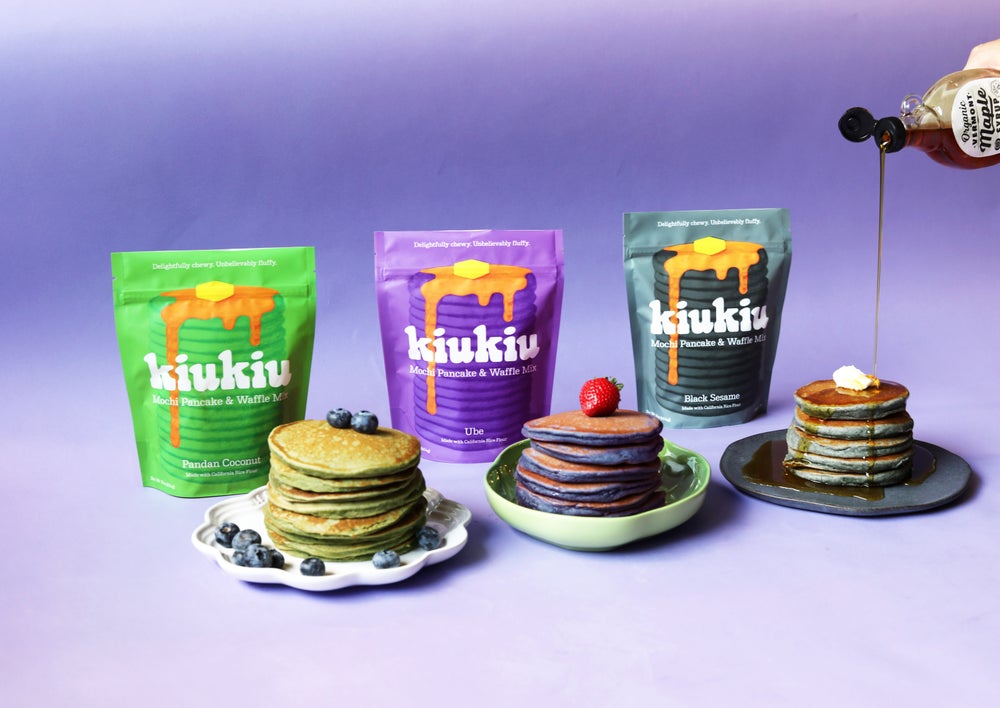
This Side Hustle Spotlight Q&A features John Liu, 27, a British citizen who’s typically based in San Francisco, California. Liu started KiuKiu (“QQ”), the brand behind “chewy, bouncy” mochi pancakes and waffles, earlier this year. Responses have been edited for length and clarity.

Image Credit: Courtesy of KiuKiu. John Liu.

Want to read more stories like this? Subscribe to Money Makers, our free newsletter packed with creative side hustle ideas and successful strategies. Sign up here.

What was your day job or primary occupation when you started your side hustle?
Before starting KiuKiu, I was working in tech, where I led product teams at TikTok. I was part of the founding team of TikTok Shop, then later helped build TikTok’s GenAI platform for AI video generation.

I always knew I wanted to build a food brand. CPG is very capital-intensive, and early institutional investment is rare unless you already have a track record, so tech was my way to save aggressively. The experience in tech itself also became incredibly relevant. Understanding the inner workings of ecommerce, storytelling and ruthless time prioritization are now core skills I rely on every day as a CPG founder.

Related: This Law Student’s Side Hustle Made $10K a Month — So He Left Legal to Go All-In

When did you start your side hustle, and where did you find the inspiration for it?
I grew up in Taiwan eating chewy, bouncy rice-based foods like mochi, rice cakes and noodles. There is even a Taiwanese word for that texture, “QQ,” which is where the name KiuKiu comes from and a term I hope becomes part of the everyday American lexicon. Rice also holds deep cultural significance for me because many members of my extended family were rice farmers.

When I moved to the U.S., I realized that chewy rice-based textures barely existed in grocery stores — except for mochi ice cream. At the same time, American grocery aisles had embraced other alternative flours like almond, cassava and oat, but not rice, even though it is the most consumed grain in the world. That disconnect felt like an enormous opportunity.

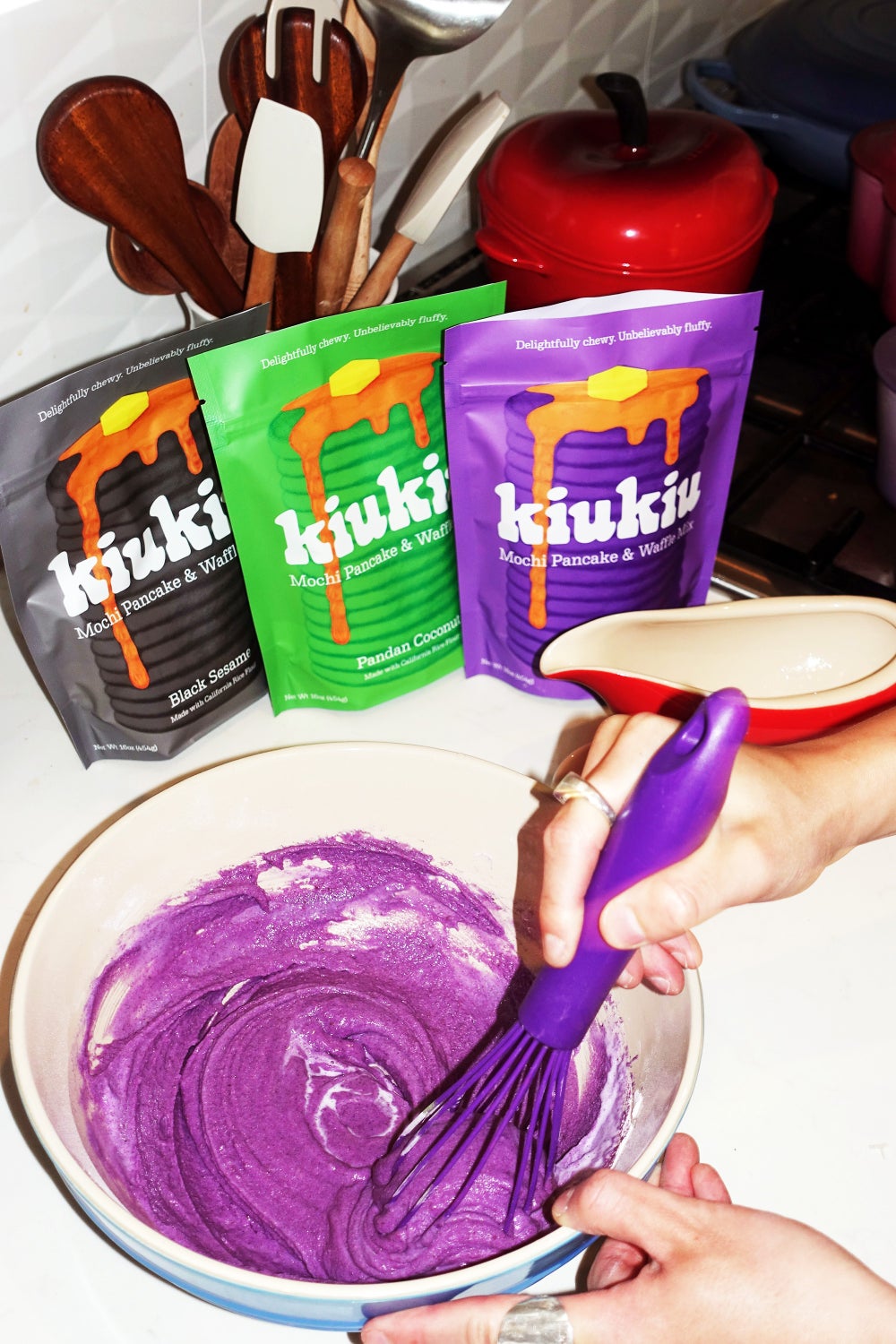
My long-term vision for KiuKiu is to build an entire category of rice-based, chewy pantry staples such as pancakes, cookies, frozen waffles and even pastas. I have always cooked and baked with rice flours, but I began formally testing recipes for scale in early 2025. I left my job in April and launched KiuKiu’s first products, mochi pancake and waffle mixes in ube, pandan coconut and black sesame, in August 2025. They’re made with California-grown rice flour and are naturally gluten-free.

Image Credit: Courtesy of KiuKiu

What were some of the first steps you took to get your side hustle off the ground? How much money or investment was required to launch?
My first step was to build accountability mechanisms for myself. If I tell my friends I’m going to do something, it is embarrassing if I don’t follow through. So, within a couple of days of mentally committing to building KiuKiu, I shared my journey publicly via Instagram Reels so I couldn’t back out. Then, I drew up a plan for a 60-day sprint with the goal of launching our first product to validate that people wanted chewy, bouncy rice-based textures.

I went straight into obsessive R&D. I hosted tasting sessions with friends, crashed people’s dinner parties with mochi pancakes and made 80 iterations of recipes, adjusting everything from sugar ratios to leavening based on feedback collected in a Google Form. I tried to involve our growing community at every stage when deciding on the brand name, flavors and testing what messaging and packaging resonated most.

Related: This Animal Lover’s Side Hustle Exploded Into a $10 Million Business: ‘Stars Aligned’

My first major investment was branding. I worked with my college friend Ned Hardy and his partner Marc Hohmann at TWO Agency to create a brand and packaging that would invigorate the baking aisle, while keeping a nod to our Asian heritage. I also spent weeks speaking with more than 200 manufacturers before finding the right partner. We had to scale our first run 10 times larger than planned because preorders were so strong. Altogether, for branding, ingredients, manufacturing and labor for our first production run, I invested about $65,000 of my own savings.

Are there any free or paid resources that have been especially helpful for you in starting and running this business?
I’ve kept spending extremely lean, so I rely heavily on free resources. Podcasts and newsletters have been some of my greatest teachers. This is TASTE, Grow to Market, Food Biz Wiz, Express Checkout, BevNet’s Taste Radio and StartupCPG are all in my rotation, and have helped me understand everything in the CPG landscape from product development to distribution to raising capital.

Building and nurturing community within the CPG space has also been invaluable. I joined the Naturally Network’s NorCal Chapter soon after starting KiuKiu, and it connected me with founders and operators who have been incredibly generous with their time and advice. Communities like INCLUDED and Project Potluck have also been meaningful, especially for meeting other underrepresented founders who are building brands that share their cultural heritage.

Related: His Business Made $120K on Kickstarter, Then $2M in 6 Months — And Could Save Your Thanksgiving

Image Credit: Courtesy of KiuKiu

Lastly, I also make a point to reach out to other founders. I often slide into other brands’ DMs to ask tactical questions and cheer each other on. There is a real sense of camaraderie in CPG. We are all navigating the challenges in our own ways, but we can come together to share what we’ve learned so we can all win together.

If you could go back in your business journey and change one process or approach, what would it be and how do you wish you’d done it differently?
As a solo founder, the hardest skill is knowing where your time has the highest leverage.

Initially, I planned to do all manufacturing and fulfillment myself. I impulsively bought a commercial mixer and started searching for a commercial kitchen space. When my visa was delayed, and I couldn’t be in the U.S. for launch, I was forced to pivot to a co-manufacturer and 3PL.

Looking back, that constraint was the best thing that could have happened. My time is far better spent on growth activities, like talking to buyers, building distribution and driving velocity, rather than mixing rice flour at 2 a.m.

Related: My Coffee-Fueled Idea Brought In $200K on Kickstarter — Then Became a 9-Figure Business

When it comes to this specific business, what is something you’ve found particularly challenging or surprising that people should be prepared for?
Despite how sexy building a consumer brand may look on the surface, there is an enormous amount of manual and unglamorous work in CPG, and it never really stops.

Our mochi pancake mixes use California-grown rice flour, but our flavor ingredients come from across Asia. Black sesame from Taiwan, ube from the Philippines and pandan from Thailand. These ingredients were on a ship when tariffs were changing what seemed like every hour. I tried to save money by skipping a freight broker, so I ended up personally managing customs delays, FDA holds, tariff reclassifications and daily paperwork for weeks.

Then, once you finally get into retail, the real challenge begins. Just because your product is in the store does not mean it is on the shelf or displayed correctly. I’ve seen our mixes stocked upside down or placed back-to-front. After that comes velocity, which is often the deciding factor for whether a retailer keeps you. You need to demo, build relationships with store teams and nurture each location. It is a relationship-driven business at its core. That can be both the most challenging and the most rewarding part.

Image Credit: Courtesy of KiuKiu

Can you recall a specific instance when something went very wrong? How did you fix it?
When you are doing something for the first time, you often don’t know what you don’t know.

When sourcing ingredients for our first batch, one of the most important components, our ube powder, arrived in a muted grey color. Ube should be bright purple with a strong aroma and flavor. I was horrified. We had to delay production so I could reorder from a different supplier, which set us back and cost a few thousand dollars, but there was no way I was going to compromise on the very first batch.

I learned to set strict ingredient specifications upfront, covering everything from color to aroma to fineness. We now follow these standards for every production run.

How long did it take you to see consistent monthly revenue? How much did the side hustle earn?
We launched D2C in August 2025. My goal was to hit six figures in lifetime revenue by the end of the year. I wanted to show product-market fit and build a data story that could help us enter retail. We ended up hitting $100,000 in revenue in the first month.

That early traction gave me the confidence to start building wholesale accounts and reaching out to specialty retailers and local markets while continuing to refine our product and operations.

Related: This Rapper’s Non-Musical Side Hustle Led to $100k a Month — Then 8 Figures

What does growth and revenue look like now?
Although we launched through D2C, our long-term strategy is omnichannel.

D2C has remained steady with strong repeat purchase rates. On the wholesale side, we are now in our first 80 retail accounts, including Safeway and Andronico’s in Northern California, with more stores coming on board in 2026.

Next year, we plan to expand D2C through new channels like Amazon and TikTok Shop, and we will be investing more heavily in social media to tell our story and build our community. We are also preparing for an exciting launch with my dream natural grocery chain and want to ensure we are operationally rock solid before scaling further.

How much time do you spend working on your business, and what does a typical week look like?
I work on KiuKiu full-time, often 11 to 12 hours a day, with product testing sessions and demos on weekends. It sounds intense, but it genuinely feels fun because the work is so varied and I care deeply about what I am building.

I use Trello to plan my highest priority monthly goals, break them into weekly goals, then into smaller daily tasks.

While I am abroad waiting for my visa, I focus on everything I can do remotely. For example, this week looked like:

Monday: forecast 2026 inventory, submit onboarding materials for a national retailer, speak with an investor

Tuesday: finalize next production run, plan freight pickups, coordinate PR packages

Wednesday: create Instagram Reels, coordinate inventory with distributor, negotiate ingredient purchase

Thursday: meet a head buyer at a national chain, finalize updated packaging, edit new brand video footage

Friday: interview a candidate for our brand ambassador role, work with a trademark attorney, update our financial model

Every week looks different, which is exactly the type of environment I thrive in as someone with ADHD. I consider it a superpower!

Image Credit: Courtesy of KiuKiu

What do you enjoy most about running this business?
There is nothing more rewarding than watching someone try KiuKiu mochi pancakes for the first time and immediately wanting to share them with their friends and family. Bringing the textures and flavors I grew up with in Taiwan into an American breakfast classic feels incredibly meaningful.

I also love the variety. One day I am talking to ingredient suppliers in Asia, the next I’m meeting with grocery buyers or distributors, and the next I’m engaging with our customers. It pushes me far more than big tech ever did, and I love that the buck truly starts and stops with me.

Related: Starbucks Barista’s ‘Stealth Mode’ Side Hustle Now Sees $1 Million Months

What is your best piece of specific, actionable business advice?
In CPG, build a go-to-market strategy you can realistically sustain and win in your existing channels before expanding.

I have seen a lot of cautionary tales of founders who expand too quickly and use every resource they have to get into as many retailers as possible. Large chains will often take you, sometimes with crazy slotting fees or free fill expectations, but they will also drop you if velocity is not strong immediately. Before saying yes to a store, know exactly how you will drive velocity there. That can include demos, content, community and field support.

I remind myself constantly that it is better to dominate 20 stores than quietly disappear in 200. KiuKiu is still very young (we launched three months ago, for goodness’ sake!), and my focus is on winning in our first chain before aiming for world domination. It will come in time.

This article is part of our ongoing Young Entrepreneur® series highlighting the stories, challenges and triumphs of being a young business owner.

https://www.entrepreneur.com/starting-a-business/how-a-27-year-olds-side-hustle-hit-100k-in-month-1-kiukiu/500075


Streamline Your Business Documents With This Lifetime PDF Editor for Less Than $25

Disclosure: Our goal is to feature products and services that we think you’ll find interesting and useful. If you purchase them, Entrepreneur may get a small share of the revenue from the sale from our commerce partners.

TL;DR: Get PDF Converter & Editor for $23.99 (reg. $99.99) with code CONVERT through January 11th, and handle all your document conversions, editing, and OCR needs without monthly fees. Pay once, use forever.

Managing documents efficiently separates successful entrepreneurs from those drowning in administrative work. If you’re still copying and pasting between formats or paying monthly for Adobe subscriptions, there’s a better way.

Through January 11th, the PDF Converter & Editor handles everything from basic conversions to advanced OCR text extraction for just $23.99 with code CONVERT. That’s 76% off and yours for life.

Convert PDFs with ease using this highly rated tool

No add-ons. No premium tiers. This tool converts PDFs to Word, Excel, PowerPoint, and image formats while preserving your layouts. It also goes the other direction, creating PDFs from virtually any document type.

The OCR technology extracts text from scanned documents. This is perfect for when clients send image-based contracts or you need to digitize paper receipts for expense reports. Convert those files into editable formats in seconds instead of retyping everything manually.

Built for real business workflows

Merge multiple documents for comprehensive client proposals. Split large files to share specific sections with team members. Compress oversized PDFs before emailing. Create professional forms for invoices or client intake.

Security features include password protection for sensitive files and watermarking to protect your intellectual property. Annotation tools let you review documents with collaborators without printing a single page.

Who this is for

This deal works for:

  • Business owners who are tired of subscription fees eating into margins
  • Professionals who receive scanned documents from clients
  • Anyone juggling multiple file formats across projects
  • Teams needing reliable tools on both Windows and Mac (two-device license included)
  • For entrepreneurs who prefer ownership over renting, this is straightforward value.

Rated 4.4/5 stars on Trustpilot, this PDF Converter & Editor: Lifetime License is available for $23.99 (reg. $99.99) with code CONVERT through January 11th.

StackSocial prices subject to change.

TL;DR: Get PDF Converter & Editor for $23.99 (reg. $99.99) with code CONVERT through January 11th, and handle all your document conversions, editing, and OCR needs without monthly fees. Pay once, use forever.

Managing documents efficiently separates successful entrepreneurs from those drowning in administrative work. If you’re still copying and pasting between formats or paying monthly for Adobe subscriptions, there’s a better way.

Through January 11th, the PDF Converter & Editor handles everything from basic conversions to advanced OCR text extraction for just $23.99 with code CONVERT. That’s 76% off and yours for life.

The rest of this article is locked.

Join Entrepreneur+ today for access.

https://www.entrepreneur.com/science-technology/streamline-your-business-documents-with-this-lifetime-pdf/499891


Young People Spend a Surprising Amount on Black Friday — And Make a Common Mistake

Key Takeaways

  • Nearly 50% of Gen Z shoppers intend to buy only necessities and gifts on Black Friday.
  • Still, 26% will spend at least half of their monthly salaries on sales — or even more.

American consumers are as ready as ever for Black Friday and Cyber Monday.

More than 80% of people plan to take advantage of Black Friday-Cyber Monday sales this year, including 92% of Gen Z shoppers, according to a recent survey from Deloitte.

New research from writing platform EduBirdie breaks down Gen Z‘s Black Friday approach — and just how much the young consumers are actually expected to spend.

Related: ‘Millions of Dollars in a Week’: Founder Reveals His Lucrative Black Friday Strategy

The study, which surveyed 2,000 Gen Z respondents, found that 13% of the young shoppers spend months preparing for Black Friday sales, with 47% intending only to buy necessities and gifts.

However, Gen Z consumers still expect to part with a significant chunk of their paychecks, per the findings: 26% will spend at least half of their monthly salaries on Black Friday purchases.

Another 6% plan to spend their entire monthly salary on Black Friday — and 2% even more than what they earn in a month.

Related: What Is ‘Doom Spending’? The Trend Takes a Toll on Personal Finances — and Members of This Generation Are Most at Risk.

One in three Gen Zers also admits to making a mistake that can upend personal finances: overspending on gifts to make an impression.

More than 30% of Gen Z shoppers told EduBirdie they will spend over $300 on gifts this holiday season, even if that means pulling from savings (33%), skipping social gatherings (35%) or missing bill payments (36%).

One in 10 Gen Z consumers intend to spend more than $500 on gifts this year, while 18% plan to spend $50 to $100, 38% to spend $100 to $300 and 19% to spend $300 to $500, according to the research.

Four percent of respondents said they have no money to spend on holiday gifts at all.

Related: Online Scams Are More Sophisticated Than Ever. Here’s How to Shop Safely on Black Friday and Cyber Monday, According to a Cyber Intelligence Expert.

Regifting — an approach that 52% of Gen Z have taken, per the survey — can help curb overspending during the holiday season.

Ashlee Piper, a political strategist turned eco-lifestyle journalist and TV personality, told Entrepreneur earlier this year that participating in a “no new things” challenge inspired her to get creative when it comes to acquiring items, including gifts, noting that “it’s a lot like exercising a muscle.”

Key Takeaways

  • Nearly 50% of Gen Z shoppers intend to buy only necessities and gifts on Black Friday.
  • Still, 26% will spend at least half of their monthly salaries on sales — or even more.

American consumers are as ready as ever for Black Friday and Cyber Monday.

More than 80% of people plan to take advantage of Black Friday-Cyber Monday sales this year, including 92% of Gen Z shoppers, according to a recent survey from Deloitte.

The rest of this article is locked.

Join Entrepreneur+ today for access.

https://www.entrepreneur.com/money-finance/how-much-money-young-people-spend-on-black-friday-gifts/500079


This Government Paid Deloitte $1 Million for a Report That Included Fake AI Citations

Key Takeaways

  • A Deloitte report commissioned by the Canadian government featured fake citations generated from fictional academic papers.
  • Deloitte Canada says that “AI was not used to write the report,” but was instead used to write a limited number of erroneous research citations.
  • The company says it “stands behind” the report and is reviewing it to correct the citations.

A Deloitte healthcare report that cost the Canadian government nearly $1.6 million CAD ($1.13 million USD) has now been found to contain AI-generated errors.

The 526-page report, released by the Canadian government in May, focused on the recruitment and retention of the healthcare workforce, highlighting topics like virtual care. The government’s Department of Health and Community Services commissioned the report to advise the department as it contends with staffing shortages among nurses and doctors.

The Independent, a Canadian news outlet, first spotted errors in the report on Saturday. The outlet found that the Deloitte report featured at least four fake citations generated from fictional academic papers. The report also tied real researchers to fake papers they hadn’t worked on, and paired researchers together on made-up papers when they had never worked together before.

Related: Deloitte Is Reimbursing Employees Up to $1,000 — For Buying Lego Sets

The report additionally cited an academic paper from the Canadian Journal of Respiratory Therapy that cannot be found in a search of its database.

“Deloitte Canada firmly stands behind the recommendations put forward in our report,” a Deloitte Canada spokesperson told Fortune in a statement on Tuesday. “We are revising the report to make a small number of citation corrections, which do not impact the report findings. AI was not used to write the report; it was selectively used to support a small number of research citations.”

The report remains accessible on the Canadian government’s website as of Tuesday.

Related: Is Workplace Trust Dead? A ‘Big Four’ Firm Will Soon Use Location Data to Track Employees

An access-to-information request submitted last week and published in a blog post reveals that the Canadian government spent $1,598,485 CAD ($1,133,205.98 USD) on the report, paid to Deloitte in eight installments between March 2023 and March 2025.

Deloitte was previously under fire for using AI in a $290,000 report published in July advising the Australian government on welfare. Last month, an Australian government researcher found at least 20 instances of AI hallucinations or inaccuracies in the 237-page study, flagging citations of non-existent academic research papers and a made-up quote from a federal judge.

Deloitte has since submitted an updated study with the disclaimer that it had used the generative AI program Azure OpenAI GPT-4o to help write the report. The firm has agreed to partially refund the Australian government for the errors, though the refund amount is unknown.

Deloitte’s global revenue was $70.5 billion for the fiscal year ending May 31, a 4.8% increase from the previous year. The consulting firm’s global headcount increased to 470,000 employees, up from 460,000 a year prior.

Related: A Big 4 Firm Is Cutting Back on Entry-Level Hiring, According to a Leaked Slideshow

Key Takeaways

  • A Deloitte report commissioned by the Canadian government featured fake citations generated from fictional academic papers.
  • Deloitte Canada says that “AI was not used to write the report,” but was instead used to write a limited number of erroneous research citations.
  • The company says it “stands behind” the report and is reviewing it to correct the citations.

A Deloitte healthcare report that cost the Canadian government nearly $1.6 million CAD ($1.13 million USD) has now been found to contain AI-generated errors.

The 526-page report, released by the Canadian government in May, focused on the recruitment and retention of the healthcare workforce, highlighting topics like virtual care. The government’s Department of Health and Community Services commissioned the report to advise the department as it contends with staffing shortages among nurses and doctors.

The rest of this article is locked.

Join Entrepreneur+ today for access.

https://www.entrepreneur.com/business-news/deloitte-detected-using-fake-ai-citations-in-1-million/500072


‘My Rock’: Billionaire Virgin Founder Richard Branson Announces Death of Wife — After Nearly 50 Years Together

Key Takeaways

  • Richard Branson announced the death of his wife, Joan Templeman, who was 80 years old.
  • The couple’s relationship spanned nearly 50 years.
  • The billionaire founder memorialized his wife in an emotional tribute on Instagram.

Richard Branson announced on Tuesday that his wife, Joan Templeman, passed away at the age of 80. The Virgin Group founder shared the news on Instagram, saying he was “heartbroken” by the loss.

In the post, Branson described Templeman as his closest companion and the steady presence in his life. He memorialized her as his “best friend,” “rock” and “guiding light,” and said she had been an extraordinary mother and grandmother.

Related: Richard Branson and Jason Felts — Virgin Group’s Second-Youngest CEO — Share Secrets for Success in Business and Leadership: ‘Get Into the Thick of It’

Branson and Templeman first crossed paths in 1976, a meeting he has often reflected on fondly. In a February 2020 blog post on Virgin.com, he wrote of their first meeting: “I often make up my mind about someone within 30 seconds of meeting them, and I fell for Joan almost from the moment I saw her.”

He’s also attributed much of his professional success to her enduring support: “I wouldn’t have been able to do all it without Joan, and I wouldn’t have it any other way,” he wrote in that same blog.

Related: ‘I Enjoy Life Too Much’: Sir Richard Branson Has an Adventurous Approach to Business — But He Never Planned on Being an Entrepreneur

Throughout their nearly five decades together, Branson frequently credited Templeman with keeping him grounded. When she turned 80 in July, he celebrated her birthday online, calling her his “wonderful, wonderful wife” and thanking her for standing alongside him through every triumph, setback and quiet moment in between.

No details about the cause of her death have been released.

Key Takeaways

  • Richard Branson announced the death of his wife, Joan Templeman, who was 80 years old.
  • The couple’s relationship spanned nearly 50 years.
  • The billionaire founder memorialized his wife in an emotional tribute on Instagram.

Richard Branson announced on Tuesday that his wife, Joan Templeman, passed away at the age of 80. The Virgin Group founder shared the news on Instagram, saying he was “heartbroken” by the loss.

In the post, Branson described Templeman as his closest companion and the steady presence in his life. He memorialized her as his “best friend,” “rock” and “guiding light,” and said she had been an extraordinary mother and grandmother.

The rest of this article is locked.

Join Entrepreneur+ today for access.

https://www.entrepreneur.com/business-news/richard-bransons-wife-joan-templeman-dead-at-80/500083


Forget Crypto vs. Banks. The Real Opportunity Is in Building One Platform for Both.

Opinions expressed by Entrepreneur contributors are their own.

Key Takeaways

  • Treating banking and crypto as separate realms is an outdated approach. The next era of finance will reward those who build one unified framework where both coexist.
  • Banks and crypto users have different foundations, but they share a demand for trust, clarity and usability. Both worlds should be converged under one compliant, scalable infrastructure.
  • To thrive in the evolving landscape of digital finance, platforms must be designed to serve both institutional and retail users. Success lies in building for both sides, not choosing one over the other.

In today’s financial landscape, traditional finance and crypto are often framed as opposing forces — one being regulated, slow and stable, and the other being fast, speculative and ungoverned. Many companies mirror this divide in their messaging and strategy, believing they must speak to each world separately. That approach is outdated.

At Bitpanda, we take a different view. We don’t see a split; we see convergence. We believe the future won’t be shaped by two competing narratives, but by one unified, trust-led foundation that serves both ecosystems. This cohesive approach enables us to engage both markets with credibility, because the next era of finance won’t reward companies that straddle two identities. It will reward those who build one trusted infrastructure that bridges both banks and crypto users alike.

To succeed, you cannot divide and conquer. The focus should be on finding common ground, creating infrastructure and products that deliver value across the spectrum. Yes, banks and crypto-native users may have different foundations, but they share a common demand for trust, clarity and usability. That’s where the future of finance lies: in bringing both worlds together under one compliant, scalable infrastructure.

Related: What It Will Actually Take to Bridge the Gap Between DeFi and Traditional Finance

The two worlds are converging

Bitpanda’s growth and ability to unite traditional banks with crypto offerings is being driven by a reputation that has remained steady across every jurisdiction, every product and every conversation. We’ve built a brand that resonates with the entire financial ecosystem. Not because we divided to conquer, but because we unified to lead.

In 2025, the global crypto market surpassed USD 4 trillion, and the number of active mobile wallet users grew by 20% year‑on‑year. At the same time, the tokenization of real‑world assets (RWAs) crossed USD 30 billion, driven by institutions. Clients, investors and users expect platforms that can operate in both the regulated banking environment and the dynamic crypto world. If you build for only one side, you risk being left behind.

Compliance is a platform for growth, not a burden

More than 72 financial institutions globally had adopted distributed‑ledger technology as of May 2025. Europe’s MiCA regulation is live, and more countries are defining frameworks for digital assets. The message is clear: Startups that treat regulation as an obstacle will fall behind those that build with regulation in mind. Entrepreneurs who secure licences, operate transparently and integrate with regulated systems are the ones scaling internationally.

Compliance should never be viewed as a barrier to growth; it should be the foundation of it. It’s what earns the trust of banks, wins over crypto communities and unlocks the ability to scale across both worlds.

Related: This Major Finance Shift Is Transforming Businesses — Here’s How to Take Advantage of It

Trust is the universal currency

Globally, 559 million people owned cryptocurrency in 2025, roughly 9.9% of the internet population. Retail users demand speed and simplicity. Institutions demand oversight and risk controls. The companies that satisfy both are rare, but they have the real opportunity. If a fintech platform promises crypto access but lacks bank‑grade controls, or if a bank offers regulated products without crypto user appeal, the result is compromised adoption. Startups that deliver a unified user experience across both will win.

Technology must scale responsibly

Tokenization of assets is no longer theoretical. In the RWA market alone, private credit and U.S. Treasuries dominate, reaching multi-billion-dollar sizes in 2025. But liquidity, tradability and regulatory compliance remain hurdles. As founders build next‑gen infrastructure, the challenge is clear: Speed without stability equals risk; innovation without accountability equals failure. Startups must deliver systems that comply, secure and scale.

Execution matters more than announcements

The fintech world is full of bold launches, but the real test is living up to the promise. In both crypto and traditional finance, credibility comes from consistent delivery, not hype. For entrepreneurs, that means focusing on product reliability, customer outcomes and regulatory alignment — not just headline‑grabbing features.

What sets enduring companies apart isn’t just what they offer, but how consistently they show up. Don’t pivot your message to chase the moment; build one identity that speaks clearly to both sides. In an industry driven by trust, consistency becomes your strongest asset. A credible track record isn’t something you campaign for — it’s something you earn, and it’s what enables you to build for both banks and crypto users alike.

Related: The Future of Financial Services Will Be Defined By This One Shift

One foundation. One mindset

The future will not be about separate “crypto arms” and “banking divisions.” It will be about one coherent platform that speaks the language of trust, clarity and performance. The entrepreneurs who succeed will not be the ones who disregard rules — they will be the ones who build products that thrive within them.

If you are an entrepreneur setting out to build in digital finance, build for both sides. Build for institutions and retail. Build for compliance and innovation. The next decade will go to those who master that convergence — not those who pick a side.

Key Takeaways

  • Treating banking and crypto as separate realms is an outdated approach. The next era of finance will reward those who build one unified framework where both coexist.
  • Banks and crypto users have different foundations, but they share a demand for trust, clarity and usability. Both worlds should be converged under one compliant, scalable infrastructure.
  • To thrive in the evolving landscape of digital finance, platforms must be designed to serve both institutional and retail users. Success lies in building for both sides, not choosing one over the other.

In today’s financial landscape, traditional finance and crypto are often framed as opposing forces — one being regulated, slow and stable, and the other being fast, speculative and ungoverned. Many companies mirror this divide in their messaging and strategy, believing they must speak to each world separately. That approach is outdated.

At Bitpanda, we take a different view. We don’t see a split; we see convergence. We believe the future won’t be shaped by two competing narratives, but by one unified, trust-led foundation that serves both ecosystems. This cohesive approach enables us to engage both markets with credibility, because the next era of finance won’t reward companies that straddle two identities. It will reward those who build one trusted infrastructure that bridges both banks and crypto users alike.

The rest of this article is locked.

Join Entrepreneur+ today for access.

https://www.entrepreneur.com/money-finance/forget-crypto-vs-banks-build-one-platform-for-both/499431


How to Know When It’s Time to Evolve Your Brand — and How to Do It Right

Opinions expressed by Entrepreneur contributors are their own.

Key Takeaways

  • Common indicators that it’s time to refresh your brand include entering new markets, adding products or services, or hearing feedback that your messaging feels outdated or unclear.
  • Review your mission and values to ensure they still capture who you are and where you’re headed. Evaluate your UVP to ensure it continues to set you apart in your current market.
  • A successful brand refresh requires structure and collaboration. Define measurable goals and how success will be evaluated. Engage internal and external stakeholders early to encourage alignment and reduce friction.

Businesses evolve, and so should their brands. The identity that once defined your startup may not fully represent what you’ve become. As companies expand into new products, audiences or markets, they often need a brand that grows in step.

In fact, research shows that 75 % of companies have experienced a rebrand since 2020. Knowing when and how to refresh that identity can determine whether your brand continues to resonate or begins to feel out of sync.

Related: I Tried to Modernize a Brand — Here’s What Worked (and What Didn’t) at the 20-Year-Old Company

Recognizing when it’s time to refresh

As your organization matures, your original branding may no longer reflect your expanded offerings or evolved purpose. Common signals include entering new markets, adding products or services, or hearing feedback that your messaging feels outdated or unclear.

According to one study, 74 % of S&P 100 companies rebranded within their first seven years of operation.

These moments call for a thoughtful reassessment. A full rebrand is rarely necessary; more often, evolution works best. Refining rather than replacing helps preserve trust and continuity while keeping your story relevant to new audiences.

Revisiting your core brand foundation

Milestones such as new funding, a leadership shift or diversification are natural checkpoints for reviewing your mission and vision. Do they still capture who you are and where you’re headed?

Evaluate your unique value proposition to ensure it continues to set you apart in your current market. Revisit your target audiences as well. Growth often brings new customer segments with distinct expectations and motivations, and your brand should speak clearly to them all.

Updating the look and voice

Visual and verbal adjustments are often the most visible aspects of a brand evolution. The goal is not to chase trends but to reflect progress. Modernize your logo, colors and typography only if they support a more authentic representation of your company’s direction.

The same applies to tone. A startup voice that once sounded playful may now need to convey credibility and experience. Conversely, expanding to a broader audience may call for a more inclusive tone. Consistency across platforms — digital, print and internal — ensures a cohesive experience that strengthens recognition.

Interestingly, data indicates that consistent branding across channels can increase revenue by up to 23 %.

Related: Refreshing Your Brand Doesn’t Mean Starting Over

Planning and managing the rollout

A successful brand evolution requires structure and collaboration. Begin by defining measurable goals, what you want to achieve and how success will be evaluated.

Engage internal and external stakeholders early to encourage alignment and reduce friction later. Rolling out the new identity in phases, starting internally before a public launch, helps minimize confusion. Testing key elements, such as visual updates or taglines, with select audiences provides valuable feedback before committing to a full release.

Communicating the change

Transparent communication turns a rebrand from a design exercise into a story of growth. Start internally by preparing your team to represent the refreshed identity confidently. Updated brand guidelines, training sessions and clear talking points ensure everyone speaks with one voice.

Externally, share the “why” behind the change. Explain how your company has evolved and how the new brand better reflects your values and customers’ needs. Clear, consistent messaging helps audiences feel included in your evolution rather than surprised by it.

Measuring and refining

Brand evolution should be measured like any other strategic initiative. Track both quantitative metrics — such as website engagement, social interactions and inquiries — and qualitative indicators, including customer sentiment and internal feedback.

Continuous listening allows you to refine as needed. The most effective brands treat evolution as an ongoing process rather than a single event.

Related: Thinking of Rebranding? This Step-by-Step Guide Will Help Make the Process Smooth and Successful.

Avoiding common pitfalls

Rapid or poorly communicated changes can confuse loyal customers and weaken recognition. Move gradually, involve employees in the process, and ensure that every change connects back to a clear strategic purpose. A rebrand that lacks intention can erode trust rather than strengthen it.

Evolving your brand is more than a creative refresh; it is a reflection of growth, adaptability and self-awareness. When approached strategically, it signals that your company understands its audience, honors its history and is ready for what comes next.

A well-executed brand evolution does not abandon what built your reputation; it amplifies it, aligning who you are today with where you are headed tomorrow.

Key Takeaways

  • Common indicators that it’s time to refresh your brand include entering new markets, adding products or services, or hearing feedback that your messaging feels outdated or unclear.
  • Review your mission and values to ensure they still capture who you are and where you’re headed. Evaluate your UVP to ensure it continues to set you apart in your current market.
  • A successful brand refresh requires structure and collaboration. Define measurable goals and how success will be evaluated. Engage internal and external stakeholders early to encourage alignment and reduce friction.

Businesses evolve, and so should their brands. The identity that once defined your startup may not fully represent what you’ve become. As companies expand into new products, audiences or markets, they often need a brand that grows in step.

In fact, research shows that 75 % of companies have experienced a rebrand since 2020. Knowing when and how to refresh that identity can determine whether your brand continues to resonate or begins to feel out of sync.

The rest of this article is locked.

Join Entrepreneur+ today for access.

https://www.entrepreneur.com/starting-a-business/want-to-refresh-your-brand-heres-how-to-do-it-right/499354