Walmart CEO Doug McMillon Calls It Quits After a Decade

Walmart announced Friday that longtime CEO Doug McMillon will step down after more than ten years leading the nation’s largest retailer. John Furner, the current head of Walmart U.S., will take over after the company’s fiscal year ends on February 1.

Furner, 51, started at Walmart as an hourly worker in 1993 and now oversees more than 4,600 stores. McMillon, 59, oversaw Walmart’s shift from a traditional big-box chain into a retail and e-commerce powerhouse, boosting revenue and market value while raising wages and improving benefits. He’ll stay on the board through next spring.

The shift signals a new chapter for a company that rarely changes CEOs and often promotes from within.

Read more

Even Six-Figure Earners Are Feeling Broke These Days

Image Credit: Ulrich Baumgarten via Getty Images

Six figures used to mean you made it. Now it means you’re barely hanging on. At least that’s what a new Harris survey suggests.

Americans earning six-figure salaries say they are in “survival mode,” living paycheck to paycheck. Rising housing costs, child-care bills, debt payments, and everyday expenses are eating through earnings that once felt solid. In many cities, $100,000 no longer brings stability.

As a result, families are cutting back on travel, putting off big purchases, and leaning on savings just to get through the month. Even workers with strong careers say they feel stretched thin. $100,000 looks impressive on paper, but reality tells a different story.

eBay Will Go All-In on AI

Image Credit: Mateusz Slodkowski/SOPA Images/LightRocket via Getty Images

eBay is hitting “refresh” with a big AI upgrade, according to CNN. The company rolled out five new AI-powered shopping tools this week, including a conversational chatbot and smarter shipping estimates built with help from OpenAI.

The move is part of eBay’s push to modernize and reclaim ground in a crowded e-commerce market. Early signs suggest investors like the direction. The stock has climbed sharply in recent years and is outpacing giants like Amazon and Microsoft this year.

For eBay, the gamble is simple. These new features could help spark a real comeback—or leave the platform stuck in the past.

Read more

Mortgage Rates Edge Up Again as Housing Costs Stay High

Image Credit: David Paul Morris/Bloomberg via Getty Images

Mortgage rates nudged higher for the second week in a row, with the average 30-year loan now sitting in the mid-6 percent range.

The move follows a brief period of declines that had offered a little relief to buyers. Rates on 15-year mortgages slipped slightly, but not enough to ease broader affordability concerns. Even with borrowing costs still near their lowest levels of the year, many would-be homeowners remain squeezed by steep prices and limited inventory.

The latest uptick adds another hurdle to first-time buyers who are looking to enter the market.

Read more

Luxury Electric Cars Hit a Speed Bump

Image Credit: Smith Collection/Gado/Getty Images

Sales of luxury electric vehicles have stalled. Once seen as the future of high-end driving, these premium EVs are now facing slumping demand, longer delivery waits, and growing resistance from buyers dealing with rising prices and weaker incentives.

Automakers that rolled out sleek luxury EV models, such as the Ford F-150 Lightning are rethinking timing and strategy after fleets gathered dust and incentive payouts dropped. The shift highlights how even affluent consumers are proving cautious in the electric-vehicle race, especially as costs climb and choices multiply.

The promise of luxury EV dominance may be under threat just as the market thought it had arrived.

Did AI Hack Anthropic? Researchers Say No.

Image Credit: Nikolas Kokovlis/NurPhoto via Getty Images

Anthropic says Chinese state-based hackers used its AI model to run 80–90 % of a cyber-attack autonomously.

But independent researchers say the figure is misleading. They note the system still needed human input at key points — planning, validation and decision-making. One noted the model frequently got things wrong or overstated its access. The researchers argue the event reflects advanced automation more than true AI independence.

The debate highlights the challenge of defining “autonomy” in cybersecurity and raises questions about how capable self-directed AI really is.

Read more

Walmart announced Friday that longtime CEO Doug McMillon will step down after more than ten years leading the nation’s largest retailer. John Furner, the current head of Walmart U.S., will take over after the company’s fiscal year ends on February 1.

Furner, 51, started at Walmart as an hourly worker in 1993 and now oversees more than 4,600 stores. McMillon, 59, oversaw Walmart’s shift from a traditional big-box chain into a retail and e-commerce powerhouse, boosting revenue and market value while raising wages and improving benefits. He’ll stay on the board through next spring.

The shift signals a new chapter for a company that rarely changes CEOs and often promotes from within.

The rest of this article is locked.

Join Entrepreneur+ today for access.

https://www.entrepreneur.com/business-news/walmart-ceo-doug-mcmillon-calls-it-quits-after-a-decade/499652



This Laptop Literally Grows Before Your Eyes — and Could Change How You Work Forever

Ready for rolling screens? Motion-tracking monitors? See the game-changing innovation Lenovo unveiled at CES 2025.

Opinions expressed by Entrepreneur contributors are their own.

Lenovo’s latest innovation takes the notion of “more screen” a step further with the introduction of the Lenovo ThinkBook Plus Gen 6 Rollable, a concept laptop that literally grows before your eyes. Starting out as a conventional 14-inch laptop with a 2000 × 1600 resolution, a dedicated key (or palm gesture) triggers a motorized mechanism that unfurls an additional portion of the display, extending the screen upward into a 16.7-inch view at 2000 × 2350 resolution.

According to The Verge, “this is the most interesting laptop I’ve reviewed in a long time” because of its unique rolling screen experience and seamless transition between two display sizes. The form factor blends traditional productivity with a vertical workspace ideal for creative and professional use, offering “one device, two screen sizes,” as summarized by PCWorld.

Beyond the wow factor, the engineering behind this rollable display is equally ambitious. The hinge houses “tiny motors” that control a flexible plastic OLED panel tucked beneath the keyboard deck when retracted, which then “unrolls into view in about ten seconds,” as described by The Verge. Lenovo claims the mechanism has been tested for “around 20,000 rolls and 30,000 hinge openings,” according to IEEE Spectrum.

While the taller display ratio is ideal for tasks like reading long documents, coding, or multitasking, Tom’s Hardware notes that users will face some trade-offs: “It’s pricey, heavier than typical 14-inch laptops, and battery life drops when the screen is fully extended.” Even with these limitations, Lenovo’s ThinkBook Plus Gen 6 Rollable represents a bold step toward redefining how flexible displays could reshape the future of personal computing.

Lenovo’s latest innovation takes the notion of “more screen” a step further with the introduction of the Lenovo ThinkBook Plus Gen 6 Rollable, a concept laptop that literally grows before your eyes. Starting out as a conventional 14-inch laptop with a 2000 × 1600 resolution, a dedicated key (or palm gesture) triggers a motorized mechanism that unfurls an additional portion of the display, extending the screen upward into a 16.7-inch view at 2000 × 2350 resolution.

The rest of this article is locked.

Join Entrepreneur+ today for access.

https://www.entrepreneur.com/science-technology/this-laptop-expands-to-give-you-a-bigger-display-in-seconds/499537


His Business Made $120K on Kickstarter, Then $2M in 6 Months — And Could Save Your Thanksgiving

Key Takeaways

  • Coyne wondered why there wasn’t a thermal container that could keep large dishes warm on the market.
  • He and his brother-in-law, Collin Duff, launched their second venture, Host Modern, to bring the product to life.
  • Some key lessons learned from building their previous DTC golf brand, Stix, helped along the way, Coyne says.

As a father of four boys of various ages attending different schools, Gabe Coyne faced a common predicament in the mornings: It was difficult to keep breakfast warm for everyone across the 90-minute departure period.

Image Credit: Courtesy of Host Modern. Gabe Coyne.

“I  had the option to make breakfast once, and only the first kid got hot food, or make breakfast three different times,” Coyne recalls. “All the while, I’ve got my Yeti thermal coffee tumbler that’s keeping my coffee hot until lunch. I was like, Why don’t I have this for food?“

Coyne was already well-versed in building brands. He ran a creative studio in Seattle, Washington, for about a decade before one of his clients recruited him to be a technical co-founder in his startup. Then he joined a venture studio where he focused on digital products. After that, in 2019, he and co-founder Collin Duff started the direct-to-consumer golf brand Stix Golf.

Related: Her Business Predicted a Gen Alpha Trend and Saw $100 Million in Sales Last Year

Coyne’s breakfast dilemma would lead him and Duff to partner on another venture in 2024: cookware and serveware brand Host Modern. Coyne is the company’s CEO, and Duff, who is also Coyne’s brother-in-law, is COO.

Image Credit: Courtesy of Host Modern

Coyne’s initial research for Host Modern revealed that double-walled, vacuum-sealed containers are the best thermal options on the market, yet no one had applied the technology to larger products.

A deep dive on some Reddit boards explained why: The containers would be heavy and not as durable as, say, a typical cooler taken camping — one dent or puncture would compromise the thermal layer.

“Never believe that if you build it, they will come.”

So Coyne opted to scale down a bit. One of his early concepts was a bento-box-like design: stackable circles.

However, as someone who prioritizes validation, testing and iterating before moving forward, Coyne solicited feedback — and received the same response from nearly every person: “Can I put my casserole dish in that?” Of course, because of the circular model, the answer was no.

Coyne didn’t want to launch a product without demand, and unlike some entrepreneurs who can’t let go of their initial vision, he wasn’t opposed to a pivot.

“So many people get so obsessed with their idea, or they think they have such a great idea and they immediately just go start building it like it’s going to be magic,” Coyne says. “Never believe that if you build it, they will come. Go make sure somebody wants that thing.”

Related: She’s Using 3 Revenue-Doubling Secrets to Grow Her Mother’s Decades-Old Business

Ultimately, the co-founders figured out how to make the casserole-sized dish happen, acknowledging that it was “more complicated” — but also a potential safeguard against copycats.

Image Credit: Courtesy of Host Modern

With a supplier in China secured and production underway, Host Modern launched a Kickstarter campaign in September 2024.

Host Modern hoped to raise $10,000 but significantly exceeded the expected demand. The campaign pulled in $120,000, and the business launched on Shopify by the end of the year — then saw another $600,000 in pre-order sales. Those pre-orders grew to $1.5 million before the product shipped the following spring, totaling $2 million in sales in just six months.

“We designed this business out of the gate to be optimal end to end.”

Some of the lessons learned from Stix helped pave the way for Host Modern’s strong start, Coyne says.

The golf brand has raised over $12 million, surpassed 75,000 sets sold and $50 million in revenue, and is growing more than 30% year over year, per the company.

When Coyne began with Stix five years ago, he came from a digital background and had no experience with physical goods or global manufacturing.

As a result, Coyne learned a lot about warehousing and delivering to customers. In building Host Modern, Coyne married that knowledge with his tried-and-true digital advertising playbook to capture an even larger market.

Related: These Brothers’ Business Solves a ‘Very Difficult’ Shopping Problem — And Boasts Over $100 Million in Annual Sales

Recent estimates suggest that the golf equipment market is valued at about $7 billion, while the combined cookware and serveware market is roughly $43 billion, per Grand View Research.

What’s more, Host Modern’s lower price point — a $100 thermal serving dish versus a $1,000 set of clubs — appeals to an even wider swath of potential customers.

“[The product] is also smaller, so it warehouses and ships well,” Coyne adds. “So many things have been more efficient [this time around]. We designed this business out of the gate to be optimal end to end, from the cost of goods to the warehousing, digital marketing and the actual market we’re approaching.”

Related: My Business Tapped Into a Misunderstood Market and Made $760,000 in Year 1

The co-founders also learned a valuable lesson on SKUs with Stix, which at one point had up to 3,000 that had to be juggled effectively to maintain adequate stock. At Host Modern, they wanted to keep the product line manageable.

Host Modern currently offers its thermal serving dish, a carry bag and a glass baking dish.

Image Credit: Courtesy of Host Modern

When tariffs hit, having fewer SKUs worked in Host Modern’s favor, though it was still a significant hurdle. The business’s products were subjected to a 145% charge and didn’t avoid it on a single shipment. Still, the brand stayed lean on product and pushed forward.

“We started to open up new markets,” Coyne says. “Canada, Australia and the UK. But now, as you’re managing all this inventory, trying to stay in stock, you’re talking about maybe multiple U.S. warehouses, now international, trying to make sure all that in and out is flowing. That is a challenge, even with a couple of SKUs.”

“We have had to prepare inventory for a massive spike.”

With holiday dinners around the corner — a perfect use case for a thermal casserole dish — Host Modern expects to see a surge in demand. Of course, it doesn’t have historical data to forecast sales, but Google search trends, which also helped the co-founders anticipate sales at Stix in the beginning, seem promising.

“ We look at the casserole dish search term on Google Trends, and over the last five years, it goes crazy [during the holidays],” Coyne says. “The spike in November is 5x. So we don’t know exactly what to expect, but we have some guesses and have had to prepare inventory for a massive spike.”

Related: With No Money, I Built a Business Selling to 165,000 Suppliers. Here’s What You Need to Know Now to Succeed.

Host Modern will also take advantage of the interest around Black Friday and Cyber Monday — though it won’t go so far as “Black November,” the co-founder notes.

 ”We want to maximize our ad dollars,” Coyne explains. “If there’s going to be a spike, [we want to] get it all while it’s at the ultimate peak rather than trickling in early.”

“We’re not a serveware company. We’re a hosting company.”

Coyne has always appreciated great hosts and the generosity and care that go into their events, and as he looks to the future of Host Modern, he anticipates the brand leaning into its name, which was intentionally chosen to leave room for a range of hosting-related products.

As the co-founders and their wives continue their own hosting traditions, Coyne is committed to making the experience easier and more enjoyable for both them and their guests — and sees Host Modern doing the same for others.

“ We have a couple of fun products in the pipeline, and it’s pretty broad,” Coyne says. “We’re not a serveware company. We’re a hosting company. So what are the biggest pain points of hosting? We’re going to solve those problems.”

https://www.entrepreneur.com/starting-a-business/his-business-made-2m-in-6-months-host-modern-casserole/499595


My Hiring Playbook Was Broken — Here Are 5 Traits I Now Prioritize Above All Else

Opinions expressed by Entrepreneur contributors are their own.

Key Takeaways

  • I realized technical skills alone aren’t enough, and certain human traits make all the difference in driving adoption and impact.
  • Focusing on these five soft skills transformed how I evaluate candidates and build high-performing teams.

Three months ago, I faced a choice between two candidates for a critical role.

One had a resume loaded with AI certifications and technical credentials. The other had modest technical skills but an extraordinary ability to explain complex ideas to non-technical audiences — a skill critical for winning skeptical stakeholders.

I chose the second candidate. Six weeks later, she transformed our most resistant department head into our biggest technology champion. The technically brilliant candidate? He’s thriving elsewhere, at a company where execution matters more than alignment.

That moment crystallized a lesson I’ve learned over 15 years leading technology implementations across sports, entertainment and venture capital: In the AI era, the old hiring playbook is broken.

Related: AI Is Wiping Out Entry-Level Jobs — Here’s How to Safeguard Your Talent Pipeline

The wake-up call

For years, I prioritized technical credentials, domain expertise and portfolios. Soft skills? “Nice to have.”

That approach worked — until it didn’t.

Time and again, technically gifted hires struggled to adapt, collaborate or communicate. Beautiful code couldn’t replace a failure to connect. Meanwhile, employees who bridged business and technical worlds — who listened before they spoke, who translated resistance into insight — became my force multipliers.

Lesson learned: Technical proficiency gets a product built. Soft skills get the product adopted.

What AI has really changed

Here’s what many founders miss: AI has collapsed the shelf life of technical skills. Tasks that once required years of experience can now be automated or augmented. A junior developer with ChatGPT can achieve what previously required a senior engineer. A marketer with Claude or Gemini can analyze data that once demanded a data scientist.

Technical skills aren’t irrelevant—they’re just insufficient.

What remains irreplaceable is distinctly human:

  • Understanding the people technology serves.
  • Translating technical possibilities into business realities.
  • Building trust with stakeholders who fear obsolescence.
  • Asking questions no algorithm can anticipate.

Now, when I evaluate talent, I don’t ask, “What can they build?” I ask, “Can they understand what should be built — and bring others along?”

The five soft skills that matter most

1. Empathetic communication
The ability to translate complex ideas without condescension is a superpower. One team member reframed our AI strategy for the board in business terms, accelerating adoption by three months.

Action item: Explain your product in five minutes without using technical jargon. See how clearly it comes across.

2. Context awareness
Top performers study systems, people and history before proposing change. One hire spent two weeks understanding why “inefficient” processes existed — and her modernization worked because it respected the past.

Action item: Interview the three people who’ve lived with a process the longest before “fixing” it.

3. Relationship-building as risk reduction
Trust turns resistance into intelligence. A junior hire once prevented a failed rollout because a stakeholder confided they weren’t ready. That honesty saved the project.

Action item: Ask a stakeholder, “What are you most worried about that no one’s asking?” Then listen — don’t solve.

4. Adaptive problem-solving
AI gives options; judgment gives direction. One teammate used AI to draft five architectures — then selected the one that worked within our operational and political constraints. The most elegant solution isn’t always the right one.

Action item: When using AI, always ask, “What assumptions does this solution make about reality?”

5. Bridge-building across divides
The best hires connect perspectives, not just departments. One employee turned our biggest skeptic into a champion by treating objections as expertise, not defiance.

Action item: Find your most vocal critic and ask for their advice, not approval.

Related: AI Can Do Everything Now and It Will Replace You — Protect Yourself Now

Rethinking the interview process

I’ve redesigned our interviews to focus on human challenges over code challenges.

Instead of asking, “What’s your technical stack?” I ask: “Tell me about a time you implemented something people didn’t want. How did you approach it?”

The candidates who excel are curious about resistance, skilled at simplifying complexity, and comfortable both leading and following.

Action item: Rewrite one interview question this week to measure curiosity instead of technical competence.

What this means for you

Review your job descriptions. Are they overloaded with technical jargon?

Start treating soft skills as first-order competencies, not cultural afterthoughts. AI handles the technical work faster every day. What’s left is the human work, which can be your biggest competitive advantage.

The candidate I hired three months ago now leads our most complex implementation — not because she’s the most technical, but because she amplifies everyone else’s work. That’s what happens when you hire for humanity, not just hard skills.

The takeaway

In an AI-powered world, everyone has access to the same tools. The real differentiator is how your team thinks, connects and brings others along to make ideas real.

That’s the human edge. And in 2025, it’s more valuable than ever.

Key Takeaways

  • I realized technical skills alone aren’t enough, and certain human traits make all the difference in driving adoption and impact.
  • Focusing on these five soft skills transformed how I evaluate candidates and build high-performing teams.

Three months ago, I faced a choice between two candidates for a critical role.

One had a resume loaded with AI certifications and technical credentials. The other had modest technical skills but an extraordinary ability to explain complex ideas to non-technical audiences — a skill critical for winning skeptical stakeholders.

The rest of this article is locked.

Join Entrepreneur+ today for access.

https://www.entrepreneur.com/growing-a-business/my-hiring-playbook-was-broken-here-are-5-traits-i-now/499279


He Started an eBay Side Hustle at 14 – Then Grew It Into a $92 Million Business

Key Takeaways

  • Lior Pozin started dropshipping on eBay at 14.
  • By age 21, he was making $6,000 per month dropshipping, and he wanted to automate tasks.
  • Pozin founded AutoDS, an automated dropshipping platform, in 2016 and grew it with no outside investment before selling it to Fiverr in 2024 for $92 million.

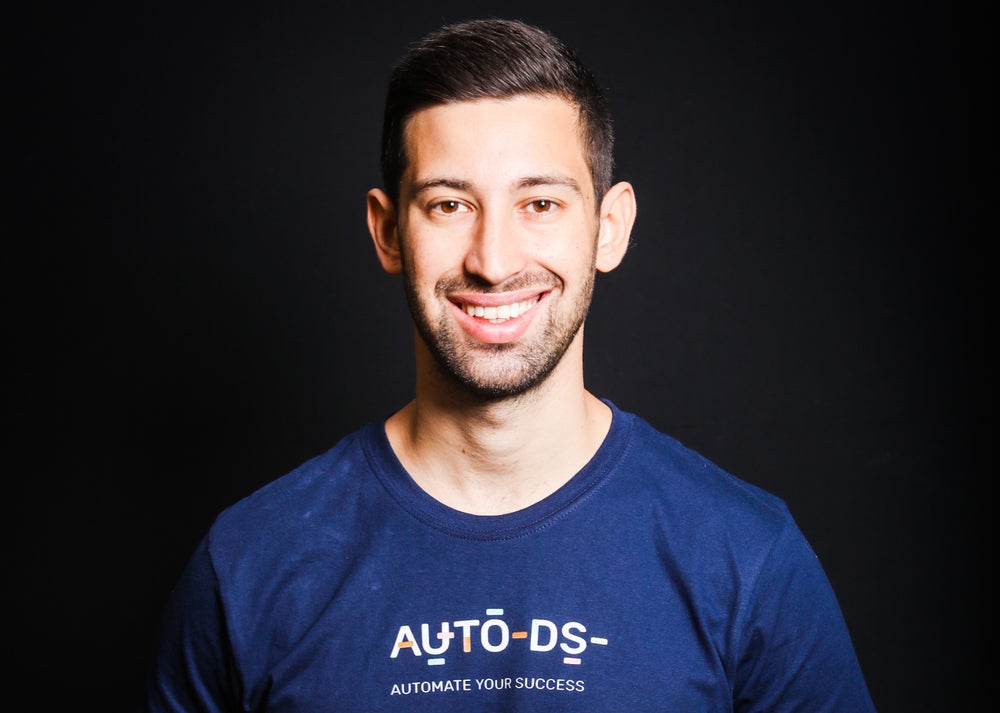
Lior Pozin started his ecommerce business at age 14 as a side hustle. His first sale was a cell phone, which he originally intended to buy for himself. He noticed the phone on sale on one website at a significantly cheaper price than what it was selling for on eBay. So, he copied the product to eBay at a competitive price point, changed the pictures and made his first sale within three hours.

By 2016, when he was 21, Pozin had grown the side hustle to $6,000 in revenue per month selling various products, and he wanted to automate tasks.

He had an idea for a platform that would automate dropshipping, the ecommerce business model he used, where an online store sells products to customers without having to stock or ship the products themselves. Instead, when a customer orders an item, the store forwards the order details to a third-party supplier that then ships the product directly to the customer.

The idea became AutoDS. Pozin aimed to solve his own problem — he wanted to create 100 paid dropshipping stores and manage all of them. He aimed to automate tasks like product sourcing, order fulfillment and inventory management, so he coded the first iteration of AutoDS himself.

“I didn’t have any money to invest, so I just developed everything by myself,” Pozin tells Entrepreneur. “I’m a developer, so I just started to code everything, and the first revenue was just me coding.”

Related: His College Side Hustle Made $12,000 on Amazon in 2 Weeks — Then It Surpassed $250 Million

Nine years later, AutoDS now makes tens of millions of dollars in revenue and has brought in over $150 million in dropshipping revenue for its over 100,000 paying customers, Pozin says. The startup grew to 250 employees with no external investment and was acquired by freelance marketplace Fiverr in July 2024 for $92 million.

Lior Pozin. Credit: AutoDS

Pozin, now 30, is still the CEO of AutoDS and runs the company as a separate business unit within Fiverr. He says that the key to AutoDS’s success was creating a unique product that put everything a dropshipper needs into one place, like automatic order processing, tracking updates and returns, so store owners don’t need to manage those parts manually.

“With AutoDS, it was more about listening to the customers and going really, really aggressive in terms of all-in-one,” Pozin says. “Being an all-in-one platform helped us charge our users for higher prices. It helped us get to a much wider spectrum of users. We kept listening and introducing new features.”

Related: She Took Her Business From a $5,000 Investment to Over $1 Million in Revenue — Here Are Her 3 Profit Hacks for Small Business Owners

AutoDS makes money through several different avenues. The first method is through subscriptions for dropshippers, with the average plan costing $40 a month, according to Pozin. The second is through credits. When a user wants to fulfill an order using AutoDS, they have to pay for the credits required to fulfill it. AutoDS also receives a cut of each sale it fulfills from its suppliers.

How Pozin got started dropshipping

When Pozin got started with dropshipping at 14, he used Amazon to figure out which products were trending and copied the products to his own store.

“I didn’t try to reinvent the wheel,” he says.

Related: Your Home Likely Has $4,000 Worth of Sellable Items Just Collecting Dust, According to eBay’s CEO

Pozin kept dropshipping as a side hustle until he started AutoDS. The company took off immediately and obtained its first monthly recurring revenue two months after it launched. From there, it kept growing more than 100% per year consistently, he says.

Pozin says that consistency is crucial to success in dropshipping.

“I believe that there is no dropshipper who is not successful,” Pozin says. “There are just dropshippers who didn’t try enough. To me, the difference was that I just didn’t give up.”

Lior Pozin. Credit: AutoDS

Pozin immigrated from Ukraine to Israel with his family, and he grew up with a “survival mindset.” When he encountered difficulties dropshipping, he knew he had to survive and pay the bills.

“I’m someone who just doesn’t give up,” Pozin says. “That’s what drove my success in terms of the mindset.”

Related: This 29-Year-Old Founder Took a $150,000 Pay Cut to Become CEO of His Own Startup. Here’s Why He Says It Was Worth It.

Why AutoDS grew and early challenges

Pozin says that AutoDS grew because he took an “aggressive” approach to growth. For example, for the first five years, he took a “very minimal salary” and reinvested nearly 100% of the company’s profits back into the business.

Hiring was one of the most challenging aspects of building the company. Budgetary constraints made it difficult to hire the right people for the right positions.

Pozin addressed that challenge by taking a “slow” approach and only hiring after he saw proof of concept for that specific need. For example, if he wanted to run Google campaigns, he would first figure out how to create one. Only after he proved to himself that it was worth it would he hire someone else to take on that responsibility.

Related: This Founder Solved His ‘Biggest Mistake’ to Go From 0 to 500,000 Customers

Pozin’s best piece of business advice is to listen to the market, which many founders forget.

“They’re just running to hire and to raise money instead of thinking for a moment about what the market really needs and focusing just on that,” he says. “That’s the key.”

Key Takeaways

  • Lior Pozin started dropshipping on eBay at 14.
  • By age 21, he was making $6,000 per month dropshipping, and he wanted to automate tasks.
  • Pozin founded AutoDS, an automated dropshipping platform, in 2016 and grew it with no outside investment before selling it to Fiverr in 2024 for $92 million.

Lior Pozin started his ecommerce business at age 14 as a side hustle. His first sale was a cell phone, which he originally intended to buy for himself. He noticed the phone on sale on one website at a significantly cheaper price than what it was selling for on eBay. So, he copied the product to eBay at a competitive price point, changed the pictures and made his first sale within three hours.

By 2016, when he was 21, Pozin had grown the side hustle to $6,000 in revenue per month selling various products, and he wanted to automate tasks.

The rest of this article is locked.

Join Entrepreneur+ today for access.

https://www.entrepreneur.com/starting-a-business/this-founders-ebay-side-hustle-led-to-a-92m-acquisition/499534


The Future of Wellness Is Happening IRL — Not on Your Feed

Opinions expressed by Entrepreneur contributors are their own.

Key Takeaways

  • Tyler Wakstein and Sean Hoess created Eudēmonia to foster and improve human health.
  • The 4-day event happens this weekend in West Palm Beach
  • The summit’s real value comes from the unscripted moments that happen between sessions.

In a culture obsessed with algorithms, two entrepreneurs are betting that true success isn’t measured by clicks or views but by in-real-life community gatherings. That’s the driving idea behind the Eudēmonia Summit, a four-day health and wellness event in West Palm Beach, Florida from November 13-16.

Tyler Wakstein and Sean Hoess created Eudēmonia to bring together scientists, founders, and wellness pioneers to explore the latest developments in the red-hot wellness space. It’s the kind of event where you can walk from a cold-plunge demo to a session called The Skeptics’ Corner, where experts debate everything from seed oils to blue light, or drop into a sound bath before a panel on longevity and human performance.

“We’re very intentional about creating a space for people to get out of their head and into their heart,” Wakstein says. “Digital content is great for reach, but real transformation—real magic—happens in person.”

Building on experience

Before collaborating on Eudēmonia, Wakstein and Hoess shaped two other influential live event brands. Wakstein worked with Summit Series, the invite-only gathering known for bringing together thought-leaders on cruise ships, ski mountains, and desert pop-ups. Hoess co-founded Wanderlust, the global yoga and mindfulness festival that helped define the modern wellness movement.

Both realized the power of what might be called “have-to-be-there experiences”— moments that can’t be streamed, only sensed. “At Summit, we believed the real magic wasn’t online,” Wakstein says. “It was about being in the room. The mystery was part of it. You had to show up.”

Hoess says Eudēmonia is a natural evolution of that work. “People adopt better habits and feel better when they’re surrounded by others doing the same. Our goal is to create a space where those connections can form and thrive.”

Where worlds collide

Another part of what makes Eudēmonia unique is who shows up. The speakers range from medical researchers and performance scientists to biohackers and spiritual teachers. “We’ve brought together groups that don’t usually talk,” Hoess says. “Doctors, biohackers, people deep into meditation or Eastern practices. They’re all on the wellness spectrum, but they rarely share the same space.”

That unlikely mix sets the stage for unexpected encounters. Beyond the talks and workshops, the real energy happens in between. The hallway chats. The chance introductions. The shared experiences that can’t be scheduled. “Those create the real magic that you don’t feel that unless you’re there,” says Wakstein.

Getting the word out

But the power of in-real-life experience can be hard to market to potential attendees. It’s the equivalent of saying, “You just have to show up and trust that the serendipity unfolds,” says Wakestein. How do you sell something that has to be felt?

That’s been one of the biggest challenges for the founders, who have had to get creative in their outreach. In the days leading up to the event, Wakstein and Hoess dressed in togas and handed out flyers at the farmer’s market. Locals were shocked it was the first they were hearing about it.

Still, Wakestein and Hoess aren’t swapping their approach for mass-market reach. They’re more focused on building something sustainable than viral. “We want this to last,” Hoess says, “but we won’t sacrifice the experience to make that happen.”

That may be the ultimate takeaway from Eudēmonia. In a world built around scrolling, the next evolution of wellness might be actually showing up.

Key Takeaways

  • Tyler Wakstein and Sean Hoess created Eudēmonia to foster and improve human health.
  • The 4-day event happens this weekend in West Palm Beach
  • The summit’s real value comes from the unscripted moments that happen between sessions.

In a culture obsessed with algorithms, two entrepreneurs are betting that true success isn’t measured by clicks or views but by in-real-life community gatherings. That’s the driving idea behind the Eudēmonia Summit, a four-day health and wellness event in West Palm Beach, Florida from November 13-16.

Tyler Wakstein and Sean Hoess created Eudēmonia to bring together scientists, founders, and wellness pioneers to explore the latest developments in the red-hot wellness space. It’s the kind of event where you can walk from a cold-plunge demo to a session called The Skeptics’ Corner, where experts debate everything from seed oils to blue light, or drop into a sound bath before a panel on longevity and human performance.

The rest of this article is locked.

Join Entrepreneur+ today for access.

https://www.entrepreneur.com/business-news/wellness-goes-irl-at-the-eudemonia-summit/499597


Microsoft’s AI CEO Has a Strict In-Person Work Policy — Here’s Why

Key Takeaways

  • Microsoft will require employees to come into the office in person three times a week starting in February.
  • However, Microsoft AI CEO Mustafa Suleyman already requires employees on his team to be in the office four times a week.
  • Suleyman also prefers open floor plans, where employees sit at open desks grouped into “neighborhoods” of 20 to 30 people.

Microsoft recently mandated that employees come into the office in person three days a week starting in February 2026 — but for employees on Microsoft AI CEO Mustafa Suleyman’s team, working in person for most of the week is already the norm.

According to a report released earlier this week from Business Insider, Suleyman requires employees on his team who live near an office to be there at least four days a week. Suleyman is the head of Microsoft AI, a division focused on Copilot and other consumer AI products and research. Executives who report directly to Suleyman must approve all exceptions to the in-office rule.

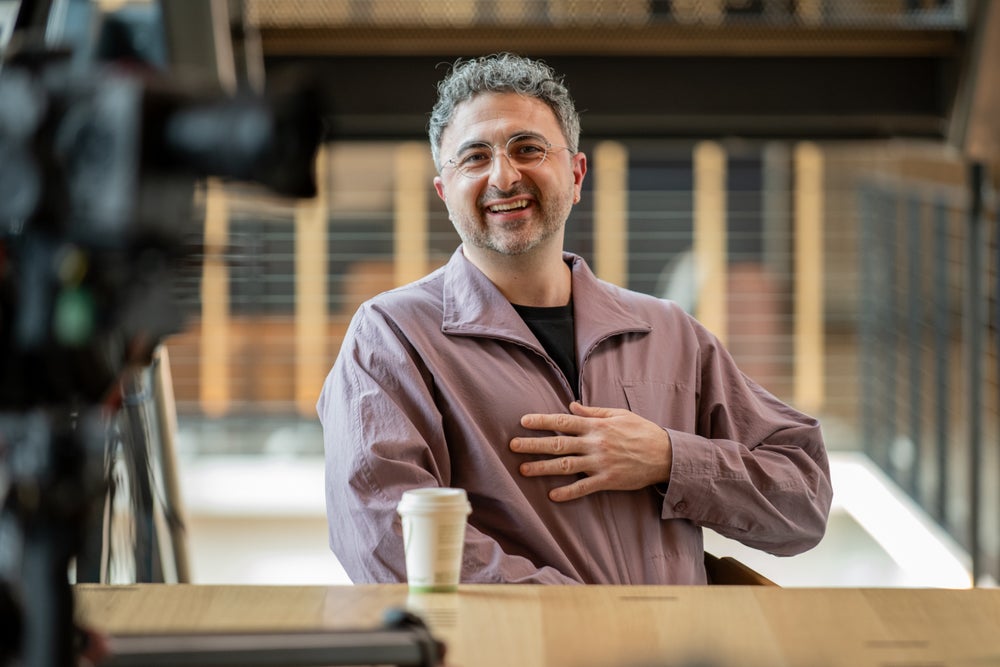
“I very much believe in the in-person working culture,” Suleyman told Business Insider, stating that it helps “defragment” teams and allows for collaboration.

Related: Microsoft Claims Its AI Is Better Than Doctors at Diagnosing Patients, But ‘You Definitely Still Need Your Physician’

Not only does Suleyman require employees to work from the office more than other Microsoft employees, but he also prefers open floor plans, where employees sit at open desks grouped into “neighborhoods” of 20 to 30 people. The arrangement is “much better for collaboration,” in Suleyman’s words.

“Everyone can see everyone else who’s in,” he told BI. “It just creates a lot more informal collaboration. It’s so much better.”

Mustafa Suleyman, CEO of Microsoft AI. Image Credit: Chona Kasinger/Bloomberg via Getty Images

Most of Suleyman’s AI team at Microsoft is based in Silicon Valley rather than at the company’s Redmond, Washington headquarters. Suleyman himself splits his time between Silicon Valley and Redmond, emphasizing that there is “huge talent density” in Silicon Valley and describing it as “the place to be” for his work and team.

Related: This Is Where Entrepreneurs Should Look for Business Opportunities in AI, According to Microsoft’s AI CEO

Other Microsoft teams outside of Suleyman’s that are working on AI have less strict in-person office mandates. The Cloud and AI group under Microsoft Executive Vice President (EVP) Scott Guthrie has no specific return-to-office requirements, while the CoreAI group under EVP Jay Parikh will implement a three-day-a-week in-office guideline in February, per BI.

It’s unclear how many people are on Suleyman’s AI team, though leaked organizational charts show he had at least 17 direct reports as of last month. Suleyman joined Microsoft in March 2024 from Inflection AI, a $4 billion AI startup he co-founded in March 2022. He was previously the co-founder of AI lab DeepMind, which Google acquired in 2014 for more than $500 million.

Last week, Microsoft announced that it will form a new superintelligence team under Suleyman tasked with conducting advanced AI research and developing AI smarter than the most intelligent human minds, in direct competition with Meta’s superintelligence group. Suleyman said in a blog post that he wants Microsoft’s superintelligence team “to be the world’s best place to research and build AI.”

Key Takeaways

  • Microsoft will require employees to come into the office in person three times a week starting in February.
  • However, Microsoft AI CEO Mustafa Suleyman already requires employees on his team to be in the office four times a week.
  • Suleyman also prefers open floor plans, where employees sit at open desks grouped into “neighborhoods” of 20 to 30 people.

Microsoft recently mandated that employees come into the office in person three days a week starting in February 2026 — but for employees on Microsoft AI CEO Mustafa Suleyman’s team, working in person for most of the week is already the norm.

According to a report released earlier this week from Business Insider, Suleyman requires employees on his team who live near an office to be there at least four days a week. Suleyman is the head of Microsoft AI, a division focused on Copilot and other consumer AI products and research. Executives who report directly to Suleyman must approve all exceptions to the in-office rule.

The rest of this article is locked.

Join Entrepreneur+ today for access.

https://www.entrepreneur.com/business-news/microsofts-ai-ceo-has-a-strict-in-person-work-policy/499594


Why Your Global Team Probably Isn’t as Aligned as You Think — and How to Fix It

Opinions expressed by Entrepreneur contributors are their own.

Key Takeaways

  • Teams can appear aligned on paper while harboring accountability leaks caused by ambiguous ownership, assumptions and differing interpretations across regions.
  • Accountability leaks show up in the gray zones of ownership. When responsibilities are implied but never confirmed, work falls through the cracks.
  • When you lead across time zones, you’re unlikely to completely eliminate ambiguity. But you can limit how far it spreads by creating shared meaning before you create shared plans.

When you lead teams across regions, it’s so easy to buy into the belief that “alignment means understanding.” It doesn’t.

In meetings, everyone nods in agreement as PowerPoint decks get approved and milestones documented. But what seems like apparent alignment on paper can still hide quiet friction that slows down execution.

I learned that lesson the hard way while leading a global transformation project for a client. Every region was at the table, and roles and responsibilities were clear. We assigned owners so people knew what their role was, but the deadlines kept slipping.

On paper, progress looked good, but in reality, the work felt heavy and slow, like we were wading through mud no matter how hard we tried.

At first, I blamed capacity and later blamed complexity as the two main causes. However, what I eventually uncovered were accountability leaks. They weren’t obvious or noisy but were “quiet gaps” where ownership slipped away between the regions, the time zones, and the different roles and job titles.

Related: I Took My Company Global This Year. Here Are 3 Things I Wish I Did Differently

When everyone owns it, nobody drives it

In one meeting, I asked what I believed was a simple question: “Who’s driving this part of the rollout?”

Four names we were given, and that in itself was interesting. Each person “thought” someone else was in charge of the next step. The task had somehow become a shared space with no single driver.

That’s when I realized the way accountability leaks form.

They show up in the gray zones of ownership. Those spaces where responsibilities are implied, but never confirmed. And the bigger the team, the faster these leaks multiply. Especially across cultures, where silence can mean agreement in one country and hesitation in another.

When I went back to review past decisions, I saw a distinct pattern. Words like “we’ll handle it” or “let’s align next week” may have sounded good in the moment, but they left far too much room for individual interpretation.

Fact: “Global” doesn’t mean aligned

Working globally means working through different layers of meaning and interpretation, and it’s not uncommon for the same word to carry as many different interpretations as the number of regions involved in the global initiative or project.

In the case I’m referring to here, “launch” meant:

  • Sending an announcement in region A.

  • In region B, it meant full delivery.

  • In region C, it meant final sign-off from the legal folks.

Everyone was doing their part, but they weren’t doing the same thing.

We were all aligned in regard to intention, but not in terms of definition. That’s an example of how accountability leaks start — not with poor performance, but with mixed understanding.

Over the years, I’ve discovered that leaders often assume that alignment is about agreement. But agreement is only half of the story. True alignment is when everyone shares the same meaning of success. Without that, execution slows even when effort doesn’t.

What I learned about fixing the challenge

When I finally stopped trying to control accountability through additional meetings, something shifted almost instantly. The answer wasn’t structure, but clarity.

Here’s what worked.

First, I learned to confirm rather than assume: I started ending meetings with one question: “What exactly happens next, and who’s driving it?” I wrote it down in simple and plain language. Every region confirmed the same understanding. That single habit cut delays by weeks.

Second, I slowed down before speeding up: When an initiative or project spans countries, the pressure from above and the rush to “move fast” can easily make you lose precision. I learned through this experience to pause and take the time to define success upfront. In the spirit of transparency, I’ll admit that it felt slower at first, but it created real speed later because there were fewer corrections.

Third, I treated accountability like a relationship, and not as a rule: Let’s talk about charts and a common misconception. People don’t take ownership because of charts. They take ownership when they feel trusted, when they feel supported and when they feel clear on expectations. Once I started asking, “What might make this hard to own?” I heard the truth early enough to be able to fix it.

Fourth, I made clarity visible: We created a simple, non-complicated global tracker that listed every decision, owner and next action. Did I mention that it wasn’t fancy? But while being simple, it made invisible work visible. The moment something had no owner, it stood out.

These weren’t complicated steps, but common sense applied consistently.

Related: 3 Elements at the Forefront of Global Team Success

The real cost of leaks

Back then, I thought missed deadlines were the main problem. But once I found those leaks, I quickly realized it wasn’t the deadlines at all. It was the energy they drained.

  • Teams were spending hours clarifying what they thought was already clear.

  • Meetings turned into repetitive loops.

  • Leaders started to question competence when the real issue was context.

The truth about accountability leaks is that every leak drains trust, and not just between people, but between regions.

And when trust falls … collaboration follows.

Once we fixed the leaks, execution got much lighter, conversations became shorter and decisions stuck. I noticed that people began to take initiative again because they weren’t spending (read: wasting) time cleaning up confusion.

A pattern I see everywhere

I’ve seen the same thing play out in almost every executive, leader or global team I’ve been brought in to strategically support since then. The truth is, accountability leaks don’t start with failure. They start with good intentions.

  • People want to be respectful.

  • They don’t want to overstep.

  • They assume others understand what they mean.

The accountability leak starts there. In politeness. Not neglect.

That’s why it’s critical that leaders model clarity — not perfection, but transparency.

It’s okay for a leader to say, “I thought we were clear, but maybe we’re not,” because that single sentence alone often resets the tone of an entire meeting.

What do great leaders do differently?

The best leaders I’ve worked with and supported strategically do one thing consistently. They turn accountability into clarity, and not control.

They don’t rely on fancy and often complicated “dashboards” to tell them where work stands. They listen for the language people use when they describe progress, and if they detect hesitation, they dig in.

They ask simple questions that bring precision. Questions such as:

  • “What does finished look like in your region?”

  • “What could cause this to fall through?”

  • “When will we know it’s complete?”

In other words, they don’t just assign tasks; they confirm meaning. That’s the type of quiet discipline that keeps global teams moving in sync.

The shift that changed everything

The moment I started focusing less on tracking and more on translating, everything changed.

Ultimately, successful and effective global execution isn’t about managing complexity, but about simplifying understanding across the board.

A fact of global initiatives and projects is that when you lead across time zones, you’re unlikely to eliminate ambiguity completely. But what you can do is limit how far it spreads, and you do that by creating shared meaning before you create shared plans.

That’s what stops accountability leaks. Not more control, but more intentional connection.

Related: 5 Ways to Build a Thriving Global Culture in Your Business

If you or your team ever feels busy but slow, or aligned but still inconsistent, that’s usually a sign of classic accountability leaks. These leaks don’t fix themselves. Instead, they stay hidden inside polite agreement until a deadline drags them out into the open.

How will you know you’ve fixed these leaks?

  • When work starts to feel lighter

  • When regions anticipate each other’s needs without a new “alignment meeting”

  • When people speak with the same clarity, no matter where they sit.

That’s the real sign of global alignment.

It’s not in the slide decks or timelines, but in the way accountability travels cleanly across borders without losing its meaning.

When that happens, execution stops being heavy, and it starts to flow.

https://www.entrepreneur.com/leadership/how-great-leaders-keep-global-teams-moving-in-sync/498843


Most Founders Obsess Over Their Pitch — and Overlook What Actually Gets a ‘Yes’

Opinions expressed by Entrepreneur contributors are their own.

Key Takeaways

  • Investor engagement depends as much on how a pitch is delivered as on the idea itself.

You leave the pitch thinking you nailed it. You hit your key points, delivered the vision, backed it with data and held the room’s attention. Then, nothing. No follow-up. Just silence.

It’s tempting to blame the product, the timing or the market. But more often, the problem isn’t the idea — it’s the delivery. Most pitches fall short not because they lack innovation but because they lack connection.

The good news? You don’t need to rebuild your deck. You need to rethink your approach.

Related: Is Your Pitch Not Working? Here’s How to Fix It, According to Experts.

Pitching isn’t performing — it’s improv

Founders often treat pitching like delivering lines in a play: rehearsed, rigid, one-directional. But it’s more like improv. You’re not just there to talk; you’re there to engage.

Improv actors succeed by staying present. They listen, adjust and respond to what’s happening around them. Founders need to do the same. If you’re just waiting for your turn to speak, you’re not really in the room — and if you’re not in the room, you can’t connect with the people in it.

Debra Schifrin, a lecturer at Stanford Graduate School of Business, explains that when leaders model the spirit of “yes, and,” it creates psychological safety and boosts engagement. That tone invites investors to lean into the conversation instead of becoming defensive or skeptical.

Every pitch should feel like a slightly different conversation because every room has different dynamics. The goal isn’t to dump information — it’s to spark interest.

The “one-shot” myth is killing your momentum

If you pitch with presence, curiosity and humility, even a “no” can lead to three new introductions. But if you treat it like a make-or-break moment, the pressure shows, the conversation tightens and the door closes.

Long-term relationship building isn’t a nice-to-have. It’s risk reduction.

I’ve walked into rooms where everyone knew within minutes that the deal wouldn’t work. But even then, connection mattered. Maybe the VC focuses on energy drinks while you’re building in tech — fine. If they like you, they might introduce you to the right person. An open door is still an open door.

A rookie mistake is assuming only one person in the room matters. Usually, there’s one who can say yes, but everyone can say no.

Founders often overlook analysts, associates and interns — the people who shape internal conversations after you leave. Treat them like obstacles and they’ll treat your pitch the same. Treat them with respect and you might earn an unexpected advocate.

Preparation is key. Know who’s in the room, and speak to everyone with clarity and respect. Don’t tune out once you realize you’re not pitching the decision-maker. That intern might one day be your champion — or your silent killer.

Handle curveballs with curiosity, not panic

There’s always a question you didn’t expect. Maybe it feels random. Maybe it feels like a trap.

It’s not. It’s a window.

Most founders either freeze or ramble when hit with surprise questions. The better move? Slow down and ask for context. Say, “That’s a great question — what made you think of that?” Use the moment to build trust, not defend yourself.

It’s your chance to show you can think beyond the script — that you’re curious, adaptable and steady under pressure. Grace under pressure isn’t just admirable. It’s memorable.

Related: Stop Selling and Start Solving — These are the Secrets to Closing More Deals

Know what your audience values and lead with that

Every audience wants something different.

Corporate executives want to remove friction. VCs want to know you’ll make them look good. Angel investors want to believe in you, not just your product.

Your job is to figure out what matters to them and speak directly to it. That’s the difference between a conversation that fizzles and one that opens doors.

And regardless of who you’re speaking to, give value. Always. Even if they’re not buying, they should walk away with something: a new idea, a sharper insight, a different perspective. That’s how you stay top of mind.

Simplify and focus

One of the fastest ways to lose a room is to say too much. You want them to see the full brilliance of your idea — but the more you talk, the less they hear. Simplify. Focus on the core insight that sets you apart. Nail that. If it resonates, the conversation continues. If it doesn’t, more slides won’t help.

Think of your pitch as an opener, not a finale. Give them an intriguing lede and let them help you write the rest of the story.

Diagnose — don’t discard

When a pitch doesn’t land, the instinct is to start over. Don’t. Use binary thinking to diagnose what went wrong.

Ask yourself:

  • Was this the right audience?
  • Did I lead with the strongest value proposition?
  • Was I actively listening?
  • Did I adjust when I noticed confusion or pushback?

You don’t need to rebuild everything from scratch. Just isolate the variable that failed and recalibrate. That’s how strong founders turn “no” into a better next attempt.

Curiosity is your most underrated asset

The best founders I’ve met share one thing in common: they’re more curious than charismatic.

They ask better questions. They want to understand the person across from them. They know that presence matters more than perfection — and that real connection beats performance every time.

If someone tells you your pitch is missing something, maybe that “something” is you — fully present, fully engaged, listening harder than you speak.

Because that’s what turns “no thanks” into “tell me more.”

Key Takeaways

  • Investor engagement depends as much on how a pitch is delivered as on the idea itself.

You leave the pitch thinking you nailed it. You hit your key points, delivered the vision, backed it with data and held the room’s attention. Then, nothing. No follow-up. Just silence.

It’s tempting to blame the product, the timing or the market. But more often, the problem isn’t the idea — it’s the delivery. Most pitches fall short not because they lack innovation but because they lack connection.

The rest of this article is locked.

Join Entrepreneur+ today for access.

https://www.entrepreneur.com/growing-a-business/most-founders-obsess-over-their-pitch-and-overlook-what/499116


Don’t Treat Intellectual Property as an Afterthought. It’s the Key to Long-Term Success.

Opinions expressed by Entrepreneur contributors are their own.

Key Takeaways

  • Innovation without adequate protection is fragile. And in the digital age, those who take intellectual property are the ones who endure. Entrepreneurs must act early to formalize ownership, register trademarks and establish licensing rights.
  • Ownership alone isn’t enough. Responsible licensing and collaboration allow brands to expand their reach and generate new revenue streams while maintaining control over quality and representation.
  • Entrepreneurs must enforce IP with purpose. Taking action shows that authenticity and fairness matter.

In entrepreneurship, we celebrate speed. Founders are taught to move fast, disrupt industries and seize market share before someone else does. But in a digital world where ideas can be replicated instantaneously, innovation without adequate protection is fragile. The very same openness that facilitates creativity and is often cherished by creators also exposes entrepreneurs to imitation and exploitation.

In recent years, the crypto and Web3 sectors have both seen this tension demonstrated clearly. Many projects have grown from memes into movements, creating enormous value without clear ownership or appropriate legal safeguards. Yet as the market matures, one guiding principle has become synonymous with many who succeed: Those who take intellectual property (IP) seriously are the ones who endure.

When I joined Neiro as Co-Lead, I saw firsthand how important it is for digital communities to anchor innovation in legitimacy. In 2025, Neiro became the first memecoin project to acquire and enforce exclusive IP rights from Atsuko Sato, the owner of Kabosu, the original Doge. By securing formal ownership of both our name and likeness, we were able to take decisive action against unauthorized tokens and copycat projects that misused our identity.

This process proved that decentralized communities can still successfully operate within recognized legal frameworks, whilst maintaining the transparency and shared values held dear by members.

IP is no longer a legal afterthought or a luxury reserved for large corporations. It is now a foundation for trust, collaboration and innovation. Whether you are a startup founder, creative entrepreneur or digital brand owner, thinking like a brand rather than just a builder can mean the difference between short-term exposure and long-term success.

Related: The Basics of Protecting Your Intellectual Property, Explained

Lesson 1: Secure early, not reactively

Too many entrepreneurs treat IP as something to worry about later, once a product gains traction. By then, it is often too late. The more visibility your brand achieves, the more likely it becomes a target for competitors or imitators.

A proactive approach starts with identifying what you actually own, from logos and brand names to designs, code, proprietary processes and securing the requisite legal protection before value accumulates.

In emerging industries such as Web3, where culture and commerce overlap, this is especially critical. At Neiro, we saw how fast narratives spread and how quickly imitators appeared once our community grew. Acting early to formalize ownership, register trademarks and establish licensing rights is not bureaucracy; it is brand insurance.

Even outside crypto, the same rule applies. If your business creates something distinctive, a product, design or service, assured ownership is the first step toward protecting your future.

Lesson 2: License and collaborate responsibly

Once IP is secured, many stop there. But ownership alone does not create value; how you use and share it does.

Licensing is a powerful yet underused tool. It allows brands to expand their reach, collaborate across industries and generate new revenue streams while maintaining control over quality and representation. Franchises and fashion brands have consistently shown how structured licensing can turn creative assets into sustainable ecosystems.

For Neiro, working directly with the creator of the Doge meme established both legal legitimacy and a framework for collaboration. That structure opened the door to partnerships and brand extensions grounded in transparency and respect for creators.

For entrepreneurs, responsible licensing means being intentional about partnerships, ensuring alignment in values and clearly defining ownership and benefit sharing. Done well, licensing transforms IP from a defensive shield into a growth engine.

Related: What Every Entrepreneur Needs to Know About Intellectual Property

Lesson 3: Enforce with purpose

Protection and licensing are only effective if backed by accountability. Enforcing IP can be uncomfortable, especially in global industries, but avoiding it can weaken everything you have built to date.

When imitation threatens your brand’s integrity, taking action shows that authenticity and fairness matter.

In Neiro’s case, enforcement involved working with major platforms to remove unauthorized tokens that misused our identity. The process required patience and coordination, but it reinforced a key truth: Legitimacy matters in digital culture.

For entrepreneurs, enforcement does not always mean going to court. It can start with education: communicating boundaries, issuing clear guidelines and inviting responsible collaboration. The goal is stewardship, not confrontation. Protecting your IP protects your community.

The broader lesson: Legitimacy as a business strategy

In today’s economy, reputation is currency. Consumers are more discerning than ever before about the brands they support, and investors value companies with clear ownership and ethical governance.

This means legitimacy itself has become a growth strategy. Owning your brand identity, protecting your creative assets and enforcing your rights signal professionalism and maturity. They tell the world that you are not just following trends, you are building something designed to last.

This equally applies to startups and established firms. Whether you are building a fintech platform, a design studio or a consumer brand, sustainable innovation depends on responsible ownership.

Related: 4 Intellectual Property Mistakes Startups Make and How to Avoid Them

A call to entrepreneurs

Entrepreneurs often pride themselves on being disruptors, but disruption without discipline rarely scales. As industries become more connected and digital identities more valuable, IP will serve as the framework linking creativity, commerce and compliance.

Every entrepreneur should ask themselves three questions:

  1. Do I truly own what I am building?

  2. Am I using that ownership to create sustainable growth?

  3. Am I prepared to protect it when needed?

If any of the answers to these questions are uncertain, then that is where to start.

The future of entrepreneurship will not belong to those who move the fastest, but to those who build the most trust. Ownership, both legal and ethical, is how that trust is earned.

In the end, IP is not just about paperwork or trademarks. It is about defining your identity in a crowded marketplace and ensuring your ideas remain yours, even as they inspire others.

In the digital age, legitimacy is the ultimate innovation.

Key Takeaways

  • Innovation without adequate protection is fragile. And in the digital age, those who take intellectual property are the ones who endure. Entrepreneurs must act early to formalize ownership, register trademarks and establish licensing rights.
  • Ownership alone isn’t enough. Responsible licensing and collaboration allow brands to expand their reach and generate new revenue streams while maintaining control over quality and representation.
  • Entrepreneurs must enforce IP with purpose. Taking action shows that authenticity and fairness matter.

In entrepreneurship, we celebrate speed. Founders are taught to move fast, disrupt industries and seize market share before someone else does. But in a digital world where ideas can be replicated instantaneously, innovation without adequate protection is fragile. The very same openness that facilitates creativity and is often cherished by creators also exposes entrepreneurs to imitation and exploitation.

In recent years, the crypto and Web3 sectors have both seen this tension demonstrated clearly. Many projects have grown from memes into movements, creating enormous value without clear ownership or appropriate legal safeguards. Yet as the market matures, one guiding principle has become synonymous with many who succeed: Those who take intellectual property (IP) seriously are the ones who endure.

The rest of this article is locked.

Join Entrepreneur+ today for access.

https://www.entrepreneur.com/starting-a-business/3-lessons-founders-must-learn-about-intellectual-property/498964