Apple’s New $230 iPhone Pocket Is Dividing the Internet

Key Takeaways

  • Apple and Issey Miyake jointly unveiled the iPhone Pocket, a 3D-knit, limited-edition wearable for carrying an iPhone and small essentials, earlier this week.
  • The product, which goes on sale in select global markets, including the U.S., on Friday, marks the two brands’ first official product collaboration.
  • The iPhone Pocket comes in two configurations: a $150 short strap and a $230 long strap.

Apple is releasing a unique iPhone accessory called the iPhone Pocket, which Apple said in a press release is inspired by the concept of a “piece of cloth.”

The iPhone Pocket is a ribbed, 3D-knit structure that is designed to hold your iPhone and other small essentials, like AirPods, cards or keys. The Pocket can hold any iPhone and comes in two configurations: a $150 short strap with eight colors, including lemon, purple and pink, and a $230 long strap in sapphire, cinnamon and black. The short iPhone Pocket can be looped onto a wrist or tied onto bags, while the long version can be styled as a crossbody bag.

Long iPhone Pocket in cinnamon used as a crossbody bag. Credit: Apple

Apple announced on Tuesday that it partnered with Japanese fashion house Issey Miyake to launch the limited-edition wearable on November 14, both online for customers in the U.S., UK, France, Greater China, Italy, Japan, Singapore and South Korea, and at select Apple Store locations.

Related: ‘We’re Very Open’: Apple CEO Tim Cook Says He Wants to Buy Startups. Could Your Company Be Next?

Molly Anderson, Apple’s vice president of industrial design, said in the press release that Apple and Issey Miyake “share a design approach that celebrates craftsmanship, simplicity and delight.”

“This clever extra pocket exemplifies those ideas and is a natural accompaniment to our products,” Anderson said.

Short iPhone Pocket in pink, tied to a bag. Credit: Apple

The iPhone Pocket marks the first time that Apple has collaborated with Issey Miyake on a product. However, Apple has a history with the high-end Japanese brand. Steve Jobs, the late founder and CEO of Apple, often wore a black turtleneck designed by Issey Miyake. Miyake stopped making the shirts after Jobs’ death in 2011.

This is Apple’s second foray into wearable iPhone fashion this year. When the company released the new iPhone 17 lineup in September, it also launched a $59 crossbody strap, made from recycled plastic, for iPhones. The strap attaches to the bottom of one of Apple’s compatible cases for the iPhone, like the clear and silicone cases for all iPhone 17 models and the iPhone Air.

Related: ‘Most Powerful Yet’: Apple Just Revealed the iPhone 17, iPhone Air, and AirPods With Live Translation. Here’s What to Know.

The iPhone Pocket has met with mixed reactions online. Marques Brownlee, a tech influencer with more than 20 million subscribers on YouTube and over six million followers on X, balked at the price. In a post on X, Brownlee wrote, “TWO hundred and thirty dollars. This feels like a litmus test for people who will buy/defend anything Apple releases.”

Another user defended the price, replying, “Apple products are premium for a reason. Sometimes paying more means better quality and longer usability.”

Key Takeaways

  • Apple and Issey Miyake jointly unveiled the iPhone Pocket, a 3D-knit, limited-edition wearable for carrying an iPhone and small essentials, earlier this week.
  • The product, which goes on sale in select global markets, including the U.S., on Friday, marks the two brands’ first official product collaboration.
  • The iPhone Pocket comes in two configurations: a $150 short strap and a $230 long strap.

Apple is releasing a unique iPhone accessory called the iPhone Pocket, which Apple said in a press release is inspired by the concept of a “piece of cloth.”

The iPhone Pocket is a ribbed, 3D-knit structure that is designed to hold your iPhone and other small essentials, like AirPods, cards or keys. The Pocket can hold any iPhone and comes in two configurations: a $150 short strap with eight colors, including lemon, purple and pink, and a $230 long strap in sapphire, cinnamon and black. The short iPhone Pocket can be looped onto a wrist or tied onto bags, while the long version can be styled as a crossbody bag.

The rest of this article is locked.

Join Entrepreneur+ today for access.

https://www.entrepreneur.com/business-news/apples-new-230-iphone-pocket-divides-the-internet/499527



I Found Out the Hard Way That This Common Professional Response Is the First Sign of Trouble

Opinions expressed by Entrepreneur contributors are their own.

Key Takeaways

  • Great teams grow through honest debate, not quiet agreement — constructive conflict fuels better decisions and stronger trust.
  • Leaders who create space for respectful disagreement turn meetings into momentum and align teams around clear ownership and action.

Albert Einstein once said, “The important thing is not to stop questioning. Curiosity has its own reason for existing… Never lose a holy curiosity.”

In business, that curiosity often disappears the moment a meeting starts.

Think about it: how many times have you seen a leader lock into a decision before hearing everyone out? How many ideas die quietly because the room nods along to avoid friction? How often have you been that leader — the one unintentionally rewarding silence over candor?

When questioning stops, teams stumble.

Contrary to what you might think, unanimous agreement in every meeting isn’t a sign of alignment — it’s a warning sign. It means the real conversations are happening in hallways, side chats or texts afterward. The emperor has no clothes; your business suffers from a lack of clarity, accountability and trust.

At Alpine Intel, we learned this the hard way. Our best progress came not from easy consensus, but from healthy disagreement — the kind that challenges assumptions, sharpens ideas and strengthens relationships.

Here’s the framework we built to turn disagreement into focus instead of frustration.

Related: How to Disagree Respectfully in the Workplace — Your Ultimate Guide

1. Establish the rule: Say it here and now

Our most important rule: there is no meeting after the meeting.

If someone has an opposing view, they need to share it while everyone’s still in the room. It’s easy to critique ideas on Slack later — but growth happens when people speak up in real time.

This rule only works when everyone assumes positive intent. When people trust that their input will be heard and handled respectfully, they stop filtering themselves. The tone shifts from defensive to collaborative.

As a leader, your job is to create that environment — one where candor feels safe, not risky.

Once that principle took hold, our meetings became shorter, sharper and far more productive. Real progress started showing up not in how often we met, but in how much actually got done afterward.

2. Reward constructive disagreement

Most organizations praise composure and call it professionalism. The person who avoids conflict earns approval, while the one who challenges ideas gets labeled “difficult.”

But avoiding tension is a leadership failure. You can’t grow what you won’t question.

We decided to make this something we did better than others. When someone at Alpine Intel challenges an assumption or pushes a discussion into uncomfortable territory, we call it out — in a good way. We thank them. That recognition tells the entire organization that candor isn’t just allowed; it’s valued.

Constructive disagreement should mark someone as invested, not insubordinate. A person who speaks up to support better outcomes is doing the work leaders ask for.

Rewarding that behavior sends a clear message: participation matters more than passive approval.

3. Model what respectful conflict looks like

Teams mirror their leaders. If you shut down dissent, interrupt, or defend every point, people will stop speaking up.

But if you stay calm, ask questions, and listen before reacting, you show your team how disagreement can drive progress.

Handling conflict well takes practice. I’ve learned to pause before responding, focus on understanding the reasoning behind a challenge and separate disagreement from disloyalty. That simple habit builds confidence across the team — people know they can share hard truths without risking credibility.

Over time, disagreement becomes normal, not emotional. People stop trying to win arguments and start working to improve decisions.

4. End every debate with ownership

Debate without closure wastes as much time as silence. Once a discussion ends, someone needs to own the outcome.

We close every major meeting with two questions:

  1. Who owns this decision?
  2. What happens next?

Those two answers transform talk into action. Everyone leaves the room knowing the direction — even if not everyone agrees with it. That single act of clarity turns healthy debate into coordinated execution.

The framework in practice

Creating a culture where disagreement drives progress takes structure, not slogans. Here’s what keeps it consistent:

  • Design for candor. Build space in meetings for alternative views.
  • Presume good intent. Keep disagreement focused on ideas, not motives.
  • Recognize people who speak up. Public appreciation turns risk into reinforcement.
  • Model composure. Leaders who stay calm under pressure teach others to do the same.
  • Finish with clarity. Every discussion ends with an owner and a next step.

These habits turn open debate into a repeatable process — and make accountability visible.

Related: Stop Trying to Avoid Conflict. Here’s How to Turn Disagreements Into Growth.

Why it works

When disagreement is normalized, decision-making improves. Teams identify risks earlier, stress-test strategies and implement solutions faster. And ironically, open debate strengthens trust.

People who challenge each other directly tend to build the deepest respect — because honesty becomes safe.

At Alpine Intel, many of our best initiatives began as tough conversations that revealed blind spots we didn’t know we had. When people tell the truth in the moment, the business learns faster.

Alignment isn’t about everyone saying “yes.”
It’s about everyone understanding why the decision was made — and committing to make it work.

That’s what turns meetings into momentum.

Key Takeaways

  • Great teams grow through honest debate, not quiet agreement — constructive conflict fuels better decisions and stronger trust.
  • Leaders who create space for respectful disagreement turn meetings into momentum and align teams around clear ownership and action.

Albert Einstein once said, “The important thing is not to stop questioning. Curiosity has its own reason for existing… Never lose a holy curiosity.”

In business, that curiosity often disappears the moment a meeting starts.

The rest of this article is locked.

Join Entrepreneur+ today for access.

https://www.entrepreneur.com/growing-a-business/i-used-to-think-teamwide-agreement-was-a-win-now-i-know/499238


Free Webinar | November 19: Rise Above the Noise: How to Build Your Personal Brand to Grow Your Business

You’re an entrepreneur with great knowledge, experience, and services to offer.

But it feels like no matter what you do, you can’t get noticed or grow your client base.

It’s time to stop being ignored and start standing out! We’ve put together an incredible event that will teach you how to use your authentic authority to create a personal brand that attracts clients, investors, and unexpected opportunities.

On November 19th at 2:00PM ET, Beth LaGuardia Cooper, Chief Marketing Officer of Advantage Media, will break down how to turn your personal experiences into brand-building assets. Joined by noted thought leaders Lisa Piercey and Dr. Rob Douk, this strategy session will provide you with a roadmap to widening your reach and achieving your goals. Click here to register now.

In this session, you’ll learn:

  • Strategies for Standing Out: How to amplify your expertise and credibility in your field.
  • The Power of Publishing a Book: How authors turn their book into speaking opportunities and a tool for business growth.
  • First Steps to Becoming a Sought-After Expert: Actionable takeaways to quickly increase your visibility and impact.

Cut through the noise and make your expertise impossible to ignore!

Whether you’re a business owner, entrepreneur, or category expert, this session will show you how to stand out and turn your personal brand into your most valuable asset.

Sign Up Now

About the Speakers:

Beth LaGuardia Cooper oversees brand, PR, and marketing strategy and operations for the organization. She also leads delivery of Authority Media Services for clients in the areas of online media and engagement and public relations.

Beth LaGuardia Cooper provides leadership direction grounded in a nurturing culture that strikes a balance of performance, efficiency, and innovation. Key tenets of her marketing program include an emphasis on data-driven decision-making; testing and optimizing use of marketing technology; and innovative approaches to leveraging emerging marketing strategies and channels.

In her role, Beth is responsible for strengthening distinct identity, awareness, and preference for the brand vis-à-vis a strategy that is consistent with Forbes Books’ commitment to integrity, transparency, and unparalleled leadership in the publishing and authority media space. Ms. LaGuardia Cooper is also responsible for assessing and leading implementation of next-level marketing strategies associated with new business opportunities.

Previously, Beth served in marketing roles of growing leadership responsibility at American Public Education (NASDAQ: APEI), culminating with four years serving as CMO for APEI and its four subsidiaries. During her tenure, she helped grow the organization from $20M to $650M in annual revenue and built the marketing team from 4 to 50 professionals.

Prior to APEI, Beth held a variety of product management and marketing communications positions for organizations in the B2B and B2C technology services and B2B marketing agency spaces. Ms. LaGuardia Cooper earned an A.B. in Economics from Duke University and an MBA in Marketing from the University of Maryland. She lives in Charleston, SC with her husband and their teenage daughter.

Lisa Piercey is a board-certified physician executive and former Tennessee Commissioner of Health under Governor Bill Lee, where she served as a member of his Cabinet. A pediatrician by training, she previously held senior leadership roles at West Tennessee Healthcare, overseeing multiple hospitals and facilities. Dr. Piercey is the author of Natural-Born Entrepreneurs: Breaking into Business Ownership and a three-time acquirer of lower middle market health-related companies through traditional search fund, self-funded search, and independent sponsor models. With dual board certifications in General Pediatrics and Child Abuse Pediatrics, an MBA, and numerous professional honors, she remains actively involved in child abuse prevention, rural health initiatives, and expanding access to care for underserved populations. A passionate advocate, strategic advisor, and serial angel investor, Dr. Piercey continues to serve on multiple healthcare boards and advisory councils nationwide.

Dr. Douk is a Clinician turned Social Entrepreneur, Executive Coach, and ForbesBooks Author who is regarded as a thought leader in the behavioral health sector. He has dedicated his life to not only build award-winning businesses but transforming organizations whose mission is for measurable social benefits. He’s been named a Top 30 Entrepreneur in his 30s by the Silicon Review, a UCLA Wooden Global Leadership Fellow, and has received awards related to entrepreneurship including the Orange County Business Journal’s Excellence in Entrepreneurship and Cadillac’s Dare Greatly Award. Dr. Douk is an inspirational speaker who is known to speak from the heart and connects with his audience in a way that motivates them to take action.

You’re an entrepreneur with great knowledge, experience, and services to offer.

But it feels like no matter what you do, you can’t get noticed or grow your client base.

It’s time to stop being ignored and start standing out! We’ve put together an incredible event that will teach you how to use your authentic authority to create a personal brand that attracts clients, investors, and unexpected opportunities.

The rest of this article is locked.

Join Entrepreneur+ today for access.

https://www.entrepreneur.com/growing-a-business/free-webinar-november-19-rise-above-the-noise-how-to/498838


Turn Your Startup Into a Scalable, Sustainable Business — Wherever You Are

Opinions expressed by Entrepreneur contributors are their own.

Key Takeaways

  • To build a lasting regional innovation economy, communities must strategically invest in local talent, funding and policy incentives that encourage startups — and their leaders — to stay and scale locally.

Every founder celebrates launch day — that moment your idea becomes real. But far fewer plan for what happens next.

The truth is, the hardest part of building a company isn’t getting started. It’s staying — staying funded, staying competitive, staying in an environment that supports growth.

We talk a lot about “startup ecosystems,” but there’s a persistent myth that if a city funds a few startups, hosts demo days and attracts some investors, the rest will take care of itself. Capital will arrive. Leaders will follow. Companies will grow — and stay.

In reality, it rarely works that way.

Startups are mobile. If the local conditions aren’t right — if there’s no capital, leadership or infrastructure — they move. And they should.

For founders, that mobility is both a risk and an opportunity. Because if your environment can’t support your growth, the smartest thing you can do is find one that can.

Related: Rapid Business Expansion Can Be a Good Thing — But It Comes With Challenges. Here’s How to Make This Growth Sustainable.

Startups leave for the same reasons talent leaves

It’s a familiar story. A promising company launches in a smaller city — maybe Albuquerque or Lincoln. The community rallies, the local paper runs a feature, and there’s real momentum. Then, a few years later, the company moves.

They follow capital. They follow talent. They follow the next stage of growth.

It’s the same pattern you see with ambitious graduates — if opportunities aren’t available locally, they go where they are.

That’s not a sign of failure. It’s a signal. And as a founder, you should listen to it.

When I’ve worked with New Mexico-based startups, almost every one faced the same challenge: senior leadership talent. In many cases, the experienced executives who helped guide the company never actually relocated. Eventually, the company moved to them.

For founders, that decision can feel emotional — but it’s really strategic. Staying in the wrong ecosystem can slow your company’s adulthood.

Retention is about strategy, not sentiment

Founders often feel pressure to “represent” their region — to stay local out of pride or loyalty. But retention, for both companies and talent, is about strategy.

Ask yourself: What does my company need for its next stage of growth, and does my environment provide it?

Every thriving business ecosystem rests on three ingredients: ideas, people and capital. If your current city gives you two, you can attract the third. But if you’re missing two, it’s time to make a move.

Capital is obvious — early-stage funding may get you started, but growth capital is what gets you to scale.

People are the key. Compelling companies can recruit anywhere, but convincing top leaders to relocate takes more than salary. That’s where creative incentives — tax breaks, founder networks, equity reinvestment programs — come into play.

Even if you’re not designing policy, you can advocate for or participate in these tools. As your company matures, think of yourself as part of the growth infrastructure of your city.

Because while money launches startups, people build ecosystems.

Creative tools work — when they’re part of a bigger plan

There’s no single playbook for keeping startups or talent in a region. But creative approaches can make a difference — if they’re tied to strategy.

In New Mexico, the Taos Ski Lift Pitch connects founders and investors on a chairlift in the mountains. It’s quirky, and it works. Not because of the novelty, but because it builds real relationships.

If you’re a founder, look for (or create) those types of touchpoints. Reach out to investors and leaders outside your bubble. Build an alumni network of executives who have left your region — they might invest, mentor, or even come back when the right opportunity arises.

No single event or campaign will transform your trajectory. But a consistent pattern of visibility, creativity and connection absolutely can.

Create anchors that build momentum

Momentum is magnetic — and every company that stays and scales adds gravity to the local ecosystem.

When one startup succeeds, it attracts talent. It inspires spin-offs. Schools and investors begin to align with what’s working.

Even if you’re just one company, you can be that anchor. Every new hire, every reinvestment, every partnership you create helps build the infrastructure others can plug into later.

Consider New Mexico’s growing space sector. Companies aren’t just moving there for tax breaks — they’re moving because they see momentum. The ecosystem isn’t perfect, but it’s growing because founders stayed long enough to build something others wanted to join.

Related: Crush Your Growth Goals — Make These 5 Bold Moves to Scale and Keep Your Vision Intact

Play the long game

Scaling a company is a long game — and so is building a sustainable innovation community.

As a founder, you can’t control every factor in your environment. But you can control where you grow, how you invest, and whether you help build something that lasts.

Because the real success of a startup isn’t just getting funded or hitting an exit. It’s reaching the stage where your company — and your city — can both thrive because you chose to build for the long term.

Startup adulthood doesn’t happen by accident. It happens by design.

Key Takeaways

  • To build a lasting regional innovation economy, communities must strategically invest in local talent, funding and policy incentives that encourage startups — and their leaders — to stay and scale locally.

Every founder celebrates launch day — that moment your idea becomes real. But far fewer plan for what happens next.

The truth is, the hardest part of building a company isn’t getting started. It’s staying — staying funded, staying competitive, staying in an environment that supports growth.

The rest of this article is locked.

Join Entrepreneur+ today for access.

https://www.entrepreneur.com/growing-a-business/turn-your-startup-into-a-scalable-sustainable-business/498836


You Should Learn How to Vibe Code, Says Google Brain Founder

Key Takeaways

  • Andrew Ng is the founder of Google Brain, an AI research team incorporated into Google.
  • In a new talk, Ng recommended using AI-assisted tools to generate code, or “vibe coding.”
  • According to Ng, those who learn how to code will be more productive than those who don’t.

Google Brain AI research team founder and Stanford University computer science professor Andrew Ng believes people should still learn how to code — but with an AI twist.

At a talk at AI cloud company Snowflake‘s Build conference on Monday, Ng recommended that “everyone” learn how to code. Those who code will be more productive than those who don’t, no matter what their role is, according to Ng.

“People that code, be it CEOs and marketers, recruiters, not just software engineers, will really get more done than ones that don’t,” Ng said at the event.

Ng, who has authored over 200 research papers on AI, machine learning and robotics, said that now is a “wonderful time” to code and build something — but he recommended using AI to create code instead of writing it out manually.

Related: I ‘Vibe Coded’ an App Using AI — and Got a Working Product in Under 5 Minutes for Free. Here’s How I Did It.

“Don’t code by hand,” he said at the conference. “Don’t do [it] the old way. Get AI to help you code, and that will make people in all job functions much more productive and have more fun.”

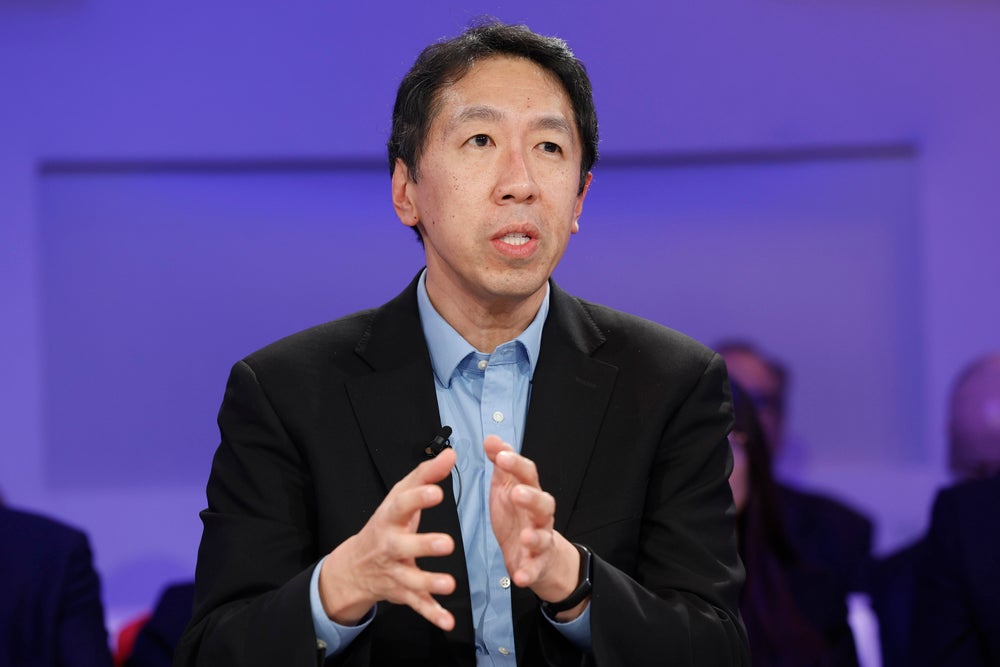
Andrew Ng. Photographer: Stefan Wermuth/Bloomberg via Getty Images

Ng recommends vibe coding, the practice of directing AI to write code based on a series of instructions. The programmer’s role shifts from writing code line-by-line to overseeing an AI assistant that generates, refines and debugs a program on their behalf. In other words, AI handles writing the actual code while programmers focus more on the big picture of what they want the code to do.

Tech CEOs have recently touted vibe coding as a way to become more productive. Google CEO Sundar Pichai said in June that he was spending his free time vibe coding a webpage with AI using AI coding assistants Cursor and Replit, both of which are advertised as able to generate code from text prompts.

Pichai also said on an April earnings call that Google was using AI to generate “well over 30%” of new code, up from 25% in October.

Related: Want to Build an App? Here’s How ‘Vibe Coding’ with AI Can Help You Do It in Minutes.

Meanwhile, Nvidia CEO Jensen Huang said in June at London Tech Week that AI is the “great equalizer” when it comes to bringing ideas to life with code. The way to ask a computer to write code is to “just ask it nicely” in plain English, as you would a person, Huang said.

At the same time, companies such as Visa, Reddit and DoorDash have started outright requiring vibe coding experience or proficiency in their job listings.

There’s also been a surge of general interest in vibe coding. According to AI trend analysis platform Exploding Topics, searches for “vibe coding” rose 6,700% from March to May.

Key Takeaways

  • Andrew Ng is the founder of Google Brain, an AI research team incorporated into Google.
  • In a new talk, Ng recommended using AI-assisted tools to generate code, or “vibe coding.”
  • According to Ng, those who learn how to code will be more productive than those who don’t.

Google Brain AI research team founder and Stanford University computer science professor Andrew Ng believes people should still learn how to code — but with an AI twist.

At a talk at AI cloud company Snowflake‘s Build conference on Monday, Ng recommended that “everyone” learn how to code. Those who code will be more productive than those who don’t, no matter what their role is, according to Ng.

The rest of this article is locked.

Join Entrepreneur+ today for access.

https://www.entrepreneur.com/business-news/google-brain-founder-you-should-learn-how-to-vibe-code/499473


Customers Now Use AI and Google to Decide What to Buy. Here’s How to Win Leads on Both.

Opinions expressed by Entrepreneur contributors are their own.

Key Takeaways

  • Improve your authority and visibility beyond your website by showing up consistently on trusted review platforms, trade publications, forum discussions, major media outlets and even niche authoritative blogs.
  • Make your website easy for both AI tools and Google to understand with clear titles, headings and copy that spell out what you do and who you help.
  • Create bottom-of-funnel content, like comparison posts and product roundups, that answer buyer questions and position your brand as the credible choice.

Two years ago, attracting new B2B customers online was pretty straightforward. You’d create helpful, SEO-optimized content, rank in one of Google’s top three spots for your target keywords and most likely capture 18% to 40% of clicks for those terms.

But now, and heading into 2026, AI search tools like ChatGPT, Claude, Perplexity and even Google’s own AI Overviews and AI Mode are changing how people search, discover and decide which vendor fits their needs.

Higher Visibility surveyed 1,500 people to understand how search behavior is evolving in 2025. 71.5% have used AI tools for search, particularly for product comparisons and recommendations, to support buying decisions.

This same behavior — using AI to narrow down options — is likely happening in your industry. But when buyers ask AI tools for recommendations and your business isn’t on that list, you lose a high-intent buyer at the exact moment they’re ready to decide.

That’s why you need to optimize for both search engines and AI tools, so your business shows up wherever buyers are looking. Here are four ways to do it.

Related: Why AI Search Will Soon Decide If Customers Ever Find Your Brand

1. Build authority beyond your website

When AI tools decide which vendors to recommend, they don’t just look at your website. They scan several sources, such as review platforms, trade publications, Reddit discussions, social media posts, major media outlets and authoritative blogs.

Research from Profound, which analyzed 680 million AI citations, found that community platforms such as Reddit and review sites like G2 frequently appear in AI-generated answers across ChatGPT, Perplexity and Google AI Overviews.

The more consistent, high-quality mentions you have across these trusted sources, the more likely AI tools are to recognize, cite and recommend your business.

Even Google now surfaces Reddit threads, review sites and community discussions more prominently in search results, especially for commercial and product-related queries, making this strategy valuable for traditional SEO and AI.

To build authority beyond your website, ensure your mentions consistently reflect what your brand is known for and the specific problems your product solves. This consistency helps AI tools accurately categorize and recommend you.

Here’s how:

  • Claim and optimize your profiles on reliable review sites like G2 and Capterra for software or Clutch for agencies. Keep your business descriptions and summaries on these sites consistent, and encourage happy customers to leave detailed reviews that mention specific results and use cases.

  • Join relevant Reddit communities or industry forums where your buyers hang out. Contribute thoughtful answers, share resources, and give genuine advice before ever mentioning your product. Once you’ve built trust (and if you already have an engaged audience), you can start your own subreddit — like Semrush did with r/Semrush — to connect directly with users and share insights.

  • Pitch your insights to industry publications and trade journals your buyers actually read. Be a helpful source by offering original data, examples or expert commentary that journalists can quote in their articles.

Related: Want to Be Discovered in AI Search? These Are the Sources That Matter

2. Make your website easy for AI to understand

AI tools read your site the same way Google does by scanning your titles, headings and content to figure out what you do and who you help.

Start with what appears in your browser tab or when someone shares your homepage link — your meta title and description. These are among the first signals that tell both search engines and AI tools what your business is about.

Say you’re a cybersecurity company for financial institutions. If your homepage title just says “Home | [Company Name],” it doesn’t really tell anyone — or any AI system — what you do. A better version would be “[Company Name] | Cybersecurity Solutions for Banks and Financial Institutions.” That way, both people and search engines instantly understand what your company offers and who it’s for.

Apply the same clarity to your headings and page copy on your homepage, product pages and use case pages using these principles:

  • Format your H2 and H3 headings as questions buyers actually ask, such as “How does [your product] work?” or “What makes [your solution] different?”

  • Use bullet points to highlight product features, benefits or step-by-step instructions rather than writing everything in dense blocks of text.

  • Include screenshots of your product and write descriptive captions that explain what each image shows. For example, instead of simply labeling an image as “Dashboard,” use a caption like “Dashboard showing monthly usage trends.”

  • Add an FAQ section that reflects how buyers naturally phrase their questions when using AI tools or search engines. Answer questions with the most important information in the first sentence, then expand on the details below.

3. Create content that answers real buyer questions

AI and Google’s algorithms both prioritize content that’s helpful, credible and experience-driven. Rather than stuffing your content with keywords, focus on genuinely answering the questions your buyers are asking when they’re looking for solutions like yours.

The best way to find these questions is to look at what your buyers already ask in real life. Review your sales call notes, customer emails and support tickets. You can also check forums like Reddit, Quora or industry Slack groups to see how people describe their problems in their own words.

Then turn these into bottom-of-funnel (BOFU) content — the kind that helps buyers compare options, evaluate features and make their final choice. Two BOFU formats that consistently get cited by AI tools and rank well on Google include:

  • Comparison posts: Write honest, in-depth pieces like “[Your product] vs. [Competitor]” that clearly explain the differences in features, pricing, use cases and integrations. This helps AI tools pull accurate information about your product when people ask questions. It also ensures how your strengths are presented, instead of leaving it up to competitors and review platforms.

  • Product roundups: Create helpful, curated lists like “Best [solution type] for [specific use case].” These guides make it easy for buyers to explore their options and give AI tools a solid source to reference.

For each piece of content, open by immediately addressing the specific pain point your buyer cares about. Then explain in detail what makes your product stand out and for what use cases, while being honest about how competitors compare.

Related: The Beginner’s Guide to Creating a Successful B2B SEO Campaign

4. Distribute your content where AI tools actually look

Google and generative AI tools also index LinkedIn posts, YouTube videos, Medium articles and forums where your buyers are already searching for answers.

Make it easy for them to find you on those platforms by doing the following:

  • Turn written guides into YouTube explainer videos or walkthroughs

  • Repurpose your best blog posts into LinkedIn carousels with key takeaways

  • Share your expertise in subreddits or Quora threads where buyers ask questions

The more places you show up with helpful content, the more likely AI tools are to discover, index and recommend you when buyers search for solutions.

As you implement these strategies, track your visibility by periodically searching for your product category on ChatGPT and Perplexity to see if you show up.

You can also monitor your Google Analytics for referral traffic from chatgpt.com, perplexity.ai and claude.ai to see what’s showing up or not and adjust your digital content marketing strategy accordingly to build authority and trust long-term.

Key Takeaways

  • Improve your authority and visibility beyond your website by showing up consistently on trusted review platforms, trade publications, forum discussions, major media outlets and even niche authoritative blogs.
  • Make your website easy for both AI tools and Google to understand with clear titles, headings and copy that spell out what you do and who you help.
  • Create bottom-of-funnel content, like comparison posts and product roundups, that answer buyer questions and position your brand as the credible choice.

Two years ago, attracting new B2B customers online was pretty straightforward. You’d create helpful, SEO-optimized content, rank in one of Google’s top three spots for your target keywords and most likely capture 18% to 40% of clicks for those terms.

But now, and heading into 2026, AI search tools like ChatGPT, Claude, Perplexity and even Google’s own AI Overviews and AI Mode are changing how people search, discover and decide which vendor fits their needs.

The rest of this article is locked.

Join Entrepreneur+ today for access.

https://www.entrepreneur.com/growing-a-business/how-to-win-leads-and-gain-visibility-on-ai-search-and-google/498592


How to Turn the Pain of Loss Into Powerful Purpose

Opinions expressed by Entrepreneur contributors are their own.

Key Takeaways

  • Reinvention happens through small choices that align with purpose and truth.
  • Women turning pain into strength are reshaping entrepreneurship for future generations.
  • Supportive community reflects our resilience, helping rebuild stronger after setbacks.

After back-to-back divorces, it would have been easy to believe I had to do it all alone. During the pandemic, the world was silent. My daughters were home, routines disappeared and my future felt unfamiliar.

Yet even in that stillness, I never felt hopeless. I felt invited. Invited to pay attention, to choose faith, to build something meaningful from the inside out.

When the divorce was final, I launched a company with someone I loved and trusted deeply. We built Wellness Eternal together in its earliest form (a brick-and-mortar showplace of Biohacking Tech). But friendship and entrepreneurship are not the same language. After eleven months, she chose to step away. She is still a dear friend, but she was not meant to be a business partner. I was left with a young company in pieces and a choice: let it go, or rebuild it into something stronger, clearer and truer. I chose to rebuild.

Wellness Eternal did not start as a brand. It started as a notebook of ideas, research, passionate conversations, prayers and late-night reflections. It was never about perfection. It was about purpose. Our purpose was, and still is, to bring efficacy and amplification to a confusing, nascent-stage industry – Biohacking. I intend to share the solutions that helped me and my daughter heal, while bringing integrity, science and spirit to a wellness space that sometimes forgets the human heart.

Related: When Life Collapses, Entrepreneurs Rebuild — 5 Lessons From From the Science of Resilience

What surprised me most was that the more I shared my story, the more I found women walking through the same kind of fire, only they were turning it into light.

One of them was Pam Gold. I met her through one of my earliest mentors, the same mentor who believed in me at eighteen, before I had titles or certainty. Years before the rest of the world was talking about biohacking, Pam was building it. She founded HACKD Fitness in New York City, a space where performance, recovery and technology worked together, compression therapy, PEMF, red light, oxygen, strength in minutes instead of hours. Since then, HACKD rebranded to PRTL.

But what most people miss is that the evolution to PRTL was not a rescue mission. The name change was intentional and already in motion. What changed after the pandemic was not her purpose, but its direction. People no longer wanted to go faster. They wanted to feel whole. PRTL became a sanctuary not just for physical strength, but for nervous system balance, mental clarity and inner alignment. Reinvention for her was not starting over. It was allowing a vision to deepen when the world shifted.

Another woman who reflects this kind of grace and grit is Jenna Zwagil. She went from homeless — living in her car, to building a multi-million dollar wellness company, to losing her marriage and identity in the process. She could have stopped. Instead, she chose to rebuild with three guiding truths: wisdom, wealth and wellness. She now leads companies, raises four children and speaks openly about wellness, wisdom and wealth. Her platform, Bitcoin is Bae, is not just about finance. It is about sovereignty. It is about choosing to live and lead in resonance with who you really are.

These women did not rescue me. They reflected me. They reminded me of who I already was and who I was still becoming. Their lives made it clear that pain is not something to hide from. It is a teacher. It is a sculptor.

And this is not just our story as individuals. It is a growing movement among women in entrepreneurship. Single mom entrepreneurs now run one in three women-owned businesses in the United States. Nearly sixty-nine percent of single mom business owners say they want to grow into a small, mid-size, or corporate company, compared to fifty-two percent of business owners without children. And forty-two percent of entrepreneurial mothers say they started a business to build generational wealth for their children. These women are not building for vanity. They are building for legacy.

Related: What My Firefighter Husband’s Recovery Taught Me About Biohacking — And Building Resiliency

What I learned from all of this is that reinvention is not one bold leap. It is a thousand small choices. Tell the truth, even when it is uncomfortable. Let go of what no longer fits, even if it once felt safe. Do not confuse loyalty with self-abandonment. Ask for help. Stay close to the people who hold your vision when you forget how to. And if you have daughters watching, show them that strength and softness can exist in the same breath.

Pam taught me that disruption often precedes innovation. Jenna taught me that reinvention is not rebellion; it is coming home to yourself. My daughters taught me that healing is not just something you do for yourself. It is something you pass down.

And today, I look at my life, my daughters, my marriage, my company, and I know none of it would exist without the breaking that came before it.

Reinvention is not becoming someone new. It is remembering who you are.

It is turning what hurt you into what heals others.

That is the art of reinvention.

Key Takeaways

  • Reinvention happens through small choices that align with purpose and truth.
  • Women turning pain into strength are reshaping entrepreneurship for future generations.
  • Supportive community reflects our resilience, helping rebuild stronger after setbacks.

After back-to-back divorces, it would have been easy to believe I had to do it all alone. During the pandemic, the world was silent. My daughters were home, routines disappeared and my future felt unfamiliar.

Yet even in that stillness, I never felt hopeless. I felt invited. Invited to pay attention, to choose faith, to build something meaningful from the inside out.

The rest of this article is locked.

Join Entrepreneur+ today for access.

https://www.entrepreneur.com/leadership/how-loss-can-become-the-fuel-for-your-legacy/498860


Entrepreneurs Can Learn for Life With This $30 Online Learning Database

Disclosure: Our goal is to feature products and services that we think you’ll find interesting and useful. If you purchase them, Entrepreneur may get a small share of the revenue from the sale from our commerce partners.

If you want to stay on top of in-demand professional skills without shelling out a fortune for dozens of different courses, this lifetime access to EDU Unlimited by StackSkills deal is for you. You can continuously learn for life for just $29.97 (reg. $600) now through November 16.

Keep your skills fresh with a lifetime of online learning

Learn something new every day with EDU Unlimited by StackSkills. Lifetime access to this online learning database ensures that entrepreneurs can stay up-to-date on new, in-demand skills in the workplace, while also giving them an easy way to keep their brains sharp.

From business to blockchain, development to graphic design, and finance to IT, the possibilities are endless with a library of more than 1,000 courses. You can learn to code so you can build your own website, or learn a new language so you can tap into a different market. There are dozens of subjects to explore, and new courses are added every month, so you’ll never run out of things to learn.

You can rest easy knowing EDU Unlimited by StackSkills courses are taught by more than 350 of the web’s top-rated instructors, all of whom are experts in their field. There are course certifications and quarterly instructor Q&A webinars. If you encounter any issues, premium customer support is available.

PCWorld praised the platform for offering “a lifetime of professional training for one low price,” while NBC News highlighted its “full access to courses on in-demand skills.”

Get lifetime access to EDU Unlimited by StackSkills for just $29.97 (reg. $600) now until November 16.

StackSocial prices subject to change.

If you want to stay on top of in-demand professional skills without shelling out a fortune for dozens of different courses, this lifetime access to EDU Unlimited by StackSkills deal is for you. You can continuously learn for life for just $29.97 (reg. $600) now through November 16.

Keep your skills fresh with a lifetime of online learning

Learn something new every day with EDU Unlimited by StackSkills. Lifetime access to this online learning database ensures that entrepreneurs can stay up-to-date on new, in-demand skills in the workplace, while also giving them an easy way to keep their brains sharp.

From business to blockchain, development to graphic design, and finance to IT, the possibilities are endless with a library of more than 1,000 courses. You can learn to code so you can build your own website, or learn a new language so you can tap into a different market. There are dozens of subjects to explore, and new courses are added every month, so you’ll never run out of things to learn.

The rest of this article is locked.

Join Entrepreneur+ today for access.

https://www.entrepreneur.com/living/entrepreneurs-can-learn-for-life-with-this-30-online/499299


The Uncomfortable Truth About Web3 That Founders Need to Hear

Opinions expressed by Entrepreneur contributors are their own.

Key Takeaways

  • While the technology is clever, Web3’s culture of crime-funding rails, rule dodging and reckless leverage has eroded public trust.
  • Founders and institutions must reject the idea that compliance is optional and transparency is negotiable.
  • Institutions must also ensure people understand what’s going on — plain language summaries that clearly outline what can go wrong, how you make money, how users lose money and who gets paid first in a crisis.

Let’s be blunt: The crypto industry didn’t just “enable innovation.” It also built the fastest payment rails criminals have ever used, normalized jurisdiction‑hopping to dodge basic rules and got high on leverage like it was oxygen.

Prices are up, institutions are circling, and regulators are finally moving — but if we don’t confront the rot, this bull run will just fund the next blow‑up.

Related: The Crypto Market Is Growing, But Serious Risks Still Lie Beneath the Surface. Here’s What Investors Need to Know.

Stop gaslighting the public

Yes, the technology is clever. Yes, there are real experiments worth protecting. But the ledger doesn’t lie: Web3 has repeatedly been the easiest on‑ramp for romance scams and “pig‑butchering,” for laundering hack proceeds and for wash‑trading dressed up as “community growth.” FTX was not a “one‑off bad apple;” it was the most visible outcome of a culture comfortable with opacity, conflicts and offshore theater.

Meanwhile, the public isn’t buying the hype. Roughly 63% of U.S. adults still say using crypto isn’t reliable or safe. Sixty-four percent call investing in it “gambling,” and about half refuse to invest because they’re worried about getting scammed. That’s not a minor brand problem; that’s a mainstream indictment. If your industry can’t convince the median consumer that the product isn’t a rigged casino, adoption will stall — and politicians will run from you.

The industry’s favorite fantasy: Rules don’t apply here

For a decade, too many founders played regulatory arbitrage: Form a “DAO,” control the keys in a group chat and pretend you’re software, not finance. Spin up a token that quacks like equity but call it “utility.” List it on an exchange that lists everything. When asked about compliance, wave at decentralization and privacy.

Here’s the hard take: If your business model dies the moment you implement basic KYC/AML, you didn’t build a business — you built a laundromat. If you custody customer assets, you’re a financial institution. If you make markets, you’re in market structure. If you solicit deposits for yield, you’re in shadow banking. Choose your license and live with it — or accept that regulators will choose for you.

Leverage: The unpriced externality

Crypto’s growth hack was leverage — overt (perpetuals at 50-100x) and hidden (rehypothecated collateral, cross‑margin contagion and “points” incentives that nudge retail into risk they don’t understand). The result: reflexive bubbles on the way up, forced liquidations on the way down and a constant drain of retail trust. Call it what it is: systemic risk exported to your users under the banner of “financial freedom.”

“A few bad actors” isn’t a strategy

The industry loves to say the criminals are a rounding error. Maybe in percentage terms. In brand terms, they’re the whole story. If you want governments, institutions and everyday customers to treat Web3 like serious infrastructure, act like a serious industry. That starts with rejecting the idea that compliance is optional and transparency is negotiable.

What good actors must do

So, in a market where there’s a bad reputation, what can good actors do to stop being tarnished with the same brush? Fundamentally, it’s about not having an excuse when it comes to how the system operates. KYC/AML processes should be a product requirement, not a grudging checkbox, while institutions need to apply real governance, not midnight pushes approved by the same people who profit.

In combination with treating governance seriously, institutions need to ensure people understand what’s going on. That means one page, plain language summaries that clearly outline what can go wrong, how you make money, how users lose money and who gets paid first in a crisis. This, combined with the industry self-policing that no longer soft‑gloves serial offenders, will ensure the market finally takes accountability.

Related: Web3 Is Here to Stay — But Here are 2 Key Elements Holding It Back

The upside of growing up

I’m not anti‑crypto. I’m anti‑excuse. The same traits that made this space explosively creative — composability, global access, permissionless innovation — can power real, durable businesses. But durable businesses require adult supervision: capital discipline, compliance and governance.

Institutional engagement and price recovery don’t absolve the past or sanitize the present. They raise the bar. If Web3 wants a future beyond hype cycles, it has to confront the inconvenient truth: We built amazing technology and, too often, weaponized it against the public’s trust. The fix isn’t a think piece; it’s execution.

The market is giving crypto another shot. Let’s earn it — by making crime harder, regulation a given and leverage a controlled tool, not the business model.

Key Takeaways

  • While the technology is clever, Web3’s culture of crime-funding rails, rule dodging and reckless leverage has eroded public trust.
  • Founders and institutions must reject the idea that compliance is optional and transparency is negotiable.
  • Institutions must also ensure people understand what’s going on — plain language summaries that clearly outline what can go wrong, how you make money, how users lose money and who gets paid first in a crisis.

Let’s be blunt: The crypto industry didn’t just “enable innovation.” It also built the fastest payment rails criminals have ever used, normalized jurisdiction‑hopping to dodge basic rules and got high on leverage like it was oxygen.

Prices are up, institutions are circling, and regulators are finally moving — but if we don’t confront the rot, this bull run will just fund the next blow‑up.

The rest of this article is locked.

Join Entrepreneur+ today for access.

https://www.entrepreneur.com/money-finance/the-uncomfortable-truth-about-web3-that-you-need-to-hear/498648


This Popular Smart Ring Company Could Reach $2 Billion in Sales Next Year

Key Takeaways

  • Oura CEO Tom Hale predicted on Tuesday that Oura Ring sales would double and reach close to $2 billion next year.
  • Oura has sold more than 5.5 million smart rings since its 2015 launch, with significant growth in the past year alone.
  • Research firm IDC estimates that Oura holds 80% of the global smart ring market.

Smart ring maker Oura expects sales to double and reach close to $2 billion next year, following two consecutive years of annual revenue growth, as demand for its smart rings grows.

Oura generated over $500 million in revenue in 2024, more than double its 2023 revenue. The company expects to reach $1 billion in annual sales this year and grow to $2 billion in sales next year.

Oura CEO Tom Hale told CNBC on Tuesday that introducing new features for women’s health in August, including Pregnancy Insights and Perimenopause Check-In, enabled the company to expand. International growth also drove sales momentum, he said. Oura now serves customers in over 150 countries.

“I think a big part of that is just that we’ve really hit the market well with health features for women, we’ve expanded internationally, all these things are driving our growth,” Hale told CNBC.

Related: Why the CEO of Smart Ring Startup Oura Says Apple Won’t Make Its Own Version

Oura’s flagship product is the $349 Oura Ring, a smart ring that monitors health by tracking sleep, activity and vital signs like heart rate and body temperature. Access to advanced tracking, such as blood oxygen level and sleep analysis, requires a $5.99-per-month subscription to the accompanying app. Oura said last year that it had nearly two million subscribers.

Oura CEO Tom Hale. Photo by Horacio Villalobos#Corbis/Getty Images

Oura has sold more than 5.5 million smart rings from the product’s launch in 2015 through September. Much of that growth has been in recent months, with over half of sales coming from the past year alone. Hale said in a press release that achieving the 5.5 million milestone was “a testament to the incredible demand for our product.”

According to recent data from market research company Circana, smart ring sales grew 195% in the first nine months of the year compared to the same time last year, with U.S. smart ring revenue totalling $217 million for the year so far. Smart rings comprised 75% of total fitness tracker revenue this year, an increase from 46% a year ago.

“The small size and minimally intrusive nature of smart rings make them attractive alternatives to a smart watch or other wrist-worn fitness tracker,” Ben Arnold, executive director, industry analyst, Consumer Technology at Circana, said in the report.

Related: Samsung’s Newest Galaxy Gadget Aims ‘To See How Productive You Can Be’

Oura is a dominant player in the smart ring space. A report from market research firm IDC published last year estimates that Oura holds more than 80% of the global smart ring market.

Last month, Oura raised $900 million in funding led by Fidelity Management & Research Company, which valued the smart ring maker at approximately $11 billion. The company plans to use the funding to introduce new health features, expand globally and explore AI and production innovation.

Key Takeaways

  • Oura CEO Tom Hale predicted on Tuesday that Oura Ring sales would double and reach close to $2 billion next year.
  • Oura has sold more than 5.5 million smart rings since its 2015 launch, with significant growth in the past year alone.
  • Research firm IDC estimates that Oura holds 80% of the global smart ring market.

Smart ring maker Oura expects sales to double and reach close to $2 billion next year, following two consecutive years of annual revenue growth, as demand for its smart rings grows.

Oura generated over $500 million in revenue in 2024, more than double its 2023 revenue. The company expects to reach $1 billion in annual sales this year and grow to $2 billion in sales next year.

The rest of this article is locked.

Join Entrepreneur+ today for access.

https://www.entrepreneur.com/business-news/smart-ring-maker-oura-expects-sales-to-grow-to-2b-next-year/499465