You’re Automating Your Way Into Bad Decisions. Here’s How to Find Quality Insights Amid AI-Generated Noise.

Opinions expressed by Entrepreneur contributors are their own.

Key Takeaways

  • Our decisions are increasingly shaped by machine-generated information that’s divorced from reality.
  • Founders often fall into two traps: algorithmic authority bias (assuming a recommendation from AI or a search engine is correct) and synthetic confirmation bias (chatbots reinforcing what you already believe).
  • Founders should verify data sources, triangulate the truth and run a sanity-check simulation to avoid automating their way into bad decisions.

I recently worked with a founder who said his marketing was “completely automated.” AI wrote the copy, scheduled the posts and optimized the budget. He was thrilled until his “successful” campaign drove zero qualified leads.

Sound familiar? Here’s what happened: He used SEO tools to find trending keywords, then fed them into a generative AI to produce content. The problem? He focused on what competitors did, instead of what his customers cared about. Great sounding content, wrong audience.

Today, our decisions are increasingly shaped by machine-generated information that’s divorced from reality. The hardest part of decision-making isn’t gathering data. It’s knowing which data to trust.

Related: How to Use Automation (and Avoid the Pitfalls) as an Entrepreneur

The self-referential internet problem

Every algorithm learns from history, but what happens when that’s just repurposed ideas? Google’s AI overviews and featured snippets sit above everything else, determining what we see. Meanwhile, content farms publish AI-generated articles optimized to feed that same algorithm. The result is a self-referential internet where biases compound.

I learned this the hard way. After selling my first ecommerce business in 2004, I spent two decades building marketing systems for startups and small businesses. Back then, we worried about data scarcity. Now? I’m cleaning up messes created by data pollution.

Often, automated sentiment tools start to misread nuance because their language models ingest AI-written text that lacks authentic human tone. The result is synthetic insights, and consequently, bad business decisions.

2 traps smart founders fall into

You’ve likely heard of psychological biases like confirmation or anchoring bias. Here’s a modern rendition:

1. Algorithmic authority bias

When an AI or search engine makes a recommendation, we instinctively assume it’s correct. But Google doesn’t rely on accuracy alone. The algorithm checks for Experience, Expertise, Authoritativeness and Trustworthiness, or EEAT, which may have imperfect components. Don’t treat AI content as truth just because it looks good. Validate output against reputable sources.

2. Synthetic confirmation bias

Chatbots make it dangerously easy to confirm what you already believe. Ask an AI, “Why is my product perfect for millennials?” It’ll generate supportive reasons based on its analysis of published content that supports your idea, even if those opinions are wrong.

You’ve just created what behavioral economists call a reinforcement loop. It rewards overconfidence instead of reality-testing. Research published in Nature reveals that human-AI feedback loops amplify biases significantly more than human-to-human interactions, and we’re blind to it.

Related: The Top Fears and Dangers of Generative AI — and What to Do About Them

The bias firewall: 3 steps to sharper decisions

Try this three-step bias filter to avoid automating your way into bad decisions.

Step 1: Diagnose the data source

Before trusting a metric, ask: Where did this data originate? Was it collected from real customers, scraped from the web or generated with AI? A few minutes of checking URLs and authorship can significantly improve data quality. Ask “Where did this number come from?” If the answer is “I don’t know,” then you haven’t done your job.

Step 2: Triangulate the truth

Compare at least two independent data sources or tools before making a decision. If they disagree, dig deeper. If they align, your confidence increases. This is how researchers reduce error through validation. Many founders skip this step because one dashboard feels like enough. It’s not.

Step 3: Run a sanity-check simulation

You don’t need fancy software to stress-test a decision. A spreadsheet with best- and worst-case scenarios can suffice.

With one recent client, this simple test showed that a traffic surge turned out to be bot traffic. Filtering the bad data saved them thousands in ad spend.

Each of these steps forces what psychologist Daniel Kahneman calls slow thinking. Try this deliberate, rational process to counteract your tendency to trust fast, automatic judgments.

From individual thinking to team culture

Technology may introduce bias, but leadership perpetuates it. The antidote is cultural, and it starts with how your team talks about data.

Encourage respectful dissent: If everyone nods at the dashboard, no one’s thinking critically. Challenge people to ask, “What if this is wrong?”

Use pre-mortems: Before launching a campaign or product, ask the team to imagine it failed spectacularly. What went wrong? You’ll uncover hidden assumptions faster than any amount of data analysis. Frameworks like SCAMPER (Substitute, Combine, Adapt, Modify, Put to another use, Eliminate, Reverse) can help teams systematically challenge assumptions and explore alternative scenarios.

Make data storytelling a habit: Be able to explain how data was sourced and cleaned before sharing results, to expose the chain of assumptions behind every chart. Use visualizations and data storytelling best practices so everyone understands your data.

Over the last 20 years, I’ve learned that the best marketing depends not just on good data, but great stories. When your team can explain why the data matters and where it came from, you’ve built a bias-resistant culture.

Next time you interview a candidate, try asking, “Tell me about a time data told you one thing, but your instinct said another.”

The answer reveals their level of critical thinking.

The new information pollution

A decade ago, the challenge was data scarcity. Today, it’s data pollution.

Bad data alongside AI-generated articles and reviews can confuse insight with noise. Even genuine analytics can be skewed by contaminated input data or opaque model logic. For founders, this means we can’t outsource discernment. Where tools crunch numbers, humans question meaning.

That’s why ongoing curiosity matters. AI models are only as ethical and accurate as the people guiding them. Technical skills are valuable, but critical thinking about data quality is priceless.

Related: The Big Risks You Need to Avoid When Using Marketing Automation

The competitive edge of clear thinking

Automation will continue to improve. So will synthetic content. But here’s what won’t change: the competitive advantage of founders who know when to pause and ask, “Is this real?”

The founders who win aren’t the ones with the flashiest AI tools. Instead, they combine machine precision with human skepticism.

Your move: Audit one major decision this week. Trace the data source, test the assumption and decide consciously. If you catch yourself blindly trusting a dashboard, good. That’s the moment you become a better entrepreneur.

Key Takeaways

  • Our decisions are increasingly shaped by machine-generated information that’s divorced from reality.
  • Founders often fall into two traps: algorithmic authority bias (assuming a recommendation from AI or a search engine is correct) and synthetic confirmation bias (chatbots reinforcing what you already believe).
  • Founders should verify data sources, triangulate the truth and run a sanity-check simulation to avoid automating their way into bad decisions.

I recently worked with a founder who said his marketing was “completely automated.” AI wrote the copy, scheduled the posts and optimized the budget. He was thrilled until his “successful” campaign drove zero qualified leads.

Sound familiar? Here’s what happened: He used SEO tools to find trending keywords, then fed them into a generative AI to produce content. The problem? He focused on what competitors did, instead of what his customers cared about. Great sounding content, wrong audience.

The rest of this article is locked.

Join Entrepreneur+ today for access.

https://www.entrepreneur.com/growing-a-business/how-to-stop-automating-your-way-into-bad-business-decisions/498509





AI Can Do Everything Now and It Will Replace You — Protect Yourself Now

Opinions expressed by Entrepreneur contributors are their own.

Key Takeaways

  • AI can perform many business tasks faster, cheaper, and more efficiently than humans.
  • Startups face faster competition; AI adoption is essential for product development and innovation.
  • Workers should upskill now to protect jobs as AI may replace traditional roles.

Artificial intelligence (AI) has been more than a buzzword for the last couple of years; it is literally taking over every single aspect of how businesses are run. Big corporations have even started hiring Chief Artificial Intelligence Officers to ensure their organizations are getting the most out of AI tools, largely to replace slow and expensive human-driven tasks with fast and inexpensive technology-driven tasks.

The applications are literally endless, but this article should help inspire you to rethink everything you are doing in your business, as there is probably a technology out there that can do it faster and cheaper.

I did a little research on Google to see what AI tools I could stumble upon, and I was amazed at the breadth and depth of AI tools I found:

So great, there are now AI tools out there that can quickly and easily do all of these tasks. Yes, you can get a lot of these same topics addressed from the main AI engines like ChatGPT, Claude and Google, but the businesses linked about are mastering their craft in each of these specific verticals.

As we are all experimenting with these main AI engines, we should also be experimenting with some of these niche solution providers we have never heard of before, as maybe they have a better “mousetrap” (at least for now).

Related: Your Clients Are Using AI to Replace You — Do These 3 Things Before They Do

Why do I share this? For three reasons.

Firstly, an “old timer” like myself (aged 56) would have done what I normally would have done for these topics: hire people or consultants who produce the work product needed. Because that is how I have always done it. I didn’t even know there were other technology-driven options out there that could help me move faster and cheaper. And I am guessing there are a lot of other people out there who would have done the same thing.

So, I encourage you to take a pause, see what technology options are available to you, and see if they can help you save time and money versus the “old ways” of doing business.

Secondly, if these new technologies prove effective, it is going to dramatically decrease the amount of capital that will be required to get new startup businesses launched and operating in the market. Which means the speed at which your business faces new competition will be much faster.

So, you no longer have the benefit of “resting on your laurels” or coasting based on your past successes. It won’t take long for some smart AI coder to launch a better product, making your business obsolete. So, you need to protect your turf and go on the offensive: figure out how AI can help you with your product development roadmap and innovation efforts. If you don’t, someone else will!

Related: AI Won’t Replace You — But an AI-Equipped Professional Will. Here’s Why.

Thirdly, all human workers out there should be “shaking in their boots” in terms of thinking about their job security. Yes, companies like Amazon or Google say AI will help reduce their future hiring needs, letting them grow more efficiently while keeping all of their current staff.

But let’s not fool ourselves; companies are driven by their shareholders who are seeking higher valuations, typically from higher profits. And what is the best way to increase profits? Replace a $60,000-a-year salaried person with a near-free technology! Yes, I am talking to all you graphic designers, technology developers and customer service agents!

While that may sound great for that specific company’s bottom line, if all companies out there are employing this same logic, this could mean massive layoffs in the years to come, with no replacement jobs that will enable them a “soft landing”.

It wouldn’t surprise me if a majority of Americans were living on welfare in the next decade or two, which is a pretty bleak forecast. The stock market may do great, with all the accelerating corporate profits as technologies replace people. But the average American and their consumer spending power is going to be materially impacted for the worse.

Yes, all of these new technologies are very cool. Who doesn’t want to move faster and cheaper on their growth plans? But when you think about the long-term implications of these AI technology advancements, it doesn’t paint a very rosy picture for the future of most average Americans.

Related: I Audited My Time for One Week. Here’s What I Changed Forever.

So, if you are worried about getting potentially disintermediated by technology (which should be most of you!), start putting your defense plans in place now. Start training yourself up with new skills that won’t get cut by profit-hungry management teams. Who knows, maybe you can use the AI technologies to your advantage in launching the next really great startup that everyone will be using.

It will be very interesting to see how this all shakes out in the coming years. At a minimum, you all need to be learning how AI technologies can help your businesses and or your specific roles. If not, you may not have a profitable business or a defendable job for much longer.

Sorry to be “doom and gloom” here, just calling it like I see it.

Key Takeaways

  • AI can perform many business tasks faster, cheaper, and more efficiently than humans.
  • Startups face faster competition; AI adoption is essential for product development and innovation.
  • Workers should upskill now to protect jobs as AI may replace traditional roles.

Artificial intelligence (AI) has been more than a buzzword for the last couple of years; it is literally taking over every single aspect of how businesses are run. Big corporations have even started hiring Chief Artificial Intelligence Officers to ensure their organizations are getting the most out of AI tools, largely to replace slow and expensive human-driven tasks with fast and inexpensive technology-driven tasks.

The applications are literally endless, but this article should help inspire you to rethink everything you are doing in your business, as there is probably a technology out there that can do it faster and cheaper.

The rest of this article is locked.

Join Entrepreneur+ today for access.

https://www.entrepreneur.com/growing-a-business/ai-will-replace-you-protect-yourself-now/498927


What Leaders Must Understand About Decision-Making in the Age of AI

Opinions expressed by Entrepreneur contributors are their own.

Key Takeaways

  • Most leaders believe AI is about speed, but speed without clarity doesn’t create strategy. It multiplies confusion. The truth is, AI doesn’t replace leadership judgment. Instead, it amplifies it.
  • For executives and leaders, that means decision-making now depends less on having more data and more on knowing what matters most.
  • To build clarity before you automate, you must define what “better” means, decide how decisions are made and align AI with human judgment.

Executives are moving faster than ever to integrate AI into their organizations. They want faster insights, smarter forecasts and quicker decisions. But what many discover is that speed doesn’t always equal progress.

AI systems can process data in seconds, but without clear priorities, they simply accelerate uncertainty. Leaders often end up with more dashboards, more metrics and more opinions — but less alignment. That’s not a technology problem. It’s a clarity problem.

Clarity is the one factor that determines whether AI becomes a tool for acceleration or a source of distraction.

Related: Why Clear Leadership Beats Cutting-Edge Tools Every Single Time

The hidden cost of “speed for the sake of speed”

In boardrooms, the pressure to move fast with AI can create what I call speed noise — a flurry of decisions made without shared understanding. Teams rush to automate tasks before they understand their value. Functions implement AI pilots without knowing how those pilots connect to strategic outcomes.

This creates invisible costs:

  • Misaligned priorities: Teams chase efficiency without questioning relevance.

  • Decision fatigue: Leaders spend more time reacting to outputs than guiding direction.

  • Loss of trust: Employees stop believing in leadership decisions when those decisions shift weekly.

When leaders treat AI as a replacement for clarity, they get more motion but less meaning.

Why clarity is the real accelerator

Clarity turns AI from an information engine into a strategic amplifier. When a leadership team knows what success looks like, what metrics matter and who owns which decision, AI becomes a force multiplier.

In one transformation I led, the executive team was struggling with conflicting data sets.

Each function had its own AI-driven reporting tools, and their meetings became endless debates about whose numbers were right. We paused the tech discussion and rebuilt clarity first, agreeing on one definition of performance and one source of truth.

Within weeks, the same tools started producing results instead of confusion. In reality, AI hadn’t changed, but the leadership clarity had. That’s what made a real difference.

Related: Most Founders Think They Know AI — But They’re Using It Wrong. Here’s How to Drive Real Growth

The 3 layers of decision speed

There’s an interesting aspect of AI that I’ve noticed, and you may have noticed as well. AI reshapes leadership and it reshapes leadership in three main ways, but this is only when clarity exists at each layer.

Here’s what I mean.

  1. Operational speed: How quickly can a team translate available information into action? Clarity ensures that data connects to priorities, not just business or technology processes.

  2. Strategic speed: How effectively can leaders make trade-offs that align with the mission? Clarity defines what to say “no” to just as much as what to accelerate.

  3. Organizational speed: How well does the system reinforce consistent decisions at every level? Clarity keeps execution aligned, even when decisions are decentralized.

Without clarity at these layers, AI can and simply will add speed to confusion.

The leadership shift: From knowing to framing

Not too long ago, leadership was about having the answers. Fast forward to today, and in the age of AI, it’s about framing the right questions. AI tools can quickly surface possibilities that leaders could potentially miss. While this is great, only leaders can decide which possibilities actually matter.

The executives and senior leaders I’ve supported who thrive in this new environment do one thing and do it consistently: They make thinking visible. They turn decision-making from a private process into a shared framework.

When teams understand how leaders think, AI’s outputs become part of a trusted system as opposed to a guessing game.

This shift from knowing to framing is where human leadership becomes irreplaceable.

How to build clarity before you automate

Before you integrate AI into any decision process, take time to intentionally build clarity on what I refer to as “Three Points of Leverage.”

  1. Define what “better” means: Technology improves what it’s told to optimize. This means that if your team can’t describe what better looks like, AI can’t help you achieve it. Clarity starts with a shared definition of value.

  2. Decide how decisions are made: AI doesn’t eliminate decision-making. Instead, it exposes how inconsistent it was. Document who decides what and why. When ownership is clear, data flows faster and trust naturally rises.

  3. Align AI with human judgment: AI is great at telling you what’s probable, but not what’s preferable. What this means is that as a leader, you’ve got to keep human values such as fairness, impact and sustainability at the center of every system you build.

These three steps ensure that speed serves strategy, and not the other way around.

When AI reflects the leader

The best (note the keyword “best“) AI systems reflect the thinking patterns of the leaders who design them. If, for instance, as a leader, you value precision, your system will mirror that. If a leader rewards shortcuts, it mirrors that as well. So it’s safe to say that AI reveals leadership character … at scale.

When clarity is present, influence builds momentum. When clarity is missing, confusion multiplies.

In that sense, AI doesn’t just extend intelligence; it extends influence. When clarity is present, that influence builds momentum. When it’s missing, it multiplies confusion.

That’s why the most effective executives treat AI implementation as a “leadership development exercise” as much as a technology one. They know systems take on the personality of the people who lead them.

Related: AI Isn’t the CEO — Why Human Judgment Still Rules in Business Decisions

From speed to strategy

The question for you as a modern leader isn’t whether AI will change decision-making, because it already has. The real question is whether you’ll allow technology to lead you, or whether you’ll lead through technology.

Fact #1: Speed matters only when direction is clear.

Fact #2: Strategy matters only when decisions align, and clarity remains the one advantage that no algorithm can automate.

Because in the end, AI doesn’t make great decisions. Leaders do.

Key Takeaways

  • Most leaders believe AI is about speed, but speed without clarity doesn’t create strategy. It multiplies confusion. The truth is, AI doesn’t replace leadership judgment. Instead, it amplifies it.
  • For executives and leaders, that means decision-making now depends less on having more data and more on knowing what matters most.
  • To build clarity before you automate, you must define what “better” means, decide how decisions are made and align AI with human judgment.

Executives are moving faster than ever to integrate AI into their organizations. They want faster insights, smarter forecasts and quicker decisions. But what many discover is that speed doesn’t always equal progress.

AI systems can process data in seconds, but without clear priorities, they simply accelerate uncertainty. Leaders often end up with more dashboards, more metrics and more opinions — but less alignment. That’s not a technology problem. It’s a clarity problem.

The rest of this article is locked.

Join Entrepreneur+ today for access.

https://www.entrepreneur.com/leadership/why-leaders-must-know-about-decision-making-in-the-age-of-ai/498456


Tesla Approves Elon Musk’s $1 Trillion Pay. Here’s What He Has to Do to Get It.

Key Takeaways

  • Tesla investors approved CEO Musk’s record-high $1 trillion pay package at the company’s annual shareholder meeting on Thursday.
  • Tesla said more than 75% of shareholders backed the plan.
  • Musk must steer Tesla to meet certain financial targets to receive the pay.

On Thursday, at Tesla’s annual shareholder meeting in Austin, Texas, Tesla investors voted to approve a record-breaking $1 trillion compensation plan for CEO Elon Musk, the largest executive compensation proposal ever considered and approved in corporate history.

More than 75% of shareholders backed the plan, leaving room for Musk, 54, to become the world’s first trillionaire if he meets a series of milestones. Musk won’t take a salary; the pay will take the form of a stock grant worth about $1 trillion that would give him over 400 million additional Tesla shares over the next decade. His stake in Tesla would expand to 25% or more, up from 13% currently.

Related: Elon Musk and Tesla’s Board Chair Refute Report That EV Maker Is Looking for a New CEO: ‘Absolutely False’

“It’s not just a new chapter for Tesla, it’s a new book,” Musk told the audience of investors at the meeting, per Bloomberg.

Tesla CEO Elon Musk. Photo by Christian Marquardt – Pool/Getty Images

To receive the 12-part compensation package, Musk must steer Tesla to achieve ambitious product and financial targets, per CNBC. The first part requires that Tesla’s market value rise to $2 trillion (it stood at $1.4 trillion at the time of writing) and that the company deliver its 20 millionth vehicle, put one million robotaxis on the street or sell one million humanoid Optimus robots.

Tesla has delivered about 8.5 million vehicles to date, far short of Musk’s target of 20 million deliveries. In 2025, the electric vehicle maker delivered 1.2 million cars, with recent quarterly figures just under 500,000 units.

Meanwhile, Tesla’s robotaxi program is currently limited in scale. Musk said last month that he plans to deploy 500 robotaxis in Austin and 1,000 more in California’s Bay Area by the end of the year.

Related: Tesla Robotaxis Are Now Driving Themselves in Austin: ‘It Was Awesome’

As far as selling one million humanoid robots, Tesla has yet to bring one of its Optimus robots to market. Musk said earlier this year that Tesla plans to deploy Optimus robots within its own manufacturing facilities this year and make the robots more broadly available next year.

Tesla has to ultimately hit $8.5 trillion in market value for Musk to receive the full $1 trillion pay. He will receive a stock award tied to each $500 billion or $1 trillion jump in Tesla’s valuation.

No company has ever reached the $8.5 trillion mark. The closest so far is AI chipmaker Nvidia, which became the first company to cross $5 trillion in market value last month, but it saw its market capitalization dip afterwards. Nvidia was worth $4.58 trillion at the time of writing.

Musk is the richest person in the world, with a net worth of $461 billion, according to the Bloomberg Billionaires Index.

Key Takeaways

  • Tesla investors approved CEO Musk’s record-high $1 trillion pay package at the company’s annual shareholder meeting on Thursday.
  • Tesla said more than 75% of shareholders backed the plan.
  • Musk must steer Tesla to meet certain financial targets to receive the pay.

On Thursday, at Tesla’s annual shareholder meeting in Austin, Texas, Tesla investors voted to approve a record-breaking $1 trillion compensation plan for CEO Elon Musk, the largest executive compensation proposal ever considered and approved in corporate history.

More than 75% of shareholders backed the plan, leaving room for Musk, 54, to become the world’s first trillionaire if he meets a series of milestones. Musk won’t take a salary; the pay will take the form of a stock grant worth about $1 trillion that would give him over 400 million additional Tesla shares over the next decade. His stake in Tesla would expand to 25% or more, up from 13% currently.

The rest of this article is locked.

Join Entrepreneur+ today for access.

https://www.entrepreneur.com/business-news/tesla-shareholders-confirm-elon-musks-1-trillion-pay/499341


How AI Is Completely Changing YouTube Content and What Creators Must Do Now

Opinions expressed by Entrepreneur contributors are their own.

Key Takeaways

  • AI is helping creators and video editors streamline workflows from content planning to color grading. This saves time and results in higher-quality deliverables.
  • YouTube’s native AI-based functionalities are designed to make content more accessible and to promote human creativity. Auto-generated and auto-translated subtitles as well as auto-dubbing maximize creators’ international reach. YouTube Studio tools such as Ask AI are designed to provide inspiration and insights.
  • While YouTube banned low-quality AI content farms, more and more creators are effectively integrating AI-generated elements into their videos.

Artificial intelligence is having a transformative impact on every aspect of the creator economy, a market currently worth $250 billion and set to reach $528 billion by 2030.

Currently, some of the biggest shifts are happening in video content, particularly with the recent release of models such as OpenAI’s Sora 2.

As the biggest video content platform out there, YouTube is a showcase for how AI is reshaping video — and how both creators and video marketers can harness it without sacrificing authenticity.

Related: MrBeast Says AI Videos Create ‘Scary Times’ for ‘Millions of Creators’ on YouTube

1. Faster high-quality video edits

One of the principal ways AI is impacting video content is through AI-powered editing tools. While the proliferation of low-budget online AI video editors has led to an increase in low-quality content, AI-based functionalities in video editing suites like Adobe Premiere Pro and Final Cut are game-changers for professional editors.

At Tasty Edits, a YouTube video editing service and channel management company, we’ve seen enhanced editor productivity thanks to features such as text-based editing, automatic audio category tagging, auto-ducking, auto-reframe and auto-color adjustments to fine-tune exposure, contrast and white balance. Our editors are now faster at producing high-quality first draft deliverables for clients. This has sped up the overall production process.

2. Streamlined content production workflows

On the side of creators and YouTube channel managers, AI tools are streamlining content production steps such as topic research, analytics and drafting video scripts and descriptions.

Filming footage is only a small part of the workload creators face before they can publish a new video. Pinpointing video topics that will resonate with their viewers is a research-intensive, data-driven process. Drafting outlines for video scripts or drawing up video descriptions optimized to win over the YouTube algorithm can take hours. And staying on top of channel analytics and the performance of competitors can take dozens of hours every week.

AI can significantly accelerate most of these processes by providing data-backed insights, suggestions and multiple variations of first drafts that creators can then work off.

3. Automatic translation and auto-dubbing

YouTube itself has been rolling out a wide array of AI-based features to make video content more accessible to both an international audience and viewers with auditory or vision issues.

In particular, the platform now provides top-notch auto-generated subtitles, which can be translated into a large variety of languages in real time. Gone are the days when an Irish accent or a speech impediment would trip it up. Instead, viewers from the teenage fans in the US can now follow along with interviews of their favorite K-pop stars, and college students in France can benefit from coding tutorials by Australian tech creators.

Another successful feature that has recently become available to a wider section of creators is auto-dubbing. During its limited test run, auto-dubbing showed major benefits for the creators that piloted it, with an average of 25% of overall watch time coming from foreign-language viewers. The channel of celebrity cook Jamie Oliver, as a more striking example, tripled its views thanks to multi-language audio tracks.

Related: You Don’t Need More Clients to Grow Your Service Business — Just Fix This Instead

4. AI to promote creativity in YouTube Studio

YouTube is also rolling out native AI features in YouTube Studio. These tools designed to provide actionable insights and creative inspiration to users.

YouTube’s official statements promote a “responsible approach to AI.” They also reveal that, according to internal data, 92% of creators already use AI — and 96% of these harness it as a support during content creation.

In this vein, the platform recently launched several tools to supercharge YouTubers’ creativity, including Ask Studio and an Inspiration Tab in YouTube Studio. The former is a conversational chat tool to instantly deliver information on niche trends, video analytics and community sentiment. The latter offers creators a space with suggested topics and video ideas, based on audience behavior. It also allows creators to interact with prompts and see the data breakdown behind each suggestion.

5. Generative AI elements integrated into videos

Finally, an almost-ubiquitous way that video content is evolving is through the integration of AI-generated elements.

While YouTube has restricted the monetization of AI-generated spam content, and many creators have expressed concern about AI-only video — including giants like MrBeast — countless YouTubers use AI elements in their videos.

This includes native YouTube functionalities like auto-generated background music and the integration of Google’s AI video generator, Veo 3, into YouTube Shorts.

The bottom line? While there is an onslaught of low-quality AI tools and people trying to leverage them to access monetization, YouTube is clamping down on this trend. Instead, the ways AI will shape video content in the long run is as an asset to professional content creators, their creativity, productivity and international reach.

Key Takeaways

  • AI is helping creators and video editors streamline workflows from content planning to color grading. This saves time and results in higher-quality deliverables.
  • YouTube’s native AI-based functionalities are designed to make content more accessible and to promote human creativity. Auto-generated and auto-translated subtitles as well as auto-dubbing maximize creators’ international reach. YouTube Studio tools such as Ask AI are designed to provide inspiration and insights.
  • While YouTube banned low-quality AI content farms, more and more creators are effectively integrating AI-generated elements into their videos.

Artificial intelligence is having a transformative impact on every aspect of the creator economy, a market currently worth $250 billion and set to reach $528 billion by 2030.

Currently, some of the biggest shifts are happening in video content, particularly with the recent release of models such as OpenAI’s Sora 2.

The rest of this article is locked.

Join Entrepreneur+ today for access.

https://www.entrepreneur.com/science-technology/5-ways-ai-is-reshaping-youtube-content-and-how-you-can/498753


Don’t Sell Your Business Yet — These 3 Earnout Secrets Can Save You Millions

Opinions expressed by Entrepreneur contributors are their own.

Key Takeaways

  • Protecting key personnel, employment terms and system audits is crucial for ensuring earnouts.
  • Negotiating protective clauses early can prevent disputes and safeguard against revenue losses.

When he sold the company he founded, James inked an earnout deal that was based on his team reaching revenue targets for the next two years. But after the acquisition, several key team leaders left the company. Sales faltered, revenues didn’t meet their targets, earnouts were canceled and James lost millions. James left the company, as well.

He and his buyer didn’t agree on whether James fulfilled his obligations, which delayed the sale, damaged their relationship and resulted in huge losses for James and his team.

Founders, listen up

As a founder, James should have kept some things in mind during the earnout negotiation process.

1. How important is your role?

First, he should have considered how important he was to the success of the earnout. Since he played an important role, he should have confirmed that employment termination would not impact the earnout being achieved.

Typically, that means that the earnout criteria are deemed achieved if you are terminated (perhaps limited to terminations without cause). Otherwise, and assuming it’s likely the earnout won’t be achieved if you cease to be employed by the company, the buyer can deprive you of the earnout simply by terminating you. Conversely, the buyer might be incentivized to keep you, because achieving earnout goals may be good for them. But things change. The buyer might decide to pivot and focus on other priorities; that shouldn’t impact your right to the earnout.

If the right discussed above is limited to terminations without cause, it’s critical to be clear about what “cause” means. Cause definitions are often negotiated in detail, because the more flexibility the buyer has to determine whether cause exists, the easier it is for them to terminate you without repercussion. Similarly, avoid giving the buyer opportunities that may result in you leaving, like cutting your salary or demoting you. For the earnout to be achieved, you’ll need to quit with “good reason.”

Related: When to Sell Your Business — Before It’s Too Late

2. Who’s on your team?

When several key team leaders left the company, the chances that the earnout would be achieved faltered. James should have ensured that they had protections, which can come in different forms. For example, if the team leaders were terminated without cause, one can negotiate for an acceleration of the earnout (as discussed above). Or, to ensure there is enough staffing to achieve earnout goals, one could negotiate for the right to hire new team members if key team leaders leave.

3. What systems need to be in place?

Tracking systems can help identify whether earnout metrics are being achieved, and they must be available for auditing in the event of a dispute, especially if the earnout is based on revenue or other financial goals. For example, when dealing with revenue goals for certain products, a founder should make sure that the buyer’s financials transparently show the revenue for just that product so it can be audited later. If, for example, the earnout goal is increased website traffic, making sure there is an agreement on a method to track visitors, like using Google Analytics, will be important.

While these systems can offer reassurance, James could have considered building in additional resources to ensure his earnout was met. For example:

  • Would he need a specific budget, and would he be able to control how that budget is utilized?
  • Are there certain types of employees or contractors working on the earnout goals? Did James need a specific number of people to maintain those roles?
  • Did he need the company to refrain from diverting him or his team to non-earnout-related goals?
  • Should he have made sure the company wouldn’t do anything to compete or interfere with the earnout goals?
  • What about ensuring the company does not discontinue the project or cease offering the product that is relevant to the earnout?

If the earnout was milestone-based, James would have needed objective criteria without giving the buyer too much discretion. There are several reasons for this:

  • An earnout is sometimes tied to product development or other non-financial milestones.
  • If the criteria are vague or subjective, it can be difficult to prove that the earnout goals are met.
  • An acceptance procedure is also important. When presenting the “deliverable” to the company, they will either accept it or indicate what is wrong with it and give you time to fix it.

4. Will there be any earnout disputes?

To prepare for potential earnout disputes, James should have had protections and processes in place so he could verify the earnout determinations/calculations. If there was a non-court/arbitration dispute resolution process, he’d have needed assurances of the evaluator’s independence.

Note that this is not uncommon; for example, a business may hire an independent CPA to determine whether earnout goals are met.

Related: I Wish I Knew These Things Before Selling My Company

3 tips for negotiating an earn out

Details about the earnout should be negotiated in a letter of intent (LOI), a typically non-binding agreement that outlines the deal terms. In addition to being used for negotiating leverage, an exclusivity clause in the LOI prevents the seller from considering alternative offers while negotiating the term’s agreements. After the LOI is signed, however, founder leverage is lost.

Earnout disputes are common for a reason: Anything necessary for a founder to meet the earnout — and that’s left to the buyer’s discretion — can be used against the founder. Always assume that the buyer won’t be aligned with a founder during the earnout period.

A buyer may pressure a founder or present facially legitimate arguments to give in on protections. For example, they may say that these are a small part of their business and cannot make larger decisions simply to protect the founder’s ability to get an earnout. While they are correct, the consequences of business decisions they make on a founder’s ability to meet an earnout goal is in their paying the earnout compensation.

While these tips won’t guarantee an earnout, heeding them will ensure that the buyer doesn’t “game” things against the founder, like minimizing the founder’s ability to achieve goals or do so in a timely manner. But if a founder has ensured auditable earnout data has been maintained, they can be more assured that the buyer will be kept honest in how the earnout goals are evaluated. Conversely, if auditable data is not kept, or if it can’t be audited, a founder may never be confident in a buyer’s claim that the earnout wasn’t met.

Related: You Sold Your Business — What Happens Next?

The bottom line

Even if they’re not malicious in intent, buyers can potentially impede the founder from achieving the earnout — with no recourse. Putting the proper protections in place during the earnout period is critical to the earnout being paid.

Key Takeaways

  • Protecting key personnel, employment terms and system audits is crucial for ensuring earnouts.
  • Negotiating protective clauses early can prevent disputes and safeguard against revenue losses.

When he sold the company he founded, James inked an earnout deal that was based on his team reaching revenue targets for the next two years. But after the acquisition, several key team leaders left the company. Sales faltered, revenues didn’t meet their targets, earnouts were canceled and James lost millions. James left the company, as well.

He and his buyer didn’t agree on whether James fulfilled his obligations, which delayed the sale, damaged their relationship and resulted in huge losses for James and his team.

The rest of this article is locked.

Join Entrepreneur+ today for access.

https://www.entrepreneur.com/money-finance/dont-sell-just-yet-3-earnout-secrets-founders-need-to/497527


Starbucks Barista’s ‘Stealth Mode’ Side Hustle Now Sees $1 Million Months

Key Takeaways

  • Pavone’s “light bulb moment” led to a side hustle: selling convertible heel-to-flat shoes.
  • She founded Pashion Footwear in 2016, using money from startup competitions to launch.
  • Pashion’s been profitable since 2023 and saw its first $1 million net revenue month in September 2025.

This Side Hustle Spotlight Q&A features Haley Pavone, 29, of San Luis Obispo, California. Pavone was a junior in college and working part-time as a Starbucks barista when she started the side hustle that would become her full-time business, Pashion Footwear, which sells convertible heel-to-flat shoes. Responses have been edited for length and clarity.

Image Credit: Courtesy of Pashion Footwear. Haley Pavone.

Want to read more stories like this? Subscribe to Money Makers, our free newsletter packed with creative side hustle ideas and successful strategies. Sign up here.

When did you start your side hustle, and where did you find the inspiration for it?
I founded Pashion in 2016 after suffering a high-heel-related injury. I’d worn six-inch platform stilettos to my sorority spring formal that I, obviously, could not dance in. So, I solved that problem the way most women do — I took the heels off and took to the dance floor barefoot. Unfortunately, my inspiration very literally struck when one of my sorority sisters, who still had her heels on, accidentally stomped the ballpoint of her stiletto through my bare foot!

Related: This 29-Year-Old Quit Her Job to Pursue a $13k-a-Month Side Hustle

After enduring that impalement, I had a light bulb moment: Why was I constantly ending up barefoot because of my heels? Why couldn’t we have a shoe product that blended the signature high-heel style with sneaker-level comfort and practicality, without compromise? Thus, the idea for Pashion convertible heels was born.

Image Credit: Courtesy of Pashion Footwear

What were some of the first steps you took to get your side hustle off the ground?
My first step was entering the idea into startup competitions at my university. Across three competitions, I was able to win $26,500 in equity-free grant funding. I then used that money to hire an initial footwear development team (ex-Nike, Ariat and Keen pros) to bring the design to life. Once we had the initial prototype, I was able to use it to pitch for angel investment, ultimately raising $4.5 million to bring the product to life.

“I truly wish that I had not spent as much time as I did playing the VC-fundraising game.”

Are there any free or paid resources that have been especially helpful for you in starting and running this business?
One of the best resources was building out our ecommerce website on Shopify. The tools, support and sophistication of resources available are top-notch — and accessible at great entry-level prices for the value. It makes building and launching an ecommerce brand easier than ever before, and it can scale with you from early days to a multi-million-dollar brand.

Related: My Business Tapped Into a Misunderstood Market and Made $760,000 in Year 1

If you could go back in your business journey and change one process or approach, what would it be, and how do you wish you’d done it differently?
I truly wish that I had not spent as much time as I did playing the VC-fundraising game. Unfortunately, the vast majority of the modern VC landscape does not work well for consumer product brands. I wasted a lot of energy and time that would have been better spent marketing and operating my business (ultimately, making the brand more money than I have ever successfully raised).

Image Credit: Courtesy of Pashion Footwear

When it comes to this specific business, what is something you’ve found particularly challenging and/or surprising that people who get into this type of work should be prepared for, but likely aren’t?
Managing cash flow in a product-based business. It is an incredibly delicate dance, especially when you are growing fast. Due to the lead times associated with making products (typically about four months or so), you are constantly having to buy levels of inventory that cost more than your cash on hand. We all want to grow our businesses quickly, but when it comes to product companies, you must be maniacally strategic and methodical with how you manage your growth. If you grow too fast, your own success can bankrupt you.

“You have to focus on the immediate resources at your disposal and what you can do.”

Can you recall a specific instance when something went very wrong? How did you fix it?
One of our largest crises in the history of the business happened in 2022. We had grown 450% in 2021 and were excited to keep up that growth rate, so we had placed our biggest inventory order ever going into the new year, totaling $1.5 million. Unfortunately, the boat carrying that order got hit by the peak of the supply chain crisis. The inventory that was supposed to arrive in four months did not arrive for 11 months. This led to a seven-month period where we not only had no money, but also no new inventory on hand to sell to make more money.

We quickly pivoted our marketing efforts away from seasonal styles and focused on promoting our core assortment that we had on hand to acquire new customers, with moderate seasonal support on a pre-order model. In the startup world, things will happen that you simply can’t control…in those moments, you have to focus on the immediate resources at your disposal and what you can do, quickly, to turn those assets into cash.

Related: His College Side Hustle Made $12,000 on Amazon in 2 Weeks — Then It Surpassed $250 Million

How long did it take you to see consistent monthly revenue? What does growth and revenue look like now?
The first two and a half years of the business, we were in “stealth mode” while we secured patents and built out our supply chain. When we launched in 2019, we saw initial growth but hit major roadblocks when the pandemic occurred shortly thereafter. We didn’t see consistent monthly profits until 2022 or annual profits until 2023 — but have been proud to be a profitably growing business ever since. In 2025, we are trending up 20% year over year — most recently posting our first $1 million net revenue month in September.

Image Credit: Courtesy of Pashion Footwear

What do you enjoy most about running this business?
The impact! Being able to have an idea and bring it to life, directly to a customer’s hands, is such an exciting journey, and, being in fashion, we get to do so with a new product line and marketing campaign every season. We are constantly innovating and pushing our creativity. It never gets old.

Related: These Brothers’ Business Solves a ‘Very Difficult’ Shopping Problem — And Boasts Over $100 Million in Annual Sales

What is your best piece of specific, actionable business advice?
Listen to your customers like your life depends on it — your brand’s life quite literally does. No customers means no business. Too many founders treat customer service like an afterthought, but it might be the single most important thing you can invest in.

Key Takeaways

  • Pavone’s “light bulb moment” led to a side hustle: selling convertible heel-to-flat shoes.
  • She founded Pashion Footwear in 2016, using money from startup competitions to launch.
  • Pashion’s been profitable since 2023 and saw its first $1 million net revenue month in September 2025.

This Side Hustle Spotlight Q&A features Haley Pavone, 29, of San Luis Obispo, California. Pavone was a junior in college and working part-time as a Starbucks barista when she started the side hustle that would become her full-time business, Pashion Footwear, which sells convertible heel-to-flat shoes. Responses have been edited for length and clarity.

Image Credit: Courtesy of Pashion Footwear. Haley Pavone.

Want to read more stories like this? Subscribe to Money Makers, our free newsletter packed with creative side hustle ideas and successful strategies. Sign up here.

The rest of this article is locked.

Join Entrepreneur+ today for access.

https://www.entrepreneur.com/starting-a-business/starbucks-baristas-side-hustle-led-to-1-million-months/499241


You Can Let This Common AI-Related Fear Ruin Your Business — Or Turn It Into Revenue

Opinions expressed by Entrepreneur contributors are their own.

Key Takeaways

  • Customers influence trust and buying decisions more than traditional advertising or celebrities.
  • Empowering regular people to share experiences drives authentic reach and loyal brand advocacy.
  • Brands win when they co-create stories with their users, not broadcast at them.

Like many leaders, I’ve been fielding questions about AI and its impact on our team’s roles. One of the most honest questions I’ve heard came up at our last town hall: “What if I get so good at using AI that I end up replacing my own role?”

My reply? “If you can make yourself ‘obsolete’ in one area, that’s not the end of your job. That’s the beginning of a new role.”

The conversation captures today’s reality: as AI transforms the way work gets done, we all need to lean in to rethinking our skill sets – and actively seeking out opportunities to upskill. People are understandably feeling FOBO – the fear of becoming obsolete amid AI-driven downsizing. But FOBO isn’t just about anxiety, it’s also a call for learning, reskilling and embracing evolution in the workplace.

According to the World Economic Forum’s 2023 Future of Jobs Report, 60% of workers will require training by 2027 to keep pace with evolving job demands. But only half of employees currently have access to adequate training at work.

That gap is an opening for companies with credible learning programs: offer timely, actionable training — certification programs or training hubs — and you can help people navigate change, build new skills and gain confidence in a shifting labour market.

As the CEO of a learning commerce platform, I’ve seen companies successfully monetize their expertise through education programs — all while building customer loyalty and engagement. Smart brands are now expanding their offerings to meet today’s learning demand. Here’s how to tap into the growing need for reskilling and turn the push for new skills into customer confidence, deepened engagement and viable revenue streams.

Related: 39% of Your Skills Will be Obsolete in 5 Years — Here Are 6 Skills You Will Need to Adapt and Thrive

Align your courses with market shifts

Most industries will be affected by AI, but some are changing faster than others. For brands with learning programs, this means assessing immediate needs. Already, 1 in 3 hiring managers won’t hire workers without AI skills, but reskilling isn’t just about AI. In some cases, people need retraining in other areas altogether.

My advice? Stick with what you’re good at and consider how to align your existing training with AI-driven shifts. A good example of this approach is Anaconda Learning, a Python training offshoot of the Anaconda AI platform, which leveraged the demand for specific coding skills into new certifications – and new revenue streams.

Of course, even with a proven model, the first step should always be to validate demand with your customers. Ask your customers directly what they’re most worried about losing to AI, and what skills they believe they’ll need. Their answers should shape the first iteration of your program.

Make community the antidote to FOBO

There’s a reason “you’re not alone” is one of the most effective email subject lines of all time. People lean on community when they’re anxious to solve problems.

When the pandemic stoked widespread fear and isolation, many turned to online communities to share resources, stories and coping strategies. I witnessed learning-focused communities grow in areas like personal finance, career development and health and wellness.

Learning together isn’t just effective — it’s calming. Cooperative learning lowers stress, keeps people engaged and builds a sense of belonging that helps fend off anxiety. For brands offering online learning, communities aren’t just a ‘nice to have’; they are the delivery system for skills and confidence. And bonus: they position your company as a steward of solutions, knowledge and a safe space to collaborate.

Related: Why Everyday People Are Becoming the Most Powerful Influencers for Your Brand

Build fast and iterate

When the ground is shifting under your feet, the worst thing you can do is stop and wait for the perfect conditions to react. If you’ve already got a learning program, now’s the time to refresh it to meet FOBO head on.

Create a minimum lovable product that delivers value, and launch it within 30 to 60 days. Of course, a rapidly shifting landscape means your course will likely require frequent updates. But don’t let the pace of change stop you from developing materials people need. It’s easier to add to a program after it’s launched than to enter a market that’s already fully saturated.

One of the best ways to keep your course content relevant is to make your community part of the update loop. Use discussion groups or feedback prompts to surface new challenges and questions. Then push out updates and refreshed resources regularly. This not only keeps your content current, it also reinforces trust: people see that you’re listening and evolving right alongside them.

By acting quickly in response to market needs, brands that teach credibly, connect communities and iterate quickly will convert anxiety into confidence, and confidence into loyalty and revenue. Start with what you’re already known for, add the AI-aware capabilities your audience needs, and deliver them with a community that supports the process. Do that, and you won’t just help customers future-proof their careers; you’ll future-proof your own business.

Key Takeaways

  • Customers influence trust and buying decisions more than traditional advertising or celebrities.
  • Empowering regular people to share experiences drives authentic reach and loyal brand advocacy.
  • Brands win when they co-create stories with their users, not broadcast at them.

Like many leaders, I’ve been fielding questions about AI and its impact on our team’s roles. One of the most honest questions I’ve heard came up at our last town hall: “What if I get so good at using AI that I end up replacing my own role?”

My reply? “If you can make yourself ‘obsolete’ in one area, that’s not the end of your job. That’s the beginning of a new role.”

The rest of this article is locked.

Join Entrepreneur+ today for access.

https://www.entrepreneur.com/starting-a-business/the-fear-of-falling-behind-is-real-smart-brands-are/498851


She Turned a Crippling Fear of Public Speaking Into a Thriving Business

Opinions expressed by Entrepreneur contributors are their own.

This article is part of the America’s Favorite Mom & Pop Shops series. Read more stories

Key Takeaways

  • Smith’s “brain bully” method helps business owners silence self-doubt and speak with clarity.
  • From interviews to responding to customer reviews, Smith teaches that presence, energy and preparation are what build trust.
  • Smith shows that intentional communication at every touchpoint strengthens credibility.

Lynn Smith, former NBC and CNN anchor and founder of Lynn Smith Media, never imagined her fear of public speaking would one day become the foundation of her business. But after mastering the art of public speaking and overcoming her internal critic, Smith leveraged her professional expertise and personal experience to help small business owners and executives confidently connect with their audience and unlock growth in the process.

Despite spending over 15 years as a news anchor, Smith had a crippling fear of public speaking and was constantly held back by what she calls the “brain bully”. “It’s that voice in your head that’s saying, Nobody wants to hear from you, or You’re gonna screw this up,” Smith says.

Related: He Lost His Job and Quickly Started a Side Hustle — Now This ‘Queer Eye’ Star Heads Up a Major Brand

Using this idea of beating your internal bully, she now teaches business leaders how to quiet that self-doubt and communicate with clarity, confidence and presence.

Smith pointed out that many businesses often focus on product, ad placement and distribution but overlook articulating their message — and lose money by doing so. Many business owners fall into one of two traps: overpacking communications with scripted language that sounds robotic, or underpreparing and rambling.

The solution isn’t to memorize or improvise; it’s to develop the skill of being a magnetic communicator. To stand out to your audience, Smith suggests you need more than just clarity. You need presence and visibility. That means showing up with confidence and intention. She calls it being a “magnetic communicator.”

“It’s not just about showing up; it’s about making sure when you do show up, that it’s magnetic,” she says. “And that’s 100% a learned skill.”

Related: These Restaurateurs Relied on One Tactic to Help Them Tackle Their ‘Most Ambitious Challenge Yet’

Presence extends beyond the stage or screen. Smith emphasized that how business owners respond to feedback or handle a brand crisis can make or break customer trust.

“When you say no comment, in the viewer’s mind — whether that viewer is watching television or on the internet reading the review — they’ve decided that clearly there’s guilt.”

Rather than letting others shape the story, Smith suggested that a response to critical feedback can actually turn a review into an opportunity to build credibility and a reason someone chooses to work with your business.

“If a crisis happens, acknowledge what it is, acknowledge the feedback,” she says. “Communicate what you plan to do about that. Take any responsibility that you might have.”

Related: She Started a Business That Broke the Mold for NYC Cafés — And Grew It Into a Multi-City Brand

In terms of branding, Smith also recognizes the trust and value that can be built through strategic choices that align with your target audience. Smith recently rebranded her own company, shifting from a pink-heavy color palette to bold blue and yellow tones that better engage her audience of enterprise companies and entrepreneurs. She encourages other entrepreneurs to revisit their branding as they grow, and not to be afraid of strategic change.

She also offered advice for small business owners looking to pitch themselves to the media: Tie your story to a relevant news topic, keep your pitch short and include video clips so producers can see how you’ll come across on camera.

“Find a topic that’s already being talked about in the news, and provide the expertise,” she says. “You become the subject matter expert in it. And in that pitch, start with a powerful headline or subject line that gets their attention and makes them want to open it.”

Her newest venture, a children’s book titled Just Keep Going, teaches kids how to manage fear and build confidence.

“There are actual physical techniques that we can teach children to ease their anxieties around fear,” Smith says. “We can raise the next generation of confident and magnetic communicators and leaders because they’re not hindered by these fears.”

Related: This Venezuelan Entrepreneur Craved His Favorite Comfort Food – So He Started a Business Selling It

After turning a personal fear into a thriving business, Smith’s advice for entrepreneurs is clear:

  • Beat your brain bully. Fear, not lack of skill, is often the culprit of ineffective communication. Address that fear to begin building up your confidence and becoming a better communicator.
  •  Presence builds trust. Whether on video or in person, how you show up with confidence and clarity matters more than ever.
  • Respond with intention. Thoughtful replies to reviews and criticism can strengthen your brand. A response to critical feedback allows you to build a narrative rather than having the audience shape the story.
  • Let your brand evolve. As your business grows, your visual identity and messaging should grow with it. Don’t be afraid to make strategic shifts to better match your audience.
  • Pitch with purpose. When pitching your business story to the media, tie your narrative to something timely and be the voice of expertise on that topic. Craft a short and targeted email and contact the relevant press directly to get print, digital or broadcast mentions.

Watch the episode above to hear directly from Smith, and subscribe to Behind the Review for more from new business owners and reviewers every Wednesday.

Editorial contributions by Candy Vorasadhit

This article is part of our ongoing America’s Favorite Mom & Pop Shops® series highlighting family-owned and operated businesses.

Key Takeaways

  • Smith’s “brain bully” method helps business owners silence self-doubt and speak with clarity.
  • From interviews to responding to customer reviews, Smith teaches that presence, energy and preparation are what build trust.
  • Smith shows that intentional communication at every touchpoint strengthens credibility.

Lynn Smith, former NBC and CNN anchor and founder of Lynn Smith Media, never imagined her fear of public speaking would one day become the foundation of her business. But after mastering the art of public speaking and overcoming her internal critic, Smith leveraged her professional expertise and personal experience to help small business owners and executives confidently connect with their audience and unlock growth in the process.

Despite spending over 15 years as a news anchor, Smith had a crippling fear of public speaking and was constantly held back by what she calls the “brain bully”. “It’s that voice in your head that’s saying, Nobody wants to hear from you, or You’re gonna screw this up,” Smith says.

The rest of this article is locked.

Join Entrepreneur+ today for access.

https://www.entrepreneur.com/leadership/how-she-turned-a-fear-of-public-speaking-into-a-business/499239


$1K Could’ve Made $2.5M: Meet the ‘ROAS’ King of AI Marketing

Disclosure: Our goal is to feature products and services that we think you’ll find interesting and useful. If you purchase them, Entrepreneur may get a small share of the revenue from the sale from our commerce partners.

In 1999, a $1,000 investment in Nvidia’s initial public offering would be worth more than $2.5 million today. Now, another early-stage artificial intelligence (AI) company is drawing that same early-investor buzz — RAD Intel, often called the “ROAS King” by marketers for its ability to boost return on ad spend through data-driven precision.

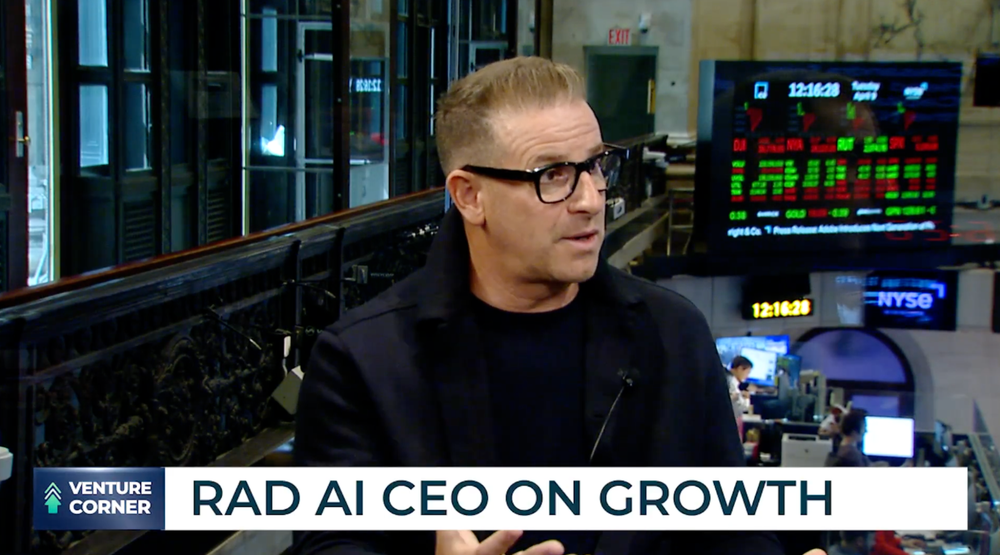
RAD Intel co-founder and CEO Jeremy Barnett.

Image credit: RAD Intel

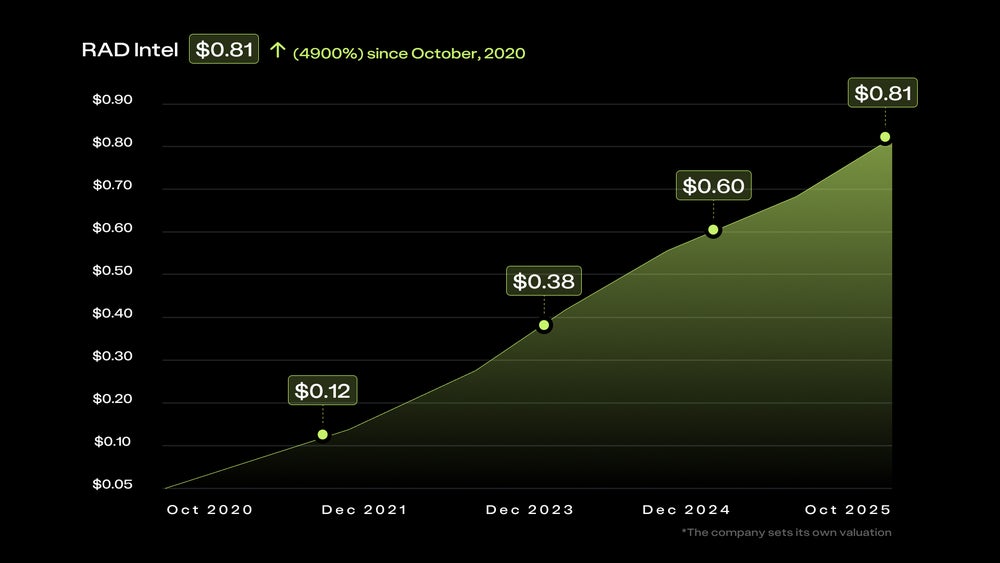
RAD Intel’s award-winning AI platform helps Fortune 1000 brands predict ad performance before they spend a dollar — eliminating guesswork and waste. The company says its valuation has soared 4,900% in four years with more than $50 million raised and long-term partnerships spanning entertainment, retail, and consumer goods.

Unlike traditional adtech dashboards, RAD Intel’s system acts as an intelligent decision layer — forecasting which creative, influencer, or message will perform best in advance. Backed by Adobe and Fidelity Ventures, the company has also reserved its Nasdaq ticker symbol $RADI, signaling where it’s headed next.

Image credit: RAD Intel

For founders, CMOs, and investors who care about performance marketing, RAD Intel’s rise is a case study in compounding performance. The platform’s AI analyzes billions of data points across Reddit, TikTok, and the open web to reveal high-intent audiences others miss — and that’s why agencies have nicknamed it the ROAS King.

With traction and momentum building, the company has expanded partnerships across multiple Fortune 1000 brands — securing recurring, seven-figure contracts and driving measurable ROI gains. In 2025 alone, RAD Intel’s revenue is up 2.5× over 2024 (unaudited) and sales contracts have already doubled.

Why investors are paying attention:

  • Valuation growth: 4,900% increase in less than four years
  • $50 million raised from more than 10,000 investors
  • 165% year-over-year revenue growth (unaudited 2025 vs 2024)
  • 2× contract growth from 2024 to 2025
  • Leadership experience: 225+ M&A transactions executed
  • Recently recognized as a “Groundbreaking Step for the Creator Economy”
  • Nasdaq ticker reserved as $RADI

Image credit: RAD Intel

Now, investors have a limited window to participate in RAD Intel’s Reg A offering before the company’s next scheduled share-price change on November 20. Shares are currently available at $0.81, offering early exposure to one of the fastest-growing AI platforms in marketing.

Don’t let this become another “I wish I had” moment. The opportunity is open — but not for long.

Lock-in $0.81 shares now – before the price change on 11/20.

This is a paid advertisement for Rad Intel’s Regulation A offering. Please read the offering circular at https://invest.radintel.ai/

In 1999, a $1,000 investment in Nvidia’s initial public offering would be worth more than $2.5 million today. Now, another early-stage artificial intelligence (AI) company is drawing that same early-investor buzz — RAD Intel, often called the “ROAS King” by marketers for its ability to boost return on ad spend through data-driven precision.

RAD Intel co-founder and CEO Jeremy Barnett.

Image credit: RAD Intel

The rest of this article is locked.

Join Entrepreneur+ today for access.

https://www.entrepreneur.com/money-finance/1k-couldve-made-25m-meet-the-roas-king-of-ai/499233