The Step Most Businesses Skip (and Regret) When It Comes to Data Protection

Opinions expressed by Entrepreneur contributors are their own.

Key Takeaways

  • Most businesses invest in backup recovery tools, but fail to actually test them. Testing should occur at least once every year or every three months for critical systems.
  • To carry out a successful backup recovery testing plan, start by defining your goal, then test real-world scenarios, set clear success criteria, assign a team and conduct follow-ups.
  • Be sure to also conduct an analysis and post-analysis to identify vulnerabilities and improvement points.

Over 67% of businesses suffer from data loss, either because of an attack or mismanagement. Most companies understand the importance of investing in backup recovery tools, but miss the crucial step of actually testing them.

Testing the effectiveness of your backup recovery systems is one of the easiest ways to save your data from being lost forever. This can, at times, mean the difference between survival and failure of the business.

In fact, 93% of small businesses that suffer from consistent data loss go bankrupt within a few years.

Related: 5 Data Backup Mistakes that Could Bankrupt Your Startup (and How to Quickly Fix Them)

The importance of testing backup recovery

Companies spend a lot of money on software, tools and hardware to ensure their data is secure and easy to recover. The idea is to make sure that in case of theft, attacks or other failures, you can always recover your data.

At the same time, no system is 100% fail-proof, and if not tested regularly, your data recovery might fail at the most crucial times. Testing can help identify key failures in your infrastructure. Therefore, it is recommended to test backup recovery at least once every 12 months, across all systems. However, for more critical systems, tests should take place every three months.

Common reasons for backup failures

  • If data is not backed up completely, you might encounter corrupted files that have become inaccessible.

  • Recovery paths can be misconfigured. This can be due to human error, improper settings or incorrect permissions.

  • Some files might be incompatible due to a lack of updates or the use of the wrong software.

  • Basic performance issues can also occur. For example, the recovery software crashes, making the backup system redundant.

These are simple problems that can be solved easily, but if these issues are not identified and rectified, the damage can be huge.

Companies invest a lot of money into collecting, maintaining and protecting data. Customer information, inventory logs and trade secrets, if lost, can lead to financial loss, reputational damage and impact a company’s competitiveness.

The bottom line is simple — test your backups regularly to ensure your systems are reliable and working when you need them the most.

Plan your backup recovery testing

As a regular business operation, it is important to first design a comprehensive backup recovery testing plan. The idea is to simulate a real-world disaster, test different scenarios and validate recovery systems.

The plan must include:

  • Start by defining aims: What is the goal of the test? Are you testing software, data integrity, a specific system or the whole company’s backup recovery systems?

  • Establish scenarios: Plan to test real-world scenarios such as ransomware attacks, hardware issues, human error, etc.

  • Define success: Set clear success criteria — e.g., data integrity, software readiness, recovery time objectives (RTOs) and recovery point objective (RPO) targets.

  • Assign a team: There should be a set of SOPs and a team designated to carry out regular testing. They will provide a signed report at the end of every test to ensure there is a clear record of findings.

  • Follow-ups: If failures are detected, there should be an immediate and clear line of action to resolve all issues.

Related: One of the Most Overlooked Risks in Business — and How to Protect Yourself Before It’s Too Late

Implementation of the plan

  • Conduct testing on planned dates and inform all stakeholders. It’s possible that some of the servers or tools might be unavailable, and everyone should be prepared.

  • It’s important to keep records and logs of every step and outcome with timestamps.

  • Record all data integrity issues, faults and errors. Do not ignore them, even if they feel like a non-issue.

  • Document the performance of the backup recovery infrastructure. When simulating a real-world scenario, also test human response times.

Conduct an analysis:

  • Compare your outcomes and report with the expected RTO/RPO targets.

  • Identify vulnerabilities and improvement points.

  • A detailed report for each test will provide historical data that can help plan for the future.

  • Include insights from across the organization. It is not only the IT sector’s responsibility to understand the results. Human errors can happen in any part of the company.

Post analysis:

  • Analyze the backup recovery test. Did the process work as planned? Were there internal hindrances? Identify weaknesses in the process and suggest improvements.

  • Address faults and vulnerabilities found. How will we make sure they do not happen again? Provide reports and suggestions.

  • Aim for continuous improvement. Maintain a core document with logs and test results to give a holistic diagnostic picture of the backup tools.

Related: What Every Business Leader Must Know About Data Management to Avoid a Compliance Nightmare

Common barriers to backup recovery testing

One of the biggest barriers to backup recovery testing comes from within companies. Most managers believe it takes up time and resources that can be better utilized elsewhere. What they fail to understand is that regular testing pays for itself, especially when a real disaster occurs.

Also, having an automated backup recovery does not mean the system is reliable. Backups fail, software crashes, and hardware can malfunction. Automation does not equal reliability.

There is also an impossibility fallacy — a belief among management that since the company has never lost data before, it might not happen at all.

Many assume that it only happens to the largest companies in the world and try to downplay the risk. This “belief” has cost many companies a lot of money.

Backup recovery testing is a cost-effective way to improve your data security. At the same time, it is important to involve the top leadership and all other stakeholders. This is crucial for progress, accountability and resource allocation. With a bit of time and effort, any organization can protect its data and save itself from financial and compliance issues.

Key Takeaways

  • Most businesses invest in backup recovery tools, but fail to actually test them. Testing should occur at least once every year or every three months for critical systems.
  • To carry out a successful backup recovery testing plan, start by defining your goal, then test real-world scenarios, set clear success criteria, assign a team and conduct follow-ups.
  • Be sure to also conduct an analysis and post-analysis to identify vulnerabilities and improvement points.

Over 67% of businesses suffer from data loss, either because of an attack or mismanagement. Most companies understand the importance of investing in backup recovery tools, but miss the crucial step of actually testing them.

Testing the effectiveness of your backup recovery systems is one of the easiest ways to save your data from being lost forever. This can, at times, mean the difference between survival and failure of the business.

The rest of this article is locked.

Join Entrepreneur+ today for access.

https://www.entrepreneur.com/science-technology/how-to-ensure-your-data-backup-recovery-system-doesnt-fail/498233



They Got Fired. This Mindset Shift Helped Them Bounce Back Stronger.

Key Takeaways

  • “All the Cool Girls Get Fired” advises readers on how to turn losing your job into an epic comeback.
  • Laura Brown, former editor in chief of “InStyle” magazine, and Kristina O’Neill, former editor in chief of “WSJ” magazine, draw on their personal experiences and advice from the likes of Oprah Winfrey.
  • The idea for the book came from a viral Instagram Brown posted after she and O’Neill lost their jobs.

We work our asses off — sometimes we get fired up by the results, and other times we just get plain fired. That’s always fun, right?

This week on How Success Happens, I spoke with Laura Brown, who was the editor in chief of InStyle magazine…until she wasn’t. And Kristina O’Neill, who was editor in chief of WSJ magazine…until she, also, wasn’t. As they put it very bluntly in their incredible book, All the Cool Girls Get Fired, they were “shitcanned” (their words, not mine). But they think it is time to stop sugar-coating the end of a job and start viewing it as an opportunity to start the next big thing in our professional lives. No more “I’ve decided to spend more time with my family” B.S. messaging — own that you got fired, and move forward.

Subscribe to the How Success Happens newsletter for weekly leadership tips in your inbox.

That perspective certainly worked for them — Brown went on to found LB Media and is the chair of (RED)’s Creative Council, and O’Neill is head of Sotheby’s Media and editor in chief of Sotheby’s Magazine. The mindset has also worked for many other famous fire-ees, whom they spoke to for the book, including Lisa Kudrow, Jamie Lee Curtis, Oprah Winfrey, Carol Burnett and Katie Couric.

Watch our conversation above or listen here, and check out some key takeaways from Brown and O’Neill to transform your thinking on what, in the moment, might feel like the worst thing that could happen, but in the long run can lead to bigger and better things.

Subscribe to How Success Happens to get a dose of inspiration twice a week! Apple | Spotify | YouTube

Rest, But Don’t Retreat

“When someone goes, ‘Hey, do you have a sec?’ and pulls you into an office, and you realize that’s the last time you’re going to be in that office, that’s a kick in the teeth,” Brown shares.

She says that the initial numbness helped her: “I think that shock is an armor. Shock can actually protect you. I went to a big event the day after I got fired, and the shock led to ownership.” Brown says she quickly realized “my worth doesn’t disappear because my job did. You own your experience; don’t let these people take it from you.”

O’Neill adds, “It’s all right to wallow, but don’t wallow forever. Rest, but don’t retreat.” She advises against rushing the process of processing. “You will be found again if you were good at what you did. But you gotta listen to your own rhythms.”

Takeaway: Take whatever time you need to absorb the shock of getting fired — if you are good at what you do, you will be in demand sooner than you think.

Related: Celebrity Chef Andrew Zimmern Says Social Media Is Ruining Food

Own Your Story

As you begin your new job search, O’Neill suggests sharing your story with people you know. “We advise doing the toe dip. Start small, with familiar things, before you run to the totally unknown. You have to be able to talk about it — and that takes conditioning. You don’t want every meeting to end in tears or come off as bitter.”

Brown jumps in: “Own it! Something really unexpected can come when you’re honest about what happened. I had people reach out from industries I’d never thought of. It turns out your story is more relatable than you think.”

Takeaway: Practice saying what really happened — your honesty will open unexpected doors.

Your Next Step Doesn’t Have to Be a Huge One

“One of the best bits of advice we got from the experts was to go for the ‘fine’ job before the ‘dream’ job,” Brown says. “Get your mojo back and practice a little before the big leap. Because after getting smacked on the head by an anvil, your confidence is rocked. You need to get it back through practice and engagement, and then when you go for those interviews, you can stand a little taller.”

O’Neill shares how this played out in her own life: “I now work at Sotheby’s, an auction house. I never thought I’d be there, but some skills are transferable. Seeing around a corner that wasn’t even there a month ago — suddenly, it’s a whole new adventure.”

Takeaway: Warm up with smaller opportunities so you’re sharp when that big dream comes calling.

About How Success Happens

Each episode of How Success Happens shares the inspiring, entertaining and unexpected journeys that influential leaders in business, the arts and sports traveled on their way to becoming household names. It’s a reminder that behind every big-time career, there is a person who persisted in the face of self-doubt, failure and anything else that got thrown their way.

Subscribe now: Apple | Spotify | YouTube

Key Takeaways

  • “All the Cool Girls Get Fired” advises readers on how to turn losing your job into an epic comeback.
  • Laura Brown, former editor in chief of “InStyle” magazine, and Kristina O’Neill, former editor in chief of “WSJ” magazine, draw on their personal experiences and advice from the likes of Oprah Winfrey.
  • The idea for the book came from a viral Instagram Brown posted after she and O’Neill lost their jobs.

We work our asses off — sometimes we get fired up by the results, and other times we just get plain fired. That’s always fun, right?

This week on How Success Happens, I spoke with Laura Brown, who was the editor in chief of InStyle magazine…until she wasn’t. And Kristina O’Neill, who was editor in chief of WSJ magazine…until she, also, wasn’t. As they put it very bluntly in their incredible book, All the Cool Girls Get Fired, they were “shitcanned” (their words, not mine). But they think it is time to stop sugar-coating the end of a job and start viewing it as an opportunity to start the next big thing in our professional lives. No more “I’ve decided to spend more time with my family” B.S. messaging — own that you got fired, and move forward.

The rest of this article is locked.

Join Entrepreneur+ today for access.

https://www.entrepreneur.com/leadership/these-media-veterans-want-you-to-own-getting-fired/499182


Your Startup Might Be Operating in the Wrong Ecosystem. The ‘Relevance Map’ Can Help You Find the Right One.

Opinions expressed by Entrepreneur contributors are their own.

Key Takeaways

  • Success is no longer about finding a home for your business — it’s about finding the right home at the right time.
  • The “relevance map” helps entrepreneurs determine which economy is most relevant to their business practice.
  • The capacity-capability test is another strategic tool that helps entrepreneurs figure out if an economy is relevant.

What enables entrepreneurship and business venturing is the economy that hosts you and allows you to incorporate within it. Is the economy you’re operating in truly enabling your business venture? And if not, which economy is?

Entrepreneurs need to understand that business incorporation means integrating their business practice within an economy. This is not a procedural or legalistic notion alone — it’s a holistic and strategic integration.

Integration requires that a business maintain consistency with the factors that constitute that economy — including its social culture, laws and regulations, the goals and objectives of its policymakers and its infrastructure, both physical (such as transportation) and non-physical (such as diplomacy).

Understanding infrastructure

To succeed, a venture must resonate with these factors. If your product or service contradicts the prevailing culture or bypasses the regulatory framework, you will face resistance. If your logistics depend on infrastructure that is weak or misaligned with your operational needs, your business will suffer. If your growth trajectory is out of sync with national economic goals, you’re unlikely to receive state-level support — or worse, you might face bureaucratic friction.

And here, an unconventional but critical insight comes into play. I intentionally mentioned diplomacy as infrastructure, rather than, for example, monetary systems, because in today’s globally connected world, diplomacy is one of the most important supportive factors enabling international business.

This perspective redefines how we view infrastructure in the context of entrepreneurship. While many business leaders think of roads, ports, internet connectivity and supply chains, the diplomatic architecture of a country can be equally — if not more — significant in a globalized economy. Consider how trade agreements, international treaties, bilateral partnerships and diplomatic ties shape market access, investment flows and legal protections for foreign entities.

A startup trying to scale cross-border cannot afford to ignore this layer of infrastructure. It shapes taxation, dispute resolution, data governance and many other crucial dimensions of doing business globally.

How the relevance map can help

To navigate all of this, I am going to coin the term “Relevance Map.” One may say that the relevance map is an evolution of economic geography. Where traditional economic geography deals with the spatial distribution of industries, labor and capital, the relevance map is about strategic alignment between a business and the economy it operates in — and this alignment is dynamic.

A relevance map helps entrepreneurs determine which economy is most relevant to their business practice. Entrepreneurs need to understand the relevance map when they choose an economy for business venturing.

It allows entrepreneurs to ask: Where is the ideal ecosystem for what I am building? Which economy has the right combination of support, openness, alignment, infrastructure and policy? Where can I plug into value chains, access global markets and find talent, partners and capital?

Crucially, the relevance map depends on spacetime, meaning that relevance is not a permanent measure. An economy may be relevant today to a specific business practice, but it may lose its position as a relevant economy and be replaced by another. This is a dynamic and continuous trend.

Many startups fail not because the idea was poor, but because the economic context shifted and they failed to adapt. An economy that once supported tech innovation may tighten regulations or lose its talent base. A country that once provided access to low-cost manufacturing may become geopolitically risky or less competitive. Conversely, new economies rise and present better alignment.

In the world we are experiencing now, it is not relevant where you are or what your nationality is. We live in a borderless innovation economy. Startups are being founded in one country, funded from another, hiring talent across continents and selling globally from day one.

Notwithstanding where you live, as an entrepreneur, you are a global citizen who needs to have a thorough understanding of the relevance map to figure out which economy serves as an enabling factor for your respective business practice.

The capacity-capability test

This is where another analytical tool becomes vital. This is the matter of fitting capabilities with capacities. A relevant economy is one that should have the capacity to enable your business practice, and your business practice is one that should have the capabilities to utilize the economy’s capacities.

Capacity-capability test is another term I introduce here, which helps entrepreneurs to figure out if an economy is relevant. Capacity refers to the economy’s ability to support: legal protections, logistics, funding, workforce skills, market access and policy frameworks. Capability refers to your business’s ability to utilize those elements: to operate within regulatory bounds, to attract talent, to scale operations, to innovate under constraints and to navigate cross-cultural dynamics.

If an economy has great capacity but your business cannot harness it, the match fails. If your business has strong capabilities but the economy lacks the necessary infrastructure or openness, the match fails again. The capacity-capability test must return a positive match for an economy to be considered “relevant.”

The global value chain

A founding principle I specified for the relevance map is: In today’s world, a business is not truly a business if it doesn’t see itself in the global value chain of its respective industry. What makes an economy relevant to your business practice is whether it places your business within the global value chain.

If you are manufacturing locally but can’t plug into regional or global supply chains, your growth will stall. If you are building a SaaS product but can’t integrate with dominant platforms or serve global clients, you’re boxed in.

In a world where startups compete globally from day one, understanding where and how you operate is as important as what you do. The relevance map and the capacity-capability test are strategic tools that can guide entrepreneurs through an increasingly complex and fluid global economy.

Success is no longer about finding a home for your business — it’s about finding the right home at the right time.

Key Takeaways

  • Success is no longer about finding a home for your business — it’s about finding the right home at the right time.
  • The “relevance map” helps entrepreneurs determine which economy is most relevant to their business practice.
  • The capacity-capability test is another strategic tool that helps entrepreneurs figure out if an economy is relevant.

What enables entrepreneurship and business venturing is the economy that hosts you and allows you to incorporate within it. Is the economy you’re operating in truly enabling your business venture? And if not, which economy is?

Entrepreneurs need to understand that business incorporation means integrating their business practice within an economy. This is not a procedural or legalistic notion alone — it’s a holistic and strategic integration.

The rest of this article is locked.

Join Entrepreneur+ today for access.

https://www.entrepreneur.com/growing-a-business/is-your-startup-operating-in-the-right-environment/498151


IBM Is Laying Off Thousands of Employees as Its AI Business Surges

Key Takeaways

  • IBM stated earlier this week that it will conduct layoffs in the current quarter.
  • The cuts will impact “a low single-digit percentage” of IBM’s 270,000-person global workforce.
  • IBM is making cuts as it focuses on high-growth areas such as AI consulting and software.

IBM disclosed on Tuesday that it will eliminate a small percentage of its workforce in the current fourth quarter. The action will affect “a low single-digit percentage” of IBM’s global workforce, the company told Bloomberg.

According to The Register, IBM began notifying several thousand global employees this week about layoffs, issuing notifications that give staff 30 days to secure another position within the company or face termination with a few months of severance pay. The Register reports that most of those notified are unlikely to find new positions and will be required to exit IBM.

IBM employed about 270,000 people at the end of 2024, per its latest annual report, so even a 1% cut would impact 2,700 employees. An IBM spokesperson told CNBC that the layoffs “may impact some U.S.-based roles” but that the company anticipates keeping its U.S. headcount “flat year over year” overall. So although some U.S. roles may be impacted, IBM’s overall U.S. employment figures are expected to remain stable.

Related: The Biggest Consumer Goods Giant in the World Is Laying Off Thousands of Workers: ‘The World Is Changing’

IBM is making the cuts as it shifts its attention to high-growth businesses in AI consulting and software. According to The New York Times, IBM’s chief financial officer, Jim Kavanaugh, stated in a conference call with analysts last month that more corporations were beginning to adopt AI, evidenced by the fact that about 80% of IBM’s AI consulting and software clients in the past six months were new to the company.

In the third quarter, IBM’s bookings for AI consulting and software surged to $9.5 billion, a $2 billion increase from the second quarter, per The Wall Street Journal.

“Our AI book of business now stands at more than $9.5 billion,” IBM CEO Arvind Krishna said in an earnings statement, emphasizing the “strength” of IBM’s AI business.

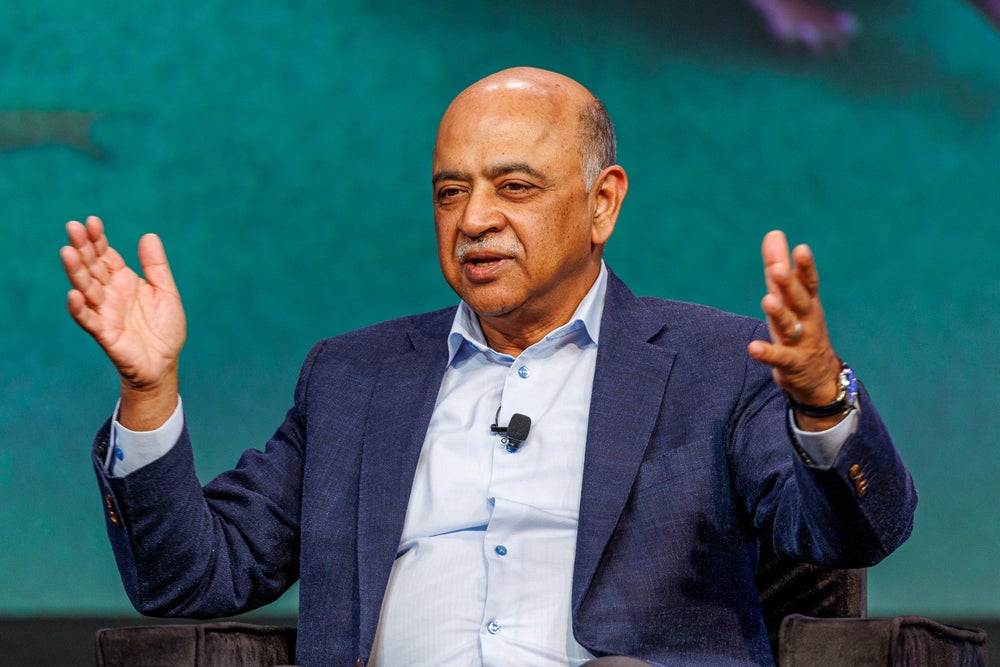
IBM CEO Arvind Krishna. Photo by Andy Wenstrand/SXSW Conference & Festivals via Getty Images

Other tech companies have also conducted layoffs recently. Amazon announced last month that it was eliminating 14,000 corporate roles, one of the largest job cuts in the company’s corporate history. Meanwhile, software giant Oracle laid off hundreds of employees in Washington state this week as part of a restructuring plan.

Related: Amazon CEO Reveals the Real Reason Behind the Company’s 14,000 Job Cuts — And It’s Not Because of AI or Cost Cutting

Last month, IBM reported $16.3 billion in revenue for the third quarter of 2025, marking a 9% increase compared to the same period the previous year. The company also posted profits of $1.7 billion for the quarter, up from a net loss of $330 million the previous year.

At the time of writing, IBM has 366 open job postings in the U.S., ranging from roles such as senior software developer to business development executive.

Key Takeaways

  • IBM stated earlier this week that it will conduct layoffs in the current quarter.
  • The cuts will impact “a low single-digit percentage” of IBM’s 270,000-person global workforce.
  • IBM is making cuts as it focuses on high-growth areas such as AI consulting and software.

IBM disclosed on Tuesday that it will eliminate a small percentage of its workforce in the current fourth quarter. The action will affect “a low single-digit percentage” of IBM’s global workforce, the company told Bloomberg.

According to The Register, IBM began notifying several thousand global employees this week about layoffs, issuing notifications that give staff 30 days to secure another position within the company or face termination with a few months of severance pay. The Register reports that most of those notified are unlikely to find new positions and will be required to exit IBM.

The rest of this article is locked.

Join Entrepreneur+ today for access.

https://www.entrepreneur.com/business-news/ibm-is-laying-off-thousands-of-employees/499219


What Every Entrepreneur Can Learn From Cracker Barrel’s Rebranding Mistakes

Opinions expressed by Entrepreneur contributors are their own.

Key Takeaways

  • Most marketing and rebranding mistakes stem from executives pursuing their own ideas rather than understanding what customers actually want.
  • Brand equity and emotional connection can outweigh product improvements. When making significant changes, tread carefully and test broadly.
  • Make certain any change has purpose and can be easily explained, and don’t abandon brand recognition unless you have a stronger, clearer message to present.

Unless you’ve been isolated on a remote island with little to no connection to the outside world, you’ve likely heard about the recent marketing blunders at Cracker Barrel, the 46-year-old Southern restaurant chain. Multiple articles have examined the situation, indicating that the senior executives failed to understand their customers and the changes needed to regain their enthusiasm.

Over the past several decades, there have been numerous examples of marketing mistakes. You might assume that future marketing executives have learned how to avoid similar errors; however, there will always be clients and marketing or public relations firms willing to take risks.

Some of the more memorable examples include:

  • Coca-Cola replacing its original formula with “New Coke”

  • Kendall Jenner’s Pepsi logo can ad

  • Ayds Diet Candy ad debuting as the AIDS epidemic started

  • Bud Light promoting a controversial influencer

We could provide numerous additional examples, including Cracker Barrel. More importantly, I’m curious about the costly rebranding and marketing mistakes made and the lessons we can learn from them.

Related: 3 of the Biggest Risks That Come With Rebranding — and How to Overcome Them

Do you really know your customer?

Before we talk about marketing mistakes, let’s cover why I believe most of them are made. Everyone thinks they know their customers well. Yet I have two questions.

  1. Do you truly know your customers — like, really know them?

  2. If so, do you feel confident about their likes and dislikes of your service and quality levels?

I often pose these questions to myself and to fellow entrepreneurs: Do you truly understand your customers? Many respond with confidence, believing they grasp their customers’ needs and feel they meet or even exceed expectations. However, there are times when they express uncertainty, feeling they don’t fully comprehend their customers’ true expectations.

As an entrepreneur and CEO, I dedicate much of my time to managing the daily operations of my company. However, I also invest significant time in researching marketing concepts, particularly in digital and social media strategies. I genuinely enjoy working with the latest technology. While new technologies add value to my work, I also recognize the immense importance of direct communication with customers and the implementation of fundamental marketing strategies.

Talk with, not to, your customer

When it comes to understanding my customers, I take an approachable method. I feel that I can gauge my customers’ wants and needs because my staff and I actively engage in conversation with them. In fact, we prefer talking to our customers rather than relying on email, text or chat boxes.

Our company is dedicated to addressing our customers’ needs by ensuring we are available for both existing and new clients. We adhere to a same-day communication policy. Even if we don’t have an immediate answer, we follow up with a proposed timeline or commit to providing the necessary information as soon as possible.

Additionally, we personally call each client when a transcription is delivered. We ask if they are satisfied with the transcription and if there is anything else we can assist with. Recently, a new customer stated in a follow-up email that, “It was easy to get a hold of representatives by phone and email.”

Some of you may be thinking, “I have tens of thousands, or even millions of customers. There’s no way to communicate personally with each one.” I understand, but there are still effective ways to get “up-close and personal” with your customers.

  • Analyze customer data: Extract essential data from your Customer Relationship Management (CRM) system to understand buying habits and trends.

  • Gather direct feedback: Ask customers about their likes and dislikes.

  • Analyze competitor data: Are your competitors offering similar or unique services?

  • Walk in your customers’ shoes: Become a customer, i.e., ghost shop your retail or online stores.

Regardless of your company’s size, if the CEO or owners are not directly communicating with customers, particularly the smaller ones, you are missing a valuable opportunity to understand their thoughts and feelings.

Related: 3 Methods to Help You Determine What Customers Really Want (and Really Don’t Want)

Rebranding mishaps

In my opinion, most rebranding failures stem from internal rather than external factors. Executives often become enamored with ideas that customers have not asked for. A classic example of this is Coca-Cola’s introduction of “New Coke” in 1985, which involved phasing out the long-established “Classic Coke.”

According to The New York Times, Coca-Cola had a 32.3% market share compared to Pepsi’s 24.8 percent share in 1985. Were customers demanding that Coke change its formula for a smoother, sweeter taste? No, they were not. However, the executives at Coca-Cola believed that making Coke taste more like Pepsi would help increase their market share. In this instance, it seems that company leadership misjudged their customers’ emotional and nostalgic attachment to their flagship product — a simple but costly mistake.

The recent Cracker Barrel fiasco presents a different scenario. Senior executives seemed determined to eliminate any “rural themes” from the restaurant, leading to the creation of a new logo that no longer features the iconic “Uncle Hershel” character. Additionally, they introduced redesigned dining areas with a brighter interior while removing the “country decor” that has made Cracker Barrel famous since 1979.

There’s little doubt that Cracker Barrel’s interiors and menu could use a refresh. However, customers strongly opposed the new logo design and rumors of a complete restaurant remodel. Were Cracker Barrel customers actually demanding these changes? Apparently not.

Hiring a San Francisco-based marketing agency to rebrand an iconic restaurant chain with deep Southern roots was likely not the best decision. Cracker Barrel ultimately announced that it would retain its current logo and had parted ways with Prophet, the San Francisco marketing agency. The company’s CEO recently stated at an investor summit that the logo rebranding was intended to make the logo more recognizable on billboards. However, logo and brand recognition were not significant issues for customers.

The main rebranding lessons for both Coca-Cola and Cracker Barrel are similar: Understand what your customers truly want and do not underestimate their nostalgic connection to your brand.

3 rebranding lessons

Rebranding remains an important tool for any company, but there are several factors to consider before implementing major changes.

First, consider whether the proposed changes reflect your customers’ desires or just your own. Executives often become attached to ideas that customers may not want or appreciate. While I don’t have access to Cracker Barrel’s customer data, it seems likely that it was company executives, rather than customers, who wanted the updated logo and complete dining room makeover.

Lesson learned: Brand equity and emotional connection can outweigh product improvements. When making significant changes, tread carefully and test broadly.

Attempting to “appeal to everyone” can dilute what makes the brand unique. Once a rebranding strategy is in place, ensure that your customers understand the reasons behind the changes. It’s important to recognize that not everyone will be pleased.

For example, in 2009, Pizza Hut, a well-established restaurant chain, decided to rebrand itself as “The Hut” to attract a younger audience. However, this strategy failed because customers found the change inauthentic and forced. While they aimed to attract a younger demographic, their long-standing customers were put off by the new name.

Three years ago, I changed my company’s name from Transcription Outsourcing to Ditto Transcripts. This change was deliberate and costly.

One reason for rebranding was that potential customers often asked if we “outsourced” our work, implying that we used overseas transcriptionists. In reality, we only employ U.S.-based transcriptionists because we believe that producing high-quality transcripts requires skilled employees whose backgrounds we can verify. Although the rebranding campaign was expensive, it resulted in increased business and more inquiries from new customers.

Lesson learned: Make certain any change has purpose and can be easily explained.

Related: The Strategic Guide to Successful Rebranding

Keep the main thing, the main thing. In other words, keep the core of your business recognizable. Change is difficult for most people. Nevertheless, if done with purpose and clarity, most customers will react positively. However, make sure that your core business, your bread and butter, remains the same and is easily recognizable to loyal customers even after changes are implemented.

Weight Watchers built a successful business by educating millions of people about the benefits of counting calories and eating healthy meals. Their pre-packaged meals and eating guidelines helped people shed pounds and inches.

In 2018, Weight Watchers changed their name to “WW,” which meant “wellness that works.” The company wanted to move away from the “diet” mentality and adopt a more generic brand name. However, the change did nothing but confuse people. Why? No one understood what “WW” meant. The mishap resulted in a 35% drop in share price and lost memberships.

Lesson learned: Don’t abandon brand recognition unless you have a stronger, clearer message to present.

Launching a rebranding campaign can offer significant long-term benefits, but if not executed correctly, it can also damage your company’s reputation and value. Entrepreneurs often encounter various challenges, and if rebranding is on your agenda, ensure that you learn from past mistakes and have a clear understanding of your customers’ wants and needs.

Key Takeaways

  • Most marketing and rebranding mistakes stem from executives pursuing their own ideas rather than understanding what customers actually want.
  • Brand equity and emotional connection can outweigh product improvements. When making significant changes, tread carefully and test broadly.
  • Make certain any change has purpose and can be easily explained, and don’t abandon brand recognition unless you have a stronger, clearer message to present.

Unless you’ve been isolated on a remote island with little to no connection to the outside world, you’ve likely heard about the recent marketing blunders at Cracker Barrel, the 46-year-old Southern restaurant chain. Multiple articles have examined the situation, indicating that the senior executives failed to understand their customers and the changes needed to regain their enthusiasm.

Over the past several decades, there have been numerous examples of marketing mistakes. You might assume that future marketing executives have learned how to avoid similar errors; however, there will always be clients and marketing or public relations firms willing to take risks.

The rest of this article is locked.

Join Entrepreneur+ today for access.

https://www.entrepreneur.com/starting-a-business/3-lessons-to-learn-from-cracker-barrels-rebranding-mistakes/498651


I Audited My Time for One Week. Here’s What I Changed Forever.

Opinions expressed by Entrepreneur contributors are their own.

Key Takeaways

  • Lead with intention by protecting your best energy for what matters.
  • Invest attention like capital to create meaningful growth at work and home.

Early in my career, I recall many top business leaders and executives bragging about how busy they were. They took pride in wearing full suits to the office and carrying 10-12 hours of meetings and calls.

This “hustle culture” mentality isn’t new. For my two and a half decades in the business world, I’ve done my best to live and work in a different manner than what seemed popular. I’ve guided many entrepreneurs out of that hustle culture, helping them realize that activity and impact are not the same thing. Real growth doesn’t come from a slammed calendar; it comes from being fully invested where it counts.

Related: How to Quit the ‘Hustle’ Grind Before It Breaks You

Why founders mistake activity for progress

First, because looking busy feels like winning. I get it. Rapid-fire email replies provide a quick hit of accomplishment, a small dopamine rush that tells you that you’re important and you’re working hard. This is because our culture rewards speed and visibility and hands out gold stars for the optics of work.

Here’s the catch: you can sprint through ten things on your list, feel spent and proud and yet not much progress was made. You may still be the bottleneck, slowing your team’s growth, while they’re still waiting on that one decision that sets the direction. Activity is loud and easy to track and count, but it crowds the stage. Real progress might be quiet, and may come from a few challenging choices.

Others use “busyness” to avoid discomfort. I know because I’ve lived it. Clearing an inbox feels more productive than having that hard conversation. Next thing you know, you’ve turned into a reactive switchboard and your culture starts to reward noise over real progress. People begin tracking things that feel productive but aren’t really growing their business impact in any material way.

Lead intention, not reaction

I’ve seen business leaders finally have to admit that their current path of being a fraction of themself in every room is exhausting. Trying to be one person at the office and another at home is a slow-burning burnout. Eventually, you’ll reach a point where you know that grind is unsustainable. The only way forward is to get brutally honest about the person you want to be, and that’s to bring your whole self to every table you sit at.

From there, tradeoffs get simple because you know what you’re optimizing for. You can confidently say “no” without apology to protect what matters most. You’ll realize that you can treat your freshest hours as sacred and reserve them for deep work that sets the direction of your life and your business career.

With that clarity, your mornings won’t be a time of reactionary, draining tasks (like replying to 100 emails before 9 am) and can start with one important question: “What would make today a win?” That single priority should get your best energy first. You’ll replace wandering meetings with short one-page briefs that force a clear decision. You’ll draw a line between the problems you own and the ones you trust your leaders to handle.

When you live and lead with this level of intention, incredible things happen. The frantic energy of reaction loses its power. You start setting the pace, rather than letting the world and your circumstances dictate it for you.

Related: Hustle Culture Is Lying to You — and Derailing Your Business

Audit your time like it’s capital

Most breakthroughs came when I started treating my time with the same discipline I brought to our finances. For one week, I ran a simple, honest audit of my calendar where I tracked where every hour went. I have to tell you, the results were alarming to me. I saw how much of my most valuable asset (my focus) was being poured into low-return activities and things that were a complete drain on my energy.

That painful awareness gave me the nudge I needed to be ruthless with my calendar. I started building a new system around principles and a filter for deciding what is “good, better and best.” I created untouchable blocks for deep work. I batched communication into tight windows so I was driving the conversation, not reacting to it. A huge step was hiring two full-time assistants, not just for my business but for my personal life, too — a way to ensure both domains received professional support so my energy could go where it would compound the most. It was another commitment to living 100-100.

Finally, I defined a few simple rules that removed friction for everyone. No meetings before late morning, so the whole team could have focused time. A one-page brief is required for any big decision, which replaces dozens of status calls. And that’s the real lesson I’ve learned in all this: you can’t win by just trying to have more willpower. You win by building a structure where focus becomes the path of least resistance.

Invest your attention where it matters most

I finally learned that my attention is the only asset I can truly control, and I had to start investing it like meaningful capital. This meant making fewer, bigger bets. Instead of spreading myself thin across endless status meetings that just recycled information, I zeroed in on the things that would compound over time. That included coaching my leaders until they could fly on their own.

But the real surprise wasn’t just that the business ran with more clarity. The real win was that my life got better. I never believed in work-life balance. Create an integrated, fully invested life, lived with intention. The same discipline that protected my deep work on a Monday morning was the same discipline that protected dinner with my family. When your decisions finally align with your values, your energy multiplies.

You only have to choose whether to lead a life of reaction or a life of intention. Go 100% in on what matters at work and at home. The return on that investment shows up not just on a balance sheet, but in the calm, the confidence and the relationships that make it all worthwhile.

Related: Hustle Culture Has No Future — How to Start Working Less

Key Takeaways

  • Lead with intention by protecting your best energy for what matters.
  • Invest attention like capital to create meaningful growth at work and home.

Early in my career, I recall many top business leaders and executives bragging about how busy they were. They took pride in wearing full suits to the office and carrying 10-12 hours of meetings and calls.

This “hustle culture” mentality isn’t new. For my two and a half decades in the business world, I’ve done my best to live and work in a different manner than what seemed popular. I’ve guided many entrepreneurs out of that hustle culture, helping them realize that activity and impact are not the same thing. Real growth doesn’t come from a slammed calendar; it comes from being fully invested where it counts.

The rest of this article is locked.

Join Entrepreneur+ today for access.

https://www.entrepreneur.com/leadership/why-top-leaders-are-ditching-hustle-culture-for-something/498602


How the CEO of Hyundai North America Is Steering the Global Auto Brand Through Crisis, Uncertainty and Change

Opinions expressed by Entrepreneur contributors are their own.

In my conversation with Randy Parker, CEO of Hyundai and Genesis Motor North America, we touched on everything from his upbringing to the emotional and professional weight of leading a global auto brand in an unpredictable climate.

Parker talked about the values he grew up with, starting with his father — a former military veteran — who instilled discipline, respect and curiosity early on. Those principles became a quiet throughline in our interview. When Parker spoke about the many relocations his career required — moving his family, adjusting to new markets — it didn’t sound like a complaint. It sounded like the reality of what it takes to build a leadership career in a competitive, global industry.

Related: What Goodyear’s CEO Thinks About Electric Vehicles, Retail and Getting the 126-Year-Old Brand Back to #1

One of the more grounded themes of our talk was how taxing that kind of life can be. Parker opened up about the personal sacrifices of the job, especially being away from family. You could feel the weight of those experiences as he talked about trying to balance work and presence — not perfectly, but with intention. This wasn’t a man eager to sell a brand. This was someone reflecting on the choices and trade-offs that come with professional success.

We also spent time talking about the cultural dynamics within Hyundai and Genesis. Parker made it clear that he’s intentional about leading with empathy and making people feel valued. He shared that sometimes, in highly structured or hierarchical organizations, voices can get lost. As a leader, he sees it as his job to make sure that doesn’t happen — to ensure the culture doesn’t just look good on paper, but feels real to employees.

Tariffs came up as well — naturally, given the auto industry’s exposure to international trade policy. Parker didn’t shy away from the challenge. He acknowledged the tension between political rhetoric and operational strategy and discussed how Hyundai navigates those uncertainties without losing sight of its long-term plans.

The ICE (Immigration and Customs Enforcement) raid was another tough moment we touched on. While he didn’t offer political commentary or much specific details, Parker talked about the reputational and human toll events like that can have — not just on a company, but on the people who show up to work every day. He was measured but clear: Leadership during those moments requires calm, transparency and a commitment to the people who count on you. “Control what you can control.”

Related: How 2 Long-Lost Sisters Found Each Other — and Built the Largest Black-Owned and Women-Founded Wine Company in the US

Walking away from the interview, I wasn’t thinking about quarterly earnings or the next electric vehicle. I was thinking about how Parker’s leadership is shaped by lived experience — by a military dad, by corporate relocations, by the weight of representing something bigger than himself. These aren’t bullet points on a press release. They’re the elements of a human story, and for anyone leading in high-stakes environments, there’s something worth studying here.

In my conversation with Randy Parker, CEO of Hyundai and Genesis Motor North America, we touched on everything from his upbringing to the emotional and professional weight of leading a global auto brand in an unpredictable climate.

Parker talked about the values he grew up with, starting with his father — a former military veteran — who instilled discipline, respect and curiosity early on. Those principles became a quiet throughline in our interview. When Parker spoke about the many relocations his career required — moving his family, adjusting to new markets — it didn’t sound like a complaint. It sounded like the reality of what it takes to build a leadership career in a competitive, global industry.

Related: What Goodyear’s CEO Thinks About Electric Vehicles, Retail and Getting the 126-Year-Old Brand Back to #1

The rest of this article is locked.

Join Entrepreneur+ today for access.

https://www.entrepreneur.com/leadership/how-the-ceo-of-hyundai-na-is-navigating-crisis-and-change/498982


I Took My Company Global This Year. Here Are 3 Things I Wish I Did Differently

Opinions expressed by Entrepreneur contributors are their own.

Key Takeaways

  • Language is infrastructure — hire fluent local talent from day one.
  • Build real local leadership early to avoid costly operational confusion.
  • Expect chaos — create a structure that bends without breaking globally.

Expanding your company globally sounds glamorous. In reality, it’s a mix of adrenaline, spreadsheets, language barriers and more “you don’t know what you don’t know” moments than anyone likes to admit.

Earlier this year, Thunderstruck Ag, our Canada-based agricultural equipment company, expanded into Brazil to serve Latin America. We’ve set up warehousing, manufacturing and an entire team on the ground. We’ve made some smart moves, and we’ve made some messy ones.

If you’re a founder thinking about taking your company global, here are three big lessons I learned the hard way, and what I’d do differently if I could start over.

Related: Why Most Startups Fail and How Serial Entrepreneurs Beat the Odds

1. Secure trusted language early. Don’t just “get by” with translation

When we first entered Brazil, I underestimated how much the language barrier would impact us. I assumed interpreters and translation tools would be enough. They helped, but there’s a difference between literal translation and actual communication.

In the early days, I was holding up my phone with AirPods during meetings. I relied on apps to keep up. I used ChatGPT to write texts in Portuguese. Although it got us by, it didn’t hold for long. Misunderstandings occurred, nuances were lost and what I believed we had an agreement upon wasn’t what other people would always hear.

If I had the chance to do it differently, I’d work with a local who’s fluent in both languages from day one. I’d make this person a core team member, and not a freelancer, as others would initially do. I believe language is infrastructure, and if you can’t convey expectations crystal clear, everything becomes harder to execute.

Related: This Is the New Expansion Strategy You Might Not Know About — and It Can Make You Serious Money

2. Build real local capacity early, or you’ll spend time untangling later

It didn’t take long to realize that trying to run Brazil through our existing North American structure wasn’t going to work. The culture, laws and tax structure were all entirely different, so we built everything from the ground up. We set up the manufacturing, storage and a team that is solely focused on Latin America.

I soon realized that bringing in senior local leadership much earlier would’ve saved me a lot of energy and resources. Eventually, I hired a bilingual marketing lead fluent in both Portuguese and English who became an invaluable bridge between our teams. She brought a strong understanding of the local market and culture, helping align strategies and communication so everything ran more smoothly from that point forward.

Running a business on a global scale means complying with new rules, systems and cultural distinctions. Per experience, you can easily get confused by something as basic as how people handle time. Having trustworthy, diverse leadership on your side from the start makes a huge difference.

Get clear on the functions you absolutely need on the ground. For us, it was getting a senior leader in place who speaks our new market’s language and intimately understands their culture. That person can be your market co-pilot. They will help you steer around all the unnecessary friction you’d inevitably hit on your own. You’ll need all of these steps for a successful launch.

3. Expect chaos. Build your structure and partnerships like you know it’s coming.

Going global is guaranteed to hit you with a lot of unexpected things, regardless of how much you plan. You’ll find some things are surprisingly simple, while other parts are way too complicated in ways you couldn’t imagine. In these times, set up your operations for agility, so you can react accordingly when things go sideways.

The key insight for us was changing our perspective. We stopped trying to predict every possible contingency. Instead, we focused on making the company fluid enough to handle change. That meant not being over-reliant on any single team member, workflow or deadline.

Arguably, global expansion moves fast, and the companies that handle it best are often the ones that can adjust without losing their footing.

That being said, if I were to do it again, I’d approach every partnership and operational decision with the assumption that things can easily change overnight. For my fellow entrepreneurs, having a lot of different ways to reach your customers is a must. Keep your hiring options open, and work on building your own strength so that you don’t lose your momentum.

To date, going after a global audience has been one of the toughest yet most rewarding moves we’ve made. Real lessons that no one will teach you in school became apparent, and there will never be a single ideal template to follow in business.

When you make plans, be 110% ready. At the end of the day, nothing beats having boots on the ground and sorting things out as they happen. You’ll be hit with language difficulties, cultural differences, slipping timetables and a host of challenges that come straight out of left field. All of it will force you to find entirely new ways to work. This is where real development occurs.

Ultimately, you’ll give yourself the best shot at sustained momentum if communication stays clear and a trusted local lead is in place early. Build the operation to bend without breaking. It won’t be neat or linear, and that’s exactly the job. The goal is to have a business that holds up under pressure and stays steady when things get wild.

Key Takeaways

  • Language is infrastructure — hire fluent local talent from day one.
  • Build real local leadership early to avoid costly operational confusion.
  • Expect chaos — create a structure that bends without breaking globally.

Expanding your company globally sounds glamorous. In reality, it’s a mix of adrenaline, spreadsheets, language barriers and more “you don’t know what you don’t know” moments than anyone likes to admit.

Earlier this year, Thunderstruck Ag, our Canada-based agricultural equipment company, expanded into Brazil to serve Latin America. We’ve set up warehousing, manufacturing and an entire team on the ground. We’ve made some smart moves, and we’ve made some messy ones.

The rest of this article is locked.

Join Entrepreneur+ today for access.

https://www.entrepreneur.com/growing-a-business/what-i-wish-i-knew-before-globally-expanding-my-company/498688


This Tech CEO Isn’t Using AI to Screen Resumes — Here’s Why

Key Takeaways

  • Calkins warns that using AI risks reducing the hiring process to merely checking boxes.
  • Companies like Google and Salesforce use AI at various points in the hiring process.

An estimated 99% of Fortune 500 companies use automation in some part of their hiring process. Now, a CEO is challenging using AI to review resumes, arguing that the practice could cause companies to miss out on exceptional candidates.

Matt Calkins, CEO of enterprise software company Appian, refuses to use AI to screen resumes, according to a Tuesday report from Business Insider. He said that AI can’t fairly judge applicants.

“We were supposed to be better than that,” Calkins told BI during a recent press dinner. “We were supposed to spot the magic in people when we read their resumes, and it didn’t take AI to screen for, I don’t know, did you do well in school or something?”

Related: These Fields Are Losing the Most Entry-Level Jobs to AI, According to a New Stanford Study

Calkins warns that relying on AI for resume reviews, while “modern,” could result in overlooking unique individuals.

“We’re trying to hire at a very elite level, and I think if we use AI, we’re going to start checkboxing,” Calkins said at the dinner.

Matt Calkins, CEO of Appian. Photo by Marvin Joseph/The Washington Post via Getty Images

Companies like Google and Salesforce use AI at various points in the hiring process. Google told BI earlier this year that although humans still review every application it receives, the company uses AI to suggest the right open roles for candidates based on their skills and experience. Meanwhile, Salesforce told BI that it uses AI-powered tools to scan candidate resumes for valued skills, like AI literacy.

Calkins says that most companies aren’t using AI properly, citing an MIT study released in July that showed that 95% of companies have yet to see returns from generative AI investments. The study, which included interviews with 150 executives and a survey of 350 employees, found that the overwhelming majority of AI pilots don’t result in financial savings or increased profits.

Related: 37% of Employers Would Rather Hire a Robot or AI Than a Recent Grad: ‘Theory Alone Is No Longer Enough’

Calkins says that AI’s lack of measurable results is due to “ignorance” about how to put the technology to work. He advocates connecting AI with real, high-impact business challenges rather than applications like resume screening.

Calkins mentioned a potential use case — corporate communication — noting that most companies get millions of pieces of incoming information per day. They can use AI to manage it all more efficiently.

Appian’s own internal AI system can understand a wide variety of inputs, including emails, handwritten notes, faxes and calls, and upload documents to the right database with 99% accuracy. Calkins calls this an “amazing” but also “boring” use case of the technology.

“It’s back office,” he said at the press dinner. “Nobody will understand it if you do a Super Bowl ad about it.”

Related: An AI Company With a Popular Writing Tool Tells Candidates They Can’t Use It on the Job Application

Key Takeaways

  • Calkins warns that using AI risks reducing the hiring process to merely checking boxes.
  • Companies like Google and Salesforce use AI at various points in the hiring process.

An estimated 99% of Fortune 500 companies use automation in some part of their hiring process. Now, a CEO is challenging using AI to review resumes, arguing that the practice could cause companies to miss out on exceptional candidates.

Matt Calkins, CEO of enterprise software company Appian, refuses to use AI to screen resumes, according to a Tuesday report from Business Insider. He said that AI can’t fairly judge applicants.

The rest of this article is locked.

Join Entrepreneur+ today for access.

https://www.entrepreneur.com/business-news/why-this-tech-ceo-isnt-using-ai-to-screen-resumes/499179


Link Building Is Evolving — and Brands Using the Old Playbook Will See Their Visibility Decline in 2026

Opinions expressed by Entrepreneur contributors are their own.

Key Takeaways

  • Link building is now about trust. The focus has shifted from chasing backlinks to earning trust through mentions, visibility and authority.
  • Success now depends on being featured in curated lists, shaping perception through digital PR, earning positive third-party reviews and being mentioned in trusted communities and forums.
  • You don’t need to flood the internet with links — you need a holistic approach where your brand is consistently mentioned in the right contexts.

Backlinks used to be the lifeblood of SEO. Marketers were obsessed with dofollow versus nofollow, fighting to secure every possible link. But in 2025, that debate feels like yesterday’s playbook. What really moves the needle today isn’t just the link itself — it’s the signal behind it.

When your brand is named in articles, reviews, listicles and forums, that mention carries weight. Search engines, AI systems and online communities all read it as trust. And trust, not technicalities, is what drives visibility now.

According to Spacebar Collective, the average AI search visitor is 4.4 times as valuable as a traditional organic search visitor, based on conversion rates.

This is why the smartest marketers are adapting link building into something bigger: brand building. Instead of chasing naked backlinks, they’re focused on getting their brand featured in third-party spaces, media outlets and real conversations. It’s not about stacking links anymore. It’s about shaping the story.

Related: How to Build Credibility and Trust With Effective Content Creation

Short history of link building

To understand where link building is heading, we first need to look back. The evolution of SEO shows a clear pattern: Every era reshaped the way brands earned visibility. What worked in the past laid the groundwork for where we are now — and where we’re going next.

The Dinosaur Era (Pre-2011) was all about quantity. Directory submissions, article farms and forum signatures dominated search results. Rankings could be moved by brute force. But when Google unleashed Panda and Penguin, it wiped out the dinosaurs. Suddenly, quality and relevance mattered more than raw numbers.

The Dark Ages (2012-2015) brought survival through guest posts, outreach and PR. Old players who clung to spammy tactics were wiped out by competitors who adapted to the new rules.

The Golden Age of Content and Authority (2016-2021) was built on guest posts, niche relevance and digital PR campaigns that created strong kingdoms of trust. High-quality content and partnerships reigned supreme.

The Industrial Revolution (2022-2024) marked the rise of AI and Google’s E-E-A-T standards: expertise, experience, authority and trust. Mentions across respected platforms became engines of visibility, fueling brands that leaned into credibility.

Now, in 2025, we’ve entered the Digital Renaissance — the Brand Mentions Era. Backlinks still exist, but they’re not enough. Google, AI systems and online communities are prioritizing trust signals. And few assets capture that shift better than listicles.

That journey brings us to 2025 and beyond, where link building is no longer just about links at all — it’s about how brands earn trust through mentions, visibility and authority across the digital landscape.

1. Listicles as modern link assets

Why does being featured in “Best tools,” “Best agencies” or “Top products” lists matter so much in 2025? Because these placements go far beyond backlinks.

When a reader sees your brand in a curated list, it functions as an endorsement. It tells potential buyers that this company belongs there. That moment of recognition acts as a purchase signal and builds trust before they have even visited your website.

At the same time, search engines and AI systems treat listicles as credibility markers. A mention in a reputable roundup signals authority and reliability, which strengthens your brand’s visibility across search results and AI-driven recommendations.

In other words, listicles today are more than just SEO tactics. They are modern trust assets that combine authority, exposure and influence into one of the most effective ways to earn attention online.

And once your brand has earned its spot in those lists, the next level of validation comes from something even harder to fake: authentic reviews and testimonials.

Related: Expert-Backed Strategies for Increasing Your Company’s Online Visibility

2. Digital PR in 2026

Digital PR today is not about chasing links. It is about shaping perception. Media interviews, expert quotes and founder features place your brand in front of audiences where trust already exists. These placements go further than link acquisition because they create lasting associations between your company and respected outlets.

From my own experience in the agency business, I have seen this shift happen up close. A few years ago, very few companies invested in digital PR. Most were still focused only on traditional link building. Later, many started using PR mainly as a way to get backlinks. Now, more and more companies see its full value. They are using digital PR to get their brand out there, shape how people see them and build authority across multiple channels.

This is backed by industry data. According to Link Publishers, the global PR market is expected to reach 133.82 billion dollars by 2027, driven by new technology and increased digital media consumption. That growth shows how important PR has become in modern marketing.

At the same time, the rising cost of traditional guest posts has made digital PR look more affordable and sustainable than ever. According to Adsy, the average price for a guest post on DR 11-40 websites is between $351 and $390, while DR 71-80 pages ask around $1,008 per submission. When you consider that most of those placements deliver little lasting brand value, digital PR, which builds recognition, credibility and trust, starts to look like the smarter long-term investment.

Digital PR is not perfect, though. Many agencies cut corners, fake placements or deliver low-value coverage that does not build real credibility. The difference comes down to authenticity. You can read my article about The Hidden Drawbacks of Digital PR to learn more.

3. Communities and forums

Communities like Reddit, Quora and specialized forums have become more selective and much stricter about moderation. In this environment, authentic contributions are the only way to stand out.

Semrush reports that Reddit generates close to two billion organic visits every month, securing its spot among the top 10 most-visited websites globally.

Quora was once notorious for its lack of moderation, allowing anyone to flood the platform with low-quality content. Today, it’s even more tightly moderated than Reddit — a shift that promises higher content quality and more meaningful discussions.

Even without backlinks, a brand mention inside a relevant discussion can shape visibility and influence perception. When people see your company mentioned naturally in conversations, it builds credibility. Search engines and AI systems also take note, interpreting those mentions as signals of trust and authority.

These platforms may not deliver traditional link equity, but in 2025, they deliver something even more powerful: proof that your brand belongs in the conversation.

4. Third-party reviews and testimonials

Positive reviews on external platforms have become one of the strongest brand signals in 2025. They do more than boost visibility in search results — they directly shape consumer trust.

When potential buyers see authentic feedback on trusted platforms, it influences their decision to convert. At the same time, these reviews feed into ranking systems that value credibility and authority. In this way, reviews work on two levels: they help close sales while also improving SEO performance.

A steady flow of positive testimonials shows both people and algorithms that your brand consistently delivers. That consistency is what turns a good business into a trusted brand.

Related: Is Your SEO Strategy Ready for the AI Search Engine Takeover? Act Now — or Risk Getting Left Behind.

The future beyond 2026

The direction is clear. Search, AI systems and online communities are all prioritizing trust signals over raw link counts. Visibility will increasingly depend on how well a brand shows up across credible channels, not just how many backlinks it can generate.

Success in this new era requires more than technical SEO. It depends on blending optimization with storytelling, digital PR and authentic brand visibility. The brands that win will be the ones that appear consistently, positively and credibly across the digital landscape.

This is not the end of link building. It is the evolution of it. The focus has shifted from links alone to the signals that prove a brand is trusted, recognized and relevant. That is exactly why we created our Brand Mentions Service to help companies adapt and thrive in this new era.

The SEO game is evolving. Backlinks opened the door, but brand signals are what keep businesses in the spotlight. In 2026 and beyond, the winners will be those who invest in building trust, visibility and authority across every channel.

History shows that perception can outweigh raw numbers. In 1959, Volkswagen launched its “Think Small” campaign, which flipped the script on how cars were marketed in America. According to Grandeur Autos, by 1960, U.S. Beetle sales had reached around 120,000 units, a milestone often tied to the campaign’s influence on consumer perception. The lesson is clear: A smart, well-placed brand story can move markets in a way raw volume never could.

The lesson still holds today. You do not need to flood the internet with links. You need a holistic approach where your brand is consistently mentioned in the right contexts — listicles, reviews, media outlets and trusted communities. That is how modern link building evolves into brand building.

Key Takeaways

  • Link building is now about trust. The focus has shifted from chasing backlinks to earning trust through mentions, visibility and authority.
  • Success now depends on being featured in curated lists, shaping perception through digital PR, earning positive third-party reviews and being mentioned in trusted communities and forums.
  • You don’t need to flood the internet with links — you need a holistic approach where your brand is consistently mentioned in the right contexts.

Backlinks used to be the lifeblood of SEO. Marketers were obsessed with dofollow versus nofollow, fighting to secure every possible link. But in 2025, that debate feels like yesterday’s playbook. What really moves the needle today isn’t just the link itself — it’s the signal behind it.

When your brand is named in articles, reviews, listicles and forums, that mention carries weight. Search engines, AI systems and online communities all read it as trust. And trust, not technicalities, is what drives visibility now.

The rest of this article is locked.

Join Entrepreneur+ today for access.

https://www.entrepreneur.com/starting-a-business/link-building-has-evolved-heres-what-matters-now/498296