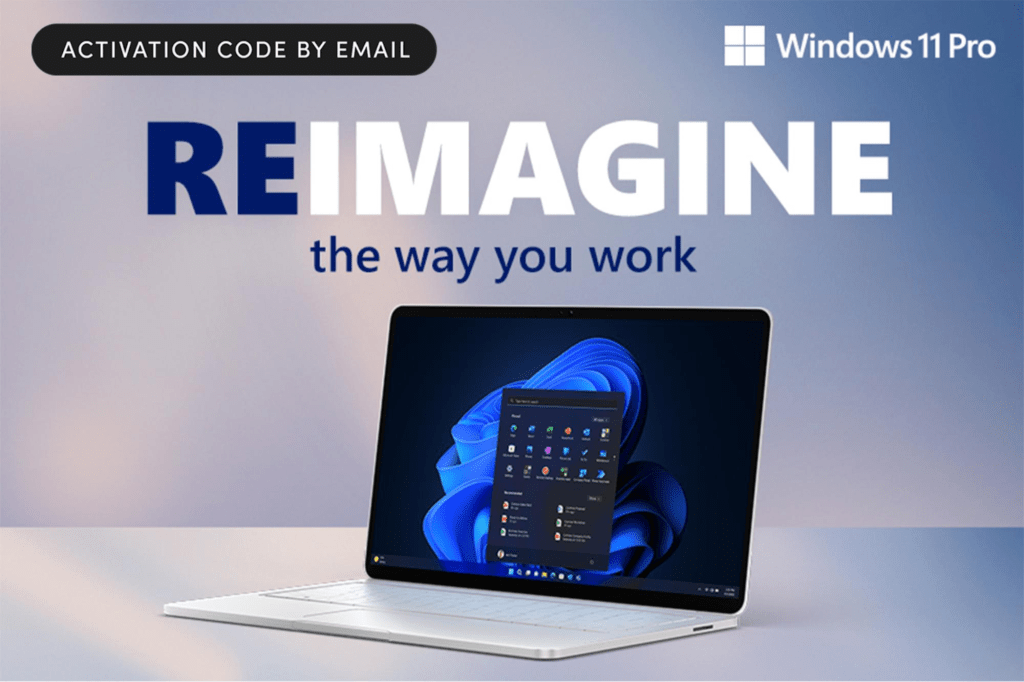
This $10 Windows 11 Pro Upgrade Will Keep Your Systems Secure and Compliant

Disclosure: Our goal is to feature products and services that we think you’ll find interesting and useful. If you purchase them, Entrepreneur may get a small share of the revenue from the sale from our commerce partners.

Running a business on outdated tech can slow everything down—from juggling spreadsheets to handling client presentations. But before you shell out for new machines, here’s a smarter move: upgrade to Microsoft Windows 11 Pro for just $9.97 (MSRP $199).

This operating system (OS) upgrade can breathe new life into your existing hardware, while providing access to the latest tools designed for modern work.

Why business leaders should care

Windows 11 Pro isn’t just a little refresh. It was designed with professionals in mind. Think of features like Snap Layouts and multiple desktops, which help you organize your workflow when you’re bouncing between accounting, marketing decks, and Zoom calls. Security gets a serious boost, too, with BitLocker encryption, Smart App Control, and biometrics logins—critical if your business handles sensitive data.

And if you’re still using Windows 10, support has officially ended, so upgrading soon is important.

But the real game-changer? Copilot, the AI assistant built right into Windows 11 Pro. Business owners and team leaders can use it to:

  • Summarize long documents before a meeting
  • Generate quick email drafts to clients
  • Pull insights from spreadsheets without getting lost in formulas
  • Adjust system settings hands-free while presenting

In short, it’s like having a digital assistant ready to save you time every single day.

Many people assume laggy performance means it’s time to buy new hardware. But often, installing a modern OS like Windows 11 Pro can keep your existing setup running smoothly for years to come.

At just $9.97 (MSRP $199), Windows 11 Pro is an investment that pays for itself almost instantly.

Microsoft Windows 11 Pro

See Deal

StackSocial prices subject to change.

Running a business on outdated tech can slow everything down—from juggling spreadsheets to handling client presentations. But before you shell out for new machines, here’s a smarter move: upgrade to Microsoft Windows 11 Pro for just $9.97 (MSRP $199).

This operating system (OS) upgrade can breathe new life into your existing hardware, while providing access to the latest tools designed for modern work.

Why business leaders should care

Windows 11 Pro isn’t just a little refresh. It was designed with professionals in mind. Think of features like Snap Layouts and multiple desktops, which help you organize your workflow when you’re bouncing between accounting, marketing decks, and Zoom calls. Security gets a serious boost, too, with BitLocker encryption, Smart App Control, and biometrics logins—critical if your business handles sensitive data.

The rest of this article is locked.

Join Entrepreneur+ today for access.

https://www.entrepreneur.com/science-technology/this-10-windows-11-pro-upgrade-will-keep-your-systems/498936


Why Samuel Adams Founder Jim Koch Is Proud to Have His Product Banned in 15 States

Opinions expressed by Entrepreneur contributors are their own.

Key Takeaways

  • Uptopias 2025 is the 14th release of the specialty beer.
  • With a 30% ABV, it is one of the strongest beers ever brewed, making it illegal to sell in 15 states.
  • Jim Koch founded the Boston Beer Company and began brewing Samual Adams in 1984.

Many business owners would recoil in horror if they found out their product was banned in 15 states. For Jim Koch, it’s a point of pride.

“It makes me smile,” he said with a laugh at an event in Manhattan.

The founder of Samuel Adams can certainly afford that kind of infamy surrounding Utopias, the company’s specialty biennial release with an ABV closer to most liquors than a Boston Lager. This year’s batch clocks in at 30%, making it one of the strongest beers ever. Due to its high alcohol content, it is illegal to sell in Alabama, Arkansas, Georgia, Idaho, Missouri, Mississippi, Montana, New Hampshire, North Carolina, Oklahoma, Oregon, South Carolina, Utah, Vermont and West Virginia.

Credit: Boston Beer Co.

At a tasting at Pete’s Tavern in Gramercy Park on Wednesday, Koch admitted the company doesn’t stand to gain much financially from a limited-release specialty drink in a 24.5-oz bottle. But, he said, it’s worth playing to the fine alcohol connoisseurs and pushing the form of brewing — even if it may break certain states’ laws.

“ We are giving people something that they’ve never had before,” Koch said. “ It’s [around] $250 for a bottle of beer, but it is a beer that we demonstrated can stand alongside some of the greatest alcoholic beverages in the world.”

Related: I Was a Judge for Samuel Adams’s Food and Beer Contest

Aged in barrels for up to 30 years, the beer has hints of vanilla and sweet wine, accompanied by a strong kick that doesn’t quite reach the full sting of typical booze. The product is not distilled — that would make it bourbon — and has been released since 2002, every cycle coming with a different flavor profile and collectible bottles.

This desire to push the limits of brewing, Koch says, marks a distinctly American characteristic in the global craft brewing ecosystem.

“[German brewers] talk about, ‘How will we make this beer the same way we made it 200 years ago?’ And that’s fine. But as an American, I’m like, so you haven’t had a good idea for 200 years?” he joked. “Where is innovation? Where is creativity?”

Koch’s passion for craft brewing goes back to the early 1980s, when he started brewing batches of an old family recipe — better known today as Boston Lager — in his kitchen in Newton, MA. At that point, he said, American beer was a joke, and he wanted to start a modest beer company that would challenge that perception. His very first five-year plan for Samuel Adams included growing to a company of eight people and making enough to pay himself $75,000. That trajectory was very quickly altered as soon as his beer hit the market.

“Luckily, while I was terribly  wrong, I was terribly wrong in the right direction,” he said.

Koch’s number one piece of advice to new founders trying to grow their own business? You can’t be a copycat.

“ You’ve only got a real business if your product is either better than the alternatives or cheaper,” he said. “If you’re not, you’re not adding any value to the consumer.”

Key Takeaways

  • Uptopias 2025 is the 14th release of the specialty beer.
  • With a 30% ABV, it is one of the strongest beers ever brewed, making it illegal to sell in 15 states.
  • Jim Koch founded the Boston Beer Company and began brewing Samual Adams in 1984.

Many business owners would recoil in horror if they found out their product was banned in 15 states. For Jim Koch, it’s a point of pride.

“It makes me smile,” he said with a laugh at an event in Manhattan.

The rest of this article is locked.

Join Entrepreneur+ today for access.

https://www.entrepreneur.com/growing-a-business/samuel-adams-utopias-illegal-to-sell-in-15-states/498996


Amazon CEO Reveals the Real Reason Behind the Company’s 14,000 Job Cuts — And It’s Not Because of AI or Cost Cutting

Key Takeaways

  • Amazon CEO Andy Jassy said that the company laid off 14,000 employees earlier this week because they didn’t fit with the company’s culture.
  • Jassy said that Amazon’s recent years of rapid growth had created “a lot more layers” that had slowed down decision-making.
  • He pushed for a more agile and accountable culture with fewer layers of management.

Amazon laid off 14,000 corporate employees earlier this week, marking one of the largest job cuts in the company’s history. Now CEO Andy Jassy is clarifying why the job cuts occurred for the first time, saying that AI and finances had nothing to do with the decision — it was all about culture fit.

Amazon is the world’s second-largest private employer with about 1.5 million employees, including those who work in its warehouses. The company nearly doubled its workforce in six years, going from 798,000 global employees in 2019 to 1.5 million in June of this year, according to Stock Analysis. About 350,000 employees work for its corporate operations, which means the recent plan to cut 14,000 corporate jobs affects about 4% of Amazon’s corporate staff.

Jassy said during Amazon’s quarterly earnings call on Thursday that the layoffs were driven primarily by a desire to reshape Amazon’s internal culture. Amazon aims to operate like “the world’s largest startup,” according to Jassy.

“The announcement that we made a few days ago was not really financially driven, and it’s not even really AI-driven, not right now at least,” Jassy said on the call. “It really — it’s culture.”

Related: ‘I Hate Bureaucracy’: Leaked Internal Amazon Document Reveals How the Tech Giant Is Cutting Down on Middle Management

Jassy said on the call that Amazon’s recent years of rapid growth had created “a lot more layers” that had inhibited or slowed down decision-making.

On the call, Jassy pushed for a more agile and accountable culture with fewer layers of management. He explained some of the pitfalls of a sprawling corporate culture, pointing out that when a company gets too large and complicated, it can make matters more difficult for the people “who are doing the actual work.” Extra layers can end up dragging down the whole operation instead of helping it move faster, according to the CEO.

“Sometimes, without realizing it, you can weaken the ownership of the people that you have who are doing the actual work,” Jassy said on the earnings call. “And it can lead to slowing you down. As a leadership team, we are committed to operating like the world’s largest startup, and that means removing layers.”

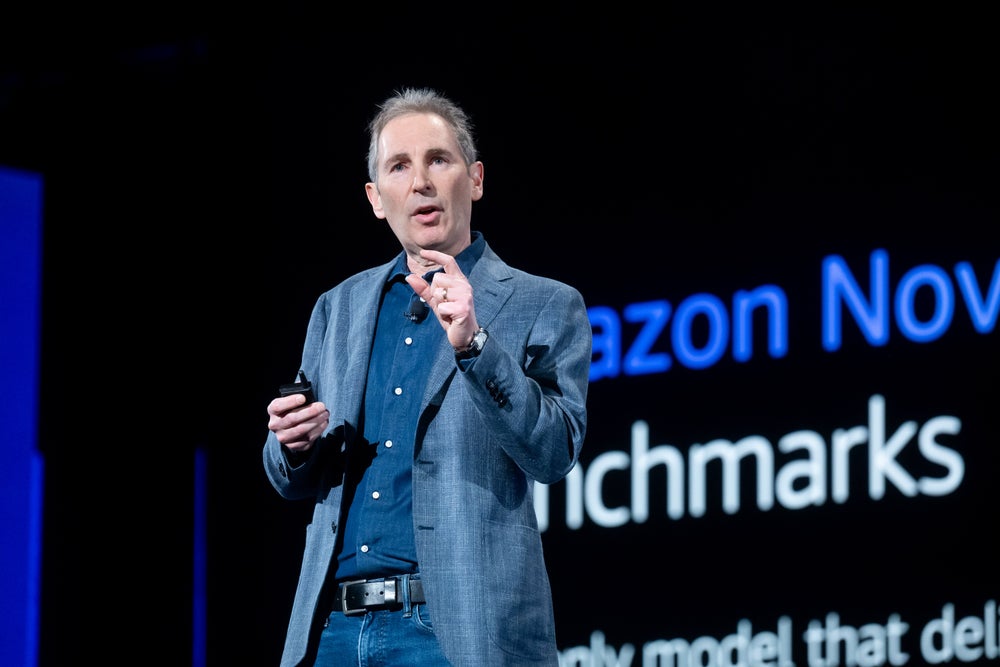
Amazon CEO Andy Jassy. Photo by Noah Berger/Getty Images for Amazon Web Services

The layoffs, which Amazon reported resulted in an estimated $1.8 billion in severance expenses for the most recent quarter, represent the company’s largest job reduction since it eliminated 27,000 positions in late 2022 and early 2023. Amazon has made dozens of cuts this year to its communications and sustainability departments, devices and services unit, and books division.

Jassy’s approach echoes a broader trend among other major tech firms like Google and Microsoft, which have also conducted layoffs this year by reducing layers of management. In April, Google laid off hundreds of workers in the division that works on the Chrome browser and Pixel phones. In May and July, Microsoft announced layoffs collectively affecting 15,000 workers.

Related: Microsoft Executive Says Using AI Has Saved $500 Million in Productivity Costs, as the Company Conducts Mass Layoffs

While AI may not be the reason for this month’s job cuts, Jassy warned staff in a memo earlier this year that he expects Amazon’s corporate workforce to eventually shrink as AI takes over tasks. Amazon has already given its customer service chatbot AI capabilities, Jassy wrote. He also noted that AI has enabled the company to put together more detailed product pages on its site.

Amazon posted earnings for the third quarter of the year on Thursday, reporting that sales topped $180 billion last quarter as profit grew by 38% to $21.2 billion.

Amazon shares are up more than 11% today at the time of writing.

Related: Amazon CEO Andy Jassy Says There’s One Trait That Contributes ‘an Embarrassing Amount’ to Being Successful

Key Takeaways

  • Amazon CEO Andy Jassy said that the company laid off 14,000 employees earlier this week because they didn’t fit with the company’s culture.
  • Jassy said that Amazon’s recent years of rapid growth had created “a lot more layers” that had slowed down decision-making.
  • He pushed for a more agile and accountable culture with fewer layers of management.

Amazon laid off 14,000 corporate employees earlier this week, marking one of the largest job cuts in the company’s history. Now CEO Andy Jassy is clarifying why the job cuts occurred for the first time, saying that AI and finances had nothing to do with the decision — it was all about culture fit.

Amazon is the world’s second-largest private employer with about 1.5 million employees, including those who work in its warehouses. The company nearly doubled its workforce in six years, going from 798,000 global employees in 2019 to 1.5 million in June of this year, according to Stock Analysis. About 350,000 employees work for its corporate operations, which means the recent plan to cut 14,000 corporate jobs affects about 4% of Amazon’s corporate staff.

The rest of this article is locked.

Join Entrepreneur+ today for access.

https://www.entrepreneur.com/business-news/amazon-ceo-ai-costs-werent-the-reasons-behind-layoffs/499047


The 5 Leadership Skills You Can’t Afford to Automate

Opinions expressed by Entrepreneur contributors are their own.

Key Takeaways

  • AI helps with structure and information, but cannot replace human connection.
  • Great coaching requires empathy, accountability and emotional insight AI lacks today.
  • Human coaches listen deeply, ask better questions and guide self-discovery.

AI career and life coaches are suddenly everywhere.

An HBR study of AI use cases shows ‘therapy’ at the top of the list, followed closely by ‘finding purpose.’ Almost half of Gen Z professionals claim they get better guidance from AI than from their managers.

But should AI really be a substitute for human coaching? The simple answer is: no, not yet. And maybe not ever.

Tools like ChatGPT may be invaluable assistants in researching career pathways or building out business scenarios. But when it comes to full-fledged career coaching, they also come with significant drawbacks. Many ill-fated interactions have illustrated precisely how AI guidance can be misguided, disconnected – and even harmful.

As a certified executive coach and CEO of a people-centered company, I would never use AI to replace a human coach. Good coaching is as much about the relationships built as the results achieved. Guiding and motivating people — and building winning teams — simply isn’t something AI alone can accomplish.

In my experience, these are the core human skills that aren’t replicable — and why people need them to succeed.

Related: The Workplace Skills Every Leader Must Nurture in the AI Era

1. Deep listening

Listening is a non-negotiable part of coaching — but how you listen matters. I follow the Co-Active Training Institute’s three levels of listening framework (used by Columbia University) to go beyond the surface-level listening we use in everyday conversation (listening to respond versus more concentrated communication).

At level three, you’re attuning to the whole person – not just their words, but also their tone, body language and even their pauses – aspects of communication that go well beyond the reach of AI.

2. Asking questions instead of providing answers

Many people assume business coaching is about giving expert advice (and AI doesn’t hesitate here). But the best coaches help people discover their own solutions, acting as a guide rather than a director. They draw on their experiences and intuition to frame open-ended questions that hit the right nerve at the right time.

More importantly, they encourage people to do their own self-discovery work more effectively than any automated follow-up message ever could.

Related: Think Managers Are Disposable? Think Again — The ‘Great Flattening’ Is Making Them More Essential Than Ever

3. Avoiding judgment but pushing accountability

ChatGPT4 quickly became the ultimate ‘yes man,’ and while validation can feel good (users asked for it back when this feature was removed from ChatGPT5), it doesn’t always drive personal growth. Great coaches balance empathy with accountability, knowing when to nudge people out of their comfort zone. I saw this play out in a recent leadership meeting.

My team presented color-coded scorecards that revealed not just where we were succeeding, but also where we were struggling. Their willingness to share both sides of the story — not just the wins — reflected the kind of accountability that makes real business growth possible.

4. Having difficult conversations people feel good about

Safety and accountability don’t always feel compatible, but the best coaches bring them together. AI won’t call you out (unless you prompt it to), but a good coach will show you they care enough to challenge you.

But here’s the critical thing: the best coaches may be delivering hard truths, but they’ll also monitor how the information is received, and adjust their tone and delivery style so that the outcome feels not only more palatable, but also actionable.

5. Investing in growth

As a leader, effective coaching isn’t just about developing strategy and solutions; it’s also a process of actively supporting people in setting goals — and helping them work toward achieving them. When team members see that you’re invested in their growth, it’s a powerful opportunity to develop loyalty and trust, which often results in higher retention and greater collaboration on shared objectives.

Outsourcing that whole process to AI strips away one of the biggest business benefits of human connection: productivity.

Related: 5 Ways Leaders Unconsciously Sabotage Their Own Success

Finding a balance between AI and human coaching

Despite all these advantages, the reality is that more people are turning to AI tools like ChatGPT as a substitute for human coaching. Even inside the coaching industry, norms are evolving.

Two-thirds of coaches are now using AI with their clients, and nearly half have built their own app or digital tool. Personally, I use AI nearly every day. It’s a remarkable thought partner, and it helps me frame issues, uncover insights from complex data, and explore solutions.

And I think this is precisely where AI can add value for all of us seeking career guidance and feedback – as an extra layer of context and support to augment the work of a human coach.

For example, AI is great in the discovery and data collection stages of the coaching journey. It can provide a structured line of questioning, and crunch huge amounts of data like job market trends, skills gaps and past performance to provide precise, actionable feedback.

AI also excels at the admin side of coaching — the scheduling, progress tracking, report generation and reminders that even the best human coaches sometimes overlook.

And, unlike a human coach, AI is always on — for those times between coaching sessions when background or input is needed in the moment.

But this alone is not enough. Ideally, these AI efficiencies free up human coaches to focus on the impactful, strategic work only they can accomplish. It means they’re more available to provide emotional intelligence and empathy for complex career decisions.

And it means they can be more present to pick up on the multifaceted, non-verbal and emotional cues that AI simply overlooks.

For me, that’s the true power of coaching — it reaches people on a deeply human level. AI can streamline processes, distill data and surface insights, but it can’t build trust, spark confidence or look someone in the eye and remind them they’re capable of more than they believe. That’s the work of a leader — and it will always be more effective when delivered human to human.

Key Takeaways

  • AI helps with structure and information, but cannot replace human connection.
  • Great coaching requires empathy, accountability and emotional insight AI lacks today.
  • Human coaches listen deeply, ask better questions and guide self-discovery.

AI career and life coaches are suddenly everywhere.

An HBR study of AI use cases shows ‘therapy’ at the top of the list, followed closely by ‘finding purpose.’ Almost half of Gen Z professionals claim they get better guidance from AI than from their managers.

But should AI really be a substitute for human coaching? The simple answer is: no, not yet. And maybe not ever.

The rest of this article is locked.

Join Entrepreneur+ today for access.

https://www.entrepreneur.com/leadership/we-cant-let-ai-automate-these-5-leadership-skills/498549



Glen Powell Has the Sauce — Inside the ‘Top Gun’ Star’s Mission to Redefine the American Pantry

Opinions expressed by Entrepreneur contributors are their own.

Until recently, if you Googled “Glen Powell oil,” you’d probably get a still from Top Gun that might make you want to shut your laptop in public. Now, the search results tell a different story — one about Smash Kitchen, the Hollywood star’s latest off-screen venture.

After successfully bringing organic condiments to Walmart shelves nationwide, Powell and his partners Sean Kane and Sameer Mehta are expanding the brand into everyday pantry staples with a new line of cooking oils.

It sounds almost absurd — until you hear him explain why.

Related: 12 Ways to Eat Healthy No Matter How Busy You Are

From Top Gun to Top Shelf

Powell’s interest in pantry products began when he first moved to Hollywood and realized that succeeding in the industry would require taking his health more seriously.

“I thought barbecue chicken pizza was healthy at the time because it had protein,” he laughs.

Over time, he began educating himself on nutrition and how to fuel an active lifestyle without sacrificing flavor. Cooking for friends, hosting barbecues and throwing Game Day parties became a way to combine his love of food with his social nature. Developing Smash allowed him to create products that reflected that philosophy: tasty, high-quality ingredients that don’t compromise.

On the surface, selling condiments couldn’t be more different from starring in blockbusters. But Powell sees similarities. Building a brand, he says, is like making a movie: you assemble the best team, work with talented people and make sure every element is top-notch.

In Smash Kitchen’s case, that meant pairing Powell’s passion for food with CPG expertise from industry veterans Sean Kane and Sameer Mehta.

Kane is as traditional an entrepreneur as they come. While most kids his age were out trick-or-treating, he was busy upselling his secondhand Halloween candy. He studied accounting but soon realized his true passion was entrepreneurship, which led him to PriceGrabber and eventually to co-founding The Honest Company, known for eco-friendly baby products and household goods.

Kane recalls, “We were making better diapers, better shampoos — everything organic — and people thanked us for creating products that were safer and healthier for their families.”

When he left, he knew he wanted to build something new, and serendipity brought him together with Mehta and Powell.

Mehta, meanwhile, brings experience from founding Jinx, a premium dog food company focused on health and nutrition. That venture taught him a lot about wellness and consumer behavior, which he applied when evaluating the human food category.

He saw a gap: traditional brands were full of artificial ingredients, high fructose corn syrup, and sodium, while clean, organic options were often overpriced and lacked flavor. That observation inspired Smash Kitchen’s mission to create products that fill the middle space — healthy, organic, flavorful and accessible.

Image credit: Smash Kitchen

A bigger recipe in mind

Powell is deeply involved in Smash Kitchen beyond financing. He samples every product and has even shipped tons of condiments to a London set so the crew could try them. While filming on a studio lot for a year, he even built a small “camp” outside his trailer, complete with a grill, showing just how hands-on he is.

Whether he’s cooking for friends or the crew, Powell treats food the same way he does film—with care, creativity, and a focus on balance. As he puts it, the experience is “symbiotic… like part of the same journey” as filmmaking

While condiments were a strong first step, Powell’s vision has always been bigger. He wants to transform the entire pantry so consumers don’t have to choose between quality and affordability. He uses his friends as a sounding board, testing ingredients for taste and cost, and emphasizes that trust has been a critical foundation for the brand.

“Eventually, we want to really transform the American pantry,” he says. “We want everybody to be buying Smash.”

For Powell, the mission is personal. Friends back home in Texas, he notes, often can’t justify paying premium prices for organic products. Smash Kitchen is designed to remove that barrier, allowing consumers to buy high-quality, organic ingredients without compromise.

Breaking into an industry dominated by long-established brands is no easy feat — especially one where consumers tend to stick with what they know. But the Smash Kitchen team believes the timing couldn’t be better.

“It probably has a lot to do with where we are right now and how people are thinking about health,” Kane says. “As more people become aware of what they’re putting in their bodies — and as we continue to educate customers — there’s this growing understanding around wellness. It feels like the right place, right time for something that’s both delicious and organic.”

With momentum for healthier choices on the rise — and Powell scheduled to appear in nearly half a dozen upcoming films and shows — Smash Kitchen is poised to be a smash hit among home cooks everywhere.

Related: 10 Simple Ways to Eat Healthy Without Thinking

Until recently, if you Googled “Glen Powell oil,” you’d probably get a still from Top Gun that might make you want to shut your laptop in public. Now, the search results tell a different story — one about Smash Kitchen, the Hollywood star’s latest off-screen venture.

After successfully bringing organic condiments to Walmart shelves nationwide, Powell and his partners Sean Kane and Sameer Mehta are expanding the brand into everyday pantry staples with a new line of cooking oils.

It sounds almost absurd — until you hear him explain why.

The rest of this article is locked.

Join Entrepreneur+ today for access.

https://www.entrepreneur.com/starting-a-business/inside-glen-powells-mission-to-redefine-the-american-pantry/498844


Here’s How Founders Can Navigate the Current Interest Rate Landscape

Opinions expressed by Entrepreneur contributors are their own.

Key Takeaways

  • Capital was extremely cheap in 2020-2021, but inflation forced the Fed to hike rates sharply in just over a year. VCs moved from “scale fast, fix later” to demanding clear paths to profitability and free cash flow.
  • Money moves in cycles, and founders who forget that risk building their business on shaky ground.
  • Build in resilience, diversify funding sources, be transparent about how you’re adapting to interest rate realities and understand that time matters when it comes to investor sentiment.

Back in 2020 and 2021, capital was almost free. The Fed slashed rates to near zero to keep the economy afloat during the pandemic. Venture firms and banks were handing out money faster than founders could build pitch decks. If you had an idea and a half-convincing slide on TAM, you could get a meeting — sometimes even a check.

But inflation changed everything. By mid-2022, it hit 9.1% — the highest in four decades.

The Fed had to slam the brakes, raising rates from basically nothing to above 5% in just over a year. That whiplash left startups caught in the middle. A friend of mine had been planning to roll over a $2 million credit line at 3%. Overnight, the rate more than doubled. That “just in case” line suddenly turned into a cash-burning liability.

The lesson: Money is never permanently cheap. It moves in cycles — and founders who forget that risk building their business on shaky ground.

Related: 4 Ways to Protect Your Business From Inflation

Is the Fed behind the curve?

People love to debate whether the Fed is “behind the curve.” In plain English, that means: Did they wait too long to act on inflation, and are they now making up for it by staying too tight for too long?

In 2021, the Fed kept calling inflation “transitory.” It wasn’t. By the time they admitted it, aggressive hikes were the only option. Fast-forward to today: Inflation has cooled to about 2.8%, but borrowing costs are still high. Some argue the Fed risks choking off growth. Others say they can’t afford to ease too quickly because another energy shock or supply chain crunch could send prices spiking again.

For founders, this isn’t just policy chatter. It shapes the cost of every loan, every investor decision and every valuation conversation.

The entrepreneurial lens

When I was raising funds for my first venture, I remember the impact of rates on investor psychology. In 2016, when money was relatively cheap, VCs were willing to overlook messy unit economics. “Scale fast, fix later” was common advice. But in 2023, when I was supporting a different project, the same pitch would have been dead on arrival. Suddenly, every investor wanted to know: How soon until profitability? What’s your path to free cash flow?

Interest rates influence the invisible backdrop against which these conversations happen. They determine whether risk capital flows freely or cautiously trickles. For entrepreneurs, understanding that backdrop is as important as perfecting your product roadmap.

The numbers tell the story:

  • Global venture capital funding dropped 17% from Q1 2025 to $109 billion in Q2 2025.

  • Surveys in 2025 still show that access to affordable financing is one of the top three headaches for U.S. startups.

Behind those stats are real people: the SaaS founder who paused expansion because capital got too pricey, the ecommerce startup forced to hit profitability two years ahead of plan, the hardware company that had to cut a creative revenue-sharing deal with suppliers instead of taking on debt.

Related: 5 Financial Moves to Make While Interest Rates Are High

The challenges right now

These challenges force founders to rethink their playbook:

  1. Cost of capital: Loans, credit lines and even convertible notes are far more expensive.

  2. Lower valuations: High rates mean investors discount future earnings harder, which drags valuations down.

  3. New investor mindset: Growth for growth’s sake doesn’t sell anymore. Profitability does.

  4. Longer fundraising cycles: Deals take longer, and closing cash takes patience.

Advice for entrepreneurs

So, how should founders navigate the current interest rate landscape?

  • Build in resilience: Don’t count on the Fed to rescue you with cheap money. Structure your financing assuming today’s rates will persist. If they drop, you gain upside.

  • Diversify funding sources: Explore revenue-based financing, customer prepayments or strategic partnerships. These alternatives can reduce dependence on costly debt or dilutive equity.

  • Communicate the macro context: Investors know the environment is tough. Be transparent about how you are adapting to interest rate realities. It signals awareness and strategic foresight.

  • Time matters: If you’re not in urgent need of capital, waiting a few quarters might shift the playing field. Rates may not plunge, but even small cuts can ease investor sentiment.

In short, founders need to be students of both microeconomics (their business model) and macroeconomics (the Fed’s decisions). Ignoring one side leaves you vulnerable.

Related: Why Entrepreneurs Shouldn’t Worry About Interest Rate Changes

The long game

Are we on the cusp of a new easing cycle, or will the Fed keep its foot on the brake longer? No one knows with certainty. But one truth endures: Cycles are inevitable. What matters is how well you position your business to survive the tough phases and thrive when conditions ease again.

I’ve lived through both ends of the spectrum — the exuberance of cheap capital and the sting of expensive debt. Each cycle reshaped how I think about building a company. If there’s one takeaway, it’s this: Interest rates aren’t just a backdrop to your business story. They are an active character, shaping the choices you make, the risks you take and the outcomes you achieve.

Entrepreneurs don’t get to set Fed policy. But they do get to decide how prepared they are for its consequences. And preparation, more than prediction, is what determines who makes it through to the next cycle.

Key Takeaways

  • Capital was extremely cheap in 2020-2021, but inflation forced the Fed to hike rates sharply in just over a year. VCs moved from “scale fast, fix later” to demanding clear paths to profitability and free cash flow.
  • Money moves in cycles, and founders who forget that risk building their business on shaky ground.
  • Build in resilience, diversify funding sources, be transparent about how you’re adapting to interest rate realities and understand that time matters when it comes to investor sentiment.

Back in 2020 and 2021, capital was almost free. The Fed slashed rates to near zero to keep the economy afloat during the pandemic. Venture firms and banks were handing out money faster than founders could build pitch decks. If you had an idea and a half-convincing slide on TAM, you could get a meeting — sometimes even a check.

But inflation changed everything. By mid-2022, it hit 9.1% — the highest in four decades.

The rest of this article is locked.

Join Entrepreneur+ today for access.

https://www.entrepreneur.com/money-finance/how-founders-can-navigate-todays-interest-rate-landscape/498146


OpenAI’s Next Move? Going Public In One of the Biggest IPOs of All Time, Report Says

Key Takeaways

  • OpenAI is considering an initial public offering (IPO) that could value the company at $1 trillion, according to a new report.
  • The move would mark one of the largest IPOs in history.
  • OpenAI denied the report, with a spokesperson stating that an IPO was not the company’s focus.

OpenAI is reportedly eyeing an initial public offering (IPO) that could value the company at up to $1 trillion — marking one of the biggest IPOs of all time.

According to a Reuters report published on Wednesday, OpenAI is laying the foundation for what could be one of the largest-ever IPOs and is thinking about filing as early as the second half of 2026. In discussions, the company has considered raising $60 billion at the low end, and possibly more, which would value the company at up to $1 trillion.

OpenAI has, however, denied the report. A company spokesperson told Reuters that “an IPO is not our focus, so we could not possibly have set a date.”

“We are building a durable business and advancing our mission so everyone benefits from AGI,” the spokesperson told the outlet. AGI is artificial general intelligence, or technology that can match or surpass human cognitive abilities across any intellectual or practical task.

Related: OpenAI Is Paying Ex-Investment Bankers $150 an Hour to Train Its AI

The only company to debut on public markets at or above the trillion-dollar mark was Saudi Aramco, the national oil company of Saudi Arabia and the world’s largest oil producer. The company went public in December 2019 with an initial market capitalization of about $1.7 trillion.

All other prominent IPOs launched at much lower valuations, typically well below $200 billion. Meta (then Facebook), for instance, raised $16 billion in its 2012 IPO, which valued the company at $104 billion; Visa’s 2008 IPO valued the company at approximately $36 billion. Both companies have grown tremendously since their early days. Meta is now the seventh-largest company in the world, with a market capitalization of over $1.6 trillion, while Visa is the seventeenth-largest company, with a market cap of about $672.5 billion.

Going public would make it much easier for OpenAI to raise money and pursue bigger deals using its own stock — fueling CEO Sam Altman’s ambitious vision to invest trillions of dollars into building out AI infrastructure, people familiar with the company’s direction told Reuters.

Related: OpenAI Made More Money in the First Six Months of the Year Than It Did in All of 2024

Altman said in a livestream on Tuesday that an IPO was “the most likely path” for OpenAI, given the vast amounts of capital it needs to fund AI infrastructure plans and acquisitions. OpenAI recently acquired Statsig, a platform for software experimentation and feature testing, for about $1.1 billion in August, as well as io Products, a design firm founded by former Apple designer Jony Ive, for $6.5 billion in May.

“I think it’s fair to say that it is the most likely path for us, given the capital needs that we’ll have,” Altman said on the livestream, speaking about an IPO.

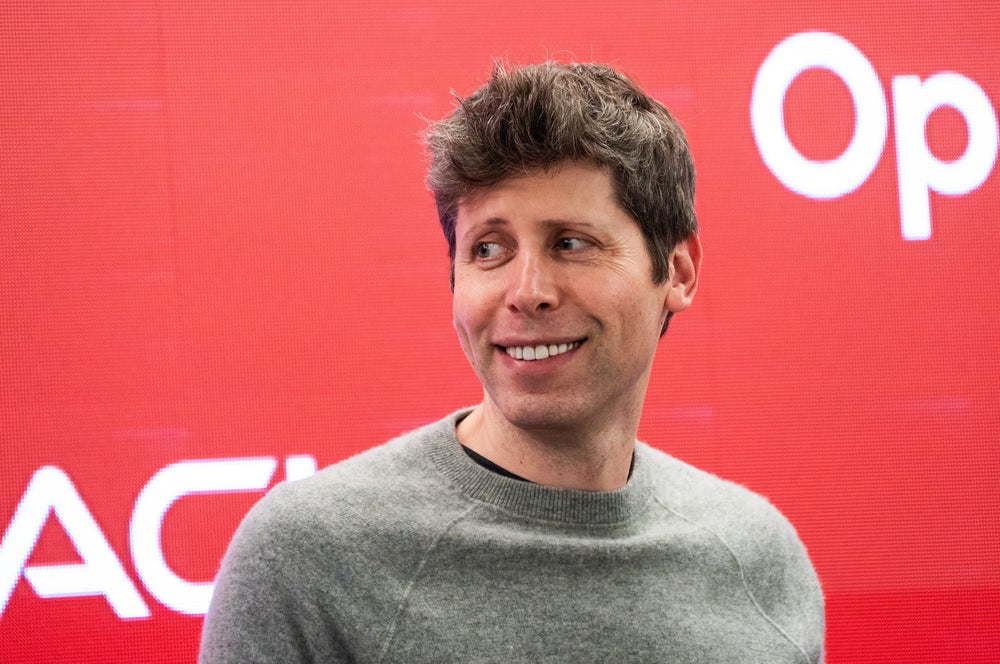
OpenAI CEO Sam Altman. Photographer: Kyle Grillot/Bloomberg via Getty Images

OpenAI began as a nonprofit in 2015, aiming to develop safe AI that would benefit society rather than focus on profits. A few years later, OpenAI created a new structure with a for-profit arm, but the nonprofit retained control to make sure its original mission stayed front and center. The nonprofit’s job was to oversee the company’s direction and keep safety as the top priority, unlike typical companies that answer mostly to shareholders.

This week, OpenAI updated its structure again. The nonprofit, now called the OpenAI Foundation, still holds the reins, but this time it owns a 26% stake in the new for-profit OpenAI Group and has a right to acquire more shares if the company meets certain benchmarks. The nonprofit isn’t just guiding OpenAI’s mission; it’s now a major stakeholder in the company’s financial growth.

The news of OpenAI’s possible IPO arrives as the AI boom fuels a surge in the stock market. CNN reports that the S&P 500 has risen by roughly 36% in just over six months, largely due to excitement around AI companies like Nvidia, which became the first company ever to reach a $5 trillion market value on Wednesday. One day earlier, Apple became the third company to achieve a $4 trillion market capitalization, after Nvidia and Microsoft hit the milestone in July.

Related: ChatGPT Can Now Run Apps Like Zillow and Spotify: ‘A Big Deal’

Key Takeaways

  • OpenAI is considering an initial public offering (IPO) that could value the company at $1 trillion, according to a new report.
  • The move would mark one of the largest IPOs in history.
  • OpenAI denied the report, with a spokesperson stating that an IPO was not the company’s focus.

OpenAI is reportedly eyeing an initial public offering (IPO) that could value the company at up to $1 trillion — marking one of the biggest IPOs of all time.

According to a Reuters report published on Wednesday, OpenAI is laying the foundation for what could be one of the largest-ever IPOs and is thinking about filing as early as the second half of 2026. In discussions, the company has considered raising $60 billion at the low end, and possibly more, which would value the company at up to $1 trillion.

The rest of this article is locked.

Join Entrepreneur+ today for access.

https://www.entrepreneur.com/business-news/openai-is-reportedly-planning-a-1-trillion-ipo/498994


His College Side Hustle Made $12,000 on Amazon in 2 Weeks — Then It Surpassed $250 Million

Key Takeaways

  • Tate Stock and his wife Hannah launched the wellness company Chirp in 2015.
  • Over the past decade, the Stocks have grown the business beyond $250 million in lifetime sales.

This Side Hustle Spotlight Q&A features Chirp co-founder and CEO Tate Stock, 33, of Salt Lake City, Utah. Stock launched the wellness company behind “simple and effective” tools for pain relief and recovery with his wife Hannah in 2015. Tate used his savings to build the prototype of the Chirp Wheel, which saw $150,000 in first-year sales. Responses have been edited for length and clarity.

Image Credit: Courtesy of Chirp. Tate and Hannah Stock.

Want to read more stories like this? Subscribe to Money Makers, our free newsletter packed with creative side hustle ideas and successful strategies. Sign up here.

What was your day job or primary occupation when you started your side hustle?
I founded Chirp while I was a full-time college student. During the summers, I sold pest control door-to-door to make ends meet. I did well enough to stay afloat, and for the first three years, didn’t take a salary from Chirp. Looking back, I’m not quite sure how my wife Hannah and I managed it — we pretty much lived off love and potatoes.

Related: These 31-Year-Old Best Friends Started a Side Hustle to Solve a Workout Struggle — And It’s On Track to Hit $10 Million Annual Revenue This Year

When did you start your side hustle, and where did you find the inspiration for it?
I started the side hustle in August 2015 — a month before my wedding and with one semester remaining in college. I was supposed to be out getting an internship, but I was actually at my aunt’s house doing laundry when I noticed a yoga wheel in her living room. I’d never done yoga in my life, but I grew up on a farm and I’m naturally curious…I thought the product looked interesting, so I looked it up online. As I started typing “yoga wheel” into Amazon, the search bar automatically finished the phrase for me — I’d only gotten to “yoga w.” That moment clicked. If Amazon’s algorithm was predicting it, that meant people were searching for it — yet no one was actually selling them. That was the spark.

Image Credit: Courtesy of Chirp. Making Chirp Wheels in the early days.

What were some of the first steps you took to get your side hustle off the ground?
Once I found out people were searching for these yoga wheels online, I went out and bought $400 worth of sewer pipe and $50 worth of yoga mats and made as many as I possibly could. I cut the pipe on a table saw in my buddy’s mom’s barn, glued on yoga-mat padding and made about 100 wheels by hand. I listed them on Amazon and made $12,000 in the first two weeks. It was the best money and best margins a college kid could get, and to me, it was more valuable than any internship. So, we were off to the races, and the yoga industry was our track.

Are there any free or paid resources that have been especially helpful for you in starting and running this business?
At first, our best resource was other college kids looking for an internship. We had a dozen or so of our peers helping make and sell Chirp Wheels, but after their three-month internship was up and they came to talk about a more permanent role, all I could offer was $7.25 an hour (Utah’s minimum wage at the time), and most were not so interested anymore. We learned quickly that hustle and scrappiness can be a resource too. Everyone wore ten hats, and that’s how we survived those early years.

Related: Siblings’ Tasty Side Hustle Became an ‘Extremely Rewarding’ Business Expecting $500,000 Revenue

Doing things the hard way often forces you to understand your product and your customers better than anyone else.

If you could go back in your business journey and change one process or approach, what would it be, and how do you wish you’d done it differently?
I wish we’d found a manufacturing partner sooner. We made the yoga wheels by hand for the first three years, and that was a lot of work…but I didn’t have the money for the minimum order quantities a factory would likely require. So ordering just as much sewer pipe and yoga mat as we needed and building the product out in the garage was really the only way we could fund things. No regrets — it was just the harder way to do it. Looking back, I’d still recommend that other founders build the first version themselves. It taught me that doing things the hard way often forces you to understand your product and your customers better than anyone else.

Image Credit: Courtesy of Chirp

When it comes to this specific business, what is something you’ve found particularly challenging and/or surprising that people who get into this type of work should be prepared for, but likely aren’t?
It was extremely challenging to get outsiders to believe in us. The banks said no to us, family members often doubted us, and other successful people who could provide mentorship often had their own things to worry about. So it was really just myself, my wife and the early employees who were really dedicated and gave everything to keep the business moving. At a certain point, I just realized that belief had to come from us first, then from customers who kept buying. That’s when we knew we had something real.

Related: Her $4,000-a-Month Side Hustle Landed in Home Depot: ‘Not Bad for a Niche Product’

Can you recall a specific instance when something went very wrong — how did you fix it?
We did not charge our customers sales tax in 2020, the year Chirp grew by 400%. Because of that, we went to each state and entered into voluntary disclosure agreements. The only way to ethically fix the problem was to pay the tax from our own profits, which cost us around $6 million. Ouch. It was really challenging to swallow that reality, but it reinforced our value of doing business the right way, no matter the circumstances. We came out clean, credible and stronger because of it.

How long did it take you to see consistent monthly revenue? How much did the side hustle earn?
We saw consistent monthly revenue from the beginning, as we were supplying natural demand in the market. After selling to the yoga market for several years, we found that the Chirp Wheels were perfect for tractioning your back, and many customers were simply using them to relieve back pain. The real breakthrough came when we stopped calling it a yoga wheel and started acknowledging what customers were already using it for, which was pain relief. In the first two and a half years, we generated $180,000 in revenue. Then, without changing the product — only the messaging — we achieved $4 million in revenue over the next six months and have since reached more than $250 million in lifetime sales. It’s remarkable how profoundly the right messaging transformed everything.

Related: I Turned a Side Hustle Into $20,000 a Month — Working Part-Time Without a College Degree

Image Credit: Courtesy of Chirp

What does growth and revenue look like now?
We’ve had another breakout year in 2025. Our team continues to grow through innovation — about a third of our company headcount is dedicated to research and development. That focus on solving real pain for real people, along with world-class marketing, has led to over 300% growth this year.

Related: This Mom’s ‘Scrappy’ Side Hustle Started in Her Garage — Now It Makes $5 Million a Year

Your customers are your best mentors.

What is your best piece of specific, actionable business advice?
Launch imperfect products. And don’t get lost in the romance of creating a business. At the end of the day, you’ll need to provide something that sells (meaning it actually provides value to someone). Get passionate about that, not your logo, your perfect packaging or even making sure you’ve trademarked everything. Your customers are your best mentors. Talk to them, listen to them, and they’ll show you where to go next.

Key Takeaways

  • Tate Stock and his wife Hannah launched the wellness company Chirp in 2015.
  • Over the past decade, the Stocks have grown the business beyond $250 million in lifetime sales.

This Side Hustle Spotlight Q&A features Chirp co-founder and CEO Tate Stock, 33, of Salt Lake City, Utah. Stock launched the wellness company behind “simple and effective” tools for pain relief and recovery with his wife Hannah in 2015. Tate used his savings to build the prototype of the Chirp Wheel, which saw $150,000 in first-year sales. Responses have been edited for length and clarity.

Image Credit: Courtesy of Chirp. Tate and Hannah Stock.

Want to read more stories like this? Subscribe to Money Makers, our free newsletter packed with creative side hustle ideas and successful strategies. Sign up here.

The rest of this article is locked.

Join Entrepreneur+ today for access.

https://www.entrepreneur.com/starting-a-business/college-side-hustle-made-12k-on-amazon-in-2-weeks-then/498938


You Won’t Win With AI Unless You Do These 3 Things

Opinions expressed by Entrepreneur contributors are their own.

Key Takeaways

  • Don’t use AI the same way you use search engines. Think of AI as a real-life strategic consultant and give it context to work with.
  • When using AI for content creation, understand that it’s best used through iteration instead of just initiation. A first draft is better when written by a human who understands context, human emotions and subjective ideas.
  • Shift from asking to doing — the goal is to get AI to not only create ideas but take it step further by executing the task.

Artificial intelligence is taking over the business world. Every entrepreneur is currently looking for ways to integrate this latest technology into their workflow. As AI becomes a ubiquitous part of running a company, it’s critical for business owners to understand how to get the most out of this powerful tool. The challenge is that AI is still widely underutilized, leaving massive amounts of value on the table. The problem isn’t adoption — it’s execution.

Many business owners are still treating AI like a glorified word processor when it’s capable of so much more. The proof is in the data. According to a report published by the National Bureau of Economic Research (NBER), only a small percentage of the total ChatGPT user base (700 million weekly users) is getting a significant amount of value from AI. The data revealed that most use of ChatGPT is for consumer purposes, such as looking up recipes, asking for health advice or helping recommend a name for the family’s new pet turtle.

Only 27% of all use was for business purposes. This shows a massive gap between the rates of adoption and strategic application. Entrepreneurs that recognize this opportunity and adapt the way they use AI have the potential to tap into exponential competitive advantage and move the needle on revenue.

If you think you need to be a Python expert or full-stack developer to unlock AI’s full potential, you’re mistaken. The NBER paper found that just three basic use cases were enough to set top AI users apart from the pack.

Related: The Secret to How Businesses Can Fully Harness the Power of AI

1. From information desk to strategic consultant

The most valuable, yet underutilized, function that the NBER study identified was practical guidance. The challenge here is that most business owners try to use AI the same way they use search engines. They provide a very basic prompt and take the first result they are given. For example, a business owner might ask ChatGPT, “How can I increase revenue for my coffee shop?” This type of tactical request will yield nothing more than basic, regurgitated ideas that provide minimal benefit.

Instead, think of AI as a real-life strategic consultant. Would you simply ask a human consultant one basic question? No. You’d have an entire conversation that includes context, information about your regular customers, local competition, differentiation and other constraints. You can also ask the AI to identify potential risks, brainstorm ideas, simulate difficult negotiations with a vendor or model impacts to revenue in an economic downturn.

2. The perfect digital editor

The most common business use of AI (about 40% of all prompts) was requests to produce some form of writing. This can provide a great advantage for entrepreneurs as writing social media content, creating sales decks and responding to customer emails requires a significant number of hours. High-value users go beyond basic draft creation and focus on using AI for editing, refining, translating and summarizing content.

The key to success is understanding that AI is best used through iteration instead of just initiation. The reality is that a first draft is almost always better when written by a human who understands context, human emotions and subjective ideas.

Instead of spending hours staring at a blank page attempting perfection, entrepreneurs can focus on the 80% that requires unique perspective and expertise, but also the least amount of effort. From there, AI can polish the document, clean up spelling and grammatical errors, tighten the language for brevity, simplify confusing jargon and select the right tone.

Related: Are You Using AI Effectively — or Are You Wasting Its Potential? Ask Yourself These 5 Questions to Find Out

3. Shift from asking to doing

The study from NBER found that most prompts fell into one of three categories: asking (seeking information), expressing (sharing thoughts or opinions) and doing (asking AI to complete a tangible task). Over half (56%) of all prompts by high-value business uses fell into the last category. The difference in output is significant.

The problem with simply asking a question is that the results must then be acted upon by the human users. Action is where the bulk of the work happens. Instead, your end result should be getting the AI to not only create ideas but also take it a step further by executing the task.

  • Asking prompt: “Give me some ideas for a social media campaign.”

  • Expressing prompt: “Here is a list of social media campaign ideas. Which option do you think will have the most impact on X demographic?”

  • Doing prompt: “Act as a marketing strategist. Review the attached marketing plan and create a 5-point email outline for a cold lead campaign that targets B2B CTOs.”

As you can see, the “doing” prompt in the example above has a specific goal of producing a clear, executable output. By making simple changes to how you create prompts, entrepreneurs can unlock new levels of productivity and effectiveness.

The small businesses and entrepreneurs that win over the next decade won’t be the ones who chase the fanciest AI tools. It will be the ones who learn how to get the maximum benefit from AI by shifting their team’s use from low-value, generic tasks to high-leverage strategic use.

Related: Most Founders Think They Know AI — But They’re Using It Wrong. Here’s How to Drive Real Growth

Key Takeaways

  • Don’t use AI the same way you use search engines. Think of AI as a real-life strategic consultant and give it context to work with.
  • When using AI for content creation, understand that it’s best used through iteration instead of just initiation. A first draft is better when written by a human who understands context, human emotions and subjective ideas.
  • Shift from asking to doing — the goal is to get AI to not only create ideas but take it step further by executing the task.

Artificial intelligence is taking over the business world. Every entrepreneur is currently looking for ways to integrate this latest technology into their workflow. As AI becomes a ubiquitous part of running a company, it’s critical for business owners to understand how to get the most out of this powerful tool. The challenge is that AI is still widely underutilized, leaving massive amounts of value on the table. The problem isn’t adoption — it’s execution.

Many business owners are still treating AI like a glorified word processor when it’s capable of so much more. The proof is in the data. According to a report published by the National Bureau of Economic Research (NBER), only a small percentage of the total ChatGPT user base (700 million weekly users) is getting a significant amount of value from AI. The data revealed that most use of ChatGPT is for consumer purposes, such as looking up recipes, asking for health advice or helping recommend a name for the family’s new pet turtle.

The rest of this article is locked.

Join Entrepreneur+ today for access.

https://www.entrepreneur.com/science-technology/you-wont-win-with-ai-unless-you-do-these-3-things/498284


5 Reasons Why Direct Mail Deserves a Comeback in Your Marketing Strategy

Opinions expressed by Entrepreneur contributors are their own.

Key Takeaways

  • Direct mail is a powerful but underutilized tool that you should consider adding to your marketing strategy.
  • It’s seeing remarkable results because customers’ mailboxes aren’t crowded, physical mail creates engagement that digital can’t match, and your customers trust it more than digital ads.
  • Additionally, direct mail achieves much higher response rates than email and often generates higher-quality leads.

If you’re a small business owner pouring all your marketing budget into Facebook ads and Instagram posts, you’re not alone. Digital marketing has become the default choice for nearly every business. But while you’re fighting for attention in the crowded digital space, there’s a powerful, underutilized marketing tool most businesses are forgetting: direct mail.

I know what you’re thinking. Direct mail? Isn’t that outdated? Actually, it’s precisely the opposite. Smart business owners are rediscovering direct mail and seeing remarkable results. Here are five compelling reasons why you should reconsider it before your competitors do.

Related: 5 Tips for Direct Mail Marketing

1. Your customers’ mailboxes are no longer crowded

Remember when everyone complained about junk mail? Those days are over. The average American now receives a lot fewer pieces of personal mail per week than they once did. This dramatic shift has transformed the mailbox from a cluttered nuisance into premium real estate.

Think about it: When your direct mail piece arrives, it’s not competing with 50 other promotional messages. It might be the only marketing communication your prospect physically touches that day. Meanwhile, your carefully crafted email is drowning in an inbox where the average open rate hovers around 20%, and that’s if you’re lucky enough to avoid the spam folder entirely.

Take Chewy, the pet products retailer. They’ve built a thriving business by understanding this scarcity. They send birthday cards addressed directly to customers’ pets. Yes, to the actual dogs and cats. By integrating direct mail into their broader marketing strategy, Chewy transformed what was once considered an old-school channel into a profitable marketing tool.

2. Physical mail creates engagement digital can’t match

People need more time to mentally process digital ads compared to physical ones, and even then, they show less emotional engagement and memory retention. When someone holds your direct mail piece, they’re engaging multiple senses: touch, sight and even smell. This multisensory experience creates deeper memory encoding.

Casper, the mattress company that disrupted the sleep industry, understands this perfectly. While their online campaigns focus on convenience and delivery, their direct mail emphasizes product construction and the full suite of sleep products. They even included crossword puzzles in December campaigns to promote relaxation during the holiday rush. This dual approach lets them tell richer brand stories and connect with customers on a deeper level than digital alone could achieve.

Related: 10 Direct Mail Marketing Mistakes to Avoid

3. Your customers trust physical mail more than digital ads

Here’s an uncomfortable truth: Your customers don’t trust digital ads. Research consistently shows that consumers don’t trust online advertisements, while direct mail significantly exceeds that trust level. For small business owners trying to build credibility in their communities, this trust gap matters enormously.

Why the difference? Physical mail feels more legitimate. It requires real investment and effort to produce and send. There’s no equivalent to phishing scams or fake social media accounts in the direct mail world. When someone receives a quality mail piece from your business, they perceive you as established and credible. This trust translates into response rates that would make most email marketers jealous.

4. Response rates tell the real story

Let’s talk about the numbers that matter to your bottom line. Research reports that direct mail achieves response rates of 4.9% for prospect lists and up to 9% for house lists. Compare this to email’s average response rate of just 1%, and suddenly, direct mail doesn’t look so old-fashioned.

Even more compelling for small business owners, direct mail often generates higher-quality leads because recipients must take deliberate action — visiting a website, calling a number or bringing in a coupon. Those who respond tend to be more genuinely interested. They’re not just impulse-clicking; they’re taking intentional steps, which means higher conversion rates.

5. The integration opportunity that’s perfect for small businesses

The real magic happens when direct mail works alongside your digital marketing, not instead of it. You don’t need to choose between channels. You can use them together to create powerful campaigns that maximize your marketing budget.

Consider this affordable approach: Send a postcard that drives recipients to a personalized landing page with a special offer, then retarget them with Facebook ads. This integrated strategy leverages direct mail’s high engagement and trust while harnessing digital’s tracking capabilities and rapid follow-up potential. The result? Campaign performance that exceeds either channel alone, without breaking the bank.

Related: How to Boost Your Business With Direct Mail Automation and Retargeting — a Detailed Beginner’s Guide

Nobody’s suggesting you abandon your website or stop posting on social media. That would be foolish. But if you’re spending 100% of your marketing budget on digital channels, you might be missing a significant opportunity. As more businesses chase the same digital channels, direct mail offers you a chance to build trust and engage customers in ways digital simply cannot always replicate.

Start small. Test a postcard campaign with your best customers. Try a local mailer with a compelling offer. The mailbox is waiting, and it’s a lot less crowded than you think.

Key Takeaways

  • Direct mail is a powerful but underutilized tool that you should consider adding to your marketing strategy.
  • It’s seeing remarkable results because customers’ mailboxes aren’t crowded, physical mail creates engagement that digital can’t match, and your customers trust it more than digital ads.
  • Additionally, direct mail achieves much higher response rates than email and often generates higher-quality leads.

If you’re a small business owner pouring all your marketing budget into Facebook ads and Instagram posts, you’re not alone. Digital marketing has become the default choice for nearly every business. But while you’re fighting for attention in the crowded digital space, there’s a powerful, underutilized marketing tool most businesses are forgetting: direct mail.

I know what you’re thinking. Direct mail? Isn’t that outdated? Actually, it’s precisely the opposite. Smart business owners are rediscovering direct mail and seeing remarkable results. Here are five compelling reasons why you should reconsider it before your competitors do.

The rest of this article is locked.

Join Entrepreneur+ today for access.

https://www.entrepreneur.com/growing-a-business/why-direct-mail-deserves-a-place-in-your-marketing-strategy/498232