Inside The Montana Town Where Entrepreneurs Are Rebuilding the American Dream

Opinions expressed by Entrepreneur contributors are their own.

This article is part of the America’s Favorite Mom & Pop Shops series. Read more stories

We’ve all heard about the impact COVID-19 had on coastal cities. Everyone has seen the haunting photos of an empty Times Square and deserted San Francisco streets.

But the thing about historic cities is that they survive through historic events. They’re designed to, with massive populations, booming industries and all the governmental support you could need. It’s the rest of America that tends to get swept away during times of crisis.

Great Falls, Montana, could easily have been one of those places. But the local entrepreneurs refused to let that happen.

Related: Why Small Business Success Comes Down to These 7 Things

Recharging Great Falls

Great Falls is by no means a small town; it’s the third most populous city in Montana and home to roughly 60,000 people. Nevertheless, the community there is incredibly tight-knit. They have to be. This isn’t a town built on the backs of corporations and chains. It’s handcrafted by entrepreneurs and artisans who actually live there and have a vested interest in the city’s success.

“Not a lot of outside money is coming in,” says businessman Scott Reasoner. “So you have to form coalitions of the willing.”

Reasoner is part of Enbar Inc., an investment group of local entrepreneurs looking to revitalize downtown Great Falls. Over the years, the group has taken over a building on 5th Street S, where they own and operate Enbar cocktail lounge, Sidequest Arcade, Big Dipper Ice Cream and one of Montana’s newest concert venues, The Newberry.

Reasoner also owns a stake in the Great Falls Voyagers minor league baseball team, where MLB legend Pedro Martinez got his start. Despite their success, Scott and his partners have no intention of dominating the market in Great Falls, choosing instead to take a cue from the strong local art community and look at the bigger picture.

“We don’t see other businesses as competition,” Reasoner says. “It’s more like, how do you fit this niche to make this thing grow so we can all grow?”

Great Falls doesn’t have the same saturation as other markets. There’s still plenty of space in the downtown ripe for renovation. And with the relatively low costs of living, you can see why so many move here to start new lives.

According to the locals, whatever you dream up in Great Falls, you can achieve. Just look at Air Force veterans Heidi and Thad Reiste, who retired from the Air Force in 2013 and were running a European-style Bistro called Electric Coffee by May of the following year.

“Moving into small business ownership was a huge leap,” Thad Restie admits. “Honestly, we had everything going against us. We weren’t restaurant people.”

The couple might not know restaurants, but after years of traversing Europe inspecting NATO bases with the Air Force, they’d tried their fair share of “sophisticated” cuisine. After retiring from service, they wanted to bring the best parts of their experience home.

A decade later, Great Falls is not only a hit with the residents but also with the VIPs who like to land their private jets at Great Falls airport to clear customs.

Related: 3 Tips for Building Resilience and Driving Growth in Turbulent Times

Homegrown hustle

Not all of the businesses in Great Falls import culture.

Many take advantage of the area’s existing resources. Farmer’s Daughter Fiber founder (say that five times fast), Candice English, spent years working in early childhood education before, like so many people, she experienced burnout.

Instead of resigning to an unfulfilled life, English turned her passion for fiber arts into a business. She taught herself how to dye yarn in her basement and used her social media savvy to promote her products.

English’s work paid off, and she began to blow up on social media, connecting with popular knitwear designers who were fans of her work. Within two years, she moved out of the basement where she taught herself to dye, and her husband left his job in the National Guard.

They moved into a dye facility and continued to grow until their storefront wasn’t big enough to meet demand, at which point they moved into their current location on Central Ave.

Then there’s the prestigious McCafferty Ranch, touted as the best beef provider in town. Founded in 1926, the third-generation family-owned and operated ranch continues to raise animals the traditional way — without preservatives, hormones or antibiotics.

They’ve also perfected an innovative hydroponic system to grow their feed, which Joel McAfferty claims produces a “superior” beef. A staple in the community, McAfferty Ranch supplies its vaunted product to local companies like Central Avenue Meats, Roadhouse Diner, and the Ranches at Belt Creek, reflecting the symbiotic relationship between the local business owners.

Stories about entrepreneurs forging their own path in big cities are easy to find. But communities like Great Falls — those truly built on the idea of opportunity that shaped this country — are rare today.

Great Falls has reinvented itself as a haven for entrepreneurs looking for a place to be their most authentic selves. Montana may no longer be seen as America’s next frontier, as it was in the days of Lewis and Clark, yet the intrepid spirit of the explorers who discovered Great Falls persists.

We’ve all heard about the impact COVID-19 had on coastal cities. Everyone has seen the haunting photos of an empty Times Square and deserted San Francisco streets.

But the thing about historic cities is that they survive through historic events. They’re designed to, with massive populations, booming industries and all the governmental support you could need. It’s the rest of America that tends to get swept away during times of crisis.

Great Falls, Montana, could easily have been one of those places. But the local entrepreneurs refused to let that happen.

The rest of this article is locked.

Join Entrepreneur+ today for access.

https://www.entrepreneur.com/living/inside-the-montana-town-where-entrepreneurs-are-rebuilding/498545




The Talent Drought Is Just Beginning. Here’s How Smart Leaders Are Getting Ahead.

Opinions expressed by Entrepreneur contributors are their own.

Key Takeaways

  • We’re likely at the beginning of a decade-long talent drought. It’s being driven by demographic trends (like falling birth rates) and cannot be solved by competing in the same local talent pool, which is shrinking every year.
  • Worker expectations have changed — employees increasingly prioritize flexibility, autonomy and purpose.
  • Hiring global talent solves both problems (demographic shifts and worker expectations) at once.

Every CEO I talk to says the same thing: “We can’t find enough qualified people.” Yet, most are still fighting over the same shrinking talent pool, not realizing the game has fundamentally changed.

I should mention something that keeps coming up in these conversations. Right now, 40% of your employees are actively shopping for a new job. When they leave, they’ll get an average 9.7% bump in pay while you eat the cost of turnover. This cycle is both expensive and exhausting.

But what if this goes deeper than just another post-pandemic disruption? We might be looking at the beginning of a decade-long talent drought that will force every company to rethink where and how they source talent.

As the CEO of DOXA Talent®, where we manage over 800 team members across six countries without a single office, I’ve watched demographic forces reshaping global talent markets. The data tells a story that should concern every CEO. The math simply doesn’t work anymore for local-only hiring.

Related: Why the Smartest Entrepreneurs Are Tapping Into This Unexpected Talent Pool

The demographic reality check

Most business leaders understand that hiring is tough right now, but few grasp how permanent this shift will be. Birth rates have been sliding since the post-industrial era, with the global fertility rate falling from roughly 4.5-7 children per family a century ago to just 2.4 in 2025.

In the U.S., this rate has plummeted to 1.79, well below the 2.1 needed just to keep the population stable. We’re not talking about speculation here, just simple mathematics. Fewer babies today means fewer workers tomorrow.

Look at population pyramids and the story becomes clear. A healthy, growing nation has a pyramid shape with lots of young people at the base. But across Europe, Asia and the Americas, these pyramids are flipping upside down, with more seniors than toddlers. Even if society suddenly started having more babies tomorrow, it would take two decades to impact the workforce.

The math is brutal and undeniable. You’re competing for talent from a pool that’s literally shrinking every year.

What workers actually want now

While demographics create the supply problem, changing worker expectations create a demand problem. Post-Covid, McKinsey research shows the workforce has split into five distinct groups.

Traditionalists value career advancement, but their numbers are dwindling. Caretakers prioritize flexibility for family responsibilities. Do-it-yourselfers value autonomy and location independence. Idealists seek purpose and development. Support-seekers value employers that provide wellness resources.

What they all have in common is a dramatic shift in work location preferences. According to the U.S. Career Institute, only 5% of workers want to be in an office full-time.

Many companies respond by compromising with hybrid policies, but this gives us the worst of both worlds. We end up paying for both a physical office and remote setups without being optimized for either. It’s like paying a mortgage on a house you use just one day a week.

Why global talent is your only real option

The companies that win will be those that see these twin forces (demographic shifts and worker expectations) as an opportunity rather than a crisis. Global talent solves both problems at once.

Remote work delivers what employees want most these days — flexibility, more time with family and freedom from commuting. At DOXA Talent®, our team members in the Philippines save an average of 3.5 hours daily by eliminating commuting. That’s 38 extra days yearly they get back with family, which explains why our retention stays strong despite competitors occasionally offering slightly higher compensation.

For employers, going global opens up a much larger talent pool. Small and mid-size companies can suddenly compete against larger organizations that are demanding returns to the office. When I ran a company in Seattle, we competed for talent against Microsoft, Amazon and Boeing. We couldn’t match their salaries, but we could offer flexibility and a genuine sense of purpose, which proved equally valuable.

Related: Why Remote Work and Offshore Talent Are Becoming Essential for Businesses

How to handle time zone differences

Time zones present a legitimate challenge for global teams, but we’ve found a remarkably effective solution in what we call the split shift.

In this model, team members in places like the Philippines might start at 4:00 a.m. their time (2:00 p.m. in the U.S. Pacific time), creating a 3-4 hour overlap for collaborative work. When U.S. team members end their day, their international colleagues continue working, creating a 24-hour productivity cycle.

This approach saves international team members from the health problems of working all night while keeping projects moving around the clock. It transforms time zones from an obstacle into an advantage.

Where to find specific talent

Each region has developed distinct strengths based on education systems, cultural factors and economic development.

India excels at finance and technical development. The Philippines is the gold standard for customer experience and back-office support. Colombia offers excellent nearshore opportunities for time zone alignment. Vietnam and Kenya shine in data labeling, coding and design.

Finding the right talent wherever it thrives is more important than simply chasing the lowest labor costs.

Why AI makes global talent essential

The final piece of this strategic puzzle is AI readiness. Every significant technological breakthrough in history, from the printing press to the internet, sparked fears of mass unemployment, but each time, productivity and job creation increased overall.

Generative AI will likely follow the same pattern. For firms that adopt early, it’s a tailwind. For companies that lag behind, it becomes an existential threat. The human-in-the-loop future will see AI handling volume while humans provide oversight, judgment and relational nuance.

This makes a global talent strategy even more critical. You’ll need diverse teams that can manage and oversee AI systems, not just execute basic tasks. When you combine AI capabilities with global talent, you create advantages your locally constrained competitors can’t match.

Related: Why U.S. Businesses Are Turning to Global Talent More Than Ever

The time to act is now

The talent shortage we’re experiencing isn’t temporary. We’re facing a structural reality that will define business for the next decade. Companies that recognize this and adapt fastest will create a huge competitive advantage.

Your workforce strategy must go global, not because it’s trendy, but because it’s the only sustainable solution to the demographic and workplace transformations reshaping our world. While your competitors spend their time debating hybrid policies and fishing in the same shrinking local talent pools, you could be building a global talent machine that gives you access to millions of qualified, dedicated future team members across the world.

What matters now is how quickly you can adapt before your competitors figure out the game has changed. The math doesn’t lie, and the math says local-only hiring is a losing game.

Key Takeaways

  • We’re likely at the beginning of a decade-long talent drought. It’s being driven by demographic trends (like falling birth rates) and cannot be solved by competing in the same local talent pool, which is shrinking every year.
  • Worker expectations have changed — employees increasingly prioritize flexibility, autonomy and purpose.
  • Hiring global talent solves both problems (demographic shifts and worker expectations) at once.

Every CEO I talk to says the same thing: “We can’t find enough qualified people.” Yet, most are still fighting over the same shrinking talent pool, not realizing the game has fundamentally changed.

I should mention something that keeps coming up in these conversations. Right now, 40% of your employees are actively shopping for a new job. When they leave, they’ll get an average 9.7% bump in pay while you eat the cost of turnover. This cycle is both expensive and exhausting.

The rest of this article is locked.

Join Entrepreneur+ today for access.

https://www.entrepreneur.com/growing-a-business/why-local-only-hiring-is-a-losing-game/498035


Protect a Lifetime of Data with 20TB of Encrypted Cloud Storage for $400

Disclosure: Our goal is to feature products and services that we think you’ll find interesting and useful. If you purchase them, Entrepreneur may get a small share of the revenue from the sale from our commerce partners.

The average cost of a data breach in 2023 reached $4.45 million, and small businesses often bore the most severe financial consequences, according to IBM Security. If you’re storing client information, financial records, or proprietary company data, you need enterprise-grade encrypted cloud storage that not only protects against current threats but also future threats that will be using more advanced technology.

Fortunately, that’s exactly what Internxt Cloud Storage delivers, and new users can get a 20TB lifetime subscription right now for $399.97.

Capacity that scales with your business

You’ll have ample room for business growth with 20TB. That allows you to store approximately 4 million high-resolution photos, 5,000 HD movies, or 40 million documents. Most businesses will find that enough for decades of client files, project archives, financial records, and backup systems without having to worry about storage limits or tiered pricing plans.

However, the security architecture is far more important than raw capacity. Internxt encrypts your data right on your device, before transmitting it, then breaks it into smaller encrypted pieces for storage. This means the files would still be unreadable even if Internxt servers were compromised, because you are the only one holding the keys. Even Internxt employees can’t access them.

It doesn’t even matter that future threats will have access to more advanced technology than what is available today. Internxt’s post-quantum encryption ensures your data remains safe, the company says. If you’re handling sensitive client information or operating in regulated industries, this level of security is essential for compliance and liability protection.

The platform is 100% open-source, with code publicly available on GitHub for security audits. Securitum has independently verified the system, and it maintains GDPR compliance. These certifications are important to have if you want to work with large corporations that require vendor security verification.

You can sync files across Windows, macOS, Linux, Android, and iOS with the same encryption standard on all platforms. Desktop and mobile apps provide seamless access, while the web app works in any browser. For developers, SSH, SFTP, and WP-CLI access offer the control needed for custom implementations.

Get a 20TB Internxt Cloud Storage Lifetime Subscription for $399.97 while it’s available to new users.

Internxt Cloud Storage Lifetime Subscription (20TB)

See Deal

StackSocial prices subject to change.

The average cost of a data breach in 2023 reached $4.45 million, and small businesses often bore the most severe financial consequences, according to IBM Security. If you’re storing client information, financial records, or proprietary company data, you need enterprise-grade encrypted cloud storage that not only protects against current threats but also future threats that will be using more advanced technology.

Fortunately, that’s exactly what Internxt Cloud Storage delivers, and new users can get a 20TB lifetime subscription right now for $399.97.

Capacity that scales with your business

You’ll have ample room for business growth with 20TB. That allows you to store approximately 4 million high-resolution photos, 5,000 HD movies, or 40 million documents. Most businesses will find that enough for decades of client files, project archives, financial records, and backup systems without having to worry about storage limits or tiered pricing plans.

The rest of this article is locked.

Join Entrepreneur+ today for access.

https://www.entrepreneur.com/science-technology/protect-a-lifetime-of-data-with-20tb-of-encrypted-cloud/498855


Alphabet Just Hit $100 Billion in a Single Quarter. Here’s What’s Driving It.

Key Takeaways

  • Alphabet posted $102.3 billion in revenue for the third quarter of 2025 on Wednesday, marking the first time it surpassed $100 billion in quarterly revenue.
  • Google Cloud, which includes Alphabet’s AI services, saw revenue rise 34% year-over-year.
  • Alphabet’s $100 billion quarter shows that AI has transitioned from an experimental feature to a key revenue driver.

On Wednesday, Google’s parent company, Alphabet, announced that it had exceeded $100 billion in quarterly revenue for the third quarter of the year — the first time the company has reached this milestone. The earnings report showed that Alphabet’s AI bet was paying off in the form of rising revenue for its AI services, especially Google Cloud.

Alphabet posted $102.3 billion in revenue for the third quarter of 2025, a 16% year-over-year increase and double from $50 billion just five years ago. The figure was well ahead of analyst estimates of $99.89 billion for the quarter. Net income rose 33% to nearly $35 billion.

Other big tech companies have hit this quarterly revenue before. Amazon, for example, exceeded $100 billion in quarterly revenue for the first time in the fourth quarter of 2020, with total sales of $125.6 billion for that period. The e-commerce giant is expected to report revenue between $174 billion and $179.5 billion for the third quarter of 2025 on Thursday.

Apple also hit quarterly revenue of over $100 billion for the first time in its fiscal first quarter of 2021, driven by strong iPhone 12 sales. Apple will release its fourth-quarter earnings after the bell on Thursday and is expected to report revenue of $102.1 billion.

Related: Nvidia Knocked From the Top? An Analyst Says Another Tech Titan Is the Most Valuable Company in the World.

Alphabet’s growth was driven by Google Cloud, which houses Alphabet’s AI services. The division saw revenue rise 34% year-over-year to reach $15.2 billion, indicating growing demand for AI. The segment saw a backlog of customer requests, as demand for enterprise AI infrastructure and services exceeded the company’s ability to supply them. Google Cloud ended the quarter “with $155 billion in backlog,” Alphabet CEO Sundar Pichai said in the earnings release, a growth of 46% quarter-over-quarter.

Alphabet’s $100 billion quarter doesn’t just mark a financial achievement. According to Tech Buzz, it’s also evidence that AI has transitioned from an experimental feature to a key revenue stream. The company’s successful range of AI products, including cloud services for enterprise, shows that it is going all-in on AI as a core growth engine.

Pichai emphasized on the call that almost every major generative AI startup relies on Google Cloud, positioning Alphabet as an essential part of the AI economy. He said that over 70% of Google Cloud’s existing customers use its AI products and gave the example of enterprise clients like Best Buy. Google Cloud signed more deals over $1 billion with enterprise clients in the first nine months of the year than it did the previous two years combined, Pichai mentioned.

“This was a terrific quarter for Alphabet, driven by double-digit growth across every major part of our business,” Pichai told investors during the earnings call on Wednesday. “We’re seeing AI now driving real business results across the company.”

Alphabet CEO Sundar Pichai. Photographer: David Paul Morris/Bloomberg via Getty Images

Alphabet is on track to rival some of its biggest competitors in revenue. Microsoft, for example, posted 40% revenue growth in its Azure cloud business on Wednesday. Azure hit $30.9 billion in revenue, up 28% from the previous year.

Alphabet also disclosed on Wednesday in its earnings report that its flagship AI app, Google Gemini, now has more than 650 million monthly active users, up from 450 million last quarter. Gemini is playing catch-up with OpenAI’s ChatGPT, which had 800 million users per week, according to OpenAI CEO Sam Altman’s remarks earlier this month.

Related: Google Introduces New Restrictions to Its Popular ‘Work From Anywhere’ Perk

Other parts of Alphabet’s business are also booming — Google Search and YouTube each saw double-digit growth. Google Search revenue rose by 15% to $56.6 billion while YouTube ads increased by 15% to $10.3 billion.

This year, Alphabet is doubling down on capital expenditures, or spending mostly on data centers and custom AI chips. The company expects to spend $91 billion to $93 billion on capital expenditures, between Amazon’s $118 billion and Meta’s $70 billion, and up from $52.5 billion in 2024.

Even with those large investments, Alphabet remains profitable. Its operating margin, or the profit it made from core business operations per dollar of sales, was 30.5% in the third quarter.

Alphabet stock was up 5% today and up over 50% year-to-date.

Related: I Worked at Google for 14 Years — Here’s What I Had to Unlearn When I Started My Own Company

Key Takeaways

  • Alphabet posted $102.3 billion in revenue for the third quarter of 2025 on Wednesday, marking the first time it surpassed $100 billion in quarterly revenue.
  • Google Cloud, which includes Alphabet’s AI services, saw revenue rise 34% year-over-year.
  • Alphabet’s $100 billion quarter shows that AI has transitioned from an experimental feature to a key revenue driver.

On Wednesday, Google’s parent company, Alphabet, announced that it had exceeded $100 billion in quarterly revenue for the third quarter of the year — the first time the company has reached this milestone. The earnings report showed that Alphabet’s AI bet was paying off in the form of rising revenue for its AI services, especially Google Cloud.

Alphabet posted $102.3 billion in revenue for the third quarter of 2025, a 16% year-over-year increase and double from $50 billion just five years ago. The figure was well ahead of analyst estimates of $99.89 billion for the quarter. Net income rose 33% to nearly $35 billion.

The rest of this article is locked.

Join Entrepreneur+ today for access.

https://www.entrepreneur.com/business-news/google-parent-company-alphabet-reports-first-ever-100b/498977


Shopping Is Changing Forever — AI Will Soon Predict and Buy What You Want Next

Opinions expressed by Entrepreneur contributors are their own.

Key Takeaways

  • Retail is shifting to predictive shopping journeys that anticipate needs and compress funnels.
  • Zero-click purchasing grows with consent-driven automation, passkeys and real-time decisioning.
  • Trust, privacy governance and clean data collaboration become competitive differentiators.

In 2025, online retail is shifting from search-and-scroll to systems that anticipate and act. Instead of pushing generic products, brands are building “contextual commerce” journeys where offers, content, timing and even fulfillment adapt to a person’s moment, intent and constraints.

Put simply: the shop comes to the shopper. The commercial prize is real — leaders in personalization are already widening the growth gap — yet so are the responsibilities around privacy, consent and clear consumer choice.

From product push to predictive, in-the-moment journeys

Contextual commerce stitches together event streams (browsing, search, store beacons, customer-service transcripts), deterministic identity (loyalty IDs, logins, passkeys), and real-time decisioning to present the right next action — whether that’s a replenishment nudge, a bundle the shopper will actually use or a service appointment that fits their calendar.

In the background, retailers are leaning into first-party data and retail media networks to monetise audience and intent, fuelling more precise discovery both onsite and offsite. Global forecasts indicate that retail media’s share of digital ad spend will continue to rise throughout the decade, underscoring how commerce data now powers the broader advertising market.

The biggest change isn’t just better recommendations — it’s anticipation. Generative models and predictive pipelines can infer jobs-to-be-done from sparse signals (“moving house”, “new baby”, “training for a marathon”) and construct micro-journeys that reduce effort: auto-configuring a basket, pre-checking fit and compatibility, and sequencing deliveries.

Done well, this feels like concierge retail at scale.

Related: How AI-Driven Personalization Is Transforming the Retail Industry

The rise of “zero-click” purchasing

“Zero-click” doesn’t mean removing consent; it means removing friction once consent and preferences are in place. Think: a washing machine that notices you’re low on capsules and triggers a one-tap confirmation on your phone; a grocery chat assistant that builds the week’s basket from your diet and calendar; or a hardware retailer’s AI that turns a DIY goal (“paint a nursery”) into a complete, ready-to-buy kit. Retailers have been inching here for years — Amazon even patented “anticipatory shipping” — but 2025’s agentic AI makes this orchestration practical across more categories.

Frictionless authentication is a key unlock. Passkeys — cryptographic credentials tied to your device biometrics — are rapidly normalising one-tap sign-in and checkout, cutting drop-off while improving security.

Consumer awareness and usage surged this year, making passwordless flows a mainstream expectation in commerce.

The enabling stack: real-time data, assistants, and clean rooms

Under the bonnet, modern contextual commerce blends a few capabilities:

  • A unified, privacy-safe customer graph fed by streaming events from apps, web, stores and service channels.
  • Real-time decisioning and generative assistants that reason over goals and constraints, not just clicks, to propose the next best action — often in plain language inside chat, search results or social feeds.
  • Data clean rooms to collaborate with publishers and retail media partners without exposing raw personal data — vital as third-party identifiers fade. Industry standards (PAIR, ADMaP) and guidance from IAB Tech Lab are maturing, making these collaborations more interoperable and auditable.

What changes for retailers

First, the funnel compresses. Discovery, evaluation and purchase can occur in a single conversational moment – often on someone else’s surface (social, search, super-apps). That shifts investment from channel silos to journey moments: answering an intent with content, assurance and fulfilment options instantly.

Second, the value of speed with relevance increases. McKinsey has long shown double-digit revenue lifts from personalisation; in 2025, the leaders are those who pair that relevance with operational readiness – real-time inventory, flexible fulfilment and clear post-purchase service.

Third, retail media becomes a performance engine for your P&L, not just an ad product. Combining on-site search with off-site audience extension via clean rooms can drive incremental reach and closed-loop measurement — provided you earn the right to use customer data through transparent value exchange.

Finally, stores get smarter. Associates equipped with AI copilots that surface context — size history, fit issues, care routines — can replicate the best stylist or specialist at scale. Early deployments show meaningful conversion and attachment gains when AI supports (not replaces) human expertise.

Related: The Make-or-Break Factor Behind Real Business Success and the Legacy You Leave

The privacy and policy reckoning

As journeys compress and automation increases, the governance bar rises. In Europe, the EU AI Act brings phased obligations through 2025–2026, including transparency and risk management requirements that will touch recommendation and profiling systems, especially when used for consequential decisions.

Compliance planning can’t wait.

In the US, subscription and auto-renewal practices — often the back-end of “zero-click” convenience – face ongoing scrutiny. The FTC finalised updates to its Negative Option Rule (the “click-to-cancel” standard) in late 2024, but a federal appeals court vacated the rule in mid-2025, leaving a patchwork of state-level protections (notably in California) and heightened enforcement against dark patterns. Brands should still design for symmetry of choice and unambiguous, revocable consent.

Clean rooms are not a privacy panacea; regulators have warned against assuming that technical controls alone neutralise risk, particularly when outputs can be re-identified or when consent does not meet legal standards.

Treat clean rooms as one control in a broader programme that includes purpose limitation, data minimisation, and robust user rights handling.

Related: Why Conversational Commerce is the Future of Shopping

How to build hyper-context with trust by design

Start with the declared value. Hyper-context lands best when customers opt in for tangible benefits: guaranteed fit, fewer returns, time saved. Make that trade explicit and easy to revisit. Then bind preferences to identity through durable, low-friction sign-in (passkeys) so that personalisation travels with the customer across devices and channels.

Make assistants accountable. Treat shopping agents like products: with clear scopes, safety rails, and escalation paths to humans. Measure not just conversion but “regret rates” and post-purchase satisfaction to ensure the assistant’s incentives align with the customer’s.

Operationalise real-time. Context only helps if you can act on it in seconds, not days. That means event-driven architectures, inventory visibility, and fulfillment policies that can flex based on the probability of purchase (yes, even moving stock closer before a click when signals are strong).

Standardise collaboration. Use industry guidance and emerging standards for clean rooms and consent signalling so partners can activate audiences without swapping raw PII. Audit your inputs and outputs; if you can’t explain them to a regulator – or your customer – don’t ship.

Design out dark patterns. Even where national rules are in flux, regulators are converging on the same principles: symmetry, clarity, and easy revocation. Make cancellation and consent changes at least as easy as sign-up; avoid pre-selected boxes; provide plain-language choices with equal visual weight.

What “good” looks like by year-end

A retailer that wins contextual commerce in 2025 will feel different to shop with. I arrive via a conversational surface, authenticate seamlessly, and see options calibrated to my size, budget, and constraints.

The assistant explains why it recommends a bundle (and what it considered but rejected), offers instant alternatives, and shows precise delivery windows tied to local stock. If I pause, it shifts channels respectfully; if I buy, it sets up a sensible cadence for replenishment with clear controls. If I change my mind, cancellation is one or two clicks away, in the same channel. The data that powers it is shared responsibly through audited pipes.

This is the move from push to context: less noise, more help. The technology is ready; the differentiator is trust. Brands that bake in transparency and control will find that hyper-personal experiences don’t just convert better – they compound loyalty over time.

Key Takeaways

  • Retail is shifting to predictive shopping journeys that anticipate needs and compress funnels.
  • Zero-click purchasing grows with consent-driven automation, passkeys and real-time decisioning.
  • Trust, privacy governance and clean data collaboration become competitive differentiators.

In 2025, online retail is shifting from search-and-scroll to systems that anticipate and act. Instead of pushing generic products, brands are building “contextual commerce” journeys where offers, content, timing and even fulfillment adapt to a person’s moment, intent and constraints.

Put simply: the shop comes to the shopper. The commercial prize is real — leaders in personalization are already widening the growth gap — yet so are the responsibilities around privacy, consent and clear consumer choice.

The rest of this article is locked.

Join Entrepreneur+ today for access.

https://www.entrepreneur.com/science-technology/ai-will-shop-for-you-retailers-will-predict-what-you/498122


Why Most Startups Fail and How Serial Entrepreneurs Beat the Odds

Opinions expressed by Entrepreneur contributors are their own.

Key Takeaways

  • Discover the hidden habits that help serial entrepreneurs succeed where most startups fail.
  • Learn how storytelling, timing and pattern recognition give repeat founders a measurable edge.

It’s easy to think of entrepreneurship as a great equalizer, where the best ideas and the most ambitious rise to the top. It does not matter who you are or where you are from; you too can be a success story. In short, it’s the American dream.

But here’s the reality. Over 90% of startups fail. That statistic is enough to stop countless would-be founders from ever throwing their hats in the ring. Yet some entrepreneurs, those who have been through the gauntlet more than once, seem to defy gravity. Serial entrepreneurs succeed more often not because they are smarter or luckier but because they have learned the patterns. They have built a framework. They know how to start, scale, exit and repeat.

The odds are brutal but not random

According to Harvard Business School research, founders who have succeeded before have greatly better odds of repeating their success than first-time founders have of finding their first win. Still, most startups, even by experienced founders, don’t make it.

The root cause isn’t always the idea itself. It’s execution. It’s timing. It’s the inability to build a moat or scale efficiently. Ideas are everywhere; acting on them is what’s valuable. Too many founders chase shiny objects, confuse motion with progress and fail to establish stage gates, the checkpoints that tell you when to pivot or pull the plug.

Related: Why Some Startups Succeed (and Why Most Fail)

But every startup needs a story

Before any hire, pitch deck or prototype, every successful startup must have a great story. Your story gets people to believe. It turns an idea into a movement. When I talk with new founders, I tell them, “If you can’t tell your story in a way that makes people lean in, you’re not ready.” The story connects your why to the market’s why now.

Investors buy stories before they buy stock. Employees join stories before they join companies. Customers buy stories that make them feel something. When we launched .CLUB, our story wasn’t about a domain extension; it was about belonging. When we built Paw.com, our story was about love, comfort and the bond between people and their pets. A good story creates gravity. It pulls customers, teams and funding into your orbit.

Pattern recognition is the serial entrepreneur’s superpower

Serial entrepreneurs don’t avoid mistakes. They make them faster, analyze them ruthlessly and then systematize what works. Over time they recognize patterns.

The wave: Every successful startup rides a macro whether it’s technological, social or regulatory. If you are too early, you drown in the undertow. If you are too late, the wave has already crashed.

The moat: A great product isn’t enough. You need defensibility through branding, patents, distribution or network effects. In my career, something as simple as acquiring the right domain has doubled sales and given us credibility overnight.

The scale test: If your business can’t grow without exponentially increasing costs or headcount, it’s a treadmill, not a rocket ship.

Frameworks that reduce failure

Across my ventures, I’ve distilled a formula that helps reduce failure. Start with a story that solves a problem you love and that others love too, then vet it ruthlessly. Scale by adding zeros to your customer base, revenue and valuation through systems, not just hustle. Exit when your timing aligns with the market’s peak, not when you’re tired or reactive. Repeat by applying the playbook again, armed with more data and fewer illusions.

This isn’t magic. It’s a process. Serial entrepreneurs are craftsmen of repetition. They don’t reinvent the wheel every time. They refine the story and repeat what works.

Related: Why I Bought a Business Instead of Starting One — And Why More Smart Professionals Are Doing the Same

The psychology of winning and losing often

Even the very best hitters strike out most of the time. If you can hit safely one in every three at-bats in the majors, you are a candidate for the Hall of Fame. In business, nobody bats a thousand, but good luck getting funding if you are hitting .300. The difference is that serial founders know how to fail.

They use early-stage milestones to limit losses. They hire for complementary strengths. They build do-it-yourself teams that thrive in chaos. They tell stories that keep people inspired even when times are tough. Above all, they love the journey. You will quit too soon if you don’t love your idea and your story.

The entrepreneurs who thrive aren’t the lucky ones. They are the storytellers who have learned to breathe underwater while everyone else is still gasping for air.

Key Takeaways

  • Discover the hidden habits that help serial entrepreneurs succeed where most startups fail.
  • Learn how storytelling, timing and pattern recognition give repeat founders a measurable edge.

It’s easy to think of entrepreneurship as a great equalizer, where the best ideas and the most ambitious rise to the top. It does not matter who you are or where you are from; you too can be a success story. In short, it’s the American dream.

But here’s the reality. Over 90% of startups fail. That statistic is enough to stop countless would-be founders from ever throwing their hats in the ring. Yet some entrepreneurs, those who have been through the gauntlet more than once, seem to defy gravity. Serial entrepreneurs succeed more often not because they are smarter or luckier but because they have learned the patterns. They have built a framework. They know how to start, scale, exit and repeat.

The rest of this article is locked.

Join Entrepreneur+ today for access.

https://www.entrepreneur.com/leadership/why-most-startups-fail-and-how-serial-entrepreneurs-beat/498384


Nvidia Becomes the First Company to Reach a $5 Trillion Market Value, Leaving Apple and Microsoft in the Dust

Key Takeaways

  • On Wednesday, Nvidia became the first company to achieve a $5 trillion market value.
  • The next two biggest companies are Microsoft and Apple, and each has a market value of around $4 trillion.
  • Nvidia’s stock has grown more than 50% year-to-date.

Four months after crossing $4 trillion mark, Nvidia has become the first company to ever achieve a $5 trillion market capitalization.

Nvidia’s stock was up over 4% on Wednesday morning, topping $210, more than the $205.76 needed for a $5 trillion market value. Nvidia is now worth more than its competitors, including AMD, Intel, Micron and Qualcomm, combined. Its market value also surpasses that of entire sectors of the S&P 500, including utilities and consumer staples, reports The Wall Street Journal.

The milestone reflects the exceptional trajectory of Nvidia, which has pivoted in the past decade from making graphics cards to manufacturing AI chips, positioning itself at the heart of the AI boom. Nvidia counts companies like Meta, Microsoft and OpenAI as some of its biggest customers. Nvidia’s stock has grown more than 50% year-to-date and over 1,500% over the past five years.

“A $5 trillion market cap would have been unimaginable a few years ago,” Keith Lerner, chief investment officer and chief market strategist at Truist Advisory Services, told Bloomberg. “The market is certainly putting a lot of stock into the idea that AI will be transformational.”

Related: How Nvidia CEO Jensen Huang Transformed a Graphics Card Company Into an AI Giant: ‘One of the Most Remarkable Business Pivots in History’

Nvidia’s historic jump in value happened right after CEO Jensen Huang announced on Tuesday that the company expects to bring in $500 billion in AI chip orders and build seven supercomputers for the U.S. government. In other words, Huang shared that Nvidia has a massive pipeline of AI orders lined up, and is also about to play a major role in powering America’s tech infrastructure.

Nvidia CEO Jensen Huang on Tuesday, Oct. 28, 2025. Photographer: Kent Nishimura/Bloomberg via Getty Images

Nvidia also revealed on Tuesday that it is taking a $1 billion stake in Nokia, a firm that supplies 5G cellular equipment to telecom companies, to develop next-generation 6G cellular technology using Nvidia’s chips.

Related: Nvidia’s CEO Jensen Huang Says He’s ‘Created More Billionaires’ Than Anyone Else

Nvidia first hit $2 trillion in market value in March 2024 and achieved a $3 trillion market capitalization in June 2024, highlighting the rapid growth experienced by the company that was fueled by demand for AI computing technology.

Nvidia became the first company to cross $4 trillion in market capitalization in early July. Microsoft was the second, joining the $4 trillion club in late July. Apple recently became the third company to surpass a $4 trillion market capitalization, achieving the milestone earlier this week. Microsoft and Apple are the next two biggest companies following Nvidia, with valuations of about $4 trillion each at the time of writing.

Huang’s net worth has skyrocketed as Nvidia’s market value has grown. According to the Bloomberg Billionaires Index, Huang was worth about $180 billion at the time of writing, up nearly $68 billion from the beginning of the year, with the majority of his fortune tied up in his stake in Nvidia. He owns about 3.5% of the company, per an October 2025 filing.

Huang has been CEO of the company since co-founding it in 1993.

Key Takeaways

  • On Wednesday, Nvidia became the first company to achieve a $5 trillion market value.
  • The next two biggest companies are Microsoft and Apple, and each has a market value of around $4 trillion.
  • Nvidia’s stock has grown more than 50% year-to-date.

Four months after crossing $4 trillion mark, Nvidia has become the first company to ever achieve a $5 trillion market capitalization.

Nvidia’s stock was up over 4% on Wednesday morning, topping $210, more than the $205.76 needed for a $5 trillion market value. Nvidia is now worth more than its competitors, including AMD, Intel, Micron and Qualcomm, combined. Its market value also surpasses that of entire sectors of the S&P 500, including utilities and consumer staples, reports The Wall Street Journal.

The rest of this article is locked.

Join Entrepreneur+ today for access.

https://www.entrepreneur.com/business-news/nvidia-becomes-the-first-to-pass-5-trillion-in-market-value/498929


Celebrity Chef Andrew Zimmern Says Social Media Is Ruining Food

Every week on How Success Happens, I speak to people who have a fierce hunger to do big things and make the world a better place. This week’s guest, Andrew Zimmern, embodies both of those pursuits. He’s an award-winning chef, producer and author, who many of us got to know while watching him eat rather interesting and sometimes horrifying cuisines on his show Bizarre Foods. (If you want to know what rotten shark meat tastes like, he can tell you.)

Zimmern is a Global Ambassador to the United Nations World Food Programme, and produced the three-part docuseries “Hope in the Water,” which explores blue food technologies and environmental innovations. And he has turned the learnings from those experiences into a new cookbook, The Blue Food Cookbook: Delicious Recipes for a Sustainable Future, which he wrote with sustainable seafood leader Barton Seaver.

We spoke about the book and how we can be more responsible eaters here on planet Earth. Zimmern shared some mouthwatering recipes that absolutely killed me because I skipped breakfast on the day we recorded.

Watch our entire conversation above or listen here. And check out tips from Zimmern to cook up your own batch of success.

Subscribe to How Success Happens to get a dose of inspiration twice a week! Apple | Spotify | YouTube

Redefining Success Beyond the Self
Zimmern shares, “Earlier in my career, everything was about me… now it is literally the exact opposite. It is about other people, about experiences, not things.” He discusses how success transformed from a pursuit of deals and fame to prioritizing happiness, contribution, and resilience in the face of life’s unpredictability.
Takeaway: Reflect regularly on your deeper purpose to stay grounded and redefine success in ways that sustain long-term fulfillment.

Embracing Change and Unpredictability
After the sudden cancellation of his hit show What’s Eating America due to the pandemic, Zimmern learned “you can get everything you want on a silver platter and 30 seconds later, it’s gone.” He advocates practicing “serenity” daily to meet life’s highs and lows without being overwhelmed.
Takeaway: Build emotional resilience by cultivating calm and acceptance amidst career and personal upheavals.

Sustainable Blue Foods Are Our Future
With a lifelong connection to the ocean, Zimmern highlights the rise of responsible aquaculture, noting that it is a “net-net positive for jobs, immigration issues, and feeding an increasingly hungry planet.” His Blue Food Cookbook offers 145 recipes paired with sustainability education for the home chef aiming to protect ocean life and eat responsibly.
Takeaway: Support sustainable seafood through informed choices and embrace cooking techniques that make blue foods accessible and enjoyable.

Stick With the Classics
He is wary of “influencer” cookbooks, preferring classics written by the likes of Julia Child and Giuliano Bugialli. “ I’m flooded with cookbooks written by people who don’t know how to cook that seriously. They’re TV talent or social media talent,” he says. “Publishers don’t have the money to market or sell books. They’re counting on authors’ fans to buy the books. It’s a broken system, and we have people writing books based on fad, and that’s just not my thing.”
Takeaway: Be wary of advice from experts who aren’t actually experts.

Subscribe to the How Success Happens newsletter for weekly leadership tips in your inbox.

Zimmern Fast Facts

  • Andrew Zimmern is a four-time James Beard Award winner and the creator and host of the TV show “Bizarre Foods,” which aired for 15 years and took him to more than 170 countries.
  • Zimmern’s parents influenced his love for the ocean — his mother wrote books about shells, and his father was a fisherman.
  • Zimmern is a fierce advocate for mental health and recovery. His own battles with addiction and alcoholism left him homeless for a year, and he rebuilt his life starting as a dishwasher.

About How Success Happens

Each episode of How Success Happens shares the inspiring, entertaining and unexpected journeys that influential leaders in business, the arts and sports traveled on their way to becoming household names. It’s a reminder that behind every big-time career, there is a person who persisted in the face of self-doubt, failure and anything else that got thrown their way.

Subscribe now: Apple | Spotify | YouTube

Every week on How Success Happens, I speak to people who have a fierce hunger to do big things and make the world a better place. This week’s guest, Andrew Zimmern, embodies both of those pursuits. He’s an award-winning chef, producer and author, who many of us got to know while watching him eat rather interesting and sometimes horrifying cuisines on his show Bizarre Foods. (If you want to know what rotten shark meat tastes like, he can tell you.)

Zimmern is a Global Ambassador to the United Nations World Food Programme, and produced the three-part docuseries “Hope in the Water,” which explores blue food technologies and environmental innovations. And he has turned the learnings from those experiences into a new cookbook, The Blue Food Cookbook: Delicious Recipes for a Sustainable Future, which he wrote with sustainable seafood leader Barton Seaver.

We spoke about the book and how we can be more responsible eaters here on planet Earth. Zimmern shared some mouthwatering recipes that absolutely killed me because I skipped breakfast on the day we recorded.

The rest of this article is locked.

Join Entrepreneur+ today for access.

https://www.entrepreneur.com/leadership/andrew-zimmerns-blue-food-cookbook-rescues-dinner-and/498917


She Took Her Business From a $5,000 Investment to Over $1 Million in Revenue — Here Are Her 3 Profit Hacks for Small Business Owners

Key Takeaways

  • Jamie Trull is the founder and CEO of Balance CFO, a financial literacy coaching company.
  • Trull started her company with $5,000 in 2017 and is on track to make over a million dollars in revenue this year.
  • She shared three hacks small business owners can use to maximize their profits.

In 2017, finance expert Jamie Trull quit her six-figure job at Coca-Cola. The company was undergoing a major restructuring that would have required her to move overseas. Trull, who was pregnant with her second child at the time, decided not to uproot her family to move for her job.

Instead, she decided to start her own business.

“I had no idea what I was going to be doing,” Trull told Entrepreneur in an interview. “I did not have any kind of grand plan.”

Related: Her $4,000-a-Month Side Hustle Landed in Home Depot: ‘Not Bad for a Niche Product’

Trull, a certified public accountant (CPA) with over a decade of experience in finance at firms like Ernst & Young, landed on a business offering her financial expertise to small business owners. She called it Balance CFO. She began with $5,000 and a mission to help small business owners earning less than $1 million annually understand their finances to grow their companies.

Jamie Trull, CEO of Balance CFO

Trull spent her initial investment on software to help her collect emails and manage an email list, technology equipment and educational programs to help her learn how to run a business effectively.

As her business grew, she pivoted from offering 1:1 coaching services to teaching an audience on Facebook and YouTube about financial literacy. At the time of writing, she has over 35,000 YouTube subscribers and over 6,000 followers on Facebook, and describes Balance CFO as “fully an education-based company.”

The business draws revenue from brand partnerships and affiliate income, as well as sales of digital products like financial fitness courses and toolkits to help small business owners understand their finances.

In 2019, Balance CFO achieved $100,000 in revenue, growing to $500,000 by 2021 with the addition of digital products. In 2024, the company hit the million-dollar revenue mark. This year, it is on track to surpass “over a million” dollars in revenue.

“From a revenue perspective, we will be over a million this year, and that’s really exciting for us,” Trull said. “Our profit margins are over 50%. I’m really proud of that.”

Related: This Mom’s ‘Scrappy’ Side Hustle Started in Her Garage — Now It Makes $5 Million a Year

Trull is transparent that her primary motivations for starting her own business were the freedom to be more present for her family, set her own schedule and pay the bills.

“I started my business with the hope of being able to be there for my family, instead of in a cubicle or in a corporate office somewhere,” Trull said.

Trull released a book earlier this month with Simon & Schuster called “Hidden Profit,” which goes deep into strategies small businesses can use to maximize their earnings, even with a limited budget.

Here are three hacks she shared for small businesses to maximize profitability.

1. Understand pricing and profit margins

Many small business owners understand their profit margins in totality, but not necessarily on a product or service level, Trull explained. She gave the example of a winery owner who was profitable, but not by a lot, and they were trying to figure out why they weren’t bringing in more money.

“I helped them break everything down by the type of wine, the type of bottle they sold it in,” Trull said. “They realized that their biggest seller was actually losing money. That’s more common than we think.”

Related: How to Choose the Right Pricing Strategy for Your Small Business

Trull says that there may be a need for price adjustments and a closer look at the direct costs involved in offering a product or service to become more profitable. She advises small business owners to ensure they have updated their prices to account for rising costs and inflation.

2. Spend wisely

Trull encounters business owners who are hesitant to overspend. While she agrees that the consideration is important, she thinks it is more important to take stock of what a business is spending money on and evaluate if those measures are providing a return on investment (ROI). For example, high marketing costs could be worth it to help bring in more customers.

“One thing I’ve seen happen is people will cut costs because they’re trying to increase their profit, but they cut costs that were actually meaningfully contributing to their bottom line,” Trull said.

She recommends that small businesses understand which costs are worth it and invest more heavily in areas with a higher ROI.

Related: This Simple Personal Finance Hack Started as a Joke — But It’s Actually Helping People Save Money, Experts Say

3. Value your time

In many of the businesses Trull works with, the owner is doing a lot of the labor, and they aren’t valuing their contributions as a cost.

“I’ll see owners who are doing work that they could hire out for $15 an hour, but they think they’re saving money by continuing to hold onto those tasks,” Trull said.

She pointed out that if these owners were to free themselves from tasks that could easily be outsourced, they could then spend their time on high-level tasks that bring in new sales or strategies. Trull currently employs five people full-time, including a chief operating officer and a customer success manager, as well as several contractors.

“Our business has grown by leaps and bounds since we brought in the right people,” Trull said.

Related: Starting or Growing a Business? Here’s How to Know When You Should Hire Your First Employee.

Key Takeaways

  • Jamie Trull is the founder and CEO of Balance CFO, a financial literacy coaching company.
  • Trull started her company with $5,000 in 2017 and is on track to make over a million dollars in revenue this year.
  • She shared three hacks small business owners can use to maximize their profits.

In 2017, finance expert Jamie Trull quit her six-figure job at Coca-Cola. The company was undergoing a major restructuring that would have required her to move overseas. Trull, who was pregnant with her second child at the time, decided not to uproot her family to move for her job.

Instead, she decided to start her own business.

The rest of this article is locked.

Join Entrepreneur+ today for access.

https://www.entrepreneur.com/business-news/her-online-business-makes-over-1m-in-revenue-how-she/498911


Streamline Document Workflows and Boost Daily Productivity for $90

Disclosure: Our goal is to feature products and services that we think you’ll find interesting and useful. If you purchase them, Entrepreneur may get a small share of the revenue from the sale from our commerce partners.

Knowledge workers spend 19% of their time searching for information across documents and files, a McKinsey study says. If you’re running a business, you need professional document management software that can speed up your workflow instead of slowing it down.

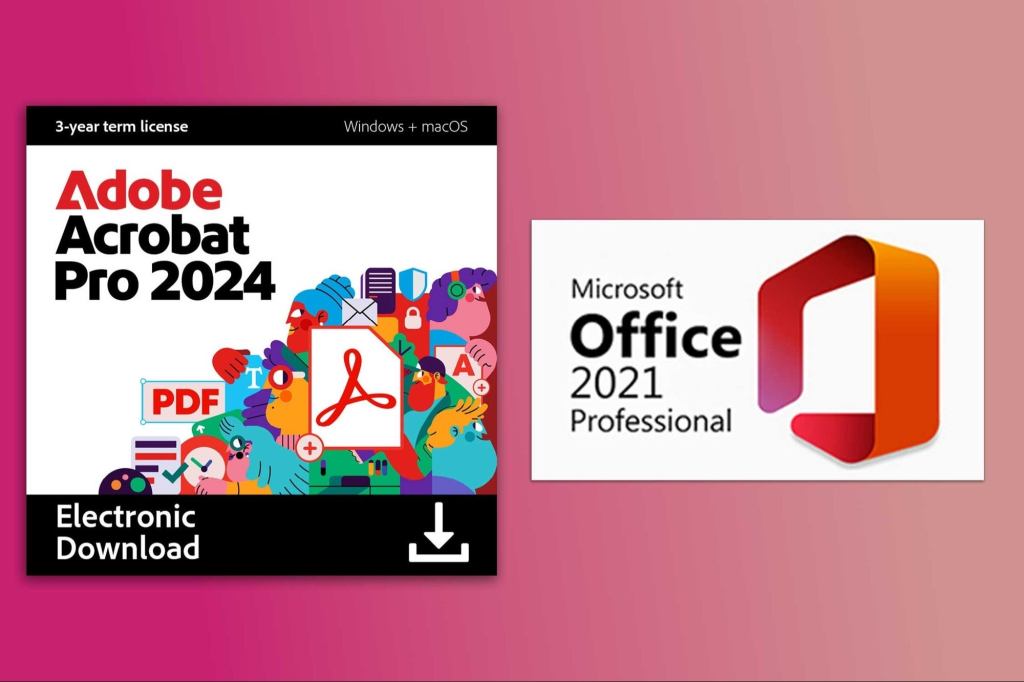
This bundle gives you three years of Adobe Acrobat Pro 2024 and a lifetime of Microsoft Office Professional 2021 for only $89.99, covering your essential productivity needs without recurring subscription fees.

Offline PDF control for secure business operations

Adobe Acrobat Pro 2024 works entirely offline, which is crucial when you’re handling sensitive business documents that shouldn’t touch cloud servers. You can create, edit, convert, and protect PDFs directly on your Windows or Mac computer without going online. The updated interface makes it faster to find the tools you need, so you spend less time navigating menus when you’re trying to complete tasks quickly.

The PDF functions cover everything your business needs. Convert PDFs to Word, Excel or PowerPoint files while preserving fonts, formatting and layouts. This is particularly helpful when you need to edit contract or financial documents sent to you by clients. You can also secure sensitive information with password protection and redaction features before sharing documents with partners or clients. When you only need specific sections of lengthy reports, you can extract specific pages without forwarding the entire file.

The new tagging system makes PDFs more accessible for people with disabilities, and additional accessibility tools ensure your documents meet compliance standards. These are essential functions if you’re working with government contracts or larger corporations.

And a top-notch productivity suite

Microsoft Office Professional 2021 gives you lifetime access to the eight top programs in this suite: Word, Excel, PowerPoint, Outlook, Teams, Publisher, Access and OneNote.

The ribbon-based interface provides quick access to the tools you need, plus you can customize fonts, layouts and document details to match your brand standards. Whether you’re processing invoices, creating client presentations or managing email communications, you get the most important Microsoft Office productivity tools on a single Windows PC.

Get the Adobe Acrobat Pro + Microsoft Office Professional License Bundle today for just $89.99.

Adobe Acrobat Pro + Microsoft Office Professional License Bundle

See Deal

StackSocial prices subject to change

Knowledge workers spend 19% of their time searching for information across documents and files, a McKinsey study says. If you’re running a business, you need professional document management software that can speed up your workflow instead of slowing it down.

This bundle gives you three years of Adobe Acrobat Pro 2024 and a lifetime of Microsoft Office Professional 2021 for only $89.99, covering your essential productivity needs without recurring subscription fees.

Offline PDF control for secure business operations

Adobe Acrobat Pro 2024 works entirely offline, which is crucial when you’re handling sensitive business documents that shouldn’t touch cloud servers. You can create, edit, convert, and protect PDFs directly on your Windows or Mac computer without going online. The updated interface makes it faster to find the tools you need, so you spend less time navigating menus when you’re trying to complete tasks quickly.

The rest of this article is locked.

Join Entrepreneur+ today for access.

https://www.entrepreneur.com/science-technology/streamline-document-workflows-and-boost-daily-productivity/498853