The Make-or-Break Factor Behind Real Business Success and the Legacy You Leave

Opinions expressed by Entrepreneur contributors are their own.

Key Takeaways

  • The relationships we build — with clients, partners, employees or even competitors — can lead to new opportunities and collective growth. They bolster us through crises and amplify our successes.
  • Mismanaged relationships have real financial and reputational consequences. Maintaining them requires humility, consistency and care.
  • Nurture your relationships patiently, monitor them vigilantly and don’t take them for granted. You’ll build a thriving enterprise and a legacy defined by trust and impact.

As CEO of BGN, a global energy trading company, I’ve seen deals spark or fizzle based on nothing more than trust built between people. The partnerships we cultivate, with clients, partners, employees — even competitors — form an unseen safety net that catches us in crisis and propels us in prosperity. Relationships are powerful, but they are also fragile, requiring constant care and authenticity.

Business partnerships often begin with a handshake — a simple gesture that symbolizes trust, mutual respect and commitment. Strong relationships in business are like an ecosystem: Each connection, nurtured over time, can lead to new opportunities and collective growth. Companies that prioritize relationship-building create networks of goodwill that bolster them through challenges and amplify successes.

Related: 5 Proven Tools for Developing Strong Relationships as an Entrepreneur

The engine of business growth and loyalty

Business is inherently social. In fact, research shows that as much as 90% of the information senior executives act on is received via informal networks rather than formal reports. This means that behind most strategic decisions are conversations and confidences shared between trusted colleagues.

Internally, leaders who invest time in people often discover that loyalty, insight and innovation come in return. Externally, the quality of relationships with customers is just as vital. In other words, how you make people feel matters. Satisfied clients refer new business; supportive suppliers go the extra mile; engaged employees give their best.

It’s no wonder marketers now talk about “Return on Relationship (ROR)” — the value that accrues from nurturing relationships through loyalty, recommendations and sharing. These relationship dividends directly impact the bottom line, fueling sustainable growth. I’ve seen this firsthand consistently throughout my own career.

Many of the world’s greatest business success stories are really stories of relationships. Take the partnership between Warren Buffett and Charlie Munger at Berkshire Hathaway. Their nearly 60-year business alliance thrived on complete trust and mutual respect, helping to transform a struggling textile mill into one of the world’s most valuable companies.

Or consider how former PepsiCo CEO Indra Nooyi nurtured extraordinary loyalty by writing 400 personal letters a year to the parents of her senior executives, thanking them for the “gift” of their child’s leadership. That kind of personal touch humanized her leadership and strengthened bonds within her team.

In my own experience managing BGN, our most significant deals often originated from relationships tended over years. For example, entering a new market meant months of listening to local partners’ concerns and helping solve problems long before any contract was signed. By the time we officially conducted business, we were negotiating transactions, sure. But more importantly, we were solidifying trust. Those are returns no financial model could have predicted, and they are earned by patiently building genuine connections.

Related: 4 Strategies for Building Deep Business Relationships

When trust falters: Lessons in mismanaged relationships

Relationships take years to build, but only moments to break. To reference the investing giant once again, Warren Buffett famously quipped that “It takes 20 years to build a reputation and five minutes to ruin it.” In business, a single breach of trust or failure to honor a commitment can unravel years of goodwill.

Mismanaged relationships carry real financial consequences. A client who feels betrayed can broadcast their bad experience widely, damaging a brand. A key employee who leaves over a trust issue can trigger a talent exodus. And an investor who loses confidence can dry up your capital.

We saw this on a grand scale with WeWork in 2019: The co-working startup’s meteoric rise collapsed almost overnight when investors lost faith in its leadership. Within six weeks of its ill-fated IPO filing, WeWork’s valuation was slashed by more than half, and its founder-CEO was forced to step down. The catalyst was ultimately a breakdown of trust and credibility at the top. High-profile failures like this underscore a simple truth — no amount of brilliance or hype can save a venture if its key relationships are broken.

Related: Want Strong Business Relationships? Avoid These 3 Mistakes.

Maintaining relationships requires humility, consistency and care. Leaders must communicate with honesty and transparency, especially when things go wrong. It means owning up to mistakes and making amends before small rifts widen. It means treating people — from major stakeholders to junior team members — with respect and integrity at all times. The leaders who endure are those who understand that every interaction matters. They know trust, once damaged, is painfully difficult to rebuild.

By contrast, leaders who cultivate a reputation for fairness and reliability find that opportunities seek them out. In crises, their network rallies to support them. Over the long run, how you treat people becomes a defining element of your legacy as much as any financial metric.

For today’s entrepreneurs and executives, the mandate is clear: Put relationships at the center of your strategy. Nurture them patiently, monitor them vigilantly and never take them for granted. If you do, you’ll build not only a thriving enterprise, but also a legacy defined by trust and impact. After all, the network of goodwill you weave through your career may well be the most valuable asset you ever create — one that outlasts any single product or deal and keeps propelling your company forward.

Key Takeaways

  • The relationships we build — with clients, partners, employees or even competitors — can lead to new opportunities and collective growth. They bolster us through crises and amplify our successes.
  • Mismanaged relationships have real financial and reputational consequences. Maintaining them requires humility, consistency and care.
  • Nurture your relationships patiently, monitor them vigilantly and don’t take them for granted. You’ll build a thriving enterprise and a legacy defined by trust and impact.

As CEO of BGN, a global energy trading company, I’ve seen deals spark or fizzle based on nothing more than trust built between people. The partnerships we cultivate, with clients, partners, employees — even competitors — form an unseen safety net that catches us in crisis and propels us in prosperity. Relationships are powerful, but they are also fragile, requiring constant care and authenticity.

Business partnerships often begin with a handshake — a simple gesture that symbolizes trust, mutual respect and commitment. Strong relationships in business are like an ecosystem: Each connection, nurtured over time, can lead to new opportunities and collective growth. Companies that prioritize relationship-building create networks of goodwill that bolster them through challenges and amplify successes.

The rest of this article is locked.

Join Entrepreneur+ today for access.

https://www.entrepreneur.com/leadership/the-make-or-break-factor-behind-real-business-success/497887



Think Managers Are Disposable? Think Again — The ‘Great Flattening’ Is Making Them More Essential Than Ever

Opinions expressed by Entrepreneur contributors are their own.

Key Takeaways

  • The Great Flattening is when businesses gut their middle management ranks.
  • Invest in management training to strengthen leadership in flatter organizations.
  • Equip managers with AI tools to enhance decision-making and productivity.

Companies keep slashing headcounts, but it isn’t just frontline employees at risk these days. Increasingly, managers find themselves on the receiving end.

Welcome to the Great Flattening, which is seeing businesses everywhere gut their middle management ranks. Across industries, companies from Amazon and UPS to Walmart and Meta are trimming their staff. Understandably, middle managers are spooked, with almost half worried about losing their jobs.

At first glance, it might look like today’s managers are disposable — especially in the age of AI, which appears to be hastening their demise. But the exact opposite is true.

Fewer managers means more responsibility for each one that’s left, plus more potential risks for the business if they can’t keep up. Unless companies get it right, their bottom line could suffer. After all, the most talented managers contribute nearly 50% more profit to their companies than their average peers.

The problem is that managers haven’t historically been set up for success, and have been left to their own devices in most orgs, with minimal training or support. Here’s why the pressure dis on today’s managers like never before, and how companies can find creative ways to keep up.

Related: Why Middle Managers Are the Key to Your Company’s Success

Why managers are under more pressure than ever

Companies have their reasons for shedding managers. AI has automated onboarding, scheduling, project tracking and other tasks that have traditionally fallen to middle management. By flattening the org, companies stand to boost efficiency, cut costs and make the business nimbler.

But for those managers who remain, it’s no picnic. Their span of control is getting bigger, with the typical manager overseeing roughly twice as many workers as they did five years ago. They’re not only managing people, they’re also managing budgets and their own individual contributor work.

On top of all that, as business functions merge, the breadth of expertise required to be a manager keeps expanding. A prime example from my world is revenue operations, or RevOps, a new discipline that integrates marketing, sales, customer success and finance. That means RevOps managers need to be experts at nearly every stage of the customer lifecycle.

Even administrative duties can be overwhelming. Middle managers spend almost one day a week on admin — and less than 30% of their time dealing with direct reports.

The result? With superhuman expectations on today’s managers, stress and burnout are inevitable. Managers are about 35% more likely than regular employees to feel burned out, and roughly 25% percent more inclined to consider quitting within six months.

No wonder people’s appetite for management roles is diminishing at this critical time. When my company surveyed 1,000 US employees, fewer than four out of 10 individual contributors said they wanted to become a manager. Their two main roadblocks: expectations of greater stress and pressure, along with the prospect of working longer hours. Gen Z employees were twice as likely as older generations to say that lack of confidence in leading a team held them back.

Related: Why Middle Managers Are a Company’s Hidden Superpower

How to re-engage your managers

So, how can companies shore up and even strengthen their management ranks at this critical moment?

It starts with a fundamental cultural shift: elevating the management role.

Most people who become managers today, especially in the tech world, do so accidentally. Rather than deliberately seeking the job, they’re player-coaches who fall into it without training or tools. In one survey of managers, eight out of 10 said they didn’t get any training when they took on their first role.

I experienced this firsthand early in my career, when I was asked to join the management ranks at a software company. With no training, I was expected to lead a team in addition to handling my duties as a developer. Many accidental managers may thrive, but many more falter under the weight of their new responsibilities.

Finding a way forward here actually requires looking back: to an earlier model of management training. For example, blue-chip stalwart IBM has long had a training program that includes development for new managers. In today’s fast-paced and resource-scarce business environment, such efforts don’t require lavish spending or dedicated time off. Procter & Gamble takes a 70/20/10 approach to leadership development: 70% learning on the job; 20% support from colleagues, mentors and peers; and 10% courses and learning materials.

What’s key is providing structure and space to learn the craft of management, something that has been neglected for too long.

Related: Millennial Managers, Middle-Management Affected By Layoffs

A new management toolkit, powered by AI

Giving managers the right tools is equally crucial. And here, AI is part of the solution, not just the problem.

Take something as fundamental as performance reviews and merit pay raises, typically some of the most time-consuming parts of a manager’s job. The average manager spends about five weeks a year just keeping tabs on people’s performance.

The latest AI-powered tools can radically change that timeframe.

Let’s say you manage 10 people and want to determine annual raises, while staying within a prescribed budget. The right AI assistant can quickly draw on company-specific data like performance, engagement, industry salary levels, market demand and pay philosophy. If someone is beating sales targets or otherwise going the extra mile, that becomes part of the compensation picture. You then get an informed pay recommendation, plus a data-driven rationale to share with the team member.

These same tools can help managers streamline everything from talent acquisition and retention to workforce planning and skills gap analysis. Gathering that data from different internal sources — including employee management systems, customer relationship management platforms like Salesforce and revenue-tracking tools like Gong — AI tools weave it together behind the scenes to deliver actionable insights connecting people with business results.

Best of all, managers can ask questions in plain language. Who are the top contributors on my team? Who’s most at risk of quitting, and why? What drove the sales team’s performance last quarter?

When you tangibly empower managers, the gains are real. On average, middle managers say using AI tools boosts their productivity by more than 40%. And in one study, managers using generative AI saved an average of almost three hours a week, while eight out of 10 said it helped them do their job faster.

Breaking the management fourth wall

Standing in the way of unlocking this type of performance is one formidable obstacle facing managers at most companies today: access to data.

In far too many cases, the people data needed for informed decision-making by managers is walled off. HR, finance, marketing and other departments can be reluctant to share their numbers with people managers. While “privacy” is often cited, the reality is that today’s tools can provision access so that only the right people see the right information. What’s really missing is a culture of trust: shared information leads to democratized decision-making that is inherently better, because it’s backed by actual data and results.

As the Great Flattening continues, managers will only become more important. HR may influence decisions, but it’s managers who truly drive results — because they have the most direct influence on how people impact business performance.

It’s time for companies to empower a new generation of intentional people managers, ready to face the challenges ahead. The right training and support — coupled with the right workforce intelligence tools — ensures that flatter orgs can run better, too.

Key Takeaways

  • The Great Flattening is when businesses gut their middle management ranks.
  • Invest in management training to strengthen leadership in flatter organizations.
  • Equip managers with AI tools to enhance decision-making and productivity.

Companies keep slashing headcounts, but it isn’t just frontline employees at risk these days. Increasingly, managers find themselves on the receiving end.

Welcome to the Great Flattening, which is seeing businesses everywhere gut their middle management ranks. Across industries, companies from Amazon and UPS to Walmart and Meta are trimming their staff. Understandably, middle managers are spooked, with almost half worried about losing their jobs.

The rest of this article is locked.

Join Entrepreneur+ today for access.

https://www.entrepreneur.com/leadership/as-companies-cut-managers-the-smart-ones-are-investing-in/498397


How This Hidden Data Issue Silently Erodes Business Value and Decision-Making Over Time

Opinions expressed by Entrepreneur contributors are their own.

Key Takeaways

  • Minor data corruptions can be even more dangerous and costly than a data breach or attack because they often go undetected for long periods.
  • Data corruption is usually caused by incorrect, outdated or duplicate data entries, as well as inaccessible files and hardware problems.
  • To minimize minor data corruptions, you should automate integrity checks, reduce manual entries, monitor data lineage, conduct regular audits and utilize AI tools.

Data forms the backbone of most companies nowadays. Whether it’s customer information, sales data or marketing analytics, good data provides critical insights that help you plan, compete and prepare for the future.

Therefore, we must be vigilant against insidious corruption. This happens when data is gradually being altered unintentionally, and the data corruption is so small that it usually goes undetected until it’s too late.

These can even be a result of human error, poor configuration or just incorrect data being added — something that doesn’t show up in the radar until a proper audit is carried out.

Over time, these minor data corruptions can erode business value and lead to poor decision-making.

Related: How to Climb Out of the Four Greatest Data Strategy Pitfalls

How dangerous are minor data corruptions?

Instead of a data breach or an attack, minor data corruptions don’t happen suddenly, making it, at times, even more dangerous and costly.

Malware attacks can be detected and responded to immediately. Severe data corruption can be detected, recovered and fixed. However, how do you really fix a problem that is difficult to even detect in the first place?

A few examples of minor insidious data corruptions

Incorrect data entries: Incorrect data entry into a system can cause massive problems in the long run. Imagine a human error causing a wrong entry for a financial transaction, customer information or even inventory data. Such information, if not audited in real-time, will leave the whole business vulnerable to risk.

Duplicates and outdated entries: Another example of human error can include duplicate and outdated entries that had to be deleted or updated but were left untouched. Again, on a surface level, this does seem like a small issue, but in the long run, it can lead to significant operational and financial problems.

Inaccessible files: Some files may become inaccessible or even corrupt when the systems are not updated or data isn’t moved properly.

Hardware problems: Aging hardware, e.g., HDDs and SDDs, can lead to a loss of data or at least cause issues in accessing information. This happens when hardware quality is not monitored regularly and storage devices are not replaced.

Causes of such data corruptions

Apart from simple human error, most of these problems occur because they are difficult to detect. Oversight is usually minimal, and there is no monitoring or evaluation that can detect issues as soon as possible.

Sometimes, legacy systems and outdated tools create issues. There is also an over-reliance on user interfaces and dashboards that might not reveal data corruption.

Related: Bad Data: The $3 Trillion-Per-Year Problem That’s Actually Solvable

Consequences of minor corruptions

The consequences of this hidden data corruption should not be underestimated.

Poor analytics and decision-making: Companies need accurate data on their customers, market segments and sales to make critical decisions and strategies. Wrong information can lead to wasted marketing expenses, poor market alignment and mismanaged customer-product fit, which can be devastating for the company.

Inefficient business operations: Minor data corruption can lead to serious operational problems at almost every level. The biggest cost is the time and effort spent on detecting and then reconciling discrepancies in the data. While the issues are being corrected, a lot of operations might need to be paused or slowed down.

Compliance risk: In many heavily regulated business sectors, such as healthcare, manufacturing, law or finance, even a minor error, regardless of its cause, can result in fines and even legal action. Changes in data might only be documented when it’s too late, complicating audits and leading to unforeseen compliance problems.

Loss of trust: While not deliberate, such issues can lead to a loss of trust among key stakeholders. Operational losses, vendor problems, customer complaints and incomplete compliance can lead to huge reputational damage, loss of revenue and more.

Software and practices to safeguard data integrity

While minor data corruptions are hard to detect, with the right tools and standard operating procedures, we can minimize these problems. As a start, companies need to make data integrity part of employee onboarding and training. This will make sure everyone understands what minor data corruptions are and how it’s a shared responsibility to minimize them.

Automated integrity checks: Basic data integrity tools can be automated and can work in real-time in the background. In case of duplicate entries, file name errors or missing fields, the system can flag them for further scrutiny. This will only work if immediate action is taken and the issues are rectified as soon as they are identified.

Reduce manual entries: Companies should work on a system that minimizes the need for manual entries. Most large companies have already incorporated integrated software that can generate orders automatically, send invoices, maintain customer data and much more. While it’s difficult to completely remove human entry, the less there is, the better protected your data is.

Monitor data lineage: Data lineage is simply tracking the flow of data, understanding its origins, alterations and movements, and observing it in real time. By creating a complete auditable trail of data, it’s easy to identify and troubleshoot problems. It also helps to meet regulatory compliance requirements (e.g., GDPR).

Regular audits: Overall, companies need to adopt a proactive approach to detecting minor corruptions. Regular audits are essential and help to conduct a cleanup and prevent data corruption. This should be part of an IT department’s regular activities.

AI tools: Artificial Intelligence and machine learning have given rise to numerous tools that can detect anomalies 24/7. While false positives are possible, using AI-enabled tools helps to reduce costs and improve detection efficiency, which can then be manually looked at during regular audits.

Related: What Every Business Leader Must Know About Data Management to Avoid a Compliance Nightmare

Despite the name, minor corruptions are not “minor.” If left unchecked, they can gradually and silently erode your company’s data quality, trust among stakeholders, break down regulatory compliance and lead to very bad business decisions.

As part of an overall data protection strategy, companies must invest in data integrity tools, train employees and build a culture of camaraderie where employees look out for one another to ensure minimal data corruption.

Key Takeaways

  • Minor data corruptions can be even more dangerous and costly than a data breach or attack because they often go undetected for long periods.
  • Data corruption is usually caused by incorrect, outdated or duplicate data entries, as well as inaccessible files and hardware problems.
  • To minimize minor data corruptions, you should automate integrity checks, reduce manual entries, monitor data lineage, conduct regular audits and utilize AI tools.

Data forms the backbone of most companies nowadays. Whether it’s customer information, sales data or marketing analytics, good data provides critical insights that help you plan, compete and prepare for the future.

Therefore, we must be vigilant against insidious corruption. This happens when data is gradually being altered unintentionally, and the data corruption is so small that it usually goes undetected until it’s too late.

The rest of this article is locked.

Join Entrepreneur+ today for access.

https://www.entrepreneur.com/science-technology/the-hidden-costly-data-issue-that-can-erode-business-value/497786


Amazon Lays Off 14,000 Corporate Staff, One of the Largest Job Cuts in Its History

Key Takeaways

  • Amazon is cutting 14,000 roles from its 350,000-person global corporate workforce, the company announced on Tuesday.
  • The layoffs are part of an effort to reduce bureaucracy and reallocate resources to high-growth areas, particularly in AI.
  • Amazon is the fifth most valuable company in the world, with a market capitalization of $2.4 trillion.

Amazon is laying off approximately 14,000 corporate workers, the company announced in a blog post on Tuesday. It marks one of the largest job cuts in the company’s corporate history.

According to the post, Amazon is offering several support measures and severance packages to corporate employees affected by the layoffs. Most employees will have 90 days to search for new roles within Amazon, during which their pay and benefits will continue. Those who do not secure another position internally during this notice period will receive transition support, including severance pay and health insurance benefits.

The layoffs are part of an ongoing effort to streamline bureaucracy and redirect resources toward high-growth areas, particularly AI initiatives. Amazon is making significant investments in AI infrastructure, with capital expenditures projected to exceed $120 billion for the year, up almost 50% from last year.

Amazon is the world’s second-largest private employer, with about 1.5 million people working for the company, mostly in warehouse roles. Out of its entire global workforce, roughly 350,000 are corporate employees; that means the recent plan to cut 14,000 corporate jobs affects about 4% of Amazon’s corporate staff.

Related: Amazon Just Unveiled AI Smart Glasses for Its Drivers — Here’s What They Actually Do

Amazon CEO Andy Jassy warned in June that AI would cause the company to reduce its workforce. In a memo to staff, Jassy wrote that Amazon “will need fewer people doing some of the jobs that are being done today, and more people doing other types of jobs.”

He wrote that he expects Amazon to reduce its total corporate headcount over the next few years due to AI, and that employees should learn to use AI tools and accomplish more with fewer team members.

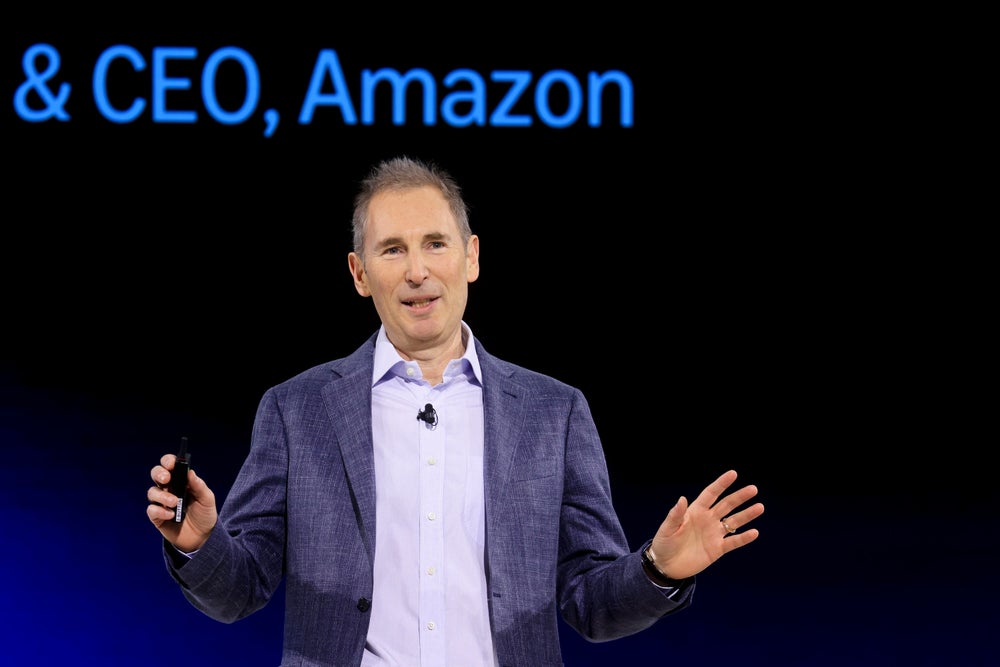
Amazon CEO Andy Jassy. Photographer: Michael Nagle/Bloomberg via Getty Images

Amazon is carrying out the layoffs to make the company leaner and less bureaucratic, even though the e-commerce giant is on good financial footing. According to its second-quarter earnings report, released on July 31, Amazon achieved a net profit of $18.2 billion for the second quarter of the year, a 35% increase compared to the same period last year. This performance was accompanied by $167.7 billion in revenue, up 13% year-over-year, and an operating income of $19.2 billion, increasing 31% from Q2 2024.

Amazon’s Senior Vice President of People Experience and Technology, Beth Galetti, addressed why the company is reducing roles despite its solid performance. According to Galetti, AI enables Amazon to innovate more quickly. Amazon needs to “be organized more leanly” and reduce the number of layers in its organization in order to “move as quickly as possible,” she wrote.

“What we need to remember is that the world is changing quickly,” Galetti wrote in the blog post. “This generation of AI is the most transformative technology we’ve seen since the Internet, and it’s enabling companies to innovate much faster than ever before (in existing market segments and altogether new ones). We’re convinced that we need to be organized more leanly, with fewer layers and more ownership, to move as quickly as possible for our customers and business.”

Related: Amazon CEO Andy Jassy Says There’s One Trait That Contributes ‘an Embarrassing Amount’ to Being Successful

Amazon’s last major rounds of layoffs occurred between late 2022 and early 2023, when the company gradually laid off 27,000 employees, another large round of job cuts.

Other tech companies have also recently conducted layoffs. Meta cut 600 positions from its Superintelligence Labs AI team last week, while Microsoft laid off more than 15,000 employees in May and July.

Amazon will report its third-quarter earnings on Thursday after market close. The company is the fifth most valuable in the world, with a market capitalization of $2.4 trillion at the time of writing.

Related: Amazon Aims to Replace 600,000 Future Hires With Robots, According to Leaked Documents

Key Takeaways

  • Amazon is cutting 14,000 roles from its 350,000-person global corporate workforce, the company announced on Tuesday.
  • The layoffs are part of an effort to reduce bureaucracy and reallocate resources to high-growth areas, particularly in AI.
  • Amazon is the fifth most valuable company in the world, with a market capitalization of $2.4 trillion.

Amazon is laying off approximately 14,000 corporate workers, the company announced in a blog post on Tuesday. It marks one of the largest job cuts in the company’s corporate history.

According to the post, Amazon is offering several support measures and severance packages to corporate employees affected by the layoffs. Most employees will have 90 days to search for new roles within Amazon, during which their pay and benefits will continue. Those who do not secure another position internally during this notice period will receive transition support, including severance pay and health insurance benefits.

The rest of this article is locked.

Join Entrepreneur+ today for access.

https://www.entrepreneur.com/business-news/amazon-lays-off-14000-corporate-employees-large-job-cut/498832


Don’t Let Uncertainty Paralyze You — The Strongest Leaders Act Their Way Into Hope

Opinions expressed by Entrepreneur contributors are their own.

Key Takeaways

  • Action fuels hope — not the other way around — in business and beyond.
  • Strong values and small, consistent actions create lasting impact in uncertain times.
  • Listening, connecting, and empowering others are the real foundations of resilient leadership.

Jane Goodall was one of my heroes — and a friend whose passing I’m still coming to terms with. As a scientist and an environmental activist, Jane fought to preserve the world’s wild animals and spaces for future generations, staying optimistic when others would have given up. She once told me that hope is not passive. It’s a discipline. A practice.

In other words, it’s not hope that generates action. It’s the other way round. In uncertain times, taking action can be a springboard for hope.

I’ve seen this up close in my work as an environmentalist, where the problems always feel overwhelming. But I’m first an entrepreneur who’s built a commerce platform with thousands of employees, helping hundreds of thousands of businesses around the world. In both arenas, uncertainty can be daunting.

Right now is especially fraught in the business world. As employees, entrepreneurs and leaders, we’re contending with challenges on so many fronts. Inflation, tariffs, DEI rollbacks, AI disruption, global conflict — sometimes it feels like an uphill battle.

So, what can leaders and their teams do? Here are some approaches I’ve seen on the frontlines of the environmental movement that I think are just as applicable to the business world.

Related: 4 Secrets to Unwavering Leadership Amidst Turbulent Times

Remember, headlines and trendlines aren’t everything

Sometimes you have to ignore what you’re reading. I saw this working with conservationist Paul Rosolie in the Peruvian Amazon. The situation back in 2019 looked bleak, with headlines warning about habitat loss, illegal encroachment and slash-and-burn deforestation.

But instead of falling into a doom loop, Paul took action. It started with an Instagram plea for help that went viral, catching the eye of CNN and the BBC. This translated to support from the Peruvian government and more resources. Today, Junglekeepers oversees 26 protected areas — almost 120,000 acres.

In business, we’re being inundated with the same kind of fear-inducing headlines — on everything from tariffs to inflation. One key to remember is that your actions today generate your tomorrow.

At my company early this year, we wrestled with inflation and flagging consumer confidence that saw people cut back on spending. So we focused on what we could do, doubling down on helping our existing customers and putting renewed effort into finding new ones.

Before you know it, the headlines and trendlines shift, and the future looks very different.

Think long-term and short-term

On that note, you’ve got to execute. When I joined the environmental movement, one big disappointment was learning that many big NGOs don’t do anything except analyze what’s wrong, spending millions on reports that explain all the complex, long-term actions we need to take.

To be clear, there’s nothing wrong with being strategic and planning for the long haul. But this absolutely needs to be coupled with action in the immediate term to avoid getting lost in analysis paralysis.

I saw the power of this approach in my backyard in British Columbia when I worked to save a watershed with a local indigenous group. We thought it would take five years for nature to regenerate. In fact, recovery took hold in just one year, with new plant life springing up and animals returning.

It’s the same in business. A long-term plan is critical, but you can’t afford to do nothing today. With new technology like AI, that’s especially true. That’s why we’ve been weaving AI into our platform, whether it’s a new tool to help stores forecast demand or one that lets retailers build a website with just a few prompts.

Strategies need to change. Values don’t

Another hero of mine that I had the chance to work with: Paul Watson of Sea Shepherd. Against what looked like impossible odds, he led a global effort to bring whales back from the brink of extinction.

Along the way, however, Sea Shepherd went from relying on risky, guerrilla tactics to taking a far less confrontational approach. But through it all, their commitment to saving the whales never wavered.

Businesses should remember that sticking to their values can provide a similar anchoring force. That’s why we’ve refused to join the retreat from DEI, which has been part of our company’s DNA for two decades. For us, diversity and inclusion were never about lip service or quotas. Giving people a fair shot — not an unfair advantage — has made the business stronger by helping us identify and attract the best and brightest.

In the end, strong values build loyalty. Six out of 10 people say they care more than ever about the values of businesses they interact with. And for three-quarters of employees, a company’s mission and culture matter more than salary.

Micro-interactions matter

From working with Indigenous activist Juma Xipaya in the Brazilian Amazon, I saw the power of the personal. Juma led a resistance against a dam project in her territory, as well as the incursion of illegal loggers and miners. She did that by building trust in small villages, one person and one handshake, at a time.

I’ve seen something similar being back in the office again after so much remote working. The human-to-human moments we’re able to share have real value, especially when the digital world can feel disconnected and lonely. Each respectful interaction we have with each other is a reminder that every small exchange builds traction.

The data absolutely backs this up. About 95% of employees say they’re more productive when they feel connected to their colleagues. Connected employees are also twice as likely to agree that their workplace motivates them to go above and beyond — and that it encourages innovation.

Related: Hustle Gets Your Startup Off the Ground, But It Won’t Unlock Real Growth. Here’s What Will.

Give your people a voice

In my environmental work, I’ve noticed that people on the ground often know much more about sustainability than the supposed experts, but they’re rarely consulted. Case in point: During one of my trips to the Amazon, a philanthropist in our group suggested installing sprinklers to extinguish the fires.

In the business context, it’s equally important not just to make employees feel heard, but to act on that feedback.

Company townhalls with the boss are a good outlet, but they tend to be heavily scripted, with staff submitting questions in advance.

So I do unfiltered Q&As where team members can ask anything they like. They don’t pull any punches. For example, they’ve asked if there’s a disconnect between my environmental message and our work with retail and hospitality businesses. (The short answer: No, because we serve independent businesses that offer people more sustainable choices and keep money in the local community.)

Encouraging that kind of openness is worth it. Employees who feel seen and heard by their immediate supervisors are more than 50% as likely to contribute ideas and almost 40% more likely to take calculated risks.

As an entrepreneur and an environmentalist, I have no illusions about the challenges the world faces. But I also know from experience that every positive action we take can be a beacon for others. Whether they’re growing a business or trying to stop the rainforest from burning, people can harness that hope to achieve remarkable things.

Key Takeaways

  • Action fuels hope — not the other way around — in business and beyond.
  • Strong values and small, consistent actions create lasting impact in uncertain times.
  • Listening, connecting, and empowering others are the real foundations of resilient leadership.

Jane Goodall was one of my heroes — and a friend whose passing I’m still coming to terms with. As a scientist and an environmental activist, Jane fought to preserve the world’s wild animals and spaces for future generations, staying optimistic when others would have given up. She once told me that hope is not passive. It’s a discipline. A practice.

In other words, it’s not hope that generates action. It’s the other way round. In uncertain times, taking action can be a springboard for hope.

The rest of this article is locked.

Join Entrepreneur+ today for access.

https://www.entrepreneur.com/leadership/how-leaders-can-channel-uncertainty-into-action-in-trying/498396


I ‘Vibe Coded’ an App Using AI — and Got a Working Product in Under 5 Minutes for Free. Here’s How I Did It.

Key Takeaways

  • Vibe coding is the practice of instructing AI to write code using plain English prompts.
  • CEOs like Google’s Sundar Pichai and Nvidia’s Jensen Huang have touted AI’s ability to write code.
  • I put vibe coding to the test, creating a mood tracker app using Lovable in under five minutes.

In August, Anton Osika, the 35-year-old CEO of the vibe coding platform Lovable AI, said that artificial intelligence has largely removed the need for “technical know‑how” and “years of training” to create technology products.

AI now allows people to “go from idea to working product without ever touching a formal CS [computer science] education,” Osika told Business Insider.

The key is vibe coding, or using AI coding assistants like Lovable, Cursor, and Replit to turn written prompts into code. Even Google CEO Sundar Pichai admitted in June to “vibe coding” his own website for fun.

Nvidia CEO Jensen Huang said in the same month that AI now enables non-technical users to write code by giving prompts in plain English. AI is the “great equalizer” when it comes to bringing ideas to life with code, he said.

Related: Should High School Students Still Learn to Code? ‘Absolutely,’ Says OpenAI Engineer

Can anyone vibe code, or is the practice just for CEOs? I put that to the test by vibe coding my own app.

Vibe coding a mood tracking app

I’m a reporter for Entrepreneur, covering everything from small businesses to tech giants. While I do have some familiarity with basic coding from college, it’s been years since I last coded something. I chose the Lovable platform because it’s beginner-friendly and has a free plan. I signed up with an email address and password, and immediately got started.

I wanted to create a simple mood-tracking app that lets users log their moods and view a chart of their mood trends over time. The app should have the option to export mood data and set daily reminders for mood check-ins.

Related: I Designed My Dream Home For Free With an AI Architect — Here’s How It Works

I gave Lovable the following prompt: “Users log moods and see color‑coded charts showing emotional trends over time. Add reminders and data export features.”

After thinking for 20 seconds, Lovable promised to “create a beautiful mood tracking app with emotional trend visualization, reminders, and data export!”

A few minutes later, the app was ready. It featured quick mood logging with five emotional states (joyful, calm, neutral, anxious and down), an interactive dashboard with mood trend charts, a color-coded calendar view, a daily reminder system and the option to export data to JSON/CSV. Lovable informed me that all data is stored locally in the user’s browser.

Related: I Tried 3 AI Headshot Generators and There Was a Clear Winner

The AI code assistant even gave the app a name: MoodFlow. The app was ready to publish in under five minutes, including the time it took to sign up for Lovable.

A view of the MoodFlow app from within Lovable.
The MoodFlow app, as it appears to users.
The app has the option to export data.

Here’s a link to the published app: https://vibe-canvas-diary.lovable.app.

I would need to test the app for a few months to really see how good it is at tracking my mood and to see if the trends and calendar tabs populate effectively, but from what I can tell so far, it’s working well. While the app I created was simple, it could still serve as an effective mood tracker.

I’m not the only one tapping into AI to create apps without manually writing a single line of code. In February, New York Times tech columnist Kevin Roose wrote that he managed to vibe code an app to help him decide what to pack his son for lunch, just by taking a photo of what was in his fridge.

A few months later, in May, Rishab Jain, a neuroscience student at Harvard University, told NBC News that he vibe coded an app that translates ancient texts into English.

Related: I Tried Airchat, the Hottest New Social Media App in Silicon Valley — Here’s How It Works

The U.S. market for AI code assistants like Lovable was valued at $1.8 billion in 2024 and is expected to reach $12.4 billion within the next decade.

I found it easy and intuitive to vibe code an app, and I could see myself doing it again. It was free and completed in under five minutes — making creating an app almost as simple as downloading one.

Key Takeaways

  • Vibe coding is the practice of instructing AI to write code using plain English prompts.
  • CEOs like Google’s Sundar Pichai and Nvidia’s Jensen Huang have touted AI’s ability to write code.
  • I put vibe coding to the test, creating a mood tracker app using Lovable in under five minutes.

In August, Anton Osika, the 35-year-old CEO of the vibe coding platform Lovable AI, said that artificial intelligence has largely removed the need for “technical know‑how” and “years of training” to create technology products.

AI now allows people to “go from idea to working product without ever touching a formal CS [computer science] education,” Osika told Business Insider.

The rest of this article is locked.

Join Entrepreneur+ today for access.

https://www.entrepreneur.com/business-news/i-vibe-coded-an-app-for-free-in-5-minutes-heres-how/498794


Innovation Without Responsibility Is Risky — Here’s How to Balance Them for Lasting Growth and Impact

Opinions expressed by Entrepreneur contributors are their own.

Key Takeaways

  • Responsibility and innovation must work together. Responsibility is not a brake that slows progress; it’s a rudder that guides innovation toward solutions that serve the greater good.
  • Conscious leadership is the bridge between these two forces. It turns responsibility into a strategic advantage and innovation into a vehicle for meaning.
  • To align responsibility and innovation, leaders should embed ethics early, foster psychological safety, prioritize mental clarity and collaborate across industries.

Innovation is the defining force of our age. Artificial intelligence is rewriting industries in real time. Climate technology is reshaping the way we grow food, move energy and build resilient cities. Breakthroughs in biotechnology and neuroscience promise to extend human potential and lifespan in ways we once thought impossible.

But with every new breakthrough comes a new challenge: Can we innovate without losing sight of our responsibility?

Too often, these two ideas are pitted against each other: responsibility seen as the brake that slows progress, and innovation seen as the disruptor that breaks all the rules. But in truth, they can and must work together. When they do, they create not just growth, but a future that is worth growing into.

Related: Why You’re Probably Failing at ‘Innovation’

Responsibility as the rudder, not the brake

We need to rethink what responsibility actually means in business. It isn’t about risk-aversion or bureaucracy. True responsibility is about clarity of purpose and foresight. It is the rudder that keeps the ship of innovation pointed toward a destination that serves the greater good.

When we innovate without responsibility, we risk creating solutions that solve one problem but create two new ones. We risk technologies that deepen inequality, products that erode trust and strategies that deliver short-term profits but long-term harm.

The most visionary companies ask different questions:

  • Not just “Can we build this?” but “Should we?”

  • Not just “Will it sell?” but “Who does it serve?”

  • Not just “How fast can we move?” but “What happens if we succeed?”

This is not caution born of fear; it is clarity born of wisdom. The leaders who thrive in the coming decade will be those who are bold enough to envision a brighter future and wise enough to build it well.

Innovation as the engine of progress

Of course, responsibility without innovation leads to stagnation. Humanity cannot afford to stay still. We need innovation to tackle the climate crisis, redesign education, create healthier food systems and rebuild trust in our institutions.

But innovation today must mean more than simply making things faster or cheaper. The innovations that will truly matter are those that solve our most urgent and systemic challenges, and do so inclusively.

That requires courage — courage to take risks, to rethink outdated systems and to collaborate across industries, even with competitors, when the problem is too big for any one player to solve.

Related: Are You a Disruptor or a Destructor? A Complete Guide to Innovation for Today’s Leaders

The bridge: Conscious leadership

So, how do we hold responsibility and innovation together?

The answer is conscious leadership: leadership that integrates rational intelligence, emotional intelligence and what we call absolute intelligence — the inner clarity that comes from stillness and self-awareness.

When leaders cultivate inner calm, they make decisions from a space of expansiveness rather than fear. They are better able to weigh risk and opportunity without being paralyzed by either. They create cultures where responsibility is not compliance but shared purpose, and where innovation is not reckless but inspired.

Conscious leadership turns responsibility into a strategic advantage and innovation into a vehicle for meaning. It ensures that the future we are racing toward is one we will actually want to inhabit.

Practical ways to align responsibility and innovation

This might sound lofty, but it’s deeply practical. Here are four steps any leader can take:

  1. Embed ethics early: Integrate ethics and foresight into product design from day one — not as a late-stage review process, but as part of the innovation DNA.

  2. Foster psychological safety: Teams that feel safe to speak up will flag unintended consequences sooner and generate more creative solutions.

  3. Prioritize mental clarity: Tools like breathwork, mindfulness and even short “pause rituals” at the start of meetings help leaders and teams operate from clarity instead of reactivity.

  4. Collaborate across silos: Many of today’s problems are too complex for one organization to solve. Partner across industries, and even competitors, to tackle systemic challenges.

Navigating humanity’s uncertain future

We are entering a decade where disruption is the norm across the board — from technological leaps to geopolitical shifts to climate events. The most resilient organizations will be those that combine adaptive innovation with anchored responsibility.

This is not just a moral imperative; it’s also central to sustaining and growing business. Over the past several years, it has gotten clearer that consumers, employees and investors are increasingly drawn to companies that align purpose with profit. The brands that thrive will be those that innovate boldly while taking ownership of their broader impact.

Related: Innovation Needs To Be Driven With The Intention Of Enabling Social Good

A personal reflection

In my own journey, from advising governments at the World Bank to working with executives and changemakers around the world through TLEX, I’ve seen that breakthroughs happen when calm minds and courageous hearts prevail.

Humanity’s future will not be secured by technology alone, but by the consciousness we bring to how we design, deploy and distribute it.

Responsibility and innovation are not opposing forces. Think of them as dance partners. And when they move in harmony, they unlock the possibility of a future that is not just advanced, but also truly human.

Key Takeaways

  • Responsibility and innovation must work together. Responsibility is not a brake that slows progress; it’s a rudder that guides innovation toward solutions that serve the greater good.
  • Conscious leadership is the bridge between these two forces. It turns responsibility into a strategic advantage and innovation into a vehicle for meaning.
  • To align responsibility and innovation, leaders should embed ethics early, foster psychological safety, prioritize mental clarity and collaborate across industries.

Innovation is the defining force of our age. Artificial intelligence is rewriting industries in real time. Climate technology is reshaping the way we grow food, move energy and build resilient cities. Breakthroughs in biotechnology and neuroscience promise to extend human potential and lifespan in ways we once thought impossible.

But with every new breakthrough comes a new challenge: Can we innovate without losing sight of our responsibility?

The rest of this article is locked.

Join Entrepreneur+ today for access.

https://www.entrepreneur.com/leadership/why-innovation-without-responsibility-is-risky/497994


How AI Is Transforming Ad Copy (and the Free Tool Helping Marketers Do It Smarter)

If you’ve ever spent hours (or days) trying to write the perfect ad headline only to watch your campaign flop, you’re not alone. Most business owners and marketers waste valuable time and money testing endless ad variations that never quite land with their audience.

But there’s a smarter way to create ad copy that actually sells.

Our AI Ad Generator lets you create high-performing ad copy for Meta and Google in seconds — all within ChatGPT. No more guesswork, no more blank screens, no more costly trial and error.

Try It For Free

This free tool helps you:

  • Speak to every pain point without rewriting a single line
  • Skip the trial-and-error phase with ad text that’s built to convert
  • Unlock endless creative ideas to keep your campaigns fresh and engaging
  • Instantly adjust tone and targeting for prospects, customers, or retargeting campaigns
  • Outsmart algorithms and competitors by testing new variations faster than ever before

Whether you’re a small business owner or a marketing pro, this AI tool gives you the power to launch more effective campaigns in a fraction of the time — and with far better results.

Get the Free AI Ad Generator Now and start creating ad copy that converts in seconds — not weeks.

Try It For Free

The rest of this article is locked.

Join Entrepreneur+ today for access.

https://www.entrepreneur.com/science-technology/how-ai-is-transforming-ad-copy-and-the-free-tool-helping/498647


Is Your Startup Lacking Real Substance? Here’s How to Spot the Red Flags Before They Destroy Your Venture.

Opinions expressed by Entrepreneur contributors are their own.

Key Takeaways

  • Many startups fail because their foundations were theatrical from day one — built for appearances rather than substance.
  • Founders damage their own chances by refusing to invest personal capital, which drives away serious investors.
  • Real commitment is demonstrated through financial investment, full-time focus, fair vesting arrangements and honest measurement.

In many early-stage pitches, a founder presents what they call a “revolutionary” idea, yet commits none of their own capital. Often, they hand out equity to a technical co-founder who treats the role as a side project. Add in a pseudo angel who cares more about name-dropping at dinner parties than about due diligence and investors dazzled by vanity metrics, and within months, the venture unravels.

This is startup theater, and it is quietly inflating the failure statistics that haunt our ecosystem. After founding my own tech startup and delivering 15-plus enterprise products serving 3.5 million users, I have learned that most companies do not collapse from lack of ideas or talent. They fail because the foundations were theatrical from day one, built for appearances rather than substance.

The data is stark: Roughly one in five new businesses fail within the first two years. Analysis shows that 34% of failures stem from lack of product-market fit. Many ventures never had authentic foundations to begin with.

Related: Beware The Mirage: In A World Of Bravado, Seek Substance

The founder who will not bet on themselves

It starts with what I call the branded founder. They want the title but not the risk. Instead of putting their own capital on the line, they offer equity to bring in technical talent for free. But equity without financial commitment is just a lottery ticket, and lottery tickets do not build companies.

Here is the brutal truth: If you will not invest your own money and time into your idea, why should anyone else? When I founded my company, I left a stable director-level position to build products serving millions of users. That is authentic commitment. When I see founders keeping their day jobs while expecting others to work nights and weekends for equity promises, I see theater.

The research backs this up. Data shows that 78% of startups are self-funded. Real entrepreneurs have genuine skin in the game.

As Dima Maslennikov notes in his recent Entrepreneur.com article on co-founder alignment, misaligned expectations and unspoken assumptions are among the top reasons partnerships break down. His research shows that 24% of co-founder relationships dissolve within four years, often because initial commitment levels were mismatched from day one.

The passive co-founder phenomenon reveals itself quickly. One partner attends evening meetings while maintaining their corporate role. The other has quit their job, drained their savings and works 80-hour weeks. Both own equal equity. This is not a partnership. It is a time bomb.

The investor collecting trophies

Next come the pseudo angels. They invest not from conviction but from vanity. “I invested $50,000 in an AI company” sounds impressive at parties, but it does nothing when challenges hit.

These investors are quick to broadcast their involvement on LinkedIn but slow to ask the hard questions that matter. They push for board observer seats even when their financial contribution is minimal, and they are often the first to retreat when real challenges appear.

As outlined in Maslennikov’s analysis of fundraising red flags, cap table issues and poor governance drive away serious investors. When your early angels are tourists seeking status rather than partners seeking returns, it contaminates your cap table. A cap table filled with small checks from individuals who will not participate in follow-on rounds signals that no one did proper due diligence.

Real investors ask hard questions. They have done this before and can name specific companies from their portfolio. They respond within 24 hours and make introductions that matter. Most importantly, they have budgeted follow-on capital because they understand seed checks are just the beginning.

When challenges hit, trophy collectors vanish. They cannot provide guidance because they have never built anything themselves.

Related: If You Want Great Results, You Need to Be Committed

The metrics that lie

Then there is the vanity metrics trap. I have reviewed pitch decks boasting about 100,000 registered users when only 3% are active. Revenue charts showing impressive curves that mask terrible churn. Social media followers that were purchased.

During my time managing digital products serving 3.5 million users, I learned that the metrics that matter are the ones you cannot fake. When I led the School Management System serving two million students across 3,500 schools, we tracked adoption rates, daily active usage and actual learning outcomes.

Quibi is a well-known case of style outweighing substance. This streaming startup raised $1.75 billion on the strength of its founders’ reputations and big promises, yet it shut down in less than eight months because there was no proven demand from real users.

The pattern appears consistently. Founders obsess over total registrations rather than daily active users. They celebrate social media engagement without tracking conversion rates.

What authentic commitment actually looks like

After leading more than 15 enterprise products and overseeing £200 million in digital transformation work, I put together a practical way to tell the difference between genuine commitment and startup theater.

Financial investment matters. Founders should have invested, at minimum, four to six months of living expenses or 10-20% of their liquid net worth before seeking co-founders or capital. In practice, I bootstrapped my venture with £80,000 to build and publish the platform before raising £60,000, while securing SEIS and EIS capacity of £720,000 for growth. That sequence showed conviction before asking others to commit.

Time investment is non-negotiable. This means full-time commitment from day one, not nights and weekends. If you cannot quit your job, do not expect others to take on full-time risk for equity promises. Pay them, at minimum, 50-70% of market rate in cash.

Proper structure protects everyone. Four-year vesting with a one-year cliff for all founders. No exceptions. As Maslennikov emphasizes, misaligned expectations around contribution and equity are among the top reasons partnerships fail.

Metrics tell the truth. Track:

  • Monthly recurring revenue

  • Customer acquisition cost payback under 12 months

  • Lifetime value to CAC ratio above 3:1

  • Monthly churn below 5%

These numbers cannot be gamed. In my experience managing products with zero security breaches across 44 million records, real metrics reveal real problems early, when you can still fix them.

The questions that separate substance from theater

When evaluating potential co-founders:

  • Have you worked together for two to three months on actual projects before discussing equity?

  • Can you name three specific disagreements and how you resolved them?

  • What happens if one person contributes significantly more hours?

For investors:

  • What is your typical check size and follow-on strategy?

  • Can you introduce me to three founders from your portfolio for reference calls?

  • What is the most recent company you funded at this stage?

For your own metrics:

If the answers make you uncomfortable, you are probably engaging in theater.

Related: The 7 Metrics Every Startup Founder Should Track

The path forward

The startup ecosystem does not need more impressive pitch decks and LinkedIn announcements. It needs entrepreneurs willing to bet their own capital, reputation and years of their lives on solving real problems for real customers.

Bootstrap longer. Prove unit economics before scaling. Pay people fairly. Structure equity properly. Track metrics that matter.

The companies that endure, from Mailchimp to GitHub to Wayfair, share one characteristic: founders who built substance over story, focused on customers over press coverage and measured success in profitability rather than funding rounds.

Startup theater might get you through a few pitch meetings. But when capital runs out or market conditions tighten, only substance survives. The choice is yours: Build a real company or put on a show. Just know that the audience eventually goes home, and you are left with whatever you actually built.

The theater closes when the money stops. Make sure you have built something that can stand on its own.

Key Takeaways

  • Many startups fail because their foundations were theatrical from day one — built for appearances rather than substance.
  • Founders damage their own chances by refusing to invest personal capital, which drives away serious investors.
  • Real commitment is demonstrated through financial investment, full-time focus, fair vesting arrangements and honest measurement.

In many early-stage pitches, a founder presents what they call a “revolutionary” idea, yet commits none of their own capital. Often, they hand out equity to a technical co-founder who treats the role as a side project. Add in a pseudo angel who cares more about name-dropping at dinner parties than about due diligence and investors dazzled by vanity metrics, and within months, the venture unravels.

This is startup theater, and it is quietly inflating the failure statistics that haunt our ecosystem. After founding my own tech startup and delivering 15-plus enterprise products serving 3.5 million users, I have learned that most companies do not collapse from lack of ideas or talent. They fail because the foundations were theatrical from day one, built for appearances rather than substance.

The rest of this article is locked.

Join Entrepreneur+ today for access.

https://www.entrepreneur.com/starting-a-business/is-your-startup-all-show-and-no-substance/497762


How to Design an Incentive-Based Compensation Plan That Actually Works

Opinions expressed by Entrepreneur contributors are their own.

Key Takeaways

  • Incentive-based compensation can boost productivity and alignment by tying pay directly to results that matter for the business.
  • The key is keeping incentives simple, measurable and margin-protected, then testing and adjusting until they drive the right behaviors in a way that also protects the business.

If you run a small business, you’ve probably wrestled with the question of how to pay your team in a way that motivates them without wrecking your margins. Oftentimes, owners overpay without guardrails to ensure they get the value they’re paying for.

You may have heard of incentive-based compensation — it can be a powerful growth lever, but it can feel overwhelming to design and roll out. A good plan rewards the right behaviors, protects profitability and keeps everyone aligned on your company’s bigger goals. And the data backs this up: Studies show that incentive comp can increase team productivity by up to 44%. Here’s how to structure one that actually works.

Why incentive comp is so effective

At its core, incentive-based compensation taps into one of the strongest drivers of human behavior, which is that people respond to clear, tangible rewards. When structured well, it creates a direct line between effort, outcomes and recognition. Employees can see how their daily actions contribute to business goals, and they’re motivated to take ownership of those results.

Another reason incentive comp works so well is that it helps align the interests of employees and the business. Leaders pulling one way and trying to motivate their team to do the same purely on the basis of what’s best for the business doesn’t usually work. When actual employee incentives are involved, everyone is working toward the same finish line. Your staff knows that hitting certain targets means both the company and their paycheck benefit, which naturally makes them more engaged.

Think of this as protecting your own margin. For example, if you design incentives such that you are paying out increased compensation only if the team is driving extra revenue, you can protect yourself from owing more compensation without having the cash coming in.

Finally, incentive comp fosters accountability and focus. Without it, employees often lack clarity on what “success” looks like in their role. With it, priorities become obvious, and that clarity eliminates wasted effort and channels energy where it matters most.

Why most incentive plans fail

Before we get into the how, let’s look at the common mistakes.

Most payment setups pay for activity instead of results. In most roles and situations, you do have to compensate your team at a baseline for showing up and doing work — but if there is no incentive component, you end up paying for effort rather than outcomes.

Where incentive plans are in place but aren’t working, it’s often because they fail to connect incentives to business goals. If your company’s priority is margin growth but your team is rewarded only for top-line revenue, you’re pulling in opposite directions. It’s also important that you don’t have too many goals connected to incentives, as that can pull your team in too many different directions.

Lastly, the best incentive plans balance being attainable enough to be motivating to your team, while being aspirational enough to push your business forward. Best practice is to set three goals per quarter, all tied to incentives, with the expectation that your standard “good performer” will meet two of three, while only a true superstar will hit all three.

Design your plan effectively

Most business owners I talk to about compensation plans don’t feel confident about where to start in designing their plans. Here’s the simple process I recommend:

  1. Define the behaviors and results you want: Start with your business goals — are you looking for more closed deals, better client retention, lower error rates or something else?

  2. Choose metrics that are simple, measurable and associated with those business goals: Once you’ve identified the behaviors, translate them into one or two clear metrics per role. For example, if you’re looking for more sales, set a goal above a baseline quota, at which point your team gets an extra bonus. If you are looking for better retention, look at tying bonuses to that metric.

  3. Protect your margins via your plan design: One way to safeguard yourself is to make bonuses only kick in after fixed costs are covered or a minimum revenue target is hit. You can also cap incentive comp and tie it to profit instead of revenue to protect your own bottom line. It’s helpful to do some quick checks — if everyone on your team hit their maximum bonus in a month, including the revenue or profit that would come with that, would your business still make money? If not, the plan needs adjusting.

  4. Implement, test, adjust and communicate: No incentive plan will be perfect on the first try. Treat it as an experiment at first, launching with clear communication about why you’re doing it and how it works. Track the results and adjust each quarter to incentivize what is most relevant to your business at that time.

A few examples in action

Here’s how incentive-based compensation can look in practice:

  • For a sales team: Each rep has a baseline quota, and they earn 5% of revenue above that quota, with a quarterly kicker if the entire team hits a shared revenue goal.

  • For a customer service team: Reps earn $500 for every month they maintain a 90%+ customer satisfaction score, plus a quarterly bonus if client retention exceeds 95%.

  • For an operations team: Project managers receive a bonus tied to completing projects within budget and on schedule, with deductions for cost overruns.

Notice that each example ties pay directly to results that matter for the business, while still being simple enough to track and explain.

Designing a holistic plan

Money isn’t the only motivator for your staff. In fact, recognition, growth opportunities and flexibility often drive just as much engagement. Consider layering in things like public recognition inside your company, extra PTO and title changes or leadership opportunities.

The biggest thing to check about your plan is: Is it aligned? It should align your business goals, margin and culture to incentivize the team behavior you want.

When employees clearly understand how their efforts connect to rewards, and those rewards are sustainable for your business, you create a system where your team works together more seamlessly.

Key Takeaways

  • Incentive-based compensation can boost productivity and alignment by tying pay directly to results that matter for the business.
  • The key is keeping incentives simple, measurable and margin-protected, then testing and adjusting until they drive the right behaviors in a way that also protects the business.

If you run a small business, you’ve probably wrestled with the question of how to pay your team in a way that motivates them without wrecking your margins. Oftentimes, owners overpay without guardrails to ensure they get the value they’re paying for.

You may have heard of incentive-based compensation — it can be a powerful growth lever, but it can feel overwhelming to design and roll out. A good plan rewards the right behaviors, protects profitability and keeps everyone aligned on your company’s bigger goals. And the data backs this up: Studies show that incentive comp can increase team productivity by up to 44%. Here’s how to structure one that actually works.

The rest of this article is locked.

Join Entrepreneur+ today for access.

https://www.entrepreneur.com/leadership/how-to-create-a-winning-incentive-based-compensation-plan/497785