Your AI Tools Could Be a Data Breach Waiting to Happen. Here’s How You Can Prevent It.

Opinions expressed by Entrepreneur contributors are their own.

Key Takeaways

  • AI tools fundamentally differ from traditional software because they permanently absorb every piece of shared data into their knowledge base.
  • Leaders must implement clear usage policies, deploy enterprise-grade solutions with data controls and foster ongoing security awareness to prevent costly data breaches.

Within months of its launch in November 2022, ChatGPT had started making its mark as a formidable tool for writing and optimizing code. Invariably, some engineers at Samsung thought it was a good idea to use AI to optimize a specific piece of code that they had been struggling with for a while. However, they forgot to note the nature of the beast. AI simply does not forget; it learns from the data it works on, quietly making it a part of its knowledge base.

As the exposure of proprietary code was discovered, Samsung immediately rolled out a memo that explicitly banned the usage of generative AI tools. And they had solid reasons to do so. Typical loss estimated from such data exposure can run into millions and result in loss of competitive advantage.

Understanding the hidden risk

How AI tools are different from traditional software:

Most of us are accustomed to working with traditional software. We share whatever data we want with them, and the results are private to us. Quite expectedly, corporate employees pay scant regard to the type of data they share, expecting standard access controls to cover any security threats.

In sharp contrast, AI systems tend to absorb every piece of data that we share with them. Every code snippet, every document and even our prompts are used to inherently improve the system’s results. This leads to the permanence problem, as the data that AI absorbs can technically be accessed by outsiders, especially if you are using a publicly accessible AI platform.

Moreover, you really do not have a Delete button in AI as opposed to traditional software, where you can simply delete all your data. AI systems ingrain learnings that cannot be removed as they end up becoming part of its knowledge corpus and are inseparable from the model itself.

Take a hypothetical scenario: Over the years of intense research and experience, your organization has built a formidable M&A strategy. What happens when this highly privileged information becomes public knowledge? You would be looking at a serious loss of competitive advantage. The same thing can occur for a software company if its product roadmap or the source code for its product becomes public. Now the risks can even expand to the very future of the company and its existence.

The 3 critical policies every company needs to put in place

1. Create a crystal-clear and acceptable AI use policy

One of the best failsafes against AI-related leaks is a clear policy document, written in simple language, explaining what can be shared with AI systems and what cannot be shared under any circumstances. The policy must be crystal clear and include examples to showcase different scenarios.

Typical examples of explicitly prohibited data include source code, product roadmaps, proprietary frameworks, identifiable customer data and financial records, to name a few. Depending on your company and what you deem as critical, you should clearly demarcate what kind of data employees should steer clear of while working with AI systems.

Next, you also need to ensure that strict NDAs are in place and compliance norms mandate employees to inform seniors and security teams about disclosing any new type of data to AI systems. Club this with consequences for violating the policy, which can range from mandatory training to even dismissals based on the degree of egregious behavior.

2. Deploy enterprise-grade AI solutions with data controls

Public AI platforms, like ChatGPT, are often an open risk item for corporates. Instead, you should invest in enterprise editions of AI systems, like ChatGPT Enterprise, that offer a secure environment with an explicit promise of not training their models on your proprietary data and strong encryption. You can also run solutions like Azure OpenAI Service from your private instance or secure cloud.

While specific enterprise versions and private instances may cost more, the investment in providing a secure AI platform to your employees simply pales before the enormous costs that you may incur due to critical data exposure.

3. Implement robust technical safeguards and regular monitoring

Now, one cannot just implement a policy and hope everyone starts following it. Hence, it is important to place technical controls through Data Loss Prevention tools. These systems are designed to recognize patterns and can raise an alert when proprietary information like source code, credit card numbers or even frameworks is entered into the AI console. In conjunction, you need to implement regular IT audits for AI usage by employees to prevent inadvertent leaks.

At the same time, you should provide a solution for typical use cases depending on the nature of your business. For example, if your team often needs AI help for effective coding, make sure you have tools like GitHub Copilot for business installed with appropriate security controls.

Implement a cultural shift through ongoing awareness

When it comes to preventing data leaks through AI systems, annual training modules or policy reminders through emails are not enough. You need to have AI champions in your organization who liaise with different teams and alert them about different vulnerabilities, real examples and best practices. Moreover, keep an open environment where employees can mention their errors or possible near misses without attracting punitive actions.

Using AI in organizations is now becoming inevitable, and companies need to strike a balance between innovation and data security. As a leader, you should take a proactive approach by creating a framework that facilitates innovation while protecting critical organizational data. This will help you gain a competitive advantage over your peers who vacillate between absurd bans and open AI usage.

Sign up for the Entrepreneur Daily newsletter to get the news and resources you need to know today to help you run your business better. Get it in your inbox.

Key Takeaways

  • AI tools fundamentally differ from traditional software because they permanently absorb every piece of shared data into their knowledge base.
  • Leaders must implement clear usage policies, deploy enterprise-grade solutions with data controls and foster ongoing security awareness to prevent costly data breaches.

Within months of its launch in November 2022, ChatGPT had started making its mark as a formidable tool for writing and optimizing code. Invariably, some engineers at Samsung thought it was a good idea to use AI to optimize a specific piece of code that they had been struggling with for a while. However, they forgot to note the nature of the beast. AI simply does not forget; it learns from the data it works on, quietly making it a part of its knowledge base.

As the exposure of proprietary code was discovered, Samsung immediately rolled out a memo that explicitly banned the usage of generative AI tools. And they had solid reasons to do so. Typical loss estimated from such data exposure can run into millions and result in loss of competitive advantage.

https://www.entrepreneur.com/science-technology/how-to-stop-ai-from-leaking-your-companys-confidential-data/501834




Hustle Culture Stops Working After 40. Here’s What Replaces It

Opinions expressed by Entrepreneur contributors are their own.

Key Takeaways

  • Hustle stops working after 40 because leadership requires sustainability, not constant intensity.
  • Sustainable performance prioritizes energy and clarity over speed, urgency and exhaustion.

For many entrepreneurs, hustle culture wasn’t just a phase. It was a proving ground.

Late nights. Early mornings. Endless momentum. The belief that effort could compensate for almost anything. In your 20s and 30s, that approach often worked. You could push hard, recover fast and outwork most obstacles.

After 40, something shifts.

You’re still capable. Still ambitious. Still driven. But the cost of constant intensity rises. Energy feels less predictable. Focus wavers under sustained pressure. Recovery takes longer than it used to. And the grind that once felt empowering begins to feel draining.

Most founders interpret this as a loss of “the edge”.

It isn’t.

It’s a signal that the operating system that once supported growth is no longer optimized for the realities of midlife leadership.

Why this shift shows up after 40

Midlife introduces a convergence of factors that hustle culture never accounts for.

Physiologically, recovery slows. Stress hormones linger longer. Sleep debt accumulates faster. Cognitive fatigue sets in sooner after long decision-making days.

Psychologically, the stakes are higher. You’re responsible not just for your output, but for teams, families, investors and long-term consequences. Mistakes carry more weight. Decisions are more complex. The margin for impulsivity shrinks.

Hustle culture thrives on short-term bursts of intensity. Midlife leadership demands sustained clarity.

When the body and brain are asked to operate in constant overdrive, friction builds. What once felt like momentum begins to feel like resistance. The issue isn’t effort. It’s sustainability.

Sign up for How Success Happens and learn from well-known business leaders and celebrities, uncovering the shifts, strategies and lessons that powered their rise. Get it in your inbox.

The mistake high performers keep making

When hustle stops delivering results, entrepreneurs often respond the same way they always have: by pushing harder.

They add more hours.
They compress recovery.
They stack commitments.
They ignore early warning signs.

This creates a dangerous feedback loop.

Fatigue reduces patience. Reduced patience increases reactivity. Reactivity leads to rushed decisions, strained communication and avoidable conflict. Those outcomes create more stress, which founders then try to outrun with even more effort.

The cycle isn’t obvious at first. Performance may stay high on paper. But internally, leadership begins to feel heavier. Confidence erodes. Creativity narrows. The work becomes less enjoyable, even as the business grows.

Hustle culture doesn’t fail loudly after 40. It fails quietly by extracting more from you than it gives back.

From hustle to sustainability

The real shift after 40 is not from ambition to complacency.

It’s from intensity to durability.

Sustainable leadership prioritizes consistency over spikes. It values reliable energy over adrenaline. It treats recovery, reflection and restraint as performance assets, not weaknesses.

This doesn’t mean working less. It means working differently.

Here are five mindset shifts that help entrepreneurs replace hustle with sustainable performance:

  1. Stop equating exhaustion with commitment. Being tired is not evidence of dedication. In midlife, chronic exhaustion often signals misalignment, not effort.
  2. Design days for energy, not just output. High-impact work requires mental clarity. That clarity depends on how you structure stress, rest and focus throughout the day.
  3. Treat recovery as strategic, not optional. Sleep, downtime and mental decompression are no longer luxuries. They’re prerequisites for sound judgment.
  4. Build margin into decision-making. Hustle culture rewards speed. Leadership after 40 benefits from space: space to think, reassess and choose deliberately.
  5. Optimize for repeatable performance. Ask not, “Can I do this once?” but “Can I sustain this for years?” The answer changes how you work.

These shifts don’t reduce ambition. They protect it.

Sign up for the Money Makers newsletter to get weekly, expert-backed tips to help you earn more money — from real people who founded and scaled successful businesses. Get it in your inbox.

How hustle quietly undermines leadership

What many entrepreneurs underestimate is how hustle culture affects leadership behavior, not just personal well-being.

When leaders operate in constant urgency, they tend to:

  • react instead of respond
  • shorten communication with others
  • avoid nuance
  • over-index on control
  • lose patience with others’ learning curves

Over time, this shapes company culture. Teams become reactive. Decisions become rushed. Small issues escalate unnecessarily. The organization mirrors the nervous system of its leader.

By contrast, leaders who prioritize sustainability often create calmer, more resilient environments. They listen better. Think longer-term. Communicate with clarity. And model behaviors that scale beyond their own effort.

The difference isn’t work ethic.

It’s a regulation.

A tale of two founders at midlife

Imagine two entrepreneurs with similar businesses and experience.

The first continues to operate in hustle mode. Long days. Minimal recovery. Constant urgency. He still gets results, but everything feels heavier than it used to. Stress bleeds into conversations. Small problems feel personal. The business grows, but leadership feels brittle.

The second founder makes a subtle shift. He still works hard, but he structures his days for energy. He builds in recovery. He slows key decisions just enough to think clearly. His output becomes steadier, not spikier.

From the outside, the difference looks minimal.

Inside the business, it’s profound.

One founder sustains momentum. The other survives it.

Why sustainability is the new competitive advantage

After 40, leadership is less about how much you can endure and more about how well you can sustain.

Sustainable leaders make better decisions under pressure. They communicate more effectively. They weather volatility without burning out themselves or their teams. Over time, that steadiness compounds into trust, culture and long-term performance.

Hustle culture was useful early in your career. It helped you build, prove yourself and accelerate.

Midlife asks for something different.

Not less ambition, but smarter ambition.
Not less effort, but better leverage.
Not constant intensity, but consistent clarity.

That shift isn’t decline.

It’s the new edge.

And for entrepreneurs willing to embrace it, it becomes a lasting advantage.

Key Takeaways

  • Hustle stops working after 40 because leadership requires sustainability, not constant intensity.
  • Sustainable performance prioritizes energy and clarity over speed, urgency and exhaustion.

For many entrepreneurs, hustle culture wasn’t just a phase. It was a proving ground.

Late nights. Early mornings. Endless momentum. The belief that effort could compensate for almost anything. In your 20s and 30s, that approach often worked. You could push hard, recover fast and outwork most obstacles.

https://www.entrepreneur.com/growing-a-business/why-hustle-culture-stops-working-after-40/502159


Spotify Is Getting Into the Book Selling Business — And Not Just Digital Ones

Starting this spring in the U.S. and U.K., Spotify users will be able to purchase physical books through the music streaming app thanks to a partnership with Bookshop.org. Audiobook listeners can click a link to purchase a physical copy, with Bookshop.org handling the transaction.

Spotify has offered audiobooks since 2022, but the company says a large chunk of readers still want physical copies. The company is also adding a feature called Page Match that lets users switch between physical and digital copies.

The move is part of Spotify’s broader push beyond music streaming into podcasts, audiobooks, and now physical products. The partnership allows the platform to monetize its audiobook catalog in a new way while positioning itself as a one-stop shop for book discovery, no matter what the format.

Read more

Starting this spring in the U.S. and U.K., Spotify users will be able to purchase physical books through the music streaming app thanks to a partnership with Bookshop.org. Audiobook listeners can click a link to purchase a physical copy, with Bookshop.org handling the transaction.

Spotify has offered audiobooks since 2022, but the company says a large chunk of readers still want physical copies. The company is also adding a feature called Page Match that lets users switch between physical and digital copies.

The move is part of Spotify’s broader push beyond music streaming into podcasts, audiobooks, and now physical products. The partnership allows the platform to monetize its audiobook catalog in a new way while positioning itself as a one-stop shop for book discovery, no matter what the format.

Read more

https://www.entrepreneur.com/business-news/spotify-will-sell-physical-books-this-spring/502524


7 Game-Changing Business Lessons Every Entrepreneur Can Learn From the Super Bowl

Opinions expressed by Entrepreneur contributors are their own.

Key Takeaways

  • The Super Bowl is more than a game or an ad showcase. It is a high-pressure laboratory where performance, attention and human psychology are tested at massive scale.
  • There are key lessons from the field and the ads that translate directly into business, marketing and leadership decisions when the stakes are highest.
  • Preparation beats motivation, systems beat talent, recovery sustains performance, and clear stories travel further than clever explanations.

The Super Bowl is usually discussed as a sporting event or an advertising spectacle, but beneath the noise, it is something more useful. It is one of the rare moments where performance, pressure, storytelling and human psychology collide at maximum scale. Every decision on the field and every message in the ads is designed to work under extreme attention, time pressure and emotional intensity.

This article looks at the Super Bowl through a different lens. Not as entertainment, but as a case study in how humans perform, decide and respond when the stakes are highest. The lessons here are not about football or commercials themselves. They are about patterns that repeat in business, marketing, leadership and life.

We explore seven lessons that translate directly to business owners and founders. Four come from the field, showing how preparation, systems and team dynamics shape outcomes under pressure. Three come from the Super Bowl ads, revealing how attention, status and simplicity influence behavior at scale.

The Super Bowl offers clear patterns that transfer far beyond football and advertising, if you know how to look for them.

Lessons from the Super Bowl field

The Super Bowl is the ultimate pressure test for execution. Every mistake is amplified, every habit is exposed, and there is no room for improvisation. These lessons from the field show how preparation, systems, recovery and teamwork determine outcomes not just in sports, but in business when the stakes are highest.

Peak performance is built over the season, not on game day:

The Super Bowl looks like a single night where everything is decided, but in reality, it is the result of months of preparation, repetition and small, unglamorous decisions. By the time teams reach the field, there is very little they can suddenly fix or invent. What shows up under that level of pressure is whatever has been practiced all season long.

For entrepreneurs, the same logic applies. Big moments like product launches, investor meetings or major partnerships rarely succeed because of last-minute effort or motivation. They succeed because the systems, habits, and decision-making were built long before the spotlight turned on. When pressure is highest, you fall back on what you have already put in place.

Pressure exposes preparation, not motivation:

On Super Bowl night, every player is motivated. No one needs an extra speech to care more. What separates teams in those moments is not desire, but preparation. Under extreme pressure, there is no time to think things through or improvise. Decisions happen fast, mistakes are punished immediately, and habits take over.

That is why pressure does not create performance — it reveals it. Teams do not suddenly become better or worse because the stage is bigger. They simply show what has been trained, rehearsed and repeated all season. The plays that work are the ones that have been executed hundreds of times before. The mistakes that appear are usually familiar ones, just amplified.

For entrepreneurs, pressure works the same way. When stakes are high, motivation is assumed. What actually determines outcomes is whether the work was done in advance. Clear processes, tested decisions and rehearsed responses matter far more than intensity in the moment. Pressure does not reward effort. It exposes readiness.

Elite athletes obsess over recovery, not just training:

At the highest level, the difference between good and great is rarely who trains harder. Everyone trains hard. What separates elite athletes is how seriously they treat recovery. Sleep, rest and mental reset are not side activities. They are part of the performance system.

In business, the pattern is similar. According to Harvard Business Review, 53% of managers report feeling burned out at work, which is a warning sign for entrepreneurs who carry constant pressure and responsibility without enough downtime. Elite sport shows the same mechanism in a more measurable way.

According to the National Library of Medicine, a study of 453 athletes found that perceived stress accounted for 43% of the variance in athlete burnout, meaning the stress load itself is a major driver of burnout even among high performers who are motivated and disciplined. The takeaway is simple. Training harder is not the answer when the system is already overloaded. Recovery is not a reward you earn after success. It is what protects performance long enough to reach it.

Teams beat stars when the stakes are highest:

At the Super Bowl level, raw talent is everywhere. Every player on the field is exceptional. What decides the outcome is not the biggest name or the highlight play, but how well a team executes together under pressure. The most successful teams are built around systems, clear roles and trust developed over an entire season, not around one superstar trying to carry the game alone.

The same dynamic shows up in business when the stakes are highest. Startups rarely fail because the founder is not smart or motivated enough. They fail because execution breaks under pressure. Decisions slow down, responsibilities blur, and too much depends on one person. Teams that win are the ones where preparation, communication and accountability are already in place before things get chaotic.

For entrepreneurs, the lesson is uncomfortable but powerful. Talent creates potential, but systems convert it into results. When pressure hits, a strong team with clear processes will outperform even the most brilliant individual working alone.

Lessons from the ads

The Super Bowl is not just the biggest stage in sports; it is the most expensive and competitive attention marketplace in the world. According to Statista, advertisers paid an average of $8 million U.S. dollars for a single 30-second commercial during Super Bowl LX, making every second count.

With millions of viewers watching not only the game but the spectacle around it, from the halftime show to the ads themselves, brands are forced to distill their message to what truly resonates.

In this section, we look at three Super Bowl ads to uncover what actually works when attention is scarce, stakes are high and storytelling has to perform instantly.

The ad is only effective when it fits into a larger brand story:

Apple’s iconic Super Bowl ad, 1984, is a perfect example of this. On its own, the commercial barely explained the product at all. It showed no specs, no pricing and almost no direct selling. Yet it worked because it was not designed to stand alone. It was a dramatic opening chapter in a much bigger story Apple had already been telling about rebellion, creativity and challenging the status quo.

The ad introduced the Macintosh as the tool for people who wanted to think differently, and everything Apple did afterward reinforced that narrative. The Super Bowl spot mattered not because it was shocking, but because it aligned perfectly with the brand’s long-term identity.

For entrepreneurs, the takeaway is simple. A great ad cannot fix a weak or inconsistent brand. Advertising amplifies what already exists. When the message fits into a clear, ongoing story, it compounds over time. When it does not, even the most expensive media moment fades fast.

Big stages reward simplicity, not cleverness:

Budweiser’s “Wassup” campaign worked because it reduced everything to a single, instantly recognizable human behavior. No explanations, no layered metaphors, no smart tricks. Just a moment people already lived and repeated with friends. That simplicity made the ad memorable at scale and easy to spread organically.

The business impact was real. According to Ad Age, Budweiser’s worldwide sales grew by 2.4 million barrels, reaching 99.2 million barrels following the campaign.

The takeaway for entrepreneurs is clear. When you are speaking to millions, clarity beats cleverness. Simple ideas travel further, stick longer and convert better than anything that needs to be explained.

Status is communicated, not explained:

According to Migaku, Lexus’ Super Bowl spot featuring Black Panther generated more than 4.3 million views on social media after airing, extending its impact far beyond the 30-second TV slot. Instead of explaining features or specs, Lexus focused on cultural relevance and symbolism. The brand positioned the redesigned LS as a high-performance luxury vehicle by embedding it inside a moment people already cared about and admired.

The ad worked because it understood how status actually operates. Luxury is not argued. It is communicated. By aligning Lexus with power, exclusivity and a globally recognized cultural icon, the brand signaled who the car was for without ever saying it directly. The result was attention, conversation and shareability at a scale traditional product-focused messaging rarely achieves.

For entrepreneurs, the lesson is clear. At scale, persuasion does not come from explanation. It comes from association. When your product is placed inside a story your audience already wants to be part of, the message spreads naturally, and the brand feels aspirational rather than pushy.

The Super Bowl compresses months of preparation, pressure and attention into a single night, which is exactly why it offers such useful lessons beyond sports and advertising. Whether on the field or on the screen, outcomes are shaped long before the spotlight appears.

For business owners and founders, the takeaway is not to copy plays or campaigns, but to understand the patterns behind them. Preparation beats motivation, systems beat talent, recovery sustains performance, and clear stories travel further than clever explanations.

The Super Bowl works as a mirror. It reveals what holds up when everything is on the line, and those principles apply just as strongly in business, marketing and life.

Sign up for the Entrepreneur Daily newsletter to get the news and resources you need to know today to help you run your business better. Get it in your inbox.

https://www.entrepreneur.com/growing-a-business/7-lessons-from-the-super-bowl-that-will-change-how-you-lead/502341


This Refurbished MacBook Air Is Just $199 for Entrepreneurs on a Budget

Disclosure: Our goal is to feature products and services that we think you’ll find interesting and useful. If you purchase them, Entrepreneur may get a small share of the revenue from the sale from our commerce partners.

Equipping yourself with a quality computer is essential for modern entrepreneurs. According to a recent Guidant Financial survey, 97% of businesses cost more than $50K to start. For solo entrepreneurs and startups who are watching every dollar, investing in quality tech often means choosing between reliability and affordability.

This refurbished 2017 Apple MacBook Air offers a solution for just $199.97, down from its original $999 price tag. Running a lean business doesn’t mean compromising on the tools you need. This MacBook Air delivers the essentials for managing day to day operations.

The 1.8GHz Intel Core i5 processor handles multitasking smoothly, whether you’re jumping between email, video calls with clients, or updating spreadsheets. The 128GB SSD provides enough storage for your important business documents, presentations, and financial records without the sluggishness of older hard drives.

Practical laptop features and capabilities

The 12-hour battery life proves particularly valuable for entrepreneurs who are working from coffee shops, coworking spaces, or traveling between client meetings. You can power through a full workday without searching for outlets or carrying bulky chargers. Wi-Fi and Bluetooth connectivity keep you connected to wireless networks and accessories wherever business takes you.

While this 2017 model updates only to macOS Monterey 12, it remains perfectly functional for core business tasks. Email, document creation, video conferencing, social media management, and web-based tools all run smoothly. For entrepreneurs who need a reliable secondary device or are just launching their venture, this provides excellent value without the premium price of newer models.

The Grade A/B refurbished rating means you might notice light cosmetic wear on the case, but the device functions like new. This practical investment is ideal for budget-conscious business owners looking to reduce startup costs and get to work.

Get this 13″ Apple MacBook Air (Refurbished) for $199.97 (reg. $999) while this fantastic deal is still available.

StackSocial prices subject to change.

Equipping yourself with a quality computer is essential for modern entrepreneurs. According to a recent Guidant Financial survey, 97% of businesses cost more than $50K to start. For solo entrepreneurs and startups who are watching every dollar, investing in quality tech often means choosing between reliability and affordability.

This refurbished 2017 Apple MacBook Air offers a solution for just $199.97, down from its original $999 price tag. Running a lean business doesn’t mean compromising on the tools you need. This MacBook Air delivers the essentials for managing day to day operations.

The 1.8GHz Intel Core i5 processor handles multitasking smoothly, whether you’re jumping between email, video calls with clients, or updating spreadsheets. The 128GB SSD provides enough storage for your important business documents, presentations, and financial records without the sluggishness of older hard drives.

https://www.entrepreneur.com/science-technology/this-refurbished-macbook-air-is-just-199-for-entrepreneurs/502438


Say Goodbye to Minute Maid’s Frozen Orange Juice Can

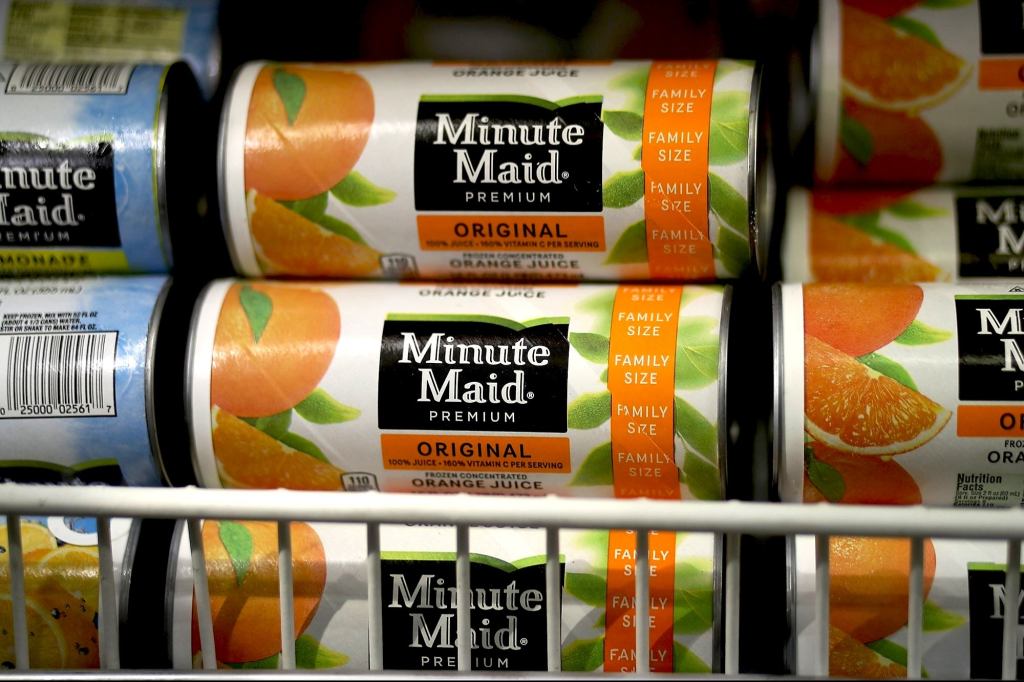
For generations, families cracked open a can of Minute Maid frozen juice concentrate, dropped the cylinder into a pitcher and added water. Those days are gone. Coca-Cola announced it’s putting Minute Maid’s frozen juice concentrates on ice in the U.S. and Canada, ending an 80-year tradition that helped turn orange juice into a year-round breakfast staple.

The company cited “shifting consumer preferences” as consumers gravitate toward energy drinks and protein smoothies instead.

Minute Maid helped popularize orange juice starting in 1946, when it began shipping frozen concentrate nationwide. Coca-Cola acquired Minute Maid in 1960 and later introduced ready-to-drink refrigerated juice, which gradually eclipsed frozen concentrate. Tropicana and other brands still sell frozen concentrate, though the category continues to shrink.

Read more

For generations, families cracked open a can of Minute Maid frozen juice concentrate, dropped the cylinder into a pitcher and added water. Those days are gone. Coca-Cola announced it’s putting Minute Maid’s frozen juice concentrates on ice in the U.S. and Canada, ending an 80-year tradition that helped turn orange juice into a year-round breakfast staple.

The company cited “shifting consumer preferences” as consumers gravitate toward energy drinks and protein smoothies instead.

Minute Maid helped popularize orange juice starting in 1946, when it began shipping frozen concentrate nationwide. Coca-Cola acquired Minute Maid in 1960 and later introduced ready-to-drink refrigerated juice, which gradually eclipsed frozen concentrate. Tropicana and other brands still sell frozen concentrate, though the category continues to shrink.

Read more

https://www.entrepreneur.com/news-and-trends/say-goodbye-to-minute-maids-frozen-orange-juice-can/502523


This Entrepreneur’s Business Made $33K in Month 1 and Now Sees 6-Figure Monthly Revenue — Here’s Her Secret to Success

Opinions expressed by Entrepreneur contributors are their own.

Key Takeaways

  • Testing real market demand before committing can reveal opportunities that planning alone won’t surface.
  • Long-term growth comes from aligning expertise, values, and systems rather than chasing speed or scale.

Rather than guessing what the market wanted, Jacqueline DeStefano-Tangorra decided to test it. The result surprised her: $33,000 in her first month in business — before hiring a single employee. Today, she has scaled her firm to more than six figures in monthly revenue.

In her twenties, she was immersed in complex data and AI work, including time as a Big 4 technology consultant advising large organizations on enterprise systems, executive decision-making and technology at scale. The work was demanding and formative. But alongside it, she began asking a different question: could her expertise create value outside a traditional, structured role?

Instead of overplanning or making a dramatic move, she turned to Upwork to test her assumptions about demand.

“At one point, I saw the market shifting dramatically in the expertise that businesses were seeking,” DeStefano-Tangorra says. “Upwork gave me a live market. If clients paid, renewed and referred, I knew something was there. If not, I adjusted.”

Rather than scaling quickly, she focused on patterns. Which problems appeared repeatedly? What clients were willing to invest in solving more than once.

“Most founders fall in love with ideas,” she says. “I wanted to fall in love with tangible evidence.”

As the signals became clearer, DeStefano-Tangorra shaped her offerings around consistent demand. She built repeatable frameworks, shifted from selling time to delivering outcomes and focused on long-term partnerships. Those early tests evolved into a consulting firm that has now worked with more than 200 clients, from national franchise operators to Fortune 500 enterprise organizations navigating data and AI solutions.

“I didn’t want a business that relied on constant personal output,” she says. “I wanted one that could absorb demand without breaking.”

Her background in high-pressure consulting environments proved foundational, but she was intentional about what she chose to carry forward — and what she left behind.

“My values and faith gave me permission to say no,” she says. “To certain clients, growth paths, and definitions of success that didn’t align with how I wanted to lead.”

But that conviction came with tradeoffs. As the firm grew, she had to walk away from clients who only wanted to work with her personally rather than the business she was building, as well as partnerships that conflicted with the standards and legitimacy she wanted the firm to represent.

At 29, after nearly 10 years in a consulting role, she committed fully to entrepreneurship. The decision felt grounded rather than impulsive.

“It wasn’t fearlessness,” she says. “It was trust. Trust that I had tested the market responsibly and, most importantly, trust that God would meet me in the step I was taking. And, spoiler alert, he did.”

Within months, her firm gained national attention for its early, practical adoption of generative AI, earning media coverage from CNBC, The Wall Street Journal and other outlets. She was invited to speak at events hosted by organizations including Young Presidents Organization, NASDAQ and the Tory Burch Foundation.

“Technology moves quickly,” she says. “But wisdom moves deliberately. We focused on where data enablement and AI services actually created value and where restraint mattered just as much as innovation.”

For DeStefano-Tangorra, entrepreneurship was never about escape. It was about alignment.

“Every business is built on a set of beliefs,” she says. “Mine were shaped by faith, a deep responsibility to produce results and the idea that success should strengthen your life, not fracture it.”

Today, she continues to scale her data and AI firm while advising organizations on how to adopt AI responsibly and effectively. The approach that built the business still guides every decision: test before committing, let real demand speak louder than assumptions and design systems that can grow without losing their integrity.

“The market is always talking,” she says. “The discipline is learning how to listen, and having the courage to build what it’s actually asking for.”

Sign up for the Entrepreneur Daily newsletter to get the news and resources you need to know today to help you run your business better. Get it in your inbox.

Key Takeaways

  • Testing real market demand before committing can reveal opportunities that planning alone won’t surface.
  • Long-term growth comes from aligning expertise, values, and systems rather than chasing speed or scale.

Rather than guessing what the market wanted, Jacqueline DeStefano-Tangorra decided to test it. The result surprised her: $33,000 in her first month in business — before hiring a single employee. Today, she has scaled her firm to more than six figures in monthly revenue.

In her twenties, she was immersed in complex data and AI work, including time as a Big 4 technology consultant advising large organizations on enterprise systems, executive decision-making and technology at scale. The work was demanding and formative. But alongside it, she began asking a different question: could her expertise create value outside a traditional, structured role?

https://www.entrepreneur.com/entrepreneurs/she-didnt-guess-what-the-market-wanted-she-tested-it/502441


If You Want the Stability of a 9-to-5 Again, Here’s How to Stand Out in Today’s Job Market

Opinions expressed by Entrepreneur contributors are their own.

Key Takeaways

  • Tailor your job application to reflect relevant experience and expertise, targeting realistic roles based on your entrepreneurial history.
  • Differentiate yourself in a crowded job market by showcasing unique entrepreneurial accomplishments and relating them to potential job roles.
  • Update LinkedIn profiles with relevant titles and keywords, leverage your network and adapt your job search strategy as an entrepreneur.

If you’re thinking about quitting your business to return to a 9 to 5 gig, you’re far from alone. Over the last year, I’ve heard from a ton of entrepreneurs reaching out for advice on how to find a role in corporate, tech, and beyond. Between economic uncertainty, burnout and isolation, many founders are ready for stability, structure and a steady paycheck.

As an entrepreneur, positioning yourself for an in-house role is a unique challenge, since your experience is anything but ordinary. Additionally, it’s likely been several years (or decades) since you last looked for a role. The job market has changed rapidly, meaning old practices no longer work. Lastly, there’s more competition for fewer roles, meaning traditional job search advice is out of date.

Let’s explore how to best position yourself for an in-house role as an entrepreneur.

Be realistic about your target

It’s critical to pursue roles that align with both your experience and the company size you’re targeting. For example, if you founded a 10-person company, it might seem to make sense to target a VP or C-suite role at a Series A startup, but it’s more realistic to target a manager-level role at a global tech company. Many companies level roles based, in part, on team size, so let the job posting guide the roles you target.

Also, keep in mind that most employers are looking to hire specialists, not generalists. Unless you’re applying for a C-suite role, you want to avoid simply listing “CEO” on your resume. Instead, tailor your title to reflect the function of the role you’re pursuing, such as “Head of Engineering” or “Director of Product.”

Focus on your fabulousness

One of the biggest mistakes you can make in today’s saturated job market is blending in with fellow candidates. With many open roles receiving thousands of applications, you must clearly communicate what sets you apart if you want to stand a chance of landing an interview.

Don’t hide the fact that you ran a business. Own it. Importantly, though, don’t just provide a laundry list of your accomplishments. Connect the dots for the reader, showing how your experience is relevant to the role you’re pursuing. For example, one of my clients co-founded a company that was ultimately acquired by a Fortune 100 tech giant. He highlighted his experience scaling engineering teams and his readiness for leadership roles in hyper-growth startups.

Update your resume

If you’re an entrepreneur, it’s possible you haven’t written a resume in a decade or more. That’s perfectly okay. Use a target job posting as your guide, and pull language directly from it to ensure alignment. But don’t stop there. Include what makes your background unique.

You might be tempted to use your go-to AI chatbot to draft your resume, but please proceed with extreme caution, as you’ll probably end up sounding like every other applicant. Don’t involve AI until you’ve written all the details of your accomplishments. Then, if you want, AI can help you refine your content.

Your entrepreneurial experience is a value-add, but you must also speak the language of employers. Translate your achievements into metrics and outcomes like revenue growth, cost savings and team performance that are easy for hiring managers to digest.

Leverage LinkedIn to your advantage

LinkedIn may have been your go-to for client acquisition as an entrepreneur, but did you know it can also be a great tool for landing job interviews? In fact, an executive headhunter recently told me that nearly two-thirds of their successful placements came from a simple LinkedIn search, which underscores the importance of being findable on the platform.

However, the strategies that got you clients on the platform won’t necessarily work for getting a job. You must update your profile to be findable and appeal to employers. For instance, I recently reviewed the profile of an entrepreneur who was targeting CTO roles. His online presence was powerful, but he didn’t include the words “CTO” or “Chief Technology Officer” anywhere on his profile, making it nearly impossible for executive headhunters to find him. Incorporate the titles and keywords that match your target roles so you appear in the right searches.

Leverage your network

As an entrepreneur, you’ve likely built a robust network. Now’s the time to tap into it.

I recently coached a founder who wanted to move into an in-house leadership role. She knew a C-suite executive at nearly every company on her target list but had never told anyone she was job hunting. The moment she started sharing the fact that she was open to new opportunities, her network responded immediately. They sent roles, offered introductions and invited her to interview. It simply required her to take the first step.

Don’t assume that people know you’re job searching. Be proactive and clear about what you’re seeking so they can help you.

Ignore traditional job search advice

As your job search unfolds, you’ll likely be tempted to Google job search advice. Take what you find with a grain of salt, since much of what’s out there doesn’t apply to entrepreneurs. Your path is distinct, so your strategy should be, too.

Looking for a new role when you’ve worked for yourself requires a specific approach. You’ve built something from the ground up, worn multiple hats, navigated uncertainty and so much more. Employers will desire all of that if you help them understand its value.

Let’s be honest: Finding a job in the current market won’t be easy, but it’s far from impossible. Deploying these strategies will help you stand out among a sea of applicants. You’ve got this!

Sign up for the Entrepreneur Daily newsletter to get the news and resources you need to know today to help you run your business better. Get it in your inbox.

Key Takeaways

  • Tailor your job application to reflect relevant experience and expertise, targeting realistic roles based on your entrepreneurial history.
  • Differentiate yourself in a crowded job market by showcasing unique entrepreneurial accomplishments and relating them to potential job roles.
  • Update LinkedIn profiles with relevant titles and keywords, leverage your network and adapt your job search strategy as an entrepreneur.

If you’re thinking about quitting your business to return to a 9 to 5 gig, you’re far from alone. Over the last year, I’ve heard from a ton of entrepreneurs reaching out for advice on how to find a role in corporate, tech, and beyond. Between economic uncertainty, burnout and isolation, many founders are ready for stability, structure and a steady paycheck.

As an entrepreneur, positioning yourself for an in-house role is a unique challenge, since your experience is anything but ordinary. Additionally, it’s likely been several years (or decades) since you last looked for a role. The job market has changed rapidly, meaning old practices no longer work. Lastly, there’s more competition for fewer roles, meaning traditional job search advice is out of date.

https://www.entrepreneur.com/living/entrepreneurs-are-going-back-to-corporate-life-heres-why/500241


NFL Fans Can’t Buy Super Bowl Jerseys — And They’re Bashing Fanatics Online

Want a Patriots or Seahawks Super Bowl jersey? Get in line. The NFL’s official jersey distributor, Fanatics, apologized this week after furious fans couldn’t find them anywhere. The company released a statement responding to backlash over low stock and quality complaints about its Super Bowl LX jerseys. “We’ve let Patriots and Seahawks fans down with product availability, we own that, and we are sorry,” the company said on X.

Fanatics blamed unprecedented demand after both teams drastically changed their fortunes — both went from missing the playoffs last season to reaching the Super Bowl. Patriots and Seahawks fans bought nearly 400% more jerseys since Thanksgiving compared to last year.

Fans online blitzed the company. “The Fanatics merch slop monopoly must be annihilated,” one X user posted. Another wrote that Fanatics “has destroyed sports merchandise.” Fanatics defended the quality of alternate jerseys despite “unflattering photos,” saying they’re identical to standard Nike replica jerseys. The company is in the midst of a 10-year partnership with the NFL that began in 2020.

Read more

Want a Patriots or Seahawks Super Bowl jersey? Get in line. The NFL’s official jersey distributor, Fanatics, apologized this week after furious fans couldn’t find them anywhere. The company released a statement responding to backlash over low stock and quality complaints about its Super Bowl LX jerseys. “We’ve let Patriots and Seahawks fans down with product availability, we own that, and we are sorry,” the company said on X.

Fanatics blamed unprecedented demand after both teams drastically changed their fortunes — both went from missing the playoffs last season to reaching the Super Bowl. Patriots and Seahawks fans bought nearly 400% more jerseys since Thanksgiving compared to last year.

Fans online blitzed the company. “The Fanatics merch slop monopoly must be annihilated,” one X user posted. Another wrote that Fanatics “has destroyed sports merchandise.” Fanatics defended the quality of alternate jerseys despite “unflattering photos,” saying they’re identical to standard Nike replica jerseys. The company is in the midst of a 10-year partnership with the NFL that began in 2020.

Read more

https://www.entrepreneur.com/business-news/fanatics-issues-apology-after-super-bowl-jersey-backlash/502505


AI Is Devouring Website Traffic — But I Hit Record Leads Last Year Anyway. Here’s How.

Opinions expressed by Entrepreneur contributors are their own.

Key Takeaways

  • Create content that addresses specific questions people might ask AI.
  • Create a deeper offline impression with prospects before they reach for AI.
  • Increase your Google reviews so you beat competitors based on real-life experience, not AI summaries.

Googled anything lately? Chances are you have, since Google processes about 9.1 billion searches every single day.

So you’ve probably seen — and maybe even used — a Google AI Overview. It’s that summary box at the top of search results that tries to answer your question instantly, without requiring a click.

The feature first rolled out in May 2024, and a recent analysis estimates that Google’s AI Overview appears on about 21% of all searches, with certain queries more likely to trigger it. For example:

As AI search and AI summaries grow — and they’re expected to grow massively — the outcome is more eyeballs on AI and fewer clicks to actual websites.

We’re already seeing the fallout. Website traffic trackers show that 88% of major U.S. news sites lost traffic between July 2024 to July 2025, with declines averaging 24.9%. Forbes was hit hardest, losing 50% of its visitors and later revealing that referral traffic dropped 40%.

Entrepreneurs are likely to feel the squeeze, too. For my business, PostcardMania, our leads were down to start last year, but we managed to rebound and ended up setting a new all-time high for leads generated last year: 149,028.

Here’s how smart businesses continue to grow leads in an AI-first world.

Create content that addresses specific questions people might ask AI

AI doesn’t invent answers — it pulls them from existing content. The businesses that win AI citations are the ones supplying clear, specific, authoritative answers to the exact questions prospects are asking.

So ditch the broad, fluffy blog posts. You need deep, focused content designed to answer real questions your customers are asking AI. Questions like:

  • “How much does ___ cost?”

  • “Is ___ worth it for a small business?”

  • “What’s the difference between ___ and ___?”

  • “What mistakes should I avoid when choosing ___?”

The goal isn’t just ranking — it’s becoming the answer that AI supplies. That requires:

  • Headlines and subheads that ask the exact questions prospects are likely to ask (see above)

  • Plain-language explanations (no jargon)

  • Real-world examples like case studies

  • Clear pros-and-cons lists (a common AI query!)

The key is to supply AI with content it can easily summarize or even pull directly from your site. This ensures AI will mention your business in its results, which creates an impression with prospects. This is how you shift from chasing clicks to building authority.

The next step is to make the most of every website visitor, so make sure your website is optimized to convert traffic into leads and customers.

Create a deeper offline impression with prospects before they reach for AI

There’s only one marketing channel that boasts a 5% response rate with prospects while also reaching people where AI summaries, algorithms and ad blockers simply don’t exist.

That’s direct mail.

When done correctly, direct mail:

  • Puts your offer directly into the hands of your ideal prospect at the right moment

  • Builds brand familiarity before they ever search online

  • Drives 70% better recall than digital ads

  • Sends people to your website in a way that AI can’t cannibalize

With direct mail, you can create a real-world experience that anchors your business with a prospect — long before they search, ask AI for recommendations or compare options.

To get started with direct mail, focus first on your targeting. Build a list of your best current customers, then work with a direct mail provider to create a list of lookalike prospects in your service area who share those same characteristics. Start with a manageable audience and commit to repeated mailings, not a one-off send. Track responses with a unique phone number or URL so you can refine the list and steadily scale what works.

Once you master traditional prospecting direct mail, you’ll be ready to move into direct mail automation — its newer, fully responsive cousin that’s ideal for follow-up. I recommend starting with direct mail retargeting, which is just one type of direct mail automation.

It’s exactly like online retargeting — where you can automatically show follow-up ads to anonymous website visitors after they leave your site — but automatically triggers a mail piece rather than banner ads. I suggest targeting visitors who spend more than 30 seconds on your site and including an offer on your mail piece to entice them back to convert fully, so you can continue to follow up until they close.

Increase your Google reviews so you beat competitors based on real-life experience, not AI summaries

More and more people might start their buying journey with AI, but prospects rarely buy based on an AI experience alone. They’re still going to do their due diligence before opening their wallets, and that’s where reviews come in.

Google reviews remain one of the strongest trust signals for buyers. Businesses with more frequent, authentic, high-quality reviews consistently:

  • Stand out in local results

  • Convert more clicks into calls

  • Win trust faster than competitors with better-looking websites

In an AI-driven search environment, reviews are social proof that AI can’t fake.

The key is consistency. Don’t wait for happy customers to remember to leave a review. Build a simple, repeatable process that asks at the right moment — after a win, a successful service or a positive interaction.

When buyers see dozens (or hundreds) of real people vouching for you at key moments when they’re ready to buy, it outweighs any AI-generated summary.

AI isn’t killing marketing — it’s exposing weak strategies. Businesses that rely on a single traffic source, a single channel or “set it and forget it” SEO will feel the squeeze first.

But if you implement — and stick to — everything outlined above, you’ll diversify, stay visible and keep showing up where your customers actually are.

That’s how you stay relevant and continue to grow, not only through this latest AI shift, but through whatever else might come.

Key Takeaways

  • Create content that addresses specific questions people might ask AI.
  • Create a deeper offline impression with prospects before they reach for AI.
  • Increase your Google reviews so you beat competitors based on real-life experience, not AI summaries.

Googled anything lately? Chances are you have, since Google processes about 9.1 billion searches every single day.

So you’ve probably seen — and maybe even used — a Google AI Overview. It’s that summary box at the top of search results that tries to answer your question instantly, without requiring a click.

https://www.entrepreneur.com/growing-a-business/how-to-stay-competitive-as-ai-disrupts-website-traffic/501888