Amazon Just Unveiled AI Smart Glasses for Its Drivers — Here’s What They Actually Do

Key Takeaways

  • Amazon announced on Wednesday that it is working on AI-powered smart glasses to achieve faster delivery times.
  • The glasses enable drivers to scan packages, follow step-by-step walking instructions to a specific location and verify delivery.
  • Amazon said that hundreds of drivers have already tested the devices.

Amazon recently unveiled new wearable AI smart glasses to help delivery drivers carry out tasks hands-free, without using their phones.

The e-commerce giant announced on Wednesday that it was working on developing the glasses for faster delivery times. The glasses use AI-powered sensors, computer vision and cameras to create a display that shows everything from navigation instructions to delivery tasks. The frames support prescription lenses, as well as transitional lenses that automatically change according to light.

The glasses enable drivers to scan packages, follow step-by-step walking instructions to a specific location and verify delivery. The device pairs with a controller, worn within the driver’s delivery vest, that includes a swappable battery and a dedicated emergency button to get help along the route if needed.

Amazon’s AI smart glasses for drivers are paired with a delivery vest. Credit: Amazon

Here’s how it works: When a driver parks, the glasses automatically activate and identify the correct package for delivery through camera recognition.

After the driver selects the package, the built-in display shows real-time navigation information to the delivery address, allowing drivers to keep their eyes forward instead of switching between a phone and the package.

The glasses will navigate around hazards and within complex environments like apartment buildings. If the battery runs low, the driver can swap it out with a battery in their delivery vest.

Related: Meta Just Unveiled New Smart Glasses With an Embedded Display — and an iPhone 17 Price Point. Here’s How They Work.

Amazon announced the glasses at its annual “Delivering the Future” logistics event on Wednesday. Beryl Tomay, Amazon’s transportation vice president, said at the event that hundreds of delivery drivers had already tested the glasses, with some recording time savings of 30 minutes for a single eight to ten-hour shift with the help of the devices.

“It reduces the need to manage a phone and a package,” Tomay said at the event, per Reuters. “It helps them stay at attention, which enhances their safety.”

Tomay said that the glasses would be free and optional for drivers to use. This innovation is still experimental and Amazon’s plans for them are undecided, she said. Amazon is piloting the glasses with some delivery drivers in North America and plans to keep working on the technology before a broader rollout, per TechCrunch.

Related: Apple Is Reportedly Developing AI Smart Glasses to Compete with Meta and Google

The smart glasses would cut down the time and cost it takes to deliver packages. Amazon’s shipping costs have steadily increased over the years, climbing from $83.5 billion in 2022 to $89.5 billion in 2023 and $95.8 billion in 2024, per Statista estimates. By 2024, the company’s combined shipping and fulfillment expenses hit $194.3 billion, accounting for 34% of total operating costs, according to Capital One Shopping Research. The glasses target these expenditures by saving seconds or minutes per delivery, which could translate to major financial savings given Amazon’s delivery volume.

News of Amazon smart glasses for drivers first leaked in November 2024. A Reuters report, citing five sources, stated that the glasses would feature a screen with navigation instructions to help drivers deliver packages to unfamiliar locations.

Another report released this September from The Information also highlighted that Amazon was developing a pair of smart glasses for delivery drivers, as well as another pair of glasses with an embedded lens for the general public. The public-facing glasses are expected to be released in late 2026 or early 2027, per the report.

While Amazon is getting in the wearable AI game, Meta is the undisputed leader in the smart glasses market, with a market share of over 70% in the first half of 2025. The company’s dominance is driven by strong sales of its Ray-Ban Meta smart glasses, which have sold over two million pairs since their October 2023 debut.

Related: Google Is Making AI ‘Intelligent Eyewear’ With Warby Parker After Eyeing Meta’s Ray-Ban Success

Key Takeaways

  • Amazon announced on Wednesday that it is working on AI-powered smart glasses to achieve faster delivery times.
  • The glasses enable drivers to scan packages, follow step-by-step walking instructions to a specific location and verify delivery.
  • Amazon said that hundreds of drivers have already tested the devices.

Amazon recently unveiled new wearable AI smart glasses to help delivery drivers carry out tasks hands-free, without using their phones.

The e-commerce giant announced on Wednesday that it was working on developing the glasses for faster delivery times. The glasses use AI-powered sensors, computer vision and cameras to create a display that shows everything from navigation instructions to delivery tasks. The frames support prescription lenses, as well as transitional lenses that automatically change according to light.

The rest of this article is locked.

Join Entrepreneur+ today for access.

https://www.entrepreneur.com/business-news/amazon-unveils-ai-smart-glasses-for-delivery-drivers/498680





Performance Reviews Are Broken — and the Missing ‘5’ Proves It

Opinions expressed by Entrepreneur contributors are their own.

Key Takeaways

  • Rigid rating systems reward compliance over curiosity, stifling innovation and organizational growth.
  • Redefining “exceptional” as continuous learning and progress fosters engagement and adaptability.
  • Replacing scores with story-based feedback transforms reviews into meaningful, growth-driven conversations.

You’ve seen it before. The dreaded 5-point performance scale.

Five, the mythical ‘exceptional’. Four, the ‘exceeds expectations’. Three, the ‘meets expectations’. Two, ‘needs improvement’. One, ‘uh-oh’.

But no one ever, ever gets a 5.

Managers shy away from giving it because nobody’s perfect. HR discourages it because it skews the data. And employees rarely expect it because they’ve been trained to think ‘good enough’ is all the system rewards. The result is a culture of safe mediocrity wrapped in the illusion of objectivity.

And that’s exactly the kind of thinking that fuels ‘execution drift’ — the quiet slide between what leaders say they want and what employees believe truly matters.

Related: Maximize Employee Retention by Tracking These 20 KPIs

The 5-point scale rewards compliance, not curiosity

Traditional reviews are built on the idea that performance is linear, measurable and objective. But human behavior isn’t. When you compress someone’s contribution into a number, you’re not measuring performance, you’re measuring conformity.

People quickly learn that the safest route to a ‘3’ or ‘4’ is to play by the rules. Don’t challenge the system. Don’t take risks. Don’t question assumptions. But strategy requires the opposite. Organizations need thinkers who ask, “Why are we doing it this way?”

When a culture signals that perfection is unattainable and curiosity is risky, innovation gets suffocated. And over time, that suffocation becomes systemic. Teams stop imagining new possibilities, stop raising uncomfortable questions and stop seeing their work as a space for discovery. That’s not just a performance issue; it’s a competitive one.

A ‘5’ shouldn’t mean perfection, it should mean progress

The problem with the 5-scale isn’t the math but a mindset. It assumes ‘exceptional’ means flawless execution, not exceptional growth.

High performance looks messy. It’s filled with experiments, missteps and learning loops. Yet most review systems penalize that. A true “5” performer isn’t someone who never errs; it’s someone who continuously learns, adapts and uplifts others.

If you redefined the top of the scale as progressive behavior rather than perfect behavior, you’d see a lot more fives and a lot fewer disengaged fours. Imagine a system where “exceptional” meant someone who rethinks a process that no longer serves the business or takes a strategic risk that teaches the organization something new. That’s real value creation.

Ratings don’t reveal mindsets, they reinforce them

The moment you assign a number, you frame the conversation around judgment, not growth. The review becomes a defense exercise: “Why didn’t I get a 5?” instead of “What do I need to think or do differently next time?”

That’s the trap of measurement obsession. It focuses on the output, not the operating system. The beliefs, assumptions and mental models driving behavior. And when organizations don’t explore how employees think, they lose sight of the very mechanisms that make strategy stick.

This is why shifting reviews toward mindsets and behaviors matters. It transforms evaluation from a backward-looking audit into a forward-looking dialogue. It’s not about “grading” people, it’s about guiding them toward alignment with strategy.

The cost of the “no one gets a 5” culture

When employees know that top ratings are off-limits, they stop striving for them. The system quietly communicates: “Don’t bother going above and beyond. It won’t count anyway.”

This erodes engagement and ambition, creating the very performance plateau leaders then try to fix with new incentive programs or management frameworks. The irony is that those efforts often fail for the same reason — because they focus on what people do, not why they do it.

A performance system that treats excellence as unattainable breeds safe, predictable and ultimately stagnant behavior. And that stagnation doesn’t just impact individuals. It erodes organizational adaptability. When employees stop aiming for exceptional, the organization stops evolving.

Related: How I Discovered the Incredible Power of Employee Engagement

Replace scores with stories

The best organizations are replacing numeric scales with narrative evaluations — conversations that explore thinking, choices and mindset shifts. Instead of ‘you’re a 4’, imagine hearing:

“You demonstrated curiosity by questioning our assumptions about customer feedback. You took a risk, reframed the problem, and helped the team see a new path forward.”

That’s feedback people can act on. It builds alignment, confidence and a shared understanding of what great looks like.

Story-based evaluations also give you richer insight into what’s really driving or blocking performance. They capture the ‘how’ behind the ‘what’, and that’s the key to closing the execution gap.

Related: 10 Tips to Boost Employee Productivity and Skyrocket Performance

The bottom line

If no one ever gets a ‘5’, the problem isn’t the people, it’s the system.

Performance reviews should be a mirror for growth, not a scoreboard for compliance. When you focus on mindsets and behaviors instead of numeric perfection, you don’t just evaluate performance, you evolve it.

The true ‘5’ isn’t the flawless employee. It’s the one who keeps learning, keeps asking and keeps helping the organization move closer to achieving its strategy every day.

Key Takeaways

  • Rigid rating systems reward compliance over curiosity, stifling innovation and organizational growth.
  • Redefining “exceptional” as continuous learning and progress fosters engagement and adaptability.
  • Replacing scores with story-based feedback transforms reviews into meaningful, growth-driven conversations.

You’ve seen it before. The dreaded 5-point performance scale.

Five, the mythical ‘exceptional’. Four, the ‘exceeds expectations’. Three, the ‘meets expectations’. Two, ‘needs improvement’. One, ‘uh-oh’.

The rest of this article is locked.

Join Entrepreneur+ today for access.

https://www.entrepreneur.com/leadership/the-silent-cost-of-the-no-one-gets-a-5-culture/498320


How Being ‘Real’ Can Backfire for Leaders — and What True Authenticity Looks Like

Opinions expressed by Entrepreneur contributors are their own.

Key Takeaways

  • Authenticity in leadership isn’t about being unfiltered — it’s about letting your values guide how you show up and communicate consistently, while still remaining empathetic.
  • Predictability matters. Teams are more likely to follow leaders when their words and actions align and when their communication is grounded in values.
  • Vulnerability builds connection. Leaders can build trust by sharing stories that reveal their values and human side in meaningful ways.

It’s easy to throw around the word “authenticity” in leadership circles. Yet, like many buzzwords, it’s lost much of its meaning. Authenticity isn’t a license to overshare or a directive to reveal every doubt. It’s not about being unfiltered or emotionally raw. Instead, it’s about something more nuanced and powerful: Letting your values guide how you show up and communicate consistently, while still remaining empathetic.

Recent data shows that trust in leadership is under serious pressure. A 2024 DDI survey of more than 13,000 global leaders found that only 32% trust senior leadership, down 17 points from 2022. Trust in immediate managers also dropped sharply — from 46% to just 29%. While there are many factors behind this decline, one thing is clear: Predictability matters.

In times of uncertainty, people don’t just listen to what leaders say. They also pay close attention to whether their words and actions align over time. When communication feels grounded in values and is delivered with care and consistency, people are more likely to believe what they hear and to trust the person delivering it.

When a leader leads with a deep level of authenticity, it can build lasting trust. When someone communicates authentically, it feels like they mean it, believe it and are honest, which can directly improve trust. But when their direct honesty is misapplied, it can backfire and undermine the very connection leaders seek to strengthen.

Related: Authentic Leadership: What Is It and Why Is It Important?

When “being real” crosses the line

Authenticity means aligning what you say, do and decide with the values you claim to hold. As Gloria St. Martin-Lowry, President of HPWP Group, puts it: “Authenticity isn’t about saying whatever comes to mind — that’s unfiltered. Some people like the shock value, but that can have negative impacts and erode trust. True authenticity is about consistency, in your words, actions and decisions.”

Leaders sometimes confuse being “real” with being unfiltered, but the two are not the same. Transparency is important, but without thoughtfulness, it can create confusion or even anxiety among teams. Authenticity, by contrast, builds clarity and trust when it’s rooted in alignment — when what you say and how you act matches what you say you stand for.

In practice, that means choosing honesty over shock value and intentionality over impulse. If a leader constantly shifts their tone or messaging based on mood or pressure, it doesn’t build confidence. It feels unpredictable. And unpredictability erodes trust.

This perspective reinforces something we see in coaching all the time: Consistency is credibility. When leaders show up with steadiness and purpose, even in difficult moments, teams are more likely to trust their intent, even if they don’t always agree with every decision.

When vulnerability builds connection

Authenticity in leadership comes through intentional, values-based connection with others. Leaders build trust by sharing stories that reveal their values and human side in meaningful ways.

In one executive workshop, a newly acquired leadership team gathered at their HQ for a communication exercise. Two of the leaders sat withdrawn, quiet and unsure of their place in the group. During a storytelling exercise, one of them opened up: He spoke about his challenges as a child being bullied. The other executive shared her challenges around performance anxiety when playing college basketball.

At first, silence. Then, something shifted. The group leaned in and started to communicate more openly, directly, honestly and productively around how to build a better team, strategy and plan. The leaders, who had felt disconnected, became part of the team.

Why did that moment build trust? Because it wasn’t self-indulgent. The stories reflected vulnerability with purpose. They were not unraveling but rather opening up in a way that aligned with the values of the team: honesty, care and connection.

Contrast that with oversharing born from impulse or insecurity. When leaders dump their emotions without context or restraint, it can disorient teams. Authenticity without intention feels less like connection and more like confusion.

Related: Thought Leaders Are Encouraged to Share Personal Stories — But Can It Go Too Far? Use These 3 Tips to Open Up Without Oversharing

When calm leadership builds trust

Another client’s CEO illustrated this perfectly. After a billion-dollar deal collapsed at the last minute, the company’s senior leaders were rattled. The CEO didn’t rush in with bravado or spin. Instead, he opened the next morning’s meeting with a single slide: a fly splattered on a windshield.

“I know some of you feel like this right now,” he said. “And that’s okay. Let’s take a moment to process it. But know this — we’ll be fine. Bigger deals are already in the works.”

That moment was authentic, not because he disclosed his personal stress, but because he acknowledged the collective emotion and modeled calm resilience. People look to leaders not only for vision, but for cues on how to respond in crisis. This CEO offered both truth and stability, a balance his team needed to move forward.

When staying true feels at odds with change

In coaching conversations, leaders often describe feeling stuck when they receive feedback about how they’re perceived. They wonder: Should I change and risk feeling inauthentic? Or stay the same and risk losing credibility or influence?

This tension is common, but the answer isn’t found in choosing one extreme. The most effective leaders understand that authenticity isn’t about sticking to one style. It’s about flexing with purpose. And, most importantly, balancing honesty with mindfulness so that their communication is productive and adds value. They draw from a full range of strengths and adjust how they show up based on what the moment calls for, not out of fear or people-pleasing.

That’s situational leadership in practice: using self-awareness and intention to meet the moment without compromising who you are.

One example involved a high-performing executive who was known for delivering results, but feedback revealed that her intensity was making her team reluctant to engage. Instead of dismissing the criticism or abandoning her style, she acknowledged the impact, took responsibility and committed to doing better. That turning point reshaped how her team viewed her. They didn’t see her as less driven; they saw her as more self-aware and trustworthy.

Authenticity doesn’t mean locking into a fixed identity. Leaders don’t need to be defined by one trait or held hostage by the idea of “just being themselves.” Instead, authenticity includes the willingness to evolve. When feedback reveals a gap between intention and impact, effective leaders use that insight to grow. The goal isn’t to appease others, but to become a clearer, more aligned version of themselves.

When authenticity meets integrity

Authenticity may invite trust, but integrity seals it. If authenticity is expressing your values, integrity is proving them. It shows up in two ways:

One of the clearest tests of authentic leadership is behavioral consistency. Say what you do and do what you say, always and consistently. Leaders can’t afford to neglect this. When promises go unfulfilled, even with good intentions, credibility erodes. That disconnect is especially damaging when a leader’s actions contradict their stated values. People start to question what’s real and whether the leader truly believes what they say. Over time, trust breaks down, not because of a major scandal, but because of minor, repeated inconsistencies.

The most admired leaders are clear about what matters to them, consistent in how they show it and careful about the commitments they make. Their teams know what to expect, and that predictability creates psychological safety.

Related: Authenticity Is the Latest Business Buzzword — But Don’t Fall Into Its Trap. You Need to Balance It With This.

When authenticity isn’t an excuse for rudeness

Being authentic doesn’t mean saying whatever comes to mind or delivering feedback without care. Some leaders confuse honesty with bluntness, but unfiltered truth can cause more harm than good. Effective leadership communication blends sincerity with empathy. It’s not just about what you say, but how it lands. The best leaders speak with both courage and consideration, delivering truth in ways that build rather than break relationships.

When authenticity meets the moment, trust follows

The most effective leaders don’t pick between composure and vulnerability. They choose both, as needed. They aren’t overly filtered or wildly raw. They lead with clarity, humility and intent.

Trust isn’t built by default. It’s built by design through every choice, every action and every word. The leaders who earn it are those who know that authenticity isn’t just about being seen. It’s about being clear, consistent and courageous in showing who you are and why you lead.

Key Takeaways

  • Authenticity in leadership isn’t about being unfiltered — it’s about letting your values guide how you show up and communicate consistently, while still remaining empathetic.
  • Predictability matters. Teams are more likely to follow leaders when their words and actions align and when their communication is grounded in values.
  • Vulnerability builds connection. Leaders can build trust by sharing stories that reveal their values and human side in meaningful ways.

It’s easy to throw around the word “authenticity” in leadership circles. Yet, like many buzzwords, it’s lost much of its meaning. Authenticity isn’t a license to overshare or a directive to reveal every doubt. It’s not about being unfiltered or emotionally raw. Instead, it’s about something more nuanced and powerful: Letting your values guide how you show up and communicate consistently, while still remaining empathetic.

Recent data shows that trust in leadership is under serious pressure. A 2024 DDI survey of more than 13,000 global leaders found that only 32% trust senior leadership, down 17 points from 2022. Trust in immediate managers also dropped sharply — from 46% to just 29%. While there are many factors behind this decline, one thing is clear: Predictability matters.

The rest of this article is locked.

Join Entrepreneur+ today for access.

https://www.entrepreneur.com/leadership/how-being-real-can-backfire-for-leaders/497888


What a Company With Near-Zero Turnover Taught Me About Building Culture That Lasts

Opinions expressed by Entrepreneur contributors are their own.

Key Takeaways

  • A strong culture starts when every employee feels their voice matters.
  • T-shaped teams break silos and create seamless customer experiences across departments.
  • True diversity drives innovation when different perspectives are actively heard and applied

In April 2024, I boarded a flight to Adelaide, Australia, to conduct a series of training programs for an electrical components company. They had watched one of my training videos on “Creating the Ultimate Customer Experience” and reached out to invite me to spend a week with their teams, presenting live sessions on elevating the customer experience.

During one of our prep calls, I encouraged leadership to have everyone in attendance, not just those dealing directly with customers. They told me they had already planned on it.

Every employee in the company showed up: warehouse staff, finance, IT, operations…everyone. That told me a lot right away. They understood that every single employee, no matter their role or title, plays a part in shaping how customers experience their brand. Their customers are electricians, the men and women who wire homes and businesses across Australia and New Zealand. Down under, electricians are called “sparkies.” I used that term throughout my sessions, both live and in the video lessons that followed, because it made it relative and personal, and kept the focus on the people they serve.

On my first morning in Adelaide, I sat down with the CEO, who founded the company in 2001 and still runs it today. He didn’t start by bragging about revenue or growth. And believe me, the growth has been impressive. Instead, he started with his people.

He said, “If I give these folks a place they’re proud of and a place they look forward to coming, they will put their hearts and souls into making it even better.” After more than thirty years of working with leaders in just about every industry, I can tell you it’s rare to hear culture placed first, and even rarer to see it lived out every day.

That passion came through everywhere I looked. During sessions in Adelaide and later in Sydney, I watched employees debate ideas openly, without fear of offending or overstepping. I saw managers step back and listen while frontline team members explained what sparkies really needed. The energy wasn’t forced. It was real, and it was contagious.

When my week in Australia wrapped up, the work didn’t stop. We followed the live sessions with monthly video lessons to reinforce and expand on the training. And through that ongoing work, it became clear why this company has virtually no turnover. The CEO’s philosophy, to create a place people are proud of, a place where they can thrive, had become part of the company’s DNA.

As I spent more time with the organization, I began noticing three cultural habits that explain why this place feels so different from most companies. They live meritocracy. They push people to be T-shaped. And they embrace perspectives. None of these are abstract theories. They’re practical, everyday ways of working, and they’re lessons any company can apply.

Related: How to Create a Customer-Centric Culture at Your Business

Meritocracy: Ideas over titles

Meritocracy means everyone’s voice counts, and the best contributions rise to the top. It does not matter what someone’s title is, how long they’ve been here or how old they are. What matters is the quality of their input, whether that’s an idea, a solution to a problem, an observation about a customer need or even a question that challenges the status quo. In a true meritocracy, what gets rewarded is thoughtful contribution and impact, not hierarchy or volume.

While at their headquarters, I was told that a team member in the warehouse suggested a small change to how pallets were stacked. It wasn’t a million-dollar innovation, but it made deliveries easier for drivers and reduced damage claims.

The best part? This idea was implemented almost immediately. No endless meetings. No “stay in your lane.” Just a good idea, making a difference. That’s meritocracy in action. If you embrace meritocracy, it doesn’t matter whether someone’s been there for twenty years or twenty days, whether they have “manager” in their title or not. If they spot a way to make the company better, their voice should matter.

Too often, decisions are made by hierarchy. The highest-paid person’s opinion wins. That kills innovation. When leaders listen first and decide second, great ideas surface from everywhere, especially from the people closest to the customer.

If you want a practical takeaway: at your next team meeting, ask yourself whether every voice is really being heard. Did you encourage input from everyone, or did you default to the loudest or most senior? Cultures that thrive on meritocracy don’t just make better decisions, they make people feel valued.

Being t-Shaped: Beyond the job description

The CEO and his leadership team also go out of their way to prevent silos. They want employees to be T-shaped. Picture the letter T: the vertical bar is your deep expertise, your specialty. The horizontal bar is your ability to reach across disciplines, collaborate, and understand how your work affects others and how theirs affects yours.

At this organization, customer service reps don’t just answer phones. They learn how their conversations connect to operations, product design, product testing and more. Warehouse employees don’t just move stock. They think about how their process impacts Sparkie satisfaction on the other end. Teams don’t hide behind their specialties. They share, connect and work together.

We’ve all seen the opposite of being T-shaped too many times. A product team rolls out a brilliant new design, but operations isn’t ready to deliver. Marketing launches a flashy campaign, but sales weren’t informed. Finance tweaks billing processes without telling customer service. Each team stays in its lane, and the customer feels the chaos.

Being T-shaped doesn’t mean abandoning your specialty. It means expanding your value by looking across lanes. This company has shown how powerful this can be. Silos disappear, collaboration grows and Sparkies experience the company as one seamless partner.

Related: Why Great Customer Experience Starts With Inspired Leadership

Diversity as an advantage

This amazing company employs people across Australia, New Zealand, China, India and the Philippines. That’s a lot of perspective, and it’s not wasted.

During one training session, a Sparkie issue came up. The Australian support team suggested a fix, based on input from a colleague from the Philippines. This collaboration of perspectives led to a faster, more complete solution. That’s the value of perspectives. Different experiences solving problems in different ways.

But here’s the important part. Diversity only works if people actually listen. Too often, companies collect perspectives but ignore them. Not here. Perspectives are not only welcomed, they’re also acted upon. That’s why Sparkies experience faster solutions and better service.

For other businesses, including yours, if you’re reading this, the lesson is simple. Don’t treat diverse perspectives as unimportant or a second thought. Use it as fuel. Encourage people to challenge assumptions and bring different views to the table. That’s where innovation comes from.

Why this company lesson matters for you

Customers don’t experience your company one department at a time. They experience your company as a whole. They don’t care if marketing nailed its campaign if sales miss customers’ needs. They don’t care if customer service is friendly if billing makes mistakes. One weak link undermines your entire brand.

That’s why coming together is essential. Meritocracy, T-shaped collaboration and diverse perspectives aren’t buzzwords. They’re daily practices that keep companies agile, innovative and trusted.

The CEO’s philosophy, “give people a place they’re proud of, and they’ll give their best,” isn’t just a nice quote. It’s a growth strategy. It explains why they have virtually no turnover, loyal Sparkies, and a culture that feels alive in every corner of the company.

Related: How to Create a Customer-Centric Culture For Your Entire Team

A call to leaders

If you’re leading a business, here are a few questions worth asking yourself:

  • Do we celebrate contributions no matter where they come from?
  • Do we encourage people to learn beyond their specialties?
  • Do we actually use diverse perspectives, or do we just collect them?
  • Most of all, have we created a workplace people look forward to coming to, not one they tolerate?

Culture isn’t a one-time initiative. It isn’t “set and forget.” It’s lived in the way you listen, the way you decide and the way you lead.

This Australian company proves something every leader should remember: when people come together, they don’t just build strong companies, they build companies that last.

https://www.entrepreneur.com/leadership/what-a-company-with-near-zero-turnover-taught-me-about/498000


Your Remote Team Could Be Putting Your Company Data at Risk. Take These Steps to Protect It.

Opinions expressed by Entrepreneur contributors are their own.

Key Takeaways

  • Distributed teams make sensitive company data more vulnerable, as remote employees often use personal devices, unsecured connections and weak passwords.
  • Implementing strong security practices — like multi-factor authentication, endpoint protection, training and SOPs — can significantly reduce risks.
  • Implementing a zero-trust architecture, using standardized protocols, building a culture of shared responsibility and periodic reviews can help you safeguard information without breaking your budget.

While the internet had already made it possible for teams to work in different locations, it wasn’t until the Covid-19 pandemic that remote work became extremely widespread — so much so, many companies are now finding it difficult to bring their teams back into the office.

Since then, apart from the new reality of remote teams working together and all the communication hassles that come with it, distributed teams also make sensitive company information more vulnerable to attacks.

Related: The Pivot to Remote, and What It Means for Security

Risks associated with distributed teams

Remote teams can have access to client lists, project details, financial data, patents and much more. However, even if they use a single company server or some shared space, there is an increased vulnerability.

For example, team members working from home use their Wi-Fi networks or even personal devices to access company accounts. Coupled with weak passwords and the use of unsecured connections, the risks for corporate data can be enormous.

Therefore, a simple data breach can result in significant financial losses for the company, reputational damage and potentially regulatory and legal penalties.

Prevent data breaches among distributed teams

Strong access controls and authentication: The simplest way to minimize data breaches is to provide role-based access to important data. Not everyone in the team needs to have access to company financials or client lists. Also, ensure multi-factor authentication on all data channels and at various levels, since password protection is not enough.

Endpoint security: Teams must have access to antivirus and anti-malware tools. For optimal protection, ensure these are activated at all times and updated regularly.

Provide training: Teams should be made aware of basic phishing scams and should take part in mandatory training to protect themselves and the company data. This can be part of the employee onboarding process or even before a specific project begins.

Use secure collaborative tools: Make sure teams use secure collaborative tools. Encrypted communication channels or VPNs, for example, can make networks more secure.

Remote team polices: At the end of the day, companies need to build policies and SOPs that distributed teams need to follow for the sole purpose of protecting data.

Related: 50 Things You Need To Know To Optimize Your Company’s Approach to Data Privacy and Cybersecurity

Prevent data loss among distributed teams

Data backup and recovery planning: Distributed teams should have automated backups and at least one location with a physical backup in case of an unprecedented outage or attacks. Companies should also have data recovery procedures and protocols that go into effect as soon as a disaster hits.

Device management: Depending on a company’s budget, they can provide remote teams with dedicated, encrypted devices. If that’s not a possibility, there can be endpoint monitoring on devices and even remote wipe-out capabilities in case the device is lost or stolen.

Controlling costs while protecting company data

Data protection protocols, including meeting regulatory compliance, seem like an added expense or another chore — until your company suffers from an attack or loses data.

Data is one of the biggest assets a company has, and you need to treat it as such. Your company will need to invest in data protection, and your operational costs will increase; this is a given. While there are no shortcuts to protecting data, there are a couple of ways you can make it financially efficient.

Proactive cost management: Once data protection is an integral part of a company’s operations, it’s important to take a holistic view. Your company will need to set up basic infrastructure for distributed teams. This can include the cloud services you use, the antivirus software, hardware back-ups, dedicated devices, etc.

The company can save a lot of money if it can find reliable and cost-effective suppliers and partners. You can either save costs at initial implementation or even on monthly subscriptions. Some small businesses even rely on open-source alternatives that cost a fraction of industry standards. The technology/security head, the finance department and the upper management can work together to ensure robust systems at a satisfactory price.

Reactive cost management: In case of a data breach or a malware attack, proper protocols, i.e., an incident response plan, can help minimize damages and losses.

It might be a good idea to use a managed security service provider (MSSPs). These are digital security providers that offer 24/7 surveillance, threat detection and monitoring of your data. Doing this in-house is extremely expensive, and a provider can ensure the company works on its core business with peace of mind.

The idea for any company is to strategically invest in preventing data breaches and losses to reduce the chances of expensive reactive measures.

Related: The Budget-Friendly Way to Secure Your Business Against Cybercrime

Best practices for distributed teams without breaking the budget

Implement a zero-trust security architecture: A zero-trust security architecture is built around the premise that no user, network, device or tool can be inherently trusted. All security measures, checks and balances, monitoring and evaluation of the security system are based on this principle. This ensures a robust IT system built from the ground up to manage data security.

Use standardized security protocols and software: Make sure everyone in the team follows a single security protocol and a set of similar SOPs. Also, everyone must use the same tools to work, communicate and manage data.

Build a culture of shared responsibility: Encourage everyone in the team to understand the implications of a data loss and be open when issues arise.

Periodic reviews: Testing your overall security and readiness is important. Run stress tests, multiple virtual scenarios, retrain employees, update software and tools, and make this a general part of your business operations.

Despite a trend in corporate America to bring everyone back in the office, remote teams are here to stay. As more and more complex projects are managed by distributed teams, there is a need to set aside an annual budget that ensures the protection of the company’s data. The idea is simple: Invest in prevention, implement policies, adapt to threats, but be prepared for the worst.

Key Takeaways

  • Distributed teams make sensitive company data more vulnerable, as remote employees often use personal devices, unsecured connections and weak passwords.
  • Implementing strong security practices — like multi-factor authentication, endpoint protection, training and SOPs — can significantly reduce risks.
  • Implementing a zero-trust architecture, using standardized protocols, building a culture of shared responsibility and periodic reviews can help you safeguard information without breaking your budget.

While the internet had already made it possible for teams to work in different locations, it wasn’t until the Covid-19 pandemic that remote work became extremely widespread — so much so, many companies are now finding it difficult to bring their teams back into the office.

Since then, apart from the new reality of remote teams working together and all the communication hassles that come with it, distributed teams also make sensitive company information more vulnerable to attacks.

The rest of this article is locked.

Join Entrepreneur+ today for access.

https://www.entrepreneur.com/science-technology/your-remote-team-could-be-putting-your-company-data-at-risk/497542


When Your Industry Is Losing Steam, Pivoting Is the Wrong Move. Do This Instead.

Opinions expressed by Entrepreneur contributors are their own.

Key Takeaways

  • Instead of reactionary pivots, businesses should embrace rotations — redirecting attention, reallocating resources and evolving their business model to better align with emerging market demand.
  • Founders should analyze their revenue drivers more frequently, stay attuned to market signals and pay attention to customer behavior.
  • Founders who view their companies as vehicles — not monuments — can evolve with market changes, maintaining growth and relevance while staying grounded in their mission.

Over the last few years, we’ve witnessed entire industries experience meteoric rises followed by equally dramatic contractions. Edtech, for instance, saw an incredible surge in funding, attention and adoption during the pandemic, but as 2024 rolled in, many of those tailwinds began to dissipate. What was once considered a “future of learning” revolution became, for some, an uphill battle to retain engagement, justify valuation multiples or find sustainable revenue.

And that’s just one example. Across the broader startup ecosystem, similar patterns are playing out in categories like direct-to-consumer brands, crypto exchanges or even the so-called “creator economy.” At the same time, other verticals are quietly gaining traction: Real-world asset infrastructure, AI-native enterprise tools and stablecoin ecosystems are becoming the new frontier for capital and talent.

For founders, these shifts create an uncomfortable but necessary reality: Sometimes, the opportunity you started with is no longer the opportunity you should be chasing. This doesn’t always mean shutting everything down and launching something entirely new. Often, it means rotating — redirecting attention, reallocating resources and evolving your business model to better align with emerging market demand. Unlike a pivot, which often signals a drastic or reactive move, a rotation is strategic and proactive. It’s about building on what already exists, but shifting the engine toward more promising terrain.

Related: 4 Entrepreneurs Who Refreshed Stale Industries and Made Millions

Reading the signs: When it’s time to reroute

The key difference between a reactionary pivot and a strategic rotation lies in how companies interpret market signals. Many startups delay these decisions far too long, waiting for metrics to collapse or burn to rise before taking action. Instead, companies should be analyzing their revenue drivers more frequently and more critically.

What types of customers are growing fastest? Which services are showing signs of margin erosion? Are there adjacent markets where your team’s skills or technology could create greater leverage? These aren’t just questions for an end-of-year strategy offsite — they need to become a regular part of the leadership cadence.

For us at NewCampus, the shift came gradually. We began as a live learning platform aimed at emerging market operators. But as we worked more closely with growth-stage tech companies, we noticed a rising demand for services that extended beyond learning. We were being asked to help build, coach and scale teams in more strategic ways.

Over time, this opened doors into talent development, startup acceleration and even venture financing. The throughline remained: helping companies scale responsibly in fast-moving markets. But the method evolved — because the needs of our customers evolved.

Looking across the ecosystem, this kind of evolution is increasingly common among smart companies. Shopify began as a simple ecommerce tool, but eventually added payments, lending and fulfillment, responding to what their customers needed to grow. What started as a store builder is now a financial and operational infrastructure layer for online retail.

Similarly, Amazon didn’t become the giant it is by sticking to books. It expanded horizontally and vertically based on observed customer behavior and operational leverage. These weren’t impulsive decisions — they were gradual rotations, made based on a consistent stream of insight from both their customers and the broader market.

Related: The World is Changing and Your Brand is Dying. Here’s How to Create and Champion An Evolving Brand

Executing the shift without breaking the business

The challenge for early- to mid-stage startups is that these decisions often feel existential. There’s a natural tension between sticking to your original thesis and staying open to change. Founders worry about losing focus, confusing the team or appearing indecisive to investors. But the reality is, staying in a declining market out of fear can be far more damaging than retooling your strategy with intention. In fact, some of the most respected companies today were forged during periods of change. They built flexibility into their operating model and kept optionality alive until the right signals became clear.

To do this well, companies need to build the muscle of adaptive planning. Instead of rigid annual roadmaps, implement shorter strategic sprints that allow for experimentation in new verticals or customer segments. Rather than tying your brand identity to a specific product category, focus on the core problem you solve or the persona you serve.

One example of this in action is how Canva, originally focused solely on graphic design for social media, gradually expanded into presentations, team collaboration and enterprise templates — while staying rooted in its mission of democratizing design.

That gives you more room to shift your distribution channels, pricing models or positioning without confusing your market. It’s also important to manage these transitions internally. Keeping your team aligned during a rotation means communicating the “why” clearly and ensuring that you don’t spread execution too thin across multiple new bets.

Ultimately, founders have to view their companies as vehicles, not monuments. Vehicles can move, shift gears and adjust their trajectory without losing their structural integrity. Monuments, on the other hand, stay in one place, revered for their original form but unable to adapt. Building a business with movement in mind means staying attuned to external market signals and internal operating leverage, always with an eye on sustainable growth.

Related: 5 Ways to Adapt to Change and Build a More Resilient Business Model

Making the move with confidence

Strategic rotation isn’t about chasing trends or jumping on the latest hype cycle. It’s about listening carefully to what your market, your metrics and your team are telling you — and responding with conviction. Whether you’re transitioning from edtech to fintech, SaaS to AI infrastructure or Web2 to Web3, the mindset should be the same: Stay grounded in your mission but flexible in your approach.

It’s worth remembering that some of the most iconic companies we know today didn’t start where they ended up. Slack started as a gaming company. Shopify was built to sell snowboards. Twitter began as a podcasting platform. None of these companies “failed” their first ideas — they simply saw where the world was heading and rotated accordingly.

For startups navigating uncertainty today, the lesson is clear. If you sense that your current industry is starting to sunset, don’t wait for the lights to go out. Take stock, realign, and start the turn. Your future growth might depend on it.

Key Takeaways

  • Instead of reactionary pivots, businesses should embrace rotations — redirecting attention, reallocating resources and evolving their business model to better align with emerging market demand.
  • Founders should analyze their revenue drivers more frequently, stay attuned to market signals and pay attention to customer behavior.
  • Founders who view their companies as vehicles — not monuments — can evolve with market changes, maintaining growth and relevance while staying grounded in their mission.

Over the last few years, we’ve witnessed entire industries experience meteoric rises followed by equally dramatic contractions. Edtech, for instance, saw an incredible surge in funding, attention and adoption during the pandemic, but as 2024 rolled in, many of those tailwinds began to dissipate. What was once considered a “future of learning” revolution became, for some, an uphill battle to retain engagement, justify valuation multiples or find sustainable revenue.

And that’s just one example. Across the broader startup ecosystem, similar patterns are playing out in categories like direct-to-consumer brands, crypto exchanges or even the so-called “creator economy.” At the same time, other verticals are quietly gaining traction: Real-world asset infrastructure, AI-native enterprise tools and stablecoin ecosystems are becoming the new frontier for capital and talent.

The rest of this article is locked.

Join Entrepreneur+ today for access.

https://www.entrepreneur.com/growing-a-business/why-pivoting-is-the-wrong-move-when-your-industry-is-failing/497636


This Family-Friendly Brand Is Snapping Up Vacant Stores — And Building a $600 Million Business in the Process

Key Takeaways

  • Urban Air Adventure Park is capitalizing on big-box closures by converting vacant spaces into entertainment destinations.
  • The franchise’s in-house design and engineering capabilities allow fast, cost-effective adaptive reuse at scale.
  • By driving repeat traffic and family spending, Urban Air has become a sought-after anchor tenant.

Across the country, massive retail spaces once occupied by chains like Bed Bath & Beyond and Party City now sit empty. But for Urban Air Adventure Park (#123 on the 2025 Franchise 500), those vacancies are anything but a problem — they’re an opportunity. The fast-growing family entertainment franchise is converting big-box stores into sprawling indoor adventure parks and, in the process, helping shopping centers bring back foot traffic.

With more than 200 locations open and several more scheduled to debut by year’s end, Urban Air has quietly become a powerful force in retail real estate. The brand’s indoor parks feature everything from go-karts and bumper cars to ropes courses and indoor skydiving.

“Because we focus on experiential entertainment, we’re attracting exactly the type of guests today’s shopping centers need,” says Tim Sharp, president of Urban Air. “With our wide range of attractions, every visit feels new — and people are showing up in droves.”

Related: Considering franchise ownership? Get started now to find your personalized list of franchises that match your lifestyle, interests and budget.

“An experiential concept like ours draws consistent weekend traffic.”

Urban Air’s growth has been fueled by an adaptive-reuse model that turns second-generation retail space into family destinations. “The vast majority of spaces we’re taking today are second generation,” says Ryan Slemons, head of real estate for Unleashed Brands, Urban Air’s parent company. “We’re seeing strong demand from landlords who recognize that an experiential concept like ours draws consistent weekend traffic and supports the other retailers in the center.”

That model has evolved significantly since the company’s early years. Urban Air initially opened in industrial parks before shifting to shopping centers after customers voiced a preference for convenience and proximity to other stores and restaurants. Today, the parks range from 20,000 to 50,000 square feet and are tailored to fit each market.

“We do our market research and look at what already exists in a community,” Sharp says. “If there’s already a lot of laser tag, for instance, we’ll look toward go-karts or another attraction that differentiates the park. There’s no reason to go head-to-head in an entrenched market when we have a full library of experiences to choose from.”

Related: The Top Franchise Suppliers of 2025

“Franchisees can open faster and hit their ROI targets sooner.”

One reason Urban Air can move into new spaces so quickly is its in-house engineering and design team, which allows the company to manage complex conversions and keep costs in check. “We brought subject-matter experts in-house as our builds got more complicated,” Slemons says. “By paying close attention to things like mechanical, electrical and plumbing systems early in the design stage, we’re able to reduce both construction time and capital costs — which means franchisees can open faster and hit their ROI targets sooner.”

That efficiency has helped Urban Air grow at roughly 25 new units per year, even in a challenging post-pandemic real-estate environment. Across all units, the system now generates more than $600 million in annual revenue.

Related: She Moved to the U.S. at 17 and Worked at a Gas Station — Then Became CEO of a $1 Billion Brand

For landlords, the appeal goes beyond rent checks. Urban Air parks attract families that spend hours on-site, creating a steady flow of cross-shopping that benefits surrounding retailers. Slemons noted that other tenants often see a bump in weekend traffic when a park opens. “Parents drop off their kids, go grab coffee or shop nearby and return later,” he says. “That kind of repeat, family-oriented visitation is exactly what many centers are missing.”

“Families want to make memories, not just purchases.”

Sharp adds that franchisees, many of whom are local owners, strengthen those community ties. “When our franchisees are active in their towns, the community supports them — and that support carries over to every business in the area.”

As ecommerce reshapes retail, Urban Air is proving that experience still has the power to draw crowds. Sharp believes experiential concepts will anchor the next generation of shopping centers. “We’re driving the experience-based economy forward,” he says. “Retail is shifting from things to experiences, and that plays right into our strengths. Families want to make memories, not just purchases — and we give them a reason to leave the house and do both.”

Related: No Experience? No Problem. How This First-Time Franchisee Built a $3 Million Business.

Key Takeaways

  • Urban Air Adventure Park is capitalizing on big-box closures by converting vacant spaces into entertainment destinations.
  • The franchise’s in-house design and engineering capabilities allow fast, cost-effective adaptive reuse at scale.
  • By driving repeat traffic and family spending, Urban Air has become a sought-after anchor tenant.

Across the country, massive retail spaces once occupied by chains like Bed Bath & Beyond and Party City now sit empty. But for Urban Air Adventure Park (#123 on the 2025 Franchise 500), those vacancies are anything but a problem — they’re an opportunity. The fast-growing family entertainment franchise is converting big-box stores into sprawling indoor adventure parks and, in the process, helping shopping centers bring back foot traffic.

With more than 200 locations open and several more scheduled to debut by year’s end, Urban Air has quietly become a powerful force in retail real estate. The brand’s indoor parks feature everything from go-karts and bumper cars to ropes courses and indoor skydiving.

The rest of this article is locked.

Join Entrepreneur+ today for access.

https://www.entrepreneur.com/franchises/this-franchise-turns-empty-big-box-stores-into-adventure/498529


OpenAI Is Paying Ex-Investment Bankers $150 an Hour to Train Its AI

Key Takeaways

  • OpenAI has formed a new team of over 100 former investment bankers under a new initiative internally called “Project Mercury.”
  • The project pays contractors, many of whom are former employees of JPMorgan Chase, Goldman Sachs, and Morgan Stanley, $150 per hour to create financial models to train AI.
  • The initiative arrives as OpenAI seeks to find real-world applications for AI technology.

OpenAI has assembled a team of more than 100 former investment bankers to train its AI to automate the tedious, manual tasks typically performed by junior bankers.

The group, which includes former employees of Morgan Stanley, JPMorgan Chase, and Goldman Sachs, is tasked with creating financial models for various transactions, including restructurings and initial public offerings, according to internal documents seen by Bloomberg.

The initiative, code-named Project Mercury within OpenAI, pays contractors $150 per hour to feed financial models into AI, with the aim of expanding the real-world, practical use of AI across business sectors, like finance and technology. Bloomberg points out that despite reaching a $500 billion valuation earlier this month, cementing its status as the most valuable private company in the world, OpenAI has yet to turn a profit.

Related: OpenAI Made More Money in the First Six Months of the Year Than It Did in All of 2024

How to Apply to OpenAI’s Project Mercury

Applying to Project Mercury is largely automated, beginning with a 20-minute interview with an AI chatbot, and progressing to tests on financial statements and modeling, sources told Bloomberg. Contractors who make it past the screening are required to submit one financial model per week in Excel, following industry standards. There was no public application open on OpenAI’s careers site for Project Mercury at the time of writing.

Project Mercury has reportedly attracted interest from participants who have previously worked on Wall Street, as well as current MBA candidates at Harvard University and the Massachusetts Institute of Technology, per Bloomberg.

With Project Mercury, OpenAI aims to transform traditional investment banking workflows that depend on repetitive tasks. For example, junior investment bankers log 100-hour workweeks as they build detailed Excel models for mergers and make modifications to PowerPoint slide decks — tasks that AI can help with.

OpenAI CEO Sam Altman. Photographer: Kyle Grillot/Bloomberg via Getty Images

Related: Bank of America Is Cracking Down on Overwork for Junior Bankers and Capping Hours to ‘Only’ 80 a Week

Still, the automation of grunt work presents both opportunities and concerns for junior bankers.

Though automating modeling and presentation tasks may alleviate burnout, industry expert Jeanne Branthover, head of global financial services at recruiting firm DHR Global, told Bloomberg in March that performing these tasks manually helps junior workers develop industry knowledge, attention to detail and confidence for client interactions.

“Reading the documents, analyzing them, there’s a process that you need to learn,” Branthover told the outlet.

Branthover added that missing out on this kind of work is “going to be detrimental to the young bankers.”

How Major Financial Institutions Are Adopting AI

Major financial and consulting firms are already adopting generative AI. Citigroup, for instance, began deploying its AI tool Stylus in late 2024 to 140,000 employees across eight countries. The platform can summarize, compare and search through multiple documents at once, drastically reducing the time spent on manual analysis.

Meanwhile, McKinsey reported earlier this year that more than 75% of its 43,000 employees regularly use Lilli, its in-house AI platform introduced in 2023, to generate PowerPoint slides, research materials and draft client proposals.

Related: JPMorgan Will Fire Junior Bankers Over a Common Practice That CEO Jamie Dimon Calls ‘Unethical’

Key Takeaways

  • OpenAI has formed a new team of over 100 former investment bankers under a new initiative internally called “Project Mercury.”
  • The project pays contractors, many of whom are former employees of JPMorgan Chase, Goldman Sachs, and Morgan Stanley, $150 per hour to create financial models to train AI.
  • The initiative arrives as OpenAI seeks to find real-world applications for AI technology.

OpenAI has assembled a team of more than 100 former investment bankers to train its AI to automate the tedious, manual tasks typically performed by junior bankers.

The group, which includes former employees of Morgan Stanley, JPMorgan Chase, and Goldman Sachs, is tasked with creating financial models for various transactions, including restructurings and initial public offerings, according to internal documents seen by Bloomberg.

The rest of this article is locked.

Join Entrepreneur+ today for access.

https://www.entrepreneur.com/business-news/openai-is-paying-ex-investment-bankers-to-train-its-ai/498585


Airbnb Is a Social Network Now

Key Takeaways

  • Airbnb just launched a new feature to help travelers connect — with each other.
  • The company now offers direct messaging and other social network-like features for its guests.
  • Airbnb CEO Brian Chesky previously said he wants Airbnb to be an “everything app.”

Is Airbnb about to become the Tinder of traveling?

When Airbnb launched its “experiences” platform in May, guests in 260 cities could begin booking activities, including professional photo shoots, cooking lessons, spa sessions, and hiking adventures — solo or with other guests. But the company soon discovered, via a recent survey, that at least 70% of guests wanted to know more about the other travelers joining them before booking an experience.

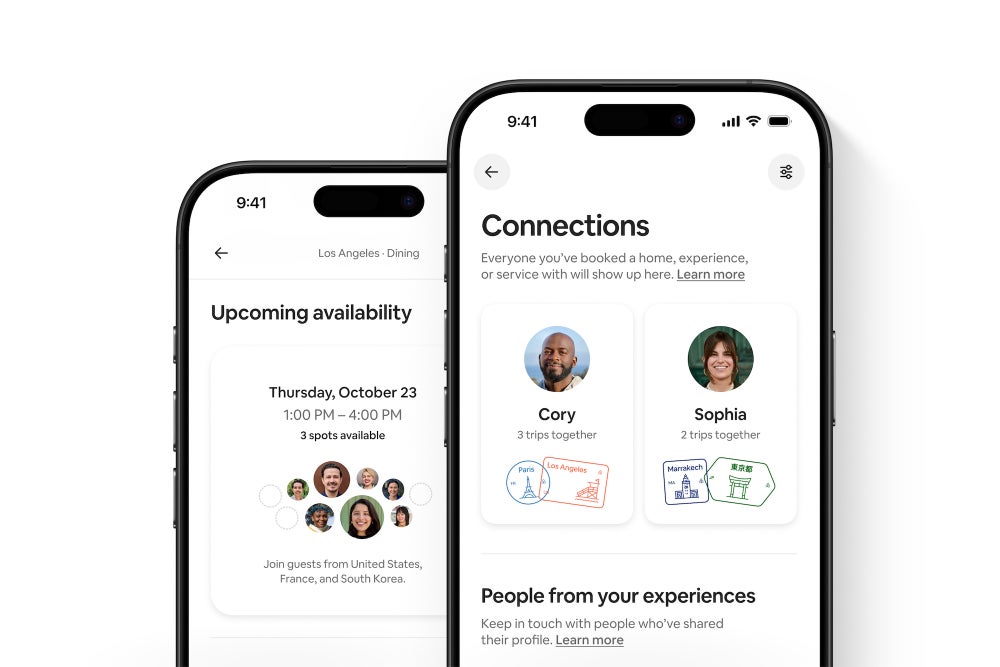
Now, to lean into CEO Brian Chesky‘s dreams of Airbnb being an “everything app,” the company is launching new social features to be the place where travelers can not only meet new people but continue to stay friends on the platform — rather than exchanging Instagram handles or text messages.

Related: Airbnb’s CEO Says He Personally Manages 40 to 50 Employees as Direct Reports: ‘A Lot of Work’

“Now, before you book, we’ll show you guests who are already going on that experience, along with where they’re from,” the company noted in a press release.

You can also connect with these potential new friends long after your travels. If you forgot to swap contact info (or chickened out on asking), you can slide into their Airbnb DMs with a new direct messaging feature.

Airbnb is also adding a “connections” page on the profiles tab to find friends for next time.

Airbnb says you have control over whether to share your profile, who can message you, and how you’re displayed in other guests’ connections.

With all these new, potential friends, maybe Airbnb’s next move is a wedding booking app.

Related: Airbnb CEO Says His Company Will Be the Place to Find Work After AI Takes Your Job: ‘Nobody ‘Wants a Robot Answering the Door’

Airbnb

Key Takeaways

  • Airbnb just launched a new feature to help travelers connect — with each other.
  • The company now offers direct messaging and other social network-like features for its guests.
  • Airbnb CEO Brian Chesky previously said he wants Airbnb to be an “everything app.”

Is Airbnb about to become the Tinder of traveling?

When Airbnb launched its “experiences” platform in May, guests in 260 cities could begin booking activities, including professional photo shoots, cooking lessons, spa sessions, and hiking adventures — solo or with other guests. But the company soon discovered, via a recent survey, that at least 70% of guests wanted to know more about the other travelers joining them before booking an experience.

The rest of this article is locked.

Join Entrepreneur+ today for access.

https://www.entrepreneur.com/business-news/airbnb-is-becoming-a-social-network-with-new-features/498582


Is Art an Asset Class? Here’s What You Need to Know Before You Buy

Opinions expressed by Entrepreneur contributors are their own.

Key Takeaways

  • Art is a legitimate but illiquid asset class offering diversification and enjoyment.
  • Only top-quality works drive returns, making access and research essential.
  • NFTs and digital art remain volatile but present evolving investment opportunities.

Art has been bought, sold, passed down and fought over for centuries. But is it a legitimate asset class in the same way that stocks and bonds are?

The short answer is yes, but with some critical caveats.

For decades, I have worked in both the investment world and researched the art market. Today, the art market is vast and global. It is nearly $1.7 trillion, and an increasing amount of data is available to study it and channels are opening up to invest.

Why art, and why now?

The art world has long been a store of value, and its appeal is growing. The global art market is estimated to be worth $1.7 trillion, compared with the $3.8 trillion municipal bond market. Global art sales topped $65 billion last year, with China continuing to play an increasingly significant role in the global market. Private art transactions are up 41%, though other data around art sales vary, with the last three years of top auctions remaining flat or declining.

Young collectors — especially Millennials and Gen Z — are driving demand for emerging and digital artists, creating potential headwinds for traditional contemporary oil-on-canvas works. Art also correlates very little with traditional asset classes, showing just a 0.04 correlation with the S&P 500, which may make it both a financial and consumptive hedge in portfolios.

In a time when investors are seeking both diversification and enjoyment, art provides both. And for those looking to both enjoy and grow their wealth, understanding the nuances of this market has never been more important.

Related: Art is a Business That Needs to be Learnt

It’s not all masterpieces and momentum

Here’s the truth: the art market is highly illiquid, opaque and insider-driven. There is no formal asset allocation model for art. Very few pieces account for the majority of returns — both in dollar terms and as a percentage.

In this vein, art is similar to venture capital investing: a few winners, lots of middling performance and access matters.

My company’s research shows that the best-performing art pieces can deliver long-term yields of over 10%, making them a compelling asset class for investors. Top-quality art tends to remain stable even during economic downturns, offering resilience compared to other markets.

Historically, the art market lags behind broader downturns, meaning it’s often one of the last to feel the impact. While the market moves slowly overall, key moments — such as transitioning into evening sales or setting new auction records — can trigger sharp price jumps for certain artists.

How to participate wisely

There are several ways to invest in art. You can purchase physical works directly from galleries, auctions or artists, giving you full ownership and control. Fractional investment platforms like Masterworks allow investors to buy shares of high-value artworks, though these often come with fees and limited control over decisions. Another option is art funds, where professional managers curate collections and handle transactions on behalf of investors. Finally, art-backed loans let collectors use their artworks as collateral, providing liquidity without selling their pieces.

Whichever route you choose, here are the golden rules I recommend:

  1. Buy smart: Invest in quality, not just what’s trendy.
  2. Check provenance: Always verify authenticity, history and condition.
  3. Diversify: Don’t put all your passion eggs in one basket.
  4. Document: Track your purchases, value and appraisals.
  5. Plan for the future: Include art in your estate strategy.
  6. Buy what you like: Like marrying for money, buying artwork solely for financial reasons, usually results and disappointment and frustration.

Related: Why Investing in Art and Creativity Is Crucial in Today’s Economy

Contrarian view: NFTs may be back

A decade ago, colored bitcoin gave rise to the first “Non-fungible tokens” or NFTs — crypto art. A few years later, with the dramatic rise of CryptoPunks, investors were willing to bet that OpenSea (a marketplace for such items) might be worth more than the venerated Sotheby’s or Christie’s.

The ceiling may have come, as with many things in venture and speculation, shortly after lockdown in 2021, when the digital artist Beeple sold an NFT for $69 million. The gold rush was on: Artists, companies and even some countries raced to issue NFTs. The hangover was severe, with many NFT projects losing nearly all of their value. Those who had told others so were vindicated.

However, in the background, the technology advanced as new uses such as gaming, music and ticketing made use of the rails that the digital art rush had created. As one branch of the family tree created identity tokens, there has been renewed interest in the “blue-chip” collections, and there continues to be creative energy in some newer issues.

Today, we estimate the market to be over $5 billion, with $10 million of daily turnover. What the space ends up being is far from clear, but the abundance of data the tokens create provides a rich field for inquiry. It is likely that future blockbuster NFT sales in some form are still in store.

A word on legacy

Physical art isn’t just an asset; it can act as a bridge to the next generation. Families have used art to shape legacy and values for centuries. But if you want your children (or alma mater, or other inheritor) to benefit, intentionality matters. Write it into your will. Get advised on the right tax strategy. Discuss your vision. Make a plan.

Otherwise, you risk heirs fighting over pieces or worse–selling them without context.

Investors don’t have to choose between serious portfolios and enjoyable ones. Art and collectibles can live alongside equities, fixed income and alternative investments. They can deliver both consumptive capacity and capital appreciation. The key is to be data-driven, clear-eyed and intentional.

After all, investing should reflect who you are. And that’s never one-dimensional.

Key Takeaways

  • Art is a legitimate but illiquid asset class offering diversification and enjoyment.
  • Only top-quality works drive returns, making access and research essential.
  • NFTs and digital art remain volatile but present evolving investment opportunities.

Art has been bought, sold, passed down and fought over for centuries. But is it a legitimate asset class in the same way that stocks and bonds are?

The short answer is yes, but with some critical caveats.

The rest of this article is locked.

Join Entrepreneur+ today for access.

https://www.entrepreneur.com/money-finance/is-art-a-good-investment-heres-what-you-need-to-know/495748