The Best Website Builders For Small Business Owners
June 11, 2021 6 min read

This story originally appeared on ValueWalk

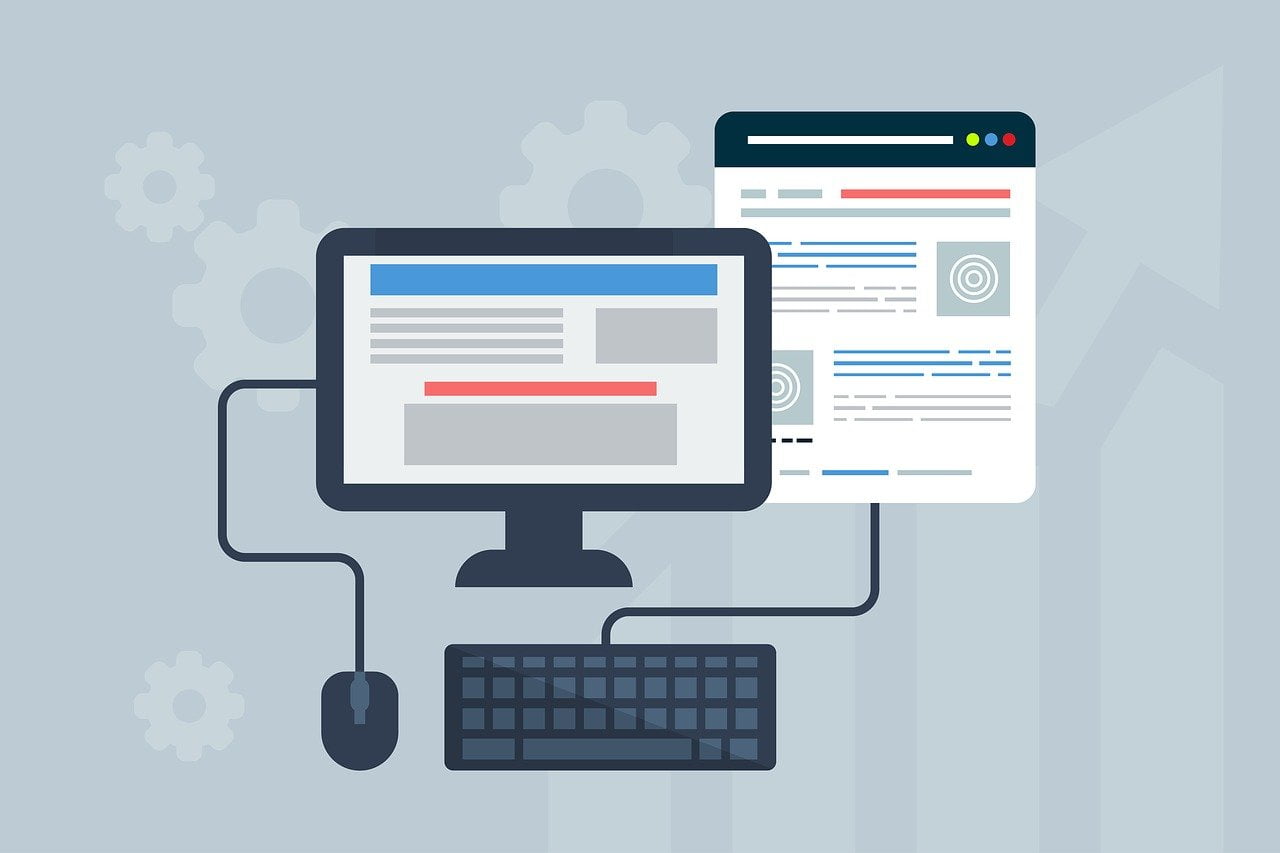
Wix and GoDaddy are popular website builders for small business owners, and they offer plenty of options and different plans for various needs. Perhaps the number one reason they are so popular is that they are extremely easy to use, but that’s not the only reason small business owners like these two website builders.

Q1 2021 hedge fund letters, conferences and more

Wix ranks fourth on TRUiC’s guide of the best website builders, while GoDaddy ranks first. However, Wix has been steadily gaining market share versus the incumbent goliath of GoDaddy.

Wix is easy to use

One reason Wix is so easy to use is the fact that it is a true drag-and-drop website builder. Users can drag pictures, text or even entire sections around within the builder to reorganize them. Unlike more complicated website builders, there’s no need to mess with margin sizes or padding.

The website builder also includes many templates built by web designers to give you a place to start when you build your website. Wix’s templates are entirely customizable, enabling you to tailor your website to your brand. Unlike many other website builders, Wix offers unstructured editing, which means that it doesn’t keep you restricted to a preset grid. This is what makes it truly a drag-and-drop website builder.

Wix is always launching new features like online scheduling tools for professionals and online ordering for restaurants. The company also offers specialized tools for e-commerce websites that enable you to list and sell your products and accept payments through your website.

Wix also offers an artificial intelligence tool called Wix ADI, which users can tap into to get their site and running in only minutes. Those who have more experience designing a website can customize and even code their own website using Wix.

GoDaddy is even easier

The biggest benefit of GoDaddy is the fact that you’ll have a working website in less than five minutes. All you have to do is enter some basic information about your business, and GoDaddy will generate a website for you. Then you just make changes to what it posted, and you’re ready to go.

GoDaddy is perfect for business owners who want to get up and running fast but don’t care about making very small changes. However, it may not be a great option for those who want to make a lot of changes and truly customize their website.

Wix vs GoDaddy: Marketing tools

Wix also offers a suite of marketing tools designed to help small businesses grow. The website builder provides a live chat feature that allows business owners to communicate with customers instantly. It also offers forms you can use to have website visitors sign up for newsletters or other items and subscription forms for those who want to offer subscriptions. Wix also has an integrated email marketing platform.

The website builder also has an App Market that includes many add-on tools to help you manage your customers and boost website traffic. Some of these apps include an events calendar and a forum. Wix also offers SEO features to help customers find your website through internet searches.

Unfortunately, GoDaddy lacks a lot of the tools that other website builders like Wix offer, but if you’re looking for something that will generate a website fast without a lot of extra tools, then it’s a good option.

Multiple pricing plans for Wix

Wix offers multiple packages so business owners can choose the one that fits their needs the best. The basic $14 Combo option includes a Secure Sockets Layer (SSL) certificate, which means your website will start with “https” instead of “http.” The certificate indicates that the website is secure and will help with search engine optimization. The package also includes a custom domain and free domain for a year, three gigabytes of storage space, 30 minutes of video, 24/7 support and the Wiz mobile app for editing your website on the go and responding to customers.

The Wix Unlimited Plan costs $18 a month and comes with 10 gigabytes of storage space and one hour of video. It also adds website analytics to enable business owners to improve the site’s performance by seeing where visitors come from, how long they stay and if they return. The Unlimited plan also comes with a $300 credit that can be used for advertising on Google and one year of access to the Site Booster App, a third-party app that automatically lists your business online in various places, enhancing your CEO and boosting traffic.

The Wix Pro Plan costs $23 per month and adds one year of access to a third-party calendar app, access to Wix’s logo maker, and 20 gigabytes of storage space and two hours of video. The VIP plan costs $39 per month and includes priority customer support, 35 gigabytes of storage and five hours of video.

Wix also offers plans tailored to business and e-commerce websites. The Business Basic Plan costs $23 per month and features unlimited product listings, abandoned cart recovery, flexible payments and online booking. The Business Unlimited Plan adds links to social media and online marketplaces, and subscriptions. It also allows you to accept multiple currencies for payments, automatically calculates sales tax, and provides discounts for shipping with the U.S. Postal Service. It also features access to the Kudobuzz Reviews app and the Modalyst Drop-Shipping App.

The Wix Business VIP Plan costs $49 per month and adds priority support, 50 gigabytes of storage space, custom reporting, and access to the Smile.io loyalty program.

GoDaddy pricing plans

GoDaddy offers a free plan that enables users to learn how to use it before they dive in, although it doesn’t contain as many features as the paid plans. For $9.99, you get website security, a custom domain, on-the-go editing, 24/7 support, one free business email address, and access to guidance and analytics. You also get five social posts and responses per month and 100 email marketing sends, the branded content creator and one-time appointments.

For $14.99 a month, you get search engine optimization and more access to social media and more social posts and responses. You also get 500 email marketing sends. The $19.99 Premium option adds unlimited social platforms and social posts and 25,000 email marketing sends. It also adds recurring appointments, one-time group events, payments, and email and text appointment reminders.

The $24.99 E-commerce plan gets you everything that’s in the Premium plan, plus product listings, flexible payments, social and marketplace selling, flexible shipping options, and discount and promotional features.

https://www.entrepreneur.com/article/374399


Tesla’s Model S Plaid can run high-end video games

Tesla Inc (NASDAQ:TSLA) has finally started delivering the fastest car in the world to date, and some features did surprise the automaker’s fans…

June 11, 2021 3 min read

This story originally appeared on ValueWalk

Tesla Inc (NASDAQ:TSLA) has finally started delivering the fastest car in the world to date, and some features did surprise the automaker’s fans. The company delivered 25 Model S Plaid sedans at an event at its factory in Fremont, Calif. on Thursday and promised to pick up the delivery pace in the coming weeks and months.

Q1 2021 hedge fund letters, conferences and more

Tesla Delivers The First Model S Plaids

The Model S Plaid starts at $129,990 after a $10,000 price increase, although Tesla said existing orders placed at the lower price would be honored. The car sports a tri-motor powertrain with one electric motor in the front and two in the back, adding up to 1,020 horsepower. The automaker touts the Plaid variant of the Model S as the most powerful sedan available today.

Tesla claims the car can go from 0 to 60 miles per hour in less than 2 seconds and drive a quarter of a mile in 9.23 seconds. If those numbers are accurate, they would be records for production cars. The automaker also said the Model S Plaid could reach a top speed of 200 miles per hour.

The car has a listed range of 390 miles on a full charge, and it takes only 15 minutes of charging at a Tesla Supercharger station to fill the battery up with 187 miles of range. The automaker had been working on a Plaid+ variant of the car that would have had even more power and a range of 520 miles. However, Tesla CEO Elon Musk said last week that they had canceled the Plaid+ because the Plaid was “just so good.”

Tesla will also start offering a slower long-range variant of the Model S with dual motors that can travel 412 miles on a full charge. The car will start at $79,990, and deliveries will start later.

Surprises In The Model S Plaid

The Plaid variant of the Model S features an all-new interior with touchscreens for the front and backseats. According to Musk, it also has an infotainment system powered by an AMD Ryzen processer that’s on the level with those used in the PlayStation 5. He showed off the system running the game Cyberpunk 2077.

Musk said during the delivery event last night, “There’s never been a car that has state-of-the-art computing technology, state-of-the-art infotainment, where this is literally at the level of a PlayStation 5.” He emphasized that the system features a high frame rate and can run 60 frames per second. Passengers can also connect wireless gaming controllers to the system using Bluetooth.

The Model S Plaid also features a rectangular steering wheel without any stalks on the column. Drivers control the turn signals and lights using thumb controls on the spokes. The car also has the newest version of the automaker’s Full Self-Driving system, which uses eight cameras and 12 ultrasonic sensors for partial driving automation.

Tesla is part of the Entrepreneur Index, which tracks 60 of the largest publicly traded companies managed by their founders or their founders’ families.

https://www.entrepreneur.com/article/374400


China’s Didi Chuxing prepares for IPO on U.S. exchange

Didi Chuxing, China’s Uber Technologies Inc (NYSE:UBER), published its filing to hold an initial public offering (IPO) in the U.S. It could be t…

June 11, 2021 3 min read

This story originally appeared on ValueWalk

Didi Chuxing, China’s Uber Technologies Inc (NYSE:UBER), published its filing to hold an initial public offering (IPO) in the U.S. It could be the largest IPO in the world this year.

Q1 2021 hedge fund letters, conferences and more

Didi Chuxing releases IPO documents

The ride-sharing firm didn’t share the size of its offering, but sources had told Reuters previously that it could raise about $10 billion and seek a valuation near $100 billion. According to Fox Business, Didi Chuxing’s stock market flotation would be the largest Chinese offering in the U.S. since Alibaba raised $25 billion in its IPO in 2014.

In its Thursday filing, Didi revealed that revenue growth slowed last year due to the pandemic, which halted the global ride-sharing industry due to lockdowns around the world.

The company posted 141.7 billion yuan (US$22.17 billion) in revenue for last year, compared to 154.8 billion yuan the year before. Didi reported a net loss of 10.6 billion yuan last year, compared to its loss of 9.7 billion yuan the year before.

Despite the slowdown in 2020, Didi Chuxing has had a strong year in 2021 due to the reopening of businesses in China. The ride-sharing company’s revenue more than doubled from 20.5 billion yuan in last year’s first quarter to 42.2 billion yuan (US$6.4 billion) for this year’s first quarter.

Opportunities in Chinese offerings

Grab, the largest ride-sharing firm in Singapore, went public in the U.S. earlier this year through a merger with a special purpose acquisition company (SPAC) with backing from investment firm Altimeter. Chinese companies raised $12 billion from U.S. listings last year, which was more than triple the amount they raised in the U.S. the year before, based on data from Refinitiv. According to Fox Business, Chinese companies are expected to raise even more than what they raised last year on Chinese floats on U.S. exchanges.

Didi merged with rival Kuaidi in 2015 to create its core business, a mobile app that enables users to hail rides in privately owned vehicles, carpools and even buses in some areas. The company generated $20.4 billion in revenue last year from its ride-sharing business, but CNBC noted that its app reveals several other offerings related to moving, gas stations, personal finance and bike-sharing.

Didi is preparing to list its American Depository Shares on the New York Stock Exchange or the Nasdaq using the ticker symbol “DIDI.” CEO Cheng Wei said last year that they aim to have 800 million monthly active users and complete 100 million orders per day by 2022.

https://www.entrepreneur.com/article/374376


Tesla Started To Bounce Back From Its April Sales Slump In China

Data from the China Passenger Car Association reveals that Tesla Inc (NASDAQ:TSLA) started to recover from its April slump in sales. The automaker sold 33,463 cars in China last month, a 29% increase from the 25,845 vehicles it sold in April. Q1 2021 hedge fund letters, conferences and more Tesla starts to recover from April […]

June 10, 2021 3 min read

This story originally appeared on ValueWalk

Data from the China Passenger Car Association reveals that Tesla Inc (NASDAQ:TSLA) started to recover from its April slump in sales. The automaker sold 33,463 cars in China last month, a 29% increase from the 25,845 vehicles it sold in April.

Q1 2021 hedge fund letters, conferences and more

Tesla starts to recover from April slump

Although Tesla did manage to beat April’s sales number in China, it came up short of March’s result. It sold 35,478 cars in China in March. Exports from Tesla’s Shanghai factory also declined month over month.

The automaker’s sales rebounds came despite negative headlines and scrutiny by Chinese regulators over reports of failing breaks by customers. Additionally, Tesla faces pressure with the rest of the auto industry due to a shortage of computer chips.

Last month, the automaker shipped 11,527 cars from its factory in China, which is less than the 14,174 vehicles it shipped in April. Total sales of all-electric vehicles in China more than doubled from last year, jumping 186% to 162,000 last month. However, CNBC notes that some have expressed skepticism about the China Passenger Car Association’s numbers.

Although Tesla is among the top 10 makers of new energy vehicles in China, domestic startups like Nio also did well last month. New energy vehicles include hybrid cars. Volkswagen accounted for 48% of new energy vehicle sales from mainstream joint ventures with foreign brands. The association also said Audi, BMW, Mercedes Benz and other luxury electric cars have not yet seen a significant increase in purchases.

AI-driven fund sells Tesla

In other Tesla news, MarketWatch reports that an exchange-traded fund driven by artificial intelligence dumped the automaker this month and loaded up on GameStop Corp. (NYSE:GME), Qualcomm, Inc. (NASDAQ:QCOM) and Snap Inc (NYSE:SNAP).

Tesla and Amazon Inc (NASDAQ:AMZN) and had been two of the Qraft AI-Enhanced U.S. Large Cap Momentum ETF (NYSEARCA:AMOM)’s three largest positions. However, the ETF exited those positions completely along with NVIDIA Corporation (NASDAQ:NVDA), which had been its sixth-largest position. The AI that drives the Qraft fund expects those stocks to decline in the coming month.

The addition of GameStop raised a few eyebrows, as it’s basically the poster child for meme stocks. Qraft Managing Director Geeseok Oh told MarketWatch that “few fund managers would take the risk of adding a meme stock to their portfolios.” However, the artificial intelligence that drives the ETF doesn’t have any such prejudices.

The top five stocks added to the Qraft ETF this month were Qualcomm, Philip Morris International Inc. (NYSE:PM), Snap, Edwards Lifesciences Corp (NYSE:EW) and Align Technology, Inc. (NASDAQ:ALGN).

Tesla is part of the Entrepreneur Index, which tracks 60 of the largest publicly traded companies managed by their founders or their founders’ families.

https://www.entrepreneur.com/article/374284


IRS sends 2.3M additional coronavirus stimulus checks. Who will get them?

Congress approved the third round of stimulus checks in mid-March. Now, after almost three months, the IRS continues to send the stimulus payment to eligible recipients. On Wednesday, the agency announced that it had sent out an additional 2.3 million coronavirus stimulus checks in the latest batch of payments. Q1 2021 hedge fund letters, conferences […]

June 10, 2021 3 min read

This story originally appeared on ValueWalk

Congress approved the third round of stimulus checks in mid-March. Now, after almost three months, the IRS continues to send the stimulus payment to eligible recipients. On Wednesday, the agency announced that it had sent out an additional 2.3 million coronavirus stimulus checks in the latest batch of payments.

Q1 2021 hedge fund letters, conferences and more

Additional coronavirus stimulus checks from IRS

In an announcement on Wednesday, the IRS said that it had sent out more than 2.3 million new stimulus checks, amounting to $4.2 billion. Including this latest batch, the IRS has now sent over 169 million payments worth about $395 billion with the third round.

This latest batch of 2.3 million stimulus payments includes over 900,000 payments to those for whom the IRS previously didn’t have any information to deliver the payment. Also, it includes more than 1.1 million “plus-up” payments amounting to over $2.5 billion.

The IRS said that it had distributed more about 8 million “plus-up” payments to date. These “plus-up” payments include new or a bigger payment to individuals and families for whom the IRS processed 2020 tax returns after determining their eligibility for the third round of stimulus checks.

As per the IRS, this latest batch of payments include over 1.2 million direct deposit payments, while the remaining were paper checks. The IRS said that it would continue to send the stimulus payments on a weekly basis.

Further, the agency noted that future payments would include money to those for whom the IRS didn’t have information previously, but such people have filed a return now. The payments would also include plus-up payments.

Still not got the payment? What to do

The American Rescue Plan Act, which was approved in March, authorized payment of up to $1,400 per person, as well as $1,400 per eligible dependent. An individual with an income of up to $75,000 (up to $150,000 for joint filers) would be eligible for the full payment. Those earning up to $80,000 (up to $160,000 for joint filers) would be eligible for a reduced amount.

If you still haven’t got the $1,400 stimulus check or payment from the earlier rounds of up to $1,200 and $600, then you can still claim the money by filing a tax return. After you file your 2020 return, the IRS will be able to assess your eligibility.

Those who missed the payment in the first two rounds need to file a recovery rebate credit. To make it easy for people to claim their missing stimulus checks from the first two rounds, the IRS has added line 30 of Forms 1040 or 1040-SR and a worksheet to the 2020 return.

People who don’t usually file taxes, such as the homeless and rural poor, are being encouraged by the IRS to file taxes this year so as to get stimulus checks. Filing taxes will also help the agency to determine their eligibility for the enhanced child tax credit, which is set to start going out this summer.

https://www.entrepreneur.com/article/374285


These Are the Top Ten Picks of Carl Icahn

June 10, 2021 4 min read

This story originally appeared on ValueWalk

Carl Icahn is an American billionaire and hedge fund manager with a net worth of more than $15.1 billion as of 2021. Icahn started out in the 1980s, and is now among the wealthiest hedge fund managers with more than $20 billion in managed securities. His activism and aggressive investment tactics have earned him the name of a “corporate raider.” His investment fund has given a return of more than 73% since its inception in November 2004 through the end of 2020. Detailed below are the top ten picks of Carl Icahn.

Q1 2021 hedge fund letters, conferences and more

Top Ten Picks Of Carl Icahn

We have ranked the top ten picks of Carl Icahn on the basis of the percentage value they represent of Icahn’s total portfolio. Following are the top ten picks of Carl Icahn:

  1. Herc Holdings (1.91%)

Founded in 1965, this company offers construction and industrial equipment for rent. Icahn holds 4,494,789 shares of Herc with a value of $455,457,000 as of March 31. The company reported revenue of $1.3 billion in Q1 for the fiscal year 2021. Herc shares are up over 300% in the past one year, and YTD, its shares are up more than 60%. The company is headquartered in Bonita Springs (FL).

  1. Cloudera (2.67%)

Founded in 2008, this company offers a suite of management and data analytics products. Icahn holds 52,327,391 shares of Cloudera with a value of $636,824,000 as of March 31. The company reported revenue of $226.6 million in its fourth quarter. Cloudera shares are up over 42% in the past one year, and YTD, its shares are up more than 13%. The company is headquartered in Santa Clara (CA).

  1. FirstEnergy (2.76%)

Founded in 1996, this company deals in the generation, transmission and distribution of electricity. Icahn holds 18,967,757 shares of FirstEnergy with a value of $657,991,000 as of March 31. The company reported revenue of $2.7 billion in Q1 of 2021. FirstEnergy shares are down over 8% in the past one year, and YTD, its shares are up more than 25%. The company has its headquarters in Akron (OH).

  1. Xerox Holdings (2.93%)

Founded in 2019, it is a workplace technology company that develops and integrates software and hardware for enterprises. Icahn holds 28,769,235 shares of Xerox Holdings with a value of $698,229,000 as of March 31. The company reported revenue of $1.71 billion in Q1 of 2021. Xerox Holdings shares are up over 56% in the past one year, and YTD, its shares are up more than 8%. The company is headquartered in Norwalk (CT).

  1. Navistar International (3.09%)

Founded in 1902, it is a holding company that makes military trucks, school and commercial buses, as well as proprietary diesel engines and service parts. Icahn holds 16,729,960 shares of Navistar with a value of $736,620,000 as of March 31. The company reported revenue of $1.8 billion in Q1 of 2021. Navistar International shares are up over 70% in the past one year, and YTD, its shares are up more than 1%. The company has its headquarters in Lisle (IL).

  1. Bausch Health Companies (4.54%)

Founded in 1994, this company develops, manufactures and markets branded, generic and branded generic pharmaceuticals. Icahn holds 34,109,152 shares of Bausch Health with a value of $1,082,624,000 as of March 31. The company reported revenue of $2.027 billion in Q1 of 2021. Bausch Health shares are up over 83% in the past one year, and YTD, its shares are up more than 50%. The company is headquartered in Laval (Canada).

  1. Cheniere Energy (4.88%)

Founded in 1983, it is an energy infrastructure company that deals in liquefied natural gas. Icahn holds 16,168,606 shares of Cheniere Energy with a value of $1,164,301,000 as of March 31. The company reported consolidated adjusted EBITDA of $1.5 billion for Q1 2021. Cheniere Energy shares are up over 90% in the past one year, and YTD, its shares are up more than 45%. The company has its headquarters in Houston (TX).

  1. Newell Brands (4.91%)

Founded in 1903, it makes, markets and sells consumer and commercial products. Icahn holds 43,704,616 shares of Newell Brands with a value of $1,170,410,000 as of March 31. The company reported revenue of $2.07 billion for Q1 2021. Newell Brands shares are up over 87% in the past one year, and YTD, its shares are up more than 31%. The company is headquartered in Atlanta (GA).

  1. CVR Energy (5.73%)

Founded in 1906, it is a holding company that deals in the petroleum refining and marketing business. Icahn holds 71,198,718 shares of CVR Energy with a value of $1,365,591,000 as of March 31. The company reported an EBITDA of less than $1 million for Q1 2021. CVR Energy shares are up over 18% in the past one year, and YTD, its shares are up more than 56%. The company has its headquarters in Sugar Land (TX).

  1. Occidental Petroleum (9.60%)

Founded in 1920, this company deals in the exploration and production of oil and natural gas. Icahn holds 86,027,271 shares of Occidental Petroleum with a value of $2,290,046,000 as of March 31. The company reported a net loss of $346 million for Q1 2021. Occidental Petroleum shares are up over 62% in the past one year, and YTD, its shares are up more than 63%. The company is headquartered in Houston (TX).

https://www.entrepreneur.com/article/374286


Rents Are Too High: Here Are Three Ways to Fix The Rental Market

June 9, 2021 5 min read

This story originally appeared on ValueWalk

The main reason why people who want to rent their home haven’t done it is because it involves a lot of headaches – and bad tenants and nonpayment of rent are just two of them. On the other side of the coin, 70% of tenants or would-be tenants believe that rent is very expensive in the US.

Q1 2021 hedge fund letters, conferences and more

Fixing the rental market

The data shows that initiatives are necessary to address the problems experienced by both landlords and tenants. But what measures will do the job? Let’s find out.

  1. Lack of Supply

The latest study published by the real estate portal Mansion Global shows there is a growing imbalance between supply and demand for rental housing in the U.S. This imbalance explains the great price increases in the rental market in almost every corner of the country. Because of this situation, this market is going through a turbulent time. The increase in demand and the contraction in supply explains the rent increases in recent years.

Solution: Public rental housing

The coronavirus pandemic and the worsening economy have created bigger problems for many families with housing expenses. But they’ve also given them a break, at least temporarily, in that rents have fallen, especially in the largest cities. This temporary respite should be seen as an opportunity to activate policies that provide responses to high rents for the medium and long term.

In terms of housing, half-measures won’t fix the problem. More, and more affordable, public housing is necessary, especially where the problems caused by the ongoing crises have aggravated the lives of families.

Fortunately, the U.S. stock of rental public housing is well above the European average. A long-term commitment is necessary in this area to provide a brake when private home prices trend upward. It’s obviously a costly measure that will require cooperation between the public and private sectors, but it will ensure access to rental housing and provide administrations with a permanent tool they can use to cool the market when necessary.

  1. Distrust among renters and owners

While it’s true that tenants typically suffer the consequences of a lack of supply, we must also focus on the reasons why this situation occurs. Finding a good tenant can be compared to fishing for a specific type of fish in an ocean. The task usually causes a lot of anxiety to the owner of a property. For 54% of owners, distrust of tenants is a difficulty when it comes to putting a property up for rent. It’s also why most landlords decide to leave this responsibility to a broker.

Solution: Incentives for leasing and renting

On this issue, we can work to provide the security that many owners now lack when they consider renting their properties. Situations such as delays or non-payment of rent can be reduced to a large extent with the help of technology.

An incentive system that ensures landlords get paid on time, dutiful tenants are rewarded, and delinquent tenants are punished by a low credit score is the need of the hour.

The all-women start-up Pinata is an example of this technology. The startup motivates its members to pay rent on time by offering exclusive rewards and experiences from premier brands while helping the members build their credit history. Homeowners can then review the credit scores of potential tenants for the same reason that lenders do: to determine how likely a tenant is to pay their rent in a timely manner.

  1. Bureaucracy causes high operational costs and wastes time

Imagine you want to rent a property. You have to choose the perfect house or apartment, in a convenient location that fits your budget, but when you think your problems are over, you discover that you still have a ton of paperwork to deal with!

You not only have to go to the real estate agency to sign the contract. You also need to visit the registry office to acknowledge the signature and take the contract back. Then you must convince your guarantor (or guarantors, depending on the case) to do the same thing.

The situation isn’t just bad for the renter. Because the process takes time, the house or apartment remains empty for a longer time and the owner loses the income that would otherwise have come from the rent. For real-estate companies, the hours and days lost because of waiting and bureaucracy represent a high operational cost.

Solution: Facilitate the signing of contracts

With a blockchain ID, parties can sign contracts related to property rentals using only a cellphone app, without having to go to the registry office to recognize the signatures of everyone involved. It’s worth remembering that, according to the U.S. ESIGN Act in 2000, an electronic signature has the same legal validity as a paper signature!

Not only do the parties save time, but they also gain an additional layer of protection given by identity verification, since the property owner can be even more certain that the person who signed the rental contract is who they claim to be. In addition, as the information registered on the blockchain cannot be changed, landlords, tenants, and real estate agents can rest easy in the knowledge that the contract cannot be unduly modified or defrauded.

These are three measures that can help correct the rental market, which today is not working efficiently and leaves many aspiring tenants out in the cold.

https://www.entrepreneur.com/article/374154


Ohio’s attorney general wants Google to be declared a public utility

Ohio has filed a lawsuit against Google, requesting that the company be legally declared a public utility and common carrier under state law. Ohio Attorney General Dave Yost said in an announcement about the lawsuit that the company “uses its dominance of Internet search to steer Ohioans to Google’s own products — that’s discriminatory and […]

June 9, 2021 3 min read

This story originally appeared on ValueWalk

Ohio has filed a lawsuit against Google, requesting that the company be legally declared a public utility and common carrier under state law. Ohio Attorney General Dave Yost said in an announcement about the lawsuit that the company “uses its dominance of Internet search to steer Ohioans to Google’s own products — that’s discriminatory and anti-competitive.”

Q1 2021 hedge fund letters, conferences and more

Details on the lawsuit against Google

According to Ars Technica, the lawsuit doesn’t seek monetary damages, although it would require Google to take some steps to stop discriminating against competitors. Yost said the search giant “has a duty to carry content from other sources without unfair discrimination as compared to comparable Google content.”

The lawsuit also seeks a permanent injunction barring the company from prioritizing the placement of its own products, websites and services on the Results Pages from Google searches in Ohio “without providing equal opportunities for prioritization to non-Google entities.” Yost said the state is the first in the county to file such a lawsuit.

Clarence Thomas on digital platforms as utilities

Ars Technica reports that Supreme Court Justice Clarence Thomas influenced the lawsuit in his recent concurring opinion. He argued that Twitter and other tech giants could face restrictions involving the First Amendment even though they aren’t government agencies. Thomas also said free speech law shouldn’t keep lawmakers from regulating such platforms as common carriers.

He wrote that online platforms that “hold themselves out to the public resemble traditional common carriers.” Thomas added that even though they are digital rather than physical networks, “they are at bottom communications networks, and that ‘carry’ information from one user to another.”

He also sad digital platforms lay infrastructure that can be controlled in a manner similar to how a traditional telephone company laid physical wires.

Google disagrees

Yost argued that Ohio residents “are harmed by Google because they cannot make the best choices if they don’t get all the information.” He also offered an example, noting that Google steers people toward Google Flights, which means they don’t see offers from competitors like Travelocity or Orbitz.

His request for Google to stop prioritizing its own products, websites and services on search pages would “extend to advertisements, enhancements, knowledge boxes, integrated specialized searches, direct answers and other features.”

In a statement, the search giant said its Search offering “is designed to provide people with the most relevant and helpful results.” Google added that Yost’s lawsuit “would make Google Search results worse and make it harder for small businesses to connect directly with customers.”

The company also said that Ohioans “simply don’t want the government to run Google like a gas or electric company” and that the lawsuit “has no basis in fact or law.” Google argued that it doesn’t have any of the attributions of public utilities like electric companies, phone companies and railroads, which provide “a standardized delivery service for a fee using public assets like rights-of-way.”

https://www.entrepreneur.com/article/374155


Strategies to trade the most popular currency pairs with the U.S. dollar

June 8, 2021 5 min read

This story originally appeared on ValueWalk

The foreign exchange market lets you trade almost any world currency against another, exchanging them at the current going rate of both currencies. However, some currency pairs are traded more often than others. The U.S. dollar is especially important in forex, so many of the most popular pairs include the dollar.

Q1 2021 hedge fund letters, conferences and more

Types Of Currency Pairs

The forex market is always traded in currency pairs, and there are three different types of pairs: majors, minors and crosses. Majors are the most popular currency pairs, and they always include the U.S. dollar. They are usually the most liquid of all the available currency pairs. In fact, majors have the highest liquidity of the three types, although the trades can be crowded because of how popular these pairs are.

Minors and crosses do not include the U.S. dollar, although minors include one of the other major currencies, like the euro or the pound. They are less liquid than major pairs, so they can present more opportunities for traders. Crosses do not include any major currencies as part of the pair, so they are far less liquid than majors and minors.

Deciding Which Currency Pairs To Trade

Choosing which currency pairs to trade is a matter of strategy. For example, depending on what time of day you will executive your trades, not all markets will be available to you. The Asian currency markets open first, followed by the Middle East, and then Europe, followed by the U.S. While you can always trade some currencies except on weekends, you can’t trade in all markets at all hours of the day and night.

In building your strategy for currency trading, you should also choose currencies that are stable and predictable. Both factors are linked to their country’s economic health, which is why the U.S. is so popular as part of the pair. The economic health of a country impacts the value of its currency, which is why some currencies become more or less expensive compared to other currencies.

When you think a particular currency will go up or down versus another currency, you’re ready to make your trade. Here are some of the most popular currency pairs and strategies for trading them:

  • USD/JPY
  • GBP/USD
  • USD/CAD
  • USD/CHF
  • AUD/USD
  • GBP/JPY
  • EUR/GBP
  • AUD/NZD
  • EUR/USD
  • EUR/JPY

In all these pairs, the first currency listed is the base currency, and the second is whatever you’re changing the first one into for your trade.

USD Pairs

The most popular currencies to trade against the U.S. dollar are the British pound, euro, Japanese yen, Canadian dollar, Swiss Franc, Australian dollar and New Zealand dollar. Europe and the U.S. are the world’s two major economies, so the EUR/USD and USD/EUR are the most frequently traded pairs, which means they are extremely liquid. Political movements in Europe and the U.S. influence which direction these currencies move against each other.

It also helps to understand which currency pairs are negatively and positively correlated with each other. Understanding these correlations allows you to create hedges among your currency trades. For example, the GBP/USD is usually negatively correlated with the USD/CHF and positively correlated with the EUR/USD because the pound is positively correlated with the franc and the euro. The difference between these pairs is that USD/CHF lists the dollar as the base currency, while the European currencies are the base currencies in the other pairs.

One of the more interesting strategies involves the dollar and the yen. The Japanese central bank buys large amounts of its currency to combat daily fluctuations in it. Thus, you could rake in some tremendous profits by going from the dollar to the yen at the right time to capitalize on those fluctuations.

Non-USD Pairs

The most popular currency pairs include a mixture of some of the currencies listed above against each other as well. For example, minor pairs like the euro versus the yen or the pound versus the yen could make good trades, depending on what’s happening in those respective countries or regions.

While the pound and the euro tend to be positively correlated, Brexit has created some interesting opportunities to profit off one by exchanging it from the other. The pair has become more volatile due to Brexit, which means more opportunities for profit if you can get the timing right. However, while the increased volatility creates more opportunities for profit, it also means larger chances for racking up losses if you aren’t careful.

Trading currencies can be very exciting, but you must tread carefully when making any decisions. You will have to follow the news carefully in the countries whose currencies you are trading to ensure the proper timing of your trades.

https://www.entrepreneur.com/article/374053


These Are The Ten Most Profitable Companies In Washington

June 8, 2021 4 min read

This story originally appeared on ValueWalk

Washington is among the fastest-growing economies in the U.S. Though the state suffers from a higher cost of living and labor costs, its low-carbon energy system and robust secondary education system more than compensates for that. Progressive politics, flat taxes and an industry-oriented university system have helped the state to strengthen its place as a tech-sector powerhouse. Washington is not just home to some world-class companies, but is also emerging as a national leader in business incubation. Let’s take a look at the ten most profitable companies in Washington.

Q1 2021 hedge fund letters, conferences and more

Ten Most Profitable Companies In Washington

We have used the latest available profitability numbers of the Fortune 500 companies to rank the ten most profitable companies in Washington. Following are the ten most profitable companies in Washington:

  1. Nordstrom ($496 million)

Founded in 1901, this company deals in clothes, shoes, and accessories. This luxury department store chain initially started as a shoe store. The shares of the company are up over 62% in the past one year, and YTD, are up over 10%. Nordstrom has about 62,000 employees, and is headquartered in Seattle, WA. Erik B. Nordstrom is the CEO of the company.

  1. Expedia Group ($565 million)

Founded in 1994, it is an online travel company that offers travel products and services to leisure and corporate travelers. The shares of the company are up over 92% in the past one year, and YTD, are up over 28%. Expedia has about 19,000 employees, and is headquartered in Seattle. Peter M. Kern is the CEO of the company.

  1. Expeditors International of Washington ($590 million)

Founded in 1979, this firm offers global logistics services, including airfreight, ocean freight, as well as ocean and customs brokerage. The shares of the company are up over 59% in the past one year, and YTD, are up over 31%. Expeditors International has about 17,000 employees, and is headquartered in Seattle. Jeffrey S. Musser is the CEO of the company.

  1. Fortive ($738 million)

Founded in 2015, it is a diversified industrial technology company. It designs, develops, manufacturers and markets professional and engineered products, as well as software, and services. The shares of the company are up over 25% in the past one year, and YTD, are up over 2%. Fortive has about 17,000 employees, and is headquartered in Everett, WA. James A. Lico is the CEO of the company.

  1. Alaska Air Group ($769 million)

Founded in 1985, it offers air transportation services for passengers and cargo. It operates through three segments: Mainline, Regional and Horizon. The shares of the company are up over 42% in the past one year, and YTD, are up over 26%. Alaska Air Group has about 20,600 employees, and is headquartered in Seattle. Ben Minicucci is the CEO of the company.

  1. Paccar ($2,387 million)

Founded in 1905, this company designs and manufactures light, medium and heavy-duty trucks. The company has three segments: Truck, Parts and Financial Services. The shares of the company are up over 18% in the past one year, and YTD, are up over 8%. Paccar has about 26,000 employees, and is headquartered in Bellevue, WA. R. Preston Feight is the CEO of the company.

  1. Starbucks ($3,599 million)

Founded in 1985, it is a chain of coffeehouses and roastery reserves. The company owns many popular brands, including Evolution Fresh, Teavana, Tazo Tea and Seattle’s Best. The shares of the company are up over 35% in the past one year, and YTD, are up over 4%. Starbucks has 349,000 employees, and has its headquarters in Seattle. Kevin R. Johnson is the CEO of the company.

  1. Costco Wholesale ($3,659 million)

Founded in 1983, this company operates a chain of membership-only big-box retail stores. It is among the biggest retailers in the world. The shares of the company are up over 24% in the past one year, and YTD, are up almost 1%. Costco has 214,500 employees, and is headquartered in Issaquah, WA. W. Craig Jelinek is the CEO of the company.

  1. Amazon ($11,588 million)

Founded in 1994, it is among the biggest technology companies in the world. Amazon deals in e-commerce, cloud computing, digital streaming and artificial intelligence. The shares of the company are up over 22% in the past one year, and YTD, are down more than 1%. Amazon has 1,298,000 employees, and has its headquarters in Seattle. Jeffrey P. Bezos is the CEO of the company.

  1. Microsoft ($39,240 million)

Founded in 1975, this company offers operating systems, business solution applications, software development tools, gaming and entertainment consoles, desktop and server management tools, personal computers and tablets, other intelligent devices and more. The shares of the company are up over 33% in the past one year, and YTD, are up more than 14%. Microsoft has 163,000 employees, and has its headquarters in Redmond, WA. Satya Nadella is the CEO of the company.

https://www.entrepreneur.com/article/374054